Articoli simili a Bronc di Lon Megargee, stampa su legno ca. Anni
20 con cornice a coste di Saguaro fatta a mano
Vuoi altre immagini o video?
Richiedi altre immagini o video al venditore
1 di 2
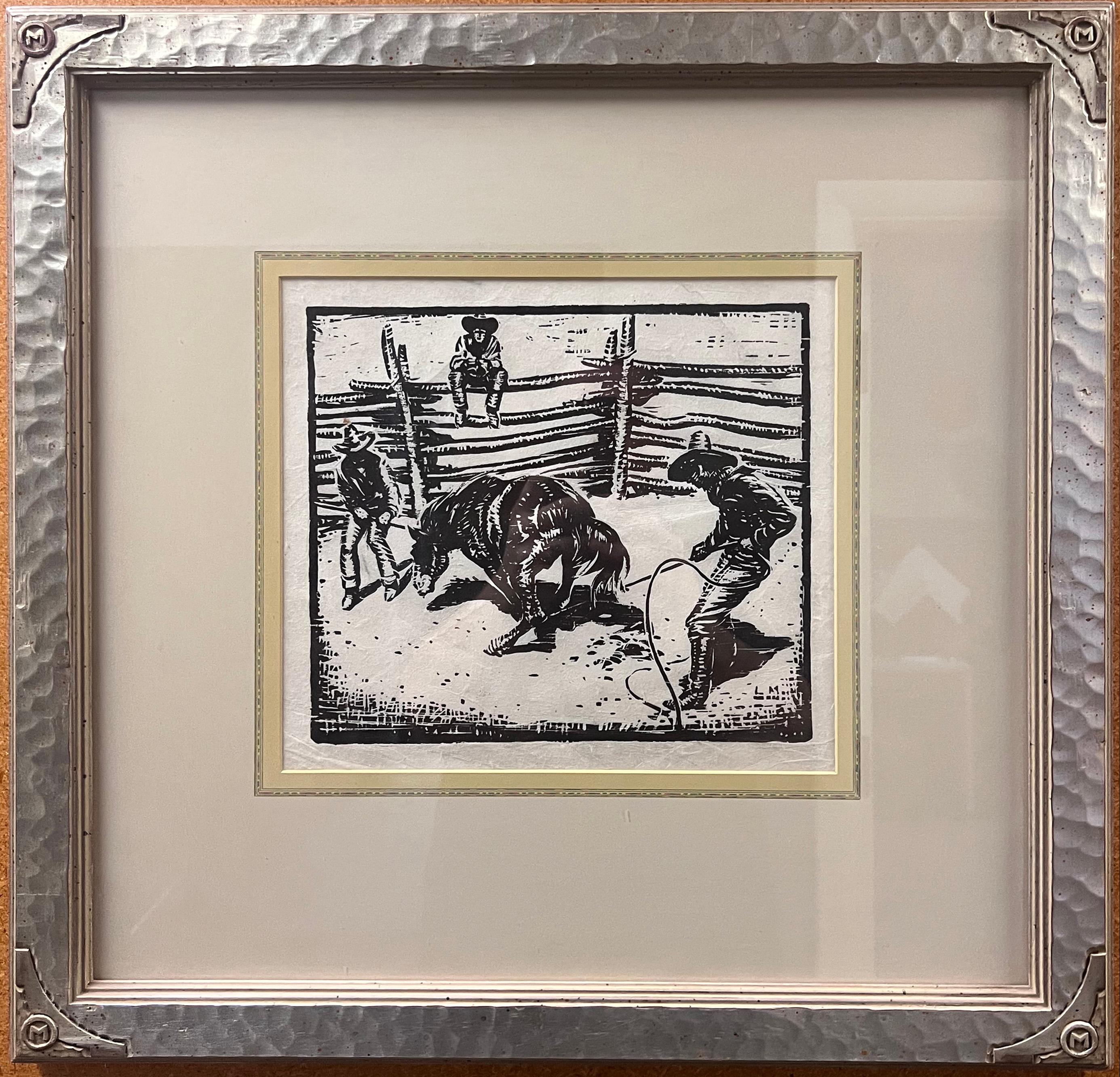
Lon MegargeeBronc di Lon Megargee, stampa su legno ca. Anni
20 con cornice a coste di Saguaro fatta a mano1920s
1920s
3300,55 €
Informazioni sull’articolo
SHIPPING CHARGES INCLUDE SHIPPING, PACKAGING
**INSURANCE**
Bronc by Lon Megargee, Woodblock Print ca. 1920s
Handmade Saguaro Rib Frame, double linen mat, museum archival materials
Bronc
Woodblock Print, signed in print
Image: 8 3/4 x 9 7/8 inches
Frame: 21 x 20 inches
SHIPPING CHARGES INCLUDES, SHIPPING, PACKAGING
INSURANCE
FINE ART ESTATE OF LON MEGARGEE
Megargee Custom Handmade Saguaro Frame
We offer signed in print and original signature block prints. Custom, hand carved, signature frames, with archival standards and a speciality in hand dyed mats and french matting are provided for a beautiful and timeless presentation.
Free shipping Continental US
Biography
Megargee explored different mediums; printmaking captivated him in particular. The contrast of the black and white block print method captured perfectly his interpretation of a bold American West. The first print was produced around 1921 and culminated with the creation of “The Cowboy Builds a Loop” in 1933 with 28 images and poetry by his friend, Roy George. Megargee continued producing prints throughout the 1940s and early 50s.
Creator of the iconic logo for the Stetson Hat Company, " Last Drop From his Stetson", still in use today.
Fine Art Estate of Lon Megargee
At age 13, Lon Megargee came to Phoenix in 1896 following the death of his father in Philadelphia. For several years he resided with relatives while working at an uncle’s dairy farm and at odd jobs. He returned to Philadelphia in 1898 – 1899 in order to attend drawing classes at the Pennsylvania Academy of the Fine Arts. Back in Phoenix in 1899, he decided at the age of 16 to try to make his living as a cowboy. Lon moved to the cow country of Wickenburg where he was hired by Tex Singleton’s Bull Ranch. He later joined the Three Bar Ranch . . . and, after a few years, was offered a job by Billy Cook of the T.T. Ranch near New River. By 1906, Megargee had learned his trade well enough to be made foreman of Cook’s outfit. Never shy about taking risks, Lon soon left Cook to try his own hand at ranching. He partnered with a cowpuncher buddy, Tom Cavness, to start the El Rancho Cinco Uno at New River. Unfortunately, the young partners could not foresee a three-year drought that would parch Arizona, costing them their stock and then their hard-earned ranch.
Breaking with his romantic vision of cowboy life, Megargee finally turned to art full time. He again enrolled at the Pennsylvania Academy and then the Los Angeles School of Art and Design during 1909 – 1910. The now well-trained student took his first trip to paint “en plein air” (outdoors) to the land of Hopi and Navajo peoples in northern Arizona. After entering paintings from this trip in the annual Territorial Fair at Phoenix, in 1911, he surprisingly sold his first oil painting to a major enterprise – the Santa Fe Railroad . . . Lon received $50 for “Navajos Watching the Santa Fe Train.” He soon sold the SFRR ten paintings over the next two years. For forty years the railroad was his most important client, purchasing its last painting from him in 1953.
In a major stroke of good fortune during his early plein-air period, Megargee had the opportunity to paint with premier artist, William R. Leigh (1866 – 1955). Leigh furnished needed tutoring and counseling, and his bright, impressionistic palette served to enhance the junior artist’s sense of color and paint application. In a remarkable display of unabashed confidence and personable salesmanship, Lon Megargee, at age 30, forever linked his name with Arizona art history. Despite the possibility of competition from better known and more senior artists, he persuaded Governor George Hunt and the Legislature in 1913 to approve 15 large, historic and iconic murals for the State Capitol Building in Phoenix. After completing the murals in 1914, he was paid the then princely sum of roughly $4000. His Arizona statehood commission would launch Lon to considerable prominence at a very early point in his art career.
Following a few years of art schooling in Los Angeles, and several stints as an art director with movie studios, including Paramount, Megargee turned in part to cover illustrations for popular Western story magazines in the 1920s.
In the 1920s, as well, Lon began making black and white prints of Western types and of genre scenes from woodblocks. These prints he generally signed and sold singly. In 1933, he published a limited edition, signed and hard-cover book (about 250 copies and today rare)containing a group of 28 woodblock images. Titled “The Cowboy Builds a Loop,” the prints are noteworthy for strong design, excellent draftsmanship, humanistic and narrative content, and quality. Subjects include Southwest Indians and cowboys, Hispanic men and women, cattle, horses, burros, pioneers, trappers, sheepherders, horse traders, squaw men and ranch polo players. Megargee had a very advanced design sense for simplicity and boldness which he demonstrated in how he used line and form. His strengths included outstanding gestural (action) art and strong figurative work. He was superb in design, originality and drawing, as a study of his prints in the Hays collection reveals.
In 1944, he published a second group of Western prints under the same title as the first. Reduced to 16 images from the original 28 subjects, and slightly smaller, Lon produced these prints in brown ink on a heavy, cream-colored stock. He designed a sturdy cardboard folio to hold each set. For the remainder of his life, Lon had success selling these portfolios to museum stores, art fairs and shows, and to the few galleries then selling Western art.
Drawing on real working and life experiences, Lon Megargee had a comprehensive knowledge, understanding and sensitivity for Southwestern subject matter. Noted American modernist, Lew Davis (1910 – 1979), helped to explain the uniqueness, strength and character of Megargee’s art in a 1975 interview with an Arizona publication: “His restless independence as a man and an artist was clear then (before WWI) and remained so until his death. Always one characteristic stood out. He was indigenous. He belonged here. Not a carpetbagger with a paint box, or a disillusioned urbanite seeking a new life, but an artist who used what he knew and had lived to put down what he had seen.”
From the origins of his career in art, Lon Megargee had a strong sense of the importance and worthiness of contributions that had been made by Native Americans and Hispanics. Even when satirizing their actions and foibles, and those of his Anglo peers, Megargee in his art provided a fairness and balance to all creeds that was enlightened for its time.
- Creatore:Lon Megargee (1883 - 1960, Americano)
- Anno di creazione:1920s
- Dimensioni:Altezza: 22,23 cm (8,75 in)Larghezza: 48,26 cm (19 in)
- Tecnica:
- Periodo:
- Condizioni:
- Località della galleria:Phoenix, AZ
- Numero di riferimento:1stDibs: LU2623215174502
Informazioni sul venditore
Ancora nessuna recensione
Venditore professionale selezionato
Ogni venditore supera rigorosi standard di autenticità e affidabilità
Venditore 1stDibs dal 2023
8 vendite su 1stDibs
- SpedizioneRecupero del preventivo…Spedizione da: Phoenix, AZ
- Politica di reso
Alcune parti di questa pagina sono state tradotte automaticamente. 1stDibs non può garantire che le traduzioni siano corrette. L’inglese è la lingua predefinita del sito.
Altro da questo venditore
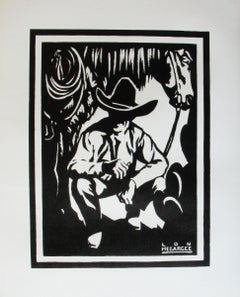
Mostra tuttoIl Bronco di Lon Megargee
Lon Megargee 1883-1960
"Il Bronco"
Stampa su Wood block
Firmato sulla lastra, in basso a destra
Dimensioni dell'immagine: 9 x 10 pollici
Dimensioni della cornice 21 x 21,5 pollici
C...
Categoria
Inizio XX secolo, Impressionismo americano, Stampe figurative
Materiali
Xilografia
Hopi di Lon Megargee, stampa originale a blocchi firmata del 1920 ca. 1920s
Titolo: Hopi, anni '20 circa
Artistics: Lon Megargee
Mezzo di comunicazione: Stampa a blocchi
Dimensioni: 11 x 11 pollici (misura a vista)
LE SPESE DI SPEDIZIONE INCLUDONO LA SPEDIZ...
Categoria
Anni 1920, Impressionismo americano, Stampe figurative
Materiali
Xilografia
Longhorns di Lon Megargee
Lon Megargee 1883-1960
"Autoritratto"
Stampa su Wood block
Firmato sulla lastra, in basso a destra
Dimensioni dell'immagine: 15,63 x 12 pollici
Dimensioni della cornice xx xx pollici...
Categoria
Anni 1930, Impressionismo americano, Stampe (animali)
Materiali
Schermo
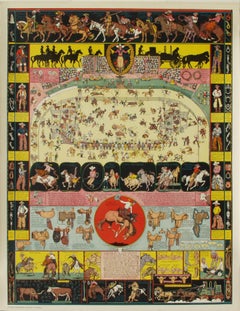
Jo Mora, Evoluzione del cowboy 1933, da Jo Mora Estate
"L'ULTIMO IN OTTIME CONDIZIONI".
L'evoluzione del cowboy, 1933
Litografia originale
Ottime condizioni, arrivato direttamente da Jo Mora Jr.
Senza cornice!
LE SPESE DI SPEDIZIONE IN...
Categoria
Anni 1930, Altro stile artistico, Altre stampe
Materiali
Litografia
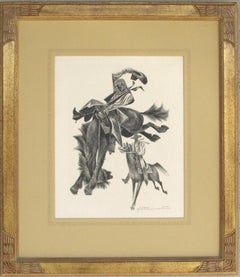
High Wide and Handsome di Fletcher Martin 1953, litografia originale di A. Stone
Di Fletcher Martin
LE SPESE DI SPEDIZIONE INCLUDONO LA SPEDIZIONE, L'IMBALLAGGIO E LA **ASSICURAZIONE**.
Fletcher Martin
Dimensioni: 16 x 12 pollici
Litografia di Stone
Cornice 25 x 21 pollici
Alto, l...
Categoria
Anni 1950, Contemporaneo, Stampe figurative
Materiali
Litografia
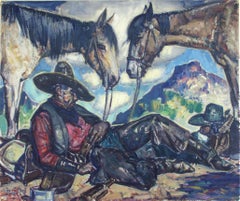
Siesta di Lon Megargee 1929, stampa su archivio
Tequila Siesta
Lon Megargee
Stampa a pigmenti d'archivio
100% carta di cotone da 300 grammi
Dimensioni: 22,5 x 27 pollici
Formato carta: 24 x 28,5 pollici
Creatore dell'iconico logo della Stetson Hat...
Categoria
Anni 1920, Stampe figurative
Materiali
Pigmento d archivio
Ti potrebbe interessare anche
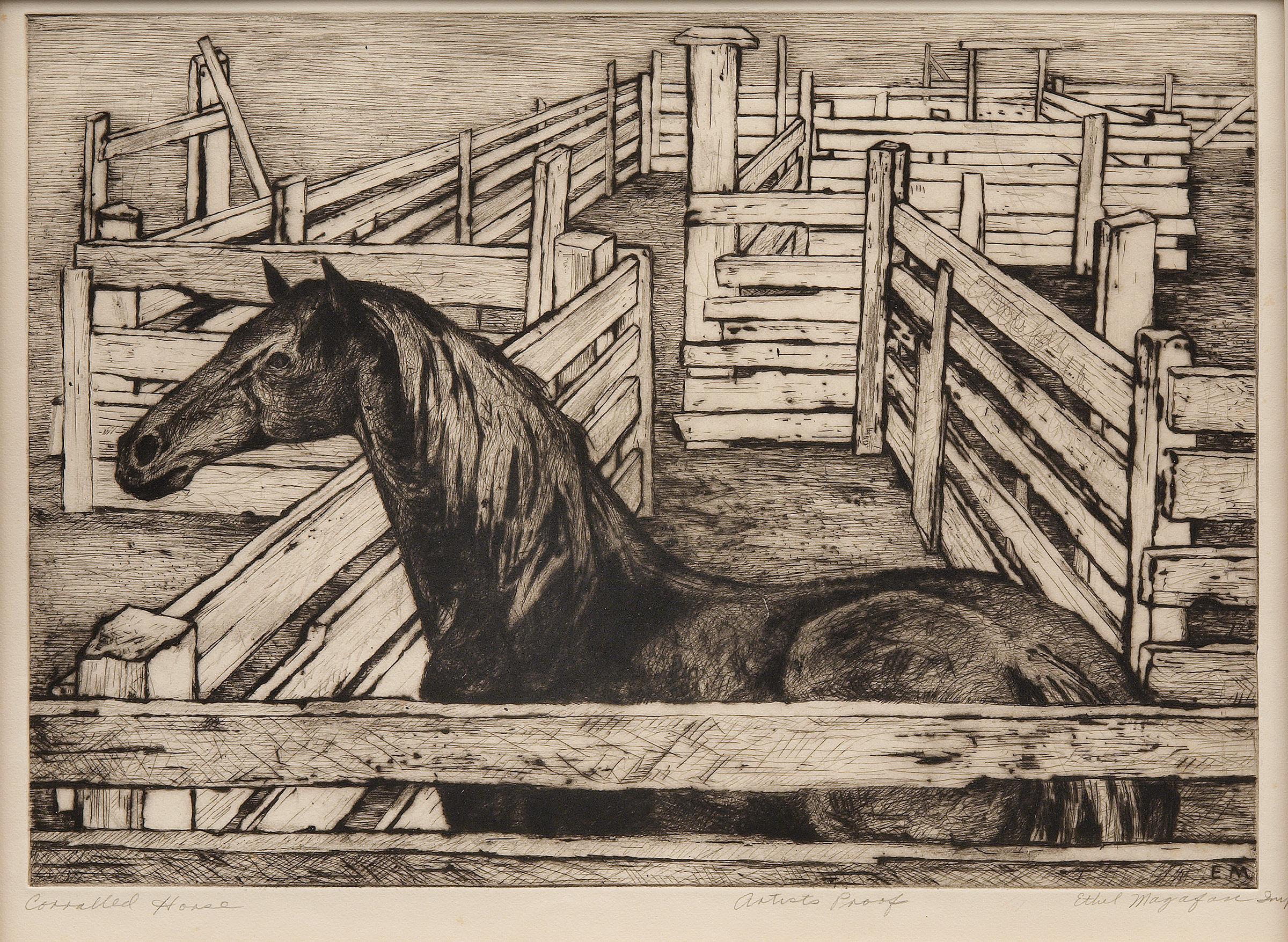
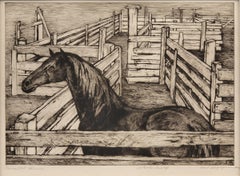
Cavallo al pascolo, acquaforte modernista americana WPA degli anni
40, prova d
artista
Di Ethel Magafan
"Corralled Horse" è un'acquaforte modernista degli anni '40 della WPA dell'acclamata artista americana Ethel Magafan (1916-1993), famosa per i suoi murales dinamici e le sue evocativ...
Categoria
Anni 1940, American Modern, Stampe figurative
Materiali
Acquaforte
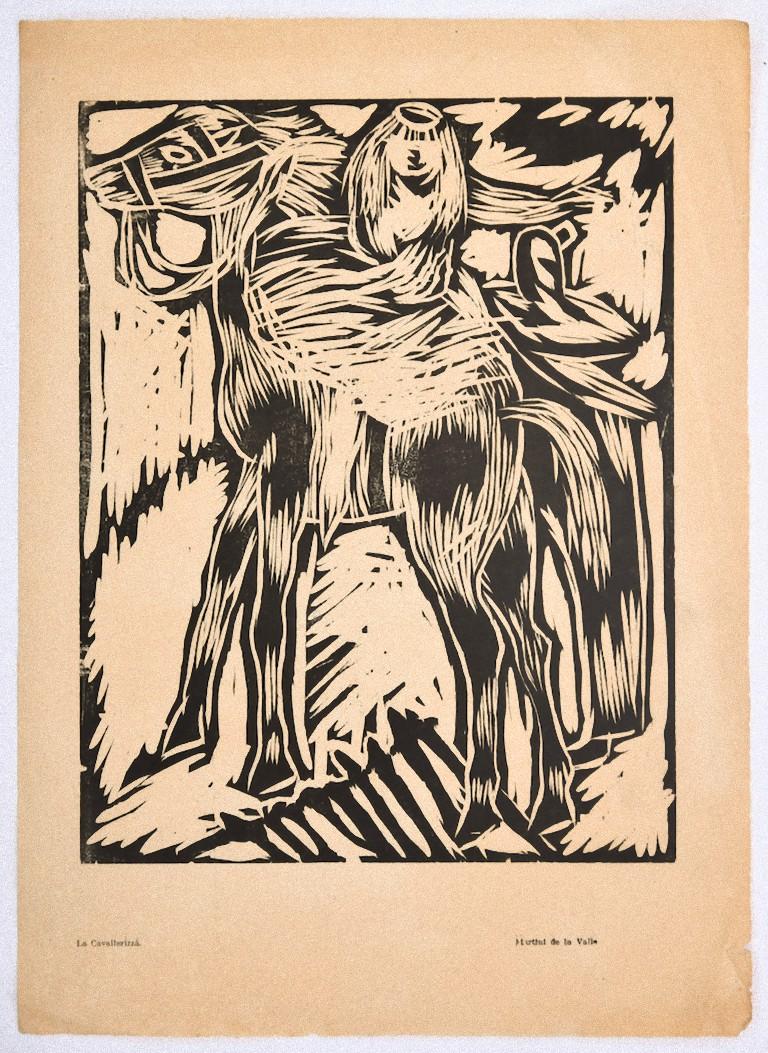
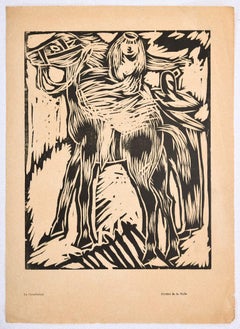
Cavalliera - Stampa xilografica originale di Arturo Martini - Inizio XX secolo
Di Arturo Martini
La cavallerizza è una stampa xilografica su avorio, realizzata all'inizio del XX secolo dall'artista italiano Arturo Martini (Treviso, 1889 - Milano, 1947).
Sul margine inferiore, l...
Categoria
Inizio XX secolo, Stampe figurative
Materiali
Xilografia
6650 € Prezzo promozionale
30% in meno
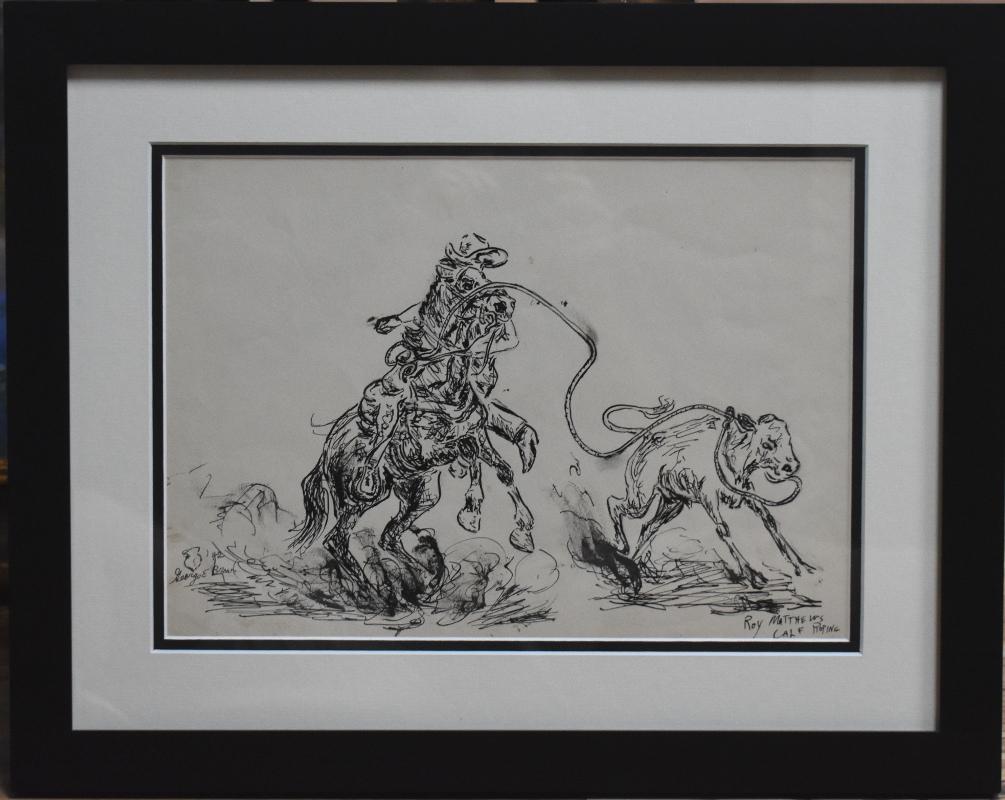
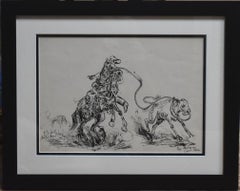
"Roy A. Matthews Calf Roping" Famoso cavaliere di rodeo degli anni 1930/40
Pepe marrone
(1926-1999)
Artista alpino
Dimensioni immagine: 9 x 13
Dimensioni della cornice: 15 x 18,75
Mezzo di comunicazione: Disegno a inchiostro
Datato 1942
"Roy A. Matthews Ca...
Categoria
Anni 1940, Impressionismo, Disegni e acquarelli (animali)
Materiali
Inchiostro
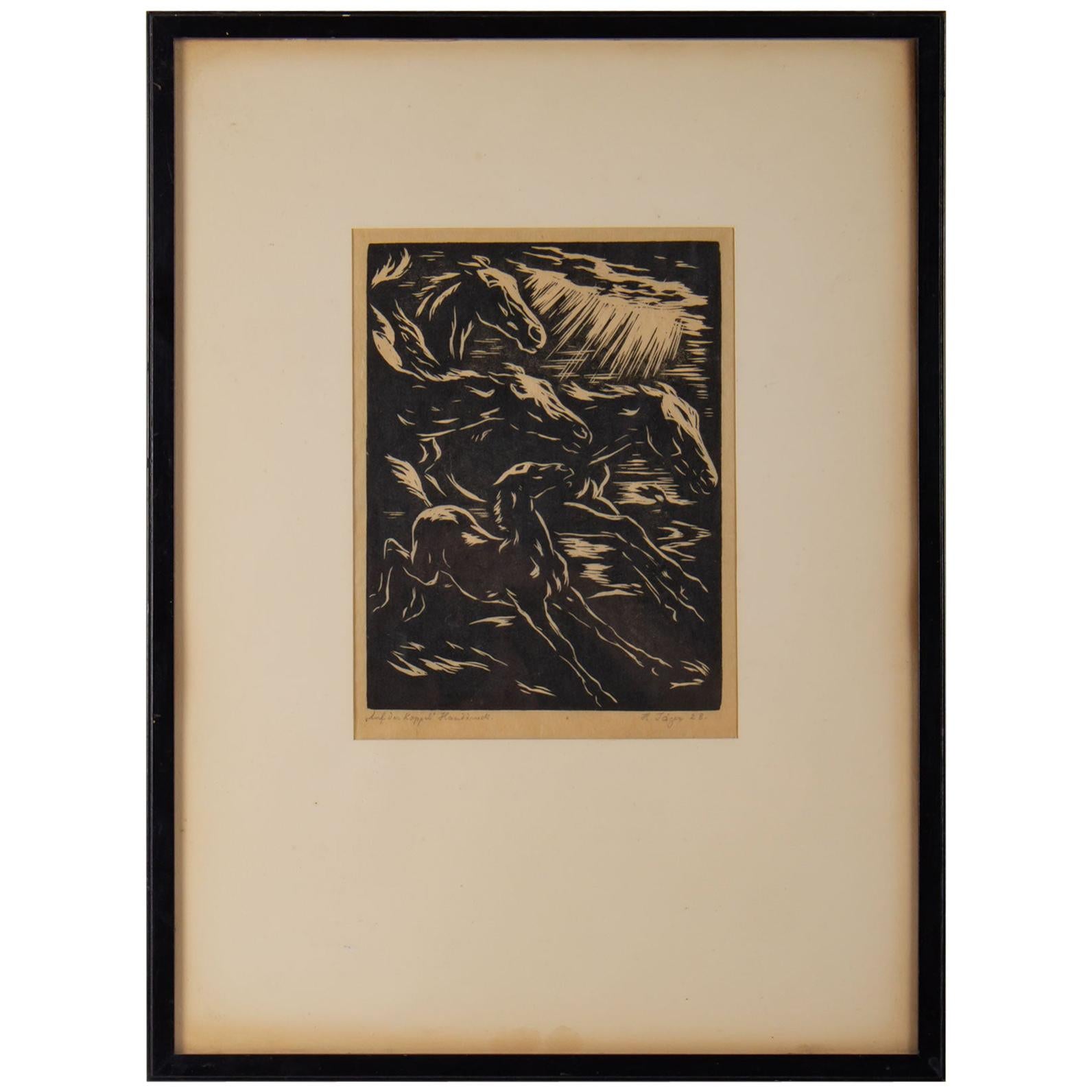
Incisione, firmata, 1928, raffigurante cavalli stilizzati che corrono, incorniciata
Incisione, firmata, 1928, rappresentante cavalli stilizzati in corsa, incorniciata
Misure: Telaio H 46cm, L 34cm, L 1cm
Incisione H. 22 cm, L. 16 cm.
Categoria
Inizio XX secolo, Francese, Art Déco, Stampe
Materiali
Carta
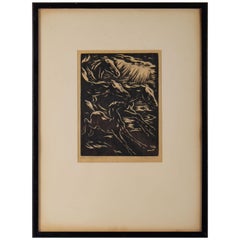
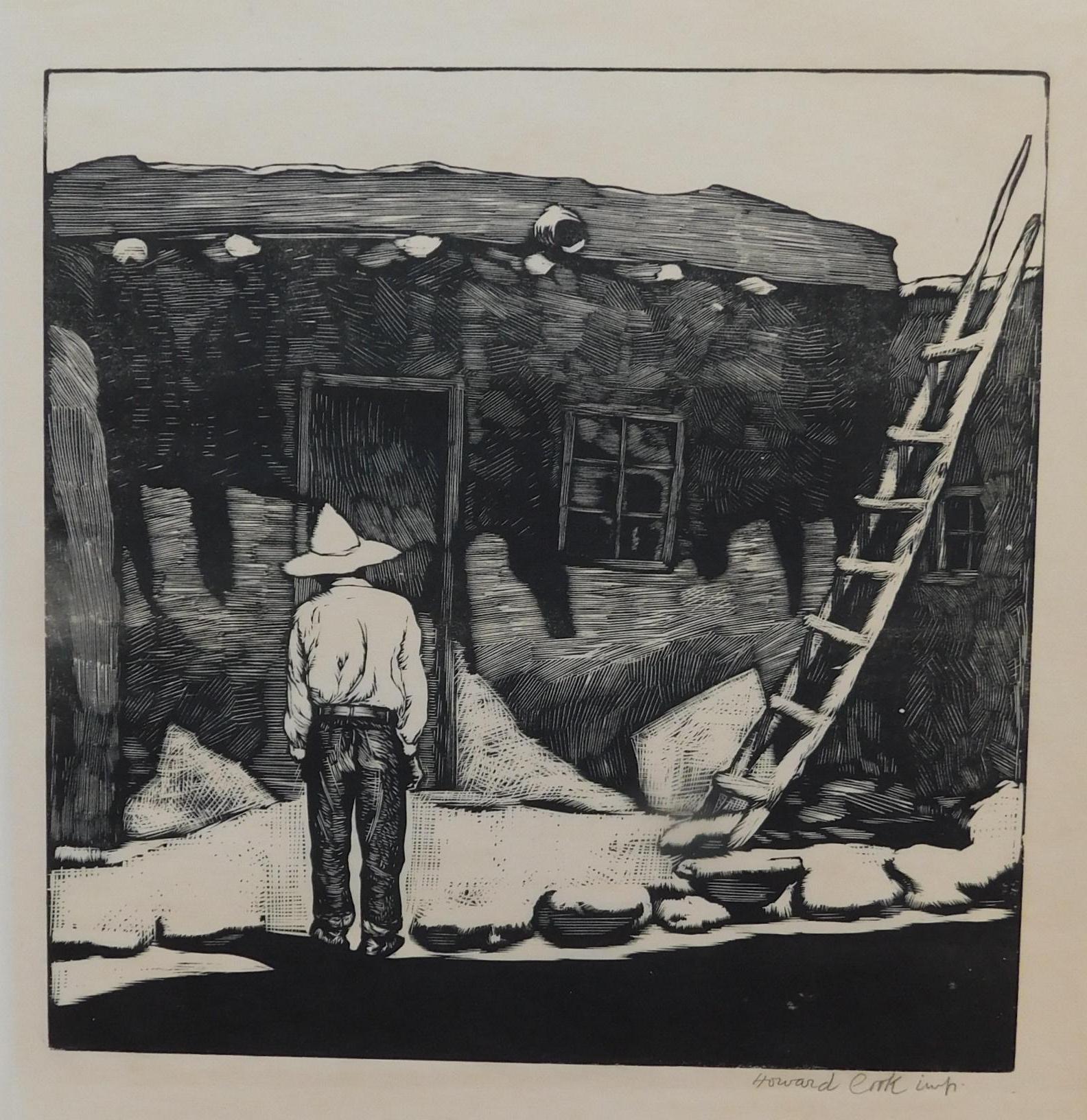
Howard Cook, artista di Taos, xilografia originale, 1927 - Casa Hopi
Di Howard Norton Cook
Stampa xilografica originale dell'artista di Taos Howard Cook, 1927.
Titolo: "Casa Hopi". Duffy #47. Firmato a matita in basso a destra.
Dimensioni dell'immagine: 8 "h x 8 "w. Forma...
Categoria
Metà XX secolo, Stampe (paesaggio)
Materiali
Carta, Inchiostro
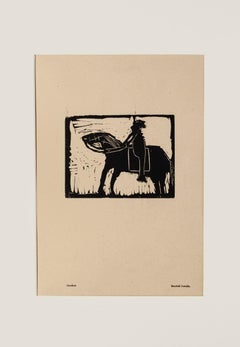
Cavaliere - Stampa xilografica originale di Amadore Porcella - Inizio XX secolo
Di Amadore Porcella
Knight è una stampa xilografica originale realizzata da Amadore Porcella.
Lo stato di conservazione delle opere d'arte è molto buono.
Dimensioni del passepartout: 52 x 37 cm.
L'...
Categoria
Inizio XIX secolo, Moderno, Stampe figurative
Materiali
Xilografia
260 € Prezzo promozionale
35% in meno