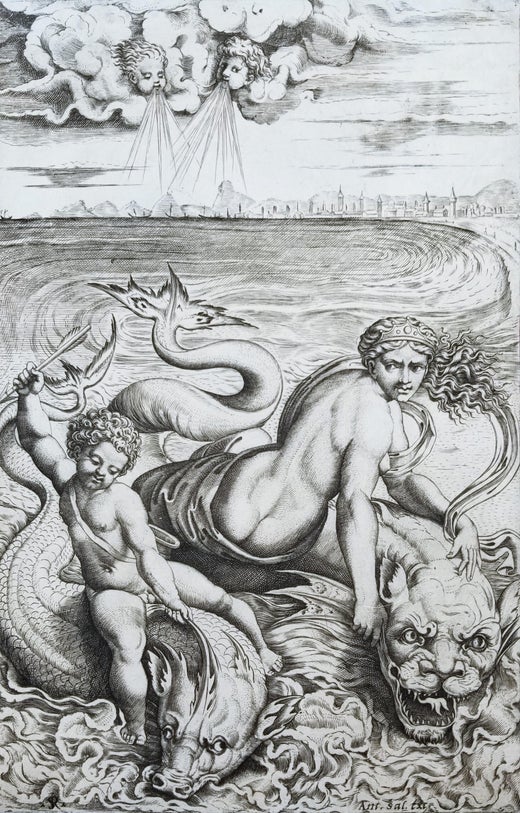
Articoli simili a Venere e Amore sui Delfini (Venus and Cupid on Dolphins) /// Old Masters Raphael
Vuoi altre immagini o video?
Richiedi altre immagini o video al venditore
1 di 22
Marco DenteVenere e Amore sui Delfini (Venus and Cupid on Dolphins) /// Old Masters Raphael1515-1520
1515-1520
4331,40 €
Informazioni sull’articolo
Artist: Marco Dente da Ravenna (Italian, 1493-1527)
Title: "Venere e Amore sui Delfini (Venus and Cupid on Dolphins)"
*Monogram signed by Dente in the plate (printed signature) lower left
Circa: 1515-1520 (second state of three)
Medium: Original Engraving on laid paper
Limited edition: Unknown
Printer: Unknown
Publisher: Antonio Salamanca, Rome, Italy
Reference: Bartsch XIV, page 244, No. 324; Passavant VI, page 69, No. 32; Le Blanc, II, page 111, No. 16; Imolesi Pozzi pages 71-72, 113, No. 10
Framing: Recently beautifully framed, the sheet is museum mounted, floated over a 100% cotton rag mat in a modern gold moulding and Museum glass
Framed size: 16.88" x 13.07"
Sheet size: 10.63" x 6.94"
Condition: Thread margins. A strong impression in excellent condition
Very rare
Notes:
Provenance: private collection - Périgueux, France. This work is also sometimes referred to as "Venus and Cupid riding two sea monsters, Cupid raises an arrow in his right hand, two heads representing wind in the clouds above". The engraver's monogram "SR" lower left. Published by Antonio Salamanca (1478-1562) in Rome, Italy with his address printed lower right: "Ant. Sal. Exc.". No watermark found. This engraving is after a drawing by Italian artist Raphael aka Raffaello Sanzio da Urbino (1483-1520).
"This engraving by Marco Dente is after a design by Raphael, now lost, used by Giulio Romano for his fresco on the south wall of the Stufetta of cardinal Bibbiena - a small room in the Apostolic Palace, at the Vatican, that originally served as a washroom for the cardinal. The engraving differs from the fresco in some details, such as the cityscape in the background and the two winds above, which may indicate that these elements were present in Raphael's drawing. " - Christie's, London
Biography:
Marco Dente da Ravenna (1493–1527), usually just called Marco Dente, was an Italian engraver born in Ravenna in the latter part of the 15th Century. He was a prominent figure within the circle of printmakers around Marcantonio Raimondi in Rome, and is known for the imitative nature of the reproductive prints or close copies of other prints that were most of his output. His prints in specific cases are also of certain interest in that we can see the impact and design of sculptural restorations. Marco Dente was killed in the tumult of the Sack of Rome in 1527. He used the accompanying monogram, D-B; albeit sparingly. Marco Dente is not a well-known figure in the Renaissance. The reproductive nature of his works contributed to the subversion of his identity. There was much debate surrounding the attribution of artists within Marcantonio Raimondi's School, and their respective plates. Also contributing to the subversion of his identity was that every plate in Dente's studio was destroyed during the Sack of Rome. Marco Dente was killed in the same war; and very few of his plates were later reissued by publishers.
The artist was a member of a patrician family who grew up and lived in Ravenna for the majority of his life. He was an integral member of Marcantonio Raimondi's school of art, joining in 1516; Dente was likely an apprentice alongside Agostino di Musi, another Italian engraver. Dente and Agostino di Musi formed the first generation of Marcantonio's school. However, between the two artists, Dente was considered to have come closest to mastering the technique of engraving. The characteristic that defines Marco Dente's work is the reproductive nature of his works. The reproductive nature of Dente's work served three functions. The first was to replicate an event in history; the second was to advance financially; the third was to produce with an intent to distribute the print, and as an extension, the print's conceptual elements too. There was a growing demand for depictions of antique relief in the middle of the sixteenth century. The school's commercial function was facilitated by the markets within La Bottega del Cartolaio; this is largely where prints by Marcantonio and Marco Dente were able to be exchanged or acquired.
Raphael (Italian, 1483-1520) was a seminal Italian painter of the High Renaissance period. Admired for his ability to organize forms and color into clear and graceful compositions, Raphael portrayed scenes with delicate lines and subtle shading, evoking a Platonic ideal of serenity and beauty. In perhaps his best-known work, The Sistine Madonna (1513-1514), the artist conveyed an elaborate scene in which wistful cherubs gaze up at the Virgin Mary, two saints, and her son. Born Raffaello Sanzio on April 6, 1483 in Urbino, Italy, his father was the painter Giovanni Santi who became the young artist’s first instructor. By the age of 17, Raphael was already considered a precocious talent, producing paintings influenced by the work Piero della Francesca. Around the year 1500, he apprenticed with Pietro Perugino, helping the elder artist to produce an important fresco commission in Perugia, an experience that had a profound influence on the young Raphael. Moving to Florence in 1504, he was immersed in the milieu of the one the great epochs of art history, while in the city he studied the works of both Leonardo da Vinci and Michelangelo. Called by Pope Julius II to Rome in 1508, Rapahel was hired to complete a cycle of frescoes in the papal apartments inside the Vatican, he would live in the city the next 12 years. The artist died on his 37th birthday on April 6, 1520 in Rome, Italy. According to his biographer Giorgio Vasari, Raphael’s premature death was caused by a fever brought on by excessive lovemaking with his mistress Luti. Today, his works are held in the collections of the Alte Pinakothek in Munich, the Hermitage Museum in St. Petersburg, the Louvre Museum in Paris, the National Gallery in London, the Rijksmuseum in Amsterdam, and the Metropolitan Museum of Art in New York, among others.
- Creatore:Marco Dente (1493 - 1527, Italiano)
- Anno di creazione:1515-1520
- Dimensioni:Altezza: 42,88 cm (16,88 in)Larghezza: 33,2 cm (13,07 in)
- Tecnica:
- Movimento e stile:
- Periodo:
- Condizioni:
- Località della galleria:Saint Augustine, FL
- Numero di riferimento:1stDibs: LU121217369532
Marco Dente da Ravenna (1493-1527), solitamente chiamato semplicemente Marco Dente, è stato un incisore italiano nato a Ravenna nella seconda parte del XV secolo. An He fu una figura di spicco all'interno della cerchia di stampatori intorno a Marcantonio Raimondi a Roma ed è noto per la natura imitativa delle stampe riproduttive o copie ravvicinate di altre stampe che costituivano la maggior parte della sua produzione. Anche le sue stampe in casi specifici sono di un certo interesse in quanto possiamo vedere l'impatto e il design dei restauri scultorei. Marco Dente fu ucciso nel tumulto del Sacco di Roma del 1527. Utilizzò il monogramma di accompagnamento, D. A., anche se con parsimonia. Marco Dente non è una figura nota del Rinascimento. La natura riproduttiva delle sue opere ha contribuito alla sovversione della sua identità. C'è stato un grande dibattito sull'attribuzione degli artisti della Scuola di Marcantonio Raimondi e delle rispettive tavole. A contribuire alla sovversione della sua identità fu anche il fatto che tutte le lastre dello studio di Dente andarono distrutte durante il Sacco di Roma. Marco Dente fu ucciso nella stessa guerra e pochissime delle sue tavole furono successivamente ristampate dagli editori. L'artista era un membro di una famiglia patrizia che crebbe e visse a Ravenna per la maggior parte della sua vita. Fu un membro integrante della scuola d'arte di Marcantonio Raimondi, di cui entrò a far parte nel 1516; Dente fu probabilmente un apprendista insieme ad Agostino di Musi, un altro incisore italiano. Dente e Agostino di Musi formarono la prima generazione della scuola di Marcantonio. Tuttavia, tra i due artisti, si ritiene che Dente si sia avvicinato di più alla padronanza della tecnica dell'incisione. La caratteristica che definisce il lavoro di Marco Dente è la natura riproduttiva delle sue opere. La natura riproduttiva del lavoro di Dente aveva tre funzioni. Il primo era quello di replicare un evento storico; il secondo era quello di ottenere un vantaggio economico; il terzo era quello di produrre con l'intento di distribuire la stampa e, per estensione, anche gli elementi concettuali della stampa stessa. A metà del Cinquecento si registrò una crescente domanda di raffigurazioni di rilievi antichi. La funzione commerciale della scuola era facilitata dai mercati all'interno de La Bottega del Cartolaio; è qui che le stampe di Marcantonio e Marco Dente potevano essere scambiate o acquistate.
Informazioni sul venditore
5,0
Venditore Platino
Venditori Premium con valutazione 4.7+ e tempi di risposta entro 24 ore
Fondazione nel 1978
Venditore 1stDibs dal 2015
1366 vendite su 1stDibs
Tempo di risposta standard: <1 ora
- SpedizioneRecupero del preventivo…Spedizione da: Saint Augustine, FL
- Politica di reso
Alcune parti di questa pagina sono state tradotte automaticamente. 1stDibs non può garantire che le traduzioni siano corrette. L’inglese è la lingua predefinita del sito.
Altro da questo venditore
Mostra tuttoL
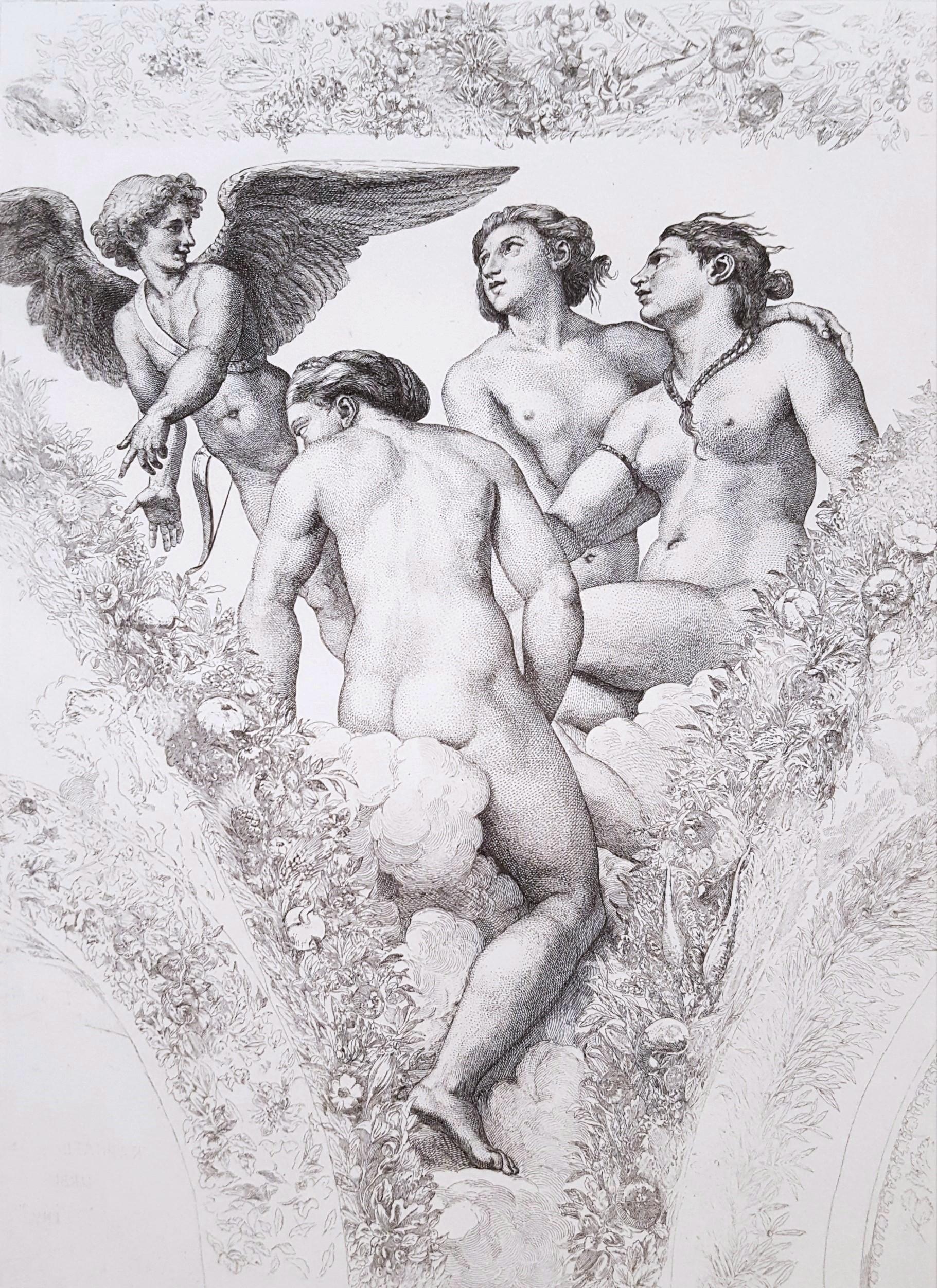
Amour Montrant Psyche Aux Graces /// Mitologia rinascimentale Raphael Classics
Di (after) Raphael (Raffaello Sanzio da Urbino)
Artista: (dopo) Raffaello (italiano, 1483-1520)
Titolo: "L'Amour Montrant Psyche Aux Graces
Portafoglio: Art Gazette des Beaux-Arts
Anno: 1883
Medio: Acquaforte originale su chine ap...
Categoria
Anni 1880, Antichi maestri, Stampe (nudo)
Materiali
Acquaforte, Intaglio
Aurora sive Tempus Matutinum; Der Wohl und Übel angewandte Morgen /// Old Master
Artista: (dopo) Johann Daniel Preissler (tedesco, 1666-1737)
Titolo: "Aurora sive Tempus Matutinum; Der Wohl und Übel angewandte Morgen (L'ora dell'alba o del mattino; Il mattino usa...
Categoria
Anni 1720, Antichi maestri, Stampe figurative
Materiali
Carta vergata, Incisione, Acquaforte
Il Nuovo Testamento /// Antichi maestri Incisione religiosa biblica Art Angels olandese
Di Michael Burghers
Artista: Michael Burghers (olandese, 1647/1648-1727 ca.)
Titolo: "Il Nuovo Testamento
Portafoglio: Sacra Bibbia
*Firmato da Burghers nella lastra (firma stampata) in basso a sinistr...
Categoria
Anni 1680, Antichi maestri, Stampe figurative
Materiali
Acquarello, Carta vergata, Incisione, Acquaforte, Intaglio
La Femme Muse /// Simbolismo Allegorico Romantico Antichi Maestri Disegno Europeo
Artista: Sconosciuto (probabilmente francese, XVIII secolo)
Titolo: "La Femme Muse"
*Nessuna firma trovata
Circa: 1780
Medio: Disegno originale a pastello su carta pesante
Incornicia...
Categoria
Anni 1780, Antichi maestri, Disegni e acquarelli figurativi
Materiali
Pastelli, Carta vergata
Vespera; Der Abend (Sera; La sera) /// Johann Daniel Preissler Vecchio Maestro
Artista: (dopo) Johann Daniel Preissler (tedesco, 1666-1737)
Titolo: "Vespera; Der Abend (Sera; La sera)"
Portfolio: Die Vier Tageszeiten (Le quattro ore del giorno)
Anno: 1723
Medio...
Categoria
Anni 1720, Antichi maestri, Stampe figurative
Materiali
Carta vergata, Incisione, Acquaforte
Set di due incisioni da Cipriani "Quattro Muse" e "Padre e due figlie".
Di Francesco Bartolozzi
Artista: Francesco Bartolozzi (italiano, 1727-1815)
Titolo: "Quattro muse" e "Padre e due figlie".
Portfolio: Rudimenti di disegno
*Immesso senza firma, ma entrambi sono firmati da B...
Categoria
Anni 1780, Antichi maestri, Stampe figurative
Materiali
Incisione, Acquaforte
Ti potrebbe interessare anche
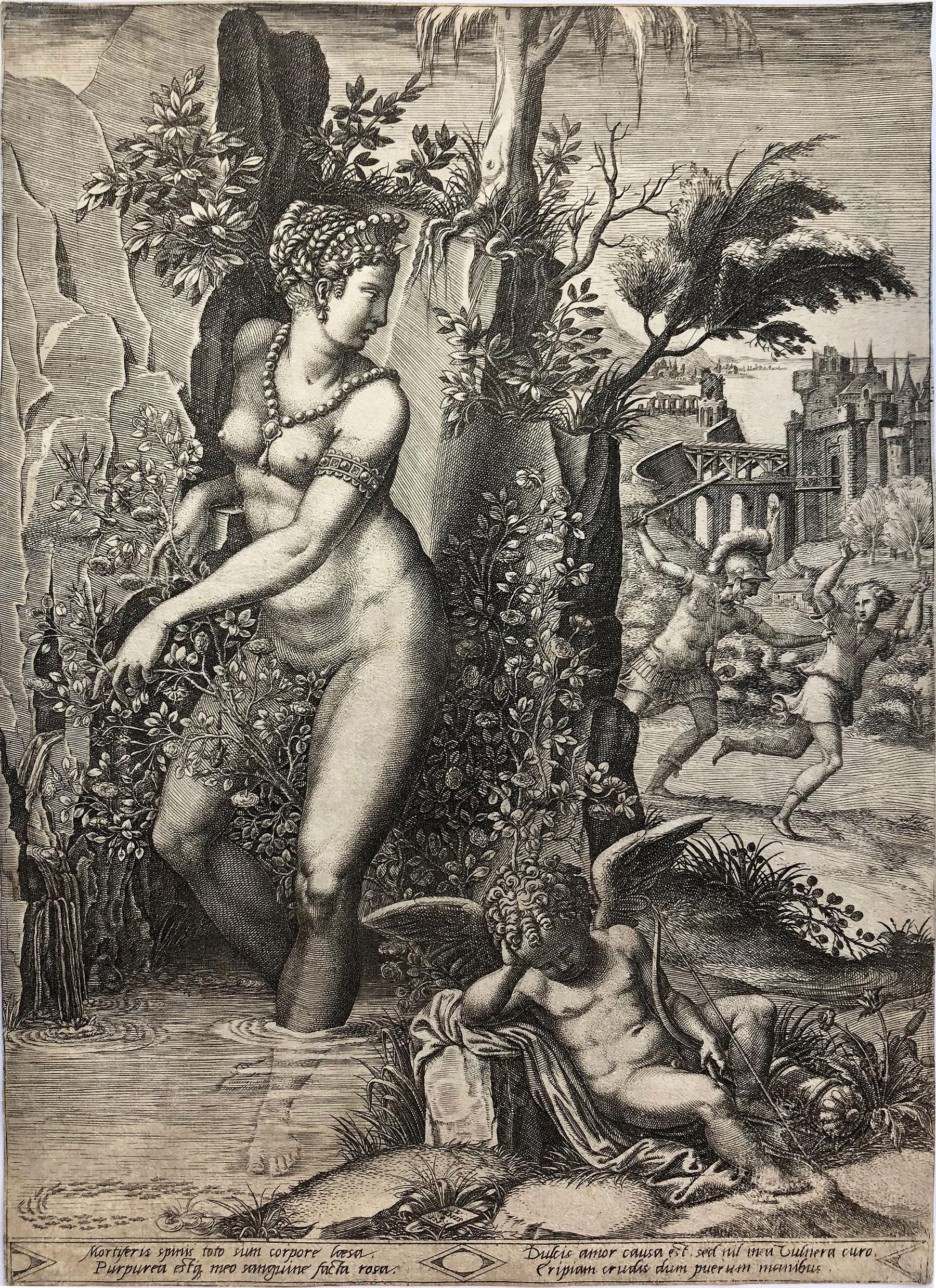
Venere e la Rosa (2° Stato)
Di Giorgio Mantovano Ghisi
Incisione da Luca Penni
Categoria
XVI secolo, Antichi maestri, Stampe e riproduzioni
Materiali
Incisione
Venus l
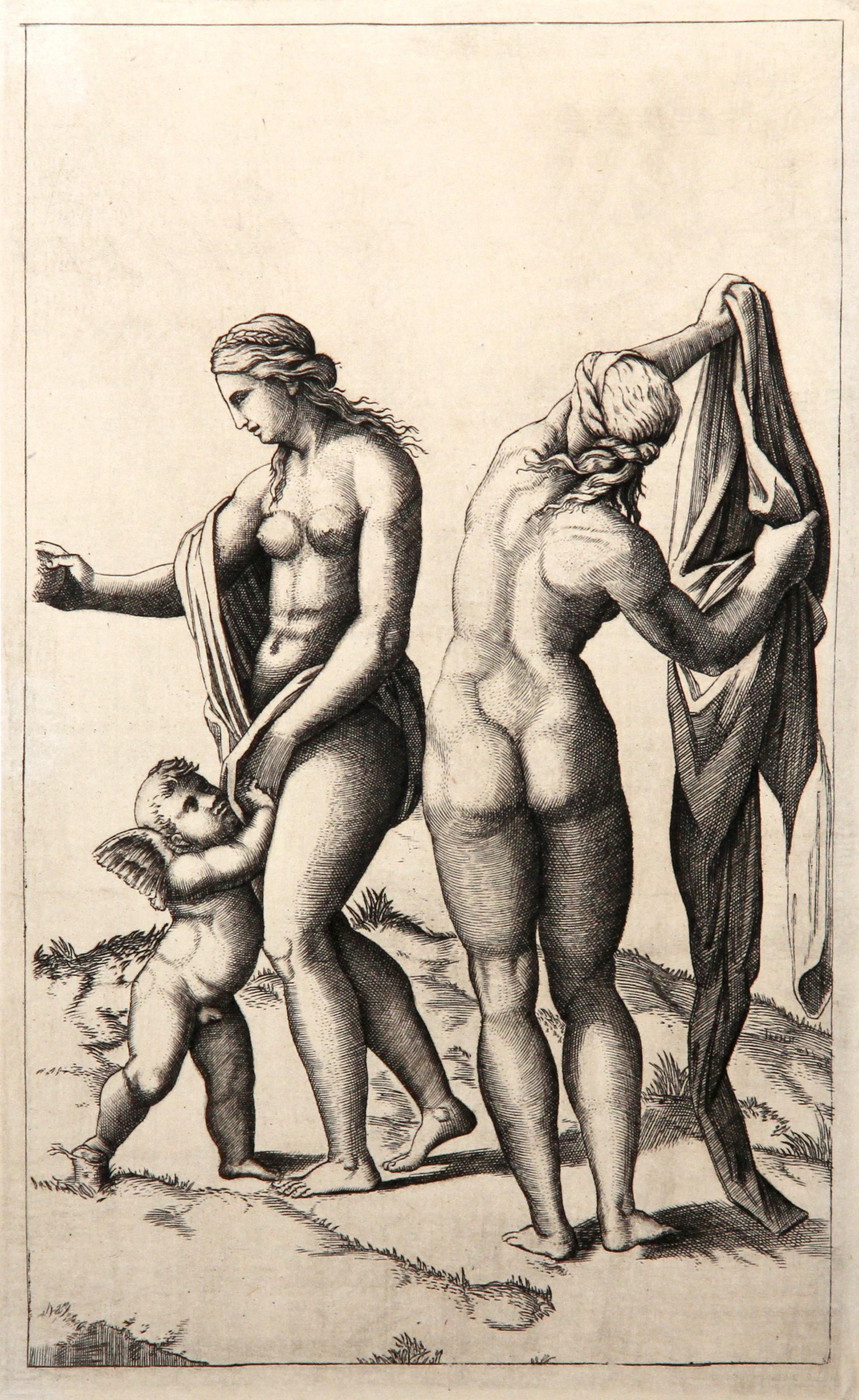
Amour et Pallas, Eliografia di Marco Dente
Marco Dente, Dopo Amand Durand, Italiano (1493 - 1527) - Venus l'Amour et Pallas, Anno: circa 1878, Medium: Heliogravure, Dimensioni: 9 x 5.5 in. (22.86 x 13,97 cm), Stampatore: A...
Categoria
Anni 1870, Antichi maestri, Stampe e riproduzioni
Materiali
Acquaforte
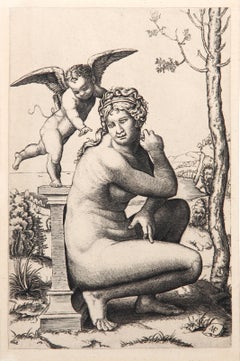
Venere Accroupie, Eliografo di Marcantonio Raimondi
Di Marcantonio Raimondi
Marcantonio Raimondi, dopo Amand Durand, italiano (1480 - 1534) - Venere Accroupie, Anno: 1875, Medium: Heliogravure, Dimensioni: 9.25 x 6 in. (23.5 x 15,24 cm), Stampatore: Amand...
Categoria
Anni 1870, Antichi maestri, Stampe e riproduzioni
Materiali
Acquaforte
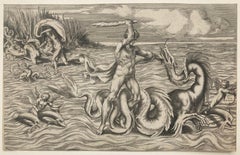
HERCULES combatte contro ADRAGON al centro, ACHELOUS porta via DEIANEIRA a sinistra
Di Giulio Bonasone
GIULIO BONASONE (Italiano 1500/10-1574)
HERCULES FiGHTS ADRAGON al centro, ACHELOUS CARRYING OFF DEIANEIRA a sinistra 1531-76 (Bartsch XV.157.178; Massari 1983, n.230)
Incision...
Categoria
XVI secolo, Antichi maestri, Stampe figurative
Materiali
Incisione
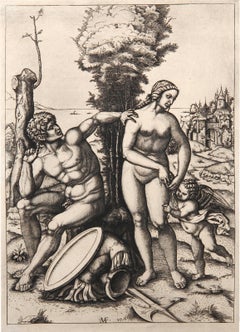
Marli, Venere e l
amore, Eliografia di Marcantonio Raimondi
Di Marcantonio Raimondi
Marcantonio Raimondi, Dopo Amand Durand, Italiano (1480 - 1534) - Mars Venus et l'amour, Anno: 1875, Medium: Heliogravure, Dimensioni: 12 x 8.5 in. (30.48 x 21,59 cm), Stampatore:...
Categoria
Anni 1870, Antichi maestri, Stampe e riproduzioni
Materiali
Acquaforte
La Vierge au Poisson (d
apres Raphael), Eliografia di Marco Dente
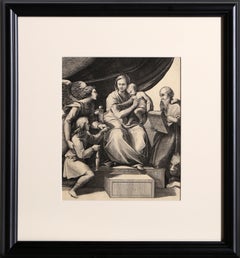
Marco Dente, Dopo Amand Durand, Italiano (1493 - 1527) - La Vierge au Poisson (d'apres Raphael), Anno: circa 1878, Medium: Heliogravure, Dimensioni immagine: 10 x 8.5 pollici, Dimen...
Categoria
Anni 1870, Antichi maestri, Stampe figurative
Materiali
Acquaforte