Items Similar to Victorian Crescent Moon Brooch
Want more images or videos?
Request additional images or videos from the seller
1 of 13
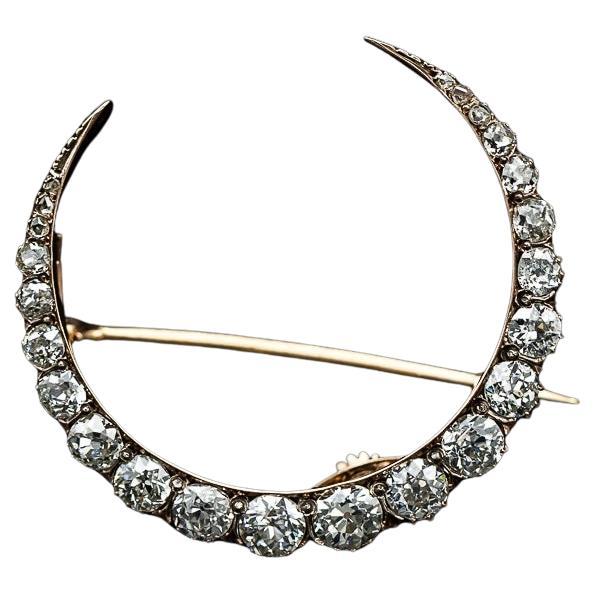
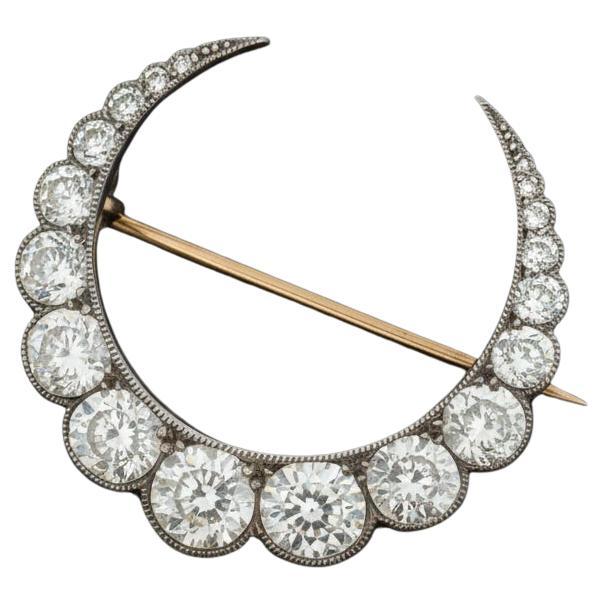
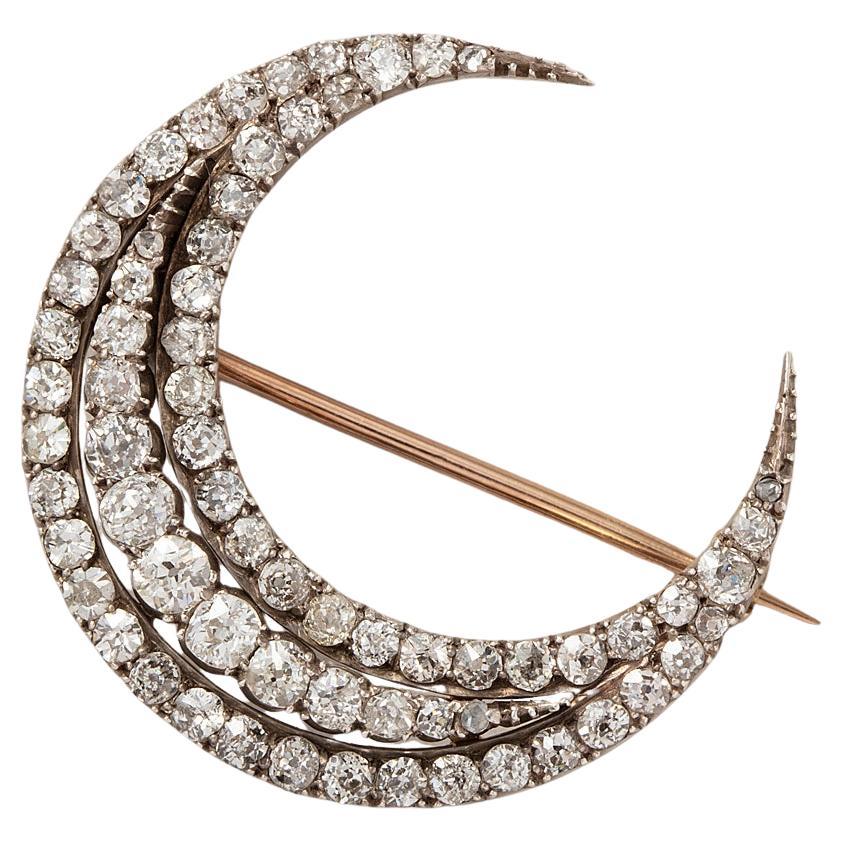
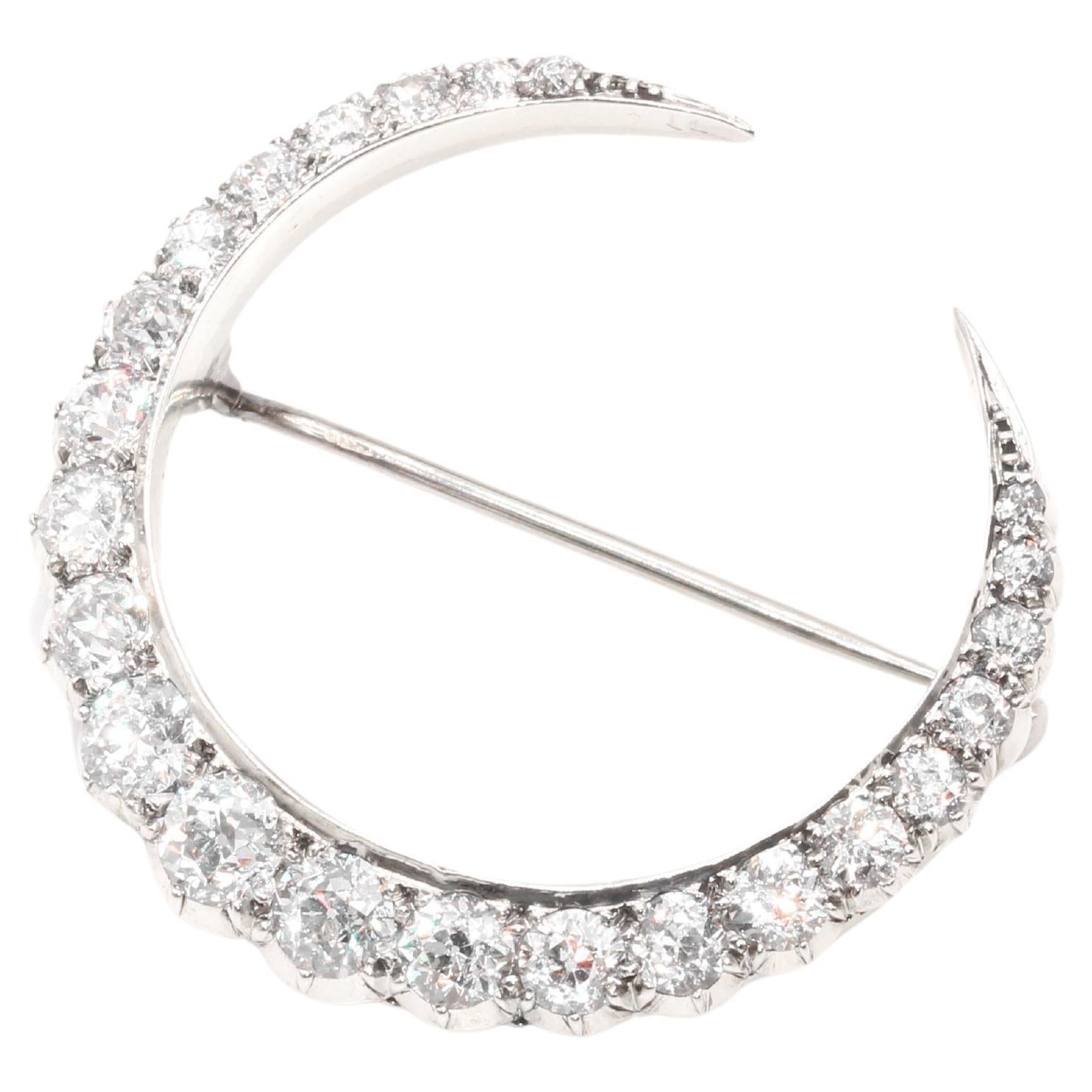
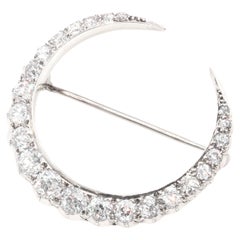
Victorian Crescent Moon Brooch
$6,568.79
£4,810
€5,599.13
CA$9,049.70
A$9,862.59
CHF 5,222.66
MX$118,460.04
NOK 66,120.09
SEK 60,790.92
DKK 41,819.33
About the Item
This enchanting Victorian crescent moon brooch, circa 1890, showcases approximately 2.5 carats of old cushion-cut diamonds, each set in crimped silver collet mounts against a warm gold backing. The open gallery design allows light to pass through the diamonds, enhancing their sparkle and making cleaning of the stones easy.
The crescent moon was a beloved symbol in Victorian jewellery, representing the feminine moon goddess and embodying new beginnings. Jewellery featuring celestial motifs, like comets and stars, was particularly popular during this period, with crescent moons capturing the essence of renewal and femininity. Brooches were essential accessories in Victorian fashion, often adorning the silhouette of a corset.
Unmarked, the gold tests as 15K. This brooch measures 22mm by 23mm and weighs 3.9 grams. Its bright diamonds, though some are naturally included, retain a lively sparkle that adds charm to this beautiful piece of Victorian symbolism.
A similar example can be found in the Victoria
Albert Museum in London (Accession number M.98-1978).
- Metal:15k Gold,Silver
- Stone:Diamond
- Stone Cut:Cushion Cut
- Weight:3.9 g
- Dimensions:Width: 0.91 in (23 mm)Length: 0.87 in (22 mm)
- Style:Victorian
- Period:Late 19th Century
- Date of Manufacture:1890
- Condition:
- Seller Location:London, GB
- Reference Number:Seller: 101541stDibs: LU2845224679712
About the Seller
5.0
Vetted Professional Seller
Every seller passes strict standards for authenticity and reliability
Established in 2019
1stDibs seller since 2022
47 sales on 1stDibs
- ShippingRetrieving quote...Shipping from: London, United Kingdom
- Return Policy
More From This Seller
View AllAntique Mid-19th Century, French 18K Agate and Rose Cut Diamond Cluster Ring
Located in London, GB
This stunning antique cluster ring was made in France and dates to around the mid 19th century, circa 1860. In the centre rests a smooth banded agate in an open back setting, encircled by a halo of rose cut diamonds in closed-back, cutdown silver settings with a combined approximate weight of 0.15 carats. The ring has a decorative pierced gallery in the form of crescents and a solid semi-circular shank. The shoulders are decorated with two applied fleur-de-lis, each set with rose cut diamonds in silver settings.
The main colour of the milky agate is a creamy-brown hue with a darker brown band on one side. The diamonds are rose cut, the triangular facets of these cuts were very popular during the Georgian and Victorian periods as they glistened more beautifully in candlelight than any other cut.
This elegant ring sits flat on the finger, the stones are secure in their settings and the ring is in superb condition despite its significant age, a truly rare find!
UK size U / US size 10, 5.44g, French ’tête...
Category
Antique Mid-19th Century French Victorian Cluster Rings
Materials
Agate, Diamond, 18k Gold
Important 19th Century Royal Siam Diamond Cluster Ring Museum-Grade Thai
Located in London, GB
An outstandingly rare mid-19th century royal Siam diamond cluster ring, made by the royal goldsmiths of the court of Bangkok.
This is an extremely fine example of the jewellery commissioned and subsequently bestowed by the Kings of Siam, principally to be worn by participants in royal and aristocratic life-cycle ceremonies in the courts of Bangkok. In the mid-19th century, King Mongkut (Rama IV) of Siam also commissioned the courtly jewellers to create a number of faithful replicas of these ceremonial jewels to be offered as gifts to diplomatic families, important visitors and to Heads of State across the world when re-establishing diplomatic relationships. One such example (which is remarkably similar to the present ring) resides in the museum of the Château de Fontainebleau (item F1518C) where it was given as a gift from King Mongkut to Napoléon-III on the important ambassadorial visit of 1861 (see photos for a side by side comparison).
Ceremonial Use:
During the 19th century, many rings were made every year by the royal jewellers for ceremonial use. Examples of these lavish cluster rings being worn for these life-cycle ceremonies can be seen on old photos and paintings of the Royal Tonsure Ceremony, also known as ‘the cutting of the top-knot’ ceremony, which marked the transition from childhood into adulthood for all of the (many!) sons and daughters of the Siam royal family.
The huge expansion in the number of royals in 19th century Siam stemmed from Kings Mongkut (Rama IV) and Chulalongkorn (Rama V) being highly polygamous. They had a joint total of 124 wives and 159 royal children, each requiring their own ceremonial regalia and princely jewels. As a result, Bangkok became home to some incredibly skilled goldsmiths in this period. The Tonsure ceremony was performed by the King, and lasted three days and three nights. All of the royal children would be dressed in the most splendid costumes and adorned with a vast amount of jewels on several parts of the body. Their costumes and jewels differed according to their title and rank. Diamonds for instance, would be bestowed to the highest ranking noble children. The royal children were allowed to keep their regalia and jewels as a present on entering adulthood to indicate their social status among society.
Over the years, these royal jewels have been dispersed across the many noble families, with currently only a few important pieces remaining in the royal collection. Today, the number of royals in Thailand is contracting as the country follows the Chinese nobility system whereby with each generation the noble rank of a family decreases by one ranking so that eventually the majority of descendants will lose their noble status completely. This loss of royal privilege, coupled with the dilution of wealth has meant that items such as this ring become available on the open market. Following the end of the absolute monarchy in Thailand in 1932, many members of the royal family relocated to Europe and as a consequence, princely Thai items can occasionally be found in the European art market.
Gift Exchange:
In Siam culture, great importance is placed on the ancestral process of gift-exchange. During the reign of King Mongkut, close relationships with some powerful countries were cultivated in order to hold the balance of power and to save Siam from being colonised. The King used gift-exchange to establish diplomatic relations with other heads of state around the world, as well as with other kings, princes and sultans closer to home. He sent troupes of ambassadors to England (1857) and France (1861) with seemingly endless amounts of trunks filled with lavish gifts in order to dazzle the heads of state with the extraordinary quality and variety of Siam craftsmanship.
These gifts consisted of faithful replicas of the Royal Regalia and objects belonging to the King himself; items and jewellery worn by him on his Tonsure ceremony and on his coronation day. Enormous time and effort was required by the Siam court to assemble these numerous gifts, as they emanated from the very same royal goldsmiths and courtly craftsman who had made the original ceremonial items.
The most famous of these ceremonies took place at the Chateau de Fontainebleau in 1861. The painting by Jean-Léon Gérôme that immortalised the event prominently features the most spectacular of these gifts. Among the 150 gifts presented to Napoléon-III by the Siam ambassadors were two diamond-set rings, both of which are on display in the Musée du Chateau de Fontainebleau (item no. F1518C and F1519C). One of these rings is a rose cut diamond cluster and bears a striking resemblance to the ring we are offering. According to Bruley (2011), this ring, presented to Napoleon-III, was a faithful replica of the ring worn by King Mongkut on his own coronation day in 1851, which now resides in the Pavilion of Royal Regalia in Thailand.
The Ring:
From whichever angle the present ring is viewed, it is a masterpiece of design and a testament to the ingenuity and craftsmanship of the Siam royal goldsmiths. The bezel head is composed of two layers, the uppermost, containing the large triangle shaped table-cut diamond, is riveted to the main body of the ring. The second layer of the cluster is set with a further eight rose cut diamonds and this section allows for small rotation, typical of Siam jewellery...
Category
Antique Mid-19th Century Thai Victorian Cluster Rings
Materials
Diamond, 22k Gold
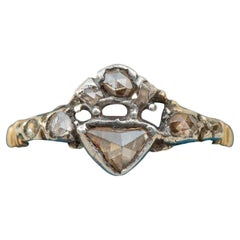
Rare Georgian Diamond Crowned Heart Ring Antique Engagement Ring c.1740 Rose Cut
Located in London, GB
This rare and enchanting early Georgian 'Crowned Heart' ring dates back to circa 1740, a stunning precursor to the modern engagement ring. Such rings were gifted as tokens of love an...
Category
Antique Mid-18th Century Rococo Engagement Rings
Materials
Diamond, 18k Gold, Silver
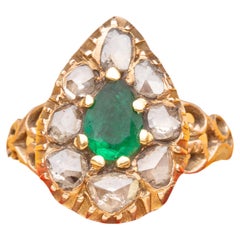
Antique 19th Century Emerald and Diamond Ring Pear Shaped Heart Ring Rose Cut
Located in London, GB
A gorgeous antique emerald and diamond ring dating to the 19th century. The central prong-set 0.3ct pear cut natural emerald displays a gorgeous lush green hue and great saturation. It is surrounded by a halo of rose cut diamonds in closed-back and foiled rubover settings. The triangular facets of rose cuts were very popular during the Georgian and Victorian periods as they glistened more beautifully in candlelight than any other cut.
The heart shaped bezel...
Category
Antique Mid-19th Century French Georgian Engagement Rings
Materials
Diamond, Emerald, 18k Gold
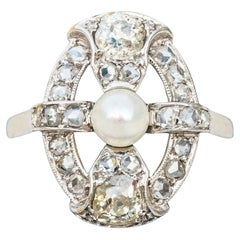
Antique French Art Deco Diamond Ring Platinum Old Cut Unusual Engagement
Located in London, GB
A superb example of early 20th-century French jewellery, this Art Deco period ring truly embodies the elegance and subtle symbolism of the jewels from this era. Crafted in platinum t...
Category
Vintage 1920s Art Deco Engagement Rings
Materials
Diamond, Cultured Pearl, Platinum
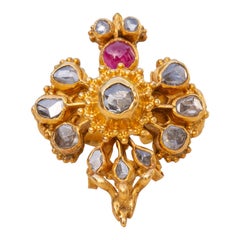
Antique Thai Siam 19th Century Gold Rose Cut Diamond and Ruby Garuda Bird Ring
Located in London, GB
A rare late 19th century gem-set princely gold ring made in Siam (Thailand). The ring takes the form of a mythical winged bird, possibly the Gar...
Category
Antique 19th Century Thai Cluster Rings
Materials
Diamond, Ruby, Gold
You May Also Like
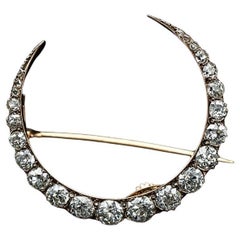
Antique Victorian Old Cut Diamond Crescent Moon Brooch in Rose Gold 19th Century
Located in Lisbon, PT
Antique Victorian old-cut diamond Crescent Moon brooch in rose gold, 19th Century. Modelled as a Crescent Moon, this jewel is composed by 23 Old European brilliant-cut and rose-cut d...
Category
Antique Late 19th Century Unknown Victorian Brooches
Materials
Diamond, Gold, Rose Gold
$15,317
Free Shipping
Victorian Crescent Moon Diamond Platinum/18K Yellow Gold Brooch
Located in Derby, NY
A refined Victorian brooch featuring old European cut diamonds set within a crescent moon silhouette. Crafted in platinum and 18K yellow gold, this piece combines two precious metals...
Category
Antique 19th Century Victorian Brooches
Materials
Diamond, 18k Gold, Platinum

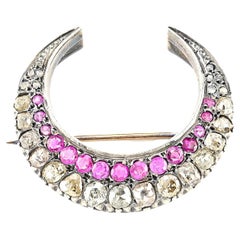
his beautiful antique Crescent Moon is 1870 ca Glorious Victorian workmanship ma
Located in Napoli, IT
This beautiful antique Crescent Moon is 1870 ca
Glorious Victorian workmanship made of solid 18 KT gold and Silver
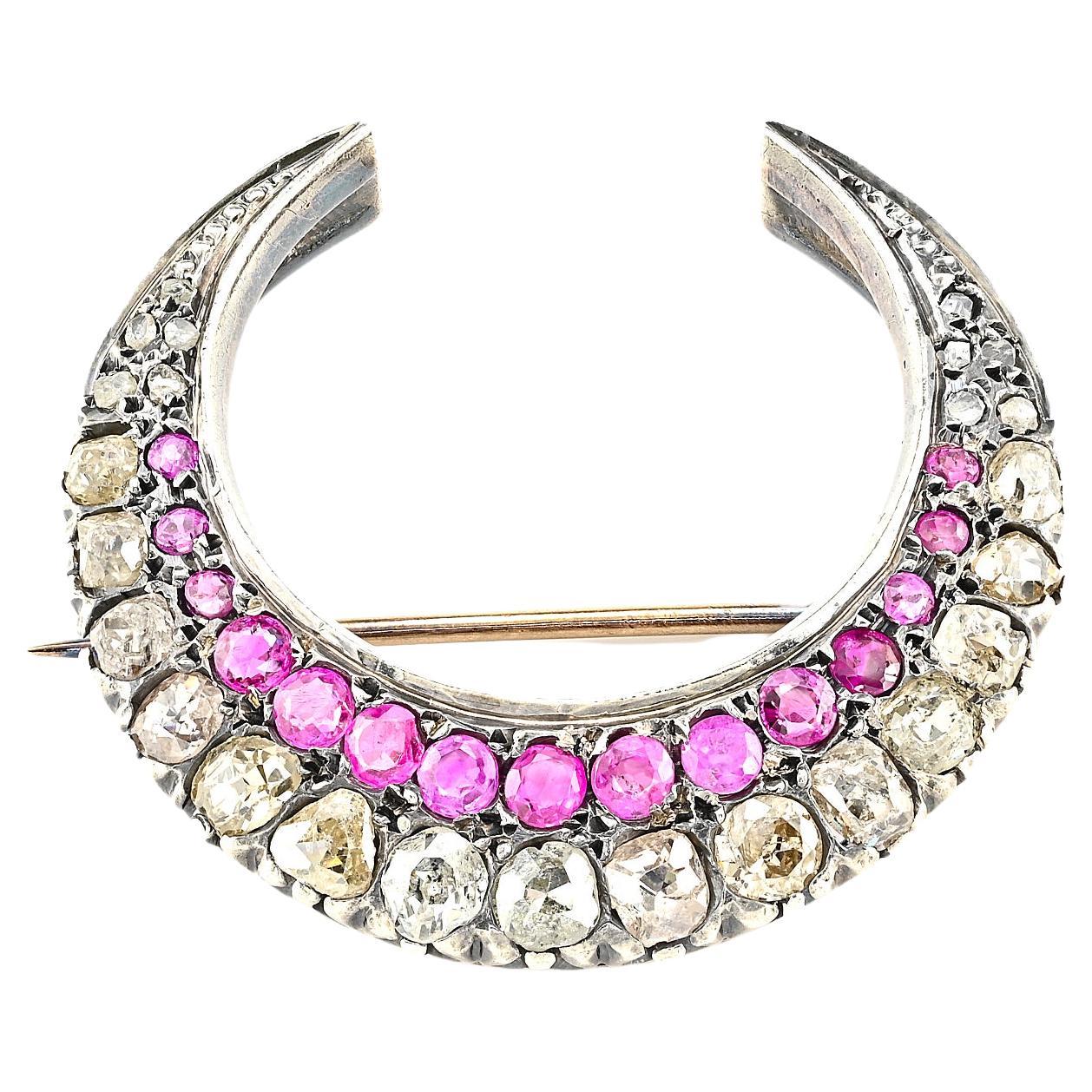
Set with 15 graduated in size old mine cut Diamonds and tiny rose cut Diamonds to complement, approx 3.10 Ct (H/I-SI/I) – lovely color contrast given by 15 untreated natural, mine cut, Rubies of gorgeous pastel color for 1.80 Ct.
34 mm. In diameter with fine condition throughout keeping with age
Victorian Celestial...
Category
Antique 1870s European Victorian Brooches
Materials
Diamond, Ruby, 18k Gold, Silver
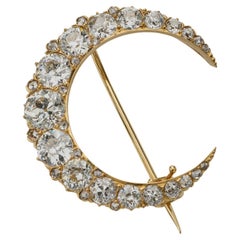
Antique Diamond Crescent Brooch
Located in New York, NY
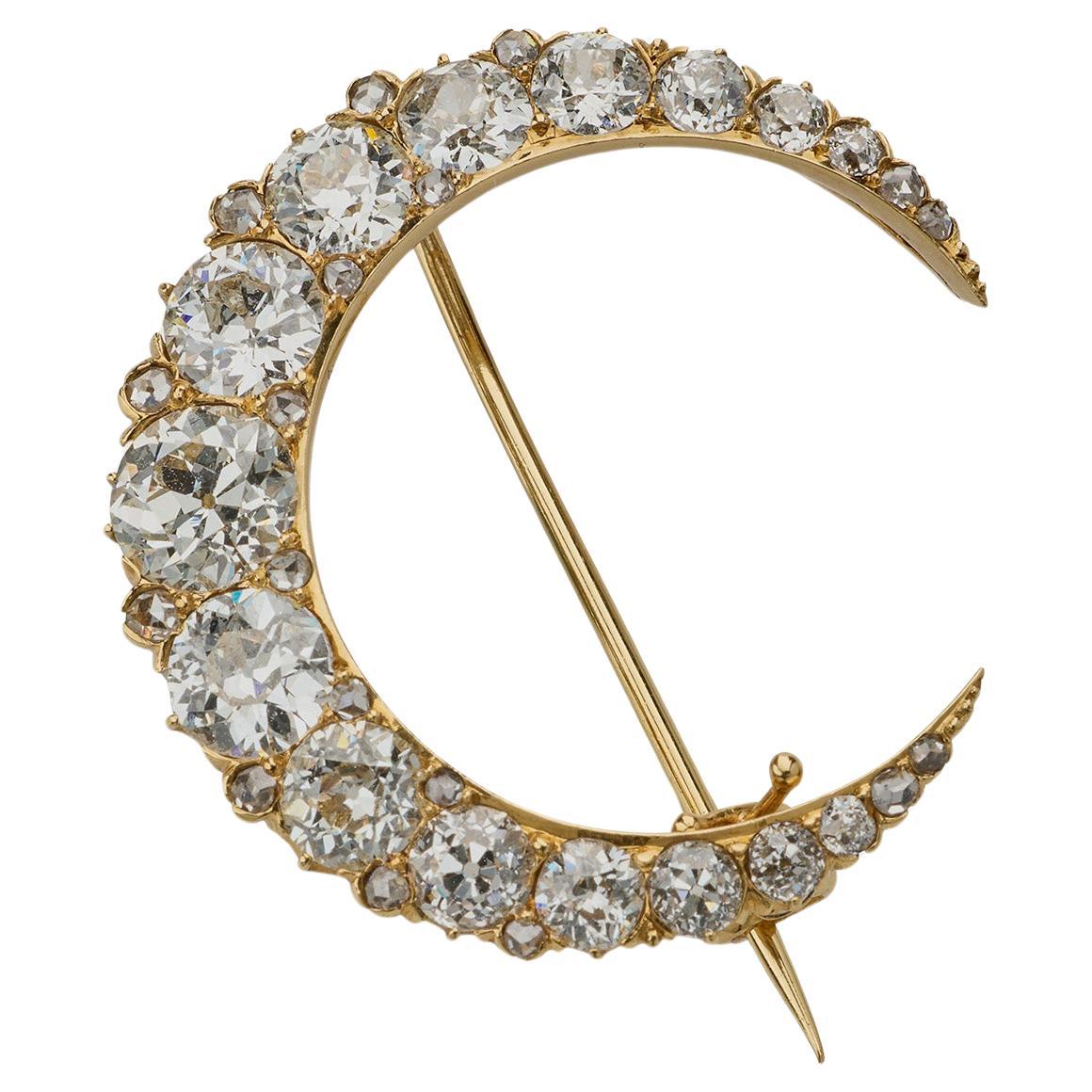
Created in the 1880s–1890s, this antique crescent brooch is set with over 5.50 carats of diamonds mounted in 18K gold. It is designed as a graduating line of old European and mine-cu...
Category
Antique Late 19th Century Victorian Brooches
Materials
Diamond, 18k Gold
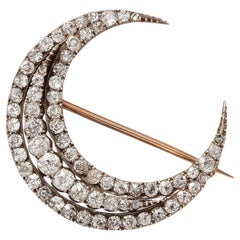
A Gold and Silver Crescent Brooch with Diamonds
Located in Amsterdam, NL
A 13.56-carat gold crescent brooch with 62 old-cut diamonds and 4 rose diamonds (app. 4 carats) set in silver, circa 1860.
weight: 8.3 g
dimensions: 3.4 x 3.2 cm
Category
Antique Late 19th Century British Victorian Brooches
Materials
Diamond, Gold, Silver
Antique Victorian Silver 4.93ctw Old Cut Diamond Crescent Moon Brooch
Located in Staines-Upon-Thames, GB
A Victorian, diamond, and silver brooch, comprising twenty-three old cut diamonds, graduating in size, set in silver, with a silver pin and fittings.
This beautiful brooch is shaped...
Category
Antique Late 19th Century British Victorian Brooches
Materials
Diamond, Silver
$9,832 Sale Price
36% Off
Free Shipping
More Ways To Browse
Crescent Moon
Victorian Crescent Moon
Gold Corset
Victorian Crescent Moon Brooch
Victorian Silhouette
Crescent Moon Antique Diamond Brooch
Blue Flower Brooch
Brooch Rhodium Plated
Cameo Pearl Brooch
Chanel Camelia
Emerald Paste
Mexican Sterling Brooches
Pearl Crescent
Swallow Bird
Tiffany Flower Gold
Turquoise And Diamond Brooch
Victorian Gold Turquoise Brooches
Frog Diamond Brooch