Items Similar to Gold
Micromosaic Bulla Pendant Attributed to Castellani 1850
s
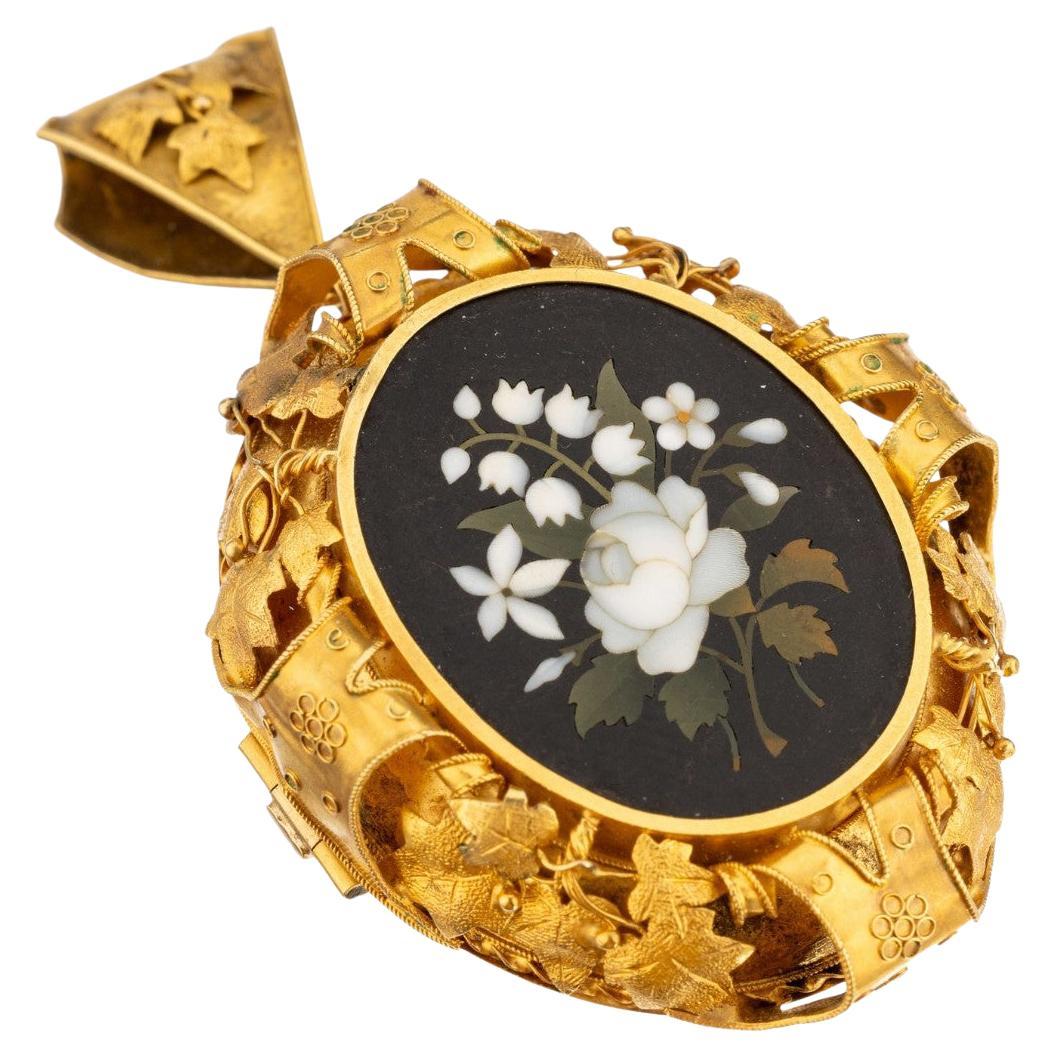
Want more images or videos?
Request additional images or videos from the seller
1 of 11
Gold
Micromosaic Bulla Pendant Attributed to Castellani 1850
s
$53,254.44
£39,795.55
€45,000
CA$74,154.14
A$79,686.43
CHF 42,756.39
MX$938,657.40
NOK 537,614.20
SEK 491,107.10
DKK 343,038.46
About the Item
Period: 19th century
Provenance: Italy
Size: 5 cm x 4 cm
Weight: 47,6 gr
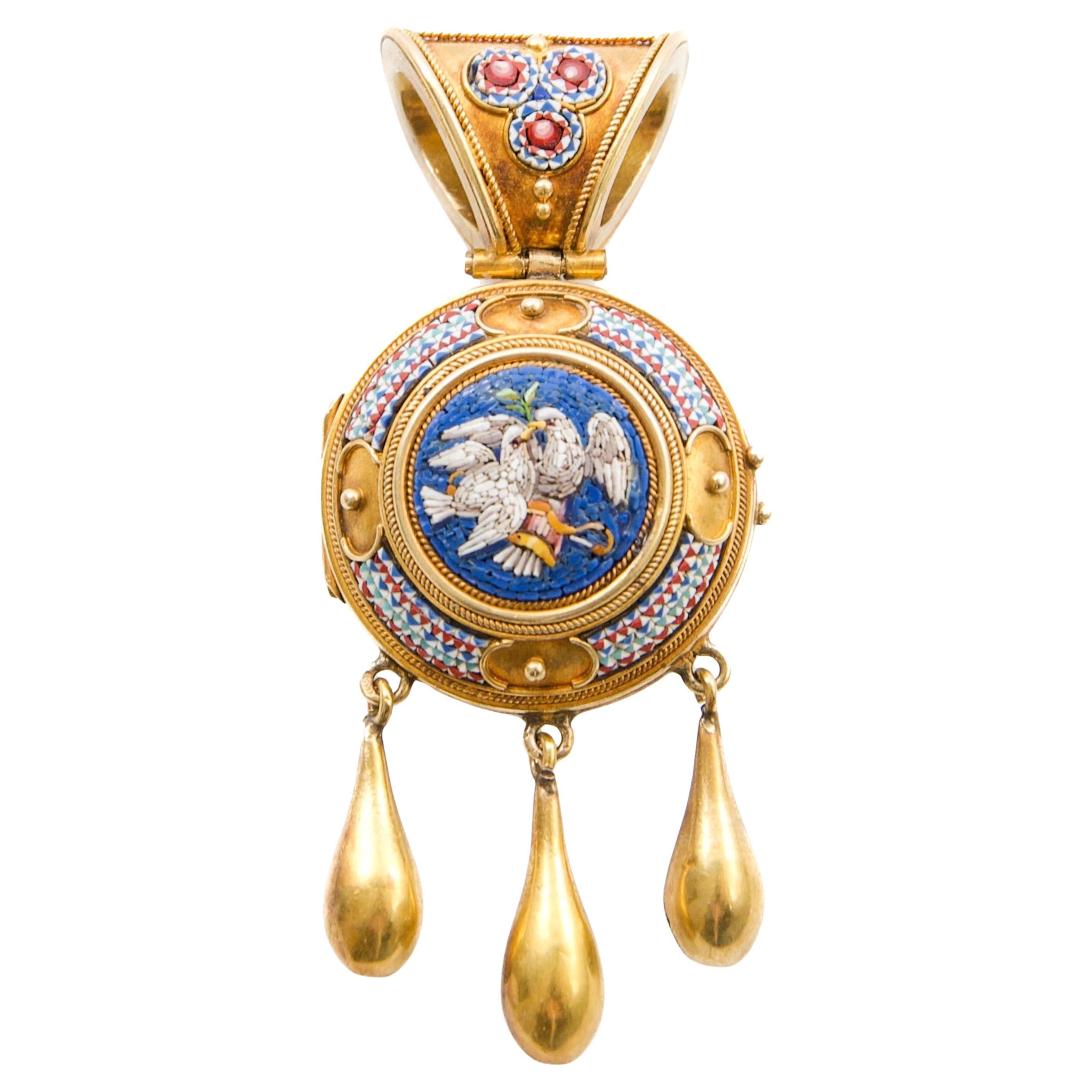
The 19th-century pendant is attributed to Castellani, one of the most important goldsmiths of the time, who is responsible for the spread of neo-Etruscan and neo-Renaissance style jewellery. This type of pendant is called “bulla”, as it was usually worn by men as a talisman. In fact, it is an openable pendant that could contain protective amulets necessary to ward off bad luck. Furthermore, over time it also assumed a symbolic value of social status, since in ancient times bulla examples were mainly made of bronze unlike the pendant in question which is made of 18-karat yellow gold, thus establishing its greater preciousness. This pendant, moreover, is characterized by a rich decoration that sees extensive use of filigree, a very fine gold work, typical of ancient goldsmith art and of Castellani's own productions. In this case, however, the bulla is further embellished with some micromosaic decorations: on one side stands out a female face, in which the veil and halo suggest an iconography of the Virgin Mary and whose pose seems to be taken from Raphael's Madonna del Cardellino; on the other side, however, is placed a micromosaic with the iconography of a scarab, an ancient apotropaic symbol of eternal rebirth and transformation, which over time has also taken on the allegorical meaning of Christ; to complete the decoration of the pendant there are set further micromosaics with floral or geometric decorations.
- Creator:
- Metal:
- Weight:47.6 g
- Style:
- Place of Origin:
- Period:
- Date of Manufacture:1850 s
- Condition:
- Seller Location:Firenze, IT
- Reference Number:1stDibs: LU12027723802
About the Seller
4.9
Recognized Seller
These prestigious sellers are industry leaders and represent the highest echelon for item quality and design.
Platinum Seller
Premium sellers with a 4.7+ rating and 24-hour response times
Established in 1890
1stDibs seller since 2010
934 sales on 1stDibs
Typical response time: 1 hour
- ShippingRetrieving quote...Shipping from: Firenze, Italy
- Return Policy
More From This Seller
View AllArchaeological Revival Gold And Micromosaic Brooch/Pendant 1860
s
By Cesare Roccheggiani
Located in Firenze, IT
18 kt gold micro mosaic-pendant, approx. 1860, circumferential wine leaves, centered oval micro mosaic on black ground, floral presentation, also wearable as a brooch, lug removable....
Category
Antique 1860s Italian Etruscan Revival Pendant Necklaces
Materials
Gold, 18k Gold
Pectoral Pendant from Castellani with a Cameo Attr. to Luigi Pichler 1773-1854
By Castellani
Located in Firenze, IT
Period: 1850s
Provenance: collezione Guicciardini, Italy
Dimension: 9 x 6,8 cm
Weight: 105 gr
Questo pendente in oro giallo 18 carati è attribuito a Castellani, maestro dell’arte or...
Category
Antique Mid-19th Century Italian Pendant Necklaces
Materials
Gold
Antique Italian 18kt Gold Archaeological Revival Pendant 1860
s
Located in Firenze, IT
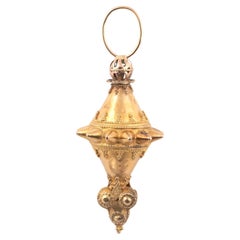
Conical shape punctuated with raised spikes. Set in 18K yellow gold. Italian archaeological revival pendant work.
Gross weight: 12.61 gr.
Height: 7.7cm.
Category
Antique 1860s Italian Etruscan Revival Pendant Necklaces
Materials
Gold, 18k Gold
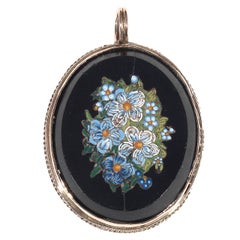
19th Century Italian Gold Micromosaic Flower Pendant
Located in Firenze, IT
The oval cut mosaic plaque depicting a flower bouquet, on black ground within reeded bordered setting.
Mounted in yellow gold
Lenght: 4cm.
Category
Antique 1890s Italian Drop Necklaces
Materials
9k Gold, Gold
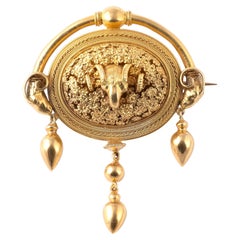
Archaeological-Revival Brooch, second half 19th Century
By Castellani
Located in Firenze, IT
Period: 19th century
Provenance: Italy
Measurement: 5,2 cm
Weight: 23,38 gr
The 19th-century brooch is made in archaeological style, a trend developed during the 19th century by the...
Category
Antique Late 19th Century Italian Etruscan Revival Brooches
Materials
Gold, 18k Gold, Yellow Gold
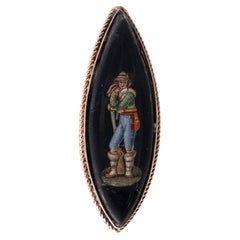
Mid 19th century roman micromosaic pendant
Located in Firenze, IT
The pendant depicts a young shepherd who can be recognized by his attire. The micromosaic, which can be dated to the nineteenth century, is produced in Rome, where this artistic tech...
Category
Antique Late 19th Century Italian Victorian Pendant Necklaces
Materials
18k Gold
You May Also Like
Antique Double Sided Micromosaic Gold Locket Pendant, Rome ca. 1880
Located in Rotterdam, NL
This beautiful 19th-century micromosaic locket is a fine example of Italian craftsmanship, originating from the renowned Vatican workshop in Rome. Crafted in 14 karat gold, the locke...
Category
Antique Mid-19th Century Italian Etruscan Revival Pendant Necklaces
Materials
Gold, 14k Gold
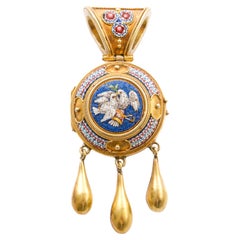
Antique 19th Century Italian Micro Mosaic Gold Necklace
Located in Chicago, IL
Italian, circa 1850s-1860s, probably made at Vatican workshops.
The pendant is crafted in 18K gold. It is designed in Etruscan revival style, fashiona...
Category
Antique Mid-19th Century Italian Victorian Drop Necklaces
Materials
Gold
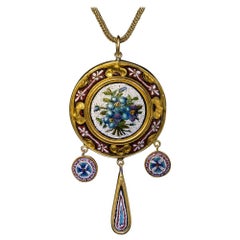
Antique Micromosaic Pendant Locket Brooch in 14K Gold, Grand Tour Era, 1850
Located in Rotterdam, NL
An exquisite example of 19th-century Italian artistry, this antique micromosaic pendant and brooch combination is masterfully handcrafted in 14 karat gold. It exemplifies the fine cr...
Category
Antique Mid-19th Century Italian High Victorian Pendant Necklaces
Materials
Gold, 14k Gold
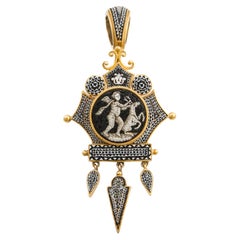
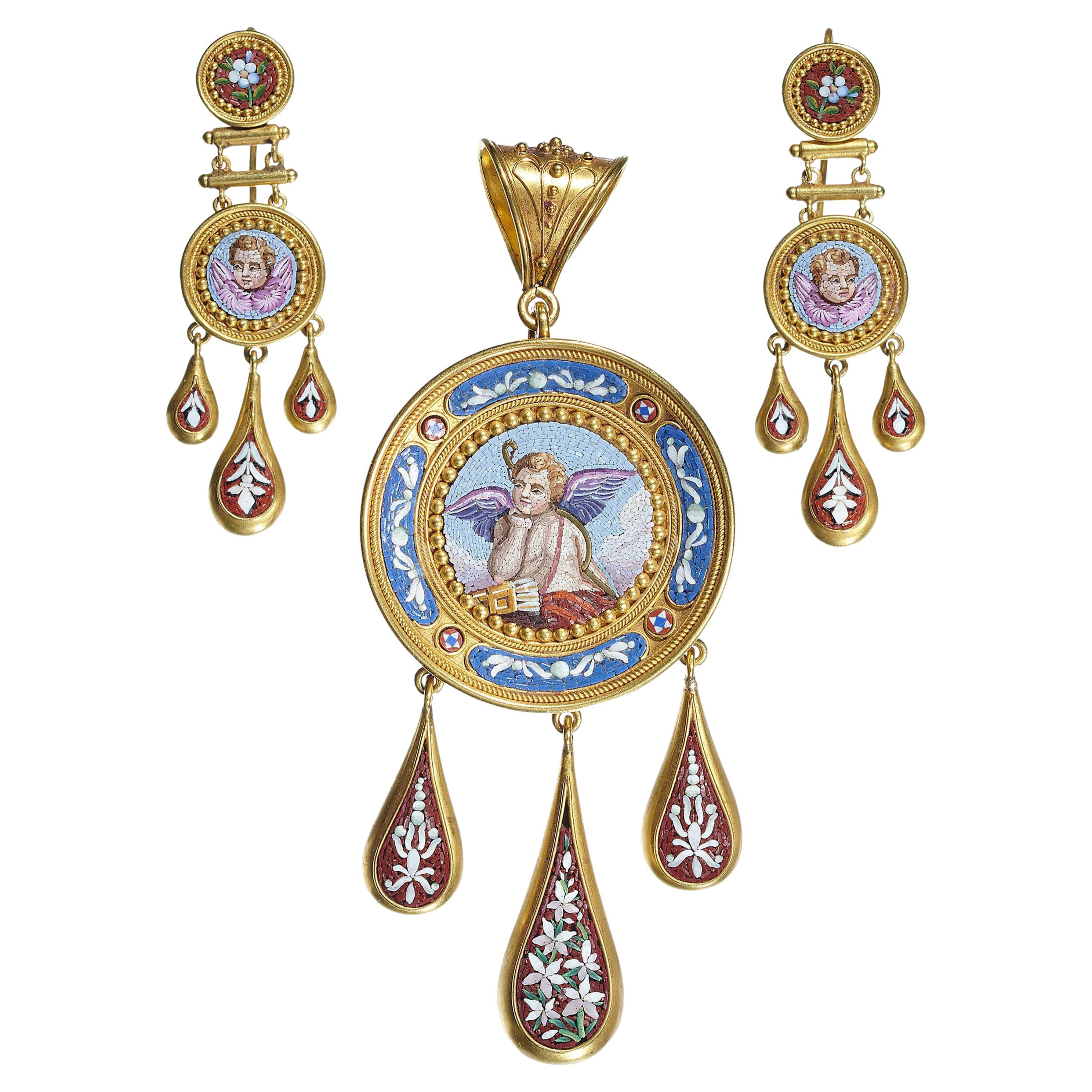
Antique Italian Micromosaic Gold Brooch-Pendant And Earrings Suite, Circa 1850
Located in London, GB
An antique Italian micromosaic and gold brooch-cum-pendant and earrings suite. The pendant has a gold bale, with granulated Etruscan style work, the central micromosaic features Cupi...
Category
Antique 1860s Italian Etruscan Revival Drop Earrings
Materials
Gold
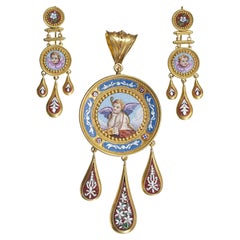
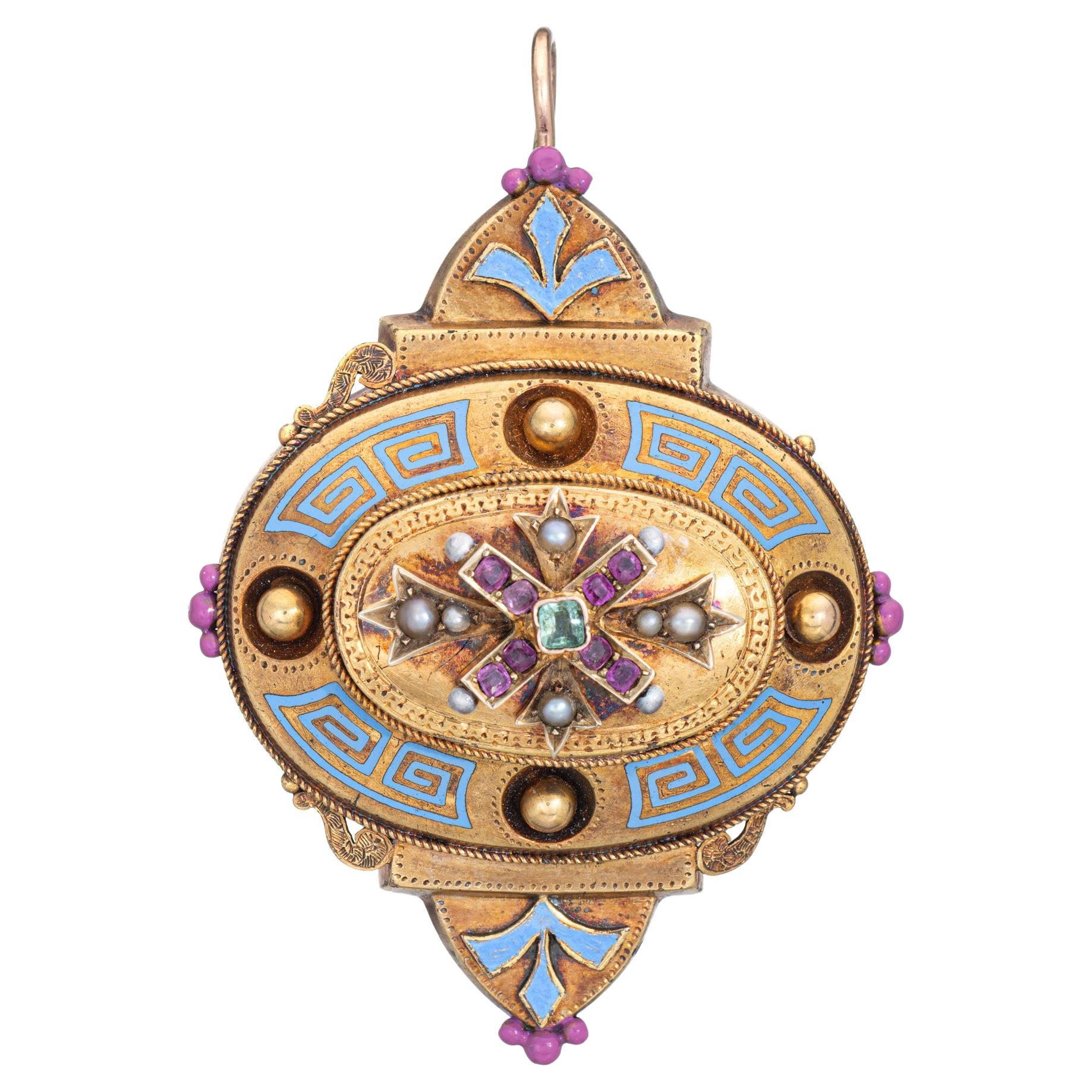
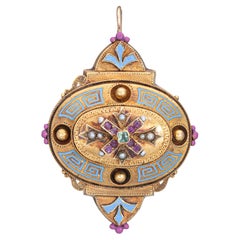
Antique Victorian Gemstone Pendant Enamel 14k Yellow Gold Etruscan Greek Key
Located in Torrance, CA
Distinct antique Victorian Etruscan Revival pendant (circa 1860s to 1880s) crafted in 14 karat yellow gold.
Small approx. 1.5mm to 2mm rubies and an emerald adorn the mount. Small ...
Category
Antique 19th Century Unknown Victorian Pendant Necklaces
Materials
Emerald, Pearl, Ruby, Gold, 14k Gold, Yellow Gold, Enamel
Rare Etruscan Revival 18K Gold Locket Necklace attr. Eugene Fontenay, Paris 1870
By Eugene Fontenay
Located in New York, NY
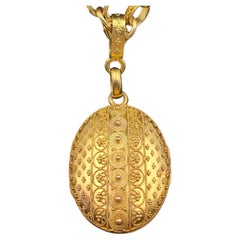
Large, stunning granulated antique French Etruscan Revival locket with the original, equally spectacular large chain. The oval locket exquisitely decorated with a technique known as granulation, where a tiny gold bead is individually applied to a surface to form a geometric pattern. Done entirely by hand and requiring a master goldsmith, this technique is thought to have originated in Sumer approximately 5000 years ago. The Etruscans mastered the process in the first millennium B.C and closely guarded its secret, becoming celebrated for creating some of the most beautiful and technically advanced gold jewelry ever made.
Condition: This piece is in very good condition retaining the original interior crystal, the hinges work very well and are precisely calibrated to stay open in place when desired. The back of the locket shows normal wear with just the slightest waviness. The chain is in excellent condition.
Composed as a pendant locket on its original chain, the oval gold links reeded on the interior and applied chain link on the exterior, the oval locket decorated with twisted wirework circles and fine applied granulation patterns, suspended from a long bale with quatrefoil granulation. Hinged on the side, opening to reveal a hinged glass panel for a personal memento.
French assay mark and maker's mark partially obscured
Confident attribution to Fontenay based on partial hallmark and similar published examples.
References: Wartski for gold enamelled locket on chain necklace, sold archives; DSF for gold enamelled locket pendant of similar workmanship and design. Fontenay pieces retaining the original chain which may be worn on its own are rare and desirable.
Eugene Fontenay...
Category
Antique 19th Century French Etruscan Revival Pendant Necklaces
Materials
18k Gold, Yellow Gold
$16,500 / set
Free Shipping