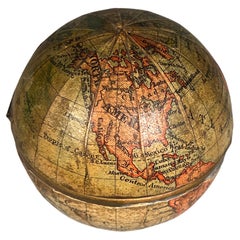
Items Similar to 3-Inch Pocket Globe Germany Mid 18Th Century
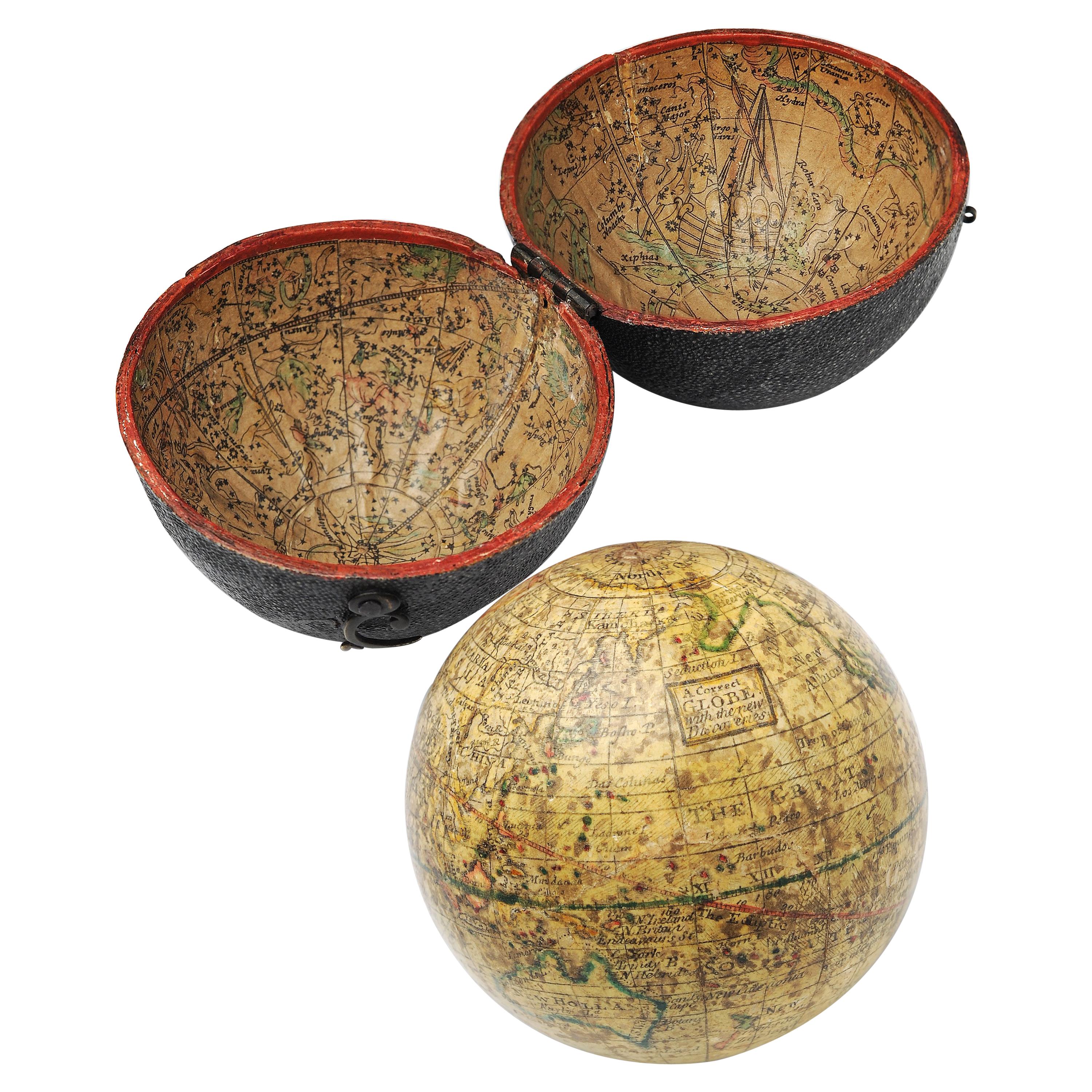
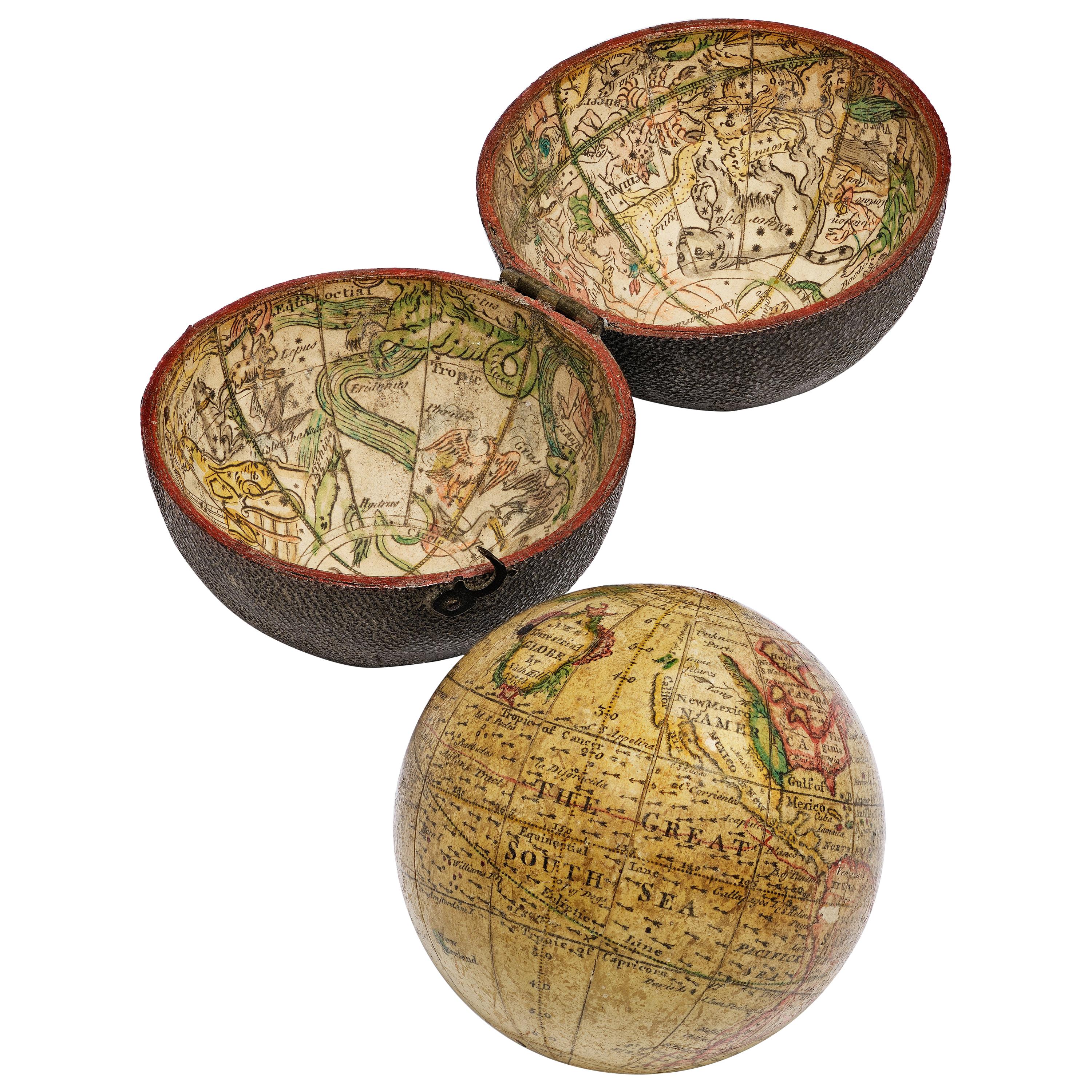
Want more images or videos?
Request additional images or videos from the seller
1 of 5
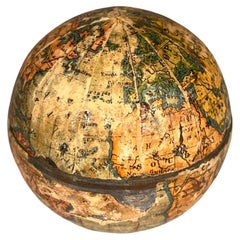
3-Inch Pocket Globe Germany Mid 18Th Century
$5,350.71
£4,013.44
€4,500
CA$7,469.55
A$8,090.42
CHF 4,285.05
MX$97,882.02
NOK 53,869.67
SEK 50,217.99
DKK 34,280.22
About the Item
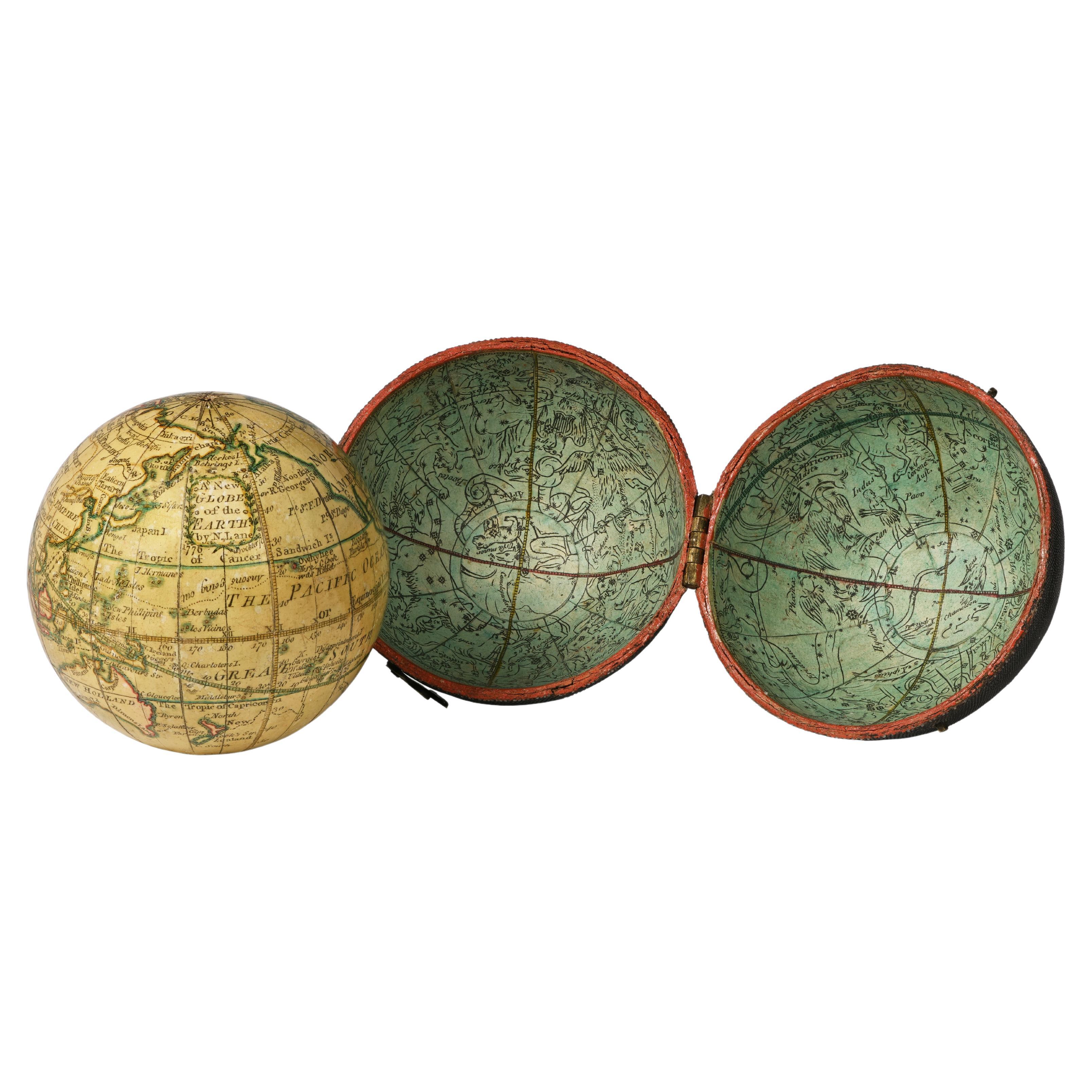
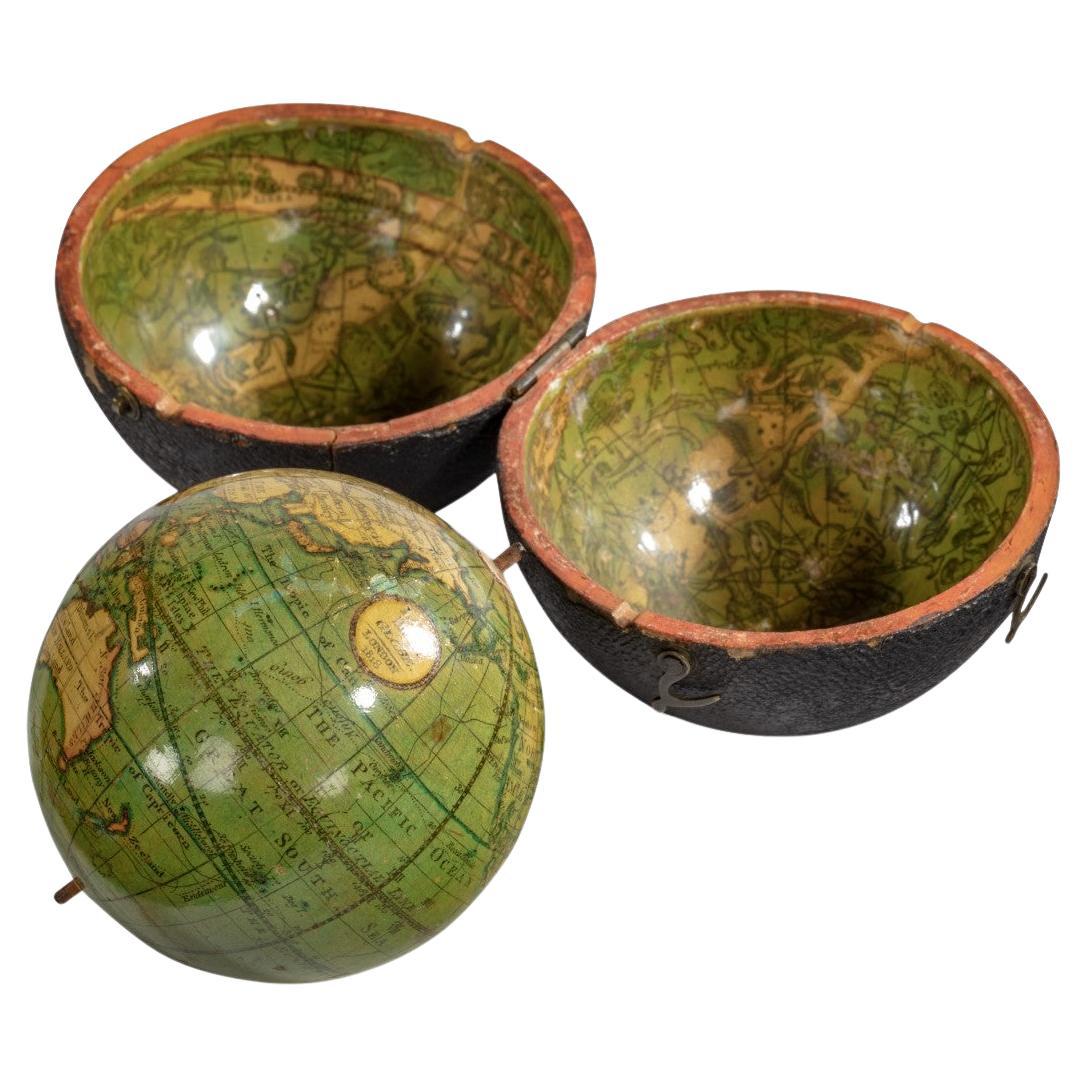
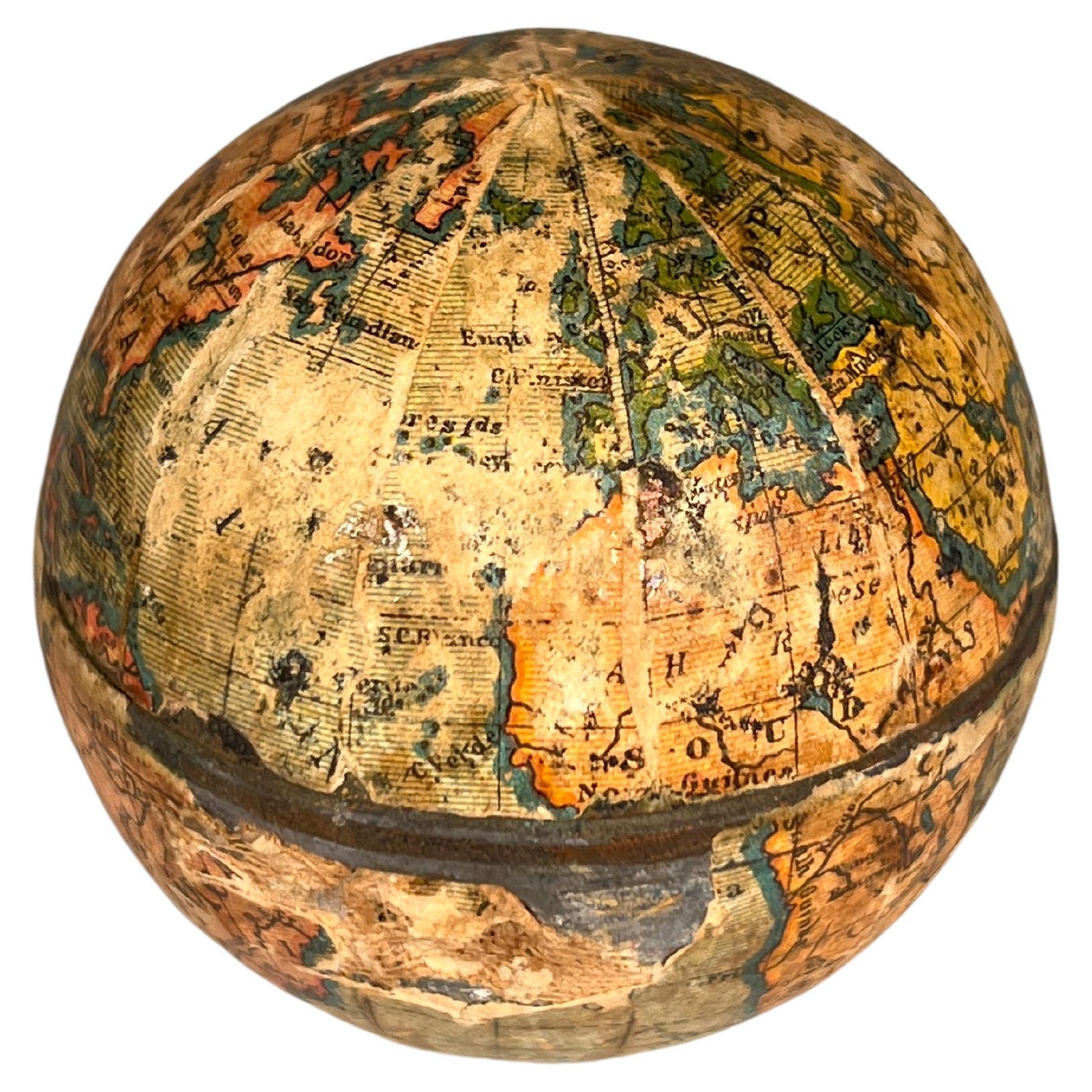
A terrestrial globe made up of twelve hand-coloured engraved gores, the equatorial graduated in degrees, the ecliptic graduated in days of the houses of the Zodiac, the continents delicately shaded and strongly outlined in green, showing nation states in dotted outline, rivers, mountains, deserts and some cities, with two iron axis pins, contained in a circular card box.
(8.5cm.) diameter of box.
Pocket globes became fashionable from the 18th century onwards, particularly in England. Charles Price and Nathaniel Hill were among the most important manufacturers of these miniatures.
- Case Dimensions:Diameter: 3.35 in (85 mm)
- Place of Origin:
- Period:
- Date of Manufacture:1790 s
- Condition:Wear consistent with age and use.
- Seller Location:Firenze, IT
- Reference Number:Seller: 2961stDibs: LU12027862152
About the Seller
4.9
Recognized Seller
These prestigious sellers are industry leaders and represent the highest echelon for item quality and design.
Gold Seller
Premium sellers maintaining a 4.3+ rating and 24-hour response times
Established in 1890
1stDibs seller since 2010
930 sales on 1stDibs
Typical response time: 1 hour
- ShippingRetrieving quote...Shipping from: Firenze, Italy
- Return Policy
More From This Seller
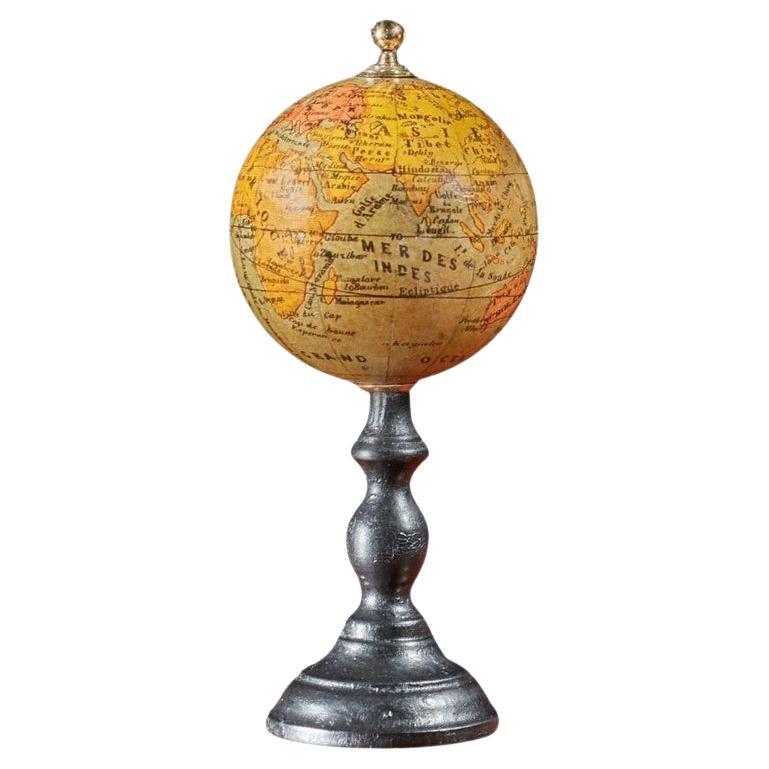
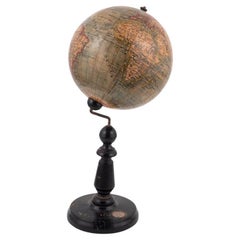
View AllLate 19th Century French Terrestrial Desk Small Globe
Located in Firenze, IT
Small study globe Polar mounting on a blackened wooden base. Signed: J. Forest in Paris. France, late 19th century Diam. 6 cm. H. 14 cm.
Category
Antique Late 19th Century French Napoleon III Desk Accessories

Late 19th Century French Terrestrial Desk Small J. FOREST Globe
Located in Firenze, IT
Study globe Polar mounting on a blackened wooden base. Signed J. FOREST in Paris. France, late 19th century Diam. 8 cm. H. 17 cm.
Category
Antique Late 19th Century French Napoleon III Desk Accessories
Terrestrial Table German Globe Late 19th Century
Located in Firenze, IT
On an ebonized base, together with a brass and compass 10in. (22cm.) high By Heymann
Category
Antique Late 19th Century German Napoleon III Desk Accessories
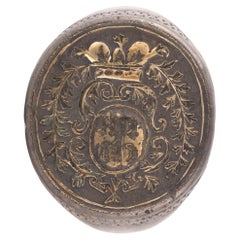
Neoclassical Silver
Gilt Russian Oval Shape Signet Ring 1780’s
Located in Firenze, IT
Period: Late 18th century
Top size: 1,8 cm x 1,5 cm
Size: 10
Weight: 17 gr
The signet ring is dated around the 1780s and is presumably attributable to Russian manufacture, since th...
Category
Antique 1780s Russian Neoclassical Signet Rings
Materials
Silver, Gilt Metal
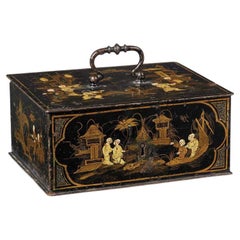
Louis XV Gilt Japanned Domed Casket First Half 18th Century
Located in Firenze, IT
Decorated overall with figures, buildings, birds and foliage, the hinged top enclosing a red-painted interior. Measures: 4 in. (10 cm.) high; 7,6 in. (19 cm.) wide; 6,4 in. (16 cm.) ...
Category
Antique Mid-18th Century French Boxes and Cases
Materials
Berlin Iron
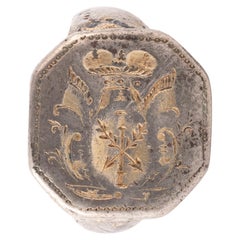
Neoclassical Silver
Gilt Octagonal Shape Russian Signet Ring 1780’s
Located in Firenze, IT
Period: Late 18th century
Top size: 1,8 cm x 1, 5 cm
Size: 11
Weight: 20.02 gr
The signet ring from the end of the 18th century is made of gilded silver, as demonstrated by secti...
Category
Antique 1780s Russian Neoclassical Signet Rings
Materials
Silver, Gilt Metal
You May Also Like
English Pocket Globe, London, Circa 1775-1798
By Herman Moll
Located in Milano, IT
Pocket globe
London, between 1775 and 1798
Re-edition of the globe of Hermann Moll (1678-1732) dated 1719
The globe is contained in its original case, which itself is covered in shark skin.
There are slight gaps in the original paint on the sphere. The case no longer closes.
The sphere measures 2.7 in (7 cm) in diameter whereas the case measures 2.9 in (7.4 cm) in diameter.
lb 0.22 (kg 0.1)
The globe is made up of twelve printed paper gores aligned and glued to the sphere.
In the North Pacific Ocean there is a cartouche with the inscription:
A Correct
Globe
with the new
Discoveries.
The celestial globe is depicted on the inside of the box and is divided into two hemispheres with the cartouche:
A correct globe
with ye new cons
relations of Dr.
Halley & c.
It shows the ecliptic divided into the days of the zodiacal calendar and the constellations represented as animals and mythological figures.
On the globe are delineated the equinoctial line, divided by degrees and hours, the ecliptic and the meridian (passing west of Greenwich). The continents are shaded and outlined in pink, green and yellow. It shows: the Cook routes; a wind rose in the Southern Indian Ocean; Antarctica without land; Africa with Negroland (Hermann Moll is considered the first geographer to name the West African region in his 1727 map. (Encyclopaedia Britannica, ed. 1902, under "States of Central Africa"); Tartary in Central Asia; the Mogul kingdom in northern India; in North America only New England, Virginia, Carolina, Florida, Mississippi are identified; California is already a peninsula; the northwest coast of America is "unknown parts" (Alaska is not described and it is only partially delineated, it was to become part of the United States in 1867); Mexico is named "Spain"; Central South America "Amazone America". Australia (which was to be so named after 1829) is called New Holland. The route of Admiral Anson is traced (1740) and the trade winds are indicated by arrows. (See Van der Krogt, P., Old Globes in the Netherlands, Utrecht 1984, p. 146 and Van der Krogt, P. - Dekker, E., Globes from the Western World, London 1993, pp. 115.)
Elly Dekker, comparing Moll’s 1719 globe and his re-edition (of which the one described above is a sample), identifies the differences between them: the two editions are quite similar to each other, but in the "anonymous" globe, compared to the previous globe of 1719, California looks like a proper peninsula - the reports of the Spanish explorers of the region had given rise to uncertainty over whether it was connected to the mainland or not. The geographical nature of California was confirmed after the explorations of Juan Bautista de Anza (1774-1776). The routes of Dampier's journey were partially erased and the route of Captain James Cook's first voyage was superimposed on them, and the geography of Australasia was adapted accordingly, including the denomination of the Cook Strait. See Dekker, Elly, Globes at Greenwich, 1999.
An important ante quem element is represented by Tasmania: it is not separated from Australia by the Bass Strait...
Category
Antique Late 18th Century English George III Globes
Materials
Shagreen, Paper
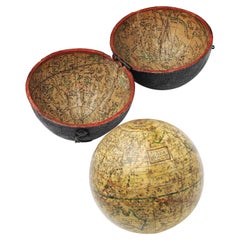
Pocket Globe by Nathaniel Hill, London 1754
Located in Milano, IT
Nathaniel Hill
Pocket globe
London, 1754
The globe is contained in its original case, which itself is covered in shark skin.
There are slight gaps in the original paint on the sphere. The case no longer closes.
The sphere measures 2.6 in (6.8 cm) in diameter whereas the case measures 2.9 in (7.4 cm) in diameter.
lb 0.24 (kg 0.11)
The globe is made up of twelve printed paper gores aligned and glued to the sphere.
In the North Pacific Ocean there is a scroll with the inscription:
A
New
terrestrial
Globe
by
Nath. Hill,
1754.
The celestial globe is depicted on the inside of the box.
On the terrestrial globe much of central and southern Africa is empty. North America bears only the name of some British colonies. It shows California as a peninsula and the northwest coast of America as "unknown parts" (Alaska is not described and is only partially delineated; it would become part of the United States in 1867). The route of Admiral Anson is traced (1740) and the trade winds are indicated by arrows. Australia, still named New Holland (the new name would be introduced in 1829), is part of the west coast. (See Van der Krogt, P., Old Globes in the Netherlands, Utrecht 1984, p. 146 and Van der Krogt, P. - Dekker, E., Globes from the Western World, London 1993, p. 115.)
Nathaniel Hill (London, news from 1746 to 1768) had impeccable professional credentials: he had done his apprenticeship with Richard Cushee, who at the time was carrying out surveying work for John Senex's Surrey map...
Category
Antique 1750s English George II Globes
Materials
Shagreen, Paper
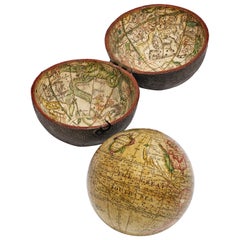
Pocket Globe, Nicholas Lane, London, post 1779
By Nicholas Lane
Located in Milano, IT
Pocket Globe
Nicholas Lane
London, post 1779
The globe is contained in its original case, which is covered in leather.
The sphere measures 2.75 in (6.9 cm) whereas the case measure...
Category
Antique 1780s English Other Models and Miniatures
Materials
Leather, Wood, Paper
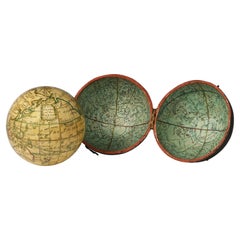
Regency Lane’s Pocket Globe, Dated 1818
By Lane
s
Located in Lymington, Hampshire
A 3 ½ inch Regency Lane’s pocket globe, dated 1818, the terrestrial globe with the seas in light green and the land masses outlined in darker green, contained within a hinged black shagreen case, the concave interior of the case applied with the engraved celestial charts...
Category
Antique 1810s English Regency Globes
Materials
Wood
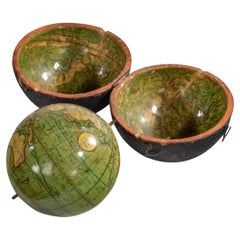
Mid 19th Century Inkwell in the Form of a Pocket Globe
Located in London, GB
A fantastic inkwell in the form of a pocket globe, dating from the mid 19th century.
Category
Antique Mid-19th Century English Early Victorian Inkwells
Materials
Pewter
Mid 19th Century Inkwell in the Form of a Pocket Globe
Located in London, GB
A fantastic inkwell in the form of a pocket globe, dating from the mid 19th century.
Category
Antique Mid-19th Century English Early Victorian Inkwells
Materials
Pewter