Items Similar to An Engraved Turned Wooden Cup. English, dated 1636.
Want more images or videos?
Request additional images or videos from the seller
1 of 16
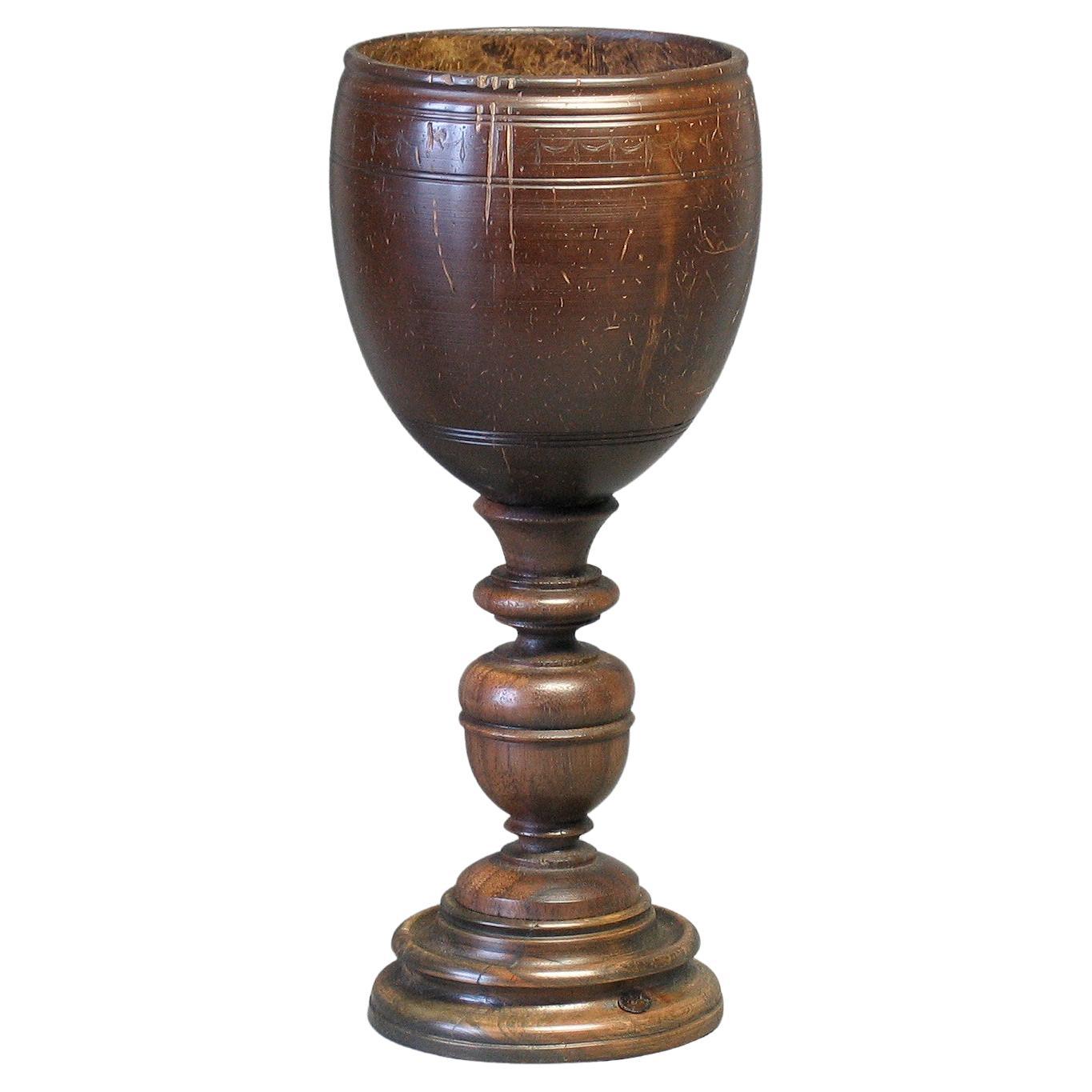
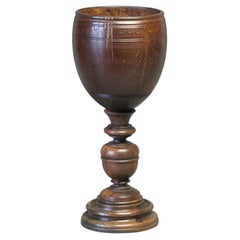
An Engraved Turned Wooden Cup. English, dated 1636.
$37,850.47
£27,750
€32,301.56
CA$52,183.99
A$57,273.18
CHF 30,097.90
MX$681,539.33
NOK 384,740.59
SEK 351,576.77
DKK 241,324.70
About the Item
An Engraved Turned Wooden Cup.
English, dated 1636.
Material
Turned pearwood, engraved with foliate and geometric decoration.
Measurements
Height: 20.5 cm.
Diameter (rim): 10.2 cm.
Description
A rare early seventeenth-century standing cup finely turned from pearwood, its bowl and foot engraved with foliate and geometric ornament. Around the body are detailed depictions of a white hart, a wyvern and a unicorn amidst stylised foliage, all executed in precise line incision. The upper border is composed of an arcade of semi-circular arches enclosing rosettes, while the foot is similarly ornamented with concentric geometric bands of roundels and leaf motifs. Above the inscribed date 1636 appear the initials T.F.S.. The surface retains a rich, warm patina from prolonged handling and age.
The vessel’s elegant proportions and lively engraving place it among the more sophisticated survivals of seventeenth-century English treen (domestic woodenware), a class of object once ubiquitous but now exceedingly scarce. Cups of this type were often both functional and commemorative, their inscriptions or dated ornament suggesting presentation or marriage pieces.
Provenance
• A. H. Isher
Son, Cheltenham, acquired from the Owen Evan-Thomas collection, 1945 (with original correspondence and invoice dated 10 November 1945).
• Dr J. R. B. Thomson, Tharpe, Kent (purchaser from A. H. Isher
Son).
• By descent.
• Accompanied by copies of the original invoice and correspondence from A. H. Isher
Son, circa 1945.
Context
Although not the example illustrated by Owen Evan-Thomas, closely related cups are discussed in Domestic Utensils of Wood, EP Publishing, 1973, pp. 38–43, pls. 14–16. Evan-Thomas identified these engraved pearwood vessels as outstanding examples of English vernacular wood-turning and engraving of the seventeenth century, probably produced in workshops active in the West Country or the Midlands.
Comparable cups in the Victoria and Albert Museum bear the arms of King James I and the Prince of Wales (later Charles I). Most are of turned pearwood, incised with heraldic animals, and of near-identical design, suggesting manufacture in a single workshop or by a single master turner working in the reigns of James I and Charles I.
The precise function of these cups remains uncertain. While some writers proposed their use as communion vessels, the Canons of Winchester had forbidden wood for the Eucharist as early as 1071. Later research supports the theory that they served as prototypes for silver chalices; a silver example, formerly in the Robert Hoe Collection (New York 1911, lot 1397; The Connoisseur, vol. 2, 1902, p. 51), replicates the design of V&A cup W.50-1913 and bears the same inscriptions and devices (communication from Malcolm Jones, March 2018).
Edward Pinto also suggested that they may have been ceremonial vessels connected with the Royal Cupbearers or the insignia of an exclusive seventeenth-century society, perhaps akin to the later Honourable Order of Little Bedlam, founded by the 5th Earl of Exeter in 1684 (Treen and Other Wooden Bygones, London 1969, pp. 34–37).
A related Standing Cup and Cover of turned and engraved pearwood, decorated with similar arched panels enclosing a stag, a mythical bird and a unicorn, and dated 1648, is recorded in the Proceedings of the Society of Antiquaries, 2nd Series, Vol. XII, p. 351 (1889). Such parallels affirm a distinctive ornamental vocabulary within seventeenth-century English turnery.
The heraldic imagery and rhythmic geometric ornament evoke allegories of endurance, nobility and rebirth, recurrent themes in post-Reformation domestic art. The survival of its original surface and its continuous documented provenance since 1945 render this a particularly distinguished example within the corpus of dated English wooden cups.
Comparisons
Comparable examples are preserved in the Victoria and Albert Museum, London, including cups W.50–51-1913 and 275-to-C-1872, of similar design and bearing heraldic animals beneath arched borders, attributed to the early seventeenth century. The British Museum likewise houses a group of engraved pearwood cups (1885,0508.121–123; 1908,0519.1) decorated with mythical beasts and floral motifs, further indicating a shared stylistic origin.
A Standing Cup and Cover of related type, dated 1648 and engraved with a stag, a unicorn and a bird, is described in the Proceedings of the Society of Antiquaries, 2nd Series, Vol. XII, p. 351 (1889). Further examples include the cup dated 1620 published by O. Evan-Thomas (Domestic Utensils of Wood, 1973, p. 42, pl. 16); the cup from The W. J. Shepherd Collection of Treen, Sotheby’s, 30 November–1 December 1983, Lot 512; and several later parallels: Seward Kennedy’s Cabinet of Curiosities and the Tony Robinson Collection of Treen Drinking Vessels, Christie’s, London, 22 November 2016, Lots 250 and 277; and Syd Levethan: The Longridge Collection, Christie’s, London, 11 June 2010, Lot 1011. These together establish a coherent typological and decorative tradition within seventeenth-century English engraved pearwood.
- Period:
- Date of Manufacture:1636
- Condition:Wear consistent with age and use.
- Seller Location:London, GB
- Reference Number:1stDibs: LU4435228081412
About the Seller
New to 1stDibs
Joined in the past six months.
No Reviews Yet
Vetted Professional Seller
Every seller passes strict standards for authenticity and reliability
Established in 2011
1stDibs seller since 2025
- ShippingRetrieving quote...Shipping from: London, United Kingdom
- Return Policy
More From This Seller
View AllBoxwood Roller Print with Royal Arms. France, 18th century.
Located in London, GB
French Boxwood Roller Print with Royal Arms, Hunting Scenes, and Military Emblems.
France, 18th century.
Measurements: 7.3cm (2 3/4 in.) in length.
This intricately carved roller ...
Category
Antique 18th Century Models and Miniatures
Bezoar Stone with Turned Ebonised Wooden Stand, 18th century.
Located in London, GB
Bezoar Stone with Turned Ebonised Wooden Stand, 18th century.
Measures 6.9 x 6.8 x 6.6cm.
A substantial bezoar stone of rounded form, its surface displaying the characteristic gran...
Category
Antique 18th Century Figurines and Sculptures
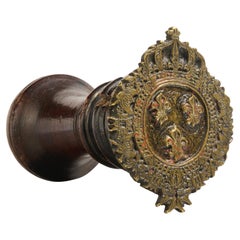
Bookbinding Stamp with the Arms of King Charles X. France, Paris, c. 1824–1830.
Located in London, GB
Bronze Bookbinding Stamp with the Arms of King Charles X (Imprimerie Royale).
France, Paris, circa. 1824–1830.
Materials and technique:
Engraved bronze matrix mounted on an orig...
Category
Antique Early 19th Century Desk Accessories
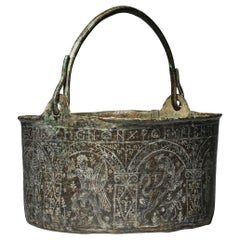
Byzantine Bronze Situla with Hunting Scenes and Benediction, 6th century A.D.
Located in London, GB
Byzantine Bronze Situla with Arcaded Hunting Scenes and Greek Benediction.
Eastern Mediterranean (Byzantine Empire).
6th century A.D.
Measurements
Height: 18.5 cm (excluding ha...
Category
Antique 15th Century and Earlier Desk Accessories
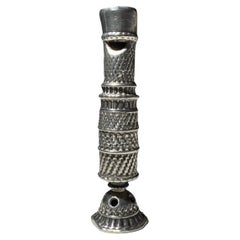
Engine-Turned Silver Combination Pomander Whistle. Augsburg, early 18th century.
Located in London, GB
Engine-Turned Silver Combination Pomander Whistle.
Germany, Augsburg, early 18th century.
Height: 5.6 cm.
Description
A small silver combination device formed in three detachable,...
Category
Antique 18th Century Desk Accessories
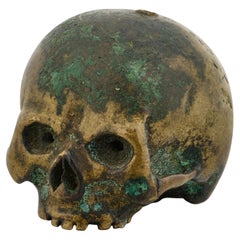
Bronze Skull Finial from the Base of a Crucifix. French or German, 17th century.
Located in London, GB
Bronze Skull Finial from the Base of a Crucifix.
French or German, 17th century.
Measurements
3.3 × 3.1 × 2.8 cm
Cast in the form of a human skull, this small bronze would origina...
Category
Antique 17th Century Models and Miniatures
You May Also Like
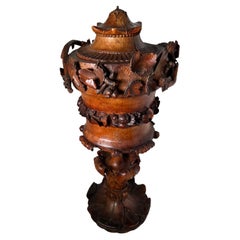
Carved Wood Cup With Lid Circa 1800
Located in Dallas, TX
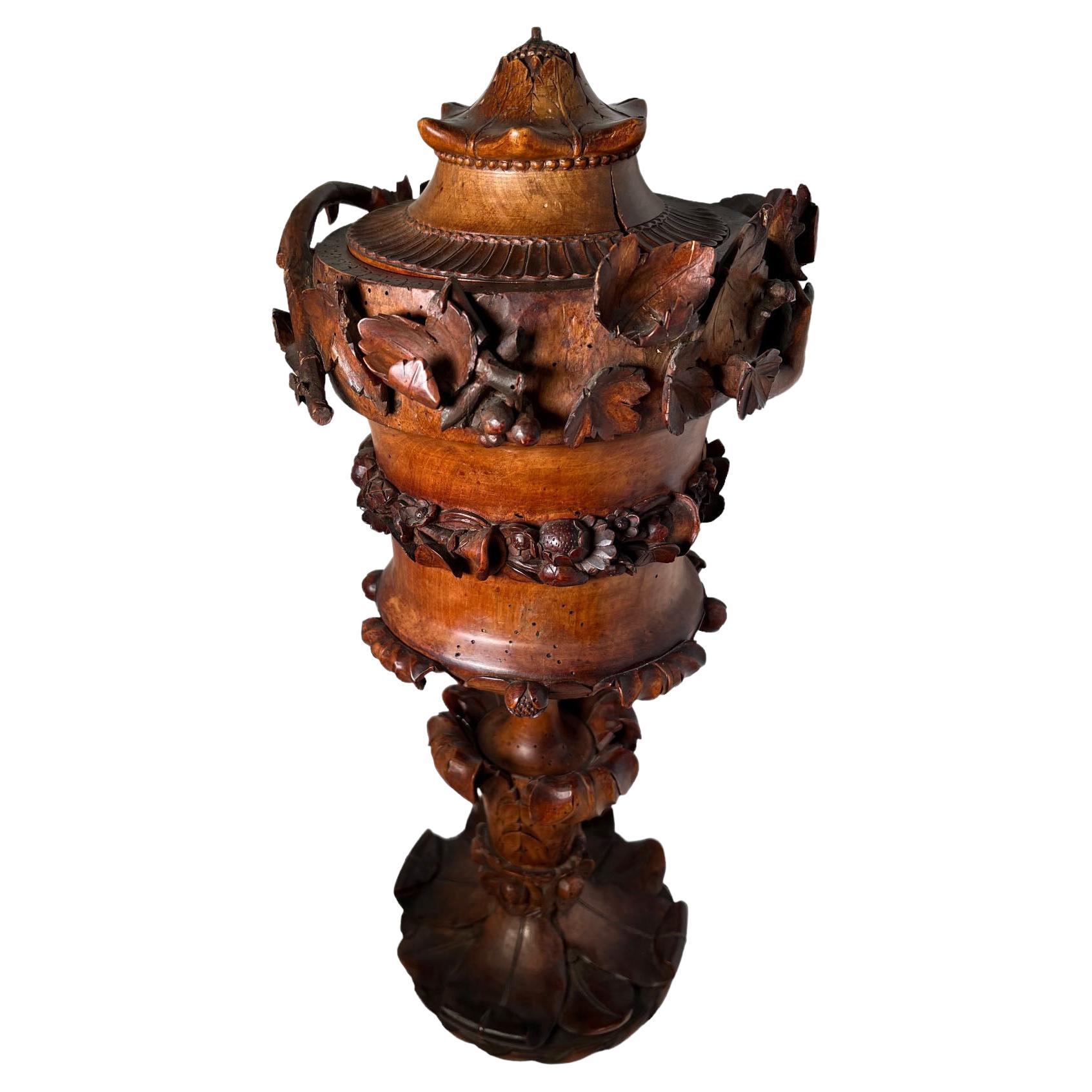
Swiss or German carved cup with lid circa 1780 to 1810. Three pieces of wood with high relief Carved leaves grapes etc.
Category
Antique Early 1800s German Urns
Materials
Wood
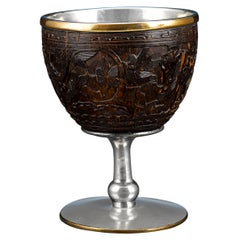
Chinese Coconut Cup
Located in New Orleans, LA
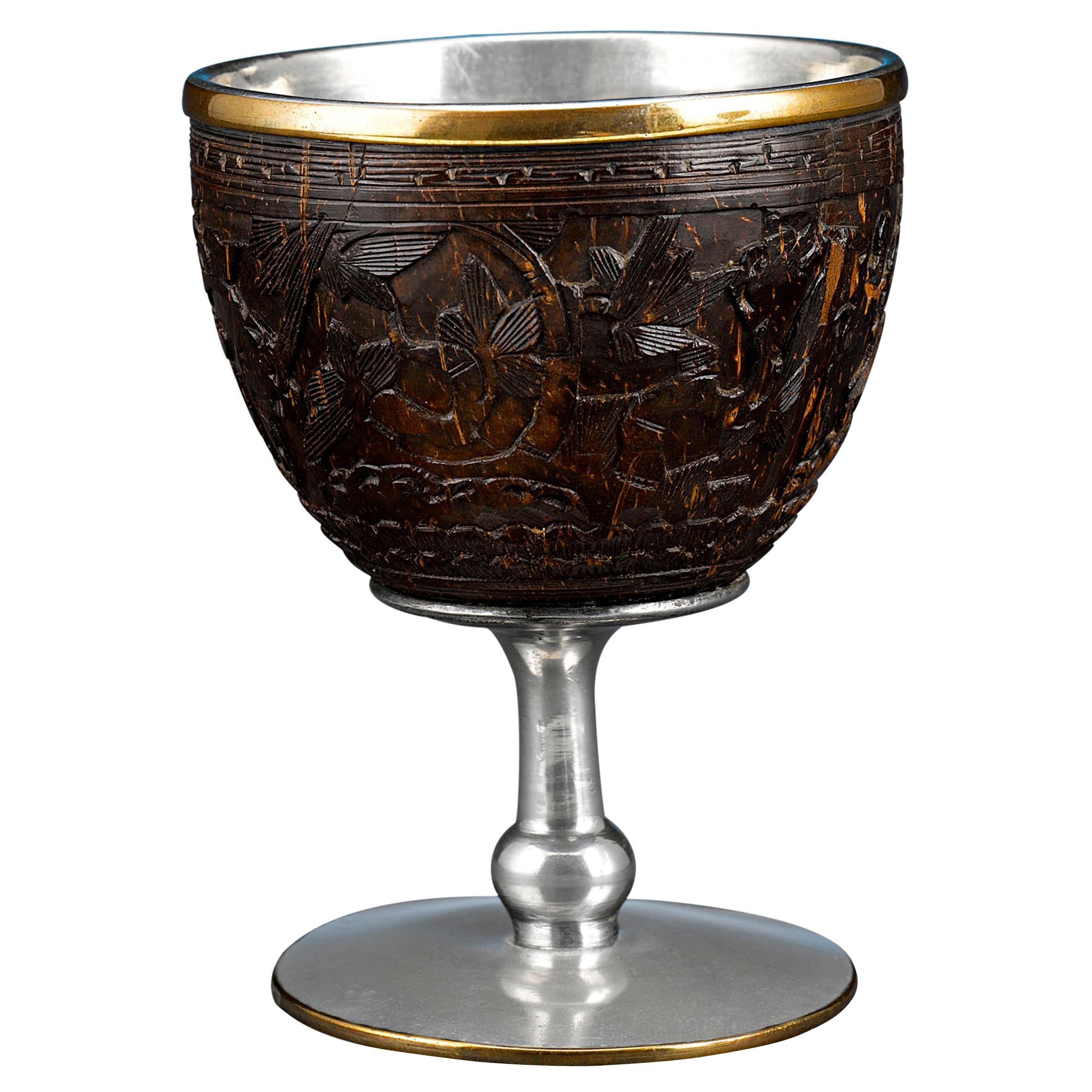
Carved from the shell of a coconut, this enchanting Chinese cup exhibits exceptional artistry. An elegant floral design encircles the entire cup, while the interior is fully lined with silver. In addition to the poison detecting powers attributed to coconuts, the Chinese believed that silver would tarnish when in contact with poison. In fact, many wealthy Chinese used silver lined cups and chopsticks tipped with silver fittings as an assurance against poisoning. To find a silver-lined coconut cup...
Category
Antique Early 19th Century Chinese Other Sculptures and Carvings
Materials
Coconut
$3,950
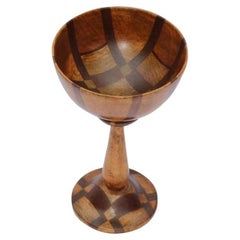
English Arts and Crafts Treen Specimen Wood Turned Goblet circa 1909
Located in Central England, GB
A very fine English Arts and Crafts treen specimen wood turned goblet
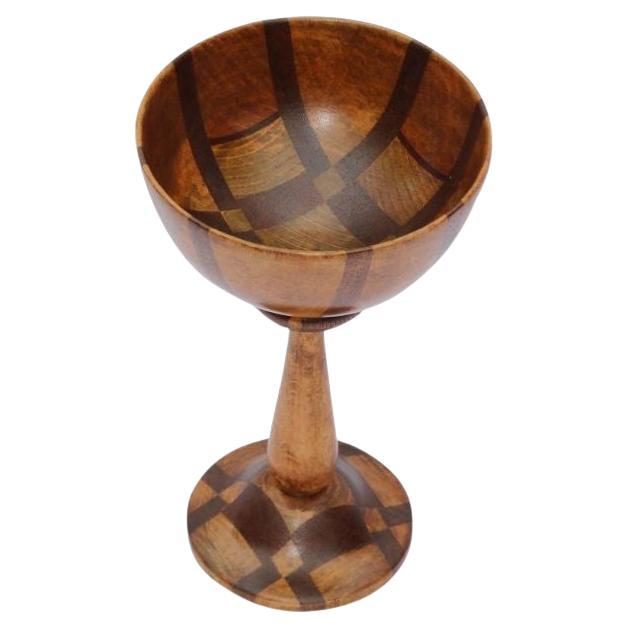
This superb English Arts and Crafts turned goblet is signed on the underside J Hill and dated 1909. It is mad...
Category
20th Century English Tableware
Materials
Fruitwood
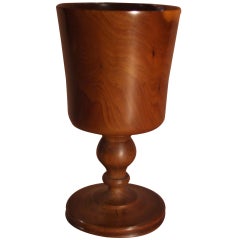
Finely Turned Yew Wood Goblet
Located in Greenwich, CT
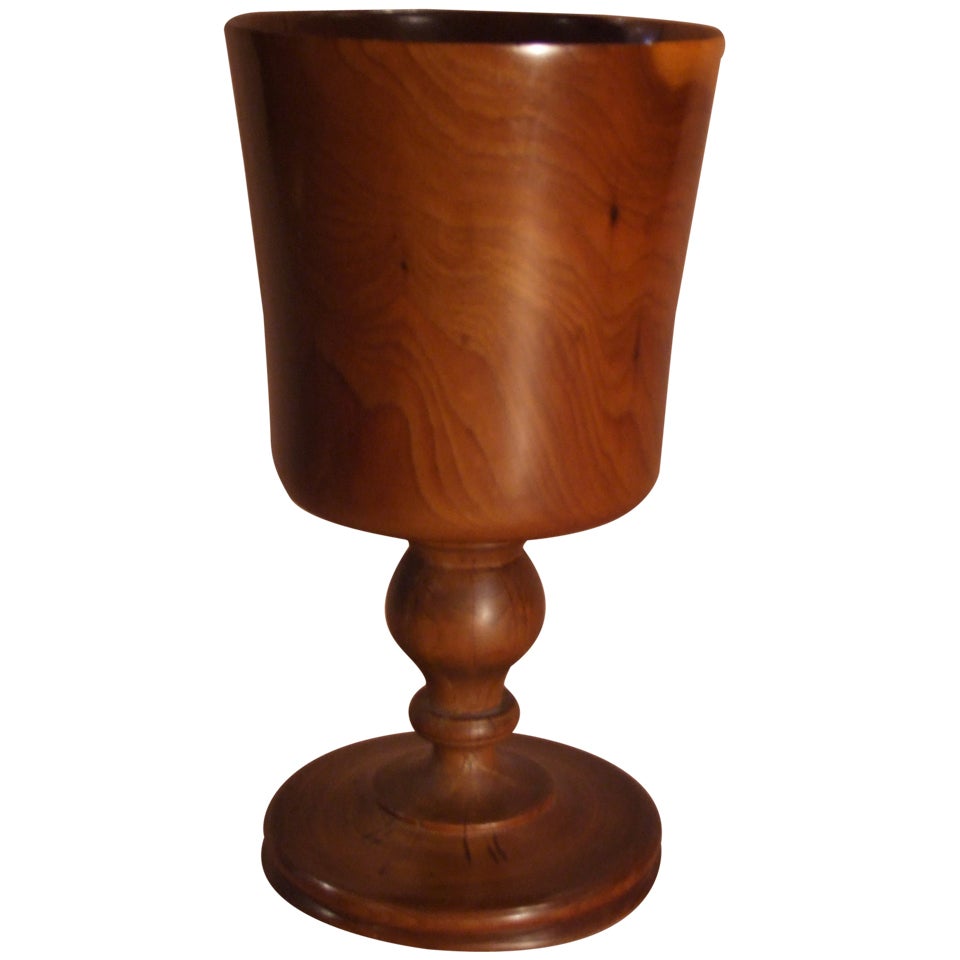
Nicely figured and beautifully turned yew wood goblet, the thinly walled vessel over balustrade turned step on shaped and turned foot, the whole turned fro...
Category
Vintage 1930s English Tableware
Materials
Yew
Finely Proportioned Coconut Goblet in 17th Century Taste
Located in Ottawa, Ontario
A finely proportioned coconut goblet in 17th century taste
19th century or earlier.
Turned and polished coconut shell,
swag and drop engraved top f...
Category
Antique 19th Century French French Provincial Serving Pieces
Materials
Coconut
Lignum Vitae Wassail Bowl
Located in Greenwich, CT
A wonderful and large turned lignum vitae wassail bowl, England circa 1680
Wassail bowls were first mentioned in the 13th century as a vessel in which rev...
Category
Antique Late 17th Century English Charles II Decorative Bowls
Materials
Wood
$14,500