1 of 5
IMPERIAL PORCELAIN FACTORY Alexandrinsky Turquoise Service Plate
$6,500List Price
About the Item
- Creator:Imperial Porcelain Factory
- Place of Origin:
- Date of Manufacture:1902
- Condition:Good given it s age.
- Seller Location:Redmond, WA
- Reference Number:Seller: 1011-025a1stDibs: JU120713242171
Authenticity Guarantee
In the unlikely event there’s an issue with an item’s authenticity, contact us within 1 year for a full refund. DetailsMoney-Back Guarantee
If your item is not as described, is damaged in transit, or does not arrive, contact us within 7 days for a full refund. Details24-Hour Cancellation
You have a 24-hour grace period in which to reconsider your purchase, with no questions asked.Vetted Professional Sellers
Our world-class sellers must adhere to strict standards for service and quality, maintaining the integrity of our listings.Price-Match Guarantee
If you find that a seller listed the same item for a lower price elsewhere, we’ll match it.Trusted Global Delivery
Our best-in-class carrier network provides specialized shipping options worldwide, including custom delivery.You May Also Like
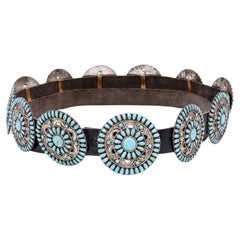
Navajo Needlepoint Turquoise Concho Belt
By Navajo
Located in Coeur d Alene, ID
Navajo needlepoint concho belt. Signed LMB, marked sterling. 11 conchos total. Exceptional design on each concho, featuring floral style center with complementary scalloped silverwork and final layer of turquoise framing concho. Old Pawn. Acquired from a Navajo trader.
PERIOD: After 1950
ORIGIN: Navajo, Southwest
SIZE: Total Belt Length 62 1/2" Leather; conchos 2 1/4"D
The word “concho” sometimes spelled “concha”, comes from the Spanish word meaning shell. Some of the first “conchos” were made of melted silver dollars and resembled a shell. Concho belts reportedly began appearing in Navajo country in the late 1860s. Other Native Americans including Zuni and Hopi also made traditional concho belts before long.
Concho belts can cost into the thousands of dollars depending upon the craftsmanship, amount of silver, rarity of turquoise and stones used. Belts in the upper end of the price scales are usually made before the turn of the century. Buyers should deal with reputable dealers as many fakes and look-a-likes exist. A well-made belt with age to it will fetch a bigger premium and hold its value better.
The earliest concho belts are now referred to as “First Phase” belts. This style of belt was made before Native silversmith had learned much about soldering. The conchos were hammered out from melted coins, cut, and filed into shape, engraved and a diamond shape slot was cut out of the middle of the concho, with a bar left across the center of the diamond shaped slot for the leather loop. Conchos that required no soldering are generally thought to be made from 1860-1880.
Second phase conchos were done 1890-1900s in which silversmith began to solder.
Third phase conchos is when you start to see the “butterfly” or “bow” appear between conchos and the use of turquoise as an adornment. A butterfly (bow) is a smaller concho in between bigger conchos. A belt with butterflies and sometimes turquoise would be from the early 1900s – 1930s.
The timelines may slightly differentiate depending upon who you ask. Natives first had concho belts for personal use only, but around the turn of the last century, tourist demand had kicked in and a new outlet emerged.
belts & buckles jewelry silver belts conchos navajo needlepoint southwest turquoise...
Category
Vintage 1950s American Native American More Jewelry
Materials
Turquoise, Sterling Silver
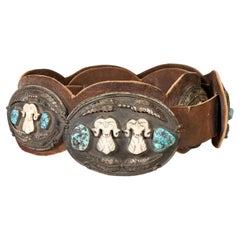
Navajo Walrus Ivory and Turquoise Concho Belt
By Navajo
Located in Coeur d Alene, ID
Carved ivory bighorns with Blue Kingman Mine turquoise. Wonderful patina. Original leather; nine conchos total. Signed A.J.M.
PERIOD: After 1950
ORIGIN: Navajo, Southwest
SIZE: Total belt length 56"; buckle 3 1/2" x 5"; conchos 3" x 4"
The word “concho” sometimes spelled “concha”, comes from the Spanish word meaning shell. Some of the first “conchos” were made of melted silver dollars and resembled a shell. Concho belts reportedly began appearing in Navajo country in the late 1860s. Other Native Americans including Zuni and Hopi also made traditional concho belts before long.
Concho belts can cost into the thousands of dollars depending upon the craftsmanship, amount of silver, rarity of turquoise and stones used. Belts in the upper end of the price scales are usually made before the turn of the century. Buyers should deal with reputable dealers as many fakes and look-a-likes exist. A well-made belt with age to it will fetch a bigger premium and hold its value better.
The earliest concho belts are now referred to as “First Phase” belts. This style of belt was made before Native silversmith had learned much about soldering. The conchos were hammered out from melted coins, cut, and filed into shape, engraved and a diamond shape slot was cut out of the middle of the concho, with a bar left across the center of the diamond shaped slot for the leather loop. Conchos that required no soldering are generally thought to be made from 1860-1880.
Second phase conchos were done 1890-1900s in which silversmith began to solder.
Third phase conchos is when you start to see the “butterfly” or “bow” appear between conchos and the use of turquoise as an adornment. A butterfly (bow) is a smaller concho in between bigger conchos. A belt with butterflies...
Category
Vintage 1950s American Native American More Jewelry
Materials
Turquoise, Sterling Silver
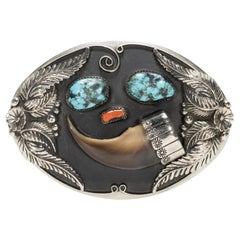
Navajo Turquoise, Coral and Bear Claw Belt Buckle
By Navajo
Located in Coeur d Alene, ID
Navajo Kingman turquoise and bear claw buckle with small nugget of red coral. Stones and claw set in sterling silver surrounded by leaves, scrolls and beads....
Category
Vintage 1980s American Native American More Jewelry
Materials
Turquoise, Coral, Sterling Silver
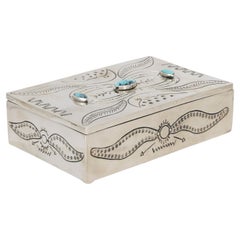
Armand American Horse Turquoise Nickel Silver Jewelry Box
Located in Coeur d Alene, ID
Armand American Horse nickel silver and turquoise jewelry box. Includes moon face motif on lid and hand stamped detail along sides. Stamped on bottom with artist hallmark. Three genu...
Category
20th Century American Native American Vanity Items
Materials
Turquoise, Silver, Sterling Silver
$4,000
Free Shipping
H 1.75 in W 5.25 in D 3.5 in
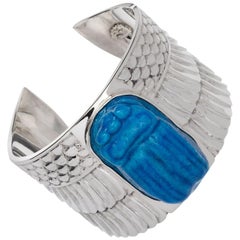
Turquoise Egyptian Scarab Faience Cuff in Sterling Silver Bracelet
Located in London, GB
This one of a kind turquoise faience flying scarab encircles your wrist with its silver wings . Amulets in the shape of scarab beetles were used in Egypt ...
Category
21st Century and Contemporary British Egyptian Revival Cuff Bracelets
Materials
Turquoise, Silver, Sterling Silver
$1,647
Free Shipping
W 1.74 in L 6.3 in
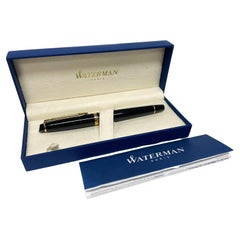
Waterman Expert Gold Plated Fountain Pen
Located in Palm Desert, CA
Waterman Gold Plated Fountain Pen. The Waterman Expert fountain pen has a gloss lacquer finish with 23 karat gold plated trim. The pen has a cigar-shaped barrel, a beveled button cap...
Category
Early 2000s French Contemporary More Objets d Art and Vertu
Materials
Gold Plate
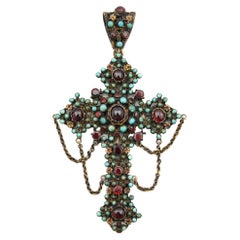
Antique Austro-Hungarian Turquoise and Garnet Enamel Large Cross Pendant
Located in Rotterdam, NL
This large 1860's Austro-Hungarian antique cross pendant is set with many turquoise and garnet gemstones. The four cabochon cut garnet stones on front of the cross are all set in rai...
Category
Antique Late 19th Century Hungarian Renaissance Revival Pendant Necklaces
Materials
Garnet, Turquoise, Silver, Enamel, Gilt Metal
$3,351 Sale Price
20% Off
Free Shipping
W 3.15 in L 5.12 in
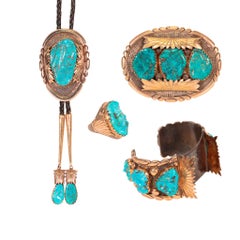
Navajo Turquoise and Gold Bracelet, Ring, Bolo and Buckle Set
By Navajo
Located in Coeur d Alene, ID
Stunning four piece gold bracelet, ring, bolo and buckle set made by Robert and Burnice Leekya. Navajo four-piece set: bracelet, ring, bolo, and buckle. 14K gold overlay and turquoise nuggets. Signed "RBL". From the Sleeping Beauty Mine. Zuni husband and wife Robert and Bernice Leekya are known for their bold turquoise nugget jewelry. They have been making unique pieces since 1953. Robert was taught by his father, a master Zuni jeweler Leekya Deyuse...
Category
Vintage 1950s American Native American More Jewelry
Materials
Turquoise, 14k Gold
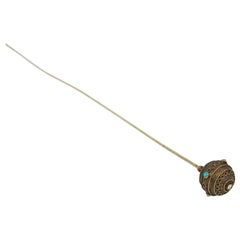
Victorian Moorish Brass Hat Pin w Turquoise Stones and Crystals - 8 ½”, 1900s
Located in Tucson, AZ
A necessity during the Victorian Era, hat pins not only balanced precarious hats atop piles of hair but also moonlighted as weapons against overzealous gentlemen. Though teetering ha...
Category
Antique Early 1900s Unknown Aesthetic Movement More Objets d Art and Vertu
Materials
Turquoise, Brass
$325
Free Shipping
Dm 0.63 in L 8.5 in
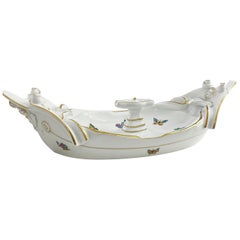
"Barcaccia" Fountain Herend Porcelain Centerpiece Exclusive for SERRA
By Herend
Located in Roma, IT
This reproduction of Bernini's Barcaccia, located near the Spanish steps in Rome, was made by Herend exclusively for the Serra shop, using a sterling silver model that Serra had created (with the help of the artist Foscolo Benedetti), and had then supplied to Herend. The director of the prestigious Hungarian manufacture, a great lover of Italian history and art, was so enthusiastic about the model that he proposed making it an elegant and unique centerpiece, exclusive for Serra, which can be decorated with all the famous Herend decorations. Here we see the "Victoria" decoration, made at the end of the 19th century for Queen Victoria, and still used by the English royal house.
Pope Urban VIII commissioned Pietro Bernini in 1623 to build the fountain as part of a prior Papal project to erect a fountain in every major piazza in Rome. The fountain was completed between 1627 and 1629 by Pietro possibly along with the help of his son Gian Lorenzo Bernini, especially after his father's death on August 29, 1629.
The sculptural fountain is made into the shape of a half-sunken ship...
Category
1990s Figurines and Sculptures
$3,471
Free Shipping
H 5.12 in W 18.12 in L 7.09 in
Still Thinking About These?
All Recently ViewedMore Ways To Browse
Russian Imperial Porcelain
Russian Imperial Plates
Imperial Service Plates
Ferrari Key
Folding Knives
Gold Sewing Kit
Henry Dunay Buckle
Patek Philippe Hand Painted
Patek Philippe Tray
Porsche Ring
Rolex Ashtray
Russian Porcelain Eggs
Tequila Knife
Vintage Dubarry Jewelry
Victorian 3 Carat Diamond Ring
15 Carat Blue Sapphire Diamond Ring
Antique Gold Opal Ring
Art Deco Platinum And Diamond Watch