Items Similar to French 1900 Edwardian Tortoise Parasol Handle in 18kt Yellow Gold Carved Citrine
Want more images or videos?
Request additional images or videos from the seller
1 of 7
French 1900 Edwardian Tortoise Parasol Handle in 18kt Yellow Gold Carved Citrine
$2,737.50
$3,65025% Off
£2,068.79
£2,758.3925% Off
€2,376.38
€3,168.5125% Off
CA$3,850.50
CA$5,133.9925% Off
A$4,076.67
A$5,435.5625% Off
CHF 2,206.18
CHF 2,941.5725% Off
MX$48,723.72
MX$64,964.9525% Off
NOK 27,499.73
NOK 36,666.3125% Off
SEK 25,147.53
SEK 33,530.0425% Off
DKK 17,748.53
DKK 23,664.7125% Off
About the Item
Edwardian parasol handle made in France.
Very beautiful and elegant piece, created in Paris France during the Edwardian and Belle Epoque periods, back in the 1900. This fabulous parasol handle has been designed with French neo-classic patterns in the style of Louis XVI. Crafted by assembling pieces made up in 18 karats yellow gold, carved citrine and amber color faux tortoise. The baton is fitted with a screw to attach to any parasol or cane. The round gold parts on top are made with multiple leaf motifs, bows, tassels and floral clusters, typical from the Belle Epoque period.
Gemstones: The top part is mounted, with 1 cylinder cabochon cut of natural translucent citrine quartz of about 120 carats.
Birthstone: Citrine, for the month of November.
Weight: 66.95 Grams, (42.91 Dwt).
Measurements: 248 mm by 20 mm (9.75 x 0.79 Inches).
Hallmarks: Both gold parts are stamped with French marks; the head of the eagle for the assay and warranty of the 18kt gold and the maker's maitre mark inside a lozange cartouche.
Edwardian era, like the Georgian and Victorian eras before it, derives its name from the reign of the English King, Edward VII (1901-1910). Edwardian jewelry is known for representing femininity while incorporating a lot of the color white. Think diamonds, pearls and white metals like platinum and white gold. Diamonds often had an Old Mine or European cut and sapphires were a popular choice for a pop of color. They tended to be made from platinum and diamonds – the more, the merrier – and used fashionable, intricate techniques such as filigree and millegrain. Edwardian rings are works of art and best worn alone or alongside a simple wedding band. Millegraining, a new decorative technique made possible by the use of platinum, is featured often on Edwardian jewelry. Its border of delicate balls and ridges surrounding a gemstone or on the knife sharp edges of a design served to give jewelry a softer, lighter look.
Collateral: It is accompanied by a presentation jewelry pouch.
Condition: The overall condition of this piece is excellent. Beside the little normal wear, there is no damage to the gold. All parts are secured in the settings. This parasol handle has been carefully inspected to guarantee the condition and authenticity.
INVENTORY REF: D020923GINN/.0021
- Creator:French Belle Epoque
- Metal:
- Stone:
- Stone Cut:
- Weight:120 ct
- Dimensions:Width: 0.79 in (20.07 mm)Depth: 0.79 in (20.07 mm)Length: 9.75 in (247.65 mm)
- Style:
- Place of Origin:
- Period:
- Date of Manufacture:1900
- Condition:Wear consistent with age and use. The overall condition of this piece is excellent. Beside the little normal wear, there is no damage to the gold. All parts are secured in the settings. This parasol handle has been carefully inspected to guarantee the condition and authenticity.
- Seller Location:Miami, FL
- Reference Number:Seller: D020923GINN/.00211stDibs: LU2690218419532
About the Seller
4.9
Recognized Seller
These prestigious sellers are industry leaders and represent the highest echelon for item quality and design.
Established in 1995
1stDibs seller since 2022
1,095 sales on 1stDibs
Typical response time: <1 hour
- ShippingRetrieving quote...Shipping from: Miami, FL
- Return Policy
More From This Seller
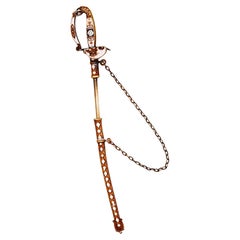
View AllAmerican 1860 Miniature Enameled Sword Jabot In 14Kt Yellow Gold
Diamond
Located in Miami, FL
Miniature cavalry sword jabot-pin.
Fabulous miniature cavalry sword, made up as a jabot-pin in America during the mid-nineteenth century century, circa 1860. The sword is similar to the ones used by the US military cavalry...
Category
Antique 1860s American High Victorian Brooches
Materials
Diamond, White Diamond, Gold, 14k Gold, Yellow Gold, Enamel
$2,092 Sale Price
25% Off
Free Shipping
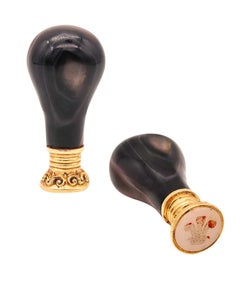
Edwardian 1900 Agate Desk Seal In 18Kt Gold With The Arms of The Prince of Wales
Located in Miami, FL
Desk seal with the arms of the Prince of Wales.
Very rare and unusual desk seal, created in England during the Edwardian period, back in the early 1900's. This seal feature the arms of the Prince of Wales and is composed by the agate pommel, carved with smooth surfaces and the round mount setting crafted in yellow gold of 18 karats with scrolls decorations. The seal depicts three feathers aligned over a crown, carved with incised intaglio in natural white agate.
Gemstones: The handle pommel is carved from a single piece of brown translucent agate with bluish veins.
Weight: 14.95 Grams, (9.58 Dwt).
Measurements: 41 mm by 19 mm (1.61 x 0.75 Inches).
Hallmarks: No marks, electronically tested for 18 karats gold.
Arms of Prince of Wales
The Prince of Wales's feathers – Almost History
The coat of arms of the Prince of Wales is the official personal heraldic insignia of the Princes of Wales, a title traditionally granted to the heir apparent of the reigning monarch of the United Kingdom of Great Britain and Northern Ireland, formerly the Kingdom of Great Britain and before that the Kingdom of England. Since Edward I awarded it to his son the future Edward II, the heir apparent to the English throne has been created with the title Prince of Wales. The history of the coat of arms is closely linked with those of the Royal coat of arms of England and the Royal coat of arms of the United Kingdom. However, as the noted antiquarian and heraldist Charles Boutell wrote in 1863, "The Arms of the Prince of Wales have a distinct individuality of their own, with which nothing ought to be directly associated".
History
The badge has no connection with the native Princes of Wales. Its use is generally traced back to Edward, the Black Prince (1330–1376), eldest son and heir apparent of Edward III of England. Edward bore (as an alternative to his differenced royal arms) a shield of Sable, three ostrich feathers argent, described as his "shield for peace", probably meaning the shield he used for jousting. These arms can be seen several times on his chest tomb in Canterbury Cathedral, alternating with his royal arms (the royal arms of King Edward III...
Category
Antique Early 1900s English Edwardian Desk Accessories
Materials
Agate, Gold, 18k Gold, Yellow Gold
$2,988 Sale Price
25% Off
Free Shipping
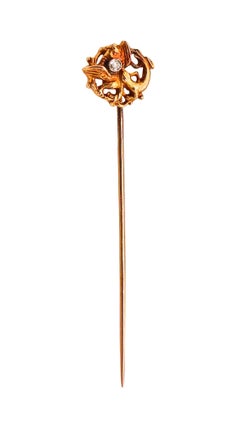
ENGLAND 1890 Neo Gothic Stick Pin With Griffin In 18Kt Gold With Euro Diamond
Located in Miami, FL
A Victorian neo-gothic stick with a Griffin.
Beautiful stick tie-pin created in England in the late 19th century, back in the 1890. The piece was designed during the late Victorian ...
Category
Antique 1890s English Gothic Revival Brooches
Materials
Diamond, White Diamond, Gold, Yellow Gold
$1,123 Sale Price
25% Off
Free Shipping
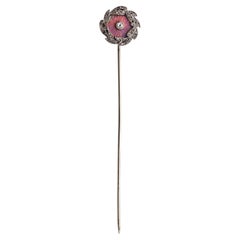
Cartier Paris 1900 Edwardian Guilloche Enamel Pin 18Kt Gold Platinum And Diamond
By Cartier
Located in Miami, FL
Belle Epoque pin designed by Cartier.
Colorful and very rare stick pin made during the Edwardian-Belle Epoque period. This beautiful piece was created in Paris France by the jewelry house of Cartier, back in the 1900. Carefully crafted in two parts made up of solid platinum, yellow and white gold of 18 karats. Embellished with a central panel decorated with engine turned guilloche topped with purple glossy enamel. Accented with thirty-five natural earth mined rose cut diamonds and the settings are finished with millegrain.
Diamonds: Mounted in millegrain settings, with 35 old rose cut diamonds, 0.30 carats, G/H color, SI-1 clarity.
Weight: 2.35 Grams, (1.51 Dwt).
Measurements: 70 mm by 12 mm (2.76 x 0.47 Inches).
Hallmarks Stamped with French marks, the maker's maitre mark CA inside a lozange cartouche, the head of the eagle for the assay and warranty of the gold, the four digits serial numbers and signed, "CARTIER PARIS 3840".
Cartier
The move to the rue de la Paix coincided with a period of extraordinary economic growth and affluence in France and the world. Cartier was also growing and expanding and had started to shift their emphasis from retailing to design and manufacture. Although they produced a small number of pieces in the Art Nouveau style, Cartier paid scant attention to the movement. They made their distinguishing mark in pioneering the use of platinum in creating the delicate and graceful Garland style that came to be associated with the Belle Époque. The discovery of the great diamond deposits in South Africa in the late 1860’s engendered the popularity of extravagant diamond jewelry. The technical advances in the manufacturing of platinum enabled designs of great intricacy, strength and flexibility such as found in the spectacular résille designs of Cartier. (See Edwardian Jewelry: 1901-1915). Cartier marked the beginning of the twentieth century by opening branches in London and New York, where their wealthiest and most dedicated clientele resided. The 1902 coronation of Edward VII occasioned a large number of commissions from England’s leading families. Records indicate that Cartier produced twenty-seven tiaras alone for the coronation and the event was instrumental in convincing the firm to seek a permanent presence in London. Indeed, by 1904 they had achieved their first of fifteen royal warrants being appointed official purveyor to the court of King Edward VII. The London branch came to thrive under the tutelage of Alfred’s youngest son, Jacques Cartier, establishing London based design and manufacturing workshops. Opening a Cartier store in New York was a natural progression as many of America’s wealthiest families and business magnates had been traveling to Paris for some time to purchase their jewels from Cartier. By 1906 Alfred had largely retired and Louis and his brother Pierre operated the Cartier business jointly. One of their first major decisions was to establish a New York presence and workshop in 1909 under the skilled direction of Pierre. Indicative of his business skills, Pierre famously secured Cartier’s present location, an elegant Beaux-Arts mansion at 653 Fifth Avenue, from industrialist Morton F. Plant in 1917. The building changed hands in exchange for $100 and a double strand of natural pearls, admired by Plant’s wife and valued at one million dollars, the asking price for the mansion. While the Fifth Avenue location remains priceless to the firm, when the pearls came up for auction in 1957, they fetched a mere $170,000. (From Lang's with thanks).
Edwardian Jewelry
This Period was during the King Edward VII, after whom this period of jewelry history is named, reigned over England for only nine years, yet the style of jewelry known as “Edwardian” was created roughly between 1890 and 1920. Edwardian-era rings tend to be larger, opulent pieces, and stacked ring designs were popular. The metal surfaces of the rings were often diamond-encrusted for additional shimmer. Each of these rings is a work of art, showcasing a bygone era of grace, elegance and the royalty the Edwardian era is named for.
Guilloché
This term is used in fine jewelry or objects de Vertu to enhance the appearance of boxes, frames, brooches, rings or pendants. Guilloché enamel refers to metal pieces that have been given the Guilloché treatment and then covered with a translucent layer of enamel, giving the geometric patterns underneath the enamel a colorful hue.
Millegrain
This is a jewelry technique which refers to the textural effect of a close-set line of metal beads that are typically used as a border on the edges or bezels of jewelry.
Literature: Sotheby's fine jewels, London September 17 1021, Lot 146 for an identical piece illustrated with the original box
Collateral: It is accompanied by the original Cartier presentation green jewelry box...
Category
Antique Early 1900s French Edwardian Drop Necklaces
Materials
Diamond, White Diamond, Gold, 18k Gold, White Gold, Yellow Gold, Platinu...
$5,248 Sale Price / set
25% Off
Free Shipping
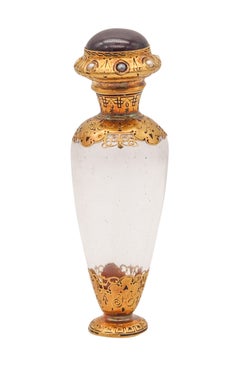
French 1870 Napoleon III Perfume Bottle Mount In 18Kt Yellow Gold With Gemstones
Located in Miami, FL
French scent bottle with gemstones.
Gorgeous antique scent perfume bottle, created in Paris France during the imperial period of Napoleon III, back in the 1860. This exceptional bot...
Category
Antique 1860s French Napoleon III Vanity Items
Materials
Garnet, Pearl, Natural Pearl, Gold, 18k Gold, Yellow Gold, Enamel
$3,562 Sale Price
25% Off
Free Shipping
Meyle
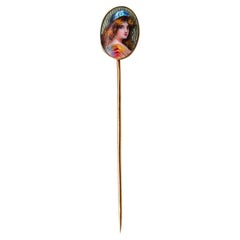
Mayer 1900 Art Nouveau Guilloche Enamel Stick Pin In 18Kt Yellow Gold
Located in Miami, FL
An art nouveau enamel pin by Meyle & Mayer.
Fabulous antique piece created in the city of Pforzheim in Germany by the Meyle & Mayer company du...
Category
Antique 19th Century German Art Nouveau Brooches
Materials
Gold, 18k Gold, Yellow Gold, Enamel
$1,038 Sale Price
25% Off
Free Shipping
You May Also Like
Tiffany
Co. Parasol Handle
By Tiffany
Co.
Located in New York, NY
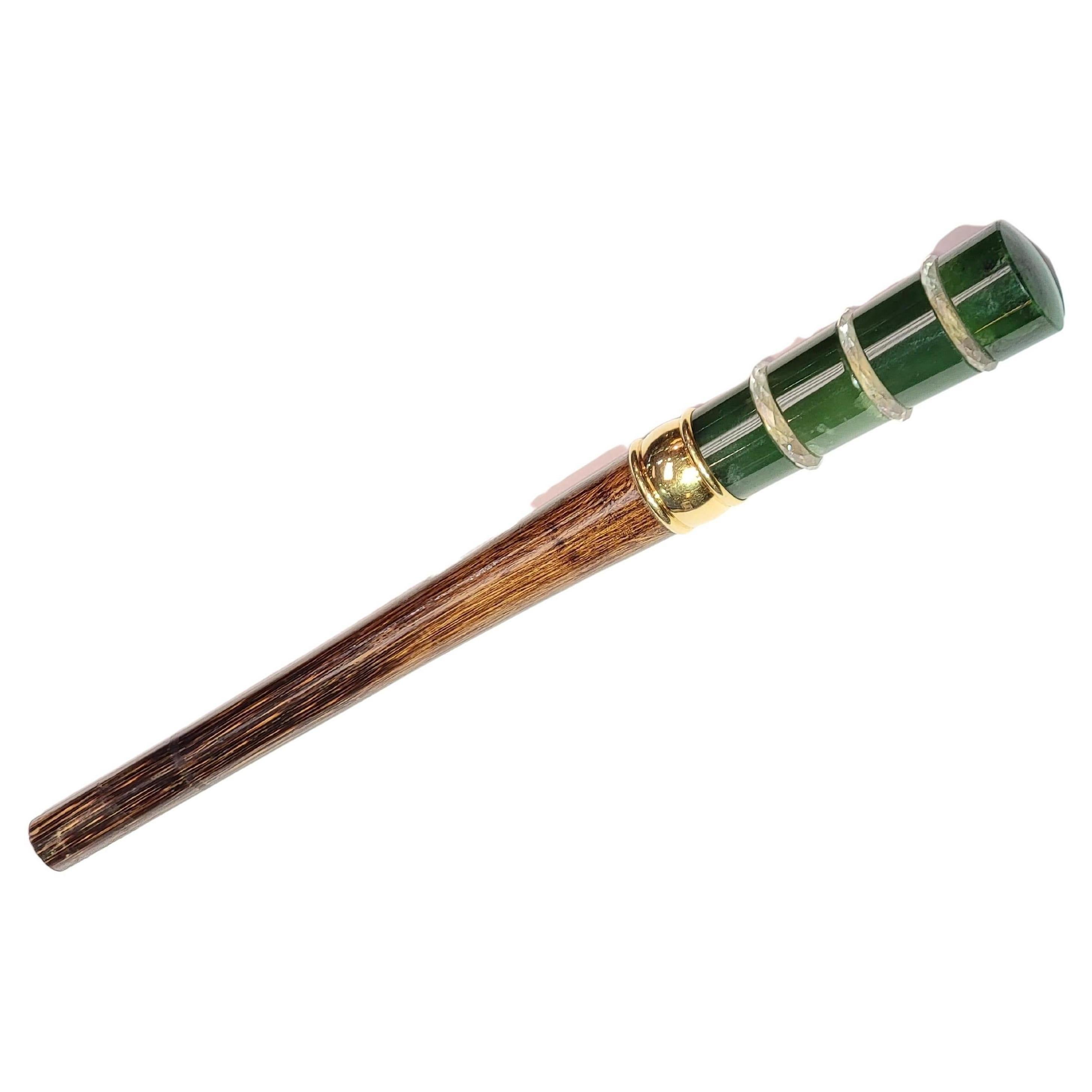
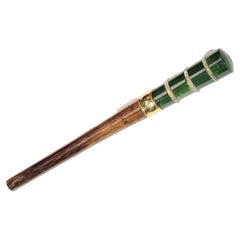
Art Nouveau Tiffany & Co. Parasol Handle
A parasol handle made of 18 karat gold, jade, rocky crystal and wood made circa 1900
Signed Tiffany & Co.
Stamped 18 KT. Gold
Length: 8.5"
Category
Antique Early 1900s American Art Nouveau Vanity Items
Materials
Jade, Gold, 18k Gold, Yellow Gold
Antique Russian 18K Yellow Gold Rhodonite Agate and Enamel Parasol Handle
Located in Staines-Upon-Thames, GB
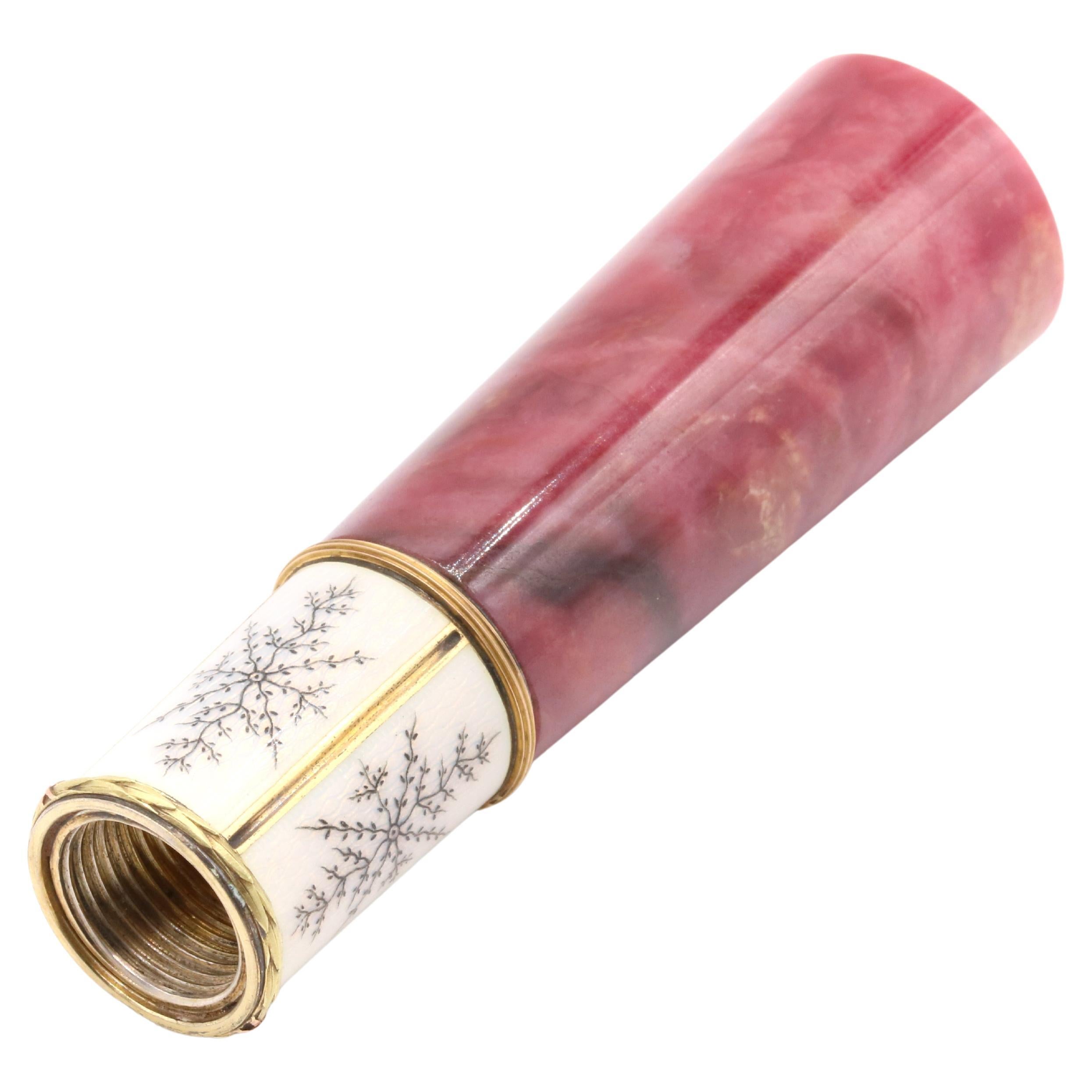
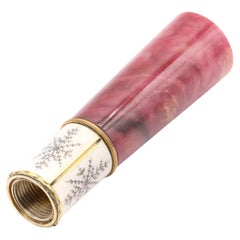
An antique yellow gold, black and white enamel, and rhodonite agate parasol handle, comprising a handle formed of polished pink agate, with decoration in white and black enamel, with detailing in 18 karat yellow gold.
This elegant antique parasol...
Category
Antique Early 1900s Russian Edwardian Enamel Frames and Objects
Materials
Agate, 18k Gold, Yellow Gold, Enamel
$6,343 Sale Price
36% Off
Free Shipping
Antique Ladies Parasol Frame, Gold Handle, Band, Bone Handle and Tips
Located in Miami, FL
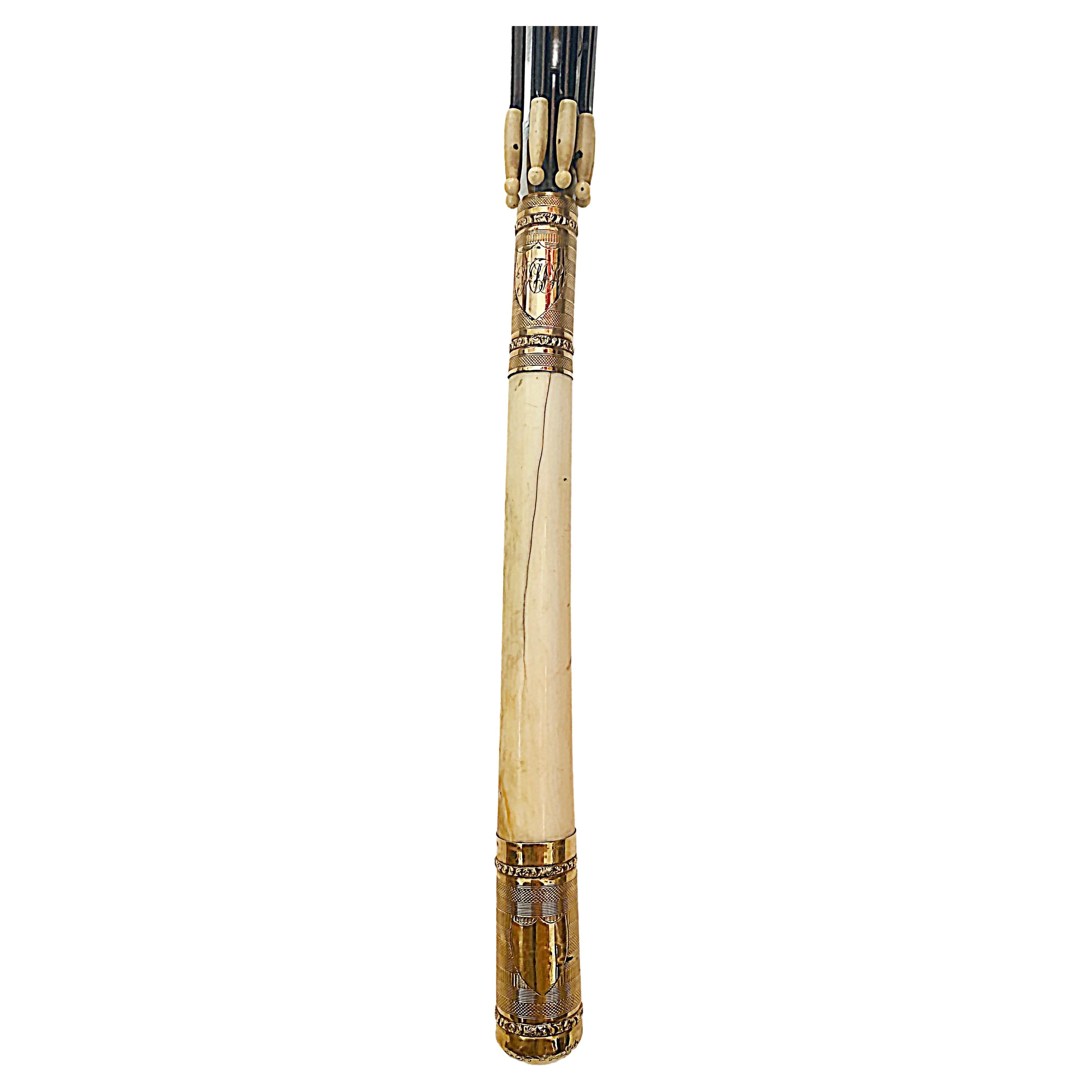
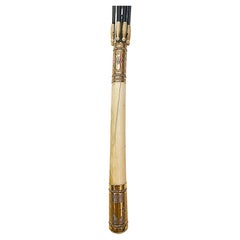
Antique Ladies Parasol Frame, Gold Handle, Band, Bone Handle and Tips
Offered for sale is a 19th-century ladies' parasol frame with a bone and gold ...
Category
Antique Late 19th Century European Victorian Historical Memorabilia
Materials
Metal, Gold
$236 Sale Price
20% Off
Turn of the Century Parasol Handle for Flirty, Twirling Come-Hither
By Georg Adam Scheid
Located in New York, NY
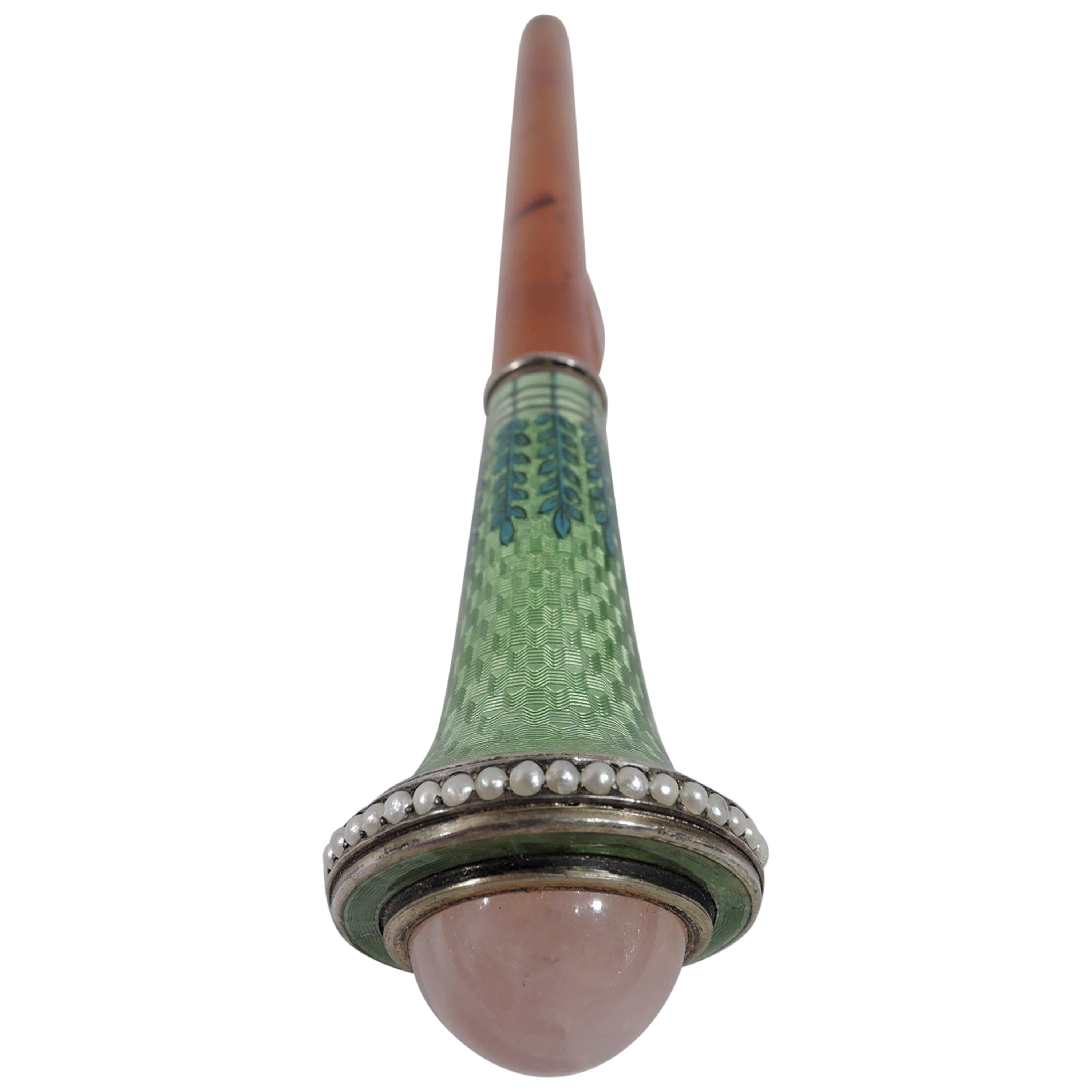
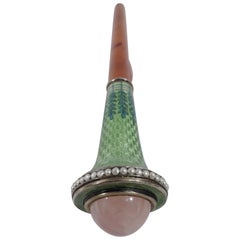
Ramp up your allure with a turn-of-the-century parasol handle. Silver and amber cylinder mounted to cone with enameled stylized vertical leafing branches on green guilloche basket-we...
Category
Antique Late 19th Century Austrian Art Nouveau Enamel Frames and Objects
Materials
Amber, Silver
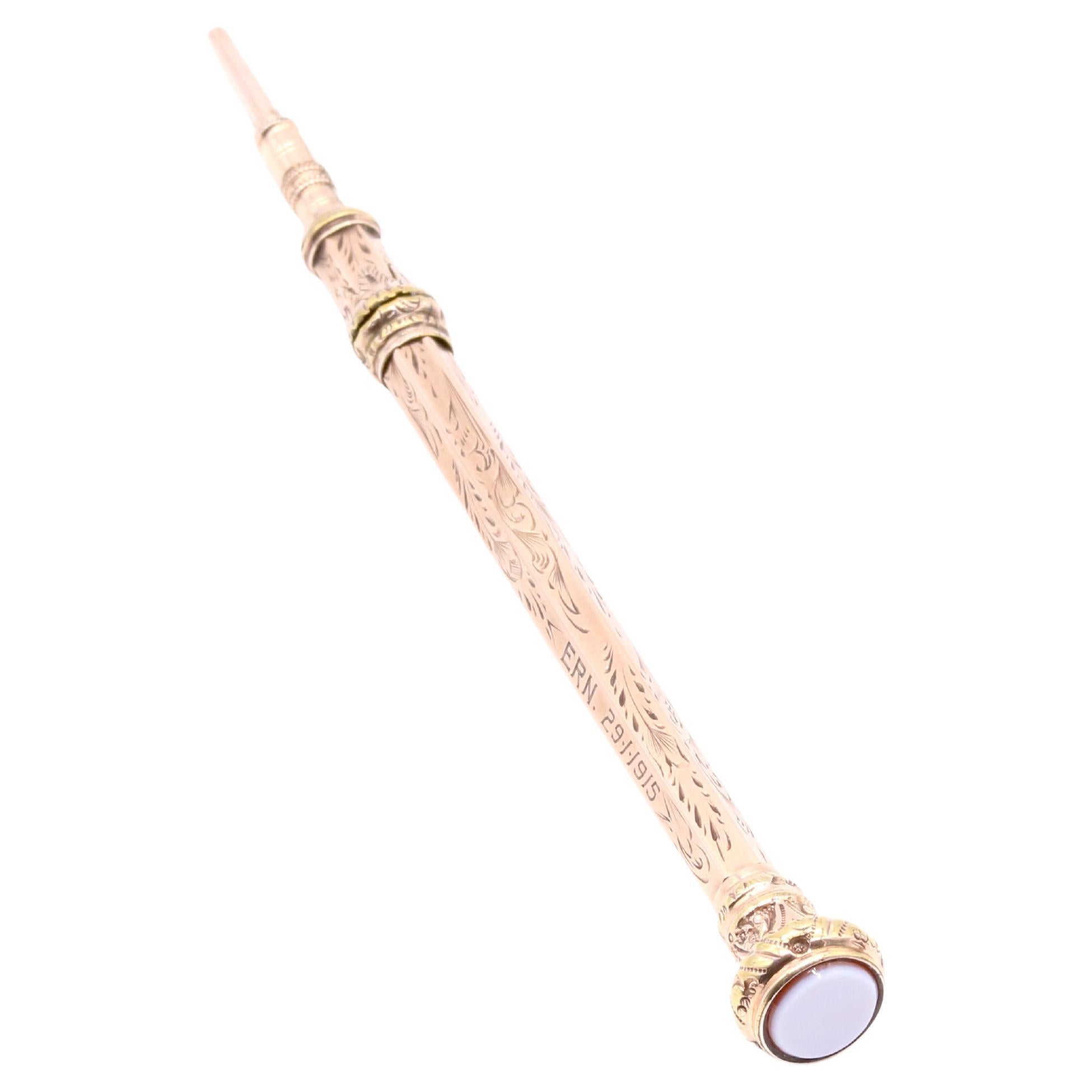
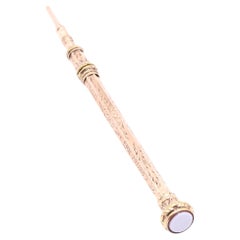
Antique 9K Yellow Gold Floral Engraved Propelling Pencil, with Agate Terminal
Located in Staines-Upon-Thames, GB
An antique banded agate, and yellow gold propelling pencil, in 9 karat yellow gold.
My favourite thing about this Antique Yellow Gold Pencil is the elegant floral design. What’s yo...
Category
Early 20th Century British Edwardian Desk Accessories
Materials
Agate, 9k Gold, Yellow Gold
$693 Sale Price
20% Off
Free Shipping
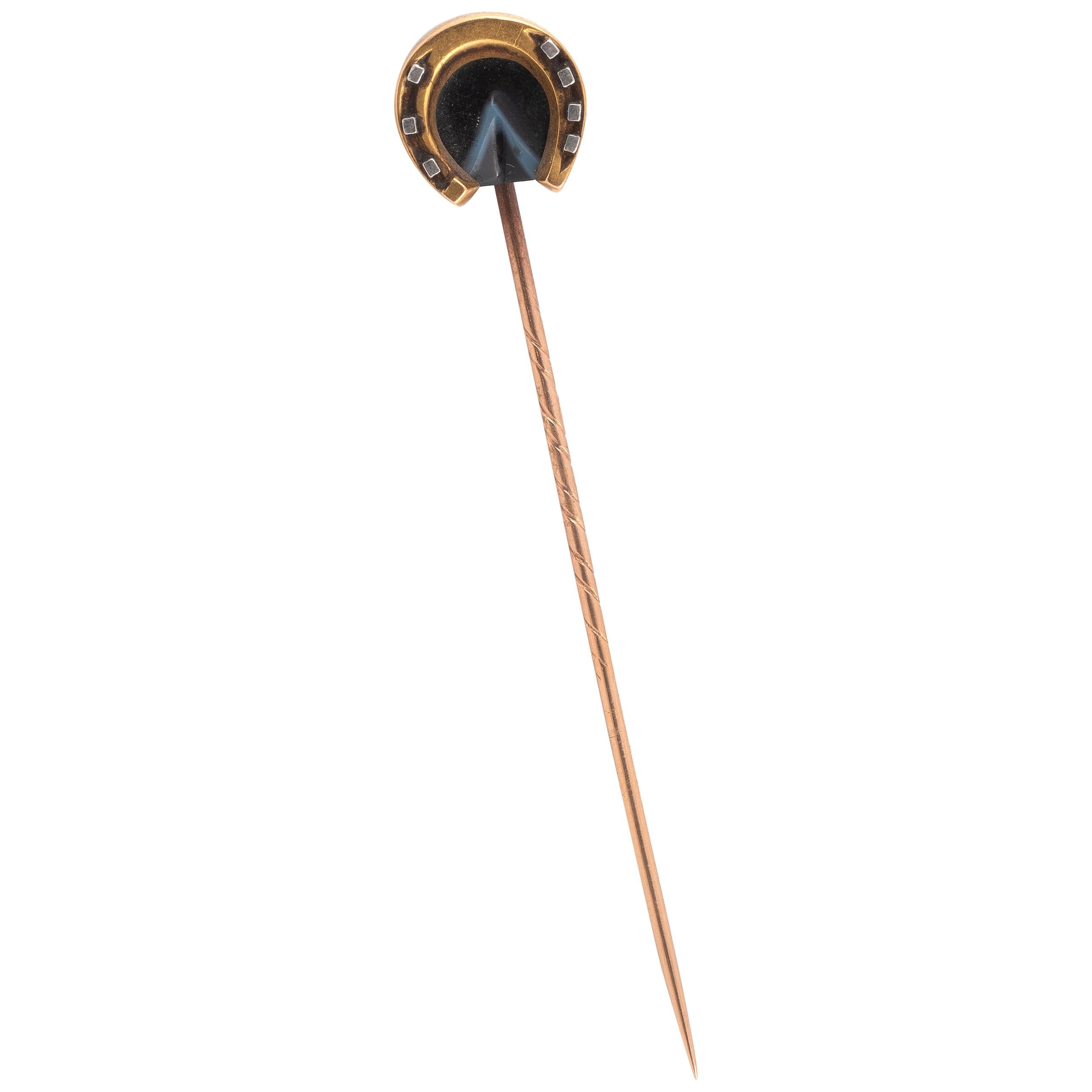
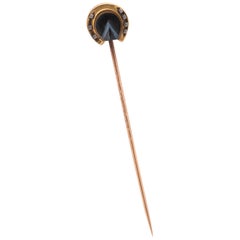
Yellow Gold and Platinum Agate Stickpin
Located in Firenze, IT
A horse-shoe pin set with agate
Category
Vintage 1910s British Victorian Brooches
Materials
Agate, Yellow Gold, Platinum
More Ways To Browse
French Edwardian Jewellery
20 Karat Gold Wedding Ring
18k Antique Wedding Band Yellow Gold
Filigree White Gold Wedding Bands
Platinum And 18 Karat Gold Wedding Band
Parasol Handle
Antique Parasol Handles
Art Carved Yellow Gold Wedding Rings
Antique Gold In Quartz Jewelry
Vintage Dunhill Rollagas Lighter
Cartier Vanity Gold
Tiffany Money Clip
Diamond Lighter
Antique Enamel Compact
Dunhill Art Deco Lighter
Black And Gold Cartier
Gold Cigarette Lighter
Tiffany Sterling Silver Money Clip