Video Loading
Want more images or videos?
Request additional images or videos from the seller
1 of 19
Rare 18th Century Portuguese Cluster Ring Minas Novas Rock Crystal Antique
Price:$4,129.20
About the Item
- Ring Size:7 US, Resizable
- Metal:
- Stone:
- Stone Cut:
- Weight:7.41 g
- Style:
- Place of Origin:
- Period:
- Date of Manufacture:1770
- Condition:Wear consistent with age and use.
- Seller Location:London, GB
- Reference Number:1stDibs: LU2845220500712
About the Seller
5.0
Vetted Professional Seller
Every seller passes strict standards for authenticity and reliability
Established in 2019
1stDibs seller since 2022
47 sales on 1stDibs
Authenticity Guarantee
In the unlikely event there’s an issue with an item’s authenticity, contact us within 1 year for a full refund. DetailsMoney-Back Guarantee
If your item is not as described, is damaged in transit, or does not arrive, contact us within 7 days for a full refund. Details24-Hour Cancellation
You have a 24-hour grace period in which to reconsider your purchase, with no questions asked.Vetted Professional Sellers
Our world-class sellers must adhere to strict standards for service and quality, maintaining the integrity of our listings.Price-Match Guarantee
If you find that a seller listed the same item for a lower price elsewhere, we’ll match it.Trusted Global Delivery
Our best-in-class carrier network provides specialized shipping options worldwide, including custom delivery.You May Also Like
Aquamarine Cluster Ring in Silver and Gold. Portuguese, late 18th century.
Located in London, GB
Aquamarine Cluster Ring in Silver and Gold
Portuguese, late 18th century
Measurements:
Bezel: 2.8 × 1.9 cm.
Ring size: O (UK) / 7.25 (US) / 55 (EU).
Weight: 8.3 grams.
This fin...
Category
Antique 18th Century Cluster Rings
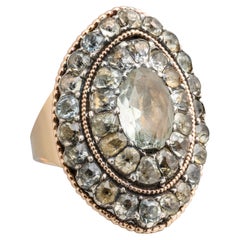
Early 18th Century Stuart Crystal and Diamond Cluster Ring
Located in London, GB
Presenting a highly detailed and rare cluster ring from the early stages of the 18th century. This antique piece showcases a centralised crystal with an embedded floral motif encircl...
Category
Antique 18th Century Georgian Cluster Rings
Materials
Crystal, Diamond, 18k Gold, Yellow Gold, Silver, Enamel
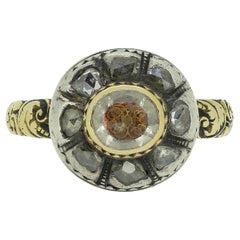
Antique Victorian 18K Yellow Gold Garnet, Diamond and Rock Crystal Cluster Ring
Located in Staines-Upon-Thames, GB
An antique garnet, diamond, rock crystal, and yellow gold ring, comprising one round cut rhodolite garnet, eight rose cut diamonds, and two round cut rock crystals, set in 18 karat y...
Category
Antique 1890s Victorian Cluster Rings
Materials
Diamond, Garnet, Rock Crystal, 18k Gold, Yellow Gold
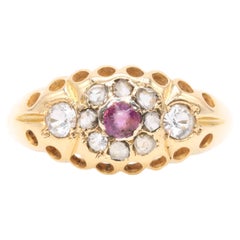
$660 Sale Price
20% Off
Free Shipping
18th century Portuguese Diamonds Gold and Silver Ring
Located in Lisboa, PT
Antique yellow gold and silver ring with rose-cut diamonds. Portuguese, 18th or 19th century.
Has been professionally cleaned and inspected and will be elegantly packaged for gifting...
Category
Antique Late 18th Century Portuguese Cluster Rings
Materials
Diamond, Gold, Silver
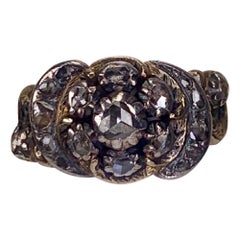
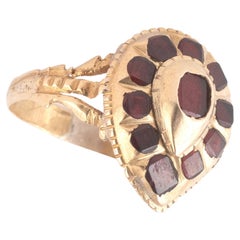
Late 18th Century Gold Garnet Cluster Ring
Located in Firenze, IT
Set with foiled closed-back square tablet cut garnets in heart-shaped mount to a bifurcated shoulders, engraved back.
Period: Late 18th century.
Top size: 18mm x 15mm.
Size: 7.
Weig...
Category
Antique Late 18th Century Italian Cluster Rings
Materials
Garnet, Yellow Gold, Gold
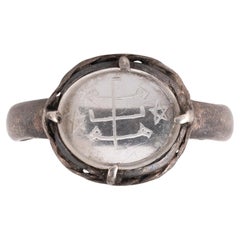
18th Century Jewish Rock Crystal Intaglio Ring
Located in Firenze, IT
A carved rock crystal is embedded in the contemporary frame of the 18th-century ring. The stone has a stylized engraving that is difficult to comprehend, but it could be linked to a ...
Category
Antique 18th Century Italian Neoclassical Signet Rings
Materials
Rock Crystal, Silver
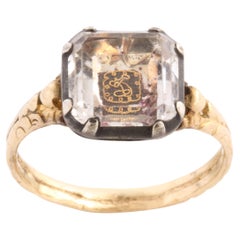
Georgian Stuart Crystal Ring, 18th Century
Located in Stamford, CT
A rare, beautiful and magical Stuart Crystal Ring set in 15 Kt gold and backed in sterling silver. Before I say more please understand that none of...
Category
Antique 18th Century English George II Solitaire Rings
Materials
Crystal, 15k Gold
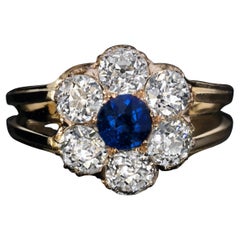
19th Century Antique Sapphire Diamond Cluster Ring
Located in Chicago, IL
Austro-Hungarian Empire, made between 1867 and 1872. The ring is finely crafted in solid 18K gold. It is centered with a sparkling blue sapphire surrounded by chunky old mine cut di...
Category
Antique 19th Century Austrian Cluster Rings
Materials
Diamond, White Diamond, Sapphire, Blue Sapphire, Gold, 18k Gold
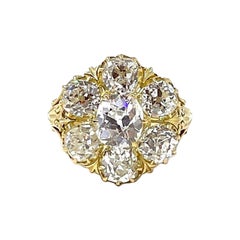
Antique 19th Century 18K Gold Old Mine Cut Diamond Cluster Ring
Located in New Orleans, LA
A grand Victorian diamond cluster ring containing approximately 5.80 carats total weight old mine cut diamonds set in 18K gold.
Category
Antique 19th Century Cluster Rings
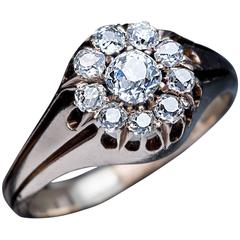
19th Century Antique Diamond Gold Men’s Cluster Ring
Located in Chicago, IL
Made in Moscow between 1882 and 1898
A classical Victorian era 14K gold cluster ring is centered with a sparkling bright white antique cushion cut diamond (measuring 4.7 x 4.7 x 3...
Category
Antique Late 19th Century Russian Victorian Cluster Rings
Materials
Diamond
More From This Seller
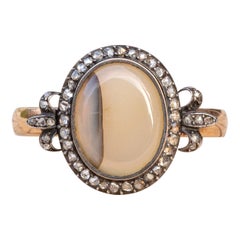
View AllAntique Mid-19th Century, French 18K Agate and Rose Cut Diamond Cluster Ring
Located in London, GB
This stunning antique cluster ring was made in France and dates to around the mid 19th century, circa 1860. In the centre rests a smooth banded agate in an open back setting, encircled by a halo of rose cut diamonds in closed-back, cutdown silver settings with a combined approximate weight of 0.15 carats. The ring has a decorative pierced gallery in the form of crescents and a solid semi-circular shank. The shoulders are decorated with two applied fleur-de-lis, each set with rose cut diamonds in silver settings.
The main colour of the milky agate is a creamy-brown hue with a darker brown band on one side. The diamonds are rose cut, the triangular facets of these cuts were very popular during the Georgian and Victorian periods as they glistened more beautifully in candlelight than any other cut.
This elegant ring sits flat on the finger, the stones are secure in their settings and the ring is in superb condition despite its significant age, a truly rare find!
UK size U / US size 10, 5.44g, French ’tête...
Category
Antique Mid-19th Century French Victorian Cluster Rings
Materials
Agate, Diamond, 18k Gold
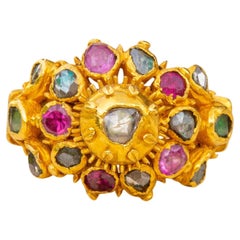
Antique Thai Siam 19th Century Gold Princely Gem-Set Cluster Ring Ruby Emerald
Located in London, GB
A rare late 19th century gem-set princely gold cluster ring made in Siam (Thailand).
This gorgeous and colourful gem-set cluster ring is intricately crafted in high-karat gold, by the goldsmiths of the Siam court in the 19th century. The centre features a rose cut diamond in a rubber gold setting which is riveted to the body of the ring which is visible from the underside, a feature typical of 18th and 19th century Siam rings . It is surrounded by a halo of rubies, garnets and diamonds, with emeralds on the shoulders. The thick gold band features pierced scrollwork motifs and is stamped with a French gold import mark from when it was later brought into the country.
This ring is a fine example of the lavish adornment worn by participants in royal and aristocratic life-cycle ceremonies in the courts of Bangkok. Aside from ceremonial use, they were also occasionally given as gifts to important visitors or other aristocratic families. Examples of these lavish jewels being worn can be seen on old photos and paintings of life-cycle ceremonies such as the Royal Tonsure Ceremony, also known as ‘the cutting of the top-knot’ ceremony, which marked the transition into adulthood for all of the (many!) sons and daughters of the Siam royal family. The huge expansion in the number of royals in 19th century Siam stemmed from Kings Mongkut (Rama IV) and Chulalongkorn (Rama V...
Category
Antique 19th Century Thai Cluster Rings
Materials
Diamond, Ruby, Emerald, Gold
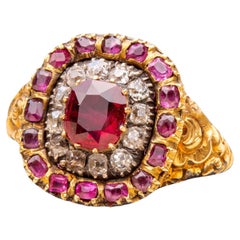
Antique Georgian Early 19th Century 1ct Ruby and Diamond Target Cluster Ring
Located in London, GB
A superb antique Georgian ruby and diamond ring made in England, circa 1820. The centre of this ‘target’ shaped cluster ring is set with a 1ct cushion cut deep red ‘pigeon’s blood’ r...
Category
Antique Early 19th Century English Georgian Cluster Rings
Materials
Diamond, Ruby, 22k Gold
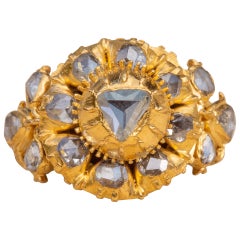
Important 19th Century Royal Siam Diamond Cluster Ring Museum-Grade Thai
Located in London, GB
An outstandingly rare mid-19th century royal Siam diamond cluster ring, made by the royal goldsmiths of the court of Bangkok.
This is an extremely fine example of the jewellery commissioned and subsequently bestowed by the Kings of Siam, principally to be worn by participants in royal and aristocratic life-cycle ceremonies in the courts of Bangkok. In the mid-19th century, King Mongkut (Rama IV) of Siam also commissioned the courtly jewellers to create a number of faithful replicas of these ceremonial jewels to be offered as gifts to diplomatic families, important visitors and to Heads of State across the world when re-establishing diplomatic relationships. One such example (which is remarkably similar to the present ring) resides in the museum of the Château de Fontainebleau (item F1518C) where it was given as a gift from King Mongkut to Napoléon-III on the important ambassadorial visit of 1861 (see photos for a side by side comparison).
Ceremonial Use:
During the 19th century, many rings were made every year by the royal jewellers for ceremonial use. Examples of these lavish cluster rings being worn for these life-cycle ceremonies can be seen on old photos and paintings of the Royal Tonsure Ceremony, also known as ‘the cutting of the top-knot’ ceremony, which marked the transition from childhood into adulthood for all of the (many!) sons and daughters of the Siam royal family.
The huge expansion in the number of royals in 19th century Siam stemmed from Kings Mongkut (Rama IV) and Chulalongkorn (Rama V) being highly polygamous. They had a joint total of 124 wives and 159 royal children, each requiring their own ceremonial regalia and princely jewels. As a result, Bangkok became home to some incredibly skilled goldsmiths in this period. The Tonsure ceremony was performed by the King, and lasted three days and three nights. All of the royal children would be dressed in the most splendid costumes and adorned with a vast amount of jewels on several parts of the body. Their costumes and jewels differed according to their title and rank. Diamonds for instance, would be bestowed to the highest ranking noble children. The royal children were allowed to keep their regalia and jewels as a present on entering adulthood to indicate their social status among society.
Over the years, these royal jewels have been dispersed across the many noble families, with currently only a few important pieces remaining in the royal collection. Today, the number of royals in Thailand is contracting as the country follows the Chinese nobility system whereby with each generation the noble rank of a family decreases by one ranking so that eventually the majority of descendants will lose their noble status completely. This loss of royal privilege, coupled with the dilution of wealth has meant that items such as this ring become available on the open market. Following the end of the absolute monarchy in Thailand in 1932, many members of the royal family relocated to Europe and as a consequence, princely Thai items can occasionally be found in the European art market.
Gift Exchange:
In Siam culture, great importance is placed on the ancestral process of gift-exchange. During the reign of King Mongkut, close relationships with some powerful countries were cultivated in order to hold the balance of power and to save Siam from being colonised. The King used gift-exchange to establish diplomatic relations with other heads of state around the world, as well as with other kings, princes and sultans closer to home. He sent troupes of ambassadors to England (1857) and France (1861) with seemingly endless amounts of trunks filled with lavish gifts in order to dazzle the heads of state with the extraordinary quality and variety of Siam craftsmanship.
These gifts consisted of faithful replicas of the Royal Regalia and objects belonging to the King himself; items and jewellery worn by him on his Tonsure ceremony and on his coronation day. Enormous time and effort was required by the Siam court to assemble these numerous gifts, as they emanated from the very same royal goldsmiths and courtly craftsman who had made the original ceremonial items.
The most famous of these ceremonies took place at the Chateau de Fontainebleau in 1861. The painting by Jean-Léon Gérôme that immortalised the event prominently features the most spectacular of these gifts. Among the 150 gifts presented to Napoléon-III by the Siam ambassadors were two diamond-set rings, both of which are on display in the Musée du Chateau de Fontainebleau (item no. F1518C and F1519C). One of these rings is a rose cut diamond cluster and bears a striking resemblance to the ring we are offering. According to Bruley (2011), this ring, presented to Napoleon-III, was a faithful replica of the ring worn by King Mongkut on his own coronation day in 1851, which now resides in the Pavilion of Royal Regalia in Thailand.
The Ring:
From whichever angle the present ring is viewed, it is a masterpiece of design and a testament to the ingenuity and craftsmanship of the Siam royal goldsmiths. The bezel head is composed of two layers, the uppermost, containing the large triangle shaped table-cut diamond, is riveted to the main body of the ring. The second layer of the cluster is set with a further eight rose cut diamonds and this section allows for small rotation, typical of Siam jewellery...
Category
Antique Mid-19th Century Thai Victorian Cluster Rings
Materials
Diamond, 22k Gold
Italian Baroque Turquoise Gold Bow Ring Antique 18th Century Engagement Ring
Located in London, GB
An unusual example of a scarce seven-stone bow ring dating from the early 18th century, circa 1700. The ring was made in Italy (possibly Sicily) and is a fine example of the beauty o...
Category
Antique Early 1700s Italian Baroque Band Rings
Materials
Turquoise, Gold

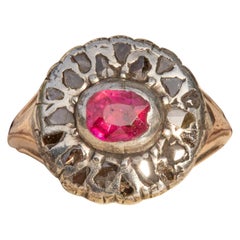
Scarce Antique Georgian Pink Ruby and Diamond Floral Cluster Ring c 1800 Italian
Located in London, GB
This unusual antique Georgian era floral ruby and diamond cluster ring dating to around 1800 was probably made in Italy. In the middle of the ring head lies a collet set and foil-backed bright pink ruby. It is surrounded by a sea of 20 flat-cut and closely set diamonds in a flower head cluster style. The raised ruby setting appears to fixed to the ring with a cut-down rivet which is visible on the smooth underside of the bezel. The rosy hued gold ridged shoulders taper down to the back of the shank. This elegant ring sits fairly flat on the finger to allow for frequent wear and is without doubt a particularly unusual and scarce example of its kind.
UK size L 1/2, US size 6
4.72g, band tests as 14K gold, bezel tests as silver, ring head measures 14mm x 13mm. Each diamond measures between 1mm and 3mm. Approx 0.3ct...
Category
Antique Early 1800s Italian Georgian Cluster Rings
Materials
Diamond, Ruby, 14k Gold, Silver
Still Thinking About These?
All Recently ViewedMore Ways To Browse
Rock Crystal Ring Gold
Foil Backed
18th Century Gold Ring
Portugal Ring
Portuguese Gold Ring
Portuguese Cut Jewelry
Antique Portuguese Jewelry
Antique Loupe
Nova Ring
Georgian Rock Crystal
Antique Portuguese Rings
18th Century Portuguese Ring
Georgian Rock Crystal Ring
English Memorial Jewelry
Georgian Chrysoberyl
Turquoise Georgian Ring
Vintage Russian Diamond Ring
15kt Diamond Ring