Video Loading
Want more images or videos?
Request additional images or videos from the seller
1 of 18
Antique Italian 18th Century Georgian Gold Cameo Ring Bust of Medusa Hardstone
$5,797.20List Price
About the Item
- Ring Size:6.5 US, Resizable
- Metal:
- Stone:
- Stone Cut:
- Weight:4.79 g
- Style:
- Place of Origin:
- Period:
- Date of Manufacture:1780
- Condition:
- Seller Location:London, GB
- Reference Number:1stDibs: LU2845219613132
About the Seller
5.0
Vetted Professional Seller
Every seller passes strict standards for authenticity and reliability
Established in 2019
1stDibs seller since 2022
47 sales on 1stDibs
Authenticity Guarantee
In the unlikely event there’s an issue with an item’s authenticity, contact us within 1 year for a full refund. DetailsMoney-Back Guarantee
If your item is not as described, is damaged in transit, or does not arrive, contact us within 7 days for a full refund. Details24-Hour Cancellation
You have a 24-hour grace period in which to reconsider your purchase, with no questions asked.Vetted Professional Sellers
Our world-class sellers must adhere to strict standards for service and quality, maintaining the integrity of our listings.Price-Match Guarantee
If you find that a seller listed the same item for a lower price elsewhere, we’ll match it.Trusted Global Delivery
Our best-in-class carrier network provides specialized shipping options worldwide, including custom delivery.You May Also Like
Georgian Hardstone Cameo Ring
Located in London, GB
A Georgian hardstone cameo ring, the oval-shaped cameo depicting the profile of a patrician, rub-over set within a yellow gold mount with ridged d...
Category
Antique 1820s British George III Fashion Rings
Materials
Agate, 18k Gold
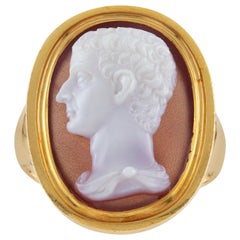
Hardstone Cameo of a Man, 18th-19th Century
Located in Firenze, IT
The classical head facing left, clean shaven with short curling hair, in a later ring mount, ring size 8, length 30mm, width 20mm
Weight : 29,4gr
Category
Antique 1790s Italian Georgian Signet Rings
Materials
Agate, 18k Gold, Yellow Gold
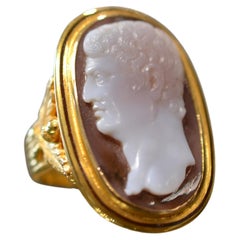
Hardstone Cameo of Seneca 18th-19th Century
Located in Firenze, IT
The portrait head of Seneca, in a later ring mount, ring size 11 , length 27mm, width mm22
Weight:26.4gr.
Category
Antique Late 18th Century Italian Neoclassical Signet Rings
Materials
18k Gold, Yellow Gold
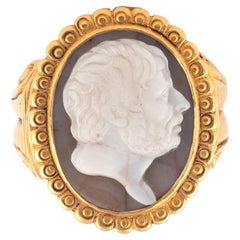
Large Hardstone Cameo of Roman Emperor Men
s Ring Late 18th Century
Located in Firenze, IT
Period: Late 18th century
Provenance: Italy
Ring size: 8
Dimensions (cameo): 26 mm
Weight: 18 gr
This late 18th century cameo is made of hard ston...
Category
Antique Late 18th Century Italian Neoclassical Signet Rings
Materials
Agate, 18k Gold, Yellow Gold
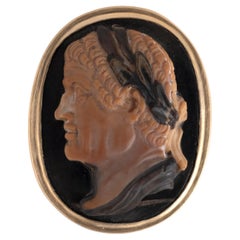
Antique Hardstone Cameo Ring
Located in Brisbane City, QLD
We really love hard stone cameo rings and this is perhaps the nicest we have had to date. The ring mount is crafted from 18 karat yellow and rose gold and has been rub over set with ...
Category
20th Century European Neoclassical Signet Rings
Materials
Gold, 18k Gold, Rose Gold, Yellow Gold
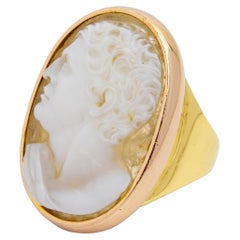
Hardstone Cameo of a Man Ring 19th Century
Located in Firenze, IT
The portrait head, facing right, with short hair and clean shaven, in a later ring mount, ring size 8
length 29mm, width 16mm
Category
Antique 19th Century Italian Signet Rings
Materials
Agate, 18k Gold, Yellow Gold
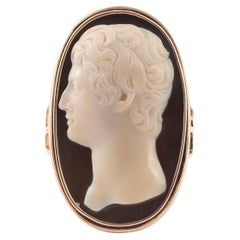
Antique 19th Century Silver and Gold Medusa Cameo Ring
Located in Firenze, IT
Period: Late 19th century
Provenance: Italy
Ring size: 4 1/4
Weight: 11.9 gr
The 19th century ring is composed of an essential silver frame, embellished with a central gold medalli...
Category
Antique 19th Century Italian Classical Roman Fashion Rings
Materials
Gold, 18k Gold, Silver
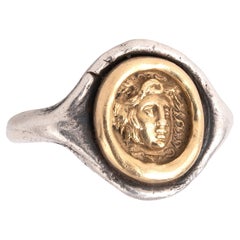
Antique 22 Karat Yellow Gold Hardstone Agate Cameo Roman Emperor Ring
Located in New York, NY
A large carved agate cameo ring depicting the Roman emperor Vespasian (9 - 79 AD).
The high carat gold mounting is late 19th Century.
The cameo is Italian, early 18th century.
The...
Category
Antique 18th Century Italian Classical Roman Signet Rings
Materials
Agate, 22k Gold, Yellow Gold
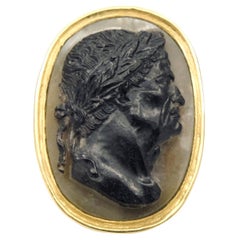
Gold and Hardstone Cameo Ring
Located in Firenze, IT
Cameo dipicting bearded man in agate mounted in gold.
Size: 7
Weight: 3,9gr.
Category
Antique 1890s Italian Victorian Signet Rings
Materials
Gold
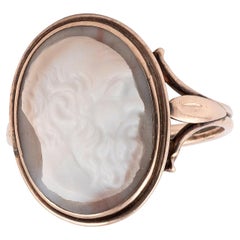
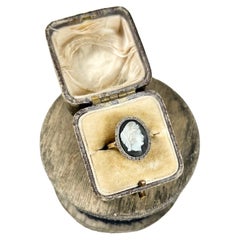
Antique 18ct Gold Victorian Diamond
Hardstone Cameo Portrait Ring
Located in Brighton, GB
Antique Cameo Ring
18ct Gold Stamped
Circa 1880
Lovely, Victorian hardstone cameo ring. Features an oval framed portrait of a person with a be...
Category
Antique Late 19th Century English Victorian Signet Rings
Materials
Diamond, Gold, 18k Gold
More From This Seller
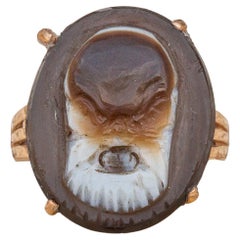
View AllAntique Gold Cameo Ring Greek Theatre Mask Silenus Hardstone Intaglio Signet
Located in London, GB
A very unusual antique gold ring set with a carved brown and white hardstone cameo depicting the theatrical comic mask of Silenus, the Greek mythological old rustic god of wine-making and drunkenness. The ring was made in the late 19th century and carries French control marks for 18K gold, whilst the cameo is probably Italian and made slightly earlier, circa 1800.
Silenus was a companion to the wine god Dionysus, and suitably he was a notorious consumer of wine, usually drunk and supported by satyrs or carried by a donkey. Silenus was described as the oldest, wisest and most drunken of the followers of Dionysus, and was said to possess special knowledge and the power of prophecy when intoxicated. He presides over the other satyrs and is related to musical creativity, prophetic ecstasy, drunken joy and drunken dances.
Silenus was usually depicted as a jovial old man, bald yet bearded, with a pot-belly, thick lips and snub-nose. The masks worn to play him in theatre really emphasised these features, as you can see with this cameo carving
Theatre was a key part of ancient Greek culture. The theatrical masks worn by the actors, known as ‘prosopon’, served various purposes. They enabled individual actors to play multiple roles (or genders) in the same performance; the exaggerated expressions helped define the character being portrayed; they helped spectators in the back rows to tell the characters apart. This particular masked as mentioned before is a comedic Silenus, please see final photo for other examples of Silenus masks in museum collections.
UK size N 1/2, US size 7
4.84g 18K gold
French ‘tête...
Category
Antique Early 19th Century Italian Georgian Signet Rings
Materials
Agate, 18k Gold
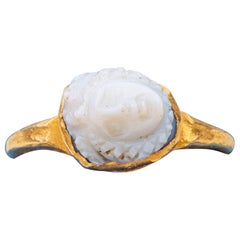
Small Ancient Roman Medusa Carved Cameo Gold Ring 2nd Century Gem Carving
Located in London, GB
A scarce and small ancient Roman gold Medusa cameo ring, circa 2nd to 3rd century AD.
The carved layered onyx gemstone is white in colour and depicts the bust of Medusa engraved wit...
Category
Antique 15th Century and Earlier Italian Classical Roman Signet Rings
Materials
Onyx, Gold
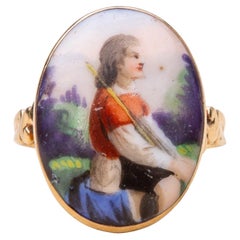
18th Century Gold Portrait Miniature Ring Shepherd Boy King David Painted Enamel
Located in London, GB
This rare antique late 18th century gold ring was made in France and features a painted enamel miniature of a shepherd boy holding a crook. This pastoral scene probably depicts David...
Category
Antique Late 18th Century French Rococo Signet Rings
Materials
Gold, Enamel
Italian Baroque Turquoise Gold Bow Ring Antique 18th Century Engagement Ring
Located in London, GB
An unusual example of a scarce seven-stone bow ring dating from the early 18th century, circa 1700. The ring was made in Italy (possibly Sicily) and is a fine example of the beauty o...
Category
Antique Early 1700s Italian Baroque Band Rings
Materials
Turquoise, Gold

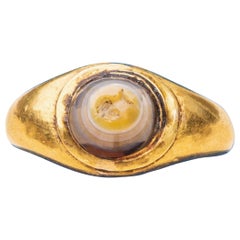
Ancient Roman Gold Mens Signet Ring Conical Intaglio Ring Gem Carving
Located in London, GB
A superb ancient Roman agate intaglio ring. The high-karat gold signet ring is set with an engraved gemstone, known as an ‘intaglio’. It dates from between the 2nd to 3rd century AD and is a fine example of a Romano-British intaglio.
The conical-shaped agate gemstone displays various bands of colour ranging from honey brown to greyish-blue. The engraving depicts the bust of a man wearing a helmet, possibly winged which would depict Mercury, the Roman god of commerce, financial gain and communication. In Roman times, people would wear rings with the intaglio of Mercury in hope that the he would protect them and bless them with good financial fortune in their lives.
A number of referenced examples of similar ancient Roman conical shaped intaglios reside in notable museums all across the world, from the British Museum to the Louvre. A page with these examples and their sources can be found in the final photos of the listing. Similar examples can also be found in the extensive Alice and Louis Koch collection (items: 234, 235, 241, 301). Again see final images for reference.
The gold ring mount is of D-shaped cross-section and a hollow 22K gold construction. The ring has a fantastic smooth silk-like texture when worn. It remains in good overall condition and the intaglio is very secure in the mount. The gold mount dates to the late 18th to early 19th century, and the shape is inspired by ancient Roman ring...
Category
Antique 15th Century and Earlier Signet Rings
Materials
Agate, 22k Gold
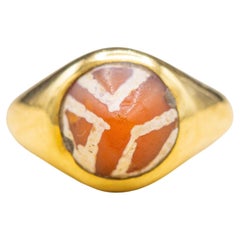
Small Ancient Indus Valley Bead Ring Etched Carnelian Cone Antique Gold Ring
Located in London, GB
A superb and rare ancient Indus Valley etched carnelian bead ring. The conical shaped carnelian gemstone in the centre dates from the middle of the third millennium BC. Deep orange in colour with white patterned etchings, these beads originate from the Indus Valley civilisation (parts of modern day Pakistan and India).
These carnelian beads were alkaline-bleached to develop the geometric white patterns visible on the exterior. The technique was first developed by the Harappans of the Indus Valley civilisation, and vast quantities have been found in archaeological sites all across the Indus Valley.
The conical stone has been set in a later high-karat gold ring mount, the hoop is hollow and of circular cross section which widens towards the bezel. This design and shape is typical of ancient gold rings...
Category
Antique 18th Century Indian Signet Rings
Materials
Carnelian, Gold
Still Thinking About These?
All Recently ViewedMore Ways To Browse
Royal Collection Trust
Georgian Agate
Antique Medusa Jewelry
Medusa Cameo
22k Georgian
Medusa Bust
22k Cameo
Neoclassical Cameo Ring
Antique Medusa Cameo
Georgian Agate Ring
Georgian Cameo Ring
Signet Ring Heavy
Victorian Gold Mens Rings
18k Gold Crest Ring
Antique Gold Roman Ring With Two Heads
Antique Mens Intaglio Rings
Antique Ring Jasper
Cameo Ring Men