Argentina - Decorative Objects

to
229
1,694
260
25
14
247
1,433
285
749
383
55
179
46
300
148
43
52
26
21
13
2
699
369
185
162
65
15
15
10
8
4
4
3
3
2
1
1
1,140
566
518
500
343
72,829
64,256
1,550
855
334
305
254
Height
to
Width
to
1,979
1,731
1,843
232
73
54
43
35
Item Ships From: Argentina
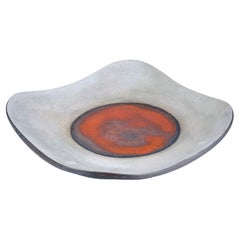
Ceramic Plate Designed by André Borderie, Pierre Szekely Vera Szekely 1919-19
By André Borderie, Pierre and Véra Szekely
Located in Ciudad Autónoma Buenos Aires, C
Enameled ceramic plate, made by ANDRÉ BORDERIE (1923 - 1998), PIERRE SZEKELY (1923 - 2001) & VERA SZEKELY (1919-1994). Signed PV SZEKELY. France, CIRCA...
Category

1950s French Mid-Century Modern Vintage Argentina - Decorative Objects

Materials

Ceramic

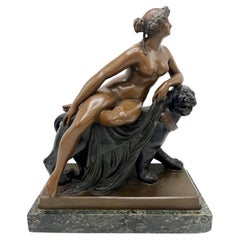
Bronze Sculpture "Ariadne" Model by Johann Heinrich von Dannecker
By Johann Heinrich von Dannecker 1
Located in Autonomous City Buenos Aires, CABA
Bronze sculpture model "Ariadne" by Johann Heinrich von Dannecker Beautiful sculpture that shows the goddess of hunting half-naked on a panther, in patinated bronze with a marble bas...
Category

19th Century German Belle Époque Antique Argentina - Decorative Objects

Materials

Marble, Bronze

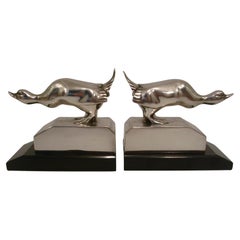
Art Deco Silvered Bronze Duck / Goose Bookends G.H. Laurent France 1925
By Georges H. Laurent
Located in Buenos Aires, Olivos
Art Deco silvered bronze duck bookends G.H. Laurent France 1925. Pair of Art Deco silvered bronze bookends by the famous French artist G.H. Laurent. Signed and numbered, circa 1925. ...
Category

1920s French Art Deco Vintage Argentina - Decorative Objects

Materials

Marble, Bronze

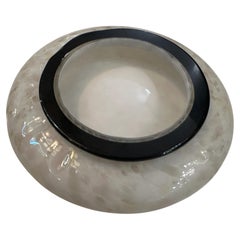
Couple of Murano, 1930, Italian
Located in Ciudad Autónoma Buenos Aires, C
Murano We have specialized in the sale of Art Deco and Art Nouveau and Vintage styles since 1982. If you have any questions we are at your disposal. Pushing the button that reads 'Vi...
Category

1930s Italian Art Deco Vintage Argentina - Decorative Objects

Materials

Murano Glass

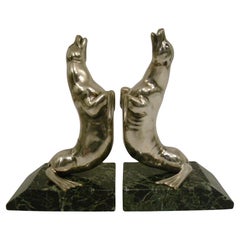
Art Deco Seal Bookends Louis Albert Carvin France 1930
By Louis-Albert Carvin
Located in Buenos Aires, Olivos
Nice pair of Art Deco seal bookends designed by the French artist Louis Albert Carvin, silvered white metal on a green marble base, France, 1930. “Anima...
Category

Early 20th Century French Art Deco Argentina - Decorative Objects

Materials

Marble, Metal

Vase in Murano, 1960, Italian.
Located in Ciudad Autónoma Buenos Aires, C
Murano We have specialized in the sale of Art Deco and Art Nouveau and Vintage styles since 1982. If you have any questions we are at your disposal. Pushing the button that reads 'V...
Category

1960s Italian Mid-Century Modern Vintage Argentina - Decorative Objects

Materials

Murano Glass

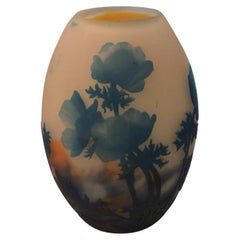
French Vase, Sign: Muller Freres Luneville, Jugendstil, Art Nouveau, liberty
By Muller Frères
Located in Ciudad Autónoma Buenos Aires, C
Vase Sign: Muller Freres Luneville acid worked Muller Feres The heart of the company was formed by five brothers (Henri, Desire, Eugene, Pierre, Victor) from a glass making family wh...
Category

Early 1900s French Art Nouveau Antique Argentina - Decorative Objects

Materials

Art Glass

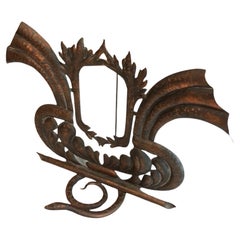
Viper Frame, Style: Art Nouveau, Liberty, Jugendstil
Located in Ciudad Autónoma Buenos Aires, C
We have specialized in the sale of Art Deco and Art Nouveau and Vintage styles since 1982. If you have any questions we are at your disposal. Pushing the button that reads 'View All ...
Category

Early 1900s French Art Nouveau Antique Argentina - Decorative Objects

Materials

Copper

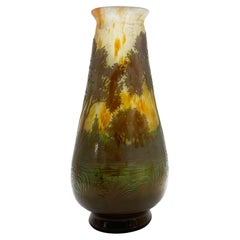
Daum Nancy Art Deco Vase 1930s
By Daum
Located in Autonomous City Buenos Aires, CABA
Beautiful Daum Nancy Art Deco Vase Cameo glass vase Made in France Monumental landscape with lake decoration on a yellow and green background, sig...
Category

1930s French Art Deco Vintage Argentina - Decorative Objects

Materials

Glass, Art Glass

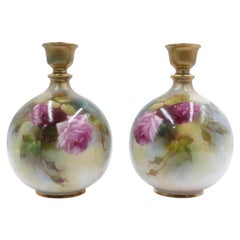
Pair of Royal Worcester art nouveau vases.
By Royal Worcester
Located in Buenos Aires, Argentina
Pair of Royal Worcester art nouveau vases. pair of golden vases decorated with hand-painted flowers. Art nouveau style ceramic material. Circa ...
Category

Early 1900s English Art Nouveau Antique Argentina - Decorative Objects

Materials

Porcelain

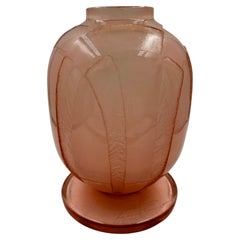
Art Deco cognac vase by Charder
By Charder
Located in Autonomous City Buenos Aires, CABA
Art Deco Cognac Vase by Charder Art Deco style vase in cognac with a satin finish that gives it a soft, opaque appearance. The vase's body design features raised, textured vertical p...
Category

20th Century French Art Deco Argentina - Decorative Objects

Materials

Art Glass

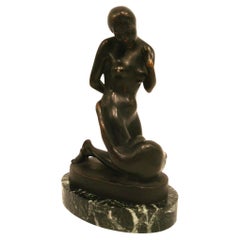
Leda and the Swan Bronze sculpture by Ferd Otratovsky
Located in Buenos Aires, Olivos
Leda and the Swan Bronze sculpture by Ferd Otratovsky. Signed and dated "FERD. OTRADOVSKY 1926" within the cast on the base. Black patinated bronze, mounte...
Category

Early 20th Century French Art Nouveau Argentina - Decorative Objects

Materials

Marble, Bronze

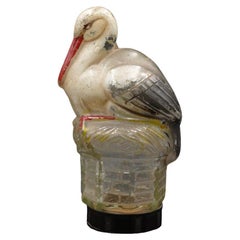
pelican candy jar blown glass
Located in Buenos Aires, Argentina
pelican candy jar blown glass beautiful candy dish, very collectible motif: pelican in blown glass has its original paint some wear due to its age Origin Arg...
Category

1940s Argentine Art Deco Vintage Argentina - Decorative Objects

Materials

Blown Glass

Sign: Le Verre Francais ( Decoration Marrons ) Style: Art Nouveau, Liberty
By Le Verre Francais
Located in Ciudad Autónoma Buenos Aires, C
Vase Le Verre Francais acid worked Le Verre cameo glass was a separate line of art glass designed by Charles Schneider. Its production was made at the same time as the Schneider des...
Category

1920s French Art Nouveau Vintage Argentina - Decorative Objects

Materials

Art Glass

Murano glass vase by Venini
By Fulvio Bianconi Paolo Venini
Located in Autonomous City Buenos Aires, CABA
Murano Glass Vase by Venini Beautiful Murano glass vase in black with white vertical stripes, manufacturer Venini and designer Fulvio Bianconi. Measurements: Height: 21 centimeters D...
Category

20th Century Italian Mid-Century Modern Argentina - Decorative Objects

Materials

Art Glass

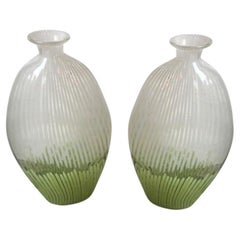
Pair of Vases in Murano Light Green and White Color, 1970, Italian
Located in Ciudad Autónoma Buenos Aires, C
Murano We have specialized in the sale of Art Deco and Art Nouveau and Vintage styles since 1982. If you have any questions we are at your disposal. Pushing the button that reads 'V...
Category

1970s Italian Space Age Vintage Argentina - Decorative Objects

Materials

Murano Glass

Big Vase, Sign: Fabrication Francaise, Made in France, Paris, 1900, A. Barsotti
Located in Ciudad Autónoma Buenos Aires, C
Signs: André Barsotti / Fabrication Francaise, Made in France, Paris We have specialized in the sale of Art Deco and Art Nouveau and Vintage styles since 1982.If you have any questio...
Category

Early 1900s German Art Nouveau Antique Argentina - Decorative Objects

Materials

Metal

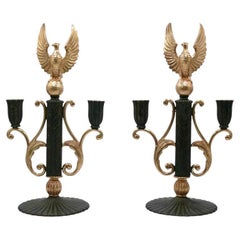
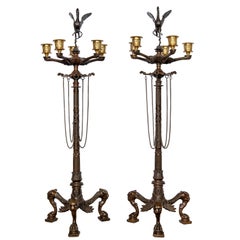
Pair of neoclassical bronze candelabra with eagle
Located in Buenos Aires, Argentina
Pair of neoclassical bronze candelabra with eagle Bronze candelabra with black and green patina Circa 1930 Origin France Excellent condition without restorations Some wear due to use...
Category

1930s French Neoclassical Vintage Argentina - Decorative Objects

Materials

Bronze

Cuenco de bronce Gustav Gurschner
By Gustave Gurschner
Located in Buenos Aires, Argentina
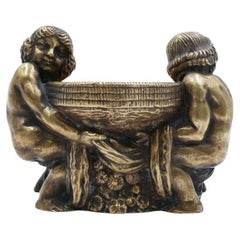
Gustav Gurschner bronze bowl Werkstatte succession Vienna Origin Austria Circa 1910 Stamped Gurschner on its base and numbered Style Art deco succession Vienna Excellent condition wi...
Category

1910s Austrian Art Deco Vintage Argentina - Decorative Objects

Materials

Bronze

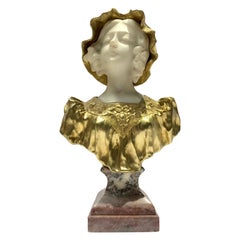
Gilt Bronze and Marble Sculpture Signed Affortunato Gory, Louis XV Style
By Affortunato Gory
Located in Buenos Aires, Buenos Aires
Gilt bronze and marble sculpture signed Affortunato Gory. Louis XV style. France, circa 1920. Carrara and Breccia marble.
Category

1920s French Louis XV Vintage Argentina - Decorative Objects

Materials

Breccia Marble, Carrara Marble, Bronze
Pair of painted gold venetian glass vases. Italy, Early 20th Century.
Located in Buenos Aires, Buenos Aires
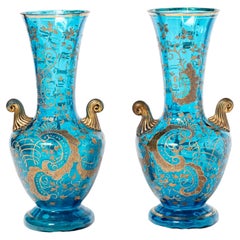
Pair of painted gold venetian glass vases. Italy, Early 20th Century.
Category

Early 20th Century Italian Neoclassical Argentina - Decorative Objects

Materials

Gold

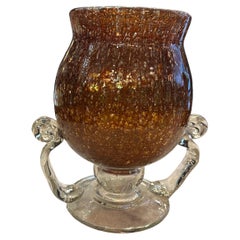
Murano, 1930, Attributed to Paolo Venini Technique Pelegoso, italy
By Paolo Venini
Located in Ciudad Autónoma Buenos Aires, C
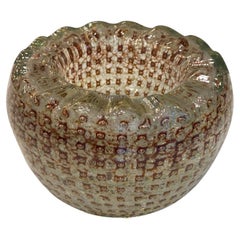
Murano We have specialized in the sale of Art Deco and Art Nouveau and Vintage styles since 1982. If you have any questions we are at your disposal. Pushing the button that reads 'View All From Seller'. And you can see more objects to the style for sale. Venini ( Technique Pelegoso ) Pelegoso technique A type of glass characterized by countless irregular air bubbles (pulighe) within the vitreous wall, which deliberately obscure its transparency. It is obtained by pouring substances such as petrol into the pot, which produce a boiling over of the glass in fusion. Attributed to Venini Early life and education Venini was born in the town of Cusano near Milan, Italy. After serving in the Royal Italian Army in World War I, he trained as a lawyer and began his practice in Milan. He soon developed an acquaintance with Giacomo Cappellin, a native of Venice who owned a Milan antiques...
Category

1930s Italian Art Deco Vintage Argentina - Decorative Objects

Materials

Murano Glass

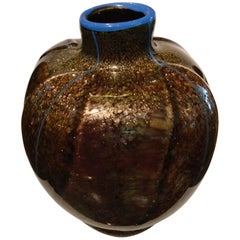
Mid-Century Fantastic Italian Murano Flower Vase, Blue, Purple with Gold, 1950´s
Located in Buenos Aires, Olivos
Mid Century Italian Murano flower vase. Blue, Purple with Gold We have specialized in the sale of Art Deco and Art Nouveau and Vintage styles sinc...
Category

1950s Italian Modern Vintage Argentina - Decorative Objects

Materials

Murano Glass

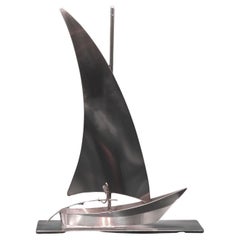
Art Deco silver-plated sailboat with fisherman by Hagenauer
Located in Autonomous City Buenos Aires, CABA
Beautiful sailboat with a fisherman sitting and throwing the fishing line in silver metal. Its design on both the boat and the fisherman makes you appreciate the piece for its delica...
Category

20th Century Argentina - Decorative Objects

Materials

Metal

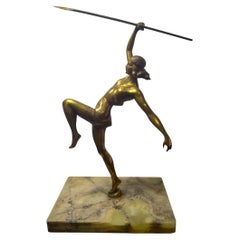
Bronze statuette with marble base "Javelin thrower"
Located in Ciudad Autónoma Buenos Aires, AR
Bronze statuette with marble base "Javelin thrower" The statuette "Javelin Thrower" is a striking example of such a work of art.
Category

Mid-20th Century Argentine Art Deco Argentina - Decorative Objects

Materials

Marble, Bronze

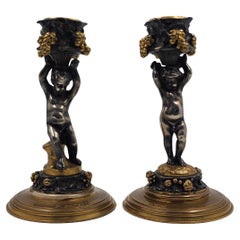
French bronze candlesticks by Ferdinand Barbedienne
By Ferdinand Barbedienne
Located in Autonomous City Buenos Aires, CABA
French Bronze Candlesticks by Ferdinand Barbedienne This pair of French bronze candlesticks by Ferdinand Barbedienne, in the Louis XIV style, feature a figurative composition. Each c...
Category

19th Century French Louis XVI Antique Argentina - Decorative Objects

Materials

Bronze

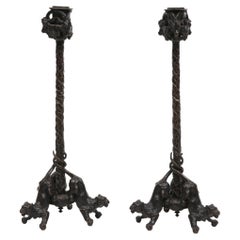
Bronze candelabra by Christophe Fratin
By Christophe Fratin
Located in Ciudad Autónoma Buenos Aires, C
Pair of powder-coated bronze candelabras with a design of goat heads at the top and 3 pumas at the base forming the legs. Made by Christophe Fratin (1801 - 1864). Signed FRATIN. Fra...
Category

1850s French Art Nouveau Antique Argentina - Decorative Objects

Materials

Bronze

20th Century Tennis Player Bronze Sculpture / Trophy, Italy, 1930s
Located in Buenos Aires, Olivos
Midcentury tennis player bronze sculpture / Trophy. Italy, 1930s. Very nice Italian bronze figure. Mounted over black Portoro marble. We have speci...
Category

Mid-20th Century Italian Mid-Century Modern Argentina - Decorative Objects

Materials

Marble, Bronze

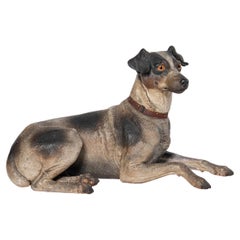
Painted ceramic dog sculpture attributed to Johann Maresch. Austria, circa 1900.
By Johann Maresch
Located in Buenos Aires, Buenos Aires
Painted ceramic dog sculpture attributed to Johann Maresch. Austria, circa 1900.
Category

Early 1900s Austrian Belle Époque Antique Argentina - Decorative Objects

Materials

Ceramic

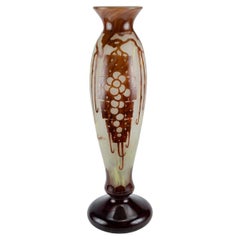
Vase Charder Art Deco 1920 France
By Charles Schneider
Located in Buenos Aires, Argentina
Vase Charder Art deco Artists Charles Schneider Origin France Circa 1920 Patterns grape vine geometric Perfect condition no cracks no chips. Charles Schneider was an Art Deco glass a...
Category

1920s French Art Deco Vintage Argentina - Decorative Objects

Materials

Art Glass

Vase Charder Art Deco 1920 France
$2,560 Sale Price
20% Off
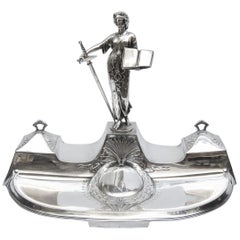
Inkwell WMF Germany Justice silver plate Art nuveau.
By WMF Württembergische Metallwarenfabrik
Located in Buenos Aires, Argentina
Inkwell WMF Germany (Juatice) silver plate, crica 1920 Art nuveau. Art nouveau, modernist art or modernism was an international artistic and decorative movement, developed between ap...
Category

1920s German Art Nouveau Vintage Argentina - Decorative Objects

Materials

Pewter

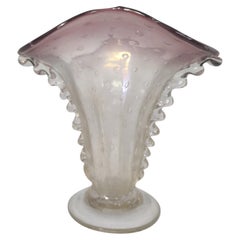
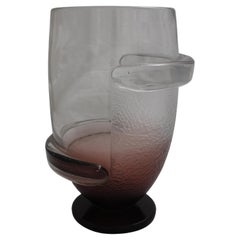
Murano Vase - Ercole Barovier for Barovier Toso
Located in Ciudad Autónoma Buenos Aires, AR
Solid, thick-walled form with flared applications on both sides, button-shaped, in clear glass vertically on the sides. Flat, arched support with coating. Clear, thick-walled glass w...
Category

Mid-20th Century Italian Art Deco Argentina - Decorative Objects

Materials

Crystal

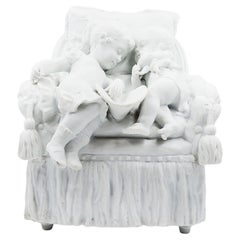
19th Century French Biscuit Porcelain Figure by G.Levy
By G. Lévy
Located in Autonomous City Buenos Aires, CABA
19th Century French Biscuit Porcelain Figure by G. Levy Beautiful porcelain figure of two children sleeping in an armchair, with perfectly achieved details in which we can appreciate...
Category

19th Century French Belle Époque Antique Argentina - Decorative Objects

Materials

Porcelain

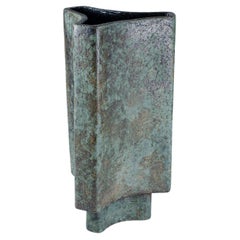
Mid-Century Modern Ceramic Vase by André Borderie, France, Circa 1950
By André Borderie, Pierre and Véra Szekely
Located in Ciudad Autónoma Buenos Aires, C
Ceramic vase in gray and green tones, glazed. Made by Vera SZÉKELY (1919-1994), Pierre SZÉKELY (1923-2001) and André BORDERIE (1923-1998) France, CIRCA 1950.
Category

1950s French Mid-Century Modern Vintage Argentina - Decorative Objects

Materials

Ceramic

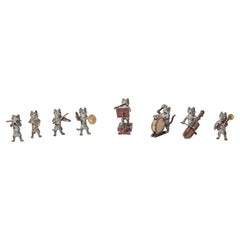
Set of 8 Cold-painted bronze cat band sculpture attributed to Franz Bergmann
By Franz Bergmann
Located in Buenos Aires, Buenos Aires
Set of 8 cold-painted bronze cat band sculpture attributed to Franz Bergmann. Austria, early 20th century.
Category

Early 20th Century Austrian Belle Époque Argentina - Decorative Objects

Materials

Bronze

Val Saint Lambert Cut Glass Vase in Ruby Red
By Val Saint Lambert
Located in Autonomous City Buenos Aires, CABA
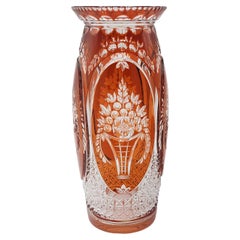
Val Saint Lambert Cut Glass Vase in Ruby Red Val Saint Lambert cut glass vase in a ruby ​​red hue. It features oval panels carved with detailed floral motifs, alternating with areas ...
Category

20th Century Belgian Post-Modern Argentina - Decorative Objects

Materials

Art Glass

Austrian Bronze Dog ashtray and phosphor
By Friedrich Gornik
Located in Buenos Aires, Argentina
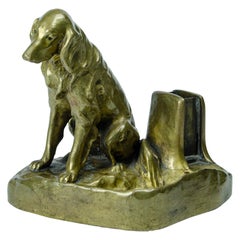
Austrian bronze dog (ashtray and phosphor) Artist: F. Gornik sealed at its base circa 1900 perfect condition.
Category

Early 1900s French Neoclassical Antique Argentina - Decorative Objects

Materials

Bronze

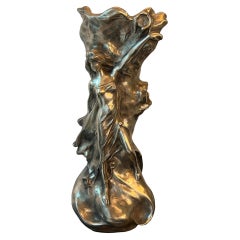
Albert Marionnert Art Nouveau Vase
By Albert Marionnet
Located in Buenos Aires, Argentina
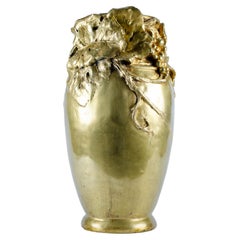
Albert Marionnert art nouveau vase Bronze vase signed Albert Marionnet Origin France Circa 1890 Decoration of plants and leaves of Vine faded patina in very good condition Made in the late 19th century Signed on its base Natural wear. Art nouveau, modernist art or modernism was an international artistic and decorative movement, developed between approximately 1890 and 1914. The 'new art', as its name in French, was an original, youthful and modern style. The art nouveau cultural movement emerged at the end of the 19th century and remained until the beginning of the 20th century, seeking to contrast with industrialization after the second industrial revolution. Art nouveau uses...
Category

1890s French Art Nouveau Antique Argentina - Decorative Objects

Materials

Bronze

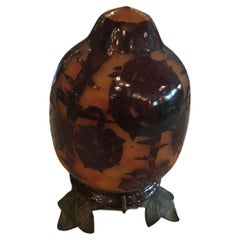
French carved glass vase from Degue
By Degué
Located in Autonomous City Buenos Aires, CABA
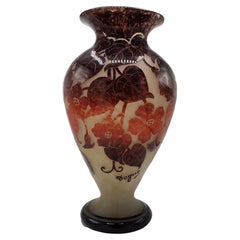
French Degue Cut Glass Vase This French Degue glass vase features a multi-layered design with hues ranging from cream at the base and ground, transitioning through vibrant orange-red...
Category

20th Century French Art Deco Argentina - Decorative Objects

Materials

Art Glass

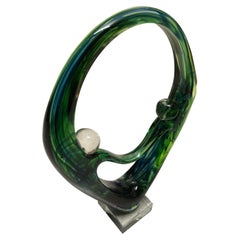
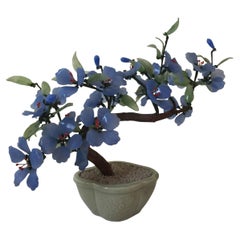
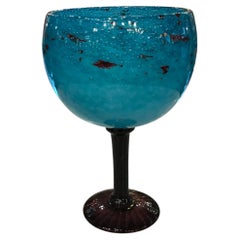
Bonsai Blue 1980, Glass and Ceramic
Located in Ciudad Autónoma Buenos Aires, C
We have specialized in the sale of Art Deco and Art Nouveau and Vintage styles since 1982. If you have any questions we are at your disposal. Pushing the button that reads 'View All From Seller'. And you can see more objects to the style for sale. Why are there so many antiques in Argentina? In the 1880 – 1940 there was a grate wave of immigration encouraged by the periods of war that were taking place. 1st World War took place between 1914 and 1918 2nd World War took place between 1939 and 1945 The immigrants options were New York or Buenos Aires. Tickets were cheap and in Buenos Aires they were welcomed with open arms, as it was a country where everything was still to be done. Argentina was the country of new opportunities, labour was needed and religious freedom was assured, in many cases the of the family travel first until they were settled and then the rest of the family members join them. In the immigrant museum “Ellis Island Immigrant Building” in New York you can se the promotional posters of the boats that would take them to a new life. Between the years 1895 and 1896, Argentina had the highest DGP (gross domestic product) per capita in the world according to the Maddison Historical Statistics index, this situation arose due to the large amount of food being exported to European countries, which were at war. The Argentinean ships left the port of Buenos Aires with food, but they returned with furniture, clothes and construction elements, (it´s common to see this the old buildings of the historic neighbourhood of San Telmo, the beams with the inscription “Made in England)”, as well as many markets that were built in Buenos Aires, such us the San Telmo Market, whose structure was brought by ship and afterwards assembled in 900 Defensa Street. With the great influence of European immigrants living in the country, the children of the upper classes travelled to study in France, resulting in the inauguration of “La Maison Argentinienne”, on 27th of June 1928, in the international city of Paris, which hosted many Argentinians that were studying in Frace. It´s the fourth house to be built after France, Canada and Belgium, being the first Spanish-speaking one. Still in place today (17 Bd Jourdan, 75014, Paris, France). Many of the children of these wealthy families who attended international art exhibitions, museums and art courses abroad, took a keen interest in the European style. This is why Buenos Aires was at the time referred as “The Paris of South America”. Between the years 1890 and 1920 more than a hundred Palaces were built on Alvear Avenue the most exclusive avenue in Buenos Aires. Today some of these palaces have been transformed into museums, hotels and embassies. In the year 1936, the Kavanagh building was inaugurated, it was the tallest reinforced concrete building in South America. During 1994 the American Society of Civil Engineers distinguished it as an “international engineering milestone”, and it´s now considered a World Heritage of Modern Architecture. At the time was common to hire foreign architects such as Le Corbusier, who visited Buenos Aires/Argentina in 1929 and in 1948 he drew up the blueprints for a house built in La Plata City (which was declared a World Heritage Site). In 1947, the Hungarian architect Marcelo Breuer designed “Parador Ariston” in the seaside city of Mar del Plata. After an Argentinean student at Harvard University convinced him to come to Argentina. He worked on an urban development project in the Casa Amarilla, area of La Boca. The Ukrainian architect, Vladimiro Acosta, arrives in Argentina in 1928 and worked as an architect until que moved to Brazil. Antonio Bonet, a Spanish architect who worked with Le Corbusier in Paris, arrives in Argentina in 1937, where he carried out several architectural works and in 1938 designs the well-known BFK chair. Andres Kálnay, of Hungarian origin, made around 120 architectural masterpieces, among which the former Munich brewery stands out, he even made the furniture’s design. The German architect, Walter Gropius, director of the Bauhaus, lived in Argentina, where he wrote articles for “Sur” magazine and founded in Buenos Aires, an architectural firm with Franz Möller, who was also an architect, where he built two houses. At the same time several famous designers decided to immigrate to Argentina, among them we can find the well-known French designer, Jean-Michel Frank, who arrived in the country in 1940 and also worked for the Rockefeller family. Special pieces were made, which were sold exclusively in the country, such as the well-known German company “WMF”, who sold their products by catalogue, which were chosen by the ladies of High Society in the list of wedding gifts, as well as the pieces designed by Christofle. The Swiss sculptor Alberto Giacometti, made special pieces for Argentinean mansions. In 1904 the first Jansen branch outside Paris was established in Buenos Aires, as the Argentinean clientele demanded a large amount of furniture, from the end of the 19th Century to the mid-20th Century. In 1970, the brand Rigolleau Argentina made pieces authorised by Lalique. The brands Maple and Thompson also set up shop in the country. The French plastic artist, Marcel Duchamp moved to Argentina in 1918-1919. Glass signed Gallé, Charder, Leverre, Schneider, Muller and other French firms. They were bought in flower shops and were given to ladies with beautiful floral arrangements. Some furniture manufacturers travelled to international fairs and bough the patterns to produce the furniture in Argentina, such as the furniture firm Englander and Bonta, who bought the patterns ins Italy. It is worth mentioning that in Argentina we have the largest Community of Italians outside...
Category

1980s Japanese Mid-Century Modern Vintage Argentina - Decorative Objects

Materials

Art Glass, Ceramic

Unusual Vase Schneider With application, 1929, France, (Bourrelet Design)
By Charles Schneider
Located in Ciudad Autónoma Buenos Aires, C
Vase Sign: Schneider Page: 228 book Schneider Maître Verrier Author: Olivier Ador Vase Schneider With application Schneider Charles Schneider (1881-1953) studied art in two of most...
Category

1920s French Art Deco Vintage Argentina - Decorative Objects

Materials

Art Glass

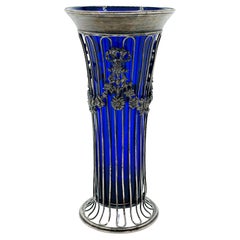
William Hutton Sheffield Sterling Silver Cobalt Blue Glass vase
By Sheffield Silver Co.
Located in Autonomous City Buenos Aires, CABA
William Hutton Sheffield Sterling Silver & Cobalt Blue Glass insetç This Lovely piece is in good condition. It is striking and very decorative for any space! Measures: 17 centimete...
Category

1930s English Art Nouveau Vintage Argentina - Decorative Objects

Materials

Sterling Silver

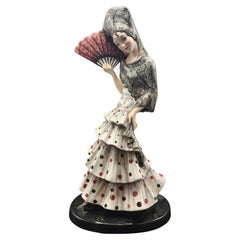
Claire Weiss Goldscheider porcelain from the 1930s
By Claire Weiss
Located in Autonomous City Buenos Aires, CABA
Claire Weiss Goldscheider Porcelain from the 1930s Beautiful Spanish Flamenco Dancer made of porcelain, wearing a typical white dress with coloured polka dots, with a veil with a des...
Category

20th Century Austrian Art Deco Argentina - Decorative Objects

Materials

Porcelain

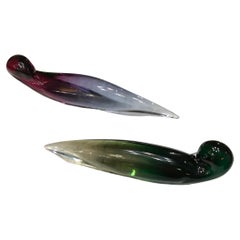
Ducks Murano, 1930, Italian, Sing Salviati C
By Salviati
Located in Ciudad Autónoma Buenos Aires, C
Murano We have specialized in the sale of Art Deco and Art Nouveau and Vintage styles since 1982. If you have any questions we are at your disposal. Pushing the button that reads 'View All From Seller'. And you can see more objects to the style for sale. Salviati & C Measures: Violet : 33 long x 10 high x 5.5 depth Green: 30 long x 9 high x 5.5 depth The lawyer Antonio Salviati and his dream In 1859 in his premises at Number 731 of Dorsoduro, Venice the “Salviati Dott. Antonio fu Bartolomeo” company was established. This is when, Vicenza-born lawyer Antonio Salviati started the entrepreneurial career, moved by a passion for the precious mosaics of the Basilica of San Marco and fascinated by Murano glass art, he decided to start-up his own production of mosaics and objects in Murano glass. An ambitious and far-sighted goal pushed him along this path: to revive the fate of Murano glass production that has been fallen for decades. A challenge which finds the maximum support from two fundamental figures in the history of Murano glass: the mayor of the island, Antonio Colleoni, and the Abbot Vincenzo Zanetti, founder of the glass museum and of the first art school for glass masters. The first successes and international investments The launchpad was the “First Glassmakers’ Exhibition” in 1864 in which Salviati participated with a monumental mosaic that earns him a prize superior to the Gold Medal. The success achieved affirmed the credibility of the Company which thus started its glass production in Palazzo da Mula. The new corporate and productive reality needed investors and the lawyer started to internationalise the company by addressing the economic and financial market across the Channel. The UK immediately showed huge interest in Salviati’s mosaics – as testified by the mosaic that can be seen on the façade of the current Apple Store in Regent Street, London. It was also in London, on 21st December 1866, that the “Società Anonima per Azioni Salviati & C.” was established with the support of diplomat Sir Austen Henry Layard and historian William Drake. The new corporate set-up was further established with the purchase of a new headquarter, this time on the Riva dei Vetrai in Murano. The universal show of Paris in 1867 celebrated the relaunch project of Antonio Salviati “Venice owes a debt of gratitude to the knight Salviati in the resurgence for one of the most legitimately famous of its industries”. From Esposizione Illustrata di Parigi, 1867 pg. 275. “Venice and Italy have gain huge success in the Universal Exhibition. The resurgence of one of the city’s most famous industries is consecrated in this very occasion by the gold medal awarded by the jury to Mr Salviati […] the crowd […] is gathering around the display cases that hold those pieces of glass that are so transparent and so light as to appear like woven air, impregnated, when in their elegant forms that become rainbows of those iridescent reflections that cover them at the artist’s whim – the author of a real ray of sunshine from the beautiful and splendid Venice”. From Esposizione Illustrata di Parigi, 1867 pg. 311 The fundamental role of training in murano glass Training plays a fundamental role for the Company; attendance at the Art School was made compulsory for “[…] all the young workers of the Factory who don’t only tire themselves in manual work. This was established with the idea not only to lift their dignity and their initially limited aspirations, […] but also to improve their artistic education and thereby facilitate an improvement also in their economic situation”. Together with the art school, a free school was also set up to teach all employees to read and write. Diversification in production and made-to-measure projects In a short time, Salviati & C. diversified its production to include glasses, cups, amphoras, and vials which guaranteed the first prize in the universal exhibition for three consecutive years. Its mosaic production also flourished, being used in world-class projects: from the Houses of Parliament in London, to the Viceroy’s palace in Alessandria in Egypt, to the Opera House of Paris, including the private homes of wealthy New York personality. The entire 19th century for Salviati & C. was represented by development, success and fame in the national and international markets, and the Company became a symbol and reference point of Murano glass art throughout the world. The Salviati legacy at the turn of the century On the death of Antonio Salviati in 1890, first his three children followed one another at the helm of the company and then Maurizio Camerino, previously general manager. It was thanks to him that the decorative mosaic project of the Stanford Memorial Church in Palo Alto (California, USA) took place after 12 years of work. As well as the opening of a sales point in Via Montenapoleone in Milan and the institution of a museum collection of Murano glass from the 19th and 20th centuries. The post-war years, biennials and lighting After Maurizio Camerino’s death in 1931, his three children took over the helm of the company: its solid foundations allowed them to strive for new important goals in the art world, participating in the Biennials of 1932 and 1934. Not even the Second World War could tarnish the strength of the Salviati brand: in the post-war years Renzo Camerino renewed the ruined production headquarter and enthusiastically restored all his commercial contacts. Thanks to his grandson Renzo Tedeschi (newly graduated in Engineering at the Polytechnic of Turin and upon his return from an apprenticeship in the United States), Salviati launched its production in lighting appliances. The following years saw intense growth in the number of collaborations with renowned artists and designers. In 1959, the production site was moved to Fondamenta Radi 16, where it still stands today. The great lighting projects The larger production area allowed the company to further expand the international market in the field of architectural lighting. A number of projects were undertaken, such as the 9-tonne, 22-metres high chandelier in the Chamber of Commerce in Parma, the ceiling illumination in the premises of the World Intellectual Property Organisation in Geneva and the Kowloon Hotel in Hong Kong; not to mention the sound-absorbing windows of the Aula Nervi in the Vatican and the lighting system of the great honour hall of the Philippine Plaza Hotel in Manila in collaboration with architect John Marsteller. The reputation of Salviati & C. was further affirmed by the commission – after an international call for bids – for twelve 11-metre high chandeliers for the Tonhalle concert hall in Dusseldorf, made using an innovative system of modular glass elements – “LS- System” – one of the today company’s cornerstones. Salviati from the modern age to the present The story of Salviati continues in the modern era, keeping the focus on creating an innovative style that had distinguished it since its inception. Participation in international exhibitions increased, such as the Venice Biennials from 1958 to 1972 (the final year in which Murano glass was allowed) thanks to projects by designers of the calibre of Betha and Teff Sarasin, Claire Falkestein, and Luciano Gaspari. In 1962 Salviati was awarded with the highest recognition in the Design world, the “Compasso d’Oro” prize assigned by A.D.I. for the Marco vase designed by architect Sergio Asti. In 1965 the company changed its name to Salviati & C. s.p.a.; then it was purchased by the Gruppo Ferruzzi in 1987 which later on it was transferred to a French company. Since 2015 the company returned to be Venetian with the acquisition by the Umana group. Salviati and its designers Salviati’s designers: Luciano Gaspari, Sergio Asti (Compasso d’Oro 1962), Claire Falkenstein, Ward Bennet, Teff and Betha Sarasin, Ingo Maurer, Ross Lovegrove, Amanda Levete, Tom Dixon, Nigel Coates, Thomas Heatherwick, Luca Nichetto, Ben Gorham...
Category

1930s Italian Art Deco Vintage Argentina - Decorative Objects

Materials

Murano Glass

Vase Sign: Schneider ( Decoración Jade ) (Coupe)
By Charles Schneider
Located in Ciudad Autónoma Buenos Aires, C
Sign: Schneider Schneider Charles Schneider (1881-1953) studied art in two of most prestigious French school of the Arts. First in the School of Fine Arts in Nancy, then in the elit...
Category

1920s French Art Deco Vintage Argentina - Decorative Objects

Materials

Art Glass

Ceramic Red and Black, Style, Art Deco
Located in Ciudad Autónoma Buenos Aires, C
Ceramic Sign: Made in Austria Keramos 2051 19/M Wiener Keramos, later Keramos AG or Keramos KG , was a Viennese ceramics manufacturer that made a name for itself especially in the interwar period . In addition to their own designs, designs from the dissolved Wiener Werkstätte were also produced from 1932 onwards. In over 60 years of company history, around 3000 model designs have been produced by around 60 ceramists. Keramos also carried out commissions from the Wiener Werkstätte, such as vases by Dagobert Peche . History The origins of the Keramos company lie in two companies with the same name. The company Keramos – Invalid Society for Viennese Art Ceramics was founded at the end of 1919 on the initiative of the three ceramists Rudolf Wolf, Heinrich Wolf and Ludwig Rys, who had become invalids in World War I. Production started in September 1920. Art-ceramic lamps, figures, vases and boxes were produced. The company Keramos – Viennese art ceramics and porcelain manufactory was founded in 1920. Josef Hoffmann was a shareholder of Keramos for a long time, as was the sculptor Rudolf Podany, who was engaged from the start and created a large number of designs. From 1921 Anton Klieber was employed, who was also responsible for most of the models. Around 1924 both companies were merged and converted into an AG, commercial director became Otto Köller, the technical directors were the brothers Rudolf and Heinrich Wolf. "Some war invalid ceramists founded a workshop with the help of some artists, which was subsequently financed by the state and later enlarged with its participation and converted into a joint-stock company." The company's headquarters were in the Hofburg , Schwarze-Adler-Stiege, the factory in the 10th district of Vienna, Schleiergasse 17. Artistic collaborators at that time were Eduard Klablena , Otto Prutscher , Karl Perl , Karin Jarl-Sakellarios , IDA Schwetz- Lehmann and Grete Fucik-Fischmeister. On February 23, 1928, the triangular mark was entered in the trademark register. It was now also produced for the Wiener Werkstätte. Difficulties for the company arose from the Great Depression . Around 1932, 50 people were employed and a large number of models from Eduard Klabena and the dissolved Wiener Werkstätte were taken over. The works created by Keramos were labeled with their company brands until after 1941. From 1939 the economic situation of the company was better managed by taking over the production of ceramic winter welfare organization badges, the so-called WHW badges. Before 1941 the company is converted into a KG named Keramos, Wiener Kunstkeramik und Porzellanmanufaktur Brüder Wolf KG . Otto Köller was no longer active from this point on. After the end of World War II, Robert Obsieger recommended Robert Mathis as the new head of Keramos, who took over the management of the ceramics manufactory in 1945. In 1949 Mathis introduced a new company logo, which was used alongside the existing triangle mark, the so-called coat of arms mark. Anton Klieber and Rudolf Podany continued to work as ceramists, and new artists such as Josef Lorenzl and Stephan Dakon , both of whom had previously worked for Goldscheider , as well as Rudolf Chocholka, Karl Grössl and Ina Eisenbeisser were engaged. New models such as dancers, children's figures, animals and nudes were created, as well as the well-known wall masks, young people and poodles from the mid-1950s, which corresponded to the trend at the time. In addition, however, traditional designs such as Madonna statues and busts, saints and angels were still made. Utility ceramics such as crockery, vases, lamp bases, candle holders and flower pots also became an important branch of production, and cooperation with the German manufacturer Carstens at the beginning of the 1960s was just as lucrative. In the course of the 1960s, the sales markets for figurative ceramics became increasingly difficult. So until 1982, production was increasingly shifted to everyday ceramics, since ceramic figures were no longer modern due to changing tastes and the spirit of the times. Ultimately, the economic situation at Keramos became more and more difficult and Klaus Mathis, the son of Robert Mathis and then director, who succeeded his father at the helm of the company at the beginning of the 1970s, initiated the liquidation of the company at the end of 1982 . Staff The following artistic collaborators have worked for Keramos over the years: Hans Adametz , Franz Barwig the Elder , Franz Barwig the Younger , Andreas Beck, Hans Bolek, Angelo Bortolotti, Hertha Bucher , Rudolf Chocholka, Stephan Dakon , Ferdinand Doblinger, Eckstein, Franz Eggenberger , Ina Eisenbeisser, English, Stephan Erdös, Alois Feichtinger, Feyslitz, Hans Friedberger, Grete Fucik-Fischmeister, Kurt Goebel, Anton Grath, Karl Grössl, M. Günther, Otto Hafenrichter, Arnold Hartig , Friedrich Herkner, Trude Hillinger, Leopold Hohl, Hostasch, Karl Jamök, Karin Jarl-Sakellarios , Eduard Klablena, Klar, Anton Klieber, Maria Klinger, Josef Kostial, Josef Lorenzl , Wilhelm Otto Lugerth, Viktor Matula, Gusty Mundt-Amman, Novotny, Carl Perl, Rudolf Podany, Friedrich Pollak, Hugo Postl, Adolf Prischl, Otto Prutscher , Max Rieder , Elisabeth Rieger-Hofmann, Walter Ritter , Willibald Russ, Karl Sailer, Schönberg, Schwarz, Ida Schwetz-Lehmann , Sult, Robert Ullmann , Otto Weigand, IDA Weiss-Moricz, Rudolf Wolf. Exhibitions • Jubilee exhibition of the Wiener Kunstgewerbeverein, Austrian Museum , Vienna 1924. • Arts and Crafts Exhibition, Paris, 1925. • Exhibition of Austrian arts and crafts...
Category

1930s Austrian Art Deco Vintage Argentina - Decorative Objects

Materials

Ceramic

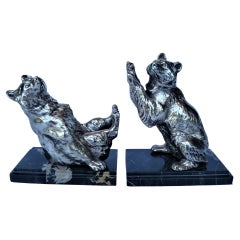
Art Deco Pair of Silvered Metal Playing Bears Bookends, France, 1920 s
By Émile Nestor Joseph Carlier 1
Located in Buenos Aires, Olivos
Emile Joseph Nestor Carlier (French, 1849-1927) Art Deco Pair of Silvered Metal Playing Bears Bookends. Each with impressed “FABRICATION FRANCAIS PARIS” foundry mark. Made in France,...
Category

Early 20th Century French Art Deco Argentina - Decorative Objects

Materials

Marble, Metal

Desing: Carlos de Lamota, Materials: Bronze and marble, Style : Art Deco
Located in Ciudad Autónoma Buenos Aires, C
Design: Carlos de Lamota He was born on August 13, 1924, in the Province of San Juan, Argentina. His passion for art began at a very early age. At 11, he attended Anita Volspranky’s ...
Category

1970s Argentine Mid-Century Modern Vintage Argentina - Decorative Objects

Materials

Marble, Bronze

Glass WMF Art Nouveau Dinanderie
By WMF Württembergische Metallwarenfabrik
Located in Buenos Aires, Argentina
WMF Art Nouveau Dinanderie glass green color (patina) Origin Germany Technical DINANDERIE Good condition with natural wear circa 1900. Art nouveau, mod...
Category

Early 1900s German Art Nouveau Antique Argentina - Decorative Objects

Materials

Metal

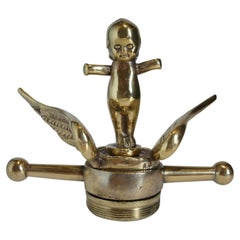
Old Bronze kewpie Doll Car Mascot / Hood Ornament, 1912-1925
By Rose O Neill
Located in Buenos Aires, Olivos
Old bronze kewpie doll car Mascot / hood ornament. 1912-1920´s. Mounted over a wings radiator cap. Perfect gift for any Car Fan / Automobilia. Can be used...
Category

Early 20th Century American Art Deco Argentina - Decorative Objects

Materials

Bronze

Czech Republic Vase Glass and Silver
Located in Buenos Aires, Argentina
Small glass and silver vase. Circa 1900 Origin Czech Republic. Perfect condition. Hand carved. The silver is uncertain in the crystal. Art deco. Measure height 10 cm width 8 cm.
Category

Early 1900s Czech Art Deco Antique Argentina - Decorative Objects

Materials

Silver

Vase Sign: Schneider France (Toupie/ Spinning top Decoration ), Style: Art Deco
By Charles Schneider
Located in Ciudad Autónoma Buenos Aires, C
Sign: Schneider France Schneider Page: 68 book Schneider Maître Verrier Author: Olivier Ador Charles Schneider (1881-1953) studied art in two of most prestigious French school of the...
Category

1920s French Art Deco Vintage Argentina - Decorative Objects

Materials

Art Glass

Sculpture of Santa Rosa in Huamanga Stone 17 Century
Located in Buenos Aires, Argentina
Sculpture of Santa Rosa in stone Huamanga 17th century Origin Upper Peru Circa 17-18th century Former Viceroyalty of Peru Lime pink Santa and child motif Huamanga Stone Material Handmade polychrome It has some missing He is missing his left arm This piece is many years old. Its main structure is very good The stone carving of Huamanga is one of the crafts that emerges as soon as Ayacucho is mentioned, it is in this artistic field where the most varied and interesting application of Huamanga stone is found, being used in the manufacture of religious-themed figurines. Saint Rose of Lima (Lima, April 20, 1586-Lima, August 24, 1617), with the secular name Isabel Flores de Oliva, was a Dominican Tertiary Catholic saint...
Category

1750s Peruvian American Colonial Antique Argentina - Decorative Objects

Materials

Other

Bohemian cut crystal candy box enamelled in green
By Bohemia
Located in Autonomous City Buenos Aires, CABA
Bohemian cut crystal candy box enameled in green This Bohemian crystal candy box is a piece of craftsmanship that combines functionality and beauty. Its spherical shape, slightly ova...
Category

20th Century Czech Bohemian Argentina - Decorative Objects

Materials

Art Glass

Pair of Gilt and Patinated Bronze Candelabra, France, 19th Century
Located in Buenos Aires, Buenos Aires
Pair of gilt and patinated bronze candelabra. France, 19th century.
Category

1870s French Napoleon III Antique Argentina - Decorative Objects

Materials

Bronze

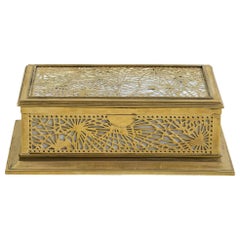
Bronze and Slag Glass Tiffany Jewelry Box, Art Deco Period, United States
By Tiffany Studios
Located in Buenos Aires, Buenos Aires
Bronze and slag glass Tiffany jewelry box. Art Deco period. United States, circa 1900. Signed in the back "Tiffany Studios New York 830".
Category

Early 20th Century American Art Deco Argentina - Decorative Objects

Materials

Bronze

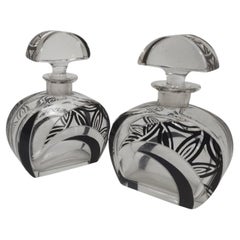
Art Deco perfume bottles in cut crystal, decorated with "flowers" black enamel
By Karl Palda
Located in Ciudad Autónoma Buenos Aires, AR
Cut and enamelled glass in asymmetrical geometric patterns of black, frosted white and clear glass.
Category

1920s Czech Art Deco Vintage Argentina - Decorative Objects

Materials

Glass

Murano, 1920, Italian
Located in Ciudad Autónoma Buenos Aires, C
Murano We have specialized in the sale of Art Deco and Art Nouveau and Vintage styles since 1982. If you have any questions we are at your disposal. Pushing the button that reads 'View All From Seller'. And you can see more objects to the style for sale. Why are there so many antiques in Argentina? In the 1880 – 1940 there was a grate wave of immigration encouraged by the periods of war that were taking place. 1st World War took place between 1914 and 1918 2nd World War took place between 1939 and 1945 The immigrants options were New York or Buenos Aires. Tickets were cheap and in Buenos Aires they were welcomed with open arms, as it was a country where everything was still to be done. Argentina was the country of new opportunities, labour was needed and religious freedom was assured, in many cases the of the family travel first until they were settled and then the rest of the family members join them. In the immigrant museum “Ellis Island Immigrant Building” in New York you can se the promotional posters of the boats that would take them to a new life. Between the years 1895 and 1896, Argentina had the highest DGP (gross domestic product) per capita in the world according to the Maddison Historical Statistics index, this situation arose due to the large amount of food being exported to European countries, which were at war. The Argentinean ships left the port of Buenos Aires with food, but they returned with furniture, clothes and construction elements, (it´s common to see this the old buildings of the historic neighbourhood of San Telmo, the beams with the inscription “Made in England)”, as well as many markets that were built in Buenos Aires, such us the San Telmo Market, whose structure was brought by ship and afterwards assembled in 900 Defensa Street. With the great influence of European immigrants living in the country, the children of the upper classes travelled to study in France, resulting in the inauguration of “La Maison Argentinienne”, on 27th of June 1928, in the international city of Paris, which hosted many Argentinians that were studying in Frace. It´s the fourth house to be built after France, Canada and Belgium, being the first Spanish-speaking one. Still in place today (17 Bd Jourdan, 75014, Paris, France). Many of the children of these wealthy families who attended international art exhibitions, museums and art courses abroad, took a keen interest in the European style. This is why Buenos Aires was at the time referred as “The Paris of South America”. Between the years 1890 and 1920 more than a hundred Palaces were built on Alvear Avenue the most exclusive avenue in Buenos Aires. Today some of these palaces have been transformed into museums, hotels and embassies. In the year 1936, the Kavanagh building was inaugurated, it was the tallest reinforced concrete building in South America. During 1994 the American Society of Civil Engineers distinguished it as an “international engineering milestone”, and it´s now considered a World Heritage of Modern Architecture. At the time was common to hire foreign architects such as Le Corbusier, who visited Buenos Aires/Argentina in 1929 and in 1948 he drew up the blueprints for a house built in La Plata City (which was declared a World Heritage Site). In 1947, the Hungarian architect Marcelo Breuer designed “Parador Ariston” in the seaside city of Mar del Plata. After an Argentinean student at Harvard University convinced him to come to Argentina. He worked on an urban development project in the Casa Amarilla, area of La Boca. The Ukrainian architect, Vladimiro Acosta, arrives in Argentina in 1928 and worked as an architect until que moved to Brazil. Antonio Bonet, a Spanish architect who worked with Le Corbusier in Paris, arrives in Argentina in 1937, where he carried out several architectural works and in 1938 designs the well-known BFK chair. Andres Kálnay, of Hungarian origin, made around 120 architectural masterpieces, among which the former Munich brewery stands out, he even made the furniture’s design. The German architect, Walter Gropius, director of the Bauhaus, lived in Argentina, where he wrote articles for “Sur” magazine and founded in Buenos Aires, an architectural firm with Franz Möller, who was also an architect, where he built two houses. At the same time several famous designers decided to immigrate to Argentina, among them we can find the well-known French designer, Jean-Michel Frank, who arrived in the country in 1940 and also worked for the Rockefeller family. Special pieces were made, which were sold exclusively in the country, such as the well-known German company “WMF”, who sold their products by catalogue, which were chosen by the ladies of high society in the list of wedding gifts, as well as the pieces designed by Christofle. The Swiss sculptor Alberto Giacometti, made special pieces for Argentinean mansions. In 1904 the first Jansen branch outside Paris was established in Buenos Aires, as the Argentinean clientele demanded a large amount of furniture, from the end of the 19th century to the mid-20th century. In 1970, the brand Rigolleau Argentina made pieces authorised by Lalique. The brands Maple and Thompson also set up shop in the country. The French plastic artist, Marcel Duchamp moved to Argentina in 1918-1919. Glass signed Gallé, Charder, Leverre, Schneider, Muller and other French firms. They were bought in flower shops and were given to ladies with beautiful floral arrangements. Some furniture manufacturers travelled to international fairs and bough the patterns to produce the furniture in Argentina, such as the furniture firm Englander and Bonta, who bought the patterns ins Italy. It is worth mentioning that in Argentina we have the largest community of Italians outside...
Category

1920s Italian Art Deco Vintage Argentina - Decorative Objects

Materials

Murano Glass

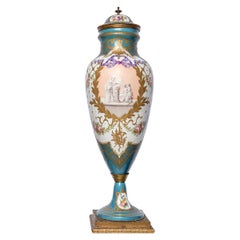
Porcelain and Gilt Bronze Vase Signed Sèvres, France, Late 19th Century
By Manufacture Nationale de Sèvres
Located in Buenos Aires, Buenos Aires
Porcelain and gilt bronze vase signed Sèvres, France, late 19th century.
Category

Late 19th Century French Neoclassical Antique Argentina - Decorative Objects

Materials

Bronze

Glass, Sign Marinot , Design; Georges Maurice Marinot, 1923
By Maurice Marinot
Located in Ciudad Autónoma Buenos Aires, C
Marinot's father was a bonnet maker. Maurice did poorly in school, but convinced his parents to send him to the École des Beaux-Arts in 1901 to train as a painter under French painte...
Category

1920s French Art Nouveau Vintage Argentina - Decorative Objects

Materials

Art Glass

Still Thinking About These?

All Recently Viewed