Brooklyn - Drawings
to
1,190
826
15
10
1
Height
to
Width
to
10
9
1
15
11
2
12
3
1
16
6
6
3
1
22
22
3
2
1
26
26
26
9
7
1
1
1
Item Ships From: Brooklyn
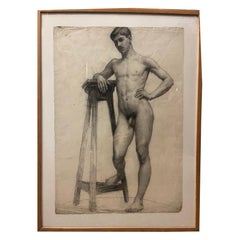
Drawing of a Naked Man in the Academic Hot Seat 1910 France
Located in palm beach, FL
Drawing of a naked man in the academic hot seat 1910 France.
This young man poses in a relaxed manner, leaning on a harness. His raised foot rests on a bar of furniture.
The model's...
Category
Early 20th Century French Brooklyn - Drawings
Materials
Paper
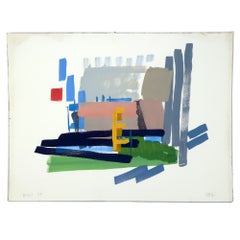
Abstract Expressionist Mixed Media by Burt Hasen, 1961
By Burt Hasen
Located in Brooklyn, NY
Burton Stanley Hasen (New York City, 1921 - 2007) abstract expressionist mixed media (watercolor and ink) on paper. A New York native, Hasen relocated to Paris to study art at the Ac...
Category
1960s American Vintage Brooklyn - Drawings
Materials
Paint
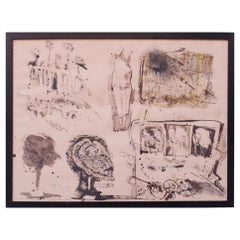
Michael Glier "Wall Street, New York, New York" Gouache on Paper (2008)
Located in Brooklyn, NY
A fantastic gouache on paper from 2008 by Michael Glier, a recipient of a National Endowment Fellowship in drawing and a Guggenheim Fellowship in painting. The drawing "Wall Street,...
Category
21st Century and Contemporary Brooklyn - Drawings
Materials
Paper
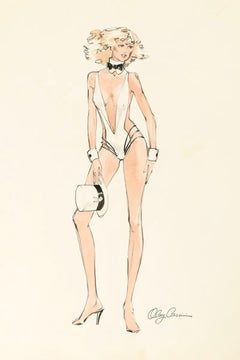
White Bunny Drawing by Oleg Cassini for Playboy October 1979, Signed
By Oleg Cassini
Located in Brooklyn, NY
White Bunny Drawing by Oleg Cassini for Playboy October 1979, Signed.
Illustration of a woman wearing a white body suit, choker, and hat. Signed by Oleg Cassini. Notice the body suit is in the shape of the head of a bunny with clever use of the 'whiskers'.
Approximate Measurements: Length: 11" Width: 14"
Property from the Collection of Steven Rosengard, Chicago, Illinois
This original drawing was commissioned by Playboy and included in the October 1979 issue of Playboy Magazine (pages 225-227) in a feature that included works from designers such as Bill Blass, Oleg Cassini, Edith Head, Fernando Sanchez, and Monika Tilley, among others, who create their versions of the Playboy bunny costume. Candace Collins can be seen modeling some of the designs in the feature.
Oleg Cassini is an icon of twentieth-century fashion. Though born to Russian aristocracy and raised in Italy, he built a fashion empire that was unmistakably American. Cassini is perhaps best known for the hundreds of designs he created for First Lady Jacqueline Kennedy (see images 4-8), but his achievements as a collector, connoisseur, and quintessential twentieth-century man go far beyond Camelot.
In 1913, Oleg Cassini was born in Paris to the Russian diplomat Count Alexander Loiewski and Countess Marguerite Cassini, a Russian aristocrat of Italian ancestry who also had an interesting link to America. The daughter of Count Arthur Cassini, Russian Ambassador to the United States during the McKinley and Roosevelt administrations, Marguerite dazzled turn-of-the-century Washington as her father’s official hostess and left her mark on the capital city. Stationed in Denmark when the Russian Revolution toppled the czar, Ambassador Cassini and family were exiled to Switzerland before settling in Florence, Italy, where young Oleg was raised. A true Renaissance man, he spoke Russian, French, and Danish before adding Italian and English; he studied medieval and modern European military history and costume and learned to draw; he learned horseback riding, fencing, and the art of chivalry; and, most importantly, he came to understand the struggles of the Russian titled class and other European aristocrats in the wake of the Russian Revolution and World War I.
Countess Cassini started a successful fashion business in Florence, and soon the talented young Oleg was sent to Paris to sketch the latest collections for recreation in Italy. In Rome in his early 20s, Cassini created fashions for high society women and designed for a few films, which planted the seed for his move to Hollywood. The drive to reinvent himself brought Cassini to America in the 1930s; in his autobiography he describes arriving nearly penniless in mid-Depression New York City where his title as an exiled Russian Count meant even less than in war-devastated Europe. Down and out, Cassini struggled for employment, having sketching skills but no knowledge of the wholesale trade required for survival in Manhattan’s Seventh Avenue fashion district. However, he excelled at making connections, and Cassini slowly entered New York society. He was soon joined by younger brother Igor (who had studied in America and travelled with the young Emilio Pucci) and his parents, the once-dazzling Countess and his father, the displaced diplomat still loyal to Russia. The family settled in Washington, D.C., and Igor worked his way up the Hearst newspaper chain to become the famous society columnist Cholly Knickerbocker.
In New York, Oleg Cassini married the troubled socialite Merry Fahrney (who would go on to marry eight times), but the marriage ended in scandal for Oleg, and he decided to follow his original intention and head for Hollywood. Despite initial difficulties, Cassini gained access to Hollywood’s elite (partially through his skills on the tennis court), and was soon hired as a designer at Paramount Pictures alongside the redoubtable Edith Head. In her 1941 film debut I Wanted Wings, Veronica Lake wore a memorable Cassini design. That same year, Cassini met and married the newest young Hollywood star on the scene, the beautiful 20th Century Fox–talent Gene Tierney.
With the outbreak of World War II, Cassini enlisted in the Coast Guard but was transferred to the U.S. Army Cavalry which allowed officers of foreign birth. He attended basic training at Fort Riley, Kansas, and the horsemanship he learned as a boy served him greatly. He attended Officer Candidate School and reached the rank of First Lieutenant (he also became an American citizen at this time, losing his title of Count). Cassini spent several years posted at Fort Riley, where Tierney joined him before he landed a convenient military post in Hollywood. As Tierney’s career thrived (she played the title role in Otto Preminger’s Laura in 1944), she was able to assert her influence over 20th Century Fox’s head Daryl Zanuck, who hired Cassini as designer for Tierney on her 1946 film The Razor’s Edge, which proved to be a brilliant showcase for his talents. The pair separated the same year and, again seeking reinvention, Cassini re-established himself in New York City as a fashion designer. By 1950, the Oleg Cassini label was born.
Combining his knowledge of Old World and modern Europe, Hollywood, the tennis courts of Palm Beach and Newport, and of course, New York City, Oleg Cassini invented a new brand of fashion that was distinctly American and of its moment. For his first collection, Cassini took to the stage, narrating the looks and imbuing the scene with his personality, unusual in an industry where the designers typically remained backstage and the models were called by number over a PA. The first collection was a smash — the president of Lord & Taylor devoted all of their storefront windows to his designs — and by 1955 sales had reached $5,000,000. Oleg Cassini’s career had turned a very positive corner.
Cassini spent the early 1950s traversing the country, personally selling his collections to department stores in the interior, something his predecessors had never done, and moving between the Hollywood and New York scenes. Cassini’s brother Igor coined the term “the Jet Set” for this generation that constantly flew from New York to Los Angeles (then a ten-hour flight), Las Vegas, Paris, Rome, and the Riviera. In 1954, Cassini set out to woo Grace Kelly and sent her roses every day. The two were briefly engaged before her marriage to Prince Rainier of Monaco.
In December 1960, Cassini’s career-defining opportunity came when he was chosen by Jacqueline Kennedy to design her fashions for the White House. Cassini had long known Joe Kennedy and his war-hero son John, and had first met Jacqueline Bouvier before her marriage in the early 1950s. Invited by President-Elect Kennedy to meet Jacqueline at Georgetown Hospital (she had just given birth to son John Jr.) to present to her drawings of potential dresses and First Lady looks, Cassini worked furiously to prepare a new line for the First Lady. Mrs. Kennedy had always had her clothes made by the top French couturiers of the day, but for the White House she wanted an American designer. Cassini wrote in his autobiography that he told the First Lady: “‘You have an opportunity here,’ I said, ‘for an American Versailles.’ She understood completely what I was trying to communicate; she began to talk excitedly about the need to create an entirely new atmosphere at the White House. She wanted it to become the social and intellectual capital of the nation” (Oleg Cassini, In My Own Fashion, 1987, p. 327).
Mrs. Kennedy loved Cassini’s design for a gown to wear to the Inaugural Gala (she had already ordered a dress from Bergdorf’s for the Inaugural Ball), and Cassini was selected as the First Lady’s designer and was soon dubbed the “Secretary of Style.” From 1960 to 1963, Oleg Cassini would design over 300 items for Mrs. Kennedy, creating the “Jackie Look” that contributed not only to a fashion revolution but also the dawn of a new age. Cassini wrote that “Jackie played a very active role in the selection of her clothes. She loved brilliant colors — pistachio, hot pink, yellow, and white among others. Her sense of style was very precise; she would make editorial comments on the sketches I sent her. She always knew exactly what she wanted; her taste was excellent” (Oleg Cassini, In My Own Fashion, 1987, p. 334).
After the Camelot years, Cassini’s business flourished and grew into a major industry; his name appeared on everything from couture to tennis-, sport-, and swimwear, car interiors, housewares, and perfume. He collected beautiful and rare artwork, arms and armor, and antique furniture, and lived the lifestyle projected by his image. From this period onward, Cassini also came to live in important homes. Of his Gothic Gramercy Park townhouse on Manhattan’s 19th Street he would write imaginatively, “I walked into the foyer and immediately fell in love. It was a place unlike any other in New York, a sixteenth-century Dutch house transported brick by brick from Europe by the Wells Fargo family in the early twentieth century. There was a vaulted, twenty-foot ceiling in the living room, leaded windows, elegantly carved wood paneling...
Category
Mid-20th Century Italian Brooklyn - Drawings
Materials
Paper
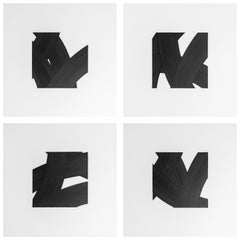
Patrick Carrara Black Ink on Mylar Drawings, Appearance Series, 2017
By Patrick Carrara
Located in New York, NY
Contemporary New York artist Patrick Carrara's Black Ink on Mylar Drawings were created in 2017. This is his latest series Appearance, which he started te...
Category
21st Century and Contemporary American Modern Brooklyn - Drawings
Materials
Mylar
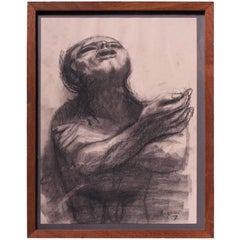
James Joseph Kearns "Despondent Man" Etching
By James Joseph Kearns
Located in Brooklyn, NY
James Joseph Kearns (b. 1924) etching, signed at dated "1957." Depicts a man with hollow eyes and a despondent expression with a hand outstretched. Similar to many of his works, ther...
Category
1950s American Modern Vintage Brooklyn - Drawings
Materials
Paper
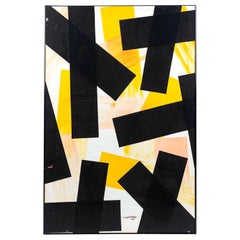
Angelo Testa Abstract Marigold and Black Hard-Edge Color Field Painting, 1962
By Angelo Testa
Located in Brooklyn, NY
A watercolor on board by Angelo Testa. Signed and dated (1962)
Measures: 29½ H × 19½ W in.
Angelo Testa was one of the foremost American textile designers of the mid-20th century. In 1945, he became the first graduate of the Institute of Design (formerly the New Bauhaus) in Chicago, where he studied under artist László Moholy-Nagy, architect George Fred Keck, and weaver Marli Ehrman...
Category
Mid-20th Century American Mid-Century Modern Brooklyn - Drawings
Materials
Paint
Patrick Carrara Black Ink on Mylar Drawings, Appearance Series, 2013 - 2015
By Patrick Carrara
Located in New York, NY
Contemporary New York artist Patrick Carrara's black ink on Mylar drawings were created in 2013 - 2015. This is his latest series Appearance, which he started te...
Category
21st Century and Contemporary American Modern Brooklyn - Drawings
Materials
Mylar
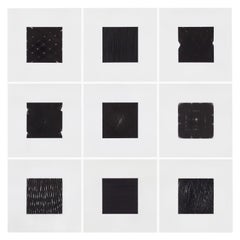
Patrick Carrara Graphite on Magni Drawings, Garden of Silence Series, 2009
By Patrick Carrara
Located in New York, NY
Contemporary New York artist Patrick Carrara's Garden of Silence Drawings were created in 2009. G.O.S. (2009 - 2010) was the first series using a mechanical pencil with a hard 5H gra...
Category
21st Century and Contemporary American Modern Brooklyn - Drawings
Materials
Paper
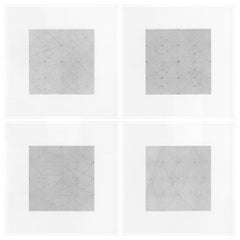
Patrick Carrara Garden of Silence Triptych, Graphite on Paper, 2009
By Patrick Carrara
Located in New York, NY
Contemporary New York artist Patrick Carrara's Garden of Silence Drawings was created in 2009. G.O.S. (2009-2010) was the first series using a mechanical pencil with a hard 5H graphi...
Category
21st Century and Contemporary American Modern Brooklyn - Drawings
Materials
Paper

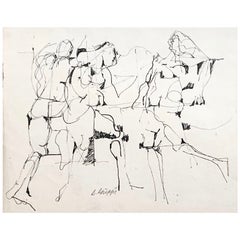
Abstract Expressionist Ink Drawing on Paper by Salvatore Grippi 1953
By Salvatore Grippi
Located in Brooklyn, NY
This ink figurative abstract Expressionist piece on paper is signed by its creator, noted New York School artist Salvatore Grippi. Though undated, the piece is similar in form and st...
Category
1950s American Mid-Century Modern Vintage Brooklyn - Drawings
Materials
Paper
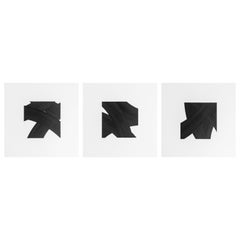
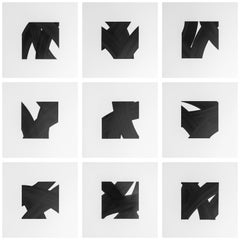
Patrick Carrara Black Ink on Mylar Drawing Triptych, Appearance Series, 2017
By Patrick Carrara
Located in New York, NY
Contemporary New York artist Patrick Carrara's Black Ink on Mylar Drawing Triptych was created in 2017. This is his latest series Appearance, which he started ten years ago and also ...
Category
21st Century and Contemporary American Modern Brooklyn - Drawings
Materials
Mylar
Patrick Carrara Black Ink on Mylar Drawings, Appearance Series, 2016 - 2017
By Patrick Carrara
Located in New York, NY
Contemporary New York artist Patrick Carrara's Black Ink on Mylar Drawings were created in 2016 - 2017. This is his latest series Appearance, which he started ten years ago and also ...
Category
21st Century and Contemporary American Modern Brooklyn - Drawings
Materials
Mylar
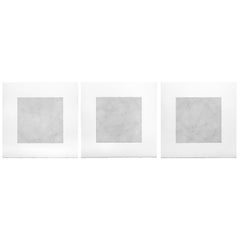
Patrick Carrara Divided Lines Triptych, Graphite on Paper, 2010
By Patrick Carrara
Located in New York, NY
Contemporary New York artist Patrick Carrara's Divided Lines Drawings Triptych was made in 2010. The D.L. Series (2010 -2011) was created after Gardens of Silence (2009 - 2010). No m...
Category
21st Century and Contemporary American Modern Brooklyn - Drawings
Materials
Paper
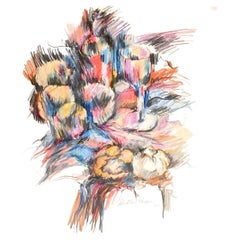
Abstract Expressionist Still Life Drawing on Paper by Salvatore Grippi, 1960s
By Salvatore Grippi
Located in Brooklyn, NY
Abstract expressionist still life drawing on paper by Salvatore Grippi, 1960s. Gorgeous colored graphite still-life on paper. Signed and dated. From artist’s estate.
Category
Mid-20th Century American Mid-Century Modern Brooklyn - Drawings
Materials
Paper
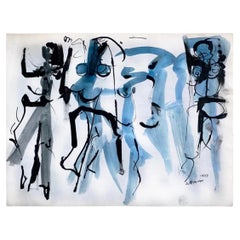
Midcentury Abstract Expressionist Watercolor Painting, Salvatore Grippi, Blue
By Salvatore Grippi
Located in Brooklyn, NY
This ink and watercolor figurative abstract expressionist piece on paper is signed by its creator, noted New York School artist Salvatore Grippi. Though undated, the piece is fits in...
Category
Mid-20th Century American Mid-Century Modern Brooklyn - Drawings
Materials
Paper
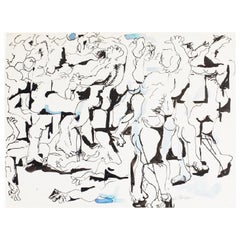
Midcentury Abstract Expressionist Ink Drawing on Paper by Salvatore Grippi, 1953
By Salvatore Grippi
Located in Brooklyn, NY
Midcentury abstract expressionist ink drawing on paper by Salvatore Grippi, 1953. Measures: 9.5" x 12".
This ink wash figurative abstract Expressionist piece on paper is signed by it...
Category
1950s American Mid-Century Modern Vintage Brooklyn - Drawings
Materials
Paper
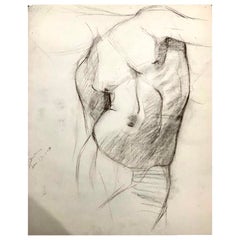
John Joseph Owens Model Nude Figural Study, Torso, 1909, Charcoal and Ink, Paper
Located in Brooklyn, NY
Owens, John Joseph (American/West Virginia 1887-1931), Model Portrait Study, signed and dated 1909, charcoal on laid paper and pen and ink, about 21 x 17 inches. Provenance: artist's...
Category
Early 20th Century American Neoclassical Brooklyn - Drawings
Materials
Paper
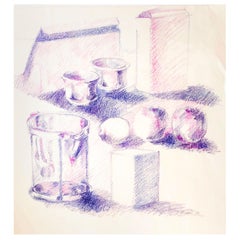
Mid-century Still-Life Violet Tabletop Pop Art Drawing by Salvatore Grippi 1960
By Salvatore Grippi
Located in Brooklyn, NY
Gorgeous still life drawing by New York Ab Ex artist Salvatore Grippi. Violet oil pencil on paper.
Category
Mid-20th Century American Mid-Century Modern Brooklyn - Drawings
Materials
Paper
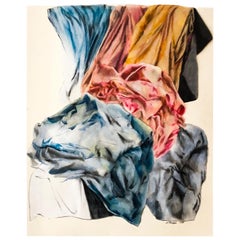
1960s Pop Art Abstract Expressionism Trompe l
Oeil Collage by Salvatore Grippi
By Salvatore Grippi
Located in Brooklyn, NY
Gorgeous collage of layered paper resembling bundles of falling textile but in two dimensions. A great melding of the figural and the completely abstract as well as various media. Si...
Category
Mid-20th Century American Mid-Century Modern Brooklyn - Drawings
Materials
Paper
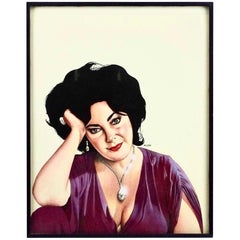
Modern Pop Art Elizabeth Taylor Portrait in Pencil by Bill Nelson, 1980
Located in Brooklyn, NY
Stunning early master illustration by Bill Nelson in his preferred medium of colored pencil for the Cincinnati Magazine cover story (May 1980). Framed.
Ta...
Category
Mid-20th Century American Mid-Century Modern Brooklyn - Drawings
Materials
Paint, Paper
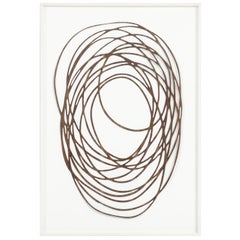
Neal Perbix, Limited Edition Walnut Veneer Drawing, Fine Art Painting
By Neal Perbix
Located in Southampton, NY
Neal Perbix
Untitled, 2017
[NP.32]
Walnut veneer drawing
Limited edition of 10
Framed dimensions: 35.75 x 25.75 in.
Museum quality framing available in white-wash finish
or...
Category
21st Century and Contemporary American Brooklyn - Drawings
Materials
Walnut
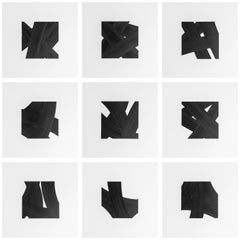
Patrick Carrara Black Ink on Mylar Drawings, Appearance Series, 2014 - 2017
By Patrick Carrara
Located in New York, NY
Contemporary New York artist Patrick Carrara's black ink on Mylar drawings were created in 2014-2017. This is his latest series Appearance, which he start...
Category
21st Century and Contemporary American Modern Brooklyn - Drawings
Materials
Mylar
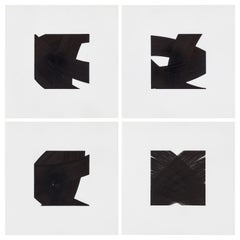
Patrick Carrara Black Ink on Mylar Drawings, Appearance Series, 2016 - 2017
By Patrick Carrara
Located in New York, NY
Contemporary New York artist Patrick Carrara's black ink on mylar drawings were created in 2016 - 2017. This is his latest series Appearance, which he started ten years ago and also ...
Category
21st Century and Contemporary American Modern Brooklyn - Drawings
Materials
Mylar
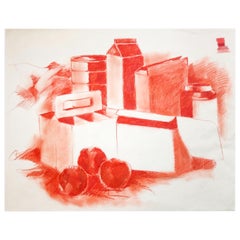
Mid-century Pop Art Red Still Life Drawing Sketch by Salvatore Grippi, 1960s Mod
By Salvatore Grippi
Located in Brooklyn, NY
Gorgeous red monochrome Pop Art still-life drawing on paper, in the midst of the artist’s untitled table series of which I have a few large canvases listed. Don't miss this treasure!
Category
Mid-20th Century American Mid-Century Modern Brooklyn - Drawings
Materials
Paper
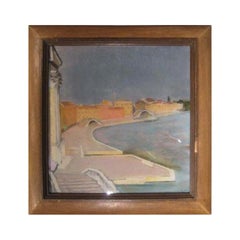
Walter Zoum pastel shades " Quai Vénitiens "
By Walter Zoum
Located in Brooklyn, NY
Located in NY
Category
20th Century French Brooklyn - Drawings
Related Items
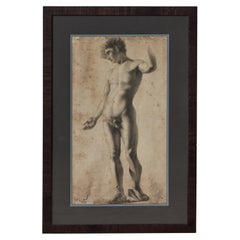
French Academic Charcoal Drawing of Standing Nude Male Figure
Located in Los Angeles, CA
This academic charcoal drawing from the turn of the century showcases a nude male figure in a contrapposto stance, capturing the timeless grace of classical sculptures. The drawing’s...
Category
Early 20th Century French Brooklyn - Drawings
Materials
Paper

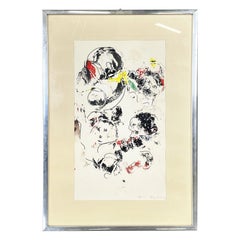
1950s Abstract Figural Portrait by Josef Presser
By Josef Presser 1
Located in New York, NY
Bright, vivid and quite fabulous abstract by Polish American artist Josef Presser (1909-1967), circa 1950s. Known for his figural work this is a beautifully executed portrait of two ...
Category
1950s American Vintage Brooklyn - Drawings
Materials
Wood

Italian Modern Abstract Mixed Media Painting on Paper and Metal Frame, 1972
Located in MIlano, IT
Italian modern Abstract mixed media painting on paper and metal frame, 1972
Abstract style mixed media painting on paper. The gestural painting is characterized by rounded lines and ...
Category
1970s Italian Modern Vintage Brooklyn - Drawings
Materials
Metal
$240
H 26.38 in W 17.72 in D 0.79 in
Joe Bradley Etching, Untitled
Located in Long Island City, NY
Joe Bradley Etching, Untitled. This piece is signed, dated, and numbered to verso '21/100 Joe Bradley 18'. This work is number 21 from the edition of 100 published by Paupers Press, ...
Category
20th Century Modern Brooklyn - Drawings
Materials
Canvas, Wood
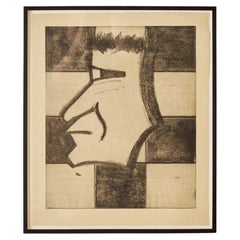
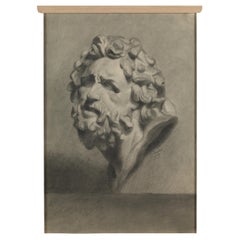
Unknown Academy Student 19th C Drawing, Pencil on Paper, Framed, Signed
Located in Leuven , BE
Unknown academy student 19th C drawing, pencil on paper, Framed, Signed.
Category
19th Century Belgian Antique Brooklyn - Drawings
Materials
Paper
$721
H 29.53 in W 22.45 in D 1.97 in
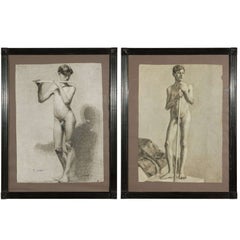
Pair of Italian Academic Charcoal Drawings of Male Nude Figures from 1880
Located in Los Angeles, CA
This pair of Italian academic charcoal drawings captures the grace and disciplined form of classical male nudes. One portrays an artist's model, his pose reflective and studied, whil...
Category
19th Century Italian Art Nouveau Antique Brooklyn - Drawings
Materials
Paper, Wood
$4,675
H 28.5 in W 22 in D 1 in
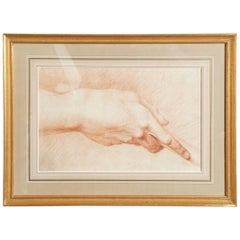
Fine Early 19th Century Academic Preparatory Drawing
Located in Hudson, NY
This very fine drawing in Sanguine is from the early 19th century. Made as a preparatory sketch concerning composition, musculature and shadow this work is unsigned but we have four ...
Category
Early 19th Century French Charles X Antique Brooklyn - Drawings
Materials
Hardwood, Paper
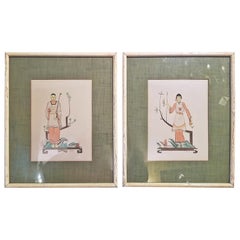
Pair of Art Deco Mixed Media Paintings by Robert Reinhardt Von Liski
By Robert Reinhardt Von Liski
Located in Dallas, TX
PRESENTING a BEAUTIFUL pair of, Asian inspired, mixed media pieces executed in ink, colored pencil and gouache by Robert Reinhardt Von Liski.
Robert Reinhardt Von Liski (1908-1991) was a Prussian-American artist.
Von Liski worked in Chicago as a commercial artist in advertising agencies and elsewhere, and did work for RCA Victor and Arrow Shirts...
Category
Early 20th Century American Art Deco Brooklyn - Drawings
Materials
Paper
$1,200 / set
H 14.75 in W 12.75 in D 0.7 in
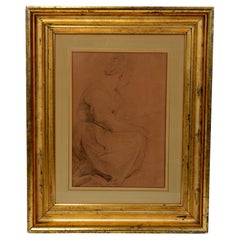
Matted and Framed 19th c French Academia Drawing of a Seated Woman
Located in valatie, NY
Matted and Framed 19th c French Academia Drawing of a Seated Woman. With school stamp embossed on lower right. Paper has watermark that is pictured.
I...
Category
Late 19th Century French Antique Brooklyn - Drawings
Materials
Glass, Wood, Paper
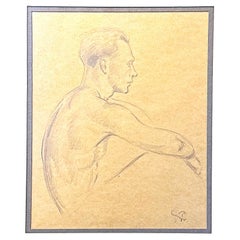
"Seated Man", Fine Drawing of Nude Male Figure by Woodruff, Vogue Artist
By Porter Woodruff
Located in Philadelphia, PA
Finely drawn and quiet in mood, this lovely drawing by Porter Woodruff depicts a seated, nude male figure from the side, his arms crossed on his knees and his eyes looking into the d...
Category
1930s American Art Deco Vintage Brooklyn - Drawings
Materials
Paper
$1,500
H 13.75 in W 12 in D 0.75 in
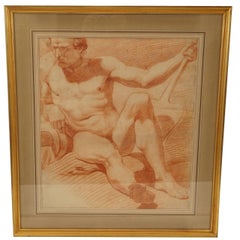
Fine Large Late 18th Century or Early 19th Century French Academic Drawing
Located in Hudson, NY
This fine drawing while unsigned is an excellent example of sketch work done in sanguine as preparatory work for large finished paintings. Created in France during the days of artist...
Category
Late 18th Century French Neoclassical Antique Brooklyn - Drawings
Materials
Wood, Paper
$3,650
H 24.5 in W 22.5 in D 1 in
"Seated Man, Two Positions", Drawing of Half-Nude Male Figure by Ulen, 1930s
By Paul Ulen
Located in Philadelphia, PA
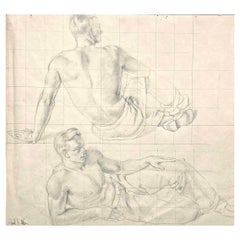
Beautifully and sensitively drawn by Paul Ulen, this single sheet includes two images of a half-nude male figure, seated and reclining, wearing loose worker pants and sporting a fashionable 1930s haircut. In each case, the figure's strong, muscular body is expressed in tones of light and shadow, confidently drawn in pencil. The gridded background suggests that the figures were studies for a larger wall mural, and indeed, a major mural-esque painting by Ulen, "Bricklayer at Rest," perhaps depicting the same model, is also available from Renaissance Man Antiques...
Category
1930s American Art Deco Vintage Brooklyn - Drawings
Materials
Paper
$3,900
H 14.25 in W 19.25 in D 0.1 in
Previously Available Items
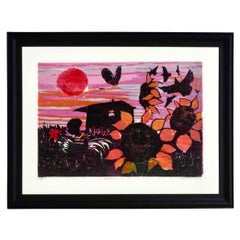
Walter Henry Williams Sunflowers at Sunset Woodcut, Signed, Numbered, 1959, USA
By Walter Williams 1
Located in Brooklyn, NY
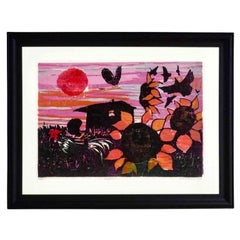
Walter Henry Williams Sunflowers at Sunset woodcut, signed, numbered, 1959, USA. Walter Henry Williams, Sunflowers, 1959 woodcut in colors on thi...
Category
1950s American Modern Vintage Brooklyn - Drawings
Materials
Paper
H 14.5 in W 20 in D 1 in
Red, Black
White Bunnies, Set of 3, Oleg Cassini, Playboy October 1979, Signed
By Oleg Cassini
Located in Brooklyn, NY
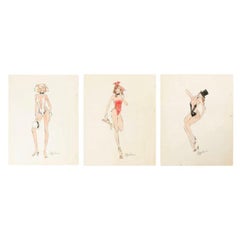
Red, Black & White Bunnies, Set of 3, Oleg Cassini, Playboy October 1979, Signed.
Property from the Collection of Steven Rosengard, Chicago, Illinois
These original drawings were commissioned by Playboy and included in the October 1979 issue of Playboy Magazine (pages 225-227) in a feature that included works from designers such as Bill Blass, Oleg Cassini, Edith Head, Fernando Sanchez, and Monika Tilley, among others, who create their versions of the Playboy bunny costume. Candace Collins can be seen modeling some of the designs in the feature. Each Signed by Oleg Cassini. Approximate Measurements for each: Length: 11" Width: 14"
Oleg Cassini is an icon of twentieth-century fashion. Though born to Russian aristocracy and raised in Italy, he built a fashion empire that was unmistakably American. Cassini is perhaps best known for the hundreds of designs he created for First Lady Jacqueline Kennedy (see images 4-7), but his achievements as a collector, connoisseur, and quintessential twentieth-century man go far beyond Camelot.
In 1913, Oleg Cassini was born in Paris to the Russian diplomat Count Alexander Loiewski and Countess Marguerite Cassini, a Russian aristocrat of Italian ancestry who also had an interesting link to America. The daughter of Count Arthur Cassini, Russian Ambassador to the United States during the McKinley and Roosevelt administrations, Marguerite dazzled turn-of-the-century Washington as her father’s official hostess and left her mark on the capital city. Stationed in Denmark when the Russian Revolution toppled the czar, Ambassador Cassini and family were exiled to Switzerland before settling in Florence, Italy, where young Oleg was raised. A true Renaissance man, he spoke Russian, French, and Danish before adding Italian and English; he studied medieval and modern European military history and costume and learned to draw; he learned horseback riding, fencing, and the art of chivalry; and, most importantly, he came to understand the struggles of the Russian titled class and other European aristocrats in the wake of the Russian Revolution and World War I.
Countess Cassini started a successful fashion business in Florence, and soon the talented young Oleg was sent to Paris to sketch the latest collections for recreation in Italy. In Rome in his early 20s, Cassini created fashions for high society women and designed for a few films, which planted the seed for his move to Hollywood. The drive to reinvent himself brought Cassini to America in the 1930s; in his autobiography he describes arriving nearly penniless in mid-Depression New York City where his title as an exiled Russian Count meant even less than in war-devastated Europe. Down and out, Cassini struggled for employment, having sketching skills but no knowledge of the wholesale trade required for survival in Manhattan’s Seventh Avenue fashion district. However, he excelled at making connections, and Cassini slowly entered New York society. He was soon joined by younger brother Igor (who had studied in America and travelled with the young Emilio Pucci) and his parents, the once-dazzling Countess and his father, the displaced diplomat still loyal to Russia. The family settled in Washington, D.C., and Igor worked his way up the Hearst newspaper chain to become the famous society columnist Cholly Knickerbocker.
In New York, Oleg Cassini married the troubled socialite Merry Fahrney (who would go on to marry eight times), but the marriage ended in scandal for Oleg, and he decided to follow his original intention and head for Hollywood. Despite initial difficulties, Cassini gained access to Hollywood’s elite (partially through his skills on the tennis court), and was soon hired as a designer at Paramount Pictures alongside the redoubtable Edith Head. In her 1941 film debut I Wanted Wings, Veronica Lake wore a memorable Cassini design. That same year, Cassini met and married the newest young Hollywood star on the scene, the beautiful 20th Century Fox–talent Gene Tierney.
With the outbreak of World War II, Cassini enlisted in the Coast Guard but was transferred to the U.S. Army Cavalry which allowed officers of foreign birth. He attended basic training at Fort Riley, Kansas, and the horsemanship he learned as a boy served him greatly. He attended Officer Candidate School and reached the rank of First Lieutenant (he also became an American citizen at this time, losing his title of Count). Cassini spent several years posted at Fort Riley, where Tierney joined him before he landed a convenient military post in Hollywood. As Tierney’s career thrived (she played the title role in Otto Preminger’s Laura in 1944), she was able to assert her influence over 20th Century Fox’s head Daryl Zanuck, who hired Cassini as designer for Tierney on her 1946 film The Razor’s Edge, which proved to be a brilliant showcase for his talents. The pair separated the same year and, again seeking reinvention, Cassini re-established himself in New York City as a fashion designer. By 1950, the Oleg Cassini label was born.
Combining his knowledge of Old World and modern Europe, Hollywood, the tennis courts of Palm Beach and Newport, and of course, New York City, Oleg Cassini invented a new brand of fashion that was distinctly American and of its moment. For his first collection, Cassini took to the stage, narrating the looks and imbuing the scene with his personality, unusual in an industry where the designers typically remained backstage and the models were called by number over a PA. The first collection was a smash — the president of Lord & Taylor devoted all of their storefront windows to his designs — and by 1955 sales had reached $5,000,000. Oleg Cassini’s career had turned a very positive corner.
Cassini spent the early 1950s traversing the country, personally selling his collections to department stores in the interior, something his predecessors had never done, and moving between the Hollywood and New York scenes. Cassini’s brother Igor coined the term “the Jet Set” for this generation that constantly flew from New York to Los Angeles (then a ten-hour flight), Las Vegas, Paris, Rome, and the Riviera. In 1954, Cassini set out to woo Grace Kelly and sent her roses every day. The two were briefly engaged before her marriage to Prince Rainier of Monaco.
In December 1960, Cassini’s career-defining opportunity came when he was chosen by Jacqueline Kennedy to design her fashions for the White House. Cassini had long known Joe Kennedy and his war-hero son John, and had first met Jacqueline Bouvier before her marriage in the early 1950s. Invited by President-Elect Kennedy to meet Jacqueline at Georgetown Hospital (she had just given birth to son John Jr.) to present to her drawings of potential dresses and First Lady looks, Cassini worked furiously to prepare a new line for the First Lady. Mrs. Kennedy had always had her clothes made by the top French couturiers of the day, but for the White House she wanted an American designer. Cassini wrote in his autobiography that he told the First Lady: “‘You have an opportunity here,’ I said, ‘for an American Versailles.’ She understood completely what I was trying to communicate; she began to talk excitedly about the need to create an entirely new atmosphere at the White House. She wanted it to become the social and intellectual capital of the nation” (Oleg Cassini, In My Own Fashion, 1987, p. 327).
Mrs. Kennedy loved Cassini’s design for a gown to wear to the Inaugural Gala (she had already ordered a dress from Bergdorf’s for the Inaugural Ball), and Cassini was selected as the First Lady’s designer and was soon dubbed the “Secretary of Style.” From 1960 to 1963, Oleg Cassini would design over 300 items for Mrs. Kennedy, creating the “Jackie Look” that contributed not only to a fashion revolution but also the dawn of a new age. Cassini wrote that “Jackie played a very active role in the selection of her clothes. She loved brilliant colors — pistachio, hot pink, yellow, and white among others. Her sense of style was very precise; she would make editorial comments on the sketches I sent her. She always knew exactly what she wanted; her taste was excellent” (Oleg Cassini, In My Own Fashion, 1987, p. 334).
After the Camelot years, Cassini’s business flourished and grew into a major industry; his name appeared on everything from couture to tennis-, sport-, and swimwear, car interiors, housewares, and perfume. He collected beautiful and rare artwork, arms and armor, and antique furniture, and lived the lifestyle projected by his image. From this period onward, Cassini also came to live in important homes. Of his Gothic Gramercy Park townhouse on Manhattan’s 19th Street he would write imaginatively, “I walked into the foyer and immediately fell in love. It was a place unlike any other in New York, a sixteenth-century Dutch house transported brick by brick from Europe by the Wells Fargo family in the early twentieth century. There was a vaulted, twenty-foot ceiling in the living room, leaded windows, elegantly carved wood paneling...
Category
Mid-20th Century Brooklyn - Drawings
Materials
Paper
H 14 in W 11 in D 1 in
Black Bunny Drawing by Oleg Cassini for Playboy October 1979, Signed
By Oleg Cassini
Located in Brooklyn, NY
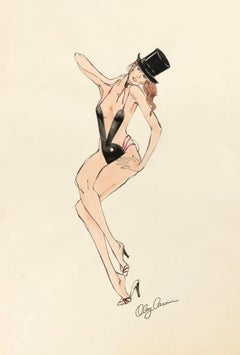
Black Bunny Drawing by Oleg Cassini for Playboy October 1979, Signed.
Illustration of a woman wearing a black bunny shaped bodysuit, heels, and top hat. Signed by Oleg Cassini. Notice the body suit is in the shape of the head of a bunny with clever use of the 'whiskers'.
Approximate Measurements:Length: 11" Width: 14"
Property from the Collection of Steven Rosengard, Chicago, Illinois
This original drawing was commissioned by Playboy and included in the October 1979 issue of Playboy Magazine (pages 225-227) in a feature that included works from designers such as Bill Blass, Oleg Cassini, Edith Head, Fernando Sanchez, and Monika Tilley, among others, who create their versions of the Playboy bunny costume. Candace Collins can be seen modeling some of the designs in the feature.
Oleg Cassini is an icon of twentieth-century fashion. Though born to Russian aristocracy and raised in Italy, he built a fashion empire that was unmistakably American. Cassini is perhaps best known for the hundreds of designs he created for First Lady Jacqueline Kennedy (see images 4-8), but his achievements as a collector, connoisseur, and quintessential twentieth-century man go far beyond Camelot.
In 1913, Oleg Cassini was born in Paris to the Russian diplomat Count Alexander Loiewski and Countess Marguerite Cassini, a Russian aristocrat of Italian ancestry who also had an interesting link to America. The daughter of Count Arthur Cassini, Russian Ambassador to the United States during the McKinley and Roosevelt administrations, Marguerite dazzled turn-of-the-century Washington as her father’s official hostess and left her mark on the capital city. Stationed in Denmark when the Russian Revolution toppled the czar, Ambassador Cassini and family were exiled to Switzerland before settling in Florence, Italy, where young Oleg was raised. A true Renaissance man, he spoke Russian, French, and Danish before adding Italian and English; he studied medieval and modern European military history and costume and learned to draw; he learned horseback riding, fencing, and the art of chivalry; and, most importantly, he came to understand the struggles of the Russian titled class and other European aristocrats in the wake of the Russian Revolution and World War I.
Countess Cassini started a successful fashion business in Florence, and soon the talented young Oleg was sent to Paris to sketch the latest collections for recreation in Italy. In Rome in his early 20s, Cassini created fashions for high society women and designed for a few films, which planted the seed for his move to Hollywood. The drive to reinvent himself brought Cassini to America in the 1930s; in his autobiography he describes arriving nearly penniless in mid-Depression New York City where his title as an exiled Russian Count meant even less than in war-devastated Europe. Down and out, Cassini struggled for employment, having sketching skills but no knowledge of the wholesale trade required for survival in Manhattan’s Seventh Avenue fashion district. However, he excelled at making connections, and Cassini slowly entered New York society. He was soon joined by younger brother Igor (who had studied in America and travelled with the young Emilio Pucci) and his parents, the once-dazzling Countess and his father, the displaced diplomat still loyal to Russia. The family settled in Washington, D.C., and Igor worked his way up the Hearst newspaper chain to become the famous society columnist Cholly Knickerbocker.
In New York, Oleg Cassini married the troubled socialite Merry Fahrney (who would go on to marry eight times), but the marriage ended in scandal for Oleg, and he decided to follow his original intention and head for Hollywood. Despite initial difficulties, Cassini gained access to Hollywood’s elite (partially through his skills on the tennis court), and was soon hired as a designer at Paramount Pictures alongside the redoubtable Edith Head. In her 1941 film debut I Wanted Wings, Veronica Lake wore a memorable Cassini design. That same year, Cassini met and married the newest young Hollywood star on the scene, the beautiful 20th Century Fox–talent Gene Tierney.
With the outbreak of World War II, Cassini enlisted in the Coast Guard but was transferred to the U.S. Army Cavalry which allowed officers of foreign birth. He attended basic training at Fort Riley, Kansas, and the horsemanship he learned as a boy served him greatly. He attended Officer Candidate School and reached the rank of First Lieutenant (he also became an American citizen at this time, losing his title of Count). Cassini spent several years posted at Fort Riley, where Tierney joined him before he landed a convenient military post in Hollywood. As Tierney’s career thrived (she played the title role in Otto Preminger’s Laura in 1944), she was able to assert her influence over 20th Century Fox’s head Daryl Zanuck, who hired Cassini as designer for Tierney on her 1946 film The Razor’s Edge, which proved to be a brilliant showcase for his talents. The pair separated the same year and, again seeking reinvention, Cassini re-established himself in New York City as a fashion designer. By 1950, the Oleg Cassini label was born.
Combining his knowledge of Old World and modern Europe, Hollywood, the tennis courts of Palm Beach and Newport, and of course, New York City, Oleg Cassini invented a new brand of fashion that was distinctly American and of its moment. For his first collection, Cassini took to the stage, narrating the looks and imbuing the scene with his personality, unusual in an industry where the designers typically remained backstage and the models were called by number over a PA. The first collection was a smash — the president of Lord & Taylor devoted all of their storefront windows to his designs — and by 1955 sales had reached $5,000,000. Oleg Cassini’s career had turned a very positive corner.
Cassini spent the early 1950s traversing the country, personally selling his collections to department stores in the interior, something his predecessors had never done, and moving between the Hollywood and New York scenes. Cassini’s brother Igor coined the term “the Jet Set” for this generation that constantly flew from New York to Los Angeles (then a ten-hour flight), Las Vegas, Paris, Rome, and the Riviera. In 1954, Cassini set out to woo Grace Kelly and sent her roses every day. The two were briefly engaged before her marriage to Prince Rainier of Monaco.
In December 1960, Cassini’s career-defining opportunity came when he was chosen by Jacqueline Kennedy to design her fashions for the White House. Cassini had long known Joe Kennedy and his war-hero son John, and had first met Jacqueline Bouvier before her marriage in the early 1950s. Invited by President-Elect Kennedy to meet Jacqueline at Georgetown Hospital (she had just given birth to son John Jr.) to present to her drawings of potential dresses and First Lady looks, Cassini worked furiously to prepare a new line for the First Lady. Mrs. Kennedy had always had her clothes made by the top French couturiers of the day, but for the White House she wanted an American designer. Cassini wrote in his autobiography that he told the First Lady: “‘You have an opportunity here,’ I said, ‘for an American Versailles.’ She understood completely what I was trying to communicate; she began to talk excitedly about the need to create an entirely new atmosphere at the White House. She wanted it to become the social and intellectual capital of the nation” (Oleg Cassini, In My Own Fashion, 1987, p. 327).
Mrs. Kennedy loved Cassini’s design for a gown to wear to the Inaugural Gala (she had already ordered a dress from Bergdorf’s for the Inaugural Ball), and Cassini was selected as the First Lady’s designer and was soon dubbed the “Secretary of Style.” From 1960 to 1963, Oleg Cassini would design over 300 items for Mrs. Kennedy, creating the “Jackie Look” that contributed not only to a fashion revolution but also the dawn of a new age. Cassini wrote that “Jackie played a very active role in the selection of her clothes. She loved brilliant colors — pistachio, hot pink, yellow, and white among others. Her sense of style was very precise; she would make editorial comments on the sketches I sent her. She always knew exactly what she wanted; her taste was excellent” (Oleg Cassini, In My Own Fashion, 1987, p. 334).
After the Camelot years, Cassini’s business flourished and grew into a major industry; his name appeared on everything from couture to tennis-, sport-, and swimwear, car interiors, housewares, and perfume. He collected beautiful and rare artwork, arms and armor, and antique furniture, and lived the lifestyle projected by his image. From this period onward, Cassini also came to live in important homes. Of his Gothic Gramercy Park townhouse on Manhattan’s 19th Street he would write imaginatively, “I walked into the foyer and immediately fell in love. It was a place unlike any other in New York, a sixteenth-century Dutch house transported brick by brick from Europe by the Wells Fargo family in the early twentieth century. There was a vaulted, twenty-foot ceiling in the living room, leaded windows, elegantly carved wood paneling...
Category
Mid-20th Century American Brooklyn - Drawings
Materials
Paper
Walter Henry Williams Sunflowers at Sunset Woodcut, Signed, Numbered, 1959, USA
Located in Brooklyn, NY
Walter Henry Williams Sunflowers at Sunset woodcut, signed, numbered, 1959, USA. Walter Henry Williams, Sunflowers, 1959 woodcut in colors on thi...
Category
1950s American Vintage Brooklyn - Drawings
Materials
Paper
H 14.5 in W 20 in D 1 in
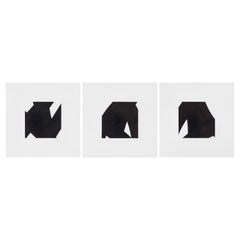
Patrick Carrara Black Ink on Mylar Drawing Triptych, Appearance Series, 2016
By Patrick Carrara
Located in New York, NY
Contemporary New York artist Patrick Carrara's Black Ink on Mylar Drawing Triptych was created in 2016. This is his latest series Appearance, which he started ten years ago and also ...
Category
21st Century and Contemporary American Modern Brooklyn - Drawings
Materials
Mylar
H 13.75 in W 13.75 in D 0.004 in
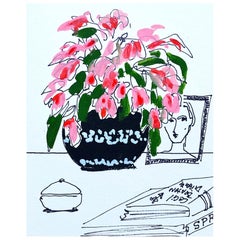
Flower Vase, Pink
By Manuel Santelices
Located in Miami Beach, FL
Flower vase, pink by Manuel Santelices
Dimensions: 8 in. H x 6 in. W
Watercolor and archival paper
2016
Manuel Santelices explores the world of fashion, society and pop cult...
Category
2010s American Modern Brooklyn - Drawings
Materials
Paper
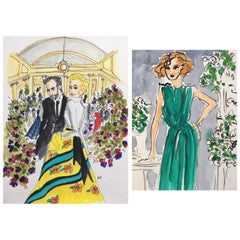
Carolina and Nicolas an the Frick, and Green Dress, Set
By Manuel Santelices
Located in Miami Beach, FL
Carolina and Nicolas an the Frick, and green dress, set 2018 by Manuel Santelices
Carolina and Nicolas an the Frick image size: 12 in. H x 9 in. W
Green dress image size: 10 in. H ...
Category
2010s American Modern Brooklyn - Drawings
Materials
Paper
Prada Men
s Fall, Las Portenas and Olivier Rousteing and His Balmain, Set
By Manuel Santelices
Located in Miami Beach, FL
Prada Men's Fall, Las Portenas and Olivier Rousteing and His Balmain, set by Manuel Santelices
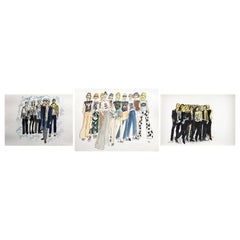
One of a kind watercolor
Prada Men's Fall, and Olivier Rousteing and His Balmain indi...
Category
2010s American Modern Brooklyn - Drawings
Materials
Paper
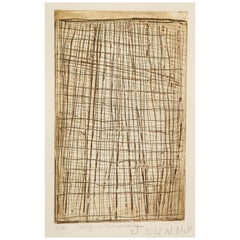
John Mawurndjul
Mardayin at Mukkamukka
, Aboriginal Contemporary Etching
Located in Brooklyn, NY
John Mawurndjul 'Mardayin at Mukkamukka' Signed l.l. beneath platemark, pencil "JOHNNY"
Etching, etching, 'Maningrida brown' ink on white BFK Rives Moulin du Gué wove paper
Edi...
Category
1990s Australian Other Brooklyn - Drawings
Materials
Paper
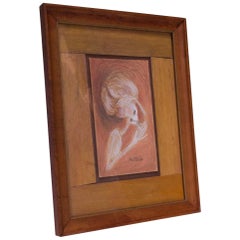
Parker Panttila "Macabre" Mixed-Media on Board
Located in Brooklyn, NY
Parker Panttila (Brooklyn, New York 1924-2002) ink, pencil, chalk and oil on board. Surrealist in style, highlighting a macabre sensibility.
Along wi...
Category
1950s American Vintage Brooklyn - Drawings
Materials
Paint
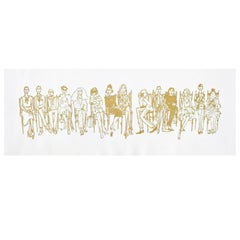
"Golden Fashion Show Front Row" Gold Pen Marker on Archival Paper
By Manuel Santelices
Located in Miami Beach, FL
Golden Fashion Show Front Row by Manuel Santelices
This painting is on archival paper featuring fashion icons.
Dimensions: 12 in. x 34 in.
One of a kind painting done with a Gold pen...
Category
2010s American Modern Brooklyn - Drawings
Materials
Paper
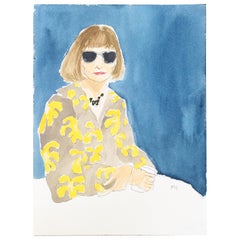
Anna Wintour, One of a Kind Watercolor
By Manuel Santelices
Located in Miami Beach, FL
Anna Wintour
One of a kind watercolor signed by artist
Size: 12 x 9 inches
2018
Unframed
Manuel Santelices explores the world of fashion, society and po...
Category
2010s American Modern Brooklyn - Drawings
Materials
Paper