Brussels Figurative Sculptures
to
25
89
4
48
17
24
4
5
6
3
1
3
1
2
1
7
5
4
3
2
2
2
1
1
36
25
25
20
15
7,889
7,699
81
32
24
15
3
Height
to
Width
to
93
89
89
2
2
1
1
1
Item Ships From: Brussels
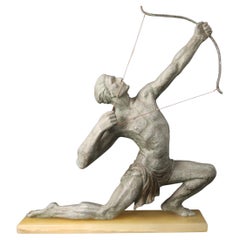
Sculpture Art Deco in Spelter "The Archer" (ca. 1920) by Jean De Rancourt
Located in Ixelles, BE
- The Artwork:
This sculpture by Jean de Roncourt embodies a striking dramatic tension through the figure of an archer in full action. Kneeling, with a taut torso and prominent muscles, the man draws his bow in a gesture of controlled power. The dynamic, almost choreographic posture reveals a perfect knowledge of human anatomy, typical of the Art Deco movement to which de Roncourt belonged. The grey-patinated spelter confers an antique nobility...
Category
1920s French Art Deco Vintage Brussels Figurative Sculptures
Materials
Spelter
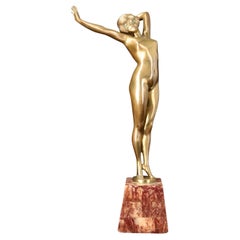
Gilt Bronze Sculpture “the Awakening” By Paul Philippe (1870-1930)
By Paul Philippe
Located in Ixelles, BE
1. Description of the Work:
The sculpture is a nude female figure, cast in bronze with a gilt or burnished (bronze) patina. It is mounted on a trapezoidal base of veined marble (...
Category
Early 20th Century French Art Deco Brussels Figurative Sculptures
Materials
Bronze
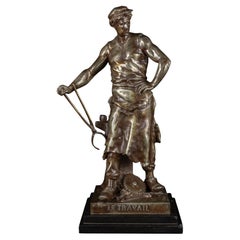
Emile Louis Picault (1833-1915) « LE TRAVAIL » bronze statue
By Émile Louis Picault
Located in Ixelles, BE
Emile Louis Picault (1833-1915) « LE TRAVAIL » bronze statue
The bronze statue 'Le Travail' by Émile Louis Picault is much more than a mere work of art. It embodies the very essence...
Category
19th Century French Industrial Antique Brussels Figurative Sculptures
Materials
Bronze
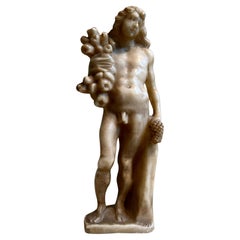
Bacchus - Southern Italy, late 17th century
Located in Bruxelles, BE
Bacchus
Southern Italy, late 17th century
Alabaster Sculpture
H: 20 cm
A finely carved 17th-century alabaster sculpture of a naked Bacchus. This Italian alabaster figure depicts ...
Category
17th Century Italian Baroque Antique Brussels Figurative Sculptures
Materials
Alabaster

$2,018 Sale Price
35% Off
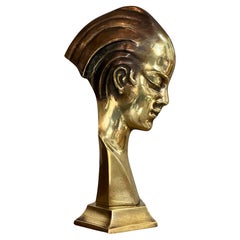
Art Deco Guido Cacciapuoti Cast Bronze Figurine Sculpture of a Lady
By Guido Cacciapuoti
Located in Torquay, GB
Art Deco cast bronze sculpture of a lady.
Attributed to Guido Cacciapuoti (Italian 1892-1953).
Featuring a stylised striking representation of an elegant yet mysterious lady.
Dual to...
Category
Early 20th Century Art Deco Brussels Figurative Sculptures
Materials
Bronze
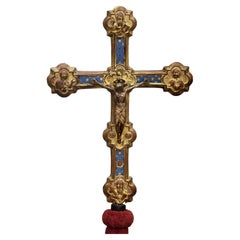
Paolo di Giovanni Sogliani - Processional Cross Florence, around 1515
Located in Bruxelles, BE
Paolo di Giovanni Sogliani (Florence 1455-1522)
Processional Cross
Florence, around 1515
Enameled, chiseled, engraved, stippled, and gilded copper; wooden core ; Inscription: "OPA...
Category
16th Century Italian Renaissance Antique Brussels Figurative Sculptures
Materials
Copper, Enamel
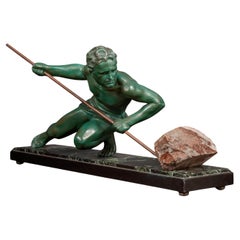
Attributed to GUSTAVE LOUIS BUCHET (1888-1963) Bronze statue "L
EFFORT"
By Gustave Buchet
Located in Ixelles, BE
Attributed to GUSTAVE LOUIS BUCHET (1888-1963) Bronze statue "L'EFFORT" or "L'ATHLETE".
Description of the work The statue "L'EFFORT" or "THE MAN LIFTING A STONE" Attributed to Gust...
Category
20th Century Swiss Art Deco Brussels Figurative Sculptures
Materials
Bronze
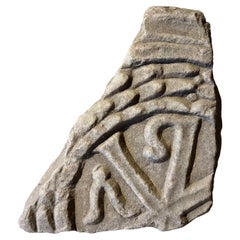
Marble Roman relief representing a Christogram
Located in Bruxelles, BE
Marble Roman relief representing a Christogram
Roman relief - 4th century
25 x 22 x 8 cm
Provenance :
Collection of the Château de B. À Nevers by Georges C.S., scholar born in 1833 and deceased in 1909
The entire castle and its collections were acquired in 1938 by the current owners of the estate
A christogram is a monogram or combination of letters that forms an abreviation for the name of Jesus Christ.
This rare fragment combines chi (X) and rho (P), the first two letters of Christ's name in Greek and it is one of the oldest and most popular early christian symbol. The monogram of Christ, or chrismon, is also a powerful symbol of imperial victory: it appeared to Emperor Constantine the Great before his battle against Maxentius in ad 312, promising victory in the name of Christ. In Plato's Timaeus, it is explained that the two bands which form the "world soul" (anima mundi...
Category
15th Century and Earlier Italian Classical Roman Antique Brussels Figurative Sculptures
Materials
Marble
$3,506 Sale Price
30% Off
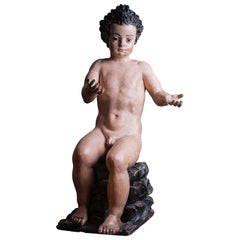
Cercle of Juan Martinez Montañés
1568-1649
, Infant St John the Baptist
Located in Bruxelles, BE
Cercle of Juan Martinez Montañés (1568-1649)
Infant St John the Baptist
Spanish, 17th century
H 74 cm
Saint John the Baptist is here represented naked, sitting on a rock, with...
Category
17th Century Spanish Renaissance Antique Brussels Figurative Sculptures
Materials
Wood
$8,120 Sale Price
20% Off
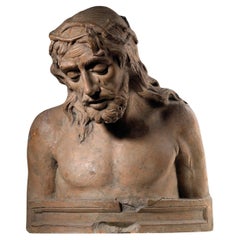
Ecce Homo - Florence, 15th century
Located in Bruxelles, BE
A terracotta bust "Ecce Homo"
Florence, 15th century
53 x 44 x 31 cm
Category
15th Century and Earlier Italian Renaissance Antique Brussels Figurative Sculptures
Materials
Terracotta
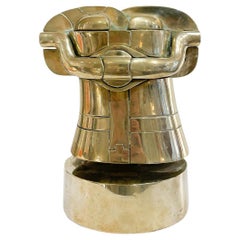
Miguel Berrocal ( 1933-2006) " Richelieu" , Signed and Numbered
By Miguel Berrocal
Located in Brussels, BE
Miguel Berrocal ( 1933-2006) " Richelieu" , Signed and Numbered
Category
20th Century Brussels Figurative Sculptures
Materials
Brass
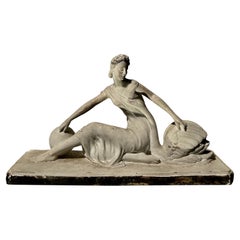
Large Art Deco French Woman with a Swan, France 1930:40s, Plaster with Patina
By Auguste Rodin
Located in Forest, BE
Large chimney Art Deco plaster. The base is black lacquered with extensive patina. The woman is laying with a swan and a bowl. The were originally white painted but now it is more li...
Category
Early 20th Century French Art Deco Brussels Figurative Sculptures
Materials
Plaster
$597 Sale Price
50% Off
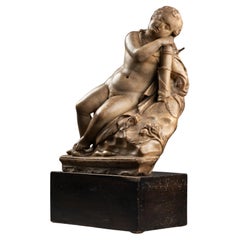
Sleeping Eros - Rome, 16th century
Located in Bruxelles, BE
Sleeping Eros
Rome, 16th century
Carrara marble, on a wooden base
of an ancient collection
31 × 44 x 17 cm
Carved from a fine block of Carrara marble, this sculpture depicts Eros ...
Category
16th Century Italian Renaissance Antique Brussels Figurative Sculptures
Materials
Carrara Marble
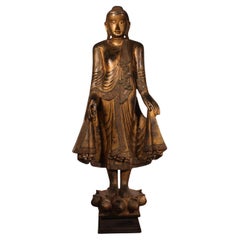
Large Burmese Buddha Statue From The Mandalay Period Of 1.95m High
Located in Brussels, Brussels
Superb important Buddha from the Mandalay period from Birmanie from the 19th century in gilded wood on a wooden base.
Large, rare Buddha with a superb patina and richly decorated wi...
Category
19th Century Burmese Aesthetic Movement Antique Brussels Figurative Sculptures
Materials
Wood
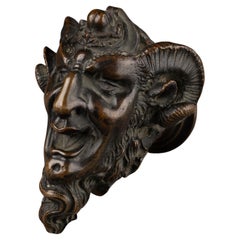
Handle in the Shape of a Devil’s Head - France, 19th century
Located in Bruxelles, BE
Handle in the Shape of a Devil’s Head
Patinated bronze
France, 19th century
10 x 7,5 x 9 cm
This unusual bronze handle takes the expressive form of a devil’s head, with exaggerate...
Category
Early 19th Century French Other Antique Brussels Figurative Sculptures
Materials
Bronze
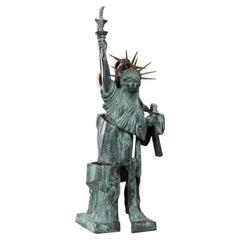
Sculpture representing the “deconstructed” Statue of Liberty by Arman
By Arman
Located in Uccle, BE
Sculpture representing the “deconstructed” Statue of Liberty by Arman (Armand Fernandez).
Bronze with blue-grey patina and polished bronze.
The Statue of Liberty is a recurring motif...
Category
Mid-20th Century French Mid-Century Modern Brussels Figurative Sculptures
Materials
Bronze
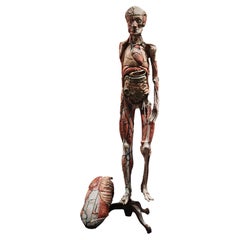
Louis Thomas Jérôme Auzoux (1797-1880) - Skinned, Human anatomical Model
By Dr. Louis Auzoux
Located in Bruxelles, BE
Louis Thomas Jérôme Auzoux (1797-1880)
Skinned
Human anatomical Model
Paris, around 1850
135 cm
In the 1820s Louis Auzoux, a French medical graduate ...
Category
Mid-19th Century French Other Antique Brussels Figurative Sculptures
Materials
Paper
$19,107 Sale Price
20% Off
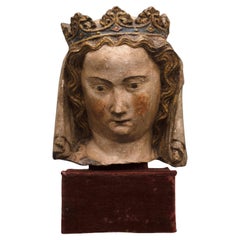
Head of a crowned Virgin - Lorraine, first half of 14th century
Located in Bruxelles, BE
Head of a crowned Virgin
Lorraine, first half of 14th century.
H26 x 14 x 14 cm
Provenance :
- Private Collection, Paris France (1960)
Private Collection Tuscany, Italy (1980)
Ex...
Category
15th Century and Earlier French Gothic Antique Brussels Figurative Sculptures
Materials
Limestone
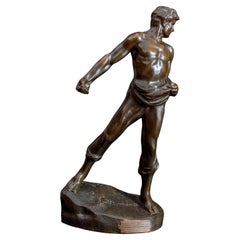
Jef Lambeaux (1852-1908) “THE SOWER”
By Jef Lambeaux
Located in Ixelles, BE
Jef Lambeaux (1852-1908) “THE SOWER”
Artistic Description:
"The Sower" depicts a vigorous young man, bare-chested, in the act of sowing seeds. The sculpture captures with precision...
Category
Late 19th Century Belgian Art Nouveau Antique Brussels Figurative Sculptures
Materials
Bronze
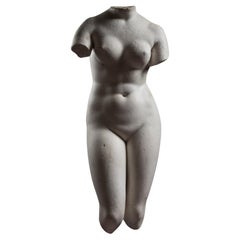
Venus Pudica (Medici-type) - 18th century, Italy
Located in Bruxelles, BE
Monumental sculpture representing the Venus Pudica (Medici-type)
18th Century
Italian (Rome)
White marble
Based on a model from Antiquity, the Medici Venus, currently in the Uffizi ...
Category
Early 18th Century Italian Grand Tour Antique Brussels Figurative Sculptures
Materials
Marble
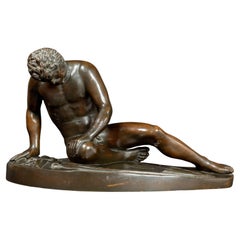
"The Dying Gaul": Bronze sculpture
Gala Morente
cast by CHIURAZZI NAPOLI
Located in Ixelles, BE
The Dying Gaul.
- Description of the Work:
A Celtic warrior lies nude, half-reclining on his shield, his body contorted by pain. His right hand touches the ground while his face, m...
Category
19th Century Hellenistic Antique Brussels Figurative Sculptures
Materials
Bronze
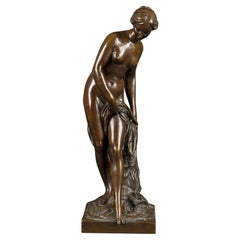
« La Baigneuse » ou « La Nymphe prenant son bain » (1757)
By Étienne Maurice Falconet
Located in Ixelles, BE
Étienne-Maurice Falconet (1716-1791), "The Bather" or "The Nymph Bathing" (1757)
Artistic Explanation:
The Nymph Bathing is a masterpiece of 18th-century French sculpture, created...
Category
1750s French Baroque Antique Brussels Figurative Sculptures
Materials
Bronze
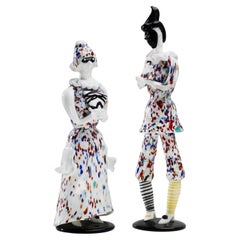
Pair of figurines Arlecchino and Arlecchina by Fulvio Bianconi, Venini Murano
By Fulvio Bianconi, Venini
Located in Uccle, BE
Pair of figurines Arlecchino and Arlecchina by Fulvio Bianconi, Venini Murano Italy (Founded in 1921).
The pair of figurines Arlecchino and Arlecchin...
Category
Mid-20th Century Italian Mid-Century Modern Brussels Figurative Sculptures
Materials
Art Glass
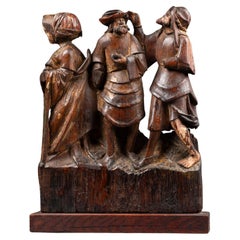
Group of Altarpiece - Antwerpen, 16th century
Located in Bruxelles, BE
Group of altarpiece representing the life of a Saint, Saint Renualde?
Engraved by the sign of Antwerp hand on the hat of the central character
Carved oak, traces of polychromy
Fir...
Category
16th Century Belgian Renaissance Antique Brussels Figurative Sculptures
Materials
Oak
$11,464 Sale Price
40% Off
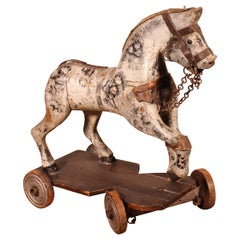
19th Century Polychrome Wooden Horse
Located in Brussels, Brussels
Elegant little carved wooden horse from the 19th century in polychrome wood
Very beautiful polychromy which has a lot of charm
Old child's toy with the front wheels which moves
...
Category
19th Century British Aesthetic Movement Antique Brussels Figurative Sculptures
Materials
Fruitwood
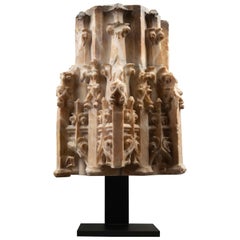
Gothic Canopy, France, 15th Century
Located in Bruxelles, BE
Gothic canopy
France, 15th century
Alabaster, some traces of polychromy
33 x 23 x 20 cm
Provenance:
- Private collection Genève, Switzerland
...
Category
15th Century and Earlier French Gothic Antique Brussels Figurative Sculptures
Materials
Alabaster
$23,884 Sale Price
20% Off
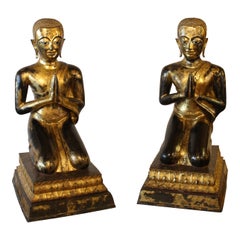
Pair of Monk in Bronze-18 ° Century-Ayuttheya
Located in Brussels, Brussels
Rare pair of monks from the 18th century-Ayutthaya-Thailand
Superb pair of large lacquered and gilt bronze monks
very beautiful face and expression ...
Category
18th Century Thai Other Antique Brussels Figurative Sculptures
Materials
Bronze
$20,898 / set
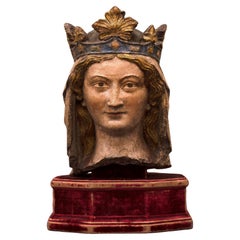
Gothic crowned Head - Île de France, 14th century
Located in Bruxelles, BE
Head of a crowned Virgin
Île-de-France, first half of 14th century.
H26 x 14 x 14 cm
Provenance :
- Private Collection, Paris France (1960)
- Private Collection Tuscany, Italy (19...
Category
15th Century and Earlier French Gothic Antique Brussels Figurative Sculptures
Materials
Stone
Renaissance Harpy - Italy, 16th century
Located in Bruxelles, BE
Renaissance Harpy
bronze
Italy, 16th century
15 x 12 x 5,5 cm
This expressive bronze figure represents a harpy, a mythological creature with the body of a bird and the head and tor...
Category
16th Century Italian Renaissance Antique Brussels Figurative Sculptures
Materials
Bronze
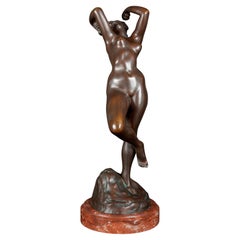
JEF LAMBEAUX (1852 – 1908) Bronze Statue "THE DANCER WITH CASTANETS"
By Jef Lambeaux
Located in Ixelles, BE
JEF LAMBEAUX (1852 – 1908) Bronze Statue "THE DANCER WITH CASTANETS" .
Imagine a sculpture that transcends mere representation to capture the very essence of movement and passion. "...
Category
19th Century Belgian Art Nouveau Antique Brussels Figurative Sculptures
Materials
Bronze
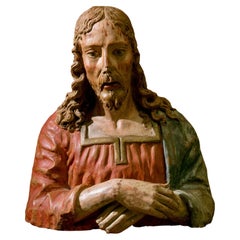
Terracotta Bust of Christ as the Redeemer, 15th Century
Located in Bruxelles, BE
A terracotta bust of Christ as The Redeemer
Tuscany or Emilia Romagna, late 15th century
Measures: 46 x 43 x 21 cm
This powerful, moving bust of...
Category
15th Century and Earlier Italian Renaissance Antique Brussels Figurative Sculptures
Materials
Terracotta
$17,196 Sale Price
20% Off
Study of a Satyr - Italy, early 19th century
Located in Bruxelles, BE
Study of a Satyr
Bronze, cast using the lost-wax (cire perdue) method
Italy, early 19th century
14 x 7 x 10 cm
This evocative bronze sculpture represents a satyr, the half-human, h...
Category
Early 19th Century Italian Modern Antique Brussels Figurative Sculptures
Materials
Bronze

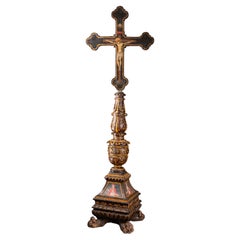
renaissance wooden candelabrum and painted cross - Umbria, 16th century
Located in Bruxelles, BE
Base of a carved wooden candelabrum, polychrome and gilded; cross painted on both sides.
Umbria or Tuscany, 16th century
136 x 43,5 x 30 cm
(The cross and the base of the candelabrum were later assembled)
The base of the candelabrum is intricately carved and adorned with polychrome and gilded finishes. The shafts take on the shape of balusters reminiscent of ancient columns, feature ornate foliage decorations, garlands and winged cherub faces. The feet are crafted in the likeness of lion paws. The base is further embellished with depictions of four saint martyrs, among them Saint Barbara and Saint Catherine of Alexandria. The plasticity of the figures, outlined with strong contour lines, the clear and vibrant colors, are stylistic elements linked to the Umbrian tradition of the sixteenth century.The precisely defined and elegant drawing, along with the clear color palette applied with refined chiaroscuro modulations, became the signature of a style that would leave a lasting mark on the era to come. This is exemplified by a preference for vibrant, multicolored images, accentuated in this case by the use of red and pink in the saint's attire.
A notable addition, introduced later, is a polylobed cross painted on both sides. On one side, the Crucifixion is vividly portrayed:The treatment of the corpus itself is in line with High Medieval practice, emphasizing pathos by showing Jesus dead, his arms sagging from the weight of the body. The upper section displaying a pelican pecks at her breast to feed her young with her own blood; a symbol of the sacrifice of Christ on the cross whose body and blood similarly nourishes the celebrant during Mass.
The lower part depicts Golgotha. On the reverse side, the Resurrection is artistically presented in a Renaissance iconography, reminiscent of the renowned composition painted by Piero della Francesca, now housed in the Civic Museum of Sansepolcro. In terms of composition, with the frontal depiction of Christ holding the banner, this motif became particularly widespread in central Italy, spanning from Tuscany to Umbria throughout the 16th century..
The double-sided construction suggests that it may also have been carried in liturgical processions. In Umbria from the 14th century, the use of portable crosses painted on both sides had become a widespread practice, aimed at satisfying the monastic clientele that had significantly increased following the establishment of new religious communities.
The earliest surviving Tuscan painted crucifix represent Christ as Christus Triumphans, or the “Triumphant Christ” with his head up and eyes open. This form was supplanted in the 13th century with the Christus Patiens, or “Suffering Christ” type who is shown often with his head fallen on his shoulder and his eyes closed, as In our cross. The iconography of the suffering Christ appears to have developed out of a new interest in Christ’s human nature, the development of the feast of Corpus Christi and with increased importance given to the Eucharist. The process of humanizing the figure of Christ reaches its peak with the abandonment of all the previous expressive conventions in favor of more realistic details we can observe in this Crucifix, such as the swollen belly, the arms stretched to the limit of muscle tearing, the body falling heavily forward, the abundant blood on
the wounds, and the cross firmly embedded in the rock of Calvary.
It's worth noting that Renaissance candelabra...
Category
16th Century Italian Renaissance Antique Brussels Figurative Sculptures
Materials
Wood, Giltwood
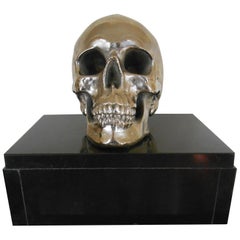
Massive Nickeled Resin Skull Signed Y.D., Belgium, 1989
Located in Brussels, BE
Heavy resin skull, nickel -plated.
Signed and dated Y.D.89 at the base.
Category
1980s Belgian Mid-Century Modern Vintage Brussels Figurative Sculptures
Materials
Resin
$1,385 Sale Price
20% Off
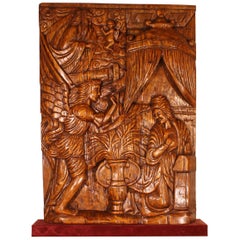
Altarpiece Representing The Annunciation, North of Portugal, circa 1600
Located in Brussels, Brussels
Exceptional altarpiece representing the annunciation circa 1600, fruitwood
rare altarpiece from the North of Portugal, unique due to its large size representing the scene of the annunciation, where the Archangel Gabriel (represented on the bottom left), sent by god (represented on the top left) announces to Marie (bottom right) that she will give birth to Jesus.
Very good state of conservation, carved on three panels
Dimension: Height 1m51
Width 1m03
Very nice colour and exceptional dimensions
Restorations of use
We placed the altarpiece on a red velvet base and a Spanish occasional...
Category
17th Century Portuguese Renaissance Antique Brussels Figurative Sculptures
Materials
Fruitwood
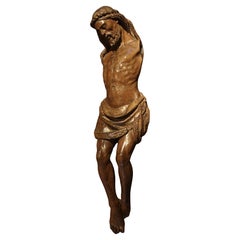
Christ - Umbria, second half of the 15th century
Located in Bruxelles, BE
Christ
Umbria, Orvieto?
Second half of the 15th century
77 x 16.5 cm
Category
15th Century and Earlier Italian Renaissance Antique Brussels Figurative Sculptures
Materials
Walnut
$7,613 Sale Price
25% Off
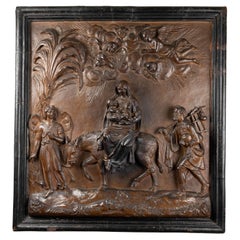
Large Terracotta Relief - Lombardy, First Half of 17th Century
Located in Bruxelles, BE
Large Terracotta relief of the flight into Egypt
Lombardy, first half of 17th century
Painted terracotta
91 x 85 x 11,5 cm
This event in the early life of Christ is recounted i...
Category
17th Century Italian Baroque Antique Brussels Figurative Sculptures
Materials
Terracotta
$62,099 Sale Price
20% Off
Cercle of Jacopo della Pila - Marble relief depicting a winged Cherub
Located in Bruxelles, BE
Cercle of Jacopo della Pila (Lombard, in Naples 1471-1502)
Marble relief depicting a winged Cherub
Naples, second half of15th century
40 x 57 x 12 cm
Exquisitely carved, this relief portrays a winged cherub with cascading hair and delicate features. The cherub's plump, smooth countenance, rounded cheeks, outlined lips, and finely drawn nose emanate a sense of tenderness. The quadrangular module, is adorned with a carved frame. The relief ascends gradually, transitioning from the low relief of the wings to the high relief of the head.
The rectangular frame and the subtly curved form of the artwork suggest that the relief likely adorned the upper part of an arch or a vaulted chapel. The type is that of the perspective room with a coffered ceiling decorated with figures of winged cherubs, which is found in various Neapolitan chapels of the 15th century. Coffered ceilings attest to the recovery of antiquity and the search for luxury in Renaissance architecture, first in Florence, then in Rome and Naples. The majority of the numerous family chapels and tombs built during the late fifteenth century in south of Italy employ the new formal vocabulary of the Florentine Renaissance in a self-confident manner that permitted a broad spectrum of variations.
The escalating admiration for the classical world, coupled with the development of perspective, significantly contributed to the Renaissance endorsement of coffered ceilings. This artistic and constructive device drew inspiration from the intricate marble patterns observed in historical landmarks such as the Arch of Titus, the Temple of Vesta in Tivoli, the Pantheon, and the Basilica of Maxentius. A distilled product of both mathematical and artistic cultures, deeply scrutinizing the ancient world, the coffered ceiling plays a vital role in the perspective construction of space with its regular and directional geometry. The motif of the coffered ceiling decorated with cherubs in relief was introduced in Naples by Francesco Laurana in the plastic decoration of the Arch of Castelnuovo. Laurana's impact on the art scene in the south of Italy was profound. The introduction of the winged cherub into the region's artistic vocabulary bridged the gap between the classical and the contemporary, creating a synthesis that resonated with both aesthetic and spiritual sensibilities. His influence extended beyond the immediate visual appeal, shaping the cultural identity of the Renaissance in southern Italy. Although the plastic decoration of the Arch of Castelnuovo cannot certainly be ascribed to a mature Renaissance style, it was precisely on this occasion that the sculptors who worked there could get to know and export throughout the Italian peninsula that type of "Florentine classicism" which, even in the 15th century Naples, was conditioned by the Burgundian culture imported into the Kingdom by Alfonso of Aragon himself, with artists called from Spain and Northern Europe. The coffered ceiling, with its geometric patterns and Laurana's winged cherubs nestled within, became a symbol of refinement and cultural sophistication. The relief sculptures, carefully integrated into the overall design, transformed the ceiling into a celestial realm, inviting viewers to contemplate the divine while immersed in the grandeur of the Renaissance space.
Similar winged cherubs appears also in the Naples cathedral. Within the renowned Succorpo Chapel, a mesmerizing marble coffered ceiling adorned with cherubs epitomizes the splendor of the Neapolitan Renaissance. The interplay of light and shadow on the textured surface of the marble coffered ceiling introduces an ethereal dimension, providing an immersive visual experience for observers. The geometric precision and the repeated patterns, reminiscent of classical motifs, establish a sense of harmony and balance that has become the hallmark of the Neapolitan interpretation of Florentine Renaissance aesthetics.
Although probably intended to be admired from a distance, this cherub is intricately detailed and exquisitely rendered: the face and hair are elegantly outlined and the feathers are textured through juxtaposed lines. The marble, both figurative and decorative, adheres to the principles of balance and restrained ornamentation typical of the « Florentine Classicism ». Harmonious shapes and gracefully orchestrated curves , rooted in the classical repertoire, converge to evoke a sense of ethereal beauty. The surface displays the masterful use of a chisel to intricately carve the feathers and facial features, creating an almost abstract quality.
This work is a testament to a sculptor of great skill and rich figurative knowledge, seamlessly blending classical firmness in contours with a refined treatment of the marble's surface. The combination of tradition and innovation point to a stylistic idiom from Lombardy, in particular we can find some comparaisons with the works of Jacopo della Pila, sculptor of Lombard origin working in Naples in the second half of the 15th century. He is documented there between 1471 and 1502, and is a protagonist of the Aragon Renaissance in the second half of the Quattrocento, together with the other great Northern sculptor active in the kingdom, Domenico Gagini.
the first commission he received dates back to August 9, 1471, when Jacopo publicly committed to sculpting the funerary monument of Archbishop Nicola Piscicelli to be placed in the Cathedral of Salerno. The last known work is an altar ordered on July 29, 1502, by the noble Jacopo Rocco for the church of San Lorenzo Maggiore in Naples. Between these two chronological extremes (1471-1502), we must place the fervent activity of the artist, who had trained in Rome, perhaps under the guidance of Paolo Romano but also engaged in dialogue with other major artists of the city, especially Isaia da Pisa. He enriched his experience in Naples, initially drawing inspiration from the works of Domenico Gagini and later from the Tuscan masterpieces of Antonio Rossellino and Benedetto da Maiano destined for the church of Santa Maria di Monteoliveto. Jacopo della Pila's artistic personality is thus based on a complex interplay of influences, contributing to the definition of a highly personal style.
Close comparaison can be made between our cherub and the winged angels reliefs...
Category
15th Century and Earlier Italian Renaissance Antique Brussels Figurative Sculptures
Materials
Marble
$22,928 Sale Price
20% Off
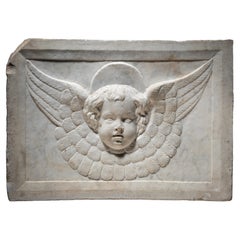
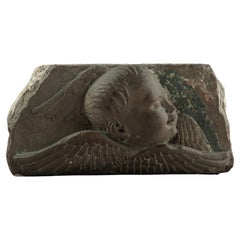
Renaissance Winged Cherub Relief
- Florence, 15th century
Located in Bruxelles, BE
Renaissance Winged Cherub Relief
Florence, Second Half of the 15th Century
Stone with traces of polychromy
Provenance: Important private collection, Northern Italy
This exceptional...
Category
15th Century and Earlier Italian Renaissance Antique Brussels Figurative Sculptures
Materials
Stone
Saint John The Evangelist And The Virgin From A Crucifixion Group, Spain, Circa
Located in Brussels, Brussels
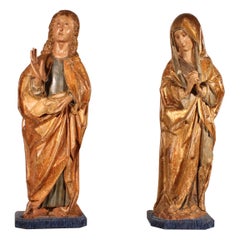
Saint John the Evangelist and the Virgin from a Crucifixion Group, Spain, circa 1500, in walnut.
Superb pair of gilded and polychrome wood sculptures from the late 15th century, circ...
Category
15th Century and Earlier Spanish Gothic Antique Brussels Figurative Sculptures
Materials
Walnut
Bronze Sculpture " Cowboy on his horse" by Paul Sersté, Belgium
By Paul Serste
Located in Brussels, BE
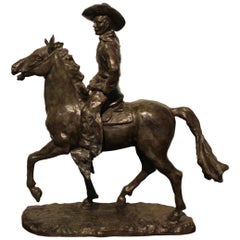
Bronze Sculpture " Cowboy on his horse" by Paul Sersté, Belgium
Category
20th Century Belgian Brussels Figurative Sculptures
Materials
Bronze
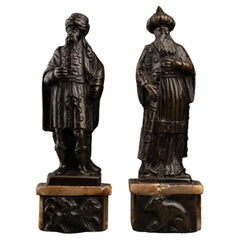
Two rare Figures in Turkish Attire - Venice, early 17th century
Located in Bruxelles, BE
Rare Bronzes Depicting two Figures in Turkish Attire
Possibly Suleiman the Magnificent at two different ages
bronzes, alabaster bases
Venice, early 17th century
19,5 x 6 x 5 cm
These two rare bronze statuettes represent two figures dressed in elaborate "Turkish" attire. They are mounted on alabaster bases with bronze reliefs—one featuring the winged lion of Venice, and the other possibly symbolizing Turkey with a wolf depiction.
One figure wears a grand külah, a spherical turban with a cone top, signifying royal authority, while the other has a wrapped turban, denoting rank and religious identity. Their garments are richly detailed with intricate engravings, suggesting luxurious fabrics of the Ottoman court.
The statuettes may represent Suleiman the Magnificent at two different stages of life, as both young and old. The sultan depicted alongside the winged lion corresponds to a description from a Venetian delegate in 1534, when Suleiman was 43. At that time, he had conquered Iraq from the Safavids and achieved a decisive victory over the Papal fleet at the Battle of Preveza. He was described as having large eyes, an aquiline nose, and long red mustaches—traits visible in Cristofano dell'Altissimo’s portrait of Suleiman in the Uffizi Gallery in Florence.
Unlike Mehmed II, who commissioned portraits by European artists for diplomatic purposes, Suleiman did not directly order such representations. Instead, his likeness spread through works by artists like Albrecht Dürer, based on sketches made by diplomats. Following his capture of Belgrade in 1521, his victory over Hungary in 1526, and his siege of Vienna...
Category
17th Century Italian Renaissance Antique Brussels Figurative Sculptures
Materials
Alabaster, Bronze
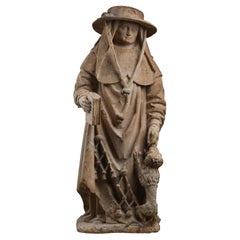
Followers of Jean de la Huerta, Jean de Blany ? - Saint Jerome
Located in Bruxelles, BE
Followers of Jean de la Huerta, Jean de Blany ?
Saint Jerome
Limestone
Burgundy, second half of the15th century
60,5 cm
ALR Ref : S00248050
This exquisite sculpture of Saint Jerome, carved from soft, nearly white limestone typical of eastern France, exemplifies the exceptional craftsmanship of 15th-century Burgundian art. The figure of Saint Jerome, a key figure in Christian history renowned for translating the Bible into Latin, is depicted wearing a cardinal’s hat and holding the Vulgate Bible...
Category
15th Century and Earlier French Renaissance Antique Brussels Figurative Sculptures
Materials
Limestone
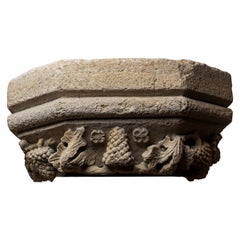
Large Hexagonale Base of Pilaster in Burgundy Stone, Burgundy, 15th Century
Located in Bruxelles, BE
Large base of molded hexagonal pilaster in burgundy stone carved with vines, grapes and rosettes in high relief.
Burgundy, 15th century
28 x 63 x 30 cm
Provenance : collection De...
Category
15th Century and Earlier French Gothic Antique Brussels Figurative Sculptures
Materials
Stone
$6,209 Sale Price
20% Off
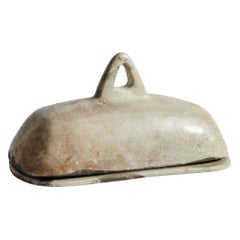
Butter Plate by Marta Bonilla
Located in Geneve, CH
Butter plate by Marta Bonilla
Dimensions: D9 x H9 cm
Materials: Metal
Butter plate: Piece modelled by hand, enamelled with matte white enamel and de...
Category
2010s Belgian Post-Modern Brussels Figurative Sculptures
Materials
Metal
$315 / item
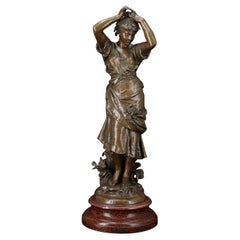
Metal sculpture "The Mirror" by Auguste Moreau (1834-1917)
By Auguste Moreau
Located in Ixelles, BE
THE WORK:
This metal sculpture, titled Miroir (Mirror), signed Auguste Moreau, depicts a young woman in a rustic dress, with her arms raised, arranging her hair. Her graceful postur...
Category
19th Century French Romantic Antique Brussels Figurative Sculptures
Materials
Metal
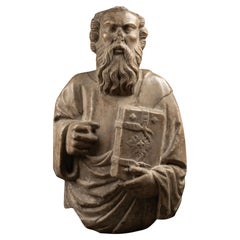
Circle of Pierpaolo and Jacobello Dalle Masegne (Venice, late 14th century)
Located in Bruxelles, BE
Circle of Pierpaolo and Jacobello Dalle Masegne (Venice, late 14th century)
San Bartolomeo
high relief 'en applique'
white marble
52 x 30 x 14 cm
Provenance :
Collection South of...
Category
15th Century and Earlier Italian Gothic Antique Brussels Figurative Sculptures
Materials
Marble
Bronze Sculpture "Science Guiding Industry" By Emile Picault (1833-1915)
By Émile Louis Picault
Located in Ixelles, BE
The sculpture is a bronze work by the French artist Émile Picault (1833-1915). It is typical of his allegorical figures and combines meticulous figurative work with a moralizing or...
Category
19th Century French Industrial Antique Brussels Figurative Sculptures
Materials
Bronze

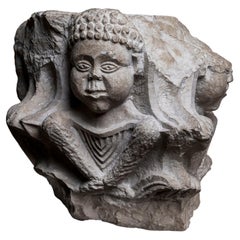
Rare Romanesque Capital Depicting Four Africans, Apulia, 13th Century
Located in Bruxelles, BE
Large stone capital carved on each side in strong relief. The basket is covered with two crowns of vertical acanthus leaves which sprout from the astragal and fill the space between ...
Category
15th Century and Earlier Italian Medieval Antique Brussels Figurative Sculptures
Materials
Stone
$21,973 Sale Price
20% Off
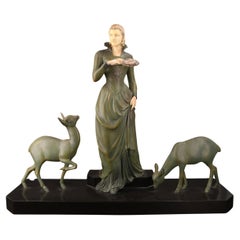
Art Deco metal sculpture "The Lady With Deer" by Menneville (Ugo Cipriani)
Located in Ixelles, BE
- Description of the Artwork:
The work "The Lady with Deer" (Madame aux biches), by Menneville (pseudonym for Ugo CIPRIANI: 1887-1960), is an emblematic Art Deco sculpture, created ...
Category
20th Century Italian Art Deco Brussels Figurative Sculptures
Materials
Metal
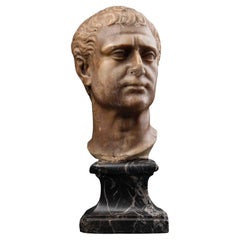
Renaissance Marble Portrait - Northern Italy, 17th century
Located in Bruxelles, BE
Renaissance Marble Portrait
Northern Italy, 17th century, inspired by antiquity
Marble
36 x 13 cm (including the marble pedestal)
This Renaissance portrait head of a young man, sl...
Category
17th Century Italian Renaissance Antique Brussels Figurative Sculptures
Materials
Marble
$9,553 Sale Price
20% Off
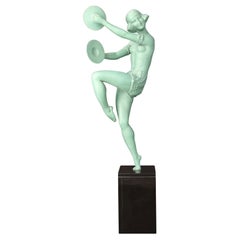
Art Deco Metal Sculpture "the Dancer With Cymbals" By Enrique Molins-balleste
By Enrique Molins-Balleste
Located in Ixelles, BE
This is a sculpture made of spelter (or art metal), depicting a young dancer performing a dynamic dance figure, balanced on the toe of one foot. The artist has captured the subject's...
Category
Early 20th Century French Art Deco Brussels Figurative Sculptures
Materials
Metal
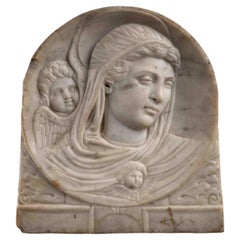
Renaissance Marble Relief - Emilia Romagna, 1470-80
Located in Bruxelles, BE
Renaissance Marble Relief
Emilia Romagna, Faenza ? 1470-80
H 30,2 x L 33 x P 3,5 cm
The carved marble relief depicts the Virgin accompanied by a winge...
Category
15th Century and Earlier Italian Renaissance Antique Brussels Figurative Sculptures
Materials
Marble
$33,438 Sale Price
20% Off
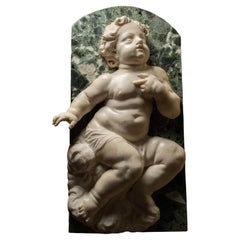
Carlo Marcellini
Florence 1644 – 1713
, Florentine Baroque Putto
Located in Bruxelles, BE
Carlo Marcellini (Florence 1644 – 1713)
Putto
White and green marble
41.5 x 73.5 cm
This marble putto carved in high relief, almost a tutto tondo, and set on an elegant green marble background, appears almost naked, sitting on a cloud. His peculiar pose, in adoration, suggests that the work was a part of a larger composition including other figures in devotion.
Published in 2007 by Sandro Bellesi in the monograph dedicated to Gioacchino Fortini (pg.155), this beautiful marble putto was included in the catalog of Carlo Marcellini, a prominent figure in the baroque renewal of Florentine art.
Born in Florence in 1644, Carlo Marcellini received his artistic education in the city of the lily, specializing in stone sculpture and stucco modeling under the guidance of Bartolomeo Cennini before continuing his studies in Rome in the Accademia Medicea founded by the Grand Duke Cosimo III in order to familiarize some more promising artists with the essential “ taste of Rome ”.
Under the guidance of Ercole Ferrata and Ciro Ferri, Giovan Battista Foggini...
Category
17th Century Italian Baroque Antique Brussels Figurative Sculptures
Materials
Marble
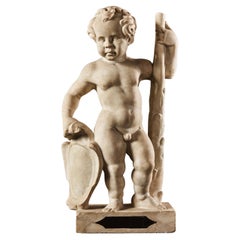
Hercules Holding a Coat of Arms, Flemish, XVII Century
Located in Bruxelles, BE
Hercules holding a coat of arms
Flemish, XVII century
White and black marble
Measures: 67 x 32 x 19 cm
Hercules is depicted naked, holding a coat of arms with the right hand an...
Category
17th Century Belgian Renaissance Antique Brussels Figurative Sculptures
Materials
Marble, Belgian Black Marble
$13,375 Sale Price
20% Off
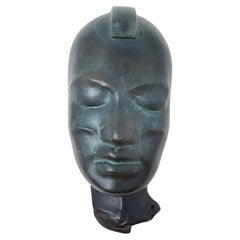
Mid-Century Modern Bronze Sculpture
Located in Brussels, BE
Mid-Century Modern Bronze Sculpture
Category
20th Century Brussels Figurative Sculptures
Materials
Bronze
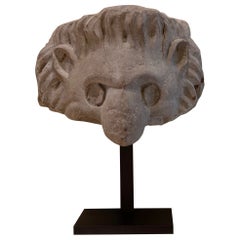
16h century Griffin Head - Italy
Located in Bruxelles, BE
Griffin head
Italy, 16th century
On a modern metal stand
Measures: 20 x 29 x 21 cm (without the stand)
The griffin is a legendary creature with the body of a lion, the head an...
Category
16th Century Italian Renaissance Antique Brussels Figurative Sculptures
Materials
Marble
$4,179 Sale Price
30% Off
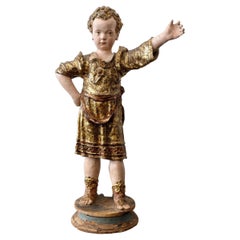
Cercle of Romano Alberti, Page, Around 1530-1540
Located in Bruxelles, BE
Cercle of Romano Alberti, dit Il Nero da Sansepolcro ( San Sepolcro, 1521-1568 )
Page
Mixed media : wood core, papier mâché, stucco, polychrome and gilded
Italy, around 1530-154...
Category
16th Century Italian Renaissance Antique Brussels Figurative Sculptures
Materials
Stucco, Wood, Paper
$12,419 Sale Price
35% Off
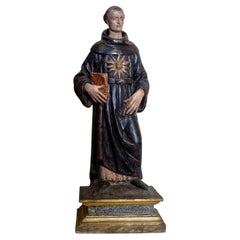
Agnolo di Polo Firenze 1470 - Arezzo 1528
- Saint Nicholas of Tolentino
Located in Bruxelles, BE
Agnolo di Polo (Firenze 1470 - Arezzo 1528)
Saint Nicholas of Tolentino
Around 1510-1520
Painted and gilded terracotta
55.5 x 24 x 16.5 cm
San Nicholas de Tolentino is represe...
Category
16th Century Italian Renaissance Antique Brussels Figurative Sculptures
Materials
Terracotta
$15,285 Sale Price
20% Off
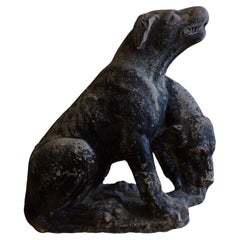
Cerberus, Italy, 17th Century
Located in Bruxelles, BE
Cerberus
Black painted stone
Italy, 17th century
Measures: 80 x 69 x 36cm
(one head missing)
Cerberus, cruel monster, fierce and strange,
Through his wide threefold throat barks as a dog
Over the multitude immers'd beneath.
His eyes glare crimson, black his unctuous beard,
His belly large, and claw'd the hands, with which
He tears the spirits, flays them, and their limbs
Piecemeal disparts (Dante, Inferno, Canto VI).
Cerberus figure seated, in his role of ferocious guardian of the underworld; he shows a nervous musculature, an adherent skin which reveals the ribs, long and robust limbs; his heads are broad and the eyes set well apart.
Painted in black to amplify his menacing look, the infernal guardian is depicted with his famous attributes, writhing his heads, growling and barking furiously.
Cerberus, in Greek mythology, was the monstrous watchdog of the underworld – also known as the “hound of Hades” – preventing the dead from leaving, and making sure that those who entered never left.
A child of Typhon and Echidna, he was part of a monstrous family, which included Orthus, the Lernaean Hydra, and the Chimaera as well. Only on three occasions Cerberus was tricked by visitors of Hades: Heracles did it with his strength, Orpheus with his music.
In "The Inferno", Dante places Cerberus as the guardian of the third circle of Hell. With his three mouths, Dante saw Cerberus as a beast that was synonymous with the sin of Gluttony. Virgil gets past the monster by throwing mud in his three mouths, temporarily choking him.
Very rare are the representations of Cerberus in ancient statuary...
Category
17th Century Italian Renaissance Antique Brussels Figurative Sculptures
Materials
Stone
$19,704 Sale Price
25% Off
Still Thinking About These?
All Recently ViewedMore Ways To Browse
Bergman Bronze Arab
Big Head Sculpture
Blanc De Chine Figurines
Borghese Gladiator
Bronze Augustus
Bronze Garanti Paris
Bronze Head Roman
Bronze Seated Hermes
Brutalist Sculpture Woman
Carved Marble Angel
Carved Wood Chinese Figures
Cherub With Grapes
Collection Porcelain Figurines
Dummy Board
Dying Gaul Sculpture
Egyptian Sarcophagus
Erotic Italy
Flapper Nude