Continental Europe - Decorative Objects

to
8,049
44,029
13,036
1,262
2,162
6,079
35,788
14,298
4,844
16,330
9,404
650
373
1,562
2,082
947
3,188
4,526
4,418
1,680
909
12,750
7,166
3,986
3,926
1,794
625
391
383
380
366
363
326
320
269
187
163
31
25
19,155
19,110
12,608
6,162
6,055
58,327
72,831
64,255
52,080
16,949
10,025
8,510
4,904
Height
to
Width
to
58,327
48,184
52,485
1,214
533
386
379
357
Item Ships From: Continental Europe
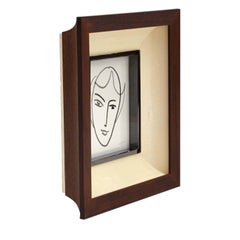
Giotto Wall Picture Frame
By Giordano Viganò
Located in Milan, IT
More than a decorative object, this frame will display cherished memories recorded on a photo to be remembered and admired. This elegant frame is crafted of dark wenge and showcases ...
Category

2010s Italian Continental Europe - Decorative Objects

Materials

Metal

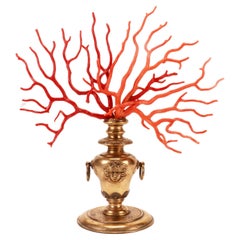
A large branch of Rubrum coral and Sciacca coral from Wunderkammer, Italy 1820.
Located in Milan, IT
A large branch of Mediterranean red coral (Corallium Rubrum) and a large branch of Sciacca coral, mounted together on a gilt bronze base. The creation of the vase-shaped base involve...
Category

Early 19th Century Italian Antique Continental Europe - Decorative Objects

Materials

Coral, Silver

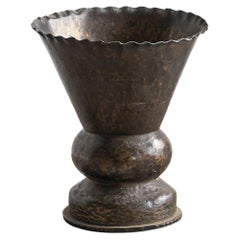
Sculptural Trench Art Vase 1920s
Located in Meer, VAN
Sculptural Trench Art Vase, Europe, 1920s. This is a very beautiful and sculptural trench art vase - made from a bombshell from the First World War. Great...
Category

Early 20th Century European Art Deco Continental Europe - Decorative Objects

Materials

Metal

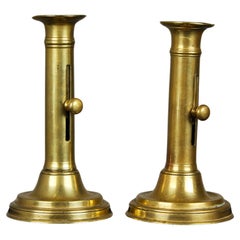
Pair of French Candlesticks, Brass, 20th Century
Located in Greven, DE
Great pair of brass candlesticks with adjustable inlay. France, 20th century.
Category

20th Century French Continental Europe - Decorative Objects

Materials

Brass

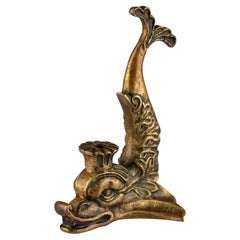
Vintage French Bronze Dolphin Candlestick, Candle Holder By Max Le Verrier
By Max Le Verrier
Located in Greven, DE
Vintage French Ormolu Gold Dolphin Candlestick Candle Holder Max Le Verrier French Bronze 20th Century Dimensions: H x W x D: 12cm x 8.5cm x 7cm This detailed dolphin-shaped cand...
Category

20th Century French Continental Europe - Decorative Objects

Materials

Bronze

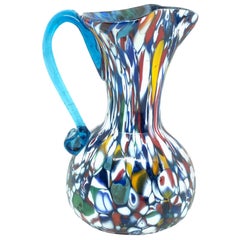
Fratelli Toso Murano Art Glass Neoclassical Glass Jug Vase, Italy, 1960s
By Fratelli
Located in Nuernberg, DE
Beautiful Murano hand blown Italian art glass vase. Created by a Fratelli Toso company. Blue core with colorful murine and light blue applied handle. A beautiful piece of art for any...
Category

1960s Italian Neoclassical Vintage Continental Europe - Decorative Objects

Materials

Murano Glass

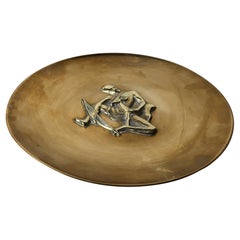
Art Deco Bronze Dish with Bow Hunter by N. Dam Ravn, Denmark, 1930s
By N. Dam Ravn
Located in Esbjerg, DK
Art Deco bronze bowl with centre motif of hunter and deer in relief. It was designed by Danish Sculptor N. Dam Ravn and manufactured by Nordisk Malm in Denmark during the 1930s. The ...
Category

1930s Danish Art Deco Vintage Continental Europe - Decorative Objects

Materials

Bronze

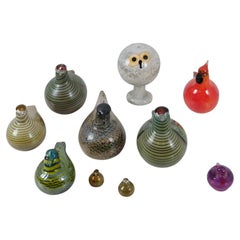
Set of 10 Colourful Collectable Glass Birds by Oiva Toikka, Nuutajärvi, Finland
By Oiva Toikka, Nuutajärvi Notsjõ
Located in Helsinki, FI
This stunning collection of mouth-blown art glass birds is by Oiva Toikka, one of Finland’s most celebrated and internationally renowned glass artists. These exquisite sculptures are...
Category

1980s Finnish Mid-Century Modern Vintage Continental Europe - Decorative Objects

Materials

Art Glass

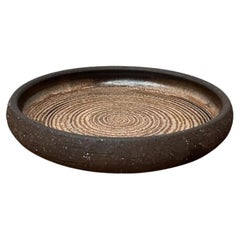
Mid-Century Danish Studio Pottery Bowl from Lehmann Pottery, 1960s
By Lehmann
Located in Hamburg, DE
Mid-Century Danish Studio Pottery Bowl from Lehmann Pottery, 1960s, in Very Good conditions. Designed 1960 to 1969 This piece has an attribution mark. Additional information: Materi...
Category

20th Century Danish Brutalist Continental Europe - Decorative Objects

Materials

Ceramic

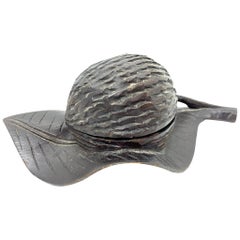
Wood Black Forest Brienz Carved Walnut Inkwell German Antique, 1890s
Located in Nuernberg, DE
Classic early 1890s Black Forest Brienz wood carved inkwell in form of a walnut on a leaf. Nice addition to your room or just for use it on your desk. Made of hand carved wood and gl...
Category

1890s German Black Forest Antique Continental Europe - Decorative Objects

Materials

Metal

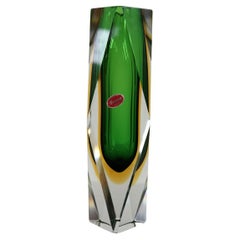
Italian Murano Art Glass Tall Vase by Flavio Poli, 1960s with Original Label
By Mandruzzato, Flavio Poli
Located in Casale Monferrato, IT
Italian desgn 1960s murano art glass green, yellow and transparent small vase. The presence of the original vintage label is a real rarity. Beautiful Murano glass vase, designed by F...
Category

1960s Italian Vintage Continental Europe - Decorative Objects

Materials

Art Glass

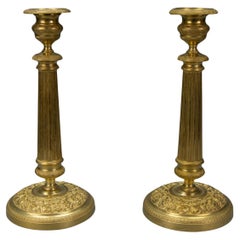
Pair of Antique French Brass Candlesticks with Floral Motifs, 1920s
Located in Barntrup, DE
A beautiful pair of antique French Restauration style brass candlesticks with removable bobeches (drip trays) from ca. 1920s. Each candlestick features a fluted columnar stem, has an...
Category

1920s French Restauration Vintage Continental Europe - Decorative Objects

Materials

Brass

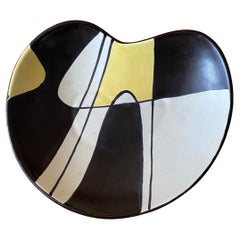
Mid-century Modern Bowl by Bay Keramik Germany
By Bay Keramik
Located in Waddinxveen, ZH
Beautiful large bowl with the Florenz decor, designed and produced by Bay Keramik in 1955.. Matte glaze in black, white and yellow,
Category

1950s German Mid-Century Modern Vintage Continental Europe - Decorative Objects

Materials

Ceramic, Clay

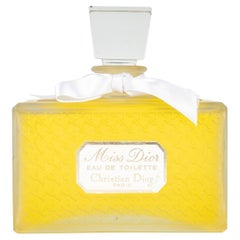
Big, Large Miss Dior Perfume Bottle, XXth Century.
By Christian Dior
Located in Saint-Ouen, FR
Giant, large Miss Dior perfume bottle, XXth century. Giant Miss Dior perfume bottle, XXth century, without perfume. H: 19cm, W: 17,5cm, D: 10cm
Category

20th Century French Modern Continental Europe - Decorative Objects

Materials

Glass

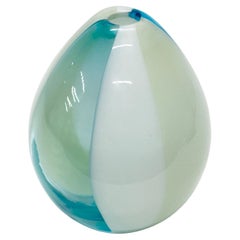
Murano Gradient Vase in Teal, White and Green Blown Glass by Salviati Italy 70s
By Vetri Artistici Muranesi Societá Anonima, Salviati
Located in Roma, IT
Stunning Murano glass egg-shaped vase in Murano mouth-blown glass with gradient colors. This spectacular and unique object was designed by Salviati and produced in Murano. In fabulo...
Category

Mid-20th Century Italian Mid-Century Modern Continental Europe - Decorative Objects

Materials

Glass, Art Glass, Murano Glass

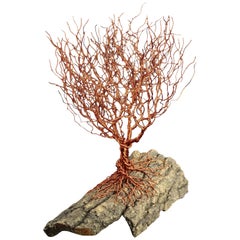
Aluminum Bonsai "Prickly Copper", Handmade in Italy, Sculpture, Contemporary
By Mosche Bianche
Located in San Miniato PI, IT
The Prickly Copper Bonsai is inspired by trees moved by a strong wind. The materials are wood and metals, representing both the strength of life and the roots of Mother Nature. Scu...
Category

2010s Italian Modern Continental Europe - Decorative Objects

Materials

Aluminum

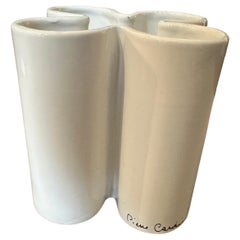
1970s Mid-Century Modern White Ceramic Vase by Pierre Cardin
By Pierre Cardin
Located in Aci Castello, IT
This unique and stylish ceramic vase, designed by the iconic Pierre Cardin, is a perfect representation of 1970s mid-century modern design. The piece features an abstract, sculptural...
Category

Mid-20th Century French Mid-Century Modern Continental Europe - Decorative Objects

Materials

Ceramic

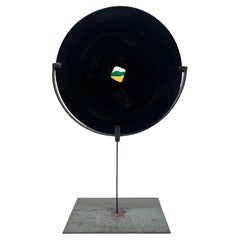
Decorative plate Luciano Gaspari (1913-2007)
By Luciano Gaspari
Located in NEUILLY-SUR-SEINE, FR
Luciano Gaspari for Salviati Deep black glass dish, decorated with a central polychrome murrine. Circa 1966 Diameter: 32 cm With base: 55 cm Exhibitions: 1966, 33rd Venice Biennale; ...
Category

1960s Italian Mid-Century Modern Vintage Continental Europe - Decorative Objects

Materials

Art Glass

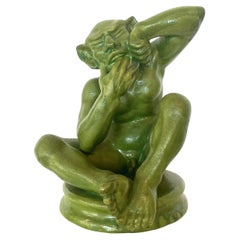
Exclusive Danish early 20th century sculpture of large green glazed goblin
Located in Ebberup, DK
Original antique large unique sculpture of goblin made by Danish artist Anders Møller. Anders Møller resided on Funen and was born in 1890. He was a member of Danish artist group “Germinalen”, a part of the art and ceramic movement in Denmark at that time. The sculpture is estimated to be from the 1930s. This mythical, grotesque creature has exaggerated features and is possibly influenced by European Gothic or Art Nouveau aesthetics. The expression also has a resemblance to the work of earlier artist such as Niels Hansen Jacobsen...
Category

Early 20th Century Danish Art Nouveau Continental Europe - Decorative Objects

Materials

Ceramic, Clay, Stoneware

Hollywood Regency Chinese blue Elephant Garden Plant Stand
Located in Auribeau sur Siagne, FR
Mid-20th century glazed ceramic elephant garden stool, flower pot. Handmade of ceramic. Nice addition to your home, patio or garden. This is in good condition,with some chips, blue c...
Category

1970s French Hollywood Regency Vintage Continental Europe - Decorative Objects

Materials

Ceramic

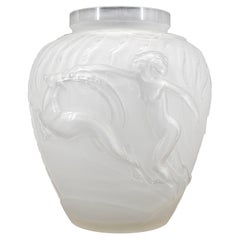
Etling Rare Art Deco Frosted Glass Vase, 1920
By Edmond Etling
Located in Saint-Amans-des-Cots, FR
French Art Deco vase by Etling (Paris), France, ca.1920. Thick frosted molded glass showing a young lady with antelopes. Height: 11"(28cm), Diameter: 9.45"(24cm). Molded signature "Etling France" under the base (see photo). Rare model. Edmond Etling is an editor of decorative arts in Paris, who has excelled in 1920-1930 in France. His company was founded in 1909. He had two basic principles: first always be in the style of the day and the other, engaging the artists in fashion. Thus Etling brand covers an impressive list of artists : Lucille Sevin, (author of vases and statuettes of female nudes), Geneviève Granger (vases and female nudes wearing boyish), Géza Hiecz (animals and birds), George Beal...
Category

1920s Art Deco Vintage Continental Europe - Decorative Objects

Materials

Glass

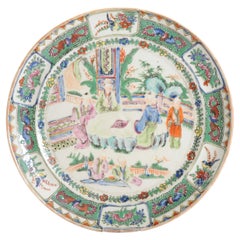
Antique Chinese Porcelain Cantonese Figural Plate Figures Qing Daoguang
Located in Amsterdam, Noord Holland
Nice and Beautifully painted Cantonese dish with lots of highly detailed figures, flowers and animals. Additional information: Material: Porcelain & Pottery Region of Origin: China ...
Category

19th Century Chinese Qing Antique Continental Europe - Decorative Objects

Materials

Porcelain

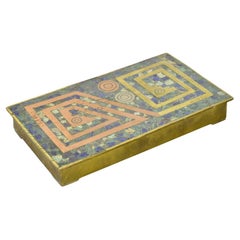
Vintage Mexican Box with Stone Mosaic Copper Silver Brass Details Taxco
By Los Castillos, Taxco
Located in Bad Säckingen, DE
This exquisite vintage box from Mexico features a richly textured stone mosaic design on its surface, combining deep shades of blue and green. The geometric ornamentation is crafted ...
Category

1950s German Mid-Century Modern Vintage Continental Europe - Decorative Objects

Materials

Stone, Multi-gemstone, Metal, Brass, Silver, Copper
Set of Two Bronze Lizards by Bergmann (Wiener Bronze) circa 1910
Located in Vienna, AT
A charming pair of Viennese bronzes attributed to Bergmann, consisting of one large and one small lizard. Both pieces are finely cast, crisply detailed, and display a beautiful, well...
Category

Early 20th Century Austrian Jugendstil Continental Europe - Decorative Objects

Materials

Bronze

Clave
By Aniana Heras
Located in Miami Beach, FL
Inspired by architecture and imagined civilizations, these handmade sculptures evoke strength, stability, and timelessness. Each earthy, one of a kind piece becomes a symbol—a fortre...
Category

2010s Spanish Modern Continental Europe - Decorative Objects

Materials

Ceramic

Clave
Clave
$2,510
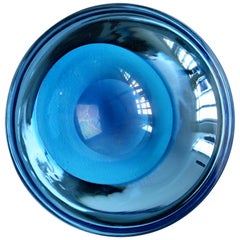
Large Cenedese Italian Asymmetric Blue Sommerso Murano Glass Bowl, Dish, Ashtray
By Cenedese, Antonio da Ros
Located in Landau an der Isar, Bayern
Antonio da Ros (attributed) for Cenedese large & heavy vintage Italian Murano glass bowl, serving dish or ashtray, circa 1965-1975. Utilizing the Sommerso technique this large, heavy...
Category

Mid-20th Century Italian Mid-Century Modern Continental Europe - Decorative Objects

Materials

Blown Glass, Murano Glass

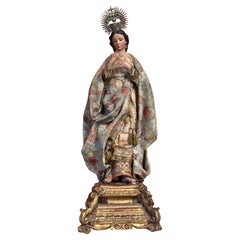
Baroque Polychrome Wooden Virgin with Period Silver Crown, 18th Century
By Spanish Manufactory
Located in Madrid, ES
Baroque Polychrome Wooden Virgin with Period Silver Crown, 18th Century This Spanish Virgin, dating from the late 18th or early 19th century, is carved in polychrome wood (face and...
Category

18th Century Spanish Baroque Antique Continental Europe - Decorative Objects

Materials

Silver

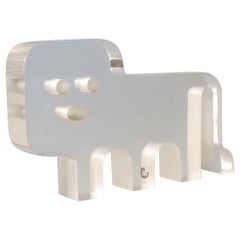
Silvio Russo Plexiglass Lion for Guzzini, Italy 1970s
By Guzzini
Located in Milan, IT
Collectible Plexiglass 1970s Lion by Silvio Russo for Guzzini. Original label.
Category

1970s Italian Modern Vintage Continental Europe - Decorative Objects

Materials

Plexiglass

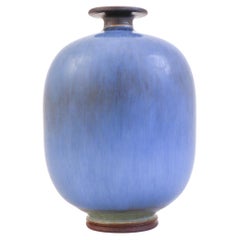
Lovely Blue Ceramic Vase, Berndt Friberg, Gustavsberg - Mid 20th Century
By Berndt Friberg, Gustavsberg
Located in Stockholm, SE
A blue vase designed by Berndt Friberg at Gustavsberg in Stockholm, the vase is 12 cm tall and about 9 cm in diameter. It has a beautiful blue glaze, it is marked as on picture and w...
Category

Mid-20th Century Swedish Scandinavian Modern Continental Europe - Decorative Objects

Materials

Ceramic

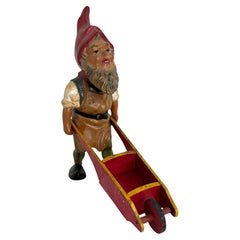
Antique German Yard or Garden Gnome Statue with Wheelbarrow, 1910s or older
Located in Nuernberg, DE
A gorgeous character ceramic figural gnome statue - attributed to Griebel in Germany, a well known manufacturer of this kind of figures. This character statue has been made in German...
Category

1910s German Mid-Century Modern Vintage Continental Europe - Decorative Objects

Materials

Earthenware, Wood

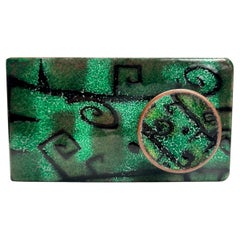
Pair of rare enamelled door handles by Paolo De Poli, Italy 1950s
By Paolo De Poli
Located in Argelato, BO
Rare set of two door handles by Paolo De Poli for VIS. Copper plates with beautiful green and black enamels. The pieces can be used as opposites on glass or metal doors, or side by s...
Category

1950s Italian Mid-Century Modern Vintage Continental Europe - Decorative Objects

Materials

Copper

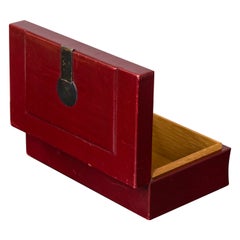
Burgundy Leather Box with Patinated Bronze Decor by Puiforçat - France 1950 s
Located in New York, NY
Antique Puiforcat cigarette case in wood covered with burgundy leather. Interior compartment. Patinated bronze appliqué decoration on the upper exterior of the case. Stamped signatur...
Category

1950s Vintage Continental Europe - Decorative Objects

Materials

Bronze

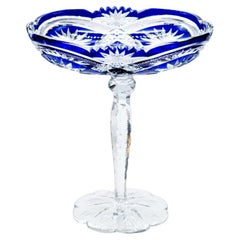
Baccarat, Deep Blue Crystal Cut Coupe, France, 1920
By Baccarat
Located in Rijssen, NL
Glorifying the effects of refracted light for 170 years, the iconic Baccarat vases are well-known all over the world. A crystal deep blue masterpiece with exceptional proportions, t...
Category

1920s French Art Nouveau Vintage Continental Europe - Decorative Objects

Materials

Crystal

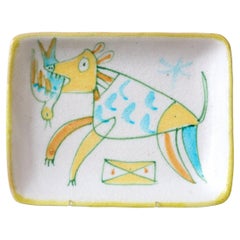
Unique Ceramic Mid-Century Dish by Guido Gambone. Florence, Italy, 1950s.
By Bruno Gambone, Aldo Londi, Guido Gambone, Bitossi
Located in Malmö, SE
A beautiful and unique dish with lava-like glaze and an amazing hand-painted motiv. Made by Guido Gambone in Florence, Italy, 1950s. Great condition. No chips or cracks. Marked with...
Category

Mid-20th Century Italian Mid-Century Modern Continental Europe - Decorative Objects

Materials

Ceramic, Earthenware

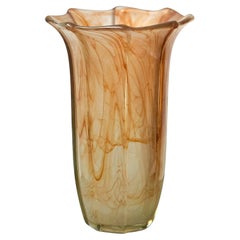
Mid Century Wavy Orange Art Glass Vase 1970s
Located in Tilburg, NL
Mid Century Wavy Orange Art Glass Vase 1970s. This is a beautiful slender art glass vase with a wavy and sculptural design. Great colors in hues of orange - shifting to gold and whi...
Category

Mid-20th Century European Mid-Century Modern Continental Europe - Decorative Objects

Materials

Art Glass

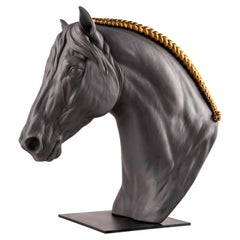
Black Horse Head Sculpture
Located in Paris, FR
Sculpture Black Horse Head all in fine porcelain in black matte finish with braided mane in copper gold finish. Sculpture on base.
Category

21st Century and Contemporary Portuguese Continental Europe - Decorative Objects

Materials

Porcelain

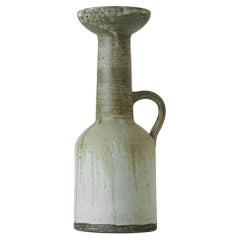
Hannie Mein Mid-Century Studio Pottery Vase or Jug
By Hannie Mein
Located in Meer, VAN
Hannie Mein mid-century pottery vase or jug. The Netherlands, mid 20th century. This jug or vase is made by the well known Dutch pottery artist Hannie Mein (1933-2003). It is an i...
Category

Mid-20th Century Dutch Mid-Century Modern Continental Europe - Decorative Objects

Materials

Pottery

French Large Mid-Century Vintage Ceramic Vase Object in Fir green signed 1950s
Located in Salzburg, AT
Fantastic, large vintage ceramic in a rich pine green with light and darker parts from the middle of the last century. The vase has an elegant shape, the outer wall of the upper part...
Category

1950s French Mid-Century Modern Vintage Continental Europe - Decorative Objects

Materials

Ceramic

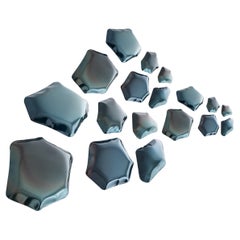
Contemporary Set of 18 Kamyki Mirrors by Zieta, Cosmic Blue
By Oskar Zieta, Zieta
Located in Paris, IDF
Set of 18 Kamyki Mirrors by Zieta Mounted sculpture Color : Cosmic Blue Dimensions [cm]: Ø 7- 20 cm 6 different forms Dimensions of the set : H. 76 cm W. 150 cm D. 6 cm The Heat C...
Category

21st Century and Contemporary Polish Organic Modern Continental Europe - Decorative Objects

Materials

Stainless Steel

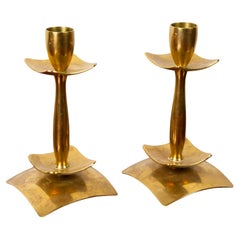
A pair of brass candle sticks by Dantorp Design, Denmark, 1960s
Located in Balen, BE
Pair of Brass Candlesticks by Dantorp Design – Denmark, 1960s This graceful pair of brass candlesticks by Dantorp Design, Denmark, dates to the 1960s and features a refined, sculptu...
Category

1960s Danish Mid-Century Modern Vintage Continental Europe - Decorative Objects

Materials

Brass

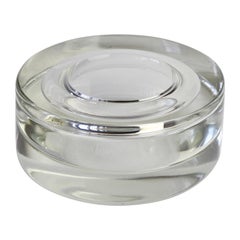
Antonio Da Ros Large Italian Murano Clear Sommerso Glass Bowl, Dish or Ashtray
By Antonio da Ros, Cenedese
Located in Landau an der Isar, Bayern
Antonio Da Ros for Cenedese large heavy vintage Italian Murano glass bowl or ashtray circa 1975. Utilizing the Sommerso technique this large, heavy piece of glass features two submer...
Category

Mid-20th Century Italian Mid-Century Modern Continental Europe - Decorative Objects

Materials

Blown Glass, Murano Glass, Glass

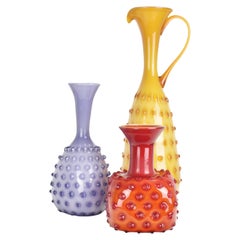
Set of 3 Empoli Vases Hobnail Pattern Cased Glass Mid Century
By Vetrerie di Empoli, Empoli
Located in Bad Säckingen, DE
The set of three different Empoli vases with a hobnail pattern showcases the charm and craftsmanship of mid-century Italian glassmaking. Empoli is a region in Tuscany, Italy, renowned for its long tradition of producing high-quality glassware. Each vase in the set boasts a distinctive hobnail pattern, which consists of small, rounded, and raised glass beads covering the surface in a regular and decorative arrangement. This textured pattern adds a delightful tactile element to the vases, enhancing their visual appeal. The vases are made using the cased glass technique, where several layers of different colored glass are fused together. In this case each vase consists of three layers, translucent outer and inner layer in red, violet and ochre and an opaque white middle layer. This process creates a mesmerizing depth of color, as the light interacts with the multiple glass layers. The set includes three vases of varying heights and shapes, offering a dynamic and versatile display. The mid-century design aesthetic prevalent in this era is likely reflected in the vases' sleek and elegant silhouettes. The colors chosen for the vases, including red, violet, and ochre, are evocative of the warm and vibrant hues commonly associated with mid-century decor. These colors not only add a touch of nostalgia but also create a bold and captivating visual impact. Empoli glassware...
Category

Mid-20th Century Italian Mid-Century Modern Continental Europe - Decorative Objects

Materials

Glass, Art Glass, Blown Glass, Opaline Glass
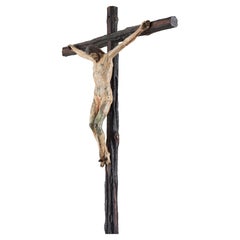
Rare and important painted bronze Crucifix after a model by Michelangelo
By Michelangelo Buonarroti
Located in Leesburg, VA
A rare and very fine bronze corpus of Christ after a model by Michelangelo, cast ca. 1597-1600 by Juan Bautista Franconio and painted in 1600 by Francisco Pacheco in Seville, Spain. The present corpus reproduces a model attributed to Michelangelo. The best known example, lesser in quality, is one on display at the Metropolitan Museum of Art (MET). The association of this corpus with Michelangelo was first brought to light by Manuel Gomez-Moreno (1930-33) who studied the wider circulated casts identified throughout Spain. The attribution to Michelangelo was subsequently followed by John Goldsmith-Phillips (1937) of the MET and again by Michelangelo expert, Charles de Tolnay (1960). While Michelangelo is best known for his monumental works, there are four documented crucifixes he made. The best known example is the large-scale wooden crucifix for the Church of Santa Maria del Santo Spirito in Florence, made in 1492 as a gift for the Prior, Giovanni di Lap Bicchiellini, for allowing him to study the anatomy of corpses at the hospital there. In 1562, Michelangelo wrote two letters to his nephew, Lionardo, indicating his intention to carve a wooden crucifix for him. In 1563 a letter between Lionardo and the Italian sculptor Tiberio Calcagni, mentions this same crucifix (a sketch of a corpus on the verso of a sheet depicting Michelangelo’s designs for St. Peter’s Basillica [Palais des Beaux-Arts in Lille] may reproduce this). That Michelangelo was working on small corpora in the last years of his life is further evidenced by the small (26.5 cm) unfinished wooden crucifix located at the Casa Buonarroti, considered his last known sculptural undertaking. Michelangelo’s contemporary biographer, Giorgio Vasari additionally cites that Michelangelo, in his later years, made a small crucifix for his friend, Menighella, as a gift. Surviving sketches also indicate Michelangelo’s study of this subject throughout his career, most notably during the end of his life but also during the 1530s-40s as he deepened his spiritual roots. The occasional cameo of crucified Christ’s throughout his sketched oeuvre have made it challenging for scholars to link such sketches to any documented commissions of importance. All the while, in consideration that such objects were made as gifts, it is unlikely they should be linked with commissions. Nonetheless, a number of theories concerning Michelangelo’s sketches of Christ crucified have been proposed and some may regard the origin of the present sculpture. It has been suggested that the corpus could have its impetus with Michelangelo’s work on the Medici Chapel, whose exclusive design was given to the master. It is sensible smaller details, like an altar cross, could have fallen under his responsibility (see for example British Museum, Inv. 1859,0625.552). Others have noted the possibility of an unrealized large marble Crucifixion group which never came to fruition but whose marble blocks had been measured according to a sheet at the Casa Buonarroti. A unique suggestion is that Michelangelo could have made the crucifix for Vittoria Colonna, of whom he was exceedingly fond and with whom he exchanged gifts along with mutual spiritual proclivities. In particular, Vittoria had an interest in the life of St. Bridget, whose vision of Christ closely resembles our sculpture, most notably with Christ’s proper-left leg and foot crossed over his right, an iconography that is incredibly scarce for crucifixes. The suggestion could add sense to Benedetto Varchi’s comment that Michelangelo made a sculpted “nude Christ…he gave to the most divine Marchesa of Pescara (Vittoria Colonna).” Of that same period, two sketches can be visually linked to our sculpture. Tolnay relates it to a sketch of a Crucified Christ at the Teylers Museum (Inv. A034) of which Paul Joannides comments on its quality as suggestive of preparations for a sculptural work. Joannides also calls attention to a related drawing attributed to Raffaello da Montelupo copying what is believed to be a lost sketch by Michelangelo. Its relationship with our sculpture is apparent. Montelupo, a pupil of Michelangelo’s, returned to Rome to serve him in 1541, assisting with the continued work on the tomb of Pope Julius II, suggesting again an origin for the corpus ca. 1540. The earliest firm date that can be given to the present corpus is 1574 where it appears as a rather crudely conceived Crucifixion panel, flanked by two mourners in low-relief and integrally cast for use as the bronze tabernacle door to a ciborium now located at the Church of San Lorenzo in Padula. Etched in wax residue on the back of the door is the date, 27 January 1574, indicating the corpus would have at least been available as a model by late 1573. The Padula tabernacle was completed by Michelangelo’s assistant, Jacopo del Duca and likely has its origins with Michelangelo’s uncompleted tabernacle for the Basilica of St. Mary of the Angels in Rome. The impetus for the Padula tabernacle’s Crucifixion panel begins with a series of late Crucifixion sketches by Michelangelo, depicting a scene of Christ crucified and flanked by two mourners (see British Museum Inv. 1895.0915.510; Ashmolean Museum Inv. 1846.89, KP II 343 recto; Windsor Castle RCIN 912761 recto; and Louvre Inv. 700). A faintly traced block possibly intended for sculpting the sketch of the crucified Christ on its recto was discovered by Tolnay on a version of the composition at Windsor Castle. The Windsor sketch and those related to it appear to have served as preparatory designs for what was probably intended to become the Basilica of St. Mary’s tabernacle door. Vasari documents that the project was to be designed by Michelangelo and cast by his assistant, Jacopo del Duca. Michelangelo died before the commission was complete, though on 15 March 1565, Jacopo writes to Michelangelo’s nephew stating, “I have started making the bronze tabernacle, depending on the model of his that was in Rome, already almost half complete.” Various circumstances interrupted the completion of the tabernacle, though its concept is later revitalized by Jacopo during preparations to sell a tabernacle, after Michelangelo’s designs, to Spain for Madrid’s El Escorial almost a decade later. The El Escorial tabernacle likewise encountered problems and was aborted but Jacopo successfully sold it shortly thereafter to the Carthusians of Padula. An etched date, 30 May 1572, along the base of the Padula tabernacle indicates its framework was already cast by then. A 1573 summary of the tabernacle also describes the original format for the door and relief panels, intended to be square in dimension. However, a last minute decision to heighten them was abruptly made during Jacopo’s negotiations to sell the tabernacle to King Phillip II of Spain. Shortly thereafter the commission was aborted. Philippe Malgouyres notes that the Padula tabernacle’s final state is a mixed product of the original design intended for Spain’s El Escorial, recycling various parts that had already been cast and adding new quickly finished elements for its sale to Padula, explaining its unusually discordant quality, particularly as concerns the crudeness of the door and relief panels which were clearly made later (by January 1574). Apart from his own admission in letters to Spain, it is apparent, however, that Jacopo relied upon his deceased master’s designs while hastily realizing the Padula panels. If Michelangelo had already earlier conceived a crucifix model, and Jacopo had access to that model, its logical he could have hastily employed it for incorporation on the door panel to the tabernacle. It is worth noting some modifications he made to the model, extending Christ’s arms further up in order to fit them into the scale of the panel and further lowering his chin to his chest in order to instill physiognomic congruence. A crude panel of the Deposition also follows after Michelangelo’s late sketches and is likewise known by examples thought to be modifications by Jacopo based upon Michelangelo’s initial sculptural conception (see Malgouyres: La Deposition du Christ de Jacopo del Duca, chef-d’oeuvre posthume de Michel-Ange). Jacopo’s appropriation of an original model by Michelangelo for more than one relief on the Padula tabernacle adds further indication that the crucifix was not an object unique to Jacopo’s hand, as few scholars have posited, but rather belongs to Michelangelo’s original...
Category

16th Century Renaissance Antique Continental Europe - Decorative Objects

Materials

Bronze

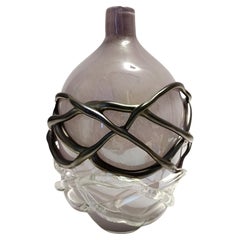
Lilac and Black Iridescent Murano Glass Vase by Sergio Costantini, Italy 1990s
By Sergio Costantini
Located in Bresso, Lombardy
Made in Italy by Sergio Costantini, 1990s This vase is made is etched hand-blown Murano glass with a light pulegoso effect. It also features a transparent and black iridescent lattic...
Category

1990s Italian Post-Modern Continental Europe - Decorative Objects

Materials

Murano Glass

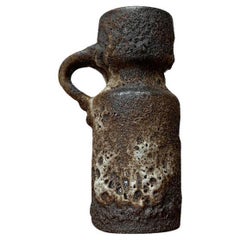
Mid-Century Brutalist West German Pottery WGP Fat Lava Vase, 1960s
Located in Hamburg, DE
Mid-Century Brutalist West German Pottery WGP Fat Lava Vase from Jopeko, 1960s, in Very Good conditions. Designed 1960 to 1969 official proof of authenticity such as vintage catalogs...
Category

20th Century German Brutalist Continental Europe - Decorative Objects

Materials

Ceramic

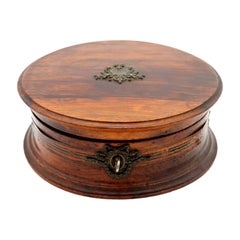
Wooden jewelry box with silver applications
Located in Porto, PT
Description: Wooden jewelry box with silver applications and velvety interior with a print of noblemen celebrating. Metal: Silver. Origin: Portuguese. Brand: boar II Title. Weight: 3...
Category

19th Century European Antique Continental Europe - Decorative Objects

Materials

Silver

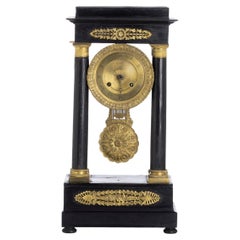
Porticus Clock - Napoleon III - 19th Century
Located in Porto, PT
This elegant Porticus clock, dating to the 19th century, exemplifies the French Napoleon III style, characterized by rich materials and ornate decorative details. Crafted from darken...
Category

19th Century Antique Continental Europe - Decorative Objects

Materials

Metal, Bronze

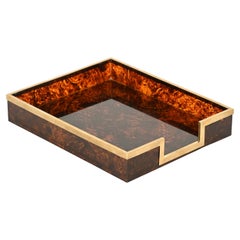
Dior Document or Magazine Holder in Tortoiseshell Lucite and Brass, Italy 1970s
By Willy Rizzo, Dior Home
Located in Roma, IT
Marvelous Mid-Century document or magazine holder fully made in a vibrant tortoiseshell-effect Lucite with a polished solid brass frame. This stylish and truly unique piece was produ...
Category

Late 20th Century Italian Mid-Century Modern Continental Europe - Decorative Objects

Materials

Brass

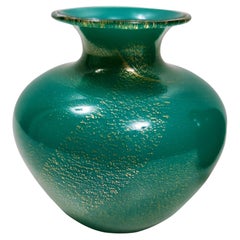
Vintage Green Cased Alga Glass Vase with Gold Leaf by Tomaso Buzzi for Venini
By Venini, Tomaso Buzzi
Located in Bresso, Lombardy
Made in Italy, Murano, 1930s. Between 1932 and 1933 the Milanese architect Tomaso Buzzi, a spirited protagonist of the Milan “neoclassicist” movement, a friend and associate of Gio Ponti, and a partner of Il Labirinto, established a fruitful collaboration with the Venini glassware company, which would continue, albeit episodically, in later years. The architect’s creative contribution was evident both in the glass forms and in their innovative manufacturing technique. When Buzzi arrived at the Venini company in Murano, in 1932, he brought with him a remarkable cultural baggage and a thorough knowledge of ancient art, particularly the Etruscan period...
Category

1930s Italian Mid-Century Modern Vintage Continental Europe - Decorative Objects

Materials

Gold Leaf

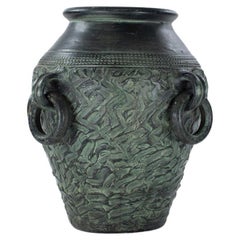
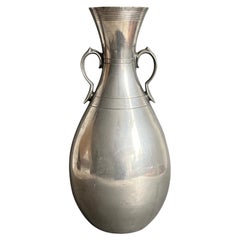
Swedish Modern Art Deco Pewter Vase, Guldsmedsaktiebolaget (GAB), 1933
By GAB Guldsmedsaktiebolaget
Located in Stockholm, SE
Elegant pewter vase made by Guldsmedsaktiebolaget (GAB), Sweden, in 1933. Well-proportioned drop-shaped body with a narrow neck and flared rim, adorned with two decorative handles. ...
Category

1930s Swedish Scandinavian Modern Vintage Continental Europe - Decorative Objects

Materials

Pewter

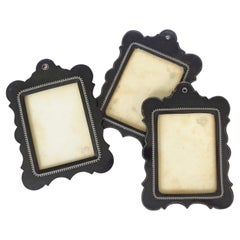
Set of three Victorian papier mache wall picture frames England 19th century
Located in Milan, IT
Splendid set of three Victorian papier mache wall picture frames England 19th century
Category

1860s English Victorian Antique Continental Europe - Decorative Objects

Materials

Paper

Oursin vase by Georges Jouve
By Georges Jouve
Located in Paris, FR
Glazed ceramic vase by Georges Jouve Model "Oursin" (Sea Urchin), circa 1960 Signed under the base. Height : 15 cm Diameter : 10 cm
Category

20th Century French Continental Europe - Decorative Objects

Materials

Ceramic

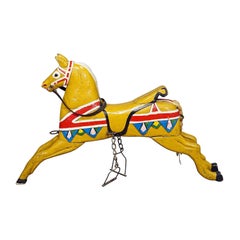
Rare Antique Children Carousel Horse, Germany early 20th Century
Located in Berghuelen, DE
Rare Antique Children Carousel Horse, Germany early 20th Century A wooden carved children's carousel, stallion with polychrome painting, made in Germany around 1910. Original unrestored condition, partially repainted, traces of use according to the old age, some minor imperfections. A great addition to any sophisticated interior decoration. The first carousel horses were created in the 18th century for the entertainment of aristocrats. The enthusiasm spread to broad sections of the population and the Vienna Prater was opened with a carousel in 1766. Germany developed into a center of carousel construction. Famous manufacturers included Friedrich Heyn...
Category

Early 20th Century German Other Continental Europe - Decorative Objects

Materials

Wood

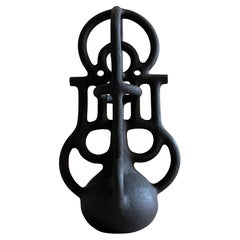
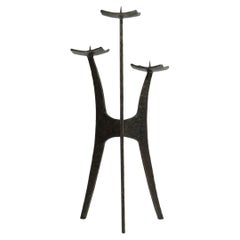
XL Black Brutalist Style Candlestick Holder Of Wrought Iron, 1950s
Located in München, BY
Large brutalist style candlestick holder of Wrought iron, Germany, 1950s. Dimensions: Height 30.7" / 78cm, Width 15.0" / 38cm, Depth 15.4" / 39cm, Edge Length Candle Bases 4.7" / 1...
Category

1950s German Brutalist Vintage Continental Europe - Decorative Objects

Materials

Wrought Iron

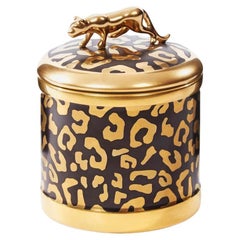
Panther Candle
Located in Paris, FR
Candle Panther made in porcelain with 24-Karat gold-plated panther on the lid. In porcelain with panther pattern, 24-karat gold-plated. Include paraffin wax with single wick. Del...
Category

21st Century and Contemporary Portuguese Continental Europe - Decorative Objects

Materials

Gold Plate

Panther Candle
Panther Candle
$330 / item
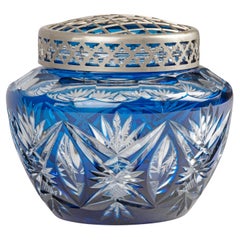
Early 20th Century Crystal Pick Fleur Vase Made by Val Saint Lambert
By Val Saint Lambert
Located in Casteren, Noord-Brabant
Great crystal Pick Fleur vase from the Belgian maker Val Saint Lambert. Clear blue color with beautiful carving. The vase dates from circa 1920-1930. The vase is not marked, but this...
Category

1920s Belgian Belle Époque Vintage Continental Europe - Decorative Objects

Materials

Crystal

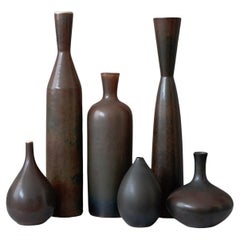
Set of 6 Stoneware Vases by Carl-Harry Stalhane, Rorstrand, Sweden, 1950s
By Rörstrand, Carl-Harry Stålhane, rorstrand studio
Located in Malmö, SE
Set of 6 stoneware vases with amazing brown-black glaze. Designed by Carl-Harry Stålhane at Rörstrand, Sweden, 1950s. Excellent condition. Signed 'CHS' and makers mark 'R'. The tall...
Category

Mid-20th Century Swedish Mid-Century Modern Continental Europe - Decorative Objects

Materials

Ceramic, Stoneware

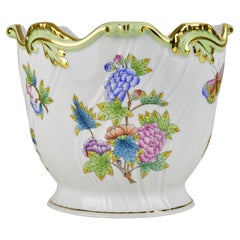
Herend Queen Victoria Green Rim Porcelain Cachepot with Gilded Rococo Edge
By Herend
Located in Bad Säckingen, DE
Magnificent Herend Hungary porcelain cachepot in the iconic Queen Victoria pattern with green rim variant. This hand-painted piece features a scalloped Rococo-style edge richly accen...
Category

1960s Hungarian Rococo Revival Vintage Continental Europe - Decorative Objects

Materials

Porcelain

Vintage Handmade Hungarian Wooden Dough Bowl, Early 1900s
Located in Amsterdam, Noord Holland
Beautiful hand carved Hungarian dough bowl, 1930s In good rustic condition. As with all vintage items there will be signs of wear and tear from use over the years. 2 repairs have b...
Category

Early 20th Century Hungarian Rustic Continental Europe - Decorative Objects

Materials

Wood

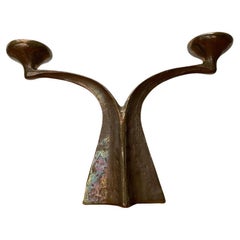
Mid-Century Brutalist German Bronze Candleholder from Harjes, 1960s
Located in Hamburg, DE
Mid-Century Brutalist German Bronze Candleholder from Harjes, 1960s, in Very Good conditions. Designed 1960 to 1969 This piece has an attribution mar...
Category

20th Century German Brutalist Continental Europe - Decorative Objects

Materials

Metal

Still Thinking About These?

All Recently Viewed