Continental US - Landscape Prints
to
5,293
5,053
1,962
1,924
1,264
939
Overall Width
to
Overall Height
to
2,607
1,613
767
739
671
628
467
372
167
70
62
45
24
15
189
169
152
130
101
374
633
7,719
2,475
79
91
592
444
530
1,041
1,272
1,171
981
540
237
5,523
5,109
484
4,107
2,042
1,895
1,460
1,202
1,130
1,021
881
771
681
680
583
520
484
467
420
363
323
314
312
5,003
1,759
1,515
1,002
843
1,599
2,276
11,205
11,206
4,935
Item Ships From: Continental US
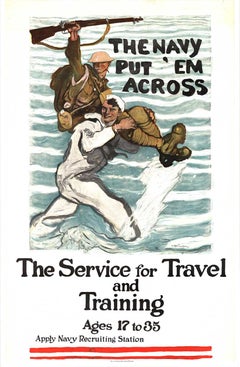
Original The Navy Put
em Across, Vintage Recruiting Poster, U.S. Navy, linen
Located in Spokane, WA
Original "The Navy Put 'Em Across": Vintage WWI Recruitment Poster by Henry Reuterdahl, 1918. Linen-backed.
An extraordinarily scarce and historically rich piece of American propag...
Category
1910s American Modern Continental US - Landscape Prints
Materials
Lithograph
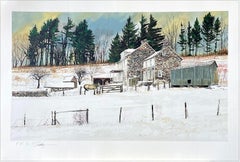
LITTLEWOODS Signed Lithograph, Historic Stone Farmhouse, Bucks County Landscape
By Peter Sculthorpe
Located in Union City, NJ
LITTLEWOODS is an original hand drawn, limited edition lithograph by Peter Sculthorpe (b.1948 Ontario, Canada) printed using hand lithography techniques on archival Arches paper, 100...
Category
1980s Realist Continental US - Landscape Prints
Materials
Lithograph
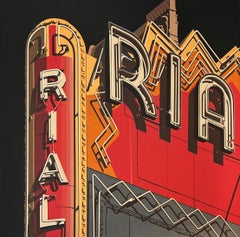
Rialto, from American Signs
By Robert Cottingham
Located in Washington, DC
Artist: Robert Cottingham
Title: Rialto, from American Signs
Medium: Screenprint in colors
Year: 2009
Edition: HC 5/10
Sheet Size: 40" x 39"
Signed: Hand signed and numbered
Category
Early 2000s Photorealist Continental US - Landscape Prints
Materials
Screen
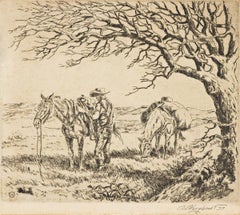
Resting The Horses
By Olaf Wieghorst
Located in New York, NY
Etching, 1937. Signed by the artist and dated in pencil lower right margin.
A scarce etching by this important American western artist.
Category
1930s American Realist Continental US - Landscape Prints
Materials
Etching
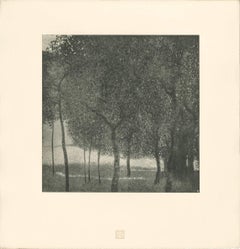
H.O. Miethke Das Werk folio "Fruit Trees" collotype print
By Gustav Klimt
K.K. Hof-und Staatsdruckerei
Located in Palm Beach, FL
DAS WERK GUSTAV KLIMTS, a portfolio of 50 prints, ten of which are multicolor collotypes on chine colle paper laid down on hand-made heavy cream wove paper with deckled edges; under ...
Category
Early 1900s Vienna Secession Continental US - Landscape Prints
Materials
Paper
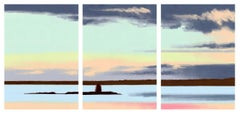
Blue Shadow, landscape, glue, gray, orange, pastel, seascape, nature, triptych
By Rachel Burgess
Located in New York, NY
Monotype on three sheets of paper
Unframed
Rachel Burgess is a visual artist based in New York. Originally from Boston, she received a B.A. in Literature from Yale University and an...
Category
2010s Contemporary Continental US - Landscape Prints
Materials
Monotype
Original "The Marines Corps Builds Leaders!" vintage poster, linen backed
Located in Spokane, WA
Vintage 1967 US Marine Corps "The Marine Corps Builds Leaders!" original recruiting poster - linen-backed art print, 27" x 38.5". Grade A condition, ready to frame.
Authentic Vintag...
Category
1960s American Modern Continental US - Landscape Prints
Materials
Offset

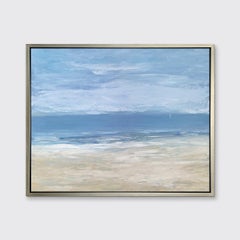
"Windswept II, " Framed Limited Edition Giclee Print, 24" x 30"
By S. Cora Aldo
Located in Westport, CT
This limited edition print by S. Cora Aldo depicts an impressionistic ocean view. Sand-colored tones extend from the bottom of the composition and fade to a muted blue, with strokes ...
Category
2010s Abstract Continental US - Landscape Prints
Materials
Digital, Giclée
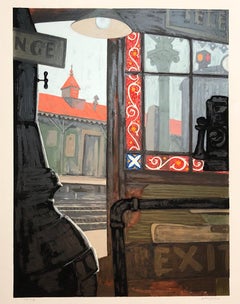
Modernist Silkscreen Screenprint
El Station, Interior
NYC Subway, WPA Artist
By Anthony Velonis
Located in Surfside, FL
screenprint printed in color ink on wove paper. New York City subway station interior.
Anthony Velonis (1911 – 1997) was an American painter and designer born in New York City who helped introduce the public to silkscreen printing in the early 20th century.
While employed under the federal Works Progress Administration, WPA during the Great Depression, Velonis brought the use of silkscreen printing as a fine art form, referred to as the "serigraph," into the mainstream. By his own request, he was not publicly credited for coining the term.
He experimented and mastered techniques to print on a wide variety of materials, such as glass, plastics, and metal, thereby expanding the field. In the mid to late 20th century, the silkscreen technique became popular among other artists such as Robert Rauschenberg and Andy Warhol.
Velonis was born into a relatively poor background of a Greek immigrant family and grew up in the tenements of New York City. Early on, he took creative inspiration from figures in his life such as his grandfather, an immigrant from the mountains in Greece, who was "an ecclesiastical painter, on Byzantine style." Velonis attended James Monroe High School in The Bronx, where he took on minor artistic roles such as the illustration of his high school yearbook. He eventually received a scholarship to the NYU College of Fine Arts, into which he was both surprised and ecstatic to have been admitted. Around this time he took to painting, watercolor, and sculpture, as well as various other art forms, hoping to find a niche that fit. He attended NYU until 1929, when the Great Depression started in the United States after the stock market crash.
Around the year 1932, Velonis became interested in silk screen, together with fellow artist Fritz Brosius, and decided to investigate the practice. Working in his brother's sign shop, Velonis was able to master the silkscreen process. He reminisced in an interview three decades later that doing so was "plenty of fun," and that a lot of technology can be discovered through hard work, more so if it is worked on "little by little."
Velonis was hired by Mayor LaGuardia in 1934 to promote the work of New York's city government via posters publicizing city projects. One such project required him to go on a commercial fishing trip to locations including New Bedford and Nantucket for a fortnight, where he primarily took photographs and notes, and made sketches. Afterward, for a period of roughly six months, he was occupied with creating paintings from these records. During this trip, Velonis developed true respect and affinity for the fishermen with whom he traveled, "the relatively uneducated person," in his words.
Following this, Velonis began work with the Public Works of Art Project (PWAP), an offshoot of the Civil Works Administration (CWA), where he was assigned to serve the different city departments of New York. After the formation of the federal Works Progress Administration, which hired artists and sponsored projects in the arts, he also worked in theater.
Velonis began working for the federal WPA in 1935. He kept this position until 1936 or 1938, at which point he began working in the graphic art division of the Federal Art Project, which he ultimately led. Under various elements of the WPA program, many young artists, writers and actors gained employment that helped them survive during the Depression, as well as contributing works that created an artistic legacy for the country.
When interviewed in December 1994 by the Library of Congress about his time in the WPA, Velonis reflected that he had greatly enjoyed that period, saying that he liked the "excitement" and "meeting all the other artists with different points of view." He also said in a later interview that "the contact and the dialogue with all those artists and the work that took place was just invaluable." Among the young artists he hired was Edmond Casarella, who later developed an innovative technique using layered cardboard for woodcuts.
Velonis introduced silkscreen printing to the Poster Division of the WPA. As he recalled in a 1965 interview: "I suggested that the Poster division would be a lot more productive and useful if they had an auxiliary screen printing project that worked along with them. And apparently this was very favorably received..."
As a member of the Federal Art Project, a subdivision of the WPA, Velonis later approached the Public Use of Arts Committee (PUAC) for help in "propagandizing for art in the parks, in the subways, et cetera." Since the Federal Art Project could not be "self-promoting," an outside organization was required to advertise their art more extensively. During his employment with the Federal Art Project, Velonis created nine silkscreen posters for the federal government.
Around 1937-1939 Velonis wrote a pamphlet titled "Technical Problems of the Artist: Technique of the Silkscreen Process," which was distributed to art centers run by the WPA around the country. It was considered very influential in encouraging artists to try this relatively inexpensive technique and stimulated printmaking across the country.
In 1939, Velonis founded the Creative Printmakers Group, along with three others, including Hyman Warsager. They printed both their own works and those of other artists in their facility. This was considered the most important silkscreen shop of the period.
The next year, Velonis founded the National Serigraph Society. It started out with relatively small commercial projects, such as "rather fancy" Christmas cards that were sold to many of the upscale Fifth Avenue shops...
Category
1980s American Modern Continental US - Landscape Prints
Materials
Screen
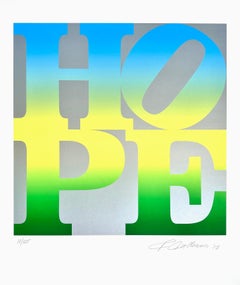
HOPE (Summer), Robert Indiana
By Robert Indiana
Located in Fairfield, CT
Artist: Robert Indiana (1928-2018)
Title: HOPE (Summer)
Year: 2012
Medium: Silkscreen on Coventry Rag paper
Edition: 18/125, plus proofs
Size: 35.25 x 25.5 inches
Condition: Excellen...
Category
2010s Pop Art Continental US - Landscape Prints
Materials
Screen

$6,320 Sale Price
88% Off
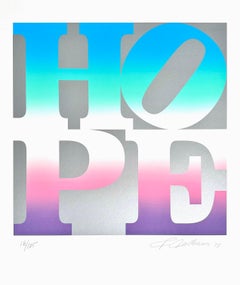
HOPE (Spring), Robert Indiana
By Robert Indiana
Located in Fairfield, CT
Artist: Robert Indiana (1928-2018)
Title: HOPE (Spring)
Year: 2012
Medium: Silkscreen on Coventry Rag paper
Edition: 18/125, plus proofs
Size: 35.25 x 25.5 inches
Condition: Excellen...
Category
2010s Pop Art Continental US - Landscape Prints
Materials
Screen
$6,320 Sale Price
88% Off
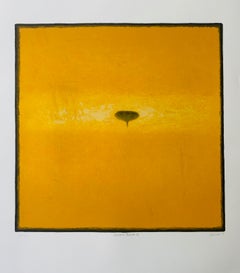
Seasons Quartet III Lithograph AP 6
By Sebastian Spreng
Located in West Palm Beach, FL
Seasons Quartet III Lithograph AP 6 Yellow.
The fine French paper BFK Rives is 30 X 22 inches and the image is 17 X 17.
The signed Artist Proof 6 lithograph depicts Sebastian Spreng...
Category
Early 2000s Contemporary Continental US - Landscape Prints
Materials
Lithograph
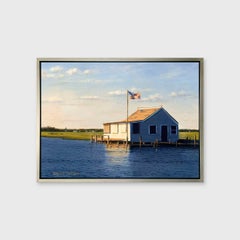
"North Channel, " Framed Limited Edition Giclee Print, 24" x 32"
By Daniel Pollera
Located in Westport, CT
This traditional Limited Edition print by Daniel Pollera captures a small coastal New England home that is reminiscent of the artist's frequent Long Island Bay Houses subjects. The h...
Category
2010s Realist Continental US - Landscape Prints
Materials
Digital, Giclée
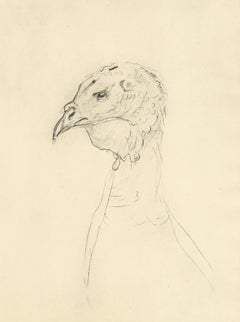
Toulouse-Lautrec, Composition, Henri de Toulouse-Lautrec, Dessinateur (after)
By Henri de Toulouse-Lautrec
Located in Southampton, NY
Lithograph on vélin paper. Paper size: 12.25 x 9.25 inches. Inscription: Unsigned and unnumbered, as issued. Notes: From the album, Henri de Toulouse-Lautrec, Dessinateur, 1948. Publ...
Category
1940s Post-Impressionist Continental US - Landscape Prints
Materials
Lithograph
$716 Sale Price
20% Off
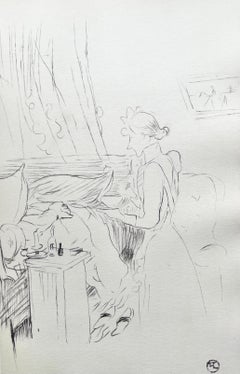
Toulouse-Lautrec, Composition, Henri de Toulouse-Lautrec, Dessinateur (after)
By Henri de Toulouse-Lautrec
Located in Southampton, NY
Lithograph on vélin paper. Paper size: 12.25 x 9.25 inches. Inscription: Signed in the plate and unnumbered, as issued. Notes: From the album, Henri de Toulouse-Lautrec, Dessinateur,...
Category
1940s Post-Impressionist Continental US - Landscape Prints
Materials
Lithograph
$716 Sale Price
20% Off
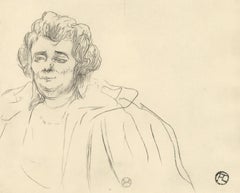
Toulouse-Lautrec, Composition, Henri de Toulouse-Lautrec, Dessinateur (after)
By Henri de Toulouse-Lautrec
Located in Southampton, NY
Lithograph on vélin paper. Paper size: 12.25 x 9.25 inches. Inscription: Signed in the plate and unnumbered, as issued. Notes: From the album, Henri de Toulouse-Lautrec, Dessinateur,...
Category
1940s Post-Impressionist Continental US - Landscape Prints
Materials
Lithograph
$716 Sale Price
20% Off
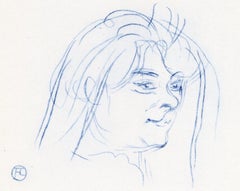
Toulouse-Lautrec, Composition, Henri de Toulouse-Lautrec, Dessinateur (after)
By Henri de Toulouse-Lautrec
Located in Southampton, NY
Lithograph on vélin paper. Paper size: 12.25 x 9.25 inches. Inscription: Signed in the plate and unnumbered, as issued. Notes: From the album, Henri de Toulouse-Lautrec, Dessinateur,...
Category
1940s Post-Impressionist Continental US - Landscape Prints
Materials
Lithograph
$716 Sale Price
20% Off
Toulouse-Lautrec, Composition, Henri de Toulouse-Lautrec, Dessinateur (after)
By Henri de Toulouse-Lautrec
Located in Southampton, NY
Lithograph on vélin paper. Paper size: 12.25 x 9.25 inches. Inscription: Signed in the plate and unnumbered, as issued. Notes: From the album, Henri de Toulouse-Lautrec, Dessinateur,...
Category
1940s Post-Impressionist Continental US - Landscape Prints
Materials
Lithograph
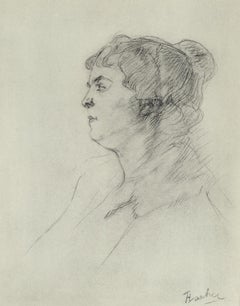
$716 Sale Price
20% Off
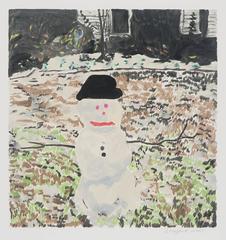
Snowman with Black Hat
By Gail Norfleet
Located in Dallas, TX
Gail Norfleet earned her BFA at The University of Texas at Austin, and her MFA at Southern Methodist University in Dallas. Among others, she has had solo exhibitions in Dallas at The...
Category
21st Century and Contemporary Contemporary Continental US - Landscape Prints
Materials
Monotype
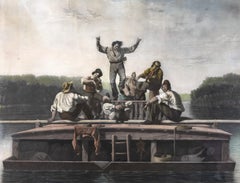
The Jolly Flat Boat Men
By George Caleb Bingham
Located in Missouri, MO
The Jolly Flat Boat Men, 1847
After George Caleb Bingham (American, 1811-1879)
Engraved by Thomas Doney (French, active New York 1844-1849)
Engraving with Hand-Coloring
Published by The American Art-Union, New York (1838-1851)
Printed by Powell and Co.
18 x 24 inches
32 x 38 inches with frame
In 1847, the American Art-Union purchased Bingham’s painting "The Jolly Flat Boat Men" (1846; National Gallery of Art) directly from the artist. The subscription-based organization, founded in 1838 as the Apollo Association, boasted nearly ten-thousand members at this date. For an annual fee of five dollars, each received a large reproductive engraving and was entered in a lottery to win original artworks exhibited at the Art-Union’s Free Gallery. Aimed at educating the public about contemporary American art, the organization developed an impressive distribution network that reached members in every state. The broad circulation of the Art-Union's print helped to establish Bingham's reputation and made his river scene famous.
Born in Augusta County, Virginia in the Shenandoah River Valley, George Caleb Bingham became known for classically rendered western genre, especially Missouri and Mississippi River scenes of boatmen bringing cargo to the American West and politicians seeking to influence frontier life. One of his most famous river genre paintings was The Jolly Flatboatmen completed in several versions in 1846. This first version of this painting is in the Manoogian Collection at the National Gallery of Art. Fame resulted for this work when it was exhibited in New York at the American Art Union whose organizers made an engraving of 10,000 copies and distributed it to all of their members. Paintings such as Country Politician (1849) and County Election (1852) and Stump Speaking (1854) reflected Bingham's political interests.
In 1819, as an eight-year old, he moved to Boon's Lick, Missouri with his parents and grandfather who had been farmers and inn keepers in the Shenandoah Valley near Rockingham, Virginia. Reportedly as a child there, he took every opportunity to escape supervision to travel the River and watch the marine activity.
His father died in 1827, when his son was sixteen years old. His mother had encouraged his art talent, but art lessons were not easily obtainable. In order to earn money, he apprenticed to a cabinet maker but determined to become an artist. By 1835, he had a modest reputation as a frontier painter and successfully charged twenty dollars per portrait in St. Louis. "His portraits had become standard decorations in prosperous Missouri homes." (Samuels 46). In 1836, he moved to Natchez, Mississippi and there had the same kind of career, only was able to charge forty dollars per portrait.
He remained largely self taught until 1837, when he, age 26 and using the proceeds from his portraiture, studied several months at the Pennsylvania Academy of the Fine Arts. He later said that he learned much of his atmospheric style and classically balanced composition by copying paintings in collections in St. Louis and Philadelphia and that among his most admired painters were Thomas Cole, John Vanderlyn, and William Sidney Mount. Between 1856 and 1859, Bingham traveled back and forth to Dusseldorf, Germany, where he studied the work of genre painters. Some critics think these influences were negative on his work because during that time period, he abandoned his luminist style that had brought him so much public affirmation.
Bingham credited Chester Harding (1792-1866) as being the earliest and one of the most lasting influences on his work. Harding,a leading portraitists when Bingham was a young man, had a studio in Franklin, near Bingham's home town. In 1822, when Bingham was ten years old, he watched Harding finish a portrait of Daniel Boone. Bingham recalled that watching Harding with the Boone portrait was a lasting inspiration and that it was the first time he had ever seen a painting in progress. Harding suggested to Bingham that he begin doing portraiture by finding subjects in the river men, which, of course, opened the subject matter that established fame and financial success for Bingham. Harding also encouraged Bingham to copy with paint engravings. He later painted two portraits of Boone but, contrary to the assertions of some scholars, he did not do Boone portraits in the company of Harding.
Bingham's portraits of Boone are not located, but one of them, a wood signboard for a hotel in Boonville circa 1828 to 1830, showed a likeness of Boone in buckskin dress...
Category
1840s Hudson River School Continental US - Landscape Prints
Materials
Engraving
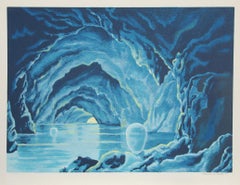
Pilgrimage #6, Surrealist Screenprint by Clarence Holbrook Carter
By Clarence Holbrook Carter
Located in Long Island City, NY
Artist: Clarence Holbrook Carter, American (1904 - 2000)
Title: Pilgrimage #6
Year: 1977
Medium: Screenprint, signed and numbered in pencil
Edition: 200, 30 AP
Size: 26 in. x 34 in. ...
Category
1970s Surrealist Continental US - Landscape Prints
Materials
Screen
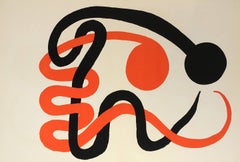
Alexander Calder Lithograph Derrière le miroir (Calder serpents)
By Alexander Calder
Located in NEW YORK, NY
Alexander Calder Lithograph c. 1973 from Derrière le miroir:
Lithograph in colors; 15 x 22 inches.
Very good overall vintage condition; contains center fold-line as originally issue...
Category
1970s Pop Art Continental US - Landscape Prints
Materials
Lithograph
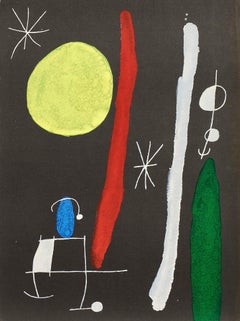
Joan Miro, Untitled, from Derriere le miroir, 1967 (after)
By Joan Miró
Located in Southampton, NY
This exquisite lithograph after Joan Miro (1893–1983), titled Sans titre (Untitled), originates from the 1967 folio Derriere le miroir, L'oiseau solaire, l'oiseau lunaire, etin-celle...
Category
1960s Surrealist Continental US - Landscape Prints
Materials
Lithograph
$796 Sale Price
20% Off
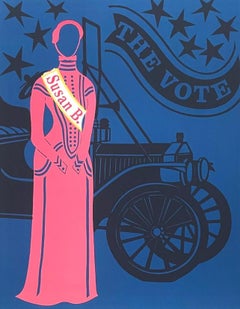
Susan B. Anthony (Sheehan 96), Robert Indiana
By Robert Indiana
Located in Fairfield, CT
Artist: Robert Indiana (1928-2018)
Title: Susan B. Anthony (Virgil Thomson, Mother of Us All Suite)
Year: 1977
Medium: Silkscreen on wove paper
Edition: 11/150...
Category
1970s Pop Art Continental US - Landscape Prints
Materials
Screen
$2,800 Sale Price
20% Off
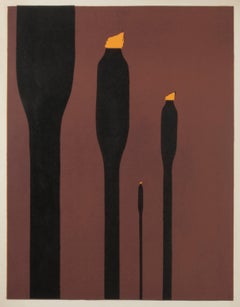
French Stacks
By Donald Sultan
Located in Fairlawn, OH
French Stacks
Linocut printed in color
Unsigned
Stamped verso “Imprimerie Arnera Archives/Non Signe”
Printer: Jaime Arnera, Vallarius, France (their stamp verso)
Condition: Printed ...
Category
1980s Abstract Expressionist Continental US - Landscape Prints
Materials
Linocut
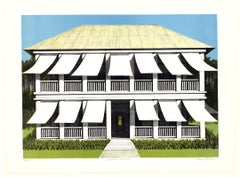
La Casa Vivienda
By Emilio Sanchez
Located in New York, NY
“LA CASA VIVENDA”
Emilio Sanchez (1921-1999) created this color lithograph entitled “La Casa Vivenda” circa 1991. Image size 18.38 x 25 inches and the paper size 21.75 x 29.38 inches. Printed in an edition of 100 this impression is inscribed “70/100” - the 70th impression of 100. This impression is pencil signed in the lower right and inscribed in the lower left.
“Best known for his architectural paintings and lithographs, Emilio Sanchez (1921-1999) explored the effects of light and shadow to emphasize the abstract geometry of his subjects. His artwork encompasses his Cuban heritage...
Category
1990s American Modern Continental US - Landscape Prints
Materials
Lithograph
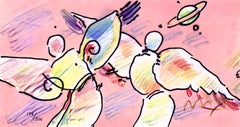
Space Angels, Peter Max
By Peter Max
Located in Fairfield, CT
Artist: Peter Max (1937)
Title: Space Angels
Year: 1999
Edition: 199/300, plus proofs
Medium: Lithograph on Coventry Smooth paper
Size: 6.5 x 12 inches
Condition: Excellent
Inscripti...
Category
1990s Pop Art Continental US - Landscape Prints
Materials
Lithograph
$1,051 Sale Price
20% Off
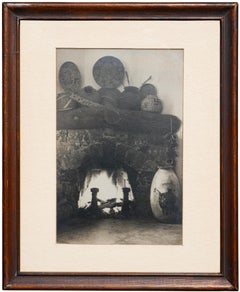
Early Black and White Still Life Photograph of an Interior Fireplace Hearth
Located in Houston, TX
Early black and white still life photograph of a fireplace. The piece also documents the various items used to decorate the hearth including woven basketed and earthen pots...
Category
1930s Realist Continental US - Landscape Prints
Materials
Silver Gelatin
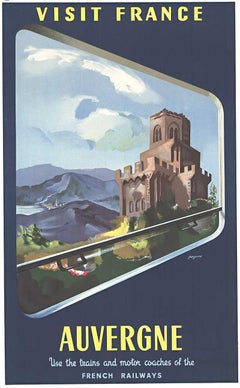
Visit France Auvergne original SNCF vintage travel poster
Located in Spokane, WA
Original poster: SNCF, VISIT FRANCE AUVERGNE, travel poster. Linen-backed. Lithograph. View of the castle on a hill, in the foreground, framed by a train...
Category
1950s American Realist Continental US - Landscape Prints
Materials
Lithograph
$580 Sale Price
20% Off
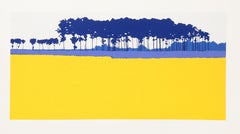
Peupliers Bleus, Abstract Minimalist Screenprint by Daniel Riberzani
Located in Long Island City, NY
Peupliers Bleus
Daniel Riberzani, French (1942)
Date: 1979
Screenprint, signed and numbered in pencil
Edition of 300, AP 45
Image Size: 15.5 x 31 inches
Size: 20 in. x 35 in. (50.8 c...
Category
1970s Continental US - Landscape Prints
Materials
Screen
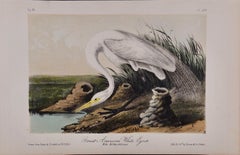
Great White Egret: An Original 19th C. Hand-colored Lithograph by Audubon
By John James Audubon
Located in Alamo, CA
This is an original hand-colored lithograph entitled "Great American White Egret", No. 74, Plate 370, by John James Audubon from his "Birds of America" publication. It was lithograph...
Category
Mid-19th Century Naturalistic Continental US - Landscape Prints
Materials
Lithograph
$1,100 Sale Price
20% Off
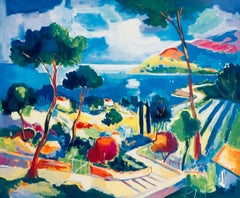
(Title Unknown) Serigraph, Plate-signed
By Jean-Claude Picot
Located in Chesterfield, MI
Measures 27 x 32 inches and is unframed. The date of creation is unknown, but is believed to be within the Late 20th Century. The piece is in Fair/Distressed Condition-indentation/su...
Category
Late 20th Century Continental US - Landscape Prints
Materials
Screen
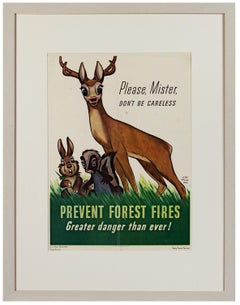
"Please, Mister, Don
t Be Careless" Vintage Poster featuring Disney Characters
Located in Milwaukee, WI
Printed in 1943, by the U.S. Government Printing Office for the U.S. Department of Agriculture Forest Service. The poster features the beloved Disney characters, Bambi (deer), Thumper (rabbit), and Flower (skunk) in wide-eyed shock leaning towards fear. With the slogan "Please, Mister, don't be careless" the poster is designed to tug at the heartstrings of the viewer and make them consider what actions they could take in their own lives to prevent forest fires.
Poster: 20" x 14 1/4"
Frame: 30" x 22 1/2"
Framed to conservation standards with a 100% cotton fiber matboard border and UV clear glass that filters 99% of UV Rays. UV Rays can be especially damaging and cause fading to the inks used in poster making. All of these features are housed in a contemporary natural wood frame.
Smokey Bear...
Category
1940s Other Art Style Continental US - Landscape Prints
Materials
Lithograph
Henri de Toulouse-Lautrec, Work on the Panel, from The Circus, 1952 (after)
By Henri de Toulouse-Lautrec
Located in Southampton, NY
This exquisite lithograph after Henri de Toulouse-Lautrec (1864–1901), titled Travail sur le panneau (Work on the Panel), originates from the 1952 album The Circus of Toulouse-Lautre...
Category
1950s Post-Impressionist Continental US - Landscape Prints
Materials
Lithograph
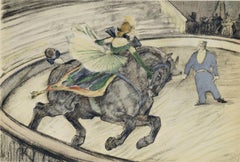
$716 Sale Price
20% Off
Saturday Night on Planet X, Robert Bennett
By Robert Bennett
Located in Fairfield, CT
Artist: Robert Bennett
Title: Saturday Night on Planet X
Year: 1979
Medium: Lithograph on Stonehenge paper
Size: 22 x 30 inches
Edition: 10/100, plus proofs
Condition: Good
Inscripti...
Category
1970s Abstract Expressionist Continental US - Landscape Prints
Materials
Lithograph
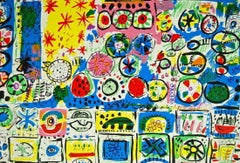
$876 Sale Price
20% Off
HOPE (Winter), Robert Indiana
By Robert Indiana
Located in Fairfield, CT
Artist: Robert Indiana (1928-2018)
Title: HOPE (Winter)
Year: 2012
Medium: Silkscreen on Coventry Rag paper
Edition: 18/125, plus proofs
Size: 35.25 x 25.5 inches
Condition: Excellen...
Category
2010s Pop Art Continental US - Landscape Prints
Materials
Screen
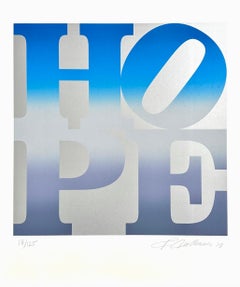
$6,320 Sale Price
88% Off
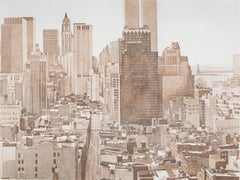
Philip Pearlstein
View Over Soho, Lower Manhattan
NYC signed, print
By Philip Pearlstein
Located in San Rafael, CA
Philip Pearlstein (1924-2022)
View Over Soho, Lower Manhattan, 1977
Aquatint in colors on wove paper
Edition 7/41
Signed, editioned and titled in pencil lower left
Printed by the Orl...
Category
1970s Realist Continental US - Landscape Prints
Materials
Aquatint
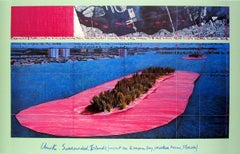
Surrounded Islands 1982
, Key Biscayne, Miami, Florida
By Javacheff Christo
Located in Brooklyn, NY
Surrounded Islands, Biscayne Bay, Greater Miami, Florida, 1980-83
Using 6.5 million square feet of floating pink fabric, Christo and Jeanne-Claude encircled eleven islands in Miami...
Category
1980s Contemporary Continental US - Landscape Prints
Materials
Offset
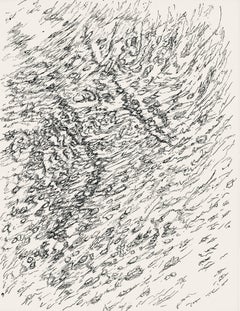
Henri Michaux, Untitled, from XXe Siecle, 1956
By Henri Michaux
Located in Southampton, NY
This exquisite lithograph by Henri Michaux (1899–1984), titled Sans titre (Untitled), from the album XXe Siecle, Nouvelle serie N°7 (double) Juin 1956, originates from the 1956 editi...
Category
1950s Modern Continental US - Landscape Prints
Materials
Lithograph
$796 Sale Price
20% Off
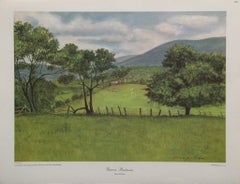
"Green Pastures" by Gene Pelham. Printed in U.S.A.
Located in Chesterfield, MI
New York Graphic Society
Printed in USA, plate signed.
Good condition
13.5 x 16 in.
Category
20th Century Continental US - Landscape Prints
Materials
Lithograph
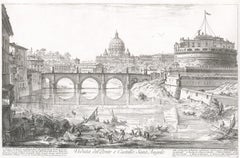
Veduta del Ponte e Castello Sant
Angelo
By Giovanni Battista Piranesi
Located in New York, NY
Castello Sant Angelo from "Vedute di Roma" by Giovanni Battista Piranesi.
2nd Roman state, 1754. Etching on laid paper with a watermark of a Fleur-de-Lys in a double circle with CB a...
Category
1750s Continental US - Landscape Prints
Materials
Laid Paper
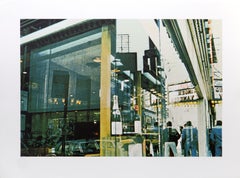
Downtown Houston, Photorealist Screenprint by CJ Yao
By Ching Jang Yao
Located in Long Island City, NY
Liquor Store Reflection by C.J. (Ching-Jang) Yao, Taiwanese (1941–2001)
Date: 1981
Screenprint, Signed and numbered in pencil
Edition of 250
Size: 22 in. x 30 in. (55.88 cm x 76.2 cm)
Category
1980s Photorealist Continental US - Landscape Prints
Materials
Screen
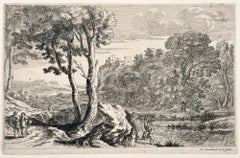
The Anglers
By Herman van Swanevelt
Located in Middletown, NY
Etching with engraving on cream laid paper with a large unidentified alphabetic watermark, 6 1/2 x 9 7/8 inches (165 x 251 mm), the full sheet. In good condition with handling wear a...
Category
Early 17th Century Old Masters Continental US - Landscape Prints
Materials
Laid Paper, Engraving, Etching
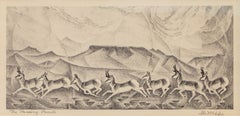
The Passing Parade, 20th Century Lithograph, Southwestern Desert with Antelope
By Ila Mae McAfee
Located in Denver, CO
This stunning original lithograph, titled The Passing Parade, is a signed piece by renowned American artist Ila Mae McAfee (1897-1995). Created in the 20th century, the artwork depic...
Category
20th Century American Modern Continental US - Landscape Prints
Materials
Lithograph
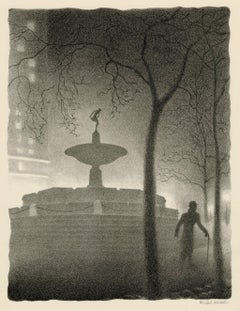
Pulitzer Fountain, Evening" — 1940s American Modernism, New York City
By Ellison Hoover
Located in Myrtle Beach, SC
Ellison Hoover, 'Pulitzer Fountain, Evening', lithograph, circa 1940, edition c. 40. Signed in pencil. A fine, atmospheric impression, on cream wove paper; the full sheet with margins (1 1/2 to 4 5/16 inches), in excellent condition. Archivally matted to museum standards, unframed.
Image size 12 1/2 x 9 5/8 inches (318 x 244 mm); sheet size 16 1/4 x 12 1/4 inches (413 x 311 mm).
ABOUT THE SUBJECT
The Pulitzer fountain was commissioned as a bequest by Joseph Pulitzer, newspaper publisher and founder of the Columbia School of Journalism. Designed by Austrian sculptor Karl Bitter...
Category
Mid-20th Century American Modern Continental US - Landscape Prints
Materials
Lithograph
"Ravanna
s Palace Burning, " Woodcut Landscape signed by Carol Summers
By Carol Summers
Located in Milwaukee, WI
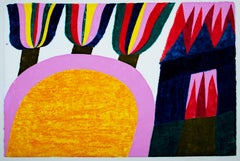
"Ravanna's Palace Burning" is a woodcut signed by Carol Summers. The image combines landscape and architecture, which is typical of the works Summers produced during the 1980s and '90s. In the image, a dark building stands burning, bright red flames licking from the windows and rooftop. It stands beside an orange field framed in pink, probably representing a plaza. Beyond the plaza are multicolored trees, their branches reaching upward like the flames on the building. The playfulness of the image is enhanced by Summers' signature printmaking technique, which allows the ink from the woodblock to seep through the paper, blurring the edges of each form.
Art: 24.5 x 37.25 in
Frame: 30 x 42.75 in
Numbered 53 of the edition of 125
Carol Summers (1925-2016) has worked as an artist throughout the second half of the 20th century and into the first years of the next, outliving most of his mid-century modernist peers. Initially trained as a painter, Summers was drawn to color woodcuts around 1950 and it became his specialty thereafter. Over the years he has developed a process and style that is both innovative and readily recognizable. His art is known for it’s large scale, saturated fields of bold color, semi-abstract treatment of landscapes from around the world and a luminescent quality achieved through a printmaking process he invented.
In a career that has extended over half a century, Summers has hand-pulled approximately 245 woodcuts in editions that have typically run from 25 to 100 in number. His talent was both inherited and learned. Born in 1925 in Kingston, a small town in upstate New York, Summers was raised in nearby Woodstock with his older sister, Mary. His parents were both artists who had met in art school in St. Louis. During the Great Depression, when Carol was growing up, his father supported the family as a medical illustrator until he could return to painting. His mother was a watercolorist and also quite knowledgeable about the different kinds of papers used for various kinds of painting. Many years later, Summers would paint or print on thinly textured paper originally collected by his mother.
From 1948 to 1951, Carol Summers trained in the classical fine and studio arts at Bard College and at the Art Students League of New York. He studied painting with Steven Hirsh and printmaking with Louis Schanker. He admired the shapes and colors favored by early modernists Paul Klee (Sw: 1879-1940) and Matt Phillips (Am: b.1927- ). After graduating, Summers quit working as a part-time carpenter and cabinetmaker (which had supported his schooling and living expenses) to focus fulltime on art. That same year, an early abstract, Bridge No. 1 was selected for a Purchase Prize in a competition sponsored by the Brooklyn Museum.
In 1952, his work (Cathedral, Construction and Icarus) was shown the first time at the Museum of Modern Art in New York City in an exhibition of American woodcuts. In 1954, Summers received a grant from the Italian government to study for a year in Italy. Woodcuts completed soon after his arrival there were almost all editions of only 8 to 25 prints, small in size, architectural in content and black and white in color. The most well-known are Siennese Landscape and Little Landscape, which depicted the area near where he resided. Summers extended this trip three more years, a decision which would have significant impact on choices of subject matter and color in the coming decade.
After returning from Europe, Summers’ images continued to feature historical landmarks and events from Italy as well as from France, Spain and Greece. However, as evidenced in Aetna’s Dream, Worldwind and Arch of Triumph, a new look prevailed. These woodcuts were larger in size and in color. Some incorporated metal leaf in the creation of a collage and Summers even experimented with silkscreening. Editions were now between 20 and 50 prints in number. Most importantly, Summers employed his rubbing technique for the first time in the creation of Fantastic Garden in late 1957.
Dark Vision of Xerxes, a benchmark for Summers, was the first woodcut where Summers experimented using mineral spirits as part of his printmaking process. A Fulbright Grant as well as Fellowships from the Louis Comfort Tiffany Foundation and the Guggenheim Foundation followed soon thereafter, as did faculty positions at colleges and universities primarily in New York and Pennsylvania. During this period he married a dancer named Elaine Smithers with whom he had one son, Kyle. Around this same time, along with fellow artist Leonard Baskin, Summers pioneered what is now referred to as the “monumental” woodcut. This term was coined in the early 1960s to denote woodcuts that were dramatically bigger than those previously created in earlier years, ones that were limited in size mostly by the size of small hand-presses. While Baskin chose figurative subject matter, serious in nature and rendered with thick, striated lines, Summers rendered much less somber images preferring to emphasize shape and color; his subject matter approached abstraction but was always firmly rooted in the landscape.
In addition to working in this new, larger scale, Summers simultaneously refined a printmaking process which would eventually be called the “Carol Summers Method” or the “ Carol Summers Technique”. Summers produces his woodcuts by hand, usually from one or more blocks of quarter-inch pine, using oil-based printing inks and porous mulberry papers. His woodcuts reveal a sensitivity to wood especially its absorptive qualities and the subtleties of the grain. In several of his woodcuts throughout his career he has used the undulating, grainy patterns of a large wood plank to portray a flowing river or tumbling waterfall. The best examples of this are Dream, done in 1965 and the later Flash Flood Escalante, in 2003. In the majority of his woodcuts, Summers makes the blocks slightly larger than the paper so the image and color will bleed off the edge.
Before printing, he centers a dry sheet of paper over the top of the cut wood block or blocks, securing it with giant clips. Then he rolls the ink directly on the front of the sheet of paper and pressing down onto the dry wood block or reassembled group of blocks. Summers is technically very proficient; the inks are thoroughly saturated onto the surface of the paper but they do not run into each other. The precision of the color inking in Constantine’s Dream in 1969 and Rainbow Glacier in 1970 has been referred to in various studio handbooks. Summers refers to his own printing technique as “rubbing”. In traditional woodcut printing, including the Japanese method, the ink is applied directly onto the block. However, by following his own method, Summers has avoided the mirror-reversed image of a conventional print and it has given him the control over the precise amount of ink that he wants on the paper. After the ink is applied to the front of the paper, Summers sprays it with mineral spirits, which act as a thinning agent. The absorptive fibers of the paper draw the thinned ink away from the surface softening the shapes and diffusing and muting the colors. This produces a unique glow that is a hallmark of the Summers printmaking technique. Unlike the works of other color field artists or modernists of the time, this new technique made Summers’ extreme simplification and flat color areas anything but hard-edged or coldly impersonal.
By the 1960s, Summers had developed a personal way of coloring and printing and was not afraid of hard work, doing the cutting, inking and pulling himself. In 1964, at the age of 38, Summers’ work was exhibited for a second time at the Museum of Modern Art. This time his work was featured in a one-man show and then as one of MOMA’s two-year traveling exhibitions which toured throughout the United States. In subsequent years, Summers’ works would be exhibited and acquired for the permanent collections of multiple museums throughout the United States, Europe and Asia. Summers’ familiarity with landscapes throughout the world is firsthand. As a navigator-bombardier in the Marines in World War II, he toured the South Pacific and Asia.
Following college, travel in Europe and subsequent teaching positions, in 1972, after 47 years on the East Coast, Carol Summers moved permanently to Bonny Doon in the Santa Cruz Mountains in Northern California. There met his second wife, Joan Ward Toth, a textile artist who died in 1998; and it was here his second son, Ethan was born. During the years that followed this relocation, Summers’ choice of subject matter became more diverse although it retained the positive, mostly life-affirming quality that had existed from the beginning. Images now included moons, comets, both sunny and starry skies, hearts and flowers, all of which, in one way or another, remained tied to the landscape.
In the 1980s, from his home and studio in the Santa Cruz mountains, Summers continued to work as an artist supplementing his income by conducting classes and workshops at universities in California and Oregon as well as throughout the Mid and Southwest. He also traveled extensively during this period hiking and camping, often for weeks at a time, throughout the western United States and Canada. Throughout the decade it was not unusual for Summers to backpack alone or with a fellow artist into mountains or back country for six weeks or more at a time. Not surprisingly, the artwork created during this period rarely departed from images of the land, sea and sky. Summers rendered these landscapes in a more representational style than before, however he always kept them somewhat abstract by mixing geometric shapes with organic shapes, irregular in outline. Some of his most critically acknowledged work was created during this period including First Rain, 1985 and The Rolling Sea, 1989. Summers received an honorary doctorate from his alma mater, Bard College in 1979 and was selected by the United States Information Agency to spend a year conducting painting and printmaking workshops at universities throughout India. Since that original sabbatical, he has returned every year, spending four to eight weeks traveling throughout that country.
In the 1990s, interspersed with these journeys to India have been additional treks to the back roads and high country areas of Mexico, Central America, Nepal, China and Japan. Travel to these exotic and faraway places had a profound influence on Summers’ art. Subject matter became more worldly and nonwestern as with From Humla to Dolpo, 1991 or A Former Life of Budha, 1996, for example. Architectural images, such as The Pillars of Hercules, 1990 or The Raja’s Aviary, 1992 became more common. Still life images made a reappearance with Jungle Bouquet in 1997. This was also a period when Summers began using odd-sized paper to further the impact of an image.
The 1996 Night, a view of the earth and horizon as it might be seen by an astronaut, is over six feet long and only slightly more than a foot-and-a-half high. From 1999, Revuelta A Vida (Spanish for “Return to Life”) is pie-shaped and covers nearly 18 cubic feet. It was also at this juncture that Summers began to experiment with a somewhat different palette although he retained his love of saturated colors. The 2003 Far Side of Time is a superb example of the new direction taken by this colorist.
At the turn of the millennium in 1999, “Carol Summers Woodcuts...
Category
1980s Contemporary Continental US - Landscape Prints
Materials
Woodcut
Black-throated Diver: Original 1st Edition Hand-colored Audubon Bird Lithograph
By John James Audubon
Located in Alamo, CA
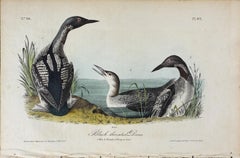
This is an original rare and collectible first edition John James Audubon hand colored royal octavo lithograph entitled "Black-throated Diver", No. 96, Plate 477, from Audubon's "Bir...
Category
Mid-19th Century Naturalistic Continental US - Landscape Prints
Materials
Lithograph
Heart Series III, Peter Max
By Peter Max
Located in Fairfield, CT
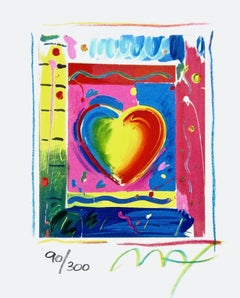
Artist: Peter Max (1937)
Title: Heart Series III
Year: 1998
Edition: 300/300, plus proofs
Medium: Lithograph on Coventry Smooth paper
Size: 5 x 4 inches
Condition: Excellent
Inscript...
Category
1990s Pop Art Continental US - Landscape Prints
Materials
Lithograph
$763 Sale Price
20% Off
Art Card: The Gates (Hand signed by Christo and Jeanne-Claude) Framed provenance
By Christo
Located in New York, NY
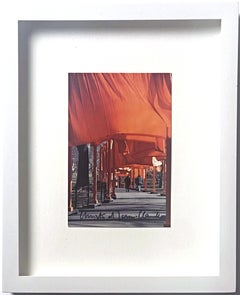
Makes a wonderful gift!
Offset lithograph card (Hand signed Christo et Jeanne-Claude)
Christo's "The Gates" was one of the most popular and successful temporary public art installati...
Category
Early 2000s Pop Art Continental US - Landscape Prints
Materials
Postcard
Beach Road, Landscape Etching by Harvey Kidder
By Harvey Kidder
Located in Long Island City, NY
Beach Road
Harvey Kidder, American (1918–2001)
Date: circa 1985
Aquatint Etching, Signed and numbered in Pencil
Edition of 150
Size: 25 x 32 in. (63.5 x 81.28 cm)
Category
1980s American Impressionist Continental US - Landscape Prints
Materials
Etching
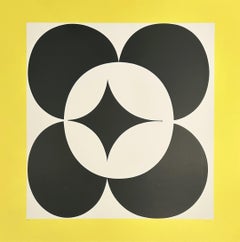
Circles in Yellow
By Yaacov Agam
Located in Washington, DC
Artist: Yaacov Agam
Title: Circles in Yellow
Medium: Screenprint in colors
Year: 1980
Edition: 154/200
Sheet Size: 30" x 28 1/2"
Image Size: 35 1/4" x 33 3/4"
Signed: Hand signed an...
Category
1980s Abstract Continental US - Landscape Prints
Materials
Screen
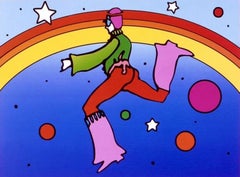
Cosmic Jumper, Detail II, Peter Max
By Peter Max
Located in Fairfield, CT
Artist: Peter Max (1937)
Title: Cosmic Jumper, Detail II
Year: 2001
Edition: 500/500, plus proofs
Medium: Lithograph on Lustro Saxony paper
Size: 9 x 11 inches
Condition: Excellent
I...
Category
Early 2000s Pop Art Continental US - Landscape Prints
Materials
Lithograph
$1,051 Sale Price
20% Off
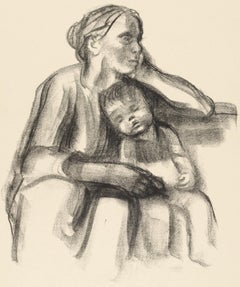
Kollwitz, Working-Class Woman with Sleeping Child (after)
By Käthe Kollwitz
Located in Southampton, NY
Lithograph on vélin paper. Inscription: Unsigned and unnumbered, as issued. Good condition. Notes: From the folio, Kathe Kollwitz, Ten Lithographs. Published by Henry C. Kleemann and...
Category
1940s Modern Continental US - Landscape Prints
Materials
Lithograph
$1,436 Sale Price
20% Off
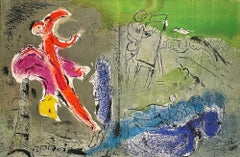
Vision de Paris II
By Marc Chagall
Located in Washington, DC
Artist: Marc Chagall
Title: Vision de Paris II
Portfolio: 1953 Verve Vol VII No. 27-28
Medium: Lithograph
Date: 1953
Edition: 6000
Frame Size: 28 1/4" x 21 1/2"
Sheet Size: 14" x 20"...
Category
1950s Continental US - Landscape Prints
Materials
Lithograph
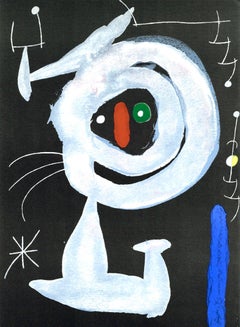
Joan Miro, Untitled, from Derriere le miroir, 1967 (after)
By Joan Miró
Located in Southampton, NY
This exquisite lithograph after Joan Miro (1893–1983), titled Sans titre (Untitled), originates from the 1967 folio Derriere le miroir, L'oiseau solaire, l'oiseau lunaire, etin-celle...
Category
1960s Surrealist Continental US - Landscape Prints
Materials
Lithograph
$796 Sale Price
20% Off
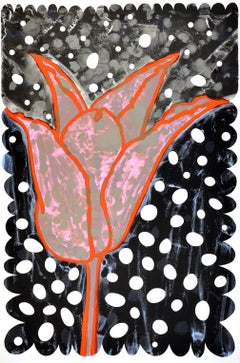
Flores para la Ñusta II
By Ana Maria Hernando
Located in Lyons, CO
Color lithograph with cut outs, Edition 30.
Flores para la Ñusta translates as "Flowers for the Ñusta". The artist states:
"In the Andean cosmology, the Ñusta is the feminine ...
Category
21st Century and Contemporary Contemporary Continental US - Landscape Prints
Materials
Lithograph
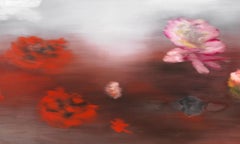
Ross Bleckner, Water Lilies (C.M.)
By Ross Bleckner
Located in New York, NY
Ross Bleckner
THE WATER LILIES (C.M.)
Year: 2019
Medium: Archival pigment print on Innova Etching Cotton Rag 315 gsm fine art paper
Size: 42 x 70 inches (107 x 178 cm)
Edition: 30
Price: $7,000
Also sold as a set with Floating Red
Glowing and contemplative, Ross Bleckner’s work blends abstraction with recognizable symbols to create meditations on perception, transcendence and loss.
Ross Bleckner was born in 1949 in New York and grew up in the prosperous town of Hewlett Harbor on Long Island. The first art exhibition he saw—The Responsive Eye, a show of Op art on view at the Museum of Modern Art in New York in 1965—had a strong impact on him. He decided to become an artist when he was in college, studying with Sol LeWitt and Chuck Close at New York University, where he earned a BA in 1971. Two years later, he completed an MFA at the California Institute of the Arts in Valencia, where he met David Salle.
After moving back to New York, Bleckner purchased and moved into a Tribeca loft building in 1974. Painter Julian Schnabel rented three floors of the building, and the Mudd Club, a nightclub frequented by musicians and artists, occupied space there from 1977 to 1983. Bleckner sold the building in 2004. His first solo exhibition was held in 1975 at Cunningham Ward Gallery in New York. In 1979 he began his long association with Mary Boone Gallery in New York, which championed several of the so-called art stars of the 1980s. In 1981 Bleckner met Thomas Ammann, an important Swiss art dealer who went on to collect his work.
Bleckner’s early 1980s Stripe...
Category
1990s Continental US - Landscape Prints
Materials
Archival Pigment
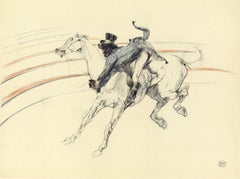
Henri de Toulouse-Lautrec, Chocolate, scene, from The Circus, 1952 (after)
By Henri de Toulouse-Lautrec
Located in Southampton, NY
This exquisite lithograph after Henri de Toulouse-Lautrec (1864–1901), titled Chocolat, scene (Chocolate, scene), originates from the 1952 album The Circus of Toulouse-Lautrec. Publi...
Category
1950s Post-Impressionist Continental US - Landscape Prints
Materials
Lithograph
$716 Sale Price
20% Off
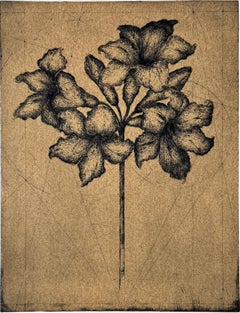
FLEURS #2 - Amaryllis, one of 4 portraits of flowers by Marjan Seyedin
Located in Palm Springs, CA
This Amaryllis is one of a series of classically beautiful renderings of flowers by Franco-Iranian artist Marjan Seyedin. Marjan has a contemporary an...
Category
2010s Contemporary Continental US - Landscape Prints
Materials
Etching
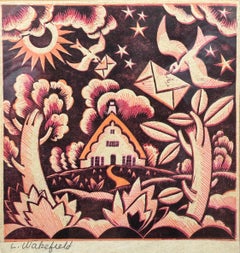
“Untitled”
Located in Southampton, NY
Original multicolor linocut by the American artist, Lucina Smith Wakefield. Signed by the artist lower left margin. Circa 1930. Condition is very good, no issues. The linocut is hou...
Category
1930s American Modern Continental US - Landscape Prints
Materials
Archival Paper, Linocut
$380 Sale Price
20% Off