Europe - Furniture
to
17,999
88,657
87,459
88,657
7,375
3,943
2,405
2,230
1,871
1,811
1,734
1,467
1,347
1,145
1,032
819
439
430
234
148
127
60
23,374
62,868
247,253
118,201
31,480
123,523
63,602
5,748
2,415
8,397
12,118
7,839
27,829
40,319
36,846
11,347
4,612
32,140
25,027
18,865
8,507
7,157
60,400
18,686
18,278
13,141
6,911
88,656
88,655
88,656
192
158
157
126
102
Item Ships From: Europe
Period: 19th Century
Period: 18th Century and Earlier
Period: 1910s
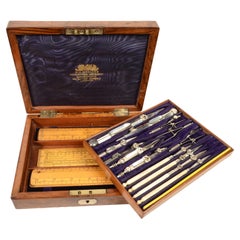
Box of mid-19th century compasses housed in their tuia burl box
Located in Milan, IT
Box of mid-19th century compasses, housed in their original tuia burl box, nickel-plated brass and ivory instruments, velvet and satin interior, lock and hinges in brass. Embossed ...
Category
Mid-19th Century Antique Europe - Furniture
Materials
Wood
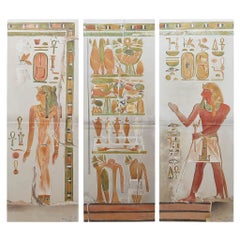
Set of 3 Large Original Antique Prints of Ancient Egyptian Wall Decoration, 1896
Located in St Annes, Lancashire
Wonderful prints of ancient Egyptian wall decoration
After Howard Carter
Dated 1896
Lithographs
Unframed.
The price is for the set of 3
The...
Category
1890s English Egyptian Antique Europe - Furniture
Materials
Paper
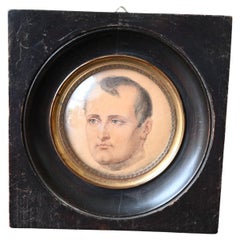
Fine Early 19th-Century Portrait Miniature of Napoleon Bonaparte
Located in Bilzen, BE
Fine Early 19th-Century Portrait Miniature of Napoleon Bonaparte
Watercolor on Paper Original Period Frame
An evocative and finely executed early 19th-century portrait miniature de...
Category
Early 19th Century French Empire Antique Europe - Furniture
Materials
Wood, Paper
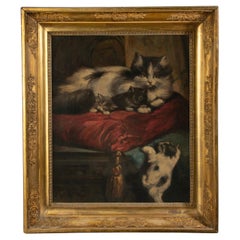
19th Century Oil Painting - Cats with Kitten
Located in Casteren, Noord-Brabant
Charming oil painting, dating from around 1900 and likely originating from Belgium or France. The work depicts a tender domestic scene with a mother cat and her kittens. Two kittens ...
Category
1890s French Belle Époque Antique Europe - Furniture
Materials
Wood
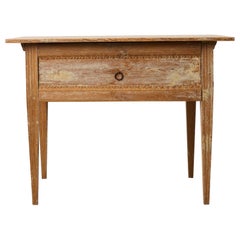
Antique Genuine Northern Swedish Gustavian Country House Table from Hälsingland
Located in Kramfors, SE
Antique genuine gustavian table made around 1820 to 1830 in Hälsingland in northern Sweden. This country house furniture has a classic straight gustavian shape with straight tapered ...
Category
Early 19th Century Swedish Gustavian Antique Europe - Furniture
Materials
Pine
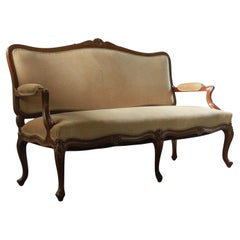
Antique Louis XV 18th century sofa, French
Located in Store Heddinge, DK
This hand-carved and decorated wooden sofa from the mid-18th century embodies timeless French elegance. A classic French sofa, it features a curved back with intricate carvings, cabr...
Category
19th Century Danish Baroque Antique Europe - Furniture
Materials
Velvet, Walnut
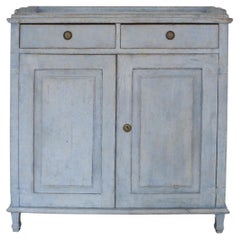
19th Century Antique Swedish Painted Pine Cupboard
Located in Kvidinge, SE
Swedish antique sideboard from the mid-19th century. The sideboard is made of solid pine, which makes the sideboard a stable piece of furniture that fits perfectly in any home.
Pai...
Category
1840s Swedish Rustic Antique Europe - Furniture
Materials
Pine

$2,703 Sale Price
35% Off
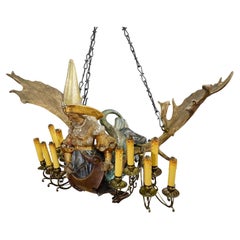
Antique Lusterweibchen of a Patrician Lady as a Mermaid ca. 1880
Located in Berghuelen, DE
Antique Lusterweibchen of a Patrician Lady as a Mermaid ca. 1880
A magnificent antique chandelier featuring a patrician lady depicted as a mermaid. The finely hand-modeled and paint...
Category
1880s German Renaissance Antique Europe - Furniture
Materials
Iron
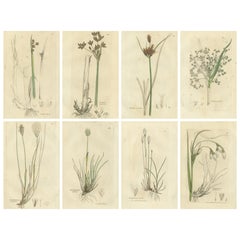
Set of 8 Antique Botanical Engravings of Bulrush, Cottongrass
Arrowgrass, 1830
Located in Langweer, NL
Set of 8 Antique Botanical Engravings of Bulrush, Cottongrass & Arrowgrass, c.1830
This set of eight antique botanical engravings presents a graceful collection of early nineteenth-...
Category
1830s British Antique Europe - Furniture
Materials
Paper
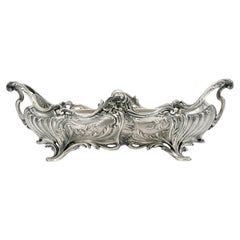
Victor SAGLIER French Art Nouveau Silverplate Planter Centerpiece, 1890
By Victor Saglier
Located in Saint-Amans-des-Cots, FR
French Art Nouveau centerpiece planter by Victor SAGLIER, 12 rue d'Enghien , Paris, France, ca.1890. Silverplate metal. Black patina in the hollows to accentuate the reliefs. Height ...
Category
1890s French Art Nouveau Antique Europe - Furniture
Materials
Metal
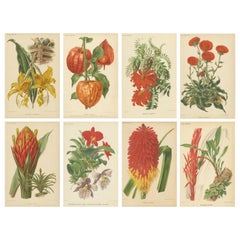
Original Vintage Botanical Illustrations from Revue Horticole, circa 1855
Located in Langweer, NL
Here are descriptions of the eight botanical illustrations, including the Latin and English names of the plants, why they are significant, and details about the creators and the tech...
Category
1850s French Antique Europe - Furniture
Materials
Paper
English Antique Pitch Pine Console Table / Provincial Desk with Drawers
Located in Leicester, GB
A beautiful English antique pitch pine console table with drawers. The console table has attractive slim, turned legs and beautiful dark wood knob handles on the deep drawers. An ele...
Category
1880s English Victorian Antique Europe - Furniture
Materials
Pine

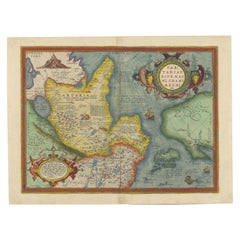
1573 Ortelius Map: First to Name California, Spanning Tartary to North America
Located in Langweer, NL
"1573 Abraham Ortelius Map of Tartary, Japan, and Western North America"
Description of the Map:
This is an outstanding example of Abraham Ortelius' map titled "Tartariae Sive Magn...
Category
16th Century Antique Europe - Furniture
Materials
Paper
$2,294 Sale Price
20% Off
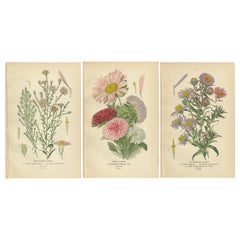
Antique Botanical Prints: Michaelmas Daisies, China Asters
New England Asters
Located in Langweer, NL
Trio of Antique Botanical Prints: Michaelmas Daisies, China Asters & New England Asters
This stunning set of antique botanical prints showcases "Michaelmas Daisies" (Aster Multi...
Category
1890s Antique Europe - Furniture
Materials
Paper
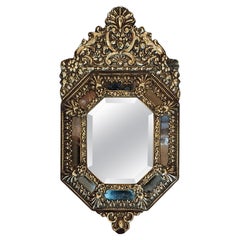
Victorian Embossed Brass Cushion Framed Mirror
Located in Altrincham, GB
Victorian Embossed Brass Cushion Framed Mirror with bevelled glass plate to the central panel - some blemishes in the mirror glass in the cushion frame - 15"w x 2"d x 28"h
Category
Late 19th Century English Late Victorian Antique Europe - Furniture
Materials
Brass
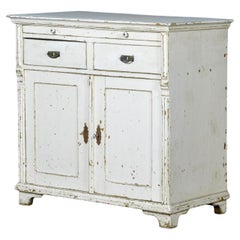
Antique pine sideboard, circa 1910
Located in Amsterdam, Noord Holland
This sideboard, dating from around 1910, is a true treasure for lovers of authentic furniture. The sideboard is in its original condition, with the original paint and a beautiful pat...
Category
1910s Hungarian Rustic Vintage Europe - Furniture
Materials
Pine
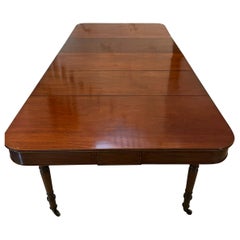
Rare Metamorphic Antique George III Quality Mahogany Extending Dining Table
Located in Suffolk, GB
Rare metamorphic antique George III quality mahogany extending dining table having a quality mahogany top with a reeded edge and 3 original extra leaves standing on 8 turned tapering...
Category
19th Century English George III Antique Europe - Furniture
Materials
Other
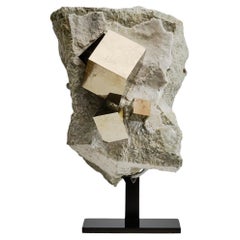
Golden Pyrite on Matrix
Located in London, GB
A striking specimen of golden pyrite from the renowned Navajún Mine, La Rioja, Spain, featuring perfectly formed cubes of varying sizes beautifully embedded in their natural limeston...
Category
15th Century and Earlier Spanish Antique Europe - Furniture
Materials
Crystal, Quartz, Rock Crystal, Pyrite
$4,500
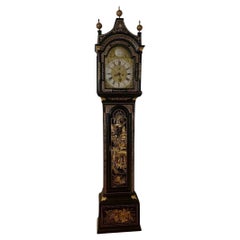
Fantastic quality antique George III lacquered and chinoiserie longcase clock
Located in Ipswich, GB
Fantastic quality antique George III lacquered and chinoiserie decorated longcase clock, having a quality brass arched dial, the arch with a name plate signed Jacob Ellry Rumsey surr...
Category
19th Century Antique Europe - Furniture
Materials
Brass
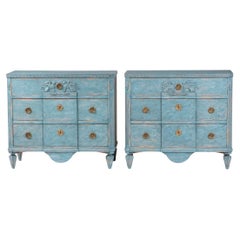
Pair of Swedish Gustavian Blue Painted Breakfront Commodes
Located in Kastrup, DK
Elegant pair of Gustavian-style breakfront commodes from Sweden, circa 1840–1860.
Each is painted in a light blue tone with a charming patina.
Below the top runs a finely carved à l...
Category
Mid-19th Century Gustavian Antique Europe - Furniture
Materials
Pine
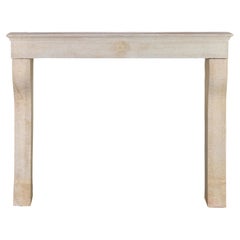
Slow Living Fine Rustic Limestone Fireplace Mantel
Located in Beervelde, BE
This original 19th-century French fireplace mantel, carved from soft-toned limestone, epitomises understated elegance.
The hand-carved surface bears authentic tooling marks, enhancin...
Category
19th Century French Louis XIII Antique Europe - Furniture
Materials
Stone, Limestone
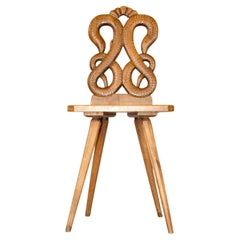
Swiss alp escabelle B 79
Located in grand Lancy, CH
Swiss alp escabelle B 79
Category
1860s Swiss Antique Europe - Furniture
Materials
Wood
$760 Sale Price / item
41% Off
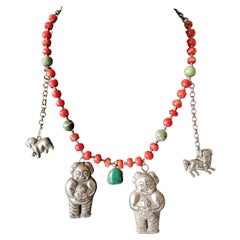
Rare Antique Qing Dynasty Chinese Ethnic Minority silver Coral necklace
Located in London, GB
A beautiful rare Antique Qing Dynasty Chinese Ethnic Minority silver Coral turquoise necklace from Yunnan.
A superb chain necklace with added Taoist charms with turquoise and fine r...
Category
Mid-19th Century Chinese Antique Europe - Furniture
Materials
Silver
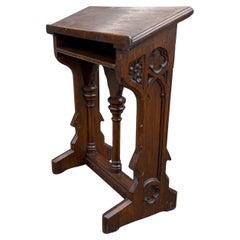
Antique Hand Carved Gothic Revival Oak Church Lectern Desk w. Bible Compartment
Located in Lisse, NL
Top quality crafted and incredibly durable Gothic church lectern.
This practical size lectern is remarkably well crafted and the design and patina are ...
Category
Late 19th Century European Gothic Revival Antique Europe - Furniture
Materials
Oak
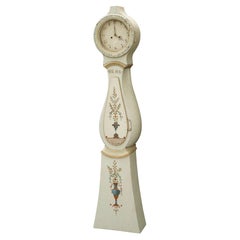
Mora Clock
Located in Crowthorne, Surrey
Swedish Mora clock with hand painted decorative floral details and clockmakers initials BEOS. Working Longcase clock mechanism of pendulum and 2 weights and a bell chime on the hour....
Category
18th Century Swedish Gustavian Antique Europe - Furniture
Materials
Wood
$3,000
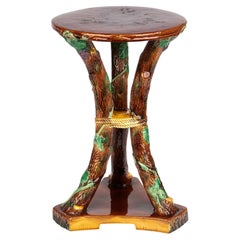
George Jones Rare Large Majolica Floor Standing Pedestal or Pot Stand
By George Jones
Sons
Located in Bishop
s Stortford, Hertfordshire
A rare and large antique majolica floor standing pedestal by renowned and sought after maker George Jones and dating from around 1865. The pedestal is formed as three curved branches...
Category
1860s British Aesthetic Movement Antique Europe - Furniture
Materials
Earthenware
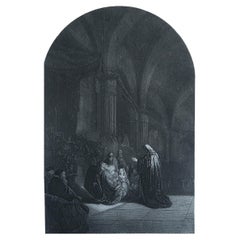
Antique Print After Rembrandt, The Presentation In The Temple, C.1850
By Rembrandt van Rijn
Located in St Annes, Lancashire
Wonderful image after Rembrandt
Fine Steel engraving.
Published by Blackie & Sons London. C.1850
Unframed.
Category
1850s English Baroque Antique Europe - Furniture
Materials
Paper
Swedish Biedermeier Dining Chairs Set of 6 veneer Golden Birch 1800s
Located in Lewes, England
Rare set of 6 antique Swedish flame golden birch Biedermeier dining chairs from C1860-1920 with the distinctive curved seat back, carved central wreath motif and gracefully curved fr...
Category
Late 19th Century Swedish Biedermeier Antique Europe - Furniture
Materials
Birch

$4,934 Sale Price / set
25% Off
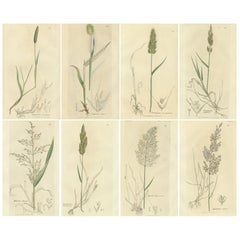
Antique Botanical Engravings of Meadow Foxtail, Polypogon
Agrostis, c.1830
Located in Langweer, NL
Set of 8 Antique Botanical Engravings of Meadow Foxtail, Polypogon & Agrostis, c.1830
This elegant set of eight antique botanical engravings presents a finely curated selection of B...
Category
1830s British Antique Europe - Furniture
Materials
Paper
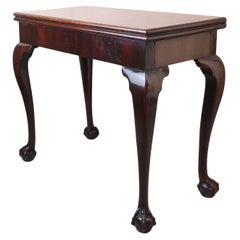
Antique Chippendale Style Side Table with Claw and Ball Feet. English C.1780
Located in St Annes, Lancashire
Wonderful Georgian side table
Beautiful timber with lovely figure and grain. All solid tropical hardwood apart from thick veneer on the apron.
Lovely quality carving to the claw an...
Category
1780s English Chippendale Antique Europe - Furniture
Materials
Wood
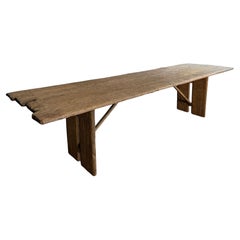
19th Century Wabi Sabi Artisan Studio Table
Located in Nijlen, BE
This beautiful, silky-smooth oak table was found in a Slovenian artist's studio.
It was used as a cutting table and general work table.
Its beautiful, irregular shape gives it an in...
Category
19th Century Slovenian Country Antique Europe - Furniture
Materials
Oak
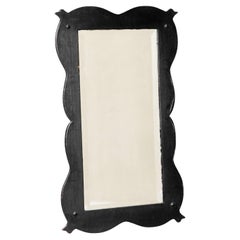
Large Antique Mirror in Ebonized Wood and Facetted and Weathered Mirror Glass
Located in Meer, VAN
Large Antique Mirror in Ebonized Wood and Facetted and Weathered Mirror Glass.
Sculptural and large antique mirror in ebonized wood and weathered mirror glass. Wonderful sculptural ...
Category
19th Century European Antique Europe - Furniture
Materials
Mirror, Wood
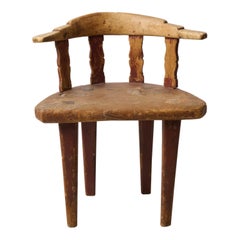
Unique Rustic Primitive Folk Art Chair from Northern Sweden in Solid Pine
Located in Kramfors, SE
Unique rustic primitive chair in folk art from the early 19th century, northern Sweden. The chair is made by hand in solid pine and in untouched original condition with clear signs o...
Category
Early 19th Century Swedish Folk Art Antique Europe - Furniture
Materials
Pine
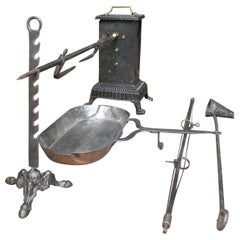
19th Century French Napoleon III Spring Driven Roasting Jack
Located in Amerongen, Amerongen
Functional and beautiful 19th century French Napoleon III roasting jack made of cast iron, wrought iron, brass and copper. It is used for cooking in a kitchen fireplace. The set cons...
Category
19th Century French Napoleon III Antique Europe - Furniture
Materials
Brass, Copper, Iron, Wrought Iron
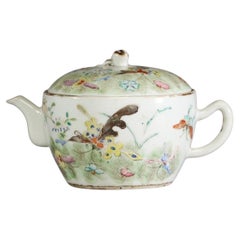
Chinese Tongzhi Porcelain Teapot Marked And from the period (1861-1875)
Located in Bilzen, BE
Antique Chinese porcelain teapot with fine hand-painted decoration, marked with a seal period mark of Tongzhi (1861-1875)
Perfect condition, no chips, cracks or other defects
Total ...
Category
Late 19th Century Chinese Qing Antique Europe - Furniture
Materials
Porcelain
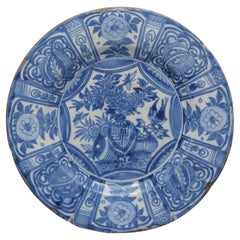
Delft - Wanli style
Kraak
Charger - 17th century
By Delft
Located in DELFT, NL
Fine Delftware dish painted in cobalt blue on tin-glazed faience, featuring central vases filled with blossoming branches, accompanied by a bird and insects. The border is divided in...
Category
Early 18th Century Dutch Chinoiserie Antique Europe - Furniture
Materials
Earthenware, Delft, Faience
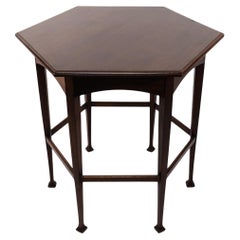
Liberty
Co., attri. An Aesthetic Movement Hexagonal Side Table
By Liberty
Co.
Located in London, GB
Liberty & Co., attributed
An Aesthetic Movement hexagonal side table with herringbone inlay to the edge of the top and a molded edge with shaped aprons below, standing on six legs un...
Category
19th Century British Aesthetic Movement Antique Europe - Furniture
Materials
Walnut
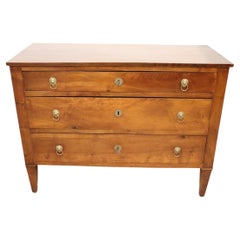
18th Century Italian Louis XVI Solid Walnut Antique Chest of Drawers, Restored
Located in Casale Monferrato, IT
We present this elegant antique Italian chest of drawers dating back to the second half of the 18th century, Louis XVI period. An extremely refined chest of drawers, whose characteri...
Category
Late 18th Century Italian Louis XVI Antique Europe - Furniture
Materials
Walnut
$4,781 Sale Price
20% Off
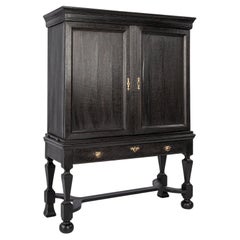
Antique early 18th century Dutch blacked oak two door table cabinet for TV
Located in Casteren, NL
This Dutch table cabinet, also known as a cross-legged cabinet, is made of oak and has a deep, almost black finish, which suggests a traditional treatment such as ebonized stain or dark varnish. The cabinet stands on a distinctive base with four turned and faceted legs, connected by an elegantly curved stretcher and ending in ball feet. This type of base is characteristic of cross-legged cabinets. The upper section features two doors with molded panels and a cornice with a clean yet subtle profile. The gilded hardware on the drawers and doors adds a stately and luxurious appearance. The cabinet is removable, making transport and installation significantly easier. Additionally, its design makes it particularly suitable for housing a television. Thanks to the special hinges and their strategic placement, the doors can be fully opened without obstructing the view. Inside, there is space for a television with a maximum width of 48.2 inches and a height of 27 inches. The interior is finished in the same deep, dark color as the exterior, ensuring a uniform and elegant appearance. This cabinet was crafted in the Dutch Baroque style and is likely from the period between 1680 and 1720. The Dutch Baroque style is characterized by a restrained yet elegant design, where functionality and durability go hand in hand with refined details. This piece exhibits typical Baroque features such as the heavily molded cornice, the solid presence of the upper section, the use of dark wood tones, and the expressive shape of the base. This type of cabinet was made during the late Dutch Golden Age, a time when prosperity still had a significant influence on furniture design. During this period, cross-legged cabinets were highly sought after by the affluent bourgeoisie and institutions such as city halls and council offices, where they were used for securely storing important documents, money chests, and administrative records. Dutch furniture makers were among the most influential in Europe at the time, exporting their craftsmanship to countries like England and Germany. The use of dark oak furniture...
Category
Early 18th Century Dutch Baroque Antique Europe - Furniture
Materials
Brass
$12,947 Sale Price
20% Off
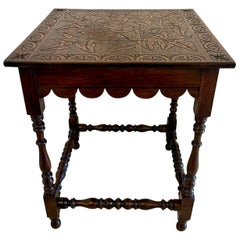
Antique Victorian Quality Carved Oak Lamp Table
Located in Suffolk, GB
Antique Victorian quality carved oak lamp table having a quality carved oak square top with leaves and sunflowers, shaped apron supported by four elegant turned columns standing on t...
Category
19th Century English Victorian Antique Europe - Furniture
Materials
Oak
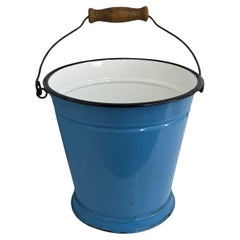
Blue Enamel Water Bucket with Wire and Wooden Handle, Austria, 1910s
Located in Nuernberg, DE
Antique Austrian enamel water bucket with wire and wood handle. Made by Austro Email in Austria. The bucket has many practical uses including w...
Category
1910s Austrian Folk Art Vintage Europe - Furniture
Materials
Wrought Iron
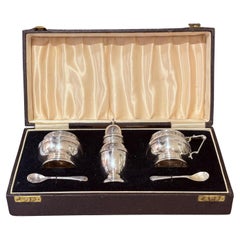
Sterling Silver Condiment Set in Case Blue Glass Salt, Mustard
Pepper Shaker
Located in Wembley, GB
Sterling Silver Condiment Set with Blue Glass Liners, English Hallmarked
An exquisite English sterling silver condiment set, complete with its original fitted presentation case and f...
Category
Late 19th Century English Art Deco Antique Europe - Furniture
Materials
Gold Plate, Silver, Sterling Silver
$1,120 Sale Price / item
25% Off
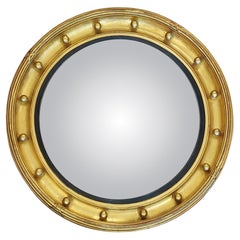
19thC Regency Style Giltwood Convex Mirror
Located in Altrincham, GB
19thC Regency Style Giltwood Convex Mirror - with reeded ebonised slip and cavetto ball moulded frame - 22" diam x 2.5"d
Category
Late 19th Century English Regency Revival Antique Europe - Furniture
Materials
Mirror, Giltwood
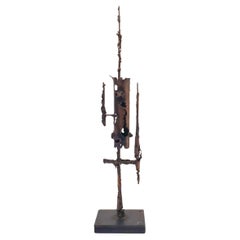
Marcello Fantoni style. Stunning brutalist sculpture, Italy, 1950s
By Marcello Fantoni, Silas Seandel, Paul Evans
Located in SANT ADRIÀ DE BESÒS, ES
Brutalist sculpture in Marcello Fantoni's style, 50s. Made of copper metal cut with a torch and welded together the pieces that form it, creating a body of purely brutalist phantasma...
Category
1850s Italian Brutalist Antique Europe - Furniture
Materials
Copper, Iron
$1,195 Sale Price
20% Off
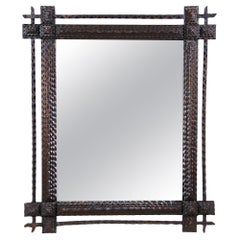
19th Century Rustic Tramp Art Mirror - Hand Carved, Austria, circa 1870
Located in Lichtenberg, AT
Out of the ordinary rustic Tramp Art mirror from the late 19th century in Austria. Elaborately hand carved out of basswood around 1870, this rural wall mirror comes with a dark brown...
Category
Late 19th Century Austrian Rustic Antique Europe - Furniture
Materials
Mirror, Softwood
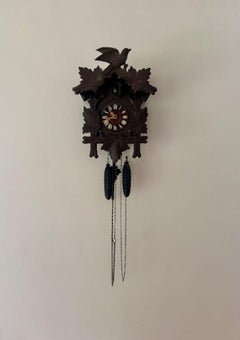
Quality antique Black Forest cuckoo clock
Located in Ipswich, GB
Quality antique Black Forest cuckoo clock, having a quality traditional antique cuckoo clock decorated with carved leaves and a bird to the top a...
Category
19th Century German Antique Europe - Furniture
Materials
Pine
George Trollope
Sons fireplace
room, Paris Exhibition 1878 Gold Medal Winner
Located in London, GB
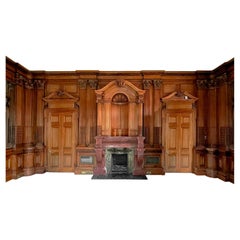
George Trollope and Sons. Exhibited at the Paris Universal Exhibition in 1878 winning a Gold Medal for Excellence.
The set forms the four sides of a complete panelled room that was exhibited as a boudoir room or petit salon at the Paris Exhibition 1878 .
The main feature and centrepiece of this boudoir room is the Rosso Antico marble fireplace surmounted by an open display niche carved in cedar wood.
Each side of the room is composed of various panels and are as follows:
One side with a grand Rosso Antico marble fireplace flanked by two doorways.
One side with French doors originally opening onto a balcony, flanked by two large bookshelves.
One side with a window flanked by two mirrors. The opposite side with three large mirrors.
The complete room measures:
21 ft / 6.4 m wide, 17 ft / 5.18 m deep, and 12 ft / 3.65 m high.
It could also be used in a number of different combinations to suit various room layouts. The mirrors could be replaced with windows or further bookcases.
Each side is decorated with various sizes of finely carved panels and holds ornate Corinthian style columns surmounted with cherubim's on the capitals. Three cherubs are formed at the top of each corner with three columns, at the column bases there are circular carved pedestals to display statues.
Published & illustrated in the ‘Illustrated Catalogue of the Paris International Exhibition’.
The main part of this room, the Rosso Antico marble fireplace is surmounted by a large open display niche carved in cedar wood are illustrated with a line drawing in the Paris Universal Exhibition catalogue on page 209. The whereabouts of the seminaked caryatids and the marble bust of Alexander Pope are unknown. The bust of Alexander Pope was copied from the original one in Westminster Abbey, London.
The Corinthian columns now flanking the niche above the fireplace are also in cedar wood having the identical carved fluting to the rest of the room and were made to replace the caryatid figures. Those Corinthian columns are period to the room and can only have been made shortly after it arrived back to London and before it was reassembled and fitted into the house built by George Trollope and Sons in the 1880's, and where we removed it all from.
George Trollope made clever use of Alexander Pope's early 18th-century poetical successes in Great Britain and France by using ‘The Rape of Lock’, a mock-heroic narrative poem Pope wrote in 1712 about Petre who cut off a lock of Arabella’s hair without her permission, as the theme of the boudoir room or petit salon at the 1878 Paris Exhibition.
In the original exhibition display of the room set, tapestries depicting the Rape of Lock were hung where the mirrors are now positioned.
Alexander Pope's The Rape of the Lock is a humorous indictment of the vanities and idleness of 18th-century high society. Basing his poem on an actual incident among two families of his acquaintance, Pope intended his verses to quench hot tempers and to encourage his friends to laugh at their own foolishness.
The poem is an outstanding example in the English language of the genre of mock-epic. The 'epic' was considered one of the most serious of literary forms; it had been applied, in the classical period, to the trivialities of love and war. Pope’s mock-epic is not to mock the form itself, but to mock his society in its very failure to rise to epic standards, exposing its pettiness by casting it against the grandeur of the traditional epic subjects and the bravery and fortitude of epic heroes: Pope’s mock-heroic treatment in The Rape of the Lock underlines the ridiculousness of a society in which values have lost all proportion, and the trivial is handled with the gravity and solemnity that ought to be accorded to truly important issues. The 18th-century society in this poem fails to distinguish between things that are important and things that are not. The poem mocks the men it portrays by representing them as unworthy of a heroic culture. Therefore the mock-epic follows the epic in that its main concerns are serious and moral. The point that the theme must now be satirical rather than earnest is symptomatic of how far the culture has fallen.
Retaining the original exhibition label
The back of the panelling still retains two original labels printed with the 'Union Jack' and printed adjacent to it, 'The Secretary Royal British Commission for the Universal Exhibition 1878 Champ de Mars Paris'.
Adjacent to that and below, printed and written in ink vertically:
Exhibitor: (and signed in ink) George Trollope & Sons.
Address: (written in ink) Halkin Street West. London.
Allotment in Block: (written in ink) a2. In the printed floor plan 'a2 square' is in the very first line to the right of the floor plan and handwritten in ink with a 'diamond shape' also written with '101' within it. This pin points where George Trollope's stand was located.
With thousands of items being displayed at the Exhibition, this label would have been the floor plan for the craftsmen, so they knew the correct place to install the boudoir room or petit salon.
The firm continued expanding house building and interior decoration side of the business and by 1849 was also trading as an estate agency, letting and controlling property for the Grosvenor Estates. A separate branch of cabinet-makers, bearing the family name, was opened at West Halkin Street, London. becoming known as 'The Museum of Decorative Arts' (looked after by George Robinson). Here Trollope and Sons also sold high-class antique furniture made by other makers. In 1851, the firm became formally known as George Trollope and Sons. West Halkin Street, London. The address was recorded in the listing for the firm in The Furniture Gazette Directory, 1876 & 1877.
Period Press Coverage & Art Critic Review.
everal newspapers also thoroughly describe George Trollope and Son's stand including the different tapestries that were hung where the mirrors are now, illustrating the poem 'The Rape of Lock', by Alexander Pope.
Marius Vachon, a French Art Critic and journalist, who wrote for the journal ‘La France’ published an extensive review of the Trollope and Sons stand in a book called Les Merveilles de l'Exposition de 1878 (The Wonders of the 1878 Exhibition).
Note: In the World Fairs translation it states door frame, Marius Vachon had originally written ‘chambranle’ in French, 'chambranle' loosely translates to a frame around something, and should read in its correct context: ‘fireplace in rosso antico’.
We have taken the extract below written by Marius Vachon in its translated form from: Les Merveilles de l'Exposition de 1878, (The Wonders of the 1878 Exhibition). This puts into perspective the importance of this fine quality room interior when he viewed it at the exhibition in 1878:
Marius Vachon: English furniture is very curious to observe; irreproachable from the point of view of execution, the furniture of our neighbours always reaches the last degree of respectability and comfort. One thing to be noticed is that for large pieces of furniture, the English upholsterer is transformed into a sort of architect; everything he makes takes on a monumental aspect.
The first object that catches the eye when one enters the furniture class is the beautiful boudoir-salon exhibited by Mr. Trollope. The boudoir (or petit salon), of carved cedar wood, is an attempt to reproduce the style which prevailed in England during the first decade of Queen Anne's reign, and all the details have been studied, but not copied, from examples of decorative work of the time. The fireplace is in "rosso antico" movement, and the ceiling is in portable plaster. The panels painted on canvas represent scenes from the heroic-comic poem "The Abduction of the Hairpin," (The Rape of Lock) written by Alexander Pope in 1712, the eighth year of Queen Anne's reign, in which the customs and mores of the time are satirized in a pleasing manner.
The apotheosis of the Loop and its sidereal transformations will form the decoration of the ceiling. In these illustrations of Pope's charming poem, the costumes and accessories have been taken from models of the time; and the bust of the poet, copied from his tomb in Westminster Abbey, occupies the niche in the centre of the mantelpiece.
M. Marius Vachon, the period writer of the above continues with:
Now we shall mention at random the magnificent dining table of Messrs. Johnston and Co., their oak mantelpiece, their boudoir table; Mr. Watt's drawing-room mantelpiece stepped in the old style and imitating the Japanese; Mr. James Shoolbred's great
The Decorative Arts Society on Trollope and Sons
The boudoir or petit salon is mentioned again in the Decorative Arts Society:
Trollope did not exhibit such highly rated objects at the 1878 Paris Exhibition as at previous exhibitions; items included a large mirror frame carved in limewood in Renaissance style and a satinwood cabinet in Adam revival style, with a similar armchair (illus. Meyer (2006), p. 242) and probably two rooms; one was a boudoir in cedar wood in Queen Anne style and the other was a boudoir decorated by the firm in the theme of Pope’s The Rape of Lock.
In the above extract, it is quite clear that the two rooms mentioned are in fact the very same room, because the fireplace and niche are illustrated in The Paris Universal Exhibition catalogue on page 209 and Marius Vachon describes the rest of the room set in the above…
Trollope and Sons exhibition pieces listed and described by Meyer in an article he wrote for: The Decorative Arts Society 1850 to present, Journal 25 in 2001., where he points out the importance of George Trollope and Sons and mentions a table by Trollope exhibited at the 1867 exhibition that sold for £40,000 in 1996. He also mentions a cabinet exhibited by Trollope at the International Exhibition of 1862 that sold at Sotheby's in 1997 for £150,000.
Interest was not as strong in the 1990's as it is today for rare exhibition pieces, high quality items were abundant back then, it was a golden era when the most beautiful works of art just kept coming onto the market. But there are exceptions as in this instance, when a unique, gold medal-winning exhibition work of art comes onto the market for the very first time.
Meyer continued researching and writing about the great exhibitions and released his book in 2006, 'The Great Exhibitions, London, New York, Paris and Philadelphia 1851- 1900, where he mentions only in passing, The Boudoir Room or Petite Salon exhibited by Trollope, he even states that an image was not reproduced and that Trollope's exhibits in 1878 were not up to the quality and class of the items Trollope exhibited in London in 1862 and Paris in 1868. This is probably because Meyer didn't know of the line drawing illustrating the Roso Antico Fireplace, Niche and Panelling reproduced in The Illustrated Catalogue of the Paris International Exhibition 1878 shown in the above which Geering recently uncovered.
John Meyer continues in the DAS journal:
Undoubtedly they (Trollope) are a firm worthy of further research as they were right at the forefront of the furniture business in London from 1860 to 1880.
Our research shows that the Petite Boudoir was awarded the gold medal for excellence in 1878 (see Journal La Liberté 23-10-1878 with the list of all medals attributed), something George Trollope and Sons did not achieve at the London 1862 and the Paris 1867 exhibitions. Jonathan Meyer joined Bonham's in 1977. He was Director at Sotheby's in charge of 19th Century Furniture from 1994 to June 2007. He was also chairman of the Fine Arts Faculty for The Royal Institute of Chartered Surveyors.
In the original description from the article in Les Merveilles de l’exposition de 1878, M. Marius Vachon states:
The first object that catches the eye when one enters the (English) furniture class is the beautiful boudoir-salon exhibited by Mr. Trollope.
Suggesting, it was in his opinion the very best on display in the English section, and being awarded the gold medal for excellence can only add weight to this.
Adjacent to the original label that was printed by The Secretary - Royal British Commission for the Universal Exhibition 1878 in stencil ‘TO BE KEPT’, i.e. ‘to be returned’. This confirms why it came back to London. We removed the Boudoir Room or Petite Salon from a Trollope house, part of a grand high-class housing estate in London which around the time of the exhibition Trollope and Sons were in the process of building, and where the room set was installed directly after it returned from the exhibition in 1878 until now.
Worthy of note is the machines that did the carving for the Boudoir Room or Petite Salon and also did all of the decorative carving (most of which was linenfold carving) for the Houses of Parliament, London.
This machine, the engraving and description of which we copy from Engineering, was specially designed by its inventor, Mr. Jordan, for assisting in the production of the vast amount of carved decorations required for the walls and ceilings of the Houses of Parliament, London, and it was so employed during the entire progress of the work. The late Sir Charles Barry was so well satisfied with it, that he frequently declared it would have been impossible to have accomplished the work without it. The Department of Woods and Forests employed five of the machines at the Government Works, Thames Bank, for several years; and the machines have now passed into the hands of Messrs. George Trollope and Son, and are still used in the same building.
They also exhibited the new technique of xylatechnography and sgraffito, methods of impressing coloured design into soft wood and engraving veneer to reveal the base wood.
The newspaper, La Liberte October, 23rd 1878 listing the medal winners of the Paris 1878 exhibition. Third column, ''GROUPE III MOBILIER ET ACCESSOIRES'', (GROUP III FURNITURE AND ACCESSORIES). Medailles d'or. (Gold Medals) where G Trollope et fils (G Trollope and Sons...
Category
1870s Antique Europe - Furniture
Materials
Marble
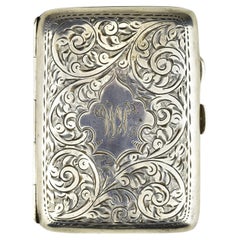
Antique 1917 Joseph Gloster Sterling Silver Cigarette Case, Botanical Scrollwork
By Gloster, Joseph Gloster
Located in Bad Säckingen, DE
This exquisite antique sterling silver cigarette case was crafted by Joseph Gloster Ltd in Birmingham, dated 1917. The case showcases a fine chiseled botanical scrollwork design on b...
Category
1910s English Victorian Vintage Europe - Furniture
Materials
Silver, Sterling Silver
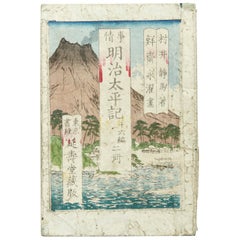
Antique Japanese History Book Meiji Era, circa 1878
Located in Barcelona, ES
Antique Japanese History book Meiji era, circa 1878 Woodblock print book Book dimensions: 182 mm x 121 mm There are damages because it is antique item as we show on the photos.
Category
1870s Japanese Meiji Antique Europe - Furniture
Materials
Paper
$298 Sale Price
64% Off
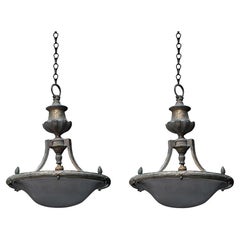
19th century matched pair of English bronze ceiling lights
Located in London, GB
19th century matched pair of English bronze ceiling lights
Dimensions in inches: H 19” x W 15” x D 15”
Age: 1890 - 1900
Origin: England
Condition: Aged
Overview
A very stylish matc...
Category
1880s British Early Victorian Antique Europe - Furniture
Materials
Bronze
Giltwood Console Mirror with Carved Decor, France 19th Century
Located in LA CIOTAT, FR
This elegant 19th century French mirror captures the refined spirit of the Louis XVI style, with its harmonious proportions and exquisite giltwood carving. Designed to be displayed a...
Category
19th Century French Antique Europe - Furniture
Materials
Mirror, Mercury Glass, Giltwood
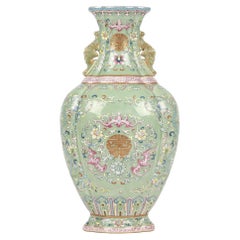
Chinese Qianlong Mark Chinese Famille Rose Vase with Bats
Located in Bishop
s Stortford, Hertfordshire
A stunning antique Chinese Qing porcelain famille rose vase decorated with bats with Qianlong mark and possibly of the period. The impressive vase of lobed form is painted with shou ...
Category
Late 18th Century Chinese Qing Antique Europe - Furniture
Materials
Porcelain
$5,708 Sale Price
30% Off
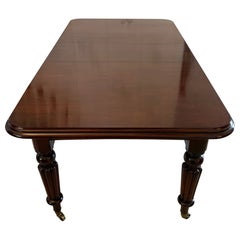
Superb Quality 8 Seater Antique Figured Mahogany Extending Dining Table
Located in Suffolk, GB
Superb quality 8 seater antique Victorian figured mahogany extending dining table having an outstanding quality figured mahogany top with a moulded edge and one original extra leaf, ...
Category
19th Century English Victorian Antique Europe - Furniture
Materials
Other
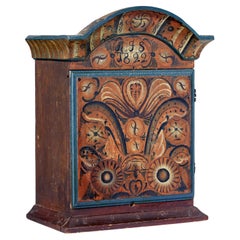
Early 19th century Swedish Dalarna hand painted cupboard
Located in Debenham, Suffolk
Early 19th century Swedish painted wall cupboard circa 1822.
Fine quality Dalarna region wall cupboard. Hand painted in orange, reds and greens. Shaped cornice below which the ini...
Category
Early 19th Century Swedish Folk Art Antique Europe - Furniture
Materials
Pine, Paint
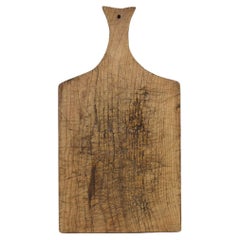
French 19th Century, Wooden Chopping or Cutting Board
Located in Buisson, FR
Unique wooden chopping-cutting board with a beautiful form. Great statement on your countertop,
France, circa 1850-1900
Weathered. If needed items were treated against woodworm.
H:55...
Category
19th Century French French Provincial Antique Europe - Furniture
Materials
Wood
$209 Sale Price
52% Off
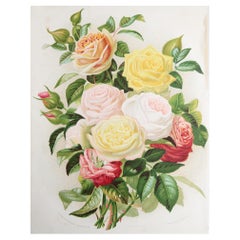
Original Antique Botanical Print- Roses. After Macfarlane, circa 1880
Located in St Annes, Lancashire
Great image of roses
Chromo-lithograph after J.L Macfarlane
Published by Cassell. circa 1880
Unframed. It gives you the option of perhaps making a set up using your own choice of ...
Category
1880s English Victorian Antique Europe - Furniture
Materials
Paper
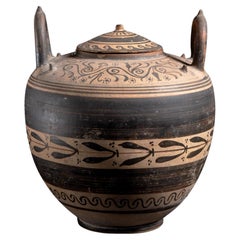
Ancient Greek Wedding Vase with Geometric and Vegetal Motifs
Located in London, GB
This elegantly proportioned vase is an unusually large and well-preserved example of a ceremonial nuptial vessel produced in South Italy during the 3rd to 4th centuries BC. Decorated...
Category
15th Century and Earlier Classical Greek Antique Europe - Furniture
Materials
Pottery
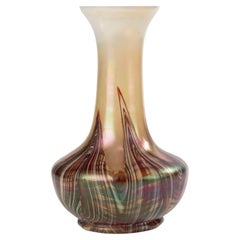
Early 20th Century Vase - Attributed to Loetz - Iridescent Glass - Marbled Decor
By Loetz Glass
Located in Casteren, Noord-Brabant
A striking early 20th-century iridescent art glass vase, attributed to Loetz, the renowned Bohemian glassworks known for its highly distinctive surface treatments and forms. Though u...
Category
1910s Austrian Art Nouveau Vintage Europe - Furniture
Materials
Art Glass
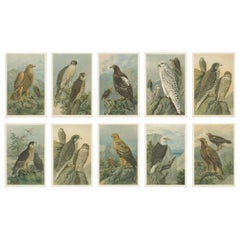
Birds of Prey, Complete Set of 10 Chromolithographs – Eagles
Falcons c1890
Located in Langweer, NL
Birds of Prey, Complete Set of 10 Chromolithographs – Eagles & Falcons c1890
This impressive and visually unified suite of ten large-format chromolithographs depicts some of the mos...
Category
Late 19th Century German Antique Europe - Furniture
Materials
Paper
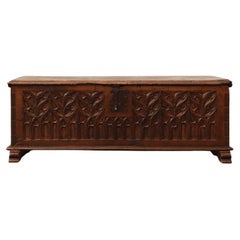
Rare Large Gothic 16th century carved solid oak chest, France
Located in Meulebeke, BE
France / 16th century / bridal or blanket chest / oak / Gothic
This impressive chest was hand-carved in solid oak in the 16th century in France. The construction is typical of very...
Category
16th Century French Gothic Antique Europe - Furniture
Materials
Oak
More Ways To Browse
Concrete Head
Conservatory Table
Coral Crab
Cowtan And Tout
Crystal Bowl And Pedestal
Crystal Jar Lid
Cupid Enamelled
Curtis Jere Enamel
Danish Chest Of 6 Drawers
Danish Dog
Dark Glass Bottle
Dark Green Cabinet
Desimone Italy Pottery
Diamond Pattern Veneer
Donkey Folk Art
Dorothy Draper Heritage
Dottling Safe
Dragon Horn