Europe - Windows
to
9
308
267
304
2
2
Height
to
Width
to
116
23
16
14
12
8
7
4
3
3
2
1
8
148
148
4
87
27
25
3
1
5
1
1
273
252
169
149
96
279
233
220
11
10
308
306
308
1
1
Item Ships From: Europe
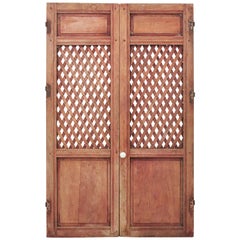
Spanish Carved Wood Lattice Rustic Doors, Pair
Located in Barcelona, ES
Antique Spanish 19th century cupboard rustic doors with lattice and carved panels, early 19th century.
These antique doors come from a cottage house in Galicia at the North coast of Spain. They were part of an antique lattice...
Category
Early 19th Century Spanish Rustic Antique Europe - Windows
Materials
Wood
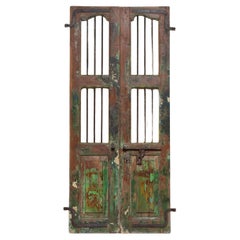
Pair Antique Window / Doors From India With Metal Bars. 19th Century
Located in Silvolde, Gelderland
19th century Indian window or door shutters. Complete with original hangings and metal mechanism for locking. The doors have panels and above the lock mechanism each door has three s...
Category
Late 19th Century Indian Anglo Raj Antique Europe - Windows
Materials
Steel

$1,892 Sale Price / set
20% Off
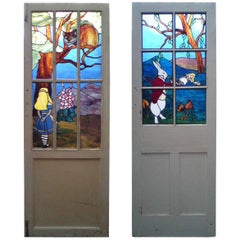
Alice in Wonderland, A Five Piece Suite of Stained and Leaded Glass Doors.
Located in London, GB
Alice in Wonderland incredible suite of stained and leaded glass set in the original doors and windows,.
Please note this suite is in two listings and the price here is for the five pieces in both listings.
A one-off commission was removed from a large house in England.
In this listing, there are two doors with upper stained glass panels with Alice in Wonderland and the Smiling Cheshire Cat sitting in a tree and another door with The Mad Hatter...
Category
Late 20th Century English Mid-Century Modern Europe - Windows
Materials
Stained Glass
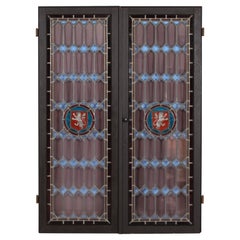
Set Old Leaded Windows with Colored Panes in Frame of Dark Wood, Denmark 1940s
Located in Silkeborg, Silkeborg
Set of old leadlights made of small sections of colorful glass in cyclamen, orange, powder blue and light smoke-colored colors. In the middle of each of the two panes is a lion motif...
Category
1950s Danish Baroque Vintage Europe - Windows
Materials
Lead
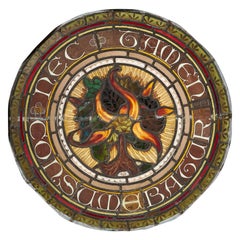
Large Ecclesiastical Scottish Stained Glass Roundel
Located in Wormelow, Herefordshire
An unrestored large ecclesiastical Scottish stained glass roundel depicting the burning bush. It is handpainted around the perimeter with ‘nec tamen consumebatur’, Latin for ‘yet it ...
Category
Mid-19th Century Scottish Antique Europe - Windows
Materials
Lead
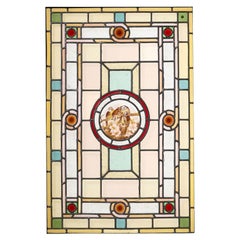
Antique Art Nouveau 19th Century Stained Glass Panel
Located in Wormelow, Herefordshire
An antique Art Nouveau style stained glass window dating to circa 1890.
This panel showcases a hand painted design of organic patterns with a stylised geometric flair and a strikin...
Category
Late 19th Century English Victorian Antique Europe - Windows
Materials
Glass, Stained Glass
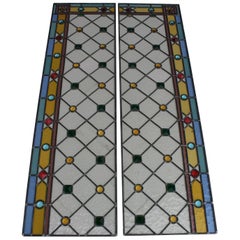
Pair of Art Deco Italian Stained Glass Panels, 1935 circa.
Located in Sacile, PN
Two decorated stained glass panels, completely restored, dated, circa 1935.
Category
1930s Italian Art Deco Vintage Europe - Windows
Materials
Metal
$2,188 Sale Price / set
25% Off
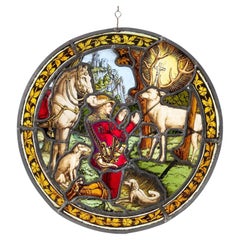
Small Antique German Religious Stained Glass Roundel
Located in Wormelow, Herefordshire
A small antique German stained glass roundel depicting St. Hubert and the Stag.
St. Hubert is the patron saint of hunters who is known for experi...
Category
Mid-19th Century German Victorian Antique Europe - Windows
Materials
Lead
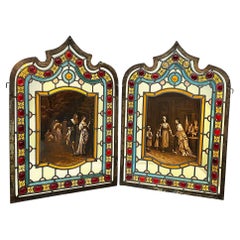
19th Century Window panels in stained glass
Located in Delft, NL
19th Century Window panels in stained glass
A set of 2 panels made of stained glass with scenes of characters walking in the forest and women with chi...
Category
19th Century European Antique Europe - Windows
Materials
Stained Glass
$5,870 / set
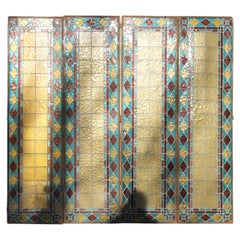
One of four "Liberty" Italian Stained Glass door- window Panel, Italy 1900 ca.
Located in Sacile, PN
One of four "Liberty" Italian Stained Glass door- window Panel, Italy 1900 c
Measure: Each door/panel measures height cm. 190, width cm. 5...
Category
Early 1900s Italian Arts and Crafts Antique Europe - Windows
Materials
Lead
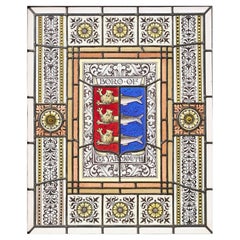
Great Yarmouth Coat of Arms Stained Glass Window
Located in Wormelow, Herefordshire
A late 19th / early 20th century stained glass window bearing the coat of arms of Great Yarmouth. This crest dates back to the 14th century, detailing a shield with half lions to one...
Category
Early 20th Century English Victorian Europe - Windows
Materials
Lead
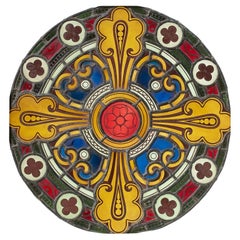
Large Antique Ecclesiastical Stained Glass Roundel Window
Located in Wormelow, Herefordshire
A large ø59cm antique ecclesiastical, post-medieval stained glass roundel. If looking for a pair, we are also selling another roundel in exactly the same design.
Dating from circa 1...
Category
Mid-19th Century English Victorian Antique Europe - Windows
Materials
Lead
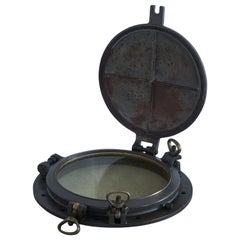
Solid Brass and Cast Iron Ship’s Porthole
Located in Tilburg, NL
Solid brass and cast iron Ship’s Porthole, early 20th century.
Heavy original ship’s porthole, made in solid brass, cast iron and glass. This characteristic object shows a warm overall patina, revealing its age and history on the world’s oceans.
The porthole has a glass door, lockable with two brass locks. A solid cast iron shutter...
Category
Early 20th Century Unknown Other Europe - Windows
Materials
Metal, Brass
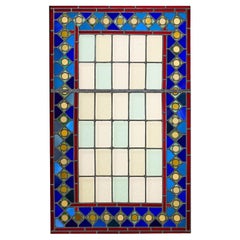
Very Large Reclaimed Medieval Style Stained Glass Window
Located in Wormelow, Herefordshire
A very large rectangular reclaimed medieval style stained glass window, one of three similar in the same design in different sizes we are selling.
This stained and leaded glass pan...
Category
20th Century English Medieval Europe - Windows
Materials
Lead
Old Indian Hand Painted Carved Wood Window Frame Indian Dancers, 19th Century
Located in Rome, IT
Original ancient Indian window depicting two dancers, a female and a male, intent in their moves and in typical customs. Floral themes in the frame. The window is made of hand painte...
Category
19th Century Indian Antique Europe - Windows
Materials
Wood

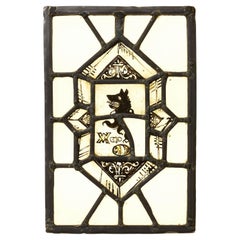
Small Medieval Style Stained Glass Window
Located in Wormelow, Herefordshire
A small and unusual antique stained glass window panel depicting a stylised black wolf. Though this piece dates from the 16th / 17th century, the styling is older, reminiscent of med...
Category
Early 17th Century English Medieval Antique Europe - Windows
Materials
Lead
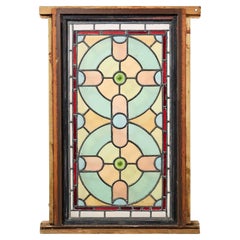
Antique English Stained Glass Window
Located in Wormelow, Herefordshire
A late Victorian antique English stained glass window, circa 1900. We are also selling a second window in the same design.
This colourfu...
Category
Early 20th Century English Victorian Europe - Windows
Materials
Glass, Stained Glass, Pine
Atkinson Bros Stained Glass Church Window Panel
Located in Wormelow, Herefordshire
A richly detailed stained glass church window panel designed by early 20th century stained glass manufacturers, Atkinson Brothers of Newcastle-Upon-Tyne, and manufactured by Hartley Wood & Co Glass Works.
This beautiful reclaimed stained glass panel once resided in the vestibule/porch window...
Category
Early 20th Century English Victorian Europe - Windows
Materials
Lead
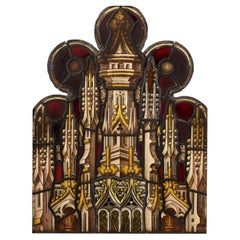
Reclaimed Medieval Style Square Stained Glass Window
Located in Wormelow, Herefordshire
A reclaimed medieval style square stained glass window, one of three similar in the same design in different sizes we are selling.
This stained and leaded glass panel will make a b...
Category
20th Century English Medieval Europe - Windows
Materials
Lead
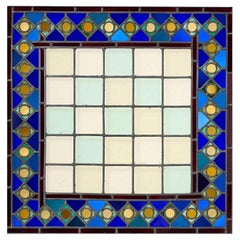
Sax Shaw (1916-2000) ‘The Bull’ Framed Stained Glass Panel
Located in Wormelow, Herefordshire
A vibrant framed stained glass panel titled ‘The Bull’ by British stained glass artist, Sax Shaw (signed). Made circa 1980-1990, this colourful stained glass window was featured in a...
Category
Late 20th Century Scottish Mid-Century Modern Europe - Windows
Materials
Lead
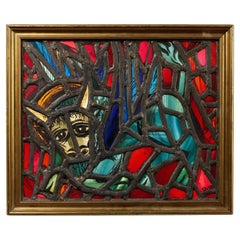
The Holkham Hall Stained Glass Window
Located in Wormelow, Herefordshire
A very large and impressive antique medieval style stained glass window removed from Holkham Hall, Norfolk. This beautifully preserved piece of English history was recently discovere...
Category
Mid-19th Century English Medieval Antique Europe - Windows
Materials
Lead
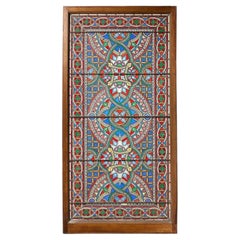
Antique English Stained Glass Church Window
Located in Wormelow, Herefordshire
A large and wonderfully vibrant antique English stained glass church window, circa 1880. Beautifully handpainted with an array of vibrant...
Category
Late 19th Century English Antique Europe - Windows
Materials
Lead
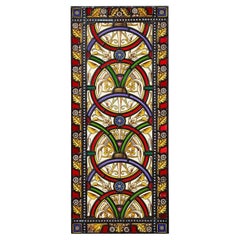
Antique Stained Glass Window of St John
Dragon
Located in Wormelow, Herefordshire
A large and impressive antique stained glass window depicting St John, the Evangelist, dating from circa 1860. In this stunning glasswork piece, the Saint is depicted in vibrant red ...
Category
Mid-19th Century English Antique Europe - Windows
Materials
Lead
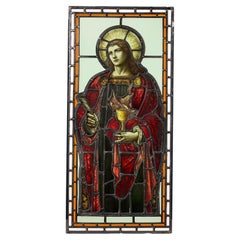
Antique Triptych Stained Glass Leadlight Panels
Located in Wormelow, Herefordshire
A triptych of stained glass leadlight panels depicting the Surrey & Middlesex coats of arms.
Dating to circa 1908, the three panels depict vivid scenes of a crest of a castle with ...
Category
Early 20th Century English Arts and Crafts Europe - Windows
Materials
Glass, Stained Glass, Wood, Pine
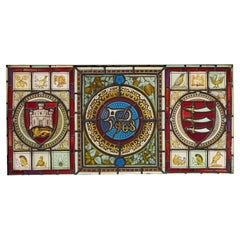
Large 19th Century Ecclesiastical Stained Glass Window
Located in Wormelow, Herefordshire
A large antique late 19th century Ecclesiastical style stained glass window signed by Ward & Hughes, London, 1890. This window is of excellent artistry, with each tiny detail hand painted by a late 19th century artist.
The stained glass depicts a religious scene, thought to be Joseph being visited by one of the Lord’s angels in a dream. The angel told Joseph to not be afraid and take Mary home as his wife, because what was conceived in her was from the Holy Spirit. The angel said they will call their son Jesus because he was to save his people from their sins.
A piece of art showcasing such religious meaning, only deserves to be pride of place inside a home or property - perhaps even a new addition to a church or chapel.
Ward & Hughes, London
Ward & Hughes, based in Frith St, Soho, London, proved to be one of the most successful stained glass studios of its time, known for its distinctive style.
It was initially a partnership between Thomas Ward and James Henry Nixon...
Category
Late 19th Century English Victorian Antique Europe - Windows
Materials
Glass, Stained Glass, Wood, Pine
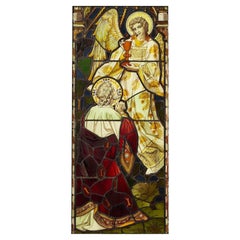
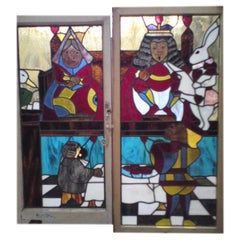
Alice in Wonderland, A Five Piece Suite of Stained and Leaded Glass Doors.
Located in London, GB
Alice in Wonderland a beautiful suite of stained and leaded glass set in the original doors and windows.
Please note this suite is in two listings and the price here is for the five pieces in both listings.
A one-off commission was removed from a large house in England.
The entire suite consists of these two windows with the king and queen of clubs...
Category
Late 20th Century English Mid-Century Modern Europe - Windows
Materials
Stained Glass
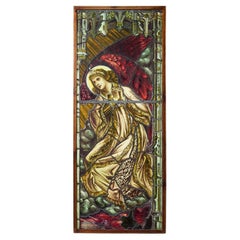
Tall Antique 19th Century Angel Stained Glass
Located in Wormelow, Herefordshire
A tall antique late 19th century figural panel depicting an angel with her hands clasped.
Dating to circa 1890, this stained glass incorporates both Victorian and Arts and Crafts ...
Category
Late 19th Century English Victorian Antique Europe - Windows
Materials
Stained Glass
Victorian Arched Stained Glass Lancet Window
Located in Wormelow, Herefordshire
A Victorian era arched stained glass lancet window depicting a young knight or soldier within a portrait medallion, with further stained glass images of oak leaves and acorns.
Dat...
Category
Early 20th Century English Victorian Europe - Windows
Materials
Lead

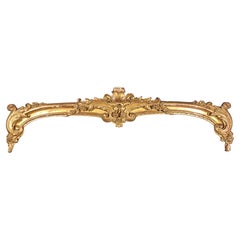
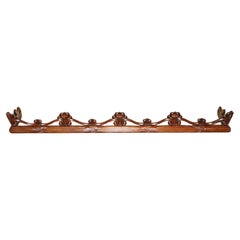
Napoleon III Gilded Wood Valance
Located in BARSAC, FR
Exceptional Napoleon III period valance in richly carved gilded wood in the rocaille style decorated with acanthus leaves, scrolls and flowers.
Rare model, presented as is with some...
Category
Mid-19th Century French Napoleon III Antique Europe - Windows
Materials
Wood
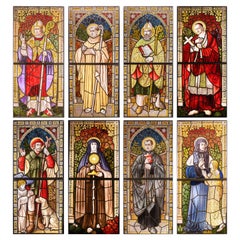
Selection of eight restored 19th C Neo-Gothic Stained-Glass Windows
Located in Leuven , BE
The Color Experience: Stained-glass windows
“Color is a power which directly influences the soul” (Wassili Kandinsky, Moskou 1866 – Neuilly-sur-Seine, 1944)
“Color! What a deep and mysterious language, the language of dreams!” (« La couleur ! Quelle langue profonde et mystérieuse, le langage des rêves », Paul Gauguin, Paris, 1848-Fatu-Hiva, 1903)
‘Color and feeling’, ‘color and meaning’, these are concepts that have gone together since time immemorial. Artists and craftsmen have a special bond with color. After all, it is a means of expression that can have a real reinforcing effect. Especially linking color with light offers unlimited possibilities. Glaziers and glass painters have tried to master both these ‘instruments’ for centuries.
The set of beautifully restored neo-Gothic windows in our collection are enough reason for us to let these works of art figure in a broader story. As a bonus, we would like to introduce you to the contemporary stained-glass artist and stained-glass restorer, Daniël Theys. whose workshop is in Sint-Pieters-Rode (Belgium). He talked to us about the materials and techniques he used for the restoration of our set of neo-Gothic stained-glass windows. A fascinating look at the tricks of the trade from a specialist!
A bird’s eye view of the history of the European stained-glass window.
Although the Romans already used translucent glass plates to cover wall openings, the stained-glass window reached its peak in Europe between 1150 and 1500. A period also known as the era of the cathedrals. At that time, stained-glass windows became more than just a way to let in the light, and to keep the space closed off. From now on, their functionality was also found in their didactic value. The biblical and saints’ stories that adorned the stained-glass windows became a kind of poor man’s bible. They brought, as it were, the knowledge of the holy scriptures in an understandable, pictorial way. At the same time, the colored light provided additional symbolism. The invading light was interpreted as a manifestation of God. It is also no coincidence that the main altar was bathed in light. It was the place where the most important sacrament was celebrated, that of the Eucharist. How were these magical colors obtained? Well, during the 12th and 13th centuries, metal oxides gave color to the glass. Copper, for example, produced different colors in the various stages of oxidation. The metal could color the glass light blue, green and even red. It should be noted that from the 13th century onwards, clear glass, which was cheaper and at the same time allowed more light into the buildings, was used more often. A century later, in the years 1400 to 1500, glass painters frequently painted onto the glass with a ‘stain’ of silver chloride or sulfide. The painted piece of glass was heat-treated in a furnace. The heating process ensured that the silver ions migrated into the glass and became suspended within the glass network. The stain gave colors ranging from a pale yellow to a rather deep red. This new technique allowed glaziers to get more than one color on a single glass fragment. The shades produced by painting in silver chloride were well suited for depicting golden crowns, scepters and other gilded objects and ornaments. But the most important advantage of the technique was the fact that the glass painter could now make transitions from yellow tones to white without having to apply separations with lead strips! This also improved the legibility of the pictured scene.
You can imagine that the labor-intensive process of the production of stained-glass windows was a very costly affair and therefore it was often patrons who donated them to a church or a chapel. The benefactors were usually eager to propagate their social status and were moved by concern for their salvation.
In the 16th century, stained-glass windows also began to appear in secular buildings such as town halls, the homes of the wealthy and commercial premises such as inns. It is striking that during this period the use of lead strips that border many parts of the image was further reduced in favor of real painting on stained glass. This was due to an increasing love of detail. For example, one wanted realistically painted portrait heads. Working with enamel paints was cumbersome. Each newly applied color had to be burned into the glass before another color or overpainting could be applied. It was not only the coloring of the glass that was complicated, the process of obtaining flat glass plates required many steps as well. The glazier blew a glass bulb with a blowpipe and then cut it open. Finally, each half of the sphere was turned around so fast that it became a disc. In later periods, the glazier blew out his glass bulb into a cylinder. Once the cylinder had cooled, its closed ends were removed, and the long sides were cut open. The pieces of glass obtained were then heated and flattened. During the 16th century, there was a division of labor between the stained-glass designer, the glazier, and the glass painter. It happened as well that the stained-glass artist used prints as models for his stained-glass windows. Whoever drew the design, the glazier always needed a model on the right scale, the so-called cartoon. On the cartoon, the lead strips were clearly marked, and the use of colors was indicated. Contracts at the time show that the price of stained-glass windows was calculated per square foot. The price per square foot included the labor and material costs. The price of the cartoon was not included.
In the 17th century, the work of glass painters remained important. At the same time, there was a growing popularity of stained-glass windows with heraldic themes. In the Low Countries there were several high-quality glass painters active.
During the 18th century, glass painting went downhill in our regions. The French occupation of the Southern Netherlands resulted in the destruction and sale of religious stained-glass windows.
It was only around the middle of the 19th century that the young Belgian state experienced a revival of stained glass. The renewed interest in the Middle Ages, the so-called ‘gothic revival’, caused a wave of restoration of old stained-glass windows of churches and orders for neo-gothic stained-glass windows. The Sint-Lucas art schools in Belgium played an important role in this. Industrial developments in the glass and steel industries naturally had an important hand in the popularity of stained-glass windows. Stained-glass had a wide range of uses; think of stained glasses in winter gardens, domes, windows, and doors of large mansions. Significant glazier’ studios arose in several larger Belgian cities. In Brussels, for example, you had the workshops of Capronnier and Colpaert, in Bruges the studios of Coucke and Dobbelaere, in Ghent the companies of Ganton-Defoin or Ladon. During the 19th century, glaziers followed the style developments in the visual arts. For example, the number of windows in Art Nouveau and Art Deco style is large. The restored stained-glass windows with male and female saints that we offer for sale, come from a building in Laeken, near Brussels. They probably decorated the space of a church, chapel, convent, or Catholic school. In the results of the interview with glass restorer Daniël Theys, you will learn more about the particularities of these splendid windows.
Chatting and browsing in the workshop of Daniël Theys
The Belgian Glass restorer and glass blower, Daniël Theys (), made a career switch at a later age and has been active in the profession since 1987. He is an important player in the field of stained-glass window art in Belgium. Moreover, he is the only one in the country who still masters the technique of glass etching. Daniël Theys receives many commissions from small parish churches to restore old stained-glass windows to their former glory. He made a name for himself in that niche and that is how Spectandum brought the set of 19th century stained glass windows to his workshop for reconstruction. They were delivered in old numbered wooden crates and Daniel had to start puzzling.
Numbered wooden crates with sections of the stained-glass windows
Normally a glazier starts working from a drawing with a scale of 1:1 (full size drawing), but in this case each piece had to be cataloged and photographed. The smaller pieces were grouped on the light box and photographed in their entirety. Then Daniël made a drawing of the remaining pieces that he had puzzled together with great care.
Smaller pieces identified and grouped on the light box
The restauration guidelines of the Agency for Monuments and Landscapes are not always the same as those of a restorer. For this reconstruction, Daniël primarily considered the purpose of the stained-glass windows. It had to be an aesthetic and salable set of stained-glass windows, so the choice of filling the gaps with neutral glass or epoxy was not really an option. Theys left well-executed previous restorations untouched. The windows may have been repaired three or four times in the past.
Piece of a cloak with glass shards from different periods (restorations)
Another problem Daniel faced during the restoration was the fact that some small parts of the old grisaille had been eaten away by microorganisms. The defect – caused by moisture – can be seen from the discoloration of the grisaille. The black-brown color is turned red.
This fragment shows well how the brown grisaille has turned red due to the attack of micro-organisms
The stained-glass windows of the 19th century are made of ‘in the mass-colored’ glass. This means that the colors were added to the liquid glass during its production process. This type of glass differs from glass colored with enamel paint, which became popular from the interwar period. The latter process involves applying enamel paint (this is a glass powder with a metal oxide to which a medium has been added) to the colorless glass. When firing the glass with the enamel paint, the powder fuses with the glass. The colors of email painted glass are less intense and less brilliant than those of ‘in the mass-colored glass’.
Jars with colored powder for the enamel paints
For the restoration Daniël only worked with mouth-blown glass, both with ‘in the mass-colored glass’ and with ‘verre plaqué’. This is blown glass composed of several layers of different shades. Over the years, Theys built up a large stock of old blown glass. Colored blown glass always has sliding shades. For example, a red piece of glass can have a color transition from bright red to light orange. These differences in shades are the result of the different thicknesses of the piece of glass. It allows the glazier to use a wide variety of shades.
The purple-red foliage with light blue accents was obtained by etching away parts of a piece ‘verre plaqué’. A small part of the lower glass layer is exposed.
The windows were completely re-leaded by the restorer because there was virtually no ‘lead net’ preserved. In general, lead strips only have a limited lifespan because of oxidation processes. Daniël removed the old lead remnants and placed new lead profiles. Then he applied putty between the glass fragments and the lead strips to seal the lead. A window must be made watertight. The current condition of the windows is excellent.
Decorative glass part with original lead remnants
New lead strip
The set of stained-glass windows we present today, originally consisted of windows of 5 to 6 m high. After all, they originally adorned a neo-gothic church. Since the original dimensions are not suitable for private buildings, it was decided to only restore the figurative representation.
The original spire of one of the windows
Thanks to a suspension eye, the window can be hung. There is also the possibility to place the window in an upright position.
Thanks to the craftsmanship of the Theys-Studio, we can once again enjoy the brilliance of color!
Looking for the missing link
The set of 19th-century stained-glass windows came into the possession of Spectandum without a clear provenance. The renowned Leuven antiques dealer, Cornelius Engelen, recalls that the windows came from a church in Laeken. There is no solid starting point for a search for the provenance. Based on the style of the stained-glass windows – most probably the late 19th century -, their religious iconography, and their original shape (pointed arch windows) and dimensions (5 to 6 cm high), we can assume that they were once displayed in a (neo-)gothic cult building. On the one hand, the stained-glass windows may have been removed after storm damage or other calamities, on the other they may have been taken away during a renovation or a demolition of a church. The Church of Our Lady in Laeken is the most famous church building in that municipality that could qualify. In the early 1920s, the central windows of the transept were badly damaged by a hurricane. Today, glass fragments of these windows (dating from 1893-1894) with the names of the sixteen missing saints and an arch infill of the western window are officially known. It would be interesting to find out if our set of eight saints once were part of the transept of Our Lady in Laeken. Research in the records of the church administrators could provide clarification. Knowing that most neo-gothic stained-glass windows from the Church of Our Lady come from the Jules Dobbelaere’s glass studio in Bruges, it is useful to consult that company’s archive as well. It is kept in the KADOC (Documentation and research center for religion, culture and; in Leuven. Of course, the sizes and shape of the stone window openings of the transept can also provide an indication. If we stylistically compare the grisailles of the set of stained-glass windows with the work of Jules Dobbelaere, we do see some relationship. Especially with a stained-glass window in the chapel of Our Lady of the Saint Anthony Church in Aalst.
Another line of research that we could follow, is that of the iconography of the series. One of the saints depicted is Saint Roch. There once was a Saint-Roch church in Laeken with 19th-century stained-glass windows from the Brussels studio of Jean-Baptiste Capronnier. The company archive of the glaziers François and Jean-Baptiste Capronnier is owned by the Flemish government and can be consulted in the above-mentioned KADOC. We already searched the sales catalog of 1892, in which Capronnier’s drawings and cartoons are described one by one. The saints that are represented in our set of windows, does not correspond with the names of the saints mentioned for the church of St. Roch in Laeken. Building on this argument, it can be concluded that the eight saints were not destined for this house of worship.
In the absence of lavishly illustrated monographs on the various glazier-companies in Belgium, the execution of a comparative study of the stained-glass windows is time-consuming and complex. Although a limited number of old photos of stained-glass windows can still be found in the database ‘Balat’ of the KIK-IRPA (), this remains far too limited to get a good picture of the output of the various companies.
19th C, Saint, Neo-Gothic Stained-Glass Window with Saint Martin, Belgium, 163 x 73 cm
Most people know Saint Martin (Szombathely, ca. 316 – Candes, 397) as the Roman Tribune who cut his cloak in two with his sword and gave one half to a beggar. The artist of the stained-glass window has opted for a different, less common iconographic representation here. Saint Martin is presented as a bishop with a miter and staff. According to a legend, Martin was lured to the city of Tours with a trick to consecrate him as a bishop. He refused the ecclesiastical office and hid in a barn with some geese. The birds betrayed him with their twittering. In the end Martin received his episcopal consecration. The goose at the feet of the saint clearly refers to this event.
19th C, Saint, Neo-Gothic Stained-Glass Window with St. Angela, Belgium, 163 x 73 cm
Angela de Merici was an Italian woman who taught young women religion, health care, and household skills. She founded the monastic community of the Ursulines. They played an important social role as founders of schools and orphanages. Saint Angela died in Brescia in 1540. It should therefore come as no surprise that the saint on the stained-glass-window is depicted with
a girl by her side.
19th C, Saint, Neo-Gothic Stained-Glass Window with Charles Borromeo, Belgium, 163 x 73 cm
Charles Borromeo (Milan, 1538-1584) grew up in a noble family. He was already made Cardinal and Archbishop of Milan at the age of 24. With his writings he contributed to the implementation of the Church reforms determined at the Council of Trent. Among other things, he released a new catechism. With his book on the design of church buildings, “Instructiones Fabriacae et Supellectilis Ecclesiasticae”, he left a mark on Baroque church construction. At the outbreak of the plague in his diocese in 1576, he devoted himself to the care of those affected. Hence, people sometimes pray to him when they have been hit by a serious illness.
19th C, Saint, Neo-Gothic Stained-Glass Window with St. Roch, Belgium, 163 x 73 cm
Saint Roch (Montpellier, 1295? /1350? -1327? /1380?) was born with a port-wine stain in the shape of a cross on his left hip. It was interpreted as a sign from God. After the dead of his parents, he gave his money to the poor and went on to live the life of pilgrim. He cared for plague sufferers and healed some of them by making a sign of the cross. He is especially invoked as protector against the plague.
19th C, Neo-Gothic Stained-Glass Window with St. Bernard of Clairvaux, Belgium, 163 x 73 cm
Bernard of Clairvaux (Fontaines, 1090-Clairvaux, 1153) decided to become a monk at the age of 21. In 1112 he entered in the monastery of Cîtaux. He was soon commissioned by the abbot to find a new monastery in Clairvaux. Because of his intellectual capacities and eloquence, he was consulted by various ecclesiastical and secular leaders. He ensured the expansion of the Cistercian order throughout Europe. As a Doctor of the Church, he wrote many tracts and sermons and established a new rule for the Templars. Above all, he was concerned with the discipline of the clergy. Therefore, he wrote a spiritual manual for the priests and bishops. Saint Bernard can be seen as a true mystic. He envisioned the union of the human soul with God as the most important goal in life. According to a legend, Bernard once had a vision in which the Blessed Virgin appeared to him and strengthened him with her mother’s milk. In the arts, the saint is mainly depicted with an abbot’s staff and a book with the Cistercian rule. His vision was also often portrayed.
19th C, Neo-Gothic Stained-Glass Window with St. John Berchmans, Belgium, 163 x 73 cm
The Belgian Jan Berchmans (Diest, 1599-Rome, 1621) was the eldest of five children. When his mother became seriously ill, he initially took care of her, but at the age of nine he was housed with the town’s priest. After a few years he moved to Mechelen to become the servant of a canon. It also gave him the opportunity to begin his studies in the seminary for priests. He eventually joined the Jesuits of Mechelen. He got their permission to study philosophy in Rome. In the Eternal City, he visited working-class neighbourhoods to teach the children about God. He died of an illness at the age of 22. Saint Jan Berchmans is the patron saint of school children and students.
19th C, Neo-Gothic Stained-Glass Window with Saint Clare...
Category
19th Century Belgian Gothic Revival Antique Europe - Windows
Materials
Art Glass, Stained Glass
Very Large Reclaimed Religious Stained Glass Window
Located in Wormelow, Herefordshire
A magnificent and very large reclaimed religious stained glass window made by Osborne and Phillips in 1949. This spectacular window stands at over 2.2m (7 ft) tall and features a rel...
Category
Mid-20th Century English Victorian Europe - Windows
Materials
Lead
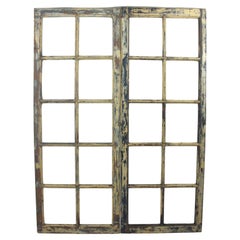
Pair of Industrial Paneled Wooden Doors or Windows
Located in Barcelona, ES
Antique Factory Paneled Wood Windows to be used as Windows or Doors, Spain, 1930s-1940s.
Pair of blue and ecru painted industrial wooden windows with panels to be used as doors, wind...
Category
20th Century Spanish Industrial Europe - Windows
Materials
Wood, Paint
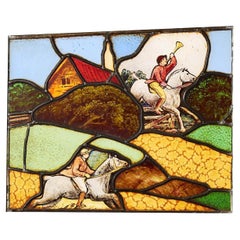
Reclaimed English Countryside Stained Glass Window
Located in Wormelow, Herefordshire
A vibrant and colourful antique stained glass window depicting two horse riders, one of which is blowing a horn; one of a series of early 20th century stained glass panels we are sel...
Category
Early 20th Century English Edwardian Europe - Windows
Materials
Lead
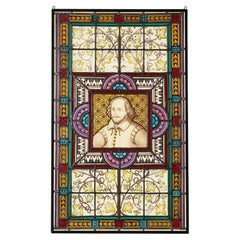
Shakespeare Antique Stained Glass Window
Located in Wormelow, Herefordshire
A late 19th century antique stained glass window panel depicting Shakespeare, one of 3 similar we are selling depicting notable figures o...
Category
Late 19th Century English Victorian Antique Europe - Windows
Materials
Lead
Pair of Antique Ecclesiastical Arched Stained Glass Panels
Located in Wormelow, Herefordshire
A simple yet elegant pair of antique ecclesiastical multi-arched stained glass panels.
Though the pair date from the early 20th century, they will make a stunning feature above a p...
Category
Early 20th Century English Arts and Crafts Europe - Windows
Materials
Lead
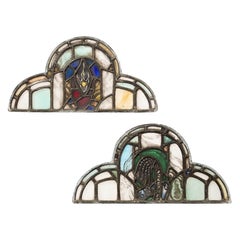
Large Ecclesiastical Roundel Stained Glass Panel
Located in Wormelow, Herefordshire
A large ø101cm antique ecclesiastical roundel stained glass panel depicting a stylised, scrolling design. If looking for multiple, we are also selling other roundels in a very simila...
Category
Late 19th Century English Victorian Antique Europe - Windows
Materials
Lead
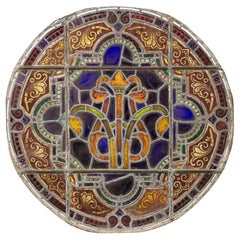
Antique Victorian Era Stained Glass Panel by Williams, Gamon
Co.
Located in Wormelow, Herefordshire
An antique Tudor style stained glass panel attributed to Williams, Gamon & Co dating to circa 1900. Burtonwood Brewery, Warrington.
The scene depicts a pre-Raphaelite style and sec...
Category
Early 20th Century English Victorian Europe - Windows
Materials
Lead
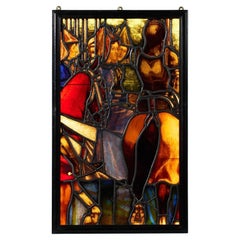
Antique Heraldic Rampant Lion Stained Glass Panel
Located in Wormelow, Herefordshire
A antique framed stained glass panel depicting a heraldic rampant lion to the centre, the perfect vibrant feature for any period property.
Housed in a painted softwood frame, the ha...
Category
Late 19th Century English Victorian Antique Europe - Windows
Materials
Glass, Stained Glass
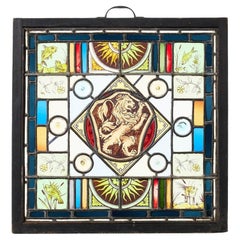
Set of 2 Reclaimed Astral Glazed Windows
Located in Wormelow, Herefordshire
A pair of large, good quality reclaimed astral glazed windows; a stylish feature for properties both period and modern. Dating from the early 20th century, these windows were restore...
Category
Late 19th Century English Victorian Antique Europe - Windows
Materials
Lead
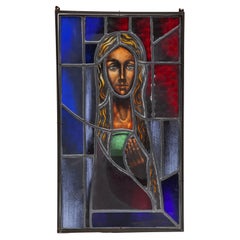
Art Deco Stained Glass, Belgium Artist, 1930s
By Leo Vingerhoets 1
Located in Antwerp, BE
A beautiful woman portrait in the glass closed. A stained glass technique in glass gives a magical atmosphere when light falls and changes the color palette intensity during the course of the day. An Antique stained glass panel...
Category
Mid-20th Century Belgian Art Deco Europe - Windows
Materials
Art Glass, Stained Glass
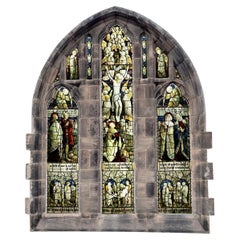
Victorian Religious Antique Stained Glass Window
Located in Wormelow, Herefordshire
A large religious antique stained glass window with its original carved sandstone window frame.
Reclaimed from a church in Upton, Wirral.
...
Category
Late 19th Century Antique Europe - Windows
Materials
Stained Glass
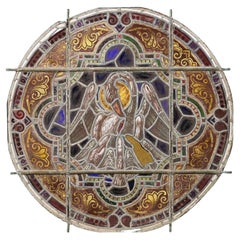
Large Ecclesiastical Roundel Pelican of Piety Stained Glass Panel
Located in Wormelow, Herefordshire
A large ø101cm antique ecclesiastical roundel stained glass panel depicting the pelican of piety. If looking for multiple, we are also selling other roundels in a very similar design...
Category
Late 19th Century English Victorian Antique Europe - Windows
Materials
Lead
Victorian Stained Glass Window Hanging
Located in Wormelow, Herefordshire
A small Victorian era stained glass window hanging, circa 1890. Fitted with a hoop to the top, this stained glass panel has an ecclesiastical feel with its blue glass and golden hand...
Category
Late 19th Century English Victorian Antique Europe - Windows
Materials
Lead
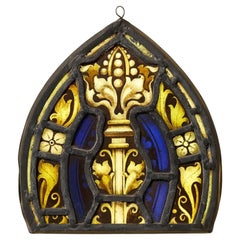
Atkinson Bros Reclaimed Stained Glass Church Window
Located in Wormelow, Herefordshire
A vibrant and highly-detailed stained glass church window designed by early 20th century stained glass manufacturers, Atkinson Brothers of Newcastle-Upon-Tyne, and manufactured by Hartley Wood & Co Glass Works.
This impressive reclaimed stained glass panel once resided in the vestibule/porch window...
Category
Early 20th Century English Victorian Europe - Windows
Materials
Lead
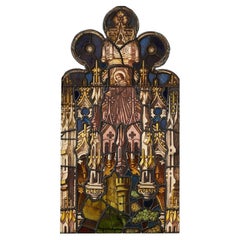
Scottish Religious Stained Glass Window
Located in Wormelow, Herefordshire
A vibrant ecclesiastical stained glass window depicting a religious scene dating from the mid 20th century. This beautiful stained glass window is one of four we are offering for sal...
Category
Mid-20th Century Scottish Mid-Century Modern Europe - Windows
Materials
Lead
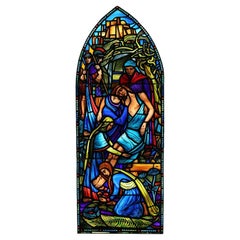
Pair of Art Nouveau 19th Century Stained Glass Panels
Located in Wormelow, Herefordshire
A tall pair of late 19th century English stained glass panels, beautifully etched with Art Nouveau style details.
Dating to circa 1890, this pair will look stunning as feature windo...
Category
Late 19th Century English Art Nouveau Antique Europe - Windows
Materials
Glass, Stained Glass
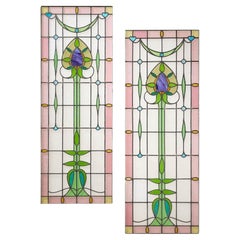
Large Reclaimed Religious Stained Glass Window
Located in Wormelow, Herefordshire
A large 19th century religious stained glass window in an unusual later oak frame.
Beautifully detailed and vibrant, this stained glass panel depicts Jesus and Saint Matthew observi...
Category
Late 19th Century English Victorian Antique Europe - Windows
Materials
Lead
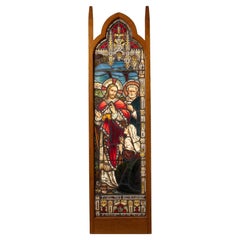
Monumental 19th Century Stained Glass Crucifixion Window
Located in Wormelow, Herefordshire
A monumental antique 19th century stained glass crucifixion window depicting Jesus on the cross below the Latin inscription ‘INRI’. This imp...
Category
Late 19th Century English Antique Europe - Windows
Materials
Lead
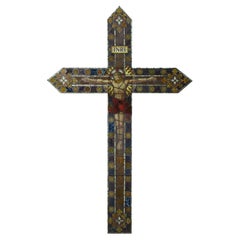
Antique Victorian Quatrefoil Stained Glass Window
Located in Wormelow, Herefordshire
An antique Victorian stained glass quatrefoil panel depicting a floral spray and scrolled decoration.
Dating to circa 1900, this vivid colours of this English panel would look strik...
Category
Early 20th Century English Victorian Europe - Windows
Materials
Glass, Stained Glass, Wood, Pine
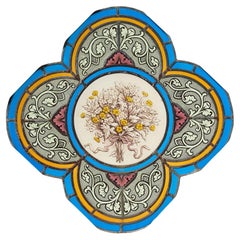
Antique Religious Stained Glass Window of Saint Augustine
Located in Wormelow, Herefordshire
An original, unrestored English antique stained glass window with religious theme and Latin inscription, circa 1880.
Part of a pair, we are also selling a stained glass window of Saint Gregory in a matching style. Beautifully preserved for over 140 years, this ecclesiastical stained glass window is very detailed, competently painted by a 19th century artist. It depicts the Catholic Saint Augustine...
Category
Late 19th Century English Victorian Antique Europe - Windows
Materials
Glass, Stained Glass
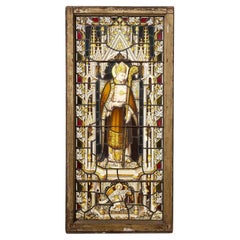
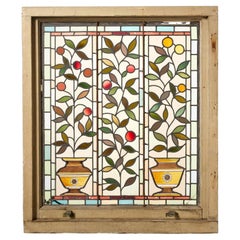
Antique Victorian Stained Glass Window with Fruiting Foliage
Located in Wormelow, Herefordshire
A large antique Victorian stained glass window over 1m tall depicting orange and lemon plants in pots, circa 1890. You can just...
Category
Late 19th Century English Victorian Antique Europe - Windows
Materials
Glass, Stained Glass, Pine
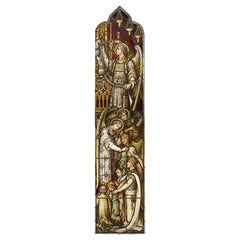
Antique Hardman
Co Leaded Glass Window of a Religious Scene
Located in Wormelow, Herefordshire
An antique Hardman & Co stained glass window of a religious scene depicting an angel and followers.
The lancet-arched shape of the top panel shows the angel swinging a thurible, a r...
Category
Late 19th Century English Victorian Antique Europe - Windows
Materials
Lead
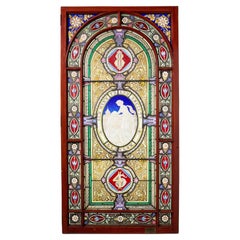
Large Victorian Stained Glass Window by Adam
Small
Located in Wormelow, Herefordshire
An impressive Victorian stained glass window by Adam & Small of Glasgow made in circa 1895 to commemorate the opening of the Old Man's Friend Society in Rottenrow Balmanno House in 1845. This large and vibrant piece is intricately decorated, detailed with and abundance of florals, scrolling foliage and colours. To the centre are two figures – a woman caring for a man – beside a cornucopia, the outer oval inscribed with the words: ‘Old Man’s Friend Society, Glasgow’.
Adam & Small Stained Glass
Edinburgh-born stained glass designer Stephen Adam and David Small...
Category
Late 19th Century Scottish Antique Europe - Windows
Materials
Lead
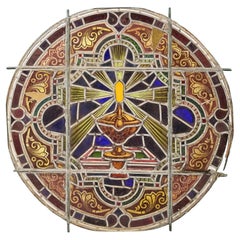
Large Antique Ecclesiastical Roundel Stained Glass Panel
Located in Wormelow, Herefordshire
A large ø101cm antique ecclesiastical roundel stained glass panel depicting a stylised burning oil lamp. If looking for multiple, we are also selling other roundels in a very similar...
Category
Late 19th Century English Antique Europe - Windows
Materials
Glass, Stained Glass
Antique Religious Stained Glass Window of Saint Gregory
Located in Wormelow, Herefordshire
An original, unrestored antique stained glass window with religious theme and Latin inscription, circa 1880. Part of a pair, we are also selling a st...
Category
Late 19th Century English Victorian Antique Europe - Windows
Materials
Lead
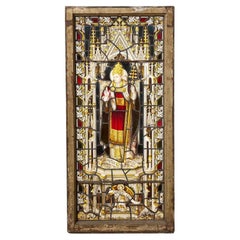
Antique Victorian Era Stained Glass Light Box
Located in Wormelow, Herefordshire
An antique Tudor style stained glass panel attributed to Williams, Gamon & Co dating to circa 1900. Burtonwood Brewery, Warrington.
The scene depicts a Pre-Raphaelite style and sec...
Category
Early 20th Century English Tudor Europe - Windows
Materials
Glass, Stained Glass
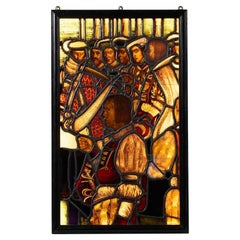
Atkinson Bros Religious Stained Glass Window of Jesus c.1925
Located in Wormelow, Herefordshire
A large and highly detailed religious stained glass window depicting Jesus designed by early 20th century stained glass manufacturers, Atkinson Brothers of Newcastle-Upon-Tyne and manufactured by Hartley Wood & Co Glass Works.
This superb antique stained glass panel once resided in the vestibule/porch...
Category
Early 20th Century English Victorian Europe - Windows
Materials
Lead
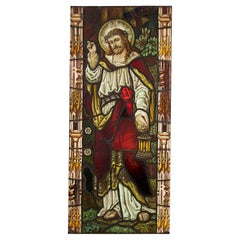
Small Colourful Stained Glass Window Panel
Located in Wormelow, Herefordshire
A unique and wonderfully colourful small stained glass window panel. Though made in the mid 20th century, this stained glass window utilises...
Category
Mid-20th Century English Mid-Century Modern Europe - Windows
Materials
Lead
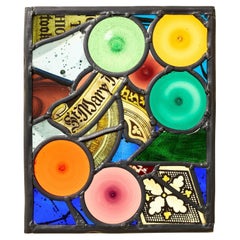
ANTIQUE VICTORiAN CIRCA 1860 HAND CARVED CURTAIN WINDOW PELMET SUPER DECORATIVE
Located in West Sussex, Pulborough
Royal House Antiques
Royal House Antiques is delighted to offer for sale this very decorative Antique Victorian Circa 1860-1880 hand carved Mahogany window curtain Pelmet
Please no...
Category
1860s English High Victorian Antique Europe - Windows
Materials
Hardwood
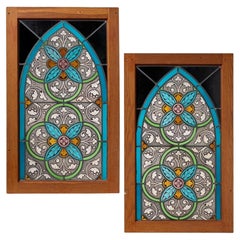
Pair of Gothic Style Arched Stained Glass in Wooden Frames
Located in Wormelow, Herefordshire
A pair of early 20th century gothic style leadlight stained glass panels.
In later oak frames, these English panels are competently painted in striking colours and designs.
They wo...
Category
Early 20th Century English Victorian Europe - Windows
Materials
Glass, Stained Glass, Wood, Oak
Still Thinking About These?
All Recently ViewedMore Ways To Browse
Stained Glass Window Three
Salvage Glass Window
Tudor Stained Glass
Victorian Transom
1900s Stained Glass
Carved Window Frames
Red Stained Glass Window
Shield Glass Window
Stained Glass Angel
Stained Glass Tall
Tudor Glass Window
Wooden Window Frames
Amber Glass Window
Antique Glass Chicken
Gothic Window Frame
Mosaic Window
Rare Antique Stained Glass Windows
Round Window Stained Glass