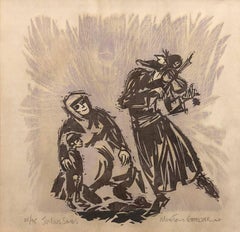
Florida - Figurative Prints

to
891
611
633
870
416
376
Overall Width
to
Overall Height
to
1,001
408
238
227
225
142
86
67
51
14
14
8
4
1
105
47
45
41
40
15
59
1,946
886
49
80
60
48
33
26
137
394
315
260
12
1,704
1,012
180
1,421
795
472
462
433
424
277
233
144
131
109
102
95
90
77
74
66
64
62
61
1,474
939
859
520
283
598
299
2,906
19,357
17,437
Item Ships From: Florida
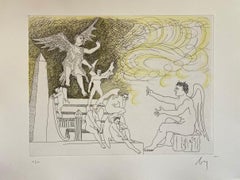
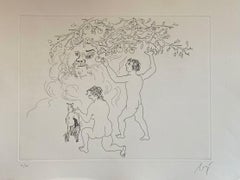
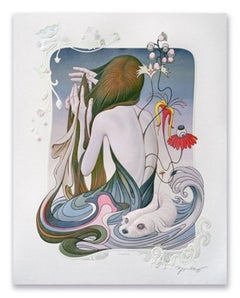
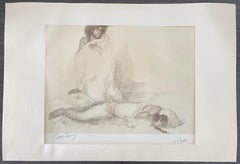
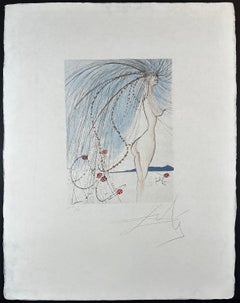
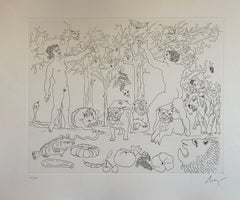
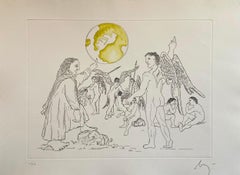
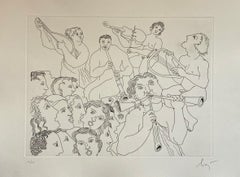
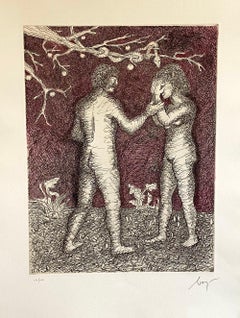
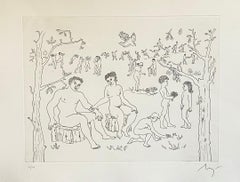
Italian Surrealist Aquatint Etching Enrico Baj Pop Art Nude Mod Cherubs Angels
By Enrico Baj
Located in Surfside, FL
Enrico Baj (1924-2003) Italian, limited edition print. Hand signed and numbered in pencil from limited edition of 100 Aquatint etching Image size: cm 39.5 x 29.5, sheet cm 53 x 39 ...
Category

20th Century Surrealist Florida - Figurative Prints

Materials

Etching, Aquatint

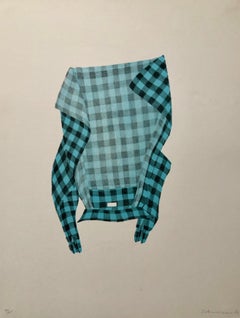
Untitled Still Life Hanging Plaid Shirt, Figurative Poetry Lithograph
Located in Surfside, FL
Signed, numbered and dated limited edition lithograph print. The number might not match the photo as I had more than one. George Schneeman (March 11, 1934 – January 27, 2009) was an...
Category

1980s American Modern Florida - Figurative Prints

Materials

Lithograph

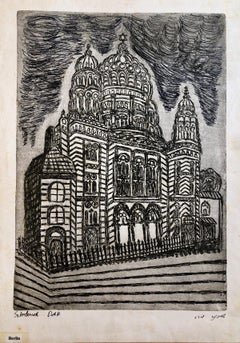
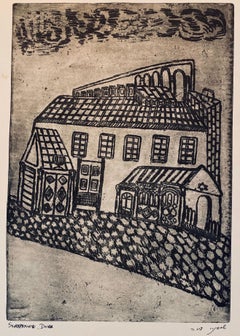
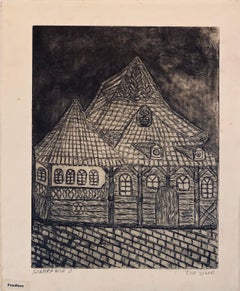
Berlin Germany Jewish Memorial Etching Destroyed Synagogue Folk Art Judaica
By Dora Szampanier
Located in Surfside, FL
Cracow Poland Etching of Polish Synagogue, Jewish temple. From very rare small edition. Most are signed in Hebrew and /or English. some are marked AP some are numbered. please see ph...
Category

20th Century Folk Art Florida - Figurative Prints

Materials

Etching

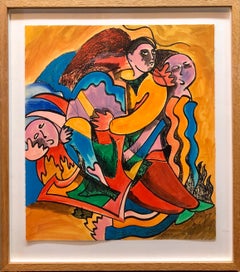
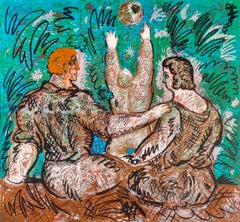
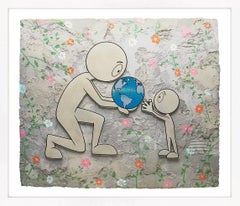
Woodblock Heliorelief with Hand Painting "Novel" Italian Post Modernist Pop Art
By Sandro Chia
Located in Surfside, FL
Hand Signed edition of 50 with blindstamp. Surprising Novel Woodblock and heliorelief with handpainting 18-1/2 x 16-1/4 inches (sheet alone without frame) Biography: Sandro Chia was...
Category

1980s Pop Art Florida - Figurative Prints

Materials

Paint, Mixed Media, Woodcut

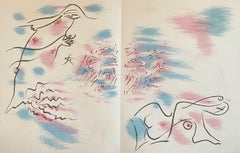
Italian Surrealist Aquatint Etching Enrico Baj Pop Art with Watercolor Painting
By Enrico Baj
Located in Surfside, FL
Enrico Baj (1924-2003) Italian, limited edition print. Hand signed and numbered in pencil from limited edition of 100 Aquatint etching with the addition of hand watercolor painting ...
Category

20th Century Surrealist Florida - Figurative Prints

Materials

Watercolor, Etching, Aquatint

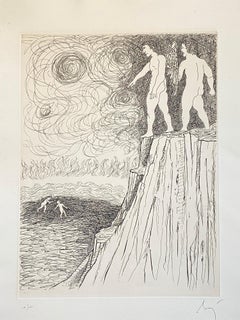
Italian Surrealist Aquatint Etching Enrico Baj Pop Art Nude Mod Cherubs Angels
By Enrico Baj
Located in Surfside, FL
Enrico Baj (1924-2003) Italian, limited edition print. Hand signed and numbered in pencil from limited edition of 100 Aquatint etching Image size: cm 39.5 x 29.5, sheet cm 53 x 39 ...
Category

20th Century Surrealist Florida - Figurative Prints

Materials

Etching, Aquatint

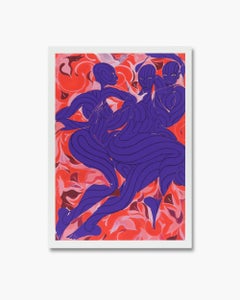
Signed and Numbered Screenprint "Violet Dance"
Located in Draper, UT
Indulge in the mesmerizing world of Tunji Adeniyi-Jones with "Violet Dance," a decadent composition pulsating with fluid patterns and rhythmic figuration. Based in New York, Adeniyi-...
Category

2010s Florida - Figurative Prints

Materials

Screen

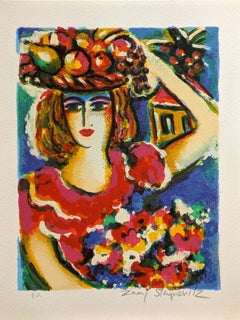
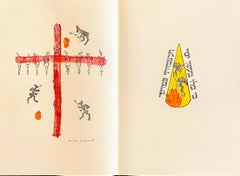
BIKKURIM TALMUDIC TRACTATE
By Zamy Steynovitz
Located in Aventura, FL
Serigraph on paper. Hand signed and numbered by the artist. Printer's Proof edition. Sheet size 7.75 x 5.75 inches. Certificate of Authenticity Included. Artwork in Excellent Condi...
Category

Late 20th Century Contemporary Florida - Figurative Prints

Materials

Paper, Screen

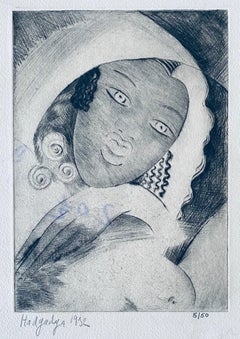
Early Israeli Russian Artist Lithograph With Woman Bezalel
By Miriam Hadgadya
Located in Surfside, FL
All but forgotten today, Had Gadya was the first woman to study at the Bezalel Art School and an outstanding painter in 1920s' Tel Aviv. In 1912, she was 17 years old, the only fem...
Category

20th Century Modern Florida - Figurative Prints

Materials

Lithograph

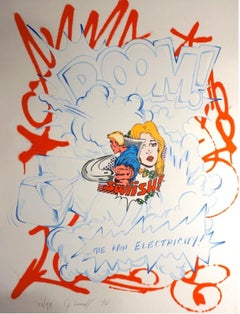
Raw Electricity
By John Crash Matos
Located in Hollywood, FL
Artist: John Matos "Crash" Title: Raw Electricity Medium: Serigraph Measurements: 40" x 30" Edition Number: 98/99 Year: 1990 Condition:Excellent. This piece has been stored in a...
Category

1990s Surrealist Florida - Figurative Prints

Materials

Screen

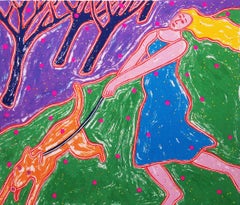
Running the Dog /// Contemporary Pop Art Screenprint Lady Animal Pet Walk Funny
By Dan May
Located in Saint Augustine, FL
Artist: Dan May (American, 1955-) Title: "Running the Dog" *Signed and numbered by May in pencil lower left Year: 1984 Medium: Original Screenprint on unbranded white wove paper Limited edition: 151/175 Printer: the artist May himself, Oakland, CA Publisher: the artist May himself, Oakland, CA Sheet size: 21" x 21" Image size: 12.88" x 15.13" Condition: In excellent condition Notes: Titled and dated by May in pencil lower right. Biography: Dan May is an American painter and printmaker born on March 11, 1955 in San Francisco, CA. Raised in aesthetic surroundings heavily influenced by his architect father, May grew up learning to view all things with an eye for design, color, and shape. At age 5, he remembers his father cutting up a book of drawings by Henri Matisse and hanging them on the walls of their home. The French master Matisse as well as Richard Diebenkorn and David Hockney are his favorite art influences. He began his first attempts at painting at age 15, and later began to experiment with printmaking, teaching himself various techniques such as woodblock printing, etching, silkscreen printing, and monoprinting. Monoprinting soon became May's medium of choice due to its wide range of expression and spontaneity that he felt other techniques lacked. May - "With monoprinting, you can only work a piece for as a long as the paint stays wet, so the resulting print has a feeling of movement and immediacy. I also like how monoprinting allows the brush strokes to transfer a transparent light quality to the print. For me, this is a technique that bridges...
Category

1980s Contemporary Florida - Figurative Prints

Materials

Screen

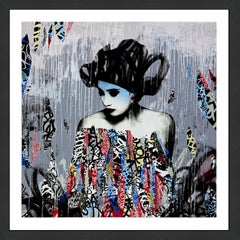
Siren in Motion (framed hand signed screen print)
By HUSH
Located in Aventura, FL
24 color screen print with 2 varnishes and embossed collage pattern on 300gsm Somerset Velvet paper. Hand signed and dated lower right by Hush. Hand numbered 75/150 lower right. S...
Category

2010s Contemporary Florida - Figurative Prints

Materials

Paper, Varnish, Screen

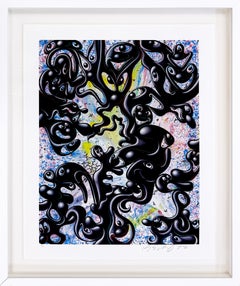
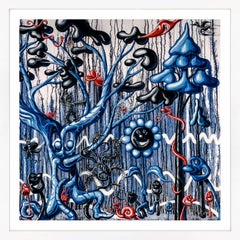
Klobz (framed hand signed archival pigment print)
By Kenny Scharf
Located in Aventura, FL
Archival pigment print on 100% Cotton 290 gsm Entrada Rag paper with hand-deckled edges. Hand signed and dated lower right by Kenny Scharf. Hand numbered 39/75 lower left. Artwork...
Category

2010s Pop Art Florida - Figurative Prints

Materials

Paper, Archival Pigment

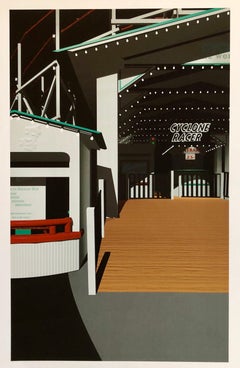
Location Proposal Iris Print Ed. 12 Hand Signed Cyclone Racer (Coney Island, NY)
By Cindy Bernard
Located in Surfside, FL
Cindy Bernard’s career spans nearly three decades and she is best known for photographs and projections that explore the relationship between cinema, memory, and landscape including ...
Category

1990s American Modern Florida - Figurative Prints

Materials

Color

Huge 6X6 Lithograph Italian Post Modernist Figurative Pop Art Children s Holiday
By Sandro Chia
Located in Surfside, FL
Sandro Chia (Italian, 1946) Children Holiday, 1984 Lithograph in colors on six sheets of Somerset soft white, 71 x 77 inches (180.3 x 195.6 cm) Numbered A.P. 13/15 (aside from an edi...
Category

1980s Pop Art Florida - Figurative Prints

Materials

Lithograph

Large Archival Pigment Print Judaica Lithograph Mark Podwal Jewish Hebrew Art
By Mark Podwal
Located in Surfside, FL
Mark Podwal (American, New York, born 1945) "All This Has Come Upon Us" Archival pigment print Dimensions: 22 X 30 inches From a 2014 portfolio of archival pigment prints of acryl...
Category

21st Century and Contemporary Neo-Expressionist Florida - Figurative Prints

Materials

Lithograph, Archival Pigment

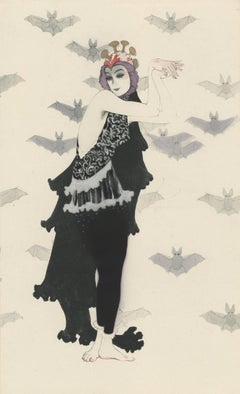
Ballet und Pantomime "Die Nacht" (The Night), plate #2.
By Walter Schnackenberg
Located in Palm Beach, FL
Walter Schnackenberg’s style changed several times during his long and successful career. Having studied in Munich, the artist traveled often to Paris where he fell under the spell o...
Category

1920s Art Deco Florida - Figurative Prints

Materials

Paper

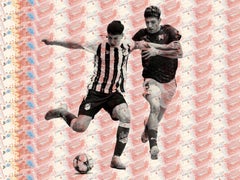
Elías - Deportivo Unión
Located in Miami, FL
A century ago, Argentina was the most prosperous country in Latin America. Inflation and the devaluation of the Argentine peso have reduced people’s incomes, and more than half of th...
Category

2010s Florida - Figurative Prints

Materials

Paper, Digital

Japanese Woodblock Artist French Lithograph Fauvist Colors School of Paris
By Shungo Sekiguchi
Located in Surfside, FL
Shungo Sekiguchi, (Japanese, 1911-2002): Lithograph in color on Rives paper Hand signed in pencil lower right, hand numbered It appears to be the village of Montmarte in Paris T...
Category

1950s Post-Impressionist Florida - Figurative Prints

Materials

Lithograph

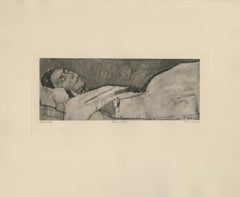
"Dying Woman" Copper Plate Heliogravure
By Ferdinand Hodler R. Piper Co.
Located in Palm Beach, FL
2018 marks the centenary anniversary of Ferdinand Hodler’s death. In that 100 years time, the art world’s esteem of this important artist has proved fickle. It has shifted from extol...
Category

1910s Symbolist Florida - Figurative Prints

Materials

Paper

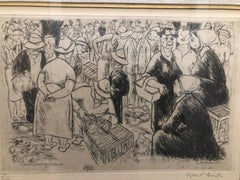
Robert Bonfils French Market
By Robert Bonfils
Located in San Francisco, CA
Robert Bonfils: 1886-1972. Well listed French artist with auction results for posters and prints over $8000. This fabulously busy etching measures 12 1/2 inches wide by 9 high. It is...
Category

1950s Realist Florida - Figurative Prints

Materials

Etching

Large Silkscreen Serigraph Neo Figurative Expressionist Print Jorg Immendorff
By Jörg Immendorf
Located in Surfside, FL
Jorg Immendorff (German, 1945-2007) Untitled, Germany, 2006 serigraph hand signed and dated lower right margin, numbered 20/27 lower left framed 74.5 x 48.75 inches (sight). 82.25 x 55.5 inches (frame). This work is number 20 from the edition of 27. Provenance: T. Kreuzer Gallery, Cologne, Friedman Benda Gallery, New York City Jörg Immendorff (1945–2007) was a German painter, sculptor, stage designer and art professor. He was a member of the art movement Neue Wilde. He worked as a painter, sculpture and print maker in steel, bronze, oil painting, lithography etching and serigraphy. Immendorff was born in Bleckede, Lower Saxony, near Lüneburg on the west bank of the Elbe. He attended the boarding School Ernst-Kalkuhl Gymnasium as a student. At the age of sixteen he had his first exhibition in a jazz hall cellar in Bonn. Beginning in 1963, Immendorff studied at the Art Academy in Düsseldorf (Kunstakademie Düsseldorf). Initially he studied for three terms with the theater designer Teo Otto. After Otto threw him out of his class for refusing to let one of his paintings serve as stage-set decoration, Immendorff was accepted as a student by Joseph Beuys. The academy expelled him because of some of his (left-wing) political activities and neo-dada actions. From 1969 to 1980, Immendorff worked as an art teacher at a public school, and then as a free artist, holding visiting professorships all over Europe. In 1989, he became professor at the Städelschule in Frankfurt am Main and in 1996 he became professor at the Art Academy in Düsseldorf—the same school that had dismissed him decades earlier as a student. Jörg Immendorff often worked in "grand cycles of paintings" that often lasted years at a time and were political in nature. Notable cycles include LIDL, Maoist Paintings, Cafè Deutschland , and The Rake's Progress. The first body of work that Immendorff gave a name to were his LIDL paintings, sculptures, performances, and documents, that he executed during 1968-1970. The name, "LIDL" was inspired by the sound of a child's rattle makes and much of his work from this period included the iconography of new beginnings and innocence. LIDL is comparable to Dadaist but unlike the Dada movement it never became an established group but rather consisted of a variety of artists (including James Lee Byars, Marcel Broodthaers, Nam June Paik, and Joseph Beuys) participating in actions and activities. In January 1968 he appeared in front of the West German Parliament in Bonn with a wood block labeled “Lidl” tethered to his ankle and painted in the colors of the German flag; he was subsequently arrested for defaming the flag. Best known is his Cafe Deutschland series of sixteen large paintings (1977–1984) that were inspired by Renato Guttuso Caffè Greco; in these crowded colorful pictures, Immendorff had disco-goers symbolize the conflict between East and West Germany. Since the 1970s, he worked closely with the painter A. R. Penck from Dresden (in East Germany). Immendorff created several stage designs, including two for the Salzburg Theater Festival. He designed sets for the operas Elektra and The Rake's Progress. The latter also inspired a series of paintings in which he cast himself as the rake. In 1984, Immendorff opened the bar La Paloma near the Reeperbahn in Hamburg St. Pauli and created a large bronze sculpture of Hans Albers there. He also contributed to the design of Andre Heller's avant-garde amusement park "Luna, Luna" in 1987. Immendorff created various sculptures; one spectacular example is a 25 m tall iron sculpture in the form of an oak tree trunk, erected in Riesa in 1999. In 2006, Immendorff selected 25 of his paintings for an illustrated Bible. In the foreword he described his belief in God. A major 2019 survey began at the Haus der Kunst in Munich and later traveled later to the Museo Reina Sofía in Madrid and the Fondazione Querini Stampalia in Venice, curated by Francesco Bonami. In 2000, Immendorff married his former student Oda Jaune. The have one daughter Ida Immendorff. He was a member of the Junge Wilde (German for "young wild ones") In 1978, the Junge Wilde painting style arose in the German-speaking world in opposition to established avant garde, minimal art and conceptual art. It was linked to the similar Transavanguardia movement in Italy, USA (neo-expressionism) and France (Figuration Libre). The Junge Wilde painted their expressive paintings in bright, intense colors and with quick, broad brushstrokes very much influenced by Professor at the Academy of Art in Berlin, Karl Horst Hödicke (b:1938). They were sometimes called the Neue Wilde. Berlin: Luciano...
Category

Early 2000s Neo-Expressionist Florida - Figurative Prints

Materials

Screen

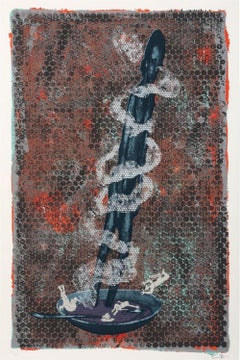
James Jean Chine Signed Numbered Embellished Print
By James Jean
Located in Draper, UT
Energy courses through the spine like glucose through the stalk of a plant. It sprouts tendrils and flowers that reach for the light. My friend experienced a serious car accident tha...
Category

2010s Florida - Figurative Prints

Materials

Giclée

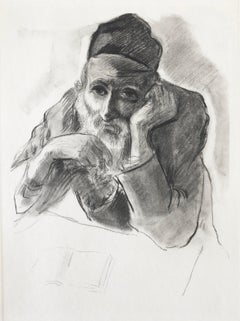
Judaica Jewish Shtetl Etching Hasidic Rabbi Meditation Vintage Chassidic Print
By Paul Jeffay
Located in Surfside, FL
"Meditation." Chassidic boy, Yeshiva student with open book. Judaica, Jewish scenes from a ghetto. Saul Yaffie, a.k.a. Paul Jeffay, (1898–1957) was a Scottish Jewish artist. Known ...
Category

20th Century Expressionist Florida - Figurative Prints

Materials

Etching

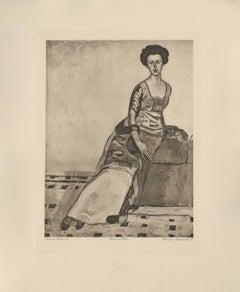
"Portrait of Mrs. Gertrude Miller" Copper Plate Heliogravure
By Ferdinand Hodler R. Piper Co.
Located in Palm Beach, FL
2018 marks the centenary anniversary of Ferdinand Hodler’s death. In that 100 years time, the art world’s esteem of this important artist has proved fickle. It has shifted from extolling his artistic merits during his lifetime to showing something of a feigned disdain- more reflective of the world political order than a true change of heart for Hodler’s work. After years of Hodler being all but a footnote in the annals of art history and generally ignored, finally, the pendulum has righted itself once again. Recent retrospective exhibitions in Europe and the United States have indicated not only a joyful rediscovery of Hodler’s art but a firm conviction that his work and world view hold particular relevance today. DAS WERK FERDINAND HODLERS is not only a collection of printed work reflecting the best of all of his painted work created up to 1914 just before the outbreak of World War I, the portfolio itself is an encapsulation of Hodler’s ethos, Parallelisme. Hodler developed his philosophy of Parallelisme as a unifying approach to art which strips away detail in search of harmony. By means of abstraction, symmetry and repetition, Hodler sought ways to depict Nature’s essence and her fundamental, universal order. He believed these universal laws governing the natural, observable world extend to the spiritual realm. Symbolist in nature with Romantic undertones, his works are equally portraits of these universal concepts and feelings governing all life as they are a visual portrait in the formal sense. Whether his subject is a solitary tree, a moment in battle, mortal fear, despair, the awe inspired by a vast mountain range, a tender moment or even the collective conviction in a belief, Hodler unveils this guiding principle of Parallelisme. Several aspects of Hodler’s portfolio reinforce his tenets of Parallelisme. The Table of Contents clearly preferences a harmonious design over detail. The two columns, consisting of twenty lines each, list the images by order of appearance using their German titles. The abbreviated titles are somewhat cryptic in that they obscure the identities of the sitters. Like the image Hodler presents, they are distillations of the sitter without any extraneous details. This shortening was also done in an effort to maintain a harmonious symmetry of the Table of Contents, themselves, and keep titles to a one-line limit. The twenty-fourth title: “Bildnis des Schweizerischen Gesandten C.” was so long, even with abbreviation, that it required two lines; so, for the sake of maintaining symmetry, the fortieth title: “Bauernmadchen” was omitted from the list. This explains why the images are not numbered. Hodler’s reasoning is not purely esoteric. Symmetry and pattern reach beyond mere formal design principles. Finding sameness and imposing it over disorder goes to the root of Hodler’s identity and his art. A Swiss native, Hodler was bi-lingual and spoke German and French. Each printed image, even number forty, have titles in both of Hodler’s languages. Certainly, there was a market for Hodler’s work among francophones and this inclusion may have been a polite gesture to that end; however, this is the only place in the portfolio which includes French. With German titles at the lower left of each image, Hodler’s name at bottom center and corresponding French titles at the lower right of each image, there is a harmony and symmetry woven into all aspects of the portfolio. This holds true for the page design, as it applies to each printed image and as it describes the Swiss artist himself. Seen in this light, Hodler’s portfolio of printed work is the epitome of Hodler’s Parallelisme. DAS WERK FERDINAND HODLERS is also one of the most significant documents to best tell the story of how Hodler, from Switzerland, became caught between political cross-hairs and how the changing tides of nations directly impacted the artist during his lifetime as well as the accessibility of his art for generations to come. The Munich-based publisher of the portfolio, R. Piper & Co., Verlag, plays a crucial role in this story. Publishing on a wide range of subjects from philosophy and world religion to music, literature and the visual arts; the publisher’s breadth of inquiry within any one genre was equal in scope. Their marketing strategy to publish multiple works on Hodler offers great insight as to what a hot commodity Hodler was at that time. R.Piper & Co.’s Almanach, which they published in 1914 in commemoration of their first ten years in business, clearly illustrates the rapid succession- strategically calculated for achieving the deepest and broadest impact - in which they released three works on Hodler to hit the market by the close of 1914. DAS WERK FERDINAND HODLERS was their premier publication. It preceded C.A. Loosli’s Die Zeichnungen Ferdinand Hodlers, a print portfolio after 50 drawings by Hodler which was released in Autumn of 1914 at the mid-level price-point of 75-150 Marks; and a third less expensive collection of prints after original works by Hodler, which had not been included in either of the first two portfolios, was released at the end of that year entitled Ferdinand Hodler by Dr. Ewald Bender. The title and timing of DAS WERK FERDINAND HODLERS' debut leaves little doubt as to the connection it has with another avant-garde portfolio of art prints, Das Werk Gustav Klimts, released in 5 installments from 1908 -1914 by Galerie Miethke in Vienna. Hodler, himself, was involved in Klimt’s ground-breaking project. As the owner of Klimt’s 1901 painting, “Judith with the Head of Holifernes” which appears as the ninth collotype print in the second installment of Das Werk Gustav Klimts, Hodler was obliged to grant access of the painting to the art printers in Vienna for them to create the collotype sometime before 1908. Hodler had been previously invited in 1904 to take part in what would be the last exhibition of the Vienna Secession before Klimt and others associated with Galerie Miethke broke away. In an interview that same year, Hodler indicated that he respected and was impressed by Klimt. Hodler’s esteem for Klimt went beyond the art itself; he emulated Klimt’s method aimed at increasing his market reach and appeal to a wider audience by creating a print portfolio of his painted work. By 1914, Hodler and his publisher had the benefit of hindsight to learn from Klimt’s Das Werk publication. Responding to the sluggish sales of Klimt’s expensive endeavor, Hodler’s publisher devised the same diversified 1-2-3 strategy for selling Hodler’s Das Werk portfolio as they did with regards to all three works on Hodler they published that year. For their premium tier of DAS WERKS FERDINAND HODLERS, R. Piper & Co. issued an exclusive Museum quality edition of 15 examples on which Hodler signed each page. At a cost of 600 Marks, this was generally on par with Klimt’s asking price of 600 Kronen for his Das Werk portfolio. A middle-tiered Preferred edition of 30, costing somewhat less and with Hodler’s signature only on the Title Page, was also available. The General edition, targeting the largest audience with its much more affordable price of 150 Marks, is distinguishable by its smaller size. Rather than use the subscription format Miethke had chosen for Klimt’s portfolios which proved to have had its challenges, R. Piper & Co. employed a different strategy. In addition to instantly gratifying the buyer with all 40 of the prints comprising DAS WERK FERDINAND HODLERS and the choice among three price points, they advertised in German journals a fourth possibility of ordering single prints from them directly. These printed images are easily discernible from the three complete folio editions. The paper size of the single purchased images is of the larger format like the Museum and Preferred editions, measuring 65 h x 50 w cm; however, the paper itself is the same copper print paper used in the General edition and then mounted on poster board. The publishing house positioned itself to be a direct retailer of Hodler’s art. They astutely recognized the potential for profitability and the importance, therefore, of having proprietary control over his graphic works. R. Piper & Co. owned the exclusive printing rights to Hodler’s best work found in their three publications dating from 1914. That same year, a competing publication out of Weimar entitled Ferdinand Hodler: Ein Deutungsversuch von Hans Muhlestein appeared. Its author, a young scholar, expressed his frustration with the limited availability of printable work by Hodler. In his Author’s Note on page 19, dated Easter, 1914, Muhlestein confirms that the publisher of Hodler’s three works from that same year owned the exclusive reproductive rights to Hodler’s printed original work. He goes further to explain that even after offering to pay to use certain of those images in his book, the publisher refused. Clearly, a lot of jockeying for position in what was perceived as a hot market was occurring in 1914. Instead, their timing couldn’t have been more ill-fated, and what began with such high hopes suddenly found a much different market amid a hostile climate. The onset of WWI directly impacted sales. Many, including Ferdinand Hodler, publicly protested the September invasion by Germany of France in which the Reims Cathedral, re-built in the 13th century, was shelled, destroying priceless stained glass and statuary and burning off the iron roof and badly damaging its wooden interior. Thomas Gaehtgens, Director of the Getty Research Institute describes how the bombing of Reims Cathedral triggered blindingly powerful and deeply-felt ultra-nationalistic responses: “The event profoundly shocked French intellectuals, who for the most part had an intense admiration for German literature, music and art. By relying on press accounts and abstracting from the visual propagandistic content, they were unable to interpret the siege of Reims without turning away from German culture in disgust. Similarly, the German intelligentsia and bourgeoisie were also shocked to find themselves described as vandals and barbarians. Ninety-three writers, scientists, university professors, and artists signed a protest, directed against the French insults, that defended the actions of the German army.” In similar fashion, a flurry of open letters published in German newspapers and journals as well as telegrams and postcards sent directly to Hodler following his outcry in support of Reims reflected the collectively critical reaction to Hodler’s position. Loosli documents that among the list of telegrams Hodler received was one from none other than his publisher in Germany, R.Piper & Co. Allegiances were questioned. The market for Hodler in Germany immediately softened. Matters worsened for the publisher beyond the German backlash to Hodler and his loss of appeal in the home market; with the war in full swing until 1918, there was little chance a German publisher would have much interest coming from outside of Germany and Austria. Following the war and Hodler’s death in 1918, the economy in Germany continued to spiral out and just 5 years later, hyper-inflation had rendered its currency worthless vis-a-vis its value in the pre-war years. Like the economy, Hodler’s reputation was slow to find currency in these difficult times. Even many French art fans had turned sour on Hodler as they considered his long-standing relationship in German and Austrian art circles. Thus, the portfolio’s rarity in Hodler’s lifetime and, consequently, the availability of these printed images from DAS WERK FERDINAND HODLERS since his death has been scarce. In many ways, Hodler and his portfolios were casualties of war. Thwarted from their intended purpose of reaching a wide audience and show-casing Parallelisme, Hodler’s unique approach to art, this important, undated work has been both elusive and shrouded in mystery. Perhaps DAS WERK FERDINAND HODLERS was left undated as a means of affirming the timelessness of Hodler’s art. Digging back into the past, Hodler’s contemporaries, like R. Piper, C.A. Loosli and Hans Muhlestein, indeed provide the keys to unequivocally clarify what has largely been mired in obscurity. Just after Hodler’s death, the May, 1918 issue of the Burlington Review ran a small column which opined hope for better access to R.Piper & Co.’s DAS WERK FERDINAND HODLERS; 100 years later, it is finally possible. Hodler’s voice rings out through these printed works. Once more, his modern approach to depicting portraits, landscapes and grand scale scenes of Swiss history speak to us of what is universal. Engaging with any one of these images is the chance to connect to Hodler’s vision and his world view- weltanschauung in German, vision du monde in French- however one expresses these concepts through language, its message embedded in his work is the same: “We differ from one another, but we are like each other even more. What unifies us is greater and more powerful than what divides us.” Today, Hodler’s art couldn’t be more timely. FERDINAND HODLER (SWISS, 1853-1918) explored Parallelisme through figurative poses evocative of music, dance and ritual. His images of sex, night, desertion and death as well as his many landscapes exploring the universal longing for harmony with Nature are unique and important works embodying a Symbolist paradigm. Truly a Modern Master, Hodler’s influence can be felt in the work of Gustav Klimt and Kolomon Moser...
Category

1910s Symbolist Florida - Figurative Prints

Materials

Paper

Hand Colored Etching Vintage Hollywood Legends Etching with Watercolor Painting
By Ann Chernow
Located in Surfside, FL
Titled: Avalon Ann Chernow (Connecticut b. 1936) etching. hand signed 'Ann Chernow' in pencil lower right. Numbered '5/15' in pencil lower left. Titled in pencil lower center. Sheet ...
Category

1990s Pop Art Florida - Figurative Prints

Materials

Watercolor, Etching

Abel Pann Israeli Bezalel School Lithograph Judaica Biblical Print Jewish Art
By Abel Pann
Located in Surfside, FL
Abel Pann (1883–1963) was a European Jewish painter who settled in the Talpiot neighborhood of Jerusalem in the early twentieth century and taught at the Bezalel Academy of Art under...
Category

Mid-20th Century Symbolist Florida - Figurative Prints

Materials

Lithograph

Furungle (Blue), large framed archival print with diamond dust
By Kenny Scharf
Located in Aventura, FL
Archival pigment ink print with silkscreened high gloss varnish and diamond dust. Hand signed, dated and numbered 19/25 lower right by Kenny Scharf. Artwork size: 42 x 42 inches. ...
Category

2010s Pop Art Florida - Figurative Prints

Materials

Paper, Varnish, Archival Pigment

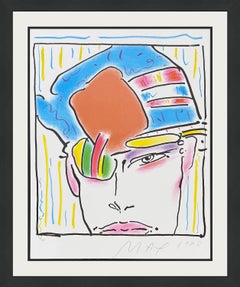
Zero s Friend (framed hand signed lithograph)
By Peter Max
Located in Aventura, FL
Lithograph in colors on paper. Hand signed and dated lower front by Peter Max. Hand numbered 74/165 lower left. Sheet size: 27 x 21.5 inches. Frame size: 34 x 28 inches (black fr...
Category

1980s Pop Art Florida - Figurative Prints

Materials

Paper, Lithograph

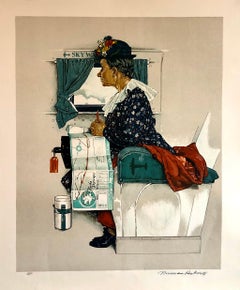
Original Lithograph Hand Signed Old Women Riding First Airplane Flight Americana
By After Norman Rockwell
Located in Surfside, FL
Norman Rockwell (1894-1978) First Airplane Ride/ Old Women Riding Airplane, 1938 Originally created as cover illustration for The Saturday Evening Post. Media print lithography on paper, this twelve-color lithograph was hand proofed and printed at Atelier Ettinger in December 1976. A/P Artist Proof impression on papier d'Arches. Hand signed in pencil by Norman Rockwell. hand editioned and with publishers blindstamp. Norman Percevel Rockwell (1894 – 1978) was an American author, painter and illustrator. His works have a broad popular appeal in the United States for their reflection of American culture. Rockwell is most famous for the cover illustrations of everyday life he created for The Saturday Evening Post magazine in a modern folk art style over nearly five decades. Among the best-known of Rockwell's works are the Willie Gillis series, Rosie the Riveter, The Problem We All Live With...
Category

1970s American Realist Florida - Figurative Prints

Materials

Lithograph

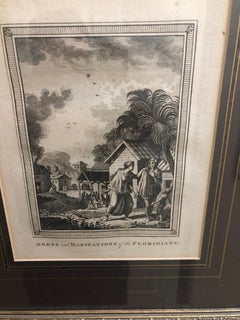
18th Century Native Floridians Etching
Located in San Francisco, CA
Mid 18th century etching of native Floridians probably used for a book. Very good condition for its age. Etching measures 7 1/2 inches high by 5 3/4 inches wide. The beautiful custom...
Category

1750s Realist Florida - Figurative Prints

Materials

Etching

Diane de Poitiers
By Salvador Dalí­
Located in Hollywood, FL
ARTIST: Salvador Dali TITLE: Diane de Poitiers MEDIUM: Etching SIGNED: Hand Signed EDITION NUMBER: LXVI/C MEASUREMENTS: 20" x 25.5" YEAR: 1973 FRAMED: No CONDITION: Excellen...
Category

1970s Surrealist Florida - Figurative Prints

Materials

Etching

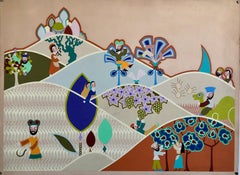
Israeli Modern Tu BiShvat Lithograph Silkscreen David Sharir Holiday Serigraph
By David Sharir
Located in Surfside, FL
This is a mixed lithograph and serigraph silkscreen as per descriptions i read. this is not signed or numbered. it is a rare artists or printers proof print. David Sharir was born in 1938 in Tel Aviv, Israel and currently resides there. David Sharir, the son of Russian immigrants, was born in Israel. Beginning his study of art in Tel Aviv and continuing in Florence and Rome, where he studied architecture and theater design. The brightly colored costumes and intricate stage designs he created for these productions have profoundly influenced his art. When Sharir moved to Jaffa in 1966, his hallmark style was truly developed. Studio, family, and spiritual devotion all serve as inspiration for the imagery in his work. His evolving style combines personal experience, Biblical symbolism, and fantasy. David Sharir, born 1938, Tel Aviv. Was among the first artists to settle in Old Jaffa in 1966. He depicted biblical subjects with a touch of humour and designed sets and costumes for the theatre and opera. Graphic Art in Israel Today Tel Aviv Museum, Tel Aviv 1973 Israel 1948-1958: Watercolors, Drawings, Graphics The Bezalel National Museum, Jerusalem 1958 Jean David, Yosl Bergner, Menachem Shemi, Zvi Mairovich, Ruth Schloss, Nahum Gutman, Moshe Elazar Castel...
Category

20th Century Contemporary Florida - Figurative Prints

Materials

Lithograph

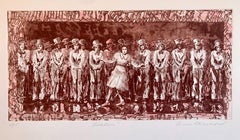
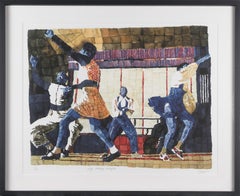
"Savoy: Saturday Midnight" signed, framed print by artist Richard Yarde
By Richard Yarde
Located in Boca Raton, FL
Framed "Savoy: Saturday Midnight" limited edition giclée print on fine art paper of dancers at the Savoy by African American artist Richard Yarde. Part of Yarde's "Savoy Ballroom" se...
Category

Early 2000s Contemporary Florida - Figurative Prints

Materials

Giclée

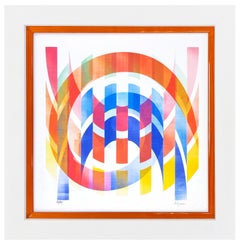
Arches (rare framed, signed agamograph - 3D lenticular)
By Yaacov Agam
Located in Aventura, FL
Agamograph (3D lenticular). Hand signed lower right by Yaacov Agam. Hand numbered 84/99 lower left. Artwork size 14.25 x 14 inches. Custom framed as pictured. Frame size: 17.75 x...
Category

21st Century and Contemporary Abstract Florida - Figurative Prints

Materials

Paper, Lenticular

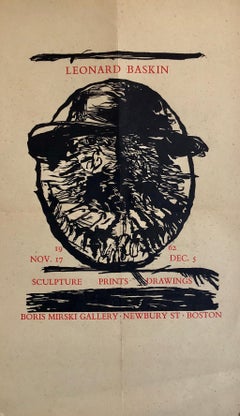
Leonard Baskin Woodblock Broadside Print Woodcut Vintage Poster in Red and Black
By Leonard Baskin
Located in Surfside, FL
This is an original gallery show poster the Boris Mirsky Gallery, Newbury St. Boston. titled Sculpture Prints Drawings. It is dated 1962. it is in red and black. Leonard Baskin (August 15, 1922 – June 3, 2000) was an American sculptor, illustrator, wood-engraver, printmaker, graphic artist, writer and teacher. Baskin was born in New Brunswick, New Jersey. While he was a student at Yale University, he founded Gehenna Press, a small private press specializing in fine book production. From 1953 until 1974, he taught printmaking and sculpture at Smith College in Northampton, Massachusetts. Subsequently Baskin also taught at Hampshire College in Amherst, Massachusetts. He lived most of his life in the U.S., but spent nine years in Devon at Lurley Manor, Lurley, near Tiverton, close to his friend Ted Hughes, for whom he illustrated Crow. Sylvia Plath dedicated Sculpto to Leonard Baskin in her famous work, The Colossus and Other Poems (1960). The Funeral Contege (1997) bronze, Franklin Delano Roosevelt Memorial, Washington, D.C. His public commissions include a bas relief for the Franklin Delano Roosevelt Memorial and a bronze statue of a seated figure, erected in 1994 for the Holocaust Memorial in Ann Arbor, Michigan. His works are owned by many major museums including the Metropolitan Museum of Art, the Museum of Fine Arts, Boston, the Museum of Modern Art, the Art Institute of Chicago, the Boca Raton Museum of Art, the British Museum, the Honolulu Museum of Art, the Udinotti Museum of Figurative Art and the Vatican Museums. The archive of his work at the Gehenna Press was acquired by the Bodleian Library at Oxford, England, in 2009. The McMaster Museum of Art in Hamilton, Ontario owns over 200 of his works (some religious and biblical), most of which were donated by his brother Rabbi Bernard Baskin. In 1955, he was one of eleven New York artists featured in the opening exhibition at the Terrain Gallery, they showed many great artists, Chaim Koppelman, for many years, headed the gallery's Print Division; printmakers such as Will Barnet, Leonard Baskin, Robert Conover...
Category

1960s Modern Florida - Figurative Prints

Materials

Woodcut

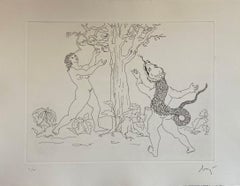
Italian Surrealist Aquatint Etching Enrico Baj Pop Art Nude Mod Cherubs Angels
By Enrico Baj
Located in Surfside, FL
Enrico Baj (1924-2003) Italian, limited edition print. Hand signed and numbered in pencil from limited edition of 100 Aquatint etching Image size: cm 39.5 x 29.5, sheet cm 53 x 39 ...
Category

20th Century Surrealist Florida - Figurative Prints

Materials

Etching, Aquatint

Abel Pann Israeli Bezalel School Lithograph Judaica Biblical Print Jewish Art
By Abel Pann
Located in Surfside, FL
Abel Pann (1883–1963) was a European Jewish painter who settled in the Talpiot neighborhood of Jerusalem in the early twentieth century and taught at the Bezalel Academy of Art under...
Category

Mid-20th Century Symbolist Florida - Figurative Prints

Materials

Lithograph

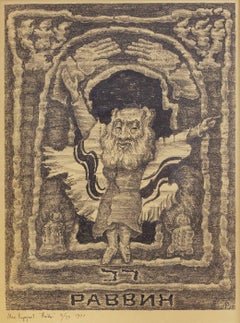
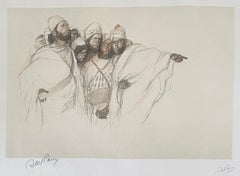
The Rabbi 1977 Soviet Non Conformist Avant Garde Print
By Alek Rapoport
Located in Surfside, FL
Dimensions w/Frame: 25 3/4" x 20 3/4" Alek Rapoport (November 24, 1933, Kharkiv, Ukraine SSR – February 4, 1997, San Francisco) was a Russian Nonconformist artist, art theorist and teacher. Alek Rapoport spent his childhood in Kiev (Ukraine SSR). During Stalin's "purges" both his parents were arrested. His father was shot and his mother spent ten years in a Siberian labor camp. Rapoport lived with his aunt. At the beginning of World War II, he was evacuated to the city of Ufa (the Bashkir Autonomous Soviet Socialist Republic). A time of extreme loneliness, cold, hunger and deprivation, this period also marked the beginning of Rapoport's drawing studies. After the war, Rapoport lived in Chernovtsy (Western Ukraine), a city with a certain European flair. At the local House of Folk Arts, he found his first art teacher, E.Sagaidachny (1886–1961), a former member of the nonconformist artist groups Union of the Youth (Soyuz Molodyozhi) and Donkey's Tail, popular during the 1910s–1920s. His other art teacher was I. Beklemisheva (1903–1988). Impressed by Rapoport's talent, she later (1950) organized his move to Leningrad, where he entered the famous V.Serov School of Art (the former School of the Imperial Society for the Promotion of Arts, OPKh, later the Tavricheskaya Art School). His association with this school lasted eight years, first as a student, and then, from 1965 to 1968, as a teacher. With "Socialist realism" the only official style during this time, most of the art school's faculty had to conceal any prior involvement in non-conformist art movements. Ya.K.Shablovsky, V.M.Sudakov, A.A.Gromov introduced their students to Constructivism only through clandestine means. (1959–1963) Rapoport studied stage design at the Leningrad Institute of Theater, Music and Cinema under the supervision of the famous artist and stage director N.P.Akimov. Akimov taught a unique course based on theories of Russian Suprematism and Constructivism, while encouraging his graduate students to apply their knowledge to every field of art design. Despite differences in personal artistic taste with Akimov, who was drawn to Vermeer and Dalí, Rapoport was influenced by Akimov's personality and liberalism, as well as the logical style of his art. In 1963, Rapoport graduated from the institute. His highly acclaimed MFA work involved the stage and costume design for I.Babel's play Sunset. In preparation, he traveled to the southwest regions of the Soviet Union, where he accumulated many objects of Judaic iconography from former ghettos, disappearing synagogues and old cemeteries. He wandered Odessa in search of Babel's characters and the atmosphere of his books. He organized a new liberal course in technical aesthetics, introducing his students to Lotman's theory of semiotics, the Modulor of Le Corbusier, the Bauhaus school, Russian Constructivism, Russian icons and contemporary Western art. As a result of his "radicalism," Rapoport was fired for "ideological conspiracy." He sought to cultivate himself as Jewish artist. This became particularly noticeable after the Six-Day War, when the Israeli victory led intellectuals, including the Jewish intelligentsia, to feel a heightened interest in Jewish culture and its Biblical roots. Rapoport's works of this period include Three Figures, a series of images of Talmudic Scholars, and works dealing with anti-Semitism. In the 1970s Rapoport joined the non-conformist movement, which opposed the dogmas of "Socialist realism" in art, along with Soviet censorship. The movement sought to preserve the traditions of Russian iconography and the Constructivist/Suprematist style of the 1910s. Despite the authorities' persecutions of nonconformist artists (including arrests, forced evictions, terminations of employment, and various forms of routine hassling), they united in a group, "TEV – Fellowship of Experimental Exhibitions." TEV's exhibitions proved tremendously successful. In the same period, Rapoport became one of the initiators of another anti-establishment group, ALEF (Union of Leningrad's Jewish Artists). In the United States this group was known as "Twelve from the Soviet Underground." Rapoport's involvement with this group increased tension with the authorities and attracted KGB scrutiny, including "friendly conversations," surveillance, detentions and house arrests. It became increasingly dangerous for him to live and work in the USSR. In October 1976, Rapoport with his wife and son were forced to leave Russia. In Italy, Rapoport exhibited at the Venice Biennale, "La Nuova Arte Sovietica-Una prospettiva non-ufficiale" (1977), participated in television programs about nonconformist art in the Soviet Union, and created lithographic works continuing his theme of Jewish characters from Babel's play Sunset. In 1977, Rapoport's family was granted U.S. immigration status and settled in San Francisco. a significant event in Rapoport's life occurred in his meeting with San Francisco gallery owner Michael Dunev, who became his friend and representative, organizing all his exhibitions until the artist's death. Toward the end of the 1980s and beginning of the 1990s, Rapoport completed his most ambitious works on the theme of the Old Testament prophets: Samson Destroying the House of the Philistines (1989), Lamentation and Mourning and Woe (1990), the four paintings Angel and Prophets (1990–1991) and Three Deeds of Moses (1992). In 1992, the artist's friends in St. Petersburg organized the first exhibition of his works there since his departure into exile, with works patiently gathered from collectors and art museums. This exhibition, held in the City Museum of St. Petersburg and accompanied by headlines such as "A St. Petersburg artist returns to his town," was followed by much larger ones in 1993 (St. Petersburg and Moscow), organized in collaboration with Michael Dunev Gallery under the name California Branches – Russian Roots. He Exhibited in "Soviet Artists, Jewish Themes...
Category

1970s Post-Modern Florida - Figurative Prints

Materials

Lithograph

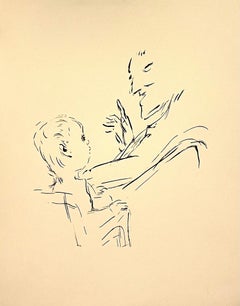
Pierre Bonnard Ltd Ed Lithograph Printed at Mourlot Paris 1958 Father and Son
By Pierre Bonnard
Located in Surfside, FL
This is from a limited edition portfolio of original lithographs print Fernand Mourlot in Paris in 1958 from work done in collaboration with Bonnard which began in 1928. This is f...
Category

20th Century Post-Impressionist Florida - Figurative Prints

Materials

Lithograph

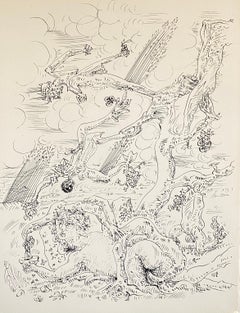
French Abstract Surrealist Lithograph Andre Masson Mourlot Paris Limited Edition
By André Masson
Located in Surfside, FL
This is from the suite by Jean Paul Sartre and Andre Masson, Limited edition of 175. published by Fernand Mourlot, 1961. The portfolio is numbered #29/175 and hand signed by Andre Ma...
Category

20th Century Surrealist Florida - Figurative Prints

Materials

Lithograph

Italian Surrealist Aquatint Etching Enrico Baj Pop Art Nude Mod Cherubs Angels
By Enrico Baj
Located in Surfside, FL
Enrico Baj (1924-2003) Italian, limited edition print. Hand signed and numbered in pencil from limited edition of 100 Aquatint etching Image size: cm 39.5 x 29.5, sheet cm 53 x 39 ...
Category

20th Century Surrealist Florida - Figurative Prints

Materials

Etching, Aquatint

Italian Surrealist Aquatint Etching Enrico Baj Pop Art Nude Mod Cherubs Angels
By Enrico Baj
Located in Surfside, FL
Enrico Baj (1924-2003) Italian, limited edition print. Hand signed and numbered in pencil from limited edition of 100 Aquatint etching Image size: cm 39.5 x 29.5, sheet cm 53 x 39 ...
Category

20th Century Surrealist Florida - Figurative Prints

Materials

Etching, Aquatint

French Abstract Surrealist Lithograph Andre Masson Mourlot Paris Limited Edition
By André Masson
Located in Surfside, FL
This is from the suite by Jean Paul Sartre and Andre Masson, Limited edition of 175. published by Fernand Mourlot, 1961. The portfolio is numbered #29/175 and hand signed by Andre Ma...
Category

20th Century Surrealist Florida - Figurative Prints

Materials

Lithograph

Etching of destroyed synagogue - Lwow, Poland
By Dora Szampanier
Located in Surfside, FL
Cracow Poland Etching of Polish Synagogue, Jewish temple. From very rare small edition. Most are signed in Hebrew and /or English. some are marked AP some are numbered. please see ph...
Category

20th Century Folk Art Florida - Figurative Prints

Materials

Etching

Endless Possibilities (framed hand signed serigraph)
Located in Aventura, FL
11 layer serigraph on TW Graphic Ink on Coventry Rag 320 GSM paper with deckled edges. Hand signed lower left by Kai. Hand numbered 4/140 lower left. Artwork size: 30.5 x 35.375 i...
Category

2010s Street Art Florida - Figurative Prints

Materials

Paper, Screen

Italian Surrealist Aquatint Etching Enrico Baj Pop Art with Watercolor Painting
By Enrico Baj
Located in Surfside, FL
Enrico Baj (1924-2003) Italian, limited edition print. Hand signed and numbered in pencil from limited edition of 100 Aquatint etching with the addition of hand watercolor painting ...
Category

20th Century Surrealist Florida - Figurative Prints

Materials

Watercolor, Etching, Aquatint

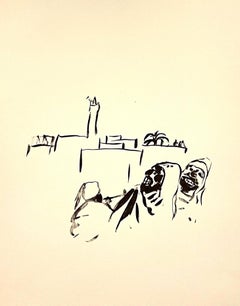
Pierre Bonnard Lithograph Printed at Mourlot Paris 1958 Mosque Minaret, Village
By Pierre Bonnard
Located in Surfside, FL
This is from a limited edition portfolio of original lithographs print Fernand Mourlot in Paris in 1958 from work done in collaboration with Bonnard which began in 1928. A walled ...
Category

20th Century Post-Impressionist Florida - Figurative Prints

Materials

Lithograph

Italian Surrealist Aquatint Etching Enrico Baj Pop Art Nude Mod Cherubs Angels
By Enrico Baj
Located in Surfside, FL
Enrico Baj (1924-2003) Italian, limited edition print. Hand signed and numbered in pencil from limited edition of 100 Aquatint etching Image size: cm 39.5 x 29.5, sheet cm 53 x 39 ...
Category

20th Century Surrealist Florida - Figurative Prints

Materials

Etching, Aquatint

Etching of destroyed synagogue - Przedborz, Poland
By Dora Szampanier
Located in Surfside, FL
Cracow Poland Etching of Polish Synagogue, Jewish temple. From very rare small edition. Most are signed in Hebrew and /or English. some are marked AP some are numbered. please see ph...
Category

20th Century Folk Art Florida - Figurative Prints

Materials

Etching

Abel Pann Israeli Bezalel School Lithograph Judaica Biblical Print Jewish Art
By Abel Pann
Located in Surfside, FL
Abel Pann (1883–1963) was a European Jewish painter who settled in the Talpiot neighborhood of Jerusalem in the early twentieth century and taught at the Bezalel Academy of Art under...
Category

Mid-20th Century Symbolist Florida - Figurative Prints

Materials

Lithograph

Figural Abstract Mid Century Modern Lithograph Portraits, Judaica, Jewish Print
By Rita Gombinski
Located in Surfside, FL
This is a proof print and is unsigned. it has Jewish Hebraic motifs, a menorah with a Jewish star, a mezusah or megilla scroll by this talented Jewish woman artist. Her whole life lo...
Category

Mid-20th Century Cubist Florida - Figurative Prints

Materials

Canvas, Oil

Lithograph Italian Post Modernist Figurative Pop Art
By Sandro Chia
Located in Surfside, FL
Sandro Chia was born in Florence in 1946. He has studied at the Istituto d’Arte and then at the Accademia di Belle Arti in Florence where he graduated in 1969. After graduation, he h...
Category

Late 20th Century Pop Art Florida - Figurative Prints

Materials

Lithograph

Alexander Calder Circus Reproduction Lithograph of a Drawing
By (after) Alexander Calder
Located in Surfside, FL
(after) Alexander Calder "Calder's Circus" offset lithograph on wove paper a reproduction lithograph after the drawings by the artist Published by Art in America and Perls gallery in 1964 (from drawings done in the 1930's) these range slightly in size but they are all about 13 X 17 inches (with minor variations in size as issued.) These have never been framed. The outer folio is not included just the one lithograph. James Sweeny from the introduction “The fame of Calder’s circus spread quickly between the years 1927 and 1930. All the Paris art world came to know it. It brought him his first great personal success. But what was more important, the circus also provided the first steps in Calder’s development as an original sculptor” Clive Gray wrote ”A visit to the studio of Alexander Calder led to the chance discovery of some hundred masterful circus drawings completed over thirty years ago. We publish, for the first time, a choice of sixteen from that group.” With signed introduction by Miro. These whimsical drawings, done in the style of wire sculpture, include acrobats, clowns, jugglers, trapeeze artists, an elephant, dog and lion. they are great. Alexander Calder is widely considered to be one of the most important American sculptors of the 20th century. He is best known for his colorful, whimsical abstract public sculptures and his innovative mobiles, kinetic sculptures powered by motors or air currents, which embraced chance in their aesthetic. Born into a family of accomplished artists, Calder's work first gained attention in Paris in the 1930s and was soon championed by the Museum of Modern Art in New York, resulting in a retrospective exhibition in 1943. Major retrospectives were also held at the Solomon R. Guggenheim Museum (1964) and the Museum of Contemporary Art, Chicago (1974). Calder’s work is in many permanent collections, most notably in the Whitney Museum of American Art, but also the Guggenheim Museum; the Museum of Modern Art; the National Gallery of Art, Washington, D.C.; and the Centre Georges Pompidou. He produced many large public works, including .125 (at JFK Airport, 1957), Pittsburgh (Carnegie International prize winner 1958, Pittsburgh International Airport) Spirale (UNESCO in Paris, 1958), Flamingo and Universe (both in Chicago, 1974), and Mountains and Clouds (Hart Senate Office Building, Washington, D.C., 1976). Although primarily known for his sculpture, Calder was a prodigious artist with a restless creative spirit, whose diverse practice included painting and printmaking, miniatures (such as his famous Cirque Calder), children’s book illustrations, theater set design, jewelry design, tapestry and rug works, and political posters. Calder was honored by the US Postal Service with a set of five 32-cent stamps in 1998, and received the Presidential Medal of Freedom, posthumously in 1977, after refusing to receive it from Gerald Ford one year earlier in protest of the Vietnam War. Calder moved to New York and enrolled at the Art Students League, studying briefly with Thomas Hart Benton, George Luks, Kenneth Hayes Miller, and John Sloan. While a student, he worked for the National Police Gazette where, in 1925, one of his assignments was sketching the Ringling Bros. and Barnum & Bailey Circus. Calder became fascinated with the action of the circus, a theme that would reappear in his later work. In 1926, Calder moved to Paris, enrolled in the Académie de la Grande Chaumière, and established a studio at 22 rue Daguerre in the Montparnasse Quarter. In June 1929, while traveling by boat from Paris to New York, Calder met his future wife, Louisa James (1905-1996), grandniece of author Henry James and philosopher William James. They married in 1931. While in Paris, Calder met and became friends with a number of avant-garde artists, including Fernand Léger, Jean Arp, and Marcel Duchamp. Cirque Calder (on view at the Whitney Museum of American Art at present) became popular with the Parisian avant-garde. He also invented wire sculpture, or "drawing in space," and in 1929 he had his first solo show of these sculptures in Paris at Galerie Billiet. Hi! (Two Acrobats) in the collection of the Honolulu Museum of Art is an early example of the artist's wire sculpture. The painter Jules Pascin, a friend of Calder's from the cafes of Montparnasse, wrote the preface to the catalog. A visit to Piet Mondrian's studio in 1930, where he was impressed by the environment-as-installation, "shocked" him into fully embracing abstract art, toward which he had already been tending. Dating from 1931, Calder’s sculptures of discrete movable parts powered by motors were christened “mobiles” by Marcel Duchamp, a French pun meaning both "motion" and "motive." At the same time, Calder was also experimenting with self-supporting, static, abstract sculptures, dubbed "stabiles" by Jean Arp in 1932 to differentiate them from mobiles. Public commissions increasingly came his way in the 1960s. Notable examples are .125 for JFK Airport in 1957, Spirale for UNESCO in Paris 1958 and Trois disques, commissioned for Expo 67 in Montreal, Quebec, Canada. Calder's largest sculpture at 25.7 meters high was El Sol Rojo, constructed outside the Aztec Stadium for the 1968 Summer Olympics "Cultural Olympiad" events in Mexico City. Many of his public works were commissioned by renowned architects; I.M. Pei commissioned his La Grande Voile (1966), a 25-ton, 40-foot high stabile for the Massachusetts Institute of Technology. Part of Calder's repertoire includes pivotal stage sets for more than a dozen theatrical productions, including Nucléa, Horizon, and most notably, Martha Graham’s Panorama (1935), a production of the Erik Satie symphonic drama Socrate (1936), and later, Works in Progress (1968). In addition to sculptures, Calder painted throughout his career, beginning in the early 1920s. He picked up his study of printmaking in 1925, and continued to produce illustrations for books and journals.As Calder’s professional reputation expanded in the late 1940s and 1950s, so did his production of prints. Masses of lithographs based on his gouache paintings hit the market, and deluxe editions of plays, poems, and short stories illustrated with fine art prints by Calder became available for sale. One of Calder's most celebrated and unconventional undertakings was a commission from Dallas-based Braniff International Airways to paint a full-size Douglas DC-8-62 four-engined jet as a "flying canvas." Calder created over 2,000 pieces of jewelry over the course of his career, many of them as gifts for friends and relatives. For his lifelong friend Joan Miró, he set a shard of a broken porcelain vessel in a brass ring. Peggy Guggenheim received enormous silver mobile earrings and later commissioned a hammered silver headboard...
Category

1930s American Modern Florida - Figurative Prints

Materials

Lithograph

Italian Surrealist Aquatint Etching Enrico Baj Pop Art with Watercolor Painting
By Enrico Baj
Located in Surfside, FL
Enrico Baj (1924-2003) Italian, limited edition print. Hand signed and numbered in pencil from limited edition of 100 Aquatint etching with the addition of hand watercolor painting ...
Category

20th Century Surrealist Florida - Figurative Prints

Materials

Watercolor, Etching, Aquatint

Night Light Signed Aquatint Etching California Modernist Woman Artist Susan Hall
By Susan Hall
Located in Surfside, FL
Susan Hall Hand signed and numbered Aquatint Etching This piece has a Memphis Milano sort of vibe to it. Susan Hall lives and works in Point Reyes Station, California, a town in the heart of the Point Reyes National Seashore. This pristine wilderness area is dominated by a mosaic of bays and ocean, rolling grass lands and forests. It is inhabited by a diversity of wildlife, including over 450 species of birds, mountains lions, deer, bobcats, foxes, and elk. Ms. Hall who is a native of this area returned after spending twenty years in New York City. In her book, “Painting Point Reyes”, Hall says, “Point Reyes is the center of my painting life. Point Reyes has been my life and when I haven’t lived here, it has been an underground stream that spoke to me in dreams and visions.” While living and painting in New York City, Ms. Hall exhibited her work widely in museums and galleries. Among them are the Whitney Museum of Art; San Francisco Museum of Art; Nancy Hoffman Gallery, Trabia MacAfee Gallery, Phyllis Kind Gallery, Chicago; Ovsey Gallery, Los Angeles. In addition, her work has been featured in group exhibitions throughout the United States and abroad, including in 2020 Bud Shark's Ink: The California Crew at BMoCA, Boulder Museum of Contemporary Art Colorado USA representing the panoply of aesthetics, cultural backgrounds, viewpoints, and talent held within the bounty of art “made in California.” This remarkable grouping of artists, Brad Brown, Enrique Chagoya, Roy De Forest, Amy Ellingson, Susan Hall, Don Ed Hardy, Mildred Howard, Robert Hudson, Hung Liu, Kara Maria, Rex Ray, Alison Saar, Italo Scanga, and William T. Wiley. Women to the Fore, Hudson River Museum Yonkers 2021 A group of women artists working in oil painting and drawing, lithograph prints and photograph, collage and sculpture. Many icons of feminist art history. Judy Chicago, Judy Giera, Marisol, and Shanequa Benitez, Ann McCoy, Anna Walinska, Audrey Flack, Barbara Morgan, Berenice Abbott, Bessie Potter Vonnoh, Georgia O'Keeffe, Hannelore Baron, Harriet, Judy Chicago, Louise Nevelson, Marisol, Mary Frank, Nancy Graves, Susan Hall, Yvonne Thomas...
Category

1970s American Modern Florida - Figurative Prints

Materials

Etching, Aquatint

Italian Surrealist Aquatint Etching Enrico Baj Pop Art with Watercolor Painting
By Enrico Baj
Located in Surfside, FL
Enrico Baj (1924-2003) Italian, limited edition print. Hand signed and numbered in pencil from limited edition of 100 Aquatint etching with the addition of hand watercolor painting ...
Category

20th Century Surrealist Florida - Figurative Prints

Materials

Watercolor, Etching, Aquatint

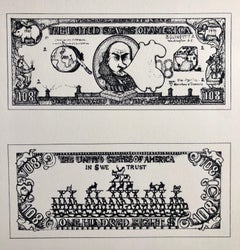
1960 s Pop Art Silkscreen Print 108$ Bill Inflation Hand Signed and Numbered
By Oyvind Fahlstrom
Located in Surfside, FL
Öyvind Axel Christian Fahlström (1928–1976) was a Swedish Multimedia artist. Fahlström was born in Sao Paulo, Brazil, In July 1939 he was sent to Stockholm to visit some distant relatives and after World War II he started to study and later on to work as a writer, critic and journalist. From 1960 until 1976 he was married to the Swedish Pop Art painter Barbro Östlihn. In 1953 Fahlström had his first solo exhibition, showing the drawing Opera, a room-sized felt-pen drawing. Also in 1953 he wrote Hätila ragulpr på fåtskliaben, a manifesto for concrete poetry, published in Swedish the following year and in English translation (by Mary Ellen Solt, in her anthology "Concrete Poetry. A world view") in 1968. In 1956 Fahlström moved to Paris and lived there for three years before he moved to Front Street studio, New York City. In New York he worked with different artists and explored his role as an artist further. In 1962 he participated in the New Realists exhibition at the Sidney Janis Gallery, in New York City. His work was included in the 1964 Venice Biennale and he had a solo exhibition at Cordier & Ekstrom Inc., New York. In 1965 he joined the Sidney Janis Gallery. In 1966 his work Performance of Kisses Sweeter Than Wine was included in 9 Evenings: Theatre and Engineering, organized by Experiments in Art and Technology at the 26th Street Armory, New York. The same year his painting in oil on photo...
Category

1970s Pop Art Florida - Figurative Prints

Materials

Lithograph, Screen

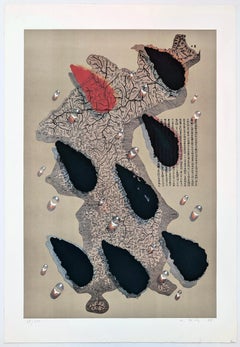
WATER DROPS
Located in Aventura, FL
Water Drops, from The Official Arts Portfolio of the XXIVth Olympiad, Seoul, Korea, 1988. Silkscreen in colors on paper. Hand signed, dated and numbered by the artist. Image size 3...
Category

1980s Contemporary Florida - Figurative Prints

Materials

Paper, Screen

WATER DROPS
WATER DROPS
$1,200 Sale Price
40% Off
Original Judaica Woodcut Print Joyous Songs Dancing Jewish Couple
By Morton Garchik
Located in Surfside, FL
Original pencil signed Judaic woodcut on mulberry paper. MORTON GARCHIK (1929-2009) Jewish American artist painter, printmaker, illustrator, woodcut artist and author. Garchik was ...
Category

20th Century Folk Art Florida - Figurative Prints

Materials

Woodcut

Still Thinking About These?

All Recently Viewed