Germany - Antiquities
to
6
77
1,078
417
77
44
8
3
1
1
1
1
1
2
57
18
13
3
4
2
1
54
37
32
29
19
70
51
12
3
2
77
77
77
1
1
Item Ships From: Germany
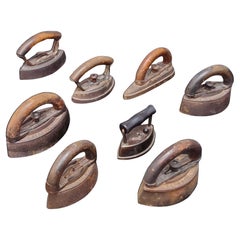
Collection of 8 Antique American Cloth Sad Irons, Rare
Collectibles, Set of 8
Located in Bochum, NRW
A beautiful collection of eight antique clothes irons / sad irons.
They are oval-shaped and feature a cast iron base with a detachable wood handle.
Ma...
Category
Early 20th Century American Industrial Germany - Antiquities
Materials
Iron

$654 Sale Price / set
20% Off
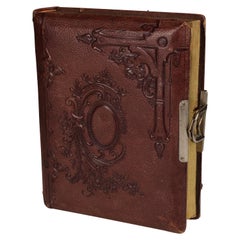
Antique Leather Photo Album With Music Box, Early 20th Century
Located in Greven, DE
Unique antique photo album with a music box, which starts to play when opening the closure.
Category
Early 20th Century Unknown Germany - Antiquities
Materials
Leather, Paper
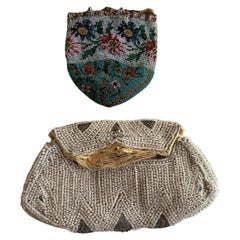
Exquisite Beaded Bag Set – 19th Century Drawstring Pouch
Art Deco Clutch
Located in Hamburg, DE
This charming set of antique beaded accessories includes a 19th-century drawstring pouch and a small Art Deco evening bag, both showcasing the refined craftsmanship of historical bea...
Category
1920s German Art Deco Vintage Germany - Antiquities
Materials
Silk, Glass
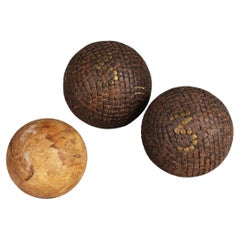
Pair Of Antique Boule Balls "3", Pétanque, 1880s, France, Craftsmanship
Located in Greven, DE
Beautiful, unique Boule ball pair and one target ball, France, late 19th Century.
Decorated with the numer "3" on each of the Boule balls.
In the 19th century, the manufacture of b...
Category
Late 19th Century French Late Victorian Antique Germany - Antiquities
Materials
Olive
Antique Boule Ball "J P", Pétanque, 1880s, France, Craftsmanship
Located in Greven, DE
Beautiful, unique Boule ball, France, late 19th Century.
In the 19th century, the manufacture of boules balls underwent significant development in France as the game of boules, part...
Category
Late 19th Century French Late Victorian Antique Germany - Antiquities
Materials
Metal, Brass
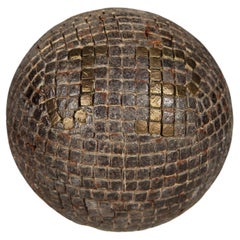
Pair Of Antique Boule Balls, Pétanque, 1880s, France, Craftsmanship
Located in Greven, DE
Beautiful, unique Boule ball pair and one target ball, France, late 19th Century.
In the 19th century, the manufacture of boules balls underwent significant development in France as...
Category
Late 19th Century French Late Victorian Antique Germany - Antiquities
Materials
Metal
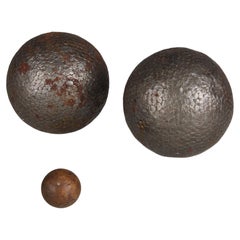
Art Deco Sideboard in Rosewood from Paris Around 1925
Located in Greven, DE
We were able to acquire this wonderful piece of furniture directly from Paris. The sideboard has a wonderful rosewood veneer which, with the reddish tones, creates a nice contrast to...
Category
1920s French Art Deco Vintage Germany - Antiquities
Materials
Marble, Chrome
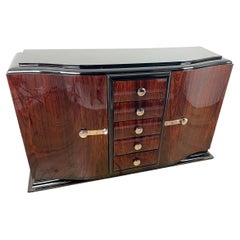
$6,958 Sale Price
35% Off
Art Deco Pouch or Evening Bag, Handbag Black Silk, Silver Sequins ca. 1920
Located in Andernach, DE
Absolutely unique, likely French – small pouch from black silk at the outside.
The embroidery appears to be from genuine silver sequins, as it weights quite heavy, but the material r...
Category
Early 20th Century Germany - Antiquities
Materials
Metal
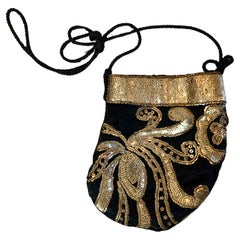
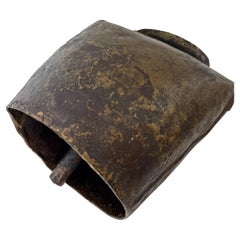
Antique Handmade Bronze Cowbell From Switzerland 1850s
Located in Hannover, DE
This bell has a wonderful and very loud sound. Ideal for a large house to call all the residents out to eat or on your property in the country, the children will hear this sound from...
Category
1850s Swiss Folk Art Antique Germany - Antiquities
Materials
Bronze
$558 Sale Price
20% Off
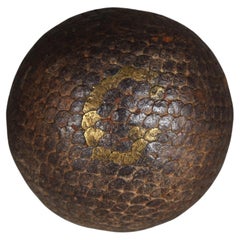
Antique Boule Ball "G", Pétanque, 1880s, France, Craftsmanship
Located in Greven, DE
Beautiful, unique Boule ball, France, late 19th Century.
In the 19th century, the manufacture of boules balls underwent significant development in France as the game of boules, particularly the pétanque variant, gained in popularity. The manufacture of boules balls during this period was a manual process that required expertise, precision and love to detail.
In the late 19th and early 20th centuries, particularly in rural areas of France and other Mediterranean regions, olive wood was a commonly used source of material for making boules balls. This was not only due to the availability of the material, but also to the outstanding properties of olive wood, which was characterized by hardness, strength and a rich grain.
First, the olive wood was carefully selected and shaped into raw balls, which were then sanded to the desired size and shape. The nails were then hammered into the balls one by one, making sure that they were evenly distributed and firmly anchored. Finally, the spheres were polished and coated with a protective varnish to enhance their natural beauty and protect them from the elements.
The use of nails to decorate and reinforce olive wood boules was a traditional practice that not only gave the ball a rustic aesthetic, but also improved its durability and contributed to customization. Many balls were made according to the specific requirements and preferences of the players. Nails were driven at regular intervals around the ball, with each nail hole precisely placed so as not to affect the balance and weight distribution of the ball. These nails not only served as a decorative element, but also helped to strengthen the structure of the ball and make it more resistant to the hard knocks and wear and tear during play. Individual engravings or decorations were often applied to the balls to make them unique and identify the player.
Antique boules...
Category
Late 19th Century French Late Victorian Antique Germany - Antiquities
Materials
Metal
Art Deco Chest of Drawers from Berlin around 1930
Located in Greven, DE
Nice little chest of drawers from the German Art Deco. The combination of the black piano lacquer and the Kaukassischer walnut make this furniture an absolute eye-catcher. The entire...
Category
1930s German Art Deco Vintage Germany - Antiquities
Materials
Brass, Chrome

$3,810 Sale Price
44% Off
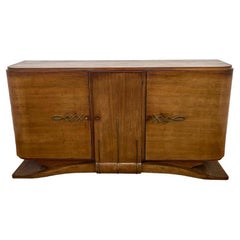
Art Deco Sideboard Made of Rosewood with Brass Applications, Paris, around 1920
Located in Greven, DE
Original Art Deco furniture from a time full of life and elegance. We get all of our furniture unrestored so that we can be sure that it is really original. We then offer these as original until we recondition the furniture in our workshop and then offer it as restored furniture...
Category
1920s French Art Deco Vintage Germany - Antiquities
Materials
Brass
$3,463 Sale Price
50% Off
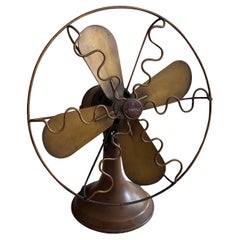
Antique Siemens Art Deco Bakelite
Brass Fan, 1920s
By Siemens
Located in Hamburg, DE
This striking antique Siemens fan from the 1920s is a fine example of early industrial design and the elegance of the Art Deco era. The beautifully curved frame is made from rich, da...
Category
Early 20th Century German Art Deco Germany - Antiquities
Materials
Brass
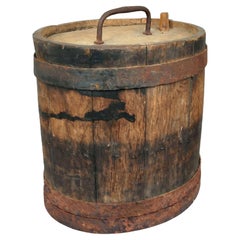
Scandinavian Folk Art Wine, Alcohol Oak Cask, 19th Century
Located in Bochum, NRW
Scandinavian Folk Art oak cask, crafted in the 19th century and steeped in rustic tradition.
Constructed from robust oak staves and secured with authentic iron banding, this piece e...
Category
1850s Swedish Folk Art Antique Germany - Antiquities
Materials
Iron
Biedermeier Beaded Bag with Oriental Scene – Handcrafted 19th Century Needlework
Located in Hamburg, DE
This rare Biedermeier beaded bag from the 19th century is a fine example of early European beadwork, both decorative and rich in storytelling detail. The round bag features an elabor...
Category
1820s German Biedermeier Antique Germany - Antiquities
Materials
Fabric, Glass

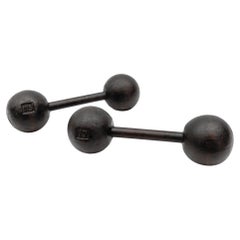
2x Art Deco 15kg double ball dumbbells, 1930s
Located in Nürnberg, Bayern
2x Art Deco 15kg double ball dumbbells
Super decorative.
Will be sent in 2 packages because of the weight.
Category
1930s German Bauhaus Vintage Germany - Antiquities
Materials
Iron
$1,082 / set
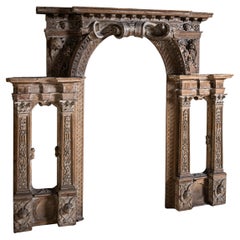
Renaissance Altar Frame, probably Italy, late 16th Century
Located in Greding, DE
Large and architecturally structured frame from an altar retable, likely originating in 16th-century Italy made from pine and linden tree.
The composition features a tripartite layou...
Category
16th Century Italian Renaissance Antique Germany - Antiquities
Materials
Pine
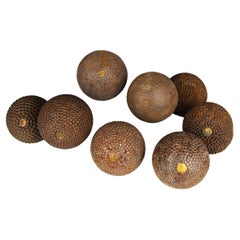
Complete Set Of Antique Boule Balls, 8 Pieces, Pétanque, 1880s, France
Located in Greven, DE
Complete Boule ball set of 8 pieces, France, late 19th Century.
In the 19th century, the manufacture of boules balls underwent significant development in France as the game of boule...
Category
Late 19th Century French Late Victorian Antique Germany - Antiquities
Materials
Metal
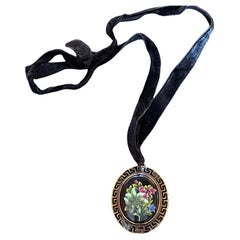
Victorian Pendant Locket around 1910 Brass
Glossy Porcelain Edelweiss, Germany
Located in Andernach, DE
Beautifully designed large pendant from brass and porcelain.
Depicting a larger Edelweiss and possibly a Forget-me-not (Vergissmeinnicht).
The locket is lidded with a glass window, f...
Category
Early 20th Century German Mid-Century Modern Germany - Antiquities
Materials
Brass
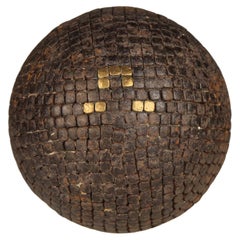
Antique Boule Ball Brass Decor, Pétanque, 1880s, France, Craftsmanship
Located in Greven, DE
Beautiful, unique Boule ball, France, late 19th Century.
In the 19th century, the manufacture of boules balls underwent significant development in France as the game of boules, part...
Category
Late 19th Century French Late Victorian Antique Germany - Antiquities
Materials
Metal, Brass
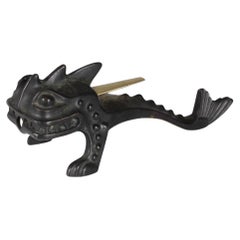
Large Antique Lighter, Iron, France, Early 20th Century
Located in Greven, DE
Exceptional lighter from heavy iron, France, early 20th century.
Not functional.
Category
Early 20th Century French Art Deco Germany - Antiquities
Materials
Iron
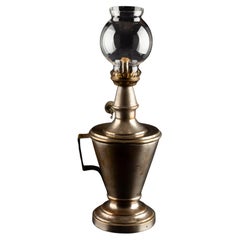
Antique French Brass Nickel-Plated Pigeon Oil Lamp, 19th Century
Located in Greven, DE
Crafted in late 19th century France, this nickel-plated brass oil lamp represents a significant development in the history of lighting. Known as a Pigeon lamp...
Category
Late 19th Century French Antique Germany - Antiquities
Materials
Brass, Nickel
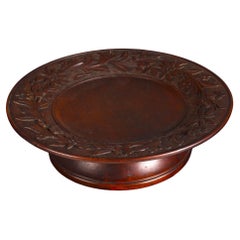
Antique Black Forest Serving Plate With Music Box, Hand-Carved Folk Art
Located in Greven, DE
This beautiful hand-carved Black Forest serving plate hides a music box in its base. An extraordinary piece of folk art from the mid-20th century.
The music box can be operated with ...
Category
20th Century Unknown Germany - Antiquities
Materials
Wood
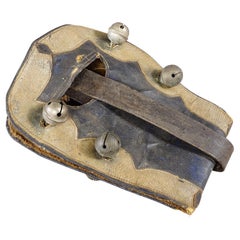
Antique Bell Belt with Eight Brass Bells, Tyrol ca. 1900s
Located in Berghuelen, DE
Antique Bell Belt with Eight Brass Bells, Tyrol ca. 1900s
An antique bell belt with eight brass bells from the Tyrolian Alps ca. 1900s. Bell belts are used to locate goats or sheep ...
Category
Early 20th Century Swiss Black Forest Germany - Antiquities
Materials
Metal
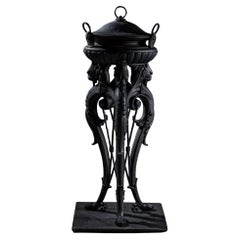
Large Athénienne, 19th Century
Located in Greding, DE
Large Athénienne crafted from iron with a black patina, supported by three legs terminating in winged lion heads. Resting atop is a basin with gadrooned sides, a domed lid, and three...
Category
19th Century German Empire Antique Germany - Antiquities
Materials
Iron
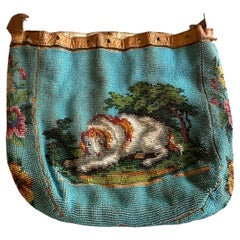
Antique Beaded Drawstring Purse with Dog and Parrot Motif – Germany, circa 1850
Located in Hamburg, DE
This exquisite antique beaded purse from Germany, dating to around 1850, is a remarkable example of 19th-century craftsmanship and textile art. Richly embroidered with vibrant glass beads in exceptionally fresh and bold colors, the purse features a charming depiction of a dog on one side and a colorful parrot on the other. The attention to detail extends even to the edges, where additional animals and floral motifs are intricately stitched, showcasing the skill and artistry of its original maker.
The interior is lined with fine, buttery-soft deerskin leather, offering a luxurious tactile experience. While some minor bead losses and carefully executed repairs are visible, the overall condition is impressively well-preserved for its age. The drawstring is missing, but with the addition of a new ribbon, this delicate piece could even be used again—though it remains most striking as a collector’s item or display piece. Antique purses like this, especially with such vivid imagery and expert beadwork, are increasingly rare and highly sought after. A wonderful find for lovers of textile history, decorative arts, or romantic Victorian accessories.
Category
1850s German Biedermeier Antique Germany - Antiquities
Materials
Leather, Glass
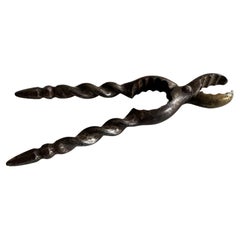
Iron Nutcracker with Brass Accents and Turned Handles, Germany circa 1800
Located in Hamburg, DE
This beautifully aged iron nutcracker dates to around 1800 and most likely originates from Germany. It is a wonderful example of early utilitarian craf...
Category
Early 19th Century German Biedermeier Antique Germany - Antiquities
Materials
Iron
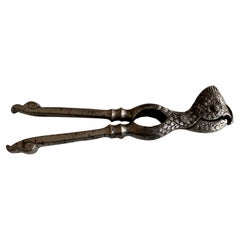
Iron Nutcracker in the Shape of a Cockatoo, 19th Century, Poland
Located in Hamburg, DE
This rare and whimsical 19th-century nutcracker from Poland is crafted from solid cast iron and takes the form of a stylized cockatoo. A nut can be placed in the bird’s beak to be cracked, while a second functional element is integrated into the center of the body – making it a playful yet practical object. The detailed shaping of the feathers and the expressive form reflect the fine craftsmanship of the period and lend the piece a sculptural quality that elevates it far beyond a mere kitchen tool.
Nutcracker collecting is a rich and varied field within the world of antiques. While the brightly painted wooden figures from the Erzgebirge are widely known, earlier examples were often made of metal and featured imaginative animal or human forms. Iron nutcrackers...
Category
Mid-19th Century Polish Belle Époque Antique Germany - Antiquities
Materials
Iron
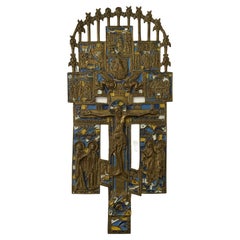
19th Century Russian Orthodox Bronze and Enamel Cross
Located in DE
Wall or home cross.
Russian orthodox bronze and enamel cross.
Scene with Martha, Maria, Johannes, and Longinus underneath the cross and above the sku...
Category
19th Century Russian Antique Germany - Antiquities
Materials
Bronze, Enamel
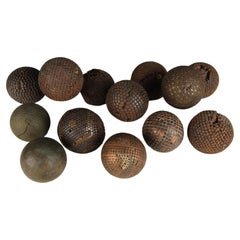
Large Set Of Antique Boule Balls, 13 Pieces, Pétanque, 1880s, France
Located in Greven, DE
Large Boule ball set of 13 pieces, France, late 19th Century.
Unrestored, original condition with signs of age and use.
In the 19th century, the manufacture of boules balls underwen...
Category
Late 19th Century French Late Victorian Antique Germany - Antiquities
Materials
Metal, Copper, Steel
Antique Boule Set, Boule Balls, Pétanque, 1880s, France, Craftsmanship
Located in Greven, DE
Beautiful, unique Boule set of three Boule balls and one target ball, France, late 19th Century.
Fantastic colour and patina!
In the 19th century, antique metal boules balls experienced a renaissance that took the game of boules to a new level.
These ornately crafted balls were not only instruments of the game, but also symbols of elegance and sophistication in leisure activities.
Made from high-quality metals such as steel or brass, Boule balls were forged and polished by skilled craftsmen to ensure a smooth and even surface.
The antique boules...
Category
Late 19th Century French Late Victorian Antique Germany - Antiquities
Materials
Metal
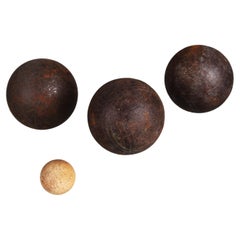
Antique Boule Set, Boule Balls, Pétanque, 1880s, France, Craftsmanship
Located in Greven, DE
Beautiful, unique Boule set of three Boule balls, France, late 19th century.
In the 19th century, antique metal boules balls experienced a renaissance that took the game of boules to a new level.
These ornately crafted balls were not only instruments of the game, but also symbols of elegance and sophistication in leisure activities.
Made from high-quality metals such as steel or brass, Boule balls were forged and polished by skilled craftsmen to ensure a smooth and even surface.
The antique boules...
Category
Late 19th Century French Late Victorian Antique Germany - Antiquities
Materials
Metal
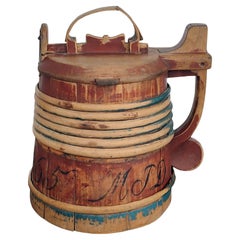
Scandinavian Folk Art Wooden Lidded Tankard, Norwegian, Dated 1865
Located in Bochum, NRW
Embrace the timeless spirit of 19th-century Scandinavian craftsmanship with this exceptional Norwegian wooden lidded tankard, dated 1865 and adorned with painted initials that echo a...
Category
Late 19th Century Swedish Folk Art Antique Germany - Antiquities
Materials
Wood
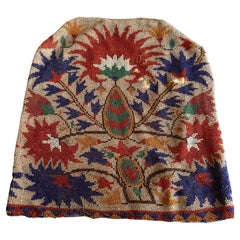
Colorful Art Deco Beaded Pouch, circa 1920s
Located in Hamburg, DE
This vibrant antique beaded pouch dates to the Art Deco period of the 1920s and captures the bold spirit and energy of its time. Unlike traditional handbags, this piece has no clasp ...
Category
1920s German Art Deco Vintage Germany - Antiquities
Materials
Cotton, Glass
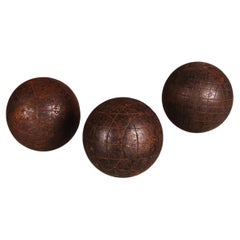
Antique Boule Ball "B", Pétanque, 1880s, France, Craftsmanship
Located in Greven, DE
Beautiful, unique Boule ball, France, late 19th Century.
In the 19th century, the manufacture of boules balls underwent significant development in France as the game of boules, part...
Category
Late 19th Century French Late Victorian Antique Germany - Antiquities
Materials
Metal
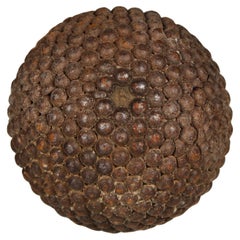
Antique Boule Balls Set "9", Pétanque, 1880s, France, Craftsmanship
Located in Greven, DE
Beautiful, unique Boule set of three Boule balls and one target ball, France, late 19th century.
In the 19th century, the manufacture of boules balls underwent significant development in France as the game of boules, particularly the pétanque variant, gained in popularity. The manufacture of boules balls during this period was a manual process that required expertise, precision and love to detail.
In the late 19th and early 20th centuries, particularly in rural areas of France and other Mediterranean regions, olive wood was a commonly used source of material for making boules balls. This was not only due to the availability of the material, but also to the outstanding properties of olive wood, which was characterized by hardness, strength and a rich grain.
First, the olive wood was carefully selected and shaped into raw balls, which were then sanded to the desired size and shape. The nails were then hammered into the balls one by one, making sure that they were evenly distributed and firmly anchored. Finally, the spheres were polished and coated with a protective varnish to enhance their natural beauty and protect them from the elements.
The use of nails to decorate and reinforce olive wood boules was a traditional practice that not only gave the ball a rustic aesthetic, but also improved its durability and contributed to customization. Many balls were made according to the specific requirements and preferences of the players. Nails were driven at regular intervals around the ball, with each nail hole precisely placed so as not to affect the balance and weight distribution of the ball. These nails not only served as a decorative element, but also helped to strengthen the structure of the ball and make it more resistant to the hard knocks and wear and tear during play. Individual engravings or decorations were often applied to the balls to make them unique and identify the player.
Antique boules...
Category
Late 19th Century French Late Victorian Antique Germany - Antiquities
Materials
Olive
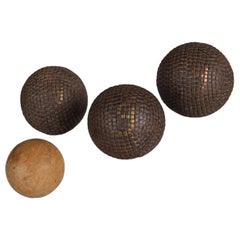
Antique Boule Balls Set "B", Pétanque, 1880s, France, Craftsmanship
Located in Greven, DE
Beautiful, unique Boule set of three Boule balls and one target ball, France, late 19th century.
In the 19th century, the manufacture of boules balls underwent significant development in France as the game of boules, particularly the pétanque variant, gained in popularity. The manufacture of boules balls during this period was a manual process that required expertise, precision and love to detail.
In the late 19th and early 20th centuries, particularly in rural areas of France and other Mediterranean regions, olive wood was a commonly used source of material for making boules balls. This was not only due to the availability of the material, but also to the outstanding properties of olive wood, which was characterized by hardness, strength and a rich grain.
First, the olive wood was carefully selected and shaped into raw balls, which were then sanded to the desired size and shape. The nails were then hammered into the balls one by one, making sure that they were evenly distributed and firmly anchored. Finally, the spheres were polished and coated with a protective varnish to enhance their natural beauty and protect them from the elements.
The use of nails to decorate and reinforce olive wood boules was a traditional practice that not only gave the ball a rustic aesthetic, but also improved its durability and contributed to customization. Many balls were made according to the specific requirements and preferences of the players. Nails were driven at regular intervals around the ball, with each nail hole precisely placed so as not to affect the balance and weight distribution of the ball. These nails not only served as a decorative element, but also helped to strengthen the structure of the ball and make it more resistant to the hard knocks and wear and tear during play. Individual engravings or decorations were often applied to the balls to make them unique and identify the player.
Antique boules...
Category
Late 19th Century French Late Victorian Antique Germany - Antiquities
Materials
Olive
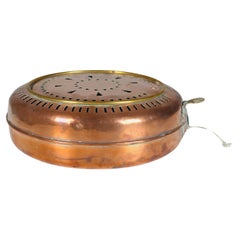
Antique Bassinoire, Warming Pan, Copper, France, 1880s
Located in Greven, DE
Beautiful copper pan from France, a so-called Bassinoire.
The lid can be opened with an external lever.
This antique form of a todays hot-water bottle was primarily used in aristocr...
Category
19th Century French Antique Germany - Antiquities
Materials
Copper
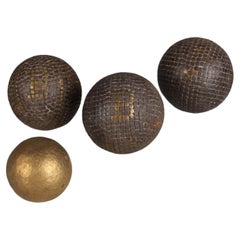
Antique Boule Ball "D F", Pétanque, 1880s, France, Craftsmanship
Located in Greven, DE
Beautiful, unique Boule ball, France, late 19th Century.
In the 19th century, the manufacture of boules balls underwent significant development in France as the game of boules, part...
Category
Late 19th Century French Late Victorian Antique Germany - Antiquities
Materials
Metal, Brass
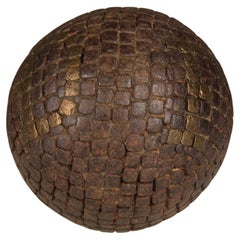
Pair Of Antique Boule Balls, Pétanque, 1880s, France, Craftsmanship
Located in Greven, DE
Beautiful, unique Boule ball pair, France, late 19th Century.
Diameter 9,5 cm.
In the 19th century, the manufacture of boules balls underwent significant development in France as the game of boules, particularly the pétanque variant, gained in popularity. The manufacture of boules balls during this period was a manual process that required expertise, precision and love to detail.
In the late 19th and early 20th centuries, particularly in rural areas of France and other Mediterranean regions, olive wood was a commonly used source of material for making boules balls. This was not only due to the availability of the material, but also to the outstanding properties of olive wood, which was characterized by hardness, strength and a rich grain.
First, the olive wood was carefully selected and shaped into raw balls, which were then sanded to the desired size and shape. The nails were then hammered into the balls one by one, making sure that they were evenly distributed and firmly anchored. Finally, the spheres were polished and coated with a protective varnish to enhance their natural beauty and protect them from the elements.
The use of nails to decorate and reinforce olive wood boules was a traditional practice that not only gave the ball a rustic aesthetic, but also improved its durability and contributed to customization. Many balls were made according to the specific requirements and preferences of the players. Nails were driven at regular intervals around the ball, with each nail hole precisely placed so as not to affect the balance and weight distribution of the ball. These nails not only served as a decorative element, but also helped to strengthen the structure of the ball and make it more resistant to the hard knocks and wear and tear during play. Individual engravings or decorations were often applied to the balls to make them unique and identify the player.
Antique boules...
Category
Late 19th Century French Late Victorian Antique Germany - Antiquities
Materials
Olive
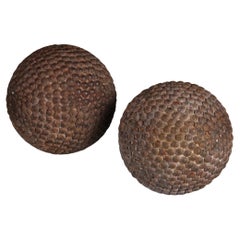
Mid 19th Century Firedogs, Sphinx Andirons, Cast Iron, 39 cm
Located in Greven, DE
Pair of wonderful andirons in the shape of a Sphinx.
France, circa 1860.
Solid iron in good condition according to its age.
Firedogs are used as a holder for firewood in a fireplace...
Category
Mid-19th Century French Victorian Antique Germany - Antiquities
Materials
Iron
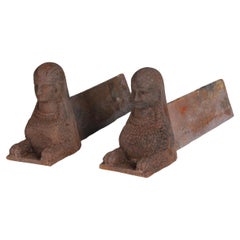
Antique Boule Set, Boule Balls, Pétanque, 1880s, France, Craftsmanship
Located in Greven, DE
Beautiful, unique Boule set of three Boule balls and one target ball, France, late 19th century.
In the 19th century, the manufacture of boule balls underwent significant developmen...
Category
Late 19th Century French Late Victorian Antique Germany - Antiquities
Materials
Olive
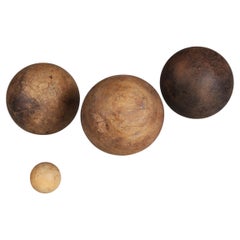
Antique Leather Book "La Mascarade Humaine", By Gavarni, 1881s, France
By Paul Gavarni
Located in Greven, DE
Wonderful rare antique leather book, original from 1881 by Paul Gavarni.
Illustrated by Gavarni are: Histoire de politiquer ; Les propos de Thomas Vireloque ; Les Bohèmes ; Manières ...
Category
19th Century French Antique Germany - Antiquities
Materials
Leather, Paper
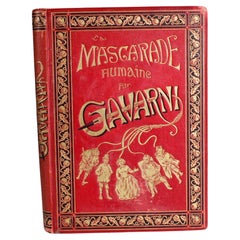
Antique Boule Ball "C" With Star Decor, Pétanque, 1880s, France, Craftsmanship
Located in Greven, DE
Beautiful, unique Boule ball, France, late 19th Century.
In the 19th century, the manufacture of boules balls underwent significant development in France as the game of boules, part...
Category
Late 19th Century French Late Victorian Antique Germany - Antiquities
Materials
Metal, Brass
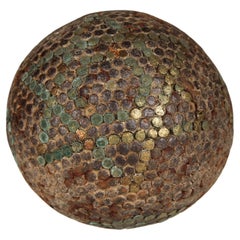
Antique Boule Set, Boule Balls, Pétanque, 1880s, France, Craftsmanship
Located in Greven, DE
Beautiful, unique Boule set of three Boule balls and one target ball, France, late 19th Century.
Diameter 8,5 cm.
Fantastic colour and patina!
In the 19th century, antique metal boules balls experienced a renaissance that took the game of boules to a new level.
These ornately crafted balls were not only instruments of the game, but also symbols of elegance and sophistication in leisure activities.
Made from high-quality metals such as steel or brass, Boule balls were forged and polished by skilled craftsmen to ensure a smooth and even surface.
The antique boules...
Category
Late 19th Century French Late Victorian Antique Germany - Antiquities
Materials
Metal
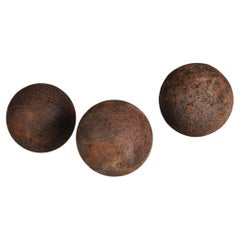
Pair Of Antique Boule Balls "G", Pétanque, 1880s, France, Craftsmanship
Located in Greven, DE
Beautiful, unique Boule ball pair, France, late 19th Century.
In the 19th century, the manufacture of boules balls underwent significant development in France as the game of boules,...
Category
Late 19th Century French Late Victorian Antique Germany - Antiquities
Materials
Olive
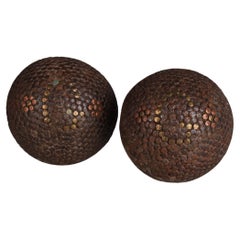
Antique 19th Century English Glazed Ceramic And Brass Fireplace Tool Rest
Located in Greven, DE
This eye-catching English antique is a fireplace tool rest - a desirable and common feature in Victorian homes. As the name suggests, its purpose is to hold fireplace tools such as b...
Category
Late 19th Century English Late Victorian Antique Germany - Antiquities
Materials
Brass
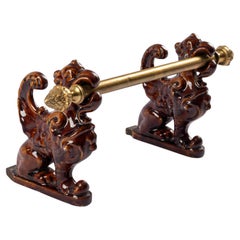
Antique Boule Ball, Pétanque, 1880s, France, Craftsmanship
Located in Greven, DE
Beautiful, unique Boule ball, France, late 19th Century.
In the 19th century, the manufacture of boules balls underwent significant development in France as the game of boules, part...
Category
Late 19th Century French Late Victorian Antique Germany - Antiquities
Materials
Metal
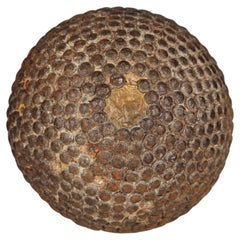
Antique Boule Ball "7", Pétanque, 1880s, France, Craftsmanship
Located in Greven, DE
Beautiful, unique Boule ball, France, late 19th Century.
In the 19th century, the manufacture of boules balls underwent significant development in France as the game of boules, particularly the pétanque variant, gained in popularity. The manufacture of boules balls during this period was a manual process that required expertise, precision and love to detail.
In the late 19th and early 20th centuries, particularly in rural areas of France and other Mediterranean regions, olive wood was a commonly used source of material for making boules balls. This was not only due to the availability of the material, but also to the outstanding properties of olive wood, which was characterized by hardness, strength and a rich grain.
First, the olive wood was carefully selected and shaped into raw balls, which were then sanded to the desired size and shape. The nails were then hammered into the balls one by one, making sure that they were evenly distributed and firmly anchored. Finally, the spheres were polished and coated with a protective varnish to enhance their natural beauty and protect them from the elements.
The use of nails to decorate and reinforce olive wood boules was a traditional practice that not only gave the ball a rustic aesthetic, but also improved its durability and contributed to customization. Many balls were made according to the specific requirements and preferences of the players. Nails were driven at regular intervals around the ball, with each nail hole precisely placed so as not to affect the balance and weight distribution of the ball. These nails not only served as a decorative element, but also helped to strengthen the structure of the ball and make it more resistant to the hard knocks and wear and tear during play. Individual engravings or decorations were often applied to the balls to make them unique and identify the player.
Antique boules...
Category
Late 19th Century French Late Victorian Antique Germany - Antiquities
Materials
Metal
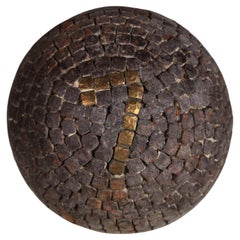
Antique Boule Ball "17", Pétanque, 1880s, France, Craftsmanship
Located in Greven, DE
Beautiful, unique Boule ball, France, late 19th Century.
In the 19th century, the manufacture of boules balls underwent significant development in France as the game of boules, part...
Category
Late 19th Century French Late Victorian Antique Germany - Antiquities
Materials
Metal
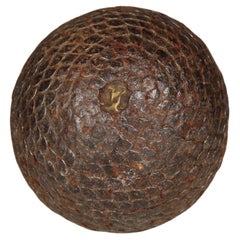
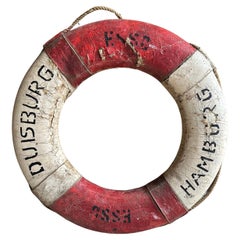
Antique German Lifebuoy with Strong Patina – Early 20th Century
Located in Hamburg, DE
This authentic 20th-century German lifebuoy is a rare maritime artifact with exceptional decorative appeal. The piece shows a rich, weathered patina that speaks to its long history a...
Category
1940s German Art Deco Vintage Germany - Antiquities
Materials
Canvas, Foam
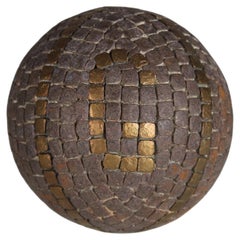
Antique Boule Ball "G", "J", Pétanque, 1880s, France, Craftsmanship
Located in Greven, DE
Beautiful, unique Boule ball, France, late 19th Century.
Decorated with the initials "G" and "J".
In the 19th century, the manufacture of boules balls underwent significant developm...
Category
Late 19th Century French Late Victorian Antique Germany - Antiquities
Materials
Olive
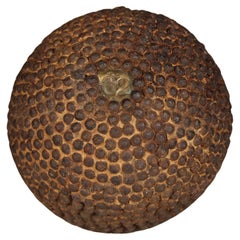
Antique Boule Ball "62", Pétanque, 1880s, France, Craftsmanship
Located in Greven, DE
Beautiful, unique Boule ball, France, late 19th Century.
In the 19th century, the manufacture of boules balls underwent significant development in France as the game of boules, part...
Category
Late 19th Century French Late Victorian Antique Germany - Antiquities
Materials
Metal
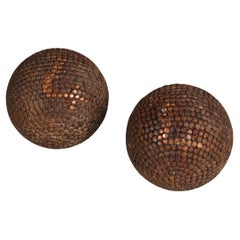
Pair Of Antique Boule Balls "4", Pétanque, 1880s, France, Craftsmanship
Located in Greven, DE
Beautiful, unique Boule ball pair, France, late 19th Century.
Diameter 9,4 cm.
In the 19th century, the manufacture of boules balls underwent significant development in France as th...
Category
Late 19th Century French Late Victorian Antique Germany - Antiquities
Materials
Olive
Antique Boule Ball With Star Decor And C, Pétanque, 1880s, France, Craftsmanship
Located in Greven, DE
Beautiful, unique Boule ball, France, late 19th Century.
In the 19th century, the manufacture of boules balls underwent significant development in France as the game of boules, part...
Category
Late 19th Century French Late Victorian Antique Germany - Antiquities
Materials
Metal, Brass
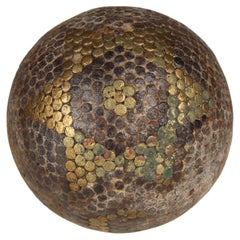
Antique Boule Balls Set "B", Pétanque, 1880s, France, Craftsmanship
Located in Greven, DE
Beautiful, unique Boule set of three Boule balls, France, late 19th Century.
In the 19th century, the manufacture of boules balls underwent significant development in France as the game of boules, particularly the pétanque variant, gained in popularity. The manufacture of boules balls during this period was a manual process that required expertise, precision and love to detail.
In the late 19th and early 20th centuries, particularly in rural areas of France and other Mediterranean regions, olive wood was a commonly used source of material for making boules balls. This was not only due to the availability of the material, but also to the outstanding properties of olive wood, which was characterized by hardness, strength and a rich grain.
First, the olive wood was carefully selected and shaped into raw balls, which were then sanded to the desired size and shape. The nails were then hammered into the balls one by one, making sure that they were evenly distributed and firmly anchored. Finally, the spheres were polished and coated with a protective varnish to enhance their natural beauty and protect them from the elements.
The use of nails to decorate and reinforce olive wood boules was a traditional practice that not only gave the ball a rustic aesthetic, but also improved its durability and contributed to customization. Many balls were made according to the specific requirements and preferences of the players. Nails were driven at regular intervals around the ball, with each nail hole precisely placed so as not to affect the balance and weight distribution of the ball. These nails not only served as a decorative element, but also helped to strengthen the structure of the ball and make it more resistant to the hard knocks and wear and tear during play. Individual engravings or decorations were often applied to the balls to make them unique and identify the player.
Antique boules...
Category
Late 19th Century French Late Victorian Antique Germany - Antiquities
Materials
Olive
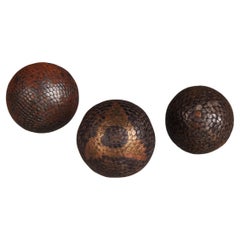
Antique Boule Ball "G", Pétanque, 1880s, France, Craftsmanship
Located in Greven, DE
Beautiful, unique Boule ball, France, late 19th Century.
In the 19th century, the manufacture of boules balls underwent significant development in France as the game of boules, particularly the pétanque variant, gained in popularity. The manufacture of boules balls during this period was a manual process that required expertise, precision and love to detail.
In the late 19th and early 20th centuries, particularly in rural areas of France and other Mediterranean regions, olive wood was a commonly used source of material for making boules balls. This was not only due to the availability of the material, but also to the outstanding properties of olive wood, which was characterized by hardness, strength and a rich grain.
First, the olive wood was carefully selected and shaped into raw balls, which were then sanded to the desired size and shape. The nails were then hammered into the balls one by one, making sure that they were evenly distributed and firmly anchored. Finally, the spheres were polished and coated with a protective varnish to enhance their natural beauty and protect them from the elements.
The use of nails to decorate and reinforce olive wood boules was a traditional practice that not only gave the ball a rustic aesthetic, but also improved its durability and contributed to customization. Many balls were made according to the specific requirements and preferences of the players. Nails were driven at regular intervals around the ball, with each nail hole precisely placed so as not to affect the balance and weight distribution of the ball. These nails not only served as a decorative element, but also helped to strengthen the structure of the ball and make it more resistant to the hard knocks and wear and tear during play. Individual engravings or decorations were often applied to the balls to make them unique and identify the player.
Antique boules...
Category
Late 19th Century French Late Victorian Antique Germany - Antiquities
Materials
Metal
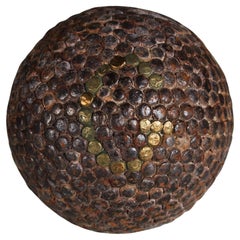
Antique Leather Book "Histoire des Plantes", 1865s, France
Located in Greven, DE
Wonderful rare antique leather book, original from 1865.
"Histoire des Plantes" by Louis Figuier, written in French language.
Category
Mid-19th Century French Antique Germany - Antiquities
Materials
Leather, Paper
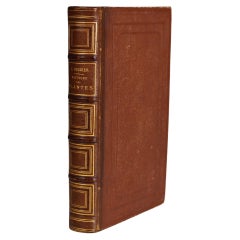
Antique Boule Ball "6", Pétanque, 1880s, France, Craftsmanship
Located in Greven, DE
Beautiful, unique Boule ball, France, late 19th Century.
In the 19th century, the manufacture of boules balls underwent significant development in France as the game of boules, part...
Category
Late 19th Century French Late Victorian Antique Germany - Antiquities
Materials
Metal, Brass
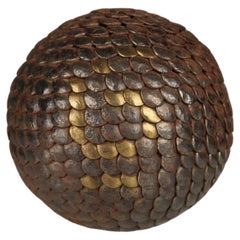
Antique Boule Ball "P A", Pétanque, 1880s, France, Craftsmanship
Located in Greven, DE
Beautiful, unique Boule ball, France, late 19th Century.
In the 19th century, the manufacture of boules balls underwent significant development in France as the game of boules, part...
Category
Late 19th Century French Late Victorian Antique Germany - Antiquities
Materials
Metal
Still Thinking About These?
All Recently ViewedMore Ways To Browse
Marcantonio Forest
Marquise Sevigne
Marshall Fields And Company
Mary Bowles
Mastercraft Brass Etagere
Mastercraft Curio Cabinets
Mastercraft Curio
Mastercraft Headboard
Max Le Verrier On Sale
Mcm Bird
Mcm Highboy
Mcm Kent Coffey
Mcm Walnut Dresser
Meat Skewer
Medieval Dining Table
Meiji Cat
Mene Bronze Horse
Mengel Chest