Japan - Wall Decorations

to
4
42,332
30,103
126
39
Height
to
Width
to
10
5
3
2
18
44
64
39
29
8
14
2
2
3
1
4
5
4
3
78
54
46
40
36
124
116
112
34
26
165
158
161
8
7
4
3
3
Item Ships From: Japan
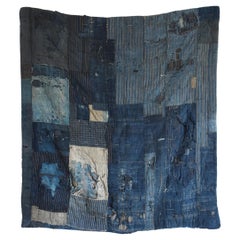
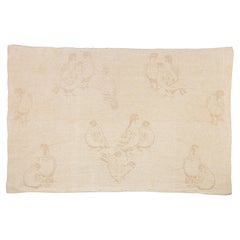
Japanese Antique "BORO" Edo period 1800s-1860s / Rag Abstract Art Wabi-Sabi
By Axel Vervoordt
Located in Chōsei District Nagara, JP
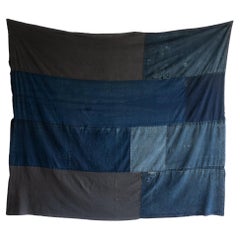
This is an old Japanese BORO textile, dating back to the Edo period (1800s–1860s). It is a rare cloth that has survived through a long span of time. The interplay of indigo and natur...
Category

Late 19th Century Japanese Edo Antique Japan - Wall Decorations

Materials

Fabric

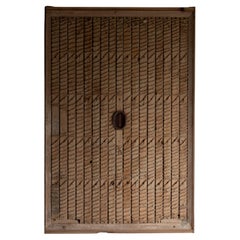
Japanese Antique Huge Door " Wall Decoration " 1860s-1900s / Wabi Sabi"
Located in Sammu-shi, Chiba
Japanese Antique Huge Door " Wall Decoration " 1860s-1900s / Wabi Sabi This extraordinary large sliding door was once used in an old warehouse in Japan. Dating back to the Meiji per...
Category

Early 20th Century Japanese Meiji Japan - Wall Decorations

Materials

Iron

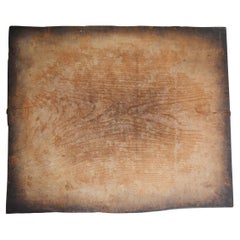
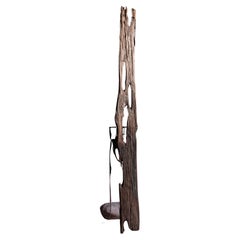
Japanese Antique Wabi-Sabi Wooden board "Wall Decoration" 1860s-1900s
Located in Chōsei District Nagara, JP
This is an old Japanese wooden workboard Crafted during the Meiji period (1860s–1900s), it is made from a single slab of keyaki (zelkova wood), a material now extremely rare. The imp...
Category

Early 20th Century Japanese Meiji Japan - Wall Decorations

Materials

Wood

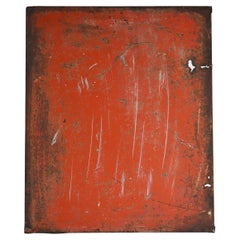
Japanese Old Wabi-Sabi Iron Panel Abstract Art 1950s-1970s / Wall Decoration
By Axel Vervoordt
Located in Chōsei District Nagara, JP
This is an old iron panel made in Japan, dating to the mid-Shōwa period (1950s–1970s). It may originally have been used as part of a workbench or industrial surface, though its exact...
Category

Late 20th Century Japanese Showa Japan - Wall Decorations

Materials

Iron

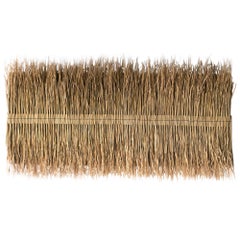
Japanese Antique Earthen Wall Base / Wall Decoration / 1868-1912s Wabi-sabi
Located in Iwate-gun Shizukuishi-cho, Iwate Prefecture
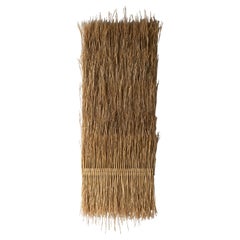
This wall decoration is the base of the earthen wall of an old Japanese house. In Japan, it's called "komai." It was originally part of the earthen wall of a house built around the ...
Category

Late 19th Century Japanese Meiji Antique Japan - Wall Decorations

Materials

Straw, Rope, Wood

Japanese Old Car Door 1957s / Wall Decoration Abstract Art Wabisabi
Located in Chōsei District Nagara, JP
This is an old car door made in Japan, originating from an early model of the “Midget”, first introduced in 1957. The Midget symbolizes the dawn of Japan’s motorization—a small three...
Category

1950s Japanese Showa Vintage Japan - Wall Decorations

Materials

Iron

Japanese Antique Small Door Wall Decoration 1860s-1900s / Abstract Art Wabi Sabi
Located in Chōsei District Nagara, JP
This is an old small window frame made in Japan. It was originally used as a traditional Japanese mud wall fixture. It dates back to the Meiji period (1860s-1900s) and has been in us...
Category

Early 20th Century Japanese Meiji Japan - Wall Decorations

Materials

Bamboo, Cedar

Japanese Antique Tin Plate Art / Wall Decoration / Wabi-sabi
Located in Iwate-gun Shizukuishi-cho, Iwate Prefecture
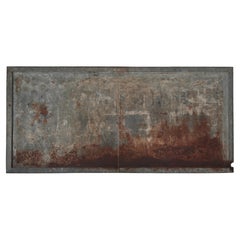
This is an old Japanese tin panel. The rust caused by natural aging is expressed like art. The exact purpose is unknown, but it seems that it was originally used in a place where fi...
Category

Early 1900s Japanese Showa Antique Japan - Wall Decorations

Materials

Tin

Japanese Antique Rag "BORO" 1800s-1860s / Abstract Art Wabi Sabi
Located in Sammu-shi, Chiba
This is an exceptional example of a Japanese *BORO* textile, dating from the late Edo period (1800s–1860s). Carefully preserved over generations, it embodies both the resourcefulness...
Category

Mid-19th Century Japanese Edo Antique Japan - Wall Decorations

Materials

Fabric

Japanese Old Artist s Drawing Board / Abstract Art Wall Decoration / Late 1900s
Located in Iwate-gun Shizukuishi-cho, Iwate Prefecture
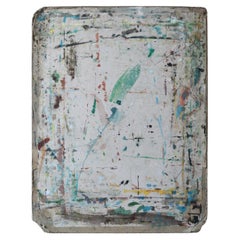
This is a drawing board used by a Japanese painter. It is made by gluing together pieces of cardboard, and it is thought that the artist repeatedly painted on it. The colorful water...
Category

Late 20th Century Japanese Other Japan - Wall Decorations

Materials

Paper, Paint

Old Japanese root tree object/Wall ornament/Wall decoration
Located in Sammu-shi, Chiba
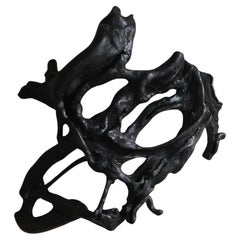
This is an old Japanese wooden object. It is carved from the root of a tree. I believe it was made from the late Showa period to the early Heisei period. The wood was originally a li...
Category

Mid-20th Century Japanese Showa Japan - Wall Decorations

Materials

Wood

Japanese Antique Lacquered Board/“Negoro” /Like abstract painting
Located in Sammu-shi, Chiba
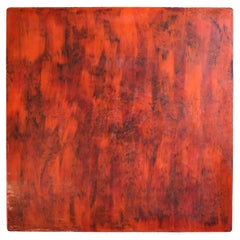
This is an old lacquered board made in Japan. It is called a "Negoro" board. Negoro is a type of Japanese lacquerware. It is characterized by applying black lacquer to the wood base ...
Category

Early 20th Century Japanese Showa Japan - Wall Decorations

Materials

Cypress

Dora Jung / Tapestry / Gifted by Dora Jung to Simone Prouvé in 1954.
By Dora Jung
Located in Shibuya-Ku, JP
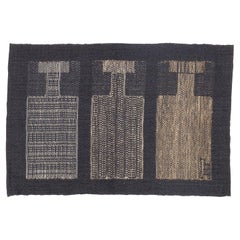
Dora Jung is one of Finland's greatest textile artists. Throughout her life, she worked tirelessly to master materials and techniques, never compromising on her artistic vision. She ...
Category

1950s Finnish Scandinavian Modern Vintage Japan - Wall Decorations

Materials

Damask, Linen

Old Korean Fan / 20th Century / Wall Hanging / Folk Art / MINGEI
Located in Sammu-shi, Chiba
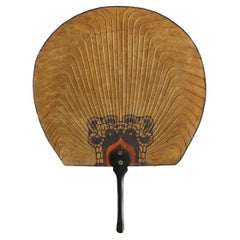
I was able to acquire a truly wonderful item. This is an old Korean "uchiwa" (fan). An "uchiwa" is a tool used by hand to create a breeze. It was used to cool down on hot summer da...
Category

20th Century South Korean Other Japan - Wall Decorations

Materials

Bamboo, Paper

Old Arched Bamboo Wall Art Object / Japan, Early 20th Century/MINGEI
Located in Sammu-shi, Chiba
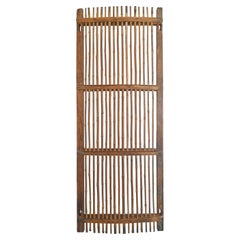
This is a large bamboo frame believed to have been made in Japan between the Meiji period and the early Showa period. Its original purpose is unclear, but the narrow holes and struct...
Category

Early 20th Century Japanese Meiji Japan - Wall Decorations

Materials

Bamboo, Wood

Sculpture Work by Dedessus les Moustier
Located in Sammu-shi, Chiba
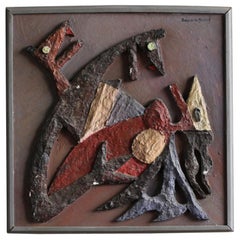
A wall-mounted sculpture with the signature of Dedessus les Moustier. It was discovered in France. It has a mysterious charm due to its unique color and motif.
Category

20th Century French Mid-Century Modern Japan - Wall Decorations

Materials

Wood

Japanese Large Contemporary Yellow Black Gilded Raised Silk Folding Screen
Located in Takarazuka, JP
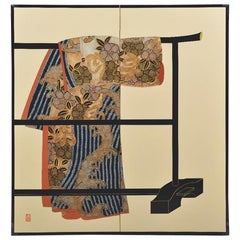
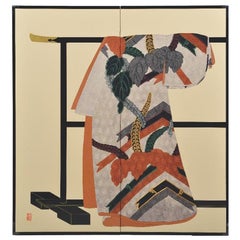
Japanese contemporary two panel folding screen or "byobu" featuring genryoku style handcrafted raised silk kimono in yellow, black and gold on a cream color background. Tagasode is t...
Category

21st Century and Contemporary Japanese Japan - Wall Decorations

Materials

Silk, Brocade

Early 20th Century Japanese Screen Pair - Ink Pine Trees on Gold
Located in Kyoto, JP
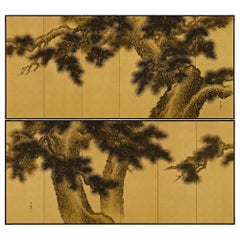
Imao Keisho (1902-1993) Pine Trees Early 20th Century, Circa 1930 Pair of six-panel Japanese screens. Ink on silk and gold leaf. Dimensions: Each screen H. 67.5” x 148” (172 cm x 376 cm) A pair of monumental six-panel Japanese pine screens by the renowned Nihonga artist Imao Keisho. Here Keisho entirely removed the background and brought the pine trees to the surface of the painting. This simplification of the elements makes the scene exceptionally direct and compelling and injects a very modern...
Category

Early 20th Century Japanese Showa Japan - Wall Decorations

Materials

Gold Leaf

19th Century Japanese Silk Painting by Kano Chikanobu, Phoenix Paulownia
Located in Kyoto, JP
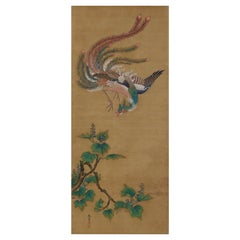
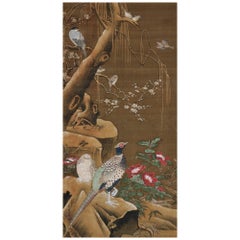
Birds & Flowers of the seasons Pheasants & Plum in Snow Unframed painting. Ink, pigment and gofun on silk Kano Chikanobu 1819-1888 Signature...
Category

Mid-19th Century Asian Edo Antique Japan - Wall Decorations

Materials

Silk

17th Century Japanese Screen Pair. Tiger Dragon by Kaiho Yusetsu
Located in Kyoto, JP
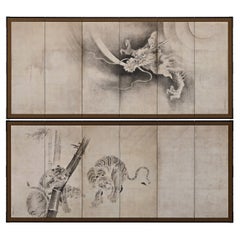
Kaiho Yusetsu (1598-1677) Tiger and Dragon Early Edo Period, Circa 1650 A Pair of Six-fold Japanese Screens. Ink and slight color on paper. Dimensions: Each screen: H. 171 cm x W. 380 cm (67.5’’ x 149.5’’) In this pair of early Edo period Japanese screens a group of tigers prowl in a bamboo grove whipped with fierce wind, while a dragon claws through clouds and mist. The dragon embodies elemental qualities - looming out of the mist, the coils of its body disappearing in the clouds. The dragon is calling for rain, symbolizing spring which is considered the fountain of life. On the other side, the tigers calls for the wind, symbolizing autumn which is considered the end of life. Tigers were familiar motifs within Japanese art from ancient times though the animals were imaginary to the people in the 17th century. While dragons and tigers are usually associated as sacred and ferocious, in this painting, both animals have rather amusing expressions. The tigers appear to glare at the dragon with cat-like eyes, and the look on the swirling dragon’s face appears almost affectionate - lending a playful flair to an otherwise magnificent theme. The tiger and dragon are cosmological symbols of the balancing forces in the world. Screens such as this were originally meant to express the fluctuating nature of the world. For Japanese in the early Edo period, they likely suggested the powers of the cosmos. In Japan the tiger and dragon motif was originally absorbed into the circles of Zen monasteries before spreading into the secular world. The theme especially appealed to the military classes with the Kano school, the official painters to the Shogun and the samurai, being the leading contributors. The painter of this pair of screens, Kaiho Yusetsu (1598-1677), was closely patronized by the third Shogun Tokugawa Iemitsu. In his later years he worked with Kano school artists...
Category

Mid-17th Century Japanese Edo Antique Japan - Wall Decorations

Materials

Silk, Wood, Paper

Japanese Antique Wooden Board / Wall Decoration Abstract Art / Wabi-Sabi
Located in Iwate-gun Shizukuishi-cho, Iwate Prefecture
This is an old Japanese workboard. It was called "Mochiita" and was used as a workbench for kneading flour. It seems to be around the Meiji period. The board is thought to be pine...
Category

Late 19th Century Japanese Meiji Antique Japan - Wall Decorations

Materials

Wood

Early 19th Century Japanese Screen. Cherry Blossom Pheasants by Mori Tetsuzan
Located in Kyoto, JP
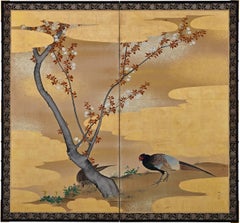
Mori Tetsuzan (1775-1841) Pheasants and Cherry Blossoms Two-fold Japanese screen. Ink, color, gofun, gold and silver on paper. A two-fold Japanese bir...
Category

Early 19th Century Japanese Edo Antique Japan - Wall Decorations

Materials

Gold Leaf

1870s-1920s wabi sabi reclaimed boat wood wall decor sculpture bamboos engraved
Located in 常陸大宮市, JP
Wooden wall decor made of a piece of reclaimed wood from antique wood river boat. Words bamboos engraved, together with the signature. Strings for hanging attached. manufacture...
Category

Late 19th Century Japanese Meiji Antique Japan - Wall Decorations

Materials

Wood, Cedar

19th Century Japanese Shunga Hand-Scroll, Katsukawa School
Located in Kyoto, JP
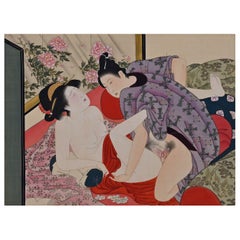
Shunga Unknown artist Meiji era, circa 1880 Hand-scroll mounted with 12 paintings Ink, pigment and gofun on silk Dimensions: Each image measures H. 23.2 cm x W. 34.4 cm (9.15” x 13.5”) The hand-scroll measures H. 28 cm x W. 540 cm (11” x 212”) A set of 12 late 19th century Japanese Shunga paintings mounted as a hand-scroll. Two of the leaves bear the signature and seal ‘Setsuzan’, although we are unable to confirm the identity of the artist using this art name. 6 of the 12 images are taken almost directly from Katsukawa Shuncho’s late 18th century woodblock series, ‘Erotic Pictures...
Category

Late 19th Century Japanese Meiji Antique Japan - Wall Decorations

Materials

Silk

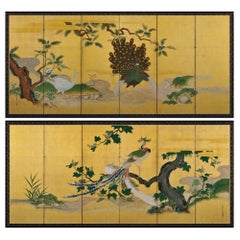
Meiji Era, Circa 1900 Japanese Screen Pair, Flowers Birds of Spring Autumn
Located in Kyoto, JP
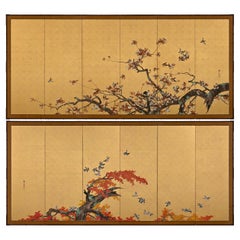
Flowers & Birds of Spring and Autumn Unknown artist. Japan. Meiji period, circa 1900. A pair of six-fold screens. Ink, color, gofun and gold leaf on paper. Signed: Gaga S...
Category

1890s Japanese Meiji Antique Japan - Wall Decorations

Materials

Gold Leaf

Japanese Contemporary Orange Black Silk Brocade Two-Panel Folding Screen, 3
Located in Takarazuka, JP
Extraordinary Japanese contemporary two panel "byobu" or folding screen featuring genryoku style handcrafted raised silk and brocade kimono in black, orange and gold on textured crea...
Category

21st Century and Contemporary Japanese Meiji Japan - Wall Decorations

Materials

Gold

Japanese Antique Door "Wall Decoration" 1860s-1900s / Abstract Art Wabi Sabi
Located in Sammu-shi, Chiba
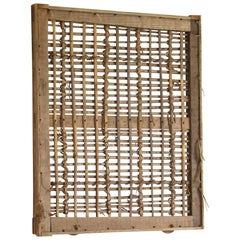
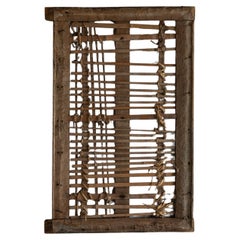
This was a very old Japanese warehouse (kura) window sliding door. It was made during the Meiji period (1860s-1900s). The frame is made of cedar wood and the lattice is bamboo. It w...
Category

Early 20th Century Japanese Meiji Japan - Wall Decorations

Materials

Bamboo, Cedar

Vintage Obi textile art " Golden Landscape ~ Perennity ~" by ikasu Gold Japan
By Kimono ikasu
Located in Setagaya City, JP
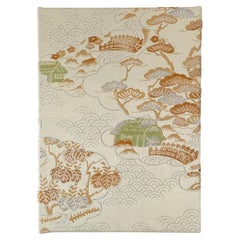
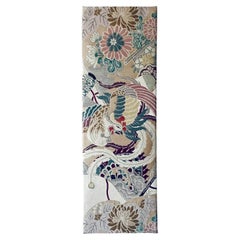
< This obi is a stunning example of traditional Japanese textile artistry. It showcases a waterside landscape using a visual technique known as "kumodori," where ocean waves a...
Category

1970s Japanese Japonisme Vintage Japan - Wall Decorations

Materials

Canvas, Silk

Japanese Antique Wabi-Sabi Wood Board 1860s-1900s / Wall Decoration
Located in Chōsei District Nagara, JP
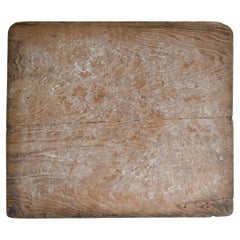
This is an old Japanese wooden board called “Mochiita” (rice cake board). It was used during the Meiji period (1860s-1900s) and is made of pine wood with a rich texture. As the name ...
Category

Early 20th Century Japanese Meiji Japan - Wall Decorations

Materials

Pine

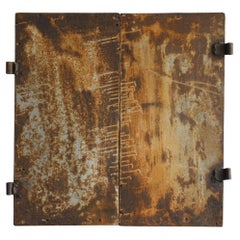
Old Japanese iron door / wall hanging object/Like an abstract painting
Located in Sammu-shi, Chiba
This is a small, antique iron door from Japan's Showa period (circa 20th century). It was once installed in traditional Japanese homes and storehouses, and is believed to have served...
Category

20th Century Japanese Showa Japan - Wall Decorations

Materials

Iron

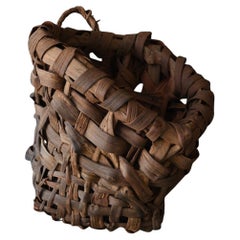
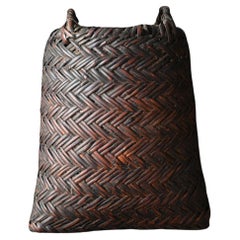
Antique Japanese woven wall hanging basket/20th century/Wabi-sabi vase
Located in Sammu-shi, Chiba
This is a rustic woven basket made of walnut bark, made in Japan around the 20th century. In Japan, tools made of natural materials have been used since ancient times as baskets for ...
Category

20th Century Japanese Taisho Japan - Wall Decorations

Materials

Wood

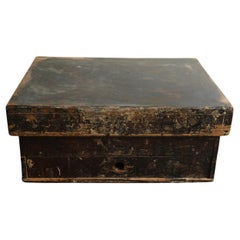
Wooden workbench of a Japanese lacquerware craftsman/20th century/wall-hanging
Located in Sammu-shi, Chiba
This is a lacquerware craftsman's workbench believed to have been actually used in Fukushima Prefecture and other areas in the Tohoku region between 1945 and 1960. This box-shaped st...
Category

20th Century Japanese Showa Japan - Wall Decorations

Materials

Cedar, Lacquer

Japanese Screen Pair, circa 1730, Peacocks and Phoenix, Kano School
Located in Kyoto, JP
Phoenix and Peacocks. A pair of six-panel Japanese folding screens by Tsunetake Yotei (n.d.) First half of the 18th century. The signature reads 67 year old Tsunetake. The seals read: -Tsunetake no in, -Yotei, -Seishin Dimensions: Each screen – H. 69” x W. 149” (176 cm x 378 cm) A pair of Kano Grand Picture (Waga) screens depicting phoenix and peacocks rich with symbolic meaning. Dating to the first half of the 18th century, from the Kobikicho Kano school in Edo, this pair of folding...
Category

Early 18th Century Asian Edo Antique Japan - Wall Decorations

Materials

Gold Leaf

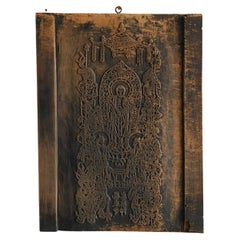
Japanese antique wooden blocks/1800-1920/paper charms/Buddhist art
Located in Sammu-shi, Chiba
This is a wooden woodblock produced in Japan from the late Edo period to the Taisho period (about 1800s to 1920s). The material used is something like beech wood, and the wood is dec...
Category

Late 19th Century Japanese Edo Antique Japan - Wall Decorations

Materials

Beech

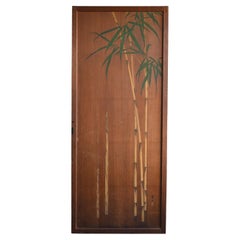
Wooden door with old Japanese bamboo painting/Wall hanging painting/Wooden door
Located in Sammu-shi, Chiba
This is a one-panel wooden door made in Japan around the 20th century. The material used is presumed to be Japanese cypress or Japanese cedar, and the delicately straight grain of th...
Category

20th Century Japanese Taisho Japan - Wall Decorations

Materials

Cedar

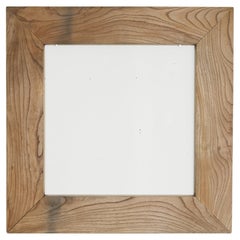
Old Japanese wall-mounted wooden frame / 20th century / large picture frame
Located in Sammu-shi, Chiba
This wooden frame is crafted from ancient Japanese zelkova wood. It appears to have originally been made as a hearth edge, but was rarely used and stored for a long time. As a result...
Category

20th Century Japanese Taisho Japan - Wall Decorations

Materials

Wood

Arko Wall Art 4, Contemporary Art Craft Rice Straw
By ARKO
Located in Shibuya-ku, Tokyo
Hand-sewed rice straw art by Arko. Title: A head-sea over the night sky (Small model) This work has the feelings of contemporary, tribal art, contempora...
Category

2010s Japanese Organic Modern Japan - Wall Decorations

Materials

Canvas, Thread, Straw

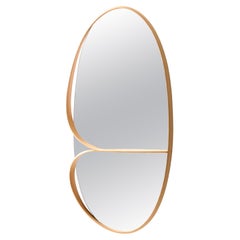
Muji Wallmirror Japanese Contemporary Style Bentwood Sculpture
By Studio Jig
Located in Shibuya-ku, Tokyo
Muji wall mirror. Kenta Hirai created it with the technique "Free form lamination." It has characteristic streamlined combined back and seat. Made of Yos...
Category

2010s Japanese Modern Japan - Wall Decorations

Materials

Wood

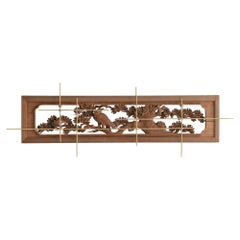
Ryosuke Harashima Contemporary Zen wood wall sculpture
By Ryosuke Harashima
Located in Shibuya-ku, Tokyo
Name: A Blind on the Pine Tree Wall sculpture made of J brass, Ranma(Japanese antique transom). Artist statement Draw a line through the landscape car...
Category

2010s Japanese Japonisme Japan - Wall Decorations

Materials

Brass

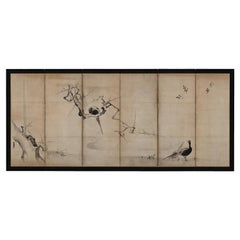
17th Century Japanese Screen. Ink Plum Tree Birds by Kano Naonobu.
Located in Kyoto, JP
Kano Naonobu (1607-1650) Plum Tree and Birds Six-fold Japanese Screen. Ink and slight color on paper. In this evocative ink work spread over a six-panel folding screen, we see the consummation of the elegance and refinement of the Edo Kano school. This 17th century screen is a rare surviving example of a large-scale bird and flower painting by Kano Naonobu, the younger brother of Kano Tanyu...
Category

17th Century Japanese Edo Antique Japan - Wall Decorations

Materials

Wood, Paper

Japanese antique bamboo woven basket/wall hanging vase/1868-1920/Mingei
Located in Sammu-shi, Chiba
This is a woven bamboo basket made in Japan from the Meiji to Taisho periods (1868-1920). I don't know if the baskets actually used by farmers were repurposed as flower vases, or if ...
Category

Early 20th Century Japanese Meiji Japan - Wall Decorations

Materials

Bamboo

Dora Jung / Tapestry / Gifted by Dora Jung to Simone Prouvé in 1954.
By Dora Jung
Located in Shibuya-Ku, JP
Dora Jung is one of Finland's greatest textile artists. Throughout her life, she worked tirelessly to master materials and techniques, never compromising on her artistic vision. She ...
Category

1950s Finnish Scandinavian Modern Vintage Japan - Wall Decorations

Materials

Damask, Linen

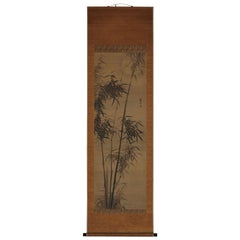
Japanese Painting, Hanging Scroll, 19th Century Bamboo in Moonlight
Located in Kyoto, JP
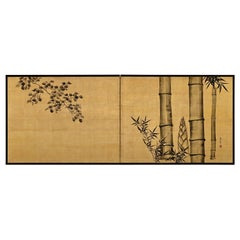
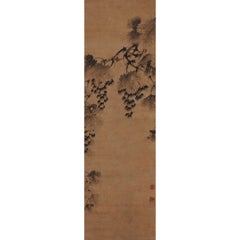
Bamboo in moonlight Gamo Rakan (1784-1866) Hanging scroll, ink on silk. Dimensions: Scroll: 201 cm x 58 cm Image: 137 cm x 45 cm In this early 19th century work by Gamo Rakan a light ink wash applied to the silk background silhouettes the moon and suggests the atmosphere of early evening. Even though it is a literati subject, Rakan’s bamboo is quite realistic with a strong decorative style. The painting finds its inspiration from Chinese Ming dynasty painters who often used a single-tone, jet black stroke to emphasize the calligraphic nature of bamboo. In a different era, decorative would have been seen as somewhat unrefined. But increasingly in the Edo period, it was the hallmark of high style. The Japanese people, in particular the rising merchant class, had gradually become apathetic toward the traditional Sesshu and Kano schools of painting. Chinese professional and amateur painters living in the port of Nagasaki during the 18th century had a profound effect on Japanese painting and the freshness of their style and its decorative appeal contributed greatly to its popularity. Gamo Rakan’s teacher, Tani Buncho...
Category

Early 19th Century Japanese Edo Antique Japan - Wall Decorations

Materials

Silk

Antique Vase Made of Japanese Bamboo and Bark /Wall-Mounted Flower Vase
Located in Sammu-shi, Chiba
If you want something special, we recommend purchasing items selected by Brood. We sell carefully selected old Japanese items. I've seen tens of thousands of items so far. Based on that experience, only selected items are posted here. We are able to do this because of our long experience. There may be items on the 1stdibs site that look and feel the same, but the items selected by Brood are unique. This is an old Japanese vase...
Category

Late 19th Century Japanese Meiji Antique Japan - Wall Decorations

Materials

Bamboo

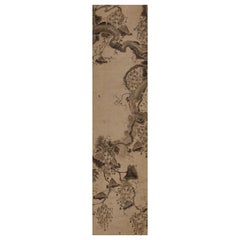
17th Century Korean Grapevine and Squirrel Scroll Painting, Mid Joseon Period
Located in Kyoto, JP
Anonymous. Korean, 17th century. Joseon period. Hanging scroll. Ink on paper. Seal: Shinso Dimensions: Scroll: H. 200 cm x W. 31 cm (79” x 12”) Image: H. 122 cm x W. 29.5 cm (48” x 11.5”) The grapevine came to China and then Korea from western Asia via the silk road trade routes. By the mid-Joseon period, it was one of the most popular subjects for Korean literati painters. Grapevines were painted as a singular subject or, less commonly, in combination with squirrels, which are associated with children due to their playful nature. Together, grapevines and squirrels embody wishes for abundant offspring and wealth. For the Korean literati artist the twisting vines, curling tendrils and round, plump grapes provided ample opportunity for expressive "brush play”. In this painting the artist has abstracted the scene and is seemingly unconcerned with discontinuities and proportion. Vines spring up from nowhere, grapes hang in random clusters and the squirrel’s head appears as if twisted backwards. For the vines and leaves we can feel a sense of speed in the brushstrokes, imparting a dynamic feel which is at once intense and animated. This contrasts dramatically with the countless tiny strokes of ink which realistically capture the texture of the squirrel’s fur...
Category

17th Century Korean Other Antique Japan - Wall Decorations

Materials

Paper

Vintage Obi textile art " From the Ashes ~ Serendipity ~" by ikasu Beige Japan
By Kimono ikasu
Located in Setagaya City, JP
< This canvas has been upcycled from an early 20th-century maru-obi, featuring a subtle yet sophisticated depiction of the phoenix—a legendary symbol of peace and renewal. Ren...
Category

1910s Japanese Japonisme Vintage Japan - Wall Decorations

Materials

Canvas, Silk

19th Century Japanese Screen for Tea-Ceremony, Ink Bamboo and Plum on Gold Leaf
Located in Kyoto, JP
Three Friends of Winter Nakajima Raisho (1796-1871) Late Edo period, circa 1850 Ink and gold leaf on paper. This is a double-sided Japanese Furosaki or tea-ceremony screen from the mid 19th century; bamboo and plum on the front, young pines the back. It by Nakajima Raisho, a master painter of the Maruyama school in the late Edo and early Meiji periods. In this work Raisho combines exquisite ink brushwork with large open spaces of brilliant gold-leaf to inspire the viewers imagination. Rather than naturalism, he is searching for the phycological impression of the motifs, resulting in abstraction and stylization. His simplification of the motifs the result of looking to capture the inner nature of the objects. This art motif is known as Sho Chiku Bai, or the Three Friends of Winter. Evergreen pine connotes steadfastness, bamboo suggests both strength and flexibility, while plum blossoms unfurling on snow-laden branches imply hardiness. Combined, this trio is emblematic of Japanese new year. Chinese literati were the first to group the three plants together due to their noble characteristics. Like these resilient plants flowering so beautifully in winter, it was expected of the scholar-gentleman to cultivate a strong character with which he would be able to show the same degree of perseverance and steadfastness even during times of adverse conditions. The screen would have been placed near the hearth of a room used for the Japanese tea ceremony, shielding the fire from draughts and also forming a stimulating and decorative backdrop behind the tea utensils. It would have been used in the Hatsugama, or first tea-ceremony of the new year. Nakajima Raisho (1796-1871) originally studied under Watanabe Nangaku before entering the school of Maruyama Ozui. He was the highest ranking Maruyama school painter at the end of the Edo period and was known as one of the ‘Four Heian Families’ along with Kishi...
Category

Mid-19th Century Japanese Edo Antique Japan - Wall Decorations

Materials

Gold Leaf

Early 19th Century Oil Painting French Family Portrait
Located in 263-0031, JP
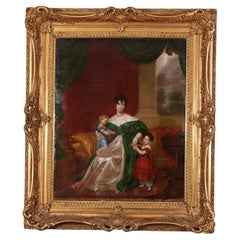
The term “Biedermeier” was first wielded as mildly disparaging designation for the bourgeois domesticity, so idealized by German society in the post-Napoleonic era prior to the 1848 ...
Category

Early 19th Century French Biedermeier Antique Japan - Wall Decorations

Materials

Canvas

Japanese Painting. Bird and Flower. 19th century copy of Lu Ji by Ogata Tomin.
Located in Kyoto, JP
Ogata Tomin (1839 -1895) Birds in a spring landscape Ink and colour on silk. Inscription reads: “Copy of Lu Ji, painted with heartfelt appreciation” “Painted by Tomin Ogat...
Category

Late 19th Century Japanese Ming Antique Japan - Wall Decorations

Materials

Silk

Early 20th Century Japanese Cherry Blossom Screen by Kano Sanrakuki
Located in Kyoto, JP
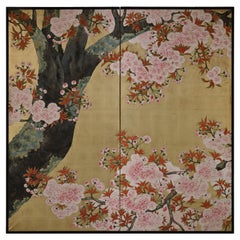
Cherry Blossoms Kano Sanrakuki (1898-1981) Showa period, circa 1930 2-panel Japanese Screen Color, gofun and gold leaf on paper Against a backdrop of gold-leafed ground, the lichen covered trunk and branches of the life-sized cherry blossom tree reach out and beyond the confines of the pictorial surface. The overall composition has a feeling of flatness which draws emphasis to the surface and the three-dimensionality of the cherry blossoms. Painstakingly built-up layers of thickly applied shell-white gofun detail the voluminous blossoms and cover large areas of this tour-de-force of Japanese Nihonga painting. By simplifying the background, minimizing the number of colors and depicting the blossoms with such heavy relief, the artist has emphasized the stunning presence of the cherry tree. The type of tree depicted is the Yae-Zakura; a double-layered type of cherry blossom famed for its beauty and strength. When we think of Japanese cherry blossoms, the first thing that comes to mind is Somei Yoshino variety, which has a single flower with five almost white petals. This type is fragile and easily blown away by strong wind or rain. Most of the double-flowered cherry blossoms begin to bloom when the Somei-Yoshino falls, and the flowering period lasts longer than that of the Somei-Yoshino. Kano Sanrakuki originally studied painting at the Kyoto City Arts and Crafts School under the tutelage of Yamamoto Shunkyo...
Category

Early 20th Century Japanese Showa Japan - Wall Decorations

Materials

Gold Leaf

Old Japanese wooden wall hanging tropical fish picture / 20th century
Located in Sammu-shi, Chiba
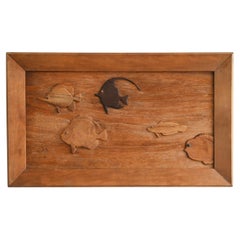
This is a tropical fish carving frame made in Japan, probably around the 20th century. The frame is made of beech wood, and the base of the picture is paulownia wood. Different types...
Category

20th Century Japanese Showa Japan - Wall Decorations

Materials

Wood

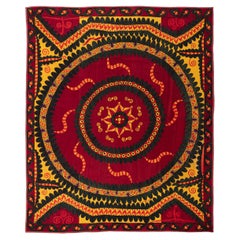
Antique Uzbekistan Tashkent All Over Silk Suzani Embroidered Rare Wall Hanging
Located in Tokyo, JP
This wall hanging is all over hand-embroidered Suzani design, silk cotton ground and the embroidery thread is 100% silk. Suzani, which means "embroidery" in Uzbek, began aro...
Category

Early 20th Century Uzbek Kilim Japan - Wall Decorations

Materials

Silk, Natural Fiber, Organic Material
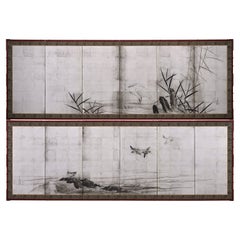
Japanese Screen Pair, Tigers by Kishi Renzan, Late Edo Period
Located in Kyoto, JP
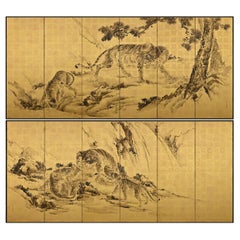
Kishi Renzan (1804-1859) Tigers Pair of six-panel Japanese screens. Ink and gold-leaf on paper. In this monochromatic pair of six-fold Japanese screens painted on gold-leaf, Kishi Renzan has created a breathtaking composition of a family of tigers. The screens are filled with a sense of drama which is conveyed by both the subject matter and the wet, expressive brushwork. The running mountain stream and the towering waterfall allude to refreshment during the summer months and we feel the tiger families familiarity and security within their environment. Renzan’s master, Kishi Ganku...
Category

Mid-19th Century Asian Edo Antique Japan - Wall Decorations

Materials

Gold Leaf

Arko Wall Art 5, Contemporary Art Craft Rice Straw
By ARKO
Located in Shibuya-ku, Tokyo
Hand-sewed rice straw art by Arko. Title: Composition Accelerando #01 This work has the feelings of contemporary, tribal art, contemporary craft art, ...
Category

2010s Japanese Organic Modern Japan - Wall Decorations

Materials

Canvas, Thread, Straw

Korean Painting, Wall Panel, 17th Century Ink Grapevine
Located in Kyoto, JP
Grapevine Anonymous. Korean, 17th century. Wall panel, ink on paper. Upper seal: Kou Kinun in Lower seal: Kaigen Dimensions: Measures: 98.5 cm x 29.5 cm (39” ...
Category

17th Century Korean Other Antique Japan - Wall Decorations

Materials

Wood, Paper

Mid-18th Century Japanese Screen Pair, One Hundred Flowers, Chrysanthemums
Located in Kyoto, JP
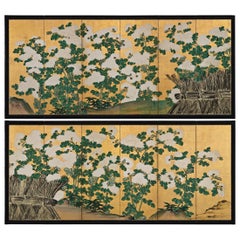
Omori Soun (b. 1704) Chrysanthemums - One Hundred Flowers A Pair of Six-fold Japanese Screens. Ink, color, gofun and gold leaf on paper. Dating ...
Category

Mid-18th Century Japanese Edo Antique Japan - Wall Decorations

Materials

Gold Leaf

Japanese Painting, 17th Century, Tale of Genji, Tosa School
Located in Kyoto, JP
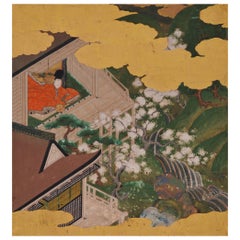
Illustration to an unidentified chapter of the Tale of Genji (Genji Monogatari) Tosa School (second half of the 17th Century) Ink, pigment, gofun and...
Category

Late 17th Century Japanese Edo Antique Japan - Wall Decorations

Materials

Gold Leaf

Erte Swept Away Serigraph 1980 s
By Erté
Located in Shibuya-ku, 13
The image you provided is a work titled "Swept Away" by Erte, a Russian-born artist and designer who is regarded as a leading figure of the Art Deco style. This piece was created in...
Category

1980s American Mid-Century Modern Vintage Japan - Wall Decorations

Materials

Paper

Japanese Large Red Silk Brocade Gilded Two Panel Folding Screen
Located in Takarazuka, JP
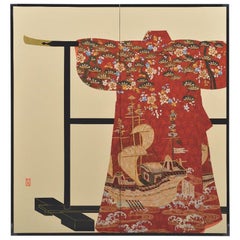
Exquisite contemporary Japanese two panel folding screen or "byobu" featuring genryoku style handcrafted silk raised kimono in cream and gold needlework on a mesmerizing red background. Tagasode is the way a genryoku kosode kimono is hung over a kimono rack...
Category

21st Century and Contemporary Japanese Japan - Wall Decorations

Materials

Gold

Japanese Silver Screen Pair, Meiji Period, Herons Plovers, Shijo School
Located in Kyoto, JP
Heron & Plovers Ink and silver leaf on paper Maekawa Bunrei (1837-1917) A pair of low six-panel Japanese screens by Maekawa Bunrei, a later master of the Kyoto based Shijo school of painting. On the right screen a solitary white heron stands motionless in a stream. On the left screen plovers play along a shoreline. The elegant forms are executed employing fluid, minimalistic ink brushstrokes. The soft brushstrokes and the sharp light of the silver leaf lend the scenes a sense of translucence. The sophisticated composition superbly exploits the long, horizontal pictorial surface of the pair of folding screens...
Category

Early 1900s Japanese Meiji Antique Japan - Wall Decorations

Materials

Silver Leaf

Read More

Punk Rock and Rebellion Animate London’s Hit Yoshitomo Nara Show

The exhibition includes his portraits of wide-eyed kids with mayhem on their minds, as well as some of the artist’s personal belongings.

Whether Painted or Papered, Muraled Walls Make Bold Statements in the Home

The ancient practice of covering walls in artistic scenery is back.

In Francks Deceus’s ‘Mumbo Jumbo #5,’ the Black Experience Is . . . Complicated

Despite the obstacles, the piece’s protagonist navigates the chaos without losing his humanity.

12 Floral-Accented Rooms with a Handmade, Folkloric Feel

Who needs a flower garden? Just use your imagination — and some beautifully patterned wallpaper or fabric — to bring the outdoors in.

This Wolf Kahn Pastel Is the Epitome of Beauty at Its Most Essential

A longtime admirer of Kahn’s work, 1stDibs editorial director Anthony Barzilay Freund explores why it’s relevant now more than ever.

Why Jules Chéret Was the King of the Modern Poster

The streets of fin-de-siècle Paris were set aglow with colorful poster ads, thanks to the printing techniques invented by Jules Chéret. Now, the Milwaukee Art Museum is celebrating this undersung talent in America's first solo show dedicated his exuberant works.

Anna Condo’s Multifaceted Career Spans Film, Photography and NFTs

From her historic Manhattan townhouse, the talented creator and curator of 1stDibs' latest NFT exhibition tells us about the art in her home and how she got involved with cryptoart.

How Keith Rivers Went from NFL Linebacker to Blue-Chip Art Aficionado

The former football player is as serious about becoming a great contemporary-art patron as he once was about making tackles. Here, Rivers tells us how he got the collecting bug and how his tastes have evolved over the years.

Still Thinking About These?

All Recently Viewed