Manhattan - Drawings and Watercolor Paintings

to
127
944
366
394
211
240
Overall Width
to
Overall Height
to
2
19
735
1,394
5
11
25
35
27
27
67
147
103
100
2
625
607
118
77
45
41
26
17
13
13
13
11
10
1
1,035
854
239
565
341
281
215
177
128
119
110
110
95
90
78
76
74
72
59
44
40
40
40
1,410
1,025
757
657
596
53
42
41
37
29
636
155
2,155
18,761
18,178
Item Ships From: Manhattan
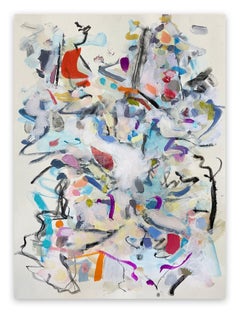
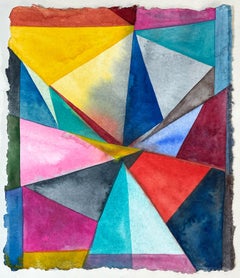
Open But Empty, 2023, framed abstract, colorful, watercolor and acrylic on paper
Located in New York, NY
Sarah Brenneman’s intimate abstractions are layers of referents of play. Beginning with a central form, her compositions topple out sequentially, each shape building on the impression of the last. Brenneman sources her forms from objects in her periphery, often in her home, rendering her paintings almost autobiographical, and forging a sense of familiarity. Brenneman received her BFA from Columbus College of Art and Design in Columbus, OH, and her MFA from Virginia Commonwealth University in Richmond, VA. Her work has been exhibited throughout the Tristate area, as well as internationally in Busan, South Korea, Reims, France, and St. Petersburg, Russia. Brenneman’s work is included in the permanent collections at the Aspen Contemporary Art Collection, the Cleveland Clinic, the Sprint Collection, and The Progressive Corporation. The artist is based in West Orange...
Category

2010s Abstract Manhattan - Drawings and Watercolor Paintings

Materials

Paper, Acrylic, Watercolor

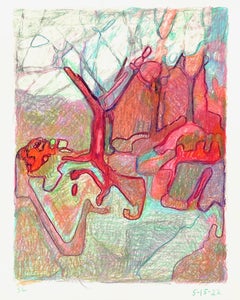
5-15-22, Impressionist, abstracted landscape drawing with colored pencil
By Sandy Litchfield
Located in New York, NY
Sandy Litchfield brings her magical abstracted landscapes to a new medium in her recent colored pencil drawings. Loose, delicate lines scramble over one another, bringing a diffuse, ...
Category

2010s Impressionist Manhattan - Drawings and Watercolor Paintings

Materials

Paper, Color Pencil

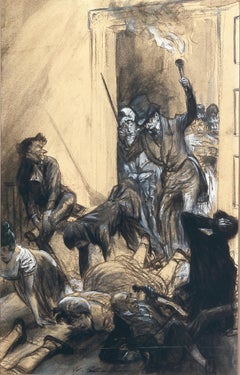
William Glackens Drawing Titled "M. Durand... Arrived on the Scene", Dated 1903
By William Glackens
Located in New York, NY
William Glackens, 1870-1938 M. Durand... Arrived on the Scene, 1903 Ink, wash, charcoal and Chinese white on paper Signed (at lower left): W. Glackens...
Category

Early 1900s Manhattan - Drawings and Watercolor Paintings

Materials

Charcoal

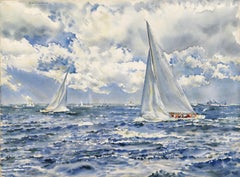
AMERICA S CUP - 1967. BEAT TO THE FINISH - INTREPID (USA) VS. DAME PATTIE (AUS)
By Joseph Webster Golinkin
Located in New York, NY
AMERICA'S CUP - 1967. BEAT TO THE FINISH - INTREPID (USA) VS. DAME PATTIE (AUS). “Beat to the Finish” is a 1967 watercolor by Joseph Webster ...
Category

1960s Naturalistic Manhattan - Drawings and Watercolor Paintings

Materials

Watercolor

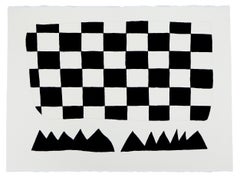
Maeve D Arcy "Fruitcake" Abstract Acrylic Work on Paper
By Maeve D Arcy
Located in New York, NY
This contemporary abstract acrylic painting on paper features intricate mark-making formations in black and white. D'Arcy’s train of thought is impulsive and random, the marks are in...
Category

2010s Abstract Manhattan - Drawings and Watercolor Paintings

Materials

Paper, Acrylic, Graphite

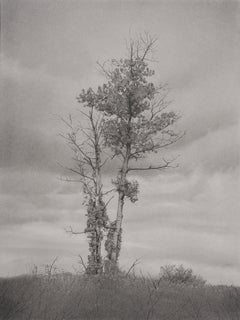
Tree and Sky, photorealist graphite landscape drawing, 2022
By Mary Reilly
Located in New York, NY
Mary Reilly’s laborious method of toning her paper serves as the starting point for her intricate compositions. She begins by covering the entire sheet with up to eight smooth, unmod...
Category

2010s Photorealist Manhattan - Drawings and Watercolor Paintings

Materials

Paper, Graphite

Maeve D Arcy "Pajama Party" Abstract Acrylic Work on Paper
By Maeve D Arcy
Located in New York, NY
This contemporary abstract acrylic painting on paper features intricate mark-making formations in black and white. D'Arcy’s train of thought is impulsive and random, the marks are in...
Category

2010s Abstract Manhattan - Drawings and Watercolor Paintings

Materials

Paper, Acrylic, Graphite

Maeve D Arcy "Gold Plated" Abstract Acrylic Work on Paper
By Maeve D Arcy
Located in New York, NY
This contemporary abstract acrylic painting on paper features intricate mark-making formations in black and white. D'Arcy’s train of thought is impulsive and random, the marks are in...
Category

2010s Abstract Manhattan - Drawings and Watercolor Paintings

Materials

Paper, Acrylic, Graphite

Maeve D Arcy "Soccer Skills" Abstract Acrylic Work on Paper
By Maeve D Arcy
Located in New York, NY
This contemporary abstract acrylic painting on paper features intricate mark-making formations in black and white. D'Arcy’s train of thought is impulsive and random, the marks are in...
Category

2010s Abstract Manhattan - Drawings and Watercolor Paintings

Materials

Paper, Acrylic, Graphite

Maeve D Arcy "Extra Layers" Abstract Acrylic Work on Paper
By Maeve D Arcy
Located in New York, NY
This contemporary abstract acrylic painting on paper features intricate mark-making formations in black and white. D'Arcy’s train of thought is impulsive and random, the marks are in...
Category

2010s Abstract Manhattan - Drawings and Watercolor Paintings

Materials

Paper, Acrylic, Graphite

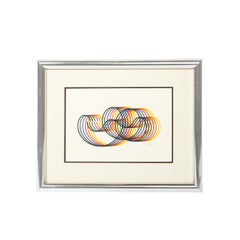
Modernist Abstract Lithograph w/ Multicolor Looping Line Work signed Yaakov Agam
Located in New York, NY
This Lovely Modernist Lithograph Originates from the Israeli born artist Yaakov Agam (made in Paris, France Circa 1980). This Lithograph is an Artist's Proof and a member of Agam's "...
Category

1980s Modern Manhattan - Drawings and Watercolor Paintings

Materials

Lithograph

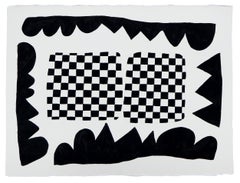
Maeve D Arcy "Serve Immediately" Abstract Acrylic Work on Paper
By Maeve D Arcy
Located in New York, NY
This contemporary abstract acrylic painting on paper features intricate mark-making formations in black and white. D'Arcy’s train of thought is impulsive and random, the marks are in...
Category

2010s Abstract Manhattan - Drawings and Watercolor Paintings

Materials

Paper, Acrylic, Graphite

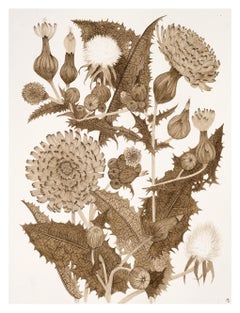
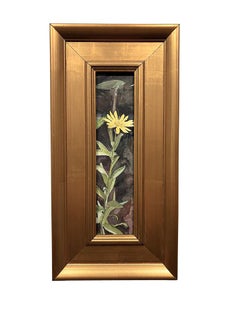
Sow Thistle, A 19 x 15 Inch Sepia Colored Botanical Drawing of Plants, Framed
By Margot Glass
Located in New York, NY
Margot Glass focuses primarily on drawing, using traditional techniques and materials as the foundation for her work -- including silverpoint and 14k goldpoint, homemade organic inks...
Category

2010s Contemporary Manhattan - Drawings and Watercolor Paintings

Materials

Ink, Archival Paper

Woods (Abstract Expressionism painting)
By Gina Werfel
Located in London, GB
Woods (Abstract Expressionism painting) Acrylic and mixed media on paper - Unframed. Werfel employs expressive, lyrical gestures that create ...
Category

2010s Abstract Manhattan - Drawings and Watercolor Paintings

Materials

Paper, Mixed Media, Acrylic

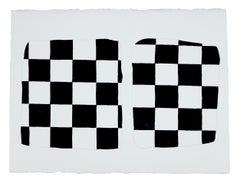
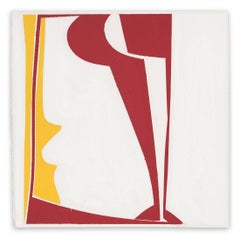
Covers 13-Red Yellow A
By Joanne Freeman
Located in London, GB
Gouache on handmade Khadi paper. Unframed. Joanne Freeman's works on paper are made with gouache on handmade Indian Khadi paper. She uses tape to mask out shapes and employ hard e...
Category

2010s Hard-Edge Manhattan - Drawings and Watercolor Paintings

Materials

Paper, Gouache

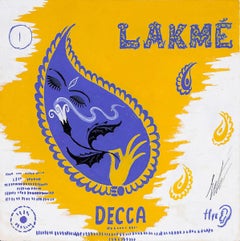
"Lakme" Decca design
By Erté
Located in Greenwich, CT
This design for a Decca recording of Lakme likely dates to the 1950s, and specifically to the 1952 recording with Mado Robin, conductor Georges Sébastian, at the Théâtre National de ...
Category

20th Century Art Deco Manhattan - Drawings and Watercolor Paintings

Materials

Paper, Gouache

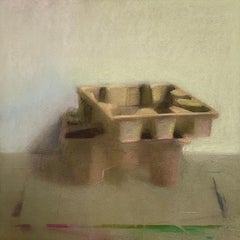
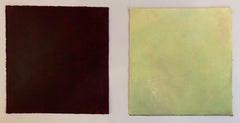
Samantha Haring "Shielded" - Chalk Pastel on Paper
Located in New York, NY
"I make quiet paintings in a noisy world. My work is an intimate meditation on humble objects and the detritus of studio life. I aim to promote a reengagement with the mundane while ...
Category

2010s Contemporary Manhattan - Drawings and Watercolor Paintings

Materials

Paper, Chalk, Pastel

Samantha Haring "Stack" - Chalk Pastel on Paper
Located in New York, NY
"I make quiet paintings in a noisy world. My work is an intimate meditation on humble objects and the detritus of studio life. I aim to promote a reengagement with the mundane while ...
Category

2010s Contemporary Manhattan - Drawings and Watercolor Paintings

Materials

Paper, Chalk, Pastel

Cruisin Every Path, abstract, colorful, watercolor on paper
Located in New York, NY
Sarah Brenneman is an American artist based in West Orange, New Jersey working primarily in painting. Her overarching interest lies in abstraction as a universal language and she wor...
Category

2010s Abstract Manhattan - Drawings and Watercolor Paintings

Materials

Paper, Watercolor

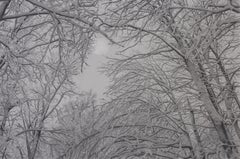
Wintry Trees 3, photorealist graphite landscape drawing, 2021
By Mary Reilly
Located in New York, NY
Mary Reilly’s laborious method of toning her paper serves as the starting point for her intricate compositions. She begins by covering the entire sheet with up to eight smooth, unmod...
Category

2010s Photorealist Manhattan - Drawings and Watercolor Paintings

Materials

Paper, Graphite

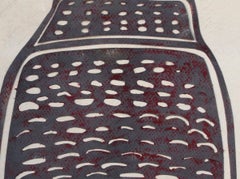
Winnowing Basket (neutral patterned print)
By Angela A Court
Located in New York, NY
Angela A’Court’s narrative and still life drawings use a simple and direct vocabulary to show the relationship of experience to expression of beauty and the quirkiness of every day moments. With an eye toward balance, the artist moves towards abstraction in "Winnowing Basket...
Category

2010s Contemporary Manhattan - Drawings and Watercolor Paintings

Materials

Mixed Media, Paper, Pastel

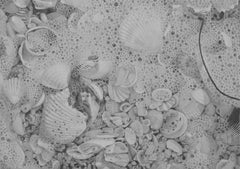
Seashells 5, photorealist black and white graphite drawing
By Mary Reilly
Located in New York, NY
Mary Reilly’s laborious method of toning her paper serves as the starting point for her intricate compositions. She begins by covering the entire sheet with up to eight smooth, unmod...
Category

2010s Photorealist Manhattan - Drawings and Watercolor Paintings

Materials

Paper, Graphite

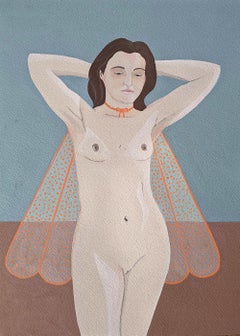
Fitted Wings, gouache painting of female nude with wings, blue background, frame
By Ellen Von Wiegand
Located in Dallas, TX
Beautiful original gouache paintings on Arches watercolour paper by Ellen Von Wiegand are float mounted and framed in white, all archival materials, and ready to hang. "Fitted Wings"...
Category

2010s Contemporary Manhattan - Drawings and Watercolor Paintings

Materials

Gouache, Archival Paper

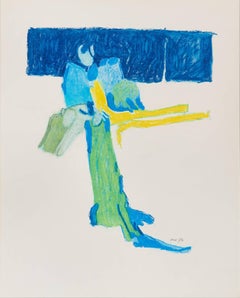
Untitled II (blue), pastel on paper, 20 x 16 inches. Bold colors
By James Moore
Located in New York, NY
"I don’t see shapes as much as I see the energy of elements interacting to move, stop, support or explode. I mostly use clean bright color to keep my world hot and alive. My painting...
Category

1970s Abstract Manhattan - Drawings and Watercolor Paintings

Materials

Paper, Pastel

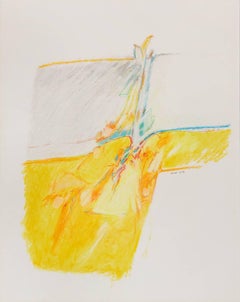
Untitled II (yellow), pastel on paper, 20 x 16. Yellow composition
By James Moore
Located in New York, NY
"I don’t see shapes as much as I see the energy of elements interacting to move, stop, support or explode. I mostly use clean bright color to keep my world hot and alive. My painting...
Category

1970s Abstract Manhattan - Drawings and Watercolor Paintings

Materials

Paper, Pastel

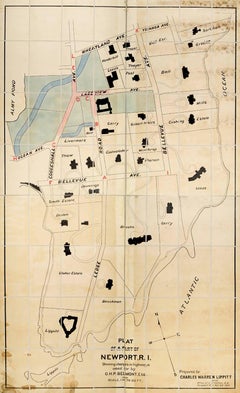
Plan of a Part of Newport, R. I. Showing Changes... O. H. P, Belmont, Esq.
Located in New York, NY
PLAN OF A PART OF NEWPORT, R.I. SHOWING CHANGES IN HIGHWAYS ASKED FOR BY O.H.P. BELMONT, ESQ. The original ink and watercolor plan on paper from 1907. The plan is extremely large; if fully assembled it would measure no less than 11.5 feet in height and 6.5 feet in breadth. Segmented and backed on modern linen in four sections – each section is 70 x 39 inches. This grand oversized folding map can be folded down to four sections each 17.5 x 11 inches and stored in a modern made leather and marble paper case 18 x 11.75 x 3 inches. Text continues, "Prepared for Charles Warren Lippitt at the office of J. P. Cotton, C.E. Newport, R.I. Oct. 28, 1907." A fine manuscript plan of the Bellevue neighborhood of Newport, depicting the street layout and the detailed footprints of the area’s many mansions. The plan was produced at the behest of Charles Warren Lippett (1846-1924), who served as governor of Rhode Island from 1895-1897. The Lippett “Breakwater” mansion is also shown on this plan, situated at the southernmost tip of the peninsula. Though the circumstances are unclear, Lippitt seems to have requested the plan be drawn out of some concern for road construction proposed by Oliver Hazard Perry...
Category

Early 20th Century Naturalistic Manhattan - Drawings and Watercolor Paintings

Materials

Ink, Watercolor

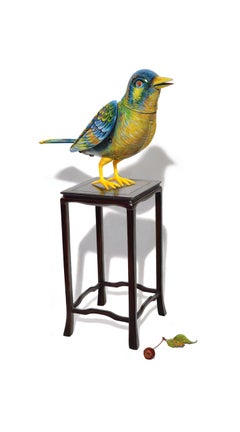
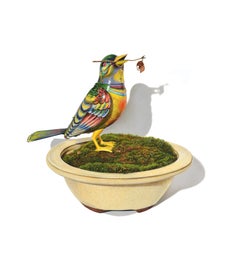
David Morrison, Wind-Up Bird No. 3, hyperrealist color pencil animal drawing
By David Morrison
Located in New York, NY
David Morrison has extended his brand of hyperrealism to the artificial, capturing the intricate lithography that decorates his collection of vintage Kohler wind-up birds. His drawin...
Category

2010s Photorealist Manhattan - Drawings and Watercolor Paintings

Materials

Paper, Color Pencil

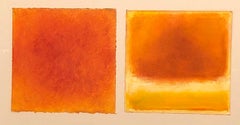
Moros, orange and yellow abstract pastel monochrome diptych of a blood orange
By Daisy Craddock
Located in New York, NY
Daisy Craddock's Moros is an abstracted still life of a Blood Orange, rendered in oil pastel. Drawn from life, Craddock considers her diptychs to be literal depictions of her fruit a...
Category

2010s Abstract Manhattan - Drawings and Watercolor Paintings

Materials

Paper, Oil Pastel

Trompe l oeil [Punch and Judy].
By George Cruikshank
Located in New York, NY
Trompe l'oeil. [Punch and Judy]. Watercolor and drawing, undated, circa 1830. Paper size 10.25 x 14" (26.1 x 35.6 cm). On "J. Whatman" watermarked paper. Unidentified artist. A 19th-century visual montage of Cruikshank's "Punch & Judy." The images are taken from the book "The Tragical Comedy, or Comical Tragedy of Punch and Judy." As told to John Payne Collier by Giovanni in 1827, illustrated by George Cruikshank and published by S. Prowlett, London 1828. The central circle illustrates a drawing showing two allegorical female figures with two putti. The text under this image: “E Musao Hugonis Howard Armig, from Guercino.” On top of that illustration is a handsome painting of a flintlock pistol. Trompe l’oeil is an art of illustration – the name translates to ‘Trick of the Eye.” The puppet show of Pulcinella or Punch and Judy has a long and fascinating history. “A puppet play that would have featured a version of Punch was first recorded in England in May 1662 by the diarist Samuel Pepys. He noted seeing it in Covent Garden, London, performed by the Italian puppet showman Pietro Gimonde from Bologna, otherwise known as Signor Bologna. The earliest script of a Punch and Judy show...
Category

1830s Realist Manhattan - Drawings and Watercolor Paintings

Materials

India Ink, Watercolor, Pencil

Colon [Panama]
By Reynolds Beal
Located in New York, NY
Reynolds Beal painted this watercolor entitled “Colon” [Panama] in the spring of 1923. The paper size of this painting is 7 x 10" (17.7 x 25.3 cm). It is signed, titled, and dated ...
Category

Early 20th Century American Impressionist Manhattan - Drawings and Watercolor Paintings

Materials

Watercolor, Pencil

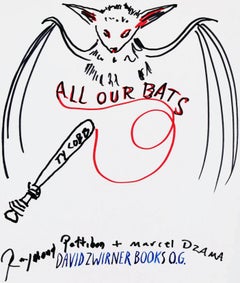
Raymond Pettibon drawing 2016 (on Raymond Pettibon Marcel Dzama zine 2016)
By Raymond Pettibon
Located in NEW YORK, NY
Raymond Pettibon & Marcel Dzama artist book 2016 featuring collaborative Hand Drawing: Featuring an original signed collaborative drawing by the duo on the back cover of this limited...
Category

21st Century and Contemporary Pop Art Manhattan - Drawings and Watercolor Paintings

Materials

Paper, Offset, Ink

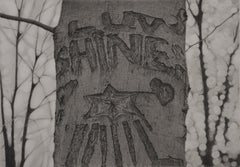
Luv Shines 2, photorealist graphite landscape drawing, 2023
By Mary Reilly
Located in New York, NY
In this work, the artist returns to a favorite spot in Alley Pond Park, Queens, to memorialize the ever-evolving carved names and glyphs in this majestic trunk. She is documenting no...
Category

2010s Photorealist Manhattan - Drawings and Watercolor Paintings

Materials

Paper, Graphite

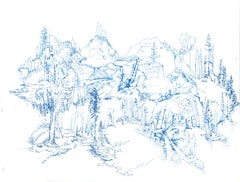
Kathleen Beausoleil, Renew, 2018, blue ink on paper, landscape drawing
Located in New York, NY
Kathleen Beausoleil lives and works in Fair Haven, NJ. Primarily working in oil paint, her works focus on what it means to be a social being. Beausoleil received a 2022 Fellowship fr...
Category

2010s Abstract Manhattan - Drawings and Watercolor Paintings

Materials

Paper, Ink

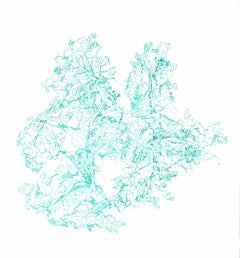
Kathleen Beausoleil, Crescendo, 2023, green ink on paper, landscape drawing
Located in New York, NY
Kathleen Beausoleil lives and works in Fair Haven, NJ. Primarily working in oil paint, her works focus on what it means to be a social being. Beausoleil received a 2022 Fellowship fr...
Category

2010s Abstract Manhattan - Drawings and Watercolor Paintings

Materials

Paper, Ink

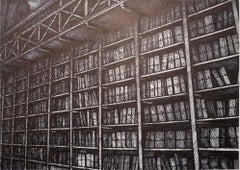
ARCHIVIO 3
By Andrea Chiesi
Located in New York, NY
Ink drawing of library stacks of books on paper.
Category

Early 2000s Contemporary Manhattan - Drawings and Watercolor Paintings

Materials

Paper, Ink

Soft Goldenaster, 2025
By Russ Havard
Located in Fairfield, CT
Represented by George Billis Gallery, NYC & LA --RUSS HAVARD Artist Statement I'm drawn towards nature imagery that depicts isolated elements in their continual struggle to flourish ...
Category

21st Century and Contemporary American Realist Manhattan - Drawings and Watercolor Paintings

Materials

Paper, Watercolor

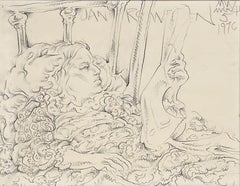
Martin Wong drawing 1976
By Martin Wong
Located in NEW YORK, NY
Martin Wong, Jan Rowen, 1976: Included in the Martin Wong Catalog Raisonne, this 1970s Wong drawing features the artist’s friend, Jan Rowen captured intimately. A poignant insight in...
Category

1970s Abstract Manhattan - Drawings and Watercolor Paintings

Materials

Paper, Graphite

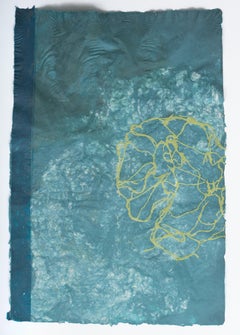
Nancy Cohen "Disturbance" Paper Pulp and Handmade Paper
By Nancy Cohen
Located in New York, NY
Line is the operative formal element in the work shown here, but there are many other lines in play. Pieces walk a line between drawings that might be tapestries or sculptures or pa...
Category

2010s Abstract Manhattan - Drawings and Watercolor Paintings

Materials

Handmade Paper

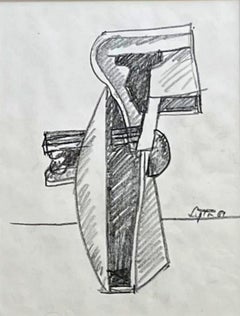
Sculptural study, unique signed charcoal drawing, by renowned modernist sculptor
By Seymour Lipton
Located in New York, NY
SEYMOUR LIPTON Seymour Lipton Untitled sculptural study, 1981 Charcoal on paper hand signed and dated in charcoal pencil on the front Framed Original drawing done in charcoal by reno...
Category

1980s Abstract Expressionist Manhattan - Drawings and Watercolor Paintings

Materials

Charcoal

179, 2025
By Russ Havard
Located in Fairfield, CT
Represented by George Billis Gallery, NYC & LA --RUSS HAVARD Artist Statement I'm drawn towards nature imagery that depicts isolated elements in their continual struggle to flourish ...
Category

21st Century and Contemporary American Realist Manhattan - Drawings and Watercolor Paintings

Materials

Paper, Watercolor

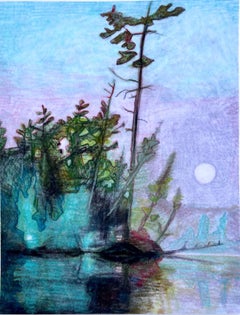
Lake 1 (kayak), post-impressionistic landscape drawing
By Sandy Litchfield
Located in New York, NY
Sandy Litchfield finds the consummate marriage of medium and subject in her latest enchanted landscapes. She narrows her focus to lake scenes, creating an almost palindrome-like comp...
Category

2010s Post-Impressionist Manhattan - Drawings and Watercolor Paintings

Materials

Synthetic Paper, Color Pencil

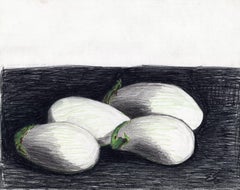
White Eggplant on Black Table
By Emilio Sanchez
Located in New York, NY
"White Eggplant on Black Table" is a color pencil drawing by artist Emilio Sanchez, circa 1995. It is drawn to the paper edge and initialed "ES" in the lower right. The "Emilio Sanch...
Category

Late 20th Century Contemporary Manhattan - Drawings and Watercolor Paintings

Materials

Color Pencil

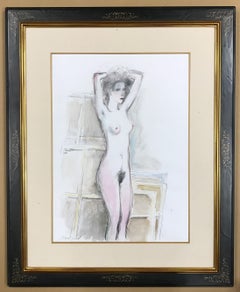
Nude
By Jean-Pierre Cassigneul
Located in New York, NY
This watercolor has a photo certificate signed by the artist and will be included in his future catalogue raisonne. This has a complete subject compared to other drawings consisting...
Category

Late 20th Century Expressionist Manhattan - Drawings and Watercolor Paintings

Materials

Watercolor

Nude
$9,200 Sale Price
20% Off
Rosa Bianca, green and purple abstract pastel fruit portrait, 2018
By Daisy Craddock
Located in New York, NY
A produce portraitist, Daisy Craddock's abstract oil pastel diptychs capture the skin and flesh of her subjects. Daisy Craddock examines her fruits and ...
Category

2010s Abstract Manhattan - Drawings and Watercolor Paintings

Materials

Paper, Oil Pastel

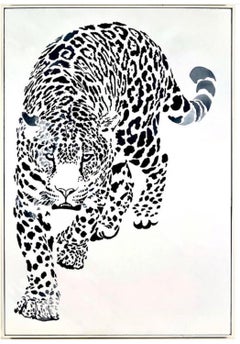
Panthera V (Panther)
By Matt Kinney
Located in Hudson, NY
This new series of painting is an exciting transition for Kinney as he is best known for assemblage and sculpture. “Anim”, the Latin root word of animal, means life, soul or breath. This exhibition features select large-format monochromatic oil paintings on stretched canvas and wood panels. On view as well are works on paper with Japanese Sumi Ink, which inspired the oil paintings. Kinney has been looking at pre-historic cave paintings as well as animals depicted therein, such as the Chauvet caves in Nice, Southern France. Emerging from the inextricable interplay of light and dark, Kinney’s black and white ink paintings capture the ever-shifting subjectivity shaped by shadow. Cast in Japanese Sumi ink, each unique painting explores the trajectories of human and animal, natural and architectural form- what is revealed or hidden? A variety of hand-torn, heavy weight papers add textural dimension to each mark and brush stroke, as well as through the immediacy of brushstrokes to depict the action within the artwork In his latest collection of works, Kinney explores animal form and meaning as seen in both contemporary and ancient times. In “Savanna (Zebras) ”, a stampede of zebras is depicted through oil paint on wood panel. Animal populations in regions like the horn of Africa today face the loss of their natural habitats due to extreme draught. He explores the deep imprint they leave behind and the interconnectedness of humans and animals in the world. With the balance of nature at stake, Kinney’s paintings underscore the importance of the relationship between the natural environment and civilization. Matt Kinney...
Category

2010s Contemporary Manhattan - Drawings and Watercolor Paintings

Materials

Canvas, Oil

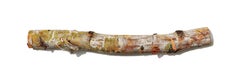
Firewood Series No. 3, hyperrealist nature still life, colored pencil drawing
By David Morrison
Located in New York, NY
In "Firewood Series No. 3," David Morrison uses colored pencils to capture the finest details of a frayed and peeling piece of birch wood. With his careful and methodical handling of...
Category

2010s Photorealist Manhattan - Drawings and Watercolor Paintings

Materials

Paper, Color Pencil

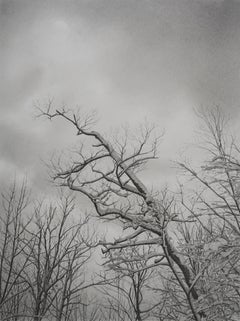
Wintry Trees 5, photorealist graphite landscape drawing
By Mary Reilly
Located in New York, NY
Mary Reilly’s laborious method of toning her paper serves as the starting point for her intricate compositions. She begins by covering the entire sheet with up to eight smooth, unmod...
Category

2010s Photorealist Manhattan - Drawings and Watercolor Paintings

Materials

Paper, Graphite

David Morrison, Wind-Up Bird No. 1, hyperrealist colored pencil animal, 2019
By David Morrison
Located in New York, NY
David Morrison has extended his brand of hyperrealism to the artificial, capturing the intricate lithography that decorates his collection of vintage Kohler wind-up birds. His drawin...
Category

2010s Photorealist Manhattan - Drawings and Watercolor Paintings

Materials

Paper, Color Pencil

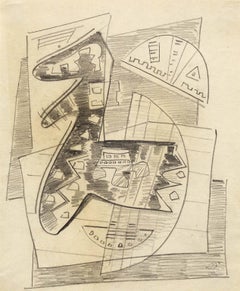
Dancing Motion.
By Werner Drewes
Located in New York, NY
Drawing, 1938. Signed and dated with the artist cypher. Paper size 7 9/16 x 6 1/4" (19.3 x 15.8 cm). Werner Drewes (1899-1985), painter, printmaker, educator and lecturer, wa...
Category

1930s Abstract Expressionist Manhattan - Drawings and Watercolor Paintings

Materials

Pencil

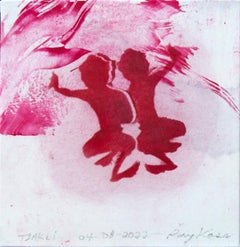
Tsakli 04-08-2022, abstract water media painting
By Ray Kass
Located in New York, NY
The latest watercolors from Ray Kass strike a balance between audacity and contemplation. Drawing from the Tibetan Buddhist tradition of the Tsakli - sets of miniature...
Category

2010s Abstract Manhattan - Drawings and Watercolor Paintings

Materials

Wax, Watercolor, Wood Panel, Pigment, Mica

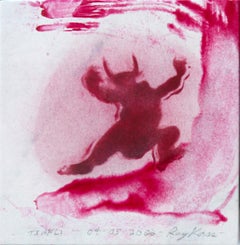
Tsakli 04-05-2022, abstract water media painting
By Ray Kass
Located in New York, NY
The latest watercolors from Ray Kass strike a balance between audacity and contemplation. Drawing from the Tibetan Buddhist tradition of the Tsakli - sets of miniature paintings feat...
Category

2010s Abstract Manhattan - Drawings and Watercolor Paintings

Materials

Wax, Watercolor, Wood Panel, Pigment, Mica

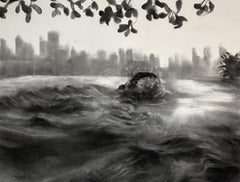
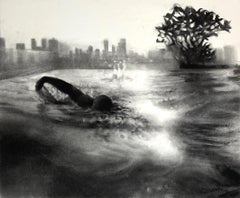
The Space Between, monochrome charcoal drawing of swimmer in city setting
By Patsy McArthur
Located in Dallas, TX
"The Space Between" is a unique charcoal drawing on paper. Scottish artist Patsy McArthur captures the dynamic movement of the swimmer against an urban backdrop. This monochromatic ...
Category

2010s Realist Manhattan - Drawings and Watercolor Paintings

Materials

Charcoal, Archival Paper

Trompe L oeil [untitled]. Homage... Ter Nagedachtenis van S. G. Wezel oud 76 Jar
Located in New York, NY
Trompe l'oeil [untitled]. Homage.... Ink drawing, multimedia, 1837. Paper size 13.13 x 16.44" (33.3 x 41.8 cm). On watermarked paper "Blauw and Briel." Overall good condition. Small tears and the occasional bit of paper missing at the paper edge. Original color. Center paper crease - as issued. We believe the artist created this artwork on a sheet of paper that had been previously bound in a book. Dutch trompe l'oeil drawing with pen & ink, pencil, sepia, and black chalk, wax seal, and painted pigment. This montage of early 19th century ephemera depicts sheet music, scenic views, a sealed letter, cards, a portrait of an unknown sitter, and a penned sheet noting ... van S. G. Wezel Wassenaar, October 1837. Is this a homage to the individual portrayed, a metaphorical self-portrait, or just a random assortment of ephemera beautifully composed? The artist keeps us wondering and visually appeased by a striking harmony created through contrast. This piece starts with sheet music entitled; Romance Larghetto No 2. There is a Psalm and Op Jezus Geboorte (On Jesus Birth...
Category

Mid-19th Century Realist Manhattan - Drawings and Watercolor Paintings

Materials

Conté, Ink, India Ink, Watercolor

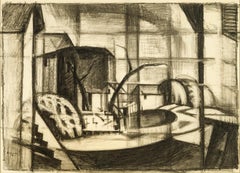
Study for Old Canal, Red and Blue (Rockaway, Morris Canal)
By Oscar Florianus Bluemner
Located in New York, NY
Oscar Bluemner was a German and an American, a trained architect who read voraciously in art theory, color theory, and philosophy, a writer of art criticism both in German and English, and, above all, a practicing artist. Bluemner was an intense man, who sought to express and share, through drawing and painting, universal emotional experience. Undergirded by theory, Bluemner chose color and line for his vehicles; but color especially became the focus of his passion. He was neither abstract artist nor realist, but employed the “expressional use of real phenomena” to pursue his ends. (Oscar Bluemner, from unpublished typescript on “Modern Art” for Camera Work, in Bluemner papers, Archives of American Art, Smithsonian Institution, as cited and quoted in Jeffrey R. Hayes, Oscar Bluemner [1991], p. 60. The Bluemner papers in the Archives [hereafter abbreviated as AAA] are the primary source for Bluemner scholars. Jeffrey Hayes read them thoroughly and translated key passages for his doctoral dissertation, Oscar Bluemner: Life, Art, and Theory [University of Maryland, 1982; UMI reprint, 1982], which remains the most comprehensive source on Bluemner. In 1991, Hayes published a monographic study of Bluemner digested from his dissertation and, in 2005, contributed a brief essay to the gallery show at Barbara Mathes, op. cit.. The most recent, accessible, and comprehensive view of Bluemner is the richly illustrated, Barbara Haskell, Oscar Bluemner: A Passion for Color, exhib. cat. [New York: Whitney Museum of American Art, 2005.]) Bluemner was born in the industrial city of Prenzlau, Prussia, the son and grandson of builders and artisans. He followed the family predilection and studied architecture, receiving a traditional and thorough German training. He was a prize-winning student and appeared to be on his way to a successful career when he decided, in 1892, to emigrate to America, drawn perhaps by the prospect of immediate architectural opportunities at the Chicago World’s Fair, but, more importantly, seeking a freedom of expression and an expansiveness that he believed he would find in the New World. The course of Bluemner’s American career proved uneven. He did indeed work as an architect in Chicago, but left there distressed at the formulaic quality of what he was paid to do. Plagued by periods of unemployment, he lived variously in Chicago, New York, and Boston. At one especially low point, he pawned his coat and drafting tools and lived in a Bowery flophouse, selling calendars on the streets of New York and begging for stale bread. In Boston, he almost decided to return home to Germany, but was deterred partly because he could not afford the fare for passage. He changed plans and direction again, heading for Chicago, where he married Lina Schumm, a second-generation German-American from Wisconsin. Their first child, Paul Robert, was born in 1897. In 1899, Bluemner became an American citizen. They moved to New York City where, until 1912, Bluemner worked as an architect and draftsman to support his family, which also included a daughter, Ella Vera, born in 1903. All the while, Oscar Bluemner was attracted to the freer possibilities of art. He spent weekends roaming Manhattan’s rural margins, visiting the Bronx, Brooklyn, Queens, and New Jersey, sketching landscapes in hundreds of small conté crayon drawings. Unlike so many city-based artists, Bluemner did not venture out in search of pristine countryside or unspoiled nature. As he wrote in 1932, in an unsuccessful application for a Guggenheim Fellowship, “I prefer the intimate landscape of our common surroundings, where town and country mingle. For we are in the habit to carry into them our feelings of pain and pleasure, our moods” (as quoted by Joyce E. Brodsky in “Oscar Bluemner in Black and White,” p. 4, in Bulletin 1977, I, no. 5, The William Benton Museum of Art, Storrs, Connecticut). By 1911, Bluemner had found a powerful muse in a series of old industrial towns, mostly in New Jersey, strung along the route of the Morris Canal. While he educated himself at museums and art galleries, Bluemner entered numerous architectural competitions. In 1903, in partnership with Michael Garven, he designed a new courthouse for Bronx County. Garven, who had ties to Tammany Hall, attempted to exclude Bluemner from financial or artistic credit, but Bluemner promptly sued, and, finally, in 1911, after numerous appeals, won a $7,000 judgment. Barbara Haskell’s recent catalogue reveals more details of Bluemner’s architectural career than have previously been known. Bluemner the architect was also married with a wife and two children. He took what work he could get and had little pride in what he produced, a galling situation for a passionate idealist, and the undoubted explanation for why he later destroyed the bulk of his records for these years. Beginning in 1907, Bluemner maintained a diary, his “Own Principles of Painting,” where he refined his ideas and incorporated insights from his extensive reading in philosophy and criticism both in English and German to create a theoretical basis for his art. Sometime between 1908 and 1910, Bluemner’s life as an artist was transformed by his encounter with the German-educated Alfred Stieglitz, proprietor of the Little Galleries of the Photo-Secession at 291 Fifth Avenue. The two men were kindred Teutonic souls. Bluemner met Stieglitz at about the time that Stieglitz was shifting his serious attention away from photography and toward contemporary art in a modernist idiom. Stieglitz encouraged and presided over Bluemner’s transition from architect to painter. During the same period elements of Bluemner’s study of art began to coalesce into a personal vision. A Van Gogh show in 1908 convinced Bluemner that color could be liberated from the constraints of naturalism. In 1911, Bluemner visited a Cézanne watercolor show at Stieglitz’s gallery and saw, in Cézanne’s formal experiments, a path for uniting Van Gogh’s expressionist use of color with a reality-based but non-objective language of form. A definitive change of course in Bluemner’s professional life came in 1912. Ironically, it was the proceeds from his successful suit to gain credit for his architectural work that enabled Bluemner to commit to painting as a profession. Dividing the judgment money to provide for the adequate support of his wife and two children, he took what remained and financed a trip to Europe. Bluemner traveled across the Continent and England, seeing as much art as possible along the way, and always working at a feverish pace. He took some of his already-completed work with him on his European trip, and arranged his first-ever solo exhibitions in Berlin, Leipzig, and Elberfeld, Germany. After Bluemner returned from his study trip, he was a painter, and would henceforth return to drafting only as a last-ditch expedient to support his family when his art failed to generate sufficient income. Bluemner became part of the circle of Stieglitz artists at “291,” a group which included Marsden Hartley, John Marin, and Arthur Dove. He returned to New York in time to show five paintings at the 1913 Armory Show and began, as well, to publish critical and theoretical essays in Stieglitz’s journal, Camera Work. In its pages he cogently defended the Armory Show against the onslaught of conservative attacks. In 1915, under Stieglitz’s auspices, Bluemner had his first American one-man show at “291.” Bluemner’s work offers an interesting contrast with that of another Stieglitz architect-turned-artist, John Marin, who also had New Jersey connections. The years after 1914 were increasingly uncomfortable. Bluemner remained, all of his life, proud of his German cultural legacy, contributing regularly to German language journals and newspapers in this country. The anti-German sentiment, indeed mania, before and during World War I, made life difficult for the artist and his family. It is impossible to escape the political agenda in Charles Caffin’s critique of Bluemner’s 1915 show. Caffin found in Bluemner’s precise and earnest explorations of form, “drilled, regimented, coerced . . . formations . . . utterly alien to the American idea of democracy” (New York American, reprinted in Camera Work, no. 48 [Oct. 1916], as quoted in Hayes, 1991, p. 71). In 1916, seeking a change of scene, more freedom to paint, and lower expenses, Bluemner moved his family to New Jersey, familiar terrain from his earlier sketching and painting. During the ten years they lived in New Jersey, the Bluemner family moved around the state, usually, but not always, one step ahead of the rent collector. In 1917, Stieglitz closed “291” and did not reestablish a Manhattan gallery until 1925. In the interim, Bluemner developed relationships with other dealers and with patrons. Throughout his career he drew support and encouragement from art cognoscenti who recognized his talent and the high quality of his work. Unfortunately, that did not pay the bills. Chronic shortfalls were aggravated by Bluemner’s inability to sustain supportive relationships. He was a difficult man, eternally bitter at the gap between the ideal and the real. Hard on himself and hard on those around him, he ultimately always found a reason to bite the hand that fed him. Bluemner never achieved financial stability. He left New Jersey in 1926, after the death of his beloved wife, and settled in South Braintree, Massachusetts, outside of Boston, where he continued to paint until his own death in 1938. As late as 1934 and again in 1936, he worked for New Deal art programs designed to support struggling artists. Bluemner held popular taste and mass culture in contempt, and there was certainly no room in his quasi-religious approach to art for accommodation to any perceived commercial advantage. His German background was also problematic, not only for its political disadvantages, but because, in a world where art is understood in terms of national styles, Bluemner was sui generis, and, to this day, lacks a comfortable context. In 1933, Bluemner adopted Florianus (definitively revising his birth names, Friedrich Julius Oskar) as his middle name and incorporated it into his signature, to present “a Latin version of his own surname that he believed reinforced his career-long effort to translate ordinary perceptions into the more timeless and universal languages of art” (Hayes 1982, p. 189 n. 1). In 1939, critic Paul Rosenfeld, a friend and member of the Stieglitz circle, responding to the difficulty in categorizing Bluemner, perceptively located him among “the ranks of the pre-Nazi German moderns” (Hayes 1991, p. 41). Bluemner was powerfully influenced in his career by the intellectual heritage of two towering figures of nineteenth-century German culture, Johann Wolfgang von Goethe and Georg Wilhelm Friedrich Hegel. A keen student of color theory, Bluemner gave pride of place to the formulations of Goethe, who equated specific colors with emotional properties. In a November 19, 1915, interview in the German-language newspaper, New Yorker Staats-Zeitung (Abendblatt), he stated: I comprehend the visible world . . . abstract the primary-artistic . . . and after these elements of realty are extracted and analyzed, I reconstruct a new free creation that still resembles the original, but also . . . becomes an objectification of the abstract idea of beauty. The first—and most conspicuous mark of this creation is . . . colors which accord with the character of things, the locality . . . [and which] like the colors of Cranach, van der Weyden, or Durer, are of absolute purity, breadth, and luminosity. . . . I proceed from the psychological use of color by the Old Masters . . . [in which] we immediately recognize colors as carriers of “sorrow and joy” in Goethe’s sense, or as signs of human relationship. . . . Upon this color symbolism rests the beauty as well as the expressiveness, of earlier sacred paintings. Above all, I recognize myself as a contributor to the new German theory of light and color, which expands Goethe’s law of color through modern scientific means (as quoted in Hayes 1991, p. 71). Hayes has traced the global extent of Bluemner’s intellectual indebtedness to Hegel (1991, pp. 36–37). More specifically, Bluemner made visual, in his art, the Hegelian world view, in the thesis and antithesis of the straight line and the curve, the red and the green, the vertical and the horizontal, the agitation and the calm. Bluemner respected all of these elements equally, painting and drawing the tension and dynamic of the dialectic and seeking ultimate reconciliation in a final visual synthesis. Bluemner was a keen student of art, past and present, looking, dissecting, and digesting all that he saw. He found precedents for his non-naturalist use of brilliant-hued color not only in the work Van Gogh and Cezanne, but also in Gauguin, the Nabis, and the Symbolists, as well as among his contemporaries, the young Germans of Der Blaue Reiter. Bluemner was accustomed to working to the absolute standard of precision required of the architectural draftsman, who adjusts a design many times until its reality incorporates both practical imperatives and aesthetic intentions. Hayes describes Bluemner’s working method, explaining how the artist produced multiple images playing on the same theme—in sketch form, in charcoal, and in watercolor, leading to the oil works that express the ultimate completion of his process (Hayes, 1982, pp. 156–61, including relevant footnotes). Because of Bluemner’s working method, driven not only by visual considerations but also by theoretical constructs, his watercolor and charcoal studies have a unique integrity. They are not, as is sometimes the case with other artists, rough preparatory sketches. They stand on their own, unfinished only in the sense of not finally achieving Bluemner’s carefully considered purpose. The present charcoal drawing is one of a series of images that take as their starting point the Morris Canal as it passed through Rockaway, New Jersey. The Morris Canal industrial towns that Bluemner chose as the points of departure for his early artistic explorations in oil included Paterson with its silk mills (which recalled the mills in the artist’s childhood home in Elberfeld), the port city of Hoboken, Newark, and, more curiously, a series of iron ore mining and refining towns, in the north central part of the state that pre-dated the Canal, harkening back to the era of the Revolutionary War. The Rockaway theme was among the original group of oil paintings that Bluemner painted in six productive months from July through December 1911 and took with him to Europe in 1912. In his painting journal, Bluemner called this work Morris Canal at Rockaway N.J. (AAA, reel 339, frames 150 and 667, Hayes, 1982, pp. 116–17), and exhibited it at the Galerie Fritz Gurlitt in Berlin in 1912 as Rockaway N. J. Alter Kanal. After his return, Bluemner scraped down and reworked these canvases. The Rockaway picture survives today, revised between 1914 and 1922, as Old Canal, Red and Blue (Rockaway River) in the collection of the Hirshhorn Museum and Sculpture Garden, Smithsonian Institution, Washington D. C. (color illus. in Haskell, fig. 48, p. 65). For Bluemner, the charcoal expression of his artistic vision was a critical step in composition. It represented his own adaptation of Arthur Wesley’s Dow’s (1857–1922) description of a Japanese...
Category

20th Century American Modern Manhattan - Drawings and Watercolor Paintings

Materials

Paper, Charcoal

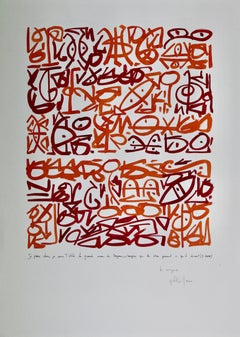
La croyance
Located in New York, NY
Ink on paper, Acrylic and / or watercolor, signed in the front, framed in a thin Blond wood frame, glass. Philip Wittmann work is based on signs. Signs are for him an intermediary b...
Category

2010s Contemporary Manhattan - Drawings and Watercolor Paintings

Materials

Ink, Archival Paper

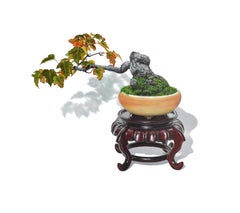
Amur Maple Bonsai, photorealist floral still life drawing
By David Morrison
Located in New York, NY
Ever-interested in delicate and often toiling labor, David Morrison’s newest body of work stems from his practice as a master gardener. David’s methodical cultivation of irises and bonsai plants...
Category

2010s Photorealist Manhattan - Drawings and Watercolor Paintings

Materials

Paper, Color Pencil

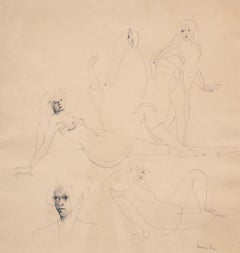
Nude women - Ink on Paper Unique Signed Drawing Surrealist Woman Painter, 1965
By Leonor Fini
Located in New York, NY
Leonor Fini Nude women, ca. 1965 Ink on paper 13 × 13 in l 33 × 33 cm Frame included - 18 x 18 in l 46 x 46 cm Signed lower right Condition: Excellent condition
Category

1960s Surrealist Manhattan - Drawings and Watercolor Paintings

Materials

Ink, Laid Paper

Untitled, Reuben Mednikoff (1906-1972), Surrealist British Artist, 1946
Located in New York, NY
Reuben Mednikoff Untitled, 1946 Watercolor on paper Artwork: 9 x 11 7/8 in. l 23 x 30 cm Framed: 12 5/8 x 15 1/3 in. l 32 x 39 cm Signed lower left and dated on the back Born in Lo...
Category

1940s Surrealist Manhattan - Drawings and Watercolor Paintings

Materials

Watercolor

Untitled Yoshitomo Nara - Unique Drawing Hand Signed Pop Art, 2013
By Yoshitomo Nara
Located in New York, NY
Yoshitomo Nara Untitled, ca. 2013 Felt pen on printed paper 9 1/10 × 7 1/10 in 23 × 18 cm Frame included - 15 3/4 x 11 7/8 40 × 30 cm Condition: Artwork in perfect condition. Fram...
Category

2010s Pop Art Manhattan - Drawings and Watercolor Paintings

Materials

Felt Pen

City Swim Dusk, realist monochrome charcoal drawing of swimmer in city setting
By Patsy McArthur
Located in Dallas, TX
"City Swim, Dusk" is a unique charcoal drawing on paper. Scottish artist Patsy McArthur captures the dynamic movement of the swimmer against an urban backdrop. This monochromatic ar...
Category

2010s Realist Manhattan - Drawings and Watercolor Paintings

Materials

Charcoal, Archival Paper

Still Thinking About These?

All Recently Viewed