Miami - Lacquer
to
7
386
114
17
8
9
5
3
1
1
1
1
14
9
6
4
4
17
12
7
5
5
17
17
17
Item Ships From: Miami
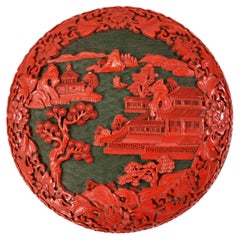
Large Domed Chinese Cinnabar Box
Located in Miami, FL
A large vintage Chinese red cinnabar box with deep relief carved lid depicting peonies, trees and a landscape with a palace. The round box has...
Category
1930s Chinese Chinese Export Vintage Miami - Lacquer
Materials
Brass
JAPAN 1880 Meiji Period Tebako Box In Red Lacquered Wood With Abalone Inlaid
Located in Miami, FL
Presentation Tebako box from the Japanese Meiji period (1868-1912).
Beautiful decorative presentation Tebako box from the Japanese Imperial Meiji period, circa 1880. This box has been meticulously crafted in a squared cushioned shape in wood with kara coating Kobayashi red lacquer, gilding, black lacquer and inlaid decorations of abalone shell, Raden. Tebako literally means "portable box", it is a toilet box containing the objects necessary for washing and make-up, especially blush mirror...
Category
1880s Japanese Meiji Antique Miami - Lacquer
Materials
Abalone, Wool, Lacquer


$2,695 Sale Price / set
30% Off
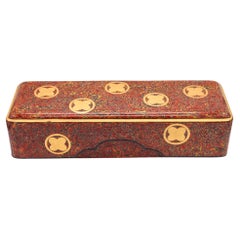
JAPAN 1900 Meiji Period Fubako Box In Hiramaki-e Lacquered Wood With Gilding
Located in Miami, FL
Fubako letters-box from the Japanese Meiji period (1868-1912).
Beautiful decorative Fubako letters box from the Japanese Imperial Meiji period, circa 1900. This box has been meticul...
Category
Early 1900s Japanese Meiji Antique Miami - Lacquer
Materials
Gold
$978 Sale Price
30% Off
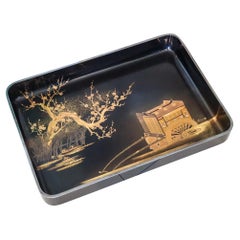
MEIJI PERIOD 1890 Maki-e Presentation Tray In Lacquer
Gold With Kanji Wood Box
Located in Miami, FL
A large maki-e presentation tray from the Meiji period.
This is an extraordinary presentation rectangular tray created in the Imperial Japan period during the pinnacle of the Meiji ...
Category
1890s Japanese Meiji Antique Miami - Lacquer
Materials
Gold, Silver
$13,965 Sale Price / set
30% Off
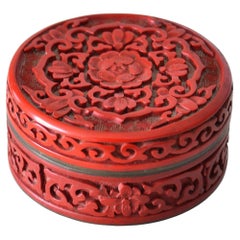
Antique Chinese Cinnabar, Brass and Enamel Box
Located in Miami, FL
A crisply carved antique Chinese red cinnabar lacquer lidded round box with blue enamel interior and brass fittings. The "dragon's blood" trinket box has a fine peony, foliate and fl...
Category
19th Century Chinese Qing Antique Miami - Lacquer
Materials
Brass, Enamel
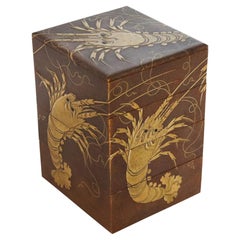
JAPAN Meiji Period 1870 Four Tiers Presentation Jubako Box Namiki Lacquer
Gold
Located in Miami, FL
Four Tier Japanese Gilt Jubako Maki-E box with red Interior.
This is a beautiful decorative presentation Jubako box created in the Imperial Japan during the early Meiji period (1868...
Category
1870s Japanese Meiji Antique Miami - Lacquer
Materials
Gold
$3,815 Sale Price / set
30% Off
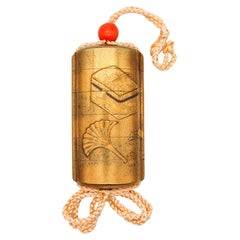
Japan 1800 Edo Period Six Drawer Inro In Lacquered Gilt Wood With Utensils
Located in Miami, FL
Japanese Inro from the Edo Period (1603-1867).
Beautiful Inro, created in Japan during the Edo period (Shogunate), circa 1800. It was carefully crafted in carved precious wood with ...
Category
Early 1800s Japanese Edo Antique Miami - Lacquer
Materials
Coral
$2,275 Sale Price
30% Off
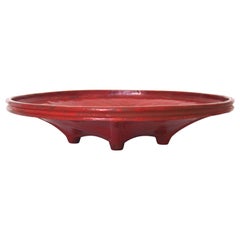
Early 20th Century Burmese Lacquered Tray, “Pagan Bya”
Located in Atlanta, GA
Burmese (Myanmar) Lacquerware has a long tradition dating back to the 13th century. Lacquer in Burma is called “Thitsi” meaning the sap of a Thitsi Tree (Melanhorrea Usitata). Typica...
Category
Early 20th Century Burmese Miami - Lacquer
Materials
Bamboo, Lacquer

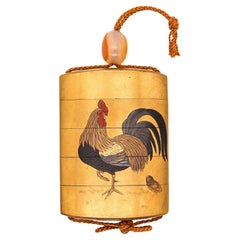
Japan 1810 Kajikawa Edo Period Five Drawer Inro Lacquered Gilt Wood With Rooster
Located in Miami, FL
Japanese Inro from the Edo period (1615-1868) created by Kajikawa.
Beautiful Inro, created in Japan by one of the Kajikawa family during the Edo period (1615-1868), circa 1810. Has been carefully crafted in carved precious wood with applications of gilding maki-e and decorated with Japonism patterns. All dan trays are attached together with a himo cord. The detailed craftsmanship was a true pleasure to behold.
Period: Edo period (1615-1868). Shogunate.
Approximate Date: 1790-1810
Motif: A family of birds consisting of a cockerel, the hen and three chicks.
Drawers: Five.
Shape: Rectangular navette.
Technique: Carved wood, lacquer and decorated in iroe-hiramaki-e on a gold ground.
Ojime: 15mm 20mm, oval carved from natural translucent agate.
Netsuke: None
Weight: 47.70 Grams.
Measurements: Inro is 78 mm by 55 mm by 18 mm (3.07 x 2.17 x 0.71 Inches).
Signatures: Kajikawa Saku, in the underside with the signature KAJIKAWA. By a member of the Kajikawa family, signed Kajikawa 梶川 Japan, late 18th century to early 19th century, Edo period (1615-1868).
The Kajikawa family
Kajikawa family, flourished in the 19th century, they was Japanese lacquerware artists whose school in Edo (now Tokyo) flourished for more than 200 years. This family is perhaps the most famous of all the dynasties of Japanese lacquer artists, and certainly the name most often found on inro. The family is said to have been founded by Hikobei at Edo in the early 17th century, although some claim that the family’s great reputation really stemmed from his son and pupil Kyujiro. In any event, Hikobei worked for the shogunate, as did his successors until well into the 19th century. Kijirō excelled in designing particularly delicate lacquer inrō, portable medicine cases...
Category
1810s Japanese Edo Antique Miami - Lacquer
Materials
Agate, Gold
$3,115 Sale Price
30% Off
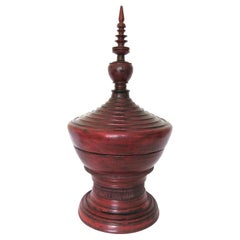
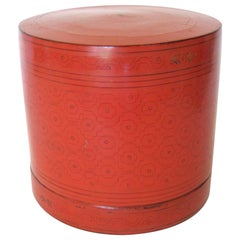
Early 20th Century Burmese Lacquer Offering Vessel, Hsun Ok
Located in Atlanta, GA
Burmese (Myanmar) lacquer ware has a long tradition dating back to the 13th century. Lacquer in Burma is called “Thitsi” meaning the sap of a Thitsi Tree (Melanhorrea Usitata). Typically, bamboo and wood are used as a frame or base in making lacquer work.
This covered offering vessel is called a “Hsun Ok...
Category
1920s Burmese Vintage Miami - Lacquer
Materials
Wood, Lacquer
Early 20th Century, Large Burmese Betel Box, “Kun It”
Located in Atlanta, GA
Burmese (Myanmar) Lacquerware has a long tradition dating back to the 13th Century. Lacquer in Burma is called “Thitsi” meaning the sap of a Thitsi Tree (Melanhorrea Usitata). Typica...
Category
Early 20th Century Burmese Miami - Lacquer
Materials
Bamboo, Lacquer
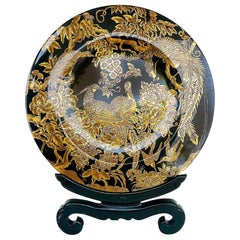
Large Asian Black Lacquer Gilt Wood "Bird" Charger on Stand, Hand Painted
Located in Miami, FL
Large Asian Black Lacquer Gilt Wood "Bird" Charger on Stand, Hand Painted
Offered for sale is a large Asian hand-painted gilt-decorated charger on a stand depicting birds and foliag...
Category
Late 20th Century Chinese Chinoiserie Miami - Lacquer
Materials
Wood, Lacquer
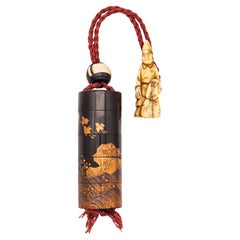
Japan 1870 Meiji Period Round Five Drawer Inro Lacquered Wood With Flying Cranes
Located in Miami, FL
Japanese Inro from the Meiji Period (1868-1912).
Beautiful Inro, created in Japan during the Meiji imperial period, circa 1870. It was carefully crafted in carved precious wood with applications of lacquer and decorated with orientalism patterns. All dan trays are attached together with a himo cord. The detailed craftsmanship was a true pleasure to behold.
Period: Meiji 1868-1912, Period of Emperor Mutsuhito.
Approximate Date: 1870.
Motif: Organic design with cascade landscape scene and five flying cranes.
Drawers: Five.
Shape: Cylinder. Very unusual and rare shape.
Technique: Carved wood, Lacquer, hiramaki-e, takamaki-e, Gilding.
Ojime: 17mm, round with Ebony wood.
Netsuke: Carved dressed...
Category
1870s Japanese Meiji Antique Miami - Lacquer
Materials
Wood, Ebony, Giltwood, Lacquer
$2,089 Sale Price
30% Off
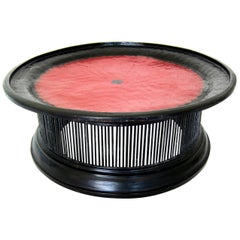
Early 20th Century Burmese Lacquered Tray Stand, “Dang lan”
Located in Atlanta, GA
Burmese (Myanmar) lacquer ware has a long tradition dating back to the 13th century. Lacquer in Burma is called “Thitsi” meaning the sap of a Thitsi Tree (Melanhorrea Usitata). Typically, bamboo and wood are used as a frame or base in making lacquer work.
This table tray stand called a “Dang lan” and is used to hold dishes...
Category
Mid-20th Century Burmese Miami - Lacquer
Materials
Bamboo, Lacquer
Early 20th Century Burmese Lacquered Tray, “Pagan Bya”
Located in Atlanta, GA
Burmese (Myanmar) Lacquerware has a long tradition dating back to the 13th century. Lacquer in Burma is called “Thitsi” meaning the sap of a Thitsi Tree (Melanhorrea Usitata). Typica...
Category
Early 20th Century Burmese Miami - Lacquer
Materials
Bamboo, Lacquer
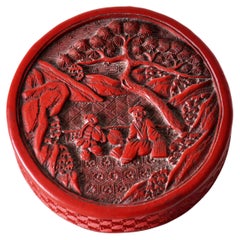
Antique Chinese Cinnabar Box
Located in Miami, FL
A fine antique Chinese red cinnabar lacquer lidded round box carved with a scene with a young boy and a seated elderly bearded sage within a rocky landscape with trees. The "dragon's...
Category
19th Century Chinese Qing Antique Miami - Lacquer
Materials
Lacquer
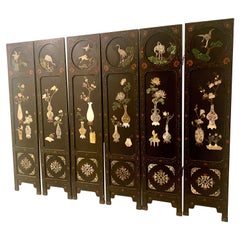
Chinese Soapstone, Semiprecious Hardstone and Lacquer Folding Screen
Located in Miami, FL
This stunning Chinese screen is an exceptionally well-crafted piece, beautifully decorated with intricate semiprecious hardstone carvings. Measuring ...
Category
Mid-20th Century Chinese Chinese Export Miami - Lacquer
Materials
Precious Stone, Wood
Related Items
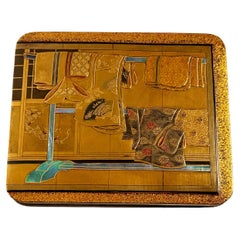
Japanese Tagasode (Whose Sleeves?) Lacquer Incense Box, Kobako, Meiji Period
Located in Austin, TX
A fine and unusual Japanese lacquer box for incense accessories, kobako, featuring a tagasode (whose sleeves?) design, Meiji Period, circa 1900, Japan.
The exquisite box of simple rectangular shape worked in maki-e lacquer, taka-maki-e, and raden, all against a lush ground of gold nashiji. Fitted with silver rims.
The main decorative element of the box depicts a six panel folding screen, byobu, showing an interior scene with kimono strewn over a rack, a motif known as tagasode (whose sleeves), all in raised taka-maki-e lacquer and inlaid raden.
The screen depicts an intimate room with tatami mats on the floor and sliding shoji doors in the background. The foreground depicts a large clothing...
Category
Early 1900s Japanese Meiji Antique Miami - Lacquer
Materials
Silver
$7,500
H 1 in W 4 in D 3.25 in
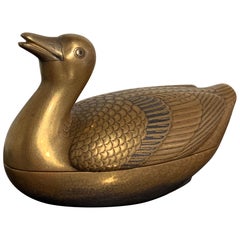
Small Japanese Lacquer Duck Incense Box, Kogo, Meiji Period, Late 19th Century
Located in Austin, TX
An exquisite Japanese Meiji Period small lacquer incense box, kogo, in the form of a duck or goose, late 19th century, Japan.
The delicate lacquer box, known as a kogo in Japanese, ...
Category
Late 19th Century Japanese Meiji Antique Miami - Lacquer
Materials
Lacquer
$2,900
H 1.5 in W 2.88 in D 1 in
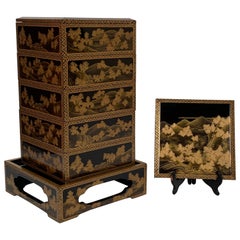
Japanese Maki-e Lacquer Stacking Box, Jubako, Meiji Period, Japan
Located in Austin, TX
A fine and impressive Japanese gold maki-e decorated black lacquer five-tier jubako with presentation tray, two lids, and the original tomobako storage box, Meiji period, late 19th c...
Category
Late 19th Century Japanese Meiji Antique Miami - Lacquer
Materials
Lacquer
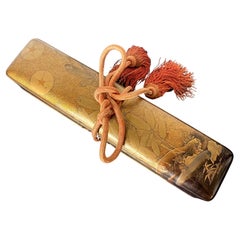
Japanese Lacquered Gold Maki-E Naga Fubako Meiji Period
Located in Atlanta, GA
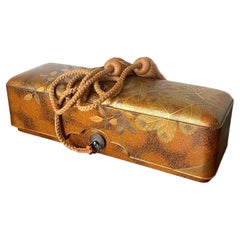
A Japanese lacquered wood Naga Fubako (a long box used to store document or large scroll painting), circa 19th century Meiji period. The rectangular box features an unusually deep lipped lid with slightly rounded corners, a conforming lower box with bronze medallion rings with tasseled...
Category
19th Century Japanese Meiji Antique Miami - Lacquer
Materials
Wood, Lacquer
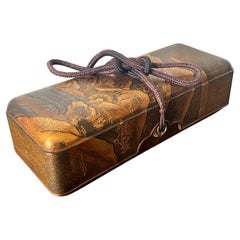
Japanese Lacquered Maki-e Fubako Edo Period
Located in Atlanta, GA
A Japanese lacquered wood fubako (a box used to store document or small scroll painting), circa second half of 19th century late Edo period. The rectangular box features an unusually deep lipped lid with slightly rounded corners, a conforming lower box that is almost entirely covered by the lid which has two bronze medallion rings with tasseled...
Category
19th Century Japanese Edo Antique Miami - Lacquer
Materials
Wood, Lacquer
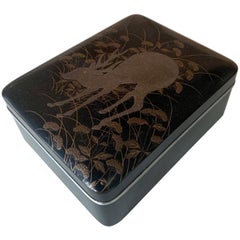
Japanese Rinpa Style Lacquer Box Meiji Period
Located in Atlanta, GA
A black lacquer tebako (hand box) with maki-e decoration and silver trim, circa late 19th century, Meiji period. The surface of the lid features a Rinpa style maki-e paint depicting ...
Category
1890s Japanese Japonisme Antique Miami - Lacquer
Materials
Wood, Lacquer
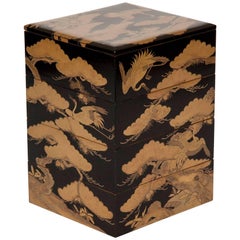
Japanese Black Lacquer Jubako Box with Stork Motif
Located in Stamford, CT
A four-tier Japanese Meiji period black lacquer Jubako box with stork and fir tree decoration. Box in four sections with lid.
Category
Late 19th Century Japanese Edo Antique Miami - Lacquer
Materials
Lacquer
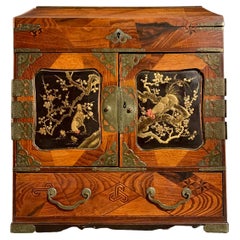
Japanese Marquetry and Lacquer Jewelry Chest, Meiji Period, circa 1900, Japan
Located in Austin, TX
A very attractive Japanese wood table top jewelry or collector's chest with marquetry and lacquer decoration, Meiji period, circa 1900, Japan. Previously in the collection of Asbjorn Lunde (1927 - 2017).
The chest is crafted in the form of a Chinese seal...
Category
Early 1900s Japanese Meiji Antique Miami - Lacquer
Materials
Wood, Softwood, Lacquer
$3,400
H 15.75 in W 14.25 in D 7 in
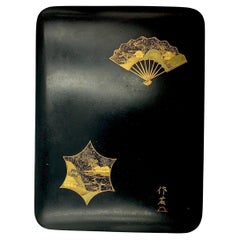
Japanese Meiji Period Antique Lacquer Box with Gold Maki-e Decoration
Located in New York, NY
A fine antique Japanese Meji Period lacquer box decorated with a fan and a stylized star shaped window in the maki-e technique. The fan at the top right corner, fully opened depictin...
Category
19th Century Japanese Meiji Antique Miami - Lacquer
Materials
Lacquer
$1,700
H 4.5 in W 3.25 in D 1.88 in
Japanese Lacquer Maki-E Scroll Box Fubako by Kansonsai Edo Period
Located in Atlanta, GA
A Japanese lacquered wood fubako (a box to store document or small scroll painting) circa late 18th century of Edo period. The rectangular box features a deep lid with rounded corners and recessed mid-edge and a lower box with two bronze medallion rings and tasseled silk ties. The surface of the fubako was elaborately decorated with hiramaki-e and a low takamaki-e on a mottled Mura-nashiji background. The motifs on the lid depict branches of Japanese pine with finely rendered needles on the lower part; on the upper part, it showcases fruited persimmon branches. Two different shades of gold fundame were used to contrast the design and augmented by scattered gold kirigane to highlight some of the leaves. The design continues and cascades down to all sides of the lid as well as the walls of the box. The two bronze medallions appear original to the box and the silk ties show significant fading from the age. This Fine fubako is signed on the lower wall "Kanshosai" in Kanji with a kao mark. All the trims were finished in gold fundame and the interiors a dense nashiji in gold.
Kanshosai is the mark of the distinguished lacquer artist Lizuka Toyo I who also signed his work "Toyosai". He was active in the second half of the 18th century during Edo period, employed by Hachisuka Shigeyoshi (1738-1801), daimyo of Awa on Shikoku Island. Although most survived work bearing his marks are inros, he was also known to decorated trays and other larger objects...
Category
Late 18th Century Japanese Edo Antique Miami - Lacquer
Materials
Wood, Lacquer
Antique Chinese Carved Cinnabar
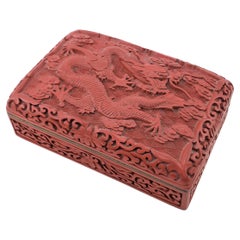
Enamelled Box with Imperial Dragon Top
Located in Hamilton, Ontario
This antique decorative box is unsigned, but presumed to have originated from China, and date to approximately 1920 and done in a period Chinese...
Category
Early 20th Century Chinese Chinese Export Miami - Lacquer
Materials
Brass
Japanese Stacking Incense Box, Ju-Kobako, Meiji Period, Mid 19th century, Japan
Located in Austin, TX
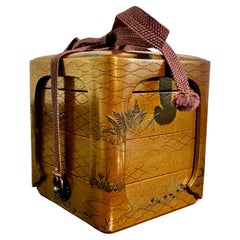
An exquisite small Japanese maki-e lacquer stacking box for incense and accessories, ju-kobako, late Edo or early Meiji Period, mid 19th century, Japan.
Crafted in maki-e lacquer an...
Category
Mid-19th Century Japanese Meiji Antique Miami - Lacquer
Materials
Silver
$6,000
H 2.5 in W 2.25 in D 2.25 in
Previously Available Items
JAPAN 1900 Meiji Fubako Box In Hiramaki-e Lacquered Black Wood With Gilding
Located in Miami, FL
Fubako letters-box from the Japanese Meiji period (1868-1912).
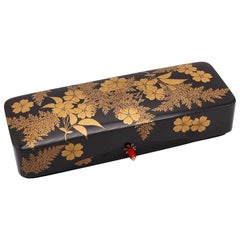
Beautiful decorative Fubako letters box from the Japanese Imperial Meiji period, circa 1900. This box has been meticulously crafted in wood with black lacquer and gilding decorations. The long sides are attached with a pair of carvings in coral and gilded sterling silver screws.
Created in an elongated rectangular shape with sharp corners, the outside of the lid has decorations in hiramaki-e depicting decorations of Sakura cherry blossom flowers in high relief. The interior part of the lid and the inside of the lower box are fundame lacquered with applications of very fine gold powder.
The Meiji Imperial Period
This is an era of Japanese history that extended from October 23, 1868 to July 30, 1912.The Meiji era was the first half of the Empire of Japan, when the Japanese people moved from being an isolated feudal society at risk of colonization by Western powers to the new paradigm of a modern, industrialized nation state and emergent great power, influenced by Western scientific, technological, philosophical, political, legal, and aesthetic ideas. As a result of such wholesale adoption of radically different ideas, the changes to Japan were profound, and affected its social structure, internal politics, economy, military, and foreign relations. The period corresponded to the reign of Emperor Meiji. It was preceded by the Keiō era and was succeeded by the Taishō era, upon the accession of Emperor Taishō.
Fubako
This is a kind of box. It has been used to store letters, papers, or books, and it is also used to deliver documents to the other party. It is useful not only to store documents or books, but you can also put your favorite small articles or valuables. Or, you can also display it to enjoy as a part of the interior decoration in your room.
Hiramaki-e
This term is in reference to a Japanese lacquer work, gold decoration in low, or “flat,” relief, a basic form of Makie-e. The pattern is first outlined on a sheet of paper with brush and ink. It is then traced on the reverse side of the paper with a mixture of heated wet lacquer and (usually red) pigment. The artist transfers the pattern directly to the desired surface by rubbing with the fingertips, a process called okime. In the next step (jigaki), the pattern that has been transferred is painted over with lacquer—usually a reddish colour. A dusting tube is used to sprinkle gold powder on the painted design while the lacquer is still wet.
Makie-e
This is another more complicated technique of Japanese lacquer art...
Category
Early 1900s Japanese Meiji Antique Miami - Lacquer
Materials
Gold
H 1.75 in W 9.31 in D 3.52 in
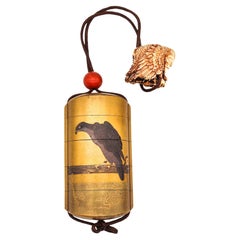
Japan 1810 Edo Period Takamaki-e Five Drawer Inro In Lacquered Wood With A Hawk
Located in Miami, FL
Japanese Inro with a Hawk from the Edo Period (1603-1867).
Beautiful Inro, created in Japan during the Edo period (Shogunate), circa 1810. It was carefully crafted in carved preciou...
Category
1810s Japanese Edo Antique Miami - Lacquer
Materials
Coral, Silver
H 3.5 in W 1.62 in D 1.5 in
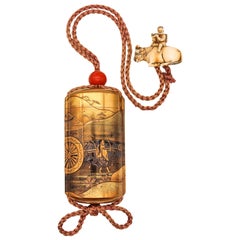
Japan 1830 Edo Period Six Drawer Inro In Lacquered Gilt Wood With A Carriage
Located in Miami, FL
Japanese Inro from the Edo Period (1603-1867).
Beautiful Inro, created in Japan during the Edo period (Shogunate), circa 1830. It was carefully crafted in carved precious wood with applications of lacquer and decorated with orientalism patterns. All dan trays are attached together with a himo cord. The detailed craftsmanship was a true pleasure to behold.
Period: Edo 1606-1867, Shogunate.
Approximate Date: 1830
Motif: An elaborated three-dimensional royal carriage with a silvered bull and a richly dressed court companion. All surrounded by a road and sinuous mountainous landscape with trees and plants.
Drawers: Six.
Shape: Oval
Technique: Carved wood, Lacquer, hiramaki-e, takamaki-e, Gilding, Silvered.
Ojime: 15mm, round sphere carved from natural translucent carnelian
Netsuke: Patinated carved seated child playing a shakuhachi (flute) in a resting bull, signed.
Weight: 67.60 Grams.
Measurements: Inro is 92 mm by 27 mm by 38 mm (3.60 x 1.06 x 1.50 Inches).
The Edo Period
The Edo period or Tokugawa period is the period between 1603 and 1867 in the history of Japan, when Japan was under the rule of the Tokugawa shogunate and the country's 300 regional daimyo. Emerging from the chaos of the Sengoku period, the Edo period was characterized by economic growth, strict social order, isolationist foreign policies, a stable population, perpetual peace, and popular enjoyment of arts and culture. The period derives its name from Edo (now Tokyo), where on March 24, 1603, the shogunate was officially established by Tokugawa Ieyasu. The period came to an end with the Meiji Restoration and the Boshin War, which restored imperial rule to Japan. The Tokugawa (or Edo) period brought 250 years of stability to Japan. The political system evolved into what historians call bakuhan, a combination of the terms bakufu and han (domains) to describe the government and society of the period.[3] In the bakuhan, the shōgun had national authority and the daimyo had regional authority. This represented a new unity in the feudal structure, which featured an increasingly large bureaucracy to administer the mixture of centralized and decentralized authorities. The Tokugawa became more powerful during their first century of rule: land redistribution gave them nearly seven million koku, control of the most important cities, and a land assessment system reaping great revenue
Inro
Is a traditional Japanese case for holding small objects, suspended from the obi (sash) worn around the waist when wearing a kimono. They are often highly decorated with various materials such as lacquer and various techniques such as maki-e, and are more decorative than other Japanese lacquerware. Because traditional Japanese dress...
Category
1830s Japanese Edo Antique Miami - Lacquer
Materials
Gold, Silver
H 3.6 in W 1.5 in D 1.06 in
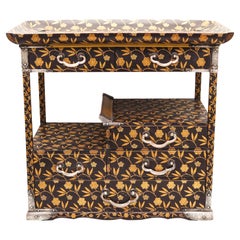
Japan 1900 Meiji Miniature Hanagamidai Cabinet in Gilded Wood
Sterling Silver
Located in Miami, FL
Miniature hanagamidai cabinet from the Japan meiji (1858-1912) period.
Gorgeous and rare miniature drawers hanagamidai (cosmetic cabinet), created in the imperial Japan during the...
Category
Early 1900s Japanese Meiji Antique Miami - Lacquer
Materials
Gold, Silver, Sterling Silver
H 10.25 in W 9.12 in D 7.13 in
Large Domed Chinese Cinnabar Box
Located in Miami, FL
A large vintage Chinese red cinnabar box with deep relief carved lid depicting flowers, leaves and a dragon. The round box has a domed lid and...
Category
1930s Chinese Chinese Export Vintage Miami - Lacquer
Materials
Brass
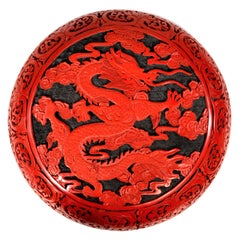
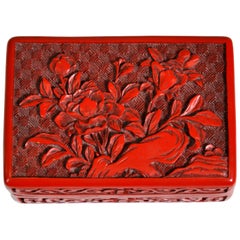
Chinese Cinnabar Box
Located in Miami, FL
Vintage Chinese rectangular vanity, jewelry or trinket red cinnabar box with carved lid depicting flowers, leaves and geometric motifs with black lacq...
Category
1930s Chinese Chinese Export Vintage Miami - Lacquer
Materials
Lacquer
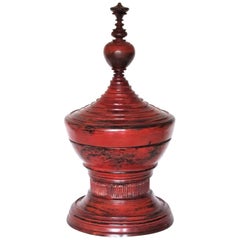
Early 20th Century Burmese Lacquer Offering Vessel, Hsun Ok
Located in Atlanta, GA
Burmese (Myanmar) lacquer ware has a long tradition dating back to the 13th century. Lacquer in Burma is called “Thitsi” meaning the sap of a Thitsi Tree (Melanhorrea Usitata). Typically, bamboo and wood are used as a frame or base in making lacquer work.
This covered vessel is called a “Hsun Ok...
Category
Early 20th Century Burmese Miami - Lacquer
Materials
Wood, Lacquer
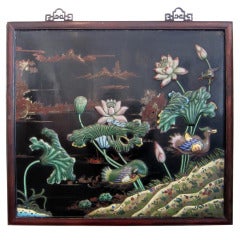
Cloisonné Enamel-Inset Lacquer Panel
Located in Miami, FL
Large Chinese cloisonné enamel-inset rectangular lacquer wall panel decorated in high relief with lotus flowers, leaves and king birds. The background...
Category
19th Century Chinese Antique Miami - Lacquer
Still Thinking About These?
All Recently ViewedMore Ways To Browse
Hand Carved Cinnabar Boxes
Japanese Bako
Japanese Lacquered Trunk
Nagasaki Lacquer
Burmese Offering Bowl
Japanese Lacquer Ware
Chinese Lacquer Sewing Table
Chinese Swastika
Japanese Red Lacquer Tray
Wajima Lacquer
Burmese Kammavaca
Chinese Export Fans
Cinnabar Plate
Japanese Lacquer Plaque
Lacquer Offering Bowl
Burmese Offering Box
Chinese Backgammon
Chinese Export Lacquer Chess