Middle East - Folk Art

to
7,319
5,023
5
3
3
3
1
1
3
1
1
6
4
3
2
1
5
5
3
1
1
8
5
8
Item Ships From: Middle East
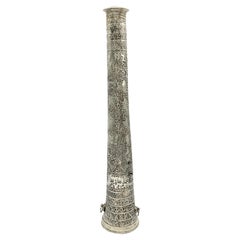
Rare silver Tantur or Druze head ornament, hand made, Lebanon 18th century
Located in Tel Aviv - Jaffa, IL
up for sale is This rare and important item known as a Tantur, made from silver in the 18th century. This conical headdress was worn by Druze and some Maronite women in the mountain ...
Category

18th Century Lebanese Antique Middle East - Folk Art

Materials

Silver

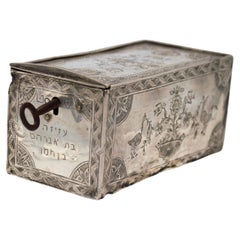
extremely rare Algerian Judaica silver, jewish Dowry box early 19th century
Located in Tel Aviv - Jaffa, IL
Amazing and scarce JUDAICA object, we have here one of the most touching jewish objects we had for a long time, this small silver dowry box was made in Algeria in the early 19th century, it is all covered with symbols of jewish faith and of couples, the sliding lid has 2 flanking birds with hamsa (protective hand) on each side and a flower vase in the middle. one side shows two flanking lions with a tree in the middle and the other side shows again two big and two small birds with a flower bowl in the middle, front side has a key hole and next to it there is the Hebrew inscription ס״ט״" which says Siman tov or in English "a good sign" it is taken from the wedding blessing, underneath the lock there is another inscription with the name ״עזיזה בת אברהם בן חמו״ which is the name of the bride, her father and her grandfathers name. the box is full marked a lot of times with the silversmith mark, every side of the box is marked. this box was probably ordered by the grooms family to hold the jewelry they are giving to the bride as dowry, this type of objects are rare and there are just a few of them on museum collections. DOWRY (Heb. נְדֻנְיָה), the property a wife brings to her husband at marriage; the Yiddish equivalent, nadn, is from the same root. The custom of nedunyah became clearly defined and institutionalized only in the talmudic period. In biblical times, mohar (מֹהַר), whereby the groom bought his wife from her father (Gen. 24:53; Ex. 22:15–16; Hos. 3:2), was the accepted practice. It was then customary that the groom give the bride gifts, and that she bring certain property to her husband's home upon marriage: slaves, cattle, real estate, etc. (cf. Gen. 24:59–61; 29; Judg. 1:14ff.; I Kings 9:16). Evidence of the custom of nedunyah is to be found in Tobit (7:14; 8:21) and in the Assuan papyri (Cowley, Aramaic, nos. 15, 18). Gradually, mohar was superseded by the ketubbah custom according to which the husband merely assumed the responsibility of compensation to his wife in case he divorced her: he had to pay her 200 zuzim if she had been a virgin at the time of marriage, and 100 zuzim if a widow or divorcée (see *Ketubbah). By talmudic times, the institution of nedunyah was prevalent; the father gave a dowry to the bride since the daughter was excluded from paternal inheritance. Fifty zuzim (equivalent to the worth of 180 grams of silver) was the minimum amount a father was obliged to give to his daughter (Ket. 6:5). Parents usually gave much more, according to their social standing. Community funds provided the dowry for an orphan or a very poor girl (ibid.; cf. Sh. Ar., YD 251:8). In case of her father's death, the brothers of a minor girl were obliged to give her the minimum dowry, and the court estimated how much her father would have given her above the minimum dowry. The sum was then taken out of the father's estate and given to the daughter upon majority (Ket. 6:6; 68a–69b). In the absence of such an estimate, each daughter was entitled to receive one-tenth of the value of her father's estate in money, or in valuables (Yad, Ishut, 20:4–7; Sh. Ar., EH 113:4). If the father was unable or unwilling to pay the promised dowry at the betrothal ceremony, the groom could refuse to marry his bride (Ket. 13:5; Ket. 108b–109a). Insistence on exact payment of the promised dowry, however, was frowned upon by later rabbinic authorities (Rema to Sh. Ar., EH 2:1). In certain communities it was customary for the groom's father to make a dowry contribution equal to that of the bride's father (Ket. 102b). The dowry, whether given in real estate, slaves, money, or chattel was recorded in the marriage contract (the ketubbah) and in some instances one-third or one-fifth of the actual value of the dowry was added to the sum mentioned in the ketubbah. Based upon a decree enacted by *Simeon b. Shetah (first century C.E.), the Talmud ruled that the husband and his entire property were liable for compensation as stipulated in the ketubbah, either in case he died (when she collected the sum specified in the ketubbah from the heirs) or in case he divorced his wife (Ket. 82b). For the status of the dowry and the husband's rights and obligations, see below. The rabbinic enactments (Takkanot Shum) by R. Jacob *Tam and by the rabbinic synod of the communities of Speyer, Worms, and Mainz (Germany) stipulated that if a woman died...
Category

Mid-19th Century Algerian Antique Middle East - Folk Art

Materials

Silver

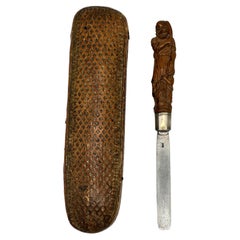
Very Rare 17th century Italian Judaica wood silver Circumcision Knife
Located in Tel Aviv - Jaffa, IL
Here we have this important and very rare example of early Judaica, made in Italy or south Germany, this Circumcision Knife is made from iron, has the guild mark on the blade as used...
Category

17th Century European Antique Middle East - Folk Art

Materials

Silver, Iron

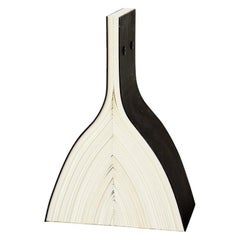
Cover #2 by Neil Nenner and Avihai Mizrahi
Located in Geneve, CH
Cover #2 by Neil Nenner and Avihai Mizrahi Cover Story Dimensions: H 39.5 x L 15.5 x W 26 cm Materials: iron Avihai Mizrahi (b. 1979, Jerusalem)...
Category

2010s Israeli Modern Middle East - Folk Art

Materials

Iron

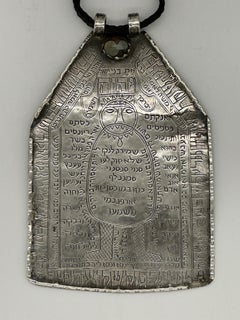
Important 18th century Persian Jewish silver Amulet for mother and newborn
Located in Tel Aviv - Jaffa, IL
Mysterious Amazing, 18th century silver talismanic amulet, Amulet for mother and Newborn with image of Lilith in the center made by Jews in Persia, the top of the Amulet has an amazi...
Category

1790s Antique Middle East - Folk Art

Materials

Agate, Silver

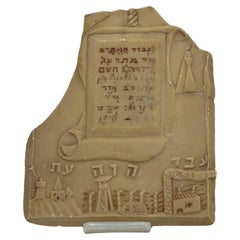
Historic Rare Carved memorial plaque made by Jewish internee in Cyprus, 1948
Located in Tel Aviv - Jaffa, IL
super rare and historic example of Cyprus stone carving, made by jewish holocaust surviver that was Detained at the Internment camps in Cyprus, just 3 years after the holocaust. this piece is very unusual, most of this carvings shows us aspects of living in the Refugee camps or zionist views of israel, sometimes they even made judaica objects like menorahs Or Candlesticks, but its rare to find memorial plaques such as the example in front of us, the plaques was Damaged In the way to israel and two pieces from the upper section were broken off, the middle part of the Plaque shows a Scroll shaped memorial plaque with the inscription : "for the dead who died on the name of god" In red color, the middle has a yellow star carved and painted, just like the yellow star jewish...
Category

1940s Cypriot Vintage Middle East - Folk Art

Materials

Soapstone

Black Swan Lifeboat by Neil Nenner and Avihai Mizrahi
Located in Geneve, CH
Black swan lifeboat by Neil Nenner and Avihai Mizrahi Objects Dimensions: H 90 x L 42 x W 25 cm Materials: PVC, Styrofam, MDF Avihai Mizrahi (b. 1979, Jerusalem), Independent designer / Artist and lecturer in visual communication, holds a B.des in visual communication and M.des in Industrial Design from Bezalel Academy...
Category

2010s Israeli Modern Middle East - Folk Art

Materials

PVC

Cover #13 by Neil Nenner and Avihai Mizrahi
Located in Geneve, CH
Cover #13 by Neil Nenner and Avihai Mizrahi Cover Story Dimensions: H 24.5 x L 49 x W 49 cm Materials: iron Avihai Mizrahi (b. 1979, Jerusalem),...
Category

2010s Israeli Modern Middle East - Folk Art

Materials

Iron

Related Items
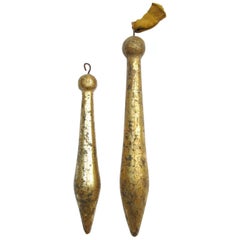
Pair of 18th Century Italian Rococo Gold Leaf Tassel Ornaments
By Interi
Located in Dublin, Dalkey
Pair of 18th century Italian hand-carved gold leaf tassel ornaments. They are two of the same shape of tassel but in two different sizes ...
Category

18th Century Italian Rococo Antique Middle East - Folk Art

Materials

Metal, Gold Leaf

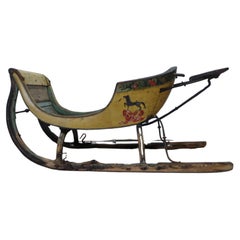
Swedish 18th Century Raindeer Sleigh 100% Original
Located in Hollywood, FL
This is a very RARE 100% Original Swedish Rain deer sleigh. I have owned it for over 30 years and its time for someone else to enjoy it. you will NEVER see another!!!!!
Category

1790s Swedish Rustic Antique Middle East - Folk Art

Materials

Birch, Pine

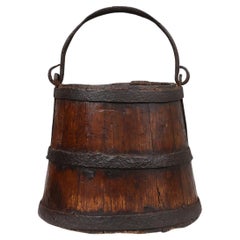
Handmade French wooden bucket from the 18th century
Located in Meulebeke, BE
A rare antique wooden bucket from the 18th century. Handmade in France in hardwood with ironwork. This bucket is made of wooden staves and a bas...
Category

18th Century French Antique Middle East - Folk Art

Materials

Iron

Handmade French wooden bucket from the 18th century
$2,104
H 7.49 in W 9.06 in D 9.06 in
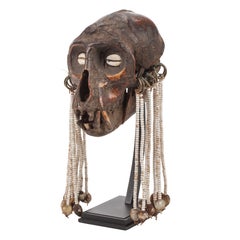
A pair of monkey skull amulets
Located in Amsterdam, NL
Probably Papua New Guinea, or Borneo, Dayak, late 19th/early 20th century H. approx. 12 cm (incl. stand, each) Provenance: Private collection, Flanders
Category

Late 19th Century Papua New Guinean Antique Middle East - Folk Art

Materials

Shell, Beads

A pair of monkey skull amulets
$6,494
H 4.73 in W 3.94 in D 5.12 in
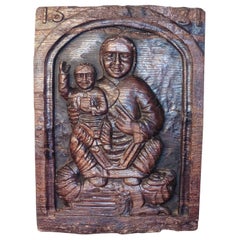
17th Century Primitive Religious Carving Oak Panel 1631
Located in Godshill, Isle of Wight
Primitive religious carving oak panel 1631 This rare piece comes from France, the somewhat Primitive carving shows the Madonna and Child sitting on the Devil who is depicted as a li...
Category

17th Century Medieval Antique Middle East - Folk Art

Materials

Oak

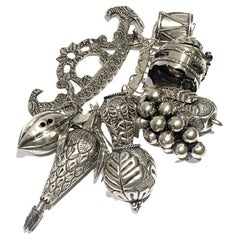
Rare Silver Balangandãs - 20th Century Brazilian Native Hanging Amulet
Located in Rio De Janeiro, BR
Mid 20th century brazilian silver hanging amulet from native culture in Brazil. Known as "Penca de Balangandãs" was used in the ancient times as an amul...
Category

Mid-20th Century Brazilian Other Middle East - Folk Art

Materials

Sterling Silver

Rat Dog Sculpture in Fiberglass by Finn Stone
By Finn Stone
Located in Little Burstead, Essex
We love this piece! Number 2 from an edition of 2, the other was sold recently on Saatchi online, and honestly we don't mind rat dog hanging around, he eats no...
Category

2010s English Modern Middle East - Folk Art

Materials

Fiberglass


Rat Dog
 Sculpture in Fiberglass by Finn Stone

Rat Dog
 Sculpture in Fiberglass by Finn Stone
$6,547
H 25.6 in W 11.82 in D 27.56 in
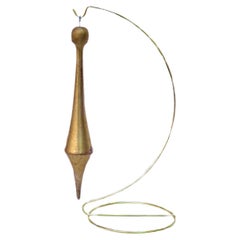
18th Century Italian Large Gold Leaf Rococo Tassel Ornament
By Interi
Located in Dublin, Dalkey
18th century Italian large gold leaf tassel ornament. These tassels were once used to decorate churches for feast days like Christmas. T...
Category

18th Century Italian Rococo Antique Middle East - Folk Art

Materials

Gold Leaf, Metal

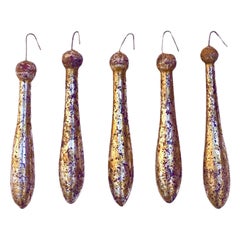
18th Century Italian Speckled Gold and Silver Leaf Tassel Ornaments Set of 5
By Interi
Located in Dublin, Dalkey
18th Century Italian hand-carved speckled gold and silver leaf tassel ornaments. The tassels originally came from an Italian church in Tuscany and were used during feast days. These tassels were commonly used to adorn 18th and 19th century French and Italian chandeliers...
Category

18th Century Italian Rococo Antique Middle East - Folk Art

Materials

Metal, Gold Leaf

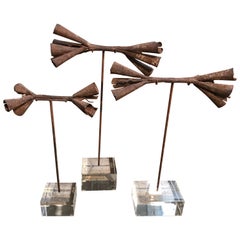
African Currency, 19th Century
Located in Dallas, TX
This set of 3 pieces of African currency is very interesting. Looking like some sort of ancient maraca, these 19th century pieces jingle and noise-make with each step. The dimensions...
Category

19th Century African Antique Middle East - Folk Art

Materials

Metal

African Currency, 19th Century
$3,560 / set
H 22 in W 13 in D 4 in
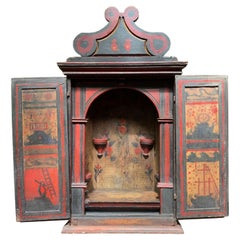
Rare 18th Century Painted Shrine
Located in Rio De Janeiro, BR
This magnificent 18th-century Brazilian shrine, originating from Minas Gerais, is a stunning example of Colonial baroque religious craftsmanship. Crafted from wood and adorned with h...
Category

Late 18th Century Brazilian Baroque Antique Middle East - Folk Art

Materials

Wood

Rare 18th Century Painted Shrine
$7,800
H 56.7 in W 22.05 in D 12.21 in
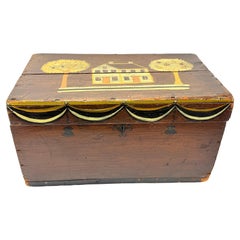
18th Century, New England Paint Decorated Folk Art Box or Crate
Located in Atlanta, GA
This charming hand-painted wooden box exemplifies early American folk art, blending utility with artistry. The box is constructed with rose head nails, a detail indicative of late 18...
Category

18th Century American Folk Art Antique Middle East - Folk Art

Materials

Wood, Paint

Still Thinking About These?

All Recently Viewed