New Mexico - Figurative Drawings and Watercolors
to
1
7
1
4
1
Overall Width
to
Overall Height
to
1
4
7
1
3
1
1
2
6
9
3
1
9
8
3
3
3
2
2
2
1
1
1
1
1
1
1
1
9
6
4
3
2
2
2
1
1
1
9
8,213
6,228
Item Ships From: New Mexico
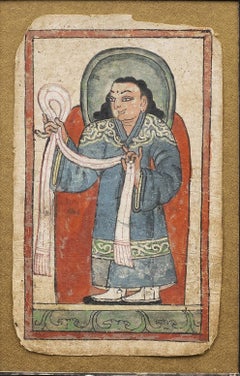
15th C. Tibetan Tsakali: "High Lama Presenting a Ceremonial Scarf"
Located in SANTA FE, NM
15th C. Tibetan Tsakali
"High Lama Presenting a Ceremonial Scarf"
MIneral pigne
6 1/4 x 4 (16 x 13 3/4 frame) inches
Category
15th Century and Earlier New Mexico - Figurative Drawings and Watercolors
Materials
Gouache, Handmade Paper
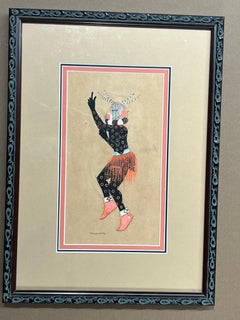
Corn Kachina, by Riley Sunrise, Quoyavema, Hopi, Kachina, Dancer, painting
Located in Santa Fe, NM
Corn Kachina, by Riley Sunrise, Quoyavema, Hopi, Kachina, Dancer, painting
Artist Signature - Riley Sunrise (1914-2006) Quoyavema “Another of the earlier Hopi artists, Riley Sunrise (Quoyavema) worked with Fred Kabotie and Waldo Mootzka in illustrating John Louw Nelson’s Rhythm for Rain. He is also known as Quoyavema or Kwayeshva, according to Nelson. His paintings are comparable to Fred Kabotie’s, with some of them showing more action and most of them revealing less detail. Sunrise is represented in the collections of the Denver Art Museum, Gilcrease Institute (Tulsa), and the Southwest Museum. The Museum of the American Indian in New York has an extensive collection of his paintings of native Hopi dances.” (Clara Lee Tanner: Southwest Indian...
Category
1940s Tribal New Mexico - Figurative Drawings and Watercolors
Materials
Paint, Paper
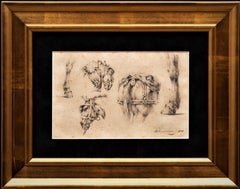
Antique Horse "Heads, Hooves, Rump 1838" Wouterus Verschuur (Dutch, 1812-1874)
Located in SANTA FE, NM
Antique Horse Study
"Heads, Hooves and Rump, 1838"
Wouterus Verschuur (Dutch, 1812-1874)
Pencil on paper
Signed and Dated "W Verschuuur 1838"
10 x 6 1/2 (17 1/2 x 14 frame) inches
In his time Wouterus Verschuur was an acclaimed and celebrated painter of horses. Through careful observation he learned to capture their physique and movement to perfection. As a true-born romanticist he was also interested in their character, thereby painting powerful carthorses in their stable, thoroughbred saddled horses during an afternoon ride or harnessed horses in action.
He was born to an Amsterdam jeweler and received his training from the landscape and cattle painters Pieter Gerardus van Os and Cornelis Steffelaar. As part of this education Verschuur had to copy works by the 17th century painter Philips Wouwerman. Like Wouwerman, Verschuur's subjects consist mostly of stable scenes, landscapes with horses and coastal landscape. These works reflect the enduring influence of the northern Baroque masters on nineteenth century art, revealing the artist's close study of his Dutch and Flemish predecessors harking back to Peter Paul Rubens.
Showing talent from a very early age, at 15 Verschuur had a painting exhibited at the "Exhibition of Living Masters" at Amsterdam in 1828. In 1832 and 1833 he won the gold medal at the annual exhibition at Felix Meritis. In 1833 he was appointed a member of the Royal Academy in Amsterdam. In 1839 he joined the artists' society, Arti et Amicitiae.
His reputation was also considerable abroad. He was often featured in the annual exhibitions which travelled the large European cities at that time. In 1855 Napoleon III purchased one of his paintings at the Exposition Universelle* in Paris.
The Verschuur horse revels in its physicality, like a quintessential Baroque horse...
Category
1830s Romantic New Mexico - Figurative Drawings and Watercolors
Materials
Paper, Pencil
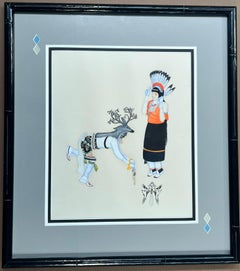
Deer Dance, painting by Tonita Pena, Santa Fe, Cochiti, Pueblo, male, female
Located in Santa Fe, NM
Deer Dance, painting by Tonita Pena, Santa Fe, Cochiti, Pueblo, male, female
Tonita Peña (born 1893 in San Ildefonso, died 1949 in Kewa Pueblo, New Mexico) was born as Quah Ah (meaning white coral beads) but also used the name Tonita Vigil Peña and María Antonia Tonita Peña. Peña was a renowned Pueblo artist, specializing in pen and ink on paper embellished with watercolor. She was a well-known and influential Native American artist and art teacher of the early 1920s and 1930s.
Tonita Peña was born on May 10, 1893, at San Ildefonso Pueblo, to Ascensión Vigil Peña and Natividad Peña of San Ildefonso Pueblo, New Mexico. When she was 12, her mother and younger sister died, as a result of complications due to the flu. Her father was unable to care for her and she was taken to Cochití Pueblo and was brought up by her aunt Martina Vigil Montoya, a prominent Cochití Pueblo potter. Peña attended St. Catherine Indian School in Santa Fe.
Edgar Lee Hewett, an anthropologist involved in supervising the nearby Frijoles Canyon excavations (now Bandelier National Monument) was instrumental in developing the careers of several San Ildefonso “self-taught” artists including Tonita Peña. Hewett purchased Peña's paintings for the Museum of New Mexico and supplied her with quality paint and paper. Peña began gaining more notoriety by the end of the 1910s selling an increasing amount of her work to collectors and the La Fonda Hotel. Much of this early work was done of Pueblo cultural subject matter, in a style inspired by historic Native American works, however, her use of an artist's easel and Western painting mediums gained her acceptance among her European-American contemporaries in the art world. At the age of 25, she exhibited her work at museums and galleries in the Santa Fe and Albuquerque area.
In the early 1920s, Tonita did not know how much her painting sold for at the Museum of New Mexico, so she wrote letters to the administrators because a local farmer was worried that she got paid too little.
In the 1930s Peña was an instructor at the Santa Fe Indian School and at the Albuquerque Indian School and the only woman painter of the San Ildefonso Self-Taught Group, which included such noted artists as Alfonso Roybal, Julian Martinez, Abel Sánchez (Oqwa Pi), Crecencio Martinez, and Encarnación Peña. As children, these artists attended San Ildefonso day school which was part of the institution of the Dawes Act of 1887, designed to indoctrinate and assimilate Native American children into mainstream American society.
In 1931, Tonita Peña exhibited at the Exposition of Indian Tribal Arts which was presented at the Grand Central Art Galleries in New York City. Works from this exhibition were shown at the 1932 Venice Biennial. That year is the only time Native American artists have shown in the official United States pavilion at that biennial, and Tonita Peña's paintings were part of that exhibition.[1 Her painting Basket Dance, that had shown in the Venice Biennial was acquired by the Whitney Museum of American Art in New York for $225. This was the highest price paid up to this time for a Pueblo painting...
Category
1940s Tribal New Mexico - Figurative Drawings and Watercolors
Materials
Paint, Paper
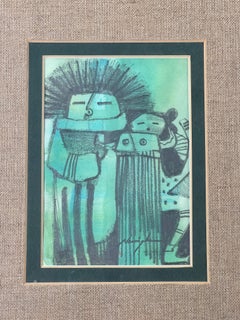
Kachina Figures, by Dan Namingha, green, black, framed, Hopi, drawing, katsina
By Dan Namingha
Located in Santa Fe, NM
Kachina Figures, by Dan Namingha, green, black, framed, Hopi, drawing, katsina
Category
1970s Contemporary New Mexico - Figurative Drawings and Watercolors
Materials
Charcoal, Watercolor
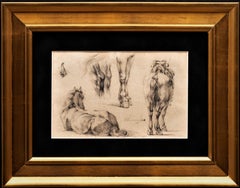
Antique Horse Study; Legs and Rumps, 1838" Wouterus Verschuur (Dutch, 1812-1874)
Located in SANTA FE, NM
Antique Horse Study
"Legs and Rumps, 1838"
Wouterus Verschuur l (Dutch, 1812-1874)
Pencil on paper
Signed and Dated "W Verschuur 1838"
10 x 6 1/2 (17 1/2 x 14 frame) inches
In his time Wouterus Verschuur was an acclaimed and celebrated painter of horses. Through careful observation he learned to capture their physique and movement to perfection. As a true-born romanticist he was also interested in their character, thereby painting powerful carthorses in their stable, thoroughbred saddled horses during an afternoon ride or harnessed horses in action.
He was born to an Amsterdam jeweler and received his training from the landscape and cattle painters Pieter Gerardus van Os and Cornelis Steffelaar. As part of this education Verschuur had to copy works by the 17th century painter Philips Wouwerman. Like Wouwerman, Verschuur's subjects consist mostly of stable scenes, landscapes with horses and coastal landscape. These works reflect the enduring influence of the northern Baroque masters on nineteenth century art, revealing the artist's close study of his Dutch and Flemish predecessors harking back to Peter Paul Rubens.
Showing talent from a very early age, at 15 Verschuur had a painting exhibited at the "Exhibition of Living Masters" at Amsterdam in 1828. In 1832 and 1833 he won the gold medal at the annual exhibition at Felix Meritis. In 1833 he was appointed a member of the Royal Academy in Amsterdam. In 1839 he joined the artists' society, Arti et Amicitiae.
His reputation was also considerable abroad. He was often featured in the annual exhibitions which travelled the large European cities at that time. In 1855 Napoleon III purchased one of his paintings at the Exposition Universelle in Paris.
The Verschuur horse revels in its physicality, like a quintessential Baroque horse...
Category
1830s Romantic New Mexico - Figurative Drawings and Watercolors
Materials
Paper, Pencil
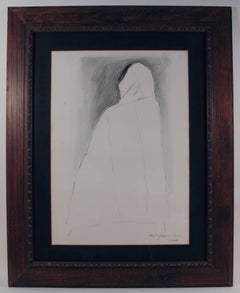
Untitled
By R.C. Gorman
Located in Santa Fe, NM
UNTITLED
charcoal on paper unique
©1969 R.C. Gorman
Category
1960s Contemporary New Mexico - Figurative Drawings and Watercolors
Materials
Charcoal
$7,600 Sale Price
36% Off
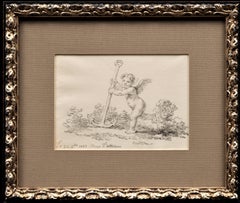
Drawing of Putti with Anchor by Jean-Jacques le Barbier l
Ainé (1738-1826)
By Jean Jacques Francois Le Barbier
Located in SANTA FE, NM
Drawing of Putti with Anchor
Jean-Jacques le Barbier l'Ainé (1738-1826)
Black pencil on paper
Signed and dated lower left "...1822. 12 years l waiting"
Considering that the anchor ...
Category
1820s Academic New Mexico - Figurative Drawings and Watercolors
Materials
Paper, Pencil
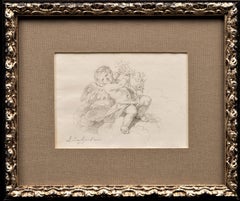
Drawing of Putti in the Clouds by Jean-Jacques le Barbier l
Ainé (1738-1826)
By Jean Jacques Francois Le Barbier
Located in SANTA FE, NM
Drawing of Putti in the Clouds
Jean-Jacques le Barbier l'Ainé (France, 1738-1826)
Black pencil on paper
Signed and dated lower left "Le Barbier L'ainé 1816"
10 1/4 x 12 1/4 inches ...
Category
1810s Academic New Mexico - Figurative Drawings and Watercolors
Materials
Paper, Pencil
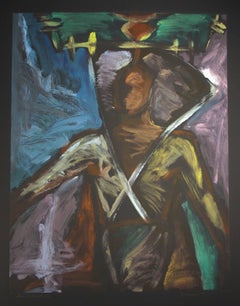
Gahn Portrait # 121, Darren Vigil Gray, pastel on paper, black, red, Apache
By Darren Vigil Gray
Located in Santa Fe, NM
Gahn Portrait # 121, Darren Vigil Gray, pastel on paper, black, red, Apache
painting on paper
signed and titled by the artist on the front
Category
1990s Contemporary New Mexico - Figurative Drawings and Watercolors
Materials
Paint, Paper
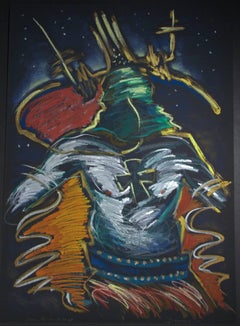
Gahn Portrait 39, Darren Vigil Gray Apache dancer, work on black paper Indian
By Darren Vigil Gray
Located in Santa Fe, NM
Gahn Portrait 39, Darren Vigil Gray Apache dancer, work on black paper
Category
1990s Contemporary New Mexico - Figurative Drawings and Watercolors
Materials
Paper, Pastel
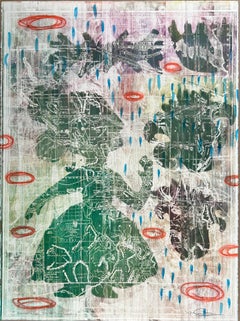
Knowing Some History, mixed media monotype, by Melanie A Yazzie, Navajo, unique
By Melanie Yazzie
Located in Santa Fe, NM
Knowing Some History, mixed media monotype, by Melanie A Yazzie, Navajo, unique
As a printmaker, painter, and sculptor, my work draws upon my rich Diné (Navajo) heritage. The work I...
Category
2010s Contemporary New Mexico - Figurative Drawings and Watercolors
Materials
Pastel, Monotype
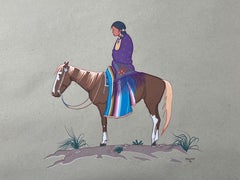
Apache Woman on Horseback, by Allan Houser, Haozous, painting, paper, horse
By Allan Houser
Located in Santa Fe, NM
Apache Woman on Horseback, by Allan Houser, Haozous, painting, paper, horse
Painting on paper from 1946 by master artist Allan Houser. Ft. Sill Chi...
Category
1940s Contemporary New Mexico - Figurative Drawings and Watercolors
Materials
Watercolor
Related Items
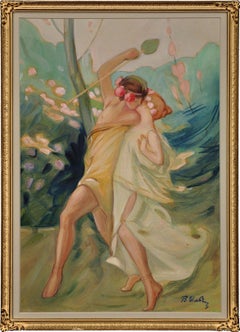
Framed Art Nouveau Period Painting A Greek Love Affair Theseus And Ariadne
By Antoine Calbet
Located in Sutton Poyntz, Dorset
Follower of Antoine Calbet.
French ( b.1860 - d.1944 ).
Theseus and Ariadne, Circa 1890 - 1910.
Mixed Media.
Watercolour, Gouache & Pastel
Image size 16.5 inches x 11.2 inches ( 42cm...
Category
Early 1900s Art Nouveau New Mexico - Figurative Drawings and Watercolors
Materials
Paper, Pastel, Watercolor, Gouache

$1,782
H 18.51 in W 13.39 in D 0.89 in
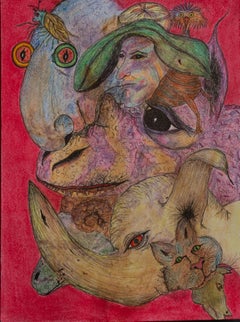
Drawing on Paper Colored Pencils and Pastel on Fuchsia. "Journey to Bolivia
Located in Bogotá, Bogotá
Drawing on paper with colored pencils and ink on a layer of dyes extracted from plants. Created before taking a flight in Bolivia, infused with the magic of the Andes. Shipped unfram...
Category
2010s Contemporary New Mexico - Figurative Drawings and Watercolors
Materials
Paper, Ink, Color Pencil
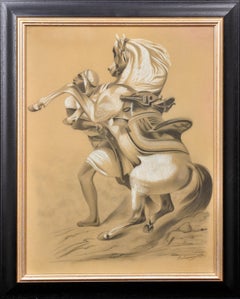
One Thousand And One Nights French Orientalism Art Nouveau Decorative Period
Located in Sutton Poyntz, Dorset
A. Lesueur
French 19ème siècle
Les Mille Et Une Nuits – One Thousand & One Nights, 1892
Charcoal on paper heightened with white.
Signed & dated 1892 lower right.
Image size 23.6 inc...
Category
Late 19th Century Romantic New Mexico - Figurative Drawings and Watercolors
Materials
Paper, Charcoal
$3,985
H 28.75 in W 23.23 in D 0.99 in
Fawn
By Henry Hablak
Located in Philadelphia, PA
"Fawn" is an original ink, colored pencil, and gouache on paper artwork by Henry Hablak measuring 30"h x 22"w.
Henry Hablak is a tattoo artist and illustrator based out of Philadel...
Category
2010s Contemporary New Mexico - Figurative Drawings and Watercolors
Materials
Paper, Ink, Gouache, Color Pencil
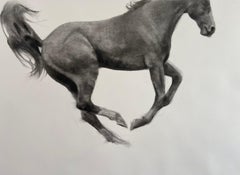
Elevate, Jumping Horse Drawing, Charcoal on Fabriano paper, white frame
By Patsy McArthur
Located in Dallas, TX
"Elevate" is a beautiful and unique charcoal drawing on paper of a dynamic horse jumping in mid-air. The composition is contemporary, playing with the positive and negative space. Th...
Category
2010s Realist New Mexico - Figurative Drawings and Watercolors
Materials
Charcoal, Archival Paper, Graphite
$4,800
H 29.53 in W 39.38 in D 1.58 in
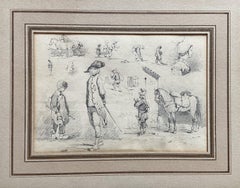
19th Century French School, Studies of horses and small scenes, original drawing
Located in Paris, FR
19th Century French School,
Studies of horses and small scenes,
pencil on paper
14.5 x 21 cm
Framed : 25.5 x 32.7 cm
This study sheet, which brings together studies of horses and...
Category
1850s Romantic New Mexico - Figurative Drawings and Watercolors
Materials
Pencil
$420
H 5.71 in W 8.27 in
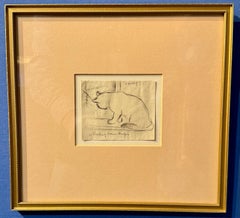
English mod British Pencil study of a cat by a window Watching Raindrops
By Lucy Dawson
Located in Woodbury, CT
Lucy Dawson (British, 1870–1954)
Watching Raindrops (“Whisky”), circa 1950
Pencil on paper, inscribed and titled
This delicate pencil study by Lucy Dawson, also known by her artist’...
Category
1930s Modern New Mexico - Figurative Drawings and Watercolors
Materials
Paper, Carbon Pencil
1950s "Mark" Oil Pastel and Gouache Figurative Painting NYC Modern Mid Century
By Donald Stacy
Located in Arp, TX
Donald Stacy
"Mark"
c.1950s
Oil pastel and gouache paint on paper
14x17" unframed
Unsigned
Came from artist's estate
Donald Stacy (1925-2011) New Jersey
Studied: Newark School of ...
Category
Mid-20th Century Modern New Mexico - Figurative Drawings and Watercolors
Materials
Paper, Oil Pastel, Gouache
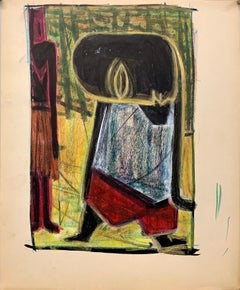
Turfistes et Jockeys
By Raoul Dufy
Located in Belgravia, London, London
Pencil on paper
Paper size: 8 x 10.5 inches
Stamped with the artist’s atelier stamp ‘ATELIER/RAOUL DUFY’ lower right
Provenance: Galerie Fanny Guillon-Laffaille, Paris.
Neffe-Dega...
Category
20th Century Impressionist New Mexico - Figurative Drawings and Watercolors
Materials
Paper, Pencil
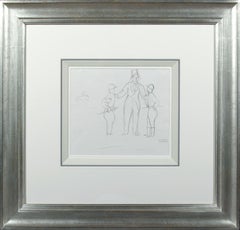
A Pair of Framed Monkey Studies
By Alexander Oscar Levy
Located in Buffalo, NY
A pair of exquisite drawings by American Ashcan School artist Alexander Oscar Levy.
Category
1920s Ashcan School New Mexico - Figurative Drawings and Watercolors
Materials
Archival Paper, Graphite
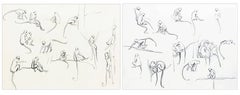
Ink drawing, colored pencils, and oil pastel on paper. “Eternal Encounters”
Located in Bogotá, Bogotá
“Eternal Encounters” is an original drawing on paper Fabriano by Colombian artist Luis Xiua, whose work fuses figurative and abstract elements inspired by nature, symbolism, and cons...
Category
2010s Contemporary New Mexico - Figurative Drawings and Watercolors
Materials
Paper, Oil Pastel, Ink, Pen, Pencil, Pigment
$500
H 11.82 in W 9.85 in D 0.4 in
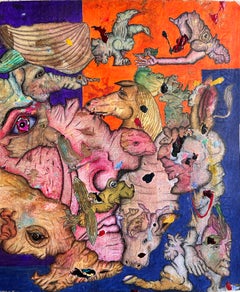
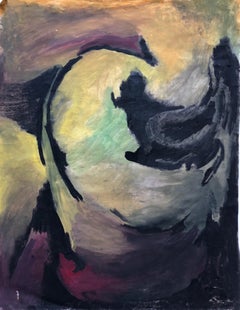
Mid Century Gouache and Oil Pastel Figurative Painting 1960s Bay Area Female Art
By Gloria Dudfield
Located in Arp, TX
Gloria Dudfield
Yellow Purple Figure
1960s
Oil Pastel and Gouache on Paper
36"x28" unframed $800
*Custom framing available for additional charge. Please ...
Category
Mid-20th Century Abstract New Mexico - Figurative Drawings and Watercolors
Materials
Paper, Oil Pastel, Gouache
$500
H 36 in W 28 in D 0.5 in
Previously Available Items
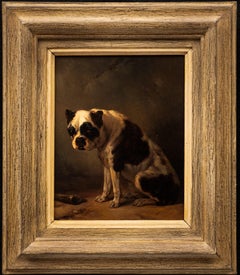
Antique Dog Painting: "A Seated Bulldog" Wouterus Verschuur (Dutch, 1812-1874)
Located in SANTA FE, NM
A Seated Bulldog
Wouterus Verschuur (Dutch, 1812-1874)
Circa 1855
Oil on wood panel.
Signed on the back
9 3/8 x 7 3/8 (15 1/2 x 13 1/2 frame) inches.
The artist shows his complete g...
Category
1850s Romantic New Mexico - Figurative Drawings and Watercolors
Materials
Oil, Wood Panel
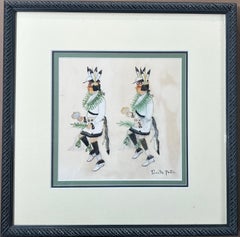
Pueblo Dancers, painting, by Tonita Pena, Cochiti, Pueblo, Santa Fe, Native Amer
Located in Santa Fe, NM
Pueblo Dancers, painting, by Tonita Pena, Cochiti, Pueblo, Santa Fe, Native Amer
Tonita Peña (born 1893 in San Ildefonso, died 1949 in Kewa Pueblo, New Mexico) was born as Quah Ah (meaning white coral beads) but also used the name Tonita Vigil Peña and María Antonia Tonita Peña. Peña was a renowned Pueblo artist, specializing in pen and ink on paper embellished with watercolor. She was a well-known and influential Native American artist and art teacher of the early 1920s and 1930s.
Tonita Peña was born on May 10, 1893, at San Ildefonso Pueblo, to Ascensión Vigil Peña and Natividad Peña of San Ildefonso Pueblo, New Mexico. When she was 12, her mother and younger sister died, as a result of complications due to the flu. Her father was unable to care for her and she was taken to Cochití Pueblo and was brought up by her aunt Martina Vigil Montoya, a prominent Cochití Pueblo potter. Peña attended St. Catherine Indian School in Santa Fe.
Edgar Lee Hewett, an anthropologist involved in supervising the nearby Frijoles Canyon excavations (now Bandelier National Monument) was instrumental in developing the careers of several San Ildefonso “self-taught” artists including Tonita Peña. Hewett purchased Peña's paintings for the Museum of New Mexico and supplied her with quality paint and paper. Peña began gaining more notoriety by the end of the 1910s selling an increasing amount of her work to collectors and the La Fonda Hotel. Much of this early work was done of Pueblo cultural subject matter, in a style inspired by historic Native American works, however, her use of an artist's easel and Western painting mediums gained her acceptance among her European-American contemporaries in the art world. At the age of 25, she exhibited her work at museums and galleries in the Santa Fe and Albuquerque area.
In the early 1920s, Tonita did not know how much her painting sold for at the Museum of New Mexico, so she wrote letters to the administrators because a local farmer was worried that she got paid too little.
In the 1930s Peña was an instructor at the Santa Fe Indian School and at the Albuquerque Indian School and the only woman painter of the San Ildefonso Self-Taught Group, which included such noted artists as Alfonso Roybal, Julian Martinez, Abel Sánchez (Oqwa Pi), Crecencio Martinez, and Encarnación Peña. As children, these artists attended San Ildefonso day school which was part of the institution of the Dawes Act of 1887, designed to indoctrinate and assimilate Native American children into mainstream American society.
In 1931, Tonita Peña exhibited at the Exposition of Indian Tribal Arts which was presented at the Grand Central Art Galleries in New York City. Works from this exhibition were shown at the 1932 Venice Biennial. That year is the only time Native American artists have shown in the official United States pavilion at that biennial, and Tonita Peña's paintings were part of that exhibition.[1 Her painting Basket Dance, that had shown in the Venice Biennial was acquired by the Whitney Museum of American Art in New York for $225. This was the highest price paid up to this time for a Pueblo painting...
Category
1940s Tribal New Mexico - Figurative Drawings and Watercolors
Materials
Paint, Paper
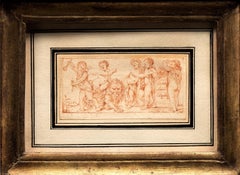
Old Masters Sanguine Drawing of Putti and a Lion, 18th century
Located in SANTA FE, NM
Old Masters Sanguine Drawing of Putti and a Lion
18th century
4 3/4 x 3 1/4 (8 5/8 x 7 1/4 frame) inches
An utterly charming depiction in sanguine of 5 putti and a lion on a leash. Excellent details and condition. The innermost frame is period and probably original to the piece with the addition of a later frame added for style.
Though the lion, known as the Marzocco, was the symbol of of a free Republic of Florence, it also carried many biblical meanings as well.
As such, That a lion denotes the good of celestial love and the derivative truth, in its power, and also that in the opposite sense it denotes the evil of the love of self in its power, is evident from passages in the Word where a lion is mentioned. That it denotes the good of celestial love is evident in John:--
"Behold the lion that is of the tribe of Judah, the root of David, hath conquered to open the book, and to loose the seven seals thereof (Rev. 5:5);"
Here the Lord is called a lion from the omnipotence belonging to His Divine love and the Divine truth thence derived. In other passages in the Word, Jehovah or the Lord is compared to a lion, as in Hosea:--
"They shall go after Jehovah; He shall roar like a lion; for Be shall roar, and the sons shall come with honor from the sea (Hosea 11:10)."
Even more interesting still is the association with Cherubs (or perhaps Putti as they are closely related)...
In Isaiah:--
"Thus said Jehovah unto me, Like as when the lion roareth, and the young lion over his prey, if a fulness of shepherds come running upon him, he is not dismayed at their voice, and is not afflicted by their tumult; so shall Jehovah Zebaoth come down to fight upon Mount Zion...
Category
Early 18th Century Old Masters New Mexico - Figurative Drawings and Watercolors
Materials
Paper, Chalk, Ink
H 7.13 in W 8.63 in D 1.5 in