New York City

to
45,642
248,904
991,476
712,710
122,163
108,081
58,674
42,074
32,174
16,978
15,931
11,814
10,917
10,189
9,383
7,589
7,005
5,078
4,966
4,685
4,248
2,312
2,220
1,583
1,467
1,365
1,339
1,131
1,015
680
500
447
406
271
260
203
192
172
155
147
111
92
85
80
79
63
61
52
51
49
45
34
21
20
15
10
10
8
7
6
6
6
4
4
1
12,407
5,775
3,597
3,106
2,549
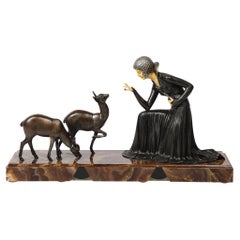
Art Deco "Elegante Aux Biches" on Alabaster Base signed D.Constan by Chiparus
By Demetre Chiparus
Located in New York, NY
This exquisite Art Deco sculpture, titled “Élégante Aux Biches,” is an iconic work by Demétre Chiparus, one of the most celebrated artists of the period. Cast in detailed bronze and ...
Category

1920s French Art Deco Vintage New York City

Materials

Alabaster, Bronze

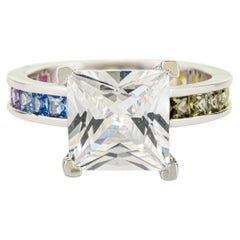
Silvorra 925 Silver Princess Cut Solitaire Ring with Rainbow Cubic Zirconia Band
Located in New York, NY
This modern statement ring features an 8×8 mm princess-cut white Cubic Zirconia elegantly set in 925 sterling silver, creating a bold center stone with exceptional sparkle and clarit...
Category

21st Century and Contemporary American Modern New York City

Materials

Zircon, Silver, Sterling Silver

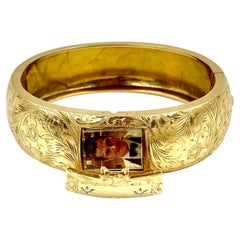
Antique Diamond Star, Flower Engraved 14K Yellow Gold Secret Locket Bracelet
Located in New York, NY
Romantic, heirloom quality, finely engraved 14k gold diamond bracelet with a central panel opening to a hidden locket compartment. The body of the bracel...
Category

Early 20th Century Romantic New York City

Materials

Diamond, 14k Gold, Yellow Gold

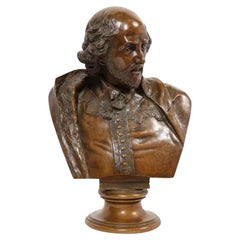
German Bronze Bust of William Shakespeare by Aktien-Gesellschaft Gladenbeck 1890
Located in Long Island City, NY
A realistic German bronze bust of William Shakespeare by Aktien-Gesellschaft Gladenbeck and Sohn foundry, circa 1890 Very fine quality bust, nice patination. Would look great in a library or a gentlemans office. Signed on the back. Measures: 14" high x 10" wide x 5" deep Good condition. Ready to place. Minor wear consist with age and use. Aktien-Gesellschaft Gladenbeck was a foundry located in Berlin, Germany, that operated from 1851 until 1926. During the 75-year period when the foundry was in operation it was one of the most important foundries in Germany and was known for producing high quality bronze castings. The Aktien-Gesellschaft Gladenbeck foundry opened for business in 1851[2] in Berlin, Germany, under the leadership of its founder, Carl Gustav Hermann Gladenbeck. It was one of the most important foundries in Germany, known for high quality bronze castings. The foundry cast many of the best known bronze sculptures created by German artists in the mid-late 19th century and early 20th century. In addition to serving the usually modest casting requirements of German sculptors, the foundry was also capable of casting large-scale bronze statues. In 1913 the Gladenbeck foundry cast the monumental Confederate Memorial in Arlington National Cemetery. In 1910, Gladenbeck cast theT hree Dancing Maidens Untermyer fountain by sculptor Walter Schott. The fountain is located in Conservatory Garden, Central Park, New York. The sculpture – situated on a limestone plinth...
Category

19th Century German Antique New York City

Materials

Bronze

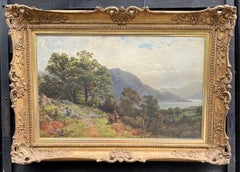
19th century English lake landscape, Ullswater, Gowbarrow Park, Cumberland UK
By Samuel Henry Baker
Located in Woodbury, CT
Samuel Henry Baker (British, 1824–1909) Ullswater from Gowbarrow Park, Cumberland, late 19th century Oil on canvas In this sweeping view of Ullswater, nestled in the heart of the La...
Category

1890s Victorian New York City

Materials

Canvas, Oil

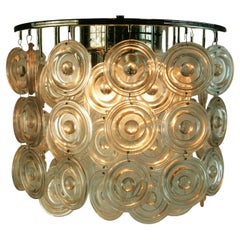
Oversized Embossed Clear Disc Murano Flush Mount
Located in Douglas Manor, NY
1676 Embossed glass disc flushmount 4 internal candelabra based sockets
Category

1970s Vintage New York City

Materials

Brass

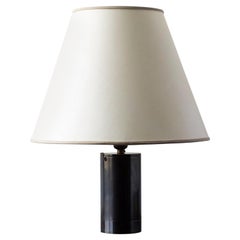
Series02 Table Lamp, Dark Patinated Brass, Goatskin Parchment Ultra Suede Trim
By Adam Otlewski
Located in Ozone Park, NY
Solid machined dark patinated brass, goatskin parchment shade with ultra suede trim, hand-dyed braided cotton cord. All material finishes are living finishes: they will change and patina for the better with time and use. Shades are made from genuine goatskin parchment, hand-selected for each lamp for its natural texture, pattern and color. Reminiscent of the lunar surface, its superior quality of light is unlike paper of any kind. Variations in pattern and texture are the be expected as each skin is unique. Shade construction is unlined, utilizing a single layer of parchment for optimal light transmission and may have a slight bow or curvature of the surface. This is a natural characteristic of the grain of the animal hide as well as the hand stretching and tanning process. Base is lathe turned from a heavy solid ingot...
Category

2010s American Bauhaus New York City

Materials

Brass

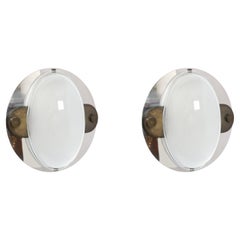
Luigi Caccia Dominioni for Azucena Large LSP12 flush mount lights, Italy
By Azucena, Luigi Caccia Dominioni
Located in Brooklyn, NY
Luigi Caccia Dominioni for Azucena wall flush mount light. Model LSP12. Designed and manufactured in Italy, 1970s Rare and impressive. Glass, chrome plated metal and patinated brass....
Category

1970s Italian Mid-Century Modern Vintage New York City

Materials

Brass, Chrome

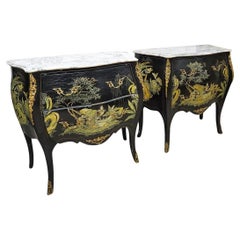
Pair Vintage French Chinoiserie Marble Top Chests / Dressers / Commodes
Located in New York, NY
Pair of petite vintage French chinoiserie bombe-shaped marble top commodes (dressers, chests of drawers) in the Louis XV/XVI style, with ebonized finishes with hand-carved polychrome...
Category

20th Century French Chinoiserie New York City

Materials

Marble

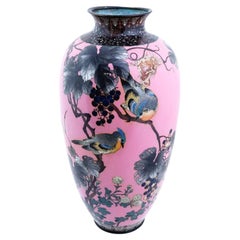
Large Antique Meiji Japanese Cloisonne Enamel Pink Vase W Birds
Located in Long Island City, NY
A large Japanese Meiji period cloisonne enameled vase with a scene of birds, butterflies, and flowers on the pink background and borders with colorful decoration. Collectible Orienta...
Category

Late 19th Century Japanese Meiji Antique New York City

Materials

Enamel

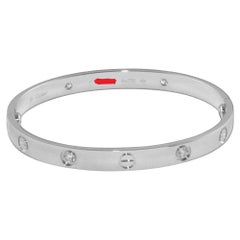
Cartier Love Bracelet Four Diamonds White Gold Bangle Bracelet
By Cartier
Located in New York, NY
Classic Cartier Love Bracelet 4 Diamonds The bracelet is 18K White Gold There are about 0.42 Carats in Diamonds F VS The bracelet is a...
Category

21st Century and Contemporary American Contemporary New York City

Materials

Diamond, White Diamond, Gold, 18k Gold, White Gold

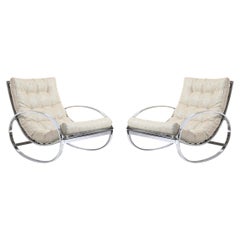
Mid-Century Chrome Rocking Lounge Chairs w/ Button Detailing by Milo Baughman
By Milo Baughman
Located in New York, NY
This pair of Mid-Century Modernist rocking lounge chairs, fabricated by the iconic American designer Milo Baughman in the United States circa 1960, is a quintessential example of mod...
Category

1970s American Mid-Century Modern Vintage New York City

Materials

Chrome

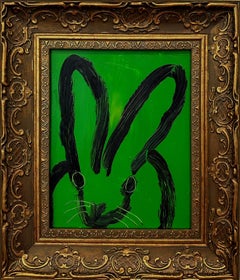
"Hey" Black Outline Bunny on Castleton Green Background Oil Painting Wood Framed
By Hunt Slonem
Located in New York, NY
A wonderful composition of one of Slonem's most iconic subjects, Bunnies. This piece depicts a gestural figure of a black bunny on a castleton green background with thick use of pain...
Category

2010s Neo-Expressionist New York City

Materials

Oil, Wood Panel

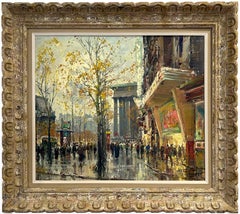
"Boulevard de la Madeleine, Paris" Impressionist Scene Oil Painting on Canvas
By Jean Salabet
Located in New York, NY
A beautiful oil on canvas painting by the French artist, Jean Salabet. Salabet was a Parisian painter known for his colorful cityscapes depicting the times of his generation. His wor...
Category

20th Century Post-Impressionist New York City

Materials

Canvas, Oil

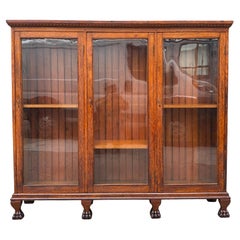
American Empire Revival and Arts Crafts Triple Bookcase / Display Cabinet
By Berkey Gay Furniture, R.J. Horner Co., Tobey
Located in BROOKLYN, NY
An outstanding antique American Empire Revival and Arts & Crafts triple narrow bookcase cabinet, circa 1900. Expertly crafted in richly figured quarter-sawn oak, the cabinet showcase...
Category

Early 20th Century American Arts and Crafts New York City

Materials

Brass

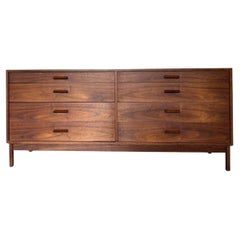
Mid century American Studio Craft Walnut 8 Drawer Dresser by Richard Artschwager
By Richard Artschwager
Located in Brooklyn, NY
Beautiful American studio craft Mid-Century Modern long black walnut 8-drawer dresser credenza with all solid walnut flat pull handles. Great design good vintage condition with stunn...
Category

1960s American Mid-Century Modern Vintage New York City

Materials

Walnut

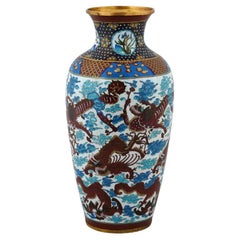
Large Chinese Dragon Cloisonne Enamel Over Brass Vase
Located in Long Island City, NY
A large Chinese enamel over brass vase. The urn shaped vase is adorned with a polychrome enamel design of dragons surrounded by a cloud ornament on the white ground made in the Clois...
Category

Early 20th Century Chinese New York City

Materials

Brass, Enamel

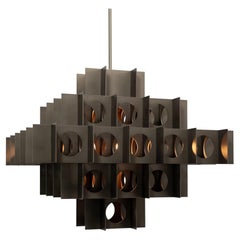
Tenfold Chandelier 32inch Brushed Bronze Perforated Metal Pendant Light
By Luft Tanaka
Located in Brooklyn, NY
TENFOLD CHANDELIER 5 TIER 24inch in Brushed Bronze by Luft Tanaka Studio Brutalism meets glam. Inspired by Brutalist architecture and Op Art, the Tenfold Series features interlockin...
Category

2010s American Brutalist New York City

Materials

Aluminum, Steel, Brass

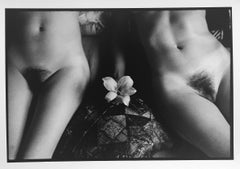
Female Nudes, Black and White Photography of Women, Kate #7 by Leonard Freed
By Leonard Freed
Located in New york, NY
Kate #7, 2002 by American photographer Leonard Freed is an 8" x 10" hand printed, signed by the photographer black and white photograph, stamped "vintage" by the Freed estate on vers...
Category

Early 2000s Contemporary New York City

Materials

Silver Gelatin, Photographic Film, Photographic Paper

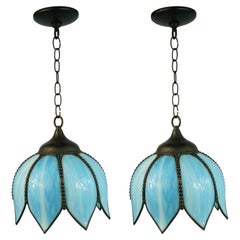
Blue Tulip Glass Pendant 2 Available
Located in Douglas Manor, NY
Blue and white tulip glass pendant Takes one 100 Watt max Edison based bulb Newly rewired Dimensions 10" diameter x 12Height plus 2 feet of chain and ...
Category

1950s Vintage New York City

Materials

Brass

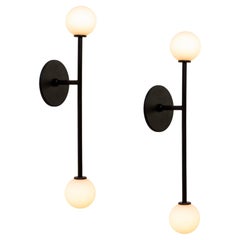
Pair of T Sconce Offset Sconces, by Research.Lighting, Made to Order
By Research.Lighting
Located in Brooklyn, NY
This listing is for 2x T Sconce Offset Sconces designed and manufactured by Research.Lighting. Materials: Steel, Glass Finish: Powder Coated Steel in black Electronics: 2x G9 Socke...
Category

2010s American Modern New York City

Materials

Metal

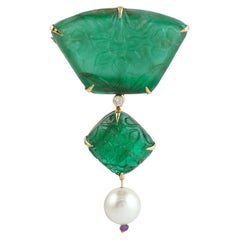
57.28ct Carved Emerald One Of A Kind Pendant With Pearl Made In 18k Yellow Gold
By Artisan NYC
Located in New York, NY
18KT:4.758g,D:0.08ct, Ameth:0.15ct,Eme:57.28ct,Pearl South Sea 70X41 MM
Category

21st Century and Contemporary Indian Artisan New York City

Materials

Amethyst, Emerald, Pearl, 18k Gold, Yellow Gold

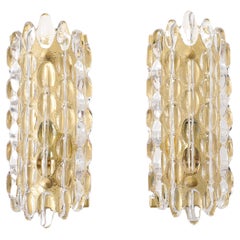
Pair of Crystal Sconces by Carl Fagerliund for Orrefors. ( 4 Pairs available)
By Carl Fagerlund, Orrefors
Located in New York, NY
A wonderful pair of 1960's thick Crystal bubble sconces. The glass sits on a simple brass back plate with a single candelabra light socket that has been newly rewired for the US. 6...
Category

1960s Swedish Mid-Century Modern Vintage New York City

Materials

Crystal, Brass

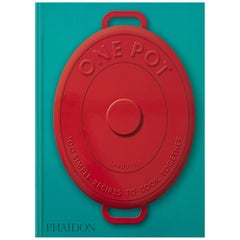
One Pot 100 Simple Recipes to Cook Together
Located in New York, NY
Celebrate the simplicity of cooking in a Dutch oven or casserole dish with 100 delicious, globally inspired recipes from Larousse The casserole dish or Dutch oven is an essential ki...
Category

2010s Chinese New York City

Materials

Paper

Composed Field II, Contemporary Screenprint by George Chemeche
By George Chemeche
Located in Long Island City, NY
George Chemeche, Iraqi/American (1934 - ) - Composed Field II, Year: 1979, Medium: Screenprint, signed and numbered in pencil, Edition: 250, AP 25, Image Size: 32.5 x 29.5 inches...
Category

1970s Contemporary New York City

Materials

Screen

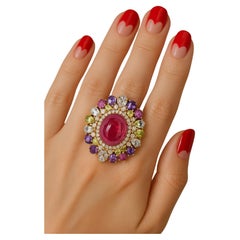
Bochic “Orient” Natural Ruby, Peridot Amethyst Ring Set In 18 K Gold Silver
By Bochic
Located in New York, NY
Bochic “Orient” Natural Ruby, Peridot, Citrine, Topaz Amethyst Ring Set In 18 K Gold Silver Natural Center Ruby 14.00 Carat Natural Peridot, Amethyst, Ruby, Citrine, To...
Category

Late 20th Century Thai Baroque New York City

Materials

Topaz, Ruby, Peridot, Citrine, Amethyst, Silver, 18k Gold

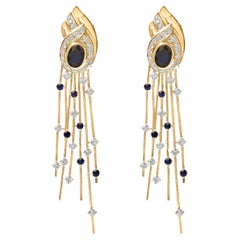
14K Yellow Gold 1.0 Cttw Diamond and Blue Sapphire Chandelier Earrings
Located in New York, NY
Indulge in the regal elegance of these stunning chandelier earrings, masterfully crafted from radiant 14K yellow gold. Natural sapphires, treated to enhance their azure brilliance, f...
Category

21st Century and Contemporary Indian Modern New York City

Materials

Diamond, White Diamond, Blue Sapphire, 14k Gold, Yellow Gold

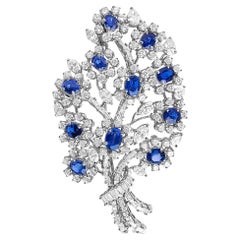
Platinum Blue Sapphire and 12.00 Cttw Diamond Floral Bouquet Brooch Pin
Located in New York, NY
Unveil the epitome of haute joaillerie with this platinum floral bouquet brooch pin—a symphony of natural and heat-treated blue sapphires paired with a resplendent array of diamonds ...
Category

21st Century and Contemporary Indian Modern New York City

Materials

Diamond, White Diamond, Blue Sapphire, Platinum

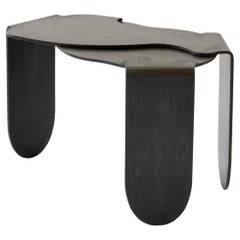
Console Side Table Modern Geometrical Contemporary Blackened Steel
By J.M. Szymanski
Located in Bronx, NY
Table No. 14 - Side Table J.M. Szymanski d. 2021 An abstract form moves organically through this unique work of art. The form ends in legs that “drip” to the floor. Solid 3/8” thick...
Category

2010s American Modern New York City

Materials

Steel, Iron

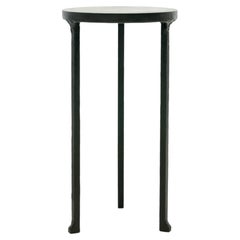
Cocktail Side Table Modern Round Handmade Sculpted Blackened Waxed Steel
By J.M. Szymanski
Located in Bronx, NY
Table no. 3 - large J.M. Szymanski D. 2017 Playfully imagined, this sculpted bottom-frame supports a smooth top-surface that is ideal for drinks and small items--some might say ...
Category

2010s American Modern New York City

Materials

Steel, Iron

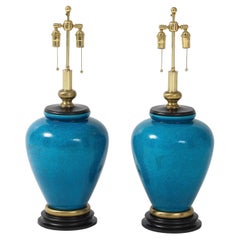
Pair of Large Cerulean Blue Crackle Glazed Lamps by Frederick Cooper Lamp Co
By Frederick Cooper
Located in New York, NY
Wonderful pair of large ceramic lamps with a Beautiful Cerulean blue crackle glaze. The lamps are mounted on turned wooden and brass bases and they have been Newly rewired with adju...
Category

1960s American Mid-Century Modern Vintage New York City

Materials

Brass

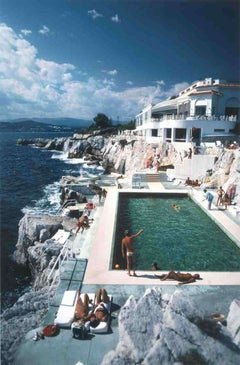
Eden-Roc Pool, 1976
By Slim Aarons
Located in New York, NY
Guests by the pool at the Hotel du Cap Eden-Roc, Antibes, France, August 1976. Eden-Roc Pool 1976 C-Print Estate signature stamped and hand numbered edition of 150 with certificate ...
Category

1970s Modern New York City

Materials

Lambda

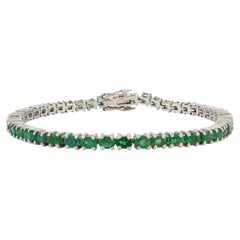
Gorgeous 7.53 Ct Emerald Classic Tennis Bracelet in 925 Silver Gift for Women
Located in New York, NY
This stunning bracelet features oval-cut emeralds in a beautiful vibrant green hue. With a total gemstone weight of approximately 7.53 Cts, the piece exudes natural elegance and uniq...
Category

21st Century and Contemporary American Modern New York City

Materials

Emerald, Silver, Sterling Silver

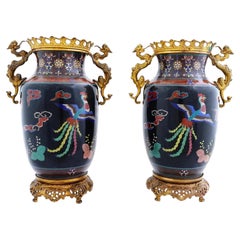
A Pair Antique Meiji Japanese Cloisonne Enamel Ormolu Bronze Mounted Vases
Located in Long Island City, NY
A pair of antique Japanese decorative cloisonne enamel vases with a gilt bronze base and handles. Each has a rounded, baluster shape with a dark cobalt blue ground adorned with image...
Category

Late 19th Century Japanese Meiji Antique New York City

Materials

Enamel, Bronze

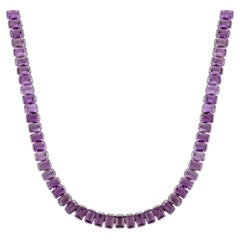
Certified 84.58 Ct Natural Amethyst Long Tennis Necklace Luxury Gift in Silver
Located in New York, NY
This Certified 84.58 ct natural amethyst long tennis necklace in 925 sterling silver showcases a seamless line of vibrant emerald-cut amethyst gem...
Category

21st Century and Contemporary American Modern New York City

Materials

Amethyst, Silver, Sterling Silver

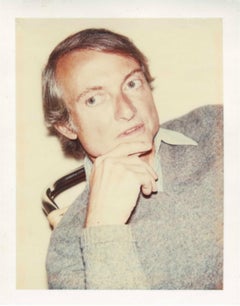
Unique portrait of Roy Lichtenstein, Authenticated by the Andy Warhol Foundation
By Andy Warhol
Located in New York, NY
Andy Warhol Portrait of Roy Lichtenstein, 1975 Polaroid dye-diffusion print Authenticated by the Andy Warhol Foundation for the Visual Arts, bears the Foundation stamp verso Frame included: Framed in white wood frame with UV plexiglass; with die-cut window in the back to show official Warhol Foundation authentication stamp and text Measurements: 9 9/16 x 8 9/16 x 9/16 inches (frame) 3 1/2 x 2 3/4 inches (window) 4.16 x 3.15 inches (Artwork) Authenticated and stamped by the Estate of Andy Warhol/Warhol Foundation for the Visual Arts An impressive piece of Pop Art history! A must-have for fans and collectors of both Andy Warhol and Roy Lichtenstein: This is a unique, authenticated color Polaroid taken by one Pop Art legend, Andy Warhol, of his most formidable contemporary and, in many respects, rival, Roy Lichtenstein. One of only a few portraits Andy Warhol took of Roy Lichtenstein, during one tense photo shoot. Both iconic artists, colleagues and, perhaps lesser known to the public, rivals, would be represented at the time by the renowned Leo Castelli Gallery. The truth is - they were really more rivals than friends. (the rivalry intensified when Warhol, who was working with Walt Disney, discovered that Lichtenstein painted Mickey Mouse before he did!!) Leo Castelli was committed to Roy Lichtenstein, and, it's easy to forget today, wasn't that interested in Warhol as he considered Lichtenstein the greater talent and he could relate better with Roy on a personal level. However, Ivan Karp, who worked at Castelli, was very interested in Warhol, as were some powerful European dealers, as well as many wealthy and influential American and European collectors. That was the start of Warhol's bypassing the traditional gallery model - so that dealers like Castelli could re-discover him after everybody else had. Warhol is known to have taken hundreds of self-portrait polaroid photographs - shoe boxes full - and he took many dozens of images of celebrities like Blondie and Farrah Fawcett. But only a small number of photographic portraits of fellow Pop Art legend Roy Lichtenstein -- each unique,- are known to have appeared on the market over the past half a century - all from the same photo session. This is one of them. There is another Polaroid - from this same (and only) sitting, in the permanent collection of the Getty Museum in California. There really weren't any other collaborations between these two titans, making the resulting portrait from this photo session extraordinary. It is fascinating to study Roy Lichtenstein's face and demeanor in this photograph, in the context of the great sense of competition, but perhaps even greater, albeit uneasy respect, these two larger than life Pop art titans had for each other: Like Leo Castelli, Roy Lichtenstein was Jewish of European descent; whereas Warhol was Catholic and quintessentially American, though also of European (Polish) descent. They were never going to be good friends, but this portrait, perhaps even arranged by Leo Castelli, represents an uneasy acknowledgement there would be room at the top for both of them. Floated, framed with die cut back revealing authentication details, and ready to hang. Measurements: 9 9/16 x 8 9/16 x 9/16 inches (frame) 3 1/2 x 2 3/4 inches (window) 4.16 x 3.15 inches (sheet) Authenticated by the Estate of Andy Warhol/The Andy Warhol Foundation for the Visual Arts. Estate Stamped: Stamped with the Andy Warhol Estate, Warhol Foundation for the Visual Arts stamp, numbered "B 512536P", with the Estate of Andy Warhol stamp and inscribed UP on the reverse. Bears the Warhol Foundation unique inventory number. Roy Lichtenstein Biography Roy Lichtenstein was one of the most influential and innovative artists of the second half of the twentieth century. He is preeminently identified with Pop Art, a movement he helped originate, and his first fully achieved paintings were based on imagery from comic strips and advertisements and rendered in a style mimicking the crude printing processes of newspaper reproduction. These paintings reinvigorated the American art scene and altered the history of modern art. Lichtenstein’s success was matched by his focus and energy, and after his initial triumph in the early 1960s, he went on to create an oeuvre of more than 5,000 paintings, prints, drawings, sculptures, murals and other objects celebrated for their wit and invention. Roy Fox Lichtenstein was born on October 27, 1923, in New York City, the first of two children born to Milton and Beatrice Werner Lichtenstein. Milton Lichtenstein (1893–1946) was a successful real estate broker, and Beatrice Lichtenstein (1896–1991), a homemaker, had trained as a pianist, and she exposed Roy and his sister Rénee to museums, concerts and other aspects of New York culture. Roy showed artistic and musical ability early on: he drew, painted and sculpted as a teenager, and spent many hours in the American Museum of Natural History and the Museum of Modern Art. He played piano and clarinet, and developed an enduring love of jazz, frequenting the nightspots in Midtown to hear it. Lichtenstein attended the Franklin School for Boys, a private junior high and high school, and was graduated in 1940. That summer he studied painting and drawing from the model at the Art Students League of New York with Reginald Marsh. In September he entered Ohio State University (OSU) in Columbus in the College of Education. His early artistic idols were Rembrandt, Daumier and Picasso, and he often said that Guernica (1937; Museo Reina Sofía, Madrid), then on long-term loan to the Museum of Modern Art, was his favorite painting. Even as an undergraduate, Lichtenstein objected to the notion that one set of lines (one person’s drawings) “was considered brilliant, and somebody’s else’s, that may have looked better to you, was considered nothing by almost everyone.”i Lichtenstein’s questioning of accepted canons of taste was encouraged by Hoyt L. Sherman, a teacher whom he maintained was the person who showed him how to see and whose perception-based approach to art shaped his own. In February 1943, Lichtenstein was drafted, and he was sent to Europe in 1945. As part of the infantry, he saw action in France, Belgium and Germany. He made sketches throughout his time in Europe and, after peace was declared there, he intended to study at the Sorbonne. Lichtenstein arrived in Paris in October 1945 and enrolled in classes in French language and civilization, but soon learned that his father was gravely ill. He returned to New York in January 1946, a few weeks before Milton Lichtenstein died. In the spring of that year, Lichtenstein went back to OSU to complete his BFA and in the fall he was invited to join the faculty as an instructor. In June 1949, he married Isabel Wilson Sarisky (1921–80), who worked in a cooperative art gallery in Cleveland where Lichtenstein had exhibited his work. While he was teaching, Lichtenstein worked on his master’s degree, which he received in 1949. During his second stint at OSU, Lichtenstein became closer to Sherman, and began teaching his method on how to organize and unify a composition. Lichtenstein remained appreciative of Sherman’s impact on him. He gave his first son the middle name of “Hoyt,” and in 1994 he donated funds to endow the Hoyt L. Sherman Studio Art Center at OSU. In the late 1940s and early 1950s, Lichtenstein began working in series and his iconography was drawn from printed images. His first sustained theme, intimate paintings and prints in the vein of Paul Klee that poked lyrical fun at medieval knights, castles and maidens, may well have been inspired by a book about the Bayeux Tapestry. Lichtenstein then took an ironic look at nineteenth-century American genre paintings he saw in history books, creating Cubist interpretations of cowboys and Indians spiked with a faux-primitive whimsy. As with his most celebrated Pop paintings of the 1960s, Lichtenstein gravitated toward what he would characterize as the “dumbest” or “worst” visual item he could find and then went on to alter or improve it. In the 1960s, commercial art was considered beneath contempt by the art world; in the early 1950s, with the rise of Abstract Expressionism, nineteenth-century American narrative and genre paintings were at the nadir of their reputation among critics and collectors. Paraphrasing, particularly the paraphrasing of despised images, became a paramount feature of Lichtenstein’s art. Well before finding his signature mode of expression in 1961, Lichtenstein called attention to the artifice of conventions and taste that permeated art and society. What others dismissed as trivial fascinated him as classic and idealized—in his words, “a purely American mythological subject matter.”ii Lichtenstein’s teaching contract at OSU was not renewed for the 1951–52 academic year, and in the autumn of 1951 he and Isabel moved to Cleveland. Isabel Lichtenstein became an interior decorator specializing in modern design, with a clientele drawn from wealthy Cleveland families. Whereas her career blossomed, Lichtenstein did not continue to teach at the university level. He had a series of part-time jobs, including industrial draftsman, furniture designer, window dresser and rendering mechanical dials for an electrical instrument company. In response to these experiences, he introduced quirkily rendered motors, valves and other mechanical elements into his paintings and prints. In 1954, the Lichtensteins’ first son, David, was born; two years later, their second child, Mitchell, followed. Despite the relative lack of interest in his work in Cleveland, Lichtenstein did place his work with New York dealers, which always mattered immensely to him. He had his first solo show at the Carlebach Gallery in New York in 1951, followed by representation with the John Heller Gallery from 1952 to 1957. To reclaim his academic career and get closer to New York, Lichtenstein accepted a position as an assistant professor at the State University of New York at Oswego, in the northern reaches of the state. He was hired to teach industrial design, beginning in September 1957. Oswego turned out to be more geographically and aesthetically isolated than Cleveland ever was, but the move was propitious, for both his art and his career. Lichtenstein broke away from representation to a fully abstract style, applying broad swaths of pigment to the canvas by dragging the paint across its surface with a rag wrapped around his arm. At the same time, Lichtenstein was embedding comic-book characters figures such as Mickey Mouse and Donald Duck in brushy, expressionistic backgrounds. None of the proto-cartoon paintings from this period survive, but several pencil and pastel studies from that time, which he kept, document his intentions. Finally, when he was in Oswego, Lichtenstein met Reginald Neal, the new head of the art department at Douglass College, the women’s college of Rutgers University, in New Brunswick, New Jersey. The school was strengthening and expanding its studio art program, and when Neal needed to add a faculty member to his department, Lichtenstein was invited to apply for the job. Lichtenstein was offered the position of assistant professor, and he began teaching at Douglass in September 1960. At Douglass, Lichtenstein was thrown into a maelstrom of artistic ferment. With New York museums and galleries an hour away, and colleagues Geoffrey Hendricks and Robert Watts at Douglass and Allan Kaprow and George Segal at Rutgers, the environment could not help but galvanize him. In June 1961, Lichtenstein returned to the idea he had fooled around with in Oswego, which was to combine cartoon characters from comic books with abstract backgrounds. But, as Lichtenstein said, “[I]t occurred to me to do it by mimicking the cartoon style without the paint texture, calligraphic line, modulation—all the things involved in expressionism.”iii Most famously, Lichtenstein appropriated the Benday dots, the minute mechanical patterning used in commercial engraving, to convey texture and gradations of color—a stylistic language synonymous with his subject matter. The dots became a trademark device forever identified with Lichtenstein and Pop Art. Lichtenstein may not have calibrated the depth of his breakthrough immediately but he did realize that the flat affect and deadpan presentation of the comic-strip panel blown up and reorganized in the Sherman-inflected way “was just so much more compelling”iv than the gestural abstraction he had been practicing. Among the first extant paintings in this new mode—based on comic strips and illustrations from advertisements—were Popeye and Look Mickey, which were swiftly followed by The Engagement Ring, Girl with Ball and Step-on Can with Leg. Kaprow recognized the energy and radicalism of these canvases and arranged for Lichtenstein to show them to Ivan Karp, director of the Leo Castelli Gallery. Castelli was New York’s leading dealer in contemporary art, and he had staged landmark exhibitions of Jasper Johns and Robert Rauschenberg in 1958 and Frank Stella in 1960. Karp was immediately attracted to Lichtenstein’s paintings, but Castelli was slower to make a decision, partly on account of the paintings’ plebeian roots in commercial art, but also because, unknown to Lichtenstein, two other artists had recently come to his attention—Andy Warhol and James Rosenquist—and Castelli was only ready for one of them. After some deliberation, Castelli chose to represent Lichtenstein, and the first exhibition of the comic-book paintings was held at the gallery from February 10 to March 3, 1962. The show sold out and made Lichtenstein notorious. By the time of Lichtenstein’s second solo exhibition at Castelli in September 1963, his work had been showcased in museums and galleries around the country. He was usually grouped with Johns, Rauschenberg, Warhol, Rosenquist, Segal, Jim Dine, Claes Oldenburg, Robert Indiana and Tom Wesselmann. Taken together, their work was viewed as a slap in the face to Abstract Expressionism and, indeed, the Pop artists shifted attention away from many members of the New York School. With the advent of critical and commercial success, Lichtenstein made significant changes in his life and continued to investigate new possibilities in his art. After separating from his wife, he moved from New Jersey to Manhattan in 1963; in 1964, he resigned from his teaching position at Douglass to concentrate exclusively on his work. The artist also ventured beyond comic book subjects, essaying paintings based on oils by Cézanne, Mondrian and Picasso, as well as still lifes and landscapes. Lichtenstein became a prolific printmaker and expanded into sculpture, which he had not attempted since the mid-1950s, and in both two- and three-dimensional pieces, he employed a host of industrial or “non-art” materials, and designed mass-produced editioned objects that were less expensive than traditional paintings and sculpture. Participating in one such project—the American Supermarket show in 1964 at the Paul Bianchini Gallery, for which he designed a shopping bag—Lichtenstein met Dorothy Herzka (b. 1939), a gallery employee, whom he married in 1968. The late 1960s also saw Lichtenstein’s first museum surveys: in 1967 the Pasadena Art Museum initiated a traveling retrospective, in 1968 the Stedelijk Musem in Amsterdam presented his first European retrospective, and in 1969 he had his first New York retrospective, at the Solomon R. Guggenheim Museum. Wanting to grow, Lichtenstein turned away from the comic book subjects that had brought him prominence. In the late 1960s his work became less narrative and more abstract, as he continued to meditate on the nature of the art enterprise itself. He began to explore and deconstruct the notion of brushstrokes—the building blocks of Western painting. Brushstrokes are conventionally conceived as vehicles of expression, but Lichtenstein made them into a subject. Modern artists have typically maintained that the subject of a painting is painting itself. Lichtenstein took this idea one imaginative step further: a compositional element could serve as the subject matter of a work and make that bromide ring true. The search for new forms and sources was even more emphatic after 1970, when Roy and Dorothy Lichtenstein bought property in Southampton, New York, and made it their primary residence. During the fertile decade of the 1970s, Lichtenstein probed an aspect of perception that had steadily preoccupied him: how easily the unreal is validated as the real because viewers have accepted so many visual conceptions that they don’t analyze what they see. In the Mirror series, he dealt with light and shadow upon glass, and in the Entablature series, he considered the same phenomena by abstracting such Beaux-Art architectural elements as cornices, dentils, capitals and columns. Similarly, Lichtenstein created pioneering painted bronze sculpture that subverted the medium’s conventional three-dimensionality and permanence. The bronze forms were as flat and thin as possible, more related to line than volume, and they portrayed the most fugitive sensations—curls of steam, rays of light and reflections on glass. The steam, the reflections and the shadow were signs for themselves that would immediately be recognized as such by any viewer. Another entire panoply of works produced during the 1970s were complex encounters with Cubism, Futurism, Purism, Surrealism and Expressionism. Lichtenstein expanded his palette beyond red, blue, yellow, black, white and green, and invented and combined forms. He was not merely isolating found images, but juxtaposing, overlapping, fragmenting and recomposing them. In the words of art historian Jack Cowart, Lichtenstein’s virtuosic compositions were “a rich dialogue of forms—all intuitively modified and released from their nominal sources.”v In the early 1980s, which coincided with re-establishing a studio in New York City, Lichtenstein was also at the apex of a busy mural career. In the 1960s and 1970s, he had completed four murals; between 1983 and 1990, he created five. He also completed major commissions for public sculptures in Miami Beach, Columbus, Minneapolis, Paris, Barcelona and Singapore. Lichtenstein created three major series in the 1990s, each emblematic of his ongoing interest in solving pictorial problems. The Interiors, mural-sized canvases inspired by a miniscule advertisement in an Italian telephone...
Category

1970s Pop Art New York City

Materials

Polaroid

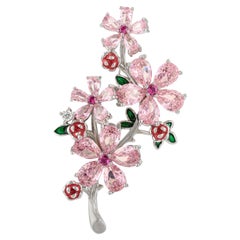
Silvorra Cherry Blossom Pink CZ Enamel Floral Brooch in 925 Sterling Silver
Located in New York, NY
This exquisite gleaming 925 sterling silver floral brooch is inspired by the delicate beauty of cherry blossoms. It showcases a vibrant arrangement of mixed-shape and mixed-size cubi...
Category

21st Century and Contemporary American Modern New York City

Materials

Zircon, Silver, Sterling Silver, Enamel

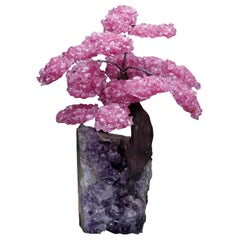
Rose Quartz Gemstone Tree on Amethyst Cluster Base
Located in New York, NY
This handcrafted gemstone tree features pink Rose Quartz crystal blossoms blooming from a gracefully twisted dark trunk, all elegantly rooted in a natural Amethyst cluster base. The ...
Category

2010s New York City

Materials

Amethyst

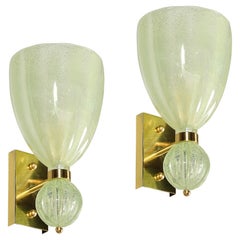
Pair of Modernist Pale Jade Hand-blown Murano Glass Sconces W/ Brass Fitting
Located in New York, NY
This elegant pair of modernist hand-blown Murano glass sconces, crafted in Italy in the 21st century, features a delightful pale jade green hue that brings a serene touch to any room...
Category

21st Century and Contemporary Italian Modern New York City

Materials

Brass

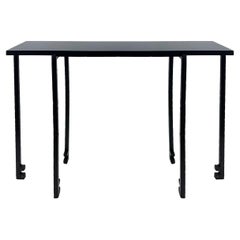
Console with Absolute Black Granite Contemporary Hand Sculpted Blackened Steel
By J.M. Szymanski
Located in Bronx, NY
Console No. 1 J.M. Szymanski d. 2018 This unique console table is inspired by the ancient Asian decorative arts. The inverted legs give this unique table a highly dynamic look. Its ...
Category

2010s American Modern New York City

Materials

Granite, Marble, Steel, Cut Steel

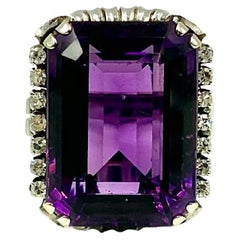
Large Art Deco 22.5 Carat Amethyst, Diamond 18K White Gold Cocktail Ring
Located in New York, NY
Fine, large Art Deco period Amethyst and Diamond ring in a beautifully detailed 18K white gold setting. Early 20th Century The amethyst, measuring approximately 22.5 carats, lively r...
Category

Early 20th Century Art Deco New York City

Materials

Amethyst, Diamond, 18k Gold, White Gold

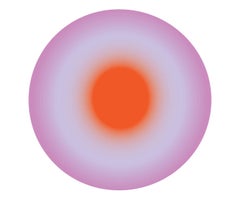
Red Centered Purple Circle
By Ruth Adler
Located in New York, NY
ABOUT THIS PIECE: Color is the foundation of my work. My circles start as a mood or idea that eventually evolves into a colored circle. I am curious how different colours interact when they're placed next to each other. I experiment with intensity of colours and the different sensations colours evoke. Why a Circle? When I explore my fascination with this shape I discover that the circle represents all that is familiar and comforting. It is the shape of the rising sun, of a mother's nipple, of the iris of the eye, and of a full moon. I use the latest digital technology as a medium to create my circles. ABOUT THIS ARTIST: Ruth Adler is a Canadian artist whose mediums include paintings, works on paper, animated films and textiles. She is inspired by the city of Tel Aviv, music (she plays the harmonica) and her personal memories. Jim Kempner Fine Art...
Category

2010s New York City

Materials

Photographic Paper

Nude Female, Black and White Fine Art Photography, Kate #1 by Leonard Freed
By Leonard Freed
Located in New york, NY
Kate #1, 2002 by Leonard Freed is a 10" x 8" handprinted, signed by the photographer black and white photograph, stamped "vintage" by the Freed estate on verso (back of print). Model...
Category

Early 2000s Contemporary New York City

Materials

Silver Gelatin, Photographic Film, Photographic Paper

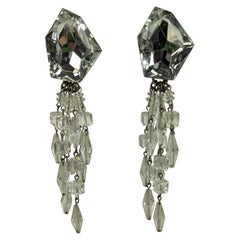
Dramatic 1980 s Crystal Drop Earrings
Located in New York, NY
Dramatic and large 1980's Crystal Drop Earrings in the style of Wendy Gell. Large fancy cut crystals on ear with a cascade of varied faceted crystal beads below. This was the era of ...
Category

1980s American Artisan Vintage New York City

Materials

Silver Plate

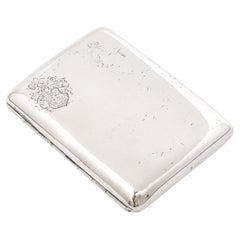
Edwardian Period Continental Silver (.800) Austrian Cigarette Case
By Moritz Zdekauer Austria
Located in New York, NY
Edwardian Period, Continental Silver (.800) cigarette case with hinged lid, having a coat of arms in the upper left front corner, Austria, Ca. 1910, Moritz Zdekauer - maker. Cigarett...
Category

1910s Edwardian Vintage New York City

Materials

Sterling Silver

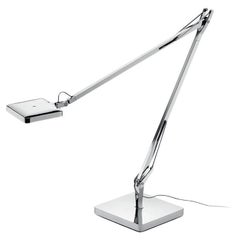
Flos Kelvin LED Green Mode Table Lamp with Adjusting Sensor in Chrome
By Antonio Citterio
Located in Brooklyn, NY
Flos Kelvin LED Green Mode Table Lamp with Adjusting Sensor in Chrome by Antonio Citterio w Toan Nguyen Designed by Antonio Citterio, Kelvin LED Green Mode...
Category

21st Century and Contemporary New York City

Materials

Aluminum

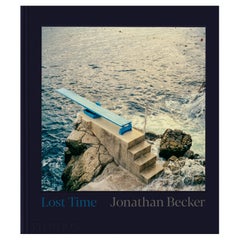
Jonathan Becker Lost Time
Located in New York, NY
‘Epic, stunning, and completely delicious. Jonathan Becker: Lost Time is a fitting legacy for one of the true photographic masters of our age.’ – Graydon Carter, founder and co-edito...
Category

2010s Chinese New York City

Materials

Paper

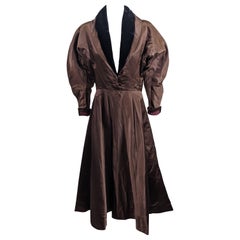
Charles James Brown Satin Black Velvet Cocktail Dress
By Charles James
Located in New York, NY
A rare very find, rare Charles James Brown Satin Black Velvet Cocktail Dress. Dating from the 1950's this design is well recognized as his ...
Category

1950s American New York City

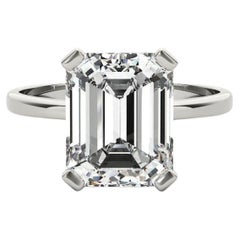
GIA 3 Carat Emerald Solitaire Basket 4-Prong 18k White Gold Diamond Ring
By EMD Diamonds
Located in New York, NY
**Save this ring ❤️ to receive price updates** Elevate your jewelry collection with this exquisite diamond ring featuring a magnificent center stone crafted from an emerald diamond, ...
Category

21st Century and Contemporary American Contemporary New York City

Materials

Diamond, 18k Gold, White Gold

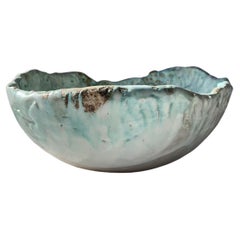
Large Decorative Coil-Built Ceramic Bowl, White with Copper Oxide Wash
By MONDAYS
Located in Brooklyn, NY
Beautiful wabi-sabi coil-built extra-large decorative ceramic bowl, for serving or display. The heavily textured surface is formed and glazed ...
Category

2010s American Organic Modern New York City

Materials

Ceramic

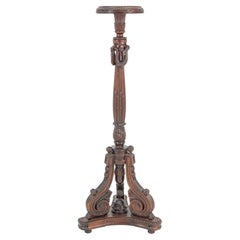
Neoclassical Style Mahogany Plant Stand
Located in Astoria, NY
Neoclassical Style Mahogany Plant Stand, circular top above foliate motif fluted stem atop tripod base. 57" H x 22" W x 22" D.  Provenance: From an Upper West Side, New York C...
Category

Mid-20th Century Neoclassical New York City

Materials

Mahogany

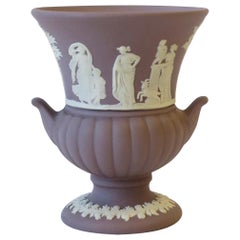
Wedgwood Jasperware Urn Vase Neoclassical Design, Small
By Wedgwood
Located in New York, NY
A beautiful, small, English Wedgwood Jasperware urn vase in the neoclassical design style, circa 20th century, England. Piece is a matte stonew...
Category

20th Century English Neoclassical New York City

Materials

Stoneware

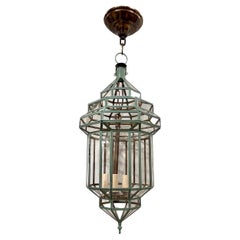
Four Verdigris Lanterns, Sold individually
Located in New York, NY
Set of four circa 1950's Italian verdigris painted metal lanterns with 3 lights. Sold individually. Measurements: Height of body: 22" Present drop: 27" Diameter: 9.5"
Category

1950s Italian Vintage New York City

Materials

Metal

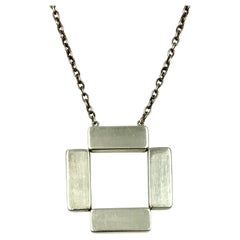
Modernist Georg Jensen Astrid Fog Large Sterling Silver Cross Bars Necklace
By Georg Jensen
Located in New York, NY
Scarce large 1970's Scandinavian Modernist sterling silver cross bars necklace by Astrid Fog for Georg Jensen. Astrid Fog (1911-1993) designed her first jewelry collection for Georg Jensen in 1969. Her jewelry designs are distinctive for their large scale and bold, modernist style using classic geometric forms such as rectangles, circles and squares. She successfully utilized high quality lightweight, hollow silver forms to create pieces which were striking as well as comfortable to wear. This beautiful necklace is from the estate of a noted New York City psychiatrist who collected interesting, unusual, often one-of-a-kind jewelry. The pendant measures 2.19 inches by 2.19 inches. The chain is 29 inches long. Marks: 379 925 S Denmark Georg Jensen...
Category

20th Century Danish Modernist New York City

Materials

Sterling Silver

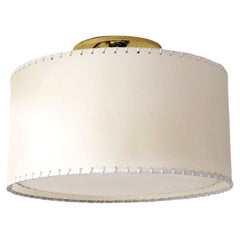
Series02 Large Flush Mount, Polished Unlacquered Brass, Goatskin Parchment Shade
By Adam Otlewski
Located in Ozone Park, NY
Solid machined brass, hand-stitched goatskin parchment shade with diffuser. Shades are made from genuine goatskin parchment, hand-selected for each lamp for its natural texture, pattern and color. Reminiscent of the lunar surface, its superior quality of light is unlike paper of any kind. Variations in pattern and texture are the be expected as each skin is unique. Shade construction is unlined, utilizing a single layer of parchment for optimal light transmission and may have a slight bow or curvature of the surface. This is a natural characteristic of the grain of the animal hide as well as the hand stretching and tanning process. All material finishes are living finishes: they will change and patina for the better with time and use. Every product is individually hand assembled; slight variations in color, size and shape are to be expected. Recommended bulb “LED 75/100 Watt Equivalent 2700k Dimmable” included. LED bulb only. Hardwired fixtures must be installed by a licensed electrician. Mounts only to standard junction boxes with either 2-3/4” or 3-1/2” mounting screw distance. Not suitable for damp locations. For color and finish combinations not shown, please inquire. UL certification is available for an additional fee. 7-3/4”H +/-, Shade 12” dia. x 6”H Polished unlacquered brass components can be rebrightened over time if desired using Brasso and a soft cloth (careful not to touch the leather); to regain...
Category

2010s American Bauhaus New York City

Materials

Brass

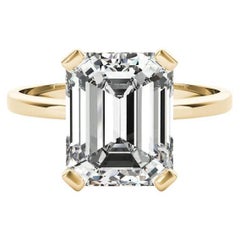
GIA 4 Carat Emerald Solitaire Basket 4-Prong 18K Yellow Gold Diamond Ring
By EMD Diamonds
Located in New York, NY
**Save this ring ❤️ to receive price updates** Elevate your jewelry collection with this exquisite diamond ring featuring a magnificent center stone crafted from an emerald diamond, ...
Category

21st Century and Contemporary American Contemporary New York City

Materials

Diamond, Yellow Gold

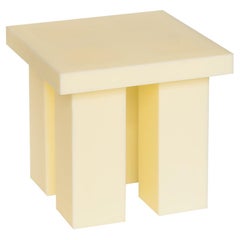
Miter Side Table in Yellow Acrylic by Mock Studio
By Mock Studio
Located in Brooklyn, NY
The Miter is an elemental side table that evokes mass and stability. It's available in yellow resin, raw aluminum, or burl wood, with all three versions constructed by connecting she...
Category

2010s American Modern New York City

Materials

Acrylic

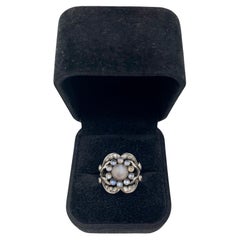
Early Estate Georg Jensen Moonlight Blossom Moonstone Sterling Silver Ring
By Georg Jensen
Located in New York, NY
Early Georg Jensen, circa 1930, Moonlight Blossom moonstone and sterling silver ring designed by Georg Jensen himself. The iconic Moonlight Blossom collection is one of the most wide...
Category

20th Century Danish Romantic New York City

Materials

Moonstone, Sterling Silver

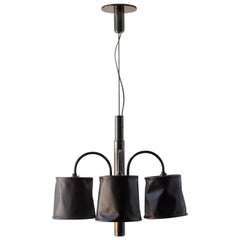
Series01 Downward Electrolier, Dark Patinated Brass, Sable Brown Leather Shades
By Adam Otlewski
Located in Ozone Park, NY
Solid machined brass, soft hand-dyed waxed leather shades, patinated copper tension wire with fabric cord. The opaque nature of leather creates an overall effect of directed ambient ...
Category

2010s American Bauhaus New York City

Materials

Brass

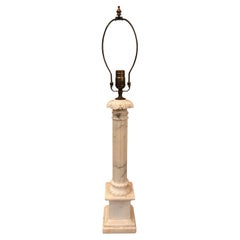
Carved Alabaster Column Lamp
Located in New York, NY
A circa 1940's Italian carved alabaster table lamp in the form of a column. Measurements: Height of body: 20" Height to shade rest: 30" Base: 5" x 5"
Category

1940s Italian Vintage New York City

Materials

Alabaster

Still Thinking About These?

All Recently Viewed