Ohio - Figurative Sculptures
to
1
67
19
18
4
10
Overall Width
to
Overall Height
to
5
30
54
29
3
2
11
4
1
6
10
5
9
5
5
3
1
89
76
62
50
49
18
17
15
12
9
7
6
6
6
5
5
4
4
3
3
72
69
26
20
19
14
9
5
4
2
5,343
3,608
Item Ships From: Ohio
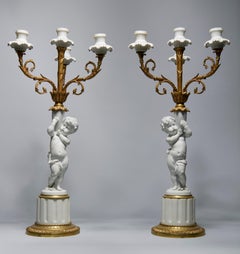
Bisque Porcelain and Gilt Candelabras w/ Putti
Located in Beachwood, OH
Bisque Porcelain and Gilt Candelabras
Figures of putti supporting the arms, porcelain floral candle cups.
24 x 11.5 inches
A matched pair of bisque porcelain and gilt-bronze candela...
Category
19th Century Ohio - Figurative Sculptures
Materials
Porcelain
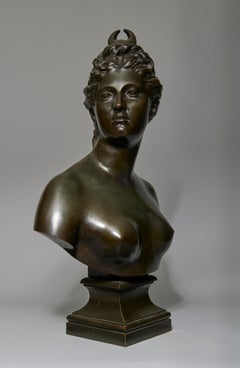
Large French Bronze Bust of Diana the Huntress
By Jean-Antoine Houdon
Located in Beachwood, OH
After Jean-Antoine Houdon (French, 1741-1828)
Bust of Diana
Bronze
Signed on side, Susse Frères foundry stamp on base
28.5 x 16.25 inches
Jean-Antoine Houdon's bust of Diana is an 1...
Category
19th Century Ohio - Figurative Sculptures
Materials
Bronze
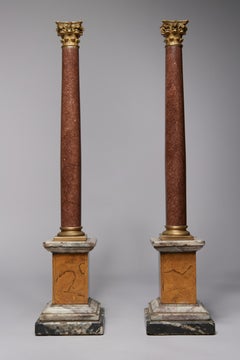
Pair of Porphyry Marble Columns with Gilt Bronze Capitals, 19th Century
Located in Beachwood, OH
Pair of Porphyry Marble Columns with Gilt Bronze Capitals, 19th Century
Porphyry marble & gilt bronze
20 x 4.25 x 4.25 inches
Porphyry is an igneous rock, not marble, known for its...
Category
19th Century Ohio - Figurative Sculptures
Materials
Marble, Bronze
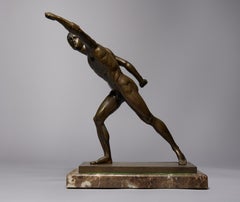
19th Century Bronze of the Borghese Gladiator Sculpture
Located in Beachwood, OH
The Borghese Gladiator, 19th Century
Bronze on marble base
Musée du Louvre signed on base
15 x 12 x 8 inches
Since its discovery in the early seventeenth century, the Borghese Gladi...
Category
19th Century Ohio - Figurative Sculptures
Materials
Marble, Bronze
Early 20th Century Modern Bronze Scorpion Fish on Marble Base
Located in Beachwood, OH
Modern Scorpion Fish, Early 20th Century
Bronze on marble base
23 x 22 x 10 inches
Category
Early 20th Century Ohio - Figurative Sculptures
Materials
Marble, Bronze

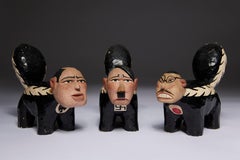
The Three Skunks of WWII, Carved Wooden Figures of Hitler, Mussolini
Tojo
Located in Beachwood, OH
Three Skunks of WWII
c. 1940s
Carved and painted wood
Unsigned
8 x 10 in. h. each
These skunks are depicted as Adolf Hitler, Benito Mussolini, and Hideki Tojo.
Condition: There ...
Category
1940s Ohio - Figurative Sculptures
Materials
Wood, Paint
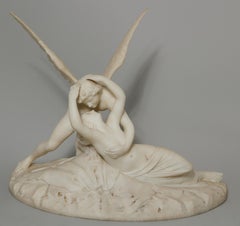
Psyche Revived by Cupid
s Kiss, Large Marble Sculpture after Canova, 19th C.
By Antonio Canova
Located in Beachwood, OH
After Antonio Canova (Italian, 1757-1822)
Psyche Revived by Cupid's Kiss
Marble
24 x 19 x 16 inches
135 lb.
The love affair between Cupid and Psyche is one of the best known classic...
Category
19th Century Ohio - Figurative Sculptures
Materials
Marble
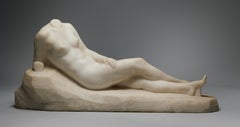
20th Century Reclining Female Nude Marble Sculpture, Cleveland School Artist
By Max Kalish
Located in Beachwood, OH
Max Kalish (American, 1891-1945)
Reclining Nude
Marble
Signed on base
9 x 20.5 inches
Born in Poland March 1, 1891, figurative sculptor Max Kalish came to the United States in 1894,...
Category
Mid-20th Century Ohio - Figurative Sculptures
Materials
Marble
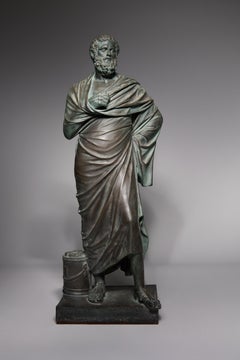
19th Century Grand Tour Figure of Sophocles after the Antique, F. Barbidienne
Located in Beachwood, OH
19th Century Grand Tour after the Antique
Figure of Sophocles
Bronze with green patination
Signed F. Barbidienne, Fondeur
25 x 8.5 x 6.5 inches
Standing figure of the Greek poet, we...
Category
19th Century Ohio - Figurative Sculptures
Materials
Bronze
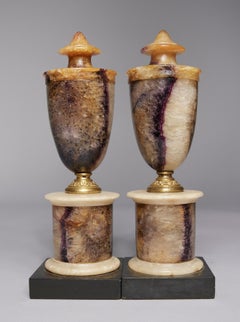
Pair of English Regency Blue John (Derbyshire Spar) Urns, 19th Century
Located in Beachwood, OH
Pair of English Regency Blue John (Derbyshire Spar) Urns, 19th Century
9.5 x 3 x 3 inches
Obtained from the Derbyshire England, Blue John is a semi-precious mineral, a rare form of ...
Category
19th Century Ohio - Figurative Sculptures
Materials
Marble
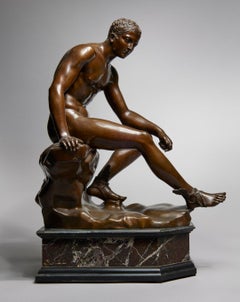
Grand Tour Bronze Figure of Seated Hermes, Early 19th Century After the Antique
Located in Beachwood, OH
Large Figure of Seated Hermes, Grand Tour Bronze, Early 19th Century
19th Century Continental School After the Antique
The large size figure well cast, with brownish green patination...
Category
Early 19th Century Ohio - Figurative Sculptures
Materials
Marble, Bronze
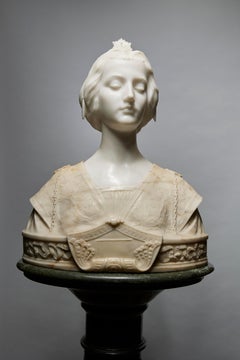
Late 19th Century Italian Finely Finished Bust of Renaissance Lady w/ Pedestal
Located in Beachwood, OH
Italian, Late 19th Century
Finely Finished Bust of Renaissance Lady
White marble, garment in veined buff colored marble on fitted green marble pedestal
Bust: 22 x 18 x 9 inches
Pedes...
Category
Late 19th Century Ohio - Figurative Sculptures
Materials
Marble
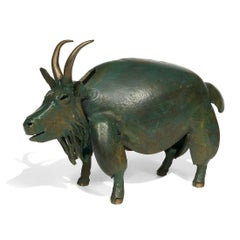
Rocky Mountain Goat, bronze 20th century sculpture of a goat
By John Kearney
Located in Beachwood, OH
John Kearney (American, 1924-2014)
Rocky Mountain Goat, 1991
Bronze
11 x 17 x 6 inches
Born in Omaha, Nebraska, John Kearney studied at the Cranbr...
Category
1990s Ohio - Figurative Sculptures
Materials
Bronze
Sleeping Ariadne, Large Bronze
Marble Sculpture of Greek Mythology, 19th C.
By Pietro Chiapparelli
Located in Beachwood, OH
Pietro Chiapparelli (Italian, 19th Century)
Sleeping Ariadne, c. 1865
Bronze on marble base
Inscribed 'P. Chiapparelli F.I. Roma'
22 x 24 x 10.5 inches
136 lb.
(34 lb. bottom marble,...
Category
1860s Ohio - Figurative Sculptures
Materials
Marble, Bronze
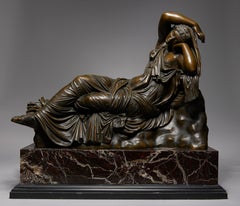
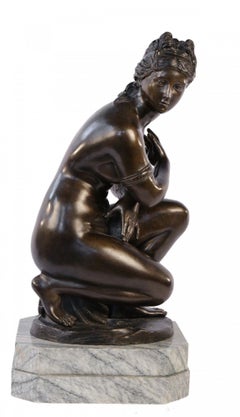
Figure of Crouching Venus/Naked Aphrodite, 19th Century Italian School Sculpture
Located in Beachwood, OH
Bronze Figure of Crouching Venus, or The Naked Aphrodite, 19th Century Italian School
Bronze raised on a marble base
21 in. h. x 10 in. w. x 7 in. d., overall
18 in. h. x 8.5 in. w....
Category
19th Century Ohio - Figurative Sculptures
Materials
Marble, Bronze
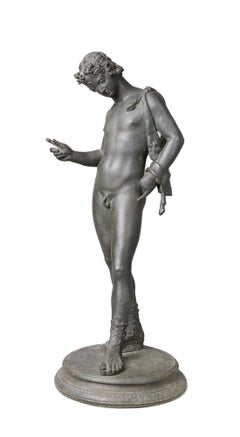
Grand Tour Bronze Sculpture of Dionysus, 19th Century Italian School
Located in Beachwood, OH
19th Century Italian School
Grand Tour Bronze Sculpture of Dionysus, 19th Century
Bronze with black-green patination
24 x 10 x 10 inches
Dionysus, in Greco-Roman religion, a nature ...
Category
19th Century Italian School Ohio - Figurative Sculptures
Materials
Bronze
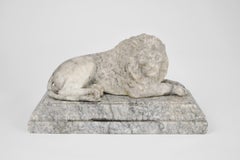
Marble Figure of a Recumbent Lion, 19th Century
Located in Beachwood, OH
Figure of Recumbent Lion, 19th Century
Carved gray veined marble
4.5 x 8 x 4.5 inches
Category
19th Century Ohio - Figurative Sculptures
Materials
Marble
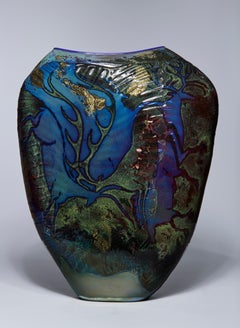
Petroglyph Vessel, Large Contemporary Figural Glass Blown Form
By William Morris (b. 1957)
Located in Beachwood, OH
William Morris (American, b. 1957)
Petroglyph Vessel
Blown glass
Signed on bottom
26 x 20 x 7 inches
William Morris was born in Carmel, California in 1957. He is an American glass a...
Category
Late 20th Century Ohio - Figurative Sculptures
Materials
Blown Glass
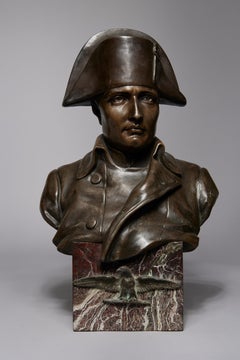
Late 19th Century Bronze Bust of Napoleon Sculpture, Italian Artist
Located in Beachwood, OH
Raphaël Nannini (Italian, 1852-1925)
Napoleon Bust, Late 19th Century
Bronze on marble base
Signed on back
17 x 11 x 8 inches
Raphael Nannini was born in Florence. He exhibited at t...
Category
Late 19th Century Ohio - Figurative Sculptures
Materials
Marble, Bronze
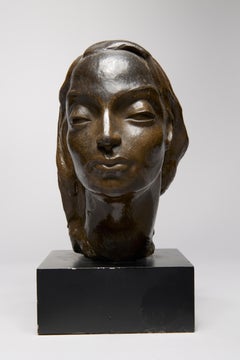
Early 20th Century Ceramic Bust of a Woman, Cleveland School Artist
Located in Beachwood, OH
Edris Eckhardt (American, 1905-1998)
Bust, 1933
Ceramic
Signed and dated base
8.5 x 4.5 x 4.5 inches, including base
Born in Cleveland, Ohio January 28, 1905, Edris was given the na...
Category
1930s Ohio - Figurative Sculptures
Materials
Ceramic
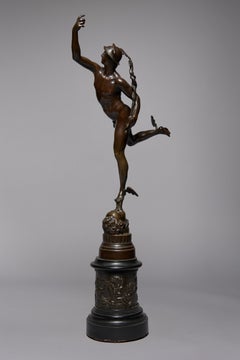
Mercury Standing on the Breath of Zeus, Antique Grand Tour
By Giambologna
Located in Beachwood, OH
After Giambologna (Italian, 1529-1608)
Mercury Standing on the Breath of Zeus
Bronze
27.5 x 14.25 x 5.5 inches
The sculpture depicts Mercury wearing his winged helmet and sandals and holding a caduceus. Created after one of Giambologna's most celebrated sculptures in the Renaissance, Mercury, was designed as part of a fountain for the Villa Medici in Rome.The head on which Mercury steps symbolizes the figure being “exhaled, purified, unburdened.” When the Giambologna sculpture...
Category
19th Century Ohio - Figurative Sculptures
Materials
Bronze
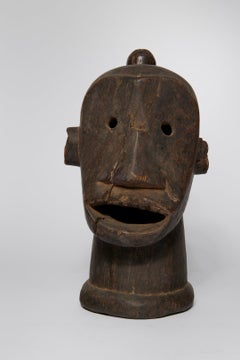
African Carved Wooden Makonde Initiation Ceremony Mask
Located in Beachwood, OH
African Carved Wood Makonde Mask
Heavy wood carved ceremonial mask symbolizing an ancestor
16.5 x 8 x 10 inches
A carved ceremonial mask symbolizing an ancestor, this African facial...
Category
20th Century Ohio - Figurative Sculptures
Materials
Wood
Rumination, Small Bronze Thinker, 20th Century Cleveland School Artist
Located in Beachwood, OH
William Mozart McVey (American, 1905-1995)
Rumination
Cast bronze with brown patina
Signed on back foot
8 x 4 x 3 inches
William McVey (12 July 1905-31 May 1995) became Cleveland's ...
Category
Mid-20th Century Ohio - Figurative Sculptures
Materials
Bronze
Nude Female Torso Bronze Sculpture, 20th Century Contemporary American Artist
Located in Beachwood, OH
Alan Cottrill (American, Ohio, b. 1952)
Nude Female Torso, 1994
Bronze mounted to green marble base
Signed, dated and numbered 14/20 verso of leg, with foundry stamp
17. in. h. x 6 i...
Category
1990s Ohio - Figurative Sculptures
Materials
Marble, Bronze
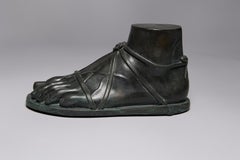
Grand Tour Sandaled Foot of an Antiquity, 19th Century Italian
Located in Beachwood, OH
Grand Tour Italian, 19th Century
Sandaled Foot of an Antiquity
Bronze
5.5 x 12 x 5 inches
Category
19th Century Ohio - Figurative Sculptures
Materials
Bronze
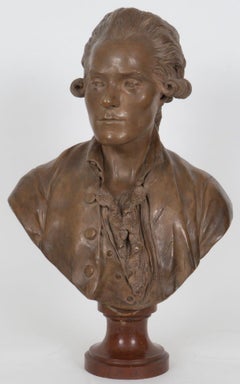
18th Century French Terra Cotta Bust of a Young Gentleman
Located in Beachwood, OH
18th Century French Terra Cotta
Bust of a Young Gentleman
Terra Cotta
Unsigned
25 x 18 x 10 inches
41 lb.
Category
18th Century Ohio - Figurative Sculptures
Materials
Terracotta
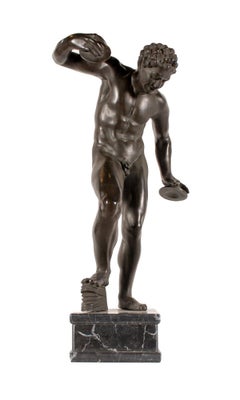
Satyr with Cymbals and Kroupezion, Grand Tour after the Antique, 19th century
Located in Beachwood, OH
19TH CENTURY CONTINENTAL SCHOOL
Satyr with Cymbals and Kroupezion, Grand Tour after the Antique
Bronze with marble base
26 in. h. x 15 in. w. x 10 in. d.
This dancing faun is now mo...
Category
19th Century Ohio - Figurative Sculptures
Materials
Marble, Bronze
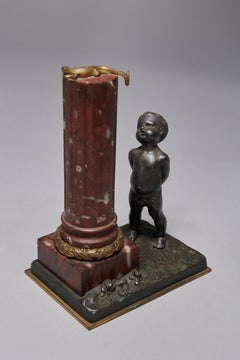
19th Century Bronze
Marble of Boy w/ Lizard and Column
Located in Beachwood, OH
Louis Kley (French, 1833-1911)
The Lizard, 19th Century
Gilt bronze and marble
Signed to base
6.25 x 4.5 x 3 inches
In Greco-Roman times, the lizard represented good fortune and reg...
Category
19th Century Ohio - Figurative Sculptures
Materials
Marble, Bronze
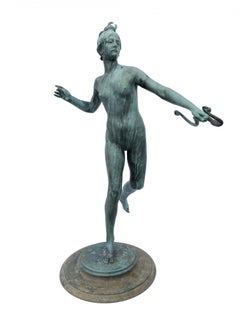
Diana the Huntress, 1890 Classical Bronze Sculpture of Nude Woman
By Frederick William MacMonnies
Located in Beachwood, OH
Frederick William MacMonnies (American, 1863-1937)
Diana, 1890
Bronze with green verdigris patina
Signed and dated
Copyright 1894 with Jaboeuf & Rouard, Paris foundry mark
31 x 21 x 17 inches
A sculptor of classical figures, American-born Frederick MacMonnies...
Category
1890s Ohio - Figurative Sculptures
Materials
Bronze
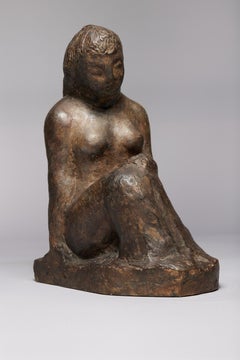
Seated Nude Woman Sculpture, Early 20th Century
By William Zorach
Located in Beachwood, OH
William Zorach (American, 1887-1966)
Seated Woman
Painted plaster
Inscribed underside "V"
12.5 x 9 x 5 inches
Provenance: The Tatti Family Collection
Bill Zorach was born in Lithuan...
Category
Early 20th Century Ohio - Figurative Sculptures
Materials
Plaster
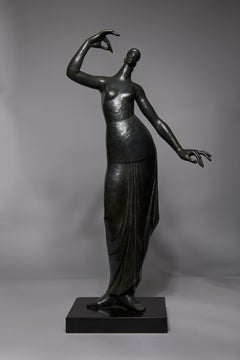
20th Century French School Large Bronze Sculpture of a Semi-Nude Dancer
Located in Beachwood, OH
20th Century French School
Dancer
Patinated bronze
38 x 18.5 x 9 inches
Provenance: The Tatti Family Collection
Category
20th Century Ohio - Figurative Sculptures
Materials
Bronze
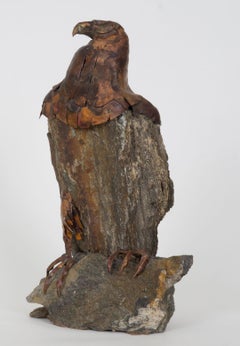
20th Century Stone and Copper Eagle, Animal/Bird Sculpture
By Lubomir Tomaszewski
Located in Beachwood, OH
Lubomir Tomaszewski (Polish-American, 1923-2018)
Eagle
Stone and copper
Signed on back
18 x 11 x 7 inches
Lubomir Wojciech Tomaszewski was a Polish-American painter, sculptor and designer born in Warsaw, Poland.
Son of Lubomir and Lucyna née Bartłomiejczyk. He was an alumnus of the Warsaw Academy of Fine Arts. Student of the Warsaw University of Technology In 1966 he emigrated to New York City in the United States. In the 1970s, he moved to Easton, Connecticut where he lived until his death in 2018.
He fought as a soldier of Polish Home Army through all the 63 days of Warsaw Uprising. He was a commander of anti-tank unit. He witnessed the death of his younger brother and many friends.
Tomaszewski started his artistic work in the 1950s in Institute of Industrial Design in Warsaw, an innovative institution with an aim to create modern living in post-war Poland. He cooperated with designers like Henryk Jędrasiak, Mieczysław Naruszewicz i Hanna Orthwein. He created popular porcelain figurines and "Ina" and "Dorota" coffee sets, which were exhibited at the International Exhibition of the Board of the Industrial Designers’ Association (ICSID) in Paris in 1963.
In 1994, he established an international art movement called Emotionalism, together with a group of painters, sculptors, photographers and even dancers and musicians. He started creating his unique fire and smoke paintings. His sculptures were recognized by The New York Times in 1975:
“The most effective among the pieces are the animals or birds that convey the state of tension or movement or brute strength, something that struggles against gravity to maintain its force.”
Tomaszewski took part in over 150 individual and group exhibitions around the world. His works are in renowned museum and private art collections of, among others: National Museum in Warsaw, National Museum in Cracow, Warsaw Uprising Museum, Hale Museum in Germany, Robert Marston, Rockefeller Family and Jimmy Carter.
Awards:
1955 – First prize for sculpture in surrounding of the Palace of Culture and Science in Warsaw
1964 – Golden Cross for accomplishments in industrial design, Poland
1984 – Award for Achievement in Sculpture, Perspective Magazine, USA
1991 – Best in Show O.A.F., Bruce Museum, USA
2005 – First reward for sculpture ‘Spectrum’, New Canaan Society for the Arts, USA
2006 – People’s Choice Award, National Sculpture Society, New York
2008 – First Award for a sculpture ‘Mythical Giant’, New Canaan Society for the Arts, USA
2010 – American Society of Contemporary Artists, New York, award for sculpture ‘Joy of Dance’
2011 – Second prize for sculpture ‘Illusion’, New Canaan Society for the Arts, USA
2013 – First prize for the sculpture ‘Flight above the Stage’ od New Canaan Society for the Arts
2014 – First prize for ‘Music of the Forest’ from New Canaan Society for the Arts, USA
2014 – ‘Lifetime Achievement Award’, University of Bridgeport
2014 – Award for ‘Merit in Inventiveness’
2014 – Gold Medal ‘Gloria Artis’
2016 – ‘Outstanding Pole’
2017 – Medal ‘Ignacy Paderewski Arts and Music Award’ USA
Exhibitions:
1964 – Sculpture...
Category
Late 20th Century Ohio - Figurative Sculptures
Materials
Stone, Copper
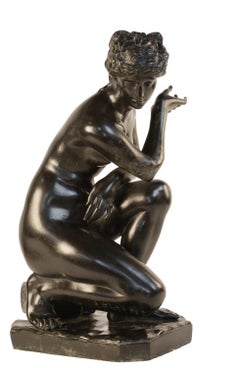
19th Century Bronze Figure of Crouching Venus or Naked Aphrodite
Located in Beachwood, OH
19th Century Bronze Figure of Crouching Venus or Naked Aphrodite
Bronze with dark patination
22.5 x 13 x 11 inches
The Crouching Venus is a Hellenisti...
Category
19th Century Ohio - Figurative Sculptures
Materials
Bronze
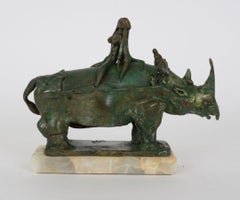
Female Nude Godiva Riding a Rhinoceros Sculpture, 20th Century
By John Kearney
Located in Beachwood, OH
John W. Kearney (American, 1924-2014)
Godiva on a Rhinoceros
Bronze
Signed with monogram to base
6.5 x 3 x 8.5 inches
Born in Omaha, Nebraska, he studied at the Cranbrook Acadamy of...
Category
Late 20th Century Ohio - Figurative Sculptures
Materials
Bronze
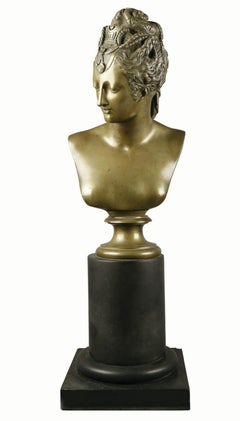
Large Bronze Bust Sculpture of Diane de Poitiers, 18th Century
Located in Beachwood, OH
After Jean Goujon (French, 1510-1568)
Bust of Diane de Poitiers, 18th/19th Century
Bronze
14 x 7 x 5 inches
22 x 8 x 7 inches, with base
Diane de Poitiers was a French noblewoman and prominent courtier. She wielded much power and influence as King Henry II's royal mistress and adviser until his death. Her position increased her wealth and family's status. She was a major patron of French Renaissance architecture...
Category
Late 18th Century Ohio - Figurative Sculptures
Materials
Bronze
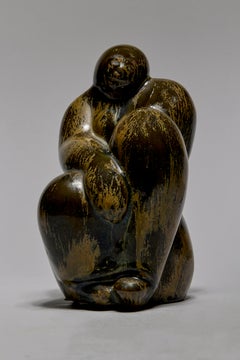
Mid-Century Ceramic Sculpture of a Seated Female, Cleveland School Artist
Located in Beachwood, OH
Walter Sinz (American, 1881-1966)
Seated Female, c. 1940
Ceramic
6 x 3.5 x 3.5 inches
Walter A. Sinz was an American sculptor born in Cleveland, Ohio on July 13, 1881. Sinz’s fathe...
Category
1940s Ohio - Figurative Sculptures
Materials
Ceramic
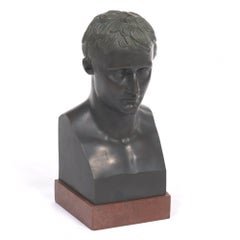
19th Century Bronze Bust of Young Napoleon as Caesar
By Antonio Canova
Located in Beachwood, OH
After Antonio Canova (Italian, 1757-1822)
Bust of Young Napoleon as Caesar, 19th Century
Hallow cast bronze with verdigris patina, attached to rouge...
Category
19th Century Ohio - Figurative Sculptures
Materials
Marble, Bronze
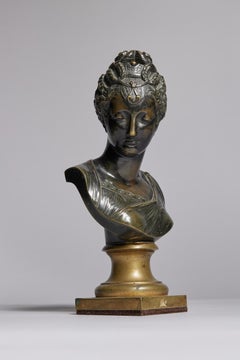
Bust of Diane de Poitiers, Bronze sculpture of French Noblewoman
Located in Beachwood, OH
After Jean Goujon (French, 1510-1568)
Bust of Diane de Poitiers
Bronze with gilt socle base
9 x 3.75 x 2.75 inches
Provenance: Removed from a private residence at the Pierre Hotel
Di...
Category
19th Century Ohio - Figurative Sculptures
Materials
Bronze
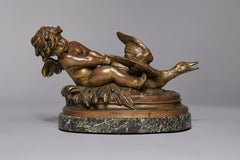
Swan Baby, 19th Century Bronze
Marble Sculpture of Cherub Riding Swan
Located in Beachwood, OH
Auguste Moreau (French, 1834-1917)
Swan Baby, 19th Century
Bronze with reddish gold patination mounted on verdigris marble base
Signed on base
6 x 9.5 x 5 inches
Auguste Moreau was...
Category
19th Century Ohio - Figurative Sculptures
Materials
Marble, Bronze
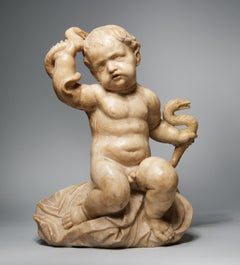
18th/19th C. Italian Alabaster Sculpture of Infant Hercules Wrestling a Snake
Located in Beachwood, OH
18th/19th Century Italian
Infant Hercules Wrestling a Snake
Alabaster
18 x 18 x 6 inches
40 lb.
In Greek mythology, the infant Hercules (Heracles) is famously depicted wrestling wit...
Category
Late 18th Century Italian School Ohio - Figurative Sculptures
Materials
Alabaster
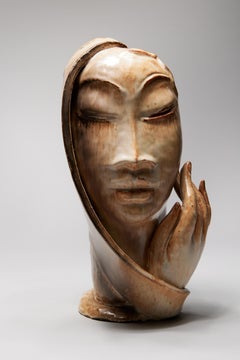
Bust of Josephine Baker, Mid-Century Ceramic Female Face
By Vally Wieselthier
Located in Beachwood, OH
Attributed to Vally Wieselthier (Austrian-American, 1895-1945)
Bust of Josephine Baker, c. 1930
Ceramic
Stamped on base
11.5 x 5.5 x 5.5 inches
Vally Wieselthier (1895 Vienna--1945 ...
Category
1930s Ohio - Figurative Sculptures
Materials
Ceramic
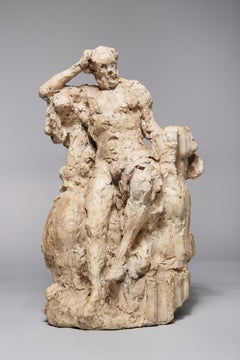
Model Study for Truth Sculpture at NY Public Library of Seated Man
By Frederick William MacMonnies
Located in Beachwood, OH
Frederick William MacMonnies (American, 1863-1937)
Model Study for Truth, c. 1910-14
Painted plaster
16.5 x 9.25 x 7.5 inches
For the 1920 sculpture for the New York Public Library
...
Category
1910s Ohio - Figurative Sculptures
Materials
Plaster
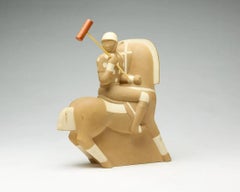
Early 20th Century Ceramic Sculpture of a Polo Player and Horse
By Waylande Gregory
Located in Beachwood, OH
Waylande Gregory (American, 1905-1971)
Polo Player, c. 1930s
Ceramic
Inscribed signature on bottom
11 x 8.5 inches
Waylande Gregory was considered a major American sculptor during the 1930's, although he worked in ceramics, rather than in the more traditional bronze or marble. Exhibiting his ceramic works at such significant American venues for sculpture as the Whitney Museum of American Art in New York City and at the venerable Pennsylvania Academy of the Fine Arts in Philadelphia, he also showed his ceramic sculptures at leading New York City galleries. Gregory was the first modern ceramist to create large scale ceramic sculptures, some measuring more than 70 inches in height. Similar to the technique developed by the ancient Etruscans, he fired his monumental ceramic sculptures only once.
Gregory was born in 1905 in Baxter Springs, Kansas and was something of a prodigy. Growing up on a ranch near a Cherokee reservation, Gregory first became interested in ceramics as a child during a native American burial that he had witnessed. He was also musically inclined. In fact, his mother had been a concert pianist and had given her son lessons. At eleven, he was enrolled as a student at the Kansas State Teacher's College, where he studied carpentry and crafts, including ceramics.
Gregory's early development as a sculptor was shaped by the encouragement and instruction of Lorado Taft, who was considered both a major American sculptor as well as a leading American sculpture instructor. In fact, Taft's earlier students included such significant sculptors as Bessie Potter Vonnoh and Janet Scudder. But, Taft and his students had primarily worked in bronze or stone, not in clay; and, Gregory's earliest sculptural works were also not in ceramics. In 1924, Gregory moved to Chicago where he caught the attention of Taft. Gregory was invited by Taft to study with him privately for 18 months and to live and work with him at his famed "Midway Studios." The elegant studio was a complex of 13 rooms that overlooked a courtyard. Taft may have been responsible for getting the young man interested in creating large scale sculpture. However, by the 1920's, Taft's brand of academic sculpture was no longer considered progressive. Instead, Gregory was attracted to the latest trends appearing in the United States and Europe. In 1928 he visited Europe with Taft and other students.
"Kid Gregory," as he was called, was soon hired by Guy Cowan, the founder of the Cowan Pottery in Cleveland, Ohio, to become the company's only full time employee. From 1928 to 1932, Gregory served as the chief designer and sculptor at the Cowan Pottery. Just as Gregory learned about the process of creating sculpture from Taft, he literally learned about ceramics from Cowan. Cowan was one of the first graduates of Alfred, the New York School of Clayworking and Ceramics. Alfred had one of the first programs in production pottery. Cowan may have known about pottery production, but he had limited sculptural skills, as he was lacking training in sculpture. The focus of the Cowan Pottery would be on limited edition, table top or mantle sculptures. Two of the most successful of these were Gregory's "Nautch Dancer," (fig. 1) and his "Burlesque Dancer," (fig. 2). He based both sculptures on the dancing of Gilda Gray, a Ziegfield Follies girl.
Gilda Gray was of Polish origin and came to the United States as a child. By 1922, she would become one of the most popular stars in the Follies. After losing her assets in the stock market crash of 1929, she accepted other bookings outside of New York, including Cleveland, which was where Gregory first saw her onstage. She allowed Gregory to make sketches of her performances from the wings of the theatre. She explained to Gregory, "I'm too restless to pose." Gray became noted for her nautch dance, an East Indian folk dance. A nautch is a tight, fitted dress that would curl at the bottom and act like a hoop. This sculpture does not focus on Gray's face at all, but is more of a portrait of her nautch dance. It is very curvilinear, really made of a series of arches that connect in a most feminine way.
Gregory created his "Burlesque Dancer" at about the same time as "Nautch Dancer." As with the "Nautch Dancer," he focused on the movements of the body rather than on a facial portrait of Gray. Although Gregory never revealed the identity of his model for "Burlesque Dancer," a clue to her identity is revealed in the sculpture's earlier title, "Shimmy Dance." The dancer who was credited for creating the shimmy dance was also Gilda Gray. According to dance legend, Gray introduced the shimmy when she sang the "Star Spangled Banner" and forgot some of the lyrics, so, in her embarrassment, started shaking her shoulders and hips but she did not move her legs. Such movement seems to relate to the "Burlesque Dancer" sculpture, where repeated triangular forms extend from the upper torso and hips. This rapid movement suggests the influence of Italian Futurism, as well as the planar motion of Alexander Archipenko, a sculptor whom Gregory much admired.
The Cowan Pottery was a victim of the great depression, and in 1932, Gregory changed careers as a sculptor in the ceramics industry to that of an instructor at the Cranbrook Academy in Bloomfield Hills, Michigan. Cranbrook was perhaps the most prestigious place to study modern design in America. Its faculty included the architect Eliel Saarinen and sculptor Carl Milles.
Although Gregory was only at Cranbrook for one and one half years, he created some of his finest works there, including his "Kansas Madonna" (fig. 3). But, after arriving at Cranbrook, the Gregory's had to face emerging financial pressures. Although Gregory and his wife were provided with complimentary lodgings, all other income had to stem from the sale of artworks and tuition from students that he, himself, had to solicit. Gregory had many people assisting him with production methods at the Cowan Pottery, but now worked largely by himself. And although he still used molds, especially in creating porcelain works, many of his major new sculptures would be unique and sculpted by hand, as is true of "Kansas Madonna." The scale of Gregory's works were getting notably larger at Cranbrook than at Cowan.
Gregory left the surface of "Kansas Madonna" totally unglazed. Although some might object to using a religious title to depict a horse nursing its colt, it was considered one of Gregory's most successful works. In fact, it had a whole color page illustration in an article about ceramic sculpture titled, "The Art with the Inferiority Complex," Fortune Magazine, December, 1937. The article notes the sculpture was romantic and expressive and the sculpture was priced at $1,500.00; the most expensive sculpture in the article. Gregory was from Kansas, and "Kansas Madonna" should be considered a major sculptural document of Regionalism.
Gregory and his wife Yolande moved to New Jersey in the summer of 1933. And the artist began construction on his new home in the Watchung Mountains of Bound Brook (Warren today) in 1938. His enormous, custom kiln was probably constructed at the start of 1938. Gregory's new sculptures were the largest ceramic sculptures in western art, in modern times. To create these works of ceramic virtuosity, the artist developed a "honeycomb" technique, in which an infrastructure of compartments was covered by a ceramic "skin."
Science and atomic energy were a theme in Gregory's most significant work, the "Fountain of the Atom" (fig. 4), at the 1939 New York's World Fair. This major work included twelve monumental ceramic figures at the fairground entrance from the newly constructed railway entrance, giving the work great visibility and prominence. The framework of the fountain itself was of steel and glass bricks. It consisted of a bluish green pool which was sixty five feet in diameter. Above it were two concentric circular tiers, or terraces, as Gregory called them; the first wider than the second. On the first terrace were eight "Electrons," comprised of four male and four female terra cotta figures, each approximately 48 inches high. These relate to the valance shell of the atom. Above them on a narrower terrace, were the much larger and heavier terra cotta figures depicting the four elements, each averaging about 78 inches in height and weighing about a ton and a half. Of the four, "Water" and "Air" were male, while "Earth" and "Fire" were female. This terrace represents the nucleus of the atom. In the center of the fountain, above the "Elements," was a central shaft comprised of sixteen glass tubes from which water tumbled down from tier to tier. At the top, a colorful flame burned constantly. The glass block tiers were lit from within, the whole creating a glowing and gurgling effect. Since the fair was temporary, the figures could be removed after its closing. But the credit for the design of the structure of the fountain belongs to collaborator Nembhard Culin, who was responsible for several other structures on the fair grounds as well.
Although Gregory created a figure of "Fire" for the "Fountain of the Atom," he also executed a second, slightly smaller but more defined version which he exhibited at various locations (including Cranbrook, Baltimore Museum, etc.) in 1940-1941, during the second year of the fair (fig.5). Measuring 61 inches in height, "Fire" may be a metaphor for sexual energy, as well as atomic energy. Gregory stated, "Fire is represented by an aquiline female figure being consumed in endless arabesques of flame."
Portraiture was also a significant focus of Gregory's sculpture. Gregory produced many commissioned portraits of local people as well as celebrities. He created Albert Einstein's portrait from life (fig. 6, ca. 1940) after Einstein had seen Gregory's "Fountain of the Atom." He also sculpted some of the leading figures in entertainment, including 2 sculptures of Henry Fonda, who became a personal friend.
Gregory also sculpted a series of idealized female heads, both in terra cotta and in porcelain. These include "Girl with Olive" (ca. 1932) and "Cretan Girl;"(ca. 1937) both are very reductive and almost abstract works that call to mind Constantine Brancusi's "Mademoiselle Pogany" (1912, Philadelphia Museum of Art). But perhaps one of his most original female heads is "Head of a Child" (fig. 7, ca. 1933), a sensitive white glazed terra cotta portrayal with elaborately crafted braded hair, was originally created as one of a pair.
Gregory also produced sculptural works for the Works Progress Administration. The WPA was a work relief project that greatly helped artists during the great depression. Founded by the Federal Government in 1935, an estimated 2500 murals were produced. Among these public works were the iconic post office murals. But, among the painted murals were also sculptural relief murals including Gregory's "R.F.D.," 1938, for the Columbus, Kansas Post Office. But, Gregory's largest WPA relief...
Category
1930s Ohio - Figurative Sculptures
Materials
Ceramic
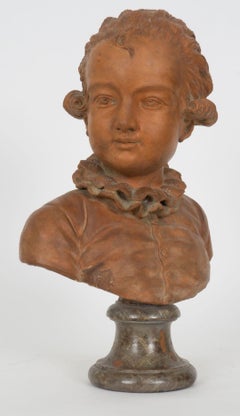
Terracotta Bust of a Young Gentleman, Late 18th Century French Sculpture
Located in Beachwood, OH
After Philippe-Laurent Roland (French, 1746-1816)
Bust of a Young Man, 1772
Terra cotta set on painted wood pedestal
Signed and dated at back
16.5 x 11 x 8 inches
Philippe-Laurent R...
Category
1770s Ohio - Figurative Sculptures
Materials
Terracotta
Italian Bronze Sculpture of Nude Woman, Mid 20th Century
Located in Beachwood, OH
Mario Spampinato (Italian 1912–2000)
Nude
Bronze
Signed on base
17.5 in. h. x 5.75 in. w. x 6 in. d.
The artist was born, raised and trained in Italy. During one of his exhibits (at San Marcos in Rome) the Director of a New York Gallery asked him to come to New York to work for him. The American Consul, before issuing his visa, asked Spampinato to create a bust of him. In exchange, the Consul paid for his passage on the boat to New York. In New York, he worked with his brother Clemente Spampinato who is a well known sculptor as well.
After moving to Chicago in 1954, he discovered that there was no foundry in the Midwest that could cast his bronzes. So, he opened his own foundry called the Spampinato Art Foundry, casting in the lost wax process. He also started his own private school (Spampinato Art Workshop, Ltd) and did some teaching at the University of Chicago and conducted seminars at Lawrence University in Kansas.
Many of his own works are pictured and cataloged in Volumes 2 & 3 of Bronzes: Sculptors and Founders, 1800-1930 by Harold Berman.
Between 1959 and 1967, Spampinato recast a number of Charles M Russell...
Category
Mid-20th Century Ohio - Figurative Sculptures
Materials
Bronze
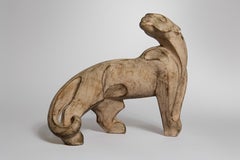
Brutalist Late 20th Century Figurative Panther Sculpture
Located in Beachwood, OH
Alexsander Danel (Estonian, 1940-2001)
Brutalist Panther Sculpture, 1996
Signed 'Danel' and 'Austin Sculpture' to back leg
13.5 x 16.5 inches
Alexsander Danel was born in Estonia and graduated from both the Moscow Industrial Arts School and the Moscow Fine Arts Academy. He earned many awards and distinctions in the Soviet Union, including "Best Work of the Year" in 1973 for his monumental work commemorating the history of the Russian Wars, installed in Kirov. Alexsander Danel emigrated to the U.S. in 1976, after spending a year in Rome where he sculpted set designs for Fellini's "Cassanova" and the Napoli Theater production of "Aida". After settling in New York, he completed commissions for Rockefeller Plaza and Radio City Music Hall. In 1992, he held his first one person show exhibiting computer generated...
Category
1990s Ohio - Figurative Sculptures
Materials
Ceramic
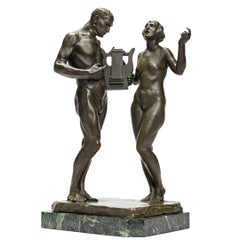
Harmony, 20th century bronze
green marble base, nude man and woman with lyre
By Max Kalish
Located in Beachwood, OH
Max Kalish (American, 1891-1945)
Harmony, c. 1930
Bronze with green marble base
Incised signature on right upper side of base
14 x 9 x 5 inches, excluding base
17 x 10 x 8 inches, including base
Born in Poland March 1, 1891, figurative sculptor Max Kalish came to the United States in 1894, his family settling in Ohio. A talented youth, Kalish enrolled at the Cleveland Institute of Art as a fifteen-year-old, receiving a first-place award for modeling the figure during studies with Herman Matzen. Kalish went to New York City following graduation, studying with Isidore Konti...
Category
1930s American Modern Ohio - Figurative Sculptures
Materials
Marble, Bronze
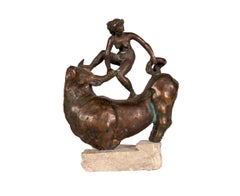
20th Century Continental School Bronze Figure of Europa and the Bull
Located in Beachwood, OH
20th Century Continental School
Europa
Bronze on stone base
11 in. h. x 8.5 in. w. x 4.5 in. d., overall
Inspired by the Greek myth Europa and the Bull
Phoenician princess abducted to Crete by Zeus...
Category
20th Century Ohio - Figurative Sculptures
Materials
Stone, Bronze
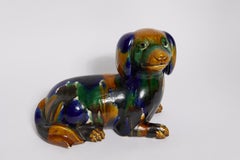
Early 20th Century drip glaze ceramic dog sculpture in the style of Tang/Sancai
Located in Beachwood, OH
Dog in the style of Tang/Sancai, Early 20th Century
Drip glaze ceramic
9.5 x 13 inches
Sancai is a versatile type of decoration on Chinese pottery using glazes or slip, predominantl...
Category
Early 20th Century Ohio - Figurative Sculptures
Materials
Ceramic, Glaze
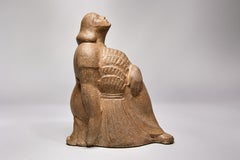
When the Lights Go On Again, Mid Century Cast Stone, Cleveland School Artist
Located in Beachwood, OH
Walter Sinz (American, 1881-1966)
When the Lights Go On Again, 1943
Cast Stone
10 x 4.5 x 8 inches
Walter A. Sinz was an American sculptor born in Cleveland, Ohio on July 13, 1881. ...
Category
1940s Ohio - Figurative Sculptures
Materials
Cast Stone
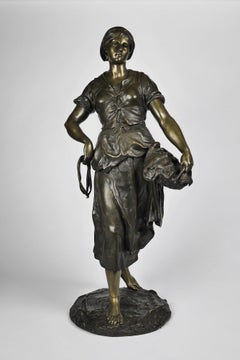
The Fisherwoman, 19th century French bronze sculpture
By Émile Louis Picault
Located in Beachwood, OH
Émile Louis Picault (French, 1833-1915)
Fisherwoman
Bronze
Stamped "E. Picault"
30 x 15 x 12 inches
Subject depicting a young woman holding fishing line in one hand a basket of fis...
Category
19th Century Ohio - Figurative Sculptures
Materials
Bronze
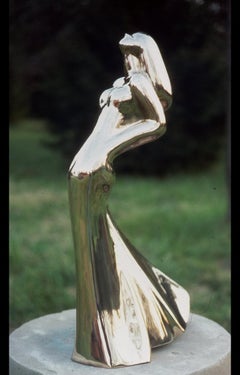
David Hostetler Dancer Gold Shiny Flowing Female Woman Figure By Commission
By David Hostetler
Located in Nantucket, MA
Now available by commission. Dancing Lady in polished bronze is sealed with Glasurit- it never needs to be polished. She is cast from a wood carving of Dancing Lady- an iconic Hostet...
Category
1980s Contemporary Ohio - Figurative Sculptures
Materials
Bronze
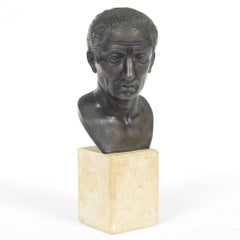
19th Century Bronze Bust of Julius Caesar on Stone Base
Located in Beachwood, OH
Bronze Bust of Julius Caesar, 19th Century
Patinated bronze mounted to stone base
Unsigned
11.25 x 4.5 x 4.5 inches
Gaius Julius Caesar was a Roman general and statesman. A member o...
Category
19th Century Ohio - Figurative Sculptures
Materials
Stone, Bronze
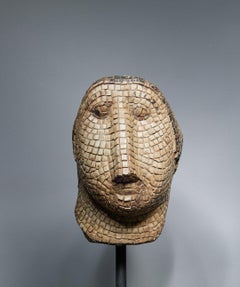
Mosaic Female Head Atop Large Pedestal, 20th Century California Artist
Located in Beachwood, OH
Mary T. Bowling (American, 1917-1995)
Female Head
Mosaic ceramic sculpture
Head: 13 x 7 x 9.5 inches
Overall: 59 inches tall
Provenance:
Fred Schmidt (American 1936-2001)
Mary T. ...
Category
20th Century Ohio - Figurative Sculptures
Materials
Ceramic, Mosaic
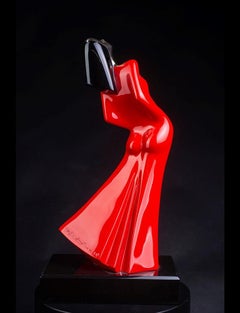
David Hostetler Bronze Dancer Ferrari Red Automotive Paint Female Movement
By David Hostetler
Located in Nantucket, MA
Dancing Lady is an iconic form of David Hostetler's. His first Dancing Lady was carved in white oak and painted in 1979. It wasn't until the early 1990's that David revisited this fo...
Category
Early 2000s Contemporary Ohio - Figurative Sculptures
Materials
Bronze
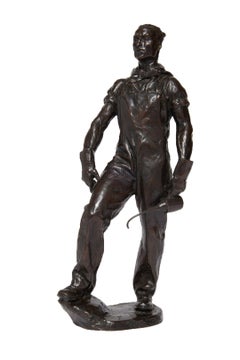
Locomotive Engineer, Early 20th Century Bronze Laborer, Cleveland School
By Max Kalish
Located in Beachwood, OH
Max Kalish (American, 1891-1945)
Locomotive Engineer, 1926
Bronze
Signed and dated on base, foundry mark: Meroni Radice Cire Perdue Paris
15.5 x 6 x 5 inches
Born in Poland March 1, 1891, figurative sculptor Max Kalish came to the United States in 1894, his family settling in Ohio. A talented youth, Kalish enrolled at the Cleveland Institute of Art as a fifteen-year-old, receiving a first-place award for modeling the figure during studies with Herman Matzen. Kalish went to New York City following graduation, studying with Isidore Konti and Herbert Adams...
Category
1920s Ohio - Figurative Sculptures
Materials
Bronze
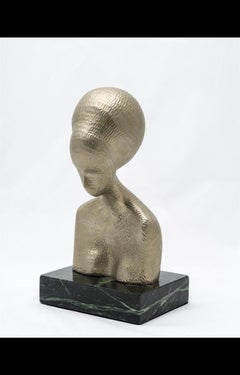
David Hostetler Carved Nickle Sculpture Silver Modern Female Bust 1980s
By David Hostetler
Located in Nantucket, MA
Bust of Quiet Woman is cast nickel. The surface was then re-carved to accent each of the original marks in the wood. This is the only Hostetler sculpture ever cast in nickel and the ...
Category
1980s Abstract Ohio - Figurative Sculptures
Materials
Metal

$7,600 Sale Price
20% Off
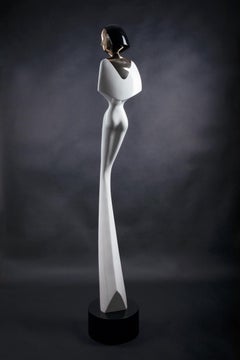
David Hostetler Female Figurative Sculpture BMW Car Paint Art Deco Commission
By David Hostetler
Located in Nantucket, MA
By Commission. Casting and custom paint will take approximately 4 months. I have to get in line with my paint expert. Cape Lady is a polished bronze casting painted with Glasurit, a hand sprayed car paint. It is BMW white and BMW black. It is a limited edition of 15 with 2 artist proofs. The current edition available would be 6/15. It was cast from an original wood carving by David Hostetler...
Category
2010s Art Deco Ohio - Figurative Sculptures
Materials
Bronze
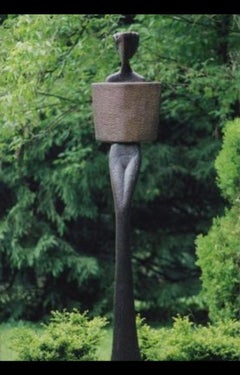
David Hostetler Bronze Sculpture African Figurative Female By Commission
By David Hostetler
Located in Nantucket, MA
Tribal Figure is a bronze cast from a wood carving. The bronze base is cast from an antique mill stone and it is attached to a steel disk to bolt do...
Category
1990s Contemporary Ohio - Figurative Sculptures
Materials
Bronze
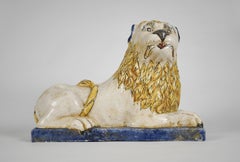
French Faience Tuilerie Normande Mesnil de Bavent Ceramic Figure of a Lion
Located in Beachwood, OH
French Faience Tuilerie Normande Mesnil de Bavent
Figure of a Lion, 19th Century
Ceramic on a rectangular plinth
Impressed 'TN Bavent' to underside
8 x 8 x 14 inches
Tuilerie Normande Mesnil de Bavent is a French pottery factory.
The first pottery factory here was set up in 1842 by industrialist Maurice Comptet. He bought a bit of production organization to an artisanal craft, enabling mass production of tiles, pots and architectural ornaments. The Tuilerie du Mesnil de Bavent (tuilerie means tile) business flourished and his sons inherited. One stayed in Bavent to make pots, the other developed a factory mainly producing pots, in Caen.
Bavent pottery...
Category
19th Century Ohio - Figurative Sculptures
Materials
Ceramic