Paris Tea Caddies
to
4
1
1
4
1
4
4
4
4
4
1
260
215
4
4
1
1
1
Height
to
5
5
5
4
Item Ships From: Paris
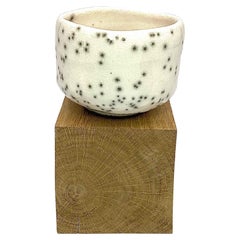
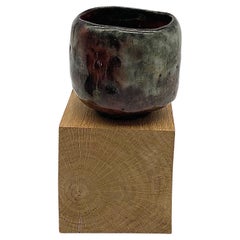
Bowl, Jean François Reboul
By Jean François Reboul
Located in Paris, FR
Bowl by Jean François Reboul made of clay and enamel using Raku technique. 2019.
“Certificate of Authenticity” provided by the gallery.
Jean-Fra...
Category
21st Century and Contemporary French Modern Paris Tea Caddies
Materials
Enamel
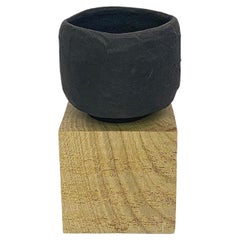
Bowl, Jean François Reboul
By Jean François Reboul
Located in Paris, FR
Bowl by Jean François Reboul made of clay and enamel using Raku technique. 2019.
“Certificate of Authenticity” provided by the gallery.
Jean...
Category
21st Century and Contemporary French Modern Paris Tea Caddies
Materials
Enamel
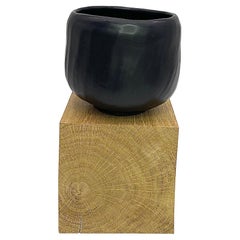
Satin Bowl, Jean François Reboul
By Jean François Reboul
Located in Paris, FR
Satin bowl by Jean François Reboul made of clay and enamel using Raku technique in 2019.
“Certificate of Authenticity” provided by the gallery.
...
Category
21st Century and Contemporary French Modern Paris Tea Caddies
Materials
Enamel
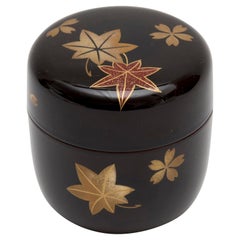
Japanese Lacquered Natsume
Tea Box
Located in PARIS, FR
Natsume in dark red lacquer, decorated with autumn leaves and cherry blossoms in hiramaki-e and nashiji. Interior in black lacquer.
Maple leaves (Momiji) are celebrated in literatur...
Category
Mid-20th Century Japanese Paris Tea Caddies
Materials
Lacquer
Bowl, Jean François Reboul
By Jean François Reboul
Located in Paris, FR
Bowl by Jean François Reboul made of clay and enamel using Raku technique. 2019.
“Certificate of Authenticity” provided by the gallery.
Jean...
Category
21st Century and Contemporary French Modern Paris Tea Caddies
Materials
Enamel
Related Items
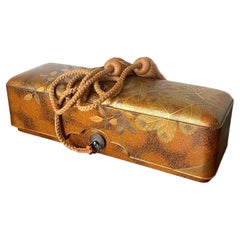
Japanese Lacquer Maki-E Scroll Box Fubako by Kansonsai Edo Period
Located in Atlanta, GA
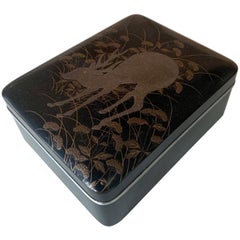
A Japanese lacquered wood fubako (a box to store document or small scroll painting) circa late 18th century of Edo period. The rectangular box features a deep lid with rounded corners and recessed mid-edge and a lower box with two bronze medallion rings and tasseled silk ties. The surface of the fubako was elaborately decorated with hiramaki-e and a low takamaki-e on a mottled Mura-nashiji background. The motifs on the lid depict branches of Japanese pine with finely rendered needles on the lower part; on the upper part, it showcases fruited persimmon branches. Two different shades of gold fundame were used to contrast the design and augmented by scattered gold kirigane to highlight some of the leaves. The design continues and cascades down to all sides of the lid as well as the walls of the box. The two bronze medallions appear original to the box and the silk ties show significant fading from the age. This Fine fubako is signed on the lower wall "Kanshosai" in Kanji with a kao mark. All the trims were finished in gold fundame and the interiors a dense nashiji in gold.
Kanshosai is the mark of the distinguished lacquer artist Lizuka Toyo I who also signed his work "Toyosai". He was active in the second half of the 18th century during Edo period, employed by Hachisuka Shigeyoshi (1738-1801), daimyo of Awa on Shikoku Island. Although most survived work bearing his marks are inros, he was also known to decorated trays and other larger objects...
Category
Late 18th Century Japanese Edo Antique Paris Tea Caddies
Materials
Wood, Lacquer

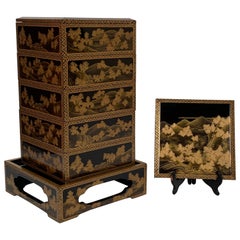
Japanese Maki-e Lacquer Stacking Box, Jubako, Meiji Period, Japan
Located in Austin, TX
A fine and impressive Japanese gold maki-e decorated black lacquer five-tier jubako with presentation tray, two lids, and the original tomobako storage box, Meiji period, late 19th c...
Category
Late 19th Century Japanese Meiji Antique Paris Tea Caddies
Materials
Lacquer
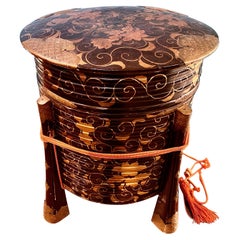
Japanese Lacquer Hokai Box, 19th Century
Located in Pasadena, CA
This is a good example of a traditional Japanese Hokai shell storage box for the Kai-awase game. This box is well-detailed in chased brass appliques and makie. The box is in overall ...
Category
Late 19th Century Japanese Japonisme Antique Paris Tea Caddies
Materials
Wood, Lacquer
Japanese Rinpa Style Lacquer Box Meiji Period
Located in Atlanta, GA
A black lacquer tebako (hand box) with maki-e decoration and silver trim, circa late 19th century, Meiji period. The surface of the lid features a Rinpa style maki-e paint depicting ...
Category
1890s Japanese Japonisme Antique Paris Tea Caddies
Materials
Wood, Lacquer
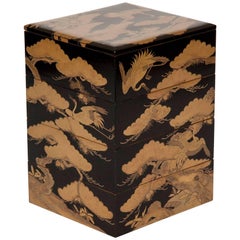
Japanese Black Lacquer Jubako Box with Stork Motif
Located in Stamford, CT
A four-tier Japanese Meiji period black lacquer Jubako box with stork and fir tree decoration. Box in four sections with lid.
Category
Late 19th Century Japanese Edo Antique Paris Tea Caddies
Materials
Lacquer
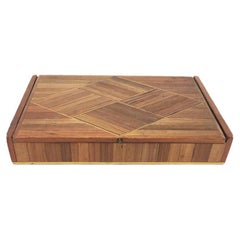
Jean Michel Frank Large Straw French Marquetry Box, 1930s
By Jean-Michel Frank
Located in Milan, IT
Astonishing French straw-marquetry box, dating from the 1930s, designed by Jean-Michel Frank.
Category
1930s French Art Deco Vintage Paris Tea Caddies
Materials
Straw, Cork
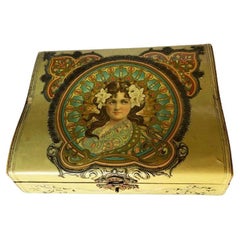
Art Nouveau Satin Lined Jewelry Box with/ Portrait on Cover
Located in Van Nuys, CA
Art Nouveau Jewelry Pink Satin Lined Box, the woman is depicted with flowers in her hair and pink cheeks.
Box has Evidence of wear over time, ...
Category
1910s American Art Nouveau Vintage Paris Tea Caddies
Materials
Wood
$144 Sale Price
40% Off
H 3 in W 9.75 in D 7.5 in
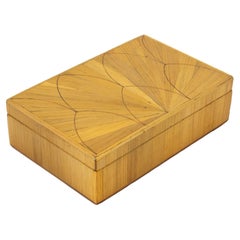
Jean Michel Frank Geometric Straw Marquetry Box, France circa 1930
By Jean-Michel Frank
Located in Atlanta, GA
This rare Art Deco straw marquetry lidded box is attributed to French designer Jean Michel Frank. The piece was expertly crafted in France circa 1930. The rectangular shape is stunni...
Category
1930s French Art Deco Vintage Paris Tea Caddies
Materials
Straw, Wood
$3,000
H 1.75 in W 5.94 in D 3.94 in
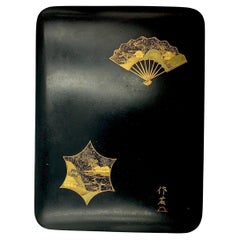
Japanese Meiji Period Antique Lacquer Box with Gold Maki-e Decoration
Located in New York, NY
A fine antique Japanese Meji Period lacquer box decorated with a fan and a stylized star shaped window in the maki-e technique. The fan at the top right corner, fully opened depictin...
Category
19th Century Japanese Meiji Antique Paris Tea Caddies
Materials
Lacquer
$1,700
H 4.5 in W 3.25 in D 1.88 in
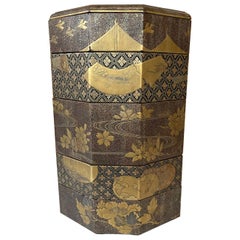
Japanese Maki-e Lacquer Stack Box Jubako
Located in Atlanta, GA
An antique jubako (stack boxes) with five tiers in an elongated octagon shape circa 19th century (end of Edo or beginning of Meiji period). jubako was traditionally used to store and...
Category
19th Century Japanese Japonisme Antique Paris Tea Caddies
Materials
Wood, Lacquer
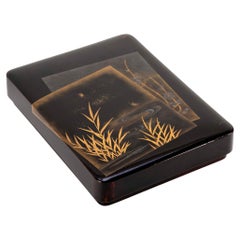
Black and Gold Lacquer Japanese Suzuribako Box
Located in Stamford, CT
19th century Japanese black and gold lacquer Suzuribako box with firefly and plum blossom design.
Category
Late 19th Century Japanese Antique Paris Tea Caddies
Materials
Lacquer
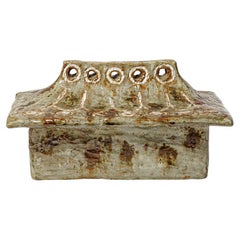
Glazed stoneware box by Jean-Pierre Viot, 1968. Unique piece.
By Jean-Pierre Viot
Located in Saint-Ouen, FR
Glazed stoneware box by Jean-Pierre Viot.
Artist signature under the base. 1968.
H : 3.7 x 13.4 x 9.8 inches.
Category
Mid-20th Century French Beaux Arts Paris Tea Caddies
Materials
Ceramic
Previously Available Items
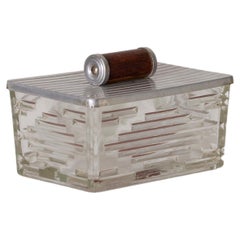
Glass biscuit box
Located in PARIS, FR
Art Deco biscuit box or sugar bowl from the 1930s. The box is made of engraved decorated glass, with a metal lid and a precious wood handle. In very good...
Category
Mid-20th Century Paris Tea Caddies
Materials
Glass
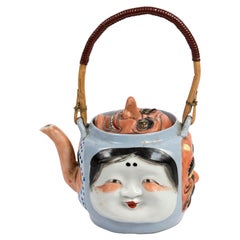
Japanese Banko Teapot
By Banko
Located in PARIS, FR
Banko polychrome enamelled terracotta teapot, representing on each side masks from the Japanese folklore. Handle in wickerwork.
On the spout, Hyottoko, a comical and childlike character. He is recognizable by the shape of his elongated mouth with two red dots (he blows fire with a bamboo pipe), his white scarf with blue dots around his face and his eyes of different sizes. During local festivals like in Miyazaki, he appears in traditional dengaku dances and plays the role of a clown.
On his left, Okame (also called Uzume or Otafuku), deity of Happiness and Good omen, known to bring good fortune. She is shown smiling with two black dots on her forehead.
To the right of Hyottoko, mask of a hero in kabuki theater. The stage make-up work by the actors is called kumadori. It is characterizd by a white complexion, colors and patterns symbolizing aspects of the actor's personality. The red color symbolizes virtue and power, and characterizes a powerful hero.
On the back side, the demon Oni, with its horns and sharp teeth. He symbolizes greed. During the Setsubun festival, people expel bad luck and invite good luck by throwing beans at it.
Cover representing Tengu with a red face, scary eyes and a long nose. It is a half-god, half-demon being from the Shinto tradition, with the ability to fly. He is reputed to divert humans from their Buddhist faith. According to some traditions, he is the protector of the mountains. The Tengu mask...
Category
Early 20th Century Japanese Paris Tea Caddies
Materials
Ceramic, Bamboo
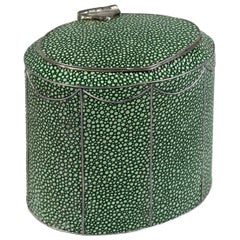
Shagreen Tea Caddy, Georges III Style, 19th Century
Located in Paris, FR
Georges III style lovely green shagreen oval-shaped tea caddy. Silver plated mount and oval hinged lid.
Perfect to store with refinement and elegance tea or other items.
Signed b...
Category
19th Century British George III Antique Paris Tea Caddies
Materials
Silver Plate
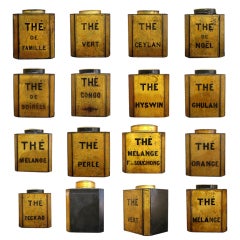
collection of fourteen XIX century tea canisters
Located in Paris, FR
Collection of fourteen large tea canisters , France late nineteenth century.
Gilded and painted tin.
Two canisters are largest than the twelve others.
Dimensions: Width 11.42 X...
Category
19th Century French Antique Paris Tea Caddies
Still Thinking About These?
All Recently ViewedMore Ways To Browse
Tea Lock Box
Antique Apple Tea Caddy
Antique Mauchline Ware
Antique Tartan Ware
Apple Tea Caddy
Chinese Tea Chest Antique
English Mother Of Pearl Inlaid Tea Caddy
Mauchline Ware
Papier Mache Tea Caddy
Tartan Ware
Tea Poy
Blonde Tortoise Shell
Dome Tea Caddy
George Davis Antiques Tea Caddy
Japanese Silver Tea Caddy
Lacquer Tea Chest
Paper Mache Tea Caddy
Paper Scroll Tea Caddy