South Carolina - Interior Prints
to
3
Overall Width
to
Overall Height
to
1
1
3
1
1
1
3
3
1
1
1
1
1
1
1
2
1
1
1,178
793
Item Ships From: South Carolina
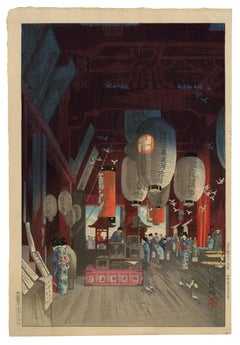
Interior of the Kannon Temple at Asakusa
— Tokyo Landmark, Early Edition
Located in Myrtle Beach, SC
NARAZAKI EISHO (1864-1936), 'Asakusa Kannon-do no naido' (Interior of the Kannon Temple at Asakusa), color woodblock print, 1932. Signed Eisho lower right, with the artist’s red seal beneath. A fine impression with fresh colors; the full sheet with slight overall age toning, a drying tack...
Category
1930s South Carolina - Interior Prints
Materials
Woodcut
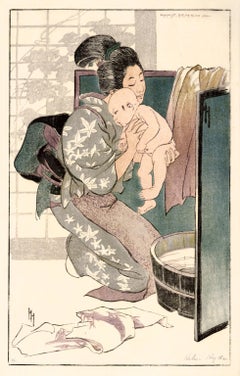
The Bath
— Meji Era Cross-Cultural Woman Artist
By Helen Hyde
Located in Myrtle Beach, SC
Helen Hyde, 'The Bath', color woodblock print, edition not stated, 1905, Mason & Mason 59. Signed in pencil in the image, lower right. Numbered '96' in pencil in the image, lower left. The artist's monogram in the block, lower left, and 'Copyright, 1905, by Helen Hyde.' upper right. A superb impression with fresh colors on tissue-thin cream Japanese paper; the full sheet with margins (7/16 to 1 5/8 inches), in excellent condition. Matted to museum standards, unframed.
Image size 16 1⁄4 x 10 1⁄8 in. (413 x 260 mm); sheet size: 19 1⁄4 x 11 1⁄8 in. (489 x 283 mm).
Literature and Exhibition: Back cover illustration of the catalog of the artist’s prints, 'Helen Hyde', Smithsonian Institution Press, 1990; 'The International Block Print Renaissance, Then And Now, Block Prints In Wichita, Kansas, A Centennial Celebration — 1922-2022', Barbara J. Thompson, Wichita Art Museum, 2022 (back cover).
Impressions of this work are held in the following collections: Achenbach Foundation for Graphic Arts, Art Institute of Chicago, Fine Arts Museums of San Francisco (De Young), Harvard Art Museums, Library of Congress, Metropolitan Museum of Art, New York Public Library, Smithsonian American Art Museum, Terra Foundation for American Art, University of Oregon Museum of Art.
ABOUT THE ARTIST
Helen Hyde (1868-1919) was a pioneer American artist best known for advancing Japanese woodblock printmaking in the United States and for bridging Western and Japanese artistic traditions. Hyde was born in Lima, New York, but after her father died in 1872, her family relocated to Oakland, California, where she spent much of her youth.
Hyde pursued formal art education in the United States and Europe. She enrolled in the San Francisco School of Design, where she took classes from the Impressionist painter Emil Carlsen; two years later, she transferred to the Art Students League in New York, studying there with Kenyon Cox. Eager to expand her artistic repertoire, Hyde traveled to Europe, studying under Franz Skarbina in Berlin and Raphael Collin in Paris. While in Paris, she first encountered Japanese ukiyo-e prints, sparking a lifelong fascination with Japanese aesthetics. After ten years of study, Hyde returned to San Francisco, where she continued to paint and began to exhibit her work.
Hyde learned to etch from her friend Josephine Hyde in about 1885. Her first plates, which she etched herself but had professionally printed, represented children. On sketching expeditions, she sought out quaint subjects for her etchings and watercolors. In 1897, Hyde made her first color etchings—inked á la poupée (applying different ink colors to a single printing plate)—which became the basis for her early reputation. She also enjoyed success as a book illustrator, and her images sometimes depicted the children of Chinatown.
After her mother died in 1899, Hyde sailed to Japan, accompanied by her friend Josephine, where she would reside, with only brief interruptions, until 1914. For over three years, she studied classical Japanese ink painting with the ninth and last master of the great Kano school of painters, Kano Tomonobu. She also studied with Emil Orlik, an Austrian artist working in Tokyo. Orlik sought to renew the old ukiyo-e tradition in what became the shin hanga “new woodcut prints” art movement. She immersed herself in the study of traditional Japanese printmaking techniques, apprenticing with master printer Kanō Tomonobu. Hyde adopted Japanese tools, materials, and techniques, choosing to employ the traditional Japanese system of using craftsmen to cut the multiple blocks and execute the exacting color printing of the images she created. Her lyrical works often depicted scenes of family domesticity, particularly focusing on women and children, rendered in delicate lines and muted colors.
Through her distinctive fusion of East and West, Hyde’s contributions to Western printmaking were groundbreaking. At a time when few Western women ventured to Japan, she mastered its artistic traditions and emerged as a significant figure in the international art scene.
Suffering from poor health, she returned to the United States in 1914, moving to Chicago. Having found restored health and new inspiration during an extended trip to Mexico in 1911, Hyde continued to seek out warmer climates and new subject matter. During the winter of 1916, Hyde was a houseguest at Chicora Wood, the Georgetown, South Carolina, plantation illustrated by Alice Ravenel Huger Smith in Elizabeth Allston Pringle’s 1914 book A Woman Rice Planter. The Lowcountry was a revelation for Hyde. She temporarily put aside her woodcuts and began creating sketches and intaglio etchings of Southern genre scenes and African Americans at work. During her stay, Hyde encouraged Smith’s burgeoning interest in Japanese printmaking and later helped facilitate an exhibition of Smith’s prints at the Art Institute of Chicago.
During World War I, Hyde designed posters for the Red Cross and produced color prints extolling the virtues of home-front diligence.
In ill health, Hyde traveled to be near her sister in Pasadena a few weeks before her death on May 13, 1919. She was buried in the family plot near Oakland, California.
Throughout her career, Hyde enjoyed substantial support from galleries and collectors in the States and in London. She exhibited works at the St. Louis Exposition in 1897, the Pan-American Exhibition in Buffalo in 1901, the Tokyo Exhibition for Native Art (where she won first prize for an ink drawing) in 1901, the Alaska-Yukon-Pacific Exhibition in Seattle in 1909 (received a gold medal for a print), the Newark Museum in 1913, a solo show at the Chicago Art Institute in 1916, and a memorial exhibition in 1920, Detroit Institute of Arts, Color Woodcut Exhibition in 1919, New York Public Library, American Woodblock Prints...
Category
Early 1900s Showa South Carolina - Interior Prints
Materials
Woodcut
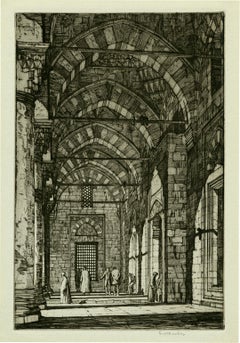
Mosque of the Sultan Bayazid, Constantinople — Vintage Realism
By Louis Conrad Rosenberg
Located in Myrtle Beach, SC
Louis Conrad Rosenberg, 'Mosque of the Sultan Bayazid, Constantinople', etching, 1927. Signed in pencil. Initialed and dated in the plate, lower left. A fine, richly-inked impression...
Category
1920s American Realist South Carolina - Interior Prints
Materials
Drypoint
Related Items
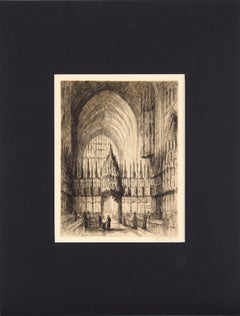
Chester Cathedral - Drypoint Etching in Ink on Paper
Located in Soquel, CA
Chester Cathedral - Drypoint Etching in Ink on Paper
Dramatic drypoint etching by J. Alphege Brewer (British, 1881-1946). This composition shows the interior of Chester Cathedral in Brewer's characteristic style - highly detailed and with strong contrast. The scene encompasses the cathedral from floor to ceiling, capturing the immense size of the building. There are several people in the scene which contribute to the sense of scale.
Signed by hand "J. Alphege Brewer" in the lower right corner.
Titled "Chester Cathedral" in plate, lower left corner.
Includes original card with artist's name.
Presented in a new black mat with foamcore backing.
Mat size: 16"H x 12"W
Paper size: 10.75"H x 7.75"W
James Alphege Brewer was well known in the early 20th century as a producer of color etchings of European cathedrals and other scenes of church, college, and community. He was born July 24, 1881, in the Kensington section of London, England, the son of Henry W. Brewer, noted artist of historical architecture and prominent convert to the Catholic Church, and the grandson of John Sherren Brewer, Jr., “the brilliant editor of the Calendar of Letters of Henry VIII.” His great uncle was E. Cobham Brewer, the polymath who compiled Brewer’s Dictionary of Phrase and Fable. Among his older siblings were the artist Henry C. Brewer and the organist and writer John Francis Brewer.
Brewer attended the Westminster School of Art in London, where his brother Henry also trained. In 1910, he married Florence Emma Lucas, an accomplished painter in oil and watercolor, whose father was the noted landscape artist George Lucas and whose great uncle was David Lucas, the famous engraver for John Constable. Florence's brothers Edwin and George assisted Brewer in the printing of Brewer's etchings.
Brewer exhibited at the Royal Academy (RA) and the Royal Institute of Painters in Watercolour (RI), at the Paris Salon of the Académie des Beaux-Arts, and in the shows of the Royal Cambrian Academy (RCA). He became an associate of the Royal Cambrian Academy in 1929 and a full member in the last two years of his life. He was also a member of the Hampstead Society of Artists, the Society of Graphic Art, and the Ealing Arts Club, where he was first Honorary Art Secretary and then Honorary Art Chairman. Most of Brewer's larger etchings were published by Alfred Bell...
Category
Early 20th Century Romantic South Carolina - Interior Prints
Materials
Paper, Ink, Drypoint

$396 Sale Price
20% Off
H 16 in W 12 in D 0.25 in
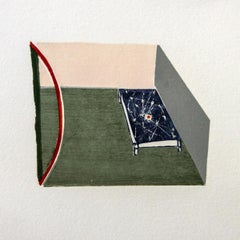
Room with a red arch - XXI Century, Contemporary Linocut Woodcut Print, Colorful
By Maria Stelmaszczyk
Located in Warsaw, PL
Maria Stelmaszczyk is a Polish artist born in 1983.
PROVENANCE
Exhibited at Katarzyna Napiorkowska Gallery.
The Gallery is a primary representative for this artist.
The Gallery o...
Category
Early 2000s Contemporary South Carolina - Interior Prints
Materials
Paper, Woodcut, Linocut
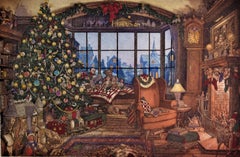
Fireside Christmas
Located in San Francisco, CA
This artwork titled "Fireside Christmas" c. 1985 is an original color etching by American artist Scott Fitzgerald. It is hand signed, titled and numbered 158/250 in pencil by the artist. Published and printed by the artist. The image (plate mark) size is 11.5 x 17.65 inches, sheet size is 19.25 x 25.25 inches. it is in excellent condition, has never been framed.
About the artist:
Scott Fitzgerald received his Master’s Degree in Arts from California State University Fullerton, and went on to teach drawing and printmaking for 2 years at the university.
During his college years, he focused his study in contemporary art and photography, creating mixed media works often with social comments. It was not until the sophomore year, he discovered the traditional art of etching in his printmaking class. Immediately, he embraced the complex and difficult technical process of making prints from etching on copper plates.
Scott Fitzgerald established himself as a prominent printmaker in the next few years. With a strong interest in history, he accepted a commission to produce a series of etching depicting 15 Orange County historical landmarks. Besides producing very intricate prints in various sizes, he has engaged in many special projects. He worked with renowned English printer John Randle to produce a group of etchings...
Category
Late 20th Century American Realist South Carolina - Interior Prints
Materials
Etching
"Toy Horse Dance" Japanese Woodblock Triptych with Beauties and Mt Fuji
Located in Soquel, CA
"Toy Horse Dance" Japanese Woodblock Triptych with Beauties and Mt Fuji
Vibrant three-panel woodblock print by Utagawa Toyohiro (Japanese,...
Category
Early 20th Century Edo South Carolina - Interior Prints
Materials
Ink, Rice Paper, Woodcut
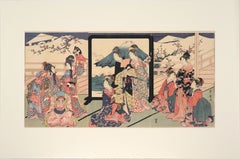
Utagawa Toyohiro"Toy Horse Dance" Japanese Woodblock Triptych with Beauties and Mt Fuji, early 1900s
$1,360 Sale Price
20% Off
H 24 in W 36 in D 0.25 in
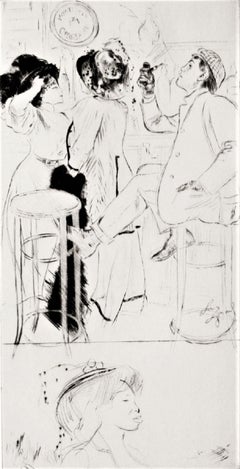
Sportsmen
By Louis Legrand
Located in Storrs, CT
Sportsmen. 1908. Etching and drypoint. Exsteens 271.i/ii. 11 1/4 x 5 3/4 (sheet 17 3/8 x 12 1/4). Series: Les Bars. From the first state edition of 30 proofs with the remarque sketch...
Category
Early 1900s Post-Impressionist South Carolina - Interior Prints
Materials
Drypoint, Etching
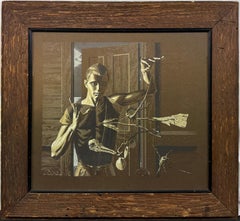
“Mobile (The Inventor), 1953” Paul Cadmus Magical Realism Serigraph Signed
By Paul Cadmus
Located in Yardley, PA
“Mobile (The Inventor), 1953” by Paul Cadmus (American, 1904-1999).
A figure painter known from the 1930s on for his baldly satirical commentaries on human appetites and desires, Ca...
Category
1950s American Realist South Carolina - Interior Prints
Materials
Paper
$3,500
H 25.75 in W 28 in D 1 in
Original "Me Travel? not this summer Vacation At Home vintage poster 1945
Located in Spokane, WA
Original World War Two, U. S. Military poster: ME TRAVEL? … NOT THIS SUMMER, VACATION AT HOME. Artist Albert Dorne. This is the large format printing (26" x 37") of this poster...
Category
1940s American Realist South Carolina - Interior Prints
Materials
Offset

$719 Sale Price
20% Off
H 37 in W 26 in D 0.05 in
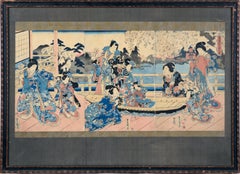
Elegant Amusements of Eastern Genji - Japanese Triptych Woodblock Print on Paper
By Utagawa Kunisada (Toyokuni III)
Located in Soquel, CA
Elegant Amusements of Eastern Genji - Japanese Triptych Woodblock Print on Paper
Dynamic woodblock print with several elegantly dressed figures by Utag...
Category
1850s Edo South Carolina - Interior Prints
Materials
Paper, Ink, Woodcut
$1,240 Sale Price
20% Off
H 22.5 in W 32.5 in D 1 in
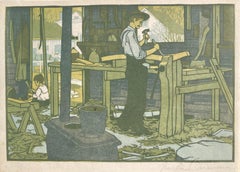
THE WAGON SHOP
By Gustave Baumann
Located in Santa Monica, CA
GUSTAVE BAUMANN (1881 – 1971)
THE WAGON SHOP, 1910 (Chamberlain 24)
Color woodcut signed in pencil. Unnumbed from an edition 100 as published in the Hills o’ Brown...
Category
1910s Modern South Carolina - Interior Prints
Materials
Woodcut
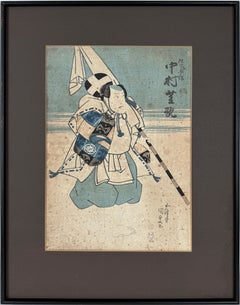
Kabuki actor Nakamura Shikan II by Utagawa Kunisada Edo Japanese Woodblock Print
By Utagawa Kunisada (Toyokuni III)
Located in Soquel, CA
Kabuki actor Nakamura Shikan II by Utagawa Kunisada Japanese Woodblock Print
Wonderful portrait of Nakamura Shikan II, a prominent kabuki actor, in the role of Kisen Hoshi Toyokuni ...
Category
1820s Realist South Carolina - Interior Prints
Materials
Printer s Ink, Rice Paper, Woodcut
$550
H 21.75 in W 16.75 in D 1.25 in
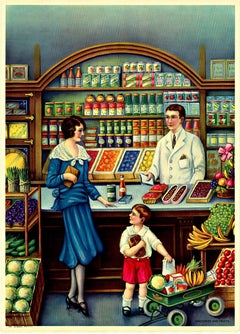
Original Groceries and Fruits chromolithograph vintage poster 1920s
Located in Spokane, WA
Original Groceries and Fruits vintage chromolithograph poster.
Antique Cromo lithograph of your early fruit and grocery store. What service! Printed in Germany. This printing st...
Category
1920s American Realist South Carolina - Interior Prints
Materials
Lithograph
$391 Sale Price
20% Off
H 16.5 in W 12 in D 0.05 in
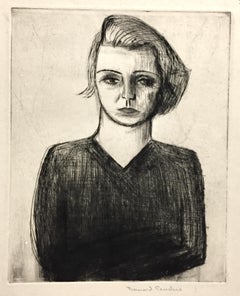
Bernard Sanders, Head of Girl
Located in New York, NY
For a print that's nearly one hundred years old it feels very contemporary.
Signed in pencil; titled in lower margin in pencil.
Category
Early 20th Century American Modern South Carolina - Interior Prints
Materials
Drypoint
Previously Available Items
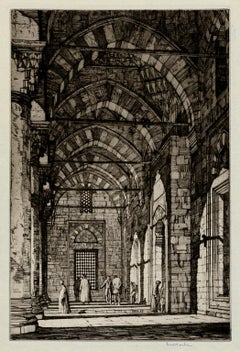
Mosque of the Sultan Bayazid, Constantinople
By Louis Conrad Rosenberg
Located in Myrtle Beach, SC
Louis Conrad Rosenberg, 'Mosque of the Sultan Bayazid, Constantinople', etching, 1927. Signed in pencil. Initialed and dated in the plate, lower left. A fine, richly-inked impression...
Category
1920s American Realist South Carolina - Interior Prints
Materials
Drypoint