Spain - Furniture
to
2,104
494,238
449,146
11,921
9,986
491
6,989
3,000
761
679
448
386
244
199
86
76
64
47
43
35
29
28
27
10
1,170
1,550
9,201
10,477
750
3,570
3,485
62
18
122
222
281
724
884
1,346
422
190
11,139
6,248
3,928
2,643
2,402
20,029
9,376
4,629
2,324
1,412
22,398
13,586
15,140
788
647
492
379
302
Item Ships From: Spain
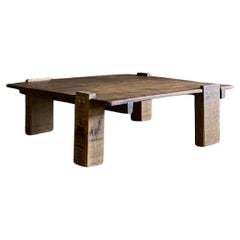
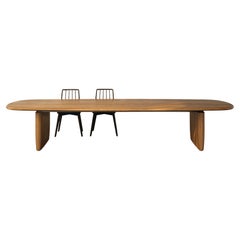
Matthias Biberon Japanese Cedar
Oak Low Table 2024
By Matthias Biberon
Located in Santa Gertrudis, Baleares
These low table is a very special Matthias Biberon work, in Japanese Cedar and Oak. All joints are visible is the artist's signature in the pure Japanese influence of Mingei thought and Wabi Sabi. This is the beauty of the everyday object, one whose details we never tire of rediscovering.
Matthias Biberon (Paris, 1977) lives and works in Perche (Normandy / France).
He began working with wood in 2019, leaving behind photography and ceramics, which he had practiced successfully for many years. In wood, he finds the pleasure of imagining shapes and building them, with a combination of both naivety and attention to detail, and a freedom that neither conceptualism nor ceramics had given him. His furniture is organic, respecting the original shape of the wood and following its knots and veins. The search for balance and precision is one of the cornerstones of Matthias's work.
Carefully sourced, the wood types used - Oak, Elm, Cedar, Walnut - have been dried for decades, giving them an unrivalled patina. His trademark? Visible construction and the blending of materials, with stone a natural addition to his creations; for each of them, he seeks a form of balance, purity and softness, a functionality that is both poetic and sculptural, the simplicity and force of a haiku.
Passionate about art, it was while progressing towards Arts & Crafts that he embraced the aesthetics of functionalism, Mingeï and the thinking of William Morris. He is sensitive to the Arte Povera of Jannis Kounellis and Giovanni Anselmo, the Zen influence of John Cage, the freedom of Don Cherry...
Category
2010s French Other Spain - Furniture
Materials
Oak, Cedar
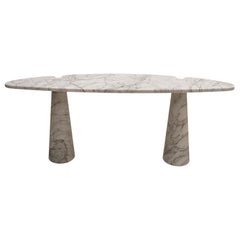
Angelo Mangiarotti for Skipper Arabescato Marble Eros Console Table, Italy
By Angelo Mangiarotti
Located in Ibiza, Spain
Console table designed by Angelo Mangiarotti composed of tabletop resting on two conical marble legs,1970s. Iconic and original design in Arabescato marble.
This piece is an exampl...
Category
1970s Italian Mid-Century Modern Vintage Spain - Furniture
Materials
Marble
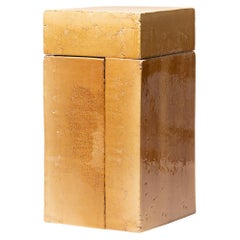
Contemporary Ceramic Sidetable / Pedestal Glazed Earthenware Caramel
By Xavier Mañosa, Apparatu
Located in Rubi, Catalunya
Handmade earthenware side table pedestal manufactured at the workshop of Apparatu in Barcelona. Different clay bodys are mixed with natural fibers like corn, straw, or heather straw....
Category
2010s Spanish Modern Spain - Furniture
Materials
Ceramic, Earthenware
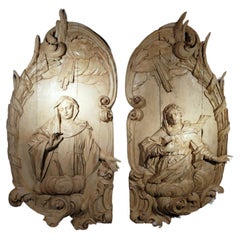
Pair of Monumental Sculpted Panels from the Eighteenth Century
Located in Madrid, ES
PAIR OF MONUMENTAL CARVED PANELS FROM THE 18TH CENTURY
IMPORTANT SPANISH BAROQUE 18TH CENTURY WOODEN PANELS ATTRIBUTED TO: Luis Bonifás y...
Category
18th Century Antique Spain - Furniture
Materials
Fruitwood
Pamunu Dining Table Ten Seat Handmade Teak Organic Form, In Stock
Located in Palma, ES
The Pamunu Dining Table embodies our design philosophy: we prefer to simply craft so as to let the natural beauty of our materials speak for themselves. This extraordinary table, des...
Category
21st Century and Contemporary Spanish Mid-Century Modern Spain - Furniture
Materials
Stainless Steel
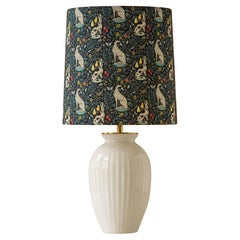
Royal Delft White Ceramic Table Lamp with Liberty London Lampshade, 1930s
By Liberty of London, Royal Delft
Located in AMSTERDAM, NL
Vintage Royal Delft White Ceramic Table Lamp with New Liberty London Fabric Shade handcrafted by Amitābha Studio, 1930s–1976. This one-of-a-kind ...
Category
Mid-20th Century Dutch Bohemian Spain - Furniture
Materials
Brass

$497 Sale Price
40% Off
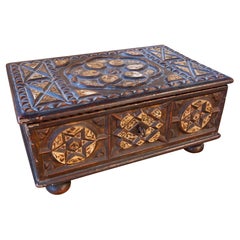
17th Antique Aragonese Carved Wooden Box with Geometric Inlays
Located in Marbella, ES
Magnificent antique hand-carved wooden chest, decorated with intricate geometric motifs and inlays in light tones that contrast with the dark background. The design features stars, d...
Category
17th Century Spanish Antique Spain - Furniture
Materials
Wood
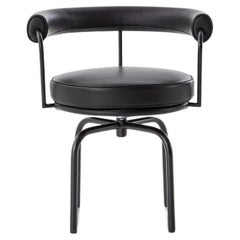
Charlotte Perriand 7 Fauteuil Tournant, Durable Chair For Cassina
By Charlotte Perriand
Located in Barcelona, Barcelona
Charlotte Perriand 7 Fauteuil Tournant, Durable Chair For Cassina
An icon with an aptitude for versatility and functionality designed in 1927 by Charlotte Perriand for her Paris at...
Category
2010s Italian Mid-Century Modern Spain - Furniture
Materials
Chrome
Blackened Gold Iliakos Wall Light by Lisa Allegra
Located in Geneve, CH
Blackened Gold Iliakos wall light by Lisa Allegra
Dimensions: W 12 x D 8 x H 54 cm
Materials: Ceramic
Additional I...
Category
2010s Spanish Post-Modern Spain - Furniture
Materials
Other
$1,357 / item
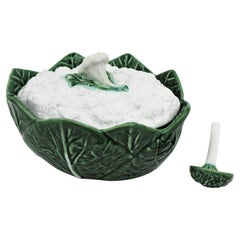
Majolica Cauliflower Tureen Centerpiece in Glazed Ceramic, 1960s
Located in Barcelona, ES
Cauliflower Tureen Centerpice with Ladle, Majolica, Glazed Ceramic. Spain, 1960s
Eye-catching hand painted Manises ceramic cauliflower with leaves ...
Category
20th Century Spanish Mid-Century Modern Spain - Furniture
Materials
Majolica, Pottery, Ceramic
$1,321 Sale Price
20% Off
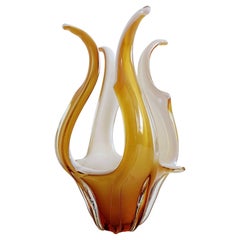
Murano Glass Vase Centerpiece in Amber and Opal White Glass, Italy, 1960s
Located in Valencia, VC
Large Mid-Century Modern Murano Glass Vase/Centerpiece, Italy, 1960s
Elegant and sculptural, this Mid-Century Modern Murano glass vase features fluid, curled forms and a striking am...
Category
1960s Italian Mid-Century Modern Vintage Spain - Furniture
Materials
Glass, Art Glass, Blown Glass, Murano Glass, Opaline Glass
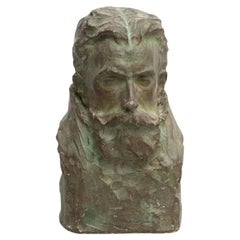
Vintage Plaster Bust Sculpture by Miquel Blay, Spain, circa 1930
Located in Barcelona, Barcelona
Vintage Plaster Bust Sculpture by Miquel Blay, Spain, circa 1930 – Original Condition
Behold the captivating allure of this vintage plaster bust sculpture, attributed to the renowne...
Category
20th Century Spanish Mid-Century Modern Spain - Furniture
Materials
Plaster
$3,362 Sale Price
20% Off
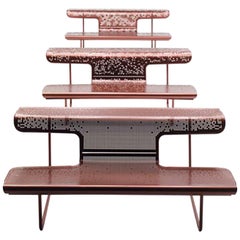
Swiss Benches by Alfredo Haberli for BD Barcelona
By Alfredo Häberli 1, BD Barcelona Design
Located in Brooklyn, NY
The Swiss benches designed by Alfredo Häberli for BD Barcelona. The innovation of the Swiss bench forms a new class of furniture products in BD Barcelona. This bench can be used in many ways. It is excellent for furnishing a municipal park, an airport terminal or a shopping mall...
Category
21st Century and Contemporary Spanish Spain - Furniture
Materials
Steel
$5,316 / item
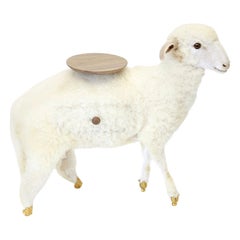
Salvador Dali Surrealist Sculpture Side Table Model Xai Limited Edition 16/20
By Salvador Dalí, Deyrolle, BD Barcelona Design
Located in Barcelona, Barcelona
"XAI” lamb designed by Salvador Dali manufactured by BD Barcelona and Deyrolle.
Measures: 87 x 26 x H 71 (head) and H 59 (back)
approximate
Inspired by the painting "Interpret...
Category
2010s Spanish Modern Spain - Furniture
Materials
Wool
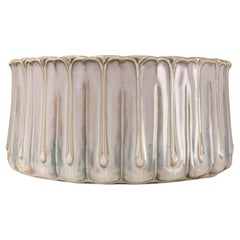
French Mid-Century Ceramic Centerpiece, Vallauris, Nacreous Glaze 1960s
By Vallauris
Located in BARCELONA, ES
his French mid-century ceramic centerpiece was crafted in Vallauris, France, circa 1960s. The generously sized bowl, measuring 12 cm in height and 25 cm in diameter, features a refin...
Category
1960s French Mid-Century Modern Vintage Spain - Furniture
Materials
Ceramic
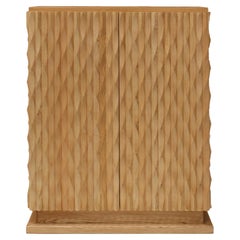
Brutalist Style Hand-carved Solid Oak Wood and Glass Mirror Italian Bar Cabinet
Located in Madrid, ES
Exquisite Hand-Carved Oak Bar Cabinet with Glass Shelves
Enhance your home with the sophisticated charm of this hand-carved oak bar cabinet. Designed with two hinged doors, this piec...
Category
21st Century and Contemporary Italian Spain - Furniture
Materials
Oak
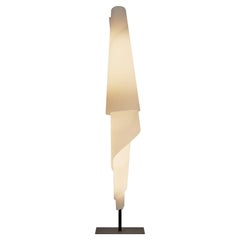
Josep Aregall Costura Floor Lamp For Parachilna
By Josep Aregall Fuste
Located in Barcelona, Barcelona
Josep Aregall Talla 3 Table Lamp For Parachilna
COSTURA is a lamp composed of a diffuser that wraps around a steel mast with a textured black finish. It maintains its shape thank...
Category
2010s Spanish Mid-Century Modern Spain - Furniture
Materials
Steel
$3,098 / item
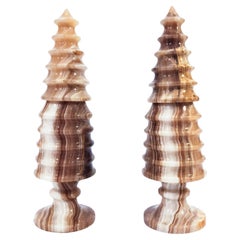
Excellent oriental onyx pair of table lamps in Chinoiserie style, Italy, 1960s
Located in SANT ADRIÀ DE BESÒS, ES
Pair of onyx table lamps produced and manufactured in Italy in the 60s. Each lamp is composed of 2 pieces in the shape of a Chinese pagoda. This exclusive marble and veined in multip...
Category
1960s Italian Chinoiserie Vintage Spain - Furniture
Materials
Onyx
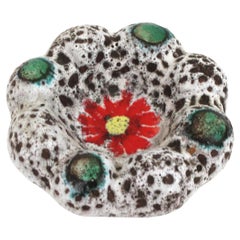
Vallauris Unglazed Fat Lava Ceramic Flower Shaped Bowl / Ashtray, 1950s
By Vallauris
Located in Barcelona, ES
French Mid-Century Vallauris ashtray / bowl in unglazed fat lava ceramic.
Beautiful fat lava ceramic flower shaped bowl in white and brown ceramic with turquoise green, orange and ye...
Category
20th Century French Mid-Century Modern Spain - Furniture
Materials
Ceramic, Majolica
$1,056 Sale Price
20% Off
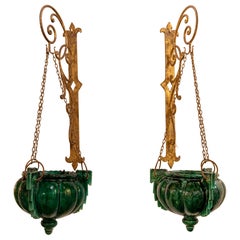
1970s Pair of Green Glass and Gold Iron Hanging Planters
Located in Marbella, ES
An elegant pair of mid-20th-century pendant lamps, crafted from intense emerald green pressed glass and gold-finished wrought iron brackets. Each piece features a chain structure sup...
Category
Late 20th Century Spanish Spain - Furniture
Materials
Iron
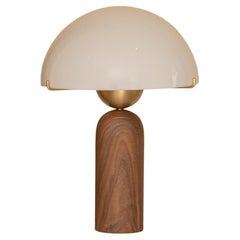
Walnut Peono Table Lamp by Simone
Marcel
Located in Geneve, CH
Walnut Peono Table Lamp by Simone & Marcel
Dimensions: Ø 40.6 x H 61 cm.
Materials: Brass, acrylic and walnut wood.
Also available in different marbl...
Category
2010s Spanish Post-Modern Spain - Furniture
Materials
Brass
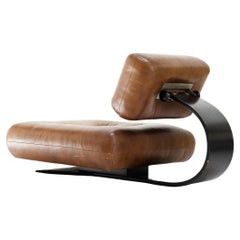
$1,140 / item
Alta armchair by Oscar Niemeyer, 1978
By Oscar Niemeyer
Located in Barcelona, ES
Armchair model “Alta”
Manufactured by Tendo Brasileira Brasil, 1978 Leather, painted and molded plywood, steel
Measurements
104,1 cm x 68,6 cm x 56,h5 cm 41 in x 27 in x 22,3h in
Category
1970s French Vintage Spain - Furniture
Materials
Steel
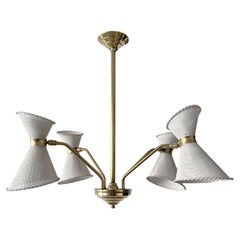
Mathieu Matégot
s Chandelier, Designed in France in 1950
By Mathieu Matégot
Located in Barcelona, ES
Mathieu Matégot's chandelier, designed in France in 1950, is an iconic piece of modern design. Matégot, known for his skill in creating furniture and decorative objects using lightwe...
Category
1950s French Vintage Spain - Furniture
Materials
Metal, Brass
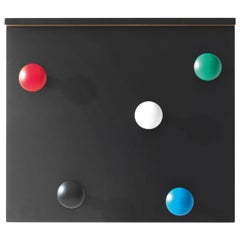
Le Corbusier LC17 Portemanteau Coat Rack by Cassina
By Cassina, Le Corbusier
Located in Barcelona, Barcelona
Coat rack designed by Le Corbusier in 1957. Relaunched in 2010.
Manufactured by Cassina in Italy.
This coat rack was originally created by Le Corbusier for the Cabanon, a summer-...
Category
2010s Italian Mid-Century Modern Spain - Furniture
Materials
Wood
$3,170 / item
XL rattan and brass basket, Italy, 1970, 36cm Diam
Located in BARCELONA, ES
Very beautiful and large rattan and brass basket made in Italy in the 1970s. Round shape, mid-century modern style, it is inspired by the designs of Gabriella Crespi. Magnificent dec...
Category
1970s Italian Hollywood Regency Vintage Spain - Furniture
Materials
Wicker, Rattan
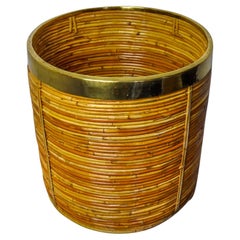
Set of 3 Counter Bar Stools w. Backrest - Tan Leather
Aged Brass Powder Coated
By Jover + Valls
Located in Alcoy, Alicante
The “Repose” contemporary stool belongs to a collection that revisit the director chair collection, serene pieces where exclusivity and precision are shown in small details such as t...
Category
2010s Spanish Modern Spain - Furniture
Materials
Brass, Steel
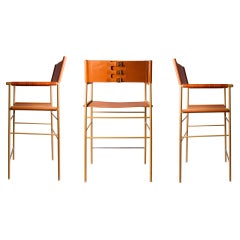
Charlotte Perriand LC9 Stool, Rattan and Metal
By Cassina, Charlotte Perriand
Located in Barcelona, Barcelona
Stool designed by Charlotte Perriand in 1927. Relaunched by Cassina in 1973/2014. Manufactured by Cassina in Italy.
Designed by Charlotte Perriand and part of the LC collection by...
Category
2010s Italian Mid-Century Modern Spain - Furniture
Materials
Steel
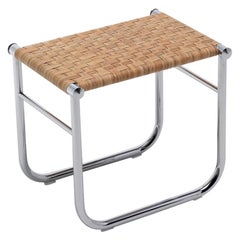
$2,822 / item
Bramante Storage Cabinet by Japanese Architect Kazuhide Takahama for Cassina
By Kazuhide Takahama, Cassina
Located in Barcelona, Barcelona
Bramante Storage Cabinet by Japanese Architect Kazuhide Takahama for Cassina
A storage unit with modern lines, although of classical ins...
Category
2010s Italian Mid-Century Modern Spain - Furniture
Materials
Wood
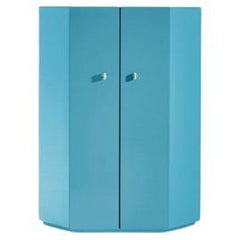
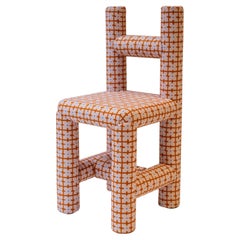
"La Gomi" Chair by Fiormi Studio, Spain, 2023
Located in Madrid, ES
"La Gomi" is completely upholstered from toes to head. Soft and lightweight, it reminds of the chair you thought of when you were a kid. The chair is totally handmade and it's compos...
Category
2010s Spanish Modern Spain - Furniture
Materials
Fabric, Foam, Wood
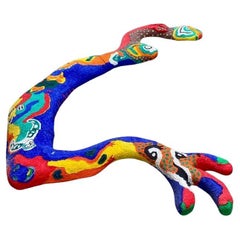
Niki de Saint Phalle by Y. Tropea Wall "Snake" Sculpture Model Unique ! 90s
By Niki de Saint Phalle
Located in La xara, VC
We offer free shipping !
Y. Tropea French artist in the entourage of Niki de saint Phalle In the beginning of her career whose inspiration in contact with Niki de saint phalle prod...
Category
1990s French Other Spain - Furniture
Materials
Metal
$16,813 Sale Price
30% Off
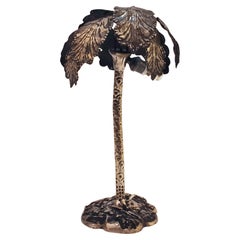
Hollywood Regency style palm-shaped table lamp by Maison Jansen, France, 1950s
By Maison Jansen, Hans Kögl
Located in SANT ADRIÀ DE BESÒS, ES
Hollywood Regency style French table lamp by Hans Kögl for Maison Jansen. Made of silver tone metal in the shape of a palm tree, with a light and subtle golden tone. Solid base and t...
Category
1950s French Hollywood Regency Vintage Spain - Furniture
Materials
Metal
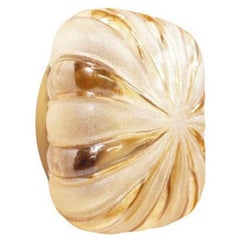
German Midcentury Amber Glass Wall Sconce by WILA Leuchten, 1970s
By WILA
Located in Badajoz, Badajoz
Beauty and pretty Murano glass Wall Sconce or Flush Mount by WILA Leuchten. ThIs fixture was designed and manufactured during the 1970s in Germany. Model 794.
This Wall Sconce has ne...
Category
1670s German Mid-Century Modern Antique Spain - Furniture
Materials
Metal
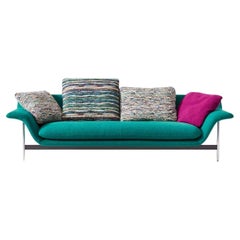
Antonio Citterio Esosoft Sofa by Cassina
By Cassina, Antonio Citterio
Located in Barcelona, Barcelona
Antonio Citterio Esosoft sofa
Manufactured by Cassina in Itlay
A living room system designed to define the domestic landscape in a fluid, flexible manner. This is Esosoft ? the firs...
Category
2010s Italian Mid-Century Modern Spain - Furniture
Materials
Fabric
$22,218 / item
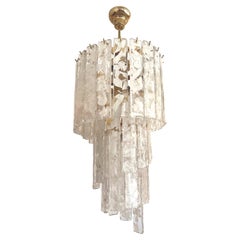
Italian Mid-Century "Terrazzo" White Murano Glass Spiral Chandelier, 1980s
Located in Badajoz, Badajoz
Marvelous, unique and beauty Italian "Terrazzo" White Murano glass spiral Chandelier from 1970s. This fixture was designed and manufactured durin...
Category
1970s Italian Mid-Century Modern Vintage Spain - Furniture
Materials
Brass
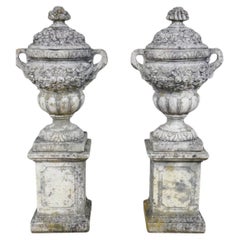
Magnificent Pair of Vases on Pedestals
Located in Madrid, ES
Discover a touch of elegance and history with our stunning Pair of Stone Vases on Pedestals from the 20th Century. These exquisite pieces are not only in excellent condition but also...
Category
1950s Vintage Spain - Furniture
Materials
Stone
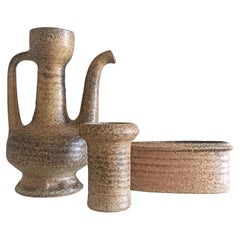
Mid Century Rustic Ceramics by Marius Van Woerden for Vest Keramiek, 1960s
By Vest, Marius Van Woerden
Located in Valencia, VC
Wabi-Sabi Style Vintage Ceramics by Marius Van Woerden, Vest Keramiek, 1960s
A stunning set of three handmade ceramics by Dutch artist Marius Van Woerden, created in his studio Vest...
Category
Mid-20th Century Dutch Rustic Spain - Furniture
Materials
Ceramic, Earthenware, Stoneware
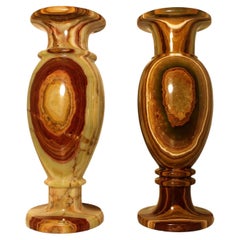
A pair of large onyx vases from the 1950s
Located in Madrid, ES
Each vase is intricately carved from a different block of onyx, displaying varying shades of green and reddish veins. In excellent condition, these vases boast the highest quality on...
Category
Mid-20th Century Spain - Furniture
Materials
Onyx
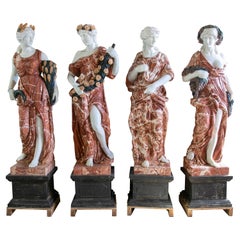
Set of Hand-Carved Four Seasons with Bases in Different Color Marbles
Located in Marbella, ES
Hand-carved using Carrara white, Serpentine green, Portuguese pink, Belgium black and Alicante red marbles, a 3d mosaic puzzle that brings them alive as in ancient times, when sculpt...
Category
Late 20th Century Italian Spain - Furniture
Materials
Marble
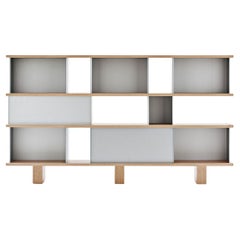
Charlotte Perriand Nuage Shelving Unit, Wood and Aluminium by Cassina
By Charlotte Perriand, Cassina
Located in Barcelona, Barcelona
Shelving Unit model Nuage designed by Charlotte Perriand in 1952-56.
Relaunched by Cassina in 2012.
Manufactured by Cassina in Italy.
Authenticity and avant-garde characterise ...
Category
2010s Italian Mid-Century Modern Spain - Furniture
Materials
Aluminum
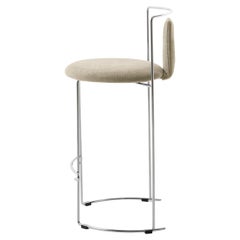
Kazuhide Takahama Gaja Bar Chair For Cassina
By Kazuhide Takahama
Located in Barcelona, Barcelona
Kazuhide Takahama Gaga Chair For Cassina
A light, airy stackable metal chair. Gaja is a contemporary piece of furniture reminiscent of the pure classicism of Rationalism, to which t...
Category
2010s Italian Mid-Century Modern Spain - Furniture
Materials
Metal
$3,182 / item
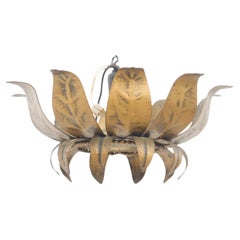
Mid-Century Modern Sunburst Brass Pendant Lamp, circa 1960
Located in Barcelona, ES
Mid-Century Modern sunburst brass pendant lamp, circa 1960
Traditionally manufactured in France.
By unknown designer.
In original condition with minor wear consistent of age and use...
Category
1960s Spanish Mid-Century Modern Vintage Spain - Furniture
Materials
Metal
$710 Sale Price
61% Off
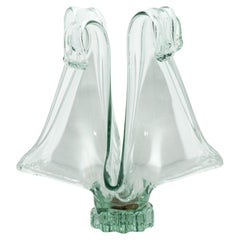
Murano Glass Vase, circa 1970
Located in Barcelona, ES
Murano glass vase, circa 1970
Manufactured in Italy.
In original condition, with minor wear consistent of age and use, preserving a beautiful patina.
Material: Glass ...
Category
1970s Italian Mid-Century Modern Vintage Spain - Furniture
Materials
Glass
$816 Sale Price
20% Off
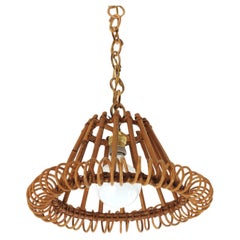
1960s Conical Rattan Pendant Hanging Light Franco Albini Style, Spiral Design
By Franco Albini
Located in Barcelona, ES
Rattan Conical Shaped Pendant Lamp with Spiral Detail, Franco Albini Style, Italy, 1960s.
This midcentury suspension lamp features a rattan conical lampshade with spiral detailed bottom. It hangs from a chain with rattan links and it is topped by a wooden canopy.
Reminiscences in designs of Franco Albini and Bonaccina.
This pendant will be a nice addition placed over a kitchen's table, dining area or any bedroom. Lovely in a beach house or countryside house decoration but also in an urban apartment.
Overall measures: (overall height including the chain and the canopy) 37 cm diameterx 75 cm H
The body of the lamp (excluding chain and canopy) is: 37 cm diameter x 22 cm H.
We are specialists in lighting: A curated selection of handcrafted rattan pendants and other lighting items is avaliable at our 1stdibs marketplace.
Franco Albini Rattan Pendant...
Category
Mid-20th Century Italian Mid-Century Modern Spain - Furniture
Materials
Wicker, Rattan
$2,108 Sale Price
20% Off
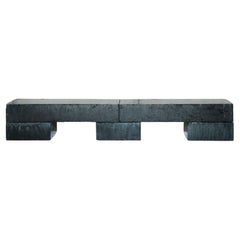
Bench ceramic contemporary glaze green black square organic
By Xavier Mañosa
Located in Rubi, Catalunya
Handmade stoneware Bench manufactured at the workshop of Apparatu in Barcelona. Different clay bodys are mixed with natural fibers like corn, straw, or heather straw. The pieces are ...
Category
21st Century and Contemporary Spanish Aesthetic Movement Spain - Furniture
Materials
Ceramic, Clay, Stoneware
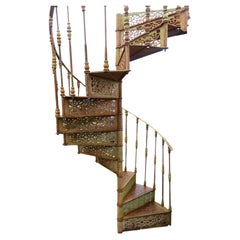
20th Century Art Nouveau Style Iron Spiral Staircase
Located in Vulpellac, Girona
20th Century Art Nouveau style spiral staircase from Spain in good condition and easy to assemble.
This stair belonged to an old Factory in Spain, that closed at the end of the 2...
Category
Early 20th Century Spanish Art Nouveau Spain - Furniture
Materials
Iron
$10,568 Sale Price / item
20% Off
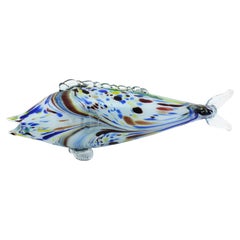
Large Scale Murano Glass Multicolor Fish Sculpture
Located in Barcelona, ES
Stunning Murrine Fish Sculpture in Murano Glass
Large scale Italian Murano glass hand blown fish figure sculpture with colorful decorative details. Ita...
Category
20th Century Italian Mid-Century Modern Spain - Furniture
Materials
Art Glass, Blown Glass, Murano Glass, Glass
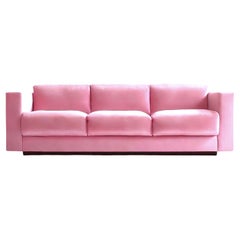
Sculptural Contemporary Pink Velvet Sofa Revolución
By Moanne
Located in Almería, ES
In a world longing for transformation, the Revolución Sofa doesn’t whisper change—it embodies it. With fearless lines and unapologetic form, it balances softness and structure, rebel...
Category
2010s Spanish Modern Spain - Furniture
Materials
Velvet
$6,455 / item
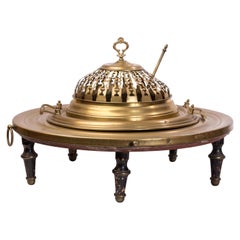
Exotic 19th Century Spanish Brass Brazier, Planter, Ice Bucket
Located in Madrid, ES
This 19th century Spanish brazier, or "brasero," is made of brass and wood, and was used to heat areas of a home (or castle) by holding burning coals i...
Category
19th Century Spanish Antique Spain - Furniture
Materials
Brass
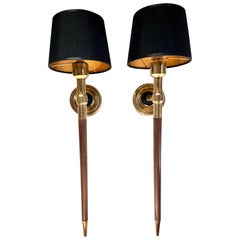
Mid Century Pair of Large French Brass and Wood Wall Sconces by Maison Lancel
By Maison Lancel
Located in Madrid, ES
A pair of wall sconces from the French house Maison Lancel, made of wood and brass, the base also made of lacquered metal, have been rewired, and the bulb system has been converted f...
Category
Mid-20th Century French Neoclassical Revival Spain - Furniture
Materials
Brass
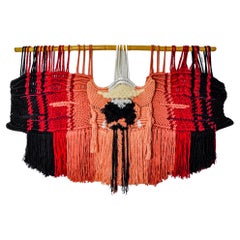
Textured macrame wall hanging, Spain, 1970s
Located in BARCELONA, ES
Superb macramé wall tapestry made in Spain in the 1970s. Large format. Handmade tapestry composed of different textures and materials creating unique patterns and reliefs. All the ro...
Category
1970s Spanish Hollywood Regency Vintage Spain - Furniture
Materials
Wool, Cotton
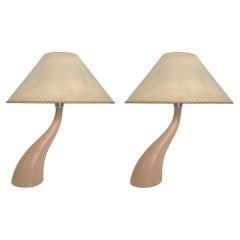
Postmodern Pair of "Bonsai" Wood Table Lamps by Blauet, Barcelona, 1990s
By Blauet
Located in Badajoz, Badajoz
Unique and pretty Postmodern Spanish "Gran Bonsai" Pair of Beech Wood Table Lamps by Blauet. Model: B1458-15 Natural / Chrome. These Table Lamps were designed by Josep Llusca for Bla...
Category
1990s Spanish Post-Modern Spain - Furniture
Materials
Metal
Gus Bakker Gb Lounge Pouf for Karakter
Located in Barcelona, Barcelona
Gus Bakker Gb Lounge Pouf for Karakter
Dutch industrial designer Gijs Bakker had already established a reputation for his aluminum jewelry when he decided to turn his attention to designing a chair. Inspired by a competition held by Dunlop, the rubber foam manufacturer, Bakker took a piece of foam, bent it at a 90 degree angle, and fixed it in a metal frame. The result was the GB Lounge, a modular lounge chair whose simple silhouette is enhanced by invitingly overstuffed upholstery.
Originally coined “the Levi’s Chair,” Bakker was determined that his design – much like a pair of well-loved jeans – would act as an easygoing antidote to the previous generation’s stiffer tastes. Today, its functionality has been enhanced further with the addition of feet that raise it slightly from the floor for added comfort. Available as a one-seater chair, or with the addition of a pouf, the GB Lounge can be arranged in a variety of ways by connectors that transform it from a solo chair into a multiple seating system.
GB Lounge can be upholstered with textiles from Cassina.
"Today I look to a very sophisticated version but it keeps the freshness, direct height and easy-going idea of the original."
The power of good design is especially evident when the object exists outside its original context, transcending the specific circumstances in which it was conceived and having a universal relevance. Gijs Bakker designed his GB Lounge Chair...
Category
2010s Danish Mid-Century Modern Spain - Furniture
Materials
Steel

$3,482 / item
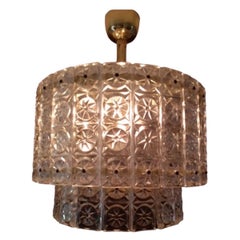
Kinkeldey Chandelier Glass Cristal with brass structure , Austria, 1960
By Kinkeldey
Located in La xara, VC
Exceptional Kinkeldey chandelier with large glass. The Design and the quality of the glass make this piece the best of the Austria Design.
This unique Kindeldey glass chandelier in ...
Category
1960s Austrian Mid-Century Modern Vintage Spain - Furniture
Materials
Crystal, Brass
$892 Sale Price
44% Off
Postmodern Dimmable Spanish Black Table Lamp by Estiluz, Barcelona, 1980s
By Estiluz, Leonardo Marelli
Located in Badajoz, Badajoz
Chic and cool postmodern Metal and Glass Table Lamp by Leonardo Marelli for Estiluz. This Table Lamp was designed and manufacured in Barcelona (Spain) by Estiluz during 1980s.
“Estil...
Category
1980s Spanish Post-Modern Vintage Spain - Furniture
Materials
Metal

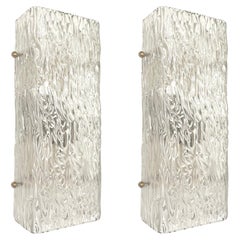
Austrian Midcentury Pair of Murano "Florian" Wall Sconces by Kalmar, 1970s
By J.T. Kalmar, Kalmar Lighting
Located in Badajoz, Badajoz
Beauty and stunning Austrian Pair of Mid-Century "Kalmar" Large Wall Sconces, model "Florian" 4402.06.50. These Sconces were designed and manufactured during the 1970s in Austria by ...
Category
1970s Austrian Mid-Century Modern Vintage Spain - Furniture
Materials
Metal, Brass
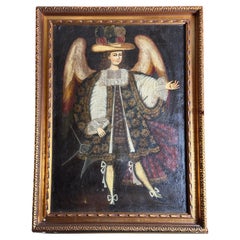
Archangel with an arquebusier, Andean Viceregal School, 18th Century
Located in Madrid, ES
Archangel with an arquebusier, Andean Viceregal School, 18th Century
Oil on canvas depicting an archangel with an arquebusier, a characteristic figure of viceregal painting in the A...
Category
18th Century Spanish Spanish Colonial Antique Spain - Furniture
Materials
Paint
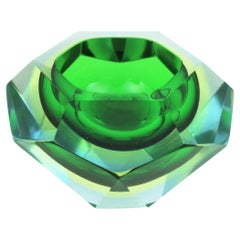
Flavio Poli Murano Green Yellow Sommerso Faceted Art Glass Bowl
By Flavio Poli, Seguso Vetri d
Arte
Located in Barcelona, ES
Colorful Murano Sommerso Art glass Faceted bowl. Flavio Poli for Seguso Vetri d'Arte, Italy, 1950s.
Eye-catching diamond shape faceted Murano glass bowl in green and yellow double l...
Category
Mid-20th Century Italian Mid-Century Modern Spain - Furniture
Materials
Glass, Art Glass, Cut Glass, Murano Glass, Sommerso
$840 Sale Price
20% Off
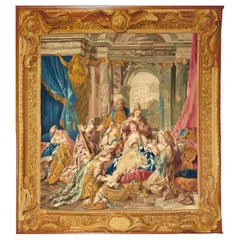
Tapestry Royal Manufacture of Aubusson, Louis XVI period 1738 at the Gobelins
By Aubusson Manufacture
Located in Madrid, ES
Tapestry from the Royal Manufacture of Aubusson, Louis XVI period , made in 1738 at the Gobelins
One panel from a series of Gobelins tapestries depicting the History of Esther, illustrating Esther seated and attended by handmaidens, one washing her feet in golden basin, another fastening a bracelet, another offering a mirror, all observed by Mordecai, woven in the workshop of Michele Audran after a design by J. F. de Troy.
The Toilet of Esther c.1778-85.Royal Collection Trust-Queens Audience Chamber
Windsor Castle
The Sketches for the Esther Cycle by Jean-François de Troy (1736)
“and the maid was fair and beautiful; whom Mor’decai, ..., took for his own daughter.” (Est. 2:7)
A supple and undulating genius, both a flattering portraitist and a prolix history painter, as well as a brilliant genre painter, in a gallant or worldly vein, Jean-François de Troy (Paris, 1679 – Rome, 1752), solicited, although he had passed the threshold of old age, a new royal commission up to his ambitions. To obtain it, he submitted – successfully - for the approval of the Bâtiments du roi (administration), seven modelli painted in 1736 with his usual alacrity.
Inspired by one of the most novelistic texts of the Old Testament, the Book of Esther, these sketches in a rapid and virtuoso manner were transformed by the artist, between 1737 and 1740 into large cartoons intended to serve as models for the weavers of the Gobelins factory. Showing undeniable ease and skill in the composition in perfect harmony with the sensitivities of the times, the tapestry set met with great success.
The Story of Esther perfectly corresponded to the plan of the Bâtiments du roi to renew the repertoire of tapestry models used for the weavers of the royal factories while it also conformed to the tastes of Louis XV’s subjects for a fantastical Orient, the set for a dramatic tale in which splendour, love and death were combined. Indeed, no tapestry set was woven in France during the 18th century as often as that of Esther.
The series of modelli painted by de Troy during the year 1736 looks to the history of French painting and decoration under Louis XV as much as it does the history of the Gobelins. It probably counts among the most important rococo pictorial groups to have remained in private hands. First the Biblical source illustrated by De Troy which constitutes the base of one of the richest iconographical traditions of Western art will be considered. Then the circumstances and specific character of French civilisation during the reigns of Louis XIV and Louis XV which contributed to making the theme of Esther a relevant subject, both attractive to contemporaries and remarkably in line with the sensitivities of the time will be elucidated.
An examination of the exceptional series of sketches united here, the cartoons and the tapestries that they anticipate as well as a study of their reception will close this essay. The Book of Esther: A scriptural source at the source of rich iconography.
The origin of the Esther tapestry set by Jean-François de Troy – origin and creation of a masterpiece
According to the evidence of one of the artist’s early biographers, the chevalier de Valory, author of a posthumous elegy of the master, read at the Académie royale de peinture et de sculpture on 6 February 1762, it was apparently due to early16 rivalry with François Lemoyne (1688-1737), his younger colleague who had precisely just been appointed First Painter to the King in 1736, that had encouraged François de Troy to seek a commission allowing him to show off his ease and his promptitude at the expense of a rival who was notoriously laborious: “M. De Troy, retaining some resentment of the kind of disadvantage which he believed to have suffered compared with his emulator looked to regain some territory by making use of the facility his rival did not possess.
Lemoyne was excessively long in the creation of his works,and M. De Troy of a rare celerity: consequently, with this particular talent, the latter offered to the court to make paintings appropriate to be executed at the Gobelins Factory; and it is to this circumstance that we owe the beautiful series of the Story of Esther, which would be sufficient alone to give him a great reputation.”17 Beyond the suspicion inspired by the topos, which still constitutes, more or less, a tale of rivalries between artists in ancient literature, there is probably some truth in what Valory reports although A.-J. Dezalier d’Argenville (who indicates rather spitefully that de Troy did not hesitate to “cut prices” to impose himself, benefitting from the productivity assured by the unlikely rapidity of his brush)18 proves to be more evasive: “As he looked to busy himself, he had offered to make the paintings that serve as models for the King’s tapestries cheaply: which did not please his colleagues.
He was given a choice of two tapestry series to be made and he took the Story of Esther and that of Jason”.19 Whether or not the choice was actually left to de Troy (which would appear rather casual on the royal administration’s part all the same), it seems likely that the artist, whose contemporaries extol his “fire”, as the faculty of invention was then called, must have ardently aspired to the possibility of using on a very large scale the “creative genius” with which Dezallier d’Argenville credits him. The decoration of the private apartments, the fashion for which Louis XV had promoted at Versailles and Fontainebleau, offered little opportunity to excel in this area. Other than painting for altarpieces, only tapestries could allow comparison with Lemoyne who had been granted – unfortunately for him – a major decoration: the enormous ceiling of the Hercules Room at Versailles. Favoured by the recent improvement in France’s financial situation, the revival of patronage offered de Troy a commission fitting for him, in a field in which, however, he had hardly any experience.
Anxious to renew the repertoire of models available to the Gobelins factory, the Duc d’Antin, surintendant des Bâtiments du roi from 1708 to 1736 followed by his successor, Philibert Orry comte de Vignory, gave him the task of producing seven large cartoons inspired by the Book of Esther corresponding to the brilliant sketches or modelli which de Troy had produced in one go, or almost (very few preparatory drawings can in fact be linked to the Esther cycle and all seem to be at the execution stage of the cartoons).20 Subjected to the approval of the Administration des Bâtiments according to the procedure in use for projects being planned for the Gobelins, sketches made rapidly during 1736 were approved and the project launched immediately. Thereupon came the news of François Lemoyne’s death, who, ground down by work and a victim of his private torment, committed suicide on 4 June 1737.
Against all expectations, de Troy did not replace his rival in the position of First Painter (which remained vacant until the appointment of Charles Coypel in January 1747), which would perhaps have made him too obviously the beneficiary of the drama. The awarding of the position of Director of the French Academy in Rome came to console him while he had already produced (or he was in the process of finishing), in Paris, three of the seven cartoons of the cycle (The Fainting of Esther finished in 1737 and the Toilet and Coronation of Esther, both finished in 1738).
De Troy, we can see, did not follow the order of the narrative but began with the subjects which apparently offered the least difficulty because he had already depicted them, or because they fall into a strong pictorial tradition (such is the case especially for the Fainting of Esther). He had hardly settled at the Palazzo Mancini in August 1738, when his first task which awaited the new director of the French Academy naturally consisted of honouring the royal commission and finishing without delay the final cartoons of the Story of Esther after the sketches he must have taken with him. As prompt as ever, de Troy discharged himself of the execution of the four remaining cartoons in only two years, by beginning with the largest format which allowed him to strike the imagination and to impose himself as soon as he arrived on the Roman stage: the Triumph of Mor’decai which was finished in 1739 (like Esther’s Banquet).
The following year, the Mor’decai's Disdain and The Sentencing of Haman were brought to an end in the same Neo-Venetian style, obviously tributary to Veronese with its choice of “open” monumental architecture which is characteristic of the entire cycle.21 The series, it should be noted, was almost augmented with some additional scenes in the mid 1740s. Indeed, the first tapestry set finished at the Gobelins in 1744 proved to be unsuitable for the arrangement of the Dauphine’s apartments at Versailles for which it had been intended to decorate the walls the following year (cf infra). Informed of this, de Troy, considering that the story of Esther offered “several good subjects,” immediately offered to illustrate one or new subject among those “which could appear to be the most interesting”.
The directeur des Bâtiments Orry, who managed the State’s accounts, obviously judged it less costly to have one of the tapestries widened to fill in the end of the Dauphine’s bedroom,22 which has probably deprived us of very original compositions, because de Troy had already illustrated the most famous themes, those that benefitted from a strongly established iconographical tradition and from which it was not easy to deviate
The Tapestry Set of the Story of Esther
Placed on the tapestry looms of the Gobelins at the end of the 1730s in Michel Audran’s workshop, the cycle created by de Troy aroused true infatuation. The few hundred tapestries made between 1738 and 1797 – all in high-warp tapestry and woven in wool and silk except for four in low-warp made in Neilson’s workshop – show the impressive success of a tapestry set that was without any doubt the most frequently woven of the 18th century in France.
29 Only three cartoons had been delivered by de Troy in 1738 when the first tapestry set was begun by Audran under the expert eye of Jean-Baptiste Oudry to whom the Directeur général des bâtiments, Philibert Orry had assigned the (weekly) supervision of the weaving. During the summer of 1738, the piece of the Fainting of Esther, which Oudry judged to be admirable, was finished.
During the winter of 1742, Oudry informed Orry that about two ells of the Triumph of Mor’decai had been made “with no faults”,that the Coronation of Esther was finished and that the Esther at her Toilet “a very gracious tapestry” was “a little over half” finished. Exhibited at Versailles in 1743, these two last pieces were admired by Louis XV and the Court.
On 3 December 1744, the set of seven tapestries was finally delivered to the Garde Meuble. It was intended, the honour was not slight, to decorate the apartments of the Infanta Maria Teresa Rafaela of Spain whose marriage to the young Dauphin Louis-Ferdinand had been fixed for the following year (it took place on 23 February 1745). Apparently it was thought that the theme of Esther the biblical heroine and wife of a foreign sovereign was appropriate for the apartments of the Spanish Dauphine.
As early as the month of March, the architect Ange-Jacques Gabriel informed de Troy that her grand cabinet was decorated with the “Esther tapestry set” specifying however that “for lack of two small or one large piece, we have not been able to decorate the end of the room”. This difficulty led immediately to the Banquet episode being woven a second time in two parts (they were delivered to the Garde-Meuble on 30 December 1746) to garnish the panels on each side of the bed of the Dauphine who would hardly enjoy them (she died on 22 July 1746 and the decoration was installed for the new Dauphine Maria Josepha of Saxony).
The appearance of the set’s remarkable border, which imitated a richly sculpted wooden frame, should be mentioned. Conceived in 1738 by the ornamentalist Pierre Josse-Perrot and used in the later weavings until 1768, it tended to reinforce the resolutely painterly appearance of the tapestry set which, in this regard, pushed the art of tapestry as far as its ultimate mimetic possibilities. With the exception of Mor’decai's Disdain which had been removed earlier, the “editio princeps” of the story of Esther (from then on in nine pieces) remained at Versailles until the Revolution. Of the eight surviving tapestries, four are at the chateau of Compiègne and four belong today to the Mobilier National. No less than seven tapestry sets reputed to be complete (one of them in fact only had six tapestries) would be produced officially at the Gobelins up to 1772.
Literature:
1- The Œuvres mêlées of an emulator of Racine, the Abbé Augustin NADAL thus include an Esther. Divertissement spiritual which is exactly contemporary with Jean François de Troy’s cycle since it was performed in 1735 and published in Paris three years later.
2-Le Siècle de Louis XIV, 1751, 1785 ed., p. 96-97 for French ed.
3- Lemoyne and de Troy had been obliged to share the First Prize in the competition organised in 1727 between the most prominent history painters of the Académie Royale.
4- Mémoires…, pub. L. DUSSIEUX et al., 1854, II, p.265.
5-The fact that de Troy, at the risk of falling out with his colleagues, did not hesitate to make use of prices in order to convince the new directeur des Bâtiments Philibert Orry, is confirmed by Mariette who adds tersely “it caused much shouting” (pub. 1851-1860, II, p. 103).
6- Abrégé de la vie des plus fameux peintres…, ed. 1762, IV, p. 368-369 20 Early comments on the painter are inclined to present him as a kind of “pure painter”, doing without the medium of drawing, a few intermediary studies between the Esther sketches and the large cartoons at the Louvre nevertheless show that de Troy used red chalk (see in the catalogue, the notice for the Meal of Esther and Ahasuerus under the entry drawing) to change one or other figure.
7-C. GASTINEL-COURAL (cat. exp. PARIS, 1985, p. 9-13) as well as the article by J. VITTET, exh. cat. LA ROCHE-GUYON, 2001, p. 51-55.
8-The Hermitage in St. Petersburg conserves five tapestries of these two royal gifts whose provenance still awaits elucidation (as far as we are aware). In 1766, the Grand Marshal of Russia, Count Razumovski (or Razamowski), acquired the Fainting and the Banquet extracted from the sixth weaving (J. VITTET, 2001, p. 53).
9- Lettres écrites de Suisse, d’Italie…,quoted by J. VITTET, op. cit., p. 54.
10-The tapestry set remained in the hands of a branch of the Hapsburg-Lorraine family until 1933 (ibid. P. 54).
11-Quoted by Chr. LERIBAULT, 2002, p. 97, note 269.
12-Y. CANTAREL-BESSON, 1992, p. 241.
Catalogue
The Esther at her Toilet
Oil on canvas, 57 x 51 cm Provenance: Painted in 1736 at the same time as the six other modelli of the Story of Esther intended to be presented, for approval, to the direction des Bâtiments du Roi; perhaps identifiable among a lot of sketches by Jean-François de Troy in the post mortem inventory of the amateur, historian and critic Claude-Henri Watelet (1718-1786) drawn up on 13 January 1786 and following days (A.N. T 978, n° 30) then in the sale of the property of the deceased, Paris, 12 June 1786, n° 33; Paris, François Marcille Collection (who owned a series of six sketches from which the Triumph of Mor’decai was missing, see infra); Paris, Marcille Sale, Hôtel Drouot, 12-13 January 1857, n° 36; Asnières, Mme de Chavanne de Palmassy ( ?) collection; Paris, Galerie Cailleux; Paris, Humbert de Wendel collection (acquired from the Galerie Cailleux in 1928); by inheritance in the same family; Paris, Sotheby’s, 23 June 2011, n° 61. In order not to add unnecessarily to the technical commentary on each work, the catalogue raisonné by Chr. Leribault which contains a substantial bibliography on the series should be referred to. The other bibliographical references only concern the publications and exhibitions to have appeared and been presented more recently. Bibliography and Exhibitions: Chr. LERIBAULT, 2002, n° P. 247 (repr.); E. LIMARDO DATURI, 2004, p. 28; Exh. cat. NANTES, 2011, p. 138, n° 34, referred to in note 1; Sotheby’s catalogue, Tableaux anciens et du XIXe siècle, 23 June 2011, n° 61 (repr.).
Related Works:
Tapestry cartoon: The cartoon (oil on canvas, 329 x 320 cm), the third made by the artist in Paris after the sketches had been approved by the direction des Bâtiments, is in the Louvre (Inv. 8315). It previously bore the painter’s signature and the date 1738 (inscriptions which are found on the tapestries). The royal administration paid 1600 livres for it on 21 June 1738 and it was exhibited at the Salon in the year of its creation.
Summary Biography
1679 (27 January): Baptism in Paris (Parish of St. Nicolas du Chardonnet) of Jean-François de Troy, son of the painter François de Troy and Jeanne Cotelle, sister of the painter Jean II Cotelle.
1696-1698: Studies (apparently rather turbulent) at the Académie royale de peinture et de sculpture.
1698-1708: First trip to Italy. Is obliged to leave Rome in January 1711 after a tempestuous affair (a duel?), de Troy extends the traditional Roman experience as a pensionnaire at the Académie de France by also visiting Tuscany where he stays for a long time, Venice (his art in face has a strongly Venetian character) and Genoa.
1708: De Troy (whose father had been elected Director of the Académie royale de peinture et de sculpture on 7 July) is agréé and immediately received at the Académie with Apollo and Diana Piercing with their Arrows the Children of Niobe (Montpellier, Musée Fabre) on 28 July.
1710: First royal commission, paid for on 10 May (a sketch representing “the Promotion of the Order of the Holy Spirit” for the tapestry series of the History of the King).
1716: Jean-François de Troy is elected Assistant Professor at the Academy.
1720: He is appointed Professor.
1723: The artist creates the double portrait of Louis XV...
Category
Early 18th Century French Baroque Antique Spain - Furniture
Materials
Wool, Silk
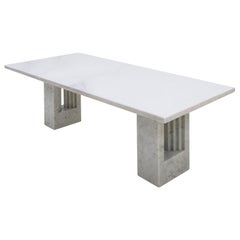
Mid-Century Mod Delfi White Marble Dining Table by Carlo Scarpa
Marcel Breuer
By Carlo Scarpa, Marcel Breuer
Located in Madrid, ES
Dining table mod. Delfi designed by Carlo Scarpa and Marcel Breuer for Gavina. Composed of two sculptural bases and a rectangular top 4 cm thick. Made in Carrara marble. Italy 1968. ...
Category
1960s Italian Mid-Century Modern Vintage Spain - Furniture
Materials
Carrara Marble
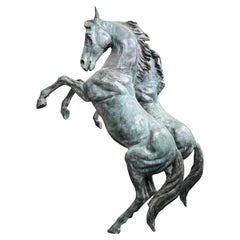
Masterful Pair of Italian Horses in bronze 20th Century H: 260cm
Located in Madrid, ES
Masterful Pair of Italian Horses in bronze 20th Century
H: 260cm
190cm x 70cm
real height, lost wax casting.
Origin Venice, private collection.
Perfect for the outside or even for ...
Category
20th Century Italian Modern Spain - Furniture
Materials
Bronze
Still Thinking About These?
All Recently ViewedMore Ways To Browse
Duck Statue
Ebony Elephant
Egypt Palm
Egyptian Cat
Emmanuelle Simon
Empire Display Case
English Bachelors Chest
English Biscuit Barrel
Ensembles Mobilier
Eugene Vallin
Factice Bottles
Fat Sculptures
Faux Tortoise Shell Dining Table
Federal Period Chest Of Drawers
Fish Design Plates
Flower Painted Chair
Fluted Mahogany Column
Folded Glass Bowl