The Hamptons - Art
to
4,703
3,714
1,050
232
294
645
Overall Width
to
Overall Height
to
1
39
4,701
1,194
16
3
405
261
502
1,171
1,285
609
342
88
1
2,331
672
567
483
452
320
281
79
46
10
4
4
3
4,007
1,547
314
2,047
1,147
1,106
791
641
523
469
381
289
175
153
151
139
136
127
111
92
86
83
83
3,681
709
461
451
368
179
179
169
101
58
325
62
229,185
155,565
Item Ships From: The Hamptons
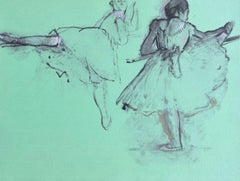
Edgar Degas, Dancer at the Barre, 1945 (after)
By Edgar Degas
Located in Southampton, NY
This exquisite lithograph after Edgar Degas (1834–1917), titled Danseur au bar (Dancer at the Barre), originates from the 1945 folio Degas, Ten Ballet Sketches. Published by The Studio Publications, Inc., New York, rendered and printed by Albert Carman, City Island, 1945, this work reflects Degas’s sensitive mastery of line, movement, and the intimate psychological nuances of the ballet studio.
Executed as a lithograph and pochoir on velin paper, this work measures 13 x 17 inches (33.02 x 43.18 cm). Signed in the plate and unnumbered as issued. Rendered and printed by Albert Carman, City Island.
Artwork Details:
Artist: After Edgar Degas (1834–1917)
Title: Danseur au bar (Dancer at the Barre), from Degas, Ten Ballet Sketches, 1945
Medium: Lithograph and pochoir on velin paper
Dimensions: 13 x 17 inches (33.02 x 43.18 cm)
Inscription: Signed in the plate and unnumbered as issued
Date: 1945
Publisher: The Studio Publications, Inc., New York
Printer: Albert Carman, City Island
Condition: Well preserved, consistent with age and medium
Provenance: From the 1945 folio Degas, Ten Ballet Sketches, published by The Studio Publications, Inc., New York
Notes:
Excerpted from the album, Born in Paris in 1834, Edgar Degas lived, and surely loved the life of that city during most of his years. These continued somewhat sadly beyond those of most of his friends— into the debacle of the first World War, during which he died in 1917. Judging by the frequency with which he used them as models, he must have had an especial admiration for the ballet girls who followed a profession that at the time brought none of the glory and prosperity which attend it today. New aspects of the human body, revealed in movement, fascinated him. But his occupation with the simply anatomical side of his subjects never resulted in a cold interpretation. On the contrary there is a warmth and sympathy that pervades all of his work. The drawings here represent the painter in one important phase of his multi-sensitive view of life; and permit an insight which a more ambitious work might not do-into the operation of the creative process, the artist's transformation of reality as it passes through the mesh of his sensibilities. The Edition of this Portfolio is limited to MMMD examples. Rendered by Albert Carman.
About the Publication:
Degas, Ten Ballet Sketches (1945) is one of the earliest and most significant American postwar fine art portfolios devoted to Edgar Degas’s intimate works on paper. Published by The Studio Publications, Inc., New York, and rendered and printed by Albert Carman at City Island, the album sought to faithfully reproduce a group of Degas’s ballet-related drawings through a combination of lithography and hand-applied pochoir coloring. This hybrid technique allowed the edition to preserve the immediacy, tonal subtlety, and gestural delicacy central to Degas’s draftsmanship. Conceived as a fine art publication rather than a commercial book, the portfolio provided American audiences unprecedented access to Degas’s private, spontaneous studies—images that reveal the artist’s fascination with movement, anatomy, and the psychological atmosphere of the rehearsal studio. The album exemplifies the mid-20th-century revival of pochoir as a means of recreating the texture and coloristic nuance of original works on paper, and it remains an important document of how Degas’s legacy was translated into high-quality printed form for collectors, museums, and connoisseurs.
About the Artist:
Edgar Degas (1834–1917) was a French painter, draughtsman, printmaker, and sculptor whose groundbreaking fusion of classical draftsmanship, modern experimentation, and psychological depth helped define the trajectory of Western art, positioning him as one of the most influential figures of the nineteenth and early twentieth centuries; renowned for his depictions of ballet dancers, racehorses, theater scenes, cafe life, domestic interiors, milliners, laundresses, and women at their toilette, Degas reimagined observational realism through radical compositional innovation—employing extreme cropping, asymmetrical framing, oblique viewpoints, and dramatic lighting that anticipated photographic and cinematic language long before these technologies shaped visual culture, and although associated with Impressionism, he rejected plein-air spontaneity in favor of studio-based discipline rooted in the linear precision of Jean-Auguste-Dominique Ingres, the expressive chromaticism of Eugene Delacroix, and the modernity of Edouard Manet while also drawing inspiration from Japanese ukiyo-e prints, classical sculpture, and early photography; his independent artistic philosophy resonated with and helped shape the innovations of Pablo Picasso, Alexander Calder, Alberto Giacometti, Salvador Dali, Joan Miro, Wassily Kandinsky, Marcel Duchamp, and Man Ray, whose explorations of movement, form, dream logic, abstraction, and conceptualism all find antecedents in Degas’s investigations into seriality, temporality, and the fragmented figure, and his pioneering use of pastel, monotype, and wax sculpture fundamentally transformed each medium, influencing artists from Henri Matisse, Francis Bacon, Lucian Freud, and Giacomo Manzu to Paula Rego, contemporary realists, experimental photographers, and choreographers; his works are held in nearly every major museum collection worldwide—including the Musee dOrsay, the Louvre, the Metropolitan Museum of Art, the National Gallery of Art, the Art Institute of Chicago, the Courtauld Institute, and the National Gallery, London—affirming his central place in the history of art, and the highest auction record for Degas was achieved at Sothebys London on February 3, 2015, when Danseuses en Bleu sold for 37,033,000 GBP, cementing his status as one of the most sought-after and enduringly significant artists of the Western canon.
Degas pochoir, Degas lithograph...
Category
1940s Impressionist The Hamptons - Art
Materials
Lithograph

$796 Sale Price
20% Off
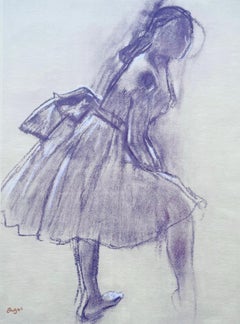
Edgar Degas, Dancer Standing in Profile, 1945 (after)
By Edgar Degas
Located in Southampton, NY
This exquisite lithograph after Edgar Degas (1834–1917), titled Danseur debout de profil (Dancer Standing in Profile), originates from the 1945 folio Degas, Ten Ballet Sketches. Published by The Studio Publications, Inc., New York, rendered and printed by Albert Carman, City Island, 1945, this work reflects Degas’s sensitive mastery of line, movement, and intimate observation, capturing the grace, poise, and psychological immediacy that define his iconic ballet imagery. In Danseur debout de profil (Dancer Standing in Profile), Degas reveals gesture and inner emotion through economical contour and lyrical nuance.
Executed as a lithograph and pochoir on velin paper, this work measures 17 x 13 inches (43.18 x 33.02 cm). Signed in the plate and unnumbered as issued. Rendered and printed by Albert Carman, City Island, one of the notable American ateliers specializing in fine art lithography during the mid-20th century.
Artwork Details:
Artist: After Edgar Degas (1834–1917)
Title: Danseur debout de profil (Dancer Standing in Profile), from Degas, Ten Ballet Sketches, 1945
Medium: Lithograph and pochoir on velin paper
Dimensions: 17 x 13 inches (43.18 x 33.02 cm)
Inscription: Signed in the plate and unnumbered as issued
Date: 1945
Publisher: The Studio Publications, Inc., New York
Printer: Albert Carman, City Island, 1945
Condition: Well preserved, consistent with age and medium
Provenance: From the 1945 folio Degas, Ten Ballet Sketches, published by The Studio Publications, Inc., New York
Notes:
Excerpted from the album, Born in Paris in 1834, Edgar Degas lived, and surely loved the life of that city during most of his years. These continued somewhat sadly beyond those of most of his friends— into the debacle of the first World War, during which he died in 1917. Judging by the frequency with which he used them as models, he must have had an especial admiration for the ballet girls who followed a profession that at the time brought none of the glory and prosperity which attend it today. New aspects of the human body, revealed in movement, fascinated him. But his occupation with the simply anatomical side of his subjects never resulted in a cold interpretation. On the contrary there is a warmth and sympathy that pervades all of his work. The drawings here represent the painter in one important phase of his multi-sensitive view of life; and permit an insight which a more ambitious work might not do-into the operation of the creative process, the artist's transformation of reality as it passes through the mesh of his sensibilities. The Edition of this Portfolio is limited to MMMD examples. Rendered by Albert Carman.
About the Publication:
Degas, Ten Ballet Sketches, published in 1945 by The Studio Publications, Inc., New York, stands as one of the most elegant and scholarly mid-century American fine art folios devoted to the ballet imagery of Edgar Degas. Conceived as a high-quality interpretive portfolio, the album presents a series of lithograph-and-pochoir renderings based on Degas’s original drawings, executed with exceptional attention to tonal subtlety, contour fidelity, and the emotional interiority that defines the artist’s draftsmanship. Rendered and printed by Albert Carman on City Island, the publication embodies an American postwar effort to restore and celebrate European masterworks through meticulous handcraft and artisanal color application, honoring Degas’s distinctive line and the atmospheric delicacy of his studio-based studies. Produced in a substantial edition of MMMD examples, the portfolio offered audiences rare access to Degas’s private working drawings—images rarely seen outside institutional collections—while exemplifying the technical refinement and interpretive care characteristic of Carman’s workshop. Today, Degas, Ten Ballet Sketches remains a sought-after historical publication, valued for its craft, fidelity to Degas’s aesthetic, and its role in preserving and disseminating the artist’s intimate ballet imagery in a beautifully executed mid-century fine art format.
About the Artist:
Edgar Degas (1834–1917) was a French painter, draughtsman, printmaker, and sculptor whose groundbreaking fusion of classical draftsmanship, modern experimentation, and psychological depth helped define the trajectory of Western art, positioning him as one of the most influential figures of the nineteenth and early twentieth centuries; renowned for his depictions of ballet dancers, racehorses, theater scenes, cafe life, domestic interiors, milliners, laundresses, and women at their toilette, Degas reimagined observational realism through radical compositional innovation—employing extreme cropping, asymmetrical framing, oblique viewpoints, and dramatic lighting that anticipated photographic and cinematic language long before these technologies shaped visual culture, and although associated with Impressionism, he rejected plein-air spontaneity in favor of studio-based discipline rooted in the linear precision of Jean-Auguste-Dominique Ingres, the expressive chromaticism of Eugene Delacroix, and the modernity of Edouard Manet while also drawing inspiration from Japanese ukiyo-e prints, classical sculpture, and early photography; his independent artistic philosophy resonated with and helped shape the innovations of Pablo Picasso, Alexander Calder, Alberto Giacometti, Salvador Dali, Joan Miro, Wassily Kandinsky, Marcel Duchamp, and Man Ray, whose explorations of movement, form, dream logic, abstraction, and conceptualism all find antecedents in Degas’s investigations into seriality, temporality, and the fragmented figure, and his pioneering use of pastel, monotype, and wax sculpture fundamentally transformed each medium, influencing artists from Henri Matisse, Francis Bacon, Lucian Freud, and Giacomo Manzu to Paula Rego, contemporary realists, experimental photographers, and choreographers; his works are held in nearly every major museum collection worldwide—including the Musee dOrsay, the Louvre, the Metropolitan Museum of Art, the National Gallery of Art, the Art Institute of Chicago, the Courtauld Institute, and the National Gallery, London—affirming his central place in the history of art, and the highest auction record for Degas was achieved at Sothebys London on February 3, 2015, when Danseuses en Bleu sold for 37,033,000 GBP, cementing his status as one of the most sought-after and enduringly significant artists of the Western canon.
Edgar Degas lithograph...
Category
1940s Impressionist The Hamptons - Art
Materials
Lithograph
$796 Sale Price
20% Off
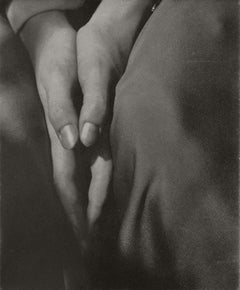
Alfred Stieglitz, Hands, Dorothy Norman, 1947 (after)
By Alfred Stieglitz
Located in Southampton, NY
This exquisite halftone print after Alfred Stieglitz (1864–1946), titled Hands, Dorothy Norman, originates from the 1947 folio Stieglitz Memorial Portfolio, 1864–1946. Published by T...
Category
1940s American Modern The Hamptons - Art
Materials
Offset
$716 Sale Price
20% Off
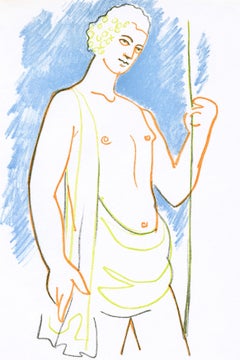
Jean Cocteau, Scene XXXV, Bacchus, from Theatre, 1957
By Jean Cocteau
Located in Southampton, NY
This exquisite lithograph by Jean Cocteau (1889–1963), titled Scene XXXV, Bacchus (Scene XXXV, Bacchus), originates from the 1957 album Jean Cocteau de l'Academie francaise, Theatre,...
Category
1950s Modern The Hamptons - Art
Materials
Lithograph
$716 Sale Price
20% Off
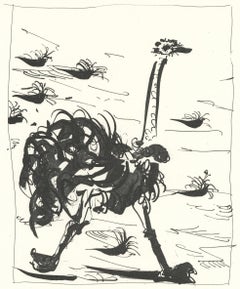
Pablo Picasso, The Ostrich, from Natural History, 1970 (after)
By Pablo Picasso
Located in Southampton, NY
This exquisite lithograph after Pablo Picasso (1881–1973), titled L'Autruche (The Ostrich), from the folio Picasso, Eaux-fortes originales pour des textes de Buffon, Histoire naturel...
Category
1970s Cubist The Hamptons - Art
Materials
Lithograph
$716 Sale Price
20% Off
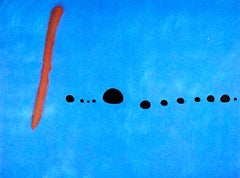
Joan Miro, Blue II, from Miro 1959–1960, 1961 (after)
By Joan Miró
Located in Southampton, NY
This exquisite lithograph and pochoir after Joan Miro (1893–1983), titled Bleu II (Blue II), from the album Miro 1959–1960 (Miro 1959–1960), originates from the 1961 edition published by Pierre Matisse Gallery, New York, rendered by Daniel Jacomet, Paris, and printed by Daniel Jacomet et Cie, Paris, 1961. Bleu II embodies Miro’s exploration of pure chromatic expression and spatial rhythm, using the intensity of blue to evoke depth, movement, and poetic emotion. The composition reflects his mastery of balance between form and void, symbolizing infinite freedom and the transcendence of the imagination.
Executed as a lithograph and pochoir on velin paper, this work measures 11.5 x 18.48 inches, with centerfold as issued. Unsigned and unnumbered as issued. The edition exemplifies the refined craftsmanship of Daniel Jacomet et Cie, Paris, one of France’s foremost studios specializing in pochoir and fine art printmaking.
Artwork Details:
Artist: After Joan Miro (1893–1983)
Title: Bleu II (Blue II), from the album Miro 1959–1960 (Miro 1959–1960), 1961
Medium: Lithograph and pochoir on velin paper
Dimensions: 11.5 x 18.48 inches (29.2 x 46.9 cm), with centerfold as issued
Inscription: Unsigned and unnumbered as issued
Date: 1961
Publisher: Pierre Matisse Gallery, New York
Renderer: Daniel Jacomet, Paris
Printer: Daniel Jacomet et Cie, Paris
Catalogue raisonne references: Cramer, Patrick, and Joan Miro. Joan Miro, Catalogue Raisonne Des Livres Illustres. P. Cramer, 1989, illustration 69. Dupin, Jacques, and Joan Miro. Miro Engraver 1961–1973. Rizzoli, 1989, illustration 292. Miro, Joan. Joan Miro, Lithographe II, 1953–1963. Joan Miro, Lithographe, Maeght, 1975, illustration 286–294.
Condition: Well preserved, consistent with age and medium
Provenance: From the album Miro 1959–1960 (Miro 1959–1960), published by Pierre Matisse Gallery, New York; rendered by Daniel Jacomet, Paris; printed by Daniel Jacomet et Cie, Paris, 1961
Notes:
Excerpted from the album (translated from French), It was taken from this album: XXVIII examples with II original lithographs and an etching and VI suites, numbered from I to XXV; LXXX examples with II original lithographs and an etching, numbered from XXVI to LXXV; MCC examples, numbered from I to MCC. This album was made and presented for the exhibition of the artist's works at the Gallery Pierre Matisse, New York, October 31 - November 25, 1961.
About the Publication:
Miro 1959–1960 (Miro 1959–1960), published in 1961 by Pierre Matisse Gallery, New York, with pochoirs rendered by Daniel Jacomet, Paris, accompanied the landmark exhibition of Miro’s paintings and graphic works held at the Pierre Matisse Gallery from October 31 to November 25, 1961. The album captures the spirit of Miro’s late 1950s and early 1960s output—a period characterized by liberated brushwork, symbolic abstraction, and radiant chromatic experimentation. Printed by Daniel Jacomet et Cie, Paris, in collaboration with Fernand Mourlot for the original lithographs, the volume reflects the exceptional precision and artistry of French printmaking at its height. Designed to evoke the immediacy of Miro’s painted surfaces, the pochoirs and lithographs maintain a tactile richness and vibrancy that honor the original works. This publication stands among Miro’s most celebrated printed albums, marking a pivotal moment in his continued dialogue between materiality, imagination, and cosmic lyricism.
About the Artist:
Joan Miro (1893–1983) was a Catalan painter, sculptor, printmaker, and ceramicist whose visionary imagination and lyrical abstraction made him one of the most influential and beloved artists of the 20th century. Born in Barcelona, Miro drew inspiration from Catalan folk art, Romanesque frescoes, and the luminous landscapes of Mont-roig del Camp, developing a deep connection to nature that infused his work with vitality and symbolism. After formal training at the Escola d'Art in Barcelona, he absorbed the lessons of Post-Impressionism and Cubism before moving to Paris in the early 1920s, where he became a leading figure in the Surrealist movement. There, Miro forged a personal visual language of biomorphic shapes, floating symbols, and radiant color harmonies that reflected both spontaneity and spiritual depth. In creative dialogue with peers such as Alexander Calder, Alberto Giacometti, Salvador Dali, Wassily Kandinsky, Marcel Duchamp, and Man Ray, he helped revolutionize modern art by dissolving the boundaries between abstraction and dream imagery. Miro's inventive approach extended far beyond painting, embracing sculpture, ceramics, and monumental public commissions that redefined how art could interact with space and emotion. His expressive freedom and gestural abstraction profoundly influenced later artists including Jackson Pollock, Mark Rothko, Alexander Calder, Jean Dubuffet, Antoni Tapies, and Joan Mitchell, inspiring generations who sought to merge instinct, color, and imagination. Today, Miro's work remains a cornerstone of modernism, prized by collectors and celebrated in major museums worldwide. His highest auction record was achieved by Peinture (Etoile Bleue) (1927), which sold for 23,561,250 GBP (approximately 37 million USD) at Sotheby's, London, on June 19, 2012.
After Joan Miro Bleu II, Miro 1959–1960, Miro Pierre Matisse Gallery, Miro Daniel Jacomet, Miro pochoir...
Category
1960s Surrealist The Hamptons - Art
Materials
Lithograph
$1,196 Sale Price
20% Off
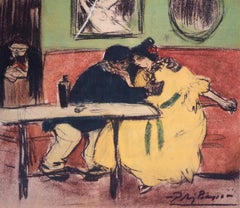
Pablo Picasso, The Divan, The Blues of Barcelona, 1963 (after)
By Pablo Picasso
Located in Southampton, NY
This exquisite lithograph and pochoir after Pablo Picasso (1881–1973), titled Le divan (The Divan), from the folio Les Bleus de Barcelone, 12 aquarelles et pastels (The Blues of Barc...
Category
1960s Modern The Hamptons - Art
Materials
Lithograph, Stencil
$7,596 Sale Price
20% Off
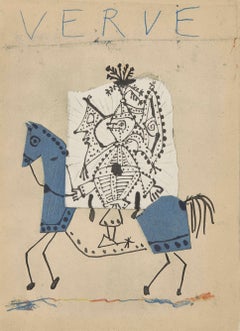
Pablo Picasso, The Blue Rider, from Verve, Revue Artistique, 1951
By Pablo Picasso
Located in Southampton, NY
This exquisite lithograph by Pablo Picasso (1881–1973), titled Le cavalier bleu (The Blue Rider), from Verve, Revue Artistique et Litteraire, Vol. VII, No. 25–26, originates from the...
Category
1950s Cubist The Hamptons - Art
Materials
Lithograph
$956 Sale Price
20% Off
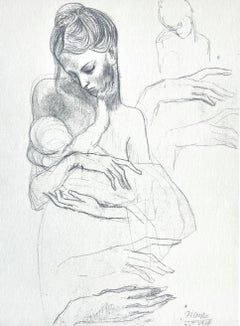
Pablo Picasso, Mother and Child, from Fifteen Drawings, 1946 (after)
By Pablo Picasso
Located in Southampton, NY
This exquisite lithograph and pochoir after Pablo Picasso (1881–1973), titled Mother and Child, from the folio Picasso, Fifteen Drawings, 1946, originates from the 1946 edition published by Pantheon Books, Inc., New York, and rendered and printed by Albert Carman, City Island, New York, 1946. Mother and Child conveys Picassos timeless exploration of tenderness, intimacy, and the human bond, distilling the universal theme of maternal love through graceful line and lyrical composition. With rhythmic simplicity and emotional clarity, the work captures the purity of affection and the quiet strength of motherhood—an enduring motif throughout Picassos artistic life.
Executed as a lithograph and pochoir on velin paper, this work measures 18.75 x 12.63 inches. Signed in the plate and unnumbered as issued. The edition exemplifies the exemplary standards and artistic integrity of the fine art publishing and printmaking of Pantheon Books, Inc., and Albert Carman whose next collaborative project following this edition was with Marc Chagall in the creation of his monumental suite, Four Tales from the Arabian Nights in 1948.
Artwork Details:
Artist: After Pablo Picasso (1881–1973)
Title: Mother and Child, from the folio Picasso, Fifteen Drawings, 1946
Medium: Lithograph and pochoir on velin paper
Dimensions: 18.75 x 12.63 inches (47.6 x 32.1 cm)
Inscription: Signed in the plate and unnumbered as issued
Date: 1946
Edition: D, primary edition; L, out of commerce, hand signed by Pablo Picasso
Publisher: Pantheon Books, Inc., New York
Printer: Albert Carman, City Island, New York
Catalogue raisonne reference: Orozco, Miguel. Picasso Interpretation Prints II - Etchings, Pochoirs
Woodcuts. Catalogue Raisonne. 2023, illustration 388–402
Condition: Well preserved, consistent with age and medium
Provenance: From the folio Picasso, Fifteen Drawings, 1946, published by Pantheon Books, Inc., New York; printed by Albert Carman, City Island, New York, 1946
About the Publication:
Picasso, Fifteen Drawings (1946) was one of the earliest fine art portfolios issued in the United States to feature the work of Pablo Picasso in the mediums of lithography and pochoir. Published by Pantheon Books, Inc., New York—a press renowned for its pioneering role in introducing European modernism to American audiences—the portfolio marked an important cultural bridge between postwar Paris and the emerging art scene in New York. The suite comprised fifteen images selected from Picassos prolific oeuvre, including depictions of mythological figures, musicians, and introspective portraits. Each work was rendered using a combination of lithography and pochoir, printed by Albert Carman at his atelier in City Island, New York, whose craftsmanship ensured a remarkable fidelity to the tonal and chromatic nuances of Picassos originals. The portfolio was produced in an edition of D, primary edition; L, out of commerce, hand signed by Pablo Picasso, issued unbound within a printed paper folder, and distributed primarily through Pantheons art book division under the direction of Kurt Wolff and Monroe Wheeler—key figures in shaping the intellectual reception of modern art in the United States. Picasso, Fifteen Drawings helped establish the artists postwar reputation among American collectors, scholars, and institutions, introducing a generation of viewers to the expressive immediacy and psychological depth of his draftsmanship. The publication also exemplified Pantheons broader mission to make modern European art accessible to an American audience, alongside their landmark editions devoted to Henri Matisse, Georges Rouault, and Marc Chagall. Technically refined and historically significant, the portfolio stands as a testament to the transatlantic exchange of modernist aesthetics during the mid-20th century and remains one of the most sought-after Picasso print editions issued in the United States before 1950.
About the Artist:
Pablo Picasso (1881–1973) was a Spanish painter, sculptor, printmaker, and ceramicist whose extraordinary vision revolutionized modern art and defined the visual language of the 20th century. A child prodigy from Malaga, Spain, Picassos career spanned more than seven decades and encompassed an astonishing range of styles and innovations—from the melancholic Blue and romantic Rose periods to his pioneering invention of Cubism with Georges Braque, which shattered conventional notions of perspective and form. Influenced by the bold expressiveness of El Greco, the structure of Cezanne, and the vitality of African and Iberian sculpture, Picasso became a central figure of the Paris avant-garde, working in creative dialogue with contemporaries such as Henri Matisse, Alexander Calder, Alberto Giacometti, Salvador Dali, Joan Miro, Wassily Kandinsky, Marcel Duchamp, and Man Ray. His insatiable experimentation extended across painting, drawing, printmaking, ceramics, and sculpture, forever expanding the boundaries of artistic expression. A master of reinvention, Picasso profoundly shaped generations of artists who followed—from Andy Warhol, Roy Lichtenstein, David Hockney, and Jean-Michel Basquiat to Jeff Koons and Banksy—cementing his status as a timeless cultural icon whose works remain among the most sought after worldwide. His landmark painting Les Femmes d'Alger (Version O) achieved a record-breaking sale of 179,365,000 USD at Christie's, New York, on May 11, 2015, affirming Picassos enduring legacy as one of the most influential and valuable artists in history.
Pablo Picasso Mother and Child...
Category
1940s Modern The Hamptons - Art
Materials
Lithograph, Stencil
$3,996 Sale Price
20% Off
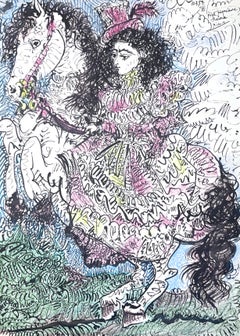
Pablo Picasso, 10.3.59. VIII, from Bulls and Bullfighters, 1961 (after)
By Pablo Picasso
Located in Southampton, NY
This exquisite heliogravure after Pablo Picasso (1881–1973), titled 10.3.59. VIII, from the album Pablo Picasso, Toros y Toreros (Bulls and Bullfighters), originates from the 1961 ed...
Category
1960s Cubist The Hamptons - Art
Materials
Lithograph
$796 Sale Price
20% Off
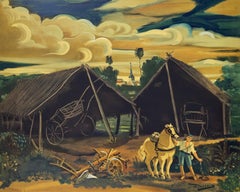
Andre Derain, The Two Hangars, 1970 (after)
By André Derain
Located in Southampton, NY
This exquisite lithograph after Andre Derain (1880–1954), titled Les deux hangars (The Two Hangars), from the folio Andre Derain entre 1935 et 1949, V (Andre Derain between 1935 and ...
Category
1970s Fauvist The Hamptons - Art
Materials
Lithograph
$716 Sale Price
20% Off
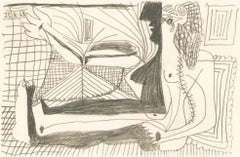
Pablo Picasso, 25.4.64., The Taste of Happiness, 1970 (after)
By Pablo Picasso
Located in Southampton, NY
This exquisite lithograph after Pablo Picasso (1881–1973), titled 25.4.64., from the folio Le Gout du Bonheur, trois carnets d`atelier (The Taste of Happiness, Three Studio Sketchboo...
Category
1970s Cubist The Hamptons - Art
Materials
Lithograph
$796 Sale Price
20% Off
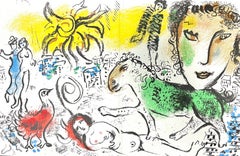
Marc Chagall, Sun Over the City, from XXe siecle, 1973
By Marc Chagall
Located in Southampton, NY
This exquisite lithograph by Marc Chagall (1887–1985), titled Soleil sur la ville (Sun Over the City), from the album Chagall Monumental Works, Special Issue of the XXe Siecle Review...
Category
1970s Expressionist The Hamptons - Art
Materials
Lithograph
$796 Sale Price
20% Off
Wassily Kandinsky, Untitled, from Derriere le Miroir, 1953 (after)
By Wassily Kandinsky
Located in Southampton, NY
This exquisite lithograph after Wassily Kandinsky (1866–1944), titled Sans Titre (Untitled), originates from the 1953 folio Derriere le Miroir, Nos. 60–61, published by Maeght Editeu...
Category
1950s Modern The Hamptons - Art
Materials
Lithograph

$956 Sale Price
20% Off
Faith Ringgold, Slavery, from Letter from Birmingham City Jail, 2007
By Faith Ringgold
Located in Southampton, NY
This exquisite silkscreen by Faith Ringgold (1930–2024), titled Slavery, from the folio Letter from Birmingham City Jail, originates from the 2007 edition published by The Limited Ed...
Category
Early 2000s Expressionist The Hamptons - Art
Materials
Screen

$4,796 Sale Price
20% Off
Newman, Sans titre, In Memory of My Feelings (after)
By Barnett Newman
Located in Southampton, NY
Lithograph on vélin Mohawk Superfine Smooth paper. Paper Size: 11.937 x 8.96 inches. Inscription: Signed in the plate and unnumbered, as issued. Notes: From the folio, In Memory of M...
Category
1960s Abstract Expressionist The Hamptons - Art
Materials
Lithograph
$1,596 Sale Price
20% Off
Rene Magritte, Gemstones, 1968 (after)
By René Magritte
Located in Southampton, NY
This exquisite lithograph after Rene Magritte (1898–1967), titled Pierreries (Gemstones), from the folio Les Enfants Trouves de Magritte (The Found Children of Magritte), 1968, origi...
Category
1960s Surrealist The Hamptons - Art
Materials
Lithograph

$3,996 Sale Price
20% Off
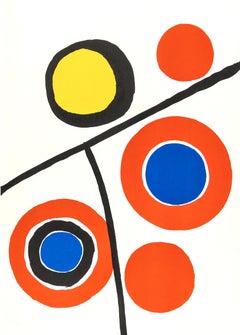
Alexander Calder, Rings on Black, from Derriere le Miroir, 1973
By Alexander Calder
Located in Southampton, NY
This exquisite lithograph by Alexander Calder (1898–1976), titled Anneaux sur noir (Rings on Black), originates from the historic 1973 folio Derriere le Miroir, No. 201. Published by...
Category
1970s Modern The Hamptons - Art
Materials
Lithograph
$716 Sale Price
20% Off
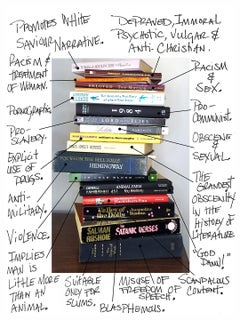
BANNED limited edition print
By Karyn Mannix
Located in East Hampton, NY
Banned Book Series. A definite "conversation" piece of art.
This is the only limited edition print in the Book Stack Series, which contains 24 different themed stacks.
BANNED is in a...
Category
2010s New Media The Hamptons - Art
Materials
Archival Paper
$360 Sale Price
20% Off
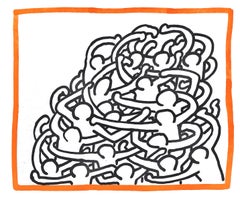
Keith Haring, Untitled, from Against All Odds, 1990
By Keith Haring
Located in Southampton, NY
This exquisite lithograph by Keith Haring (1958–1990), titled Untitled, from the album Against All Odds, 20 drawings - Oct. 3, 1989 (Against All Odds, 20 drawings - Oct. 3, 1989), originates from the 1990 edition published by Publishing House Bebert, Rotterdam, in collaboration with Mera Rubell, New York, and Donald Rubell, New York, and printed by Nieuwe Grafische, Rotterdam, Spring, 1990. Untitled embodies Haring’s signature visual vocabulary—dynamic lines, rhythmic energy, and universal symbolism—infused with the social urgency and optimism that defined his generation.
Executed as a lithograph on velin acid-free Rivoli paper, this work measures 8.5 x 10.3 inches. Unsigned and unnumbered as issued. The edition exemplifies the refined craftsmanship of Nieuwe Grafische, Rotterdam, and the bold spirit of Bebert’s late twentieth-century artist collaborations.
Artwork Details:
Artist: Keith Haring (1958–1990)
Title: Untitled, from the album Against All Odds, 20 drawings - Oct. 3, 1989 (Against All Odds, 20 drawings - Oct. 3, 1989)
Medium: Lithograph on velin acid-free Rivoli paper
Dimensions: 8.5 x 10.3 inches (21.59 x 26.16 cm)
Inscription: Unsigned and unnumbered as issued
Date: 1990
Publisher: Publishing House Bebert, Rotterdam, in collaboration with Mera Rubell, New York, and Donald Rubell, New York
Printer: Nieuwe Grafische, Rotterdam
Condition: Well preserved, consistent with age and medium
Provenance: From the album Against All Odds, 20 drawings - Oct. 3, 1989 (Against All Odds, 20 drawings - Oct. 3, 1989), Bebert, Rotterdam, 1990
Notes:
Excerpted from the album, 20 drawings - Oct. 3, 1989 was published with the collaboration of Mera and Donald Rubell by Bebert Publishing House in Spring 1990. The edition consists of MMD hard cover examples, of which D are numbered (I/D - D/D) and signed by the artist. The edition was printed on acid-free Rivoli paper by Nieuwe Grafische in Rotterdam. and bound by Stokkink B.V. in Amsterdam. ©Keith Haring, M.Y.6. 1990. Mera + Don Rubell, NYC 1990. Bebert Publishing House. Westersingel 22-3014 GP, Rotterdam, Holland - 1990.
About the Publication:
Against All Odds is both an artist’s album and memorial publication comprising twenty lithographs created by Keith Haring on October 3, 1989, just months before his death in February 1990. Conceived in collaboration with Mera and Donald Rubell and published by Bebert Publishing House, Rotterdam, the album encapsulates Haring’s final creative statement. Haring’s accompanying handwritten foreword and brief text meditate on the fragility of human life, ecological collapse, and the artist’s struggle to preserve hope “against all odds.” The drawings—executed in Haring’s immediately recognizable graphic line—depict writhing figures, embryos, skeletons, animals, and cosmic symbols that echo his lifelong concern with birth, death, sexuality, and transcendence. Together, the images and text form a narrative of resistance and endurance amid personal illness and global crisis. The album’s title encapsulates Haring’s sense of perseverance: humanity’s and the planet’s fight for survival despite overwhelming forces of destruction. Published posthumously in spring 1990, Against All Odds stands as a poignant summation of his ethos—celebrating vitality and compassion in the face of mortality and despair.
About the Artist:
Keith Haring (1958–1990) was an American artist, activist, and cultural innovator whose bold visual language and socially engaged practice redefined contemporary art and the role of the artist in society. Born in Reading, Pennsylvania, and raised in Kutztown, Haring was inspired from an early age by comic art, calligraphy, and graphic design, influences that would later shape his instantly recognizable style of radiant lines, rhythmic movement, and universal symbols. After moving to New York City in 1978 to study at the School of Visual Arts, he immersed himself in the downtown art scene, drawing influence from modernist pioneers such as Pablo Picasso, Alexander Calder, Alberto Giacometti, Salvador Dali, Joan Miro, Wassily Kandinsky, Marcel Duchamp, and Man Ray, whose innovations in form, abstraction, and conceptual art informed his radical approach to public expression. Haring began creating chalk drawings in the New York subway system, transforming urban walls into democratic spaces for creativity and communication. His imagery—radiant babies, barking dogs, flying saucers, and dancing figures—spoke a universal visual language that combined accessibility with profound emotional and political resonance. He became a leading figure in 1980s New York, working alongside Jean-Michel Basquiat, Andy Warhol, and Kenny Scharf to bridge the worlds of street art, pop culture, and fine art. Influenced by Picasso’s expressive energy, Calder’s movement, Miro’s playfulness, and Duchamp’s conceptual wit, Haring developed an art of optimism, immediacy, and activism that addressed issues of love, unity, social justice, and human rights. His work carried urgent commentary on apartheid, AIDS awareness, drug abuse, and inequality, while radiating the joy and vitality of life. In 1986, he opened the Pop Shop, a groundbreaking experiment in making art accessible to all, selling affordable objects featuring his designs without compromising his artistic vision. His monumental public murals, including Crack Is Wack in Harlem and Tuttomondo in Pisa, Italy, continue to stand as symbols of art’s power to educate and inspire collective action. Haring’s dynamic compositions merged the energy of graffiti with the structural clarity of modernism, synthesizing the spiritual abstraction of Kandinsky, the surreal imagination of Dali, and the sensual immediacy of Man Ray. His work influenced generations of artists, including Banksy, Shepard Fairey, KAWS, Takashi Murakami, and RETNA, who continue to echo his fusion of activism and aesthetics. Despite his untimely death from AIDS at age 31, Haring’s impact on art and culture endures globally through the Keith Haring Foundation, which supports children’s programs and HIV/AIDS research. His works are housed in major museums such as the Museum of Modern Art, the Whitney Museum of American Art, the Centre Pompidou, and the Tate Modern, affirming his legacy as a cornerstone of twentieth-century art. The highest auction record for Keith Haring was achieved with Untitled (1982), which sold for $6.5 million USD at Sotheby’s, New York, on May 16, 2017, solidifying his status as one of the most influential, beloved, and enduring artists of the modern era.
Keith Haring Untitled Against All Odds 20 drawings Oct 3 1989 Bebert Publishing House Rotterdam 1990 lithograph...
Category
1990s Pop Art The Hamptons - Art
Materials
Lithograph
$1,276 Sale Price
20% Off
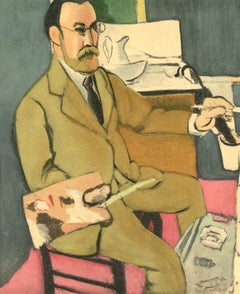
Henri Matisse, Portrait of the Artist, Portraits by Henri Matisse, 1954 (after)
By Henri Matisse
Located in Southampton, NY
This exquisite lithograph after Henri Matisse (1869–1954), titled Portrait de l’Artiste (Portrait of the Artist), from the album Portraits par Henri Matisse (Portraits by Henri Matis...
Category
1950s Fauvist The Hamptons - Art
Materials
Lithograph
$716 Sale Price
20% Off
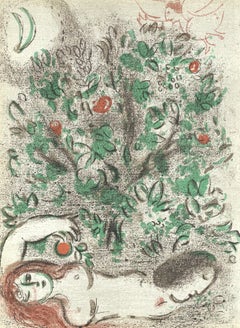
Marc Chagall, Paradise I, from Drawings for the Bible, 1956
By Marc Chagall
Located in Southampton, NY
This exquisite lithograph by Marc Chagall (1887–1985), titled Paradis I (Paradise I), from Marc Chagall, Dessins Pour La Bible (Drawings for the Bible), Verve: Revue Artistique et Litteraire, Vol. VIII, No. 33–34, originates from the September 1956 issue published by Editions de la revue Verve, Paris, under the direction of Teriade, Editeur, Paris, and printed by Mourlot Freres, Paris, 1956. This radiant and dreamlike composition envisions the Garden of Eden as a symbol of divine harmony and innocence, where life, color, and spirit coexist in perfect unity. Through lyrical forms and glowing tonal contrasts, Chagall expresses a vision of creation that transcends narrative, merging spiritual wonder with emotional warmth. Paradis I embodies the artist’s enduring fascination with the sacred origins of life and the poetic balance between the earthly and the eternal. The piece forms part of Chagall’s celebrated series of lithographs and drawings created for Dessins Pour La Bible, a monumental project uniting art, scripture, and mysticism in one of the artist’s most important achievements.
Executed as a lithograph on velin du Marais paper, this work measures 14 x 10.5 inches (35.56 x 26.67 cm). Unsigned and unnumbered as issued. The edition exemplifies the superb craftsmanship of the Mourlot Freres atelier, renowned for its collaborations with the greatest modern masters of the 20th century.
Artwork Details:
Artist: Marc Chagall (1887–1985)
Title: Paradis I (Paradise I), from Marc Chagall, Dessins Pour La Bible (Drawings for the Bible), Verve: Revue Artistique et Litteraire, Vol. VIII, No. 33–34, September 1956
Medium: Lithograph on velin du Marais paper
Dimensions: 14 x 10.5 inches (35.56 x 26.67 cm)
Inscription: Unsigned and unnumbered as issued
Date: 1956
Publisher: Editions de la revue Verve, Paris, under the direction of Teriade, Editeur, Paris
Printer: Mourlot Freres, Paris
Catalogue raisonne references: Cain, Julien, and Fernand Mourlot. Chagall Lithographe. Andre Sauret, Editeur, 1960, illustrations 117–46. Cramer, Patrick, and Meret Meyer. Marc Chagall: Catalogue Raisonne Des Livres Illustrés. P. Cramer ed., 1995, illustration 25.
Condition: Well preserved, consistent with age and medium
Provenance: From Marc Chagall, Dessins Pour La Bible (Drawings for the Bible), Verve: Revue Artistique et Litteraire, Vol. VIII, No. 33–34, published by Editions de la revue Verve, Paris, 1956
Notes:
Excerpted from the album (translated from French), This double issue of Verve is dedicated to the full reproduction in heliogravure of the one hundred-five plates etched by Marc Chagall, between 1930 and 1955, for the illustration of the Bible. The artist composed especially for the present work, sixteen lithographs in color and twelve in black, as well as the cover and the title page. This volume was completed and printed on September 10, 1956, by the Master Printers Draeger Freres for heliogravure, and by Mourlot Freres for lithography.
About the Publication:
Marc Chagall, Dessins Pour La Bible (Drawings for the Bible), published as Verve Vol. VIII, No. 33–34 in September 1956, represents one of the crowning achievements of Chagall’s lifelong dialogue with the sacred. Conceived and directed by the visionary publisher Teriade and printed by the master lithographers Mourlot Freres, the issue features thirty-four color lithographs and numerous black-and-white drawings inspired by biblical figures and stories. Chagall’s works for this edition unite text and image in a luminous meditation on divine creation, moral struggle, and spiritual renewal, imbued with his signature dreamlike symbolism and radiant color. Produced in postwar Paris, this landmark publication reaffirmed the enduring union of art and faith, establishing Dessins Pour La Bible as one of the most important illustrated works of the 20th century.
About the Artist:
Marc Chagall (1887–1985) was a Belarus-born French painter, printmaker, and designer whose visionary imagination, radiant color, and deeply poetic symbolism made him one of the most beloved and influential artists of the 20th century. Rooted in the imagery of his Jewish heritage and the memories of his childhood in Vitebsk, Chagall’s art wove together themes of faith, love, folklore, and fantasy with a dreamlike modern sensibility. His unique style—merging elements of Cubism, Fauvism, Expressionism, and Surrealism—defied categorization, transforming ordinary scenes into lyrical meditations on memory and emotion. Influenced by Russian icon painting, medieval religious art, and the modern innovations of artists such as Pablo Picasso, Henri Matisse, and Georges Braque, Chagall developed a profoundly personal visual language filled with floating figures, vibrant animals, musicians, and lovers that symbolized the transcendent power of imagination and love. During his early years in Paris, he became an integral part of the Ecole de Paris circle, forming friendships with Amedeo Modigliani, Fernand Leger, and Sonia Delaunay, and his creative spirit resonated with that of his peers and successors—Alexander Calder, Alberto Giacometti, Salvador Dali, Joan Miro, Wassily Kandinsky, Marcel Duchamp, and Man Ray—artists who, like Chagall, sought to push the boundaries of perception, emotion, and form. Over a prolific career that spanned painting, printmaking, stained glass, ceramics, and stage design, Chagall brought an unparalleled poetic sensibility to modern art, infusing even the most abstract subjects with human warmth and spiritual depth. His works are held in the most prestigious museums around the world, including the Museum of Modern Art, the Centre Pompidou, the Tate, and the Guggenheim, where they continue to inspire generations of artists and collectors. The highest price ever paid for a Marc Chagall artwork is approximately $28.5 million USD, achieved in 2017 at Sotheby’s New York for Les Amoureux (1928).
Marc Chagall Paradis...
Category
1950s Expressionist The Hamptons - Art
Materials
Lithograph
$956 Sale Price
20% Off
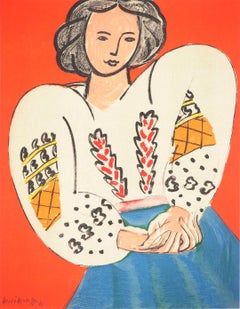
Henri Matisse, Mrs. M.P., from Portraits by Henri Matisse, 1954 (after)
By Henri Matisse
Located in Southampton, NY
This exquisite lithograph after Henri Matisse (1869–1954), titled Madame M.P. (Mrs. M.P.), from the album Portraits par Henri Matisse (Portraits by Henri Matisse), originates from th...
Category
1950s Fauvist The Hamptons - Art
Materials
Lithograph
$716 Sale Price
20% Off
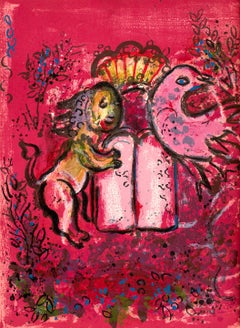
Marc Chagall, The Lion of Judah and the Tablets of the Law, 1962
By Marc Chagall
Located in Southampton, NY
This exquisite lithograph by Marc Chagall (1887–1985), titled Le lion de Juda et les Tables de la Loi (The Lion of Judah and the Tablets of the Law), from the album Marc Chagall, The...
Category
1960s Expressionist The Hamptons - Art
Materials
Lithograph
$956 Sale Price
20% Off
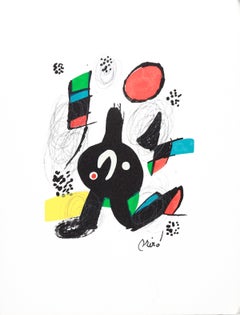
Joan Miro, The Acid Melody, from La Melodie acide, 1980
By Joan Miró
Located in Southampton, NY
This exquisite lithograph by Joan Miro (1893–1983), titled La Melodie acide (The Acid Melody), from the folio 14 original lithographs by Joan Miro "La Melodie acide" (The Acid Melody...
Category
1980s Modern The Hamptons - Art
Materials
Lithograph
$1,756 Sale Price
20% Off
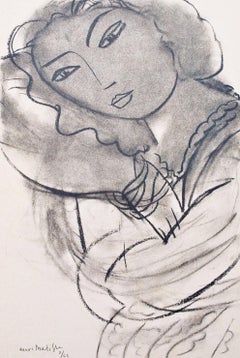
Henri Matisse, Miss M.A., from Portraits by Henri Matisse, 1954 (after)
By Henri Matisse
Located in Southampton, NY
This exquisite heliogravure after Henri Matisse (1869–1954), titled Mademoiselle M.A. (Miss M.A.), from the album Portraits par Henri Matisse (Portraits by Henri Matisse), originates...
Category
1950s Fauvist The Hamptons - Art
Materials
Lithograph
$716 Sale Price
20% Off
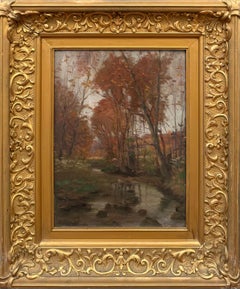
“Fall Landscape”
Located in Southampton, NY
Original oil on canvas board painting of a fall landscape by the American artist, Arthur Mitchell. Signed lower left by the artist. Circa 1890. Condition is very good. The paintin...
Category
1890s American Impressionist The Hamptons - Art
Materials
Oil, Board, Canvas
$2,720 Sale Price
20% Off
Lucio Fontana, Concetto Spaziale, from San Lazzaro et ses Amis, 1975 (after)
By Lucio Fontana
Located in Southampton, NY
This exquisite lithograph after Lucio Fontana (1899–1968), titled Concetto Spaziale (Spatial Concept), from the album San Lazzaro et ses Amis, Hommage au fondateur de la revue XXe si...
Category
1970s Modern The Hamptons - Art
Materials
Lithograph
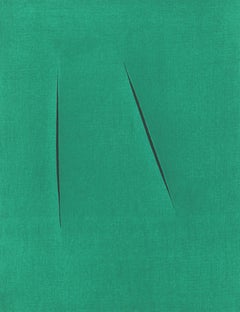
$10,396 Sale Price
20% Off
Alexander Calder, Untitled, from Prints from the Mourlot Press, 1964
By Alexander Calder
Located in Southampton, NY
This exquisite lithograph by Alexander Calder (1898–1976), titled Sans titre (Untitled), from the album Prints from the Mourlot Press, exhibition sponsored by the French Embassy, cir...
Category
1960s Surrealist The Hamptons - Art
Materials
Lithograph
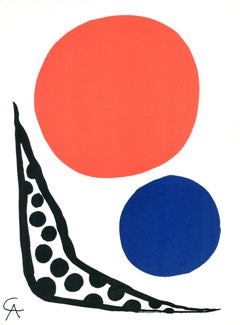
$1,196 Sale Price
20% Off
Lucio Fontana, Concetto Spaziale, from XXe siecle, 1959
By Lucio Fontana
Located in Southampton, NY
This exquisite lithograph and pochoir by Lucio Fontana (1899–1968), titled Concetto Spaziale (Spatial Concept), from the album XXe siecle, Nouvelle serie, XXIe Annee, No. 12, Mai-Jui...
Category
1950s Modern The Hamptons - Art
Materials
Lithograph
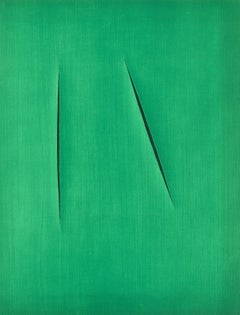
$10,396 Sale Price
20% Off
Ellsworth Kelly, Yellow Shape, from Derriere le Miroir, 1958
By Ellsworth Kelly
Located in Southampton, NY
This exquisite lithograph by Ellsworth Kelly (1923–2015), titled Forme Jaune (Yellow Shape), originates from the historic 1958 folio Derriere le Miroir, No. 110. Published by Maeght ...
Category
1950s Hard-Edge The Hamptons - Art
Materials
Lithograph
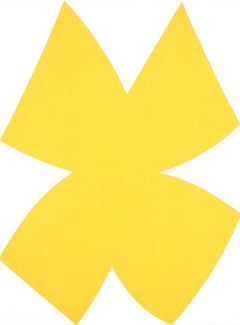
$956 Sale Price
20% Off
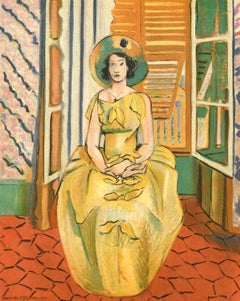
Henri Matisse, Miss L.L., from Portraits by Henri Matisse, 1954 (after)
By Henri Matisse
Located in Southampton, NY
This exquisite lithograph after Henri Matisse (1869–1954), titled Mademoiselle L.L. (Miss L.L.), from the album Portraits par Henri Matisse (Portraits by Henri Matisse), originates f...
Category
1950s Fauvist The Hamptons - Art
Materials
Lithograph
$716 Sale Price
20% Off
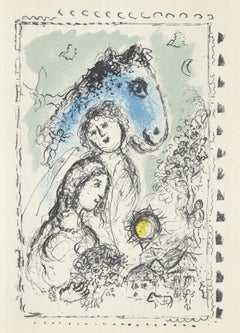
Marc Chagall, Blue Horse with Couple, from Derriere le Miroir, 1982
By Marc Chagall
Located in Southampton, NY
This exquisite lithograph by Marc Chagall (1887–1985), titled Cheval bleu au couple (Blue Horse with Couple), originates from the historic 1982 folio Derriere le Miroir, No. 250, Hommage a Aime et Marguerite Maeght (Tribute to Aime and Marguerite Maeght). Published by Maeght Editeur, Paris, under the direction of Aime Maeght, and printed by Imprimerie Moderne du Lion, Paris, this vibrant composition reflects Chagall’s lyrical fusion of color, dream, and devotion. In Cheval bleu au couple, ethereal figures and a radiant blue horse float within a luminous space of poetic imagination, evoking love, memory, and transcendence. The image captures the artist’s timeless ability to unite fantasy and emotion within the expressive language of modernism.
Executed on velin paper, this lithograph measures 15 x 11 inches (38.1 x 27.9 cm). As issued, it is unsigned and unnumbered, consistent with the authorized publication format. The edition exemplifies Chagall’s mastery of color lithography and his lifelong exploration of faith, folklore, and the human spirit.
Artwork Details:
Artist: Marc Chagall (1887–1985)
Title: Cheval bleu au couple (Blue Horse with Couple), from Derriere le Miroir, No. 250, Hommage a Aime et Marguerite Maeght (Tribute to Aime and Marguerite Maeght), 1982
Medium: Lithograph on velin paper
Dimensions: 15 x 11 inches (38.1 x 27.9 cm)
Inscription: Unsigned and unnumbered, as issued
Date: 1982
Publisher: Maeght Editeur, Paris
Printer: Imprimerie Moderne du Lion, Paris
Catalogue raisonne references: Chagall, Marc, et al. Chagall Lithographe VI, 1980–1985. Andre Sauret, Editeur, 1986, illustration 993. Cramer, Patrick, and Meret Meyer. Marc Chagall: Catalogue Raisonne Des Livres Illustres. P. Cramer ed., 1995, illustration 113.
Condition: Well preserved, consistent with age and medium
Provenance: From the 1982 folio Derriere le Miroir, No. 250, published by Maeght Editeur, Paris
Notes:
Excerpted from the folio (translated from French), This special issue of Derriere le Miroir was designed and defined by Aime Maeght in the fall of 1980. He envisioned its publication as a celebration with which artists and writers published since 1946 were to be associated. He also chose Francois Chapon, president of the Reverdy Committee, to write the presentation. This Derriere le Miroir number 250 took the form, after its disappearance on September 5, 1981, of a tribute to Aime Maeght and his wife Marguerite Maeght who died four years earlier. 24 artists agreed to create an original graphic work for this issue which includes the general table of all issues as well as excerpts from texts by 32 writers. Finished printing on June 2, 1982 on the presses of the l'Imprimerie moderne du Lion in Paris. CL examples were printed on velin d'Arches, numbered from I to CL, and some non-commercial examples constituting the original edition.
About the Publication:
Derriere le Miroir (translated as "Behind the Mirror") was an iconic French art periodical published from 1946 to 1982 by Maeght Editeur, one of the most influential art publishers of the 20th century. Founded by Aime Maeght in Paris, the publication was conceived as a visual and literary collaboration between leading modern artists, poets, and critics. Each issue functioned as both an exhibition catalogue and a work of art in itself—featuring original lithographs printed directly from the artists' stones or plates, alongside essays, poems, and critical commentary. Over the course of 36 years, Derriere le Miroir produced more than 250 issues and showcased an extraordinary roster of artists including Henri Matisse, Marc Chagall, Joan Miro, Georges Braque, Alexander Calder, Fernand Leger, Pierre Bonnard, Alberto Giacometti, Eduardo Chillida, Ellsworth Kelly, Francis Bacon, Paul Rebeyrolle, Claude Garache, Antoni Tapies, Bram van Velde, Pierre Alechinsky, Pol Bury, Shusaku Arakawa, and Gerard Titus-Carmel. Printed in the ateliers of Mourlot, Arte, and Imprimerie Moderne du Lion, the periodical set new standards for quality in color lithography, combining fine art printing with elegant typography and poetic text. Beyond its visual brilliance, Derriere le Miroir also became a cultural chronicle of postwar European modernism. Each issue coincided with exhibitions held at Galerie Maeght, providing a collectible and widely accessible record of groundbreaking shows. Its integration of image, text, and philosophy created a dialogue between art and literature that elevated the modern art book to new aesthetic heights. Today, Derriere le Miroir remains one of the most sought-after and historically significant art publications, prized by collectors and scholars alike for its craftsmanship, influence, and its role in defining the visual language of 20th-century modernism. The Maeght Foundation in Saint-Paul-de-Vence continues to honor this legacy through exhibitions and archival preservation of the series, affirming Derriere le Miroir's enduring place in the history of modern art and fine art publishing.
About the Artist:
Marc Chagall (1887–1985) was a Belarus-born French painter, printmaker, and designer whose visionary use of color and poetic symbolism made him one of the most beloved and influential artists of the 20th century. Rooted in the rich imagery of his Jewish heritage and childhood in Vitebsk, Chagall’s dreamlike compositions fused memory, folklore, faith, and romance with the expressive innovations of modern art. His work evolved alongside and in dialogue with the great modern masters—Pablo Picasso, Henri Matisse, Alexander Calder, Salvador Dali, Joan Miro, Georges Braque, Wassily Kandinsky, Marcel Duchamp, and Man Ray—artists who, like Chagall, redefined artistic language for a new century. Spanning painting, printmaking, stained glass, ceramics, stage design, and illustration, Chagall’s career reflected both his deep spirituality and his boundless imagination. His works are held in major museum collections worldwide, including the Museum of Modern Art, the Guggenheim, the Tate, and the Centre Pompidou. The highest price ever paid for a Marc Chagall artwork is approximately $28.5 million USD, achieved in 2017 at Sotheby’s New York for Les Amoureux (1928).
Marc Chagall Cheval bleu au couple, Marc Chagall lithograph, Chagall Derriere le Miroir, Chagall Maeght...
Category
1980s Expressionist The Hamptons - Art
Materials
Lithograph
$956 Sale Price
20% Off
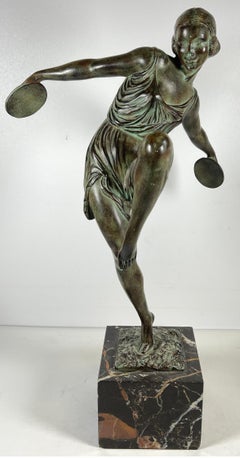
“Danseuse Aux Cymbales”
By Pierre Le Faguays
Located in Southampton, NY
ABOUT
Beautiful and impressive Art Deco statue of a dancing woman with cymbals. Circa 1935.
Original title "Danseuse Aux Cymbales".
Signed “Fayral” on base which is the pseudonym of...
Category
1930s Art Deco The Hamptons - Art
Materials
Metal
$2,200 Sale Price
38% Off
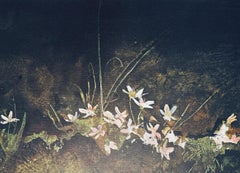
Andrew Wyeth, May Day, from The Four Seasons (after)
By Andrew Wyeth
Located in Southampton, NY
This exquisite lithograph after Andrew Wyeth (1917–2009), titled May Day, originates from the distinguished 1962 folio The Four Seasons: Paintings and Drawings by Andrew Wyeth. Published and printed by Art in America Company, Inc., New York, the edition embodies Wyeth’s lyrical study of springtime renewal and human connection to the land. May Day captures a tender seasonal moment—nature reawakening beneath soft light—rendered with Wyeth’s quiet precision and emotional restraint that elevate the ordinary into the timeless.
Executed on velin paper, this lithograph measures 17 x 13 inches (43.2 x 33 cm). As issued, it is unsigned and unnumbered, representing the folio’s authentic format. The Four Seasons series was conceived by the editors of Art in America in collaboration with Andrew and Betsy Wyeth, who selected drawings from the artist’s studio and private collection to express the cyclical harmony between nature and spirit. Each image reflects Wyeth’s devotion to atmosphere and the fragile poetry of the passing year.
Artwork Details:
Artist: After Andrew Wyeth (1917–2009)
Title: May Day, from The Four Seasons, Paintings and Drawings by Andrew Wyeth, 1962
Medium: Lithograph on velin paper
Dimensions: 17 x 13 inches (43.2 x 33 cm)
Inscription: Unsigned and unnumbered, as issued
Date: 1962
Publisher: Art in America Company, Inc., New York
Printer: Art in America Company, Inc., New York
Condition: Well preserved, consistent with age and medium
Provenance: From the 1962 folio The Four Seasons, Paintings and Drawings by Andrew Wyeth, published and printed by Art in America Company, Inc., New York
Notes:
Excerpted from the 1962 folio:
"In 1962 the editors of Art in America proposed to Wyeth a portfolio of images of his recent dry-brush drawings. The artist and his wife suggested the theme, 'The Four Seasons,' because of the essential role played in his work by the cycle of the seasons. The drawings were selected by Andrew and Betsy Wyeth from works in the house and studio at Chadds Ford, supplemented by some owned by friends. With a few exceptions they had never been exhibited or reproduced. The plates were made directly from the originals. In these drawings Wyeth's loving concentration on the object is fully revealed. But as always in his work, this concern with the tangible is balanced by sensibility to mood, to the emotion arising from the actual. They are pervaded with a sense of the season—the exact time of year, the hour of the day, the quality of the light. To the truth and subtlety with which he captures these intangible factors, these drawings owe their poignant poetry."
About the Artist:
Andrew Wyeth (1917–2009) was an American visual artist and one of the best-known painters of the mid-20th century. Although he considered himself an abstractionist, Wyeth’s work is characterized by a meticulous realism imbued with psychological depth and atmosphere. He often painted the landscapes and people surrounding his homes in Chadds Ford, Pennsylvania, and Cushing, Maine, creating an intimate record of American rural life. The son of the celebrated illustrator N. C. Wyeth, Andrew trained under his father before developing his own deeply personal visual language inspired by Winslow Homer, Henry David Thoreau, and King Vidor. His wife, Betsy Wyeth, was both his muse and career manager, while his son Jamie Wyeth continued the family’s artistic legacy.
Among Wyeth’s best-known works is Christina’s World (1948), housed in the Museum of Modern Art, New York—a quintessential image of 20th-century American art. His other notable series include The Helga Pictures and his window studies, each reflecting a profound meditation on solitude, memory, and perception. Wyeth was the first painter to receive both the Presidential Medal of Freedom and the Congressional Gold Medal, and was elected to the French Académie des Beaux-Arts in 1980.
In 2022, Andrew Wyeth's painting Day Dream sold for USD 23.29 million at Christie’s New York, setting a world record for the artist.
Andrew Wyeth lithograph...
Category
1960s American Realist The Hamptons - Art
Materials
Lithograph
$716 Sale Price
20% Off
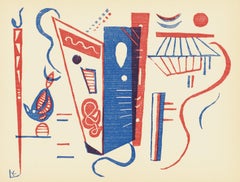
Wassily Kandinsky, Komposition, from XXe siecle, 1939
By Wassily Kandinsky
Located in Southampton, NY
This exquisite woodcut by Wassily Kandinsky (1866–1944), titled Komposition (Composition), from the album XXe siecle, Chroniques du jour, 13 rue Valette (5e), Directeur G. di San Laz...
Category
1930s Modern The Hamptons - Art
Materials
Woodcut
$7,196 Sale Price
20% Off
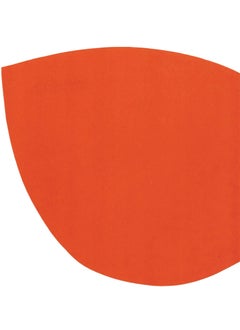
Ellsworth Kelly, Orange Shape, from Derriere le Miroir, 1958
By Ellsworth Kelly
Located in Southampton, NY
This exquisite lithograph by Ellsworth Kelly (1923–2015), titled Forme Orange (Orange Shape), originates from the historic 1958 folio Derriere le Miroir, No. 110. Published by Maeght...
Category
1950s Hard-Edge The Hamptons - Art
Materials
Lithograph
$956 Sale Price
20% Off
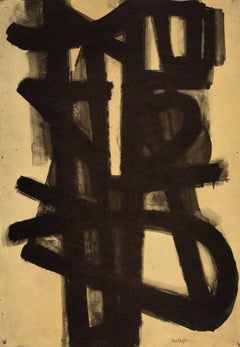
Pierre Soulages, Plate No. 2, from Painters of Today, 1962 (after)
By Pierre Soulages
Located in Southampton, NY
This exquisite heliogravure after Pierre Soulages (1919–2022), titled Planche No. 2 (Plate No. 2), from the folio Pierre Soulages, Peintres d'aujourd'hui (Pierre Soulages, Painters o...
Category
1960s Modern The Hamptons - Art
Materials
Lithograph
$1,996 Sale Price
20% Off
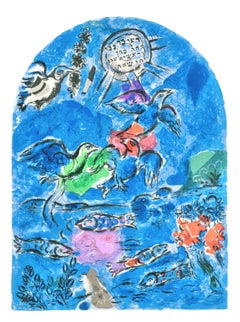
Marc Chagall, Tribe of Reuben, from The Jerusalem Windows, 1962 (after)
By Marc Chagall
Located in Southampton, NY
This exquisite lithograph after Marc Chagall (1887–1985), titled Tribe of Reuben, from the album Marc Chagall, The Jerusalem Windows, originates from the 1962 edition published by An...
Category
1960s Expressionist The Hamptons - Art
Materials
Lithograph
$716 Sale Price
20% Off
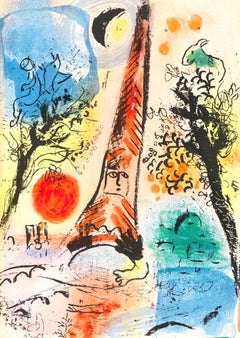
Marc Chagall, Vision of Paris, from The Lithographs of Chagall, 1960
By Marc Chagall
Located in Southampton, NY
This exquisite lithograph by Marc Chagall (1887–1985), titled Vision de Paris (Vision of Paris), from the album The Lithographs of Chagall, Volume I, originates from the 1960 edition...
Category
1960s Expressionist The Hamptons - Art
Materials
Lithograph
$956 Sale Price
20% Off
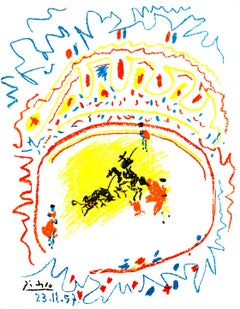
Pablo Picasso, The Little Bullfight, from XXe Siecle, 1958
By Pablo Picasso
Located in Southampton, NY
This exquisite lithograph by Pablo Picasso (1881–1973), titled La Petite Corrida (The Little Bullfight), from the album XXe Siecle, Nouvelle serie, XXe Annee, N° 10 (double) Mars 195...
Category
1950s Cubist The Hamptons - Art
Materials
Lithograph
$1,996 Sale Price
20% Off
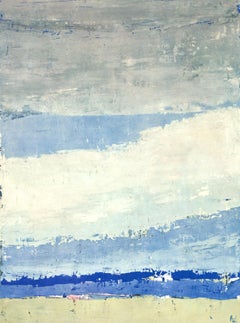
Nicolas de Stael, Sky at Honfleur, from Painters of Today, 1960 (after)
By Nicolas de Staël
Located in Southampton, NY
This exquisite heliogravure after Nicolas de Stael (1914–1955), titled Ciel a Honfleur (Sky at Honfleur), from the folio Nicolas de Stael, Peintres d'aujourd'hui (Nicolas de Stael, P...
Category
1960s Modern The Hamptons - Art
Materials
Lithograph
$716 Sale Price
20% Off
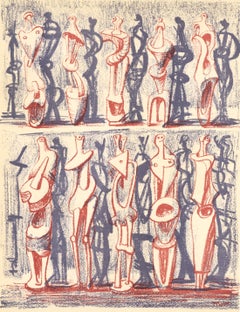
Henry Moore, Red and Blue Standing Figures, from XXe Siecle, 1951
By Henry Moore
Located in Southampton, NY
This exquisite lithograph by Henry Moore (1898–1986), titled Red and Blue Standing Figures, from the album XXe Siecle, Nouvelle serie, No. 1, 1951, originates from the 1951 edition p...
Category
1950s Modern The Hamptons - Art
Materials
Lithograph
$956 Sale Price
20% Off
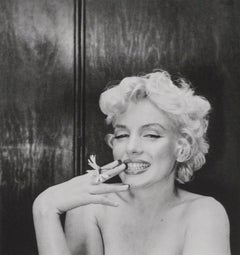
Cecil Beaton, Marilyn Monroe, from Electa Editrice Portfolios, 1981 (after)
By Cecil Beaton
Located in Southampton, NY
This exquisite heliogravure after Sir Cecil Beaton (1904–1980), titled Marilyn Monroe, from the folio Cecil Beaton, Electa Editrice Portfolios, 1981, originates from the 1981 edition...
Category
1980s Modern The Hamptons - Art
Materials
Lithograph
$716 Sale Price
20% Off
Joan Miro, The Three Blues, from Derriere le miroir, 1951
By Joan Miró
Located in Southampton, NY
This exquisite lithograph by Joan Miro (1893–1983), titled Les Trois Bleus (The Three Blues), from the folio Derriere le miroir, Sur Quatre Murs (Behind the Mirror, On Four Walls), N...
Category
1950s Surrealist The Hamptons - Art
Materials
Lithograph

$1,996 Sale Price
20% Off
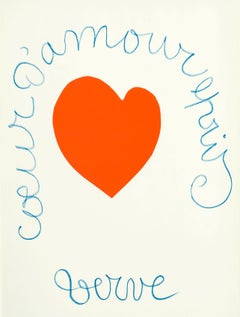
Henri Matisse, Heart of Love Taken, from Verve, Revue Artistique, 1949
By Henri Matisse
Located in Southampton, NY
This exquisite lithograph by Henri Matisse (1869–1954), titled Coeur d’amour epris (Heart of Love Taken), from Verve, Revue Artistique et Litteraire, Vol. VI, No. 23, originates from...
Category
1940s Fauvist The Hamptons - Art
Materials
Lithograph
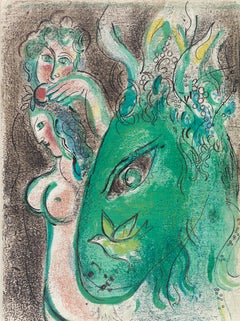
Marc Chagall, Paradise II, from Drawings for the Bible, 1956
By Marc Chagall
Located in Southampton, NY
This exquisite lithograph by Marc Chagall (1887–1985), titled Paradis II (Paradise II), from Marc Chagall, Dessins Pour La Bible (Drawings for the Bible), Verve: Revue Artistique et Litteraire, Vol. VIII, No. 33–34, originates from the September 1956 issue published by Editions de la revue Verve, Paris, under the direction of Teriade, Editeur, Paris, and printed by Mourlot Freres, Paris, 1956. This luminous composition portrays the splendor of Paradise, filled with light, harmony, and divine presence. Through his poetic use of line and ethereal symbolism, Chagall evokes the spiritual unity between humanity and the divine, capturing the purity and joy of creation. Paradis II reflects the artist’s enduring belief in love and beauty as transcendent forces, transforming a biblical vision into a universal celebration of faith and imagination. The work forms part of Chagall’s celebrated series of lithographs and drawings created for Dessins Pour La Bible, a monumental project uniting art, scripture, and mysticism in one of the artist’s most important achievements.
Executed as a lithograph on velin du Marais paper, this work measures 14 x 10.5 inches (35.56 x 26.67 cm). Unsigned and unnumbered as issued. The edition exemplifies the superb craftsmanship of the Mourlot Freres atelier, renowned for its collaborations with the greatest modern masters of the 20th century.
Artwork Details:
Artist: Marc Chagall (1887–1985)
Title: Paradis II (Paradise II), from Marc Chagall, Dessins Pour La Bible (Drawings for the Bible), Verve: Revue Artistique et Litteraire, Vol. VIII, No. 33–34, September 1956
Medium: Lithograph on velin du Marais paper
Dimensions: 14 x 10.5 inches (35.56 x 26.67 cm)
Inscription: Unsigned and unnumbered as issued
Date: 1956
Publisher: Editions de la revue Verve, Paris, under the direction of Teriade, Editeur, Paris
Printer: Mourlot Freres, Paris
Catalogue raisonne references: Cain, Julien, and Fernand Mourlot. Chagall Lithographe. Andre Sauret, Editeur, 1960, illustrations 117–46. Cramer, Patrick, and Meret Meyer. Marc Chagall: Catalogue Raisonne Des Livres Illustrés. P. Cramer ed., 1995, illustration 25.
Condition: Well preserved, consistent with age and medium
Provenance: From Marc Chagall, Dessins Pour La Bible (Drawings for the Bible), Verve: Revue Artistique et Litteraire, Vol. VIII, No. 33–34, published by Editions de la revue Verve, Paris, 1956
Notes:
Excerpted from the album (translated from French), This double issue of Verve is dedicated to the full reproduction in heliogravure of the one hundred-five plates etched by Marc Chagall, between 1930 and 1955, for the illustration of the Bible. The artist composed especially for the present work, sixteen lithographs in color and twelve in black, as well as the cover and the title page. This volume was completed and printed on September 10, 1956, by the Master Printers Draeger Freres for heliogravure, and by Mourlot Freres for lithography.
About the Publication:
Marc Chagall, Dessins Pour La Bible (Drawings for the Bible), published as Verve Vol. VIII, No. 33–34 in September 1956, represents one of the crowning achievements of Chagall’s lifelong dialogue with the sacred. Conceived and directed by the visionary publisher Teriade and printed by the master lithographers Mourlot Freres, the issue features thirty-four color lithographs and numerous black-and-white drawings inspired by biblical figures and stories. Chagall’s works for this edition unite text and image in a luminous meditation on divine creation, moral struggle, and spiritual renewal, imbued with his signature dreamlike symbolism and radiant color. Produced in postwar Paris, this landmark publication reaffirmed the enduring union of art and faith, establishing Dessins Pour La Bible as one of the most important illustrated works of the 20th century.
About the Artist:
Marc Chagall (1887–1985) was a Belarus-born French painter, printmaker, and designer whose visionary imagination, radiant color, and deeply poetic symbolism made him one of the most beloved and influential artists of the 20th century. Rooted in the imagery of his Jewish heritage and the memories of his childhood in Vitebsk, Chagall’s art wove together themes of faith, love, folklore, and fantasy with a dreamlike modern sensibility. His unique style—merging elements of Cubism, Fauvism, Expressionism, and Surrealism—defied categorization, transforming ordinary scenes into lyrical meditations on memory and emotion. Influenced by Russian icon painting, medieval religious art, and the modern innovations of artists such as Pablo Picasso, Henri Matisse, and Georges Braque, Chagall developed a profoundly personal visual language filled with floating figures, vibrant animals, musicians, and lovers that symbolized the transcendent power of imagination and love. During his early years in Paris, he became an integral part of the Ecole de Paris circle, forming friendships with Amedeo Modigliani, Fernand Leger, and Sonia Delaunay, and his creative spirit resonated with that of his peers and successors—Alexander Calder, Alberto Giacometti, Salvador Dali, Joan Miro, Wassily Kandinsky, Marcel Duchamp, and Man Ray—artists who, like Chagall, sought to push the boundaries of perception, emotion, and form. Over a prolific career that spanned painting, printmaking, stained glass, ceramics, and stage design, Chagall brought an unparalleled poetic sensibility to modern art, infusing even the most abstract subjects with human warmth and spiritual depth. His works are held in the most prestigious museums around the world, including the Museum of Modern Art, the Centre Pompidou, the Tate, and the Guggenheim, where they continue to inspire generations of artists and collectors. The highest price ever paid for a Marc Chagall artwork is approximately $28.5 million USD, achieved in 2017 at Sotheby’s New York for Les Amoureux (1928).
Marc Chagall Paradis...
Category
1950s Expressionist The Hamptons - Art
Materials
Lithograph
$1,276 Sale Price
20% Off
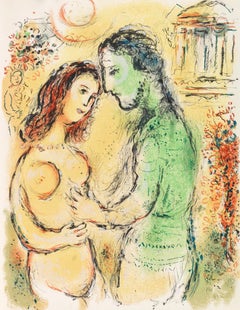
Marc Chagall, Ares and Aphrodite, from Homer, The Odyssey, 1989 (after)
By Marc Chagall
Located in Southampton, NY
This exquisite lithograph after Marc Chagall (1887–1985), titled Ares und Aphrodite (Ares and Aphrodite), from Homer, Die Odyssee (The Odyssey), originates from the 1989 German-langu...
Category
1980s Expressionist The Hamptons - Art
Materials
Lithograph
$716 Sale Price
20% Off
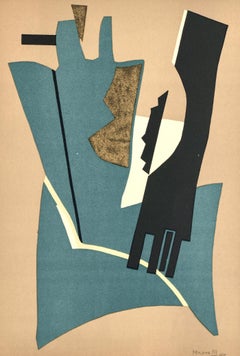
Alberto Magnelli, Homage to San Lazzaro, San Lazzaro et ses Amis, 1975 (after)
By Alberto Magnelli
Located in Southampton, NY
This exquisite lithograph after Alberto Magnelli (1888–1971), titled Hommage a San Lazzaro (Homage to San Lazzaro), from the album San Lazzaro et ses Amis, Hommage au fondateur de la...
Category
1970s Modern The Hamptons - Art
Materials
Lithograph
$956 Sale Price
20% Off
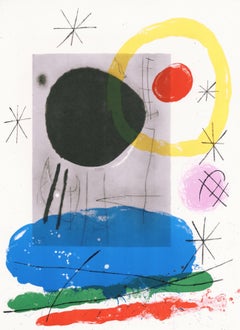
Joan Miro, The Black Sun, from Derriere le miroir, 1965
By Joan Miró
Located in Southampton, NY
This exquisite lithograph by Joan Miro (1893–1983), titled Le Soleil Noir (The Black Sun), from the folio Derriere le miroir, No. 151–152, originates from the 1965 edition published ...
Category
1960s Surrealist The Hamptons - Art
Materials
Lithograph
$716 Sale Price
20% Off
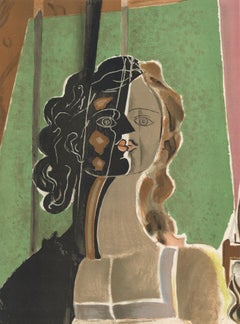
Figure, Verve: Revue Artistique et Littéraire
By Georges Braque
Located in Southampton, NY
Lithograph on vélin des Papeteries du Marais paper. Paper Size: 14 x 10.25 inches. Inscription: Unsigned and unnumbered, as issued. Notes: From the album, Verve: Revue Artistique et ...
Category
1930s Cubist The Hamptons - Art
Materials
Lithograph
$716 Sale Price
20% Off
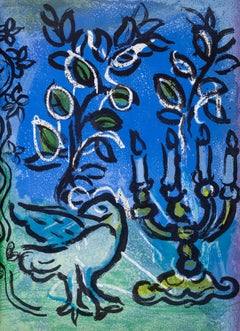
Marc Chagall, The Candelabrum, from The Jerusalem Windows, 1962
By Marc Chagall
Located in Southampton, NY
This exquisite lithograph by Marc Chagall (1887–1985), titled Le Chandelier (The Candelabrum), from the album Marc Chagall, The Jerusalem Windows, originates from the 1962 edition pu...
Category
1960s Expressionist The Hamptons - Art
Materials
Lithograph
$956 Sale Price
20% Off
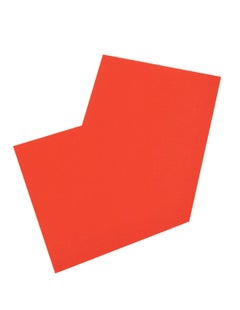
Ellsworth Kelly, Red Form, from Revue Cahiers d
Art, 2012
By Ellsworth Kelly
Located in Southampton, NY
This exquisite lithograph by Ellsworth Kelly (1923–2015), titled Formulaire rouge (Red Form), originates from the 2012 publication Revue Cahiers d'Art, 2012, no. 1, Ellsworth Kelly. ...
Category
2010s Hard-Edge The Hamptons - Art
Materials
Lithograph
$716 Sale Price
20% Off
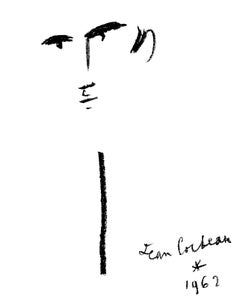
Jean Cocteau, The Mourning Tie, from Bulls, 1965 (after)
By Jean Cocteau
Located in Southampton, NY
This exquisite lithograph after Jean Cocteau (1889–1963), titled La cravate de deuil (The Mourning Tie), from the folio Taureaux, Lithographies de Jean Cocteau (Bulls, Lithographs by...
Category
1960s Modern The Hamptons - Art
Materials
Lithograph
$716 Sale Price
20% Off
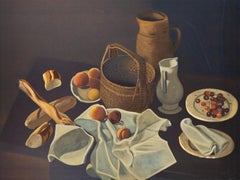
Andre Derain, Still Life, 1970 (after)
By André Derain
Located in Southampton, NY
This exquisite lithograph after Andre Derain (1880–1954), titled Nature Morte (Still Life), from the folio Andre Derain entre 1935 et 1949, V (Andre Derain between 1935 and 1949, V),...
Category
1970s Fauvist The Hamptons - Art
Materials
Lithograph
$716 Sale Price
20% Off
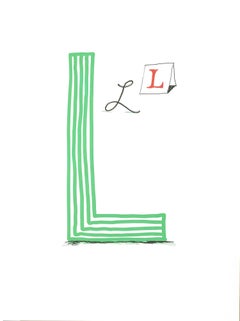
David Hockney, Letter L, from Hockney
s Alphabet, 1991
By David Hockney
Located in Southampton, NY
This exquisite lithograph by David Hockney (born 1937), titled Letter L, from the folio Hockney's Alphabet, Drawings by David Hockney, originates from the 1991 edition published by A...
Category
1990s Contemporary The Hamptons - Art
Materials
Lithograph
$1,196 Sale Price
20% Off
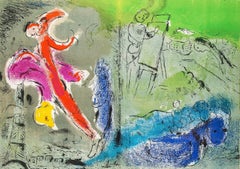
Marc Chagall, Vision of Paris, from Verve, Revue Artistique, 1953
By Marc Chagall
Located in Southampton, NY
This exquisite lithograph by Marc Chagall (1887–1985), titled Vision de Paris (Vision of Paris), from Verve, Revue Artistique et Litteraire, Vol. VII, No. 27–28, originates from the ...
Category
1950s Expressionist The Hamptons - Art
Materials
Lithograph
$1,756 Sale Price
20% Off
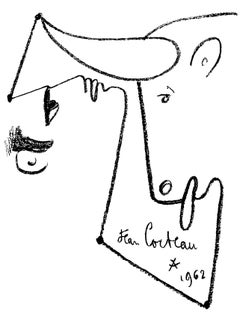
Jean Cocteau, Hermetic Measure, from Bulls, 1965 (after)
By Jean Cocteau
Located in Southampton, NY
This exquisite lithograph after Jean Cocteau (1889–1963), titled Mesure hermetique (Hermetic Measure), from the folio Taureaux, Lithographies de Jean Cocteau (Bulls, Lithographs by J...
Category
1960s Modern The Hamptons - Art
Materials
Lithograph
$716 Sale Price
20% Off
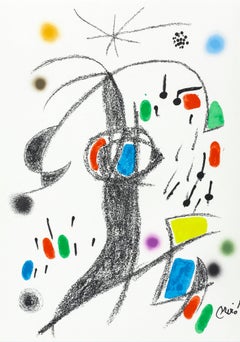
Joan Miro, Untitled, Marvels with Acrostic Variations in Miro’s Garden, 1975
By Joan Miró
Located in Southampton, NY
This exquisite lithograph by Joan Miro (1893–1983), titled Sans titre (Untitled), from the folio Maravillas con variaciones acrosticas en el Jardin de Miro (Marvels with Acrostic Var...
Category
1970s Surrealist The Hamptons - Art
Materials
Lithograph
$1,196 Sale Price
20% Off
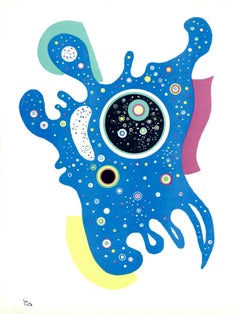
Wassily Kandinsky, The Stars, from Verve, Revue Artistique et Litteraire, 1938
By Wassily Kandinsky
Located in Southampton, NY
This exquisite lithograph by Wassily Kandinsky (1866–1944), titled Les etoiles (The Stars), from Verve, Revue Artistique et Litteraire, Vol. I, No. 2, ...
Category
1930s Modern The Hamptons - Art
Materials
Lithograph
Still Thinking About These?
All Recently ViewedMore Ways To Browse
Alden Bryan
Amanda Acker
Antique Chinese Watercolor Landscape
Anton Genberg
Anton Sipos
Art Contemporary Fuschia
Bauer Canvas Oil
Beach Cottage Paintings
Ben Avram
Block Print Woman
Bords De La Seine
Bright Day And Painting
Christo And Jeanne Claude Wrapped Trees
Churches In Russia
Claire Wiltshire
Clement Cycles
Conquistador Art
Constantinople Painting