The Hamptons - Landscape Prints
to
3,088
2,413
605
63
9
3
Overall Width
to
Overall Height
to
1,505
422
363
286
100
68
65
43
8
7
169
148
100
47
40
2
3,057
34
3
381
194
215
734
904
362
187
77
2,314
767
12
1,529
1,037
831
599
496
399
394
316
223
131
130
119
62
62
53
53
48
48
46
39
2,454
316
244
215
82
5
3,093
11,214
4,936
Item Ships From: The Hamptons
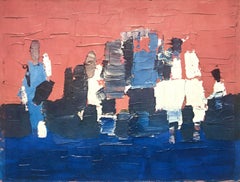
Nicolas de Stael, The Little Footballers, from Painters of Today, 1960 (after)
By Nicolas de Staël
Located in Southampton, NY
This exquisite heliogravure after Nicolas de Stael (1914–1955), titled Les petits footballeurs (The Little Footballers), from the folio Nicolas de Stael, Peintres d'aujourd'hui (Nico...
Category
1960s Modern The Hamptons - Landscape Prints
Materials
Lithograph

$716 Sale Price
20% Off
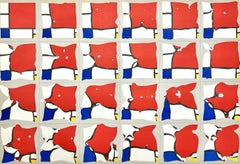
Pol Bury, Tribute to Mondrian, from Derriere le Miroir, 1982
By Pol Bury
Located in Southampton, NY
This exquisite lithograph by Pol Bury (1922–2005), titled Hommage a Mondrian (Tribute to Mondrian), originates from the historic 1982 folio Derriere le Miroir, No. 250, Hommage a Aim...
Category
1980s Pop Art The Hamptons - Landscape Prints
Materials
Lithograph
$716 Sale Price
20% Off
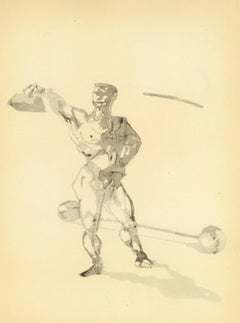
Henri de Toulouse-Lautrec, Weight Training, from The Circus, 1952 (after)
By Henri de Toulouse-Lautrec
Located in Southampton, NY
This exquisite lithograph after Henri de Toulouse-Lautrec (1864–1901), titled Travail des poids (Weight Training), originates from the 1952 album The Circus of Toulouse-Lautrec. Publ...
Category
1950s Post-Impressionist The Hamptons - Landscape Prints
Materials
Lithograph
$716 Sale Price
20% Off
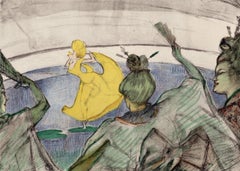
Henri de Toulouse-Lautrec, Ballets, Fantasy, from The Circus, 1952 (after)
By Henri de Toulouse-Lautrec
Located in Southampton, NY
This exquisite lithograph after Henri de Toulouse-Lautrec (1864–1901), titled Ballets, fantaisie (Ballets, Fantasy), originates from the 1952 album The Circus of Toulouse-Lautrec. Pu...
Category
1950s Post-Impressionist The Hamptons - Landscape Prints
Materials
Lithograph
$716 Sale Price
20% Off
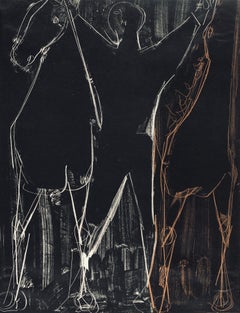
Marino Marini, Horses and Riders Standing, from XXe Siecle, 1951
By Marino Marini
Located in Southampton, NY
This exquisite lithograph by Marino Marini (1901–1980), titled Cavalli e cavalieri in piedi (Horses and Riders Standing), from the album XXe Siecle, Nouvelle serie, No. 1, 1951, orig...
Category
1950s Modern The Hamptons - Landscape Prints
Materials
Lithograph
$956 Sale Price
20% Off
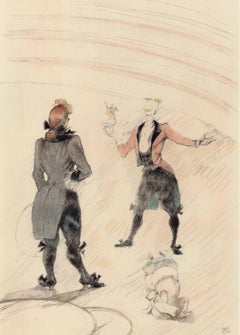
Henri de Toulouse-Lautrec, Dog Trainer, from The Circus, 1952 (after)
By Henri de Toulouse-Lautrec
Located in Southampton, NY
This exquisite lithograph after Henri de Toulouse-Lautrec (1864–1901), titled Dresseur de chiens (Dog Trainer), originates from the 1952 album The Circus of Toulouse-Lautrec. Publish...
Category
1950s Post-Impressionist The Hamptons - Landscape Prints
Materials
Lithograph
$716 Sale Price
20% Off
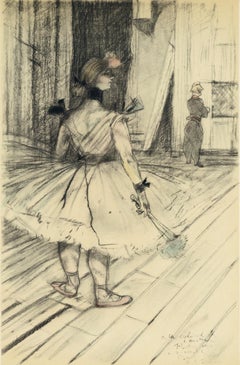
Henri de Toulouse-Lautrec, Backstage, from The Circus, 1952 (after)
By Henri de Toulouse-Lautrec
Located in Southampton, NY
This exquisite lithograph after Henri de Toulouse-Lautrec (1864–1901), titled Dans les coulisses (Backstage), originates from the 1952 album The Circus of Toulouse-Lautrec. Published...
Category
1950s Post-Impressionist The Hamptons - Landscape Prints
Materials
Lithograph
$716 Sale Price
20% Off
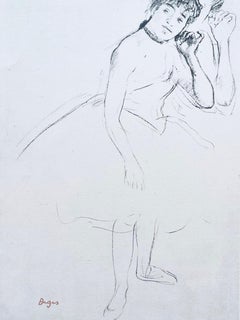
Edgar Degas, Dancer Touching Her Earring, 1945 (after)
By Edgar Degas
Located in Southampton, NY
This exquisite lithograph after Edgar Degas (1834–1917), titled Danseuse touchant sa boucle d’oreille (Dancer Touching Her Earring), originates from the 1945 folio Degas, Ten Ballet Sketches. Published by The Studio Publications, Inc., New York, rendered and printed by Albert Carman, City Island, 1945, this work reflects Degas’s sensitive mastery of line, movement, and intimate observation, capturing the grace, poise, and psychological immediacy that define his iconic ballet imagery. In Danseuse touchant sa boucle d’oreille (Dancer Touching Her Earring), Degas reveals gesture and inner emotion through economical contour and lyrical nuance.
Executed as a lithograph and pochoir on velin paper, this work measures 17 x 13 inches (43.18 x 33.02 cm). Signed in the plate and unnumbered as issued. Rendered and printed by Albert Carman, City Island, one of the notable American ateliers specializing in fine art lithography during the mid-20th century.
Artwork Details:
Artist: After Edgar Degas (1834–1917)
Title: Danseuse touchant sa boucle d’oreille (Dancer Touching Her Earring), from Degas, Ten Ballet Sketches, 1945
Medium: Lithograph and pochoir on velin paper
Dimensions: 17 x 13 inches (43.18 x 33.02 cm)
Inscription: Signed in the plate and unnumbered as issued
Date: 1945
Publisher: The Studio Publications, Inc., New York
Printer: Albert Carman, City Island, 1945
Condition: Well preserved, consistent with age and medium
Provenance: From the 1945 folio Degas, Ten Ballet Sketches, published by The Studio Publications, Inc., New York
Notes:
Excerpted from the album, Born in Paris in 1834, Edgar Degas lived, and surely loved the life of that city during most of his years. These continued somewhat sadly beyond those of most of his friends— into the debacle of the first World War, during which he died in 1917. Judging by the frequency with which he used them as models, he must have had an especial admiration for the ballet girls who followed a profession that at the time brought none of the glory and prosperity which attend it today. New aspects of the human body, revealed in movement, fascinated him. But his occupation with the simply anatomical side of his subjects never resulted in a cold interpretation. On the contrary there is a warmth and sympathy that pervades all of his work. The drawings here represent the painter in one important phase of his multi-sensitive view of life; and permit an insight which a more ambitious work might not do-into the operation of the creative process, the artist's transformation of reality as it passes through the mesh of his sensibilities. The Edition of this Portfolio is limited to MMMD examples. Rendered by Albert Carman.
About the Publication:
Degas, Ten Ballet Sketches, published in 1945 by The Studio Publications, Inc., New York, stands as one of the most elegant and scholarly mid-century American fine art folios devoted to the ballet imagery of Edgar Degas. Conceived as a high-quality interpretive portfolio, the album presents a series of lithograph-and-pochoir renderings based on Degas’s original drawings, executed with exceptional attention to tonal subtlety, contour fidelity, and the emotional interiority that defines the artist’s draftsmanship. Rendered and printed by Albert Carman on City Island, the publication embodies an American postwar effort to restore and celebrate European masterworks through meticulous handcraft and artisanal color application, honoring Degas’s distinctive line and the atmospheric delicacy of his studio-based studies. Produced in a substantial edition of MMMD examples, the portfolio offered audiences rare access to Degas’s private working drawings—images rarely seen outside institutional collections—while exemplifying the technical refinement and interpretive care characteristic of Carman’s workshop. Today, Degas, Ten Ballet Sketches remains a sought-after historical publication, valued for its craft, fidelity to Degas’s aesthetic, and its role in preserving and disseminating the artist’s intimate ballet imagery in a beautifully executed mid-century fine art format.
About the Artist:
Edgar Degas (1834–1917) was a French painter, draughtsman, printmaker, and sculptor whose groundbreaking fusion of classical draftsmanship, modern experimentation, and psychological depth helped define the trajectory of Western art, positioning him as one of the most influential figures of the nineteenth and early twentieth centuries; renowned for his depictions of ballet dancers, racehorses, theater scenes, cafe life, domestic interiors, milliners, laundresses, and women at their toilette, Degas reimagined observational realism through radical compositional innovation—employing extreme cropping, asymmetrical framing, oblique viewpoints, and dramatic lighting that anticipated photographic and cinematic language long before these technologies shaped visual culture, and although associated with Impressionism, he rejected plein-air spontaneity in favor of studio-based discipline rooted in the linear precision of Jean-Auguste-Dominique Ingres, the expressive chromaticism of Eugene Delacroix, and the modernity of Edouard Manet while also drawing inspiration from Japanese ukiyo-e prints, classical sculpture, and early photography; his independent artistic philosophy resonated with and helped shape the innovations of Pablo Picasso, Alexander Calder, Alberto Giacometti, Salvador Dali, Joan Miro, Wassily Kandinsky, Marcel Duchamp, and Man Ray, whose explorations of movement, form, dream logic, abstraction, and conceptualism all find antecedents in Degas’s investigations into seriality, temporality, and the fragmented figure, and his pioneering use of pastel, monotype, and wax sculpture fundamentally transformed each medium, influencing artists from Henri Matisse, Francis Bacon, Lucian Freud, and Giacomo Manzu to Paula Rego, contemporary realists, experimental photographers, and choreographers; his works are held in nearly every major museum collection worldwide—including the Musee dOrsay, the Louvre, the Metropolitan Museum of Art, the National Gallery of Art, the Art Institute of Chicago, the Courtauld Institute, and the National Gallery, London—affirming his central place in the history of art, and the highest auction record for Degas was achieved at Sothebys London on February 3, 2015, when Danseuses en Bleu sold for 37,033,000 GBP, cementing his status as one of the most sought-after and enduringly significant artists of the Western canon.
Edgar Degas lithograph...
Category
1940s Impressionist The Hamptons - Landscape Prints
Materials
Lithograph
$796 Sale Price
20% Off
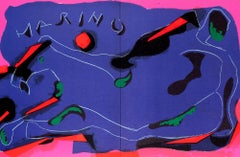
Marino Marini, Horse, from XXe siecle, 1974
By Marino Marini
Located in Southampton, NY
This exquisite lithograph by Marino Marini (1901–1980), titled Cavallo (Horse), from the album XXe Siecle, numero special hors abonnement, Hommage a Marino Marini, originates from th...
Category
1970s Modern The Hamptons - Landscape Prints
Materials
Lithograph
$716 Sale Price
20% Off
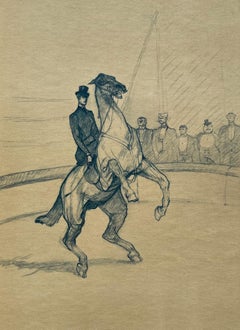
Henri de Toulouse-Lautrec, High School Rider, from The Circus, 1952 (after)
By Henri de Toulouse-Lautrec
Located in Southampton, NY
This exquisite lithograph after Henri de Toulouse-Lautrec (1864–1901), titled Ecuyere de haute ecole (High School Rider), originates from the 1952 album The Circus of Toulouse-Lautre...
Category
1950s Post-Impressionist The Hamptons - Landscape Prints
Materials
Lithograph
$716 Sale Price
20% Off
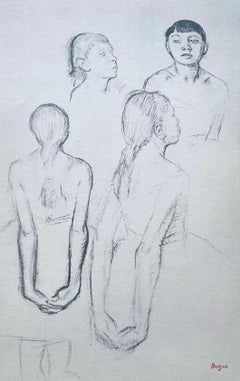
Edgar Degas, Four Sketches of a Little Dancer, 1945 (after)
By Edgar Degas
Located in Southampton, NY
This exquisite lithograph after Edgar Degas (1834–1917), titled Quatre croquis d’un petit danseur (Four Sketches of a Little Dancer), originates from the 1945 folio Degas, Ten Ballet Sketches. Published by The Studio Publications, Inc., New York, rendered and printed by Albert Carman, City Island, 1945, this work reflects Degas’s sensitive mastery of line, movement, and intimate observation, capturing the grace, poise, and psychological immediacy that define his iconic ballet imagery. In Quatre croquis d’un petit danseur (Four Sketches of a Little Dancer), Degas reveals gesture and inner emotion through economical contour and lyrical nuance.
Executed as a lithograph and pochoir on velin paper, this work measures 17 x 13 inches (43.18 x 33.02 cm). Signed in the plate and unnumbered as issued. Rendered and printed by Albert Carman, City Island, one of the notable American ateliers specializing in fine art lithography during the mid-20th century.
Artwork Details:
Artist: After Edgar Degas (1834–1917)
Title: Quatre croquis d’un petit danseur (Four Sketches of a Little Dancer), from Degas, Ten Ballet Sketches, 1945
Medium: Lithograph and pochoir on velin paper
Dimensions: 17 x 13 inches (43.18 x 33.02 cm)
Inscription: Signed in the plate and unnumbered as issued
Date: 1945
Publisher: The Studio Publications, Inc., New York
Printer: Albert Carman, City Island, 1945
Condition: Well preserved, consistent with age and medium
Provenance: From the 1945 folio Degas, Ten Ballet Sketches, published by The Studio Publications, Inc., New York
Notes:
Excerpted from the album, Born in Paris in 1834, Edgar Degas lived, and surely loved the life of that city during most of his years. These continued somewhat sadly beyond those of most of his friends— into the debacle of the first World War, during which he died in 1917. Judging by the frequency with which he used them as models, he must have had an especial admiration for the ballet girls who followed a profession that at the time brought none of the glory and prosperity which attend it today. New aspects of the human body, revealed in movement, fascinated him. But his occupation with the simply anatomical side of his subjects never resulted in a cold interpretation. On the contrary there is a warmth and sympathy that pervades all of his work. The drawings here represent the painter in one important phase of his multi-sensitive view of life; and permit an insight which a more ambitious work might not do-into the operation of the creative process, the artist's transformation of reality as it passes through the mesh of his sensibilities. The Edition of this Portfolio is limited to MMMD examples. Rendered by Albert Carman.
About the Publication:
Degas, Ten Ballet Sketches, published in 1945 by The Studio Publications, Inc., New York, stands as one of the most elegant and scholarly mid-century American fine art folios devoted to the ballet imagery of Edgar Degas. Conceived as a high-quality interpretive portfolio, the album presents a series of lithograph-and-pochoir renderings based on Degas’s original drawings, executed with exceptional attention to tonal subtlety, contour fidelity, and the emotional interiority that defines the artist’s draftsmanship. Rendered and printed by Albert Carman on City Island, the publication embodies an American postwar effort to restore and celebrate European masterworks through meticulous handcraft and artisanal color application, honoring Degas’s distinctive line and the atmospheric delicacy of his studio-based studies. Produced in a substantial edition of MMMD examples, the portfolio offered audiences rare access to Degas’s private working drawings—images rarely seen outside institutional collections—while exemplifying the technical refinement and interpretive care characteristic of Carman’s workshop. Today, Degas, Ten Ballet Sketches remains a sought-after historical publication, valued for its craft, fidelity to Degas’s aesthetic, and its role in preserving and disseminating the artist’s intimate ballet imagery in a beautifully executed mid-century fine art format.
About the Artist:
Edgar Degas (1834–1917) was a French painter, draughtsman, printmaker, and sculptor whose groundbreaking fusion of classical draftsmanship, modern experimentation, and psychological depth helped define the trajectory of Western art, positioning him as one of the most influential figures of the nineteenth and early twentieth centuries; renowned for his depictions of ballet dancers, racehorses, theater scenes, cafe life, domestic interiors, milliners, laundresses, and women at their toilette, Degas reimagined observational realism through radical compositional innovation—employing extreme cropping, asymmetrical framing, oblique viewpoints, and dramatic lighting that anticipated photographic and cinematic language long before these technologies shaped visual culture, and although associated with Impressionism, he rejected plein-air spontaneity in favor of studio-based discipline rooted in the linear precision of Jean-Auguste-Dominique Ingres, the expressive chromaticism of Eugene Delacroix, and the modernity of Edouard Manet while also drawing inspiration from Japanese ukiyo-e prints, classical sculpture, and early photography; his independent artistic philosophy resonated with and helped shape the innovations of Pablo Picasso, Alexander Calder, Alberto Giacometti, Salvador Dali, Joan Miro, Wassily Kandinsky, Marcel Duchamp, and Man Ray, whose explorations of movement, form, dream logic, abstraction, and conceptualism all find antecedents in Degas’s investigations into seriality, temporality, and the fragmented figure, and his pioneering use of pastel, monotype, and wax sculpture fundamentally transformed each medium, influencing artists from Henri Matisse, Francis Bacon, Lucian Freud, and Giacomo Manzu to Paula Rego, contemporary realists, experimental photographers, and choreographers; his works are held in nearly every major museum collection worldwide—including the Musee dOrsay, the Louvre, the Metropolitan Museum of Art, the National Gallery of Art, the Art Institute of Chicago, the Courtauld Institute, and the National Gallery, London—affirming his central place in the history of art, and the highest auction record for Degas was achieved at Sothebys London on February 3, 2015, when Danseuses en Bleu sold for 37,033,000 GBP, cementing his status as one of the most sought-after and enduringly significant artists of the Western canon.
Edgar Degas lithograph...
Category
1940s Impressionist The Hamptons - Landscape Prints
Materials
Lithograph
$796 Sale Price
20% Off
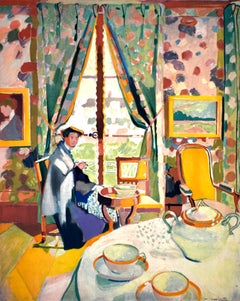
Maurice Marinot, Interior, from Fauves, VII, 1972 (after)
Located in Southampton, NY
This exquisite lithograph after Maurice Marinot (1882–1960), titled Interieur (Interior), from the folio Fauves, VII (Fauves, VII), Collection Pierre Levy, 1972, originates from the ...
Category
1970s Fauvist The Hamptons - Landscape Prints
Materials
Lithograph
$956 Sale Price
20% Off
Henri de Toulouse-Lautrec, Rehearsal Work, from The Circus, 1952 (after)
By Henri de Toulouse-Lautrec
Located in Southampton, NY
This exquisite lithograph after Henri de Toulouse-Lautrec (1864–1901), titled Travail de repetition (Rehearsal Work), originates from the 1952 album The Circus of Toulouse-Lautrec. P...
Category
1950s Post-Impressionist The Hamptons - Landscape Prints
Materials
Lithograph
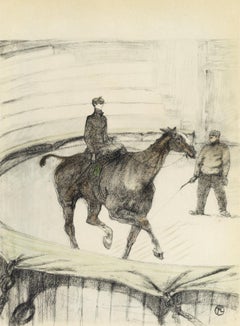
$716 Sale Price
20% Off
Henri de Toulouse-Lautrec, Carpet Work, from The Circus, 1952 (after)
By Henri de Toulouse-Lautrec
Located in Southampton, NY
This exquisite lithograph after Henri de Toulouse-Lautrec (1864–1901), titled Travail de tapis (Carpet Work), originates from the 1952 album The Circus of Toulouse-Lautrec. Published...
Category
1950s Post-Impressionist The Hamptons - Landscape Prints
Materials
Lithograph
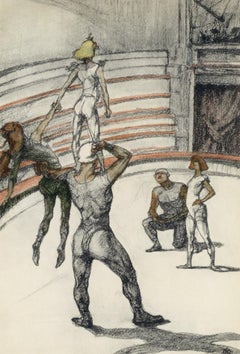
$716 Sale Price
20% Off
Henri de Toulouse-Lautrec, Pointing Horse, from The Circus, 1952 (after)
By Henri de Toulouse-Lautrec
Located in Southampton, NY
This exquisite lithograph after Henri de Toulouse-Lautrec (1864–1901), titled Cheval pointant (Pointing Horse), originates from the 1952 album The Circus of Toulouse-Lautrec. Publish...
Category
1950s Post-Impressionist The Hamptons - Landscape Prints
Materials
Lithograph
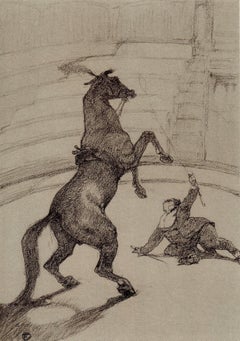
$716 Sale Price
20% Off
Henri de Toulouse-Lautrec, Tightrope Dancer, from The Circus, 1952 (after)
By Henri de Toulouse-Lautrec
Located in Southampton, NY
This exquisite lithograph after Henri de Toulouse-Lautrec (1864–1901), titled Danseuse de corde (Tightrope Dancer), originates from the 1952 album The Circus of Toulouse-Lautrec. Pub...
Category
1950s Post-Impressionist The Hamptons - Landscape Prints
Materials
Lithograph
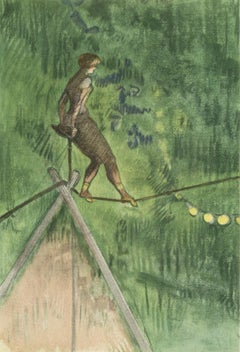
$716 Sale Price
20% Off
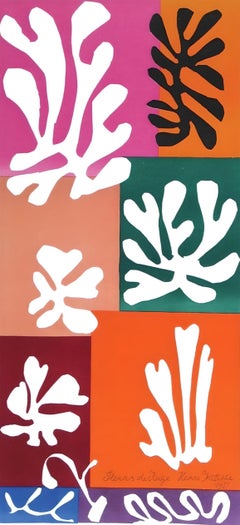
Henri Matisse, Snow Flowers, from Verve, Revue Artistique, 1958 (after)
By Henri Matisse
Located in Southampton, NY
This exquisite lithograph after Henri Matisse (1869–1954), titled Fleurs de Neige (Snow Flowers), from Verve, Revue Artistique et Litteraire, Vol. IX, No. 35–36, originates from the ...
Category
1950s Modern The Hamptons - Landscape Prints
Materials
Lithograph
$956 Sale Price
20% Off
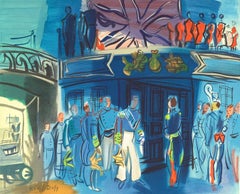
Raoul Dufy, Reception of an English Admiral on a French Ship, 1969 (after)
By Raoul Dufy
Located in Southampton, NY
This exquisite lithograph after Raoul Dufy (1877–1953), titled Reception d'un amiral anglais sur un bateau francais (Reception of an English Admiral on a French Ship), from the folio...
Category
1960s Modern The Hamptons - Landscape Prints
Materials
Lithograph
$956 Sale Price
20% Off
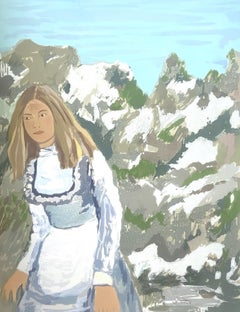
Composition, Description of a Masque, Jane Freilicher
By Jane Freilicher
Located in Southampton, NY
Woodcut on vélin Tosa Hanga à la main paper. Paper Size: 16 x 12 inches. Inscription: Unsigned and unnumbered, as issued. Notes: From the album, Description of a Masque, 1998. Publis...
Category
1990s Academic The Hamptons - Landscape Prints
Materials
Woodcut
$1,436 Sale Price
20% Off
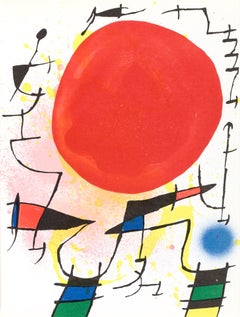
Joan Miro, Lithograph III, from Lithographs I, 1972
By Joan Miró
Located in Southampton, NY
Lithograph on vélin paper. Paper Size: 12.5 x 9.625 inches. Inscription: Unsigned and unnumbered, as issued. Catalogue raisonné references: Cramer, Patrick, and Joan Miró. Joan Miró,...
Category
1970s Surrealist The Hamptons - Landscape Prints
Materials
Lithograph
$716 Sale Price
20% Off
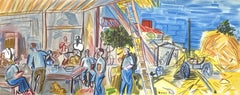
Raoul Dufy, The Harvesters, from Letter to My Painter Raoul Dufy, 1965 (after)
By Raoul Dufy
Located in Southampton, NY
This exquisite lithograph after Raoul Dufy (1877–1953), titled Les Moissonneurs (The Harvesters), from the folio Lettre a mon peintre Raoul Dufy (Letter to My Painter Raoul Dufy), or...
Category
1960s Fauvist The Hamptons - Landscape Prints
Materials
Lithograph
$716 Sale Price
20% Off
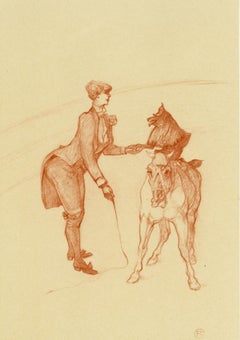
Henri de Toulouse-Lautrec, The Animal Trainer, from The Circus, 1952 (after)
By Henri de Toulouse-Lautrec
Located in Southampton, NY
This exquisite lithograph after Henri de Toulouse-Lautrec (1864–1901), titled La dresseuse d'animaux (The Animal Trainer), originates from the 1952 album The Circus of Toulouse-Lautr...
Category
1950s Post-Impressionist The Hamptons - Landscape Prints
Materials
Lithograph
$716 Sale Price
20% Off
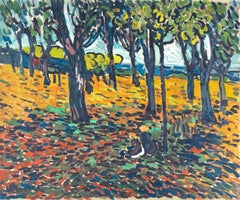
Maurice de Vlaminck, Chestnut Grove at Chatou, from Fauves, VII, 1972 (after)
By Maurice de Vlaminck
Located in Southampton, NY
This exquisite lithograph after Maurice de Vlaminck (1876–1958), titled Chataigneraie a Chatou, Avec Personnages (Chestnut Grove at Chatou, With Figures), from the folio Fauves, VII ...
Category
1970s Fauvist The Hamptons - Landscape Prints
Materials
Lithograph
$956 Sale Price
20% Off
A Second Generation, For My People, Elizabeth Catlett
By Elizabeth Catlett
Located in Southampton, NY
Lithograph on vélin d’Arches 300gm paper. Paper Size: 21.8125 x 18.3125 inches. Inscription: Unsigned and unnumbered, as issued. Notes: From the album, For My People, 1992. Published...
Category
1990s Expressionist The Hamptons - Landscape Prints
Materials
Lithograph

$10,396 Sale Price
20% Off
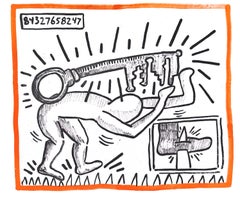
Keith Haring, Untitled, from Against All Odds, 1990
By Keith Haring
Located in Southampton, NY
This exquisite lithograph by Keith Haring (1958–1990), titled Untitled, from the album Against All Odds, 20 drawings - Oct. 3, 1989 (Against All Odds, 20 drawings - Oct. 3, 1989), or...
Category
1990s Pop Art The Hamptons - Landscape Prints
Materials
Lithograph
$1,276 Sale Price
20% Off
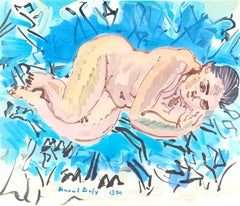
Raoul Dufy, Reclining Nude, from Raoul Dufy, IV, 1969 (after)
By Raoul Dufy
Located in Southampton, NY
This exquisite lithograph after Raoul Dufy (1877–1953), titled Nu couche (Reclining Nude), from the folio Raoul Dufy, IV (Raoul Dufy, IV), Collection Pierre Levy, 1969, originates fr...
Category
1960s Modern The Hamptons - Landscape Prints
Materials
Lithograph
$956 Sale Price
20% Off
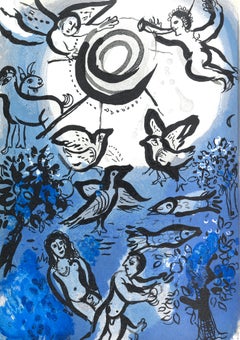
Marc Chagall, The Creation, from Drawings for the Bible, 1956
By Marc Chagall
Located in Southampton, NY
This exquisite lithograph by Marc Chagall (1887–1985), titled Creation (The Creation), from Marc Chagall, Dessins Pour La Bible (Drawings for the Bible), Verve: Revue Artistique et Litteraire, Vol. VIII, No. 33–34, originates from the September 1956 issue published by Editions de la revue Verve, Paris, under the direction of Teriade, Editeur, Paris, and printed by Mourlot Freres, Paris, 1956. This visionary composition depicts the divine act of creation, evoking the genesis of light, life, and spirit through Chagall’s radiant imagination and poetic symbolism. The flowing forms and luminous harmonies reflect the unity between the divine and the natural world—a theme central to Chagall’s lifelong spiritual vision. Infused with movement and transcendence, the work transforms the biblical narrative into a lyrical meditation on the origin of existence and the creative essence of faith. The piece forms part of Chagall’s celebrated series of lithographs and drawings created for Dessins Pour La Bible, a monumental project uniting art, scripture, and mysticism in one of the artist’s most important achievements.
Executed as a lithograph on velin du Marais paper, this work measures 14 x 10.5 inches (35.56 x 26.67 cm). Unsigned and unnumbered as issued. The edition exemplifies the superb craftsmanship of the Mourlot Freres atelier, renowned for its collaborations with the greatest modern masters of the 20th century.
Artwork Details:
Artist: Marc Chagall (1887–1985)
Title: Creation (The Creation), from Marc Chagall, Dessins Pour La Bible (Drawings for the Bible), Verve: Revue Artistique et Litteraire, Vol. VIII, No. 33–34, September 1956
Medium: Lithograph on velin du Marais paper
Dimensions: 14 x 10.5 inches (35.56 x 26.67 cm)
Inscription: Unsigned and unnumbered as issued
Date: 1956
Publisher: Editions de la revue Verve, Paris, under the direction of Teriade, Editeur, Paris
Printer: Mourlot Freres, Paris
Catalogue raisonne references: Cain, Julien, and Fernand Mourlot. Chagall Lithographe. Andre Sauret, Editeur, 1960, illustrations 117–46. Cramer, Patrick, and Meret Meyer. Marc Chagall: Catalogue Raisonne Des Livres Illustrés. P. Cramer ed., 1995, illustration 25.
Condition: Well preserved, consistent with age and medium
Provenance: From Marc Chagall, Dessins Pour La Bible (Drawings for the Bible), Verve: Revue Artistique et Litteraire, Vol. VIII, No. 33–34, published by Editions de la revue Verve, Paris, 1956
Notes:
Excerpted from the album (translated from French), This double issue of Verve is dedicated to the full reproduction in heliogravure of the one hundred-five plates etched by Marc Chagall, between 1930 and 1955, for the illustration of the Bible. The artist composed especially for the present work, sixteen lithographs in color and twelve in black, as well as the cover and the title page. This volume was completed and printed on September 10, 1956, by the Master Printers Draeger Freres for heliogravure, and by Mourlot Freres for lithography.
About the Publication:
Marc Chagall, Dessins Pour La Bible (Drawings for the Bible), published as Verve Vol. VIII, No. 33–34 in September 1956, represents one of the crowning achievements of Chagall’s lifelong dialogue with the sacred. Conceived and directed by the visionary publisher Teriade and printed by the master lithographers Mourlot Freres, the issue features thirty-four color lithographs and numerous black-and-white drawings inspired by biblical figures and stories. Chagall’s works for this edition unite text and image in a luminous meditation on divine creation, moral struggle, and spiritual renewal, imbued with his signature dreamlike symbolism and radiant color. Produced in postwar Paris, this landmark publication reaffirmed the enduring union of art and faith, establishing Dessins Pour La Bible as one of the most important illustrated works of the 20th century.
About the Artist:
Marc Chagall (1887–1985) was a Belarus-born French painter, printmaker, and designer whose visionary imagination, radiant color, and deeply poetic symbolism made him one of the most beloved and influential artists of the 20th century. Rooted in the imagery of his Jewish heritage and the memories of his childhood in Vitebsk, Chagall’s art wove together themes of faith, love, folklore, and fantasy with a dreamlike modern sensibility. His unique style—merging elements of Cubism, Fauvism, Expressionism, and Surrealism—defied categorization, transforming ordinary scenes into lyrical meditations on memory and emotion. Influenced by Russian icon painting, medieval religious art, and the modern innovations of artists such as Pablo Picasso, Henri Matisse, and Georges Braque, Chagall developed a profoundly personal visual language filled with floating figures, vibrant animals, musicians, and lovers that symbolized the transcendent power of imagination and love. During his early years in Paris, he became an integral part of the Ecole de Paris circle, forming friendships with Amedeo Modigliani, Fernand Leger, and Sonia Delaunay, and his creative spirit resonated with that of his peers and successors—Alexander Calder, Alberto Giacometti, Salvador Dali, Joan Miro, Wassily Kandinsky, Marcel Duchamp, and Man Ray—artists who, like Chagall, sought to push the boundaries of perception, emotion, and form. Over a prolific career that spanned painting, printmaking, stained glass, ceramics, and stage design, Chagall brought an unparalleled poetic sensibility to modern art, infusing even the most abstract subjects with human warmth and spiritual depth. His works are held in the most prestigious museums around the world, including the Museum of Modern Art, the Centre Pompidou, the Tate, and the Guggenheim, where they continue to inspire generations of artists and collectors. The highest price ever paid for a Marc Chagall artwork is approximately $28.5 million USD, achieved in 2017 at Sotheby’s New York for Les Amoureux (1928).
Marc Chagall Creation...
Category
1950s Expressionist The Hamptons - Landscape Prints
Materials
Lithograph
$956 Sale Price
20% Off
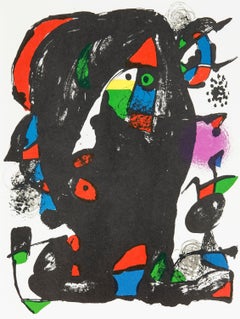
Joan Miro, Lithograph V, from Lithographs IV, 1981
By Joan Miró
Located in Southampton, NY
This exquisite lithograph by Joan Miro (1893–1983), titled Lithograph V, from the album Joan Miro Lithographs, Volume IV 1969–1972, originates from the 1981 edition published by Maeg...
Category
1980s Surrealist The Hamptons - Landscape Prints
Materials
Lithograph
$716 Sale Price
20% Off
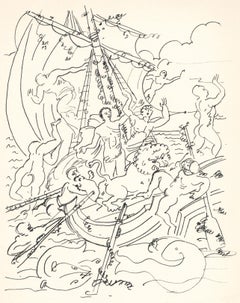
Andre Derain, Abduction of Dionysus, Wines, Flowers, and Flames, 1956 (after)
By André Derain
Located in Southampton, NY
This exquisite lithograph after Andre Derain (1880–1954), titled Enlevement de Dionysos (The Abduction of Dionysus), from the folio Vins, Fleurs et Flammes (Wines, Flowers, and Flame...
Category
1950s Modern The Hamptons - Landscape Prints
Materials
Lithograph, Stencil
$1,036 Sale Price
20% Off
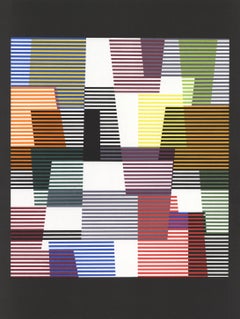
Yaacov Agam, Composition in Motion, from XXe siecle, 1980
By Yaacov Agam
Located in Southampton, NY
This exquisite lithograph by Yaacov Agam (born 1928), titled Composition en mouvement (Composition in Motion), from the album Homage to Agam, Solomon R. Guggenheim Museum Exhibition ...
Category
1980s Op Art The Hamptons - Landscape Prints
Materials
Lithograph
$716 Sale Price
20% Off
Marc Chagall, The Lovers of the Eiffel Tower, from Color of Love, 1958 (after)
By Marc Chagall
Located in Southampton, NY
This exquisite lithograph and pochoir after Marc Chagall (1887–1985), titled Les amants de la Tour Eiffel (The Lovers of the Eiffel Tower), from the folio Couleur amour, 13 Aquarelle...
Category
1950s Modern The Hamptons - Landscape Prints
Materials
Lithograph, Stencil

$7,196 Sale Price
20% Off
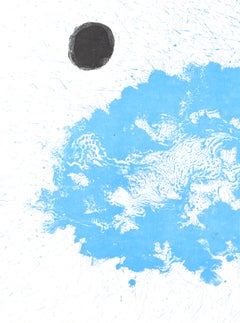
Joan Miro, Mural, from Derriere le miroir, 1961
By Joan Miró
Located in Southampton, NY
This exquisite lithograph by Joan Miro (1893–1983), titled Murale (Mural), originates from the 1961 folio Derriere le miroir, No. 128. Published by Maeght Editeur, Paris, under the d...
Category
1960s Surrealist The Hamptons - Landscape Prints
Materials
Lithograph
$796 Sale Price
20% Off
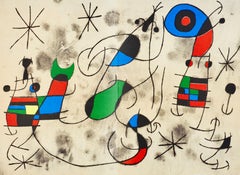
Joan Miro, Untitled, from Derriere le miroir, 1967 (after)
By Joan Miró
Located in Southampton, NY
This exquisite lithograph after Joan Miro (1893–1983), titled Sans titre (Untitled), originates from the 1967 folio Derriere le miroir, L'oiseau solaire, l'oiseau lunaire, etin-celle...
Category
1960s Surrealist The Hamptons - Landscape Prints
Materials
Lithograph
$956 Sale Price
20% Off
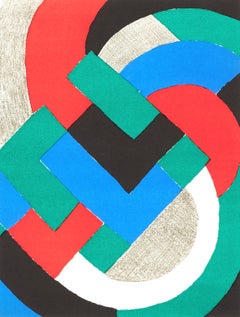
Sonia Delaunay, Color Rhythms, from XXe Siecle, 1969
By Sonia Delaunay
Located in Southampton, NY
This exquisite lithograph by Sonia Delaunay (1885–1979), titled Rythmes couleur (Color Rhythms), from the album XXe Siecle, Nouvelle serie, XXXIe Annee No. 32, Juin 1969, originates ...
Category
1960s Orphist The Hamptons - Landscape Prints
Materials
Lithograph
$796 Sale Price
20% Off
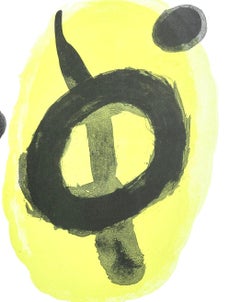
Joan Miro, Yellow, from Derriere le miroir, 1961
By Joan Miró
Located in Southampton, NY
This exquisite lithograph by Joan Miro (1893–1983), titled Jaune (Yellow), originates from the 1961 folio Derriere le miroir, No. 128. Published by Maeght Editeur, Paris, under the d...
Category
1960s Surrealist The Hamptons - Landscape Prints
Materials
Lithograph
$796 Sale Price
20% Off
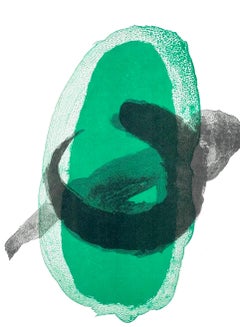
Joan Miro, Green, from Derriere le miroir, 1961
By Joan Miró
Located in Southampton, NY
This exquisite lithograph by Joan Miro (1893–1983), titled Vert (Green), originates from the 1961 folio Derriere le miroir, No. 128. Published by Maeght Editeur, Paris, under the dir...
Category
1960s Surrealist The Hamptons - Landscape Prints
Materials
Lithograph
$796 Sale Price
20% Off
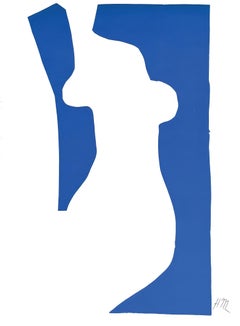
Henri Matisse, Blue Nude VII, from Verve, Revue Artistique, 1958 (after)
By Henri Matisse
Located in Southampton, NY
This exquisite lithograph after Henri Matisse (1869–1954), titled Nu Bleu VII (Blue Nude VII), from Verve, Revue Artistique et Litteraire, Vol. IX, No. 35–36, originates from the 195...
Category
1950s Modern The Hamptons - Landscape Prints
Materials
Lithograph
$956 Sale Price
20% Off
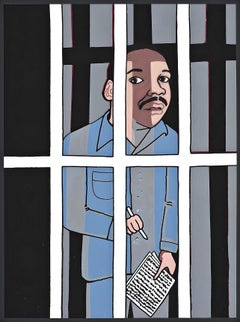
Faith Ringgold, A letter From Martin Luther King, 2007
By Faith Ringgold
Located in Southampton, NY
This exquisite silkscreen by Faith Ringgold (1930–2024), titled A Letter From Martin Luther King, from the folio Letter from Birmingham City Jail, origi...
Category
Early 2000s Expressionist The Hamptons - Landscape Prints
Materials
Screen
$4,796 Sale Price
20% Off
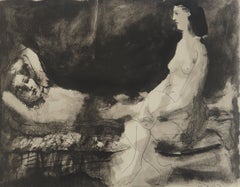
Pablo Picasso, Reclining Man and Seated Woman, The Double Flute, 1967 (after)
By Pablo Picasso
Located in Southampton, NY
This exquisite lithograph and pochoir after Pablo Picasso (1881–1973), titled Homme couche et femme assise (Reclining Man and Seated Woman), from the folio Picasso, La flute double, ...
Category
1960s Cubist The Hamptons - Landscape Prints
Materials
Lithograph, Stencil
$2,636 Sale Price
20% Off
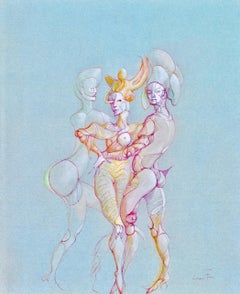
Leonor Fini, Untitled, from Fruits of Passion, 1980 (after)
By Leonor Fini
Located in Southampton, NY
This exquisite heliogravure, titled Sans titre (Untitled), after Leonor Fini, from the album Fruits de la passion, trente-deux variations sur un theme de Leonor Fini (Fruits of Passi...
Category
1980s Surrealist The Hamptons - Landscape Prints
Materials
Lithograph
$716 Sale Price
20% Off
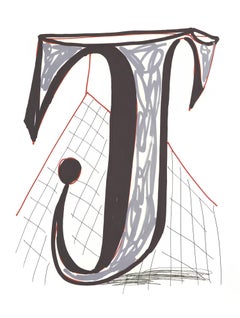
David Hockney, Letter J, from Hockney
s Alphabet, 1991
By David Hockney
Located in Southampton, NY
This exquisite lithograph by David Hockney (born 1937), titled Letter J, from the folio Hockney's Alphabet, Drawings by David Hockney, originates from the 1991 edition published by A...
Category
1990s Contemporary The Hamptons - Landscape Prints
Materials
Lithograph
$1,196 Sale Price
20% Off
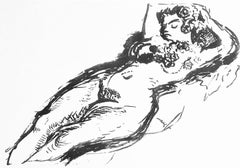
Henri Matisse, Pinceau, from Drawings by Henri Matisse, 1925 (after)
By Henri Matisse
Located in Southampton, NY
This exquisite lithograph after Henri Matisse (1869–1954), titled Pinceau (Brush), from the album Dessins de Henri-Matisse (Drawings by Henri Matisse), originates from the 1925 editi...
Category
1920s Modern The Hamptons - Landscape Prints
Materials
Lithograph
$956 Sale Price
20% Off
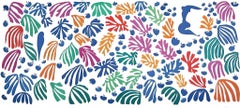
Henri Matisse, The Parakeet and the Mermaid, Verve, Revue, 1958 (after)
By Henri Matisse
Located in Southampton, NY
This exquisite lithograph after Henri Matisse (1869–1954), titled La Perruche et la Sirene (The Parakeet and the Mermaid), from Verve, Revue Artistique et Litteraire, Vol. IX, No. 35...
Category
1950s Modern The Hamptons - Landscape Prints
Materials
Lithograph
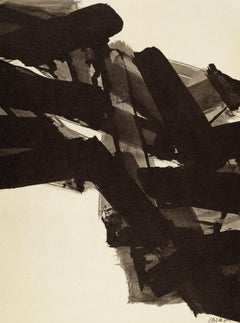
Pierre Soulages, Plate No. 12, from Painters of Today, 1962 (after)
By Pierre Soulages
Located in Southampton, NY
This exquisite heliogravure after Pierre Soulages (1919–2022), titled Planche No. 12 (Plate No. 12), from the folio Pierre Soulages, Peintres d'aujourd'hui (Pierre Soulages, Painters...
Category
1960s Modern The Hamptons - Landscape Prints
Materials
Lithograph
$1,996 Sale Price
20% Off
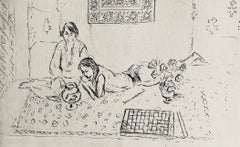
Henri Matisse, Fusain, from Drawings by Henri Matisse, 1925 (after)
By Henri Matisse
Located in Southampton, NY
This exquisite lithograph after Henri Matisse (1869–1954), titled Fusain (Charcoal), from the album Dessins de Henri-Matisse (Drawings by Henri Matisse), originates from the 1925 edi...
Category
1920s Modern The Hamptons - Landscape Prints
Materials
Lithograph
$956 Sale Price
20% Off
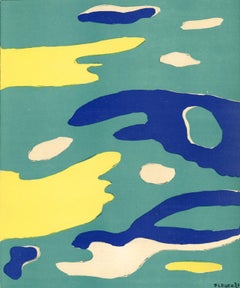
Fernand Leger, Water, from Verve, Revue Artistique, 1937
By Fernand Léger
Located in Southampton, NY
This exquisite lithograph by Fernand Leger (1881–1955), titled L’Eau (Water), from Verve, Revue Artistique et Litteraire, Vol. I, No. 1, originates from the 1937 issue published by Editions de la revue Verve, Paris, under the direction of Teriade, Editeur, Paris, and printed by Mourlot Freres, Paris, 1937. This vibrant composition embodies Leger’s fascination with the elemental forces of nature reinterpreted through the lens of modernity. L’Eau reflects his ongoing exploration of the harmony between mechanical precision and organic movement, transforming the natural motif of flowing water into an abstract symphony of curves, color, and rhythm. Through its interplay of form and line, the work reveals Leger’s mastery of balance and visual dynamism—an artistic celebration of motion and modern life.
Executed as a lithograph on velin du Marais paper, this work measures 14 x 10.5 inches (35.56 x 26.67 cm). Signed in the plate and unnumbered as issued. The edition reflects the superior craftsmanship of the Mourlot Freres atelier, celebrated for its collaborations with the leading modern artists of the 20th century.
Artwork Details:
Artist: Fernand Leger (1881–1955)
Title: L’Eau (Water), from Verve, Revue Artistique et Litteraire, Vol. I, No. 1, 1937
Medium: Lithograph on velin du Marais paper
Dimensions: 14 x 10.5 inches (35.56 x 26.67 cm)
Inscription: Signed in the plate and unnumbered as issued
Date: 1937
Publisher: Editions de la revue Verve, Paris, under the direction of Teriade, Editeur, Paris
Printer: Mourlot Freres, Paris
Condition: Well preserved, consistent with age and medium
Provenance: From Verve, Revue Artistique et Litteraire, Vol. I, No. 1, published by Editions de la revue Verve, Paris, 1937
About the Publication:
Verve, Revue Artistique et Litteraire was one of the most influential art periodicals of the 20th century, founded in Paris in 1937 by the visionary Greek-born publisher Teriade (Stratis Eleftheriades). Designed as a meeting point of art, poetry, and philosophy, Verve united the era’s greatest modern artists—including Henri Matisse, Pablo Picasso, Marc Chagall, Georges Braque, Joan Miro, and Fernand Leger—with leading intellectuals such as Paul Eluard and Albert Camus. Printed by the master lithographers Mourlot Freres, each issue was a masterpiece of craftsmanship, presenting original lithographs alongside literary works in a richly designed format. The inaugural issue, Vol. I, No. 1, published in 1937, marked a defining moment in the history of modern art publishing—introducing the vision of Verve as a beacon of artistic collaboration and aesthetic excellence that would shape the visual culture of the 20th century.
About the Artist:
Fernand Leger (1881–1955) was a visionary French painter, sculptor, designer, and filmmaker whose groundbreaking fusion of modern industry, vivid color, and geometric form transformed the course of 20th-century art. Born in Argentan, Normandy, Leger began as an architectural draftsman before studying at the Academie Julian and the Ecole des Beaux-Arts in Paris, where he absorbed the lessons of Paul Cezanne’s structural rigor and the revolutionary ideas of Cubism. Alongside Pablo Picasso and Georges Braque, he became one of the leading innovators of the avant-garde, yet his work stood apart through its embrace of mechanical rhythm, bold contrasts, and industrial modernity—earning him the title “the painter of the machine age.” His art celebrated the beauty of technology, urban life, and the human form rendered in dynamic, interlocking cylinders and planes, evoking the pulse of the modern world. Immersed in the vibrant Parisian art scene, Leger worked in dialogue with peers and contemporaries such as Alexander Calder, Alberto Giacometti, Salvador Dali, Joan Miro, Wassily Kandinsky, Marcel Duchamp, and Man Ray, all of whom shared his commitment to innovation and the reimagining of artistic expression. Beyond painting, Leger’s creative reach extended into film, design, and monumental public art—his 1924 collaboration on Ballet Mecanique with Dudley Murphy and Man Ray remains a landmark of avant-garde cinema. His later works evolved toward greater clarity and monumentality, celebrating the unity of form, color, and humanity through large-scale murals and mosaics that bridged fine art and architecture. Leger’s synthesis of Cubism, Futurism, and abstraction paved the way for movements such as Pop Art and influenced generations of artists including Roy Lichtenstein, Ellsworth Kelly, Robert Indiana, and Alexander Calder, who admired his fusion of structure, energy, and optimism. Today, his works are prized by major museums and collectors worldwide for their bold visual power and enduring modernity. His highest auction record was achieved by La femme en rouge et vert (1914), which sold for $39,241,000 at Sotheby’s, New York, on May 7, 2008.
Fernand Leger L’Eau, Leger Verve, Leger Mourlot...
Category
1930s Cubist The Hamptons - Landscape Prints
Materials
Lithograph
$956 Sale Price
20% Off
Faith Ringgold, Four Little Girls Bombed in a Church, 2007
By Faith Ringgold
Located in Southampton, NY
This exquisite silkscreen by Faith Ringgold (1930–2024), titled Four Little Girls Bombed in a Church, from the folio Letter from Birmingham City Jail, originates from the 2007 editio...
Category
Early 2000s Expressionist The Hamptons - Landscape Prints
Materials
Screen
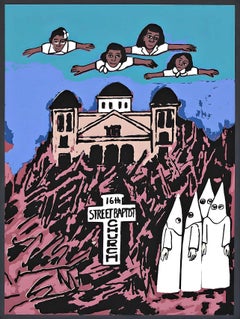
$4,796 Sale Price
20% Off
Marc Chagall, The Eiffel Tower, Letter to My Painter Raoul Dufy, 1965 (after)
By Marc Chagall
Located in Southampton, NY
This exquisite lithograph after Marc Chagall (1887–1985), titled La Tour Eiffel (The Eiffel Tower), from the folio Lettre a mon peintre Raoul Dufy (Letter to My Painter Raoul Dufy), ...
Category
1960s Expressionist The Hamptons - Landscape Prints
Materials
Lithograph
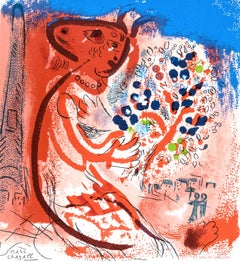
$796 Sale Price
20% Off
Pablo Palazuelo, Untitled, from Derriere le miroir, 1952
By Pablo Palazuelo
Located in Southampton, NY
This exquisite lithograph by Pablo Palazuelo (1916–2007), titled Sans titre (Untitled), from the folio Derriere le miroir, Tendance, No. 50, originates from the 1952 edition publishe...
Category
1950s Modern The Hamptons - Landscape Prints
Materials
Lithograph
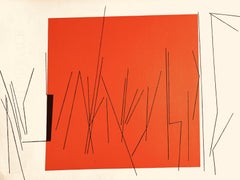
$716 Sale Price
20% Off
Joan Miro, Summer, from Verve, Revue Artistique, 1937
By Joan Miró
Located in Southampton, NY
This exquisite lithograph by Joan Miro (1893–1983), titled L'Ete (Summer), from Verve, Revue Artistique et Litteraire, Vol. I, No. 1, originates from the 1937 issue published by Editions de la revue Verve, Paris, under the direction of Teriade, Editeur, Paris, and printed by Mourlot Freres, Paris, 1937. This early and vibrant composition captures Miro's poetic vision of nature and the cosmos, rendered through biomorphic forms and rhythmic abstraction. L'Ete reflects Miro's fascination with the cyclical harmony of life and his belief in art as an extension of natural forces. Through his distinctive visual language—combining organic shapes, symbolic gestures, and luminous color—Miro conveys a profound sense of vitality and dreamlike wonder, embodying the spirit of renewal that defines his oeuvre.
Executed as a lithograph on velin du Marais paper, this work measures 14 x 10.5 inches. Signed in the plate and unnumbered as issued. The edition exemplifies the superb craftsmanship of the Mourlot Freres atelier, renowned for its collaborations with the leading modernists of the 20th century.
Artwork Details:
Artist: Joan Miro (1893–1983)
Title: L'Ete (Summer), from Verve, Revue Artistique et Litteraire, Vol. I, No. 1, 1937
Medium: Lithograph on velin du Marais paper
Dimensions: 14 x 10.5 inches
Inscription: Signed in the plate and unnumbered as issued
Date: 1937
Publisher: Editions de la revue Verve, Paris, under the direction of Teriade, Editeur, Paris
Printer: Mourlot Freres, Paris
Catalogue raisonne reference: Miro, Joan, et al. Miro, L'oeuvre Graphique: Musee d'art moderne de la ville de Paris, 1974, illustration 395.
Condition: Well preserved, consistent with age and medium
Provenance: From Verve, Revue Artistique et Litteraire, Vol. I, No. 1, published by Editions de la revue Verve, Paris, 1937
About the Publication:
Verve, Revue Artistique et Litteraire was one of the most influential art periodicals of the 20th century, founded in Paris in 1937 by the visionary Greek-born publisher Teriade (Stratis Eleftheriades). Conceived as a synthesis of art and literature, Verve brought together the greatest modern artists and writers of its time—Henri Matisse, Pablo Picasso, Marc Chagall, Georges Braque, Joan Miro, Fernand Leger, and others—alongside poets and philosophers such as Paul Eluard, Albert Camus, and Jean-Paul Sartre. Each issue was a work of art in itself, luxuriously printed by master lithographers such as Mourlot Freres and produced in collaboration with leading typographers and designers. Verve became a platform for avant-garde creativity, publishing original lithographs and essays that reflected the evolving spirit of modernism. Matisse collaborated closely with Teriade from the magazine's inception, producing some of its most iconic issues, including those devoted to his paper cut-outs. The final Verve issue of 1958, which featured La Tristesse du Roi and the Nu Bleu series, stands as a testament to Matisse's enduring genius and to the publication's legacy as the definitive meeting of art, poetry, and printing craftsmanship in 20th-century France.
About the Artist:
Joan Miro (1893–1983) was a Catalan painter, sculptor, printmaker, and ceramicist whose visionary imagination and lyrical abstraction made him one of the most influential and beloved artists of the 20th century. Born in Barcelona, Miro drew inspiration from Catalan folk art, Romanesque frescoes, and the luminous landscapes of Mont-roig del Camp, developing a deep connection to nature that infused his work with vitality and symbolism. After formal training at the Escola d'Art in Barcelona, he absorbed the lessons of Post-Impressionism and Cubism before moving to Paris in the early 1920s, where he became a leading figure in the Surrealist movement. There, Miro forged a personal visual language of biomorphic shapes, floating symbols, and radiant color harmonies that reflected both spontaneity and spiritual depth. In creative dialogue with peers such as Alexander Calder, Alberto Giacometti, Salvador Dali, Wassily Kandinsky, Marcel Duchamp, and Man Ray, he helped revolutionize modern art by dissolving the boundaries between abstraction and dream imagery. Miro's inventive approach extended far beyond painting, embracing sculpture, ceramics, and monumental public commissions that redefined how art could interact with space and emotion. His expressive freedom and gestural abstraction profoundly influenced later artists including Jackson Pollock, Mark Rothko, Alexander Calder, Jean Dubuffet, Antoni Tapies, and Joan Mitchell, inspiring generations who sought to merge instinct, color, and imagination. Today, Miro's work remains a cornerstone of modernism, prized by collectors and celebrated in major museums worldwide. His highest auction record was achieved by Peinture (Etoile Bleue) (1927), which sold for £23,561,250 (approximately $37 million) at Sotheby's, London, on June 19, 2012.
Joan Miro L'Ete, Miro Verve...
Category
1930s Surrealist The Hamptons - Landscape Prints
Materials
Lithograph
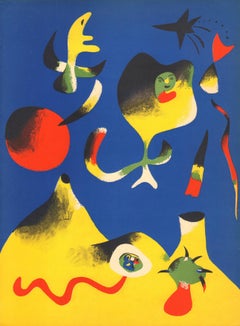
$956 Sale Price
20% Off
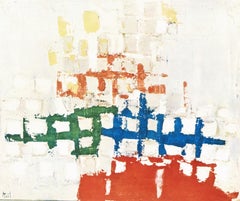
Nicolas de Stael, Untitled, from Painters of Today, 1960 (after)
By Nicolas de Staël
Located in Southampton, NY
This exquisite heliogravure after Nicolas de Stael (1914–1955), titled Sans titre (Untitled), from the folio Nicolas de Stael, Peintres d'aujourd'hui (Nicolas de Stael, Painters of T...
Category
1960s Modern The Hamptons - Landscape Prints
Materials
Lithograph
$716 Sale Price
20% Off
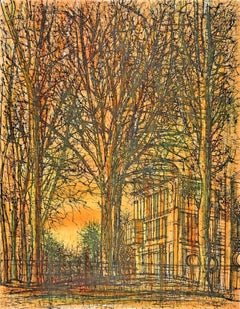
La Maison dans les arbres, Regards sur Paris, Jean Carzou
By Jean Carzou
Located in Southampton, NY
Lithograph on vélin d’Arches paper. Inscription: unsigned and unnumbered, as issued. Good condition. Notes: from the folio, Regards sur Paris, 1963. Published by André Sauret, Paris;...
Category
1960s Modern The Hamptons - Landscape Prints
Materials
Lithograph
$876 Sale Price
20% Off
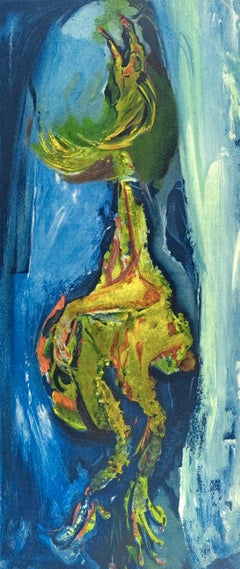
Chaim Soutine, The Rooster, from Soutine, I, 1966 (after)
Located in Southampton, NY
This exquisite lithograph after Chaim Soutine (1893–1943), titled Le Coq (The Rooster), from the folio Soutine, I, Collection Pierre Levy, 1966, originates from the edition published by Fernand Mourlot, Paris, and printed by Mourlot Freres, Paris, on October 20, 1966. The work conveys the heightened emotional tension and expressive force characteristic of Soutines painterly vision, capturing in lithographic form the dynamic structure and psychological immediacy that define his mature still lifes.
Executed as a lithograph on velin d'Arches paper, this work measures 26 x 20 inches. Unsigned and unnumbered as issued. The edition exemplifies the technical mastery of the Mourlot atelier.
Artwork Details:
Artist: After Chaim Soutine (1893–1943)
Title: Le Coq (The Rooster), from the folio Soutine, I, Collection Pierre Levy
Medium: Lithograph on velin d'Arches paper
Dimensions: 26 x 20 inches
Inscription: Unsigned and unnumbered as issued
Date: 1966
Publisher: Fernand Mourlot, Paris
Printer: Mourlot Freres, Paris
Condition: Well preserved, consistent with age and medium
Provenance: From the folio Soutine, I, Collection Pierre Levy, 1966
Notes:
Excerpted from the folio (translated from French), This album, the first of a series dedicated to Mr. Pierre Levys collection, was printed in DL examples on Arches velin. Printing was finished on October 20, 1966 by Mourlot for lithographs of the canvases of Soutine, and by Fequet and Baudier for Waldemar Georges unpublished text. Fernand Mourlot, Paris 1966.
About the Publication:
Soutine, I, Collection Pierre Levy, published in 1966 by Fernand Mourlot, Paris, is the first album in the important series devoted to the Pierre Levy collection, one of the most significant private collections of twentieth century French painting. Conceived as a scholarly and visual record, the album was designed to present key works by Chaim Soutine in lithographic form at a time when renewed international interest in the artist was expanding. Created in collaboration with Mourlot Freres, the foremost lithographic atelier in France, the publication reflects the printers commitment to translating Soutines canvases into richly tonal lithographs that preserve the emotional intensity and structural drama of the originals. Issued in a single edition on Arches velin, the album stands as an essential document of postwar art publishing, illuminating the historical partnership between artist, collector, and master printer, and contributing to the larger historiography of modern French Expressionism and museum quality print albums of the mid twentieth century.
About the Artist:
Chaim Soutine (1893–1943) was a Belarus-born French Expressionist painter whose explosive brushwork, emotionally charged distortions, and uncompromising commitment to depicting the psychological intensity of human experience have secured his place as one of the most vital and transformative figures in twentieth century art, creating his legacy within the same revolutionary modernist environment defined by Pablo Picasso, Alexander Calder, Alberto Giacometti, Salvador Dali, Joan Miro, Wassily Kandinsky, Marcel Duchamp, and Man Ray; after leaving his impoverished childhood in Smilavichy and arriving in Paris in 1913, Soutine immersed himself in the School of Paris circle at La Ruche—an incubator of international avant garde talent—where he developed formative friendships with Amedeo Modigliani, Marc Chagall, Jules Pascin, and other pioneering artists whose daring approaches inspired him to push color, gesture, and form into new emotional territories. His portraits of cooks, choirboys, servants, and village residents; his tempestuous landscapes of Cagnes, Chartres, and Ceret; and his deeply visceral still lifes—most famously his monumental depictions of slaughtered carcasses—reveal a singular ability to transform ordinary subjects into raw, pulsing, almost metaphysical dramas, building on the influence of Rembrandt, Goya, Velazquez, and El Greco while departing radically from academic restraint. His paintings vibrate with psychological tension, their twisted perspectives, molten colors, and trembling outlines capturing an inner world marked by anxiety, longing, resilience, and profound empathy. Soutines originality profoundly shaped the evolution of modern painting: Francis Bacon cited him as one of his greatest influences, Willem de Kooning and the Abstract Expressionists admired his gestural ferocity, and later artists—including Frank Auerbach, Leon Kossoff, Lucian Freud, Jenny Saville, and Adrian Ghenie...
Category
1960s Modern The Hamptons - Landscape Prints
Materials
Lithograph
$716 Sale Price
20% Off
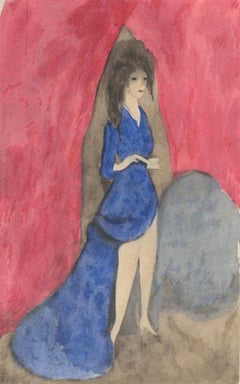
Marie Laurencin, Untitled, from Les Biches, 1924
By Marie Laurencin
Located in Southampton, NY
This exquisite lithograph and pochoir by Marie Laurencin (1883–1956), titled Sans titre (Untitled), from the album Les Biches (The Does), originates from the 1924 edition published b...
Category
1920s Modern The Hamptons - Landscape Prints
Materials
Lithograph, Stencil
$2,796 Sale Price
20% Off
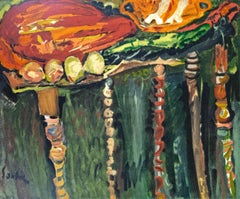
Chaim Soutine, Death in Pieces, from Soutine, I, 1966 (after)
Located in Southampton, NY
This exquisite lithograph after Chaim Soutine (1893–1943), titled Morte Au Morceau (Death in Pieces), from the folio Soutine, I, Collection Pierre Levy, 1966, originates from the edition published by Fernand Mourlot, Paris, and printed by Mourlot Freres, Paris, on October 20, 1966. The work conveys the heightened emotional tension and expressive force characteristic of Soutines painterly vision, capturing in lithographic form the dynamic structure and psychological intensity that define his mature still lifes.
Executed as a lithograph on velin d'Arches paper, this work measures 20 x 26 inches. Signed in the plate and unnumbered as issued. The edition exemplifies the technical mastery of the Mourlot atelier.
Artwork Details:
Artist: After Chaim Soutine (1899–1943)
Title: Morte Au Morceau (Death in Pieces), from the folio Soutine, I, Collection Pierre Levy
Medium: Lithograph on velin d'Arches paper
Dimensions: 20 x 26 inches
Inscription: Signed in the plate and unnumbered as issued
Date: 1966
Publisher: Fernand Mourlot, Paris
Printer: Mourlot Freres, Paris
Condition: Well preserved, consistent with age and medium
Provenance: From the folio Soutine, I, Collection Pierre Levy, 1966
Notes:
Excerpted from the folio (translated from French), This album, the first of a series dedicated to Mr. Pierre Levys collection, was printed in DL examples on Arches velin. Printing was finished on October 20, 1966 by Mourlot for lithographs of the canvases of Soutine, and by Fequet and Baudier for Waldemar Georges unpublished text. Fernand Mourlot, Paris 1966.
About the Publication:
Soutine, I, Collection Pierre Levy, published in 1966 by Fernand Mourlot, Paris, is the first album in the important series devoted to the Pierre Levy collection, one of the most significant private collections of twentieth century French painting. Conceived as a scholarly and visual record, the album was designed to present key works by Chaim Soutine in lithographic form at a time when renewed international interest in the artist was expanding. Created in collaboration with Mourlot Freres, the foremost lithographic atelier in France, the publication reflects the printers commitment to translating Soutines canvases into richly tonal lithographs that preserve the emotional intensity and structural drama of the originals. Issued in a single edition on Arches velin, the album stands as an essential document of postwar art publishing, illuminating the historical partnership between artist, collector, and master printer, and contributing to the larger historiography of modern French Expressionism and museum quality print albums of the mid twentieth century.
About the Artist:
Chaim Soutine (1893–1943) was a Belarus born French Expressionist painter whose explosive brushwork, emotionally charged distortions, and uncompromising commitment to depicting the psychological intensity of human experience have secured his place as one of the most vital and transformative figures in twentieth century art, creating his legacy within the same revolutionary modernist environment defined by Pablo Picasso, Alexander Calder, Alberto Giacometti, Salvador Dali, Joan Miro, Wassily Kandinsky, Marcel Duchamp, and Man Ray; after leaving his impoverished childhood in Smilavichy and arriving in Paris in 1913, Soutine immersed himself in the School of Paris circle at La Ruche—an incubator of international avant garde talent—where he developed formative friendships with Amedeo Modigliani, Marc Chagall, Jules Pascin, and other pioneering artists whose daring approaches inspired him to push color, gesture, and form into new emotional territories. His portraits of cooks, choirboys, servants, and village residents; his tempestuous landscapes of Cagnes, Chartres, and Ceret; and his deeply visceral still lifes—most famously his monumental depictions of slaughtered carcasses—reveal a singular ability to transform ordinary subjects into raw, pulsing, almost metaphysical dramas, building on the influence of Rembrandt, Goya, Velazquez, and El Greco while departing radically from academic restraint. His paintings vibrate with psychological tension, their twisted perspectives, molten colors, and trembling outlines capturing an inner world marked by anxiety, longing, resilience, and profound empathy. Soutines originality profoundly shaped the evolution of modern painting: Francis Bacon cited him as one of his greatest influences, Willem de Kooning and the Abstract Expressionists admired his gestural ferocity, and later artists—including Frank Auerbach, Leon Kossoff, Lucian Freud, Jenny Saville, and Adrian Ghenie...
Category
1960s Modern The Hamptons - Landscape Prints
Materials
Lithograph
$716 Sale Price
20% Off
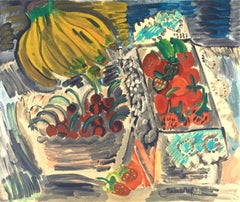
Raoul Dufy, Still Life with Fruits, from Raoul Dufy, IV, 1969 (after)
By Raoul Dufy
Located in Southampton, NY
This exquisite lithograph after Raoul Dufy (1877–1953), titled Nature Morte Aux Fruits (Still Life with Fruits), from the folio Raoul Dufy, IV (Raoul Dufy, IV), Collection Pierre Lev...
Category
1960s Modern The Hamptons - Landscape Prints
Materials
Lithograph
$956 Sale Price
20% Off
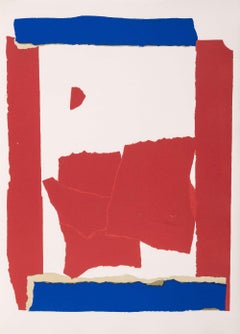
Composition, Lettres de Nicolas de Staël à Pierre Lecuire (after)
By Nicolas de Staël
Located in Southampton, NY
Lithograph and stencil on grand vélin de Mandeure paper. Inscription: Unsigned and unnumbered, as issued. Good condition. Notes: From the folio, Lettres de Nicolas de Staël à Pierre ...
Category
1960s Modern The Hamptons - Landscape Prints
Materials
Lithograph, Stencil
$3,196 Sale Price
20% Off
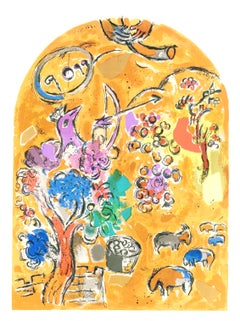
Marc Chagall, Tribe of Joseph, from The Jerusalem Windows, 1962 (after)
By Marc Chagall
Located in Southampton, NY
This exquisite lithograph after Marc Chagall (1887–1985), titled Tribe of Joseph, from the album Marc Chagall, The Jerusalem Windows, origina...
Category
1960s Expressionist The Hamptons - Landscape Prints
Materials
Lithograph
$716 Sale Price
20% Off
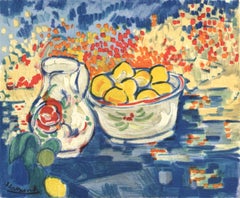
Maurice de Vlaminck, Still Life with Apples, from Vlaminck, 1958 (after)
By Maurice de Vlaminck
Located in Southampton, NY
This exquisite lithograph after Maurice de Vlaminck (1876–1958), titled Nature morte aux pommes (Still Life with Apples), from the album Vlaminck, originates from the 1958 edition pu...
Category
1950s Fauvist The Hamptons - Landscape Prints
Materials
Lithograph
$716 Sale Price
20% Off
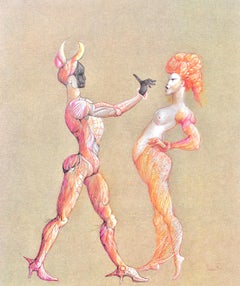
Leonor Fini, Untitled, from Fruits of Passion, 1980 (after)
By Leonor Fini
Located in Southampton, NY
This exquisite heliogravure, titled Sans titre (Untitled), after Leonor Fini, from the album Fruits de la passion, trente-deux variations sur un theme de Leonor Fini (Fruits of Passi...
Category
1980s Surrealist The Hamptons - Landscape Prints
Materials
Lithograph
$716 Sale Price
20% Off