The Hamptons - Landscape Prints
to
3,088
2,413
605
63
9
3
Overall Width
to
Overall Height
to
1,505
422
363
286
100
68
65
43
8
7
169
148
100
47
40
2
3,057
34
3
381
194
215
734
904
362
187
77
2,314
767
12
1,529
1,037
831
599
496
399
394
316
223
131
130
119
62
62
53
53
48
48
46
39
2,454
316
244
215
82
5
3,093
11,205
4,950
Item Ships From: The Hamptons
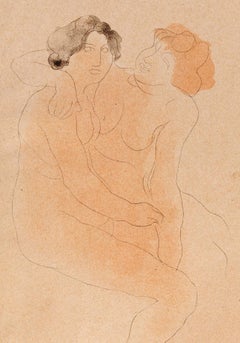
Francois Auguste Rene Rodin, Untitled, from Twelve Watercolors, 1920 (after)
By Auguste Rodin
Located in Southampton, NY
This exquisite lithograph after Francois Auguste Rene Rodin (1840–1917), titled Sans titre (Untitled), from the folio Douze aquarelles de Auguste Rodin (Twelve Watercolors by Auguste...
Category
1920s Modern The Hamptons - Landscape Prints
Materials
Lithograph, Stencil

$1,756 Sale Price
20% Off
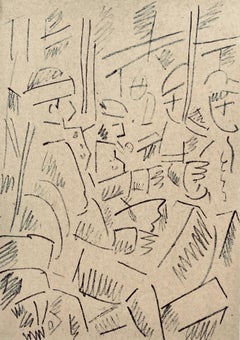
Fernand Leger, In the Hospital, from War Drawings 1915-16, 1956 (after)
By Fernand Léger
Located in Southampton, NY
This exquisite lithograph and pochoir after Fernand Leger (1881–1955), titled Dans l'hopital (In the Hospital), from the album Fernand Leger, Dessins de Guerre 1915-16 (Fernand Leger...
Category
1950s Cubist The Hamptons - Landscape Prints
Materials
Lithograph
$716 Sale Price
20% Off
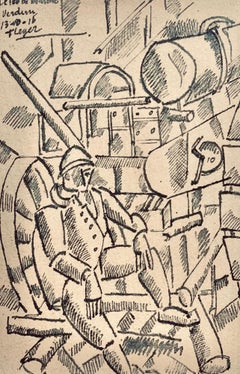
Fernand Leger, The 100-Millimeter Naval Gun, War Drawings 1915-16, 1956 (after)
By Fernand Léger
Located in Southampton, NY
This exquisite lithograph and pochoir after Fernand Leger (1881–1955), titled Le 100 de Marine (The 100-Millimeter Naval Gun), from the album Fernand Leger, Dessins de Guerre 1915-16...
Category
1950s Cubist The Hamptons - Landscape Prints
Materials
Lithograph
$716 Sale Price
20% Off
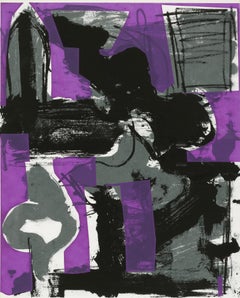
Composition, Salute, Grace Hartigan
By Grace Hartigan
Located in Southampton, NY
Silkscreen on handmade Hahnemühle paper. Unsigned and unnumbered, as issued. Good condition. Notes: From the album, Salute, 1960. Published and printed by Tiber Press, New York under...
Category
1960s Abstract Expressionist The Hamptons - Landscape Prints
Materials
Screen
$4,796 Sale Price
20% Off
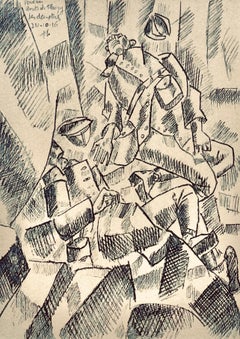
Fernand Leger, On the Road to Fleury, The Two Killed, 1956 (after)
By Fernand Léger
Located in Southampton, NY
This exquisite lithograph and pochoir after Fernand Leger (1881–1955), titled Sur la Route de Fleury, Les Deux Tuer (On the Road to Fleury, The Two Killed), from the album Fernand Le...
Category
1950s Cubist The Hamptons - Landscape Prints
Materials
Lithograph
$716 Sale Price
20% Off
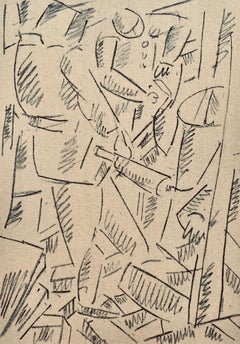
Fernand Leger, The Drillers, from War Drawings 1915-16, 1956 (after)
By Fernand Léger
Located in Southampton, NY
This exquisite lithograph and pochoir after Fernand Leger (1881–1955), titled Les Foreurs (The Drillers), from the album Fernand Leger, Dessins de Guerre 1915-16 (Fernand Leger, War ...
Category
1950s Cubist The Hamptons - Landscape Prints
Materials
Lithograph
$716 Sale Price
20% Off
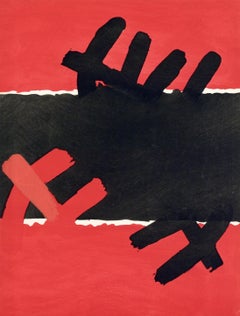
Giuseppe Capogrossi, Red and Black Surface, from XXe Siecle, 1957
By Giuseppe Capogrossi
Located in Southampton, NY
This exquisite lithograph and pochoir by Giuseppe Capogrossi (1900–1972), titled Surface Rouge et Noire (Red and Black Surface), from the album XXe Siecle, Nouvelle serie, No. 9 (dou...
Category
1950s Modern The Hamptons - Landscape Prints
Materials
Lithograph
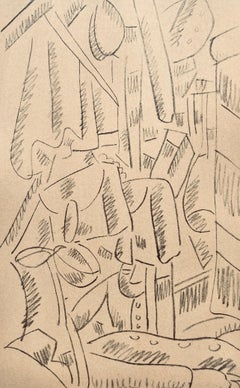
Fernand Leger, Soldiers in a House in Ruins, War Drawings 1915-16, 1956 (after)
By Fernand Léger
Located in Southampton, NY
This exquisite lithograph and pochoir after Fernand Leger (1881–1955), titled Soldats dans une maison en ruines (Soldiers in a House in Ruins), from the album Fernand Leger, Dessins ...
Category
1950s Cubist The Hamptons - Landscape Prints
Materials
Lithograph
$716 Sale Price
20% Off
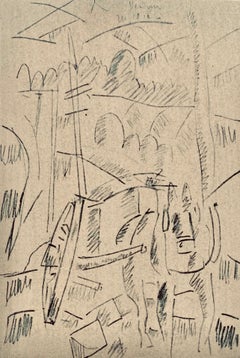
Fernand Leger, On the Road to Souville, from War Drawings 1915-16, 1956 (after)
By Fernand Léger
Located in Southampton, NY
This exquisite lithograph and pochoir after Fernand Leger (1881–1955), titled Sur la Route de Souville (On the Road to Souville), from the album Fernand Leger, Dessins de Guerre 1915...
Category
1950s Cubist The Hamptons - Landscape Prints
Materials
Lithograph
$716 Sale Price
20% Off
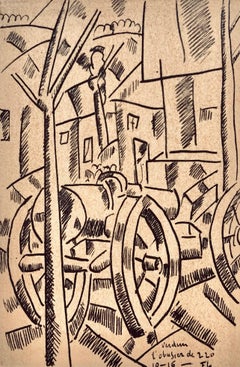
Fernand Leger, The 220 Howitzer, from War Drawings 1915-16, 1956 (after)
By Fernand Léger
Located in Southampton, NY
This exquisite lithograph and pochoir after Fernand Leger (1881–1955), titled L'Obusier de 220 (The 220 Howitzer), from the album Fernand Leger, Dessins de Guerre 1915-16 (Fernand Le...
Category
1950s Cubist The Hamptons - Landscape Prints
Materials
Lithograph
$716 Sale Price
20% Off
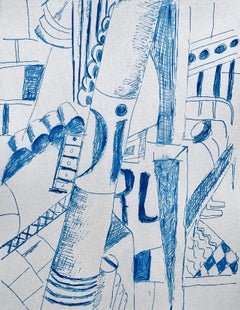
Fernand Leger, Interior of a Hospital, from War Drawings 1915-16, 1956 (after)
By Fernand Léger
Located in Southampton, NY
This exquisite lithograph and pochoir after Fernand Leger (1881–1955), titled Interieur d'hopital (Interior of a Hospital), from the album Fernand Leger, Dessins de Guerre 1915-16 (F...
Category
1950s Cubist The Hamptons - Landscape Prints
Materials
Lithograph
$716 Sale Price
20% Off
Fernand Leger, Destroyed Verdun, from War Drawings 1915-16, 1956 (after)
By Fernand Léger
Located in Southampton, NY
This exquisite lithograph and pochoir after Fernand Leger (1881–1955), titled Verdun detruit (Destroyed Verdun), from the album Fernand Leger, Dessins de Guerre 1915-16 (Fernand Lege...
Category
1950s Cubist The Hamptons - Landscape Prints
Materials
Lithograph
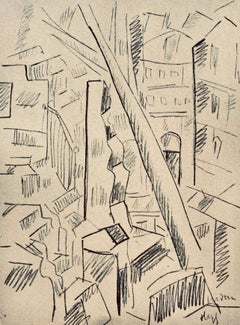
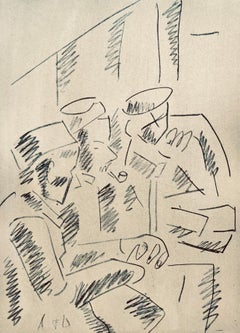
Fernand Leger, Resting Soldiers, from War Drawings 1915-16, 1956 (after)
By Fernand Léger
Located in Southampton, NY
This exquisite lithograph and pochoir after Fernand Leger (1881–1955), titled Soldats au repos (Resting Soldiers), from the album Fernand Leger, Dessins de Guerre 1915-16 (Fernand Le...
Category
1950s Cubist The Hamptons - Landscape Prints
Materials
Lithograph
$716 Sale Price
20% Off
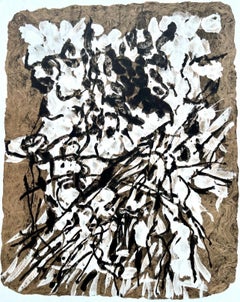
Riopelle, Composition, Derrière le miroir (after)
By Jean-Paul Riopelle
Located in Southampton, NY
Lithograph on vélin paper. Inscription: Unsigned and unnumbered, as issued. Good condition. Notes: From Derrière le miroir, N° 160, 1966. Published by Aimé Maeght, Éditeur, Paris; pr...
Category
1960s Modern The Hamptons - Landscape Prints
Materials
Lithograph
$716 Sale Price
20% Off
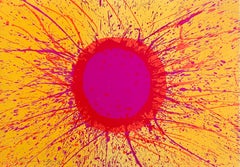
Orange, Trip 旅行, Walasse Ting 丁雄泉
By Walasse Ting
Located in Southampton, NY
Lithograph on vélin paper. Paper size: 23.5 x 33.5 inches. Inscription: Hand signed and numbered, E.A., as issued. Notes: Published by Maeght Éditeur, Paris; printed by l'Imprimerie ...
Category
1970s Pop Art The Hamptons - Landscape Prints
Materials
Lithograph
$3,000 Sale Price
20% Off
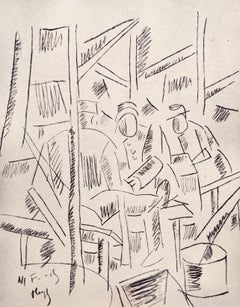
Fernand Leger, Soldiers in a Shelter, from War Drawings 1915-16 (after)
By Fernand Léger
Located in Southampton, NY
This exquisite lithograph and pochoir after Fernand Leger (1881–1955), titled Soldats dans un abri (Soldiers in a Shelter), from the album Fernand Leger, Dessins de Guerre 1915-16 (F...
Category
1950s Cubist The Hamptons - Landscape Prints
Materials
Lithograph
$716 Sale Price
20% Off
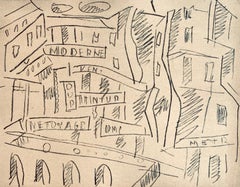
Fernand Leger, Verdun, The Parade Ground, War Drawings 1915-16, 1956 (after)
By Fernand Léger
Located in Southampton, NY
This exquisite lithograph and pochoir after Fernand Leger (1881–1955), titled Verdun, La place d'Armes (Verdun, The Parade Ground), from the album Fernand Leger, Dessins de Guerre 19...
Category
1950s Cubist The Hamptons - Landscape Prints
Materials
Lithograph
$716 Sale Price
20% Off
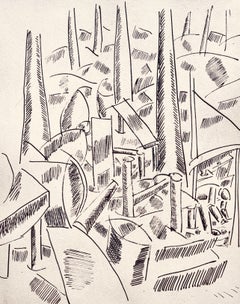
Fernand Leger, The Sapper, from War Drawings 1915-16 (after)
By Fernand Léger
Located in Southampton, NY
This exquisite lithograph and pochoir after Fernand Leger (1881–1955), titled Le Sapeur (The Sapper), from the album Fernand Leger, Dessins de Guerre 1915-16 (Fernand Leger, War Draw...
Category
1950s Cubist The Hamptons - Landscape Prints
Materials
Lithograph
$716 Sale Price
20% Off
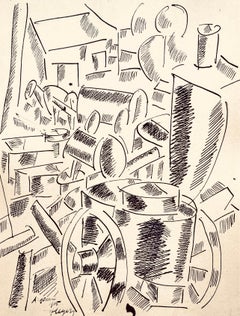
Fernand Leger, The Rolling Field Kitchen, from War Drawings 1915-16 (after)
By Fernand Léger
Located in Southampton, NY
This exquisite lithograph and pochoir after Fernand Leger (1881–1955), titled La cuisine roulante (The Rolling Field Kitchen), from the album Fernand Leger, Dessins de Guerre 1915-16...
Category
1950s Cubist The Hamptons - Landscape Prints
Materials
Lithograph
$716 Sale Price
20% Off
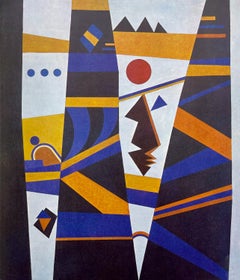
Wassily Kandinsky, Discovery, from Derriere le miroir, 1965 (after)
By Wassily Kandinsky
Located in Southampton, NY
This exquisite lithograph after Wassily Kandinsky (1866–1944), titled Decouverte (Discovery), from the folio Derriere le miroir, No. 154, originates from the 1965 edition published b...
Category
1960s Modern The Hamptons - Landscape Prints
Materials
Lithograph
$716 Sale Price
40% Off
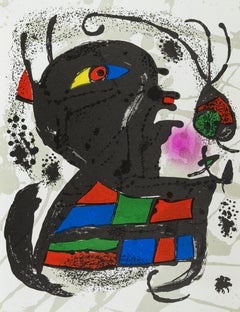
Joan Miro, Lithograph V, from Lithographs III, 1977
By Joan Miró
Located in Southampton, NY
This exquisite lithograph by Joan Miro (1893–1983), titled Lithograph V, from the album Joan Miro Lithographs, Volume III 1964–1969, originates from the 1977 edition published by Mae...
Category
1970s Surrealist The Hamptons - Landscape Prints
Materials
Lithograph
$716 Sale Price
20% Off
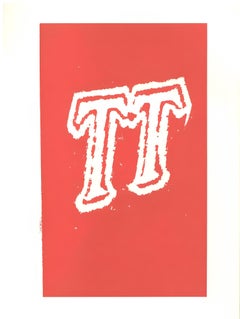
David Hockney, Letter T, from Hockney
s Alphabet, 1991
By David Hockney
Located in Southampton, NY
This exquisite lithograph by David Hockney (born 1937), titled Letter T, from the folio Hockney's Alphabet, Drawings by David Hockney, originates from the 1991 edition published by A...
Category
1990s Contemporary The Hamptons - Landscape Prints
Materials
Lithograph
$1,196 Sale Price
20% Off
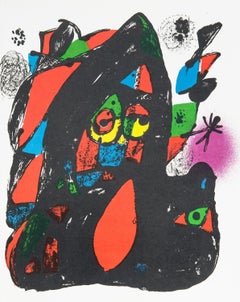
Joan Miro, Lithograph I, from Lithographs IV, 1981
By Joan Miró
Located in Southampton, NY
This exquisite lithograph by Joan Miro (1893–1983), titled Lithograph I, from the album Joan Miro Lithographs, Volume IV 1969–1972, originates from the 1981 edition published by Maeg...
Category
1980s Surrealist The Hamptons - Landscape Prints
Materials
Lithograph
$716 Sale Price
20% Off
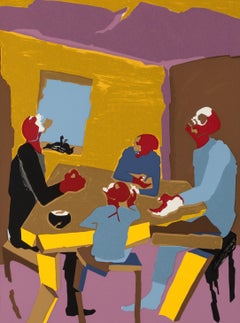
Jacob Lawrence, Family, from Hiroshima, 1983
By Jacob Lawrence
Located in Southampton, NY
This exquisite silkscreen by Jacob Lawrence (1917–2000), titled Family, from the album Hiroshima, originates from the 1983 edition published by The Limited Editions Club, New York, a...
Category
1980s Expressionist The Hamptons - Landscape Prints
Materials
Screen
$2,796 Sale Price
20% Off
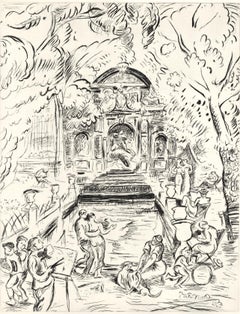
Médici Fountain, Luxembourg Gardens, Paris, A La gloire à Paris, Othon Friesz
By Achille-Émile Othon Friesz
Located in Southampton, NY
Etching on vélin Canson et Montgolfier paper. Unsigned and unnumbered, as issued. Good condition. Published by L'Imprimerie Daragnès, Paris; printed by Jean Gabriel Daragnès, Paris, ...
Category
1930s Modern The Hamptons - Landscape Prints
Materials
Etching
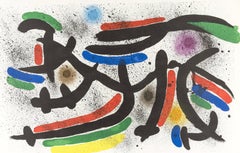
Joan Miro, Lithograph IX, from Lithographs I, 1972
By Joan Miró
Located in Southampton, NY
Lithograph on vélin paper. Paper Size: 12.5 x 20 inches, with centerfold, as issued. Inscription: Unsigned and unnumbered, as issued. Catalogue raisonné references: Cramer, Patrick, ...
Category
1970s Surrealist The Hamptons - Landscape Prints
Materials
Lithograph
$716 Sale Price
20% Off
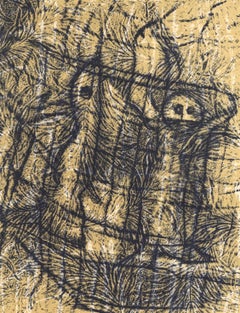
Max Ernst, A Song of Love, from XXe Siecle, 1958
By Max Ernst
Located in Southampton, NY
This exquisite lithograph by Max Ernst (1891–1976), titled Un chant damour (A Song of Love), from the album XXe Siecle, Nouvelle serie, No. 11 (double), Noel 1958, originates from the 1958 edition published by Societe Internationale dArt XXe Siecle, Paris, under the direction of Gualtieri di San Lazzaro, editeur, Paris, and printed by Mourlot Freres, Paris, 1958. This work reflects Ernsts mature Surrealist language, merging dream, myth, and poetic abstraction into a visionary composition.
Executed as a lithograph on velin paper, this work measures 12.5 x 9.75 inches. Unsigned and unnumbered as issued. The edition exemplifies the superb craftsmanship of Mourlot Freres, Paris
Artwork Details:
Artist: Max Ernst (1891–1976)
Title: Un chant damour (A Song of Love)
Medium: Lithograph on velin paper
Dimensions: 12.5 x 9.75 inches (31.75 x 24.77 cm)
Inscription: Unsigned and unnumbered as issued
Date: 1958
Publisher: Societe Internationale dArt XXe Siecle, Paris, under the direction of Gualtieri di San Lazzaro, editeur, Paris
Printer: Mourlot Freres, Paris
Catalogue Raisonne Reference: Ernst, Max, et al. Max Ernst: Graphische Welten: Die Sammlung Schneppenheim. DuMont, 2003, illustration 71C
Condition: Well preserved, consistent with age and medium
Provenance: From the album XXe Siecle, Nouvelle serie, No. 11 (double), Noel 1958, published by Societe Internationale dArt XXe Siecle, Paris; printed by Mourlot Freres, Paris, 1958
About the Publication:
Gualtieri di San Lazzaros XXe Siecle (Twentieth Century) was one of the most influential art journals of the modern era, founded in Paris in 1938 as a platform for the greatest painters, sculptors, and writers of the 20th century. San Lazzaro, a visionary editor, critic, and champion of modernism, believed that art and literature should coexist as expressions of a shared human imagination. Under his direction, XXe Siecle became a cultural bridge between Europe and the wider world, publishing special issues devoted to leading figures such as Picasso, Matisse, Chagall, Braque, Calder, Miro, Kandinsky, and Leger. Each edition combined essays by renowned critics and poets with original lithographs and woodcuts printed by the foremost ateliers of Paris, Milan, and New York, including Mourlot, Curwen, and Amilcare Pizzi, creating a uniquely rich dialogue between text and image. The 1960 issue, XXe Siecle, Nouvelle serie, No. 14, showcased Daphnis et Chloe, one of Chagalls most celebrated lithographic subjects, coinciding with his work on the monumental suite of lithographs inspired by the same pastoral tale, published by Teriade. Through this publication, San Lazzaro further cemented Chagalls reputation as the modern poet of color and love, uniting myth, nature, and emotion in visual form. Today, XXe Siecle remains an essential record of 20th century modernism, celebrated for its seamless integration of fine art, literature, and design.
About the Artist:
Max Ernst (1891–1976) was a German-French painter, sculptor, printmaker, and poet whose groundbreaking imagination and experimental techniques made him one of the most revolutionary figures of 20th century art. A founding member of both Dada and Surrealism, Ernst dismantled traditional notions of art through chance, dream imagery, and psychological exploration, transforming painting, sculpture, and collage into instruments of the unconscious mind. Born in Bruhl, Germany, he studied philosophy and psychology at the University of Bonn before rejecting academic convention to pursue art, inspired by the Symbolists, Cubists, and the early abstractions of Pablo Picasso and Wassily Kandinsky. His traumatic experience serving in World War I left him disillusioned with logic and order, propelling him toward the Dada movement in Cologne in 1919, where he began creating his seminal collages that fused scientific diagrams and Victorian engravings into surreal dreamscapes. By 1922, Ernst had moved to Paris and joined a circle of avant garde luminaries that included Picasso, Alexander Calder, Alberto Giacometti, Salvador Dali, Joan Miro, Marcel Duchamp, Man Ray, and Andre Breton, each of whom shared his fascination with the irrational and the unseen. Ernsts invention of frottage (rubbing) and grattage (scraping) revolutionized modern painting, revealing textures and hidden images beneath the surface and allowing chance to become an active participant in creation. His visionary paintings such as The Elephant Celebes (1921), Two Children Are Threatened by a Nightingale (1924), and Europe After the Rain II (1940–42) blend myth, science, and dream into vast symbolic landscapes that remain among the defining masterpieces of Surrealism. A restless innovator, Ernst expanded into sculpture, crafting enigmatic totemic forms such as Capricorne (1948–1963) that bridged organic abstraction and surreal fantasy, echoing the fluid equilibrium of Calders mobiles and the conceptual wit of Duchamp. Fleeing Nazi occupied France during World War II, Ernst emigrated to the United States with the support of Peggy Guggenheim, whom he later married, influencing the emerging Abstract Expressionists among them Jackson Pollock, Robert Motherwell, and Willem de Kooning through his fusion of automatism, texture, and mythic narrative. Returning to Europe after the war, he continued to refine his poetic, alchemical approach to painting, blending chaos and order into cosmic landscapes that inspired later artists such as Anselm Kiefer, Robert Rauschenberg, Cy Twombly, and Kiki Smith. His work, housed in major museums including MoMA, the Tate, and the Centre Pompidou, stands as a testament to his belief that art could bridge the conscious and unconscious, the rational and the fantastic. Standing alongside Pablo Picasso, Alexander Calder, Alberto Giacometti, Salvador Dali, Joan Miro, Wassily Kandinsky, Marcel Duchamp, and Man Ray, Max Ernst remains a cornerstone of modern art an artist philosopher whose limitless curiosity reshaped visual language and influenced generations of creators. His highest auction record was achieved by Le roi jouant avec la reine (The King Playing with the Queen) (1944), which sold for approximately 24.4 million USD at Christies, New York, in November 2022, reaffirming Max Ernsts enduring legacy as one of the most visionary, provocative, and collectible masters of 20th century modernism.
Max Ernst XXe Siecle 1958, Max Ernst lithograph...
Category
1950s Surrealist The Hamptons - Landscape Prints
Materials
Lithograph
$796 Sale Price
20% Off
Brunelleschi, Composition, La Leçon d
amour dans un parc (after)
By Umberto Brunelleschi
Located in Southampton, NY
Lithograph and stencil on vélin d’Arches paper. Unsigned and unnumbered, as issued. Good condition. Notes: From the volume, La Leçon d'amour dans un parc, 1933. Published by Éditions...
Category
1930s Modern The Hamptons - Landscape Prints
Materials
Lithograph, Stencil
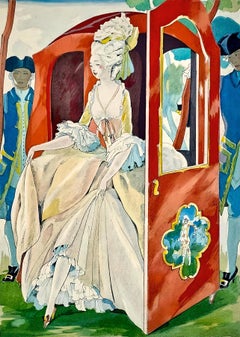
$1,436 Sale Price
20% Off
Jean Cocteau, Untitled, from The White Book, 1930
By Jean Cocteau
Located in Southampton, NY
This exquisite lithograph and pochoir with hand coloring by Jean Cocteau (1889–1963), titled Sans titre (Untitled), from the album Le Livre blanc (The White Book), precede dun fronti...
Category
1930s Modern The Hamptons - Landscape Prints
Materials
Lithograph, Stencil
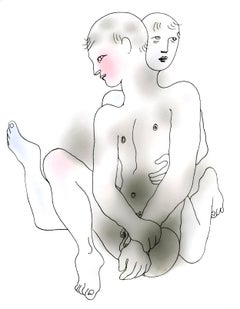
$3,036 Sale Price
20% Off
Max Ernst, The Earthquake, from Natural History, 1972 (after)
By Max Ernst
Located in Southampton, NY
This exquisite collotype after Max Ernst (1891–1976), titled Le Tremblement de terre (The Earthquake), from the album Max Ernst, Histoire Naturelle (Natural History), originates from...
Category
1970s Surrealist The Hamptons - Landscape Prints
Materials
Lithograph
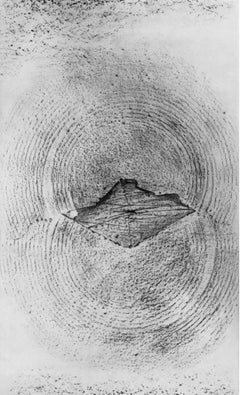
$716 Sale Price
20% Off
La mariée, Vingt fables de La fontaine, Edouard Goerg
By Edouard Goerg
Located in Southampton, NY
Woodcut on vélin d'Arches paper. Inscription: signed in the plate and unnumbered, as issued. Good condition. Notes: from the folio, Vingt fables de La fontaine, 1961. Published by Éd...
Category
1960s Modern The Hamptons - Landscape Prints
Materials
Woodcut
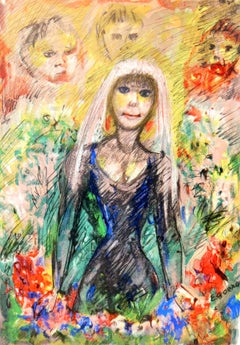
$716 Sale Price
20% Off
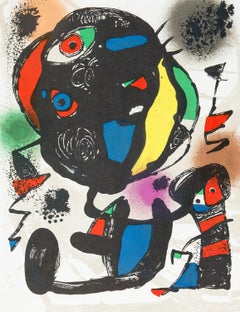
Joan Miro, Lithograph VI, from Lithographs IV, 1981
By Joan Miró
Located in Southampton, NY
This exquisite lithograph by Joan Miro (1893–1983), titled Lithograph VI, from the album Joan Miro Lithographs, Volume IV 1969–1972, originates from the 1981 edition published by Mae...
Category
1980s Surrealist The Hamptons - Landscape Prints
Materials
Lithograph
$716 Sale Price
20% Off
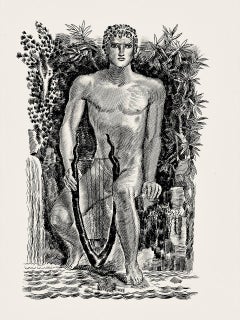
Composition, Portrait de A. Decaris, Albert Decaris
By Albert Decaris
Located in Southampton, NY
Engraving on vélin de Rives paper. Inscription: unsigned and unnumbered, as issued. Good condition. Notes: From the volume, Portrait de A. Decaris, 1953. Published by Editions d'Art Manuel Bruker, Paris; printed by Ateliers Rigal, Paris, January 30, 1953. Excerpted from the volume (translated from French), The present portrait of Albert Decaris was completed to print on January 30, 1953 for typography by Zichieri; for engraving by Rigal. The edition has been set at 250 on vélin de Rives. The first twenty examples are suites on annam of all the engravings.
ALBERT DECARIS (1901-1988) was a French artist, engraver, painter and Olympic Gold Medallist. Decaris was the first illustrator of luxury art books such as Le Chant de Mon Voyage vers la Grèce by Léon Cathlin, Combourg by Chateaubriand, Les Discours des Misères de ce Temps by Ronsard and Les Destinées by Alfred de Vigny. Decaris joined the infamous group called FVHJ at age 24.
In the 1930s, Decaris began engraving postage stamps, resulting in more than 500 such designs, for various postal services, notably French and African. Stamp collectors...
Category
1950s Modern The Hamptons - Landscape Prints
Materials
Engraving
$716 Sale Price
20% Off
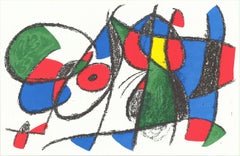
Joan Miro, Lithograph VIII, from Lithographs II, 1975
By Joan Miró
Located in Southampton, NY
This exquisite lithograph by Joan Miro (1893–1983), titled Lithograph VIII, from the album Joan Miro Lithographs, Volume II, originates from the 1975 edition published by Leon Amiel,...
Category
1970s Surrealist The Hamptons - Landscape Prints
Materials
Lithograph
$716 Sale Price
20% Off
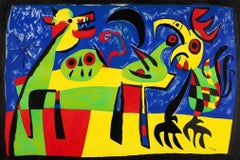
Joan Miro, Dog Barking at the Moon, from Verve, Revue Artistique, 1953
By Joan Miró
Located in Southampton, NY
This exquisite lithograph by Joan Miro (1893–1983), titled Chien aboyant a la lune (Dog Barking at the Moon), from Verve, Revue Artistique et Litteraire, Vol. VII, No. 27–28, originates from the 1953 issue published by Editions de la revue Verve, Paris, under the direction of Teriade, Editeur, Paris, and printed by Mourlot Freres, Paris, 1953. This playful and dreamlike composition captures Miro’s characteristic blend of whimsy, symbolism, and abstraction. The image—an iconic motif of a small dog gazing up and barking at the moon—embodies both humor and mystery, evoking themes of desire, solitude, and wonder. Through bold shapes, floating lines, and radiant color, Miro transforms a simple scene into a poetic meditation on the connection between the earthly and the cosmic.
Executed as a lithograph on velin du Marais paper, this work measures 14 x 21 inches, with centerfold and stitch perforations as issued. Signed in the plate and unnumbered as issued. The edition exemplifies the superb craftsmanship of the Mourlot Freres atelier, renowned for its collaborations with the foremost modern artists of the 20th century.
Artwork Details:
Artist: Joan Miro (1893–1983)
Title: Chien aboyant a la lune (Dog Barking at the Moon), from Verve, Revue Artistique et Litteraire, Vol. VII, No. 27–28, 1953
Medium: Lithograph on velin du Marais paper
Dimensions: 14 x 21 inches, with centerfold and stitch perforations as issued
Inscription: Signed in the plate and unnumbered as issued
Date: 1953
Publisher: Editions de la revue Verve, Paris, under the direction of Teriade, Editeur, Paris
Printer: Mourlot Freres, Paris
Catalogue raisonne reference: Miro, Joan, et al. Joan Miro: Lithographs. Leon Amiel, 1972, illustration 189.
Condition: Well preserved, consistent with age and medium
Provenance: From Verve, Revue Artistique et Litteraire, Vol. VII, No. 27–28, published by Editions de la revue Verve, Paris, 1953
About the Publication:
Verve, Revue Artistique et Litteraire was one of the most influential art periodicals of the 20th century, founded in Paris in 1937 by the visionary Greek-born publisher Teriade (Stratis Eleftheriades). Conceived as a synthesis of art and literature, Verve brought together the greatest modern artists and writers of its time—Henri Matisse, Pablo Picasso, Marc Chagall, Georges Braque, Joan Miro, Fernand Leger, and others—alongside poets and philosophers such as Paul Eluard, Albert Camus, and Jean-Paul Sartre. Each issue was a work of art in itself, luxuriously printed by master lithographers such as Mourlot Freres and produced in collaboration with leading typographers and designers. Verve became a platform for avant-garde creativity, publishing original lithographs and essays that reflected the evolving spirit of modernism. Miro’s collaborations with Teriade for Verve exemplify his capacity to blend spontaneous imagery with profound poetic resonance.
About the Artist:
Joan Miro (1893–1983) was a Catalan painter, sculptor, printmaker, and ceramicist whose visionary imagination and lyrical abstraction made him one of the most influential and beloved artists of the 20th century. Born in Barcelona, Miro drew inspiration from Catalan folk art, Romanesque frescoes, and the luminous landscapes of Mont-roig del Camp, developing a deep connection to nature that infused his work with vitality and symbolism. After formal training at the Escola d'Art in Barcelona, he absorbed the lessons of Post-Impressionism and Cubism before moving to Paris in the early 1920s, where he became a leading figure in the Surrealist movement. There, Miro forged a personal visual language of biomorphic shapes, floating symbols, and radiant color harmonies that reflected both spontaneity and spiritual depth. In creative dialogue with peers such as Alexander Calder, Alberto Giacometti, Salvador Dali, Wassily Kandinsky, Marcel Duchamp, and Man Ray, he helped revolutionize modern art by dissolving the boundaries between abstraction and dream imagery. Miro's inventive approach extended far beyond painting, embracing sculpture, ceramics, and monumental public commissions that redefined how art could interact with space and emotion. His expressive freedom and gestural abstraction profoundly influenced later artists including Jackson Pollock, Mark Rothko, Alexander Calder, Jean Dubuffet, Antoni Tapies, and Joan Mitchell, inspiring generations who sought to merge instinct, color, and imagination. Today, Miro's work remains a cornerstone of modernism, prized by collectors and celebrated in major museums worldwide. His highest auction record was achieved by Peinture (Etoile Bleue) (1927), which sold for £23,561,250 (approximately $37 million) at Sotheby's, London, on June 19, 2012.
Joan Miro Chien aboyant a la lune, Miro Verve...
Category
1950s Surrealist The Hamptons - Landscape Prints
Materials
Lithograph
$1,996 Sale Price
20% Off
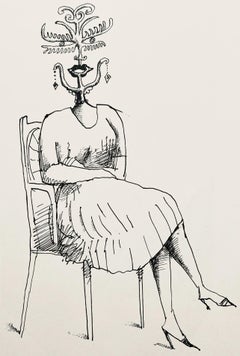
Saul Steinberg, Composition, L
édition de tête (after)
By Saul Steinberg
Located in Southampton, NY
Lithograph on vélin de Lana paper. Inscription: Unsigned and unnumbered, as issued. Good condition. Notes: From the folio, tête edition, Consacré a Steinberg, Derrière le miroir, N° ...
Category
1960s Modern The Hamptons - Landscape Prints
Materials
Lithograph
$1,036 Sale Price
20% Off
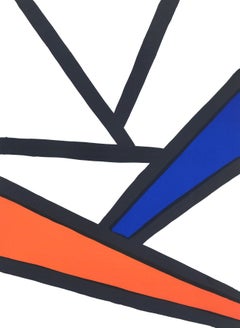
Alexander Calder, Composition with Triangles, from Derriere le miroir, 1968
By Alexander Calder
Located in Southampton, NY
This exquisite lithograph by Alexander Calder (1898–1976), titled Composition aux Triangles (Composition with Triangles), from the folio Derriere le miroir, No. 173, originates from the 1968 edition published by Maeght Editeur, Paris, and printed by Mourlot Freres, Paris, 1968. Composition aux Triangles exemplifies Calder’s mastery of rhythm and form, translating his sculptural language of balance and motion into vivid, dynamic compositions on paper that capture his signature sense of energy and harmony.
Executed as a lithograph on velin paper, this work measures 15 x 11 inches. Unsigned and unnumbered as issued. The edition exemplifies the superb craftsmanship of Mourlot Freres, Paris.
Artwork Details:
Artist: Alexander Calder (1898–1976)
Title: Composition aux Triangles (Composition with Triangles), from the folio Derriere le miroir, No. 173
Medium: Lithograph on velin paper
Dimensions: 15 x 11 inches (38.1 x 27.94 cm)
Inscription: Unsigned and unnumbered as issued
Date: 1968
Publisher: Maeght Editeur, Paris
Printer: Mourlot Freres, Paris
Condition: Well preserved, consistent with age and medium
Provenance: From the folio Derriere le miroir, No. 173, published by Maeght Editeur, Paris; printed by Mourlot Freres, Paris, 1968
Notes:
Excerpted from the folio (translated from French), The illustrations in this issue are original lithographs by Alexander Calder drawn in the workshops of the Arte printing shop. This issue of "Behind the Mirror" has a luxury edition drawn on velin de Lana and limited to CL examples numbered and signed by the artist on the colophon. The text of G. Carandente was translated from Italian by Alain Veinstein.
About the Publication:
Derriere le miroir (Behind the Mirror) was one of the most important art publications of the 20th century, created and published by Maeght Editeur in Paris from 1946 to 1982. Founded by the visionary art dealer and publisher Aime Maeght, the series served as both an exhibition catalogue and a work of art in its own right, uniting original lithographs by leading modern and contemporary artists with critical essays, poetry, and design of the highest quality. Printed by master lithographers such as Mourlot Freres and Arte, Derriere le miroir became synonymous with the artistic vanguard of postwar Europe. Each issue was devoted to a single artist or theme and published to accompany exhibitions at the Galerie Maeght in Paris, featuring works by Pablo Picasso, Henri Matisse, Georges Braque, Joan Miro, Marc Chagall, Alexander Calder, Fernand Leger, and Alberto Giacometti, among others. The publication reflected Maeght’s belief that art should be both accessible and elevated—an ideal realized through its luxurious production values, meticulous printing, and collaboration with the greatest creative minds of its time.
About the Artist:
Alexander Calder (1898–1976) was an American sculptor, painter, and printmaker whose pioneering innovations in kinetic art revolutionized 20th-century sculpture and transformed modern visual language. Born in Lawnton, Pennsylvania, into a family of artists, Calder initially trained as a mechanical engineer at the Stevens Institute of Technology before turning to art at the Art Students League in New York—a combination of technical precision and creative imagination that defined his career. Moving to Paris in 1926, he immersed himself in the avant-garde and formed friendships with Pablo Picasso, Alberto Giacometti, Joan Miro, Wassily Kandinsky, Salvador Dali, Marcel Duchamp, and Man Ray, whose ideas profoundly shaped his artistic philosophy. From Picasso, he absorbed structural invention; from Miro, lyrical abstraction; from Kandinsky, spiritual geometry; and from Duchamp and Man Ray, the courage to merge intellect and play. In Paris, Calder created his famous Cirque Calder, a miniature mechanical circus that introduced motion and performance as central components of sculpture, and by the early 1930s, he invented the mobile—a term coined by Duchamp—to describe his delicately balanced, moving sculptures that responded to air currents. Later, Jean Arp would name his stationary counterparts stabiles. These two inventions—sculptures that could either float and spin gracefully or stand monumentally still—transformed art into a dynamic dialogue between movement, balance, and space. Calder’s signature forms, painted in vivid reds, blacks, blues, and yellows, embodied both joy and precision, creating an art that was at once abstract, organic, and deeply human. Like Kandinsky and Miro, he viewed art as a form of rhythm and emotion; like Duchamp, he embraced innovation and humor; and like Giacometti and Dali, he was fascinated by perception, structure, and the unseen forces of motion. His monumental public sculptures—such as La Grande Vitesse (1969) in Grand Rapids and Flamingo (1973) in Chicago—redefined public art as a symbol of civic optimism and modern progress. A key bridge between European modernism and American abstraction, Calder’s influence extended to artists including Jean Tinguely, George Rickey, Donald Judd, Ellsworth Kelly, Richard Serra, and Olafur Eliasson, whose works in kinetic and spatial art continue to echo his vision. His gouaches, prints, and jewelry carried the same balance and movement as his sculptures, revealing a unified language of rhythm across media. Represented in every major modern museum—including MoMA, the Guggenheim, the Tate, and the Centre Pompidou—Calder remains celebrated for merging engineering, color, and poetry into an art of pure equilibrium. Standing alongside Pablo Picasso, Alexander Calder, Alberto Giacometti, Salvador Dali, Joan Miro, Wassily Kandinsky, Marcel Duchamp, and Man Ray, he remains one of the cornerstones of modern art—a visionary whose works breathe with motion, grace, and joy. His highest auction record was achieved by Poisson Volant (Flying Fish) (1957), which sold for $25.9 million at Christie’s, New York, on May 15, 2014, reaffirming Alexander Calder’s enduring legacy as one of the most inventive, dynamic, and collectible artists in the history of modern art.
Alexander Calder Composition...
Category
1960s Surrealist The Hamptons - Landscape Prints
Materials
Lithograph
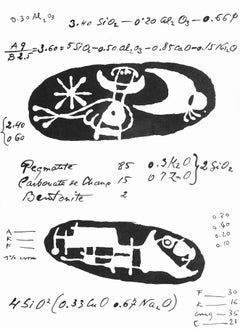
Joan Miro, Composition with Chemical Formulas, from Derriere le miroir, 1956
By Joan Miró
Located in Southampton, NY
This exquisite lithograph by Joan Miro (1893–1983), titled Composition avec formules chimiques (Composition with Chemical Formulas), from the folio Derriere le miroir, No. 87–89, originates from the 1956 edition published by Maeght Editeur, Paris, and printed by Mourlot Freres, Paris, 1956. Composition avec formules chimiques showcases Miro’s unique blend of poetic abstraction and playful symbolism, merging scientific notations with his characteristic visual language of organic forms and vivid color harmonies.
Executed as a lithograph on velin paper, this work measures 15 x 11 inches. Unsigned and unnumbered as issued. The edition exemplifies the superb craftsmanship of Mourlot Freres, Paris.
Artwork Details:
Artist: Joan Miro (1893–1983)
Title: Composition avec formules chimiques (Composition with Chemical Formulas), from the folio Derriere le miroir, No. 87–89
Medium: Lithograph on velin paper
Dimensions: 15 x 11 inches (38.1 x 27.94 cm)
Inscription: Unsigned and unnumbered as issued
Date: 1956
Publisher: Maeght Editeur, Paris
Printer: Mourlot Freres, Paris
Catalogue raisonne reference:
Cramer, Patrick, and Isabelle Monod-Fontaine. Joan Miro: Catalogue Raisonne des Livres Illustres. Patrick Cramer Editeur, Geneva, 1989, no. 34.
Condition: Well preserved, consistent with age and medium
Provenance: From the folio Derriere le miroir, No. 87–89, published by Maeght Editeur, Paris; printed by Mourlot Freres, Paris, 1956
Notes:
Excerpted from the folio (translated from French), Miroir Miro and Oasis Miro are extracted from the album by Jacques Prevert and Georges Ribemont-Dessaignes devoted to Miro.
About the Publication:
Derriere le miroir (Behind the Mirror) was one of the most important art publications of the 20th century, created and published by Maeght Editeur in Paris from 1946 to 1982. Founded by the visionary art dealer and publisher Aime Maeght, the series served as both an exhibition catalogue and a work of art in its own right, uniting original lithographs by leading modern and contemporary artists with critical essays, poetry, and design of the highest quality. Printed by master lithographers such as Mourlot Freres and Arte, Derriere le miroir became synonymous with the artistic vanguard of postwar Europe. Each issue was devoted to a single artist or theme and published to accompany exhibitions at the Galerie Maeght in Paris, featuring works by Pablo Picasso, Henri Matisse, Georges Braque, Joan Miro, Marc Chagall, Alexander Calder, Fernand Leger, and Alberto Giacometti, among others. The publication reflected Maeght’s belief that art should be both accessible and elevated—an ideal realized through its luxurious production values, meticulous printing, and collaboration with the greatest creative minds of its time.
About the Artist:
Joan Miro (1893–1983) was a Catalan painter, sculptor, printmaker, and ceramicist whose visionary imagination and lyrical abstraction made him one of the most influential and beloved artists of the 20th century. Born in Barcelona, Miro drew inspiration from Catalan folk art, Romanesque frescoes, and the luminous landscapes of Mont-roig del Camp, developing a deep connection to nature that infused his work with vitality and symbolism. After formal training at the Escola d'Art in Barcelona, he absorbed the lessons of Post-Impressionism and Cubism before moving to Paris in the early 1920s, where he became a leading figure in the Surrealist movement. There, Miro forged a personal visual language of biomorphic shapes, floating symbols, and radiant color harmonies that reflected both spontaneity and spiritual depth. In creative dialogue with peers such as Alexander Calder, Alberto Giacometti, Salvador Dali, Wassily Kandinsky, Marcel Duchamp, and Man Ray, he helped revolutionize modern art by dissolving the boundaries between abstraction and dream imagery. Miro's inventive approach extended far beyond painting, embracing sculpture, ceramics, and monumental public commissions that redefined how art could interact with space and emotion. His expressive freedom and gestural abstraction profoundly influenced later artists including Jackson Pollock, Mark Rothko, Alexander Calder, Jean Dubuffet, Antoni Tapies, and Joan Mitchell, inspiring generations who sought to merge instinct, color, and imagination. Today, Miro's work remains a cornerstone of modernism, prized by collectors and celebrated in major museums worldwide. His highest auction record was achieved by Peinture (Etoile Bleue) (1927), which sold for £23,561,250 (approximately $37 million) at Sotheby's, London, on June 19, 2012.
Joan Miro Composition...
Category
1950s Surrealist The Hamptons - Landscape Prints
Materials
Lithograph
Georges Braque, Les Champs (Maeght N°1045), L
édition de tête (after)
By Georges Braque
Located in Southampton, NY
Lithograph on vélin de Rives paper. Inscription: Unsigned and unnumbered, as issued. Good condition, with centerfold, as issued. Notes: From the folio, tête edition, Consacre a Pierr...
Category
1960s Modern The Hamptons - Landscape Prints
Materials
Lithograph
$1,596 Sale Price
20% Off
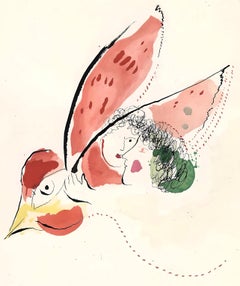
Chagall, Sans titre, Le Dur Désir de Durer (after)
By Marc Chagall
Located in Southampton, NY
Lithograph on vélin bouffant d'Alfa paper. Inscription: unsigned and unnumbered, as issued. Good condition. Notes: From the volume, Le Dur Désir de Durer, illustré par Marc Chagall, ...
Category
1950s Expressionist The Hamptons - Landscape Prints
Materials
Lithograph
$796 Sale Price
20% Off
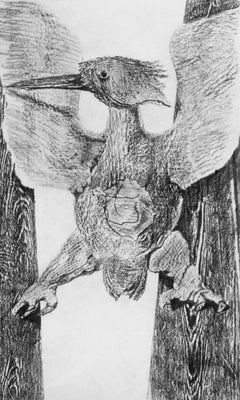
Max Ernst, The Origin of the Clock, from Natural History, 1972 (after)
By Max Ernst
Located in Southampton, NY
This exquisite collotype after Max Ernst (1891–1976), titled L'Origine de la pendule (The Origin of the Clock), from the album Max Ernst, Histoire Naturelle (Natural History), origin...
Category
1970s Surrealist The Hamptons - Landscape Prints
Materials
Lithograph
$716 Sale Price
20% Off
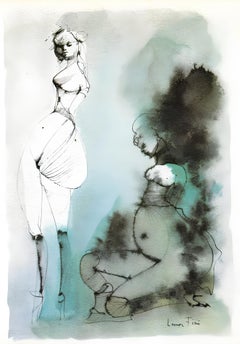
Leonor Fini, Untitled, from The Story of O, 1962
By Leonor Fini
Located in Southampton, NY
This exquisite lithograph, titled Sans titre, after Leonor Fini, from the folio L'Histoire d'O (The Story of O), 1962, was published and printed by La Compagnie des Vibliophiles, au ...
Category
1960s Modern The Hamptons - Landscape Prints
Materials
Lithograph
$1,996 Sale Price
20% Off
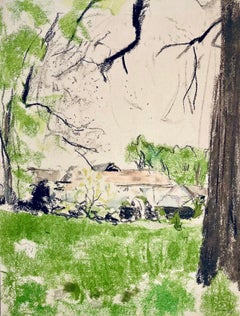
Vuillard, Les Communs Au Chateau Des Clayes, Douze pastels (after)
By Edouard Vuillard
Located in Southampton, NY
Lithograph and stencil on vélin paper mounted on backing museum board, as issued. Unsigned and unnumbered, as issued. Good condition. Notes: From the folio, Vuillard, Douze Pastels P...
Category
1960s Post-Impressionist The Hamptons - Landscape Prints
Materials
Lithograph, Stencil
$1,996 Sale Price
20% Off
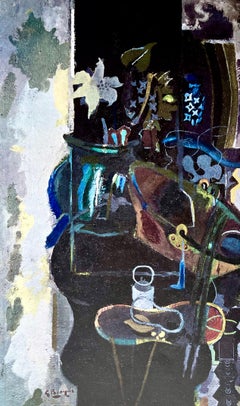
Braque, Composition, Derrière le miroir (after)
By Georges Braque
Located in Southampton, NY
Lithograph on vélin paper. Inscription: Unsigned and unnumbered, as issued. Good condition. Notes: From the volume, Derrière le miroir, N° 155, 1965. Published by Aimé Maeght, Éditeu...
Category
1960s Modern The Hamptons - Landscape Prints
Materials
Lithograph
$716 Sale Price
20% Off
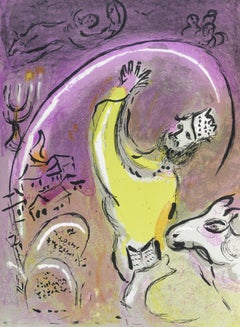
Marc Chagall, Solomon, from Drawings for the Bible, 1956
By Marc Chagall
Located in Southampton, NY
This exquisite lithograph by Marc Chagall (1887–1985), titled Solomon, from Marc Chagall, Dessins Pour La Bible (Drawings for the Bible), Verve: Revue Artistique et Litteraire, Vol. ...
Category
1950s Expressionist The Hamptons - Landscape Prints
Materials
Lithograph
$956 Sale Price
20% Off
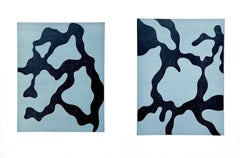
Hans Jean Arp, Relief I and II, from XXe Siecle, 1954
Located in Southampton, NY
This exquisite woodcut by Hans Jean Arp (1886–1966), titled Relief I et II (Relief I and II), from the album XXe Siecle, Nouvelle serie N°4 (double) Janvier 1954, originates from the...
Category
1950s Modern The Hamptons - Landscape Prints
Materials
Woodcut
$1,036 Sale Price
20% Off
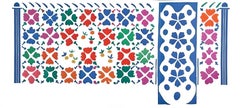
Henri Matisse, Flowers and Fruit, from Verve, Revue Artistique, 1958 (after)
By Henri Matisse
Located in Southampton, NY
This exquisite lithograph after Henri Matisse (1869–1954), titled Fleurs et Fruits (Flowers and Fruit), from Verve, Revue Artistique et Litteraire, Vol. IX, No. 35–36, originates fro...
Category
1950s Modern The Hamptons - Landscape Prints
Materials
Lithograph
$796 Sale Price
20% Off
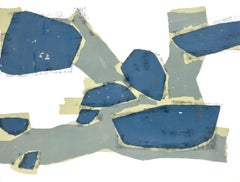
Raoul Ubac, Untitled, from Derriere le miroir, 1955
By Raoul Ubac
Located in Southampton, NY
This exquisite lithograph by Raoul Ubac (1910–1985), titled Sans titre (Untitled), from the folio Derriere le miroir, No. 74-76, originates from the 1955 edition published by Maeght ...
Category
1950s Modern The Hamptons - Landscape Prints
Materials
Lithograph
$716 Sale Price
20% Off
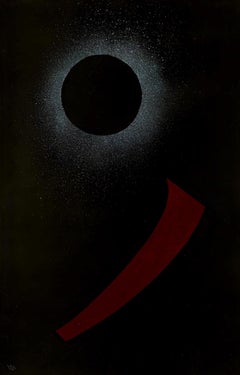
Wassily Kandinsky, Untitled, from Derriere le Miroir, 1960 (after)
By Wassily Kandinsky
Located in Southampton, NY
This exquisite lithograph after Wassily Kandinsky (1866–1944), titled Sans Titre (Untitled), originates from the 1960 folio Derriere le Miroir, No. 119, Poetes, peintres, sculpteurs (Poets, Painters, Sculptors), published by Maeght Editeur, Paris, under the direction of Aime Maeght, and printed by Mourlot Freres, Paris. This plate pays homage to the artist’s groundbreaking geometric abstraction and his profound influence on postwar modernism. Through precise form and rhythmic structure, Sans Titre captures the musicality and spiritual dynamism that defined Kandinsky’s mature visual language, balancing intuitive movement with mathematical harmony.
Executed on velin paper, this lithograph measures 15 x 11 inches (38.1 x 27.9 cm), as issued. Signed in the plate and unnumbered, as issued. The edition reflects the exceptional quality and craftsmanship of the Maeght and Mourlot collaborations, honoring Kandinsky’s legacy in fine art printing.
Artwork Details:
Artist: After Wassily Kandinsky (1866–1944)
Title: Sans Titre (Untitled), from Derriere le Miroir, No. 119, Poetes, peintres, sculpteurs (Poets, Painters, Sculptors), 1960
Medium: Lithograph on velin paper
Dimensions: 15 x 11 inches (38.1 x 27.9 cm), as issued
Inscription: Signed in the plate and unnumbered, as issued
Date: 1960
Publisher: Maeght Editeur, Paris
Printer: Mourlot Freres, Paris
Condition: Well preserved, consistent with age and medium
Provenance: From the 1960 folio Derriere le Miroir, No. 119, Poetes, peintres, sculpteurs (Poets, Painters, Sculptors), published by Maeght Editeur, Paris
About the Publication:
Derriere le Miroir (translated as "Behind the Mirror") was an iconic French art periodical published from 1946 to 1982 by Maeght Editeur, one of the most influential art publishers of the 20th century. Founded by Aime Maeght in Paris, the publication was conceived as a visual and literary collaboration between leading modern artists, poets, and critics. Each issue functioned as both an exhibition catalogue and a work of art in itself—featuring original lithographs printed directly from the artists' stones or plates, alongside essays, poems, and critical commentary. Over the course of 36 years, Derriere le Miroir produced more than 250 issues and showcased an extraordinary roster of artists including Henri Matisse, Marc Chagall, Joan Miro, Georges Braque, Alexander Calder, Fernand Leger, Pierre Bonnard, Alberto Giacometti, Eduardo Chillida, Ellsworth Kelly, Francis Bacon, Paul Rebeyrolle, Claude Garache, Antoni Tapies, Bram van Velde, Pierre Alechinsky, Pol Bury, Shusaku Arakawa, and Gerard Titus-Carmel. Printed in the ateliers of Mourlot, Arte, and Imprimerie Moderne du Lion, the periodical set new standards for quality in color lithography, combining fine art printing with elegant typography and poetic text. Beyond its visual brilliance, Derriere le Miroir also became a cultural chronicle of postwar European modernism. Each issue coincided with exhibitions held at Galerie Maeght, providing a collectible and widely accessible record of groundbreaking shows. Its integration of image, text, and philosophy created a dialogue between art and literature that elevated the modern art book to new aesthetic heights. Today, Derriere le Miroir remains one of the most sought-after and historically significant art publications, prized by collectors and scholars alike for its craftsmanship, influence, and its role in defining the visual language of 20th-century modernism. The Maeght Foundation in Saint-Paul-de-Vence continues to honor this legacy through exhibitions and archival preservation of the series, affirming Derriere le Miroir's enduring place in the history of modern art and fine art publishing.
About the Artist:
Wassily Kandinsky (1866–1944) was a Russian-born painter, theorist, and pioneer of abstract art whose revolutionary vision transformed 20th-century modernism. Regarded as one of the first artists to create purely nonobjective paintings, Kandinsky sought to express inner emotion and spirituality through color, rhythm, and form, believing that art could evoke the same universal harmony as music. His groundbreaking theories on abstraction and the “spiritual in art” shaped the foundation of modern aesthetics and influenced generations of artists worldwide. Closely associated with the Bauhaus movement, he developed a dynamic visual language that combined geometry and lyricism, bridging intuition and intellect. Kandinsky’s legacy resonates alongside the innovations of Pablo Picasso, Henri Matisse, Alexander Calder, Georges Braque, Marc Chagall, Alberto Giacometti, Salvador Dali, Joan Miro, Marcel Duchamp, and Man Ray—artists who, like him, redefined the possibilities of modern art. His works are represented in the world’s leading museums, including MoMA, the Guggenheim, the Centre Pompidou, and the Tate, and remain among the most coveted by collectors globally. The highest price ever paid for a Wassily Kandinsky artwork is approximately $45.6 million USD, achieved in 2017 at Christie’s London for Bild mit weissen Linien (Painting with White Lines) (1913).
Wassily Kandinsky Sans Titre, Kandinsky Derriere le Miroir, Kandinsky Maeght Editeur Paris, Kandinsky Mourlot Freres, Kandinsky 1960 edition, Kandinsky lithograph...
Category
1960s Modern The Hamptons - Landscape Prints
Materials
Lithograph
$796 Sale Price
20% Off
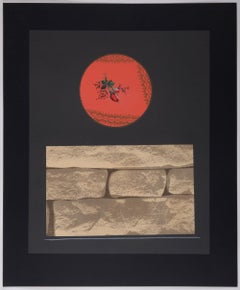
Ernst, Composition (Monod 2619; Spies/Leppien A19/C), Dent Prompte (after)
By Max Ernst
Located in Southampton, NY
Lithograph on vélin d’Arches paper. Inscription: unsigned and unnumbered, as issued. Good condition. Notes: From the folio, Dent Prompte, Dix poèmes inédits illustrés par Max Ernst, ...
Category
1960s Surrealist The Hamptons - Landscape Prints
Materials
Lithograph
$716 Sale Price
52% Off
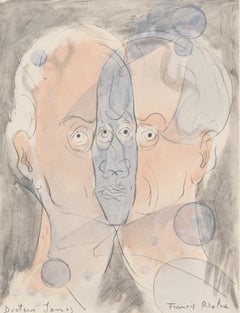
Composition, Le Peseur d
âmes (The Weigher of Souls), Francis Picabia
By Francis Picabia
Located in Southampton, NY
Lithograph and stencil on vélin d'Arches paper. Unsigned and unnumbered, as issued. Good Condition. Notes: From the volume, Le Peseur d'âmes, précédé d'un frontispice et suivi de hui...
Category
1930s Modern The Hamptons - Landscape Prints
Materials
Lithograph, Stencil
$1,436 Sale Price
20% Off
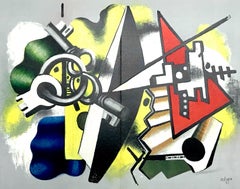
Fernand Leger, Composition with Three Keys, Derriere le miroir, 1955 (after)
By Fernand Léger
Located in Southampton, NY
This exquisite lithograph after Fernand Leger (1881–1955), titled Composition aux trois cles (Composition with Three Keys), from the folio Derriere le miroir, No. 79-81, originates from the 1955 edition published by Maeght Editeur, Paris, and printed by Mourlot Freres, Paris, 1955. This composition exemplifies Leger’s rhythmic balance of color, form, and movement, translating the mechanical vitality of modern life into a harmonious, humanized geometry.
Executed as a lithograph on velin paper, this work measures 15 x 22 inches, with centerfold as issued. Signed in the plate and unnumbered as issued. The edition exemplifies the superb craftsmanship of Mourlot Freres, Paris.
Artwork Details:
Artist: After Fernand Leger (1881–1955)
Title: Composition aux trois cles (Composition with Three Keys), from the folio Derriere le miroir, No. 79-81
Medium: Lithograph on velin paper
Dimensions: 15 x 22 inches (38.1 x 55.88 cm), with centerfold as issued
Inscription: Signed in the plate and unnumbered as issued
Date: 1955
Publisher: Maeght Editeur, Paris
Printer: Mourlot Freres, Paris
Condition: Well preserved, consistent with age and medium
Provenance: From the folio Derriere le miroir, No. 79-81, published by Maeght Editeur, Paris; printed by Mourlot Freres, Paris, 1955
About the Publication:
Derriere le miroir (Behind the Mirror) was one of the most important art publications of the 20th century, created and published by Maeght Editeur in Paris from 1946 to 1982. Founded by the visionary art dealer and publisher Aime Maeght, the series served as both an exhibition catalogue and a work of art in its own right, uniting original lithographs by leading modern and contemporary artists with critical essays, poetry, and design of the highest quality. Printed by master lithographers such as Mourlot Freres and Arte, Derriere le miroir became synonymous with the artistic vanguard of postwar Europe. Each issue was devoted to a single artist or theme and published to accompany exhibitions at the Galerie Maeght in Paris, featuring works by Pablo Picasso, Henri Matisse, Georges Braque, Joan Miro, Marc Chagall, Alexander Calder, Fernand Leger, and Alberto Giacometti, among others. The publication reflected Maeght's belief that art should be both accessible and elevated—an ideal realized through its luxurious production values, meticulous printing, and collaboration with the greatest creative minds of its time.
About the Artist:
Fernand Leger (1881–1955) was a visionary French painter, sculptor, designer, and filmmaker whose groundbreaking fusion of modern industry, vivid color, and geometric form transformed the course of 20th-century art. Born in Argentan, Normandy, Leger began as an architectural draftsman before studying at the Academie Julian and the Ecole des Beaux-Arts in Paris, where he absorbed the lessons of Paul Cezanne’s structural rigor and the revolutionary ideas of Cubism. Alongside Pablo Picasso and Georges Braque, he became one of the leading innovators of the avant-garde, yet his work stood apart through its embrace of mechanical rhythm, bold contrasts, and industrial modernity—earning him the title “the painter of the machine age.” His art celebrated the beauty of technology, urban life, and the human form rendered in dynamic, interlocking cylinders and planes, evoking the pulse of the modern world. Immersed in the vibrant Parisian art scene, Leger worked in dialogue with peers and contemporaries such as Alexander Calder, Alberto Giacometti, Salvador Dali, Joan Miro, Wassily Kandinsky, Marcel Duchamp, and Man Ray, all of whom shared his commitment to innovation and the reimagining of artistic expression. Beyond painting, Leger’s creative reach extended into film, design, and monumental public art—his 1924 collaboration on Ballet Mecanique with Dudley Murphy and Man Ray remains a landmark of avant-garde cinema. His later works evolved toward greater clarity and monumentality, celebrating the unity of form, color, and humanity through large-scale murals and mosaics that bridged fine art and architecture. Leger’s synthesis of Cubism, Futurism, and abstraction paved the way for movements such as Pop Art and influenced generations of artists including Roy Lichtenstein, Ellsworth Kelly, Robert Indiana, and Alexander Calder, who admired his fusion of structure, energy, and optimism. Today, his works are prized by major museums and collectors worldwide for their bold visual power and enduring modernity. His highest auction record was achieved by La femme en rouge et vert (1914), which sold for 39,241,000 USD at Sotheby’s, New York, on May 7, 2008.
After Fernand Leger Composition aux trois cles 1955, Leger Derriere le miroir No. 79-81, Leger Mourlot...
Category
1950s Cubist The Hamptons - Landscape Prints
Materials
Lithograph
$956 Sale Price
20% Off
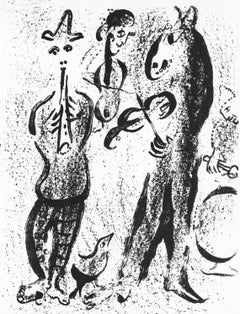
Marc Chagall, The Acrobats, The Lithographs of Chagall, 1963
By Marc Chagall
Located in Southampton, NY
This exquisite lithograph by Marc Chagall (1887–1985), titled Les Saltimbanques (The Acrobats), from the album The Lithographs of Chagall, Volume II, originates from the 1963 edition...
Category
1960s Expressionist The Hamptons - Landscape Prints
Materials
Lithograph
$716 Sale Price
20% Off
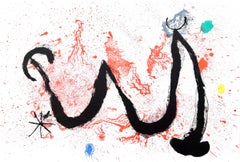
Joan Miro, The Giants, from Derriere le miroir, 1963
By Joan Miró
Located in Southampton, NY
This exquisite lithograph by Joan Miro (1893–1983), titled Les geants (The Giants), from the folio Derriere le miroir, No. 139–140, originates from the 1963 edition published by Maeg...
Category
1960s Surrealist The Hamptons - Landscape Prints
Materials
Lithograph
$796 Sale Price
20% Off
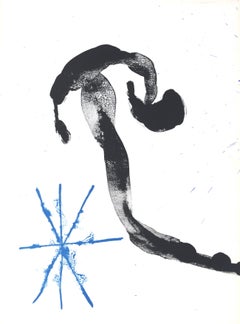
Joan Miro, The Sacred Scarab, from Derriere le miroir, 1963
By Joan Miró
Located in Southampton, NY
This exquisite lithograph by Joan Miro (1893–1983), titled Le scarabee sacre (The Sacred Scarab), from the folio Derriere le miroir, No. 139–140, originates from the 1963 edition pub...
Category
1960s Surrealist The Hamptons - Landscape Prints
Materials
Lithograph
$716 Sale Price
20% Off
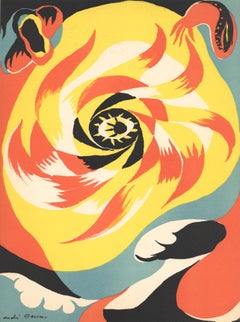
Andre Masson, The Sun, from Verve, Revue Artistique et Litteraire, 1938
By André Masson
Located in Southampton, NY
This exquisite lithograph by Andre Masson (1896–1987), titled Le Soleil (The Sun), from Verve, Revue Artistique et Litteraire, Vol. I, No. 2, originates from the 1938 issue published...
Category
1930s Modern The Hamptons - Landscape Prints
Materials
Lithograph
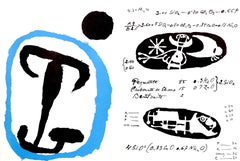
Joan Miro, Black Figure on Blue Background, Composition with Chemical Formulas
By Joan Miró
Located in Southampton, NY
This exquisite lithograph by Joan Miro (1893–1983), titled Figure noire sur fond bleu et Composition avec formules chimiques (Black Figure on Blue Background and Composition with Che...
Category
1950s Surrealist The Hamptons - Landscape Prints
Materials
Lithograph
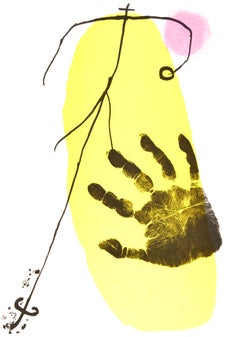
Joan Miro, Handprint on Yellow Background, from Derriere le miroir, 1956
By Joan Miró
Located in Southampton, NY
This exquisite lithograph by Joan Miro (1893–1983), titled Empreinte de main sur fond jaune (Handprint on Yellow Background), from the folio Derriere le miroir, No. 87–89, originates...
Category
1950s Surrealist The Hamptons - Landscape Prints
Materials
Lithograph
$716 Sale Price
20% Off
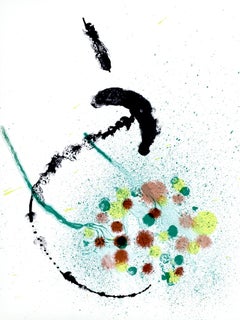
Joan Miro, The Woman in the Night, from Derriere le miroir, 1963
By Joan Miró
Located in Southampton, NY
This exquisite lithograph by Joan Miro (1893–1983), titled La femme dans la nuit (The Woman in the Night), from the folio Derriere le miroir, No. 139–140, originates from the 1963 ed...
Category
1960s Surrealist The Hamptons - Landscape Prints
Materials
Lithograph
$716 Sale Price
20% Off
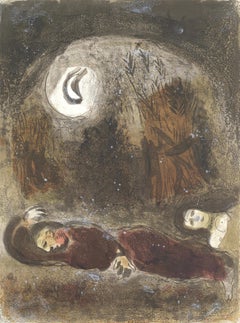
Marc Chagall, Ruth at the Feet of Boaz, from Drawings for the Bible, 1956
By Marc Chagall
Located in Southampton, NY
This exquisite lithograph by Marc Chagall (1887–1985), titled Ruth aux pieds de Booz (Ruth at the Feet of Boaz), from Marc Chagall, Dessins Pour La Bible (Drawings for the Bible), Verve: Revue Artistique et Litteraire, Vol. VIII, No. 33–34, originates from the September 1956 issue published by Editions de la revue Verve, Paris, under the direction of Teriade, Editeur, Paris, and printed by Mourlot Freres, Paris, 1956. This intimate and poetic composition portrays the biblical moment when Ruth, in an act of humility and devotion, lays at the feet of Boaz. Chagall’s masterful interplay of tenderness, faith, and symbolic light transforms this nocturnal scene into a vision of spiritual union and divine grace. The figures, rendered with his distinctive lyricism and fluid lines, embody the artist’s enduring fascination with love, compassion, and redemption. The piece forms part of Chagall’s celebrated series of lithographs and drawings created for Dessins Pour La Bible, a monumental project uniting art, scripture, and mysticism in one of the artist’s most important achievements.
Executed as a lithograph on velin du Marais paper, this work measures 14 x 10.5 inches (35.56 x 26.67 cm). Unsigned and unnumbered as issued. The edition exemplifies the superb craftsmanship of the Mourlot Freres atelier, renowned for its collaborations with the greatest modern masters of the 20th century.
Artwork Details:
Artist: Marc Chagall (1887–1985)
Title: Ruth aux pieds de Booz (Ruth at the Feet of Boaz), from Marc Chagall, Dessins Pour La Bible (Drawings for the Bible), Verve: Revue Artistique et Litteraire, Vol. VIII, No. 33–34, September 1956
Medium: Lithograph on velin du Marais paper
Dimensions: 14 x 10.5 inches (35.56 x 26.67 cm)
Inscription: Unsigned and unnumbered as issued
Date: 1956
Publisher: Editions de la revue Verve, Paris, under the direction of Teriade, Editeur, Paris
Printer: Mourlot Freres, Paris
Catalogue raisonne references: Cain, Julien, and Fernand Mourlot. Chagall Lithographe. Andre Sauret, Editeur, 1960, illustrations 117–46. Cramer, Patrick, and Meret Meyer. Marc Chagall: Catalogue Raisonne Des Livres Illustrés. P. Cramer ed., 1995, illustration 25.
Condition: Well preserved, consistent with age and medium
Provenance: From Marc Chagall, Dessins Pour La Bible (Drawings for the Bible), Verve: Revue Artistique et Litteraire, Vol. VIII, No. 33–34, published by Editions de la revue Verve, Paris, 1956
Notes:
Excerpted from the album (translated from French), This double issue of Verve is dedicated to the full reproduction in heliogravure of the one hundred-five plates etched by Marc Chagall, between 1930 and 1955, for the illustration of the Bible. The artist composed especially for the present work, sixteen lithographs in color and twelve in black, as well as the cover and the title page. This volume was completed and printed on September 10, 1956, by the Master Printers Draeger Freres for heliogravure, and by Mourlot Freres for lithography.
About the Publication:
Marc Chagall, Dessins Pour La Bible (Drawings for the Bible), published as Verve Vol. VIII, No. 33–34 in September 1956, represents one of the crowning achievements of Chagall’s lifelong dialogue with the sacred. Conceived and directed by the visionary publisher Teriade and printed by the master lithographers Mourlot Freres, the issue features thirty-four color lithographs and numerous black-and-white drawings inspired by biblical figures and stories. Chagall’s works for this edition unite text and image in a luminous meditation on divine creation, moral struggle, and spiritual renewal, imbued with his signature dreamlike symbolism and radiant color. Produced in postwar Paris, this landmark publication reaffirmed the enduring union of art and faith, establishing Dessins Pour La Bible as one of the most important illustrated works of the 20th century.
About the Artist:
Marc Chagall (1887–1985) was a Belarus-born French painter, printmaker, and designer whose visionary imagination, radiant color, and deeply poetic symbolism made him one of the most beloved and influential artists of the 20th century. Rooted in the imagery of his Jewish heritage and the memories of his childhood in Vitebsk, Chagall’s art wove together themes of faith, love, folklore, and fantasy with a dreamlike modern sensibility. His unique style—merging elements of Cubism, Fauvism, Expressionism, and Surrealism—defied categorization, transforming ordinary scenes into lyrical meditations on memory and emotion. Influenced by Russian icon painting, medieval religious art, and the modern innovations of artists such as Pablo Picasso, Henri Matisse, and Georges Braque, Chagall developed a profoundly personal visual language filled with floating figures, vibrant animals, musicians, and lovers that symbolized the transcendent power of imagination and love. During his early years in Paris, he became an integral part of the Ecole de Paris circle, forming friendships with Amedeo Modigliani, Fernand Leger, and Sonia Delaunay, and his creative spirit resonated with that of his peers and successors—Alexander Calder, Alberto Giacometti, Salvador Dali, Joan Miro, Wassily Kandinsky, Marcel Duchamp, and Man Ray—artists who, like Chagall, sought to push the boundaries of perception, emotion, and form. Over a prolific career that spanned painting, printmaking, stained glass, ceramics, and stage design, Chagall brought an unparalleled poetic sensibility to modern art, infusing even the most abstract subjects with human warmth and spiritual depth. His works are held in the most prestigious museums around the world, including the Museum of Modern Art, the Centre Pompidou, the Tate, and the Guggenheim, where they continue to inspire generations of artists and collectors. The highest price ever paid for a Marc Chagall artwork is approximately $28.5 million USD, achieved in 2017 at Sotheby’s New York for Les Amoureux (1928).
Marc Chagall Ruth...
Category
1960s Expressionist The Hamptons - Landscape Prints
Materials
Lithograph