The Hamptons - Still-life Prints
to
423
326
83
11
3
2
Overall Width
to
Overall Height
to
215
45
36
28
22
8
1
1
21
17
8
3
2
424
1
12
1
58
145
140
35
33
277
136
12
56
41
32
24
18
17
16
15
13
10
9
8
6
5
5
5
4
4
4
3
397
39
24
2
2
2
425
2,802
1,222
Item Ships From: The Hamptons
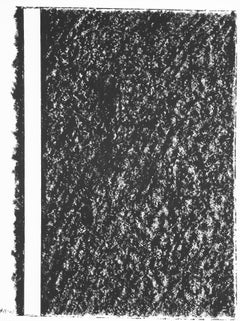
Newman, Sans titre, In Memory of My Feelings (after)
By Barnett Newman
Located in Southampton, NY
Lithograph on vélin Mohawk Superfine Smooth paper. Paper Size: 11.937 x 8.96 inches. Inscription: Signed in the plate and unnumbered, as issued. Notes: From the folio, In Memory of M...
Category
1960s Abstract Expressionist The Hamptons - Still-life Prints
Materials
Lithograph

$1,596 Sale Price
20% Off
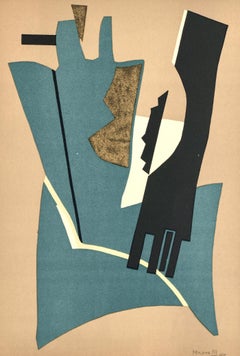
Alberto Magnelli, Homage to San Lazzaro, San Lazzaro et ses Amis, 1975 (after)
By Alberto Magnelli
Located in Southampton, NY
This exquisite lithograph after Alberto Magnelli (1888–1971), titled Hommage a San Lazzaro (Homage to San Lazzaro), from the album San Lazzaro et ses Amis, Hommage au fondateur de la...
Category
1970s Modern The Hamptons - Still-life Prints
Materials
Lithograph
$956 Sale Price
20% Off
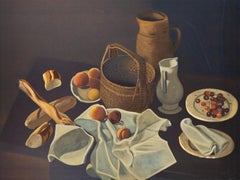
Andre Derain, Still Life, 1970 (after)
By André Derain
Located in Southampton, NY
This exquisite lithograph after Andre Derain (1880–1954), titled Nature Morte (Still Life), from the folio Andre Derain entre 1935 et 1949, V (Andre Derain between 1935 and 1949, V),...
Category
1970s Fauvist The Hamptons - Still-life Prints
Materials
Lithograph
$716 Sale Price
20% Off
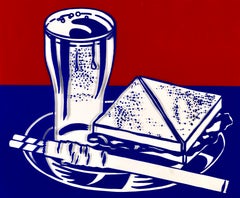
Roy Lichtenstein, Sandwich and Soda, from Ten Works by Ten Painters, 1964
By Roy Lichtenstein
Located in Southampton, NY
This exquisite silkscreen by Roy Lichtenstein (1923–1997), titled Sandwich and Soda, originates from the landmark 1964 folio X + X (Ten Works by Ten Painters). Published by the Wadsworth Atheneum Museum of Art, Hartford, and printed by Sirocco Screenprints, Inc., North Haven, in Sandwich and Soda, Lichtenstein translates his signature Pop Art vocabulary—bold outlines, flat commercial color, and Ben-Day dot structure—into a crisp, iconic composition that reimagines everyday consumer imagery with graphic intensity and conceptual clarity.
Executed as a silkscreen on Mylar over Mohawk Superfine Bristol paper, this work measures 20 x 24 inches. Unsigned and unnumbered as issued. Printed by Sirocco Screenprints, Inc., North Haven, one of the most capable American screenprinting ateliers of the mid-20th century.
Artwork Details:
Artist: Roy Lichtenstein (1923–1997)
Title: Sandwich and Soda, from X + X (Ten Works by Ten Painters), 1964
Medium: Silkscreen on Mylar over Mohawk Superfine Bristol paper
Dimensions: 20 x 24 inches (50.8 x 60.96 cm)
Inscription: Unsigned and unnumbered as issued
Date: 1964
Publisher: Wadsworth Atheneum Museum of Art, Hartford
Printer: Sirocco Screenprints, Inc., North Haven
Edition: D
Catalogue raisonne reference: Corlett, Mary Lee, and Roy Lichtenstein. The Prints of Roy Lichtenstein: A Catalogue Raisonne 1948–1997. 2nd rev. ed., Hudson Hills Press in association with the National Gallery of Art, Washington, D.C.; Distributed in the U.S. by National Book Network, 2002, No. 35.
Condition: Well preserved, consistent with age and medium
Provenance: From the 1964 folio X + X (Ten Works by Ten Painters), published by the Wadsworth Atheneum Museum of Art, Hartford
Notes:
Excerpted from the folio, This portfolio was commissioned and printed in an attempt to extend as much of the visual impact as possible of ten artists to paper and to make these prints available to collectors who might not otherwise have such a vivid slice of the artist. The dry surface of screening seemed to be most apt to translate the effect of their painting, both the flatness which is the unifying bond between the ten, and the insistance of paint on the surface of canvas so like the visible heft of ink on paper here. Samuel J. Wagstaff, Jr., Curator of Printings.
About the Publication:
X + X (Ten Works by Ten Painters), published in 1964 by the Wadsworth Atheneum Museum of Art in Hartford, stands as one of the most ambitious and influential printmaking endeavors of postwar American art. Conceived under the direction of curator Samuel J. Wagstaff, Jr., the project sought to capture and translate the defining visual languages of ten leading American painters of the era—Stuart Davis, Ellsworth Kelly, Robert Indiana, Adolph Gottlieb, George Ortman, Larry Poons, Richard Anuszkiewicz, Frank Stella, Andy Warhol, and Roy Lichtenstein—into original silkscreens. Each artwork was created as an autonomous work that embodied the formal, chromatic, and conceptual principles of its respective artist. The choice of silkscreen printing, executed by Sirocco Screenprints, Inc., was central to the portfolio’s purpose: its dry, matte surface and capacity for crisp, saturated color allowed for a faithful translation of the painters’ flatness, surface tension, optical effects, and graphic precision. Organized and published by a major American museum at a moment of seismic change in contemporary art, X + X marked a turning point in institutional engagement with editioned works, representing one of the first concerted efforts by a museum to commission an ensemble of original graphics from the leading figures of its time. The portfolio captured the pulse of 1960s American painting—from Hard-Edge abstraction to Pop, Op, and Color Field—offering both a curated snapshot of artistic innovation and an accessible format that expanded the audience for contemporary art. Today, X + X is widely regarded as a landmark in American printmaking, celebrated for its curatorial vision, technical accomplishment, and its role in defining the dialogue between museum patronage and the burgeoning print culture of the 1960s.
About the Artist:
Roy Lichtenstein (1923–1997) was an American painter, printmaker, and sculptor whose revolutionary elevation of comic-book graphics, Ben-Day dots, commercial illustration, and mass-media visual language into the realm of fine art made him one of the founding giants of Pop Art, drawing on the breakthroughs of Pablo Picasso, Alexander Calder, Alberto Giacometti, Salvador Dali, Joan Miro, Wassily Kandinsky, Marcel Duchamp, and Man Ray to synthesize Cubist fragmentation, Surrealist wit, Modernist experimentation, and Duchampian conceptualism into an unmistakable style defined by bold outlines, flat industrial color, graphic reduction, and the now-iconic Ben-Day dot technique; emerging in the 1960s alongside Andy Warhol, Claes Oldenburg, James Rosenquist, Jasper Johns, and Robert Rauschenberg, Lichtenstein shifted American art away from Abstract Expressionism toward a cool, analytical investigation of consumer culture, mass reproduction, advertising, and the manufactured image, creating paintings, prints, sculptures, and monumental public works that reimagined romance comics, war scenes, cartoons, brushstroke parodies, landscapes, and art-historical citations while offering a humorous yet incisive commentary on how images shape contemporary life; his influence is immense, shaping artists such as Jeff Koons, Takashi Murakami, Damien Hirst, Julian Opie, KAWS, Banksy, and numerous contemporary painters, designers, fashion houses, and digital creators, while his works are held in major institutions including the Museum of Modern Art, the Whitney Museum of American Art, the Solomon R. Guggenheim Museum, the Art Institute of Chicago, the National Gallery of Art, Tate, Centre Pompidou, SFMOMA, the Hirshhorn Museum and Sculpture Garden, and LACMA, with his highest auction record achieved when Nurse (1964) sold for 95,365,000 USD at Christie's New York on November 9, 2015.
Roy Lichtenstein silkscreen...
Category
1960s Pop Art The Hamptons - Still-life Prints
Materials
Screen
$31,996 Sale Price
20% Off
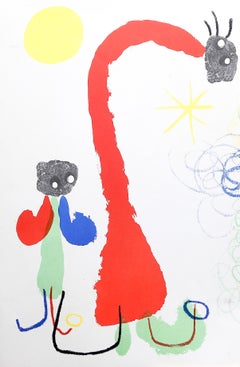
Joan Miro, Figures Before the Sun, from Derriere le miroir, 1950
By Joan Miró
Located in Southampton, NY
This exquisite lithograph by Joan Miro (1893–1983), titled Personnages devant le soleil (Figures Before the Sun), from the folio Derriere le miroir, No. 29–30, originates from the 19...
Category
1950s Surrealist The Hamptons - Still-life Prints
Materials
Lithograph
$716 Sale Price
20% Off
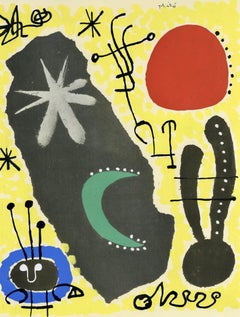
Joan Miro, The Woman and the Bird, from XXe Siecle, 1956
By Joan Miró
Located in Southampton, NY
This exquisite lithograph and pochoir by Joan Miro (1893–1983), titled La Femme et l’Oiseau (The Woman and the Bird), from the album XXe Siecle, Nouvelle serie No. 6, originates from...
Category
1950s Surrealist The Hamptons - Still-life Prints
Materials
Lithograph
$1,036 Sale Price
20% Off
Tàpies, Composition, Derrière le miroir (after)
By Antoni Tàpies
Located in Southampton, NY
Lithograph on vélin paper. Inscription: Unsigned and unnumbered, as issued. Good condition, with centerfold, as issued. Notes: From Derrière le miroir, N° 253, 1982. Published by Aim...
Category
1980s Post-War The Hamptons - Still-life Prints
Materials
Lithograph
$716 Sale Price
57% Off
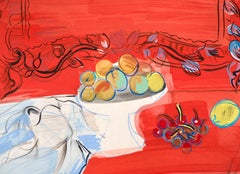
Raoul Dufy, Still Life with Red Background, 1954 (after)
By Raoul Dufy
Located in Southampton, NY
This exquisite lithograph after Raoul Dufy (1877–1953), titled Nature morte au fond rouge (Still Life with Red Background), from the folio Eaux-de-vie, Esprit de la fleur et du fruit...
Category
1950s Modern The Hamptons - Still-life Prints
Materials
Lithograph, Stencil
$1,196 Sale Price
20% Off
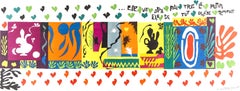
Matisse, Mille et une Nuit, Derrière le miroir (after)
By Henri Matisse
Located in Southampton, NY
Lithograph on vélin paper. Paper Size: 15 x 33 inches, with bifold, as issued. Inscription: Signed in the plate and unnumbered, as issued. Notes: From the folio, Derrière le miroir, ...
Category
1950s Fauvist The Hamptons - Still-life Prints
Materials
Lithograph
$1,996 Sale Price
20% Off
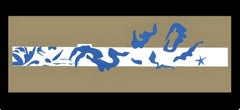
Henri Matisse, The Swimming Pool II, from Verve, Revue Artistique, 1958 (after)
By Henri Matisse
Located in Southampton, NY
This exquisite lithograph after Henri Matisse (1869–1954), titled La Piscine II (The Swimming Pool II), from Verve, Revue Artistique et Litteraire, Vol. IX, No. 35–36, originates from the 1958 issue published by Editions de la revue Verve, Paris, under the direction of Teriade, Editeur, Paris, and printed by Mourlot Freres, Paris, 1958. La Piscine II is one of the most expansive and lyrical compositions from Matisse’s late cut-out period, inspired by his deep fascination with the movement of water, light, and the human form. The work’s sweeping arrangement of floating blue shapes and rhythmic negative space evokes swimmers and sea life in motion, transforming a simple visual theme into a poetic meditation on fluidity, serenity, and the joy of life. Through its monumental simplicity and chromatic brilliance, La Piscine II exemplifies Matisse’s mastery of “painting with scissors” and his ability to translate motion into pure visual harmony.
Executed as a lithograph on velin du Marais paper, this work measures 14 x 40.5 inches, with trifold as issued. Unsigned and unnumbered as issued. The edition exemplifies the superb craftsmanship of the Mourlot Freres atelier, faithfully capturing the luminosity, rhythm, and tactile beauty of Matisse’s original gouache cut-outs.
Artwork Details:
Artist: After Henri Matisse (1869–1954)
Title: La Piscine II (The Swimming Pool II), from Verve, Revue Artistique et Litteraire, Vol. IX, No. 35–36, 1958
Medium: Lithograph on velin du Marais paper
Dimensions: 14 x 40.5 inches, with trifold as issued
Inscription: Unsigned and unnumbered as issued
Date: 1958
Publisher: Editions de la revue Verve, Paris, under the direction of Teriade, Editeur, Paris
Printer: Mourlot Freres, Paris
Catalogue raisonne reference: Duthuit, Claude. Henri Matisse: Catalogue raisonne des ouvrages illustres. Editions Claude Duthuit, Paris, 1988, illustration 139
Condition: Well preserved, consistent with age and medium
Provenance: From Verve, Revue Artistique et Litteraire, Vol. IX, No. 35–36, published by Editions de la revue Verve, Paris, 1958
Notes:
Excerpted from the publication, Verve, Revue Artistique et Litteraire, Vol. IX, No. 35–36, published under the direction of Teriade, Editeur, Paris, and printed by Mourlot Freres, Paris, 1958. This double issue of Verve was entirely devoted to the final works of Henri Matisse, composed of his celebrated gouache cut-outs, which the artist called “painting with scissors.” Completed shortly before his death, this issue represents the culmination of Matisse’s lifelong exploration of color, rhythm, and spiritual joy through the simplest means of expression.
About the Publication:
Verve, Revue Artistique et Litteraire was one of the most influential art periodicals of the 20th century, founded in Paris in 1937 by the visionary Greek-born publisher Teriade (Stratis Eleftheriades). Conceived as a synthesis of art and literature, Verve brought together the greatest modern artists and writers of its time—Henri Matisse, Pablo Picasso, Marc Chagall, Georges Braque, Joan Miro, Fernand Leger, and others—alongside poets and philosophers such as Paul Eluard, Albert Camus, and Jean-Paul Sartre. Each issue was a work of art in itself, luxuriously printed by master lithographers such as Mourlot Freres and produced in collaboration with leading typographers and designers. Verve became a platform for avant-garde creativity, publishing original lithographs and essays that reflected the evolving spirit of modernism. Matisse collaborated closely with Teriade from the magazine’s inception, producing some of its most iconic issues, including those devoted to his paper cut-outs. The final Verve issue of 1958, which featured La Tristesse du Roi, the Nu Bleu series, Poisson Chinois, and Vigne, stands as a testament to Matisse’s enduring genius and to the publication’s legacy as the definitive meeting of art, poetry, and printing craftsmanship in 20th-century France.
About the Artist:
Henri Matisse (1869–1954) was a French painter, sculptor, draughtsman, and printmaker whose revolutionary vision redefined modern art through his daring use of color, line, and form. Celebrated as one of the greatest artists of the 20th century, Matisse led the Fauvist movement and devoted his life to the pursuit of balance, beauty, and emotional expression in visual art. His early works burst with vibrant hues and liberated brushwork, while his later “cut-out” compositions achieved a poetic simplicity that transformed the relationship between color and space. Deeply influenced by the work of Paul Cezanne, Vincent van Gogh, and Georges Seurat, as well as by the rhythmic patterns of Islamic art, Byzantine mosaics, and Japanese prints, Matisse forged a new visual language that celebrated joy, movement, and serenity. He was part of an extraordinary generation of artists who shaped the evolution of modernism, maintaining lifelong dialogue and friendly rivalry with contemporaries such as Pablo Picasso, Georges Braque, Marc Chagall, Andre Derain, Albert Marquet, and Raoul Dufy—peers who, like him, sought to expand the expressive potential of color and composition. Matisse’s influence extended across generations, inspiring modern and contemporary masters including Alexander Calder, Alberto Giacometti, Salvador Dali, Joan Miro, Wassily Kandinsky, Marcel Duchamp, and Man Ray, each of whom drew upon his fearless experimentation and refined visual harmony. His paintings, sculptures, and works on paper are held in the most prestigious museums in the world, including the Museum of Modern Art, the Centre Pompidou, the Tate, and the Hermitage Museum, where his art continues to symbolize the essence of creativity and human emotion. The highest price ever paid for a Henri Matisse artwork is approximately $80.8 million USD, achieved in 2018 at Christie’s New York for Odalisque couchee aux magnolias (1923).
Henri Matisse La Piscine...
Category
1950s Modern The Hamptons - Still-life Prints
Materials
Lithograph
$796 Sale Price
66% Off
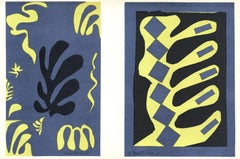
Henri Matisse, Decoupages, from XXe Siecle 1954 (after)
By Henri Matisse
Located in Southampton, NY
This exquisite lithograph after Henri Matisse (1869–1954), titled Decoupages (Cutouts), from the album XXe Siecle, Nouvelle serie N°4 (double) Janvie...
Category
1950s Fauvist The Hamptons - Still-life Prints
Materials
Lithograph
$1,196 Sale Price
20% Off
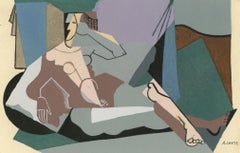
Andre Lhote, Reclining Woman, 1929 (after)
By André Lhote
Located in Southampton, NY
This exquisite lithograph and pochoir after Andre Lhote (1885–1962), titled Femme allongee (Reclining Woman), from the album L'Art Cubiste, Theories et Realisations, Etude Critique (...
Category
1920s Cubist The Hamptons - Still-life Prints
Materials
Lithograph, Stencil
$1,916 Sale Price
20% Off
Alexander Calder, Untitled, from Derriere le miroir, 1966
By Alexander Calder
Located in Southampton, NY
This exquisite lithograph by Alexander Calder (1898–1976), titled Sans titre (Untitled), from the folio Derriere le miroir, No. 156, originates from the 1966 edition published by Mae...
Category
1960s Modern The Hamptons - Still-life Prints
Materials
Lithograph

$716 Sale Price
20% Off
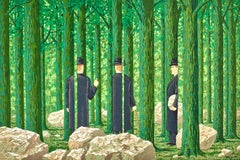
Rene Magritte, My Mother Goose, 1968 (after)
By René Magritte
Located in Southampton, NY
This exquisite lithograph after Rene Magritte (1898–1967), titled Ma Mere lOye (My Mother Goose), from the folio Les Enfants Trouves de Magritte (The Found Children of Magritte), 1968, originates from the edition published by A.C. Mazo et Cie, Paris, and printed by Mourlot Freres, Paris, on November 20, 1968. The work embodies Magrittes sustained inquiry into semiotics and visual epistemology, translating his characteristic strategies of displacement, symbolic inversion, and conceptual ambiguity into an image that operates as both a poetic metaphor and a philosophical proposition concerning the instability of meaning.
Executed as a lithograph on grand velin dArches paper, this work measures 17.5 x 23.5 inches (44.5 x 59.7 cm). Signed in the plate by the artist; hand signed by Fernand Mourlot, Editeur. The edition exemplifies the technical mastery of the Mourlot atelier.
Artwork Details:
Artist: After Rene Magritte (1898–1967)
Title: Ma Mere lOye (My Mother Goose), from the folio Les Enfants Trouves de Magritte (The Found Children of Magritte)
Medium: Lithograph on grand velin dArches paper
Dimensions: 17.5 x 23.5 inches (44.5 x 59.7 cm)
Inscription: Signed in the plate by the artist; hand signed by Fernand Mourlot, Editeur
Date: 1968
Publisher: A.C. Mazo et Cie, Paris
Printer: Mourlot Freres, Paris
Catalogue Raisonne: Magritte, Rene, et al. Rene Magritte: Catalogue Raisonne, Vol. 3. Menil Foundation; Philip Wilson Publishers; Distributed in the USA and Canada by Rizzoli International, 1992, nos. 791–792 and 1056; vol. 5, p. 218, Bibliography entry 68.28.
Condition: Well preserved, consistent with age and medium
Provenance: From the folio Les Enfants Trouves de Magritte, 1968
Notes:
Excerpted from the folio (translated from French), Finished printing in Paris on November 20, 1968, on the presses of Mourlot, for the lithographs. The unpublished text by Louis Scutenaire was composed in Elzevir Casion corps 28 and printed by Fequet et Baudier, typographers. The unpublished compositions numbered from I to IV were specially made by Rene Magritte for this album. The compositions of the Enchanted Domain, are the renderings of the eight paintings of the mural of the Casino de Knokke. They were printed with the benevolent authorization of Mr. Gustave J. Nellens. Justification of the draw, this album was taken from CCCL examples on grand velin dArches numbered from I to CCCL, plus a few examples for collaborators and assistants.
About the Publication:
Les Enfants Trouves de Magritte (The Found Children of Magritte), published in 1968 by A.C. Mazo et Cie, Paris, represents one of the most significant late life print projects devoted to Rene Magrittes work. Conceived as both a literary and visual tribute, the folio pairs texts by the Belgian writer Louis Scutenaire, Magrittes close friend and fellow Surrealist, with lithographic interpretations produced at the Mourlot atelier, the premier lithographic workshop of twentieth century France. The album includes compositions by Magritte alongside lithographic renderings of the celebrated Enchanted Domain mural from the Casino de Knokke, printed with the authorization of Gustave J. Nellens, who commissioned the original mural. Issued in a single edition of CCCL examples on grand velin dArches, the folio stands as a testament to the collaboration between artist, writer, publisher, and master printer, and remains one of the most culturally important Surrealist print albums of the post war era.
About the Artist:
Rene Magritte (1898–1967) was a Belgian Surrealist painter whose visionary, intellectual, and poetic imagery redefined twentieth century art and forever changed how the world perceives reality and illusion. Celebrated for his calm precision and thought provoking juxtapositions of ordinary objects in extraordinary contexts, Magritte used painting as a philosophical tool, transforming the everyday into visual paradoxes that challenged the boundaries between what is seen and what is known. Born in Lessines, Belgium, and trained at the Academie Royale des Beaux Arts in Brussels, he absorbed early influences from Cubism, Futurism, and Symbolism before embracing Surrealism, where he found his true voice. In Paris, he became part of the avant garde circle that included Pablo Picasso, Alexander Calder, Alberto Giacometti, Salvador Dali, Joan Miro, Wassily Kandinsky, Marcel Duchamp, and Man Ray—all artists whose radical ideas helped him forge his distinctive synthesis of logic and mystery. Unlike Dalis dream...
Category
1960s Surrealist The Hamptons - Still-life Prints
Materials
Lithograph
$23,996 Sale Price
20% Off
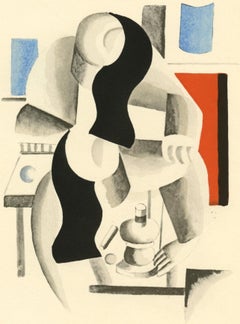
Fernand Leger, Woman with a Vase, 1929 (after)
By Fernand Léger
Located in Southampton, NY
This exquisite lithograph and pochoir after Fernand Leger (1881–1955), titled La Femme au Vase (Woman with a Vase), from the album L'Art Cubiste, Theories et Realisations, Etude Crit...
Category
1920s Cubist The Hamptons - Still-life Prints
Materials
Lithograph, Stencil
$1,916 Sale Price
20% Off
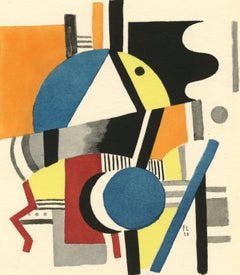
Fernand Leger, Mechanical Elements, 1929 (after)
By Fernand Léger
Located in Southampton, NY
This exquisite lithograph and pochoir after Fernand Leger (1881–1955), titled Elements mecaniques (Mechanical Elements), from the album L'Art Cubiste, Theories et Realisations, Etude...
Category
1920s Cubist The Hamptons - Still-life Prints
Materials
Lithograph, Stencil
$1,916 Sale Price
20% Off
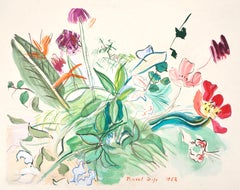
Raoul Dufy, Flowers, from Esprit de la fleur et du fruit, 1954 (after)
By Raoul Dufy
Located in Southampton, NY
This exquisite lithograph after Raoul Dufy (1877–1953), titled Fleurs (Flowers), from the folio Eaux-de-vie, Esprit de la fleur et du fruit (Spirits, Essence of the Flower and the Fr...
Category
1950s Modern The Hamptons - Still-life Prints
Materials
Lithograph, Stencil
$1,196 Sale Price
20% Off
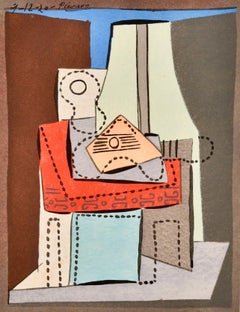
Pablo Picasso, Seated Woman in an Armchair, from Oeuvres 1920-1926 (after)
By Pablo Picasso
Located in Southampton, NY
This exquisite lithograph and pochoir after Pablo Picasso (1881–1973), titled Femme Assise dans un Fauteuil (Seated Woman in an Armchair), from the album, Picasso, Oeuvres 1920-1926, 1926, originates from the 1926 edition published and printed by Editions des Cahiers d'Art, Paris, under the direction of Christian Zervos, Editeur, Paris, December 10, 1926. Femme Assise dans un Fauteuil (Seated Woman in an Armchair) captures Picasso’s evolving exploration of form, movement, and emotion during the mid-1920s—a pivotal period in which he redefined the relationship between classical representation and modern abstraction. With its bold contouring, stylized anatomy, and rhythmic color balance, the composition embodies the harmony between structural precision and sensual fluidity that characterized Picasso’s work in this era.
Executed as a lithograph and pochoir on velin paper, this work measures 11 x 8.75 inches. Signed in the plate and unnumbered as issued. The edition exemplifies the refined craftsmanship of Editions des Cahiers d'Art and the technical excellence of Parisian printmaking in the interwar period.
Artwork Details:
Artist: After Pablo Picasso (1881–1973)
Title: Femme Assise dans un Fauteuil (Seated Woman in an Armchair), from the album, Picasso, Oeuvres 1920-1926, 1926
Medium: Lithograph and pochoir on velin paper
Dimensions: 11 x 8.75 inches (27.94 x 22.23 cm)
Inscription: Signed in the plate and unnumbered as issued
Date: 1926
Publisher: Editions des Cahiers d'Art, Paris, under the direction of Christian Zervos, Editeur, Paris
Printer: Ducros & Colas, Paris
Catalogue raisonne references: Cramer, Patrick. Pablo Picasso, The Illustrated Books: Catalogue Raisonne. Patrick Cramer, 1983, illustration 15; Bloch, Georges. Pablo Picasso: Catalogue of the Printed Graphic Work 1904–1967. Kornfeld & Klipstein, 1968, illustration 56
Condition: Well preserved, consistent with age and medium
Provenance: From the album, Picasso, Oeuvres 1920-1926, published and printed by Editions des Cahiers d'Art, Paris, under the direction of Christian Zervos, Editeur, Paris, 1926
Notes:
Excerpted from the album (translated from French), This volume was completed to be printed by the Ducros & Colas printing house, 7, rue Croulebarbe in Paris, for the Editions des Cahiers d'Art, on December 10th MCMXXVI, DCC numbered examples, VI on Japon Imperial with an etching by Picasso, numbered from I to VI, L examples on paper by papier de Hollande, Van Gelder, with an etching by Picasso, numbered from VII to LVI, DCXL examples on velin, numbered from LVII to DCC, plus II examples intended for legal deposit.
About the Publication:
The album Picasso, Oeuvres 1920-1926 was issued in 1926 by Editions des Cahiers d'Art under the direction of Christian Zervos, one of the most influential editors, critics, and publishers of 20th-century modernism. Conceived as both a visual and intellectual tribute to Pablo Picasso’s mastery during a crucial transitional period, the volume presents a series of lithographs and pochoirs that chronicle his stylistic evolution from synthetic Cubism toward a renewed engagement with the human figure. Published in conjunction with the legendary Cahiers d'Art journal, the edition reflects Zervos’s vision of uniting scholarship, craftsmanship, and artistic authenticity in the modern book arts. Each composition was executed by the master printers Ducros & Colas and colored using the pochoir technique, faithfully translating the tonal subtleties and compositional balance of Picasso’s original drawings and gouaches. Completed on December 10, 1926, the edition comprised DCC examples—VI on Japon Imperial, L on Hollande Van Gelder, and DCXL on velin paper, plus II copies reserved for legal deposit—each numbered and printed to exacting standards. The volume stands as one of the earliest major Cahiers d'Art collaborations with Picasso, preceding the monumental Catalogue Raisonne des Oeuvres de Picasso that Zervos would later dedicate his life to producing. Today, Picasso, Oeuvres 1920-1926 remains a cornerstone of interwar art publishing, representing the confluence of avant-garde innovation, technical excellence, and intellectual rigor that defined the Parisian art world of the 1920s.
About the Artist:
Pablo Picasso (1881–1973) was a Spanish painter, sculptor, printmaker, and ceramicist whose extraordinary vision revolutionized modern art and defined the visual language of the 20th century. A child prodigy from Malaga, Spain, Picasso's career spanned more than seven decades and encompassed an astonishing range of styles and innovations—from the melancholic Blue and romantic Rose periods to his pioneering invention of Cubism with Georges Braque, which shattered conventional notions of perspective and form. Influenced by the bold expressiveness of El Greco, the structure of Cezanne, and the vitality of African and Iberian sculpture, Picasso became a central figure of the Paris avant-garde, working in creative dialogue with contemporaries such as Henri Matisse, Alexander Calder, Alberto Giacometti, Salvador Dali, Joan Miro, Wassily Kandinsky, Marcel Duchamp, and Man Ray. His insatiable experimentation extended across painting, drawing, printmaking, ceramics, and sculpture, forever expanding the boundaries of artistic expression. A master of reinvention, Picasso profoundly shaped generations of artists who followed—from Andy Warhol, Roy Lichtenstein, David Hockney, and Jean-Michel Basquiat to Jeff Koons and Banksy—cementing his status as a timeless cultural icon whose works remain among the most sought after worldwide. His landmark painting Les Femmes d'Alger (Version O) achieved a record-breaking sale of 179,365,000 USD at Christie's, New York, on May 11, 2015, affirming Picasso's enduring legacy as one of the most influential and valuable artists in history.
Pablo Picasso Femme Assise dans un Fauteuil (Seated Woman in an Armchair), Picasso Oeuvres 1920-1926, Picasso Zervos Cahiers d'Art, Picasso pochoir...
Category
1920s Cubist The Hamptons - Still-life Prints
Materials
Lithograph, Stencil
$2,396 Sale Price
20% Off
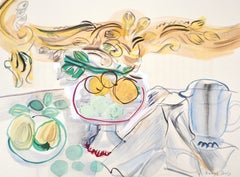
Raoul Dufy, Still Life with Fruit, Esprit de la fleur et du fruit, 1954 (after)
By Raoul Dufy
Located in Southampton, NY
This exquisite lithograph after Raoul Dufy (1877–1953), titled Nature morte aux fruits (Still Life with Fruit), from the folio Eaux-de-vie, Esprit de la fleur et du fruit (Spirits, E...
Category
1950s Modern The Hamptons - Still-life Prints
Materials
Lithograph, Stencil
$1,196 Sale Price
20% Off
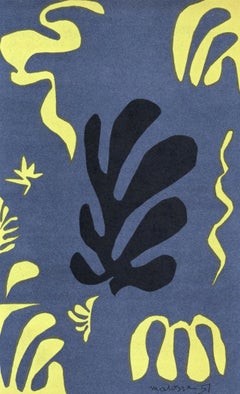
Henri Matisse, Decoupage, from XXe Siecle 1954 (after)
By Henri Matisse
Located in Southampton, NY
This exquisite lithograph after Henri Matisse (1869–1954), titled Decoupage (Decoupage), from the album XXe Siecle, Nouvelle serie N°4 (double) Janvier 1954, originates from the 1954 edition published by Societe Internationale dArt XXe Siecle, Paris, under the direction of Gualtieri di San Lazzaro, editeur, Paris, and printed by Mourlot Freres, Paris, 1954. Decoupage reflects Matisses late career mastery of distilled form, harmonious contour, and poetic abstraction.
Executed as a lithograph on velin paper, this work measures 12.5 x 9.75 inches. Signed in the plate and unnumbered as issued. The edition exemplifies the superb craftsmanship of Mourlot Freres, Paris
Artwork Details:
Artist: After Henri Matisse (1869–1954)
Title: Decoupage (Decoupage)
Medium: Lithograph on velin paper
Dimensions: 12.5 x 9.75 inches (31.75 x 24.77 cm)
Inscription: Signed in the plate and unnumbered as issued
Date: 1954
Publisher: Societe Internationale dArt XXe Siecle, Paris, under the direction of Gualtieri di San Lazzaro, editeur, Paris
Printer: Mourlot Freres, Paris
Condition: Well preserved, consistent with age and medium
Provenance: From the album XXe Siecle, Nouvelle serie N°4 (double) Janvier 1954, published by Societe Internationale dArt XXe Siecle, Paris; printed by Mourlot Freres, Paris, 1954
About the Publication:
Gualtieri di San Lazzaros XXe Siecle (Twentieth Century) was one of the most influential art journals of the modern era, founded in Paris in 1938 as a platform for the greatest painters, sculptors, and writers of the 20th century. San Lazzaro, a visionary editor, critic, and champion of modernism, believed that art and literature should coexist as expressions of a shared human imagination. Under his direction, XXe Siecle became a cultural bridge between Europe and the wider world, publishing special issues devoted to leading figures such as Picasso, Matisse, Chagall, Braque, Calder, Miro, Kandinsky, and Leger. Each edition combined essays by renowned critics and poets with original lithographs, linocuts, and pochoirs printed by the foremost ateliers of Paris, Milan, and New York, including Mourlot, Curwen, Atelier Lacouriere, and Amilcare Pizzi, creating a uniquely rich dialogue between text and image. The 1954 issue, Nouvelle serie N°4 (double), stands among the journals landmark mid century editions. Today, XXe Siecle remains an essential record of 20th century modernism, celebrated for its seamless integration of fine art, literature, and design.
About the Artist:
Henri Matisse (1869–1954) was a French painter, sculptor, draughtsman, and printmaker whose revolutionary vision redefined modern art through his daring use of color, line, and form. Celebrated as one of the greatest artists of the 20th century, Matisse led the Fauvist movement and devoted his life to the pursuit of balance, beauty, and emotional expression in visual art. His early works burst with vibrant hues and liberated brushwork, while his later cut out compositions achieved a poetic simplicity that transformed the relationship between color and space. Deeply influenced by the work of Paul Cezanne, Vincent van Gogh, and Georges Seurat, as well as by the rhythmic patterns of Islamic art, Byzantine mosaics, and Japanese prints, Matisse forged a new visual language that celebrated joy, movement, and serenity. He was part of an extraordinary generation of artists who shaped the evolution of modernism, maintaining lifelong dialogue and friendly rivalry with contemporaries such as Pablo Picasso, Georges Braque, Marc Chagall, Andre Derain, Albert Marquet, and Raoul Dufy peers who, like him, sought to expand the expressive potential of color and composition. Matisses influence extended across generations, inspiring modern and contemporary masters including Alexander Calder, Alberto Giacometti, Salvador Dali, Joan Miro, Wassily Kandinsky, Marcel Duchamp, and Man Ray, each of whom drew upon his fearless experimentation and refined visual harmony. His paintings, sculptures, and works on paper are held in the most prestigious museums in the world, including the Museum of Modern Art, the Centre Pompidou, the Tate, and the Hermitage Museum, where his art continues to symbolize the essence of creativity and human emotion. The highest price ever paid for a Henri Matisse artwork is approximately 80.8 million USD, achieved in 2018 at Christies New York for Odalisque couchee aux magnolias (1923).
Henri Matisse Decoupage...
Category
1950s Fauvist The Hamptons - Still-life Prints
Materials
Lithograph
$956 Sale Price
20% Off
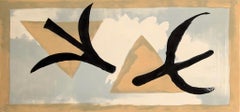
Braque, Les martinets, Derrière le miroir (after)
By Georges Braque
Located in Southampton, NY
Lithograph on vélin paper. Inscription: Unsigned and unnumbered, as issued. Good condition. Notes: From Derrière le miroir, N° 115, 1959. Published by Aimé Maeght, Éditeur, Paris; pr...
Category
1950s Modern The Hamptons - Still-life Prints
Materials
Lithograph
$716 Sale Price
40% Off
Andre Derain, Still Life with Fish and the Pan, 1970 (after)
By André Derain
Located in Southampton, NY
This exquisite lithograph after Andre Derain (1880–1954), titled Nature morte aux Poissons (Still Life with Fish), from the folio Andre Derain entre 1935 et 1949, V (Andre Derain bet...
Category
1970s Fauvist The Hamptons - Still-life Prints
Materials
Lithograph

$716 Sale Price
20% Off
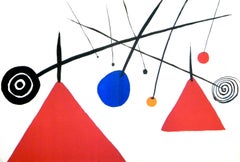
Alexander Calder, Two Pyramids and Spirals, from Derriere le miroir, 1954
By Alexander Calder
Located in Southampton, NY
This exquisite lithograph by Alexander Calder (1898–1976), titled Deux pyramides et spirales (Two Pyramids and Spirals), from the folio Derriere le miroir, No. 69–70, originates from...
Category
1950s Modern The Hamptons - Still-life Prints
Materials
Lithograph
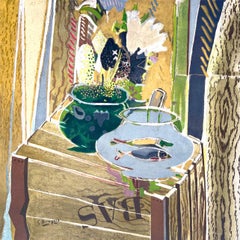
L
aquarium sur la caisse, Une Aventure méthodique, Georges Braque
By Georges Braque
Located in Southampton, NY
Lithograph on vélin d'Arches paper. Inscription: Unsigned and unnumbered. Good condition. Notes: From the folio, Une Aventure méthodique, 1950; published by Fernand Mourlot, Paris, a...
Category
1950s Modern The Hamptons - Still-life Prints
Materials
Lithograph
$5,196 Sale Price
20% Off
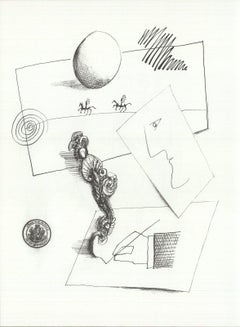
Steinberg, Illustration, Derrière le miroir (after)
By Saul Steinberg
Located in Southampton, NY
Lithograph on vélin paper. Inscription: Unsigned and unnumbered, as issued. Good condition. Notes: From Derrière le miroir, N° 157, 1966. Published by Aimé Maeght, Éditeur, Paris; pr...
Category
1960s Post-War The Hamptons - Still-life Prints
Materials
Lithograph
$716 Sale Price
34% Off
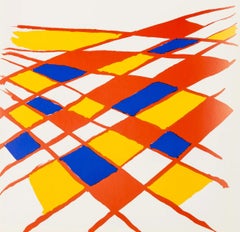
Calder, Sans titre, Derrière le miroir (after)
By Alexander Calder
Located in Southampton, NY
Lithograph on vélin paper. Inscription: Unsigned and unnumbered, as issued. Good condition. Notes: From Derrière le miroir, N° 190, published by Aimé Maeght, Éditeur, Paris; printed ...
Category
1970s Modern The Hamptons - Still-life Prints
Materials
Lithograph
$716 Sale Price
40% Off
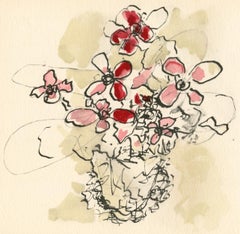
Georges Braque, Red Flowers, from Le Solitaire, XXe siecle, 1959 (after)
By Georges Braque
Located in Southampton, NY
This exquisite lithograph and pochoir after Georges Braque (1882–1963), titled Fleurs rouges (Red Flowers), from the album Georges Braque, Le Solitaire (The Solitary), originates fro...
Category
1950s Cubist The Hamptons - Still-life Prints
Materials
Lithograph
$716 Sale Price
20% Off
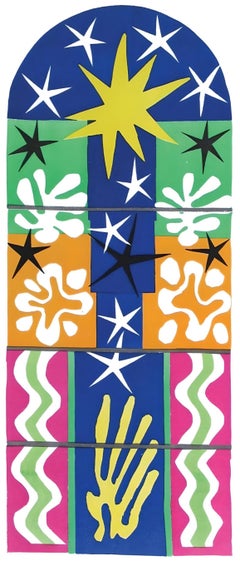
Henri Matisse, Christmas Night, from Verve, Revue Artistique, 1958 (after)
By Henri Matisse
Located in Southampton, NY
This exquisite lithograph after Henri Matisse (1869–1954), titled Nuit de Noel (Christmas Night), from Verve, Revue Artistique et Litteraire, Vol. IX, No. 35–36, originates from the 1958 issue published by Editions de la revue Verve, Paris, under the direction of Teriade, Editeur, Paris, and printed by Mourlot Freres, Paris, 1958. Created during Matisse’s final period, Nuit de Noel embodies his profound synthesis of form, color, and spirituality. The composition, evoking the calm radiance of the nativity, expresses a sense of universal harmony through luminous shapes and vibrant contrasts. This piece exemplifies Matisse’s late cut-out technique, where visual rhythm and color convey the serenity and joy of life and faith.
Executed as a lithograph on velin du Marais paper, this work measures 14 x 10.5 inches. Unsigned and unnumbered as issued. The edition exemplifies the superb craftsmanship of the Mourlot Freres atelier, faithfully capturing the coloristic richness and compositional rhythm of Matisse’s late paper cut-outs.
Artwork Details:
Artist: After Henri Matisse (1869–1954)
Title: Nuit de Noel (Christmas Night), from Verve, Revue Artistique et Litteraire, Vol. IX, No. 35–36, 1958
Medium: Lithograph on velin du Marais paper
Dimensions: 14 x 10.5 inches
Inscription: Unsigned and unnumbered as issued
Date: 1958
Publisher: Editions de la revue Verve, Paris, under the direction of Teriade, Editeur, Paris
Printer: Mourlot Freres, Paris
Catalogue raisonne reference: Duthuit, Claude. Henri Matisse: Catalogue raisonne des ouvrages illustres. Editions Claude Duthuit, Paris, 1988, illustration 139
Condition: Well preserved, consistent with age and medium
Provenance: From Verve, Revue Artistique et Litteraire, Vol. IX, No. 35–36, published by Editions de la revue Verve, Paris, 1958
Notes:
Excerpted from the publication, Verve, Revue Artistique et Litteraire, Vol. IX, No. 35–36, published under the direction of Teriade, Editeur, Paris, and printed by Mourlot Freres, Paris, 1958. This double issue of Verve was entirely devoted to the final works of Henri Matisse, composed of his celebrated gouache cut-outs, which the artist called “painting with scissors.” Completed shortly before his death, this issue represents the culmination of Matisse’s lifelong exploration of color, rhythm, and spiritual joy through the simplest means of expression.
About the Publication:
Verve, Revue Artistique et Litteraire was one of the most influential art periodicals of the 20th century, founded in Paris in 1937 by the visionary Greek-born publisher Teriade (Stratis Eleftheriades). Conceived as a synthesis of art and literature, Verve brought together the greatest modern artists and writers of its time—Henri Matisse, Pablo Picasso, Marc Chagall, Georges Braque, Joan Miro, Fernand Leger, and others—alongside poets and philosophers such as Paul Eluard, Albert Camus, and Jean-Paul Sartre. Each issue was a work of art in itself, luxuriously printed by master lithographers such as Mourlot Freres and produced in collaboration with leading typographers and designers. Verve became a platform for avant-garde creativity, publishing original lithographs and essays that reflected the evolving spirit of modernism. Matisse collaborated closely with Teriade from the magazine’s inception, producing some of its most iconic issues, including those devoted to his paper cut-outs. The final Verve issue of 1958, which featured La Tristesse du Roi, the Nu Bleu series, and Nuit de Noel, stands as a testament to Matisse’s enduring genius and to the publication’s legacy as the definitive meeting of art, poetry, and printing craftsmanship in 20th-century France.
About the Artist:
Henri Matisse (1869–1954) was a French painter, sculptor, draughtsman, and printmaker whose revolutionary vision redefined modern art through his daring use of color, line, and form. Celebrated as one of the greatest artists of the 20th century, Matisse led the Fauvist movement and devoted his life to the pursuit of balance, beauty, and emotional expression in visual art. His early works burst with vibrant hues and liberated brushwork, while his later “cut-out” compositions achieved a poetic simplicity that transformed the relationship between color and space. Deeply influenced by the work of Paul Cezanne, Vincent van Gogh, and Georges Seurat, as well as by the rhythmic patterns of Islamic art, Byzantine mosaics, and Japanese prints, Matisse forged a new visual language that celebrated joy, movement, and serenity. He was part of an extraordinary generation of artists who shaped the evolution of modernism, maintaining lifelong dialogue and friendly rivalry with contemporaries such as Pablo Picasso, Georges Braque, Marc Chagall, Andre Derain, Albert Marquet, and Raoul Dufy—peers who, like him, sought to expand the expressive potential of color and composition. Matisse’s influence extended across generations, inspiring modern and contemporary masters including Alexander Calder, Alberto Giacometti, Salvador Dali, Joan Miro, Wassily Kandinsky, Marcel Duchamp, and Man Ray, each of whom drew upon his fearless experimentation and refined visual harmony. His paintings, sculptures, and works on paper are held in the most prestigious museums in the world, including the Museum of Modern Art, the Centre Pompidou, the Tate, and the Hermitage Museum, where his art continues to symbolize the essence of creativity and human emotion. The highest price ever paid for a Henri Matisse artwork is approximately $80.8 million USD, achieved in 2018 at Christie’s New York for Odalisque couchee aux magnolias (1923).
Henri Matisse Nuit de Noel...
Category
1950s Modern The Hamptons - Still-life Prints
Materials
Lithograph
$956 Sale Price
20% Off
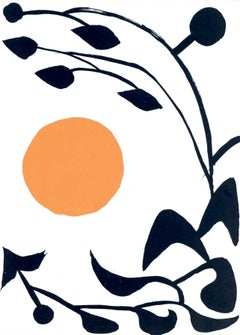
Alexander Calder, Orange Sun, from Derriere le miroir, 1954
By Alexander Calder
Located in Southampton, NY
This exquisite lithograph by Alexander Calder (1898–1976), titled Soleil orange (Orange Sun), from the folio Derriere le miroir, No. 69–70, originates from the 1954 edition published by Maeght Editeur, Paris, and printed by Mourlot Freres, Paris, 1954. This work captures Calder’s mastery of motion, balance, and vibrant color through the spontaneous energy of his abstract forms, embodying the rhythmic harmony and visual poetry that defined his art.
Executed as a lithograph on velin paper, this work measures 15 x 11 inches. Unsigned and unnumbered as issued. The edition exemplifies the superb craftsmanship of Mourlot Freres, Paris.
Artwork Details:
Artist: Alexander Calder (1898–1976)
Title: Soleil orange (Orange Sun), from the folio Derriere le miroir, No. 69–70
Medium: Lithograph on velin paper
Dimensions: 15 x 11 inches (38.1 x 27.9 cm)
Inscription: Unsigned and unnumbered as issued
Date: 1954
Publisher: Maeght Editeur, Paris
Printer: Mourlot Freres, Paris
Condition: Well preserved, consistent with age and medium
Provenance: From the folio Derriere le miroir, No. 69–70, published by Maeght Editeur, Paris; printed by Mourlot Freres, Paris, 1954
About the Publication:
Derriere le miroir (Behind the Mirror) was one of the most important art publications of the 20th century, created and published by Maeght Editeur in Paris from 1946 to 1982. Founded by the visionary art dealer and publisher Aime Maeght, the series served as both an exhibition catalogue and a work of art in its own right, uniting original lithographs by leading modern and contemporary artists with critical essays, poetry, and design of the highest quality. Printed by master lithographers such as Mourlot Freres and Arte, Derriere le miroir became synonymous with the artistic vanguard of postwar Europe. Each issue was devoted to a single artist or theme and published to accompany exhibitions at the Galerie Maeght in Paris, featuring works by Pablo Picasso, Henri Matisse, Georges Braque, Joan Miro, Marc Chagall, Alexander Calder, Fernand Leger, and Alberto Giacometti, among others. The publication reflected Maeght’s belief that art should be both accessible and elevated—an ideal realized through its luxurious production values, meticulous printing, and collaboration with the greatest creative minds of its time.
About the Artist:
Alexander Calder (1898–1976) was an American sculptor, painter, and printmaker whose pioneering innovations in kinetic art revolutionized 20th-century sculpture and transformed modern visual language. Born in Lawnton, Pennsylvania, into a family of artists, Calder initially trained as a mechanical engineer at the Stevens Institute of Technology before turning to art at the Art Students League in New York—a combination of technical precision and creative imagination that defined his career. Moving to Paris in 1926, he immersed himself in the avant-garde and formed friendships with Pablo Picasso, Alberto Giacometti, Joan Miro, Wassily Kandinsky, Salvador Dali, Marcel Duchamp, and Man Ray, whose ideas profoundly shaped his artistic philosophy. From Picasso, he absorbed structural invention; from Miro, lyrical abstraction; from Kandinsky, spiritual geometry; and from Duchamp and Man Ray, the courage to merge intellect and play. In Paris, Calder created his famous Cirque Calder, a miniature mechanical circus that introduced motion and performance as central components of sculpture, and by the early 1930s, he invented the mobile—a term coined by Duchamp—to describe his delicately balanced, moving sculptures that responded to air currents. Later, Jean Arp would name his stationary counterparts stabiles. These two inventions—sculptures that could either float and spin gracefully or stand monumentally still—transformed art into a dynamic dialogue between movement, balance, and space. Calder’s signature forms, painted in vivid reds, blacks, blues, and yellows, embodied both joy and precision, creating an art that was at once abstract, organic, and deeply human. Like Kandinsky and Miro, he viewed art as a form of rhythm and emotion; like Duchamp, he embraced innovation and humor; and like Giacometti and Dali, he was fascinated by perception, structure, and the unseen forces of motion. His monumental public sculptures—such as La Grande Vitesse (1969) in Grand Rapids and Flamingo (1973) in Chicago—redefined public art as a symbol of civic optimism and modern progress. A key bridge between European modernism and American abstraction, Calder’s influence extended to artists including Jean Tinguely, George Rickey, Donald Judd, Ellsworth Kelly, Richard Serra, and Olafur Eliasson, whose works in kinetic and spatial art continue to echo his vision. His gouaches, prints, and jewelry carried the same balance and movement as his sculptures, revealing a unified language of rhythm across media. Represented in every major modern museum—including MoMA, the Guggenheim, the Tate, and the Centre Pompidou—Calder remains celebrated for merging engineering, color, and poetry into an art of pure equilibrium. Standing alongside Pablo Picasso, Alexander Calder, Alberto Giacometti, Salvador Dali, Joan Miro, Wassily Kandinsky, Marcel Duchamp, and Man Ray, he remains one of the cornerstones of modern art—a visionary whose works breathe with motion, grace, and joy. His highest auction record was achieved by Poisson Volant (Flying Fish) (1957), which sold for $25.9 million at Christie’s, New York, on May 15, 2014, reaffirming Alexander Calder’s enduring legacy as one of the most inventive, dynamic, and collectible artists in the history of modern art.
Alexander Calder Soleil...
Category
1950s Modern The Hamptons - Still-life Prints
Materials
Lithograph
$796 Sale Price
20% Off
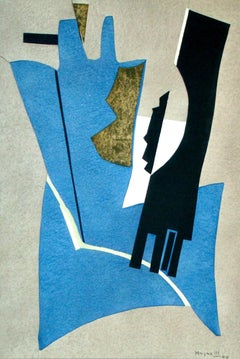
Alberto Magnelli, Pasted Paper, from XXe Siecle, 1956
By Alberto Magnelli
Located in Southampton, NY
This exquisite lithograph and pochoir by Alberto Magnelli (1888–1971), titled Papel colle (Pasted Paper), from the album XXe Siecle, Nouvelle serie, No. 6 (double), Janvier 1956, ori...
Category
1950s Cubist The Hamptons - Still-life Prints
Materials
Lithograph
$796 Sale Price
20% Off
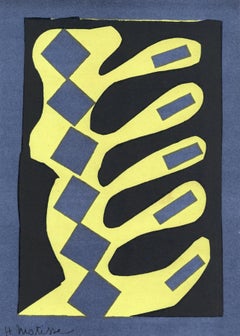
Henri Matisse, Decoupage, from XXe Siecle 1954 (after)
By Henri Matisse
Located in Southampton, NY
This exquisite lithograph after Henri Matisse (1869–1954), titled Decoupage (Decoupage), from the album XXe Siecle, Nouvelle serie N°4 (double) Janvier 1954, originates from the 1954 edition published by Societe Internationale dArt XXe Siecle, Paris, under the direction of Gualtieri di San Lazzaro, editeur, Paris, and printed by Mourlot Freres, Paris, 1954. Decoupage reflects Matisses late career mastery of distilled form, harmonious contour, and poetic abstraction.
Executed as a lithograph on velin paper, this work measures 12.5 x 9.75 inches. Signed in the plate and unnumbered as issued. The edition exemplifies the superb craftsmanship of Mourlot Freres, Paris
Artwork Details:
Artist: After Henri Matisse (1869–1954)
Title: Decoupage (Decoupage)
Medium: Lithograph on velin paper
Dimensions: 12.5 x 9.75 inches (31.75 x 24.77 cm)
Inscription: Signed in the plate and unnumbered as issued
Date: 1954
Publisher: Societe Internationale dArt XXe Siecle, Paris, under the direction of Gualtieri di San Lazzaro, editeur, Paris
Printer: Mourlot Freres, Paris
Condition: Well preserved, consistent with age and medium
Provenance: From the album XXe Siecle, Nouvelle serie N°4 (double) Janvier 1954, published by Societe Internationale dArt XXe Siecle, Paris; printed by Mourlot Freres, Paris, 1954
About the Publication:
Gualtieri di San Lazzaros XXe Siecle (Twentieth Century) was one of the most influential art journals of the modern era, founded in Paris in 1938 as a platform for the greatest painters, sculptors, and writers of the 20th century. San Lazzaro, a visionary editor, critic, and champion of modernism, believed that art and literature should coexist as expressions of a shared human imagination. Under his direction, XXe Siecle became a cultural bridge between Europe and the wider world, publishing special issues devoted to leading figures such as Picasso, Matisse, Chagall, Braque, Calder, Miro, Kandinsky, and Leger. Each edition combined essays by renowned critics and poets with original lithographs, linocuts, and pochoirs printed by the foremost ateliers of Paris, Milan, and New York, including Mourlot, Curwen, Atelier Lacouriere, and Amilcare Pizzi, creating a uniquely rich dialogue between text and image. The 1954 issue, Nouvelle serie N°4 (double), stands among the journals landmark mid century editions. Today, XXe Siecle remains an essential record of 20th century modernism, celebrated for its seamless integration of fine art, literature, and design.
About the Artist:
Henri Matisse (1869–1954) was a French painter, sculptor, draughtsman, and printmaker whose revolutionary vision redefined modern art through his daring use of color, line, and form. Celebrated as one of the greatest artists of the 20th century, Matisse led the Fauvist movement and devoted his life to the pursuit of balance, beauty, and emotional expression in visual art. His early works burst with vibrant hues and liberated brushwork, while his later cut out compositions achieved a poetic simplicity that transformed the relationship between color and space. Deeply influenced by the work of Paul Cezanne, Vincent van Gogh, and Georges Seurat, as well as by the rhythmic patterns of Islamic art, Byzantine mosaics, and Japanese prints, Matisse forged a new visual language that celebrated joy, movement, and serenity. He was part of an extraordinary generation of artists who shaped the evolution of modernism, maintaining lifelong dialogue and friendly rivalry with contemporaries such as Pablo Picasso, Georges Braque, Marc Chagall, Andre Derain, Albert Marquet, and Raoul Dufy peers who, like him, sought to expand the expressive potential of color and composition. Matisses influence extended across generations, inspiring modern and contemporary masters including Alexander Calder, Alberto Giacometti, Salvador Dali, Joan Miro, Wassily Kandinsky, Marcel Duchamp, and Man Ray, each of whom drew upon his fearless experimentation and refined visual harmony. His paintings, sculptures, and works on paper are held in the most prestigious museums in the world, including the Museum of Modern Art, the Centre Pompidou, the Tate, and the Hermitage Museum, where his art continues to symbolize the essence of creativity and human emotion. The highest price ever paid for a Henri Matisse artwork is approximately 80.8 million USD, achieved in 2018 at Christies New York for Odalisque couchee aux magnolias (1923).
Henri Matisse Decoupage...
Category
1950s Fauvist The Hamptons - Still-life Prints
Materials
Lithograph
$956 Sale Price
20% Off
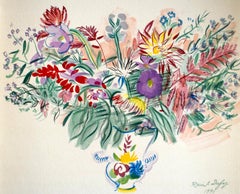
Raoul Dufy, The Bouquet, from The Painters My Friends, 1965 (after)
By Raoul Dufy
Located in Southampton, NY
This exquisite lithograph after Raoul Dufy (1877–1953), titled Le Bouquet (The Bouquet), from the folio Les Peintres mes amis (The Painters My Friends), originates from the 1965 edit...
Category
1960s Modern The Hamptons - Still-life Prints
Materials
Lithograph
$1,916 Sale Price
20% Off
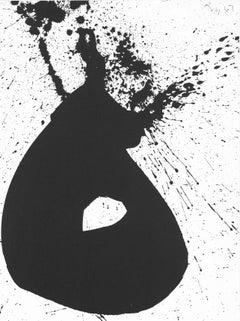
Motherwell, Sans titre, In Memory of My Feelings (after)
By Robert Motherwell
Located in Southampton, NY
Lithograph on vélin Mohawk Superfine Smooth paper. Paper Size: 11.937 x 8.96 inches. Inscription: Signed in the plate and unnumbered, as issued. Notes: From the folio, In Memory of M...
Category
1960s Abstract Expressionist The Hamptons - Still-life Prints
Materials
Lithograph
$1,596 Sale Price
20% Off
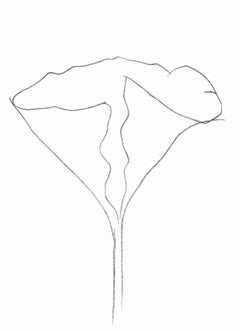
Ellsworth Kelly, Lotus, from Derriere le Miroir, 1982
By Ellsworth Kelly
Located in Southampton, NY
This exquisite lithograph by Ellsworth Kelly (1923–2015), titled Lotus, originates from the historic 1982 folio Derriere le Miroir, No. 250, Hommage a Aime et Marguerite Maeght (Trib...
Category
1980s Hard-Edge The Hamptons - Still-life Prints
Materials
Lithograph
$716 Sale Price
20% Off
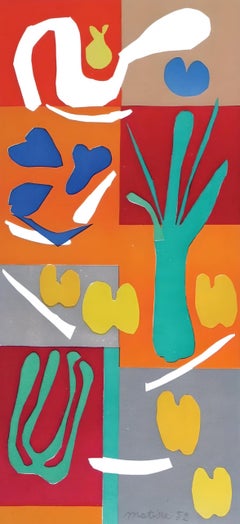
Henri Matisse, Plants, from Verve, Revue Artistique, 1958 (after)
By Henri Matisse
Located in Southampton, NY
This exquisite lithograph after Henri Matisse (1869–1954), titled Vegetaux (Plants), from Verve, Revue Artistique et Litteraire, Vol. IX, No. 35–36, originates from the 1958 issue pu...
Category
1950s Modern The Hamptons - Still-life Prints
Materials
Lithograph
$796 Sale Price
33% Off
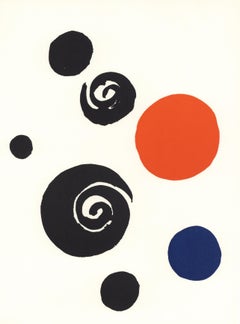
Calder, Sans titre, Musée National d
Art Moderne, Paris (after)
By Alexander Calder
Located in Southampton, NY
Lithograph on vélin paper. Paper Size: 12.5 x 9.25 inches. Inscription: Unsigned and unnumbered, as issued. Notes: From the album, Calder. Published and printed by Musée National d'A...
Category
1960s Modern The Hamptons - Still-life Prints
Materials
Lithograph
$716 Sale Price
20% Off
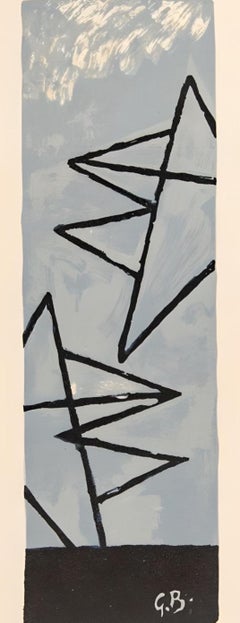
Braque, Ciel gris I, Derrière le miroir (after)
By Georges Braque
Located in Southampton, NY
Lithograph on vélin paper. Inscription: Unsigned and unnumbered, as issued. Good condition. Notes: From Derrière le miroir, N° 115, 1959. Published by Aimé Maeght, Éditeur, Paris; pr...
Category
1950s Modern The Hamptons - Still-life Prints
Materials
Lithograph
$716 Sale Price
40% Off
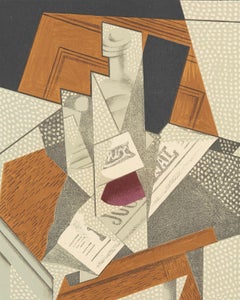
Juan Gris, Bottle, from Au Soleil du Plafond, 1955 (after)
By Juan Gris
Located in Southampton, NY
This exquisite lithograph after Juan Gris (1887–1927), titled Bouteille (Bottle), from the folio Au Soleil du Plafond (In the Sunlight of the Ceiling), originates from the 1955 editi...
Category
1950s Cubist The Hamptons - Still-life Prints
Materials
Lithograph
$1,996 Sale Price
20% Off
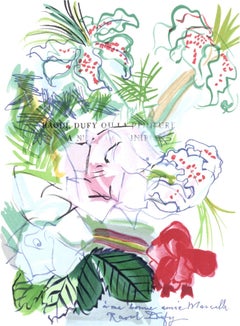
Raoul Dufy, Painted Flowers, from Letter to My Painter Raoul Dufy, 1965 (after)
By Raoul Dufy
Located in Southampton, NY
This exquisite lithograph after Raoul Dufy (1877–1953), titled Fleurs peintes (Painted Flowers), from the folio Lettre a mon peintre Raoul Dufy (Letter to My Painter Raoul Dufy), ori...
Category
1960s Fauvist The Hamptons - Still-life Prints
Materials
Lithograph
$716 Sale Price
20% Off
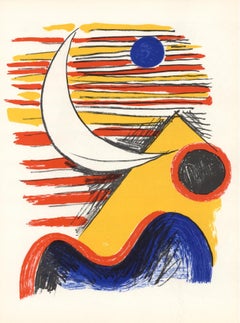
Calder, Composition, Derrière le miroir (after)
By Alexander Calder
Located in Southampton, NY
Lithograph on vélin paper. Inscription: Unsigned and unnumbered, as issued. Good condition. Notes: From Derrière le miroir, N° 121-122, published by Aimé Maeght, Éditeur, Paris; prin...
Category
1960s Modern The Hamptons - Still-life Prints
Materials
Lithograph
$716 Sale Price
44% Off
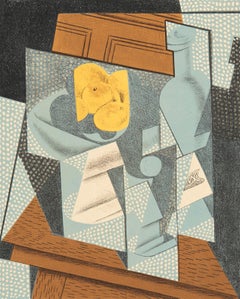
Juan Gris, The Pipe, from Au Soleil du Plafond, 1955 (after)
By Juan Gris
Located in Southampton, NY
This exquisite lithograph after Juan Gris (1887–1927), titled La Pipe (The Pipe), from the folio Au Soleil du Plafond (In the Sunlight of the Ceiling), originates from the 1955 editi...
Category
1950s Cubist The Hamptons - Still-life Prints
Materials
Lithograph
$1,996 Sale Price
20% Off
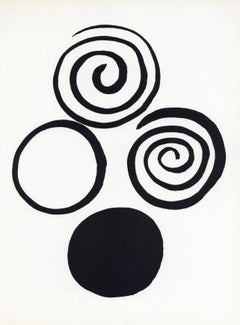
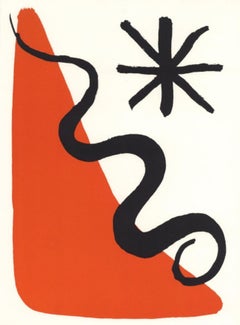
Calder, Sans titre, Musée National d
Art Moderne, Paris (after)
By Alexander Calder
Located in Southampton, NY
Lithograph on vélin paper. Paper Size: 12.5 x 9.25 inches. Inscription: Unsigned and unnumbered, as issued. Notes: From the album, Calder. Published and printed by Musée National d'A...
Category
1960s Modern The Hamptons - Still-life Prints
Materials
Lithograph
Calder, Sans titre, Musée National d
Art Moderne, Paris (after)
By Alexander Calder
Located in Southampton, NY
Lithograph on vélin paper. Paper Size: 12.5 x 9.25 inches. Inscription: Unsigned and unnumbered, as issued. Notes: From the album, Calder. Published and printed by Musée National d'A...
Category
1960s Modern The Hamptons - Still-life Prints
Materials
Lithograph
$716 Sale Price
20% Off
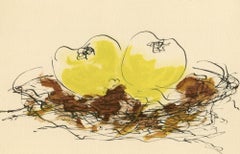
Georges Braque, Apples, from Le Solitaire, XXe siecle, 1959 (after)
By Georges Braque
Located in Southampton, NY
This exquisite lithograph and pochoir after Georges Braque (1882–1963), titled Pommes (Apples), from the album Georges Braque, Le Solitaire (The Solitary), originates from the 1959 e...
Category
1950s Cubist The Hamptons - Still-life Prints
Materials
Lithograph
$716 Sale Price
20% Off
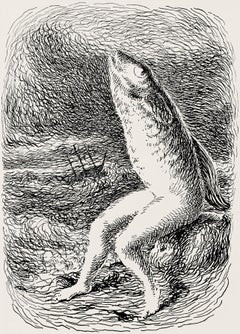
Magritte, Composition, Les chants de Maldoror (after)
By René Magritte
Located in Southampton, NY
Lithograph on vélin papier pur chiffon paper. Paper Size: 10 x 7.375 inches. Inscription: Unsigned and unnumbered, as issued. Notes: From the album, Les chants de Maldoror, illustrat...
Category
1940s Surrealist The Hamptons - Still-life Prints
Materials
Lithograph
$956 Sale Price
20% Off
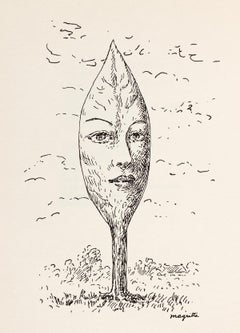
Rene Magritte, Untitled, from Poems 1923-1958, 1959 (after)
By René Magritte
Located in Southampton, NY
This exquisite lithograph after Rene Magritte (1898–1967), titled Sans titre (Untitled), from the album Poems 1923-1958, Dix dessins de Rene Magritte (Ten Drawings by Rene Magritte),...
Category
1950s Surrealist The Hamptons - Still-life Prints
Materials
Lithograph
$716 Sale Price
20% Off
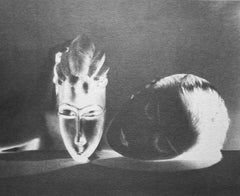
Man Ray, Composition, Man Ray (after)
By Man Ray
Located in Southampton, NY
Lithograph on vélin paper. Inscription: unsigned and unnumbered, as issued. Good condition. Notes: From the folio, Man Ray, 1984. Published by Centre National des Arts Plastiques, Ni...
Category
1980s Surrealist The Hamptons - Still-life Prints
Materials
Lithograph
$716 Sale Price
20% Off
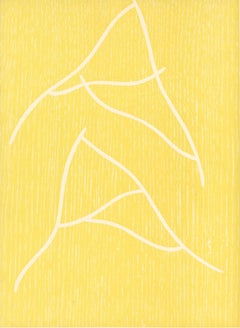
Arp, Composition, Arp: On My Way (after)
By Jean Arp
Located in Southampton, NY
Woodcut on wove paper. Inscription: Unsigned and unnumbered, as issued. Good Condition. Notes: From the folio, The Documents of Modern Art. Arp: On My Way, Poetry And Essays 1912 - 1...
Category
1940s Modern The Hamptons - Still-life Prints
Materials
Woodcut
$716 Sale Price
34% Off
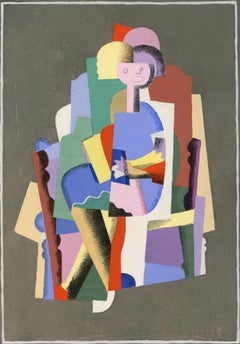
Georges Valmier, Seated Woman, 1929 (after)
By Georges Valmier
Located in Southampton, NY
This exquisite lithograph and pochoir after Georges Valmier (1885–1937), titled Femme assise (Seated Woman), from the album L'Art Cubiste, Theories et Realisations, Etude Critique (C...
Category
1920s Cubist The Hamptons - Still-life Prints
Materials
Lithograph, Stencil
$1,916 Sale Price
20% Off
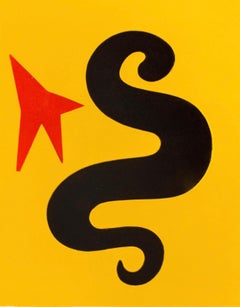
Calder, Composition, Derrière le miroir (after)
By Alexander Calder
Located in Southampton, NY
Lithograph on vélin paper. Inscription: Unsigned and unnumbered, as issued. Good condition. Notes: From Derrière le miroir, N° 195, 1971. Published by Aimé Maeght, Éditeur, Paris; pr...
Category
1970s Modern The Hamptons - Still-life Prints
Materials
Lithograph
$716 Sale Price
40% Off
Louis Marcoussis, Still Life with Guitar, 1929 (after)
By Louis Marcoussis
Located in Southampton, NY
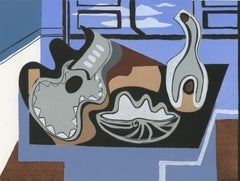
This exquisite lithograph and pochoir after Louis Marcoussis (1878–1941), titled Nature morte avec guitare (Still Life with Guitar), from the album L'Art Cubiste, Theories et Realisa...
Category
1920s Cubist The Hamptons - Still-life Prints
Materials
Lithograph, Stencil
$1,916 Sale Price
20% Off
Calder, Sans titre, Musée National d
Art Moderne, Paris (after)
By Alexander Calder
Located in Southampton, NY
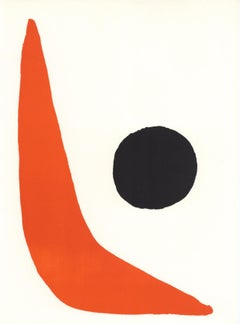
Lithograph on vélin paper. Paper Size: 12.5 x 9.25 inches. Inscription: Unsigned and unnumbered, as issued. Notes: From the album, Calder. Published and printed by Musée National d'A...
Category
1960s Modern The Hamptons - Still-life Prints
Materials
Lithograph
$716 Sale Price
20% Off
Magritte, Composition, Les chants de Maldoror (after)
By René Magritte
Located in Southampton, NY
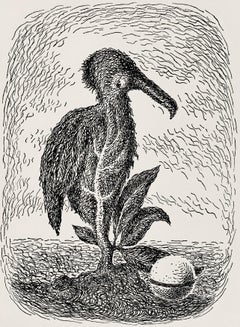
Lithograph on vélin papier pur chiffon paper. Paper Size: 10 x 7.375 inches. Inscription: Unsigned and unnumbered, as issued. Notes: From the album, Les chants de Maldoror, illustrat...
Category
1940s Surrealist The Hamptons - Still-life Prints
Materials
Lithograph
$956 Sale Price
20% Off
Raoul Dufy, Wildflowers, from Esprit de la fleur et du fruit, 1954 (after)
By Raoul Dufy
Located in Southampton, NY
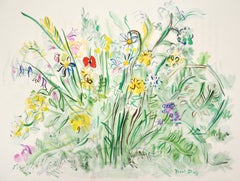
This exquisite lithograph after Raoul Dufy (1877–1953), titled Fleurs des champs (Wildflowers), from the folio Eaux-de-vie, Esprit de la fleur et du fruit (Spirits, Essence of the Fl...
Category
1950s Modern The Hamptons - Still-life Prints
Materials
Lithograph, Stencil
$1,196 Sale Price
20% Off
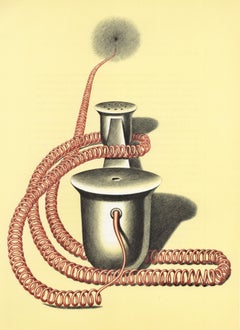
Konrad Klapheck, Untitled, from Derriere le Miroir, 1982
By Konrad Klapheck
Located in Southampton, NY
This exquisite lithograph by Konrad Klapheck (1935–2023), titled Sans titre (Untitled), originates from the historic 1982 folio Derriere le Miroir, No. 250, Hommage a Aime et Marguer...
Category
1980s Modern The Hamptons - Still-life Prints
Materials
Lithograph
$716 Sale Price
20% Off
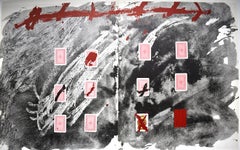
Tàpies, Composition, Derrière le miroir (after)
By Antoni Tàpies
Located in Southampton, NY
Lithograph on vélin paper. Inscription: Unsigned and unnumbered, as issued. Good condition, with centerfold, as issued. Notes: From Derrière le miroir, N° 207, 1974. Published by Aim...
Category
1970s Post-War The Hamptons - Still-life Prints
Materials
Lithograph
$716 Sale Price
44% Off
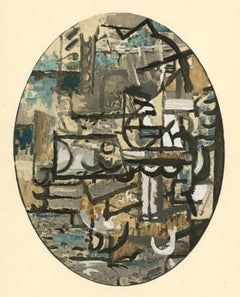
Georges Braque, Movement in the Oval, 1929 (after)
By Georges Braque
Located in Southampton, NY
This exquisite lithograph and pochoir after Georges Braque (1882–1963), titled Le Mouvement dans l’Ovale (Movement in the Oval), from the album L'Art Cubiste, Theories et Realisation...
Category
1920s Cubist The Hamptons - Still-life Prints
Materials
Lithograph, Stencil
$1,916 Sale Price
20% Off
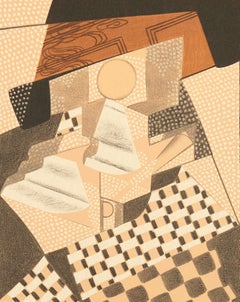
Juan Gris, The Soup Tureen, from Au Soleil du Plafond, 1955 (after)
By Juan Gris
Located in Southampton, NY
This exquisite lithograph after Juan Gris (1887–1927), titled La Soupiere (The Soup Tureen), from the folio Au Soleil du Plafond (In the Sunlight of the Ceiling), originates from the...
Category
1950s Cubist The Hamptons - Still-life Prints
Materials
Lithograph
$1,996 Sale Price
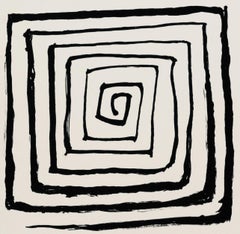
20% Off
Calder, Sans titre, Derrière le miroir (after)
By Alexander Calder
Located in Southampton, NY
Lithograph on vélin paper. Inscription: Unsigned and unnumbered, as issued. Good condition. Notes: From Derrière le miroir, N° 190, published by Aimé Maeght, Éditeur, Paris; printed ...
Category
1970s Modern The Hamptons - Still-life Prints
Materials
Lithograph
$716 Sale Price
20% Off
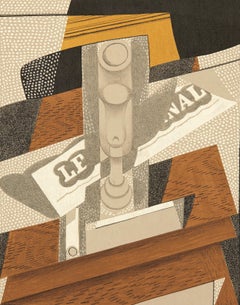
Juan Gris, The Pipe, from Au Soleil du Plafond, 1955 (after)
By Juan Gris
Located in Southampton, NY
This exquisite lithograph after Juan Gris (1887–1927), titled La Pipe (The Pipe), from the folio Au Soleil du Plafond (In the Sunlight of the Ceiling), originates from the 1955 editi...
Category
1950s Cubist The Hamptons - Still-life Prints
Materials
Lithograph
$1,996 Sale Price
20% Off