USA - Landscape Prints

to
4,896
5,071
1,967
1,926
1,272
942
Overall Width
to
Overall Height
to
2,632
1,630
766
741
671
624
470
372
169
69
62
45
24
15
188
169
152
131
106
373
634
7,739
2,491
80
90
592
447
532
1,044
1,279
1,171
978
540
233
5,557
5,109
486
4,101
2,048
1,888
1,459
1,201
1,133
1,019
879
774
688
678
592
523
486
468
421
364
323
316
313
5,014
1,773
1,535
1,012
840
1,607
2,273
11,241
5,012
Item Ships From: USA
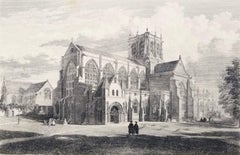
Southwest View of Sherborne Abbey Church /// History of Dorset English Engraving
Located in Saint Augustine, FL
Artist: John Hutchins (English, 1698-1773) Title: "Southwest View of Sherborne Abbey Church" (Plate 15) Portfolio: The History and Antiquities of the County of Dorset Year: 1861-1870...
Category

1860s Victorian USA - Landscape Prints

Materials

Engraving

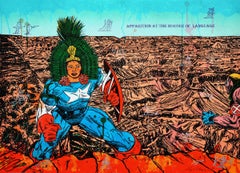
"Apparition at the Border of Language"
By Enrique Chagoya
Located in Lyons, CO
This print presents a fictitious encounter between contemporary colonial forces and Native Americans who are defenders of immigrant refugees and displaced populations. The artist de...
Category

2010s Contemporary USA - Landscape Prints

Materials

Lithograph

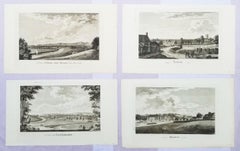
Set of Four Engravings from Nash s "History of Worcestershire" /// Landscape Art
By Treadway Russell Nash
Located in Saint Augustine, FL
Artist: Treadway Russell Nash (English, 1724-1811) Title: "A View of Stourbridge", "A View of Upton upon Severn, from Ryal Hill", "Bewdley", and "Tenbury" Portfolio: Collections for the History of Worcestershire Year: 1781-1782 (First edition) Medium: Set of Four Original Engravings on watermarked laid paper Limited edition: Unknown Printer: John Nichols, London, UK Publisher: T. Payne and Son, J. Robson, B. White, Leigh and Sotheby, London, UK; Fletcher, Oxford, UK; and Lewis, Worcester, UK Reference: Upcott III, page 1330 Sheet size (each): approx. 10" x 16.5" Image size (each): approx. 6.88" x 11.75" Condition: A few light handling creases. Have been professionally stored away for decades. They are all strong impressions in excellent condition Notes: Provenance: private collection - Aspen, CO. All four works were engraved by English artist Thomas Sanders (Active: Mid-Late 18th Century) after drawings by himself. Comes from Nash's two volume "Collections for the History of Worcestershire", (1781-1782) (First edition), which consists of 75 engravings. Each work is printed from one copper plate in one color: black. There was a (Second edition) "with Additions" bound in with Volume II of this portfolio published by John White in 1799. And, both the First and Second editions of "Collections for the History of Worcestershire" are based off Thomas Sanders' 1779-1781 "Perspective Views of the Market Towns within the County of Worcester". Both "A View of Stourbridge" and "A View of Upton upon Severn, from Ryal Hill" have unidentified fleur-de-lis watermarks in the center of their sheets. "Bewdley" has an unidentified watermark in the center of its sheet resembling "XV" and "Tenbury" has no watermark. Biography: Treadway Russell Nash (24 June 1724 – 26 January 1811) was an English clergyman, now known as an early historian of Worcestershire and the author of Collections for the History of Worcestershire, an important source document for Worcestershire county histories. He was a fellow of the Society of Antiquaries of London. Treadway Russell Nash was born on 24 June 1724 born at Clerkenleap, in Kempsey, Worcestershire. His family were from Ombersley. They had lands there and at Claines, and had later bought lands in the Reformation around St Peter's, Droitwich. He was related to James Nash and John Nash, both MPs for Worcester. His father Richard, a grandson of Sir Rowland Berkeley, died in 1740, and Richard's eldest son in 1757. As a result, Treadway Russell Nash inherited the Russells' Strensham estates from his brother, as well as the Nash estates, and took both names. He was educated from the age of twelve at King's School, Worcester, and became a scholar at Worcester College, Oxford aged fifteen. In March 1749, he accompanied his brother on a trip to the continent, to aid Richard's health. They visited Paris for about six weeks, before spending the summer "on the banks of the Loire". They then visited "Bourdeaux, Thoulouse, Montpelier, Marseilles, Leghorn, Florence, Rome, Naples, Bologna, Venice, Padua, Verona, Milan, Lyons, and again Paris"; such expeditions are often known as the Grand Tour. On his return in late summer 1751, Nash took up a post as Vicar of Eynsham through his friend and future brother-in-law, John Martin. He also had an income as a tutor at Oxford. He took his Doctor of Divinity degree and left Oxford, having "gone out grand compounder", following the death of his brother. He also left his benefice at Eynsham in 1757. While at Oxford he had proposed a road from there to Witney (now the A40 and B4022), and also stood for Parliament. Nash married Margaret Martin...
Category

1780s Old Masters USA - Landscape Prints

Materials

Laid Paper, Engraving

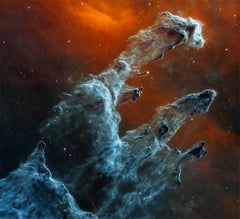
50x40 Pillars of Creation James Webb Telescope Space Photography NASA Photo Art
Located in Los Angeles, CA
The WEBB imagery is of the most important imagery every taken. The finest museum quality WEBB images available. Printed on archival paper using archival inks. 50x40 Edition of 150 ...
Category

21st Century and Contemporary American Modern USA - Landscape Prints

Materials

Archival Ink, Archival Pigment

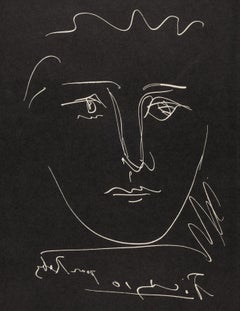
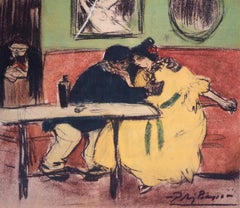
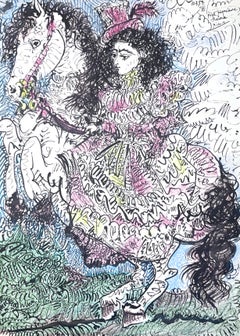
Picasso, Pour Roby, Noir (Bloch 680; Cramer 57), L Âge de Soleil
By Pablo Picasso
Located in Southampton, NY
Engraving on vélin d’Arches paper. Unsigned and unnumbered, as issued. Good condition. Notes: From the folio, L'Âge de Soleil, 1950. Published by Robert J. Godet, Paris; rendered by ...
Category

1950s Modern USA - Landscape Prints

Materials

Engraving

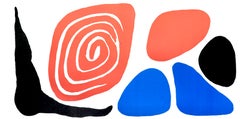
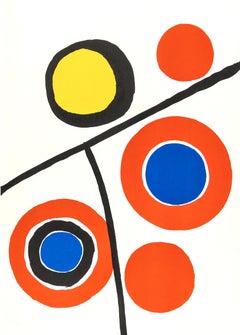
Alexander Calder, Untitled, from Calder autobiographie, 1972
By Alexander Calder
Located in Southampton, NY
This exquisite lithograph by Alexander Calder (1898–1976), titled Sans titre (Untitled), originates from the 1972 album Calder autobiographie. Published by Maeght Editeur, Paris, and...
Category

1970s Surrealist USA - Landscape Prints

Materials

Lithograph

Alex Katz - No Kids – Come Into My House album cover (Hand Signed by Alex Katz)
By Alex Katz
Located in New York, NY
Alex Katz - No Kids – Come Into My House album cover (Hand Signed by Alex Katz), 2008, 2013 Offset lithograph album cover (Hand signed in marker by Alex Katz) Album cover designed by...
Category

Early 2000s Contemporary USA - Landscape Prints

Materials

Cardboard, Lithograph, Offset

Notre-Dame Cathedral from the Seine
Located in Middletown, NY
Etching with drypoint on cream wove paper, 7 x 8 3/4 inches (177 x 223 mm); sheet 10 1/2 x 11 3/4 inches (267 x 300 mm), full margins. Signed V. E. Chapel and numbered 62/250 in penc...
Category

Early 20th Century French School USA - Landscape Prints

Materials

Etching, Drypoint

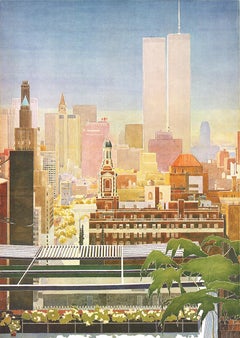
I Love New York 1981-View From my Terrace, Vintage
Located in Brooklyn, NY
David Lingwood’s "I Love New York" offers a serene, nostalgic glimpse into the iconic New York City skyline as seen from the artist’s own terrace apartment in the 1970s. Rendered wit...
Category

1980s Contemporary USA - Landscape Prints

Materials

Offset

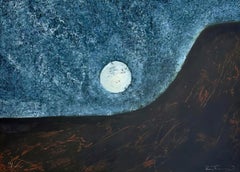
Paisaje con Luna, Surrealist Mixografia by Rufino Tamayo
By Rufino Tamayo
Located in Long Island City, NY
Rufino Tamayo, Mexican (1899 - 1991) - Paisaje con Luna, Year: 1977, Medium: Mixografia on Arches Paper, signed and numbered in crayon, Edition: 16/100, Size: 19.75 x 27.25 in. (...
Category

1970s Surrealist USA - Landscape Prints

Materials

Etching

Delayed (Bus is late, the umbrella up and the long walk home thru rain begins)
By Art Werger
Located in New Orleans, LA
The bus is delayed and the night is cold and rainy as a lone woman raises her umbrella to brave the shadowy walk home after giving up on her ride She has just left the bus shelter a...
Category

21st Century and Contemporary American Modern USA - Landscape Prints

Materials

Mezzotint

Henri Matisse, The Sorrow of the King, from Verve, Revue Artistique, 1953
By Henri Matisse
Located in Southampton, NY
This exquisite lithograph by Henri Matisse (1869–1954), titled La tristesse du roi (The Sorrow of the King), from Verve, Revue Artistique et Litteraire, Vol. VII, No. 27–28, originat...
Category

1950s Fauvist USA - Landscape Prints

Materials

Lithograph

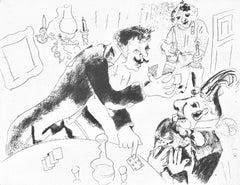
Marc Chagall, Playing Cards, from Nicolas Gogol, Dead Souls, 1923-1927
By Marc Chagall
Located in Southampton, NY
This exquisite etching by Marc Chagall (1887–1985), titled Les cartes a jouer (Playing Cards), originates from the celebrated folio Nicolas Gogol, Les Ames mortes, Eaux-fortes originales de Marc Chagall (Nicolas Gogol, Dead Souls, Original Etchings by Marc Chagall), published by Teriade Editeur, Paris, 1948, and printed by Fort, Impressions artistiques, Paris, under the direction of Louis Fort, 1923–1927. The composition captures Chagall’s deeply humane and satirical interpretation of Gogol’s world, blending tenderness, irony, and psychological insight within a dreamlike narrative space. Executed as an etching on velin d arches filigrane paper, this work measures 10.827 x 17.764 inches (27.5 x 45.12 cm). Unsigned and unnumbered as issued. Printed by Fort, Impressions artistiques, Paris, under the direction of Louis Fort. Artwork Details: Artist: Marc Chagall (1887–1985) Title: Les cartes a jouer (Playing Cards), from Nicolas Gogol, Les Ames mortes, Eaux-fortes originales de Marc Chagall (Nicolas Gogol, Dead Souls, Original Etchings by Marc Chagall), 1948 Medium: Etching on velin d arches filigrane paper Dimensions: 10.827 x 17.764 inches (27.5 x 45.12 cm) Inscription: Unsigned and unnumbered as issued Date: 1948, published; 1923–1927, printed Publisher: Teriade Editeur, Paris Printer: Fort, Impressions artistiques, Paris, under the direction of Louis Fort Catalogue raisonne reference: Cramer, Patrick, and Meret Meyer. Marc Chagall: Catalogue Raisonne Des Livres Illustres. P. Cramer ed., 1995, illustration 17 Condition: Well preserved, consistent with age and medium Provenance: From Nicolas Gogol, Les Ames mortes, Eaux-fortes originales de Marc Chagall (Nicolas Gogol, Dead Souls, Original Etchings by Marc Chagall), published by Teriade Editeur, Paris, 1948 Notes: Excerpted from the folio (translated from French), It was taken from this album, on velin d arches filigrane "Les Ames mortes", L examples, numbered from there, including a complimentary suite on japon nacre; CCLXXXV examples, numbered from LI to CCCXXXV and XXXIII non-market examples, numbered from I to XXXIII reserved for employees. All colophons are signed by the artist. About the Publication: Nicolas Gogol, Les Ames mortes, Eaux-fortes originales de Marc Chagall (Nicolas Gogol, Dead Souls, Original Etchings by Marc Chagall) stands among the most important illustrated literary works of the twentieth century. Conceived over several decades and rooted in Chagall’s deep emotional connection to Gogol’s satirical vision of Russian society, the album unites text and image in a profoundly imaginative synthesis. Published by Teriade in 1948 and printed by Fort, Impressions artistiques, Paris, under the direction of Louis Fort, the album embodies the high standards of Parisian printmaking and continues to be regarded as one of the great illustrated works of the twentieth century, admired for its fusion of literature, etching, and the distinctively dreamlike vision of Marc Chagall. About the Artist: Marc Chagall (1887–1985) was a Belarus-born French painter, printmaker, and designer whose visionary imagination, radiant color, and deeply poetic symbolism made him one of the most beloved and influential artists of the twentieth century. Rooted in the imagery of his Jewish heritage and the memories of his childhood in Vitebsk, Chagall’s art wove together themes of faith, love, folklore, and fantasy with a dreamlike modern sensibility. His unique style merging elements of Cubism, Fauvism, Expressionism, and Surrealism defied categorization, transforming ordinary scenes into lyrical meditations on memory and emotion. Influenced by Russian icon painting, medieval religious art, and the modern innovations of artists such as Pablo Picasso, Henri Matisse, and Georges Braque, Chagall developed a profoundly personal visual language filled with floating figures, vibrant animals, musicians, and lovers that symbolized the transcendent power of imagination and love. During his early years in Paris, he became an integral part of the Ecole de Paris circle, forming friendships with Amedeo Modigliani, Fernand Leger, and Sonia Delaunay, and his creative spirit resonated with that of his peers and successors Alexander Calder, Alberto Giacometti, Salvador Dali, Joan Miro, Wassily Kandinsky, Marcel Duchamp, and Man Ray. Over a prolific career spanning painting, printmaking, stained glass, ceramics, and stage design, Chagall brought an unparalleled poetic sensibility to modern art. His works are held in major museums worldwide, including the Museum of Modern Art, the Centre Pompidou, the Tate, and the Guggenheim. The highest price ever paid for a Marc Chagall artwork is approximately 28.5 million USD, achieved in 2017 at Sothebys New York for Les Amoureux (1928). Marc Chagall etching...
Category

1920s Expressionist USA - Landscape Prints

Materials

Etching

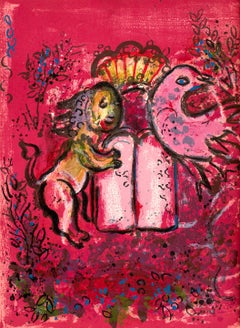
Marc Chagall, The Lion of Judah and the Tablets of the Law, 1962
By Marc Chagall
Located in Southampton, NY
This exquisite lithograph by Marc Chagall (1887–1985), titled Le lion de Juda et les Tables de la Loi (The Lion of Judah and the Tablets of the Law), from the album Marc Chagall, The...
Category

1960s Expressionist USA - Landscape Prints

Materials

Lithograph

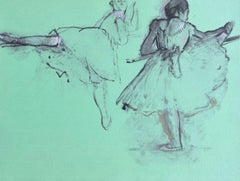
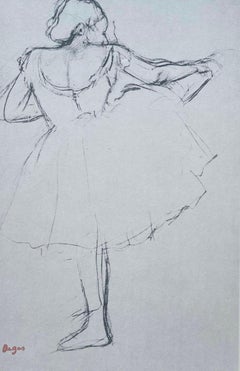
Edgar Degas, Dancer at the Barre, 1945 (after)
By Edgar Degas
Located in Southampton, NY
This exquisite lithograph after Edgar Degas (1834–1917), titled Danseur au bar (Dancer at the Barre), originates from the 1945 folio Degas, Ten Ballet Sketches. Published by The Studio Publications, Inc., New York, rendered and printed by Albert Carman, City Island, 1945, this work reflects Degas’s sensitive mastery of line, movement, and the intimate psychological nuances of the ballet studio. Executed as a lithograph and pochoir on velin paper, this work measures 13 x 17 inches (33.02 x 43.18 cm). Signed in the plate and unnumbered as issued. Rendered and printed by Albert Carman, City Island. Artwork Details: Artist: After Edgar Degas (1834–1917) Title: Danseur au bar (Dancer at the Barre), from Degas, Ten Ballet Sketches, 1945 Medium: Lithograph and pochoir on velin paper Dimensions: 13 x 17 inches (33.02 x 43.18 cm) Inscription: Signed in the plate and unnumbered as issued Date: 1945 Publisher: The Studio Publications, Inc., New York Printer: Albert Carman, City Island Condition: Well preserved, consistent with age and medium Provenance: From the 1945 folio Degas, Ten Ballet Sketches, published by The Studio Publications, Inc., New York Notes: Excerpted from the album, Born in Paris in 1834, Edgar Degas lived, and surely loved the life of that city during most of his years. These continued somewhat sadly beyond those of most of his friends— into the debacle of the first World War, during which he died in 1917. Judging by the frequency with which he used them as models, he must have had an especial admiration for the ballet girls who followed a profession that at the time brought none of the glory and prosperity which attend it today. New aspects of the human body, revealed in movement, fascinated him. But his occupation with the simply anatomical side of his subjects never resulted in a cold interpretation. On the contrary there is a warmth and sympathy that pervades all of his work. The drawings here represent the painter in one important phase of his multi-sensitive view of life; and permit an insight which a more ambitious work might not do-into the operation of the creative process, the artist's transformation of reality as it passes through the mesh of his sensibilities. The Edition of this Portfolio is limited to MMMD examples. Rendered by Albert Carman. About the Publication: Degas, Ten Ballet Sketches (1945) is one of the earliest and most significant American postwar fine art portfolios devoted to Edgar Degas’s intimate works on paper. Published by The Studio Publications, Inc., New York, and rendered and printed by Albert Carman at City Island, the album sought to faithfully reproduce a group of Degas’s ballet-related drawings through a combination of lithography and hand-applied pochoir coloring. This hybrid technique allowed the edition to preserve the immediacy, tonal subtlety, and gestural delicacy central to Degas’s draftsmanship. Conceived as a fine art publication rather than a commercial book, the portfolio provided American audiences unprecedented access to Degas’s private, spontaneous studies—images that reveal the artist’s fascination with movement, anatomy, and the psychological atmosphere of the rehearsal studio. The album exemplifies the mid-20th-century revival of pochoir as a means of recreating the texture and coloristic nuance of original works on paper, and it remains an important document of how Degas’s legacy was translated into high-quality printed form for collectors, museums, and connoisseurs. About the Artist: Edgar Degas (1834–1917) was a French painter, draughtsman, printmaker, and sculptor whose groundbreaking fusion of classical draftsmanship, modern experimentation, and psychological depth helped define the trajectory of Western art, positioning him as one of the most influential figures of the nineteenth and early twentieth centuries; renowned for his depictions of ballet dancers, racehorses, theater scenes, cafe life, domestic interiors, milliners, laundresses, and women at their toilette, Degas reimagined observational realism through radical compositional innovation—employing extreme cropping, asymmetrical framing, oblique viewpoints, and dramatic lighting that anticipated photographic and cinematic language long before these technologies shaped visual culture, and although associated with Impressionism, he rejected plein-air spontaneity in favor of studio-based discipline rooted in the linear precision of Jean-Auguste-Dominique Ingres, the expressive chromaticism of Eugene Delacroix, and the modernity of Edouard Manet while also drawing inspiration from Japanese ukiyo-e prints, classical sculpture, and early photography; his independent artistic philosophy resonated with and helped shape the innovations of Pablo Picasso, Alexander Calder, Alberto Giacometti, Salvador Dali, Joan Miro, Wassily Kandinsky, Marcel Duchamp, and Man Ray, whose explorations of movement, form, dream logic, abstraction, and conceptualism all find antecedents in Degas’s investigations into seriality, temporality, and the fragmented figure, and his pioneering use of pastel, monotype, and wax sculpture fundamentally transformed each medium, influencing artists from Henri Matisse, Francis Bacon, Lucian Freud, and Giacomo Manzu to Paula Rego, contemporary realists, experimental photographers, and choreographers; his works are held in nearly every major museum collection worldwide—including the Musee dOrsay, the Louvre, the Metropolitan Museum of Art, the National Gallery of Art, the Art Institute of Chicago, the Courtauld Institute, and the National Gallery, London—affirming his central place in the history of art, and the highest auction record for Degas was achieved at Sothebys London on February 3, 2015, when Danseuses en Bleu sold for 37,033,000 GBP, cementing his status as one of the most sought-after and enduringly significant artists of the Western canon. Degas pochoir, Degas lithograph...
Category

1940s Impressionist USA - Landscape Prints

Materials

Lithograph

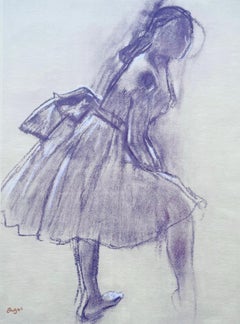
Edgar Degas, Dancer Standing in Profile, 1945 (after)
By Edgar Degas
Located in Southampton, NY
This exquisite lithograph after Edgar Degas (1834–1917), titled Danseur debout de profil (Dancer Standing in Profile), originates from the 1945 folio Degas, Ten Ballet Sketches. Published by The Studio Publications, Inc., New York, rendered and printed by Albert Carman, City Island, 1945, this work reflects Degas’s sensitive mastery of line, movement, and intimate observation, capturing the grace, poise, and psychological immediacy that define his iconic ballet imagery. In Danseur debout de profil (Dancer Standing in Profile), Degas reveals gesture and inner emotion through economical contour and lyrical nuance. Executed as a lithograph and pochoir on velin paper, this work measures 17 x 13 inches (43.18 x 33.02 cm). Signed in the plate and unnumbered as issued. Rendered and printed by Albert Carman, City Island, one of the notable American ateliers specializing in fine art lithography during the mid-20th century. Artwork Details: Artist: After Edgar Degas (1834–1917) Title: Danseur debout de profil (Dancer Standing in Profile), from Degas, Ten Ballet Sketches, 1945 Medium: Lithograph and pochoir on velin paper Dimensions: 17 x 13 inches (43.18 x 33.02 cm) Inscription: Signed in the plate and unnumbered as issued Date: 1945 Publisher: The Studio Publications, Inc., New York Printer: Albert Carman, City Island, 1945 Condition: Well preserved, consistent with age and medium Provenance: From the 1945 folio Degas, Ten Ballet Sketches, published by The Studio Publications, Inc., New York Notes: Excerpted from the album, Born in Paris in 1834, Edgar Degas lived, and surely loved the life of that city during most of his years. These continued somewhat sadly beyond those of most of his friends— into the debacle of the first World War, during which he died in 1917. Judging by the frequency with which he used them as models, he must have had an especial admiration for the ballet girls who followed a profession that at the time brought none of the glory and prosperity which attend it today. New aspects of the human body, revealed in movement, fascinated him. But his occupation with the simply anatomical side of his subjects never resulted in a cold interpretation. On the contrary there is a warmth and sympathy that pervades all of his work. The drawings here represent the painter in one important phase of his multi-sensitive view of life; and permit an insight which a more ambitious work might not do-into the operation of the creative process, the artist's transformation of reality as it passes through the mesh of his sensibilities. The Edition of this Portfolio is limited to MMMD examples. Rendered by Albert Carman. About the Publication: Degas, Ten Ballet Sketches, published in 1945 by The Studio Publications, Inc., New York, stands as one of the most elegant and scholarly mid-century American fine art folios devoted to the ballet imagery of Edgar Degas. Conceived as a high-quality interpretive portfolio, the album presents a series of lithograph-and-pochoir renderings based on Degas’s original drawings, executed with exceptional attention to tonal subtlety, contour fidelity, and the emotional interiority that defines the artist’s draftsmanship. Rendered and printed by Albert Carman on City Island, the publication embodies an American postwar effort to restore and celebrate European masterworks through meticulous handcraft and artisanal color application, honoring Degas’s distinctive line and the atmospheric delicacy of his studio-based studies. Produced in a substantial edition of MMMD examples, the portfolio offered audiences rare access to Degas’s private working drawings—images rarely seen outside institutional collections—while exemplifying the technical refinement and interpretive care characteristic of Carman’s workshop. Today, Degas, Ten Ballet Sketches remains a sought-after historical publication, valued for its craft, fidelity to Degas’s aesthetic, and its role in preserving and disseminating the artist’s intimate ballet imagery in a beautifully executed mid-century fine art format. About the Artist: Edgar Degas (1834–1917) was a French painter, draughtsman, printmaker, and sculptor whose groundbreaking fusion of classical draftsmanship, modern experimentation, and psychological depth helped define the trajectory of Western art, positioning him as one of the most influential figures of the nineteenth and early twentieth centuries; renowned for his depictions of ballet dancers, racehorses, theater scenes, cafe life, domestic interiors, milliners, laundresses, and women at their toilette, Degas reimagined observational realism through radical compositional innovation—employing extreme cropping, asymmetrical framing, oblique viewpoints, and dramatic lighting that anticipated photographic and cinematic language long before these technologies shaped visual culture, and although associated with Impressionism, he rejected plein-air spontaneity in favor of studio-based discipline rooted in the linear precision of Jean-Auguste-Dominique Ingres, the expressive chromaticism of Eugene Delacroix, and the modernity of Edouard Manet while also drawing inspiration from Japanese ukiyo-e prints, classical sculpture, and early photography; his independent artistic philosophy resonated with and helped shape the innovations of Pablo Picasso, Alexander Calder, Alberto Giacometti, Salvador Dali, Joan Miro, Wassily Kandinsky, Marcel Duchamp, and Man Ray, whose explorations of movement, form, dream logic, abstraction, and conceptualism all find antecedents in Degas’s investigations into seriality, temporality, and the fragmented figure, and his pioneering use of pastel, monotype, and wax sculpture fundamentally transformed each medium, influencing artists from Henri Matisse, Francis Bacon, Lucian Freud, and Giacomo Manzu to Paula Rego, contemporary realists, experimental photographers, and choreographers; his works are held in nearly every major museum collection worldwide—including the Musee dOrsay, the Louvre, the Metropolitan Museum of Art, the National Gallery of Art, the Art Institute of Chicago, the Courtauld Institute, and the National Gallery, London—affirming his central place in the history of art, and the highest auction record for Degas was achieved at Sothebys London on February 3, 2015, when Danseuses en Bleu sold for 37,033,000 GBP, cementing his status as one of the most sought-after and enduringly significant artists of the Western canon. Edgar Degas lithograph...
Category

1940s Impressionist USA - Landscape Prints

Materials

Lithograph

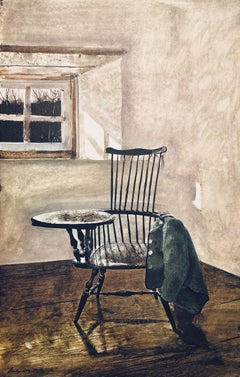
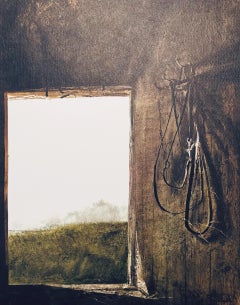
Andrew Wyeth, Early October, from The Four Seasons (after)
By Andrew Wyeth
Located in Southampton, NY
This exquisite lithograph after Andrew Wyeth (1917–2009), titled Early October, originates from the distinguished 1962 folio The Four Seasons: Paintings and Drawings by Andrew Wyeth....
Category

1960s American Realist USA - Landscape Prints

Materials

Lithograph

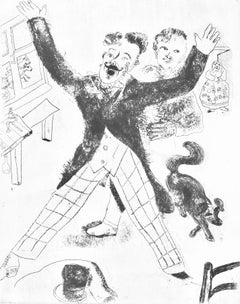
Marc Chagall, Nozdriov, from Nicolas Gogol, Dead Souls, 1923-1927
By Marc Chagall
Located in Southampton, NY
This exquisite etching by Marc Chagall (1887–1985), titled Nozdriov (Nozdriov), originates from the celebrated folio Nicolas Gogol, Les Ames mortes, Eaux-fortes originales de Marc Ch...
Category

1920s Expressionist USA - Landscape Prints

Materials

Etching

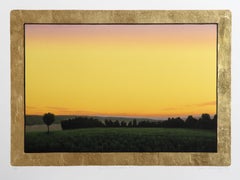
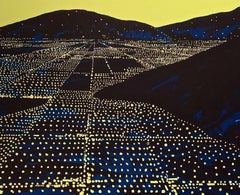
Joe s View Deep Yellow Sky, Impressionist Lithograph by John Beerman
By John Beerman
Located in Long Island City, NY
John Beerman, American (1958 - ) - Joe's View Deep Yellow Sky, Year: 2002, Medium: Lithograph, signed and numbered in pencil, Edition: 4/36, Image Size: 18 x 25 inches, Size: 26...
Category

Early 2000s Impressionist USA - Landscape Prints

Materials

Lithograph

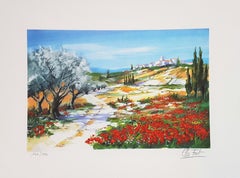
Flower Field (Champ Fleuri) Provence, landscapes, countryside art, Impressionist
By Ella Fort
Located in Kansas City, MO
Ella Fort Flower Field (Champ Fleuri) Color Lithograph Signed, numbered or inscribed Edition: 390 + 250 Size: 7.8 × 11.7 on 11.7 × 15.6 inches COA provided *Framing Options Availab...
Category

1980s Contemporary USA - Landscape Prints

Materials

Lithograph

Edgar Degas, Dancer at the Barre, 1945 (after)
By Edgar Degas
Located in Southampton, NY
This exquisite lithograph after Edgar Degas (1834–1917), titled Danseur au bar (Dancer at the Barre), originates from the 1945 folio Degas, Ten Ballet Sketches. Published by The Studio Publications, Inc., New York, rendered and printed by Albert Carman, City Island, 1945, this work reflects Degas’s sensitive mastery of line, movement, and intimate observation, capturing the grace, poise, and psychological immediacy that define his iconic ballet imagery. In Danseur au bar (Dancer at the Barre), Degas reveals gesture and inner emotion through economical contour and lyrical nuance. Executed as a lithograph and pochoir on velin paper, this work measures 17 x 13 inches (43.18 x 33.02 cm). Signed in the plate and unnumbered as issued. Rendered and printed by Albert Carman, City Island, one of the notable American ateliers specializing in fine art lithography during the mid-20th century. Artwork Details: Artist: After Edgar Degas (1834–1917) Title: Danseur au bar (Dancer at the Barre), from Degas, Ten Ballet Sketches, 1945 Medium: Lithograph and pochoir on velin paper Dimensions: 17 x 13 inches (43.18 x 33.02 cm) Inscription: Signed in the plate and unnumbered as issued Date: 1945 Publisher: The Studio Publications, Inc., New York Printer: Albert Carman, City Island, 1945 Condition: Well preserved, consistent with age and medium Provenance: From the 1945 folio Degas, Ten Ballet Sketches, published by The Studio Publications, Inc., New York Notes: Excerpted from the album, Born in Paris in 1834, Edgar Degas lived, and surely loved the life of that city during most of his years. These continued somewhat sadly beyond those of most of his friends— into the debacle of the first World War, during which he died in 1917. Judging by the frequency with which he used them as models, he must have had an especial admiration for the ballet girls who followed a profession that at the time brought none of the glory and prosperity which attend it today. New aspects of the human body, revealed in movement, fascinated him. But his occupation with the simply anatomical side of his subjects never resulted in a cold interpretation. On the contrary there is a warmth and sympathy that pervades all of his work. The drawings here represent the painter in one important phase of his multi-sensitive view of life; and permit an insight which a more ambitious work might not do-into the operation of the creative process, the artist's transformation of reality as it passes through the mesh of his sensibilities. The Edition of this Portfolio is limited to MMMD examples. Rendered by Albert Carman. About the Publication: Degas, Ten Ballet Sketches, published in 1945 by The Studio Publications, Inc., New York, stands as one of the most elegant and scholarly mid-century American fine art folios devoted to the ballet imagery of Edgar Degas. Conceived as a high-quality interpretive portfolio, the album presents a series of lithograph-and-pochoir renderings based on Degas’s original drawings, executed with exceptional attention to tonal subtlety, contour fidelity, and the emotional interiority that defines the artist’s draftsmanship. Rendered and printed by Albert Carman on City Island, the publication embodies an American postwar effort to restore and celebrate European masterworks through meticulous handcraft and artisanal color application, honoring Degas’s distinctive line and the atmospheric delicacy of his studio-based studies. Produced in a substantial edition of MMMD examples, the portfolio offered audiences rare access to Degas’s private working drawings—images rarely seen outside institutional collections—while exemplifying the technical refinement and interpretive care characteristic of Carman’s workshop. Today, Degas, Ten Ballet Sketches remains a sought-after historical publication, valued for its craft, fidelity to Degas’s aesthetic, and its role in preserving and disseminating the artist’s intimate ballet imagery in a beautifully executed mid-century fine art format. About the Artist: Edgar Degas (1834–1917) was a French painter, draughtsman, printmaker, and sculptor whose groundbreaking fusion of classical draftsmanship, modern experimentation, and psychological depth helped define the trajectory of Western art, positioning him as one of the most influential figures of the nineteenth and early twentieth centuries; renowned for his depictions of ballet dancers, racehorses, theater scenes, cafe life, domestic interiors, milliners, laundresses, and women at their toilette, Degas reimagined observational realism through radical compositional innovation—employing extreme cropping, asymmetrical framing, oblique viewpoints, and dramatic lighting that anticipated photographic and cinematic language long before these technologies shaped visual culture, and although associated with Impressionism, he rejected plein-air spontaneity in favor of studio-based discipline rooted in the linear precision of Jean-Auguste-Dominique Ingres, the expressive chromaticism of Eugene Delacroix, and the modernity of Edouard Manet while also drawing inspiration from Japanese ukiyo-e prints, classical sculpture, and early photography; his independent artistic philosophy resonated with and helped shape the innovations of Pablo Picasso, Alexander Calder, Alberto Giacometti, Salvador Dali, Joan Miro, Wassily Kandinsky, Marcel Duchamp, and Man Ray, whose explorations of movement, form, dream logic, abstraction, and conceptualism all find antecedents in Degas’s investigations into seriality, temporality, and the fragmented figure, and his pioneering use of pastel, monotype, and wax sculpture fundamentally transformed each medium, influencing artists from Henri Matisse, Francis Bacon, Lucian Freud, and Giacomo Manzu to Paula Rego, contemporary realists, experimental photographers, and choreographers; his works are held in nearly every major museum collection worldwide—including the Musee dOrsay, the Louvre, the Metropolitan Museum of Art, the National Gallery of Art, the Art Institute of Chicago, the Courtauld Institute, and the National Gallery, London—affirming his central place in the history of art, and the highest auction record for Degas was achieved at Sothebys London on February 3, 2015, when Danseuses en Bleu sold for 37,033,000 GBP, cementing his status as one of the most sought-after and enduringly significant artists of the Western canon. Edgar Degas lithograph...
Category

1940s Impressionist USA - Landscape Prints

Materials

Lithograph

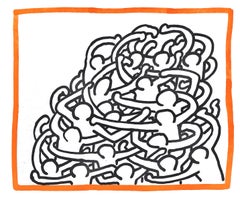
Keith Haring, Untitled, from Against All Odds, 1990
By Keith Haring
Located in Southampton, NY
This exquisite lithograph by Keith Haring (1958–1990), titled Untitled, from the album Against All Odds, 20 drawings - Oct. 3, 1989 (Against All Odds, 20 drawings - Oct. 3, 1989), originates from the 1990 edition published by Publishing House Bebert, Rotterdam, in collaboration with Mera Rubell, New York, and Donald Rubell, New York, and printed by Nieuwe Grafische, Rotterdam, Spring, 1990. Untitled embodies Haring’s signature visual vocabulary—dynamic lines, rhythmic energy, and universal symbolism—infused with the social urgency and optimism that defined his generation. Executed as a lithograph on velin acid-free Rivoli paper, this work measures 8.5 x 10.3 inches. Unsigned and unnumbered as issued. The edition exemplifies the refined craftsmanship of Nieuwe Grafische, Rotterdam, and the bold spirit of Bebert’s late twentieth-century artist collaborations. Artwork Details: Artist: Keith Haring (1958–1990) Title: Untitled, from the album Against All Odds, 20 drawings - Oct. 3, 1989 (Against All Odds, 20 drawings - Oct. 3, 1989) Medium: Lithograph on velin acid-free Rivoli paper Dimensions: 8.5 x 10.3 inches (21.59 x 26.16 cm) Inscription: Unsigned and unnumbered as issued Date: 1990 Publisher: Publishing House Bebert, Rotterdam, in collaboration with Mera Rubell, New York, and Donald Rubell, New York Printer: Nieuwe Grafische, Rotterdam Condition: Well preserved, consistent with age and medium Provenance: From the album Against All Odds, 20 drawings - Oct. 3, 1989 (Against All Odds, 20 drawings - Oct. 3, 1989), Bebert, Rotterdam, 1990 Notes: Excerpted from the album, 20 drawings - Oct. 3, 1989 was published with the collaboration of Mera and Donald Rubell by Bebert Publishing House in Spring 1990. The edition consists of MMD hard cover examples, of which D are numbered (I/D - D/D) and signed by the artist. The edition was printed on acid-free Rivoli paper by Nieuwe Grafische in Rotterdam. and bound by Stokkink B.V. in Amsterdam. ©Keith Haring, M.Y.6. 1990. Mera + Don Rubell, NYC 1990. Bebert Publishing House. Westersingel 22-3014 GP, Rotterdam, Holland - 1990. About the Publication: Against All Odds is both an artist’s album and memorial publication comprising twenty lithographs created by Keith Haring on October 3, 1989, just months before his death in February 1990. Conceived in collaboration with Mera and Donald Rubell and published by Bebert Publishing House, Rotterdam, the album encapsulates Haring’s final creative statement. Haring’s accompanying handwritten foreword and brief text meditate on the fragility of human life, ecological collapse, and the artist’s struggle to preserve hope “against all odds.” The drawings—executed in Haring’s immediately recognizable graphic line—depict writhing figures, embryos, skeletons, animals, and cosmic symbols that echo his lifelong concern with birth, death, sexuality, and transcendence. Together, the images and text form a narrative of resistance and endurance amid personal illness and global crisis. The album’s title encapsulates Haring’s sense of perseverance: humanity’s and the planet’s fight for survival despite overwhelming forces of destruction. Published posthumously in spring 1990, Against All Odds stands as a poignant summation of his ethos—celebrating vitality and compassion in the face of mortality and despair. About the Artist: Keith Haring (1958–1990) was an American artist, activist, and cultural innovator whose bold visual language and socially engaged practice redefined contemporary art and the role of the artist in society. Born in Reading, Pennsylvania, and raised in Kutztown, Haring was inspired from an early age by comic art, calligraphy, and graphic design, influences that would later shape his instantly recognizable style of radiant lines, rhythmic movement, and universal symbols. After moving to New York City in 1978 to study at the School of Visual Arts, he immersed himself in the downtown art scene, drawing influence from modernist pioneers such as Pablo Picasso, Alexander Calder, Alberto Giacometti, Salvador Dali, Joan Miro, Wassily Kandinsky, Marcel Duchamp, and Man Ray, whose innovations in form, abstraction, and conceptual art informed his radical approach to public expression. Haring began creating chalk drawings in the New York subway system, transforming urban walls into democratic spaces for creativity and communication. His imagery—radiant babies, barking dogs, flying saucers, and dancing figures—spoke a universal visual language that combined accessibility with profound emotional and political resonance. He became a leading figure in 1980s New York, working alongside Jean-Michel Basquiat, Andy Warhol, and Kenny Scharf to bridge the worlds of street art, pop culture, and fine art. Influenced by Picasso’s expressive energy, Calder’s movement, Miro’s playfulness, and Duchamp’s conceptual wit, Haring developed an art of optimism, immediacy, and activism that addressed issues of love, unity, social justice, and human rights. His work carried urgent commentary on apartheid, AIDS awareness, drug abuse, and inequality, while radiating the joy and vitality of life. In 1986, he opened the Pop Shop, a groundbreaking experiment in making art accessible to all, selling affordable objects featuring his designs without compromising his artistic vision. His monumental public murals, including Crack Is Wack in Harlem and Tuttomondo in Pisa, Italy, continue to stand as symbols of art’s power to educate and inspire collective action. Haring’s dynamic compositions merged the energy of graffiti with the structural clarity of modernism, synthesizing the spiritual abstraction of Kandinsky, the surreal imagination of Dali, and the sensual immediacy of Man Ray. His work influenced generations of artists, including Banksy, Shepard Fairey, KAWS, Takashi Murakami, and RETNA, who continue to echo his fusion of activism and aesthetics. Despite his untimely death from AIDS at age 31, Haring’s impact on art and culture endures globally through the Keith Haring Foundation, which supports children’s programs and HIV/AIDS research. His works are housed in major museums such as the Museum of Modern Art, the Whitney Museum of American Art, the Centre Pompidou, and the Tate Modern, affirming his legacy as a cornerstone of twentieth-century art. The highest auction record for Keith Haring was achieved with Untitled (1982), which sold for $6.5 million USD at Sotheby’s, New York, on May 16, 2017, solidifying his status as one of the most influential, beloved, and enduring artists of the modern era. Keith Haring Untitled Against All Odds 20 drawings Oct 3 1989 Bebert Publishing House Rotterdam 1990 lithograph...
Category

1990s Pop Art USA - Landscape Prints

Materials

Lithograph

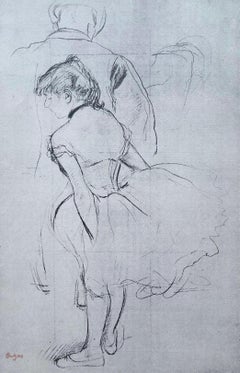
Edgar Degas, Dancer Arranging Her Dress, 1945 (after)
By Edgar Degas
Located in Southampton, NY
This exquisite lithograph after Edgar Degas (1834–1917), titled Danseuse arrangeant sa robe (Dancer Arranging Her Dress), originates from the 1945 folio Degas, Ten Ballet Sketches. Published by The Studio Publications, Inc., New York, rendered and printed by Albert Carman, City Island, 1945, this work reflects Degas’s sensitive mastery of line, movement, and intimate observation, capturing the grace, poise, and psychological immediacy that define his iconic ballet imagery. In Danseuse arrangeant sa robe (Dancer Arranging Her Dress), Degas reveals gesture and inner emotion through economical contour and lyrical nuance. Executed as a lithograph and pochoir on velin paper, this work measures 17 x 13 inches (43.18 x 33.02 cm). Signed in the plate and unnumbered as issued. Rendered and printed by Albert Carman, City Island, one of the notable American ateliers specializing in fine art lithography during the mid-20th century. Artwork Details: Artist: After Edgar Degas (1834–1917) Title: Danseuse arrangeant sa robe (Dancer Arranging Her Dress), from Degas, Ten Ballet Sketches, 1945 Medium: Lithograph and pochoir on velin paper Dimensions: 17 x 13 inches (43.18 x 33.02 cm) Inscription: Signed in the plate and unnumbered as issued Date: 1945 Publisher: The Studio Publications, Inc., New York Printer: Albert Carman, City Island, 1945 Condition: Well preserved, consistent with age and medium Provenance: From the 1945 folio Degas, Ten Ballet Sketches, published by The Studio Publications, Inc., New York Notes: Excerpted from the album, Born in Paris in 1834, Edgar Degas lived, and surely loved the life of that city during most of his years. These continued somewhat sadly beyond those of most of his friends— into the debacle of the first World War, during which he died in 1917. Judging by the frequency with which he used them as models, he must have had an especial admiration for the ballet girls who followed a profession that at the time brought none of the glory and prosperity which attend it today. New aspects of the human body, revealed in movement, fascinated him. But his occupation with the simply anatomical side of his subjects never resulted in a cold interpretation. On the contrary there is a warmth and sympathy that pervades all of his work. The drawings here represent the painter in one important phase of his multi-sensitive view of life; and permit an insight which a more ambitious work might not do-into the operation of the creative process, the artist's transformation of reality as it passes through the mesh of his sensibilities. The Edition of this Portfolio is limited to MMMD examples. Rendered by Albert Carman. About the Publication: Degas, Ten Ballet Sketches, published in 1945 by The Studio Publications, Inc., New York, stands as one of the most elegant and scholarly mid-century American fine art folios devoted to the ballet imagery of Edgar Degas. Conceived as a high-quality interpretive portfolio, the album presents a series of lithograph-and-pochoir renderings based on Degas’s original drawings, executed with exceptional attention to tonal subtlety, contour fidelity, and the emotional interiority that defines the artist’s draftsmanship. Rendered and printed by Albert Carman on City Island, the publication embodies an American postwar effort to restore and celebrate European masterworks through meticulous handcraft and artisanal color application, honoring Degas’s distinctive line and the atmospheric delicacy of his studio-based studies. Produced in a substantial edition of MMMD examples, the portfolio offered audiences rare access to Degas’s private working drawings—images rarely seen outside institutional collections—while exemplifying the technical refinement and interpretive care characteristic of Carman’s workshop. Today, Degas, Ten Ballet Sketches remains a sought-after historical publication, valued for its craft, fidelity to Degas’s aesthetic, and its role in preserving and disseminating the artist’s intimate ballet imagery in a beautifully executed mid-century fine art format. About the Artist: Edgar Degas (1834–1917) was a French painter, draughtsman, printmaker, and sculptor whose groundbreaking fusion of classical draftsmanship, modern experimentation, and psychological depth helped define the trajectory of Western art, positioning him as one of the most influential figures of the nineteenth and early twentieth centuries; renowned for his depictions of ballet dancers, racehorses, theater scenes, cafe life, domestic interiors, milliners, laundresses, and women at their toilette, Degas reimagined observational realism through radical compositional innovation—employing extreme cropping, asymmetrical framing, oblique viewpoints, and dramatic lighting that anticipated photographic and cinematic language long before these technologies shaped visual culture, and although associated with Impressionism, he rejected plein-air spontaneity in favor of studio-based discipline rooted in the linear precision of Jean-Auguste-Dominique Ingres, the expressive chromaticism of Eugene Delacroix, and the modernity of Edouard Manet while also drawing inspiration from Japanese ukiyo-e prints, classical sculpture, and early photography; his independent artistic philosophy resonated with and helped shape the innovations of Pablo Picasso, Alexander Calder, Alberto Giacometti, Salvador Dali, Joan Miro, Wassily Kandinsky, Marcel Duchamp, and Man Ray, whose explorations of movement, form, dream logic, abstraction, and conceptualism all find antecedents in Degas’s investigations into seriality, temporality, and the fragmented figure, and his pioneering use of pastel, monotype, and wax sculpture fundamentally transformed each medium, influencing artists from Henri Matisse, Francis Bacon, Lucian Freud, and Giacomo Manzu to Paula Rego, contemporary realists, experimental photographers, and choreographers; his works are held in nearly every major museum collection worldwide—including the Musee dOrsay, the Louvre, the Metropolitan Museum of Art, the National Gallery of Art, the Art Institute of Chicago, the Courtauld Institute, and the National Gallery, London—affirming his central place in the history of art, and the highest auction record for Degas was achieved at Sothebys London on February 3, 2015, when Danseuses en Bleu sold for 37,033,000 GBP, cementing his status as one of the most sought-after and enduringly significant artists of the Western canon. Edgar Degas lithograph...
Category

1940s Impressionist USA - Landscape Prints

Materials

Lithograph

Landsend
By Jessica Brilli
Located in New York, NY
ABOUT THIS ARTIST: Jessica Brilli (Sayville, NY 1977) has been drawing and painting since her childhood. Working in a style that encompasses American realism and 20th century graphic...
Category

2010s USA - Landscape Prints

Materials

Photographic Paper

Wassily Kandinsky, Untitled, from Derriere le Miroir, 1953 (after)
By Wassily Kandinsky
Located in Southampton, NY
This exquisite lithograph after Wassily Kandinsky (1866–1944), titled Sans Titre (Untitled), originates from the 1953 folio Derriere le Miroir, Nos. 60–61, published by Maeght Editeu...
Category

1950s Modern USA - Landscape Prints

Materials

Lithograph

Pablo Picasso, The Divan, The Blues of Barcelona, 1963 (after)
By Pablo Picasso
Located in Southampton, NY
This exquisite lithograph and pochoir after Pablo Picasso (1881–1973), titled Le divan (The Divan), from the folio Les Bleus de Barcelone, 12 aquarelles et pastels (The Blues of Barc...
Category

1960s Modern USA - Landscape Prints

Materials

Lithograph, Stencil

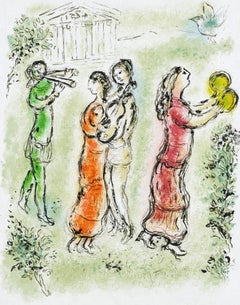
Marc Chagall, The Celebration, from Homer, The Odyssey, 1989 (after)
By Marc Chagall
Located in Southampton, NY
This exquisite lithograph after Marc Chagall (1887–1985), titled Das Fest (The Celebration), from Homer, Die Odyssee (The Odyssey), originates from the 1989 German-language folio published by Daco-Verlag Gunter Blase, Stuttgart, and printed by Lichtdruck AG, Zurich, Dielsdorf, September 1989. This authorized edition, issued under the direction of Vava Chagall, presents one of Chagall’s most joyful and expressive interpretations of Homer’s epic. In Das Fest, Chagall transforms the revelry of ancient feasts into a luminous vision of human connection, music, and harmony, rendered with his signature lyricism and dreamlike color palette. Executed on 250 g/m² Butten Papierwerke Miliani AG, Fabriano paper, this lithograph measures 14.88 x 11.69 inches. Unsigned and unnumbered, as issued. The edition exemplifies the exceptional quality and precision of Lichtdruck AG’s craftsmanship, reproducing the depth and richness of Chagall’s original lithographs with remarkable fidelity. Artwork Details: Artist: After Marc Chagall (1887–1985) Title: Das Fest (The Celebration), from Homer, Die Odyssee (The Odyssey), 1989 Medium: Lithograph on 250 g/m² Butten Papierwerke Miliani AG, Fabriano paper Dimensions: 14.88 x 11.69 inches Inscription: Unsigned and unnumbered, as issued Date: 1989 Publisher: Daco-Verlag Gunter Blase, Stuttgart Printer: Lichtdruck AG, Zurich, Dielsdorf Condition: Well preserved, consistent with age and medium Provenance: From the folio Homer, Die Odyssee (The Odyssey), Daco-Verlag Gunter Blase, Stuttgart, 1989 Notes: Excerpted from the folio (translated from German), Imprint—The French edition, L'Odyssée, with the original lithographs by Marc Chagall was published in 1974/75 in a CCL-example edition by Fernand Mourlot, Paris. In 1989, with the authorization of Mrs. Vava Chagall, the German-language edition of the Odyssey in two volumes was published by Daco-Verlag Gunter Blase, Stuttgart. Volume I contains the songs I - XII with XX color plates, including IV on double pages and XIX gray printed reproductions in the text. Volume II contains the songs XIII - XXIV with XXIII color plates, including II on double pages and XX gray printed reproductions in the text. For the German text, the prose translation by Wolfgang Schadewaldt was chosen with the permission of Rowohlt Taschenbuch Verlag, Reinbek near Hamburg. Set design in the Berthold Garamond Antiqua by F+M Bauer...
Category

1980s Expressionist USA - Landscape Prints

Materials

Lithograph

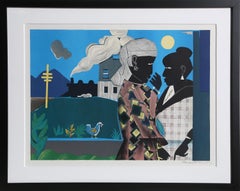
The Conversation, Signed Modern Lithograph by Romare Bearden
By Romare Bearden
Located in Long Island City, NY
This print by African American Modern artist Romare Bearden is a limited edition, lithograph on Somerset paper. The scene comes from Bearden's Mecklenburg series, a collection of ima...
Category

1970s Modern USA - Landscape Prints

Materials

Lithograph

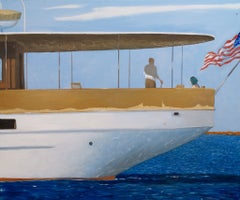
Sunday on the Narragansett
By Julio Larraz
Located in New York, NY
ABOUT THIS PIECE: Julio Larraz is an expert draftsman, adroitly sketching his subjects and enlivening them with vibrant color. Larraz is recognized for his precise and detailed techn...
Category

Early 2000s USA - Landscape Prints

Materials

Photographic Paper

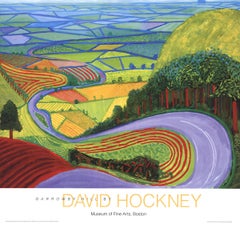
David Hockney-Garrowby Hill Pop Art Vintage
By David Hockney
Located in Brooklyn, NY
Hockney returned to his native Yorkshire in the 1990s and was inspired by the countryside he found there. Interpreting it through the lens of early 20th century artists such as Matis...
Category

Late 20th Century Pop Art USA - Landscape Prints

Materials

Offset

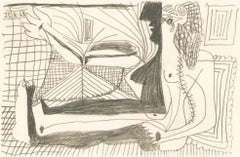
Pablo Picasso, 25.4.64., The Taste of Happiness, 1970 (after)
By Pablo Picasso
Located in Southampton, NY
This exquisite lithograph after Pablo Picasso (1881–1973), titled 25.4.64., from the folio Le Gout du Bonheur, trois carnets d`atelier (The Taste of Happiness, Three Studio Sketchboo...
Category

1970s Cubist USA - Landscape Prints

Materials

Lithograph

Pablo Picasso, 10.3.59. VIII, from Bulls and Bullfighters, 1961 (after)
By Pablo Picasso
Located in Southampton, NY
This exquisite heliogravure after Pablo Picasso (1881–1973), titled 10.3.59. VIII, from the album Pablo Picasso, Toros y Toreros (Bulls and Bullfighters), originates from the 1961 ed...
Category

1960s Cubist USA - Landscape Prints

Materials

Lithograph

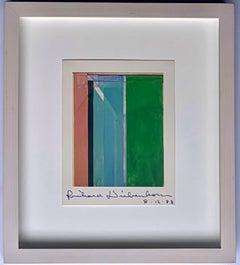
Art Card: Richard Diebenkorn, Ocean Park 30 (Hand Signed by Richard Diebenkorn)
By Richard Diebenkorn
Located in New York, NY
Art Card: Richard Diebenkorn, Ocean Park 30 (Hand Signed by Richard Diebenkorn) from the Estate of UACC President Cordelia Platt Offset lithograph card Hand signed and dated 8.12.88...
Category

1980s Abstract USA - Landscape Prints

Materials

Postcard

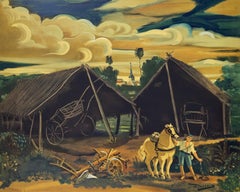
Andre Derain, The Two Hangars, 1970 (after)
By André Derain
Located in Southampton, NY
This exquisite lithograph after Andre Derain (1880–1954), titled Les deux hangars (The Two Hangars), from the folio Andre Derain entre 1935 et 1949, V (Andre Derain between 1935 and ...
Category

1970s Fauvist USA - Landscape Prints

Materials

Lithograph

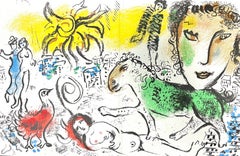
Marc Chagall, Sun Over the City, from XXe siecle, 1973
By Marc Chagall
Located in Southampton, NY
This exquisite lithograph by Marc Chagall (1887–1985), titled Soleil sur la ville (Sun Over the City), from the album Chagall Monumental Works, Special Issue of the XXe Siecle Review...
Category

1970s Expressionist USA - Landscape Prints

Materials

Lithograph

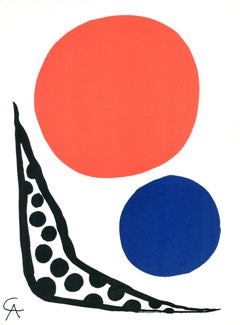
Alexander Calder, Untitled, from Prints from the Mourlot Press, 1964
By Alexander Calder
Located in Southampton, NY
This exquisite lithograph by Alexander Calder (1898–1976), titled Sans titre (Untitled), from the album Prints from the Mourlot Press, exhibition sponsored by the French Embassy, cir...
Category

1960s Surrealist USA - Landscape Prints

Materials

Lithograph

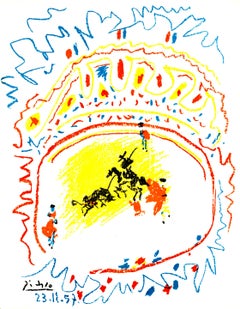
Pablo Picasso, The Little Bullfight, from XXe siecle, 1970
By Pablo Picasso
Located in Southampton, NY
This exquisite lithograph by Pablo Picasso (1881–1973), titled La Petite Corrida (The Little Bullfight), from the album Special issue of the XX Siecle Review, Hommage a Picasso, originates from the 1971 edition published by Tudor Publishing Co., New York, in collaboration with Societe Internationale d'Art XXe siecle, Paris, under the direction of Gualtieri di San Lazzaro, editeur, Paris, and printed by Mourlot Freres, Paris. La Petite Corrida reflects Picasso’s lifelong fascination with the bullfight—a subject that symbolized vitality, struggle, and creation throughout his career. Executed with the spontaneity and graphic brilliance characteristic of his late lithographs, the composition captures both movement and ritual, merging ancient spectacle with modern energy. Executed as a lithograph on velin paper, this work measures 12.5 × 9.75 inches (31.75 × 24.77 cm). Signed in the plate and unnumbered as issued. The edition exemplifies the superb craftsmanship of Mourlot Freres, Paris, the atelier that produced many of Picasso’s greatest lithographic works. Artwork Details: Artist: Pablo Picasso (1881–1973) Title: La Petite Corrida (The Little Bullfight), from the album Hommage a Picasso, 1971 Medium: Lithograph on velin paper Dimensions: 12.5 × 9.75 inches (31.75 × 24.77 cm) Inscription: Signed in the plate and unnumbered as issued Date: 1971 Publisher: Tudor Publishing Co., New York, in collaboration with Societe Internationale d'Art XXe siecle, Paris Printer: Mourlot Freres, Paris Catalogue raisonne references: Catalogue de L’oeuvre Grave et Lithographie, Pablo Picasso: Catalogue of the Printed Graphic Work. Editions Kornfeld, 1967, illustration 839. Goeppert, Sebastian, et al. Pablo Picasso, the Illustrated Books: Catalogue Raisonne. Patrick Cramer, 1983, illustration 92. Picasso, Pablo, and Fernand Mourlot. Picasso Lithographs, Translated by Jean Didry, Boston Book and Art Publisher, 1970, illustration 302. Condition: Well preserved, consistent with age and medium Provenance: From the album Hommage a Picasso, published 1971 by Tudor Publishing Co. and Societe Internationale d'Art XXe siecle, Paris About the Publication: Gualtieri di San Lazzaro’s XXe Siecle (Twentieth Century) was one of the most influential art journals of the modern era, founded in Paris in 1938 as a platform for the greatest painters, sculptors, and writers of the 20th century. San Lazzaro—a visionary editor, critic, and champion of modernism—believed that art and literature should coexist as expressions of a shared human imagination. Under his direction, XXe Siecle became a cultural bridge between Europe and the wider world, publishing special issues devoted to leading figures such as Picasso, Matisse, Chagall, Braque, Calder, Miro, Kandinsky, and Leger. Each edition combined essays by renowned critics and poets with original lithographs printed by the foremost ateliers of Paris, including Mourlot, Arte, and Bellini, creating a uniquely rich dialogue between text and image. Through XXe Siecle, San Lazzaro preserved the creative spirit of the avant-garde during and after World War II, championing freedom of expression and the evolution of abstraction, Surrealism, and modern thought. Over nearly four decades, the journal shaped international taste and defined the intellectual landscape of postwar art publishing. Today, XXe Siecle remains celebrated for its extraordinary synthesis of art, literature, and design—an enduring testament to Gualtieri di San Lazzaro’s belief that the visual arts are the soul of the modern age. About the Artist: Pablo Picasso (1881–1973) was a Spanish painter, sculptor, printmaker, and ceramicist whose extraordinary vision revolutionized modern art and defined the visual language of the 20th century. A child prodigy from Malaga, Spain, Picasso’s career spanned more than seven decades and encompassed an astonishing range of styles and innovations—from the melancholic Blue and romantic Rose periods to his pioneering invention of Cubism with Georges Braque, which shattered conventional notions of perspective and form. Influenced by the bold expressiveness of El Greco, the structure of Cezanne, and the vitality of African and Iberian sculpture, Picasso became a central figure of the Paris avant-garde, working in creative dialogue with contemporaries such as Henri Matisse, Alexander Calder, Alberto Giacometti, Salvador Dali, Joan Miro, Wassily Kandinsky, Marcel Duchamp, and Man Ray. His insatiable experimentation extended across painting, drawing, printmaking, ceramics, and sculpture, forever expanding the boundaries of artistic expression. A master of reinvention, Picasso profoundly shaped generations of artists who followed—from Andy Warhol, Roy Lichtenstein, David Hockney, and Jean-Michel Basquiat to Jeff Koons and Banksy—cementing his status as a timeless cultural icon whose works remain among the most sought after worldwide. His landmark painting Les Femmes d’Alger (Version “O”) achieved a record-breaking sale of $179,365,000 at Christie’s, New York, on May 11, 2015, affirming Picasso’s enduring legacy as one of the most influential and valuable artists in history. Pablo Picasso La Petite Corrida, Picasso Mourlot Freres, Picasso XXe siecle, Picasso Hommage a Picasso, Picasso 1971 lithograph, Picasso velin paper, Picasso bullfight lithograph...
Category

1970s Cubist USA - Landscape Prints

Materials

Lithograph

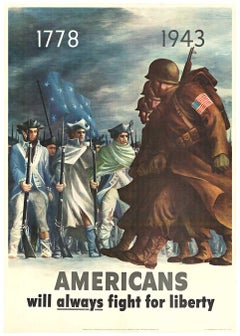
Original Americans will Always Fight for Liberty vintage WWII (1943) poster
Located in Spokane, WA
Title: Original 1943 WWII Propaganda Poster - "Americans Will Always Fight for Liberty" - Authentic U.S. Government Issue. Archival linen-backed with the original US Government-issue...
Category

1940s American Modern USA - Landscape Prints

Materials

Offset

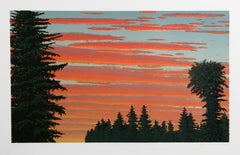
Sunset, Impressionist Lithograph by John Beerman
By John Beerman
Located in Long Island City, NY
John Beerman, American (1958 - ) - Sunset, Year: 1994, Medium: Lithograph, signed and numbered in pencil, Edition: CTP #3, Image Size: 18 x 30 inches, Size: 25.5 x 37 in. (64.7...
Category

1990s Impressionist USA - Landscape Prints

Materials

Lithograph

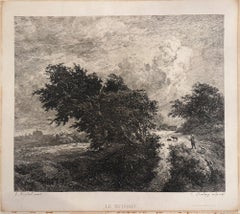
Le Buisson (The Bush); Chalcographie du Louvre, vol. IV, plate 109
By Charles François Daubigny
Located in Middletown, NY
Chalcographie du Musee du Louvre, 1855. Etching on cream wove paper, 17 5/16 x 19 3/16 inches (439 x 488 mm); sheet 17 3/4 x 20 1/8 inches (451 x 519 mm), full margins. Scattered ma...
Category

Late 19th Century French School USA - Landscape Prints

Materials

Handmade Paper, Etching

Faith Ringgold, Slavery, from Letter from Birmingham City Jail, 2007
By Faith Ringgold
Located in Southampton, NY
This exquisite silkscreen by Faith Ringgold (1930–2024), titled Slavery, from the folio Letter from Birmingham City Jail, originates from the 2007 edition published by The Limited Ed...
Category

Early 2000s Expressionist USA - Landscape Prints

Materials

Screen

Andrew Wyeth, New Leaves, from The Four Seasons (after)
By Andrew Wyeth
Located in Southampton, NY
This exquisite lithograph after Andrew Wyeth (1917–2009), titled New Leaves, originates from the distinguished 1962 folio The Four Seasons: Paintings and Drawings by Andrew Wyeth. Published and printed by Art in America Company, Inc., New York, the edition exemplifies Wyeth’s quiet observation of nature and the passage of time. New Leaves captures the delicate stir of spring renewal—the subtle emergence of life in the landscape—rendered with Wyeth’s hallmark balance of precision, restraint, and emotional depth. Executed on velin paper, this lithograph measures 17 x 13 inches (43.2 x 33 cm). As issued, it is unsigned and unnumbered, representing the folio’s authentic format. The Four Seasons series was conceived by the editors of Art in America in collaboration with Andrew and Betsy Wyeth, who selected drawings from the artist’s studio and personal archive to embody the poetic rhythm of the changing seasons. Each composition reveals Wyeth’s mastery of atmosphere, mood, and the quiet intensity of natural experience. Artwork Details: Artist: After Andrew Wyeth (1917–2009) Title: New Leaves, from The Four Seasons, Paintings and Drawings by Andrew Wyeth, 1962 Medium: Lithograph on velin paper Dimensions: 17 x 13 inches (43.2 x 33 cm) Inscription: Unsigned and unnumbered, as issued Date: 1962 Publisher: Art in America Company, Inc., New York Printer: Art in America Company, Inc., New York Condition: Well preserved, consistent with age and medium Provenance: From the 1962 folio The Four Seasons, Paintings and Drawings by Andrew Wyeth, published and printed by Art in America Company, Inc., New York Notes: Excerpted from the 1962 folio: "In 1962 the editors of Art in America proposed to Wyeth a portfolio of images of his recent dry-brush drawings. The artist and his wife suggested the theme, 'The Four Seasons,' because of the essential role played in his work by the cycle of the seasons. The drawings were selected by Andrew and Betsy Wyeth from works in the house and studio at Chadds Ford, supplemented by some owned by friends. With a few exceptions they had never been exhibited or reproduced. The plates were made directly from the originals. In these drawings Wyeth's loving concentration on the object is fully revealed. But as always in his work, this concern with the tangible is balanced by sensibility to mood, to the emotion arising from the actual. They are pervaded with a sense of the season—the exact time of year, the hour of the day, the quality of the light. To the truth and subtlety with which he captures these intangible factors, these drawings owe their poignant poetry." About the Artist: Andrew Wyeth (1917–2009) was an American visual artist and one of the best-known painters of the mid-20th century. Although he considered himself an abstractionist, Wyeth’s work is characterized by a meticulous realism imbued with psychological depth and atmosphere. He often painted the landscapes and people surrounding his homes in Chadds Ford, Pennsylvania, and Cushing, Maine, creating an intimate record of American rural life. The son of the celebrated illustrator N. C. Wyeth, Andrew trained under his father before developing his own deeply personal visual language inspired by Winslow Homer, Henry David Thoreau, and King Vidor. His wife, Betsy Wyeth, was both his muse and career manager, while his son Jamie Wyeth continued the family’s artistic legacy. Among Wyeth’s best-known works is Christina’s World (1948), housed in the Museum of Modern Art, New York—a quintessential image of 20th-century American art. His other notable series include The Helga Pictures and his window studies, each reflecting a profound meditation on solitude, memory, and perception. Wyeth was the first painter to receive both the Presidential Medal of Freedom and the Congressional Gold Medal, and was elected to the French Académie des Beaux-Arts in 1980. In 2022, Andrew Wyeth's painting Day Dream sold for USD 23.29 million at Christie’s New York, setting a world record for the artist. Andrew Wyeth lithograph...
Category

1960s American Realist USA - Landscape Prints

Materials

Lithograph

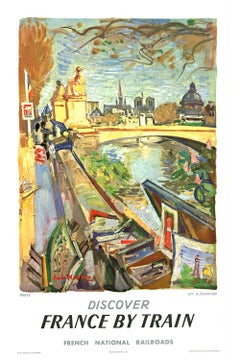
Original DISCOVER FRANCE BY TRAIN -SNCF - French National Railways 1953 poster
By Andre Planson
Located in Spokane, WA
1953 “Discover France by Train” — A. Planson — French National Railways (SNCF) — Original Vintage Poster, archival linen-backed, Grade A. Ready to frame. In 1953, the SNCF, France’...
Category

1950s Impressionist USA - Landscape Prints

Materials

Lithograph

Hallelujah II, Peter Alexander
By Peter Alexander, 1939
Located in Fairfield, CT
Artist: Peter Alexander (1939) Title: Hallelujah II Year: 1988 Edition: 50, plus proofs Medium: Lithograph on Guarro paper Size: 22 x 30 inches Condition: Excellent Inscription: Sign...
Category

1980s Pop Art USA - Landscape Prints

Materials

Lithograph

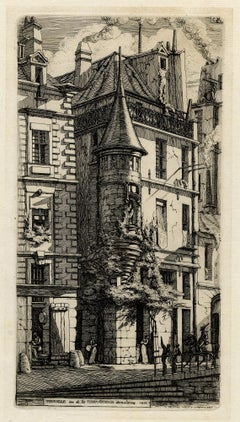
Tourelle, Rue de la Tixéranderie démolie en 1851
By Charles Meryon
Located in Middletown, NY
Etching and drypoint on watermarked Hudelist laid paper, 9 5/8 x 5 inches (245 x 129mm) full margins. Second state (of five) after lettering. A superb condition with a pencil inscrip...
Category

Mid-19th Century French School USA - Landscape Prints

Materials

Laid Paper, Etching, Drypoint

Alexander Calder, Rings on Black, from Derriere le Miroir, 1973
By Alexander Calder
Located in Southampton, NY
This exquisite lithograph by Alexander Calder (1898–1976), titled Anneaux sur noir (Rings on Black), originates from the historic 1973 folio Derriere le Miroir, No. 201. Published by...
Category

1970s Modern USA - Landscape Prints

Materials

Lithograph

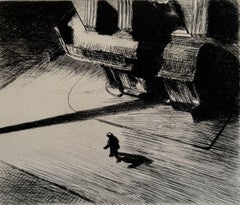
Night Shadows
By Edward Hopper
Located in Plano, TX
Night Shadows. 1921. Etching. Levin 82. 7 x 8 3/8 (sheet 10 x 13 7 1/16).s Series: Six American Etchings: The New Republic Portfolio, 1924. Edition approximately 500-600. Illustrate...
Category

1920s American Modern USA - Landscape Prints

Materials

Etching

Night Shadows
Night Shadows
$48,000 Sale Price
20% Off
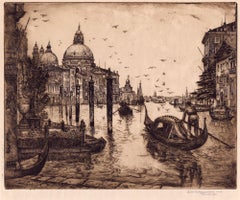
The Grand Canal, Venice
By Elias S. Mandel Grossman
Located in Middletown, NY
1926. Etching in sepia ink on Japon paper, 9 5/8 x 11 1/2 inches (245 x 292 mm), full margins with the lower margin slightly notched. Signed, titled and dated in pencil in the lower ...
Category

Early 20th Century American Modern USA - Landscape Prints

Materials

Handmade Paper, Etching

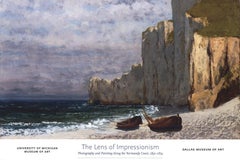
A Bay with Cliffs (Detail)
By Gustave Courbet
Located in Brooklyn, NY
Poster created for the exhibition The Lens of Impressionism, held at the Dallas Museum of Art in 1997. The image features a detail from Gustave Courbet’s A Bay with Cliffs, highlight...
Category

1990s Impressionist USA - Landscape Prints

Materials

Offset

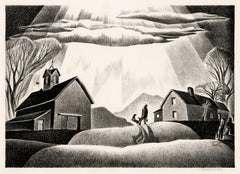
Partners — Mid-Century Modernist Regionalism
By Dale Nichols
Located in Myrtle Beach, SC
Dale Nichols, 'Partners', lithograph, edition 250, 1950. Signed in pencil. A fine, richly-inked impression, on cream wove paper; the full sheet with margins (7/8 to 1 5/8 inches); tw...
Category

1950s American Modern USA - Landscape Prints

Materials

Lithograph

Andrew Wyeth, Burning Off, from The Four Seasons (after)
By Andrew Wyeth
Located in Southampton, NY
This exquisite lithograph after Andrew Wyeth (1917–2009), titled Burning Off, originates from the distinguished 1962 folio The Four Seasons: Paintings and Drawings by Andrew Wyeth. Published and printed by Art in America Company, Inc., New York, the edition captures Wyeth’s poetic meditation on atmosphere and transformation. Burning Off depicts a summer morning’s sea fog gradually lifting from the landscape, revealing the tranquil geometry of field and horizon. Through restrained tonal contrasts and delicate textural nuance, Wyeth conveys both the mystery and stillness of the natural world in transition. Executed on velin paper, this lithograph measures 17 x 13 inches (43.2 x 33 cm). As issued, it is unsigned and unnumbered, representing the folio’s authentic format. The Four Seasons series was conceived by the editors of Art in America in collaboration with Andrew and Betsy Wyeth, who selected drawings from the artist’s studio and personal collection to embody the cyclical poetry of the seasons. Each image reflects Wyeth’s profound sensitivity to light, time, and emotion—his ability to evoke the spiritual essence of landscape through quiet realism. Artwork Details: Artist: After Andrew Wyeth (1917–2009) Title: Burning Off, from The Four Seasons, Paintings and Drawings by Andrew Wyeth, 1962 Medium: Lithograph on velin paper Dimensions: 17 x 13 inches (43.2 x 33 cm) Inscription: Unsigned and unnumbered, as issued Date: 1962 Publisher: Art in America Company, Inc., New York Printer: Art in America Company, Inc., New York Condition: Well preserved, consistent with age and medium Provenance: From the 1962 folio The Four Seasons, Paintings and Drawings by Andrew Wyeth, published and printed by Art in America Company, Inc., New York Notes: Excerpted from the 1962 folio: "In 1962 the editors of Art in America proposed to Wyeth a portfolio of images of his recent dry-brush drawings. The artist and his wife suggested the theme, 'The Four Seasons,' because of the essential role played in his work by the cycle of the seasons. The drawings were selected by Andrew and Betsy Wyeth from works in the house and studio at Chadds Ford, supplemented by some owned by friends. With a few exceptions they had never been exhibited or reproduced. The plates were made directly from the originals. In these drawings Wyeth's loving concentration on the object is fully revealed. But as always in his work, this concern with the tangible is balanced by sensibility to mood, to the emotion arising from the actual. They are pervaded with a sense of the season—the exact time of year, the hour of the day, the quality of the light. To the truth and subtlety with which he captures these intangible factors, these drawings owe their poignant poetry." About the Artist: Andrew Wyeth (1917–2009) was an American visual artist and one of the best-known painters of the mid-20th century. Although he considered himself an abstractionist, Wyeth’s work is characterized by a meticulous realism imbued with psychological depth and atmosphere. He often painted the landscapes and people surrounding his homes in Chadds Ford, Pennsylvania, and Cushing, Maine, creating an intimate record of American rural life. The son of the celebrated illustrator N. C. Wyeth, Andrew trained under his father before developing his own deeply personal visual language inspired by Winslow Homer, Henry David Thoreau, and King Vidor. His wife, Betsy Wyeth, was both his muse and career manager, while his son Jamie Wyeth continued the family’s artistic legacy. Among Wyeth’s best-known works is Christina’s World (1948), housed in the Museum of Modern Art, New York—a quintessential image of 20th-century American art. His other notable series include The Helga Pictures and his window studies, each reflecting a profound meditation on solitude, memory, and perception. Wyeth was the first painter to receive both the Presidential Medal of Freedom and the Congressional Gold Medal, and was elected to the French Académie des Beaux-Arts in 1980. In 2022, Andrew Wyeth's painting Day Dream sold for USD 23.29 million at Christie’s New York, setting a world record for the artist. Andrew Wyeth lithograph...
Category

1960s American Realist USA - Landscape Prints

Materials

Lithograph

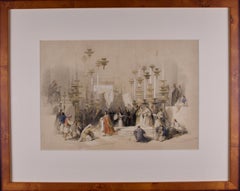
Church of the Holy Sepulchre: A 19th C. Hand-colored Lithograph by David Roberts
By David Roberts
Located in Alamo, CA
"Stone of Unction, Church of the Holy Sepulchre" is a framed 19th century hand-colored lithograph by David Roberts from the large folio edition of his monumental 6 volume publication...
Category

1840s Realist USA - Landscape Prints

Materials

Lithograph

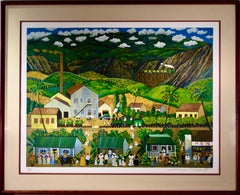
Sugar Cane Day, Hawaii
By Guy Buffet
Located in San Francisco, CA
This artwork titled "Sugar Cane Day, Hawaii" c.1985, is an original color lithograph on paper by noted French artist Guy Buffet, 1943-2023. It is hand signed and numbered 404/425 in ...
Category

Late 20th Century Modern USA - Landscape Prints

Materials

Lithograph

Topiary I - x large format photograph of ornamental shaped tree
By Frank Schott
Located in San Francisco, CA
from a series of photographic observances capturing the antics of urban gardening and striking art of topiaries' green minimalism Topiary I by Frank Schott 59.5 x 59.5 inches (1...
Category

21st Century and Contemporary Contemporary USA - Landscape Prints

Materials

Archival Paper, Photographic Paper, Giclée, Archival Pigment
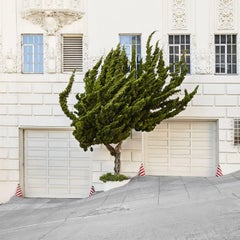
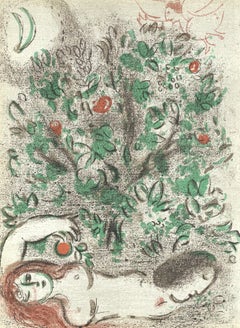
Marc Chagall, Paradise I, from Drawings for the Bible, 1956
By Marc Chagall
Located in Southampton, NY
This exquisite lithograph by Marc Chagall (1887–1985), titled Paradis I (Paradise I), from Marc Chagall, Dessins Pour La Bible (Drawings for the Bible), Verve: Revue Artistique et Litteraire, Vol. VIII, No. 33–34, originates from the September 1956 issue published by Editions de la revue Verve, Paris, under the direction of Teriade, Editeur, Paris, and printed by Mourlot Freres, Paris, 1956. This radiant and dreamlike composition envisions the Garden of Eden as a symbol of divine harmony and innocence, where life, color, and spirit coexist in perfect unity. Through lyrical forms and glowing tonal contrasts, Chagall expresses a vision of creation that transcends narrative, merging spiritual wonder with emotional warmth. Paradis I embodies the artist’s enduring fascination with the sacred origins of life and the poetic balance between the earthly and the eternal. The piece forms part of Chagall’s celebrated series of lithographs and drawings created for Dessins Pour La Bible, a monumental project uniting art, scripture, and mysticism in one of the artist’s most important achievements. Executed as a lithograph on velin du Marais paper, this work measures 14 x 10.5 inches (35.56 x 26.67 cm). Unsigned and unnumbered as issued. The edition exemplifies the superb craftsmanship of the Mourlot Freres atelier, renowned for its collaborations with the greatest modern masters of the 20th century. Artwork Details: Artist: Marc Chagall (1887–1985) Title: Paradis I (Paradise I), from Marc Chagall, Dessins Pour La Bible (Drawings for the Bible), Verve: Revue Artistique et Litteraire, Vol. VIII, No. 33–34, September 1956 Medium: Lithograph on velin du Marais paper Dimensions: 14 x 10.5 inches (35.56 x 26.67 cm) Inscription: Unsigned and unnumbered as issued Date: 1956 Publisher: Editions de la revue Verve, Paris, under the direction of Teriade, Editeur, Paris Printer: Mourlot Freres, Paris Catalogue raisonne references: Cain, Julien, and Fernand Mourlot. Chagall Lithographe. Andre Sauret, Editeur, 1960, illustrations 117–46. Cramer, Patrick, and Meret Meyer. Marc Chagall: Catalogue Raisonne Des Livres Illustrés. P. Cramer ed., 1995, illustration 25. Condition: Well preserved, consistent with age and medium Provenance: From Marc Chagall, Dessins Pour La Bible (Drawings for the Bible), Verve: Revue Artistique et Litteraire, Vol. VIII, No. 33–34, published by Editions de la revue Verve, Paris, 1956 Notes: Excerpted from the album (translated from French), This double issue of Verve is dedicated to the full reproduction in heliogravure of the one hundred-five plates etched by Marc Chagall, between 1930 and 1955, for the illustration of the Bible. The artist composed especially for the present work, sixteen lithographs in color and twelve in black, as well as the cover and the title page. This volume was completed and printed on September 10, 1956, by the Master Printers Draeger Freres for heliogravure, and by Mourlot Freres for lithography. About the Publication: Marc Chagall, Dessins Pour La Bible (Drawings for the Bible), published as Verve Vol. VIII, No. 33–34 in September 1956, represents one of the crowning achievements of Chagall’s lifelong dialogue with the sacred. Conceived and directed by the visionary publisher Teriade and printed by the master lithographers Mourlot Freres, the issue features thirty-four color lithographs and numerous black-and-white drawings inspired by biblical figures and stories. Chagall’s works for this edition unite text and image in a luminous meditation on divine creation, moral struggle, and spiritual renewal, imbued with his signature dreamlike symbolism and radiant color. Produced in postwar Paris, this landmark publication reaffirmed the enduring union of art and faith, establishing Dessins Pour La Bible as one of the most important illustrated works of the 20th century. About the Artist: Marc Chagall (1887–1985) was a Belarus-born French painter, printmaker, and designer whose visionary imagination, radiant color, and deeply poetic symbolism made him one of the most beloved and influential artists of the 20th century. Rooted in the imagery of his Jewish heritage and the memories of his childhood in Vitebsk, Chagall’s art wove together themes of faith, love, folklore, and fantasy with a dreamlike modern sensibility. His unique style—merging elements of Cubism, Fauvism, Expressionism, and Surrealism—defied categorization, transforming ordinary scenes into lyrical meditations on memory and emotion. Influenced by Russian icon painting, medieval religious art, and the modern innovations of artists such as Pablo Picasso, Henri Matisse, and Georges Braque, Chagall developed a profoundly personal visual language filled with floating figures, vibrant animals, musicians, and lovers that symbolized the transcendent power of imagination and love. During his early years in Paris, he became an integral part of the Ecole de Paris circle, forming friendships with Amedeo Modigliani, Fernand Leger, and Sonia Delaunay, and his creative spirit resonated with that of his peers and successors—Alexander Calder, Alberto Giacometti, Salvador Dali, Joan Miro, Wassily Kandinsky, Marcel Duchamp, and Man Ray—artists who, like Chagall, sought to push the boundaries of perception, emotion, and form. Over a prolific career that spanned painting, printmaking, stained glass, ceramics, and stage design, Chagall brought an unparalleled poetic sensibility to modern art, infusing even the most abstract subjects with human warmth and spiritual depth. His works are held in the most prestigious museums around the world, including the Museum of Modern Art, the Centre Pompidou, the Tate, and the Guggenheim, where they continue to inspire generations of artists and collectors. The highest price ever paid for a Marc Chagall artwork is approximately $28.5 million USD, achieved in 2017 at Sotheby’s New York for Les Amoureux (1928). Marc Chagall Paradis...
Category

1950s Expressionist USA - Landscape Prints

Materials

Lithograph

MADRE INFELIZ (Unhappy Mother)
By Francisco Goya
Located in Santa Monica, CA
FRANCISCO GOYA (1746 - 1828) MADRE INFELIZ (Unhappy Mother) circa 1811-13. (Delteil 169; Harris 170) Aquatint with etching, Plate 50 From Los Disastres de la Guerra. (Disasters of ...
Category

1810s Old Masters USA - Landscape Prints

Materials

Etching, Aquatint

Seascape XVI - large format photograph of monochrome water surface and clouds
By Frank Schott
Located in San Francisco, CA
Mesmerizing large scale photograph from artist's Seascape series, a body of works capturing the tactile surfaces and monochromatic nature of oceanic water and cloudscapes Seascape ...
Category

21st Century and Contemporary Contemporary USA - Landscape Prints

Materials

Archival Ink, Archival Paper, Photographic Paper, Giclée, Archival Pigment

South Of France 1994 Signed Limited Edition Lithograph
By Tony Bennett
Located in Rochester Hills, MI
Tony Bennett Title: South of France Lithograph Signed and Marked ATL  5/5 ( Printers Proof ) Paper Size: 31" x 24" inches Image Size : 26" x 20" inches Published By : Atelier E. Ettinger Gallery Anthony Dominick Benedetto, known professionally as Tony Bennett, is an American singer of traditional pop standards, big band, show tunes, and jazz. He is also a painter, having created works under his birth name that are on permanent public display in several institutions. Whether he is performing as Tony Bennett or painting as Anthony Benedetto...
Category

1990s American Impressionist USA - Landscape Prints

Materials

Lithograph

A 1930s Etching Aquatint of Palmolive Building Chicago by S. Chester Danforth
Located in Chicago, IL
A 1930s, Art Deco etching & aquatint of the Palmolive Building in Chicago by notable print maker S. Chester Danforth. Image size: 14 1/4" x 8". Archivally matted to 20" x 14". S....
Category

1930s Art Deco USA - Landscape Prints

Materials

Paper, Etching, Aquatint

Ellsworth Kelly, Yellow Shape, from Derriere le Miroir, 1958
By Ellsworth Kelly
Located in Southampton, NY
This exquisite lithograph by Ellsworth Kelly (1923–2015), titled Forme Jaune (Yellow Shape), originates from the historic 1958 folio Derriere le Miroir, No. 110. Published by Maeght ...
Category

1950s Hard-Edge USA - Landscape Prints

Materials

Lithograph

Still Thinking About These?

All Recently Viewed