Wisconsin - Figurative Prints

to
72
123
43
71
43
Overall Width
to
Overall Height
to
56
35
21
20
18
7
6
4
3
2
1
1
34
25
18
16
9
20
84
235
13
14
6
18
22
12
8
30
65
29
20
5
218
130
4
270
184
90
85
66
51
42
38
37
36
32
31
24
24
21
18
17
10
7
7
227
60
26
18
17
139
85
19,305
17,439
Item Ships From: Wisconsin
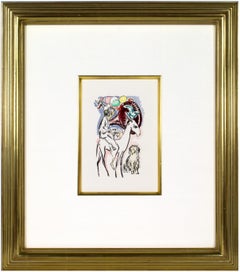
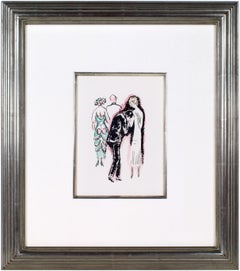
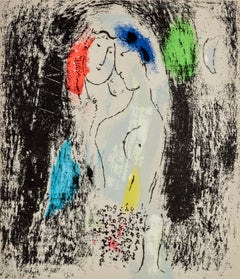
Les Amoureux en gris (Lovers in grey)
By Marc Chagall
Located in Milwaukee, WI
Framed 19 x 17.75 in No. 194 in the Catalogue Raisonne of Chagall's lithographs This lithograph was created by Chagall especially for this edition of the book "Chagall" by Jacques ...
Category

1950s Wisconsin - Figurative Prints

Materials

Lithograph

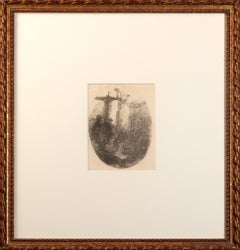
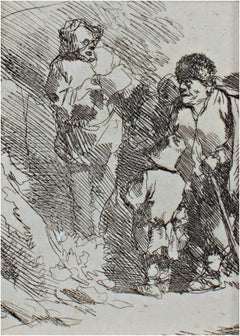
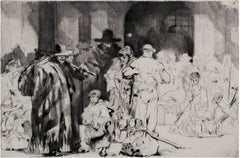
17th century etching Rembrandt biblical scene crucifixion figures
By Rembrandt van Rijn
Located in Milwaukee, WI
Rembrandt's print 'Christ Crucified Between Two Thieves: an oval plate' is one of the most captivating of the artist's oeuvre. Etched to an oval rather than a rectangular plate and t...
Category

1640s Dutch School Wisconsin - Figurative Prints

Materials

Paper, Etching, Printer s Ink, Drypoint

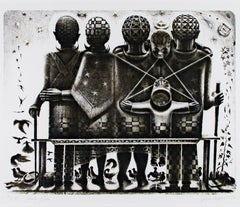
"Family of Six, " Original Lithograph signed by John Thomas Biggers
By John Thomas Biggers
Located in Milwaukee, WI
"Family of Six" is an original black and white lithograph by John Biggers. The artist signed and dated the piece in the lower right and titled and editioned it (AP III) in the lower ...
Category

1980s Contemporary Wisconsin - Figurative Prints

Materials

Lithograph

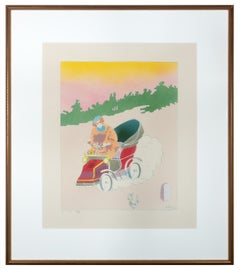
"En Auto, " Original Color Lithograph, Signed
Located in Milwaukee, WI
"En Auto" is an original color lithograph by Singils. The artist signed the piece in stone and wrote the title in the lower left. The edition number, also written lower left, is 46/5...
Category

Early 1900s Victorian Wisconsin - Figurative Prints

Materials

Lithograph

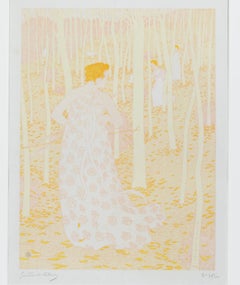
"Diane Chasseresse, " Original Color Lithograph signed by Gaston De Latenay
By Gaston de Latenay
Located in Milwaukee, WI
"Diane Chasseresse" is an original color lithograph signed by the artist Gaston de Latenay. It is edition 36/100, which is written in the lower right...
Category

1890s Art Nouveau Wisconsin - Figurative Prints

Materials

Lithograph

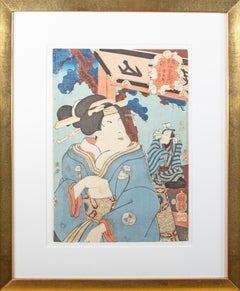
19th century color woodcut Japanese ukiyo-e print female geisha figure signed
By Utagawa Kuniyoshi
Located in Milwaukee, WI
This print is from a highly regarded series by the Edo woodblock artist Utagawa Kuniyoshi: in the period, there were at times prohibitions in depicting a...
Category

1850s Edo Wisconsin - Figurative Prints

Materials

Paper, Pigment, Woodcut

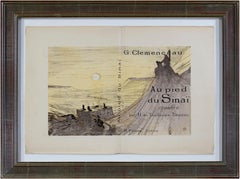
Toulouse Lautrec Original Lithograph Famous Political 1800s Collection Signed
By Henri de Toulouse-Lautrec
Located in Milwaukee, WI
"Lautrec Book: From Au Pied du Sinai written by Georges Clemenceau" lithographs created by the legendary Henri de Toulouse-Lautrec. This book, Au Pied...
Category

1890s Post-Impressionist Wisconsin - Figurative Prints

Materials

Lithograph, Mulberry Paper

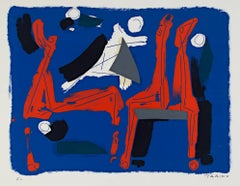
"From the Series Cheval et Chevalier, " a Lithograph signed by Marino Marini
By Marino Marini
Located in Milwaukee, WI
"From the Series Cheval et Chevalier" is an original color lithograph signed in the lower right by the artist, Marino Marini. It depicts three red abstracted horses and their riders ...
Category

1970s Post-Modern Wisconsin - Figurative Prints

Materials

Lithograph

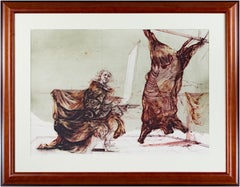
Boeuf Ecorche original signed lithograph, Rembrandt with slaughtered ox 1970s
By Claude Weisbuch
Located in Milwaukee, WI
'Boeuf Ecorche' is an original color lithograph, signed by Claude Weisbuch – and it is a quintessential example of the contemporary artist's interest in the old masters. In the image...
Category

1970s Contemporary Wisconsin - Figurative Prints

Materials

Lithograph

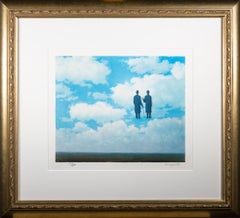
"La Reconnaissance Infinie (The Infinite Recognition)" Litho after Rene Magritte
By René Magritte
Located in Milwaukee, WI
"La Reconnaissance Infinie (The Infinite Recognition)" is a color lithograph after the 1963 painting by Rene Magritte. Two of Magritte's bourgeois "littl...
Category

2010s Surrealist Wisconsin - Figurative Prints

Materials

Lithograph

In Memory of (66) original Kellogg Comstock hand-colored mourning lithograph
Located in Milwaukee, WI
The present hand-colored lithograph was produced as part of the funeral and mourning culture in the United States during the 19th century. Before the printmaking boom of the 1830s, however, such inexpensive memorial images were not widely available. These prints became popular as ways of remembering loved ones, an alternative to portraiture of the deceased or to meticulous hand-embroidered memorials often made by female academy students. In the image, the urn-topped monument contains a space where a family could inscribe the name and death dates of a deceased loved one, though this example was never used. In the variations of this image type produced by the Kellogg...
Category

Mid-19th Century Romantic Wisconsin - Figurative Prints

Materials

Watercolor, Lithograph

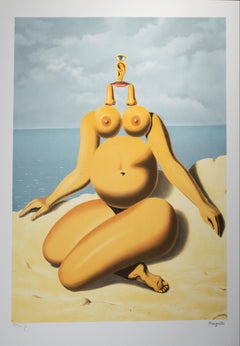
"La race blanche (The White Race), " Lithograph after Painting by Rene Magritte
By René Magritte
Located in Milwaukee, WI
"La race blanche (The White Race)" is a color lithograph after the original 1937 painting by Rene Magritte. A female figure is made out of a mix of body parts. An eye sits on top of an ear, which is on top of a mouth, then two noses. Two breasts lying on a stomach; two arms come from the breasts. Legs are tucked under the stomach. This figure is on a sand dune next to the ocean. Art: 26.5 x 19.63 in Frame: 40.88 x 33.88 in René-François-Ghislain Magritte was born November 21, 1898, in Lessines, Belgium and died on August 15, 1967 in Brussels. He is one of the most important surrealist artists. Through his art, Magritte creates humor and mystery with juxtapositions and shocking irregularities. Some of his hallmark motifs include the bourgeois “little man,” bowler hats, apples, hidden faces, and contradictory texts. René Magritte’s father was a tailor and his mother was a miller. Tragedy struck Magritte’s life when his mother committed suicide when he was only fourteen. Magritte and his two brothers were thereafter raised by their grandmother. Magritte studied at the Brussels Academy of Fine Arts from 1916 to 1918. After graduating he worked as a wallpaper designer and in advertisement. It was during this period that he married Georgette Berger, whom he had known since they were teenagers. In 1926, René Magritte signed...
Category

Early 2000s Surrealist Wisconsin - Figurative Prints

Materials

Lithograph

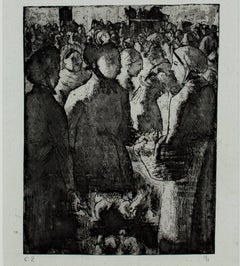
"Marche a la Volaille, a Gisors, " Original figurative Etching signed
By Camille Pissarro
Located in Milwaukee, WI
"Marche a la Volaille, a Gisors" is an original etching by Camille Pissarro. It depicts a dense crowd in black and white. This is edition 34/43 from Loys Delteil 98, 2nd State. 14" ...
Category

1890s Impressionist Wisconsin - Figurative Prints

Materials

Etching

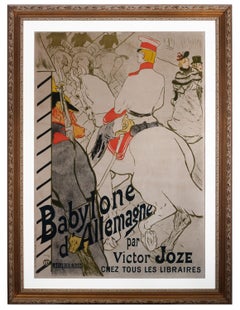
Babylone d Allemagne original lithograph poster by Henri de Toulouse-Lautrec
By Henri de Toulouse-Lautrec
Located in Milwaukee, WI
'Babylone d'Allemagne' or 'German Babylon' is an original lithograph poster by the lauded artist of the Art Nouveau style Henri de Toulouse-Lautrec. This is the second poster that La...
Category

1890s Art Nouveau Wisconsin - Figurative Prints

Materials

Paper, Lithograph

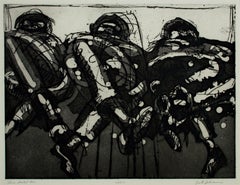
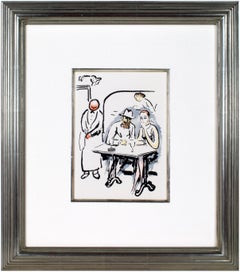
"Three Seated Men" original etching signed by Lester Johnson
By Lester Johnson
Located in Milwaukee, WI
The present aquatint is an excellent example of the multifigural works of Lester Johnson. The print presents the viewer with three seated figures, their...
Category

1970s Contemporary Wisconsin - Figurative Prints

Materials

Etching, Aquatint

"Hunting, " Original Etching and Aquatint signed by Molly McKee
By Molly McKee
Located in Milwaukee, WI
"Hunting" is an original etching and aquatint by Molly McKee. The artist signed the piece in the lower right, titled it lower center, and wrote the edition number (2/10) in the lower left. It depicts a few abstracted human figures in McKee's surreal and horror-inspired style. 11 3/4" x 9" art 24 7/8" x 17 1/2" frame This surreal etching...
Category

1990s Surrealist Wisconsin - Figurative Prints

Materials

Etching, Aquatint

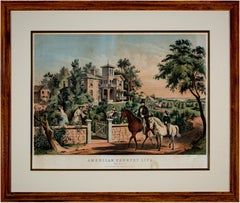
19th century color lithograph landscape figures horseback house scene trees sky
By Nathaniel Currier
Located in Milwaukee, WI
The present print is one of several examples produced for Nathaniel Currier by his longtime collaborator Frances F. "Fanny" Palmer. Harry T. Peters wrote of her: "There is no more interesting and appealing character among the group of artists who worked for Currier & Ives than Fanny Palmer. In an age when women, well-bred women in particular, did not generally work for a living Fanny Palmer for years did exacting, full-time work in order to support a large and dependent family ... Her work ... had great charm, homeliness, and a conscientious attention to detail." One of a series of four prints showing American country life in different seasons, the image presents the viewer with a picturesque view of a successful American farm. In the foreground, a gentleman rides a horse with a young boy before a respectable Italianate country house. Two women and a young girl pick flowers in the garden and several farm workers attend to their duties. Beyond are other homes and a city on the coast. 16.63 x 23.75 inches, artwork 28.13 x 33.38 inches, frame Entitled bottom center "American Country Life - May Morning" Signed in the stone, lower left "F.F. Palmer, Del." Signed in the stone, lower right "Lith. by N. Currier" Copyrighted lower center "Entered according to Act of Congress in the year 1855 by N. Currier in the Clerk's office of the Southern District of N.Y." Inscribed bottom center "New York, Published by N. Currier 152 Nassau Street" Framed to conservation standards using silk-lined 100 percent rag matting and Museum Glass with a gold gilded liner, all housed in a stained wood moulding. Nathaniel Currier was a tall introspective man with a melancholy nature. He could captivate people with his piercing stare or charm them with his sparkling blue eyes. Nathaniel was born in Roxbury, Massachusetts on March 27th, 1813, the second of four children. His parents, Nathaniel and Hannah Currier, were distant cousins who lived a humble yet spartan life. When Nathaniel was eight years old, tragedy struck. Nathaniel’s father unexpectedly passed away leaving Nathaniel and his eleven-year-old brother Lorenzo to provide for the family. In addition to their mother, Nathaniel and Lorenzo had to care for six-year-old sister Elizabeth and two-year-old brother Charles. Nathaniel worked a series of odd jobs to support the family, and at fifteen, he started what would become a life-long career when he apprenticed in the Boston lithography shop of William and John Pendleton. A Bavarian gentleman named Alois Senefelder invented lithography just 30 years prior to young Nat Currier’s apprenticeship. While under the employ of the brothers Pendleton, Nat was taught the art of lithography by the firm’s chief printer, a French national named Dubois, who brought the lithography trade to America. Lithography involves grinding a piece of limestone flat and smooth then drawing in mirror image on the stone with a special grease pencil. After the image is completed, the stone is etched with a solution of aqua fortis leaving the greased areas in slight relief. Water is then used to wet the stone and greased-ink is rolled onto the raised areas. Since grease and water do not mix, the greased-ink is repelled by the moisture on the stone and clings to the original grease pencil lines. The stone is then placed in a press and used as a printing block to impart black on white images to paper. In 1833, now twenty-years old and an accomplished lithographer, Nat Currier left Boston and moved to Philadelphia to do contract work for M.E.D. Brown, a noted engraver and printer. With the promise of good money, Currier hired on to help Brown prepare lithographic stones of scientific images for the American Journal of Sciences and Arts. When Nat completed the contract work in 1834, he traveled to New York City to work once again for his mentor John Pendleton, who was now operating his own shop located at 137 Broadway. Soon after the reunion, Pendleton expressed an interest in returning to Boston and offered to sell his print shop to Currier. Young Nat did not have the financial resources to buy the shop, but being the resourceful type he found another local printer by the name of Stodart. Together they bought Pendleton’s business. The firm ‘Currier & Stodart’ specialized in "job" printing. They produced many different types of printed items, most notably music manuscripts for local publishers. By 1835, Stodart was frustrated that the business was not making enough money and he ended the partnership, taking his investment with him. With little more than some lithographic stones, and a talent for his trade, twenty-two year old Nat Currier set up shop in a temporary office at 1 Wall Street in New York City. He named his new enterprise ‘N. Currier, Lithographer’ Nathaniel continued as a job printer and duplicated everything from music sheets to architectural plans. He experimented with portraits, disaster scenes and memorial prints, and any thing that he could sell to the public from tables in front of his shop. During 1835 he produced a disaster print Ruins of the Planter's Hotel, New Orleans, which fell at two O’clock on the Morning of the 15th of May 1835, burying 50 persons, 40 of whom Escaped with their Lives. The public had a thirst for newsworthy events, and newspapers of the day did not include pictures. By producing this print, Nat gave the public a new way to “see” the news. The print sold reasonably well, an important fact that was not lost on Currier. Nat met and married Eliza Farnsworth in 1840. He also produced a print that same year titled Awful Conflagration of the Steamboat Lexington in Long Island Sound on Monday Evening, January 18, 1840, by which melancholy occurrence over One Hundred Persons Perished. This print sold out very quickly, and Currier was approached by an enterprising publication who contracted him to print a single sheet addition of their paper, the New York Sun. This single page paper is presumed to be the first illustrated newspaper ever published. The success of the Lexington print launched his career nationally and put him in a position to finally lift his family up. In 1841, Nat and Eliza had their first child, a son they named Edward West Currier. That same year Nat hired his twenty-one year old brother Charles and taught him the lithography trade, he also hired his artistically inclined brother Lorenzo to travel out west and make sketches of the new frontier as material for future prints. Charles worked for the firm on and off over the years, and invented a new type of lithographic crayon which he patented and named the Crayola. Lorenzo continued selling sketches to Nat for the next few years. In 1843, Nat and Eliza had a daughter, Eliza West Currier, but tragedy struck in early 1847 when their young daughter died from a prolonged illness. Nat and Eliza were grief stricken, and Eliza, driven by despair, gave up on life and passed away just four months after her daughter’s death. The subject of Nat Currier’s artwork changed following the death of his wife and daughter, and he produced many memorial prints and sentimental prints during the late 1840s. The memorial prints generally depicted grief stricken families posed by gravestones (the stones were left blank so the purchasers could fill in the names of the dearly departed). The sentimental prints usually depicted idealized portraits of women and children, titled with popular Christian names of the day. Late in 1847, Nat Currier married Lura Ormsbee, a friend of the family. Lura was a self-sufficient woman, and she immediately set out to help Nat raise six-year-old Edward and get their house in order. In 1849, Lura delivered a son, Walter Black Currier, but fate dealt them a blow when young Walter died one year later. While Nat and Lura were grieving the loss of their new son, word came from San Francisco that Nat’s brother Lorenzo had also passed away from a brief illness. Nat sank deeper into his natural quiet melancholy. Friends stopped by to console the couple, and Lura began to set an extra place at their table for these unexpected guests. She continued this tradition throughout their lives. In 1852, Charles introduced a friend, James Merritt Ives, to Nat and suggested he hire him as a bookkeeper. Jim Ives was a native New Yorker born in 1824 and raised on the grounds of Bellevue Hospital where his father was employed as superintendent. Jim was a self-trained artist and professional bookkeeper. He was also a plump and jovial man, presenting the exact opposite image of his new boss. Jim Ives met Charles Currier through Caroline Clark, the object of Jim’s affection. Caroline’s sister Elizabeth was married to Charles, and Caroline was a close friend of the Currier family. Jim eventually proposed marriage to Caroline and solicited an introduction to Nat Currier, through Charles, in hopes of securing a more stable income to support his future wife. Ives quickly set out to improve and modernize his new employer’s bookkeeping methods. He reorganized the firm’s sizable inventory, and used his artistic skills to streamline the firm’s production methods. By 1857, Nathaniel had become so dependent on Jims’ skills and initiative that he offered him a full partnership in the firm and appointed him general manager. The two men chose the name ‘Currier & Ives’ for the new partnership, and became close friends. Currier & Ives produced their prints in a building at 33 Spruce Street where they occupied the third, fourth and fifth floors. The third floor was devoted to the hand operated printing presses that were built by Nat's cousin, Cyrus Currier, at his shop Cyrus Currier & Sons in Newark, NJ. The fourth floor found the artists, lithographers and the stone grinders at work. The fifth floor housed the coloring department, and was one of the earliest production lines in the country. The colorists were generally immigrant girls, mostly German, who came to America with some formal artistic training. Each colorist was responsible for adding a single color to a print. As a colorist finished applying their color, the print was passed down the line to the next colorist to add their color. The colorists worked from a master print displayed above their table, which showed where the proper colors were to be placed. At the end of the table was a touch up artist who checked the prints for quality, touching-in areas that may have been missed as it passed down the line. During the Civil War, demand for prints became so great that coloring stencils were developed to speed up production. Although most Currier & Ives prints were colored in house, some were sent out to contract artists. The rate Currier & Ives paid these artists for coloring work was one dollar per one hundred small folios (a penny a print) and one dollar per one dozen large folios. Currier & Ives also offered uncolored prints to dealers, with instructions (included on the price list) on how to 'prepare the prints for coloring.' In addition, schools could order uncolored prints from the firm’s catalogue to use in their painting classes. Nathaniel Currier and James Merritt Ives attracted a wide circle of friends during their years in business. Some of their more famous acquaintances included Horace Greeley, Phineas T. Barnum, and the outspoken abolitionists Rev. Henry Ward, and John Greenleaf Whittier (the latter being a cousin of Mr. Currier). Nat Currier and Jim Ives described their business as "Publishers of Cheap and Popular Pictures" and produced many categories of prints. These included Disaster Scenes, Sentimental Images, Sports, Humor, Hunting Scenes, Politics, Religion, City and Rural Scenes, Trains, Ships, Fire Fighters, Famous Race Horses, Historical Portraits, and just about any other topic that satisfied the general public's taste. In all, the firm produced in excess of 7500 different titles, totaling over one million prints produced from 1835 to 1907. Nat Currier retired in 1880, and signed over his share of the firm to his son Edward. Nat died eight years later at his summer home 'Lion’s Gate' in Amesbury, Massachusetts. Jim Ives remained active in the firm until his death in 1895, when his share of the firm passed to his eldest son, Chauncey. In 1902, faced will failing health from the ravages of Tuberculosis, Edward Currier sold his share of the firm to Chauncey Ives...
Category

Mid-19th Century Romantic Wisconsin - Figurative Prints

Materials

Watercolor, Lithograph

"Requiem/Let Them Be, " Etching and Aquatint signed by Joan Snyder
By Joan Snyder
Located in Milwaukee, WI
"Requiem" is an original etching and aquatint by Joan Snyder. The artist signed the piece, and the edition is of 120. This piece features abstract, expressionist text and an striking portrait of a woman with red lipstick on a pink background. 25 5/8" x 20" art 32" x 26" frame Joan Snyder was born on April 16, 1940, in Highland Park, New Jersey. She received her AB from Douglass College in New Brunswick, New Jersey (1962), and an MFA from Rutgers University in New Brunswick, New Jersey (1966). She was the recipient of a National Endowment for the Arts Fellowship (1974) and a John Simon Guggenheim Memorial Fellowship (1983). Snyder lives in Brooklyn and Woodstock, New York. Although Snyder’s paintings are often placed under various art-movement umbrellas—Abstract...
Category

1990s Contemporary Wisconsin - Figurative Prints

Materials

Etching, Aquatint

20th century color lithograph figurative print male subjects sketch scene signed
By Claude Weisbuch
Located in Milwaukee, WI
"Le Portrait Equestre" is an original color lithograph by Claude Weisbuch. This piece depicts a number of figures in black robes looking at horses. The a...
Category

1970s Modern Wisconsin - Figurative Prints

Materials

Lithograph

"The Parade -La Garconne Series, " a Color Pochoir
By Kees van Dongen
Located in Milwaukee, WI
This color pochoir was done in 1925 on Arches paper No. 738/750 depicting a parade with animals and balloons. Archivally framed with 23k gold; 23k gold fillet, silk mat, and museum...
Category

1920s Art Deco Wisconsin - Figurative Prints

Materials

Other Medium

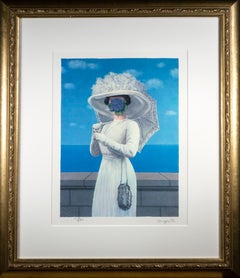
"La Grande Guerre (The Great War), " Color Lithograph after Rene Magritte
By René Magritte
Located in Milwaukee, WI
"La Grande Guerre (The Great War)" is a color lithograph after the 1964 painting by Rene Magritte. A Victorian lady stands in white facing the viewer. A bouq...
Category

2010s Surrealist Wisconsin - Figurative Prints

Materials

Lithograph

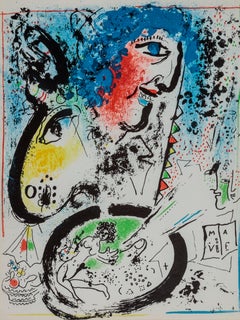
Chagall Lithographe Tome I - Frontispice, Auto-portrait
By Marc Chagall
Located in Milwaukee, WI
Framed 25.75 x 22.75 in No. 282 in the Catalogue Raisonne of Chagall's lithographs This lithograph came from "The Lithographs of Chagall: Volume I" by Fernand Mourlot and Marc Cha...
Category

1960s Wisconsin - Figurative Prints

Materials

Lithograph

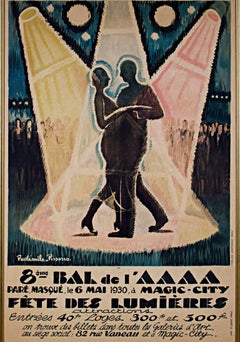
"Bal de l AAAA Festival of Light, " Original Lithograph Poster by Paul Pissarro
By Paul Emile Pissarro
Located in Milwaukee, WI
"Bal de l'AAAA Festival of Light" is an original lithograph poster by Paul Emile Pissarro. It depicts a silhouetted couple dancing in white, pink, and yellow ...
Category

1930s Wisconsin - Figurative Prints

Materials

Lithograph

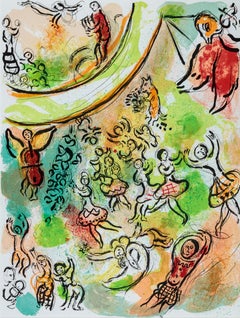
Le Plafond de l Opera de Paris, Frontispice
By Marc Chagall
Located in Milwaukee, WI
Framed 23 x 20 in
Category

1960s Wisconsin - Figurative Prints

Materials

Lithograph

19th century black and white etching aquatint outdoors figurative animal print
By Camille Pissarro
Located in Milwaukee, WI
"Vachere au Bord de L'Eau" is an original etching and aquatint by Camille Pissarro, the 8th state. It can be found in the catalogue raisonne Delteil #93. It features a woman sitting ...
Category

1890s Realist Wisconsin - Figurative Prints

Materials

Etching, Aquatint

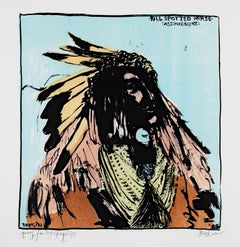
Original Lithograph Native American Figure Portrait Male Tribe Bold Stoic Signed
By Leonard Baskin
Located in Milwaukee, WI
"Kill Spotted Horse" is an original lithograph created by Leonard Baskin. It was published by Fox Graphics. This is a proof purchased directly from the artist. Baskin signed the work in the lower right margin and labelled the work as a proof in the lower left margin, written with graphite. It depicts Kill Spotted Horse, an Assinniboine Native American, in a feather headdress against a light blue background.  Artwork Size: 15" x 13 1/2" Frame Size: 27 1/2" x 26 3/8" Artist Bio: Leonard Baskin (1922-2000) was an american artist born in New Jersey and taught art classes in Massachusetts. He has received many public commissions (including a bas relief for the FDR Memorial), honors, and his work is owned by many major museums around the world. Additionally, Baskin was a teacher at Smith College in Northampton, Massachusetts. As a champion for human rights, Baskin created many pieces celebrating those who were seldom recognized.  Baskin’s interest in nineteenth century Native Americans was roused into acute attendance from ignorant indifference, when the National Park Service asked him to provide illustrations for the handbook that described the then called “Custer National Park”, now called “Little Big...
Category

1990s Contemporary Wisconsin - Figurative Prints

Materials

Lithograph, Ink

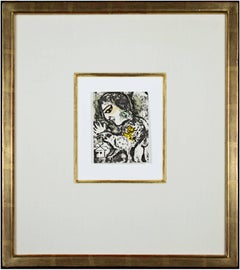
"Carte de Voeux #731, " Lithograph by Marc Chagall in Chagall Catalog Raisonne
By Marc Chagall
Located in Milwaukee, WI
"Carte de Voeux #731" is an original lithograph greeting card by Marc Chagall. It is in the Chagall Catalogue Raisonne and is from a rare edition of only 200. It depicts a face and a bird in Chagall's signature whimsical modernist style. 5 1/2" x 4 1/4" art 21" x 18 1/4" frame Marc Chagall was born in Liozno, near Vitebsk, now in Belarus, the eldest of nine children in a close-knit Jewish family led by his father Khatskl (Zakhar) Shagal, a herring merchant, and his mother, Feige-Ite. This period of his life, described as happy though impoverished, appears in references throughout Chagall's work. The family home on Pokrovskaya Street is now the Marc Chagall Museum...
Category

1970s Modern Wisconsin - Figurative Prints

Materials

Lucite, Lithograph

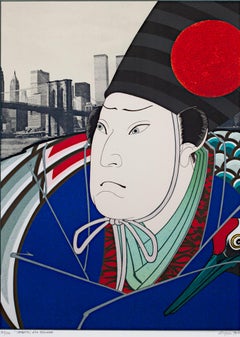
"Sambaso after Hirosada" original lithograph signed pop art bold Japanese figure
By Michael Knigin
Located in Milwaukee, WI
"Sambaso After Hirosada" is an original color lithograph by Michael Knigin from his Osaka series. This lithograph features a portrait of a traditional Japanese man in front of the Ne...
Category

1970s Pop Art Wisconsin - Figurative Prints

Materials

Lithograph, Ink

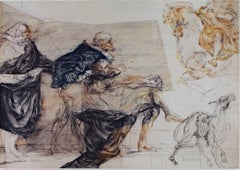
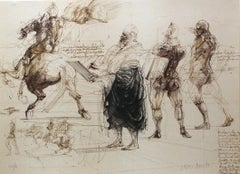
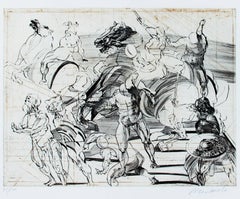
Original Lithograph Horse Anatomy Leonardo Davinci Nude Male Figure Sepia Signed
By Claude Weisbuch
Located in Milwaukee, WI
"Homage a Leonardo d'Vinci (Leonardo drawing, 3 Figures, Horse from De La Bataille Vol. I)" is an original color lithograph signed by Claude Weisbuch. A group of figures stand to the...
Category

1970s Modern Wisconsin - Figurative Prints

Materials

Paper, Lithograph

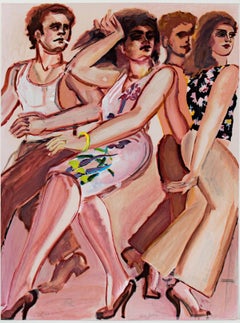
"Untitled - LJ #53, " Lithograph signed by Lester Johnson
By Lester Johnson
Located in Milwaukee, WI
"Untitled - LJ#53" is an original color lithograph by Lester Johnson. The artist signed the piece in the lower center and also wrote the edition number,...
Category

1970s Expressionist Wisconsin - Figurative Prints

Materials

Lithograph

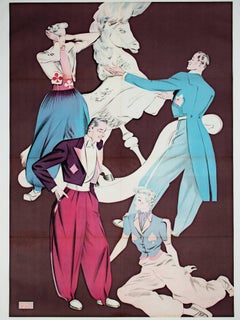
"Fashionable Boulevard Montmartre, " Original Lithograph Poster by Pierre Brenot
By Pierre Laurent Brenot
Located in Milwaukee, WI
"Fashionable Boulevard Montmartre" is an original lithograph poster by Pierre Laurent Brenot. This piece depicts four figures in fashionable costumes in a variety of dynamic poses. T...
Category

1940s Art Nouveau Wisconsin - Figurative Prints

Materials

Lithograph

17th century etching black and white figures scene
By Cornelis Bega
Located in Milwaukee, WI
"The Singer" is an original etching by Cornelis-Pietersz Bega. It depicts a performer and onlookers. Publisher: Pearce #50. 4" x 3" art 16 1/2" x 13 1/2" frame Cornelis Pietersz Be...
Category

Mid-17th Century Old Masters Wisconsin - Figurative Prints

Materials

Etching

"The Night Out - La Garconne Series, " a Color Pochoir
By Kees van Dongen
Located in Milwaukee, WI
This color pochoir was done in 1925 on Arches paper No. 739/750 and depicts two couples on a night out all dressed up. Archivally framed with 12k white gold; white gold fillet, silk...
Category

1920s Art Deco Wisconsin - Figurative Prints

Materials

Other Medium

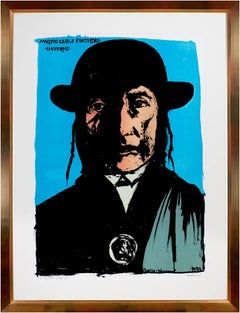
Original Lithograph Native American Figure Portrait Male Tribe Bold Stoic Signed
By Leonard Baskin
Located in Milwaukee, WI
"Magpie Eagle Feathers" is an original lithograph proof for Fox Graphics signed by the artist Leonard Baskin. It depicts a Cheyenne man named Magpie Eagle Feathers in a black hat against a blue background. Artwork Size: 38 1/2" x 26 3/4" Frame Size: 49 3/4" x 37 1/2" Artist Bio: Leonard Baskin (1922-2000) was an American artist born in New Jersey and taught art classes in Massachusetts. He received many public commissions (including a bas relief for the FDR Memorial), honors, and his work is owned by many major museums around the world. Additionally, Baskin was a teacher at Smith College in Northampton, Massachusetts. As a champion for human rights, Baskin created many pieces celebrating those who were seldom recognized. Baskin’s interest in nineteenth century Native Americans was roused into acute attendance from ignorant indifference, when the National Park Service asked him to provide illustrations for the handbook that described the then called “Custer National Park”, now called “Little Big...
Category

1990s Contemporary Wisconsin - Figurative Prints

Materials

Lithograph, Ink

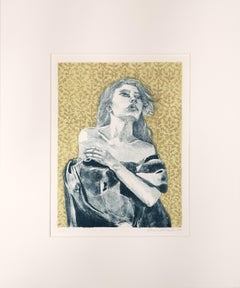
Untitled
By Ananda Kesler
Located in Milwaukee, WI
Edition 1/13 Signed to lower right Ananda Kesler was born in Haifa, Israel. In 2002 she received her BA in Fine Art from the University of Iowa. She has continued her art education...
Category

21st Century and Contemporary Contemporary Wisconsin - Figurative Prints

Materials

Lithograph

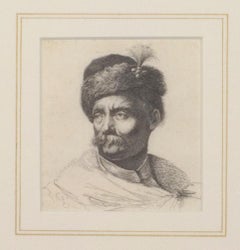
17th century etching baroque portrait male subject hat realistic print
By Giovanni Benedetto Castiglione
Located in Milwaukee, WI
This is an excellent example of the kind of portraiture produced by Castiglione during the early part of the 17th century. In the image, we see the visage of a man with a mustache, wearing a fur-lined hat topped with a feathery decoration. The image is reminiscent of the work of Rembrandt van Rijn, himself known for his portraits in the form of etchings. 4 x 3.5 inches, image 15.25 x 13.25 inches, frame Inscribed "GC" in the plate, lower left This impression is from the edition ca. 1825 from the original plate of ca. 1635. Unlike many Italian artists, Giovanni Benedetto Castiglione was profoundly influenced by foreigners. He first studied with local artists in his native Genoa, absorbing not only Tuscan Mannerism and Caravaggism but also the style of Peter Paul Rubens, who had worked in Genoa. From 1621 Castiglione also worked in Anthony van Dyck's Genoa studio. Early on, he was attracted to Flemish animal...
Category

17th Century Baroque Wisconsin - Figurative Prints

Materials

Etching

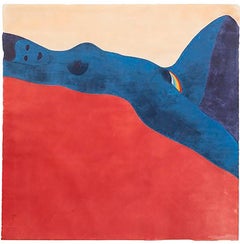
"Sierra Madre, " Original Color Woodblock Nude signed by Carol Summers
By Carol Summers
Located in Milwaukee, WI
"Sierra Madre" is a color woodblock signed by Carol Summers. As suggested by the title, the print teeters the line between Summers' fanciful landscapes an...
Category

1970s Abstract Expressionist Wisconsin - Figurative Prints

Materials

Woodcut

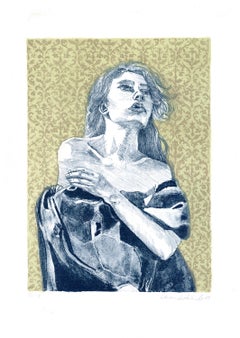
Untitled
By Ananda Kesler
Located in Milwaukee, WI
Edition 2/13 Signed to lower right Ananda Kesler was born in Haifa, Israel. In 2002 she received her BA in Fine Art from the University of Iowa. She has continued her art education ...
Category

21st Century and Contemporary Contemporary Wisconsin - Figurative Prints

Materials

Lithograph

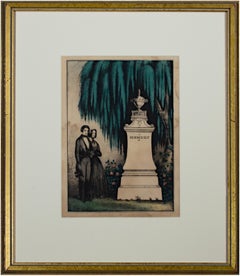
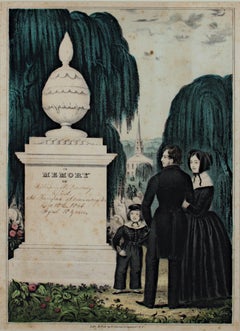
19th century color lithograph figures cemetery willow tree memorial headstone
By Nathaniel Currier
Located in Milwaukee, WI
The present hand-colored lithograph was produced as part of the funeral and mourning culture in the United States during the 19th century. Images like this were popular as ways of remembering loved ones, an alternative to portraiture of the deceased. This lithograph shows a man, woman and child in morning clothes next to an urn-topped stone monument. Behind are additional putto-topped headstones beneath weeping willows, with a steepled church beyond. The monument contains a space where a family could inscribe the name and death dates of a deceased loved one. In this case, it has been inscribed to a young Civil War soldier: William W. Peabody Died at Fairfax Seminary, VA December 18th, 1864 Aged 18 years The young Mr. Peabody probably died in service for the Union during the American Civil War. Farifax Seminary was a Union hospital and military headquarters in Alexandria, Virginia. The hospital served nearly two thousand soldiers during the war time. Five hundred were also buried on the Seminary's grounds. 13.75 x 9.5 inches, artwork 23 x 19 inches, frame Published before 1864 Inscribed bottom center "Lith. & Pub. by N. Currier. 2 Spruce St. N.Y." Framed to conservation standards using 100 percent rag matting and TruVue Conservation Clear glass, housed in a gold gilded moulding. Nathaniel Currier was a tall introspective man with a melancholy nature. He could captivate people with his piercing stare or charm them with his sparkling blue eyes. Nathaniel was born in Roxbury, Massachusetts on March 27th, 1813, the second of four children. His parents, Nathaniel and Hannah Currier, were distant cousins who lived a humble yet spartan life. When Nathaniel was eight years old, tragedy struck. Nathaniel’s father unexpectedly passed away leaving Nathaniel and his eleven-year-old brother Lorenzo to provide for the family. In addition to their mother, Nathaniel and Lorenzo had to care for six-year-old sister Elizabeth and two-year-old brother Charles. Nathaniel worked a series of odd jobs to support the family, and at fifteen, he started what would become a life-long career when he apprenticed in the Boston lithography shop of William and John Pendleton. A Bavarian gentleman named Alois Senefelder invented lithography just 30 years prior to young Nat Currier’s apprenticeship. While under the employ of the brothers Pendleton, Nat was taught the art of lithography by the firm’s chief printer, a French national named Dubois, who brought the lithography trade to America. Lithography involves grinding a piece of limestone flat and smooth then drawing in mirror image on the stone with a special grease pencil. After the image is completed, the stone is etched with a solution of aqua fortis leaving the greased areas in slight relief. Water is then used to wet the stone and greased-ink is rolled onto the raised areas. Since grease and water do not mix, the greased-ink is repelled by the moisture on the stone and clings to the original grease pencil lines. The stone is then placed in a press and used as a printing block to impart black on white images to paper. In 1833, now twenty-years old and an accomplished lithographer, Nat Currier left Boston and moved to Philadelphia to do contract work for M.E.D. Brown, a noted engraver and printer. With the promise of good money, Currier hired on to help Brown prepare lithographic stones of scientific images for the American Journal of Sciences and Arts. When Nat completed the contract work in 1834, he traveled to New York City to work once again for his mentor John Pendleton, who was now operating his own shop located at 137 Broadway. Soon after the reunion, Pendleton expressed an interest in returning to Boston and offered to sell his print shop to Currier. Young Nat did not have the financial resources to buy the shop, but being the resourceful type he found another local printer by the name of Stodart. Together they bought Pendleton’s business. The firm ‘Currier & Stodart’ specialized in "job" printing. They produced many different types of printed items, most notably music manuscripts for local publishers. By 1835, Stodart was frustrated that the business was not making enough money and he ended the partnership, taking his investment with him. With little more than some lithographic stones, and a talent for his trade, twenty-two year old Nat Currier set up shop in a temporary office at 1 Wall Street in New York City. He named his new enterprise ‘N. Currier, Lithographer’ Nathaniel continued as a job printer and duplicated everything from music sheets to architectural plans. He experimented with portraits, disaster scenes and memorial prints, and any thing that he could sell to the public from tables in front of his shop. During 1835 he produced a disaster print Ruins of the Planter's Hotel, New Orleans, which fell at two O’clock on the Morning of the 15th of May 1835, burying 50 persons, 40 of whom Escaped with their Lives. The public had a thirst for newsworthy events, and newspapers of the day did not include pictures. By producing this print, Nat gave the public a new way to “see” the news. The print sold reasonably well, an important fact that was not lost on Currier. Nat met and married Eliza Farnsworth in 1840. He also produced a print that same year titled Awful Conflagration of the Steamboat Lexington in Long Island Sound on Monday Evening, January 18, 1840, by which melancholy occurrence over One Hundred Persons Perished. This print sold out very quickly, and Currier was approached by an enterprising publication who contracted him to print a single sheet addition of their paper, the New York Sun. This single page paper is presumed to be the first illustrated newspaper ever published. The success of the Lexington print launched his career nationally and put him in a position to finally lift his family up. In 1841, Nat and Eliza had their first child, a son they named Edward West Currier. That same year Nat hired his twenty-one year old brother Charles and taught him the lithography trade, he also hired his artistically inclined brother Lorenzo to travel out west and make sketches of the new frontier as material for future prints. Charles worked for the firm on and off over the years, and invented a new type of lithographic crayon which he patented and named the Crayola. Lorenzo continued selling sketches to Nat for the next few years. In 1843, Nat and Eliza had a daughter, Eliza West Currier, but tragedy struck in early 1847 when their young daughter died from a prolonged illness. Nat and Eliza were grief stricken, and Eliza, driven by despair, gave up on life and passed away just four months after her daughter’s death. The subject of Nat Currier’s artwork changed following the death of his wife and daughter, and he produced many memorial prints and sentimental prints during the late 1840s. The memorial prints generally depicted grief stricken families posed by gravestones (the stones were left blank so the purchasers could fill in the names of the dearly departed). The sentimental prints usually depicted idealized portraits of women and children, titled with popular Christian names of the day. Late in 1847, Nat Currier married Lura Ormsbee, a friend of the family. Lura was a self-sufficient woman, and she immediately set out to help Nat raise six-year-old Edward and get their house in order. In 1849, Lura delivered a son, Walter Black Currier, but fate dealt them a blow when young Walter died one year later. While Nat and Lura were grieving the loss of their new son, word came from San Francisco that Nat’s brother Lorenzo had also passed away from a brief illness. Nat sank deeper into his natural quiet melancholy. Friends stopped by to console the couple, and Lura began to set an extra place at their table for these unexpected guests. She continued this tradition throughout their lives. In 1852, Charles introduced a friend, James Merritt Ives, to Nat and suggested he hire him as a bookkeeper. Jim Ives was a native New Yorker born in 1824 and raised on the grounds of Bellevue Hospital where his father was employed as superintendent. Jim was a self-trained artist and professional bookkeeper. He was also a plump and jovial man, presenting the exact opposite image of his new boss. Jim Ives met Charles Currier through Caroline Clark, the object of Jim’s affection. Caroline’s sister Elizabeth was married to Charles, and Caroline was a close friend of the Currier family. Jim eventually proposed marriage to Caroline and solicited an introduction to Nat Currier, through Charles, in hopes of securing a more stable income to support his future wife. Ives quickly set out to improve and modernize his new employer’s bookkeeping methods. He reorganized the firm’s sizable inventory, and used his artistic skills to streamline the firm’s production methods. By 1857, Nathaniel had become so dependent on Jims’ skills and initiative that he offered him a full partnership in the firm and appointed him general manager. The two men chose the name ‘Currier & Ives’ for the new partnership, and became close friends. Currier & Ives produced their prints in a building at 33 Spruce Street where they occupied the third, fourth and fifth floors. The third floor was devoted to the hand operated printing presses that were built by Nat's cousin, Cyrus Currier, at his shop Cyrus Currier & Sons in Newark, NJ. The fourth floor found the artists, lithographers and the stone grinders at work. The fifth floor housed the coloring department, and was one of the earliest production lines in the country. The colorists were generally immigrant girls, mostly German, who came to America with some formal artistic training. Each colorist was responsible for adding a single color to a print. As a colorist finished applying their color, the print was passed down the line to the next colorist to add their color. The colorists worked from a master print displayed above their table, which showed where the proper colors were to be placed. At the end of the table was a touch up artist who checked the prints for quality, touching-in areas that may have been missed as it passed down the line. During the Civil War, demand for prints became so great that coloring stencils were developed to speed up production. Although most Currier & Ives prints were colored in house, some were sent out to contract artists. The rate Currier & Ives paid these artists for coloring work was one dollar per one hundred small folios (a penny a print) and one dollar per one dozen large folios. Currier & Ives also offered uncolored prints to dealers, with instructions (included on the price list) on how to 'prepare the prints for coloring.' In addition, schools could order uncolored prints from the firm’s catalogue to use in their painting classes. Nathaniel Currier and James Merritt Ives attracted a wide circle of friends during their years in business. Some of their more famous acquaintances included Horace Greeley, Phineas T. Barnum, and the outspoken abolitionists Rev. Henry Ward, and John Greenleaf Whittier (the latter being a cousin of Mr. Currier). Nat Currier and Jim Ives described their business as "Publishers of Cheap and Popular Pictures" and produced many categories of prints. These included Disaster Scenes, Sentimental Images, Sports, Humor, Hunting Scenes, Politics, Religion, City and Rural Scenes, Trains, Ships, Fire Fighters, Famous Race Horses, Historical Portraits, and just about any other topic that satisfied the general public's taste. In all, the firm produced in excess of 7500 different titles, totaling over one million prints produced from 1835 to 1907. Nat Currier retired in 1880, and signed over his share of the firm to his son Edward. Nat died eight years later at his summer home 'Lion’s Gate' in Amesbury, Massachusetts. Jim Ives remained active in the firm until his death in 1895, when his share of the firm passed to his eldest son, Chauncey. In 1902, faced will failing health from the ravages of Tuberculosis, Edward Currier sold his share of the firm to Chauncey Ives...
Category

Mid-19th Century Romantic Wisconsin - Figurative Prints

Materials

Watercolor, Lithograph

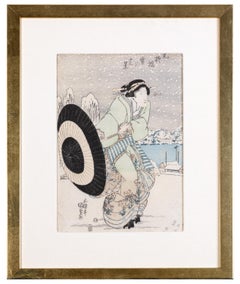
"Yanagibashi in Snow, " Color Woodcut Portrait with Umbrella
By Utagawa Kunisada (Toyokuni III)
Located in Milwaukee, WI
"Yanagibashi in Snow" is an original color woodcut by Utagawa Kunisada. This woodblock print depicts a woman walking in the snow near the Motoyanagi canal, which was located in Tokyo...
Category

1920s Wisconsin - Figurative Prints

Materials

Woodcut

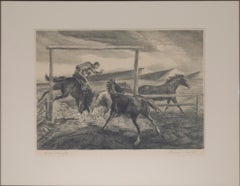
"Horse Wrangler, " Original Black White Lithograph by Lawrence Barrett
By Lawrence Barrett
Located in Milwaukee, WI
"Horse Wrangler" is an original lithograph by the artist Lawrence Barrett signed in the lower right hand corner. Four beautifully drawn horses use a moment of commotion to escape a corral. Low hills and an expansive sky serve as a background. Image: 8.75" x 12.25" Framed: 11.9" x 16.5" Lawrence Barrett was an etcher, lithographer, teacher, illustrator, sculptor, writer, and painter. Born in Guthrie, Oklahoma, Barrett was a student at the Broadmoor Academy...
Category

Early 20th Century Realist Wisconsin - Figurative Prints

Materials

Lithograph

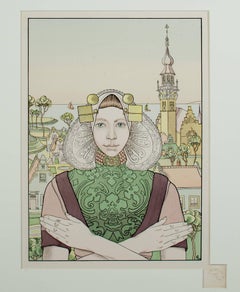
"La Phalène des Isles de la Mer, " figurative art nouveau ornate print
By Franz Melchers
Located in Milwaukee, WI
"La Phalène des Isles de la Mer" or "The Moth of the Islands of the Sea" is an original color lithograph by Franz Melchers. This piece was published in L'Estampe Moderne I, an Art No...
Category

1890s Art Nouveau Wisconsin - Figurative Prints

Materials

Lithograph

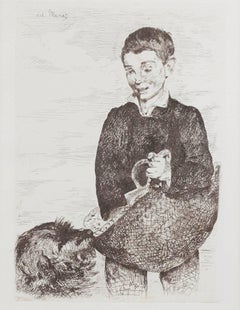
"The Urchin (Le Gamin) -Second and Final State, " Etching signed by Edouard Manet
By Édouard Manet
Located in Milwaukee, WI
"The Urchin (Le Gamin)" is an original etching by Edouard Manet. It depicts a young boy holding a basket with his long-haired dog. This is the second and fina...
Category

1860s Modern Wisconsin - Figurative Prints

Materials

Etching

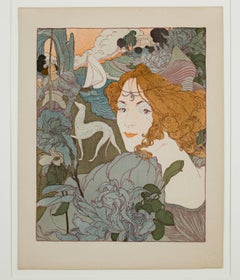
Art Nouveau Lithograph 1800s Landscape Romantic Figure Floral
By Georges De Feure
Located in Milwaukee, WI
"Retour (L'Estampe Moderne I)" is a color lithograph by Georges de Feure. It features a woman with red hair in an environment of flora and fauna with muted colors and the Art Nouveau...
Category

1890s Art Nouveau Wisconsin - Figurative Prints

Materials

Lithograph

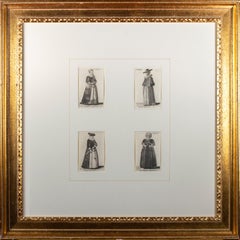
Four original etchings of women from Aula Veneris series by Wenceslaus Hollar
By Wenceslaus Hollar
Located in Milwaukee, WI
Presented here as a group are four original etchings of women in European national dress from the master printmaker Wenceslaus Hollar's series "Aula V...
Category

17th Century Old Masters Wisconsin - Figurative Prints

Materials

Etching, Paper

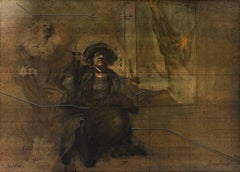
20th century color lithograph figurative print male subject dark scene signed
By Claude Weisbuch
Located in Milwaukee, WI
"Seul Dans l'Atelier" is an original lithograph by Claude Weisbuch. The artist signed the piece lower right and wrote the edition number (108/160) in the lower left. This piece depic...
Category

1970s Modern Wisconsin - Figurative Prints

Materials

Lithograph

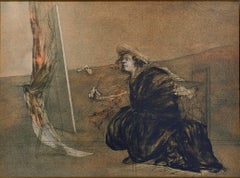
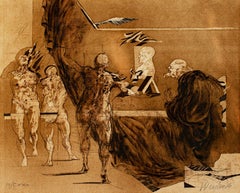
20th century color lithograph figurative print artist easel canvas scene signed
By Claude Weisbuch
Located in Milwaukee, WI
"Artiste Dans l'Atelier" is an original lithograph by Claude Weisbuch. The artist signed the piece lower right and wrote the edition number (126/320) in the lower left. This piece de...
Category

1970s Modern Wisconsin - Figurative Prints

Materials

Lithograph

"In the Cafe -La Garconne Series, " a Color Pochoir
By Kees van Dongen
Located in Milwaukee, WI
This color pochoir from the La Garconne Series was done in 1925 on Arches paper No. 738/750 depicting a couple sitting at a cafe. Pochoir or stencil has been used to print limited ed...
Category

1920s Art Deco Wisconsin - Figurative Prints

Materials

Other Medium

"Vanity Fair (The Face Off) Recto, Camel Cigarette Verso, " by Paolo Garretto
By Paolo Garretto
Located in Milwaukee, WI
This double-sided lithograph by Paolo Garretto features a Vanity Fair cover "The Face Off" on the front and a Camel Cigarette ad on the back. It was pu...
Category

1930s Surrealist Wisconsin - Figurative Prints

Materials

Lithograph

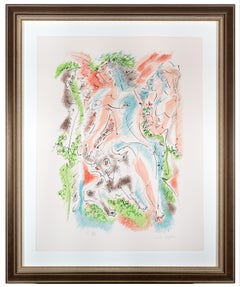
"Bacchanale from Je Reve (I Dream) Portfolio, " Original Color Lithograph
By André Masson
Located in Milwaukee, WI
"Bacchanale" is an original color lithograph by Andre Masson. This piece is from the Je Reve (I Dream) portfolio and is edition number H.C. XVV/XVV. Masson signed the piece in pencil...
Category

1970s Surrealist Wisconsin - Figurative Prints

Materials

Lithograph

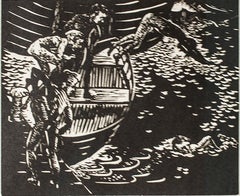
"Swimmers, " Seascape Linoleum Cut by Clarice George Logan
By Clarice George Logan
Located in Milwaukee, WI
"Swimmers" is an original linoleum print by Clarice George Logan. It features five figures enjoying a swim, jumping off from a small boat. Image: 4.94" x 6" Framed: 13.87" x 14.87" Clarice George Logan was born in Mayville, New York in 1909 but moved to Wisconsin in 1921. She attended the Milwaukee State Teachers College from 1927 to 1931 where she studied with Robert von Neumann...
Category

1930s American Modern Wisconsin - Figurative Prints

Materials

Linocut

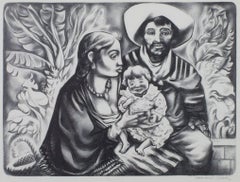
"Mexican Family, " Black White Lithograph Family Portrait
By Howard Norton Cook
Located in Milwaukee, WI
"Mexican Family" is a black and white lithograph by Howard Cook. The artist signed the piece lower right. It is from an edition of 250, unnumbered. This...
Category

1940s Wisconsin - Figurative Prints

Materials

Lithograph

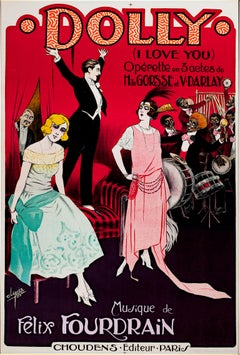
"Dolly (I Love you!), " Original Color Lithograph Poster by the Clérice Frères
By Clerice Frères
Located in Milwaukee, WI
"Dolly" is an original color lithograph poster by The Clérice Frères (The Clérice Brothers), signed within the composition on the lower left edge, just ...
Category

1920s Art Deco Wisconsin - Figurative Prints

Materials

Lithograph

20th century color lithograph figurative surrealist print sepia sketch signed
By Claude Weisbuch
Located in Milwaukee, WI
"Le Trait de la Figure" is an original lithograph by Claude Weisbuch. The artist signed the piece lower right and wrote the edition number (III/CXX) in the lower left. This piece dep...
Category

1970s Modern Wisconsin - Figurative Prints

Materials

Lithograph

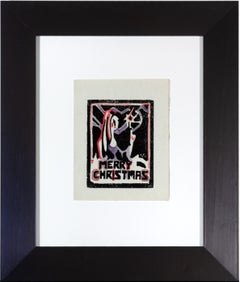
Merry Christmas original color woodcut on paper, signed in block
By Sylvia Spicuzza
Located in Milwaukee, WI
Art: 5 1/2 x 4 3/8" Frame: 10 1/8 x 8 1/8" Original color woodcut on paper, signed in block. Born in 1908, Sylvia Spicuzza was the daughter of noted painter Francesco Spicuzza. Sylvia devoted herself to teaching art to the students of Lake Bluff...
Category

1950s Wisconsin - Figurative Prints

Materials

Woodcut

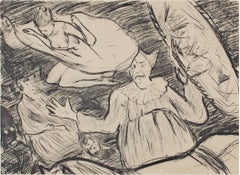
"Circus, " Original Lithograph signed by Henri-Gabriel Ibels
By Henri Gabriel Ibels
Located in Milwaukee, WI
"Circus" is an original lithograph by Henri-Gabriel Ibels. The artist signed the piece lower right and wrote the edition number (12 out of 100) in the lower left. This piece depicts a few disconcerted circus performers. 17 1/2" x 20 1/2" art 19 1/2" x 22 1/2" frame Henri-Gabriel Ibels (30 November 1867 Paris – February 1936 Paris), was a French illustrator, printmaker, painter and author. He studied at the Académie Julian with Pierre Bonnard and Édouard Vuillard and was a member of Les Nabis...
Category

1890s Modern Wisconsin - Figurative Prints

Materials

Lithograph

"Le Bouclier, " Original Drypoint Etching signed by Claude Weisbuch
By Claude Weisbuch
Located in Milwaukee, WI
"Le Bouclier" is an original drypoint etching by Claude Weisbuch. The artist signed the piece lower right and wrote the edition number (25/100) in the lower left. This piece depicts ...
Category

1970s Modern Wisconsin - Figurative Prints

Materials

Drypoint, Etching

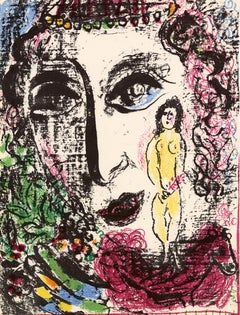
L Apparition au Cirque (Apparition at the Circus)
By Marc Chagall
Located in Milwaukee, WI
Framed 26 x 22 in No. 392 in the Catalogue Raisonne of Chagall's lithographs This lithograph came from "The Lithographs of Chagall: Volume II" by Fernand Mourlot and Marc Chagall....
Category

1960s Wisconsin - Figurative Prints

Materials

Lithograph

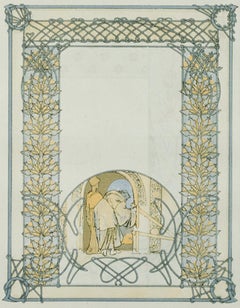
Late 19th century color lithograph art nouveau ornate bookplate figures
By Alphonse Mucha
Located in Milwaukee, WI
"Student and Teacher" and "Jaufre in Nature" are two sides of one double-sided original lithograph by Art Nouveau master Alphonse Mucha. These illustrations were pages 13 & 14 of "Il...
Category

1890s Art Nouveau Wisconsin - Figurative Prints

Materials

Lithograph

20th century engraving figurative print interior dramatic black and white signed
By Auguste Brouet
Located in Milwaukee, WI
"Les Emigrants" is an original roller engraving by Auguste Brouet. The artist signed the piece lower right and wrote the edition number (30/50) lower left. This engraving depicts a f...
Category

Early 1900s Modern Wisconsin - Figurative Prints

Materials

Engraving

Still Thinking About These?

All Recently Viewed