Furniture
to
49
107
98
8
1
58
12
10
4
2
2
1
1
1
4
9
85
9
11
54
19
1
8
2
8
2
9
16
18
53
39
36
19
16
106
51
32
8
7
107
107
107
3
2
2
1
1
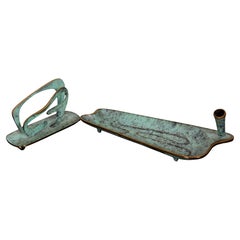
unique turquoise burnished solid brass WRITING DESK SET Vienna Austria 1950
s
By Walter Bosse
Located in Landshut, BY
unique turquoise burnished solid brass
WRITING DESK SET
Vienna Austria 1950's
processed to the highest quality
Production Period around 1950
:-: in good condition :-:
maximum ...
Category
Mid-20th Century Austrian Mid-Century Modern Desk Sets
Materials
Brass
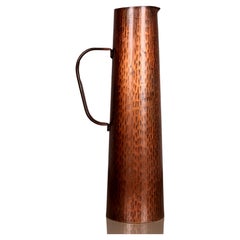
Harald Buchrucker hammerblow copper jug 1960s straight mid-century modern design
By Harald Buchrucker
Located in Landshut, BY
Harald Buchrucker
hammerblow copper jug
1960s
straight mid-century modern design
H / height: 30cm ~ upper Ø 5.8 cm ~ Ø base: 8.2cm ~ Gew. / weight: 630 grs
MARKED: YES Buchru...
Category
Mid-20th Century German Mid-Century Modern Pitchers
Materials
Copper

$326 Sale Price
28% Off
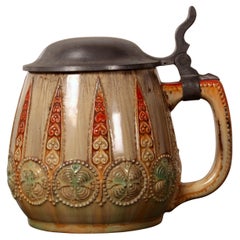
Jugendstil Beer Stein art nouveau WICK WERKE uranium glaze pewter lid am colours
By Merkelbach
Located in Landshut, BY
Beautiful & quite unique
Art Nouveau STEIN
both colours and pattern are typical Jugendstil
pewter lid
Manufactured by WICK WERKE AG
Production Period aro...
Category
Vintage 1910s German Art Nouveau Pitchers
Materials
Pewter
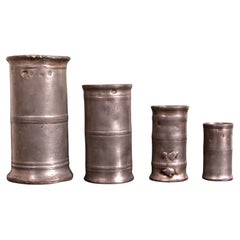
Set of 4 antique hallmarked pewter measuring jugs Italy late 18th Ct Bergamo
Located in Landshut, BY
Set of 4 antique pewter measuring jugs
Manufactured in Northern Italy from North of Bergamo up to the Valtellina Region
Production Period aro...
Category
Antique Late 18th Century Italian Other Jars
Materials
Pewter
$845 Sale Price / set
40% Off
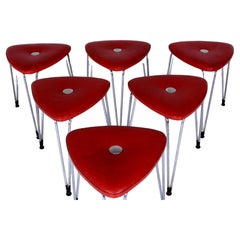
SET of SIX mid-century STOOLS by Günter Talos Vienna chrome iron pin legs 1950s
By Günter Talos
Located in Landshut, BY
SOLID HEAVY DUTY MADE FOR THE ETERNITY
Six mid-century stools designed and made in Vienna around 1950 by J. A. Talos, Vienna XII. Bezirk , Dörfelstraße 6-8 .
The architectually sig...
Category
Vintage 1950s Austrian Mid-Century Modern Stools
Materials
Chrome, Iron
$3,112 Sale Price / set
41% Off
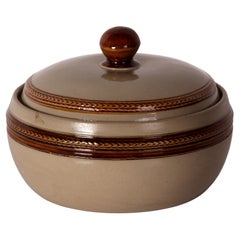
WEKARA art deco 20s 30s salt glaze jewelry can confectionery box South. Germany
Located in Landshut, BY
Traditional salt glazed pottery box
Manufactured in Germany
around 1925 by WEKARA
Wekara:: W ( for WE German pronounciation) for Wilhelm E. K for Krumeich A for aus (from) RA fo...
Category
Vintage 1920s German Art Deco Ceramics
Materials
Pottery
$115 Sale Price
20% Off
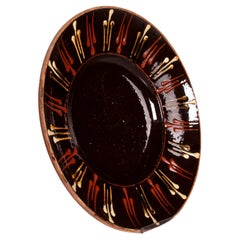
Antique traditional French Art Pottery Bowl (also wall plate) France ar. 1900
Located in Landshut, BY
Traditional French Plate / Bowl
(can be perfectly fitted as a wall plate - using handle to hang)
Manufactured in France
around 1900
Production Period around 1900
marked: "3"
...
Category
Antique Late 19th Century French Folk Art Ceramics
Materials
Pottery
$269 Sale Price
20% Off
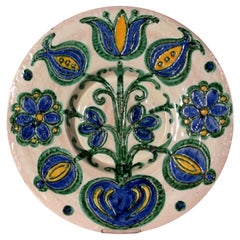
THUN Bozen South Tirol huge wall plate Italy traditional pottery hand painted
Located in Landshut, BY
Huge (Ø 33cm) and heavy (1521grs)
Traditional South Tyrolian Wall Plate
Manufactured by THUN Bozen
History of the company
The company was founded in 1950 by Count Otmar and Cou...
Category
20th Century Italian Folk Art Ceramics
Materials
Pottery
$269 Sale Price
46% Off
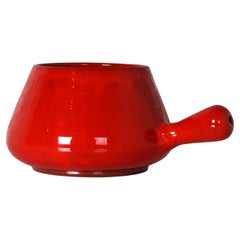
Charles Voltz Vallauris Pottery SET: Jug
Casserole typical low fired red glaze
By Charles Volton
Located in Landshut, BY
SET of 2
Charles Voltz (1923-1997) moved to Vallauris France in 1950, where he had a studio for many years. His ceramics was in the typical exuberant mid-century Vallauris style with colourful and often highly textured or patterned glazes.
Vallauris is an area in the Cote d’Azur region of south eastern France and has a long history of Artistic and Ceramics traditions, but is was in the 1950s when Vallauris experienced a new golden age after Picasso went to live in and influence the Arts & Crafts of Vallauris in the late 1940s (and where he stayed until 1955)
Picasso, along with Roger Capron were significant contributors to the profile of Ceramics in Vallauris, together other names such as Roger Collet, Gilbert Portanier, Jean Derval and Charles Voltz.
Design Period 1965 to 1975
Production Period late 1960s
Country of Manufacture France
H / height: 11cm both ~ Gew. / weight: 2950grs both
DM / diameter casserole : 13 cm ~ DM / diameter jug: 8 cm
MARKED: C. Voltz Vallauris...
Category
Vintage 1960s French Mid-Century Modern Tableware
Materials
Clay
$557 Sale Price / set
20% Off
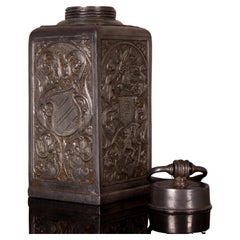
Antique hallmarked Pewter Bottle ar. 1880 Lion Crest Knightly / Hunting Style
Located in Landshut, BY
Huge pewter bottle
Manufactured most probably in Southern Germany
Production Period around 1880
Country of Manufacture Germany
H / height: 522cm ~ Gew. / weight: 1275 grs
9cm x 1...
Category
Antique 1880s German Romantic Vases
Materials
Pewter
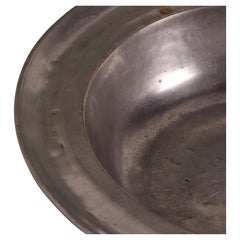
Antique huge Ø 30cm/12" and heavy hallmarked Pewter BOWL 18th Ct ar. 1780
Located in Landshut, BY
A huge pewter bowl
Manufactured most probably in Alsace
Production Period around 1780
Country of Manufacture Germany
H / height: 5.5cm ~ Gew. / weight: 1391 grs
DM / diameter...
Category
Antique Late 18th Century German Other Decorative Bowls
Materials
Pewter
$518 Sale Price / set
41% Off
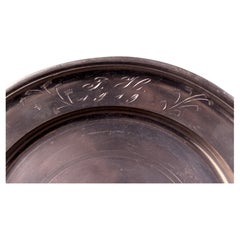
set of 2 Anniversary Pewter Plates 1870s G.Hugel Bavaria engraved T.H. 1919 1921
Located in Landshut, BY
2 pewter plates
(Wedding - Anniversary - Birthday - Birth)
Manufacturer G. Hugel
Bavaria
Zinngießerei / Pewterer
Known dates: 1870's
Production Period 1871-1874
Country of Manufact...
Category
Antique 1870s German Other Platters and Serveware
Materials
Pewter
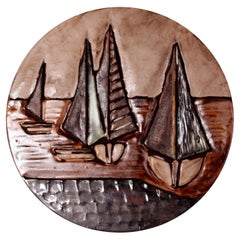
RUSCHA ART 1970s WGP Pottery WALL PLATE " SAILING BOATS " 1970s Western Germany
Located in Landshut, BY
stunning (Ø 28cm) and heavy (1362grs)
RUSCHA ART Wall Plate
History of the company
RUSCHA KERAMIK was originally founded in 1905 by Georg Schardt and was originally called Klein...
Category
Mid-20th Century German Mid-Century Modern Decorative Art
Materials
Pottery
$345 Sale Price
24% Off
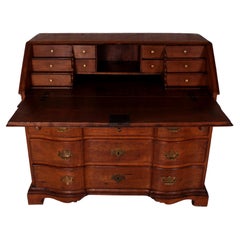
Viennese Baroque Secretary Slant Door Bureau ar 1860 Straight
Heavy Solid Oak
Located in Landshut, BY
This rather straight, very heavy solid oak Viennese baroque folding desk has been carefully restored to its original condition - no replacements! Even the 2 main keys are still there...
Category
Antique 1850s Austrian Biedermeier Desks
Materials
Brass, Iron
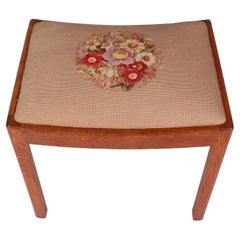
art nouveau oak stool chair Jugendstil Rabenau embroidery a. 1910 exc condition
Located in Landshut, BY
solid built oak
Jugendstil
CHAIR
made in Rabenau / Saxonia
upholstered with care - fitted with hand embroidered jute fabric
Rabenau's chairmaking tradition is almost 400 years ol...
Category
Vintage 1910s German Art Nouveau Chairs
Materials
Wool, Jute, Oak
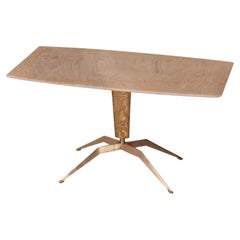
Duilio " Dubé " Bernabe Italian coffee table Marble and Bronze Relief
By Duilio Dubé Bernabe
Located in Landshut, BY
It is our great pleasure to confirm that both the stand and the board are, in fact, original and remain in their original condition.
This rectangular coffee table was designed by D...
Category
Vintage 1950s Italian Mid-Century Modern Coffee and Cocktail Tables
Materials
Carrara Marble, Brass
$2,382 Sale Price / set
76% Off
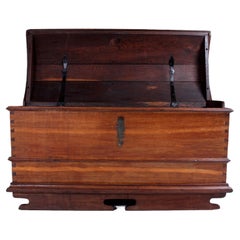
straight huge baroque oak dome top chest ar. 1750 very heavy dovetail joints
Located in Landshut, BY
""~!~** STRAIGHT **~!~**
Baroque round-lidded chest, also known as a dome top chest, solid oak, with heavy fittings, around 1750.
The chest is in a "refined for the home condition...
Category
Antique 1750s German Art Deco Blanket Chests
Materials
Wrought Iron
$1,960 Sale Price
32% Off
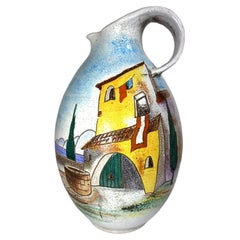
1950s Studio Keramik floor Vase series GARDA Atelier Huber Roethe Landshut
Located in Landshut, BY
STUDIO KERAMIK FLOOR VASE
Atelier Herta Huber Roethe Landshut 1950s
marked "HR"
Manufacturer ATELIER HUBER ROETHE
Design Period 1950 to 1959
Production Period 1950 to 1959
Count...
Category
Vintage 1950s German Mid-Century Modern Vases
Materials
Pottery
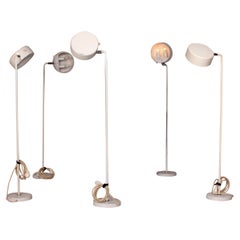
Anders Pehrson Ateljé Lyktan SWEDEN set of 5 floor lamps f. Olympia 1972 Munich
Located in Landshut, BY
Anders Pehrson for Ateljé Lyktan
FLOOR LAMP "OLYMPIA"
set of five floor lamps
recommended with 2 E14 bulbs 25W and 40W as the lamp can be switched in...
Category
Vintage 1970s Swedish Mid-Century Modern Floor Lamps
Materials
Metal
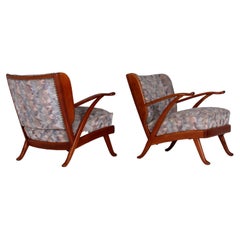
Midcentury set of 2 solid cherry wood wingback armchairs
sofa Karl Nothhelfer
Located in Landshut, BY
It's just beautiful and easy to reupholster in a fabric of your choice.
(just fabric - as upholstery is PERFECT)
Set of sofa and two wingback armchairs.
Designed by Prof. Karl Nothelfer in 1957.
Maker: Schörle & Gölz in Stuttgart-Bad Cannstatt.
Solid cherry wood.
New upholstery and fabrics in 1998, according to the last owner. Since then, it has only been used for two years, so the upholstery is in perfect condition!
The seat rests can be removed and fixed by clips on the belts.
High class.
Measurements:
Easy chair: 70 cm wide. Sofa: 178 cm wide.
Both have a seating height of 40 cm and a seating depth of 57 cm.
Condition: all firm and in very good condition with no damage.
The furniture has been fully and accurately cleaned.
Three steps: A: air pistol, B: industrial hoover, C: the latest Kärcher "wash & hoover" technology.
The woods have been polished several times.
Note: please ask for a shipping quote by sending us your postcode/destination.
Prof. Karl Nothelfer
* 14 June 1900 – 20 May 1980
Since the beginning of the 15th century, the Nothelfer family of carpenters has lived continuously in the former
town of Überlingen. Every carpenter at that time mastered
all aspects of woodworking, and the Nothelfers were no exception.
They could even carve altars and figures and adorn them with gold, silver and paint.
(Churches in Owingen and Hödingen). Some family members lived and worked
in Hedingen or Hödingen, as the jubilarian Karl Nothelfer did in 1975.
However, his father, Karl Anton Nothelfer, was the eldest of seven siblings and was therefore able to take over his father's carpentry business in Überlingen.
However, Karl Anton Nothelfer was unable to take over his father's carpentry business in Überlingen.
Instead, he moved to the industrial town of Singen with his young wife, Rosalie Hanner, and founded his own carpentry workshop.
Hohenzollern in 1896, and he moved to the former Poststraße, where he founded his own carpentry workshop.
He had a high sense of quality and form, and was a member of the German Werkbund before 1914.
Karl Nothelfer and his three siblings grew up in such an environment.
After attending primary and secondary school in Singen, Karl learnt the carpenter's trade in his father's workshop, before moving on to the Badische Landes-Kunstschule in Karlsruhe.
, where he studied architecture. The well-known furniture professor also worked there at that time:
Fritz Spannagel (born Freiburg, 1891; settled Ittendorf Castle near Meersburg in 1938; died 1957).
burg (died 1957). In 1928, the gifted young architect received a teaching assignment at the
Karlsruhe School of Art, but he followed his teacher Spannagel to Berlin in the same year.
Berlin. He worked there as a teacher from 1928 to 1945, becoming a professor in 1931.
Berlin Tischler-Schule, later known as the Bauschule für Raumgestaltung.
The furniture he created in Berlin gained international recognition through numerous exhibitions and lectures.
He became nationally known and influential. His furniture designs ushered in a new era of German and European furniture design.
European furniture design. At the World Exhibition in Paris
in 1937, Prof. Nothelfer was awarded the Golden Medal for his work in the furniture sector.
For his work in the furniture sector. The first summary and evaluation of his furniture designs is presented in his seminal work,
Das Sitzmöbel, published in 1942, was the first compendium of its kind in the world.
world. In 1950, he published his second book, Furniture. Both books and a
series of brochures were published by Verlag Otto Maier in Ravensburg.
Karl Nothelfer continued to work intensively on seating furniture design in the years after 1945.
In 1950, he made the important invention of the two-legged skid-base chair, which has since become widely accepted.
Even the most distinguished American furniture companies, such as Miller and Knoll International,
, use the skid as the main design feature of desks and chairs. At the same time, N. was pioneering
in redesigning German school furniture and seating for industry.
He succeeded in adapting his furniture designs, which originated in woodworking and craftsmanship, to modern technical possibilities of the industry. He thus became a leading figure in the redesign of schoolroom furnishings.
The architect Nothelfer reflects on his own work,
that his main contribution was in the field of seating furniture, although this was not
really his profession.
After the war, Prof. Nothelfer, like so many others, had to start again from scratch. He settled
in his hometown of Hödingen on Lake Constance in 1945, working as a freelance architect.
involved in all areas of construction in the years after the war. As early as 1935, he had designed many
examples of American prefabricated buildings and recommended serial housing,
This was at a time when no one in Germany was even thinking about mass production. He developed
Several types of mass-produced houses were manufactured in Baiersbronn.
More than 800 of these houses were built in France (types Paris, Provence and Normandie).
In 1946, as part of the reparations in Strasbourg, there was an exhibition of houses featuring Swedish, Danish and French designs.
These included Swedish, Danish, Finnish, English and German houses, and the French occupation
For this exhibition, six different types were sent from the French occupation zone.
Nothelfer's house design was considered the best in the exhibition.
Karl Nothelfer was also involved in developing chipboard. In 1946, he founded the first
magazine, Bauen und Wohnen (Building and Living), after the war, and remained its co-editor for many years.
By presenting his own work, he interpreted what the magazine's essence was.
interpreted the essence of what the magazine wanted to be. Building in order to live in it and live humanely in the built environment. Karl Nothelfer designed his houses
The furniture and ground plans were designed with the need for living in mind. In 1948, he was appointed Honorary Senator of the State of Building
School in Holzminden.
Karl Nothelfer did not build much in Singen. The first post-war house was Haus
Fahr on the slope of the Hohentwiel (Domäne), for which the building materials were sourced from a demolished
log cabin that a French officer had built for himself on the Schienerberg.
nerberg. In 1952, he also constructed the administrative building for the aluminium rolling mill in Singen.
This building featured reliefs and wall paintings by C. G. Becker. In Überlingen, he built
Among others, he built the Buchinger Sanatorium and the Riese+Hähnel radio house.
various reconstructions in the old town, including Haus Kitt with the Glockenspiel. Haus Kitt with the Glockenspiel, the Haus mit dem
Bacchus in Überlingen village and the Dolphin Fountain in Hödingen (1975). Probably the most beautiful
The Haus Nothelfers, also known as the Haus Himmelheber, is located in Baiersbronn-Tonbach. On the airfield
In Mengen, Nothhelfer built the casino with the 30-square-metre faience painting 'Ikarus' by
C. G. Becker. In 1954, he established a second office in Düsseldorf with the architect Hans Schwingen.
This office primarily focused on housing construction, true to the motto: from the inside out.
planning from the outside'. The Minister of Housing awarded a prize for the best social housing project in North Rhine-Westphalia, and it came from the Nothelfer+Schwingen studio in Düsseldorf. The idea of Nothelfer+Schwingen also promoted the new idea of home ownership.
To celebrate the anniversary of the condominium ownership law,
In 1961, Nothelfer gave a lecture in Essen on condominium ownership in Europe, which was published as a brochure.
From Düsseldorf, among many others, in the silk city...
Category
Vintage 1950s German Mid-Century Modern Living Room Sets
Materials
Fabric, Cherry, Upholstery
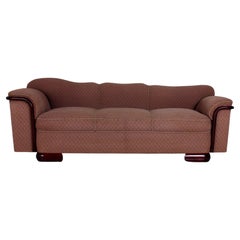
STRAIGHT classic art deco SOFA Dresden around 1930 or. fabric - wood refinished
Located in Landshut, BY
""~!~** STRAIGHT **~!~**
This classic art deco sofa was produced in the Dresden area in the 1930s
Its shape is quite unique and very well proportioned
Its spring upholstery is still strong and fully undamaged
All wooden parts have been demounted sanded and stained - then treated (sprayed) with a transparent Acrylic Silk Matt Paint
finish and professionally remounted.
The sofa has fully been accurately cleaned ::
:: 3 steps: A: air pistol...
Category
Vintage 1930s German Art Deco Sofas
Materials
Wood, Fabric, Beech
$3,590 Sale Price
35% Off
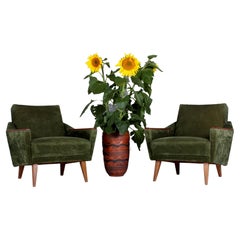
pair of 1960s lounge chairs green velvet - beech WG solid make uph. easy chairs
Located in Landshut, BY
This set of two West German lounge chairs is in very good condition
It was made in the mid 1960s
The armrests have been professionally restored (sanded - stained and lacquered tw...
Category
Mid-20th Century German Mid-Century Modern Lounge Chairs
Materials
Wood, Velvet, Beech
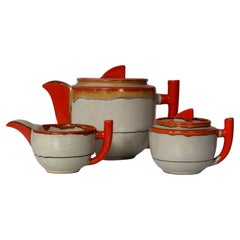
Art Deco Tea Service by Hildegard Delius ar 1930 uranium glaze + cups + plates
By Carstens Tönnieshof
Located in Landshut, BY
Designer (execution): Hildegard Delius (1896-1955)
Designer (presumed): Gerhard Meisel (1903-1979)
Manufacturer (collaboration): Keramikfabriken Neuha...
Category
Vintage 1930s German Mid-Century Modern Tea Sets
Materials
Pottery
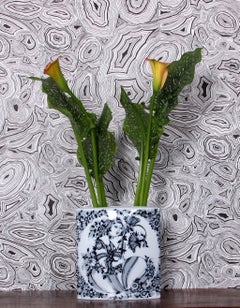
Huge Björn Wiinblad Rosenthal Studio Line Vase mint cond "Mädchen mit Blumen"
By Bjorn Wiinblad
Located in Landshut, BY
A beautiful heavy porcelain Vase
Björn Wiinblad
Rosenthal Studio Linie
Model No.: 3512/28
in mint condition !
definetely collectionable!
Manufacturer Rosenthal
Design Period 1970s
Production Period 1972 to 1976
Country of Manufacture IWestern Germany
Maße / mearurements 25,7 cm x 11,5 cm ~ H / height: 28 cm ~ Gew. / weight: 2450g
Öffnung innen / inner rim : 7.2 cm x 21.8 cm
Rosenthal GmbH is a German manufacturer of porcelain products and other household goods. The original firm was founded in 1879 in Selb, Bavaria. Since 2009, Rosenthal has been owned by the Italian company Sambonet Paderno Industrie
(Arcturus Group).
History
Rosenthal was originally founded in 1879 as a family business. The founder, Philipp Rosenthal, moved his porcelain painting from Werl in North Rhine-Westphalia to Selb in Bavaria, where he industrialized in the castle Erkersreuth with his painting workshop. In 1897, Philipp Rosenthal founded the company Bauer, Rosenthal & Co. in Kronach, as well as Philipp Rosenthal & Co. AG. In 1908, Rosenthal bought the porcelain manufacturer Thomas in Marktredwitz, and the porcelain company Zeidler & Co. in 1917.
In 1921, the company took over the Krister Porzellanmanufaktur in Wałbrzych, Silesia. The factory was closed in 1945, but the brand was revived in 1951 and used until 1971.
In the period of national socialism, Philipp Rosenthal, while Catholic, had to withdraw from the enterprise in 1934 because of his Jewish origin. The Board of Management and the supervisory board turned against Rosenthal and implemented various measures to prevent Philipp Rosenthal from using his voting shares in order to change the composition of the management board and the supervisory board. The government was asked for support and sold the voting shares to persons who were not well-disposed towards Rosenthal. However, the Nazi regime did not go directly against Philipp Rosenthal in order not to jeopardize the foreign business of the company. The reasonably covertly concealed Aryans took advantage of the family, and urged Rosenthal's successor to step out of the company. Philipp Rosenthal's death in 1937 finally paved the way for his grandchildren. In 1936, Rosenthal bought the porcelain manufacturers Waldershof and Thomas in Weidenberg-Sophienthal. Rosenthal Isolatoren GmbH (RIG) was established in 1939 with branches in Erkersreuth (Selb) and Hennigsdorf near Berlin. In 1939 the company changed to Rosenthal Porzellan AG. When the Decree on Companies of Deprived Commercial Enterprises (RGBI 1941, p. 177), adopted on 27 March 1941, forced the discontinuation of the Jewish company and brand name Rosenthal, the "Aryan" management intervened through Joseph Goebbels to continue the use of the Rosenthal brand name.
With the return of Philipp Rosenthal's son Philip Rosenthal from exile and his entry into the enterprise in 1950, he won a pioneering role in the modern product design. In 1960, the Rosenthal Studiohaus was opened in Nuremberg, from which the world's first design chain was built. In 1965 the uniform name Rosenthal Glas & Porzellan AG was elected and shortened to Rosenthal AG in 1969. In 1972, Philip Rosenthal founded the furniture factory Rosenthal Einrichtung in Espelkamp. The furniture factory was renamed in 2009 Philip Möbelmanufaktur GmbH and in 2013 rebranded the Fröscher GmbH & CO. KG. Rosenthal, In collaboration with industrial designers such as Raymond Loewy, Tapio Wirkkala, Elsa Fischer-Treyden, Timo Sarpaneva, Verner Panton and Luigi Colani, created an impressive series of products. Walter Gropius design for Rosenthal the tea service TAC. In 1967, Rosenthal built the so-called "Glassmaker's Cathedral," a factory for the Thomas-Glassworks in Amberg. The Thomas-Glassworks was renamed the Amberg crystal glass factory.
In 1997, Rosenthal AG was 90% owned by the British-Irish Waterford Wedgwood Group. Rosenthal was the market leader for high-quality porcelain and glassware in Germany and was the world market leader in conjunction with Waterford Wedgwood. In the year 2000, the company took over the Hutschenreuther brand and Hutschenreuther-Werk B in Selb.
In June 2008, the Waterford Wedgwood Group wanted to divest the Rosenthal share package due to liquidity difficulties. At this time, around 1,100 employees were employed worldwide. The company, faced with insolvency by the subsequent collapse of Waterford Wedgwood, filed for insolvency on 9 January 2009. The subsequent insolvency proceedings of Rosenthal AG were opened on 1 April 2009 by the District Court.On 20 July 2009, a sale was announced to an Italian company, Sambonet Paderno Industrie (Arcturus Group). Founded on 1 August 2009, Rosenthal GmbH is an independent part of Sambonet Paderno Industrie (Arcturus Group). The Rosenthal company headquarters remain in Selb under the managing director Pierluigi Coppo.
The Rosenthal Archive, a collection of around 15,000 exhibits from 130 years of company history, were purchased by the Oberfranken Foundation on 12 August 2009 and is provided as a permanent loan to the Porzellanikon, the State Museum of Porcelain in Hohenberg an der Eger, Selb. These include nearly all product designs, from the company's foundation to today, as well as originals designed by artists such as Salvador Dalí, Andy Warhol, Wilhelm Wagenfeld and Walter Gropius.
Designers
Otmar Alt
Joannis Avramidis
Bele Bachem...
Category
Vintage 1970s German Mid-Century Modern Vases
Materials
Porcelain
$749 Sale Price
23% Off
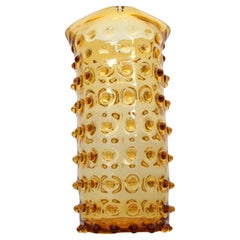
att. Barovier Seguso
Ferro Murano Art Glass Vase Honey Amber Italy late 1940s
By Barovier Seguso
Ferro
Located in Landshut, BY
A beautiful huge Murano art glass vase in the manner of Barovier Seguso & Ferro in honey yellow amber colour, Italy,
circa mid / late 1940s
It stays in very good original conditio...
Category
Vintage 1940s German Mid-Century Modern Vases
Materials
Art Glass
$634 Sale Price
58% Off
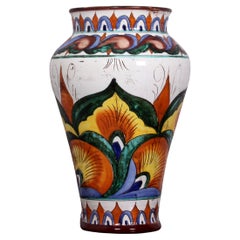
Art Nouveau Southern French Fayance art pottery FLOOR VASE rare colours&pattern
Located in Landshut, BY
A giving joy beautiful French Fayence Floor Vase
fantastic Art Nouveau pattern - Impressing Colours
Manufacturer unknown - marked
Design Period 1915 - 1925
Country of Manufacture : France
H / height: 46 cm ~ Gew. / weight: 4550 grs
DM / diameter max: 28 cm ~ DM oben / diameter inner rim: 19.8 cm
.... an ode to Southern France
A Legend of Provence
by Adelaide Anne Procter (30 October 1825 – 2 February 1864)
The lights extinguished, by the hearth I leant,
Half weary with a listless discontent.
The flickering giant-shadows, gathering near,
Closed round me with a dim and silent fear.
All dull, all dark; save when the leaping flame,
Glancing, lit up a Picture's ancient frame.
Above the hearth it hung. Perhaps the night,
My foolish tremors, or the gleaming light,
Lent power to that Portrait dark and quaint, —
A Portrait such as Rembrandt loved to paint, —
The likeness of a Nun. I seemed to trace
A world of sorrow in the patient face,
In the thin hands folded across her breast: —
Its own and the room's shadow hid the rest.
I gazed and dreamed, and the dull embers stirred,
Till an old legend that I once had heard
Came back to me; linked to the mystic gloom
Of that dark Picture in the ghostly room.
In the far south, where clustering vines are hung;
Where first the old chivalric lays were sung;
Where earliest smiled that gracious child of France,
Angel and knight and fairy, called Romance,
I stood one day. The warm blue June was spread
Upon the earth; blue summer overhead,
Without a cloud to fleck its radiant glare,
Without a breath to stir its sultry air.
All still, all silent, save the sobbing rush
Of rippling waves, that lapsed in silver hush
Upon the beach; where, glittering towards the strand
The purple Mediterranean kissed the land.
All still, all peaceful; when a convent chime
Broke on the mid-day silence for a time,
Then trembling into quiet, seemed to cease,
In deeper silence and more utter peace.
So as I turned to gaze, where gleaming white,
Half hid by shadowy trees from passers' sight,
The Convent lay, one who had dwelt for long
In that fair home of ancient tale and song,
Who knew the story of each cave and hill,
And every haunting fancy lingering still
Within the land, spake thus to me, and told
The Convent's treasured Legend, quaint and old: —
Long years ago, a dense and flowering wood,
Still more concealed where the white convent stood,
Borne on its perfumed wings the title came:
" Our Lady of the Hawthorns " is its name.
Then did that bell, which still rings out to-day,
Bid all the country rise, or eat, or pray.
Before that convent shrine, the haughty knight
Passed the lone vigil of his perilous fight;
For humbler cottage strife or village brawl,
The Abbess listened, prayed, and settled all.
Young hearts that came, weighed down by love or wrong,
Left her kind presence comforted and strong.
Each passing pilgrim, and each beggar's right
Was food, and rest, and shelter for the night.
But, more than this, the Nuns could well impart
The deepest mysteries of the healing art;
Their store of herbs and simples was renowned,
And held in wondering faith for miles around.
Thus strife, love, sorrow, good and evil fate,
Found help and blessing at the convent gate.
Of all the nuns, no heart was half so light,
No eyelids veiling glances half as bright,
No step that glided with such noiseless feet,
No face that looked so tender or so sweet,
No voice that rose in choir so pure, so clear,
No heart to all the others half so dear,
So surely touched by others' pain or woe,
(Guessing the grief her young life could not know,)
No soul in childlike faith so undefiled,
As Sister Angela's, the " Convent Child. "
For thus they loved to call her. She had known
No home, no love, no kindred, save their own.
An orphan, to their tender nursing given,
Child, plaything, pupil, now the Bride of Heaven
And she it was who trimmed the lamp's red light
That swung before the altar, day and night;
Her hands it was whose patient skill could trace
The finest broidery, weave the costliest lace;
But most of all, her first and dearest care,
The office she would never miss or share,
Was every day to weave fresh garlands sweet,
To place before the shrine at Mary's feet.
Nature is bounteous in that region fair,
For even winter has her blossoms there.
Thus Angela loved to count each feast the best,
By telling with what flowers the shrine was dressed.
In pomp supreme the countless Roses passed,
Battalion on battalion thronging fast,
Each with a different banner, flaming bright,
Damask, or striped, or crimson, pink, or white,
Until they bowed before a newborn queen,
And the pure virgin Lily rose serene.
Though Angela always thought the Mother blest
Must love the time of her own hawthorn best,
Each evening through the years, with equal care,
She placed her flowers; then kneeling down in prayer,
As their faint perfume rose before the shrine,
So rose her thoughts, as pure and as divine.
She knelt until the shades grew dim without,
Till one by one the altar lights...
Category
Vintage 1910s French Art Nouveau Vases
Materials
Pottery
$1,902 Sale Price
36% Off
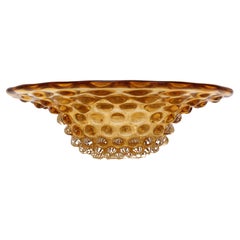
Barovier Seguso
Ferro Murano heavy Art Glass Bowl Honey Amber Italy 1940s
By Barovier Seguso
Ferro
Located in Landshut, BY
A beautiful heavy Murano art glass bowl by Barovier Seguso & Ferro in honey yellow amber colour, Italy,
circa mid / late 1940s
It stays in very good original condition - with a ve...
Category
Vintage 1940s German Mid-Century Modern Decorative Bowls
Materials
Art Glass
$557 Sale Price
46% Off
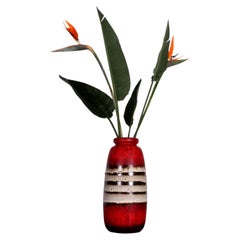
SCHEURICH RED 70s FAT LAVA FLOOR VASE West Germany 1970s marked 284-47
By Scheurich Keramik
Located in Landshut, BY
a striking RED FAT LAVA FLOOR VASE no. 284-47
by SCHEURICH
Scheurich originated from a joint venture initiated in 1928 by Alois Scheurich and his cousin Fridolin Greulich in the small town of Schneeberg, situated near the Czech border in Saxony. The venture involved the wholesaling of glass, porcelain, and ceramics. In 1938, the business was relocated to the market community of Kleinheubach in the northeast corner of Bavaria. Ten years later, the partners initiated the production of household ceramics, which were sold under the name Scheurich & Greulich. In 1954, the partnership was dissolved, and Alois proceeded to establish Scheurich GmbH & Co. KG proceeded to continue production independently.
In 1955, the celebrated designer Heinz Siery was recruited by Scheurich as the company's lead form designer. In addition to designing an extensive range of shapes, he played a pivotal role in developing a successful overarching production strategy. This strategy involved producing a wide array of simple forms that could be produced cheaply and decorated in a variety of glazes. This resulted in the creation of a diverse and economically adaptable range of pieces. This approach proved to be entirely successful, resulting in Scheurich's ascendency in the market by the late 1960s. The company's strategy of maintaining low prices in conjunction with an extensive range of appealing designs resulted in significant sales, with millions of units sold annually. The designs were adapted twice a year to align with changing consumer preferences.
Scheurich's product range included vases and flowerpots, in addition to ashtrays, piggy banks, candle stands, beer mugs, buffet clocks, wall reliefs and Christmas tree holders...
Category
Vintage 1970s German Mid-Century Modern Vases
Materials
Pottery
$384 Sale Price
55% Off
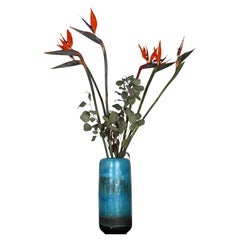
turquoise lava glazed RUSCHA FLOOR VASE 60s 70s hand-thrown marked G.- 863-40
By Ruscha
Located in Landshut, BY
beautiful FLOOR VASE
attributed to / most probably by RUSCHA KERAMIK
RUSCHA KERAMIK was launched in 1948 when Rudolf Schardt assumed the management of Klein & Schardt, his father Georg's ceramics factory in the town of Rheinbach, located near Bonn in the German state of North Rhine-Westphalia. (RUSCHA is a syllabic abbreviation of his name.) The timing of the re-founding ensured that the company was in a good position to benefit from Germany's post-war growth boom. RUSCHA KERAMIK became a leading manufacturer during the "golden age" of Western German ceramics and is credited with some of the era's key developments. It produced some very successful and innovative forms and glazes, including the 'Vulcano' décor (Otto Gerharz, 1951)—which heralded the move towards thick, dripping fat-lava glazes—and the iconic no. 313 (Kurt Tschörner, 1954), probably the period's most famous shape. Hans Welling, Adele Bolz, Heinz Siery, and Cilli Wörsdörfer were among other notable designers to work for RUSCHA.
RUSCHA KERAMIK was celebrated for exquisite wall plates, plaques, and tiles—manufactured for both indoor and outdoor applications—as well as its high-quality vases. Specimens from the 1970s will frequently exhibit remarkable lava and volcanic glazes. When RUSCHA closed its factory in 1996, Scheurich acquired many of its designs and molds; distinctive silver RUSCHA labels were sometimes applied to the subsequent production.
Notes on identification: White clay was used practically exclusively. The rare examples made with red-brown clay are thought to date from periods when normal supply sources ran out. Embossed and incised base-numbering was used for vessels. If a vase was made in more than one size, a single digit indicating relative size followed the form number. Low form numbers (< 100) were sometimes preceded by a letter. Like a few other manufacturers, RUSCHA KERAMIK occasionally recycled form numbers, a cause of distress for some collectors. Pieces were never molded with "Germany" or "West Germany."
Manufacturer most probably RUSCHA
Design Period 1965 to 1975
Production Period 1965 to 1975
Country of Manufacture Germany
H / height: 40cm ~ Gew. / weight: 2950grs
DM max / diameter max : 16,5 cm ~ DM oben / diameter inner rim: 8.8cm
MARKED: marked G...
Category
Vintage 1960s German Mid-Century Modern Vases
Materials
Pottery
$355 Sale Price
56% Off
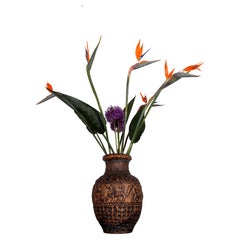
rare huge JASBA "AZTEC" FLOOR VASE marked 1 521 45
By Jasba
Located in Landshut, BY
A very rare 'Aztec' relief-décor floor vase from JASBA KERAMIK.
JASBA produced several series of ceramics on themes inspired by ancient civilizations; among the most sought-after t...
Category
Vintage 1970s German Mid-Century Modern Vases
Materials
Pottery
$845 Sale Price
26% Off
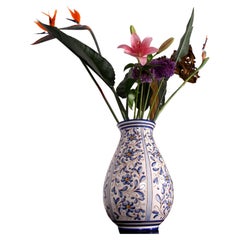
traditional Italian art pottery floor vase floral midcentury classic white&blue
Located in Landshut, BY
beautiful Italian art pottery floor vase
floral pattern
Manufacturer unknown
Design Period 1958 to 1968
Production Period 1958 to 1968
Country of Manufacture Italy
H / height: ...
Category
Vintage 1960s Italian Arts and Crafts Vases
Materials
Pottery
$441 Sale Price
57% Off
German Studio Keramik Floor Vase archaic amphora 60s huge
heavy (51cms 11kg )
Located in Landshut, BY
BESPOKE HUGE & HEAVY STUDIO KERAMIK FLOOR VASE - ARCHAIC AMPHORA
amazing blue/brown luster overglaze
Manufacturer unknown
Design Period 1968 to 1978
Production Period 1968 to 19...
Category
Vintage 1970s German Country Vases
Materials
Pottery
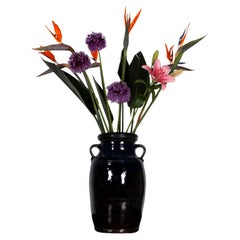
German Floor Vase 50s 60s huge (50cms) sgrafitto Siershahner Feinsteinzeugfabrik
By Sawa Ceramic
Located in Landshut, BY
FLOOR VASE
Siershahner Feinsteinzeugfabrik
DEKOR CAPRI 1950s
Ritzdekor (sgrafitto)
A huge 50s or 60s studio quality 'Klinker' floor vase nr. 54/50 with an sgraffito
decor designed ...
Category
Vintage 1960s German Mid-Century Modern Vases
Materials
Pottery
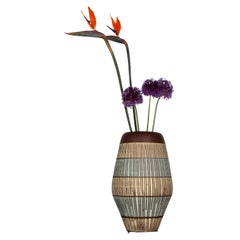
$710 Sale Price
39% Off
1950s Studio Keramik floor Vase Atelier Huber Roethe Landshut 1959 with inlet
Located in Landshut, BY
STUDIO KERAMIK FLOOR VASE
Atelier Herta Huber Roethe Landshut 1950s
(it´s been created by an artist who has worked in their Atelier : marked "BR")
Manufacturer ATELIER HUBER ROETHE...
Category
Vintage 1950s German Mid-Century Modern Vases
Materials
Pottery
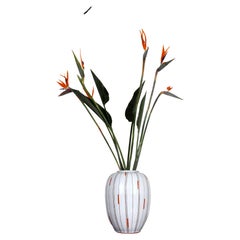
German Floor Vase DECORA 50s 60s sgrafitto hand-thrown KLINKER POTTERY 56/40
By Sawa Ceramic
Located in Landshut, BY
FLOOR VASE
DECORA
Ritzdekor (sgrafitto)
A 40cm late50s / early 60s studio quality 'Klinker' floor vase nr. 56/40 with an sgraffito
decor designed for DECORA Keramik.
It is comp...
Category
Vintage 1960s German Mid-Century Modern Vases
Materials
Pottery
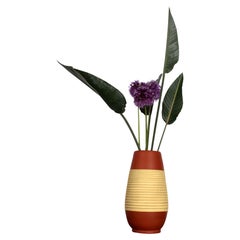
$307 Sale Price
28% Off
Carstens Tönnieshof German Floor Vase 60s 70s huge (50cms) cloud green glaze
By Carstens Tönnieshof
Located in Landshut, BY
HUGE FLOOR VASE
cloudy green glaze
Manufacturer CARSTENS TÖNNIESHOF
Design Period 1968 to 1978
Production Period 1968 to 1978
Country of Manufacture Germany
H / height: 52cm ~...
Category
Vintage 1970s German Mid-Century Modern Vases
Materials
Pottery
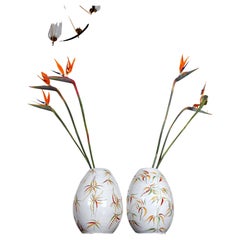
a pair of 1950s Studio Keramik floor Vases Atelier Berta Huber Roethe Landshut
Located in Landshut, BY
an amazing set of 2 STUDIO KERAMIK FLOOR VASES
by Atelier Herta Huber Roethe Landshut 1950s
Manufacturer HUBER ROETHE
Design Period 1950 to 1959
Production Period 1950 to 1959
C...
Category
Vintage 1950s German Mid-Century Modern Vases
Materials
Pottery
$845 Sale Price / set
69% Off
Dümler und Breiden German Floor handle Vase 70s huge (40cms) clouded overglaze
By Dümler
Breiden
Located in Landshut, BY
HUGE FLOOR VASE
cloudy brown / blue glaze
Manufacturer DÜMLER & BREIDEN
Production Period 1968 to 1978
Country of Manufacture Germany
H / height: 40cm ~ Gew. / weight: 4250g...
Category
Vintage 1970s German Mid-Century Modern Vases
Materials
Pottery
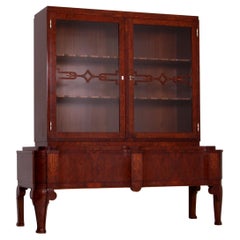
Bespoke Burl Wooden Art Nouveau Display Glass Cabinet H. Pössenbacher Est. 1784
By Moritz Ballin
Located in Landshut, BY
A bespoke display cabinet, crafted by one of Munich's most distinguished cabinet makers, Heinrich Pössenbacher, during the early 20th century (specifically between 1908 and 1918).The...
Category
Vintage 1910s German Art Nouveau Vitrines
Materials
Glass, Wood, Walnut, Burl
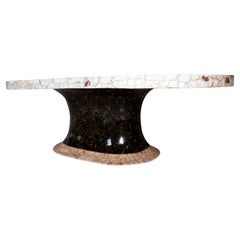
Marble Oval Tulip Dining or Conference Table Muller
s of Mexico with Brass Inlay
By Muller of Mexico
Located in Landshut, BY
The table is an exquisite and unique piece of craftsmanship, hand-made in the 1970s by Muller of Mexico. It is crafted from green and ebony colour marble, with a lined surface of ov...
Category
Vintage 1970s Mexican Mid-Century Modern Dining Room Tables
Materials
Marble, Brass
$14,676 Sale Price
35% Off
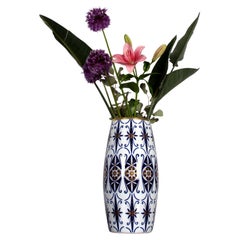
Porcelain Schumann Arzberg Midcentury Classic Floor Vase Cobalt Blue Gold beauty
By Schumann Arzberg 1
Located in Landshut, BY
a real beauty and an absolute rare piece as this is the luxury gilded edition of Schumann Kobalt floor vase range
a very elegant Porcelain SCHUMANN Arzberg midcentury Classic Floor...
Category
Mid-20th Century German Mid-Century Modern Vases
Materials
Porcelain
$807 Sale Price
23% Off
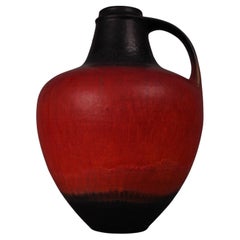
Gerda Heuckeroth Carstens Tönnieshof Midcentury Xxl German Floor Vase JAR 1960s
By Gerda Heuckeroth
Located in Landshut, BY
West German bulbous silhouette floor vase with handle by Gerda Heuckeroth for Carstens Tönnieshof mid/late 1960s.
Although much is known about the various West German pottery manufa...
Category
Mid-20th Century German Mid-Century Modern Jars
Materials
Pottery
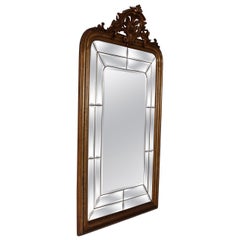
Louis-Seize Palace Size 19th Century Italian Mirror Stucco / Facet Cut Baroque
Located in Landshut, BY
English description:
Aristocratic Palace Size Italian Louis-Seize Wall Mirror
around the turn of the century
An amazing artwork made of individual facet cut mirrors which have...
Category
Antique 19th Century Italian Baroque Floor Mirrors and Full-Length Mirrors
Materials
Cut Glass, Stucco, Wood, Giltwood
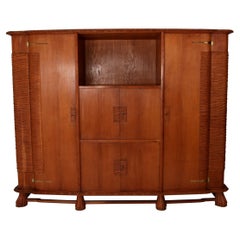
Wardrobe by Colli Torino Est 1850 Art Nouveau Huge Italian Solid Oak Masterpiece
By Colli Torino
Located in Landshut, BY
This wardrobe was produced by Colli Torino established in 1850.
- solid oak with hand-carved ornaments - beautiful brass fittings - with its original keys -
height: 195cms ~ width: 245cms ~ depth: 60cms ~ weight: ca. 360-400 Kg (!)
-: please have a closer look - which hopefully will make my fascination with this masterpiece comprehensible.
What also makes this wardrobe quite special is the 2 doors on each side covering compartments with narrow shelving...
Category
Vintage 1910s Italian Art Nouveau Wardrobes and Armoires
Materials
Brass
Colli Torino
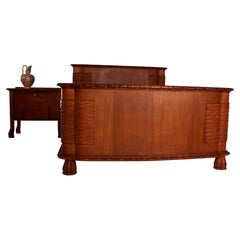
Est. 1850
Italian Art Nouveau Bed
Nightstand Solid Oak carved
By Colli Torino
Located in Landshut, BY
This bed and night stand was produced by Colli Torino established in 1850.
- solid oak with hand-carved elements - mattress size is 120cm x 190cm -
The company is well known becau...
Category
Vintage 1910s Italian Art Nouveau Beds and Bed Frames
Materials
Oak
$3,458 Sale Price / set
30% Off
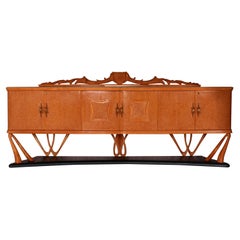
One of a Kind Italian Midcentury Sideboard with Bar Cabinet a. Vittorio Dassi
By Vittorio Dassi
Located in Landshut, BY
Italian 1950s
one of a kind
BAR / SIDEBOARD
attributed to Vittorio Dassi
birch root veneer - solid birch "feet" - stained glass top - mirrored bar compartment - carved upper orna...
Category
Vintage 1950s Italian Mid-Century Modern Sideboards
Materials
Stained Glass, Burl, Birch
Colli Torino (Est. 1850) Art Nouveau Italian Corner Cabinet Wardrobe Solid Oak
By Colli Torino
Located in Landshut, BY
This corner wardrobe was produced by Colli Torino established in 1850.
- solid oak with hand carved elements and beautiful brass fittings with its original key -
The company is we...
Category
Vintage 1910s Italian Art Nouveau Cupboards
Materials
Brass