Recognized Dealers Drawings and Watercolor Paintings

to
104
1,570
636
424
180
170
Overall Width
to
Overall Height
to
33
122
1,724
1,083
73
93
136
264
192
184
120
65
64
55
24
544
464
415
106
90
55
34
28
20
19
17
12
6
1,645
1,187
147
1,519
820
766
598
554
332
266
240
189
151
137
132
131
111
109
107
90
81
72
59
1,571
1,285
1,088
931
590
208
171
100
66
50
1,218
47
2,291
508
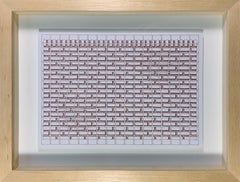
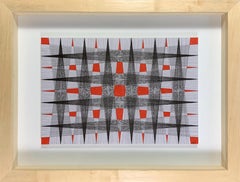
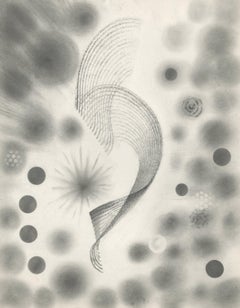
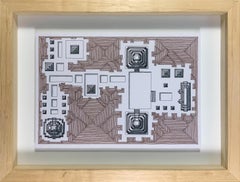
Plano Pirámides 2. From The No. 1 Series. Abstract Drawing on paper.
By Rodrigo Spinel
Located in Miami Beach, FL
Rodrigo Spinel finds in drawing a way to explore the relevance of detail in the construction of images, objects and spaces. The repetition of tiny eleme...
Category

2010s Abstract Abstract Drawings and Watercolors

Materials

Paper, India Ink

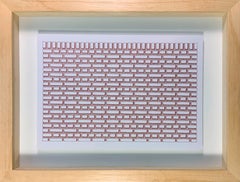
Isodomo Grilla. From The No. 1 Series. Abstract Drawing on paper.
By Rodrigo Spinel
Located in Miami Beach, FL
Rodrigo Spinel finds in drawing a way to explore the relevance of detail in the construction of images, objects and spaces. The repetition of tiny elements, such as the line in a dra...
Category

2010s Abstract Abstract Drawings and Watercolors

Materials

Paper, India Ink

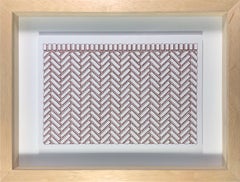
Gotico. From The No. 1 Series. Abstract Drawing on paper.
By Rodrigo Spinel
Located in Miami Beach, FL
Rodrigo Spinel finds in drawing a way to explore the relevance of detail in the construction of images, objects and spaces. The repetition of tiny elements, such as the line in a dra...
Category

2010s Abstract Abstract Drawings and Watercolors

Materials

Paper, India Ink

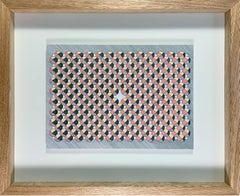
Espiga. From The No. 1 Series. Abstract Drawing on paper.
By Rodrigo Spinel
Located in Miami Beach, FL
As a reflection on the value we give to objects, this series exposes examples of objects that we use daily and for different reasons ended up gaining very high prices. By redrawing t...
Category

2010s Abstract Abstract Drawings and Watercolors

Materials

Paper, India Ink

Picos Tercio. From The No. 3 Series. Abstract Drawing on paper.
By Rodrigo Spinel
Located in Miami Beach, FL
Rodrigo Spinel finds in drawing a way to explore the relevance of detail in the construction of images, objects and spaces. The repetition of tiny elements, such as the line in a dra...
Category

2010s Abstract Abstract Drawings and Watercolors

Materials

Paper, India Ink

Regular. From The No. 1 Series. Abstract Drawing on paper.
By Rodrigo Spinel
Located in Miami Beach, FL
Rodrigo Spinel finds in drawing a way to explore the relevance of detail in the construction of images, objects and spaces. The repetition of tiny elements, such as the line in a dra...
Category

2010s Abstract Abstract Drawings and Watercolors

Materials

Paper, India Ink

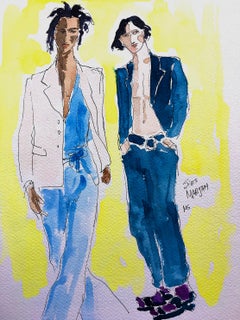
Sies Marjan, Fashio show models 2021 Ink pen and watercolor
By Manuel Santelices
Located in Miami Beach, FL
The artist has covered New York collections for over 16 years and has interviewed, as a journalist, several fashion designers and personalities for different publications. He loves t...
Category

21st Century and Contemporary Contemporary Figurative Drawings and Water...

Materials

Ink, Watercolor, Pen

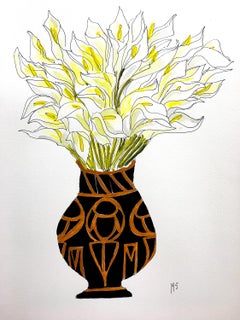
Calla Lilly, Flowers 2021 Ink pen, and watercolor on paper
By Manuel Santelices
Located in Miami Beach, FL
A new series inspired by architecture, décor and stylish personalities of the world of interior design. The worlds of fashion, society and pop culture are captured in the illustrati...
Category

21st Century and Contemporary Contemporary Paintings

Materials

Paper, Ink, Watercolor, Pen

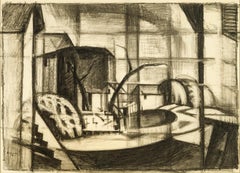
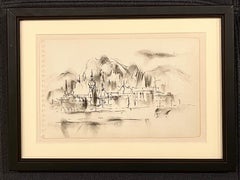
Study for Old Canal, Red and Blue (Rockaway, Morris Canal)
By Oscar Florianus Bluemner
Located in New York, NY
Oscar Bluemner was a German and an American, a trained architect who read voraciously in art theory, color theory, and philosophy, a writer of art criticism both in German and English, and, above all, a practicing artist. Bluemner was an intense man, who sought to express and share, through drawing and painting, universal emotional experience. Undergirded by theory, Bluemner chose color and line for his vehicles; but color especially became the focus of his passion. He was neither abstract artist nor realist, but employed the “expressional use of real phenomena” to pursue his ends. (Oscar Bluemner, from unpublished typescript on “Modern Art” for Camera Work, in Bluemner papers, Archives of American Art, Smithsonian Institution, as cited and quoted in Jeffrey R. Hayes, Oscar Bluemner [1991], p. 60. The Bluemner papers in the Archives [hereafter abbreviated as AAA] are the primary source for Bluemner scholars. Jeffrey Hayes read them thoroughly and translated key passages for his doctoral dissertation, Oscar Bluemner: Life, Art, and Theory [University of Maryland, 1982; UMI reprint, 1982], which remains the most comprehensive source on Bluemner. In 1991, Hayes published a monographic study of Bluemner digested from his dissertation and, in 2005, contributed a brief essay to the gallery show at Barbara Mathes, op. cit.. The most recent, accessible, and comprehensive view of Bluemner is the richly illustrated, Barbara Haskell, Oscar Bluemner: A Passion for Color, exhib. cat. [New York: Whitney Museum of American Art, 2005.]) Bluemner was born in the industrial city of Prenzlau, Prussia, the son and grandson of builders and artisans. He followed the family predilection and studied architecture, receiving a traditional and thorough German training. He was a prize-winning student and appeared to be on his way to a successful career when he decided, in 1892, to emigrate to America, drawn perhaps by the prospect of immediate architectural opportunities at the Chicago World’s Fair, but, more importantly, seeking a freedom of expression and an expansiveness that he believed he would find in the New World. The course of Bluemner’s American career proved uneven. He did indeed work as an architect in Chicago, but left there distressed at the formulaic quality of what he was paid to do. Plagued by periods of unemployment, he lived variously in Chicago, New York, and Boston. At one especially low point, he pawned his coat and drafting tools and lived in a Bowery flophouse, selling calendars on the streets of New York and begging for stale bread. In Boston, he almost decided to return home to Germany, but was deterred partly because he could not afford the fare for passage. He changed plans and direction again, heading for Chicago, where he married Lina Schumm, a second-generation German-American from Wisconsin. Their first child, Paul Robert, was born in 1897. In 1899, Bluemner became an American citizen. They moved to New York City where, until 1912, Bluemner worked as an architect and draftsman to support his family, which also included a daughter, Ella Vera, born in 1903. All the while, Oscar Bluemner was attracted to the freer possibilities of art. He spent weekends roaming Manhattan’s rural margins, visiting the Bronx, Brooklyn, Queens, and New Jersey, sketching landscapes in hundreds of small conté crayon drawings. Unlike so many city-based artists, Bluemner did not venture out in search of pristine countryside or unspoiled nature. As he wrote in 1932, in an unsuccessful application for a Guggenheim Fellowship, “I prefer the intimate landscape of our common surroundings, where town and country mingle. For we are in the habit to carry into them our feelings of pain and pleasure, our moods” (as quoted by Joyce E. Brodsky in “Oscar Bluemner in Black and White,” p. 4, in Bulletin 1977, I, no. 5, The William Benton Museum of Art, Storrs, Connecticut). By 1911, Bluemner had found a powerful muse in a series of old industrial towns, mostly in New Jersey, strung along the route of the Morris Canal. While he educated himself at museums and art galleries, Bluemner entered numerous architectural competitions. In 1903, in partnership with Michael Garven, he designed a new courthouse for Bronx County. Garven, who had ties to Tammany Hall, attempted to exclude Bluemner from financial or artistic credit, but Bluemner promptly sued, and, finally, in 1911, after numerous appeals, won a $7,000 judgment. Barbara Haskell’s recent catalogue reveals more details of Bluemner’s architectural career than have previously been known. Bluemner the architect was also married with a wife and two children. He took what work he could get and had little pride in what he produced, a galling situation for a passionate idealist, and the undoubted explanation for why he later destroyed the bulk of his records for these years. Beginning in 1907, Bluemner maintained a diary, his “Own Principles of Painting,” where he refined his ideas and incorporated insights from his extensive reading in philosophy and criticism both in English and German to create a theoretical basis for his art. Sometime between 1908 and 1910, Bluemner’s life as an artist was transformed by his encounter with the German-educated Alfred Stieglitz, proprietor of the Little Galleries of the Photo-Secession at 291 Fifth Avenue. The two men were kindred Teutonic souls. Bluemner met Stieglitz at about the time that Stieglitz was shifting his serious attention away from photography and toward contemporary art in a modernist idiom. Stieglitz encouraged and presided over Bluemner’s transition from architect to painter. During the same period elements of Bluemner’s study of art began to coalesce into a personal vision. A Van Gogh show in 1908 convinced Bluemner that color could be liberated from the constraints of naturalism. In 1911, Bluemner visited a Cézanne watercolor show at Stieglitz’s gallery and saw, in Cézanne’s formal experiments, a path for uniting Van Gogh’s expressionist use of color with a reality-based but non-objective language of form. A definitive change of course in Bluemner’s professional life came in 1912. Ironically, it was the proceeds from his successful suit to gain credit for his architectural work that enabled Bluemner to commit to painting as a profession. Dividing the judgment money to provide for the adequate support of his wife and two children, he took what remained and financed a trip to Europe. Bluemner traveled across the Continent and England, seeing as much art as possible along the way, and always working at a feverish pace. He took some of his already-completed work with him on his European trip, and arranged his first-ever solo exhibitions in Berlin, Leipzig, and Elberfeld, Germany. After Bluemner returned from his study trip, he was a painter, and would henceforth return to drafting only as a last-ditch expedient to support his family when his art failed to generate sufficient income. Bluemner became part of the circle of Stieglitz artists at “291,” a group which included Marsden Hartley, John Marin, and Arthur Dove. He returned to New York in time to show five paintings at the 1913 Armory Show and began, as well, to publish critical and theoretical essays in Stieglitz’s journal, Camera Work. In its pages he cogently defended the Armory Show against the onslaught of conservative attacks. In 1915, under Stieglitz’s auspices, Bluemner had his first American one-man show at “291.” Bluemner’s work offers an interesting contrast with that of another Stieglitz architect-turned-artist, John Marin, who also had New Jersey connections. The years after 1914 were increasingly uncomfortable. Bluemner remained, all of his life, proud of his German cultural legacy, contributing regularly to German language journals and newspapers in this country. The anti-German sentiment, indeed mania, before and during World War I, made life difficult for the artist and his family. It is impossible to escape the political agenda in Charles Caffin’s critique of Bluemner’s 1915 show. Caffin found in Bluemner’s precise and earnest explorations of form, “drilled, regimented, coerced . . . formations . . . utterly alien to the American idea of democracy” (New York American, reprinted in Camera Work, no. 48 [Oct. 1916], as quoted in Hayes, 1991, p. 71). In 1916, seeking a change of scene, more freedom to paint, and lower expenses, Bluemner moved his family to New Jersey, familiar terrain from his earlier sketching and painting. During the ten years they lived in New Jersey, the Bluemner family moved around the state, usually, but not always, one step ahead of the rent collector. In 1917, Stieglitz closed “291” and did not reestablish a Manhattan gallery until 1925. In the interim, Bluemner developed relationships with other dealers and with patrons. Throughout his career he drew support and encouragement from art cognoscenti who recognized his talent and the high quality of his work. Unfortunately, that did not pay the bills. Chronic shortfalls were aggravated by Bluemner’s inability to sustain supportive relationships. He was a difficult man, eternally bitter at the gap between the ideal and the real. Hard on himself and hard on those around him, he ultimately always found a reason to bite the hand that fed him. Bluemner never achieved financial stability. He left New Jersey in 1926, after the death of his beloved wife, and settled in South Braintree, Massachusetts, outside of Boston, where he continued to paint until his own death in 1938. As late as 1934 and again in 1936, he worked for New Deal art programs designed to support struggling artists. Bluemner held popular taste and mass culture in contempt, and there was certainly no room in his quasi-religious approach to art for accommodation to any perceived commercial advantage. His German background was also problematic, not only for its political disadvantages, but because, in a world where art is understood in terms of national styles, Bluemner was sui generis, and, to this day, lacks a comfortable context. In 1933, Bluemner adopted Florianus (definitively revising his birth names, Friedrich Julius Oskar) as his middle name and incorporated it into his signature, to present “a Latin version of his own surname that he believed reinforced his career-long effort to translate ordinary perceptions into the more timeless and universal languages of art” (Hayes 1982, p. 189 n. 1). In 1939, critic Paul Rosenfeld, a friend and member of the Stieglitz circle, responding to the difficulty in categorizing Bluemner, perceptively located him among “the ranks of the pre-Nazi German moderns” (Hayes 1991, p. 41). Bluemner was powerfully influenced in his career by the intellectual heritage of two towering figures of nineteenth-century German culture, Johann Wolfgang von Goethe and Georg Wilhelm Friedrich Hegel. A keen student of color theory, Bluemner gave pride of place to the formulations of Goethe, who equated specific colors with emotional properties. In a November 19, 1915, interview in the German-language newspaper, New Yorker Staats-Zeitung (Abendblatt), he stated: I comprehend the visible world . . . abstract the primary-artistic . . . and after these elements of realty are extracted and analyzed, I reconstruct a new free creation that still resembles the original, but also . . . becomes an objectification of the abstract idea of beauty. The first—and most conspicuous mark of this creation is . . . colors which accord with the character of things, the locality . . . [and which] like the colors of Cranach, van der Weyden, or Durer, are of absolute purity, breadth, and luminosity. . . . I proceed from the psychological use of color by the Old Masters . . . [in which] we immediately recognize colors as carriers of “sorrow and joy” in Goethe’s sense, or as signs of human relationship. . . . Upon this color symbolism rests the beauty as well as the expressiveness, of earlier sacred paintings. Above all, I recognize myself as a contributor to the new German theory of light and color, which expands Goethe’s law of color through modern scientific means (as quoted in Hayes 1991, p. 71). Hayes has traced the global extent of Bluemner’s intellectual indebtedness to Hegel (1991, pp. 36–37). More specifically, Bluemner made visual, in his art, the Hegelian world view, in the thesis and antithesis of the straight line and the curve, the red and the green, the vertical and the horizontal, the agitation and the calm. Bluemner respected all of these elements equally, painting and drawing the tension and dynamic of the dialectic and seeking ultimate reconciliation in a final visual synthesis. Bluemner was a keen student of art, past and present, looking, dissecting, and digesting all that he saw. He found precedents for his non-naturalist use of brilliant-hued color not only in the work Van Gogh and Cezanne, but also in Gauguin, the Nabis, and the Symbolists, as well as among his contemporaries, the young Germans of Der Blaue Reiter. Bluemner was accustomed to working to the absolute standard of precision required of the architectural draftsman, who adjusts a design many times until its reality incorporates both practical imperatives and aesthetic intentions. Hayes describes Bluemner’s working method, explaining how the artist produced multiple images playing on the same theme—in sketch form, in charcoal, and in watercolor, leading to the oil works that express the ultimate completion of his process (Hayes, 1982, pp. 156–61, including relevant footnotes). Because of Bluemner’s working method, driven not only by visual considerations but also by theoretical constructs, his watercolor and charcoal studies have a unique integrity. They are not, as is sometimes the case with other artists, rough preparatory sketches. They stand on their own, unfinished only in the sense of not finally achieving Bluemner’s carefully considered purpose. The present charcoal drawing is one of a series of images that take as their starting point the Morris Canal as it passed through Rockaway, New Jersey. The Morris Canal industrial towns that Bluemner chose as the points of departure for his early artistic explorations in oil included Paterson with its silk mills (which recalled the mills in the artist’s childhood home in Elberfeld), the port city of Hoboken, Newark, and, more curiously, a series of iron ore mining and refining towns, in the north central part of the state that pre-dated the Canal, harkening back to the era of the Revolutionary War. The Rockaway theme was among the original group of oil paintings that Bluemner painted in six productive months from July through December 1911 and took with him to Europe in 1912. In his painting journal, Bluemner called this work Morris Canal at Rockaway N.J. (AAA, reel 339, frames 150 and 667, Hayes, 1982, pp. 116–17), and exhibited it at the Galerie Fritz Gurlitt in Berlin in 1912 as Rockaway N. J. Alter Kanal. After his return, Bluemner scraped down and reworked these canvases. The Rockaway picture survives today, revised between 1914 and 1922, as Old Canal, Red and Blue (Rockaway River) in the collection of the Hirshhorn Museum and Sculpture Garden, Smithsonian Institution, Washington D. C. (color illus. in Haskell, fig. 48, p. 65). For Bluemner, the charcoal expression of his artistic vision was a critical step in composition. It represented his own adaptation of Arthur Wesley’s Dow’s (1857–1922) description of a Japanese...
Category

20th Century American Modern Abstract Drawings and Watercolors

Materials

Paper, Charcoal

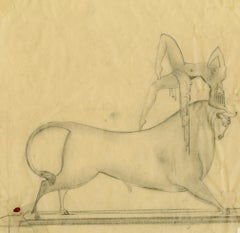
Preliminary Study for Cretan Dancer Bronze
By Boris Lovet-Lorski
Located in Fairlawn, OH
Preliminary Study for Cretan Dancer Bronze Graphite on tracing paper, 1930 Unsigned Note: The bronze sculpture measures 24 1/2 x 33 5/8 inches and is signed and dated 1930 on the bas...
Category

1930s Art Deco Nude Drawings and Watercolors

Materials

Graphite

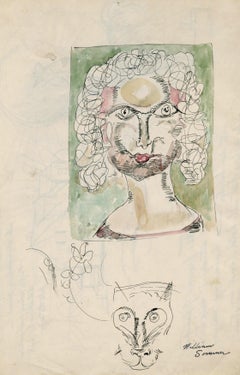
Wire Haired Girl and Cat
By William Sommer
Located in Fairlawn, OH
Wire Haired Girl and Cat Pen and ink with watercolor, c. 1930 Signed with the Estate stamp "B" Provenance: Estate of the Artist By descent to his son Edward ...
Category

1930s American Modern Figurative Drawings and Watercolors

Materials

Watercolor

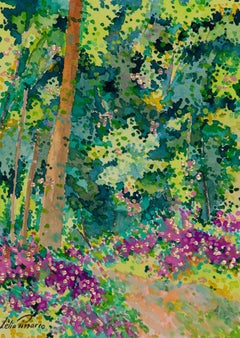
Le chemin de Mandy by Lélia Pissarro - Figurative art, Landscape, Tempera, Paper
By Lelia Pissarro
Located in London, GB
Le chemin de Mandy by Lélia Pissarro (b. 1963) Tempera and gold on paper 18.4 x 13.7 cm (7 ¹/₄ x 5 ³/₈ inches) Signed lower left, Lélia Pissarro Signed, titled and dated VI. 23 on th...
Category

21st Century and Contemporary Contemporary Landscape Drawings and Waterc...

Materials

Paper, Tempera

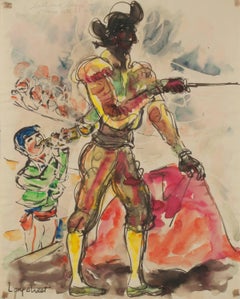
Bull Ring Brass - Mexico City
By Stephen Longstreet
Located in Fairlawn, OH
Bull Ring Brass - Mexico City Watercolor, pen and ink on paper, 1955 Signed in ink, dated and titled in pencil (see photos) Condition: 1'' repaired tear left edge, along with other minor tears. Tape stains from previous matting visible in the four corners Image/Sheet size: 19 3/8 x 15 5/8 inches Provenance: Acquired directly from the Artist Joseph M. Erdelac, Cleveland, friend and patron of Longstreet Stephen Longstreet (1907-2002) The artist’s own grandchildren attempt to fathom the real life and nature of Stephen Longstreet, prolific author, artist, screenplay writer, and jazz aficionado. Born Chauncy Weiner (sometimes spelled Wiener) in New York City in 1907, Longstreet reinvented himself on a regular basis. Changing his name first to “Henry,” then “Henri,” he started his career as a commercial artist for a department store. In various public biographies he claimed to have studied in New York, London, and Paris, and said he was a student of cartoonist Ralph Barton (1891-1931). Facts that can be documented are that he was art editor for Golfer and Sportsman magazines, and was a contributor to various other magazines including The New Yorker, Saturday Evening Post, Colliers, Life, and Hooey, among others. He wrote sketches for NBC radio and the Rudy Vallee Show. In the 1930s, Longstreet worked and wrote under the names Thomas Burton, David Ormsbee, and Paul Haggard...
Category

1950s American Modern Figurative Drawings and Watercolors

Materials

India Ink, Watercolor, Pen

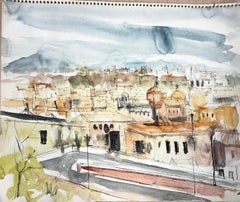
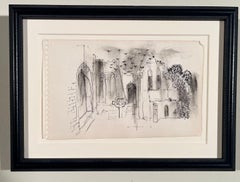
UNTITLED (DRAWING OF A TOWN IN ITALY)
By William Thon
Located in Portland, ME
Thon, William (American, 1906-2000). UNTITLED (DRAWING OF A TOWN IN ITALY) Ink and watercolor on paper. Not dated. Unsigned. 14 x 17 inches. In excellent condition. From a sketchboo...
Category

Mid-20th Century Landscape Drawings and Watercolors

Materials

Ink

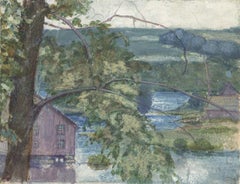
Untitled
Located in Fairlawn, OH
Untitled Watercolor on paper, c,. 1890 Unsigned Provenance: Estate of the artist Image/Sheet size: 3 1/4 x 4 1/8 inches From Wikipedia "Francis Augustus Lathrop (June 22, 1849 – Oct...
Category

1890s American Impressionist Landscape Drawings and Watercolors

Materials

Watercolor

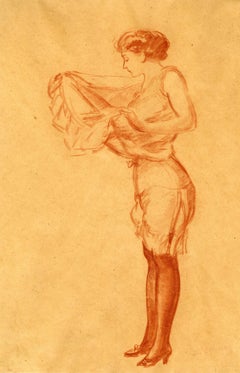
Woman Pulling on a Slip
By Everett Shinn
Located in Fairlawn, OH
Woman Pulling on a Slip Conte on paper, c. 1910 Signed lower right: "E. Shinn" (see photo of legs, signature on right) Provenance: Estate of the Artist (see label) Graham Gallery, N...
Category

1910s Ashcan School Nude Drawings and Watercolors

Materials

Conté

UNTITLED SKETCHBOOK DRAWING #16
By William Thon
Located in Portland, ME
Thon, William (American, 1906-2000) UNTITLED SKETCHBOOK DRAWING #16. Ink on paper, not dated, but circa 1960s. Unsigned.The sketchbook identified by an Estate label on its cover. 5 x...
Category

Mid-20th Century Landscape Drawings and Watercolors

Materials

Ink

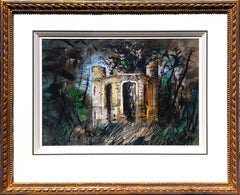
Dinton Folly (Now Part of Dinton Castle)
By John Piper CH
Located in Belgravia, London, London
Mixed Media on paper Paper size: 14.75 x 21.5 inches Framed size: 26 x 32 inches
Category

21st Century and Contemporary Impressionist Abstract Drawings and Waterc...

Materials

Paper, Mixed Media, Watercolor

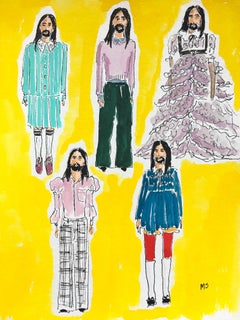
Alessandro Michelle Yellow, Portrait.
By Manuel Santelices
Located in Miami Beach, FL
The artist has covered New York collections for over 16 years and has interviewed, as a journalist, several fashion designers and personalities for different publications. He loves t...
Category

21st Century and Contemporary Contemporary Figurative Drawings and Water...

Materials

Ink, Watercolor, Gouache

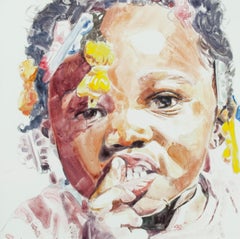
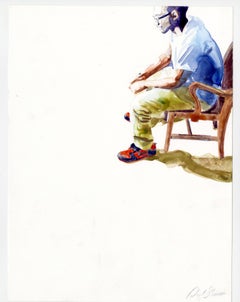
Dad Taught Me to Be Brave, No. 3
By Darius Steward
Located in Fairlawn, OH
Dad Taught Me to Be Brave , No. 3 (Hand touching lips) Signed with the artist's initials. Watercolor on Yupo paper Series: Dad Taught Me to Be Brave (3 watercolors) Signed with the a...
Category

2010s Contemporary Portrait Drawings and Watercolors

Materials

Watercolor

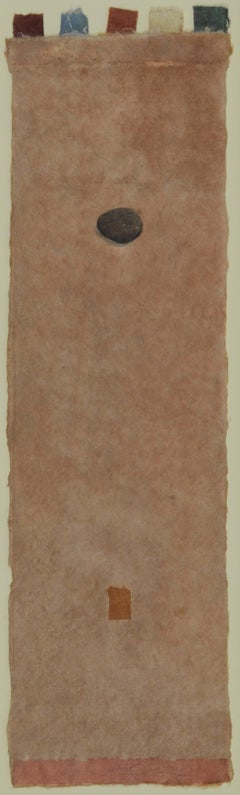
Untitled
By Shoichi Ida
Located in Fairlawn, OH
Untitled molded mud-dried paper with collage elements, 1996 Signed and dated lower edge (see photo) Annotated and titled verso Sheet size: 24 x 7 inches Provenance: Ralph Drake, fir...
Category

1990s Abstract Abstract Drawings and Watercolors

Materials

Mixed Media

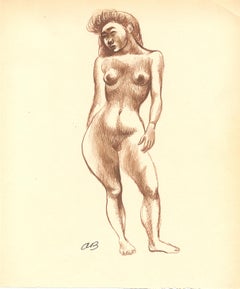
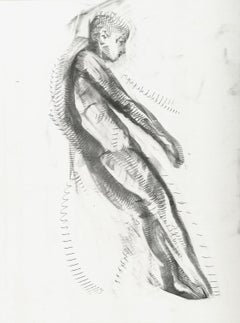
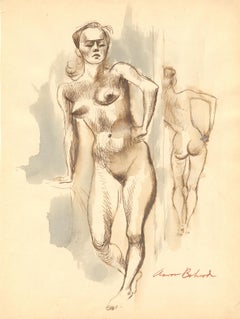
Standing Female Nude
By Aaron Bohrod
Located in Fairlawn, OH
Standing Female Nude Ink on paper Signed by the artist with his initials lower left "AB" Related to numerous drawings of the same model illustrated in: Elliott and Wooden, Aaron Bohr...
Category

1950s American Realist Nude Drawings and Watercolors

Materials

Ink

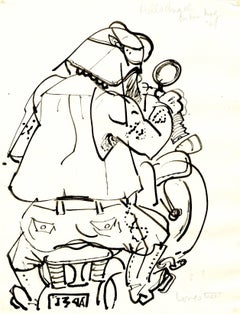
Hells Angel on his Hog
By Stephen Longstreet
Located in Fairlawn, OH
Hells Angel on his Hog Pen and ink on paper, 1969 Signed 'Longstreet' lower right (see photo) Titled and dated upper right Condition: excellent Image/Sheet size: 11 x 8 1/2 inches Pr...
Category

1960s American Modern Figurative Drawings and Watercolors

Materials

Ink

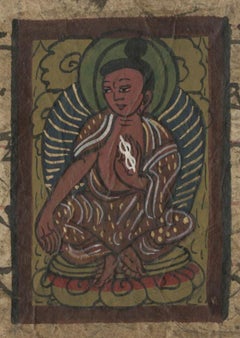
Dharma Prayer Book Manuscript Folio
Located in Fairlawn, OH
Dharma Prayer Book Manuscript Folio Ink and gouache on handmade paper, 1875-1925) Miniature depicting Tibetan deity Script is Tibetan. Miniature Size: 2 3/8 x 1 ½ inches Part of a se...
Category

Early 20th Century Other Art Style Figurative Drawings and Watercolors

Materials

Gouache

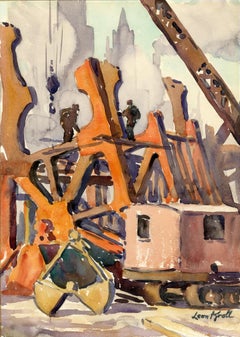
Building New York
By Leon Kroll
Located in Fairlawn, OH
Building New York Watercolor on paper, c. 1915 Signed by the artist lower right (see photo) Partial watermark: "MADE IN ENGLAND... LINEN FIBER" Excellent, COLORS FRESH AND VIBRANT Br...
Category

1910s American Realist Landscape Drawings and Watercolors

Materials

Watercolor

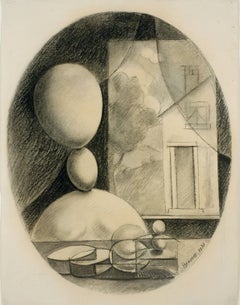
Mlle. Jeanne at the Window, No. II
By Benjamin G. Benno
Located in Fairlawn, OH
Mlle. Jeanne at the Window, No. II Charcoal on paper, 1933 Signed and dated lower right (see photo) Illustrated: Gustafson, Zimmerli Museum, 1988, "Benjamin Benno: A Retrospective Ex...
Category

1930s Surrealist Abstract Drawings and Watercolors

Materials

Charcoal

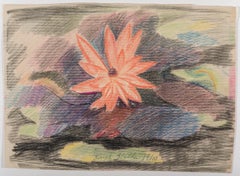
Pink Waterlily
By Joseph Stella
Located in Bryn Mawr, PA
Pink Waterlily, 1940 Charcoal and pastel on textured paper 7 x 9 3/4 inches (17.8 x 24.8 cm) Signed and dated at lower center: Joseph Stella 1940 Joseph Stella’s artistic career def...
Category

20th Century American Modern Still-life Drawings and Watercolors

Materials

Paper, Charcoal, Pastel

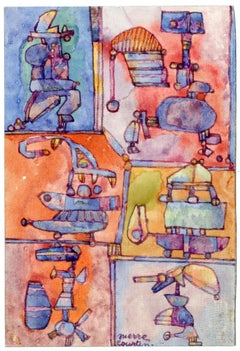
Untitled (six vignettes)
By Pierre Courtin
Located in Fairlawn, OH
Signed lower center edge Annotated verso: “5 Juin 1966 _____ et de soleil, de et d’oseille” Image: 6 3/4 x 4 5/8" Frame: 14 1/2 x 12 3/4" Finishe...
Category

1960s Abstract Abstract Drawings and Watercolors

Materials

Watercolor, Gouache

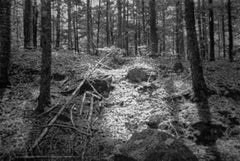
NEWRY
Located in Portland, ME
Barr, Wyatt. NEWRY. Drawing, Charcoal and ink wash on Arches 300lb. Hot Press Watercolor paper, 2014. The subject is a hillside next to Step Falls in Newry, Maine. Signed and dated. ...
Category

2010s Realist Landscape Drawings and Watercolors

Materials

Charcoal, Ink

UNTITLED SKETCHBOOK DRAWING #17
By William Thon
Located in Portland, ME
Thon, William (American, 1906-2000) UNTITLED SKETCHBOOK DRAWING #17. Ink on paper, not dated, but circa 1960s. Unsigned.The sketchbook identified by an Estate label on its cover. 5 x...
Category

Mid-20th Century Landscape Drawings and Watercolors

Materials

Ink

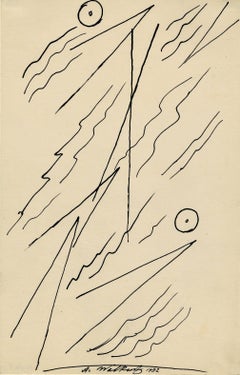
Abstraction
By Abraham Walkowitz
Located in Fairlawn, OH
Untitled Abstraction Pen and ink on paper, 1932 Signed and dated in ink lower center Condition: Excellent Sheet/Image size: 10 3/8 x 6 1/4 inches Frame size: 16 1/2 x 12 1/2" Provena...
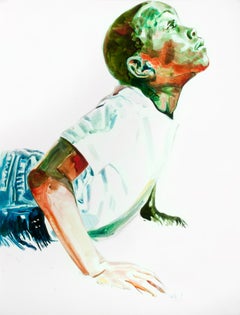
Category

1930s Abstract Geometric Abstract Drawings and Watercolors

Materials

Ink, Pen

UNTITLED SKETCHBOOK DRAWING #15
By William Thon
Located in Portland, ME
Thon, William (American, 1906-2000) UNTITLED SKETCHBOOK DRAWING #15. Ink on paper, not dated, but circa 1960s. Unsigned.The sketchbook identified by an Estate label on its cover. 5 x...
Category

Mid-20th Century Landscape Drawings and Watercolors

Materials

Ink

Monhegan Path, Summer
Located in New York, NY
Albert Wein had a retrospective and he was called a classical modernist by art critics. He is primarily regarded as one of America's great sculptors but he loved doing drawings, wat...
Category

1940s American Modern Landscape Drawings and Watercolors

Materials

Watercolor

Nude in a Mirror
By Aaron Bohrod
Located in Fairlawn, OH
Nude in a Mirror Ink and wash on paper, n.d. Signed in red ink lower right (see photo) Illustrated: Elliott & Wooden, page 153, a monograph on the artist's drawings Note: a cop...
Category

1960s American Realist Nude Drawings and Watercolors

Materials

Ink

Artist Cindy Sherman discovers Instagram - Watercolor on paper
By Manuel Santelices
Located in Miami Beach, FL
Movies, TV and magazines are constant source of inspiration. Fame, as fleckring and shallow it can be sometimes, is very intriguing to him. The worlds of fashion, society and pop cu...
Category

2010s Pop Art Portrait Drawings and Watercolors

Materials

Ink, Watercolor, Gouache, Archival Paper

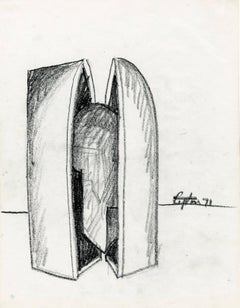
Preliminary drawing for the sculpture Catacombs
By Seymour Lipton
Located in Fairlawn, OH
Preliminary drawing for the sculpture Catacombs Black crayon on paper, 1971 Signed and dated lower right (see photos) Provenance: Estate of the artist Michael and Alan Lipton (sons) ...
Category

1970s Abstract Geometric Abstract Drawings and Watercolors

Materials

Oil Crayon

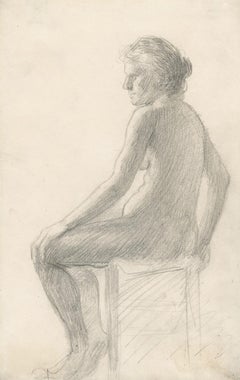
Side View Seated Female Nude
By Frank Duveneck
Located in Fairlawn, OH
Side View Seated Female Nude Graphite on paper, c. 1890's Unsigned Provenance: Rookwood Pottery Factory Collection, Cincinnati Spanierman Gallery, New York (label) Drawings from the...
Category

1890s American Impressionist Nude Drawings and Watercolors

Materials

Graphite

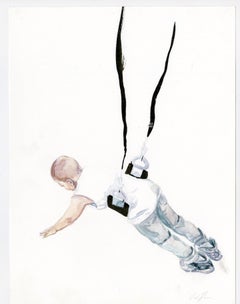
The Get Up (Plate 1 of 4)
By Darius Steward
Located in Fairlawn, OH
The Get Up (Plate 1 of 4) Watercolor on Yupo mounted to board, 2019 Signed with the artist's initials lower right Series: The Get Up (4 plates) Exhibited: Occupying A Space, Swope Ar...
Category

2010s Contemporary Figurative Drawings and Watercolors

Materials

Watercolor

Untitled Abstraction
By Medard P. Klein
Located in Fairlawn, OH
Untitled Abstraction Graphite on paper, c. 1950 Unsigned Signed with the estate stamp verso (see photo) Provenance: Estate of the artist Inherited by his neighb...
Category

1950s Abstract Abstract Drawings and Watercolors

Materials

Graphite

UNTITLED SKETCHBOOK DRAWING #5
By William Thon
Located in Portland, ME
Thon, William (American, 1906-2000) UNTITLED SKETCHBOOK DRAWING #5. Ink on paper, not dated, but circa 1960s. Unsigned.The sketchbook identified by an Estate label on its cover. 5 x ...
Category

Mid-20th Century Landscape Drawings and Watercolors

Materials

Ink

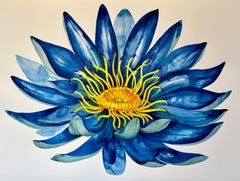
Blue Lotus
By Idoline Duke
Located in Fairfield, CT
I was born in Manhattan, but the most important places in my life have been here on Long Island by the ocean and in the mountains and forests of Vermont. I love to surf, I love to sk...
Category

2010s Contemporary Drawings and Watercolor Paintings

Materials

Paper, Watercolor

[untitled] Street Scene with Fruit Vendor.
By Emilio Sanchez
Located in New York, NY
Emilio Sanchez (1921-1999) created [untitled] “STREET SCENE WITH FRUIT VENDOR” in circa 1950. This unsigned watercolor and came to us directly from the Sanchez estate. It is stamped on the verso "Estate of Emilio Sanchez." This piece is in good to very good condition and painted to the paper's edge. The paper size is 14.88 x 15.25 inches (37.6 x 38.6 cm). “Best known for his architectural paintings and lithographs, Emilio Sanchez (1921-1999) explored the effects of light and shadow to emphasize the abstract geometry of his subjects. His artwork encompasses his Cuban heritage...
Category

1950s American Modern Figurative Drawings and Watercolors

Materials

Watercolor, Graphite

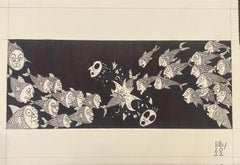
Two Schools Reeves
Located in New York, NY
Artist: Richard Lilley Medium: Ink on Paper Dimensions: 21 x 30 in Rich Lilley, a now New York based artist began his practice in Pennsylvania in the theater program and studied art with Milan Melicharek before moving to New York City to continue his education at Parsons. It was here that Lilley studied under Mohammed Omar Khalil and Luther Davis with a primary focus in metal etching and printmaking. Drawing inspiration from J.R Crumb...
Category

2010s Contemporary Drawings and Watercolor Paintings

Materials

Ink

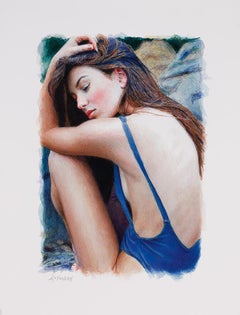
Blue Bather, 2021
By Douglas Hofmann
Located in Greenwich, CT
Blue Bather is a watercolor on paper painting, 9 x 6.26" image size, signed ‘HOFMANN’ lower left, and framed in a contemporary, white frame. Hofmann has remarked that Vermeer was th...
Category

21st Century and Contemporary Contemporary Figurative Drawings and Water...

Materials

Paper, Mixed Media

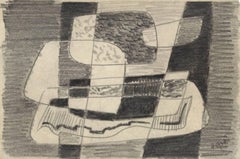
Untitled. Form in Space.
By Werner Drewes
Located in New York, NY
Pencil drawing on paper from 1944. Signed and dated with cypher. Paper size 4 x 6" (10 x 15.1 cm). Werner Drewes (1899-1985), painter, printmaker, educator and lecturer, was...
Category

1940s Abstract Expressionist Abstract Drawings and Watercolors

Materials

Pencil

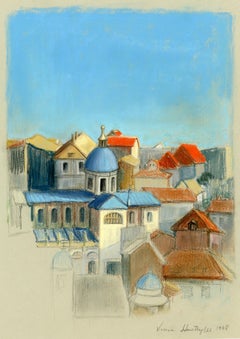
Italian Cityscape
By Victoria Hutson Huntley
Located in Fairlawn, OH
Italian Cityscape Pastel on Strathmore paper, 1968 Signed and dated lower right with the estate signature with the initials RH Image size: 13 3/4 x 10 inches Condition: Excellent Pro...
Category

1960s Realist Landscape Drawings and Watercolors

Materials

Pastel

"Sons and Lovers" Drill Drawing, #2
By Michael O Keefe
Located in Dallas, TX
Signed by artist "M. O'KEEFE 2013" at lower left. Media is graphite on clay-coated panel. Overall dimensions including the frame are 18 x 15 inches.
Category

2010s Academic Figurative Drawings and Watercolors

Materials

Clay, Panel, Graphite

"Sons and Lovers" Drill Drawing, #7
By Michael O Keefe
Located in Dallas, TX
Signed by artist "M. O'KEEFE 2013" at lower right. Media is graphite on clay-coated panel. Overall dimensions including the frame are 18 x 15 inches.
Category

2010s Contemporary Figurative Drawings and Watercolors

Materials

Clay, Panel, Graphite

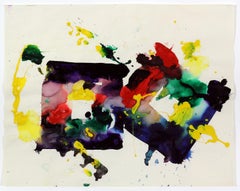
Untitled SF74-863
By Sam Francis
Located in London, GB
In the 1970s, the beginning of a new phase in Francis’ career was defined by the emergence of the ‘color blotches’. These spots of gritty, shimmering color were made through glazes, ...
Category

1970s Abstract Expressionist Abstract Drawings and Watercolors

Materials

Acrylic

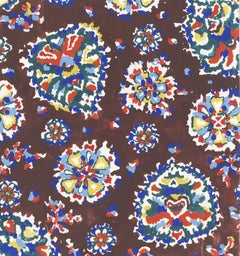
Untitled Fabric Design
By Arthur Litt
Located in Fairlawn, OH
Untitled Fabric Design Gouache on paper, 1920-1935 Signed with the Atelier Stamp verso (see photo) Numbered with the Atelier Litt Archive number verso (see photo) No. 37365 ...
Category

1930s Abstract Abstract Drawings and Watercolors

Materials

Gouache

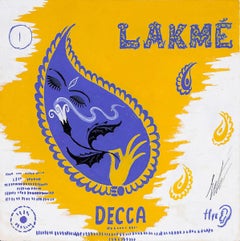
"Lakme" Decca design
By Erté
Located in Greenwich, CT
This design for a Decca recording of Lakme likely dates to the 1950s, and specifically to the 1952 recording with Mado Robin, conductor Georges Sébastian, at the Théâtre National de ...
Category

20th Century Art Deco Drawings and Watercolor Paintings

Materials

Paper, Gouache

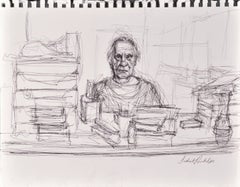
Untitled (Man at Desk)
By Sedrick Huckaby
Located in Fairlawn, OH
Untitled (Man at Desk) Pen and ink on paper, 2012 Signed lower right Series: Portraits of Community: Hidden in Plain Sight, 2012 References And Exhibitions: Illustrated: Swarthmore College video for their exhibition "Hidden in Plain Sight," Jan 24- Feb 24, 2013. Born in Fort Worth in 1975, Huckaby has been creating some form of art since his childhood. In 1995, he began his formal art studies at Texas Wesleyan University in Fort Worth. After a brief stay he transferred to Boston University, where he received a BFA degree. He then earned a MFA degree from Yale University in New Haven, Connecticut. Huckaby is known for his powerful use of color and his exploration of cultural roles and the heritage of the African American family. His work has evolved from portraiture to objects and interiors that venerate his personal family legacy rooted in Fort Worth, Texas. Portraying these familiar subjects on a large scale and pushing his use of materials, Huckaby defines the significance of family and tradition while touching on the subject of ethnographic stereotypes in our culture. For the past few years he has concentrated his efforts on a series of quilt paintings. One of the series he created is a tribute to both of his Grandmothers and a celebration of the African American quilting tradition. He used the actual quilts sewn by family members as models for his paintings. These quilts document significant events in his family history. According to Huckaby, the paintings represent an artistic family legacy. The colorful, rhythmic abstracted patterns come together like the musical notes in African American musician John Coltrane's famous jazz composition, A Love Supreme, from which the painting series acquired its name. He has earned national acclaim for his work over the past several years. Huckaby has received the 2001 Louis Comfort Tiffany Award and the 2004 Joan Mitchell Foundation Painters and Sculptors Grant Program Award. More recently, he was the 2008 recipient of the prestigious Guggenheim Fellowship Award, which allowed him to travel the country and paint African-American quilts from private and public collections. Past Guggenheim Fellowship Award winners include Ansel Adams, Langston Hughes, Henry Kissinger, and Isamu Noguchi. He has exhibited at the Resource Center of African American Art in Atlanta, the Danforth Museum in Framingham, and the Studio Museum in Harlem. His work, including a painting titled Study for Little D and the Dollar, in the collection of the Whitney Museum of American Art in New York, can be found in important collections throughout the United States, including the Whitney Museum of American Art, the Museum of Fine Arts Boston, the Art Institute of Chicago, and the Minneapolis Museum of Art. Currently, Huckaby’s 18-by-14-foot oil painting Hidden in Plain Site (2011) is on view in the Amon Carter Museum’s atrium through October. Public Collections: Wichita Falls Museum of Art at Midwestern State University, American Dad African American Museum, Dallas, Texas, Grandmother’s Quilt The Amon Carter Museum of American Art, Fort Worth, Texas, The 99% - Highland Hills The Art Institute of Chicago, Chicago, Illinois, "Girl World" Study for Sustenance Installation Ball State University Museum of Art, Muncie, Indiana, "The Truth about Hip Hop" Study for Sustenance Installation Blanton Museum of Art, Austin, Texas Brandywine Workshop, Philadelphia, Pennsylvania, The 99% - Highland Hills City of Fort Worth, Fort Worth, TX, The Welcome Space Dallas/Fort Worth International Airport, Corporate Aviation, Texas, A Place Between Dallas/Fort Worth International Airport, Hyatt Regency Hotel, Texas, William Madison (Gooseneck Bill) McDonald Fort Worth Central Library, Fort Worth, Texas, Hazel Harvey Peace Portrait Grace Museum, Abilene, Texas, Cobby Harvard Art Museum, Cambridge, MA, Selection from The 99% Holdworth Center, Austin, TX, Selection from The 99% Jesuit Dallas Museum, Dallas, Texas, “Gone But Not Forgotten: Sha” Kansas African American Museum, Wichita, Kansas, Self Portrait (2) McNay Art Museum, San Antonio, Texas, Untitled (Anthony) Minneapolis Institute of Art, Minneapolis, Minnesota (Untitled) Museum of Fine Arts, Boston, Massachusetts, Enocio Museum of Texas Tech University, Lubbock, Texas, Big Momma...
Category

21st Century and Contemporary Contemporary Portrait Drawings and Waterco...

Materials

Ballpoint Pen

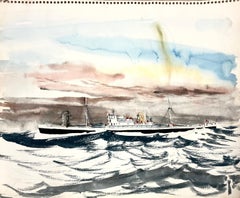
UNTITLED (DRAWING OF A BOAT #2; LIKELY IN ITALY)
By William Thon
Located in Portland, ME
Thon, William (American, 1906-2000).; UNTITLED (DRAWING OF A BOAT #2; LIKELY IN ITALY). Ink and watercolor on paper. Not dated. Unsigned. 14 x 17 inches. In excellent condition. From...
Category

Mid-20th Century Landscape Drawings and Watercolors

Materials

Ink

Read the Signs, No. 7
By Darius Steward
Located in Fairlawn, OH
Read the Signs, No. 7 Watercolor on Yupo paper, 2013 Signed with the artist's signature lower right (see photo) Series: Read the Signs (22 watercolors) Exhib...
Category

2010s Contemporary Figurative Drawings and Watercolors

Materials

Watercolor

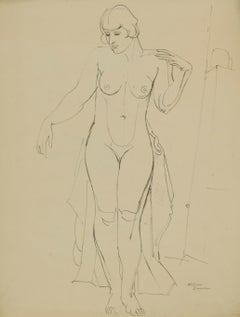
Standing Female Nude
By William Sommer
Located in Fairlawn, OH
Standing Female Nude Match stick and ink drawing, c. 1925 Signed with the estate stamp B Sheet size: 21 x 16 inches Created at the Kakoon Arts Klu...
Category

1920s American Modern Nude Drawings and Watercolors

Materials

Ink

Read the Signs, No. 13
By Darius Steward
Located in Fairlawn, OH
Read the Signs, No. 13 Watercolor on Yupo paper, 2013 Signed lower right corner (see photo) Series: Read the Signs (22 watercolors) Exhibited: William Busta Gallery, Read the Signs, ...
Category

2010s Contemporary Figurative Drawings and Watercolors

Materials

Watercolor

UNTITLED (FARM SCENE)
Located in Portland, ME
Smith, Jules Andre (American, 1880-1959). UNTITLED (FARM SCENE). Watercolor on heavy paper. Not dated. Signed, lower right 13 x 18 inches. In very good condition.
Category

Mid-20th Century Landscape Drawings and Watercolors

Materials

Watercolor

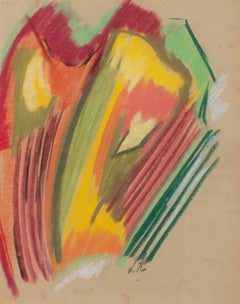
Untitled
By Leon Kelly
Located in Fairlawn, OH
Untitled Pastel on paper, 1922 Signed with the artist's initials in pencil Provenance: Estate of the artist Francis M. Nauman (label) Private collection, NY A very early abstract/cubist work by Kelly. Created while the artist was studying with Arthur Carles in Philadelphia. Leon Kelly (October 21, 1901 – June 28, 1982) was an American artist born in Philadelphia, PA. He is most well known for his contributions to American Surrealism, but his work also encompassed styles such as Cubism, Social Realism, and Abstraction. Reclusive by nature, a character trait that became more exaggerated in the 1940s and later, Kelly's work reflects his determination not to be limited by the trends of his time. His large output of paintings is complemented by a prolific number of drawings that span his career of 50 years. Some of the collections where his work is represented are: The Metropolitan Museum in New York, The Whitney Museum of American Art, the Museum of Modern Art, the Philadelphia Museum of Art, and Boston Public Library. Biography Kelly was born in 1901 at home at 1533 Newkirk Street, Philadelphia, PA. He was the only child of Elizabeth (née Stevenson) and Pantaleon L. Kelly. The family resided in Philadelphia where Pantaleon and two of his cousins owned Kelly Brothers, a successful tailoring business. The prosperity of the firm enabled his father to purchase a 144-acre farm in Bucks County PA in 1902, which he named "Rural Retreat" It was here that Pantaleon took Leon to spend every weekend away from the pressures of business and from the disappointments in his failing marriage. Idyllic and peaceful memories of the farm stayed with Leon and embued his work with a love of nature that emerged later in the Lunar Series, in Return and Departure, and in the insect imagery of his Surrealist work. "If anything," he once said,"I am a Pantheist and see a spirit in everything, the grass, the rocks, everything." At thirteen, Leon left school and began private painting lessons with Albert Jean Adolphe, a teacher at the School of Industrial Art (now the University of the Arts) in Philadelphia. He learned technique by copying the works of the old masters and visiting the Philadelphia Zoo, where he would draw animals. Drawings done in 1916 and 1917 of elephants, snakes and antelope, as well as copies of old master paintings by Holbein and Michelangelo, heralded an impressive emerging talent. In 1917, he studied sculpture with Alexander Portnoff but his studies came to an abrupt halt with the start of World War I. Being too young to enlist, he joined the Quartermaster Corp at the Army Depot in Philadelphia, where he served for more than a year loading ships with supplies and, along with other artists, working on drawings for camouflage. By 1920, the family's fortunes drastically changed. His father's business had failed due to the introduction of ready made clothing and his marriage, unhappy from the beginning, dissolved. Broken by circumstance Pantaleon left Philadelphia to begin a wandering existence looking for work leaving Leon to support his mother and grandmother. He found a job in 1920 at the Freihofer Baking Company where he worked nights for the next four years. Under these circumstances Leon continued to develop his skills in drawing and painting and learned of the revolutionary developments in art that were taking place in Paris. During the day he was granted permission to study anatomy at the Philadelphia School of Osteopathy where he dissected a cadaver and perfected his knowledge of the human figure. He also met and studied etching with Earl Horter, a well known illustrator, who had amassed a significant collection of modern art which included work by Brancusi, Matisse, and Cubist works by Picasso and Braque. Among the artists around Horter was Arthur Carles, a charismatic and controversial painter who taught at the Pennsylvania Academy of Fine Arts. Leon enrolled in the Academy in 1922, becoming what Carles described as, "his best student". In the next three years Leon work ranged from academic studies of plaster casts, to pointillism, to landscapes of Fairmount Park in Philadelphia, as well as a series of pastels showing influences from Matisse to Picasso. Clearly influenced by Earl Horter's collection and Arthur Carles he mastered analytical cubism in works such as The Three Pears, 1923 and 1925 experimented with Purism in Moon Behind the Italian House. In 1925 Kelly was awarded a Cresson Scholarship and on June 14 he left for Europe. Paris The first trip to Europe lasted for approximately three and a half months and introduced Kelly to a culture and place where he felt he belonged. Though he returned to the Academy in the Fall, he left for Europe again a few months later to begin a four-year stay in Paris. He moved into an apartment at 19 rue Daguerre in Paris and began an existence intellectually rich but in creature comforts, very poor. "I kept a cinderblock over the drain in the kitchen sink to keep the rats out of the apartment" he once explained. He frequented the cafes making acquaintances with Henry Miller, James Joyce and the critic Félix Fénéon as well as others. His days were split between copying old master paintings in the Louvre and pursuing modernist ideas that were swirling through the work of all the artists around him. The Lake, 1926 and Interior of the Studio, 1927, now in the Newark Museum. Patrons during this time were the police official Leon Zamaran, a collector of Courbets, Lautrecs and others, who began collecting Kelly's work. Another was Alfred Barnes of the Barnes Collection in Philadelphia. In 1929 Kelly married a young French woman, Henriette D'Erfurth. She appears frequently in paintings and drawings done between 1928 and the early 1930s. Philadelphia The stock market crash of 1929 made it impossible to continue living in Paris and Kelly and Henriette returned to Philadelphia in 1930. He rented a studio on Thompson Street and began working and participating in shows in the city's galleries. Work from 1930 to 1940 showed continuing influences and experimentation with the themes and techniques acquired in Paris as well as a brief foray into Social Realism. The Little Gallery of Contemporary Art purchased the Absinthe Drinker...
Category

1920s Abstract Abstract Drawings and Watercolors

Materials

Pastel

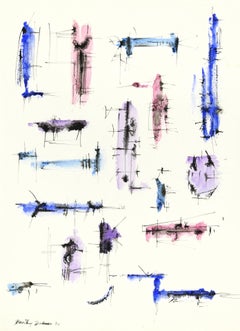
The Pinks and the Blues
By Dorothy Dehner
Located in Fairlawn, OH
The Pinks and the Blues Watercolor, pen and ink on paper, 1954 Signed and dated in ink lower left, titled in pencil verso. Provenance: Gift of the Artist Privat...
Category

1950s Abstract Abstract Drawings and Watercolors

Materials

Watercolor

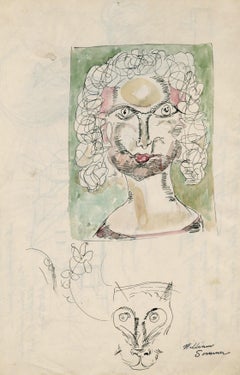
Wire Haired Girl and Cat
By William Sommer
Located in Fairlawn, OH
Wire Haired Girl and Cat Pen and ink with watercolor, c. 1930 Signed with the Estate stamp "B" Provenance: Estate of the Artist By descent to his son Edward ...
Category

1930s American Modern Figurative Drawings and Watercolors

Materials

Watercolor

Still Thinking About These?

All Recently Viewed