1,156 results for "motherwell"

to
368
951
175
846
411
373
309
252
222
200
164
34
33
20
17
14
1
1
1
222
181
47
44
44
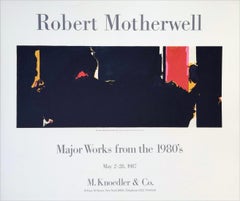
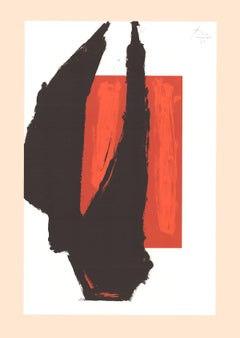
Art Chicago (No Text) Lithograph Print, Abstract, 1981, Unframed
By Robert Motherwell
Located in Brooklyn, NY
Originally produced for the 1981 art show at Navy Pier in Chicago, these posters were part of an estimated edition size of about 2,000. The cropped version is particularly rare, as i...
Category

1980s Abstract Prints and Multiples

Materials

Lithograph

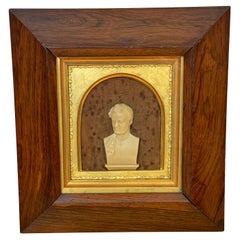
Wax Portrait of William Motherwell, Scottish Poet (1797-1835) by John Fillans
Located in West Palm Beach, FL
Wax Portrait of William Motherwell, Scottish Poet (1797-1835) by John Fillans John Fillans (Scottish, 1817-1867) A museum-worthy wax portrait bust of William Motherwell (1797–1835...
Category

Antique 19th Century Scottish Regency Busts

Materials

Glass, Hardwood, Burl

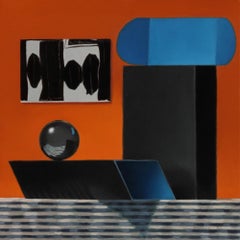
Outside the Box with Motherwell / realism still life oil painting
By Mimi Jensen
Located in Burlingame, CA
'Outside the Box with Motherwell' by artist Mimi Jensen, who uses bold colors to depict theatrically lit objects. "Her paintings invite speculation into possible metaphors" – Califo...
Category

21st Century and Contemporary Contemporary Still-life Paintings

Materials

Canvas, Linen, Oil

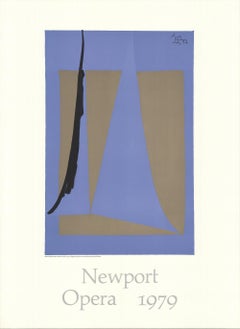
America Cup II Offset Print, Contemporary, Signed, 1979, Unframed
By Robert Motherwell
Located in Brooklyn, NY
This original poster was designed by renowned artist Robert Motherwell for the Newport Opera in 1979. A dedicated supporter of the arts, Motherwell's involvement in this project high...
Category

1970s Contemporary Prints and Multiples

Materials

Offset

Beyond Enjoyment
By Jeannie Motherwell
Located in Boston, MA
Born and raised in New York City, Jeannie Motherwell inherited a love of painting from her father, Robert Motherwell, and stepmother, Helen Frankenthaler, two pillars of mid-century abstraction. She studied painting at Bard College and the Art Students League in New York. Continuing with her art after college, she became active in arts education at the Bruce Museum in Greenwich, CT. Later, relocating to Cambridge, MA, she worked at Boston University for the graduate program in Arts Administration 2002 - 2015. She served on the Cambridge Arts Council Public Art Commission from 2004 – 2007 and is currently on the Provincetown Arts Magazine Board of Directors, an Honorary Art Advisor Member for Rochester Museum of Fine Arts (NH), and is on the Advisory Board for Joy Street Artists Open Studios in Somerville, MA. Her work has been featured in public and private collections throughout the US and abroad. Jeannie’s studio is in Somerville, MA. She is represented by the M Fine Arts Galerie...
Category

2010s Abstract Paintings

Materials

Acrylic, Panel

Undone
By Jeannie Motherwell
Located in Boston, MA
Born and raised in New York City, Jeannie Motherwell inherited a love of painting from her father, Robert Motherwell, and stepmother, Helen Frankenthaler, two pillars of mid-century abstraction. She studied painting at Bard College and the Art Students League in New York. Continuing with her art after college, she became active in arts education at the Bruce Museum in Greenwich, CT. Later, relocating to Cambridge, MA, she worked at Boston University for the graduate program in Arts Administration 2002 - 2015. She served on the Cambridge Arts Council Public Art Commission from 2004 – 2007 and is currently on the Provincetown Arts Magazine Board of Directors, an Honorary Art Advisor Member for Rochester Museum of Fine Arts (NH), and is on the Advisory Board for Joy Street Artists Open Studios in Somerville, MA. Her work has been featured in public and private collections throughout the US and abroad. Jeannie’s studio is in Somerville, MA. She is represented by the M Fine Arts Galerie...
Category

2010s Abstract Paintings

Materials

Acrylic, Panel

Drama in the Garden #2
By Jeannie Motherwell
Located in Boston, MA
Born and raised in New York City, Jeannie Motherwell inherited a love of painting from her father, Robert Motherwell, and stepmother, Helen Frankenthaler, two pillars of mid-century abstraction. She studied painting at Bard College and the Art Students League in New York. Continuing with her art after college, she became active in arts education at the Bruce Museum in Greenwich, CT. Later, relocating to Cambridge, MA, she worked at Boston University for the graduate program in Arts Administration 2002 - 2015. She served on the Cambridge Arts Council Public Art Commission from 2004 – 2007 and is currently on the Provincetown Arts Magazine Board of Directors, an Honorary Art Advisor Member for Rochester Museum of Fine Arts (NH), and is on the Advisory Board for Joy Street Artists Open Studios in Somerville, MA. Her work has been featured in public and private collections throughout the US and abroad. Jeannie’s studio is in Somerville, MA. She is represented by the M Fine Arts Galerie...
Category

2010s Abstract Paintings

Materials

Acrylic, Board

Paradise
By Jeannie Motherwell
Located in Boston, MA
Born and raised in New York City, Jeannie Motherwell inherited a love of painting from her father, Robert Motherwell, and stepmother, Helen Frankenthaler, two pillars of mid-century abstraction. She studied painting at Bard College and the Art Students League in New York. Continuing with her art after college, she became active in arts education at the Bruce Museum in Greenwich, CT. Later, relocating to Cambridge, MA, she worked at Boston University for the graduate program in Arts Administration 2002 - 2015. She served on the Cambridge Arts Council Public Art Commission from 2004 – 2007 and is currently on the Provincetown Arts Magazine Board of Directors, an Honorary Art Advisor Member for Rochester Museum of Fine Arts (NH), and is on the Advisory Board for Joy Street Artists Open Studios in Somerville, MA. Her work has been featured in public and private collections throughout the US and abroad. Jeannie’s studio is in Somerville, MA. She is represented by the M Fine Arts Galerie...
Category

2010s Abstract Paintings

Materials

Acrylic, Panel

Adrift
By Jeannie Motherwell
Located in Boston, MA
Born and raised in New York City, Jeannie Motherwell inherited a love of painting from her father, Robert Motherwell, and stepmother, Helen Frankenthaler, two pillars of mid-century abstraction. She studied painting at Bard College and the Art Students League in New York. Continuing with her art after college, she became active in arts education at the Bruce Museum in Greenwich, CT. Later, relocating to Cambridge, MA, she worked at Boston University for the graduate program in Arts Administration 2002 - 2015. She served on the Cambridge Arts Council Public Art Commission from 2004 – 2007 and is currently on the Provincetown Arts Magazine Board of Directors, an Honorary Art Advisor Member for Rochester Museum of Fine Arts (NH), and is on the Advisory Board for Joy Street Artists Open Studios in Somerville, MA. Her work has been featured in public and private collections throughout the US and abroad. Jeannie’s studio is in Somerville, MA. She is represented by the M Fine Arts Galerie...
Category

2010s Abstract Paintings

Materials

Acrylic, Panel

Drama in the Garden #1
By Jeannie Motherwell
Located in Boston, MA
Born and raised in New York City, Jeannie Motherwell inherited a love of painting from her father, Robert Motherwell, and stepmother, Helen Frankenthaler, two pillars of mid-century ...
Category

2010s Abstract Paintings

Materials

Acrylic, Board

Sashay
By Jeannie Motherwell
Located in Boston, MA
Born and raised in New York City, Jeannie Motherwell inherited a love of painting from her father, Robert Motherwell, and stepmother, Helen Frankenthaler, two pillars of mid-century abstraction. She studied painting at Bard College and the Art Students League in New York. Continuing with her art after college, she became active in arts education at the Bruce Museum in Greenwich, CT. Later, relocating to Cambridge, MA, she worked at Boston University for the graduate program in Arts Administration 2002 - 2015. She served on the Cambridge Arts Council Public Art Commission from 2004 – 2007 and is currently on the Provincetown Arts Magazine Board of Directors, an Honorary Art Advisor Member for Rochester Museum of Fine Arts (NH), and is on the Advisory Board for Joy Street Artists Open Studios in Somerville, MA. Her work has been featured in public and private collections throughout the US and abroad. Jeannie’s studio is in Somerville, MA. She is represented by the M Fine Arts Galerie...
Category

2010s Abstract Paintings

Materials

Acrylic, Panel

Windward
By Jeannie Motherwell
Located in Boston, MA
Born and raised in New York City, Jeannie Motherwell inherited a love of painting from her father, Robert Motherwell, and stepmother, Helen Frankenthaler, two pillars of mid-century abstraction. She studied painting at Bard College and the Art Students League in New York. Continuing with her art after college, she became active in arts education at the Bruce Museum in Greenwich, CT. Later, relocating to Cambridge, MA, she worked at Boston University for the graduate program in Arts Administration 2002 - 2015. She served on the Cambridge Arts Council Public Art Commission from 2004 – 2007 and is currently on the Provincetown Arts Magazine Board of Directors, an Honorary Art Advisor Member for Rochester Museum of Fine Arts (NH), and is on the Advisory Board for Joy Street Artists Open Studios in Somerville, MA. Her work has been featured in public and private collections throughout the US and abroad. Jeannie’s studio is in Somerville, MA. She is represented by the M Fine Arts Galerie...
Category

2010s Abstract Paintings

Materials

Acrylic, Panel

Drama in the Garden #3
By Jeannie Motherwell
Located in Boston, MA
Born and raised in New York City, Jeannie Motherwell inherited a love of painting from her father, Robert Motherwell, and stepmother, Helen Frankenthaler, two pillars of mid-century abstraction. She studied painting at Bard College and the Art Students League in New York. Continuing with her art after college, she became active in arts education at the Bruce Museum in Greenwich, CT. Later, relocating to Cambridge, MA, she worked at Boston University for the graduate program in Arts Administration 2002 - 2015. She served on the Cambridge Arts Council Public Art Commission from 2004 – 2007 and is currently on the Provincetown Arts Magazine Board of Directors, an Honorary Art Advisor Member for Rochester Museum of Fine Arts (NH), and is on the Advisory Board for Joy Street Artists Open Studios in Somerville, MA. Her work has been featured in public and private collections throughout the US and abroad. Jeannie’s studio is in Somerville, MA. She is represented by the M Fine Arts Galerie...
Category

2010s Abstract Paintings

Materials

Acrylic, Board

Existential Crisis
By Jeannie Motherwell
Located in Boston, MA
Born and raised in New York City, Jeannie Motherwell inherited a love of painting from her father, Robert Motherwell, and stepmother, Helen Frankenthaler, two pillars of mid-century abstraction. She studied painting at Bard College and the Art Students League in New York. Continuing with her art after college, she became active in arts education at the Bruce Museum in Greenwich, CT. Later, relocating to Cambridge, MA, she worked at Boston University for the graduate program in Arts Administration 2002 - 2015. She served on the Cambridge Arts Council Public Art Commission from 2004 – 2007 and is currently on the Provincetown Arts Magazine Board of Directors, an Honorary Art Advisor Member for Rochester Museum of Fine Arts (NH), and is on the Advisory Board for Joy Street Artists Open Studios in Somerville, MA. Her work has been featured in public and private collections throughout the US and abroad. Jeannie’s studio is in Somerville, MA. She is represented by the M Fine Arts Galerie...
Category

2010s Abstract Paintings

Materials

Acrylic, Panel

Be Known
By Jeannie Motherwell
Located in Boston, MA
Born and raised in New York City, Jeannie Motherwell inherited a love of painting from her father, Robert Motherwell, and stepmother, Helen Frankenthaler, two pillars of mid-century abstraction. She studied painting at Bard College and the Art Students League in New York. Continuing with her art after college, she became active in arts education at the Bruce Museum in Greenwich, CT. Later, relocating to Cambridge, MA, she worked at Boston University for the graduate program in Arts Administration 2002 - 2015. She served on the Cambridge Arts Council Public Art Commission from 2004 – 2007 and is currently on the Provincetown Arts Magazine Board of Directors, an Honorary Art Advisor Member for Rochester Museum of Fine Arts (NH), and is on the Advisory Board for Joy Street Artists Open Studios in Somerville, MA. Her work has been featured in public and private collections throughout the US and abroad. Jeannie’s studio is in Somerville, MA. She is represented by the M Fine Arts Galerie...
Category

2010s Abstract Paintings

Materials

Acrylic, Panel

FACE OF THE NIGHT(Octavio Paz)Lithograph on Arches Paper, Abstract Expressionist
By (after) Robert Motherwell
Located in Union City, NJ
FACE OF THE NIGHT (For Octavio Paz) is a limited run lithograph exhibition poster printed in multiple colors using traditional hand lithography techniques (not a photo reproduction) ...
Category

1980s Expressionist Abstract Prints

Materials

Lithograph

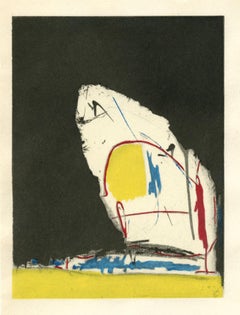
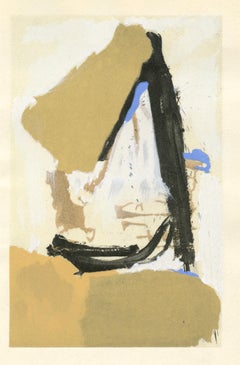
"Capriccio" pochoir
By (after) Robert Motherwell
Located in Henderson, NV
Medium: pochoir (after the mixed media collage). Printed in Paris at the Daniel Jacomet atelier and published in 1960 by the Berggruen Gallery. Image size: 5 x 3 7/8 inches (130 x 98...
Category

1960s Prints and Multiples

Materials

Lithograph, Stencil

Wipeout
By Jeannie Motherwell
Located in Boston, MA
Born and raised in New York City, Jeannie Motherwell inherited a love of painting from her father, Robert Motherwell, and stepmother, Helen Frankenthaler, two pillars of mid-century ...
Category

2010s Abstract Paintings

Materials

Acrylic, Panel

"A Rose for Winter" pochoir
By (after) Robert Motherwell
Located in Henderson, NV
Medium: pochoir (after the mixed media collage). Printed in Paris at the Daniel Jacomet atelier and published in 1960 by the Berggruen Gallery. Image size: 5 x 3 3/4 inches (125 x 96...
Category

1960s Prints and Multiples

Materials

Lithograph, Stencil

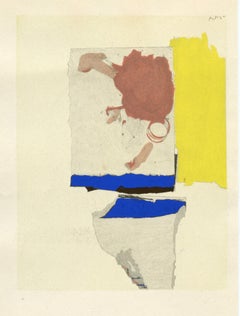
"Summer in Italy, No. 1" pochoir
By (after) Robert Motherwell
Located in Henderson, NV
Medium: pochoir (after the mixed media collage). Printed in Paris at the Daniel Jacomet atelier and published in 1960 by the Berggruen Gallery. Image size: 6 x 3 3/4 inches (152 x 97...
Category

1960s Prints and Multiples

Materials

Lithograph, Stencil

Tableau, Japanese, limited edition lithograph, black, white, red, signed, number
By Toko Shinoda
Located in Santa Fe, NM
Tableau, Japanese, limited edition lithograph, black, white, red, signed, number Shinoda's works have been collected by public galleries and museums, including the Museum of Modern Art, Solomon R. Guggenheim Museum, Brooklyn Museum and Metropolitan Museum (all in New York City), the National Museum of Modern Art in Tokyo, the British Museum in London, the Art Institute of Chicago, Arthur M. Sackler Gallery of the Smithsonian in Washington, D.C., the Singapore Art Museum, the National Museum of Singapore, the Kröller-Müller Museum in Otterlo, Netherlands, the Albright–Knox Art Gallery in Buffalo, New York, the Cincinnati Art Museum, and the Yale University Art Gallery in New Haven, Connecticut. New York Times Obituary, March 3, 2021 by Margalit Fox, Alex Traub contributed reporting. Toko Shinoda, one of the foremost Japanese artists of the 20th century, whose work married the ancient serenity of calligraphy with the modernist urgency of Abstract Expressionism, died on Monday at a hospital in Tokyo. She was 107. Her death was announced by her gallerist in the United States. A painter and printmaker, Ms. Shinoda attained international renown at midcentury and remained sought after by major museums and galleries worldwide for more than five decades. Her work has been exhibited at, among other places, the Metropolitan Museum of Art and the Museum of Modern Art in New York; the Art Institute of Chicago; the British Museum; and the National Museum of Modern Art in Tokyo. Private collectors include the Japanese imperial family. Writing about a 1998 exhibition of Ms. Shinoda’s work at a London gallery, the British newspaper The Independent called it “elegant, minimal and very, very composed,” adding, “Her roots as a calligrapher are clear, as are her connections with American art of the 1950s, but she is quite obviously a major artist in her own right.” As a painter, Ms. Shinoda worked primarily in sumi ink, a solid form of ink, made from soot pressed into sticks, that has been used in Asia for centuries. Rubbed on a wet stone to release their pigment, the sticks yield a subtle ink that, because it is quickly imbibed by paper, is strikingly ephemeral. The sumi artist must make each brush stroke with all due deliberation, as the nature of the medium precludes the possibility of reworking even a single line. “The color of the ink which is produced by this method is a very delicate one,” Ms. Shinoda told The Business Times of Singapore in 2014. “It is thus necessary to finish one’s work very quickly. So the composition must be determined in my mind before I pick up the brush. Then, as they say, the painting just falls off the brush.” Ms. Shinoda painted almost entirely in gradations of black, with occasional sepias and filmy blues. The ink sticks she used had been made for the great sumi artists of the past, some as long as 500 years ago. Her line — fluid, elegant, impeccably placed — owed much to calligraphy. She had been rigorously trained in that discipline from the time she was a child, but she had begun to push against its confines when she was still very young. Deeply influenced by American Abstract Expressionists like Jackson Pollock, Mark Rothko and Robert Motherwell, whose work she encountered when she lived in New York in the late 1950s, Ms. Shinoda shunned representation. “If I have a definite idea, why paint it?,” she asked in an interview with United Press International in 1980. “It’s already understood and accepted. A stand of bamboo is more beautiful than a painting could be. Mount Fuji is more striking than any possible imitation.” Spare and quietly powerful, making abundant use of white space, Ms. Shinoda’s paintings are done on traditional Chinese and Japanese papers, or on backgrounds of gold, silver or platinum leaf. Often asymmetrical, they can overlay a stark geometric shape with the barest calligraphic strokes. The combined effect appears to catch and hold something evanescent — “as elusive as the memory of a pleasant scent or the movement of wind,” as she said in a 1996 interview. Ms. Shinoda’s work also included lithographs; three-dimensional pieces of wood and other materials; and murals in public spaces, including a series made for the Zojoji Temple in Tokyo. The fifth of seven children of a prosperous family, Ms. Shinoda was born on March 28, 1913, in Dalian, in Manchuria, where her father, Raijiro, managed a tobacco plant. Her mother, Joko, was a homemaker. The family returned to Japan when she was a baby, settling in Gifu, midway between Kyoto and Tokyo. One of her father’s uncles, a sculptor and calligrapher, had been an official seal carver to the Meiji emperor. He conveyed his love of art and poetry to Toko’s father, who in turn passed it to Toko. “My upbringing was a very traditional one, with relatives living with my parents,” she said in the U.P.I. interview. “In a scholarly atmosphere, I grew up knowing I wanted to make these things, to be an artist.” She began studying calligraphy at 6, learning, hour by hour, impeccable mastery over line. But by the time she was a teenager, she had begun to seek an artistic outlet that she felt calligraphy, with its centuries-old conventions, could not afford. “I got tired of it and decided to try my own style,” Ms. Shinoda told Time magazine in 1983. “My father always scolded me for being naughty and departing from the traditional way, but I had to do it.” Moving to Tokyo as a young adult, Ms. Shinoda became celebrated throughout Japan as one of the country’s finest living calligraphers, at the time a signal honor for a woman. She had her first solo show in 1940, at a Tokyo gallery. During World War II, when she forsook the city for the countryside near Mount Fuji, she earned her living as a calligrapher, but by the mid-1940s she had started experimenting with abstraction. In 1954 she began to achieve renown outside Japan with her inclusion in an exhibition of Japanese calligraphy at MoMA. In 1956, she traveled to New York. At the time, unmarried Japanese women could obtain only three-month visas for travel abroad, but through zealous renewals, Ms. Shinoda managed to remain for two years. She met many of the titans of Abstract Expressionism there, and she became captivated by their work. “When I was in New York in the ’50s, I was often included in activities with those artists, people like Mark Rothko, Jackson Pollock, Motherwell and so forth,” she said in a 1998 interview with The Business Times. “They were very generous people, and I was often invited to visit their studios, where we would share ideas and opinions on our work. It was a great experience being together with people who shared common feelings.” During this period, Ms. Shinoda’s work was sold in the United States by Betty Parsons, the New York dealer who represented Pollock, Rothko and many of their contemporaries. Returning to Japan, Ms. Shinoda began to fuse calligraphy and the Expressionist aesthetic in earnest. The result was, in the words of The Plain Dealer of Cleveland in 1997, “an art of elegant simplicity and high drama.” Among Ms. Shinoda’s many honors, she was depicted, in 2016, on a Japanese postage stamp. She is the only Japanese artist to be so honored during her lifetime. No immediate family members survive. When she was quite young and determined to pursue a life making art, Ms. Shinoda made the decision to forgo the path that seemed foreordained for women of her generation. “I never married and have no children,” she told The Japan Times in 2017. “And I suppose that it sounds strange to think that my paintings are in place of them — of course they are not the same thing at all. But I do say, when paintings that I have made years ago are brought back into my consciousness, it seems like an old friend, or even a part of me, has come back to see me.” Works of a Woman's Hand Toko Shinoda bases new abstractions on ancient calligraphy Down a winding side street in the Aoyama district, western Tokyo. into a chunky white apartment building, then up in an elevator small enough to make a handful of Western passengers friends or enemies for life. At the end of a hall on the fourth floor, to the right, stands a plain brown door. To be admitted is to go through the looking glass. Sayonara today. Hello (Konichiwa) yesterday and tomorrow. Toko Shinoda, 70, lives and works here. She can be, when she chooses, on e of Japans foremost calligraphers, master of an intricate manner of writing that traces its lines back some 3,000 years to ancient China. She is also an avant-garde artist of international renown, whose abstract paintings and lithographs rest in museums around the world. These diverse talents do not seem to belong in the same epoch. Yet they have somehow converged in this diminutive woman who appears in her tiny foyer, offering slippers and ritual bows of greeting. She looks like someone too proper to chip a teacup, never mind revolutionize an old and hallowed art form She wears a blue and white kimono of her own design. Its patterns, she explains, are from Edo, meaning the period of the Tokugawa shoguns, before her city was renamed Tokyo in 1868. Her black hair is pulled back from her face, which is virtually free of lines and wrinkles. except for the gold-rimmed spectacles perched low on her nose (this visionary is apparently nearsighted). Shinoda could have stepped directly from a 19th century Meji print. Her surroundings convey a similar sense of old aesthetics, a retreat in the midst of a modern, frenetic city. The noise of the heavy traffic on a nearby elevated highway sounds at this height like distant surf. delicate bamboo shades filter the daylight. The color arrangement is restful: low ceilings of exposed wood, off-white walls, pastel rugs of blue, green and gray. It all feels so quintessentially Japanese that Shinoda’s opening remarks come as a surprise. She points out (through a translator) that she was not born in Japan at all but in Darien, Manchuria. Her father had been posted there to manage a tobacco company under the aegis of the occupying Japanese forces, which seized the region from Russia in 1905. She says,”People born in foreign places are very free in their thinking, not restricted” But since her family went back to Japan in 1915, when she was two, she could hardly remember much about a liberated childhood? She answers,”I think that if my mother had remained in Japan, she would have been an ordinary Japanese housewife. Going to Manchuria, she was able to assert her own personality, and that left its mark on me.” Evidently so. She wears her obi low on the hips, masculine style. The Porcelain aloofness she displays in photographs shatters in person. Her speech is forceful, her expression animated and her laugh both throaty and infectious. The hand she brings to her mouth to cover her amusement (a traditional female gesture of modesty) does not stand a chance. Her father also made a strong impression on the fifth of his seven children:”He came from a very old family, and he was quite strict in some ways and quite liberal in others.” He owned one of the first three bicycles ever imported to Japan and tinkered with it constantly He also decided that his little daughter would undergo rigorous training in a procrustean antiquity. “I was forced to study from age six on to learn calligraphy,” Shinoda says, The young girl dutifully memorized and copied the accepted models. In one sense, her father had pushed her in a promising direction, one of the few professional fields in Japan open to females. Included among the ancient terms that had evolved around calligraphy was onnade, or woman's writing. Heresy lay ahead. By the time she was 15, she had already been through nine years of intensive discipline, “I got tired of it and decided to try my own style. My father always scolded me for being naughty and departing from the traditional way, but I had to do it.” She produces a brush and a piece of paper to demonstrate the nature of her rebellion. “This is kawa, the accepted calligraphic character for river,” she says, deftly sketching three short vertical strokes. “But I wanted to use more than three lines to show the force of the river.” Her brush flows across the white page, leaving a recognizable river behind, also flowing.” The simple kawa in the traditional language was not enough for me. I wanted to find a new symbol to express the word river.” Her conviction grew that ink could convey the ineffable, the feeling, "as she says, of wind blowing softly.” Another demonstration. She goes to the sliding wooden door of an anteroom and disappears in back of it; the only trace of her is a triangular swatch of the right sleeve of her kimono, which she has arranged for that purpose. A realization dawns. The task of this artist is to paint that three sided pattern so that the invisible woman attached to it will be manifest to all viewers. Gen, painted especially for TIME, shows Shinoda’s theory in practice. She calls the work “my conception of Japan in visual terms.” A dark swath at the left, punctuated by red, stands for history. In the center sits a Chinese character gen, which means in the present or actuality. A blank pattern at the right suggests an unknown future. Once out of school, Shinoda struck off on a path significantly at odds with her culture. She recognized marriage for what it could mean to her career (“a restriction”) and decided against it. There was a living to be earned by doing traditional calligraphy:she used her free time to paint her variations. In 1940 a Tokyo gallery exhibited her work. (Fourteen years would pass before she got a second show.)War came, and bad times for nearly everyone, including the aspiring artist , who retreated to a rural area near Mount Fuji and traded her kimonos for eggs. In 1954 Shinoda’s work was included in a group exhibit at New York City’s Museum of Modern Art. Two years later, she overcame bureaucratic obstacles to visit the U.S.. Unmarried Japanese women are allowed visas for only three months, patiently applying for two-month extensions, one at a time, Shinoda managed to travel the country for two years. She pulls out a scrapbook from this period. Leafing through it, she suddenly raises a hand and touches her cheek:”How young I looked!” An inspection is called for. The woman in the grainy, yellowing newspaper photograph could easily be the on e sitting in this room. Told this, she nods and smiles. No translation necessary. Her sojourn in the U.S. proved to be crucial in the recognition and development of Shinoda’s art. Celebrities such as actor Charles Laughton and John Lewis of the Modern Jazz Quartet bought her paintings and spread the good word. She also saw the works of the abstract expressionists, then the rage of the New York City art world, and realized that these Western artists, coming out of an utterly different tradition, were struggling toward the same goal that had obsessed her. Once she was back home, her work slowly made her famous. Although Shinoda has used many materials (fabric, stainless steel, ceramics, cement), brush and ink remain her principal means of expression. She had said, “As long as I am devoted to the creation of new forms, I can draw even with muddy water.” Fortunately, she does not have to. She points with evident pride to her ink stone, a velvety black slab of rock, with an indented basin, that is roughly a foot across and two feet long. It is more than 300 years old. Every working morning, Shinoda pours about a third of a pint of water into it, then selects an ink stick from her extensive collection, some dating back to China’s Ming dynasty. Pressing stick against stone, she begins rubbing. Slowly, the dried ink dissolves in the water and becomes ready for the brush. So two batches of sumi (India ink) are exactly alike; something old, something new. She uses color sparingly. Her clear preference is black and all its gradations. “In some paintings, sumi expresses blue better than blue.” It is time to go downstairs to the living quarters. A niece, divorced and her daughter,10,stay here with Shinoda; the artist who felt forced to renounce family and domesticity at the outset of her career seems welcome to it now. Sake is offered, poured into small cedar boxes and happily accepted. Hold carefully. Drink from a corner. Ambrosial. And just right for the surroundings and the hostess. A conservative renegade; a liberal traditionalist; a woman steeped in the male-dominated conventions that she consistently opposed. Her trail blazing accomplishments are analogous to Picasso’s. When she says goodbye, she bows. --by Paul Gray...
Category

1990s Contemporary Abstract Prints

Materials

Lithograph

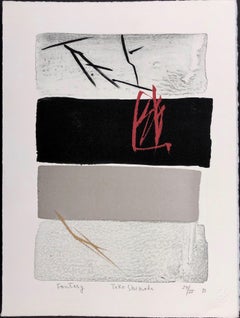
Fantasy, Japanese, limited edition lithograph, black, white, red, signed, titled
By Toko Shinoda
Located in Santa Fe, NM
Fantasy, Japanese, limited edition lithograph, black, white, red, signed, titled Shinoda's works have been collected by public galleries and museums, including the Museum of Modern Art, Solomon R. Guggenheim Museum, Brooklyn Museum and Metropolitan Museum (all in New York City), the National Museum of Modern Art in Tokyo, the British Museum in London, the Art Institute of Chicago, Arthur M. Sackler Gallery of the Smithsonian in Washington, D.C., the Singapore Art Museum, the National Museum of Singapore, the Kröller-Müller Museum in Otterlo, Netherlands, the Albright–Knox Art Gallery in Buffalo, New York, the Cincinnati Art Museum, and the Yale University Art Gallery in New Haven, Connecticut. New York Times Obituary, March 3, 2021 by Margalit Fox, Alex Traub contributed reporting. Toko Shinoda, one of the foremost Japanese artists of the 20th century, whose work married the ancient serenity of calligraphy with the modernist urgency of Abstract Expressionism, died on Monday at a hospital in Tokyo. She was 107. Her death was announced by her gallerist in the United States. A painter and printmaker, Ms. Shinoda attained international renown at midcentury and remained sought after by major museums and galleries worldwide for more than five decades. Her work has been exhibited at, among other places, the Metropolitan Museum of Art and the Museum of Modern Art in New York; the Art Institute of Chicago; the British Museum; and the National Museum of Modern Art in Tokyo. Private collectors include the Japanese imperial family. Writing about a 1998 exhibition of Ms. Shinoda’s work at a London gallery, the British newspaper The Independent called it “elegant, minimal and very, very composed,” adding, “Her roots as a calligrapher are clear, as are her connections with American art of the 1950s, but she is quite obviously a major artist in her own right.” As a painter, Ms. Shinoda worked primarily in sumi ink, a solid form of ink, made from soot pressed into sticks, that has been used in Asia for centuries. Rubbed on a wet stone to release their pigment, the sticks yield a subtle ink that, because it is quickly imbibed by paper, is strikingly ephemeral. The sumi artist must make each brush stroke with all due deliberation, as the nature of the medium precludes the possibility of reworking even a single line. “The color of the ink which is produced by this method is a very delicate one,” Ms. Shinoda told The Business Times of Singapore in 2014. “It is thus necessary to finish one’s work very quickly. So the composition must be determined in my mind before I pick up the brush. Then, as they say, the painting just falls off the brush.” Ms. Shinoda painted almost entirely in gradations of black, with occasional sepias and filmy blues. The ink sticks she used had been made for the great sumi artists of the past, some as long as 500 years ago. Her line — fluid, elegant, impeccably placed — owed much to calligraphy. She had been rigorously trained in that discipline from the time she was a child, but she had begun to push against its confines when she was still very young. Deeply influenced by American Abstract Expressionists like Jackson Pollock, Mark Rothko and Robert Motherwell, whose work she encountered when she lived in New York in the late 1950s, Ms. Shinoda shunned representation. “If I have a definite idea, why paint it?,” she asked in an interview with United Press International in 1980. “It’s already understood and accepted. A stand of bamboo is more beautiful than a painting could be. Mount Fuji is more striking than any possible imitation.” Spare and quietly powerful, making abundant use of white space, Ms. Shinoda’s paintings are done on traditional Chinese and Japanese papers, or on backgrounds of gold, silver or platinum leaf. Often asymmetrical, they can overlay a stark geometric shape with the barest calligraphic strokes. The combined effect appears to catch and hold something evanescent — “as elusive as the memory of a pleasant scent or the movement of wind,” as she said in a 1996 interview. Ms. Shinoda’s work also included lithographs; three-dimensional pieces of wood and other materials; and murals in public spaces, including a series made for the Zojoji Temple in Tokyo. The fifth of seven children of a prosperous family, Ms. Shinoda was born on March 28, 1913, in Dalian, in Manchuria, where her father, Raijiro, managed a tobacco plant. Her mother, Joko, was a homemaker. The family returned to Japan when she was a baby, settling in Gifu, midway between Kyoto and Tokyo. One of her father’s uncles, a sculptor and calligrapher, had been an official seal carver to the Meiji emperor. He conveyed his love of art and poetry to Toko’s father, who in turn passed it to Toko. “My upbringing was a very traditional one, with relatives living with my parents,” she said in the U.P.I. interview. “In a scholarly atmosphere, I grew up knowing I wanted to make these things, to be an artist.” She began studying calligraphy at 6, learning, hour by hour, impeccable mastery over line. But by the time she was a teenager, she had begun to seek an artistic outlet that she felt calligraphy, with its centuries-old conventions, could not afford. “I got tired of it and decided to try my own style,” Ms. Shinoda told Time magazine in 1983. “My father always scolded me for being naughty and departing from the traditional way, but I had to do it.” Moving to Tokyo as a young adult, Ms. Shinoda became celebrated throughout Japan as one of the country’s finest living calligraphers, at the time a signal honor for a woman. She had her first solo show in 1940, at a Tokyo gallery. During World War II, when she forsook the city for the countryside near Mount Fuji, she earned her living as a calligrapher, but by the mid-1940s she had started experimenting with abstraction. In 1954 she began to achieve renown outside Japan with her inclusion in an exhibition of Japanese calligraphy at MoMA. In 1956, she traveled to New York. At the time, unmarried Japanese women could obtain only three-month visas for travel abroad, but through zealous renewals, Ms. Shinoda managed to remain for two years. She met many of the titans of Abstract Expressionism there, and she became captivated by their work. “When I was in New York in the ’50s, I was often included in activities with those artists, people like Mark Rothko, Jackson Pollock, Motherwell and so forth,” she said in a 1998 interview with The Business Times. “They were very generous people, and I was often invited to visit their studios, where we would share ideas and opinions on our work. It was a great experience being together with people who shared common feelings.” During this period, Ms. Shinoda’s work was sold in the United States by Betty Parsons, the New York dealer who represented Pollock, Rothko and many of their contemporaries. Returning to Japan, Ms. Shinoda began to fuse calligraphy and the Expressionist aesthetic in earnest. The result was, in the words of The Plain Dealer of Cleveland in 1997, “an art of elegant simplicity and high drama.” Among Ms. Shinoda’s many honors, she was depicted, in 2016, on a Japanese postage stamp. She is the only Japanese artist to be so honored during her lifetime. No immediate family members survive. When she was quite young and determined to pursue a life making art, Ms. Shinoda made the decision to forgo the path that seemed foreordained for women of her generation. “I never married and have no children,” she told The Japan Times in 2017. “And I suppose that it sounds strange to think that my paintings are in place of them — of course they are not the same thing at all. But I do say, when paintings that I have made years ago are brought back into my consciousness, it seems like an old friend, or even a part of me, has come back to see me.” Works of a Woman's Hand Toko Shinoda bases new abstractions on ancient calligraphy Down a winding side street in the Aoyama district, western Tokyo. into a chunky white apartment building, then up in an elevator small enough to make a handful of Western passengers friends or enemies for life. At the end of a hall on the fourth floor, to the right, stands a plain brown door. To be admitted is to go through the looking glass. Sayonara today. Hello (Konichiwa) yesterday and tomorrow. Toko Shinoda, 70, lives and works here. She can be, when she chooses, on e of Japans foremost calligraphers, master of an intricate manner of writing that traces its lines back some 3,000 years to ancient China. She is also an avant-garde artist of international renown, whose abstract paintings and lithographs rest in museums around the world. These diverse talents do not seem to belong in the same epoch. Yet they have somehow converged in this diminutive woman who appears in her tiny foyer, offering slippers and ritual bows of greeting. She looks like someone too proper to chip a teacup, never mind revolutionize an old and hallowed art form She wears a blue and white kimono of her own design. Its patterns, she explains, are from Edo, meaning the period of the Tokugawa shoguns, before her city was renamed Tokyo in 1868. Her black hair is pulled back from her face, which is virtually free of lines and wrinkles. except for the gold-rimmed spectacles perched low on her nose (this visionary is apparently nearsighted). Shinoda could have stepped directly from a 19th century Meji print. Her surroundings convey a similar sense of old aesthetics, a retreat in the midst of a modern, frenetic city. The noise of the heavy traffic on a nearby elevated highway sounds at this height like distant surf. delicate bamboo shades filter the daylight. The color arrangement is restful: low ceilings of exposed wood, off-white walls, pastel rugs of blue, green and gray. It all feels so quintessentially Japanese that Shinoda’s opening remarks come as a surprise. She points out (through a translator) that she was not born in Japan at all but in Darien, Manchuria. Her father had been posted there to manage a tobacco company under the aegis of the occupying Japanese forces, which seized the region from Russia in 1905. She says,”People born in foreign places are very free in their thinking, not restricted” But since her family went back to Japan in 1915, when she was two, she could hardly remember much about a liberated childhood? She answers,”I think that if my mother had remained in Japan, she would have been an ordinary Japanese housewife. Going to Manchuria, she was able to assert her own personality, and that left its mark on me.” Evidently so. She wears her obi low on the hips, masculine style. The Porcelain aloofness she displays in photographs shatters in person. Her speech is forceful, her expression animated and her laugh both throaty and infectious. The hand she brings to her mouth to cover her amusement (a traditional female gesture of modesty) does not stand a chance. Her father also made a strong impression on the fifth of his seven children:”He came from a very old family, and he was quite strict in some ways and quite liberal in others.” He owned one of the first three bicycles ever imported to Japan and tinkered with it constantly He also decided that his little daughter would undergo rigorous training in a procrustean antiquity. “I was forced to study from age six on to learn calligraphy,” Shinoda says, The young girl dutifully memorized and copied the accepted models. In one sense, her father had pushed her in a promising direction, one of the few professional fields in Japan open to females. Included among the ancient terms that had evolved around calligraphy was onnade, or woman's writing. Heresy lay ahead. By the time she was 15, she had already been through nine years of intensive discipline, “I got tired of it and decided to try my own style. My father always scolded me for being naughty and departing from the traditional way, but I had to do it.” She produces a brush and a piece of paper to demonstrate the nature of her rebellion. “This is kawa, the accepted calligraphic character for river,” she says, deftly sketching three short vertical strokes. “But I wanted to use more than three lines to show the force of the river.” Her brush flows across the white page, leaving a recognizable river behind, also flowing.” The simple kawa in the traditional language was not enough for me. I wanted to find a new symbol to express the word river.” Her conviction grew that ink could convey the ineffable, the feeling, "as she says, of wind blowing softly.” Another demonstration. She goes to the sliding wooden door of an anteroom and disappears in back of it; the only trace of her is a triangular swatch of the right sleeve of her kimono, which she has arranged for that purpose. A realization dawns. The task of this artist is to paint that three sided pattern so that the invisible woman attached to it will be manifest to all viewers. Gen, painted especially for TIME, shows Shinoda’s theory in practice. She calls the work “my conception of Japan in visual terms.” A dark swath at the left, punctuated by red, stands for history. In the center sits a Chinese character gen, which means in the present or actuality. A blank pattern at the right suggests an unknown future. Once out of school, Shinoda struck off on a path significantly at odds with her culture. She recognized marriage for what it could mean to her career (“a restriction”) and decided against it. There was a living to be earned by doing traditional calligraphy:she used her free time to paint her variations. In 1940 a Tokyo gallery exhibited her work. (Fourteen years would pass before she got a second show.)War came, and bad times for nearly everyone, including the aspiring artist , who retreated to a rural area near Mount Fuji and traded her kimonos for eggs. In 1954 Shinoda’s work was included in a group exhibit at New York City’s Museum of Modern Art. Two years later, she overcame bureaucratic obstacles to visit the U.S.. Unmarried Japanese women are allowed visas for only three months, patiently applying for two-month extensions, one at a time, Shinoda managed to travel the country for two years. She pulls out a scrapbook from this period. Leafing through it, she suddenly raises a hand and touches her cheek:”How young I looked!” An inspection is called for. The woman in the grainy, yellowing newspaper photograph could easily be the on e sitting in this room. Told this, she nods and smiles. No translation necessary. Her sojourn in the U.S. proved to be crucial in the recognition and development of Shinoda’s art. Celebrities such as actor Charles Laughton and John Lewis of the Modern Jazz Quartet bought her paintings and spread the good word. She also saw the works of the abstract expressionists, then the rage of the New York City art world, and realized that these Western artists, coming out of an utterly different tradition, were struggling toward the same goal that had obsessed her. Once she was back home, her work slowly made her famous. Although Shinoda has used many materials (fabric, stainless steel, ceramics, cement), brush and ink remain her principal means of expression. She had said, “As long as I am devoted to the creation of new forms, I can draw even with muddy water.” Fortunately, she does not have to. She points with evident pride to her ink stone, a velvety black slab of rock, with an indented basin, that is roughly a foot across and two feet long. It is more than 300 years old. Every working morning, Shinoda pours about a third of a pint of water into it, then selects an ink stick from her extensive collection, some dating back to China’s Ming dynasty. Pressing stick against stone, she begins rubbing. Slowly, the dried ink dissolves in the water and becomes ready for the brush. So two batches of sumi (India ink) are exactly alike; something old, something new. She uses color sparingly. Her clear preference is black and all its gradations. “In some paintings, sumi expresses blue better than blue.” It is time to go downstairs to the living quarters. A niece, divorced and her daughter,10,stay here with Shinoda; the artist who felt forced to renounce family and domesticity at the outset of her career seems welcome to it now. Sake is offered, poured into small cedar boxes and happily accepted. Hold carefully. Drink from a corner. Ambrosial. And just right for the surroundings and the hostess. A conservative renegade; a liberal traditionalist; a woman steeped in the male-dominated conventions that she consistently opposed. Her trail blazing accomplishments are analogous to Picasso’s. When she says goodbye, she bows. --by Paul Gray...
Category

1990s Contemporary Abstract Prints

Materials

Lithograph

Autumn Biogram of the Nelson
By Kory Twaddle
Located in Kansas City, MO
Artist : Kory Twaddle "Autumn Biogram of the Nelson" Newsprint, graphite, conté crayon pastel, charcoal, beeswax, cardboard, paper, gingko leaves, stickers, and Mixed Media on drawi...
Category

2010s Abstract Mixed Media

Materials

Paint, Paper, Conté, Charcoal, India Ink, Acrylic, Tempera, Watercolor, ...

"New Orleans, " 1960s Modern Abstract Painting
By Stanley Bate
Located in Westport, CT
This Modern abstract painting Stanley Bate is highly textured and features a warm, vibrant palette. Thick layers of red, orange, and blue paint appear to have been scraped back to c...
Category

1960s Modern Abstract Paintings

Materials

Canvas, Oil

Max Ernst, The Wheel of Light, from Natural History, 1972 (after)
By Max Ernst
Located in Southampton, NY
This exquisite collotype after Max Ernst (1891–1976), titled La Roue de la lumiere (The Wheel of Light), from the album Max Ernst, Histoire Naturelle (Natural History), originates fr...
Category

1970s Surrealist Landscape Prints

Materials

Lithograph

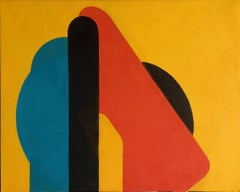
Mid-Century Painting Drawing Framed Colorful Texture New York Estate Red Black
Located in Buffalo, NY
A wonderful minimalist black and red mixed media work Circa 1970. Though the artist is unknown this work was acquired along with pieces by well know artists Karel Appel and Robert M...
Category

1970s Minimalist Abstract Paintings

Materials

Coating, Oil Pastel, Acrylic

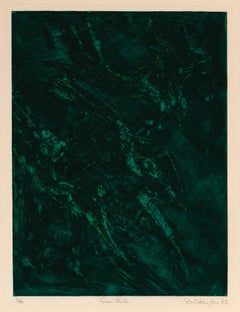
Green Shade — Mid-century Modernism, Abstract Expressionism, Atelier 17
By Stanley William Hayter
Located in Myrtle Beach, SC
Stanley William Hayter, 'Green Shade', color etching and scraper, 1963, edition 50, (only 39 printed), B&M 278. Signed, titled, dated, and numbered '1/50' in pencil. A superb, richly-inked, luminous impression, with fresh, vivid colors, on Barcham Green textured cream wove paper; the full sheet with margins (2 3/16 to 3 1/4 inches), in excellent condition. Printed: intaglio black-green, contact lumogen yellow, soft roller phthalo green. Scarce. Image size 15 7/16 x 11 5/8 inches (392 x 295 mm); sheet size 21 1/8 x 16 inches (537 x 406 mm). Matted to museum standards (unframed). Collection: The British Museum ABOUT THE ARTIST Stanley William Hayter (1901-1988) was a British painter and printmaker associated in the 1930s with Surrealism and from 1940 onward with Abstract Expressionism. Regarded as one of the most significant printmakers of the 20th century, Hayter founded the legendary Atelier 17...
Category

1960s Abstract Expressionist Abstract Prints

Materials

Etching

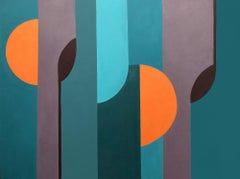
Cross Currents (Geometric Abstraction, Minimalism, Josef Albers, Hard Edge)
By Susan Kiefer
Located in Kansas City, MO
Artist : Susan Kiefer Title : Cross Currents Materials : oil on canvas Date : February 2020 Dimensions : 30" x 40" x 1.5" Description : Intersecting oval forms in turquoise and rust...
Category

2010s Abstract Paintings

Materials

Canvas, Paint, Oil

Unique SIGNED Abstract Expressionist drawing major WPA artist, Estate issued COA
By William Baziotes
Located in New York, NY
WILLIAM BAZIOTES Untitled Abstract Expressionist Mid Century Modern ink drawing with Estate COA, ca. 1955 Ink Drawing on Paper Signed lower right recto. Accompanied by letter of aut...
Category

Mid-20th Century Abstract Expressionist Abstract Drawings and Watercolors

Materials

Ink

Diptych — Modernist Abstraction, Atelier 17
By Stanley William Hayter
Located in Myrtle Beach, SC
Stanley William Hayter, 'Diptych', color engraving and scorper, 1967, edition 50, Black & Moorhead 314. Signed, titled, dated, and numbered '10/50' in pencil. A superb, richly-inked impression, with fresh, vibrant colors on antique-white wove BFK Rives paper; the full sheet with margins (2 1/2 to 3 1/4 inches). Minor skinning and tape residue on the top and bottom sheet edges, verso, otherwise in excellent condition. Matted to museum standards, unframed. Image size 13 7/8 x 19 1/2 inches (146 x 108 mm); sheet size 19 7/8 x 25 3/8 inches (394 x 292 mm). Hayter created this work using engraving and scorper on 2 plates, printed side by side. He used alkali blue, printed intaglio, and a phthalo green with a hard roller on the surface. The proofing was in three states, the first with engraving (a single proof); the second adding further engraving and scorper (a single proof); the third added further engraving and editioned: color trial proofs, 5 artist's proofs, edition of 50. The edition was completed in three printings: 8 in 1967; then Hector Saunier printed numbers 9 through 18 in 1968, and numbers 19 through 50 in 1969. This impression is from the Saunier 1968 printing. Note: the online image cannot accurately convey the vibrancy of the printed alkali blue/phthalo green. An impression of this work is held in the collection of the National Gallery of Art. ABOUT THE ARTIST Stanley William Hayter (1901-1988) was a British painter and printmaker associated in the 1930s with Surrealism and from 1940 onward with Abstract Expressionism. Regarded as one of the most significant printmakers of the 20th century, Hayter founded the legendary Atelier 17 studio in Paris, now known as Atelier Contrepoint. Among the artists he is credited with influencing are Pablo Picasso, Alberto Giacometti, Joan Miró, Alexander Calder, and Marc Chagall. The hallmark of the workshop was its egalitarian structure, breaking sharply with the traditional French engraving studios by insisting on a cooperative approach to labor and technical discoveries. In 1929 Hayter was introduced to Surrealism by Yves Tanguy and André Masson, who, with other Surrealists, worked with Hayter at Atelier 17. The often violent imagery of Hayter’s Surrealist period was stimulated in part by his passionate response to the Spanish Civil War and the rise of Fascism. He organized portfolios of graphic works to raise funds for the Spanish cause, including Solidarité (Paris, 1938), a portfolio of seven prints, one of them by Picasso. Hayter frequently exhibited with the Surrealists during the 1930s but left the movement when Paul Eluard was expelled. Eluard’s poem Facile Proie (1939) was written in response to a set of Hayter’s engravings. Other writers with whom Hayter collaborated in this way included Samuel Beckett and Georges Hugnet. Hayter joined the exile of the Parisian avant-garde in 1939, moving with his second wife, the American sculptor Helen...
Category

1960s Modern Abstract Prints

Materials

Engraving

Path
By Katherine Bello
Located in Kansas City, MO
Katherine Bello Title: Path Medium: oil and graphite on canvas Year: 2021 Size: 30" x 20" x 1.5" Signed, dated and inscribed by hand COA provided (issued by representing gallery) Katherine Bello's aim as an artist is to capture a sense of place, a moment of time, or a feeling - to evoke a sense of wonder. Bello loves paint and paint brushes; bold, gestural mark-making and the interplay of color. She is influenced by light and landscape, poetry, history and science. Formerly educated in Chemical Engineering and Interior Design, Bello is drawn to the process of creating Something out of Nothing. Abstract, sbstract art...
Category

2010s Abstract Expressionist Paintings

Materials

Canvas, Oil, Graphite

Half Moon Blues (Geometric Abstraction, Minimalism, Josef Albers, Hard Edge)
By Susan Kiefer
Located in Kansas City, MO
Artist : Susan Kiefer Title : Half Moon Blues Materials : oil on canvas Date : April 2020 Dimensions : 48" x 48" x 1.5" Though born and raised in Kansas City, artist Susa...
Category

2010s Abstract Paintings

Materials

Canvas, Paint, Oil

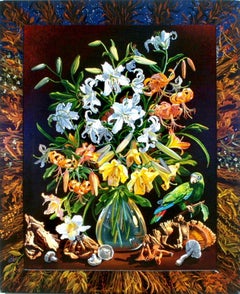
Lilies Mushrooms with my Parrot Kouka
By Ian Hornak
Located in Fairfield, CT
Artist: Ian Hornak (1944-2002) Title: Lilies & Mushrooms with my Parrot Kouka Year: 1985 Medium: Acrylic on Panel, with Artist Painted Frame Size: 65.50 x 52.50 inches Condition: Exc...
Category

1980s Photorealist Still-life Paintings

Materials

Acrylic

Eco Feminist Mixed Media Botanic Painting Mira Lehr Miami Abstract Expressionist
By Mira Lehr
Located in Surfside, FL
Mira Tager Lehr (American, 1936-2023), Acrylic on canvas painting Interrupted Cell Formation series Circa 2008-2009. Mixed media technique incorporating organic forms, floral motifs...
Category

Early 2000s Abstract Expressionist Abstract Paintings

Materials

Canvas, Mixed Media, Acrylic

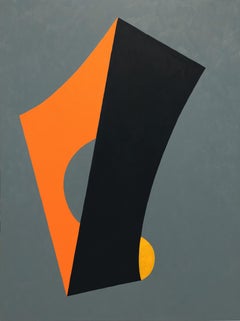
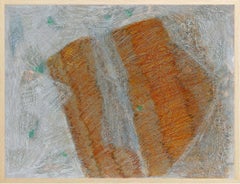
Mid-Century Painting Drawing Framed Colorful Texture New York Orange Grey Green
Located in Buffalo, NY
A wonderful minimalist mixed media work Circa 1970. Though the artist is unknown this work was acquired along with pieces by well know artists Karel Appel and Robert Motherwell from...
Category

1970s Minimalist Abstract Paintings

Materials

Coating, Oil Pastel, Acrylic

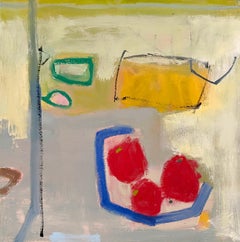
Simple Life
By Katherine Bello
Located in Kansas City, MO
Katherine Bello Title: Simple Life Oil and Oils stick on canvas Year: 2021 Dimensions: 20"x20"x1.5" Signed by hand Canvas on stretcher frame - ready...
Category

2010s Abstract Abstract Paintings

Materials

Oil, Canvas, Oil Pastel

Simple Life
Simple Life
$950 Sale Price
47% Off
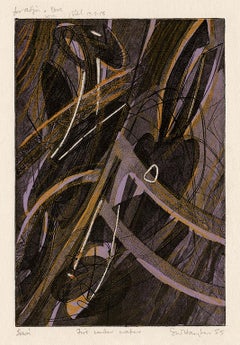
Feu sous L eau (Fire Under Water) —Mid-century Modernism, Atelier 17
By Stanley William Hayter
Located in Myrtle Beach, SC
Stanley William Hayter, 'Feu sous L'eau (Fire Under Water)', color engraving, soft-ground etching and scorper with yellow silkscreen, 1955, edition 50 plus 10 artist proofs, Black & Moorhead 221. Signed, titled 'Fire Under Water', dated and annotated 'Essai' in pencil. Dedicated in the artist’s hand 'for Adja & Dove WH Bill 17–5–55' in the top margin. A superb, richly inked impression with fresh colors, on heavy, cream wove paper; wide margins (2 1/2 to 3 7/8 inches), in excellent condition. One of 10 artist’s proofs. Image size 10 3/16 x 7 inches; sheet size 18 1/8 x 12 1/4 inches. Matted to museum standards, unframed. ABOUT THIS WORK In 1950 Hayter returned to Paris and reopened Atelier 17. Works such as 'Fire Under Water' reveal newfound influences, such as that of the Ardèche area of southern France, where he acquired a house in 1951 and frequently visited. Hayter took great interest in the flowing Escoutay River, an experience that parallels the artist and co-director of Atelier 17 Krishna Reddy’s interest in depicting water. While some forms in this print evoke the natural world, the palette of contrasting tones of purple, yellow, black, and white reflects Hayter’s belief in using color intuitively to express emotions and evoke feelings. The sharp white relief lines from the paper and the textural effects realized through soft-ground etching operate in tandem with the sweeping curves and bold colors to give the composition a sense of vitality and dynamism. —edited from the Metropolitan Museum of Art Published by 'La Jeune Gravure Contemporaine', Paris. Impressions of this work are in the following collections: British Museum, Metropolitan Museum of Art, National Gallery of Art. ABOUT THE ARTIST Stanley William Hayter (1901-1988) was a British painter and printmaker associated in the 1930s with Surrealism and from 1940 onward with Abstract Expressionism. Regarded as one of the most significant printmakers of the 20th century, Hayter founded the legendary Atelier 17 studio in Paris, now known as Atelier Contrepoint. Among the artists he is credited with influencing are Pablo Picasso, Alberto Giacometti, Joan Miró, Alexander Calder, and Marc Chagall. The hallmark of the workshop was its egalitarian structure, breaking sharply with the traditional French engraving studios by insisting on a cooperative approach to labor and technical discoveries. In 1929 Hayter was introduced to Surrealism by Yves Tanguy and André Masson, who, with other Surrealists, worked with Hayter at Atelier 17. The often violent imagery of Hayter’s Surrealist period was stimulated in part by his passionate response to the Spanish Civil War and the rise of Fascism. He organized portfolios of graphic works to raise funds for the Spanish cause, including Solidarité (Paris, 1938), a portfolio of seven prints, one of them by Picasso. Hayter frequently exhibited with the Surrealists during the 1930s but left the movement when Paul Eluard was expelled. Eluard’s poem Facile Proie (1939) was written in response to a set of Hayter’s engravings. Other writers with whom Hayter collaborated included Samuel Beckett and Georges Hugnet. Hayter joined the exile of the Parisian avant-garde in 1939, moving with his second wife, the American sculptor Helen Phillips...
Category

1950s Abstract Expressionist Abstract Prints

Materials

Engraving, Etching

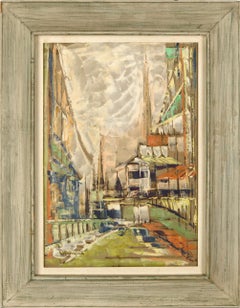
Abstract Village Scene Original Oil Painting
Located in Soquel, CA
Abstract decorative cityscape by Leonard "Parker Lee" Leibsohn (American, 1924 - 1995). Known for: Abstraction and realism, landscape, marine and still lif...
Category

1970s Abstract Landscape Paintings

Materials

Acrylic, Illustration Board

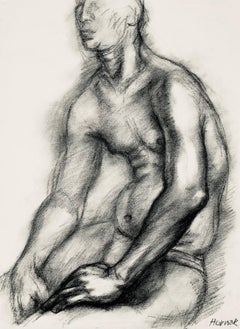
Renaissance Male Nude Figure Study, 1964, Ian Hornak — Drawing
By Ian Hornak
Located in Fairfield, CT
Artist: Ian Hornak (1944-2002) Title: Renaissance Male Nude Figure Study Year: circa 1964 Medium: Charcoal on vélin paper Size: 18 x 23 inches Condition: Good Provenance: Estate of I...
Category

1960s Renaissance Figurative Drawings and Watercolors

Materials

Charcoal

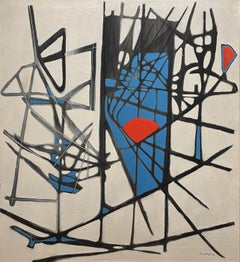
"Personal Equation" Jimmy Ernst, Abstract Surrealism, Black, Red, Blue, White
By Jimmy Ernst
Located in New York, NY
Jimmy Ernst Personal Equation, 1950 Signed and dated lower right Oil on canvas 41 x 39 1/2 inches Provenance: Laurel Gallery, New York Grace Borgenicht Gallery, New York Collection ...
Category

1940s Surrealist Abstract Paintings

Materials

Canvas, Oil

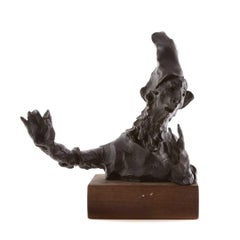
Large Bronze Sculpture "Virtuoso" Figure American Boston Figural Modernist
By David Aronson
Located in Surfside, FL
Aronson, David 1923- David Aronson, son of a rabbi, was born in Lithuania in 1923 and immigrated to America at the age of five. He settled in Boston, Massachusetts where he studied at the school of the Museum of Fine Arts under Karl Zerbe, a German painter well known in the early 1900s. Aronson later taught at the school of the Museum of Fine Arts for fourteen years and founded the School of Fine Art at Boston University where he is today a professor emeritus. An internationally renowned sculptor & painter, Aronson has won acclaim for his interpretation of themes from the Hebrew Talmud and Kabala. His best known works include bronze castings, encaustic paintings, and pastels. His work is included in many important public and private collections, and has been shown in several museum retrospectives around the country. He is considered to be one of the most important 20th century American artists. At twenty-two David Aronson had his first one-man show at New York's Niveau Gallery. The next year, six of his Christological paintings were included in the Fourteen Americans exhibition at Manhattan's Museum of Modern Art where Aronson’s work was included alongside abstract expressionists Arshile Gorky, Robert Motherwell and Isamu Noguchi. In the 1950s, Aronson turned more toward his Jewish heritage for the inspiration for his art. Folklore as well as Kabalistic and other transcendental writings influenced his work greatly. The Golem (a legendary figure, brought to life by the Maharal of Prague out of clay to protect the Jewish community during times of persecution) and the Dybbuk (an evil spirit that lodges itself in the soul of a living person until exorcised) frequently appear in his work. In the sixties, Aronson turned to sculpture. His work during this period is best exemplified by a magnificent 8’ x 4’ bronze door which now stands at the entrance to Frank Lloyd Wright's Johnson Foundation Conference Center for the Arts in Racine, Wisconsin. In the seventies and eighties, Aronson continued his work in pastel drawings, paintings, and sculptures, often exploring religion and the frailties of man's nature. During this time, in addition to a traveling retrospective exhibition and many one-man shows in New York, Los Angeles, Chicago, and Boston at the Pucker-Safrai Gallery on Newbury Street, Aronson won many awards and became a member of the National Academy of Design in New York. Two years ago he retired from teaching to work full-time in his studio in Sudbury, Massachusetts. included in the catalog Contemporary Religious Imagery in American Art Catalog for an exhibition held at the Ringling Museum of Art, March 1-31, 1974. Artists represented: David Aronson, Leonard Baskin, Max Beckmann, Hyman Bloom, Fernando Botero, Paul Cadmus, Marvin Cherney, Arthur G. Dove, Philip Evergood, Adolph Gottlieb, Jonah Kinigstein, Rico Lebrun, Jack Levine, Louise Nevelson, Barnett Newman, Abraham Rattner, Ben Shahn, Mark Tobey, Max Weber, William Zorach and others. Selected Awards 1990, Certificate of Merit, National Academy of Design 1976, Purchase Prize, National Academy of Design 1976, Joseph Isidore Gold Medal, National Academy of Design 1976, Purchase Prize in Drawing, Albrecht Art Museum 1975, Isaac N. Maynard Prize for Painting, National Academy of Design 1973, Samuel F. B. Morse Gold Medal, National Academy of Design 1967, Purchase Prize, National Academy of Fine Arts 1967, Adolph and Clara Obrig Prize, National Academy of Design 1963, Gold Medal, Art Directors Club of Philadelphia 1961, 62, 63, Purchase Prize, National Institute of Arts and Letters 1960, John Siimon Guggenheim Fellowship 1958, Grant in Art, National Institute of Arts and Letters 1954, First Prize, Tupperware Annual Art Fund Award 1954, Grand Prize, Third Annual Boston Arts Festival 1953, Second Prize, Second Annual Boston Arts Festival 1952, Grand Prize, First Annual Boston Arts Festival 1946, Traveling Fellowship, School of the Museum of Fine Arts 1946, Purchase Prize, Virginia Museum of Fine Arts 1944, First Popular Prize, Institute of Contemporary Art 1944, First Judge's Prize, Institute of Contemporary Art Selected Public Collections Art Institute of Chicago Virginia Museum of Fine Arts Bryn Mawr College Brandeis University Tupperware Museum, Orlando, Florida DeCordova Museum Museum of Modern Art Print Collection, New York Atlanta University Atlanta Art...
Category

20th Century Expressionist Figurative Sculptures

Materials

Bronze

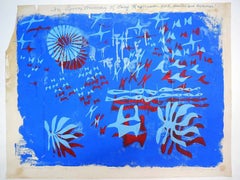
Flight of Sea-Birds: Twilight
Located in Surfside, FL
Silkscreen on paper. with some sort of experimental poured stuff on it. there is some loss to the margin but the image is strong. edition 2/6. During the 1930s, Lawrence Edward Kupfe...
Category

20th Century Modern Abstract Prints

Materials

Paper

The Meaning Of It All (Geometric Abstraction, Minimalism, Hard Edge, Albers)
By Susan Kiefer
Located in Kansas City, MO
Susan Kiefer The Meaning Of It All Oil on Canvas Year: 2022 Size: 24x30x1.35in Signed by hand COA provided Ref.: 924802-1052 Though born and raised in Kansas City, artist Susan Kie...
Category

2010s Abstract Paintings

Materials

Canvas, Paint, Oil

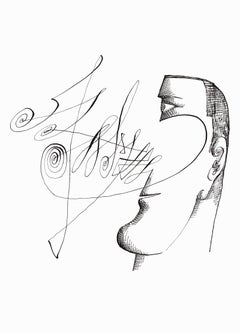
Saul Steinberg Lithograph c.1970
By Saul Steinberg
Located in NEW YORK, NY
Saul Steinberg Lithograph c.1970 from Derrière le Miroir: Lithograph in colors. 11 x 14 inches. Very good overall vintage condition. Unsig...
Category

1970s Pop Art Prints and Multiples

Materials

Lithograph

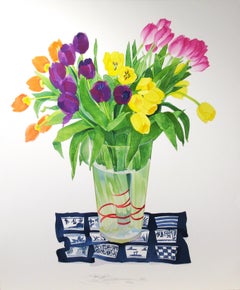
Tulips in a Vase
By Gary Bukovnik
Located in San Francisco, CA
This artwork "Tulips in a Vase" 1995 is an original color lithograph on Wove paper by noted American artist Gary Bukovnik, born 1947. It is hand signed, dated and numbered 169/200 in...
Category

Mid-20th Century American Realist Still-life Prints

Materials

Lithograph

Grace Notes (Geometric Abstraction, Minimalism, Josef Albers, Hard Edge)
By Susan Kiefer
Located in Kansas City, MO
Artist : Susan Kiefer Title : "Grace Notes" Materials : oil on canvas Date : May 2020 Dimensions : 30" x 40" x 1.5" Description : Hard-edged geometric abstract with four overlapping...
Category

2010s Abstract Geometric Paintings

Materials

Canvas, Paint, Oil

Max Ernst Dada Surrealist Hand Signed Lithograph Poster for a Jewish Museum
By Max Ernst
Located in Surfside, FL
Max Ernst (German, American, 1891-1976) Color lithograph Titled, "Poster For The Jewish Museum" 1966 Hand signed lower right Hand numbered HC I/XVII Dimensions: 34.75 x 28.5 sight 25 X 19.25 Max Ernst (German 1891 – 1976) was a German-born painter, sculptor, printmaker, graphic artist, and poet. A prolific artist, Ernst was a primary pioneer of the Dada movement and surrealism in Europe. He had no formal artistic training, but his experimental attitude toward the making of art resulted in his invention of frottage—a technique that uses pencil rubbings of textured objects and relief surfaces to create images—and grattage, an analogous technique in which paint is scraped across canvas to reveal the imprints of the objects placed beneath. Max Ernst showed for the first time in 1912 at the Galerie Feldman in Cologne. At the Sonderbund exhibition of that year in Cologne he saw the work of Paul Cezanne, Edvard Munch, Pablo Picasso, Paul Gauguin and Vincent van Gogh. In 1913 he met Guillaume Apollinaire and Robert Delaunay and traveled to Paris. Ernst participated that same year in the Erste deutsche Herbstsalon. In 1914 he met Jean Arp in Cologne who was to become a lifelong friend. In 1921 Ernst exhibited at the Galerie au Sans Pareil in Paris. He was involved in Surrealist activities in the early 1920s with Paul Eluard and André Breton. His work was exhibited that year together with that of the Das Junge Rheinland group, at Galerie Feldman in Cologne, and then in several group exhibitions in 1913. In his paintings of this period, Ernst adopted an ironic style that juxtaposed grotesque elements alongside Cubist and Expressionist motifs. Ernst fought in world war I. Several German Expressionist painters died in action during the war, among them August Macke and Franz Marc. In 1918, Ernst was demobilised and returned to Cologne. He soon married art history student Luise Straus, of Jewish ancestry, whom he had met in 1914. In 1919, he visited Paul Klee in Munich and studied paintings by Giorgio de Chirico. In the same year, inspired by de Chirico and mail-order catalogues, teaching-aide manuals and similar sources, he produced his first collage works (notably Fiat modes, a portfolio of lithographs), a technique which later dominated his artistic pursuits. Also in 1919, Ernst, social activist Johannes Theodor Baargeld and several colleagues founded the Cologne Dada group. In 1919–20, Ernst and Baargeld published various short-lived magazines such as Der Strom, die Schammade and organised Dada exhibitions. Ernst and Luise's son Ulrich Jimmy Ernst was born on 24 June 1920; he later would also become a painter. In 1921, he met Paul Éluard, who became a lifelong friend. Éluard bought two of Ernst's paintings (Celebes and Oedipus Rex) and selected six collages to illustrate his poetry collection Répétitions. A year later the two collaborated on Les malheurs des immortels and then with André Breton, whom Ernst met in 1921, on the magazine Littérature. Ernst developed a fascination with birds which was prevalent in his work. His alter ego in paintings, which he called Loplop, was a bird. He suggested that this alter-ego was an extension of himself stemming from an early confusion of birds and humans. In 1927, he married Marie-Berthe Aurenche and it is thought his relationship with her may have inspired the erotic subject matter of The Kiss and other works of that year. He collaborated with Joan Miro on designs for Sergei Diaghilev Ballet that same year. The following year the artist collaborated with Salvador Dali and the Surrealist Luis Bunuel on the film L'Age d'or. His first American show was held at the Julien Levy Gallery, New York, in 1932. In 1936 Ernst was represented in Fantastic Art, Dada, Surrealism at the Museum of Modern Art in New York. Ernst began to sculpt in 1934 and spent time with Alberto Giacometti. In 1938, the American heiress and artistic patron Peggy Guggenheim acquired a number of Max Ernst's works, which she displayed in her new gallery in London. Ernst and Guggenheim were married from 1942 to 1946. In September 1939, the outbreak of World War II caused Ernst, being German, to be interned as an "undesirable foreigner" in Camp des Milles, near Aix-en-Provence, along with fellow surrealist, Hans Bellmer, who had recently emigrated to Paris. He had been living with his lover and fellow surrealist painter, Leonora Carrington who, not knowing whether he would return, saw no option but to sell their house to repay their debts and leave for Spain. Thanks to the intercession of Paul Éluard and other friends, including the journalist Varian Fry, he was released a few weeks later. Soon after the German occupation of France, he was arrested again, this time by the Gestapo, but managed to escape to America with the help of Fry and Peggy Guggenheim, a member of a wealthy American art collecting family. Ernst and Peggy Guggenheim arrived in the United States in 1941 and were married at the end of the year. Along with other artists and friends (Marcel Duchamp and Marc Chagall) who had fled from the war and lived in New York City, Ernst helped inspire the development of abstract expressionism. His marriage to Guggenheim did not last. In October 1946 he married American surrealist painter Dorothea Tanning in a double ceremony with Man Ray and Juliet P. Browner in Beverly Hills, California. The couple made their home in Sedona, Arizona from 1946 to 1953. He and Tanning hosted intellectuals and European artists such as Henri Cartier-Bresson and Yves Tanguy. Sedona proved an inspiration for the artists and for Ernst, who compiled his book Beyond Painting and completed his sculptural masterpiece Capricorn while living in Sedona. As a result of the book and its publicity, Ernst began to achieve financial success. From the 1950s he lived mainly in France. In 1954 he was awarded the Grand Prize for painting at the Venice Biennale. In 2005, "Max Ernst: A Retrospective" opened at the Metropolitan Museum of Art. Contemporary artist tapestries have had their true believers. He produced a tapestry for Gloria Ross...
Category

1960s Surrealist Abstract Prints

Materials

Lithograph

Apotheosis (Geometric Abstraction, Minimalism, Josef Albers, Hard Edge)
By Susan Kiefer
Located in Kansas City, MO
Susan Kiefer Apotheosis Oil on Canvas Year: 2022 Size: 48x36x1.35in Signed by hand COA provided Ref.: 924802-1050 Though born and raised in Kansas City,...
Category

2010s Abstract Paintings

Materials

Canvas, Paint, Oil

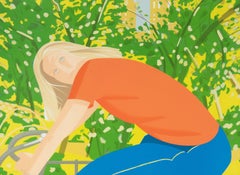
Bicycling in Central Park, Pop Art Lithograph by Alex Katz
By Alex Katz
Located in Long Island City, NY
Bicycling in Central Park by Alex Katz, American (1927) Portfolio: New York, New York Date: 1982 Lithograph on Arches wove paper, signed and numbered in pencil Edition of XVI/XXXV Si...
Category

1980s Pop Art Figurative Prints

Materials

Lithograph

WILD HORSES-1, Original Signed Contemporary Abstract Expressionist Painting
Located in Boston, MA
WILD HORSES-1, Original Contemporary Abstract Expressionist Painting, 2021 30" x 40" x 2" (HxWxD) Oil and Newspaper on Canvas Hand-signed by the artist. This large-format oil painti...
Category

21st Century and Contemporary Abstract Expressionist Abstract Paintings

Materials

Canvas, Oil, Newsprint

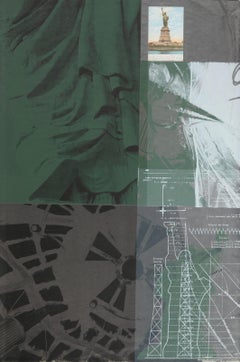
Statue of Liberty, Conceptual Art Screenprint by Robert Rauschenberg
By Robert Rauschenberg
Located in Long Island City, NY
This print by Robert Rauschenberg is part of an 8-piece portfolio published by The New York Graphic Society in 1983 and includes works from Red Grooms, Robert Indiana, Alex Katz, R.B...
Category

1980s Conceptual Abstract Prints

Materials

Screen

21
By Katherine Bello
Located in Kansas City, MO
Katherine Bello Title: 21 Oil on canvas Year: 2021 Dimensions: 40"x30"x1.5" Signed by hand Canvas on stretcher frame - ready to hang COA provided ---------------------------------- Katherine Bello's aim as an artist is to capture a sense of place, a moment of time, or a feeling - to evoke a sense of wonder. Bello loves paint and paint brushes; bold, gestural mark-making and the interplay of color. She is influenced by light and landscape, poetry, history and science. Formerly educated in Chemical Engineering and Interior Design, Bello is drawn to the process of creating Something out of Nothing. Abstract, abstract art, contemporary art, Contemporary Fine Art, Fine Art, Painting, acrylic, Jackson Pollack, Mark Rothko, Kandinsky, Franz Kline, Lee Krasner, Helen Frankenthaler, Robert Motherwell, Mark Rothko, Amy...
Category

2010s Contemporary Abstract Paintings

Materials

Canvas, Oil

21
21
$2,150 Sale Price
48% Off
Earthly Pleasures (Geometric Abstraction, Minimalism, Josef Albers, Calming)
By Susan Kiefer
Located in Kansas City, MO
Susan Kiefer Earthly Pleasures Oil on canvas Year: 2023 Size: 30x24x1.35in Signed and inscribed by hand COA provided Ref.: 924802-1674 A lush composition of rounded geometric shapes...
Category

2010s Abstract Geometric Paintings

Materials

Oil, Canvas, Stretcher Bars

Renaissance Male Nude Figure Study, 1963, Ian Hornak — Drawing
By Ian Hornak
Located in Fairfield, CT
Artist: Ian Hornak (1944-2002) Title: Renaissance Male Nude Figure Study Year: circa 1963 Medium: Original drawing on vélin paper Size: 23 x 18 inches Condition: Good Provenance: Est...
Category

1960s Renaissance Figurative Drawings and Watercolors

Materials

Charcoal

"Abduction of the Emperor, " 1970s Modern Abstract Painting
By Stanley Bate
Located in Westport, CT
"Abduction of the Emperor" by Stanley Bate is an abstract oil painting made in 1971. This piece is primarily a textured sandy gold color with geometric shapes that add pops of light ...
Category

1970s Modern Abstract Paintings

Materials

Canvas, Oil

The Queen s Regalia (Geometric Abstraction, Minimalism, Josef Albers, Calming)
By Susan Kiefer
Located in Kansas City, MO
Susan Kiefer The Queen's Regalia Oil on canvas Year: 2023 Size: 24x24x1.35in Signed and inscribed by hand COA provided Ref.: 924802-1685 A ovoid shape with a circular opening is div...
Category

2010s Abstract Geometric Paintings

Materials

Canvas, Oil, Stretcher Bars

Cy Twombly - Allusions Bay of Naples, ex-collection of Donald Baechler Signed/N
By Cy Twombly
Located in New York, NY
Cy Twombly Allusions, Bay of Naples (from the collection of Donald Baechler), 1975 Color offset lithograph and photo lithograph on wove paper Signed and numbered 56/80 in ink on the ...
Category

1970s Conceptual Figurative Prints

Materials

Lithograph, Offset

Snowflake Crime XIX, ACE Gallery Collection, unique signed acrylic painting
By Robert Rauschenberg
Located in New York, NY
Historic, institutional quality unique Rauschenberg signed work on paper, with storied provenance: a real gem: Robert Rauschenberg 'Snowflake Crime XIX', from the ACE Gallery Collec...
Category

1980s Pop Art Abstract Drawings and Watercolors

Materials

Fabric, Mixed Media, Acrylic, Handmade Paper, Permanent Marker

Valentine
By Katherine Bello
Located in Kansas City, MO
Artist : Katherine Bello Title : Valentine Materials : Acrylic and paper on board Date : 1/2020 Dimensions : 18"x18"x.75" Signed and Dated by Hand COA Provided Katherine Bello's aim as an artist is to capture a sense of place, a moment of time, or a feeling - to evoke a sense of wonder. Bello loves paint and paint brushes; bold, gestural mark-making and the interplay of color. She is influenced by light and landscape, poetry, history and science. Formerly educated in Chemical Engineering and Interior Design, Bello is drawn to the process of creating Something out of Nothing. Abstract, sbstract art...
Category

2010s Abstract Expressionist Mixed Media

Materials

Canvas, Paint, Paper, Mixed Media, Acrylic, Board

Valentine
$598 Sale Price
40% Off
Guli Wall rare 1970s lithograph by famed Scottish Pop artist Alan Davie Signed/N
By Alan Davie
Located in New York, NY
Alan Davie Guli Wall, 1971 Lithograph on Rives BFK Paper with Deckled Edges Hand signed, numbered 26/200 and dated on the lower front 20 × 25 1/2 inches Unframed This whimsical mid-century modern hand signed, dated and numbered print by renowned Scottish-born British Pop artist Alan Davie published in 1971 was chosen to be included in the 1975 portfolio for the Swiss Society for Fine Arts (Grafikmappe des Schweizerischen Kunstvereins) as part of an international portfolio of 27 prints by world renowned artists including Jasper Johns, Christo, Valerio Adami, Shusaku Arakawa, Robert Cottingham, Richard Paul Lohse, Gerhard Richter, Dieter Roth, Pierre Tal Coat and many others.. Hand signed and numbered from the edition of 200. Unframed and in fine condition. This vintage European print...
Category

1970s Abstract Abstract Prints

Materials

Lithograph