524 results for "rationalist"
to
57
454
54
375
260
149
127
75
64
56
52
37
35
32
27
19
9
42
33
22
17
16
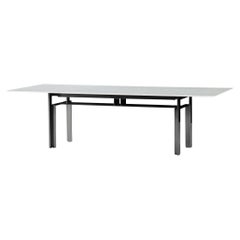
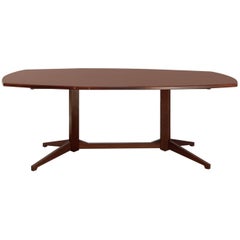
Doge Large Dining Table by Carlo Scarpa for Cassina
By Cassina, Carlo Scarpa
Located in Barcelona, Barcelona
Doge Large Dining Table designed by Carlo Scarpa.
Manufactured by Cassina (Italy)
ULTRARATIONAL EMBLEM
A sculptural structure that has become an emblem of Italian design, a trademar...
Category
2010s Italian Mid-Century Modern Desks and Writing Tables
Materials
Aluminum

$24,620 / item
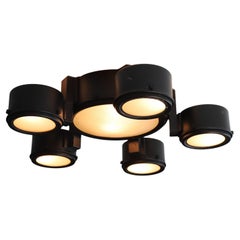
Rare ‘2045’ ceiling light by Studio B.B.P.R. for Arteluce, 1962
By Studio BBPR, Arteluce
Located in Sittard, LI
Rare '2045' ceiling light, designed by Studio B.B.P.R. for Arteluce, Italy, 1962. This highly collectible piece remains in its original condition, beautifully preserved, with wear an...
Category
Vintage 1960s Italian Mid-Century Modern Flush Mount
Materials
Metal, Aluminum, Brass
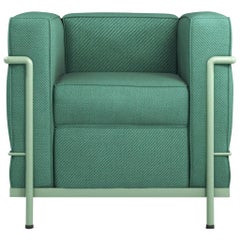
Le Corbusier, Jeanneret, Charlotte Perriand LC2 Poltrona Armchair by Cassina
By Le Corbusier, Pierre Jeanneret, Charlotte Perriand Cassina, Cassina
Located in Barcelona, Barcelona
Armchair designed by Le Corbusier, Pierre Jeanneret, Charlotte Perriand in 1928.
Manufactured by Cassina in Italy.
Timeless, unique, and profoundly authentic, the LC2 armchair has p...
Category
2010s Italian Mid-Century Modern Armchairs
Materials
Steel
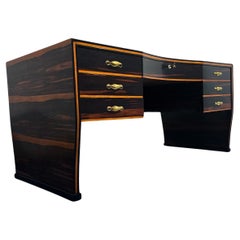
Italian Art Deco Table Desk , Ebony Makassar attributed to Osvaldo Borsani, 1940
By Osvaldo Borsani
Located in Traversetolo, IT
Stylish Art Deco Desk from the 1940s attributed to Osvaldo Borsani, refined design in the back part with a beautiful arched shape, a solution that is repeated in the front part in t...
Category
Vintage 1940s Italian Art Deco Desks
Materials
Brass
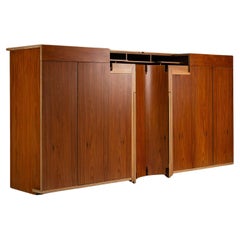
Franco Poli ‘Scaligera’ Sideboard for Bernini, Italy 1980s
By Bernini, Franco Poli
Located in Hellouw, NL
A remarkable interplay of architectural form and masterful joinery lies at the heart of this ‘Scaligera’ sideboard by Franco Poli for Bernini, crafted in Italy during the 1980s.
Des...
Category
Vintage 1980s Italian Post-Modern Sideboards
Materials
Birch, Walnut
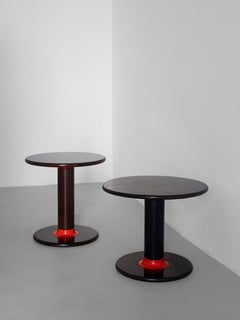
Ettore Sottsass Set of two Rocchettone Round Side Table by Poltronova 1960s
By Poltronova, Ettore Sottsass
Located in Cascina, Pisa
Rocchettone side table realized in lacquered walnut wood with bright orange decorations (under the table top and on the base), it was designed by Ettore Sottsass and manufactured by ...
Category
Vintage 1960s Italian Post-Modern Tables
Materials
Plastic, Wood, Walnut
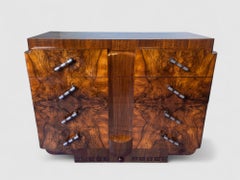
Italian Art Deco
Sideboard or Chest of Drawers in Walnut, Italy 1930s
Located in Traversetolo, IT
Italian Art Deco' Sideboard or Chest of Drawers in walnut wood with wonderful grain, design with a square shape of clear rationalist inspiration typical of the era, the stepped top i...
Category
Vintage 1930s Italian Art Deco Sideboards
Materials
Steel
Customizable Tacchini Gian Coffee Table by Studiopepe
By Studiopepe
Located in New York, NY
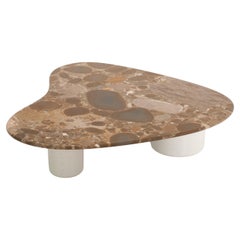
Designed by Studiopepe and inspired by the rationalist architecture of Lina Bo Bardi — particularly the famous openings with a red background for the SESC Pompeia in São Paulo — Gian...
Category
2010s Italian Tables
Materials
Concrete, Marble
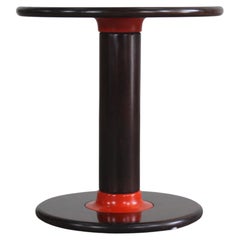
Ettore Sottsass Rocchettone Round Side Table in Walnut Wood by Poltronova 1960s
By Ettore Sottsass, Poltronova
Located in Cascina, Pisa
Rocchettone side table realized in lacquered walnut wood with bright orange decorations (under the table top and on the base), it was designed by Ettore Sottsass and manufactured by ...
Category
Vintage 1960s Italian Post-Modern Tables
Materials
Plastic, Wood, Walnut
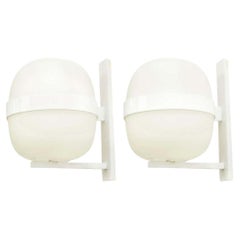
Pair of Miguel Mila Wally Aplique Lamp, circa 1962
By Miguel Milà, Tramo
Located in Barcelona, Barcelona
Wally aplique lamp designed by Miguel Mila.
Manufactured by Tramo (Spain), circa 1962.
Metal structure and plastic shade.
In good original condition, with minor wear consistent with age and use, preserving a beautiful patina.
Miguel Milá represents like no other person Spanish contemporary design. He belongs to the Pioneer's generation of the 1950s and has seen how many of his pieces of furniture and lamps have become real classics.
Miguel Milá was born in a Catalan aristocratic family with strong links with the artistic world (his ancestors assigned the Milá House, also known as La Pedrera, to Gaudí) and started working as an interior designer in the architecture studio of his brother Alfonso Milá and Federico Correa. It was the end of the 1950s, a time of crisis when Spain hardly knew what Industrial Design was. There was practically no industry, everything was generally handmade. This framework marked the way Miguel Milá understood design, being sensitive to the pleasure of touching and closer to traditional techniques.
Despite the shortage of objects, means and raw materials of the time, Miguel Milá started designing lamps and furniture, that he soon manufactured in his own company, Tramo. Miguel Milá set up this company with two friends, architects F. Ribas Barangé and E. Pérez Ullibari. This is how Miguel Milá got involved with Industrial Design.
Out of Tramo, apocopation of Trabajos molestos (annoying works, that is, all the things little brothers have to do), many projects came out. For instance, he developed the previous versions of the famous TMC and TMM lamps (1958 and 1961), timeless Classic designs that are still selling nowadays. Sometime after, he set up his own Industrial and interior design studio.
Miguel Milá participated with the designers and architects of that period in the first meetings in Barcelona to discuss on modernity in architecture, out of which came the question of how to promote design and implant its professional practice. These meetings culminated in the foundation of the ADI-FAD, together with Antoni de Moragas, André Ricard, Bohigas, Cirici Pellicer, Manel Cases and Rafael Marquina. From its beginnings, this association sought to foster Spanish design abroad, and to make a connection between young Spanish professionals and international design.
"I am in reality a pre-Industrial designer- has Milá stated. I feel more comfortable with the technical procedures that allow correcting failures, experimenting during the process, and controlling it to the maximum. That is where my preference for noble materials comes from, the preference for materials that know how to age." This is the case, among others, of the wooden Cesta lamps...
Category
Vintage 1960s Spanish Mid-Century Modern Wall Lights and Sconces
Materials
Metal
$1,623 Sale Price / set
28% Off
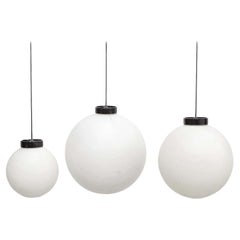
Set of Three White Pending Lamps by Miguel Mila for Tramo in Plastic, circa 1970
By Miguel Milà
Located in Barcelona, Barcelona
A set of three pending lamps of different sizes designed by Miguel Milá, circa 1970.
Manufactured by Tramo (Spain).
In good original condition, with minor wear consistent with age and use.
Miguel Milá represents like no other person Spanish contemporary design. He belongs to the Pioneer's generation of the 1950s and has seen how many of his pieces of furniture and lamps have become real classics.
Miguel Milá was born in a Catalan aristocratic family with strong links with the artistic world (his ancestors assigned the Milá House, also known as La Pedrera, to Gaudí) and started working as an interior designer in the architecture studio of his brother Alfonso Milá and Federico Correa. It was the end of the 1950s, a time of crisis when Spain hardly knew what Industrial Design was. There was practically no industry, everything was generally handmade. This framework marked the way Miguel Milá understood design, being sensitive to the pleasure of touching and closer to traditional techniques.
Despite the shortage of objects, means and raw materials of the time, Miguel Milá started designing lamps and furniture, that he soon manufactured in his own company, Tramo. Miguel Milá set up this company with two friends, architects F. Ribas Barangé and E. Pérez Ullibari. This is how Miguel Milá got involved with Industrial Design.
Out of Tramo, apocopation of Trabajos molestos (annoying works, that is, all the things little brothers have to do), many projects came out. For instance, he developed the previous versions of the famous TMC and TMM lamps (1958 and 1961), timeless Classic designs that are still selling nowadays. Sometime after, he set up his own Industrial and interior design studio.
Miguel Milá participated with the designers and architects of that period in the first meetings in Barcelona to discuss on modernity in architecture, out of which came the question of how to promote design and implant its professional practice. These meetings culminated in the foundation of the ADI-FAD, together with Antoni de Moragas, André Ricard, Bohigas, Cirici Pellicer, Manel Cases and Rafael Marquina. From its beginnings, this association sought to foster Spanish design abroad, and to make a connection between young Spanish professionals and international design.
"I am in reality a pre-Industrial designer- has Milá stated-. I feel more comfortable with the technical procedures that allow correcting failures, experimenting during the process, and controlling it to the maximum. That is where my preference for noble materials comes from, the preference for materials that know how to age." This is the case, among others, of the wooden Cesta lamps...
Category
Vintage 1970s Spanish Mid-Century Modern Chandeliers and Pendants
Materials
Plastic, Acrylic
$3,266 Sale Price / set
20% Off
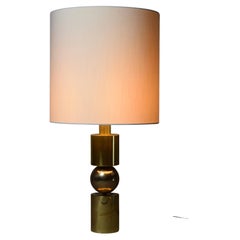
Italian Late 1960s Brass Table Lamp with Ivory Colored Shade
By Luciano Frigerio
Located in Weesp, NL
Stylish and elegant copper and brass table lamp made in Italy in the late 1960s early 1970s. The base of the lamp with in the center the sphere with it's irregular copper and brass surface, is in very good condition. We had a new custom shade made which measures D. 14.960 x H. 14.960 inches. The diameter of the base is 3.937 inches.
This beauty will be shipped insured in a custom made wooden crate. Cost of transport to the US is crate included.
Italy has produced some of the greatest furniture designers in the world, such as Achille Castiglioni, Gio Ponti, and Ettore Sottsass. Italian interior design in the 1900s was particularly well-known and grew to the heights of class and sophistication. At first, in the early 1900s, Italian furniture designers struggled to create an equal balance between classical elegance and modern creativity, and initially Italian interior design in the 1910s and 1920s was very similar to that of French Art Deco styles, using exotic materials and creating sumptuous furniture. However, Italian Art Deco reached its pinnacle under Gio Ponti, who made his designs sophisticated, elegant, stylish and refined, but also modern, exotic and creative. In 1926, a new style of furnishing emerged in Italy, known as "Razionalismo", or "Rationalism". The most successful and famous of the Rationalists were the Gruppo 7...
Category
Vintage 1960s Italian Mid-Century Modern Table Lamps
Materials
Brass
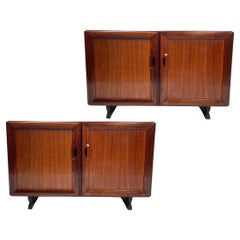
Franco Albini, Pair of Mid-Century "MB15" sideboards for Poggi, Italy 1957
By Poggi, Franco Albini
Located in Argelato, BO
Franco Albini, MB15 pair of sideboards for Poggi, Italy, 1957
The two MB15 sideboards by Franco Albini shown in the images feature a refined and understated design, typical of the I...
Category
Vintage 1950s Italian Mid-Century Modern Sideboards
Materials
Wood
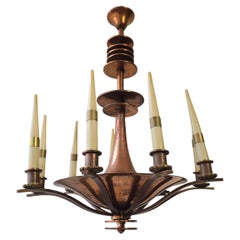
Spectacular Italian Art Deco Copper Chandelier with Eight Opaline Glass Candles
By Gio Ponti
Located in Antwerp, BE
A rare Italian Art Deco chandelier in sculptural copper and brass, echoing the refined modernist spirit of the Gio Ponti era.
The design is distinctly architectural, featuring a tot...
Category
20th Century Italian Art Deco Chandeliers and Pendants
Materials
Copper
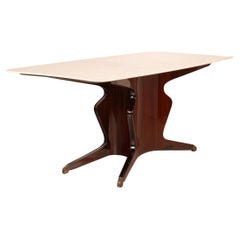
Osvaldo Borsani Marble Dining Table for Arredamenti Borsani Varedo, 1950s
By Osvaldo Borsani, Atelier Borsani Varedo
Located in Conversano, IT
A rare and important dining table designed by Osvaldo Borsani for Arredamenti Borsani Varedo in the 1950s, this piece is an authentic testament to the outstanding level achieved by I...
Category
Vintage 1950s Italian Mid-Century Modern Tables
Materials
Marble
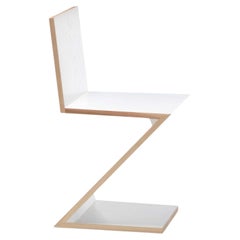
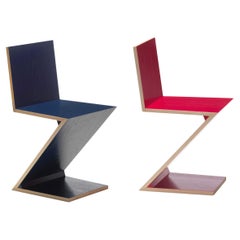
Gerrit Thomas Rietveld Zig Zag Chair For Cassina
Located in Barcelona, Barcelona
Gerrit Thomas Rietveld Zig Zag Chair For Cassina
Designed by Gerrit Thomas Rietveld in 1934 and quickly deemed a design icon, th...
Category
2010s Italian Mid-Century Modern Chairs
Materials
Wood
$4,179 / item
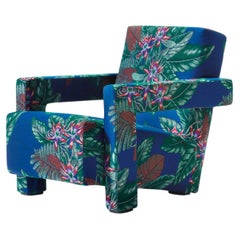
Gerrit Thomas Rietveld Utrecht XL Outdoor Armchair
Located in Barcelona, Barcelona
Gerrit Thomas Rietveld Utrecht Xl Outdoor Sofa For Cassina
A furniture icon, designed by a 20th century master.
The Utrecht armchair b...
Category
2010s Italian Mid-Century Modern Armchairs
Materials
Fabric
$9,956 / item
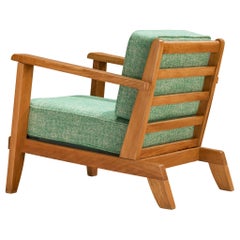
René Gabriel Lounge Chair in Green Linen Pierre Frey Fabric and Wood
By Rene Gabriel
Located in Waalwijk, NL
Attributed to Rene Gabriel, lounge chair, stained beech, linen fabric "Arsene" by Pierre Frey, France, circa 1945
This armchair is attributed to the French artist René Gabriel, kno...
Category
Vintage 1940s French Mid-Century Modern Lounge Chairs
Materials
Fabric, Beech
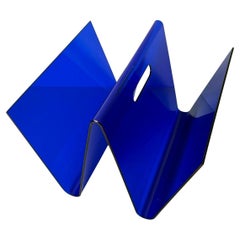
Space Age Style Italian Blue Plexiglass Magazine Rack
Located in Prato, Tuscany
We kindly ask you to read the description carefully, as it provides technical and historical details to ensure the authenticity of our items.
This elegant magazine rack, with geometr...
Category
Late 20th Century Italian Space Age Magazine Racks and Stands
Materials
Plexiglass
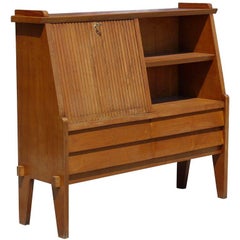
Slant Front Desk with Bookshelf attributed to Paolo Buffa
By Paolo Buffa
Located in Kilmarnock, VA
A sophisticated and sharply composed architectural slant front desk attributed to celebrated Milanese designer Paolo Buffa. Constructed from richly grained oak, the piece features a ...
Category
Vintage 1950s Italian Desks
Materials
Brass
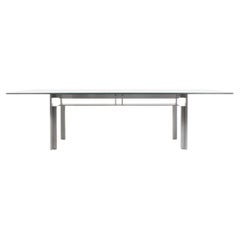
Doge Large Dining Table by Carlo Scarpa for Cassina
By Carlo Scarpa, Cassina
Located in Barcelona, Barcelona
Doge Large Dining Table designed by Carlo Scarpa.
Manufactured by Cassina (Italy)
ULTRARATIONAL EMBLEM
A sculptural structure that has become an emblem of Italian design, a trademar...
Category
2010s Italian Mid-Century Modern Desks and Writing Tables
Materials
Aluminum
$18,615 / item
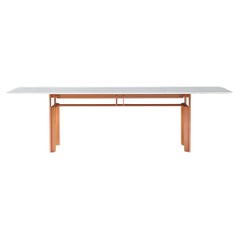
Doge Large Dining Table by Carlo Scarpa for Cassina
By Carlo Scarpa, Cassina
Located in Barcelona, Barcelona
Doge Large Dining Table designed by Carlo Scarpa.
Manufactured by Cassina (Italy)
ULTRARATIONAL EMBLEM
A sculptural structure that has become an emblem of Italian design, a trademar...
Category
2010s Italian Mid-Century Modern Desks and Writing Tables
Materials
Aluminum
$24,620 / item
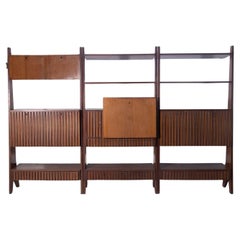
Set of three Italian bookcases by BBPR with brass and glass details
By Studio BBPR
Located in Milano, IT
Rare Modular Italian Bookcase Set by BBPR - 1940s Design with Brass and Glass Details
An exceptional and elegant set of three modular bookcases designed by the renowned Italian archi...
Category
Vintage 1940s Italian Mid-Century Modern Bookcases
Materials
Brass
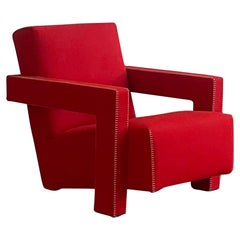
Gerrit Thomas Rietveld "Utrecht" Armchair for Cassina, 1935
By Gerrit Rietveld, Cassina
Located in Lonigo, Veneto
Gerrit Thomas Rietveld "Utrecht" armchairs for Cassina, wool and steel, Netherlands, 1935.
The designer came up with the idea of the “Utrecht” armchair in 1935 while working for t...
Category
Vintage 1980s Dutch Mid-Century Modern Armchairs
Materials
Wool
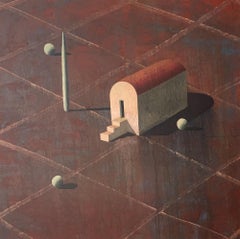
BIOT by Ramon Enrich - Geometric landscape painting, red tones, architecture
By Ramon Enrich
Located in Paris, FR
BIOT is a unique acrylic on canvas painting by contemporary artist Ramon Enrich, dimensions are 90 × 90 cm (35.4 × 35.4 in).
The artwork is signed, sold unframed and comes with a c...
Category
2010s Contemporary Landscape Paintings
Materials
Canvas, Acrylic
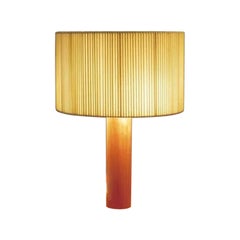
Moragas Table Lamp by Antoni de Moragas i Gallissà for Santa
Cole
By Santa
Cole
Located in Los Angeles, CA
A balance of strength and volatility. At the age of forty-four, Antoni de Moragas Gallissà designed the Moragas lamp for his own office. Rationalist archi...
Category
21st Century and Contemporary Spanish Mid-Century Modern Table Lamps
Materials
Cotton, Silk, Wood, Ribbon
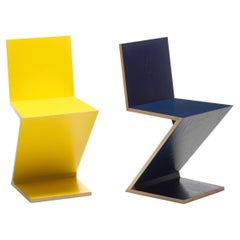
Gerrit Thomas Rietveld Set of Two Zig Zag Chair For Cassina
Located in Barcelona, Barcelona
Gerrit Thomas Rietveld Set of Two Zig Zag Chair For Cassina
Designed by Gerrit Thomas Rietveld in 1934 and quickly deemed a design icon, the Zig Zag chair is one of the first exam...
Category
2010s Italian Mid-Century Modern Chairs
Materials
Wood
Gerrit Thomas Rietveld Set of Two Zig Zag Chair For Cassina
Located in Barcelona, Barcelona
Gerrit Thomas Rietveld Set of Two Zig Zag Chair For Cassina
Designed by Gerrit Thomas Rietveld in 1934 and quickly deemed a design icon, the Zig Zag chair is one of the first exam...
Category
2010s Italian Mid-Century Modern Chairs
Materials
Wood
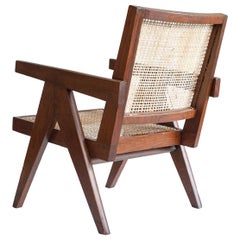
Pierre Jeanneret PJ-SI-29-A Easy Cane Chair / Authentic Mid-Century Modern
By Pierre Jeanneret
Located in Zürich, CH
Here we see a decision to project the universal ideals of modernity onto Indian reality. However, this piece was inspired by North Indian culture as well the cosmic and spiritual In...
Category
Vintage 1950s Indian Mid-Century Modern Armchairs
Materials
Cane, Teak
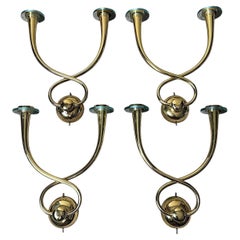
Gio’ Ponti - Emilio Gancia Style Set Of 4 Brass Appliques With Crystal Bobeches
By Emilio Lancia, Gio Ponti
Located in Prato, Tuscany
We kindly invite you to read the full description, as we provide detailed technical and historical information to ensure the authenticity of our items.
This refined and elegant set c...
Category
Mid-20th Century Italian Modern Wall Lights and Sconces
Materials
Crystal, Brass
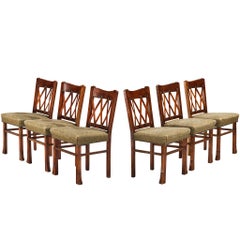
Ernesto Valabrega for Vittorio Valabrega Set of Six Dining Chairs in Oak
By Vittorio Valabrega
Located in Waalwijk, NL
Ernesto Valabrega for Vittorio Valabrega, set of six dining chairs, oak, beech, fabric, Italy, 1930s
Designed by Ernesto Valabrega for Vittorio Valabrega in the 1930s, this set of d...
Category
Vintage 1930s Italian Art Deco Dining Room Chairs
Materials
Brass
Italy Art Deco Dining Room Set, table, chairs
sideboards, by Osvaldo Borsani
By Osvaldo Borsani
Located in Vigonza, Padua
They can be sold separately
1930s amazing dining room in burl walnut flame applied with particular edge to 45 degrees, the furniture industry "Guido Pennati", design attributed to Os...
Category
Vintage 1920s Italian Art Deco Dining Room Sets
Materials
Velvet, Mirror, Walnut, Burl

Franco Albini Mahogany mid-centry Italian Table Model TL-22 produced by Poggi
By Franco Albini
Located in Barcelona, ES
Franco Albini & Franca Helg.
Dining table model no. TL22.
Manufactured by Poggi,
Italy, 1958.
Mahogany.
Measurements:
180.3 cm x 104.1 cm x 73 H cm.
70.98 in x 40.98 in x 28.74 in.
Literature:
Giuliana Gramigna, Repertorio 1950/1980, Milan, 1985, p. 123.
Franco Albini, was born in 1905 and died in 1977. He spent his childhood and part of his youth in Robbiate in Brianza, where he was born. Albini, as an adolescent moved with his family to Milan. Here he enrolled in the Faculty of Architecture of the Polytechnic and graduated in 1929. He started his professional activity in the studio of Gio Ponti and Emilio Lancia, with whom he collaborated for three years. At the 1929 International Exhibition in Barcelona (where Gio Ponti curated the Italian pavilion and Mies van der Rohe realized that of Germany) and in Paris where, as Franca Helg recounted, he had the opportunity to visit the studio by Le Corbusier.
In those three years, the works he carried out are admittedly of the twentieth century imprint. It is the meeting with Edoardo Persico that marked a clear turning point towards rationalism and the approach to the group of editors of "Casabella". The partly ironic and partly very harsh comments of the Neapolitan critic to a series of drawings, made by Albini for the design of some office furniture, caused him a great disturbance. “I spent days of real anguish - Albini recalls - I had to answer all the questions. I also had a fever, a large and long fever. "
The meted provoked Albini to openen a professional studio in via Panizza with Renato Camus and Giancarlo Palanti. The group of architects began to deal with public housing by participating in the competition for the Baracca district in San Siro in 1932 and then building the IFACP neighborhoods: Fabio Filzi (1936/38), Gabriele D'Annunzio and Ettore Ponti (1939).
During this period, Albini also worked on his first villa (Pestarini), which Giuseppe Pagano, architect and critic of the time, presented as follows: “This coherence, which the superficial rhetoric of fashionable jugglers calls intransigence, and which is instead the basis of understood between the fantasy of art and the reality of the craft, in Franco Albini, it is so rooted that it transforms theory into a moral attitude ".
But it is above all in the context of the exhibitions that the Milanese master experienced his compromise between that "rigor and poetic fantasy" of which Pagano speaks, coining the elements that became a recurring theme in his . The opening in 1933 of the new Triennale headquarters in Milan, in the Palazzo dell'Arte, was an important opportunity to express the strong innovative character of rationalist thinking, a gym in which to freely experiment with new materials and new solutions, but above all a "method". "Cultivated as a communication laboratory, the art of setting up was for the rationalists of the first generation what the perspective had been for the architects of humanism: the field open to a hypothesis of space that needed profound reflections before landing the concreteness of the construction site ".
Together with Giancarlo Palanti, Albini on the occasion of the V Triennale di Milano set up the steel structure house (with R. Camus, G. Mazzoleni, G. Minoletti and with the coordination of G. Pagano), for which he also designed the 'furniture. At the following Triennale of 1936, Persico dided, together with a group of young designers gathered by Pagano in the previous edition of 1933, Franco Albini took care of the preparations of the home exhibition. The setting up of Stanza per un uomo, at that same Triennale, allows us to understand the acute and ironic approach of Albini, as a man and as a designer: "Celebrating the beauty of mechanics was the imperative to which, for example, the surprising displays by Franco Albini who managed, in the subtle way of a refined and rarefied style, to sublimate their practical content in the metaphysics of daring still lifes: flying objects which marked in the void refined frames and metal intricacies the nodes of a fantastic cartography where industry finally became art free from purpose ".
That same year Albini and Romano designed the exhibition of the Ancient Italian Goldsmithery: vertical uprights, simple linear rods, designed the space. A theme, of the "flagpole", seemed to be the center of the evolution of production and the creative process. The concept is reworked over time, with the technique of decomposition and recomposition typical of Albinian design: in the preparation of the Scipione Exhibition and contemporary drawings (1941) the tapered flagpoles, on which the paintings and display cases were hung, are supported by a grid of steel cables; in the Vanzetti stand (1942) they take the V-shape; in the Olivetti shop in Paris (1956) the polished mahogany uprights support the shelves for the display of typewriters and calculators.
The flagpole is found, however, also in other areas. In the apartments he designed, it is used as a pivot on which the paintings can be suspended and rotated to allow different points of view, but at the same time as an element capable of dividing the spaces. The Veliero bookcase...
Category
Mid-20th Century Italian Mid-Century Modern Dining Room Tables
Materials
Mahogany
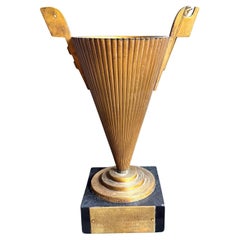
1936 Best Picture Award to Selznick for "Viva Villa", Italian Stile Littorio
Located in Philadelphia, PA
An important symbol of the international success of Hollywood in the 1930s, and a superb example of the Stile Littorio or Italian Rationalist design that prevailed during the rule of...
Category
Vintage 1930s Italian Art Deco Abstract Sculptures
Materials
Brass
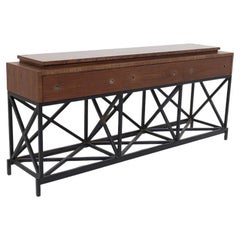
BBPR in the style Italian Wood and Crystal Console
By Studio BBPR
Located in Milano, IT
Wonderful and very rare sideboard designed The sideboard is an irresistible rationalist design 1970s Published a very similar example.
The sideboard is an irresistible rationalist design, with a base that represents its strong point. The base is made of black painted metal, very elegant and suited to the industrial style that this sideboard follows. The base covers the entire depth of the piece and is made within a rectangular frame that is quite hard and rigid in shape. Within this frame we see three large cube-shaped blocks within which the metal planks have been placed, some diagonally, some straight, some higher. They create a simply enchanting, eye-catching effect. This geometric play is the focal point of this wonderful sideboard.
This structure is supported by four rigid, geometric square feet.
Above we see the central body of the sideboard made entirely of a dark precious solid wood; there are 3 drawers running the full length of the sideboard, each with two spherical brass inlays allowing them to open.
Above this is a smaller top, highlighted by a structure to raise it up, as long as the entire sideboard, made of a beautiful ground crystal that gives it an out-of-the-ordinary beauty.
The sideboard is suitable for industrial chic, modern and vintage areas. It is a product that can be very adaptable to the type of environment already present.
A similar example of this sideboard is published among the vintage design books.
Category
Vintage 1970s Italian Mid-Century Modern Buffets
Materials
Crystal, Metal
$21,137 Sale Price
20% Off
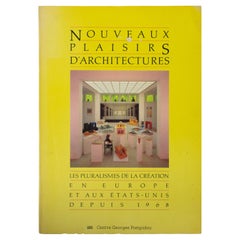
New Architectural Pleasures, French Book by George Pompidou Art Center, 1985
By Centre Georges Pompidou
Located in Atlanta, GA
Nouveaux Plaisirs d'Architectures (New Architectural Pleasures), French book published by The National Center of Art and Culture Georges Pompidou in Paris, 1985.
Les pluralismes de l...
Category
Vintage 1980s French Modern Books
Materials
Paper
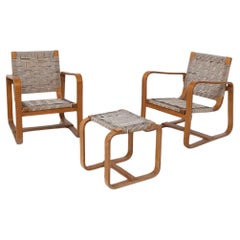
Set of chairs and ottoman by Giuseppe Pagano
By Giuseppe Pagano Pogatschnig
Located in Milano, IT
This stunning set of armchairs and footstool, designed by Giuseppe Pagano in the 1940s, perfectly embodies the aesthetics of Italian Rationalism. Each fluid, natural curve of the ben...
Category
Vintage 1940s Italian Bauhaus Lounge Chairs
Materials
Straw, Wood
$9,007 / set
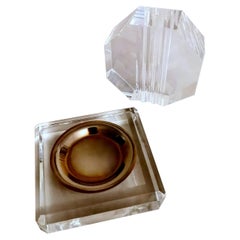
Vintage Italian Desk or Coffee Table Set in Plexiglass and Brass
Located in Prato, Tuscany
We kindly suggest you read the whole description, because with it we try to give you detailed technical and historical information to guarantee the authenticity of our objects.
Rational and linear desk...
Category
Late 20th Century Italian Mid-Century Modern Desk Sets
Materials
Brass
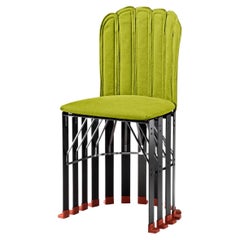
La Pagnottina Green Versatile Chair in Carbon Fiber by Gaetano Pesce
By Gaetano Pesce
Located in Brooklyn, NY
The Pagnottina chair is light and versatile, available in many different coverings. Like the Pagnotta armchair from the same series, La Pagnottina is made up of fourteen carbon-fibre...
Category
21st Century and Contemporary Italian Chairs
Materials
Cotton
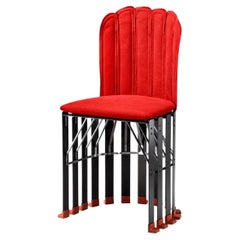
La Pagnottina Red Versatile Chair in Carbon Fiber by Gaetano Pesce
By Gaetano Pesce
Located in Brooklyn, NY
The Pagnottina chair is light and versatile, available in many different coverings. Like the Pagnotta armchair from the same series, La Pagnottina is made up of fourteen carbon-fibre...
Category
21st Century and Contemporary Italian Chairs
Materials
Cotton
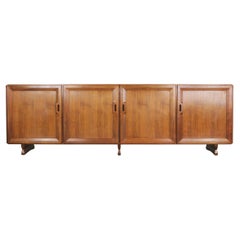
Franco Albini MB15 Large Sideboard with Four-Doors Panels in Wood by Poggi 1950s
By Poggi, Franco Albini
Located in Cascina, Pisa
MB15 large sideboard with four-door panels in wood, designed by Franco Albini in 1956 and produced by Poggi, Pavia.
The MB15 sideboard showcases a clean and solid design characteriz...
Category
Vintage 1950s Italian Mid-Century Modern Sideboards
Materials
Wood
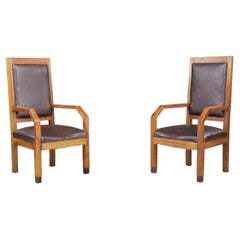
Pair of Giovanni Michelucci Patinated Oak and Leather Armchairs, Italy, 1930s
By Giovanni Michelucci
Located in Almelo, NL
Pair of Giovanni Michelucci Patinated Oak and Leather Armchairs, Italy, 1930s
This refined pair of armchairs, attributed to Giovanni Michelucci, captures the architectural clarity ...
Category
Vintage 1930s Italian Art Deco Armchairs
Materials
Leather, Oak
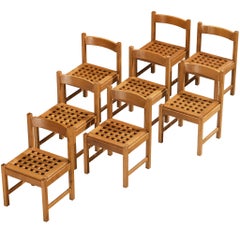
Italian Set of Eight Italian Dining Chairs with Grid-Framed Seats in Ash
Located in Waalwijk, NL
Set of eight dining chairs, ash, Italy, 1970s
This set of dining chairs, crafted in solid ash during 1970s Italy, is a clear expression of a particular moment in post-war European d...
Category
Vintage 1970s Italian Mid-Century Modern Dining Room Chairs
Materials
Ash
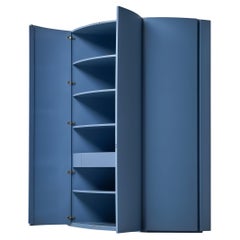
Ambrogio Tresoldi e Alberto Salvati Wardrobe Cabinet in Purple Blue Wood
By Salvati e Tresoldi
Located in Waalwijk, NL
Ambrogio Tresoldi and Alberto Salvati, cabinet / wardrobe, lacquered wood, Italy, 1970s
Ambrogio Tresoldi and Alberto Salvati began their careers at the Politecnico di Milano under ...
Category
Vintage 1970s Italian Post-Modern Wardrobes and Armoires
Materials
Wood
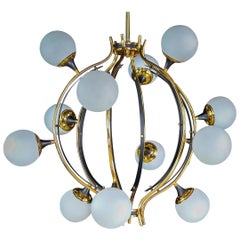
Midcentury Stilnovo Chandelier in Brass and 12 Opaline Globes, Italy 1950s
By Stilnovo
Located in Almelo, NL
Mid-Century Stilnovo Chandelier in Brass and 12 opaline globes, Italy 1950s
This midcentury Italian brass chandelier by Stilnovo features 12 handblown opaline glass globes of exce...
Category
Mid-20th Century Italian Mid-Century Modern Chandeliers and Pendants
Materials
Metal, Brass
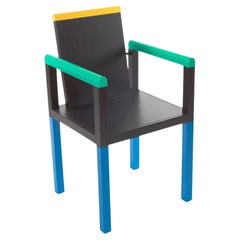
Memphis Milano Palace Chair by George J. Sowden
By George Sowden, Memphis Milano
Located in Toronto, ON
The solemnity and essentiality of Palace by George J. Sowden make this chair a true icon of the silent transformation of Memphis. Palace reinterprets the rationalist forms of design ...
Category
2010s Italian Post-Modern Chairs
Materials
Wood, Lacquer
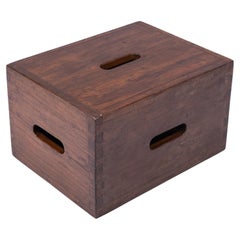
Le Corbusier LC 14 Box Stool / Authentic Mid-Century Modern Chandigarh
By Le Corbusier
Located in Zürich, CH
Here we see a decision to project the universal ideals of modernity onto Indian reality. However, this piece was inspired by North Indian culture, as well the cosmic and spiritual I...
Category
Vintage 1950s Indian Mid-Century Modern Chairs
Materials
Teak
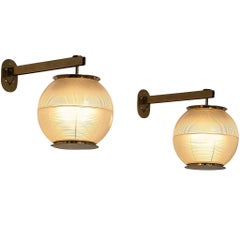
Ignazio Gardella for Azucena
Doppio Vetro
Wall Lights in Glass and Brass
By Azucena, Ignazio Gardella
Located in Waalwijk, NL
Ignazio Gardella for Azucena, 'Doppio Vetro' wall lights, model 'LP7', brass, glass, Italy, 1955
The Doppio Vetro wall light, designed by Ignazio Gardella, stands as a defining pie...
Category
Vintage 1950s Italian Mid-Century Modern Wall Lights and Sconces
Materials
Brass
Osvaldo Borsani Art Deco Dining Table for Arredamenti Borsani Varedo, 1935
By Osvaldo Borsani
Located in Lonigo, Veneto
Osvaldo Borsani Art Deco dining table for Arredamenti Borsani Varedo, walnut, Italy, 1935
A study in sculptural elegance and architectural precision.
Designed by Osvaldo Borsani in...
Category
Vintage 1930s Italian Mid-Century Modern Dining Room Tables
Materials
Wood
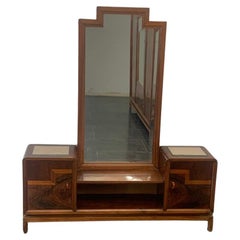
Vintage Italian Toilet, 1930
Located in Montelabbate, PU
Toilet with mirror in rationalist style in walnut, walnut root and maple. Splendid rationalist-style handles in chrome metal and pastel orange bakelite. On the top there is a compart...
Category
Vintage 1930s Italian Art Deco Dressers
Materials
Mirror, Maple, Walnut, Burl
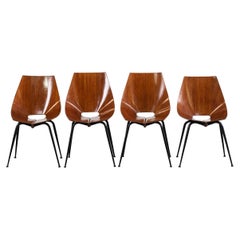
Carlo Ratti Set of Four Chairs in Plywood by Società Compensati Curvi 1950s
By Società Compensati Curvati, Carlo Ratti
Located in Cascina, Pisa
Set of four dining chairs with a frame in black lacquered metal and seat in curved plywood, attributed to Carlo Ratti and produced by Società Compensati Curvati in the 1950s.
In Italy, at the beginning of the XX century, industries of curved solid wood arose under license of Michael Thonet, and through the International Exhibitions the processing of curved wood became more and more widespread.
The Expo of the first decade was also attended by the wood manufacturers of Monza, while in 1905 Otto Helzer, in Switzerland, patented wooden structures in curved laminated, whose strength was equivalent to those in steel.
The Ratti brothers of Monza took their cue from the solid wood laminate to create furniture that, instead of wooden elements, used sheets of wood.
The brothers Ratti, Carlo and Mario, also began to follow the young artistic avant-gardes (cubism, futurism and abstractionism).
The mastery of wooden sculpture influenced Carlo in the design and realization of furniture of fine neo-plastic artistic workmanship and decò, receiving honors from the Prince of Piedmont Umberto di Savoia.
In 1919, in Milan, the first Lombard Exhibition of Decorative Arts was set up (later to become the Triennale) and the Ratti brothers exhibited their furniture in solid wood but also in curved panel with a new system of curvature, the one in Telo.
The canvas system was developed by the Ratti brothers with the help of a friend, Cesare Cantù.
They developed an elastomer bag in which the mould was inserted with the panel to be bent and, closing it with clamps, the air inside was removed, thus making the panel adhere to the mould.
Carlo and Mario found in the Telo system a means by which they could make objects and furniture in the three spatial directions with large surface curvatures, without limits of thickness and minimum radii of curvature.
In 1921 in Stuttgart the first Salone del Mobile was inaugurated and the Fratelli Ratti of Monza made itself known internationally by presenting solid wood furniture and also furniture in load-bearing plywood, flanked by furniture with framed and interchangeable covers.
The Expo became meeting places to verify and present the novelties in the furniture and industrialization sector and, with the development of Industrial Design, the first architects joined in the design of the furniture industries.
The Ratti Brothers, in the various international and national exhibitions, also presented incredible objects in their realization with the system in Telo.
After 1930 Carlo and Mario produced many containers for radio and folding chairs for cinema but in 1939 they divided and in Monza Mario remained who, with his sons Antonio and Angela, formed the Società Compensati Curvi...
Category
Vintage 1950s Italian Mid-Century Modern Dining Room Chairs
Materials
Metal
Le Corbusier, Wide Lounge Chairs
By Le Corbusier
Located in Napa, CA
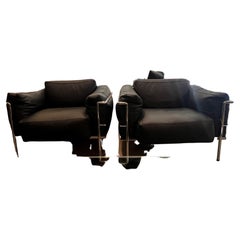
Le Corbusier wide lounge chairs - beautiful condition
Le Corbusier (born Charles-Edouard Jeanneret) was one of the most influential architects and urban planners of the twentieth c...
Category
Late 20th Century German Lounge Chairs
Materials
Steel, Chrome
$9,900 / set
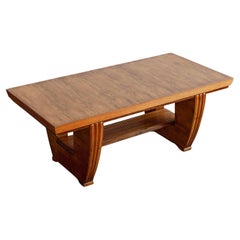
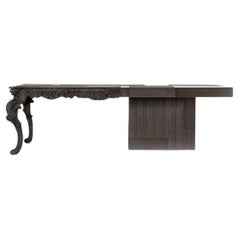
Evo Dining-table
By Emmemobili
Located in Munich, Bavaria
The EVO table by Emmemobili, designed by Ferruccio Laviani, is an iconic piece that masterfully blends tradition with modernity. With its powerful presence, it symbolizes the evoluti...
Category
21st Century and Contemporary Italian Modern Dining Room Tables
Materials
Oak
$42,987 / item
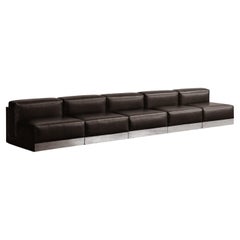
Menilio Taro "811" Modular Sofa for Cinova, Black Leather, 1970, Set of 5
Located in Lonigo, Veneto
Menilio Taro "811" minimalist modular sofa for Cinova, black leather and steel, Italy, 1970, set of five
Designed in 1970 by Menilio Taro for Cinova, the “811” modular sofa exemplif...
Category
Vintage 1970s Italian Post-Modern Sofas
Materials
Leather
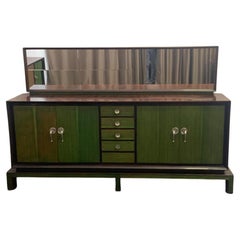
Sideboard with Wooden Mirror with Green Aniline Handles, 1930s
Located in Montelabbate, PU
The piece showcases a pronounced Rationalist taste and style, with a design attributed to Carlo Enrico Rava, crafted by the furniture makers "Meroni & Fossati."
Rosewood veneered bod...
Category
Vintage 1940s Italian Art Deco Sideboards
Materials
Metal
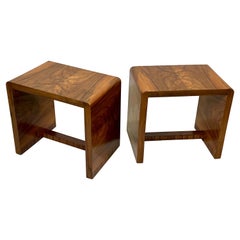
Pair European Mid-century Elm Wood Benches / End Tables, Style Jean-Michel Frank
By Jean-Michel Frank, Giuseppe Pagano Pogatschnig
Located in New York, NY
An Important and Rare Pair of French / Italian Midcentury Modern 'Rationalist' Benches / Stools or End / Side Tables in Elm Wood in the style of Jean Michel Frank and attributed to Giuseppe Pagano Pogatschnig. The pieces are multi-functional; and are pure and sober with unfettered lines and form. They are composed in a pure rectangular form of 2 support sides and a top united by a stretcher, and covered in a sensuous burled Elm wood. They are a confident expression of simple elegance and beauty. These pieces are significant in the emerging modern movement in France and Italy in 1930's. Rationalism was Italy's Midcentury Modernism...
Category
Mid-20th Century Italian Mid-Century Modern Benches
Materials
Elm
Franco Albini TL30 Round Table in Metal and Wood by Poggi 1950s
By Poggi, Franco Albini
Located in Cascina, Pisa
TL30 table with a round top in wood and a base in black lacquered metal, designed by Franco Albini and produced by Poggi in the 1950s.
After spending his childhood and part of his youth in Robbiate in Brianza, where he was born in 1905, Franco Albini moved with his family to Milan. Here he enrolled in the Faculty of Architecture of the Polytechnic and graduated in 1929. He starts his professional activity in the studio of Gio Ponti and Emilio Lancia, with whom he collaborates for three years. He probably had his first international contacts here
In those three years, the works carried out are admittedly of a twentieth-century imprint. It was the meeting with Edoardo Persico that marked a clear turning point towards rationalism and the rapprochement with the group of editors of “Casabella”.
The new phase that that meeting provoked starts with the opening of the first professional studio in via Panizza with Renato Camus and Giancarlo Palanti. The group of architects began to deal with public housing by participating in the competition for the Baracca neighborhood in San Siro in 1932 and then creating the Ifacp neighborhoods: Fabio Filzi (1936/38), Gabriele D’Annunzio and Ettore Ponti (1939).
Also in those years Albini worked on his first villa Pestarini.
But it is above all in the context of the exhibitions that the Milanese master experiments his compromise between that “rigor and poetic fantasy” coining the elements that will be a recurring theme in all the declinations of his work – architecture, interiors, design pieces . The opening in 1933 of the new headquarters of the Triennale in Milan, in the Palazzo dell’Arte, becomes an important opportunity to express the strong innovative character of rationalist thought, a gym in which to freely experiment with new materials and new solutions, but above all a “method”.
Together with Giancarlo Palanti, Albini on the occasion of the V Triennale di Milano sets up the steel structure house, for which he also designs the ‘furniture. At the subsequent Triennale of 1936, marked by the untimely death of Persico, together with a group of young designers gathered by Pagano in the previous edition of 1933, Franco Albini takes care of the preparation of the exhibition of the house, in which the furniture of three types of accommodation. The staging of Stanza per un uomo, at that same Triennale, allows us to understand the acute and ironic approach that is part of Albini, as a man and as a designer: the theme addressed is that of the existenzminimum and the reference of the project is to the fascist myth of the athletic and sporty man, but it is also a way to reflect on low-cost housing, the reduction of surfaces to a minimum and respect for the way of living.
In that same year Albini and Romano designed the Ancient Italian Goldsmith’s Exhibition: vertical uprights, simple linear rods, design the space. A theme, that of the “flagpole”, which seems to be the center of the evolution of his production and creative process. The concept is reworked over time, with the technique of decomposition and recomposition typical of Albinian planning: in the setting up of the Scipio Exhibition and of contemporary drawings (1941) the tapered flagpoles, on which the paintings and display cases are hung, are supported by a grid of steel cables; in the Vanzetti stand (1942) they take on the V shape; in the Olivetti store in Paris (1956) the uprights in polished mahogany support the shelves for displaying typewriters and calculators. The reflection on this theme arises from the desire to interpret the architectural space, to read it through the use of a grid, to introduce the third dimension, the vertical one, while maintaining a sense of lightness and transparency.
The flagpole is found, however, also in areas other than the exhibition ones. In the apartments he designed, it is used as a pivot on which the paintings can be suspended and rotated to allow different points of view, but at the same time as an element capable of dividing spaces. The Veliero bookcase...
Category
Vintage 1950s Italian Mid-Century Modern Tables
Materials
Metal
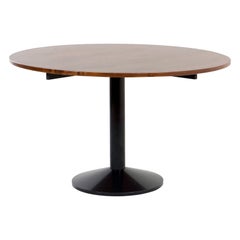
Ettore Sottsass Rectangular Wooden Coffee Table by Poltronova 1960s Italy
By Ettore Sottsass, Poltronova
Located in Cascina, Pisa
A rectangular low coffee table entirely made in wood, designed by Ettore Sottsass for Poltronova, Agliana 1960s.
The son of an architect, Ettore Sottsass Jr. (1917-2007) was born i...
Category
Vintage 1960s Italian Mid-Century Modern Coffee and Cocktail Tables
Materials
Wood
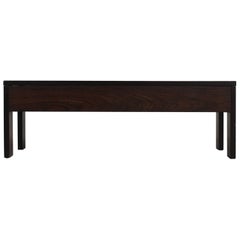
Multicolor “Iride” Floor Lamp by Ico Parisi for Lamperti Robbiate
By Ico Parisi
Located in Saint-Ouen, IDF
A rare and iconic “Iride” floor lamp designed by Ico Parisi for Lamperti Robbiate in the 1970s. One of Parisi’s most striking lighting creations, the...
Category
Vintage 1970s Italian Mid-Century Modern Floor Lamps
Materials
Metal
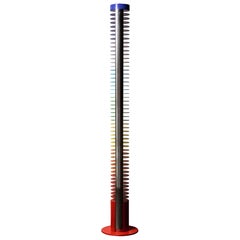
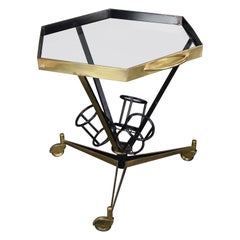
Italian 1960 Brass and Glass Bar Trolley
Located in Weesp, NL
Stylish, classy and elegant Italian Mid-Century Modern brass and glass bar trolley.
The trolley will be shipped overseas in a custom made wooden crate. Cost of transport to the US is crate included.
Italy is a world trendsetter, and has produced some of the greatest furniture designers in the world, such as Achille Castiglioni, Gio Ponti, and Ettore Sottsass. Italian interior design in the 1900s was particularly well-known and grew to the heights of class and sophistication. At first, in the early 1900s, Italian furniture designers struggled to create an equal balance between classical elegance and modern creativity, and at first, Italian interior design in the 1910s and 1920s was very similar to that of French Art Deco styles, using exotic materials and creating sumptuous furniture. However, Italian Art Deco reached its pinnacle under Gio Ponti, who made his designs sophisticated, elegant, stylish and refined, but also modern, exotic and creative. In 1926, a new style of furnishing emerged in Italy, known as "Razionalismo", or "Rationalism". The most successful and famous of the Rationalists were the Gruppo 7, led by Luigi Figini, Gino Pollini and Giuseppe Terragni. There styles used tubular steel and was known as being more plain and simple, and almost Fascist in style after c. 1934. After World War II, however, was the period in which Italy had a true avant-garde in interior design. With the fall of Fascism, birth of Republic and the 1946 RIMA exhibition, Italian talents in interior decorating were made evident, and with the Italian economic miracle, Italy saw a growth in Industrial Production and also mass-made furniture. Yet, the 1960s and 1970s saw Italian interior design reach its pinnacle of stylishness, and by that point, with Pop and post-modern interiors, the phrases "Bel Design" and "Linea Italiana" entered the vocabulary of furniture design. Ever since the late 1970s and early 1980s, some equipment began to be logoed by notable Italian fashion houses, such as Prada, Versace, Armani, Gucci and Moschino. Examples of Classic pieces of Italian furniture include Zanussi's rigorous, creative and streamlined washing machines and fridges, the "New Tone...
Category
Vintage 1960s Italian Mid-Century Modern Carts and Bar Carts
Materials
Brass