771 results for "italianate"
to
179
613
146
306
295
156
136
136
110
94
86
58
47
45
41
36
21
19
17
14
13
12
11
11
9
8
8
8
8
7
7
7
6
6
6
6
5
5
4
4
4
4
4
4
3
3
3
3
2
2
2
2
2
2
2
2
2
1
1
1
7
4
4
4
4
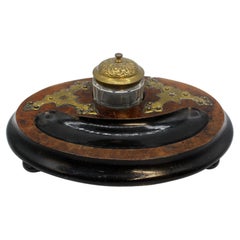
Gothic English Ink Stand, circa 1880
Located in Chapel Hill, NC
Circa 1880 brass & wood ink stand, English. Gothic Revival brass strapwork. Ebonized trim accents. Burl walnut. 10 1/2" W., 7 7/16" D., 3 5/16" H.
Whitehall Antiques is a family bus...
Category
Antique 1880s English Gothic Revival Inkwells
Materials
Brass

$300 Sale Price / set
33% Off
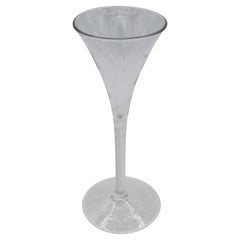
Georgian Trumpet Form Toasting Glass, circa 1750, England
Located in Chapel Hill, NC
Georgian trumpet form toasting glass, circa 1750, England. Supremely graceful - multiple-spiral air twist. Nice gray color. Small inclusions in bowl, ...
Category
Antique 1750s English Georgian Glass
Materials
Glass
$316 Sale Price
36% Off
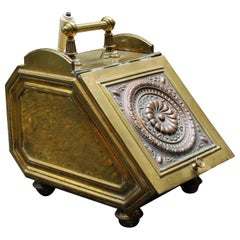
Classical Design English Brass and Copper Coal Hod
Located in Chapel Hill, NC
A fine quality brass and copper coal hod. Classical design, English, late 19th century. Original lift-out handled liner. Associated shovel. The repouss...
Category
Antique Late 19th Century English Fireplace Tools and Chimney Pots
Materials
Brass, Copper
$350 Sale Price
41% Off
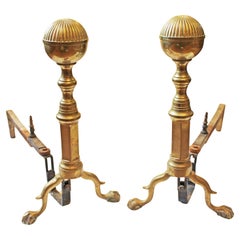
Late 19th Century Pair of Chippendale Style Brass
Iron Andirons
Located in Chapel Hill, NC
Late 19th century pair of Chippendale style brass & iron andirons. Hexagonal bodies below shaped turnings, surmounted by balls with reeded tops, over spurred legs with ball & claw fe...
Category
Antique Late 19th Century American Chippendale Andirons
Materials
Brass, Iron
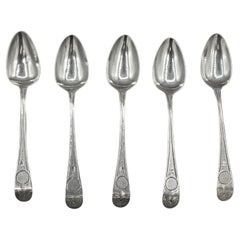
Set of 5 Sterling Silver Coffee Spoons by Peter
Ann Bateman
By Peter and Ann Bateman
Located in Chapel Hill, NC
Set of 5 sterling silver coffee spoons by Peter & Ann Bateman, London, 1796. Georgian neoclassical design. Peter was Hester's son & Ann was the widow of her other son Jonathan. Engra...
Category
Antique 1790s English Georgian Sterling Silver
Materials
Sterling Silver
$188 Sale Price / set
36% Off
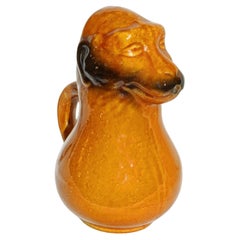
Circa 1900 Monkey Majolica Pitcher
Located in Chapel Hill, NC
A funky monkey majolica pitcher after a Sarregemines piece, c.1900. This is a Sarregemines color & glaze; possibly a later mass production.
8 1/4"h., 4 3/4"w., 6"d.
Whitehall Antiqu...
Category
Antique Early 1900s Pitchers
Materials
Majolica
$110 Sale Price
38% Off
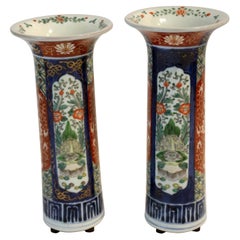
Circa 1860 Pair of Imari Vases
Located in Chapel Hill, NC
Circa 1860 pair of Imari vases, Japan. Beaker form; well decorated with trellises behind stylized burnt orange floral cartouches alternating with c...
Category
Antique 1860s Other Vases
Materials
Ceramic
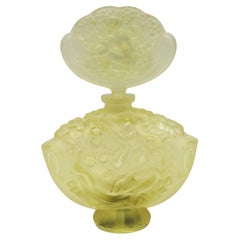
C. 1920s Czech Art Deco Lemon Yellow Frosted Glass Perfume Bottle
Stopper
Located in Chapel Hill, NC
Art Deco period lemon yellow frosted glass perfume bottle & stopper, Czech. Circa 1920s-30s. The bottle with recumbant female nudes & stopper with putti. Design of Rudolf Hlousek...
Category
Early 20th Century Czech Art Deco Glass
Materials
Glass
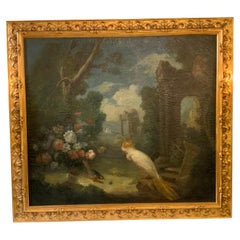
Oil on Canvas of a White Cockatoo with Flowers in Gilt Frame, 19th Century
Located in Houston, TX
Large and impressive painting of still life of flowers with a white cockatoo
In an Italianate landscape with ancient columns and ruins in the background...
Category
Antique Late 19th Century Italian Paintings
Materials
Paint
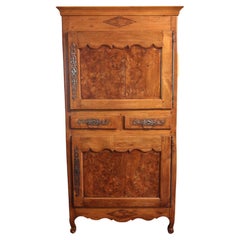
Early 19th Century Country French Homme Debout
Located in Chapel Hill, NC
Early 19th century Country French Homme Debout. Burl ash, ash & cherry wood. A rare form, the upper & lower doors well carved with fabulous burl wood panels, centered by the 2 drawer...
Category
Antique Early 19th Century French Country Cabinets
Materials
Steel
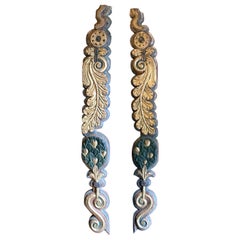
Italian Antique 18th Century Handcarved Polychrome Painted Pilaster Friezes
Located in Firenze, IT
This pair of Italian 18th century (early 1700) hugely decorative archictectural pilasters friezes is deeply hand carved with a wonderful compositions of fruits, flowers and leaves, the whole hand painted, lacquered and gilded. These pillars are an amazing examples of Sicilian folk art, they maybe were part of choral ensemble and now are antiques artworks...
Category
Antique 18th Century Italian Other Architectural Elements
Materials
Wood
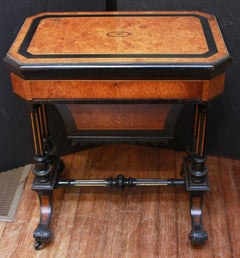
Circa 1860-80 English Renaissance Revival Games Table
Located in Chapel Hill, NC
Circa 1860-80 Renaissance Revival Games Table, English. Amboyna with ebony & boxwood inlays. Brass beaded edge. Sewing work basket drawer. Swivel to...
Category
Antique Late 19th Century English Renaissance Revival Game Tables
Materials
Brass
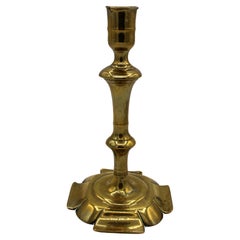
Pre-1740 English George II Period Brass Candlestick
Located in Chapel Hill, NC
Pre-1740 English George II period brass candlestick. Octagonal petal base; the sides forming large, flat petals with arched corner petals. 2-part casting. Split in the base at top.
7...
Category
Antique Early 18th Century English George II Candlesticks
Materials
Brass
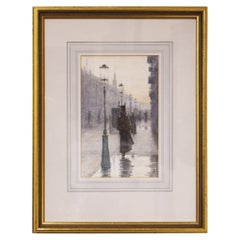
C. 1900 "London Street in the Mist" Watercolor by Edward Van Goethem
Located in Chapel Hill, NC
Circa 1900 Watercolor by E. van Goethem "London Street in the Mist". Edward van Goethem, British, 1857-1924. Signed lower left "E. van Goethem". Traces of period gallery label preser...
Category
Antique Early 1900s British Paintings
Materials
Paper
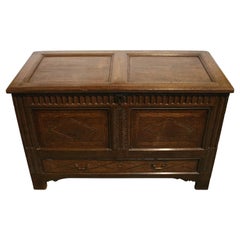
Early 18th Century Inlaid
Carved English Coffer
Located in Chapel Hill, NC
Early 18th century inlaid & carved coffer or lift top trunk, English. Coister carving across frieze beneath the well molded lift top and incorporated in elongated stop fluting form i...
Category
Antique Early 18th Century English Georgian Blanket Chests
Materials
Wood
$1,950 Sale Price
26% Off
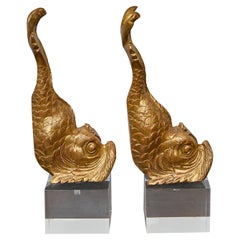
Pair of Italian Giltwood Dolphin Fragments on Lucite Bases
Located in Atlanta, GA
This striking pair 19th-century Italian carved wood fragments in the form of stylized dolphins, now mounted on custom Lucite bases. Originally part of a larger decorative scheme—like...
Category
Antique 19th Century Italian Baroque Table Lamps
Materials
Giltwood, Lucite, Gesso
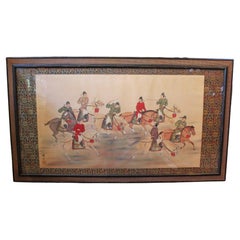
Circa 1970 Chinese Traditional Style Painting on Silk of Warriors on Horseback
Located in Chapel Hill, NC
Traditional Chinese style painting on silk of warriors on horseback, circa 1970. Signature & seal lower left. In the Chinese Tang style. Framed with woven silk border under plexiglas...
Category
Late 20th Century Chinese Tang Paintings
Materials
Brass
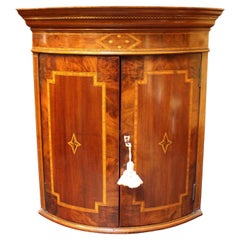
Late 19th Century English Bowfront Hanging Corner Cabinet
Located in Chapel Hill, NC
Late 19th century bowfront hanging corner cabinet, English. Sheraton revival. Mahogany & mahogany veneers with highly figured corner panels, satinwood & exotic wood inlays, line inla...
Category
Antique Late 19th Century British Sheraton Corner Cupboards
Materials
Wood
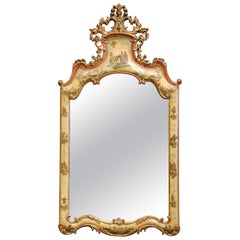
19th Century Italian Louis XV Style Gilt and Painted Rococo Wall Mirror
Located in Dallas, TX
Decorate an entryway, hallway, or powder room with this exquisite antique wall mirror, crafted in Italy circa 1880. Standing over five feet in height, this refined mirror exemplifies...
Category
Antique Late 19th Century Italian Rococo Wall Mirrors
Materials
Giltwood
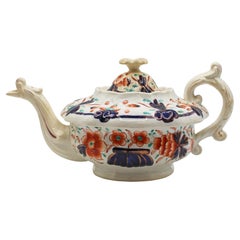
C. 1850 English Staffordshire District Gaudy Welsh "Grape" Pattern Tea Pot
By Staffordshire
Located in Chapel Hill, NC
Circa 1850 Gaudy Welsh "Grape" Pattern Teapot, English, Staffordshire District. Rococo revival form with original cover. Slight discoloration to lid floret knob & wear to the lustre ...
Category
Antique Mid-19th Century English Rococo Revival Pottery
Materials
Pottery
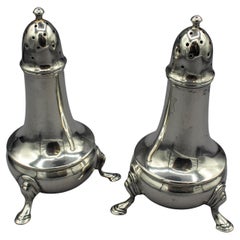
1804 Pair of English Sterling Silver Pepper Casters by Thomas Wallis II
By Thomas Wallis II
Located in Chapel Hill, NC
1804 pair of sterling silver pepper casters, London, England. George III period. Raised on stepped hoof feet. Made by Thomas Wallis II. Covers with sterling mark only. One with dent ...
Category
Antique Early 1800s English George III Sterling Silver
Materials
Sterling Silver
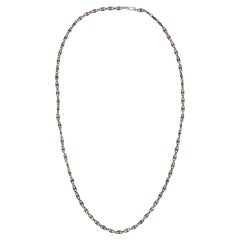
Circa 1970s Industrial Design Sterling Silver 31" Necklace
Located in Chapel Hill, NC
Circa 1970s industrial design sterling silver 31" necklace. Triple wrapped double loop links. marked 925. 48 grams, 1.55 troy oz.
We are a family business that has been a major sour...
Category
Vintage 1970s English Industrial Collectible Jewelry
Materials
Sterling Silver
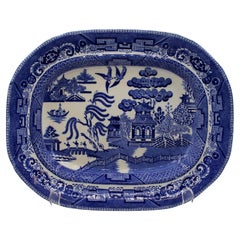
English c. 1900-1910 Wedgwood Blue Willow Pattern Platter
By Wedgewood
Located in Chapel Hill, NC
Circa 1900-1910 Wedgwood Blue Willow pattern platter, England. Deep blue color and precisely applied transfer. Blue backstamp: Wedgwood & Co, Ltd,...
Category
Early 20th Century English Aesthetic Movement Platters and Serveware
Materials
Ceramic
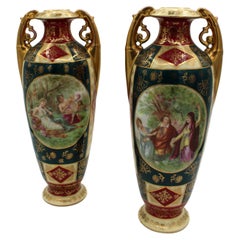
Late 19th Century Faux Royal Vienna Art Nouveau Vases
Located in Chapel Hill, NC
A pair of Art Nouveau vases, faux-Royal Vienna. decorated with romantic transfer print reserves. Made in Austria, c.1895-1910. 10 1/2" h., 4 1/2" over handles.
We have been a majo...
Category
Antique Late 19th Century Austrian Art Nouveau Vases
Materials
Ceramic
$175 Sale Price / set
40% Off
Circa 1870 Old Paris French Porcelain Cache Pot With Drip Pan Base
Located in Chapel Hill, NC
Circa 1870 Old Paris porcelain cache pot with drip pan base, French. Charming Napoleon III period piece decorated with Italianate landscape s...
Category
Antique 1870s French Napoleon III Planters, Cachepots and Jardinières
Materials
Porcelain

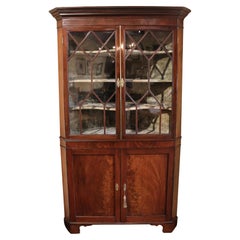
Circa 1780-1800 English George III Corner Cabinet
Located in Chapel Hill, NC
Circa 1780-1800 George III corner cabinet, English. Mahogany. A handsome example with reeded astragal diamond glazed upper doors
flat paneled lower doors. Well figured flame ma...
Category
Antique 1780s English George III Cabinets
Materials
Brass
Early 19th Century Georgian Side Table
Located in Chapel Hill, NC
Early 19th century Georgian side table, English. Wonderful warm mellowed oak & ash. Long single drawer over shaped apron; raised on square legs. Great figure in the top. Lacks lock &...
Category
Antique Early 19th Century English Georgian Side Tables
Materials
Ash, Oak

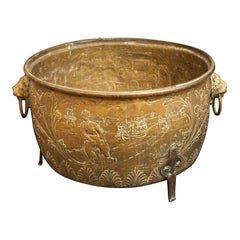
C. 1880 Dutch Repousse Brass Jardiniere
Located in Chapel Hill, NC
Circa 1880 large round repousse brass jardiniere, Dutch. Great lion mask & ring handles. Raised on copper trefoil topped flat tapered feet. Repousse design of a handsome work horse p...
Category
Antique Late 19th Century Dutch Aesthetic Movement Planters and Jardinieres
Materials
Brass
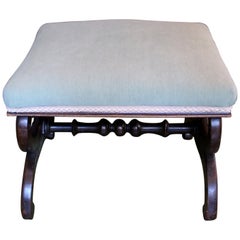
c. 1835 English William IV Ottoman or Bench
Located in Chapel Hill, NC
Circa 1835 curule form William IV ottoman or bench, English. Carved mahogany. A shield is carved at the center of the leg with whorls at the ends of each scrolled section. Well turne...
Category
Antique Mid-19th Century English William IV Ottomans and Poufs
Materials
Wood
$760 Sale Price
20% Off
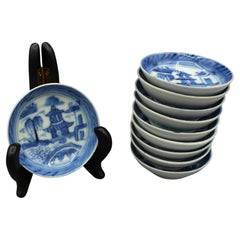
19th Century Assembled Set of 10 Porcelain Salt Dishes, Chinese Export
Located in Chapel Hill, NC
19th century assembled set of 10 porcelain salt dishes, Chinese export. Blue Canton, blue & white. Chips on a few.
2 3/4" avg. dia., 7/8" h.
Whitehall Antiques is a family business ...
Category
Antique 19th Century Chinese Chinese Export Ceramics
Materials
Ceramic, Porcelain
$192 Sale Price / set
36% Off
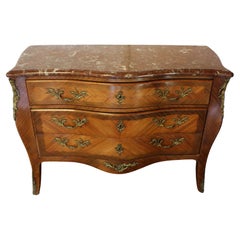
Circa 1880 French Marble Top 3-Drawer Commode
Located in Chapel Hill, NC
Circa 1880 French Marble Top 3-Drawer Commode. Handsome serpentine form with rouge de fer marble top, in the Rococo taste. Parquetry veneers of kingwood & mahogany. Bronze mounts & h...
Category
Antique 1880s French Rococo Commodes and Chests of Drawers
Materials
Marble, Bronze
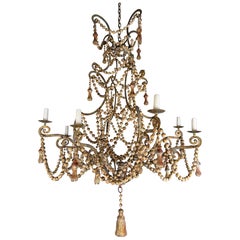
Monumental Italian Parcel-Gilt
Painted Wood-Bead Chandelier
Located in Los Angeles, CA
An exceptionally decorative and theatrical Italian chandelier, beautifully crafted with an abundance of hand-carved and hand-painted wooden beads in a warm, time-softened palette of ...
Category
20th Century Italian Baroque Revival Chandeliers and Pendants
Materials
Gold
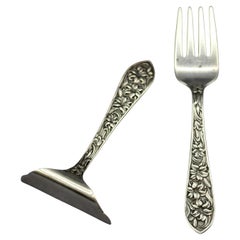
Art Nouveau Period Sterling Silver Baby Food Pusher
Fork by F.M. Whiting
By Frank Whiting
Located in Chapel Hill, NC
Art Nouveau period sterling silver baby food pusher
fork by F.M. Whiting. Easter Lily pattern. Rare, never engraved
charming. Marked: Frank M Whiting Sterling. 1 troy oz....
Category
Antique Late 19th Century American Art Nouveau Sterling Silver
Materials
Sterling Silver
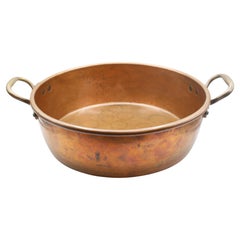
C. 1860s London Benham
Froud Copper Double-Handled Jelly Pan
By Benham
Froud
Located in Chapel Hill, NC
Circa 1860s Benham & Froud copper double-handled jelly pan, London, UK. 6-dot mark, obr & cross on bottom. Spun with centering dot also still clear. Size 16 on a handle. Chandos St. ...
Category
Antique Mid-19th Century British Victorian Historical Memorabilia
Materials
Copper
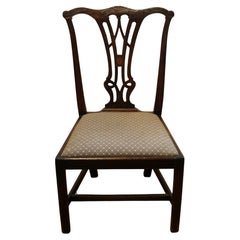
Circa 1780 English George III Carved
Inlaid Side Chair
Located in Chapel Hill, NC
Circa 1780 George III carved & inlaid side chair, English. Slip seat. Raised on square legs with stretchers. The back is superbly carved based on Chippendale Director designs. Centra...
Category
Antique 1780s English Chippendale Side Chairs
Materials
Wood, Boxwood, Satinwood
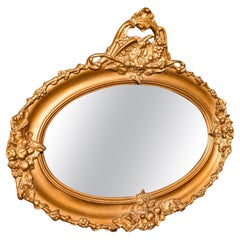
Large Oval Antique Overmantle Mirror, English Gilt Gesso, Lounge, Georgian, 1800
Located in Hele, Devon, GB
This is a large oval antique overmantle mirror. An English, gilt gesso lounge or hall mirror, dating to the Georgian period and later, circa 1800.
...
Category
Antique Early 19th Century British Georgian Mantel Mirrors and Fireplace...
Materials
Mirror
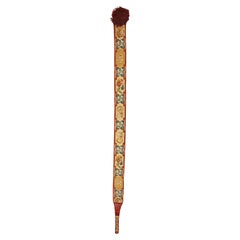
Mid-Late 19th Century English Needlepoint Bell Pull
Located in Chapel Hill, NC
Mid-late 19th century English needlepoint bell pull. A very rare & splendid example with gilt bronze lion mask mounts; maroon backing. Floral, fl...
Category
Antique Mid-19th Century English Victorian Historical Memorabilia
Materials
Thread, Yarn
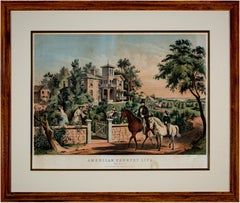
19th century color lithograph landscape figures horseback house scene trees sky
By Nathaniel Currier
Located in Milwaukee, WI
The present print is one of several examples produced for Nathaniel Currier by his longtime collaborator Frances F. "Fanny" Palmer. Harry T. Peters wrote of her: "There is no more interesting and appealing character among the group of artists who worked for Currier & Ives than Fanny Palmer. In an age when women, well-bred women in particular, did not generally work for a living Fanny Palmer for years did exacting, full-time work in order to support a large and dependent family ... Her work ... had great charm, homeliness, and a conscientious attention to detail."
One of a series of four prints showing American country life in different seasons, the image presents the viewer with a picturesque view of a successful American farm. In the foreground, a gentleman rides a horse with a young boy before a respectable Italianate country house. Two women and a young girl pick flowers in the garden and several farm workers attend to their duties. Beyond are other homes and a city on the coast.
16.63 x 23.75 inches, artwork
28.13 x 33.38 inches, frame
Entitled bottom center "American Country Life - May Morning"
Signed in the stone, lower left "F.F. Palmer, Del."
Signed in the stone, lower right "Lith. by N. Currier"
Copyrighted lower center "Entered according to Act of Congress in the year 1855 by N. Currier in the Clerk's office of the Southern District of N.Y."
Inscribed bottom center "New York, Published by N. Currier 152 Nassau Street"
Framed to conservation standards using silk-lined 100 percent rag matting and Museum Glass with a gold gilded liner, all housed in a stained wood moulding.
Nathaniel Currier was a tall introspective man with a melancholy nature. He could captivate people with his piercing stare or charm them with his sparkling blue eyes. Nathaniel was born in Roxbury, Massachusetts on March 27th, 1813, the second of four children. His parents, Nathaniel and Hannah Currier, were distant cousins who lived a humble yet spartan life. When Nathaniel was eight years old, tragedy struck. Nathaniel’s father unexpectedly passed away leaving Nathaniel and his eleven-year-old brother Lorenzo to provide for the family. In addition to their mother, Nathaniel and Lorenzo had to care for six-year-old sister Elizabeth and two-year-old brother Charles. Nathaniel worked a series of odd jobs to support the family, and at fifteen, he started what would become a life-long career when he apprenticed in the Boston lithography shop of William and John Pendleton.
A Bavarian gentleman named Alois Senefelder invented lithography just 30 years prior to young Nat Currier’s apprenticeship. While under the employ of the brothers Pendleton, Nat was taught the art of lithography by the firm’s chief printer, a French national named Dubois, who brought the lithography trade to America.
Lithography involves grinding a piece of limestone flat and smooth then drawing in mirror image on the stone with a special grease pencil. After the image is completed, the stone is etched with a solution of aqua fortis leaving the greased areas in slight relief. Water is then used to wet the stone and greased-ink is rolled onto the raised areas. Since grease and water do not mix, the greased-ink is repelled by the moisture on the stone and clings to the original grease pencil lines. The stone is then placed in a press and used as a printing block to impart black on white images to paper.
In 1833, now twenty-years old and an accomplished lithographer, Nat Currier left Boston and moved to Philadelphia to do contract work for M.E.D. Brown, a noted engraver and printer. With the promise of good money, Currier hired on to help Brown prepare lithographic stones of scientific images for the American Journal of Sciences and Arts. When Nat completed the contract work in 1834, he traveled to New York City to work once again for his mentor John Pendleton, who was now operating his own shop located at 137 Broadway. Soon after the reunion, Pendleton expressed an interest in returning to Boston and offered to sell his print shop to Currier. Young Nat did not have the financial resources to buy the shop, but being the resourceful type he found another local printer by the name of Stodart. Together they bought Pendleton’s business.
The firm ‘Currier & Stodart’ specialized in "job" printing. They produced many different types of printed items, most notably music manuscripts for local publishers. By 1835, Stodart was frustrated that the business was not making enough money and he ended the partnership, taking his investment with him. With little more than some lithographic stones, and a talent for his trade, twenty-two year old Nat Currier set up shop in a temporary office at 1 Wall Street in New York City. He named his new enterprise ‘N. Currier, Lithographer’
Nathaniel continued as a job printer and duplicated everything from music sheets to architectural plans. He experimented with portraits, disaster scenes and memorial prints, and any thing that he could sell to the public from tables in front of his shop. During 1835 he produced a disaster print Ruins of the Planter's Hotel, New Orleans, which fell at two O’clock on the Morning of the 15th of May 1835, burying 50 persons, 40 of whom Escaped with their Lives. The public had a thirst for newsworthy events, and newspapers of the day did not include pictures. By producing this print, Nat gave the public a new way to “see” the news. The print sold reasonably well, an important fact that was not lost on Currier.
Nat met and married Eliza Farnsworth in 1840. He also produced a print that same year titled Awful Conflagration of the Steamboat Lexington in Long Island Sound on Monday Evening, January 18, 1840, by which melancholy occurrence over One Hundred Persons Perished. This print sold out very quickly, and Currier was approached by an enterprising publication who contracted him to print a single sheet addition of their paper, the New York Sun. This single page paper is presumed to be the first illustrated newspaper ever published.
The success of the Lexington print launched his career nationally and put him in a position to finally lift his family up. In 1841, Nat and Eliza had their first child, a son they named Edward West Currier. That same year Nat hired his twenty-one year old brother Charles and taught him the lithography trade, he also hired his artistically inclined brother Lorenzo to travel out west and make sketches of the new frontier as material for future prints. Charles worked for the firm on and off over the years, and invented a new type of lithographic crayon which he patented and named the Crayola. Lorenzo continued selling sketches to Nat for the next few years.
In 1843, Nat and Eliza had a daughter, Eliza West Currier, but tragedy struck in early 1847 when their young daughter died from a prolonged illness. Nat and Eliza were grief stricken, and Eliza, driven by despair, gave up on life and passed away just four months after her daughter’s death.
The subject of Nat Currier’s artwork changed following the death of his wife and daughter, and he produced many memorial prints and sentimental prints during the late 1840s. The memorial prints generally depicted grief stricken families posed by gravestones (the stones were left blank so the purchasers could fill in the names of the dearly departed). The sentimental prints usually depicted idealized portraits of women and children, titled with popular Christian names of the day.
Late in 1847, Nat Currier married Lura Ormsbee, a friend of the family. Lura was a self-sufficient woman, and she immediately set out to help Nat raise six-year-old Edward and get their house in order. In 1849, Lura delivered a son, Walter Black Currier, but fate dealt them a blow when young Walter died one year later. While Nat and Lura were grieving the loss of their new son, word came from San Francisco that Nat’s brother Lorenzo had also passed away from a brief illness. Nat sank deeper into his natural quiet melancholy. Friends stopped by to console the couple, and Lura began to set an extra place at their table for these unexpected guests. She continued this tradition throughout their lives.
In 1852, Charles introduced a friend, James Merritt Ives, to Nat and suggested he hire him as a bookkeeper. Jim Ives was a native New Yorker born in 1824 and raised on the grounds of Bellevue Hospital where his father was employed as superintendent. Jim was a self-trained artist and professional bookkeeper. He was also a plump and jovial man, presenting the exact opposite image of his new boss.
Jim Ives met Charles Currier through Caroline Clark, the object of Jim’s affection. Caroline’s sister Elizabeth was married to Charles, and Caroline was a close friend of the Currier family. Jim eventually proposed marriage to Caroline and solicited an introduction to Nat Currier, through Charles, in hopes of securing a more stable income to support his future wife.
Ives quickly set out to improve and modernize his new employer’s bookkeeping methods. He reorganized the firm’s sizable inventory, and used his artistic skills to streamline the firm’s production methods. By 1857, Nathaniel had become so dependent on Jims’ skills and initiative that he offered him a full partnership in the firm and appointed him general manager. The two men chose the name ‘Currier & Ives’ for the new partnership, and became close friends.
Currier & Ives produced their prints in a building at 33 Spruce Street where they occupied the third, fourth and fifth floors. The third floor was devoted to the hand operated printing presses that were built by Nat's cousin, Cyrus Currier, at his shop Cyrus Currier & Sons in Newark, NJ. The fourth floor found the artists, lithographers and the stone grinders at work. The fifth floor housed the coloring department, and was one of the earliest production lines in the country. The colorists were generally immigrant girls, mostly German, who came to America with some formal artistic training. Each colorist was responsible for adding a single color to a print. As a colorist finished applying their color, the print was passed down the line to the next colorist to add their color. The colorists worked from a master print displayed above their table, which showed where the proper colors were to be placed. At the end of the table was a touch up artist who checked the prints for quality, touching-in areas that may have been missed as it passed down the line. During the Civil War, demand for prints became so great that coloring stencils were developed to speed up production.
Although most Currier & Ives prints were colored in house, some were sent out to contract artists. The rate Currier & Ives paid these artists for coloring work was one dollar per one hundred small folios (a penny a print) and one dollar per one dozen large folios. Currier & Ives also offered uncolored prints to dealers, with instructions (included on the price list) on how to 'prepare the prints for coloring.' In addition, schools could order uncolored prints from the firm’s catalogue to use in their painting classes.
Nathaniel Currier and James Merritt Ives attracted a wide circle of friends during their years in business. Some of their more famous acquaintances included Horace Greeley, Phineas T. Barnum, and the outspoken abolitionists Rev. Henry Ward, and John Greenleaf Whittier (the latter being a cousin of Mr. Currier).
Nat Currier and Jim Ives described their business as "Publishers of Cheap and Popular Pictures" and produced many categories of prints. These included Disaster Scenes, Sentimental Images, Sports, Humor, Hunting Scenes, Politics, Religion, City and Rural Scenes, Trains, Ships, Fire Fighters, Famous Race Horses, Historical Portraits, and just about any other topic that satisfied the general public's taste. In all, the firm produced in excess of 7500 different titles, totaling over one million prints produced from 1835 to 1907.
Nat Currier retired in 1880, and signed over his share of the firm to his son Edward. Nat died eight years later at his summer home 'Lion’s Gate' in Amesbury, Massachusetts. Jim Ives remained active in the firm until his death in 1895, when his share of the firm passed to his eldest son, Chauncey.
In 1902, faced will failing health from the ravages of Tuberculosis, Edward Currier sold his share of the firm to Chauncey Ives...
Category
Mid-19th Century Romantic Figurative Prints
Materials
Watercolor, Lithograph
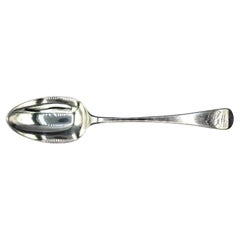
1791 Old English Pattern Sterling Silver Tablespoon by Richard Crossley
By Richard Crossley
Located in Chapel Hill, NC
1791 Old English pattern sterling silver tablespoon by Richard Crossley, London. Excellent weight. Period monogram "BEW". Crossley had a prolific, hugely successful business. 2.20 tr...
Category
Antique 1790s English George III Sterling Silver
Materials
Sterling Silver
Circa 1920s Torsion Balance Co, New York "Class A" Scale
By Torsion Balance Company
Located in Chapel Hill, NC
Circa 1920s Torsion Balance Co, New York "Class A" Scale. Glass
nickel plate metal case. According to the Smithsonian National Museum of American History, which has an identica...
Category
Early 20th Century American Other Scientific Instruments
Materials
Nickel

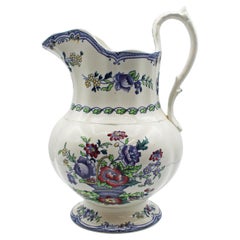
English Copeland Late Spode "Avondale" Water Pitcher
By Spode
Located in Chapel Hill, NC
Copeland Late Spode "Avondale" Water Pitcher, England. Earthenware pottery. Rococo Revival style decorated with baskets of flowers, flowers & trailing vines. Reg. No. 637555 design o...
Category
Antique Late 19th Century English Rococo Revival Pottery
Materials
Earthenware, Pottery
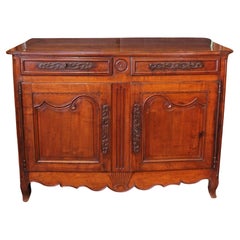
Circa 1780 Louis XVI Period Country French Buffet
Located in Chapel Hill, NC
Circa 1780 Louis XVI period country French buffet. Cherry with original cut steel hardware. Whorl carved, molded, panelled doors with central fluted section as part of the left door ...
Category
Antique 1780s French Louis XVI Buffets
Materials
Cherry
Circa 1840 English Antique Children
s Play Ceramic Dinner Service - 5 Pieces
Located in Chapel Hill, NC
Circa 1840 collection of 5 child's play dinner service pieces. Blue & white Staffordshire. Charming with a boy wheeling his sister. Includes: covered soup tureen & undertray (overall...
Category
Antique Mid-19th Century English Ceramics
Materials
Ceramic

$125 Sale Price
44% Off
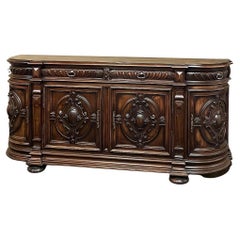
19th Century French Renaissance Revival Walnut Buffet
Located in Dallas, TX
19th century French Renaissance Revival Walnut Buffet is a masterpiece of the artisans around the environs of Paris who strove...
Category
Antique 1870s French Napoleon III Buffets
Materials
Brass
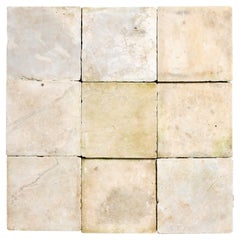
Reclaimed Carrara Marble Floor Tiles 9.67 m2 (104 sq ft)
Located in Wormelow, Herefordshire
These late 19th century reclaimed Italian floor tiles in Carrara marble were salvaged from Wingfield castle in England.
Dating from circa 1880, th...
Category
Antique Early 19th Century Italian Architectural Elements
Materials
Marble, Carrara Marble
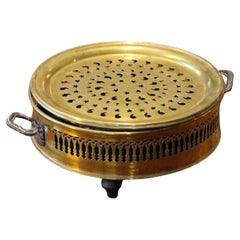
French Brass Plate Foot Warmer
Located in Chapel Hill, NC
19th century brass plate foot warmer on wooden legs, French. Circular with reticulated sides and cover. Provenance: Cinnamon Hill Antiques, Na...
Category
Antique 19th Century French Victorian Decorative Boxes
Materials
Brass
$140 Sale Price
52% Off
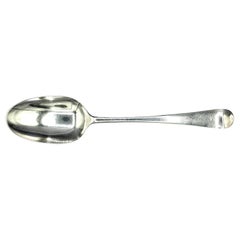
1770 English Hanoverian Pattern Sterling Silver Tablespoon
Located in Chapel Hill, NC
1770 Hanoverian pattern sterling silver tablespoon, London. By G.S. (listed by Wyler as unrecorded & Grimwalde has no possible maker either). Early George III period sterling. Scratc...
Category
Antique 1770s English George III Sterling Silver
Materials
Sterling Silver
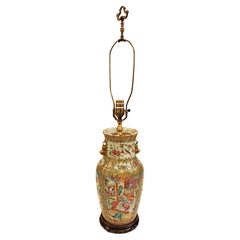
Mid-19th Century Chinese Export Porcelain Rose Medallion Vase Mounted as a Lamp
Located in Chapel Hill, NC
Mid-19th century Chinese export porcelain Rose Medallion Vase Mounted as a Lamp. Very good quality with foo lion handles; panel molded body with linen fold top. Perfection for this f...
Category
Antique Mid-19th Century Chinese Chinese Export Table Lamps
Materials
Porcelain
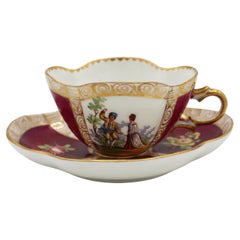
Circa 1888-1916 Richard Klemm, Dresden Quatrefoil Demitasse Cups
Saucers
By Dresden Porcelain
Located in Chapel Hill, NC
Circa 1888-1916 Richard Klemm, Dresden quatrefoil demitasse cup & saucer. Fully marked. Porcelain. Delicate scroll handle. Maroon ground with handpainted "Wateau" scenes & gilded bor...
Category
Antique Late 19th Century German Art Nouveau Porcelain
Materials
Porcelain, Paint
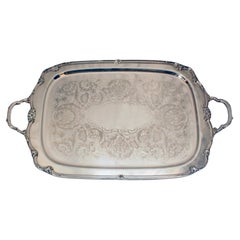
"Remembrance" Heavy Silver on Copper Tea Tray
By International Silver
Located in Chapel Hill, NC
A fine, heavy silver on copper tea tray; graceful borders enhanced by floral sprays & florets. Inner bead border. Good vintage condition with no bleeding ...
Category
Early 20th Century American Victorian Sheffield and Silverplate
Materials
Silver, Copper
$175 Sale Price
40% Off
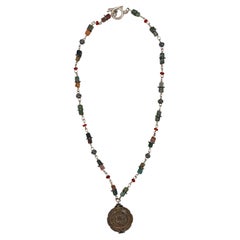
Vintage Jade
Sterling Silver Chinese Necklace with Happiness Symbols Pendant
Located in Chapel Hill, NC
Vintage jade & sterling silver Chinese necklace with happiness symbols pendant. Each block link is a different color of jade interspersed with various sterling discs. Marked 925. Tog...
Category
20th Century Chinese Collectible Jewelry
Materials
Jade, Sterling Silver
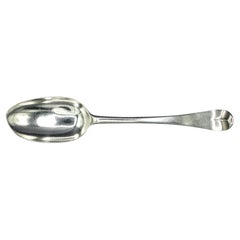
1750 Hanoverian Pattern Sterling Silver Tablespoon by Marmaduke Daintrey
Located in Chapel Hill, NC
1750 Hanoverian pattern sterling silver tablespoon by Marmaduke Daintrey, London. The crown in mark likely due to his location at The Crown, Old Street. George II period. A substanti...
Category
Antique 1750s English George II Sterling Silver
Materials
Sterling Silver
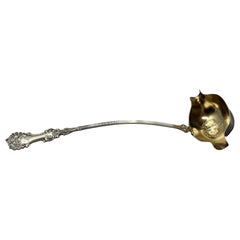
1895 Pompadour by Whiting Gorham Patented American Sterling Silver Punch Ladle
By Whiting Manufacturing Company, Gorham Manufacturing Company
Located in Chapel Hill, NC
1895 patented American sterling silver punch ladle, Pompadour by Whiting Gorham. Softly gilded bowl with twin spouts. Rich baroque design. Monogram "K". Made by Whiting Division of G...
Category
Antique 1890s American Victorian Sterling Silver
Materials
Sterling Silver
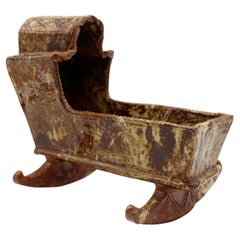
Circa 1750 English Miniature Pottery Cradle
Located in Chapel Hill, NC
Circa 1750 agateware or scroddleware pottery miniature cradle, English. Likely Staffordshire. Marbled creams & brown/reddish brown clays. Comingled solid clays unglazed on rockers in...
Category
Antique Mid-18th Century English George II Mobiles and Kinetic Sculptures
Materials
Pottery
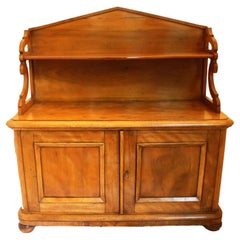
Mid 19th Century English Birch Hanging Cabinet
Located in Chapel Hill, NC
Hanging cabinet in the form of a miniature chiffonier of satin birch. England, c. 1860. 25 1/2" w., 10" d., 26 1/2" h.
Whitehall Antiques is a family business that has been a major ...
Category
Antique Mid-19th Century English Victorian Shelves
Materials
Birch
$800 Sale Price
50% Off
Circa 1950 Vintage American Danecraft Sterling Silver Choker
Located in Chapel Hill, NC
Vintage Danecraft sterling silver choker, circa 1950. Marked "Danecraft", "Reg.U.S.Pat.Off.", "Sterling". Classic design! 1.25 troy oz.
14.5" end to end.
We are a family business th...
Category
Vintage 1950s American Mid-Century Modern Collectible Jewelry
Materials
Sterling Silver
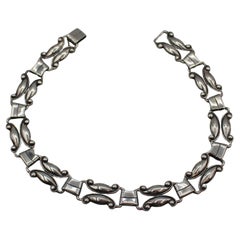
Circa 1950s Vintage Danecraft Sterling Silver Waves Necklace
Located in Chapel Hill, NC
Vintage Danecraft sterling silver waves necklace, circa 1950s. Marked "Danecraft", registry mark & "Sterling". 0.60 troy oz.
15.75" end to end.
We are a family business that has bee...
Category
Vintage 1950s American Mid-Century Modern Collectible Jewelry
Materials
Sterling Silver
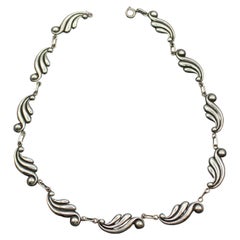
c. 1860-80 English Brass Skimmer
Located in Chapel Hill, NC
Circa 1860-80 English brass skimmer. Concentric circles & star punch work motif. Brass rivets. Shaped handle.
21.75" x 7 7/8" x 1.5".
We are a family business that has been a major ...
Category
Antique Mid-19th Century English Victorian Serving Pieces
Materials
Brass
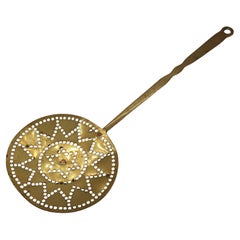
Circa 1780 George III Period English Tray Top Side Table
Located in Chapel Hill, NC
Circa 1780 George III period tray top side table, English. Originally as a bedside piece for a commode. Cabinet over drawer with attached legs. Distinguished by an undulating gallery...
Category
Antique 1780s English George III Side Tables
Materials
Wood
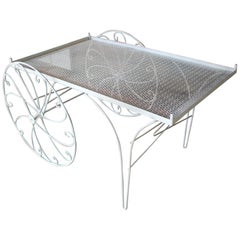
Mid-20th Century Wrought Iron Garden Cart
Located in Chapel Hill, NC
Mid-20th century garden cart of wrought iron, likely American. Modeled after Italian garden carts of the 19th century. Once with a canopy. Repainted white surfaces. Top: 30" x 48" x ...
Category
Mid-20th Century American Victorian Patio and Garden Furniture
Materials
Wrought Iron