502 results for "marie antoinette"

to
77
239
226
250
107
95
88
57
57
50
41
34
31
24
21
20
12
10
9
9
7
7
6
6
6
6
4
4
4
4
3
3
3
2
2
2
2
2
1
1
1
1
1
1
1
12
11
10
8
7
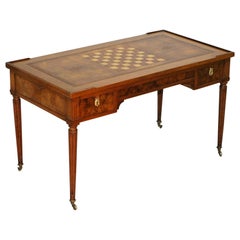
Restored Louis XVI 18th Century Hardwood Walnut Leather Tric Trac Games Table
Located in West Sussex, Pulborough
We are delighted to offer for sale this absolutely sublime fully restored one of a kind Louis XVI circa 1780 period Tric Trac games table in Walnut, Hardwood and brown leather An image of Marie-Antoinette’s games room, the ‘Salon de la Paix’ at Versailles showing no fewer than four Tric Trac tables. Games tables were highly fashionable at Versailles and the queen organised gambling evenings several times a week losing huge amounts of money. She had to ask for the king’s financial support which he usually offered happily, despite the royal ban on gaming! The Salon de la Paix was was located on the first floor of the chateau next to the queens bedchamber. This is an exceptional piece of art furniture, dating to the late 18th century its French with a walnut frame, hardwood backgammon table, hand dyed brown leather chess board leather...
Category

Antique 1780s French Louis XVI Game Tables

Materials

Leather, Baize, Hardwood

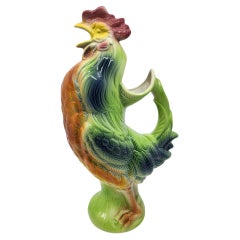
Pichet Saint Clément Coq en majolique Française, design Art Nouveau 19ième
By Saint-Clément, Émile Gallé
Located in London, England
Le pichet en barbotine de Saint Clément, conçu par les talentueux Émile et Charles Gallé, représente une pièce maîtresse de l'art nouveau. Avec son décor inspiré de la faune et de la...
Category

Mid-20th Century European Art Nouveau Vases

Materials

Ceramic, Faience

Original Hand-Colored Antique Bird Print of The Northern Gannet, ca.1770
Located in Langweer, NL
Antique print titled 'Fou tachete, de Cayenne.' This print shows a northern gannet (Juv). Originates from 'Histoire Naturelle des Oiseaux', by Comte de Buffon, published in Paris f...
Category

Antique 1770s Prints

Materials

Paper

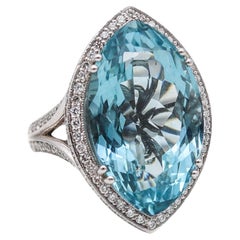
Fred Leighton Cocktail Ring 18Kt Gold With 26.77 Ctw In Diamonds And Aquamarine
By Fred Leighton
Located in Miami, FL
Cocktail ring with gemstones designed by Fred Leighton. A statement cocktail ring, created and retailed by the New York jewelry house of Fred Leighton, back in the 1990. This magnificent ring has been crafted with classic patterns in solid white gold of 18 karats with high polished finish. Mounted with an outstanding selection of gemstones such; a gorgeous Brazilian vivid blue aquamarine and accented by two-hundred-eighty-six natural earth mined diamonds. The gemstones settings are finished with millegrain. Aquamarine: Mount in eight-prongs setting, with 1 marquise faceted cut (26 x 15 x 12 mm) of a natural Brazilian vivid blue aquamarine of 22.51 carats. Diamonds: Mount in a pave setting, with 286 calibrated round brilliant cut diamonds, 4.26 carats, white colorless F color, VS-2 clarity Birthstone: Aquamarine for the month of March. Weight: 21.85 Grams, (14.10 Dwt). Size: 9.25 and may be easily sized on request. Measurements: 30 mm by 20 mm (1.18 x 0.79 Inches) and raise 14 mm over the finger. Hallmarks: Stamped with the maker's mark, the mark for the assay of the gold and signed, "FRED LEIGHTON .750". Provenance: Fred Leighton, Madison Avenue New York, United States. Fred Leighton He is an American antique...
Category

1990s American Art Deco Cocktail Rings

Materials

Aquamarine, Diamond, White Diamond, Gold, 18k Gold, White Gold
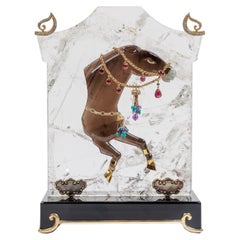
Mellerio Paris, a French Gold, Diamonds, Silver, and Smoky Quartz Carved Horse
By Mellerio dits Meller
Located in Long Island City, NY
Mellerio Paris, A French Gold, Diamonds, Silver-Gilt, Rock-Crystal, Jade, Mother-Of-Pearl and Smoky Quartz, Carved Horse Sculpture, Jeweled Mounted Object. An extremely rare and unique, one of a kind French gold, diamonds, Silver-gilt, rock-crystal, jade, obsidian, mother-of-pearl, and smoky quartz carved jeweled sculpture "CHEVAUX DE LEGENDE", "A Legendary Horse" by Mellerio, Paris, circa 1991. Sitting on black obsidian base, the solid rock-crystal slab is finely applied with a carved smoky -quartz and jade horse with a harness mounted in 18k gold, brilliant -cut diamonds, rubies, turquoise, and amethyst chains and pendants. The top columns adorned with 18k gold and brilliant cut diamond pendants, the bottom with gold and mother of pearl plaques. The obsidian base with a plaque engraved: CHEVAUX DE LEGENDE" / N° 05 / MELLERIO DITS MELLER / PARIS / 5003 D The piece is in excellent condition and comes with a custom made wood case made for transport. It's very elegant and has French hallmarks throughout. A truly magnificent piece. Measures 10.5" high x 8.5" wide x 4" deep Founded in France in 1613 by the descendants of Italian immigrants from the Vigezzo Valley in the north of Italy, Mellerio is one of the oldest jewellery houses in Europe. The family business soon attracted the attention of the Royal Court and Marie Antoinette herself reportedly purchased a precious bracelet featuring 7 cameos surrounded by rubies in 1780. Later on, in the 19th century, Mellerio became the official supplier of the French Royal family and the Court of Netherland. Mellerio creates many jewellery items, all set with rare gems such as peridots, amethysts, aquamarines, citrines and topaz, applying for a patent, the flexible stem, a very supple and light jewellery mechanism. Mellerio remains also well known for their spectacular series of Art Nouveau jewels, created at the beginning of the 20th century, as well as for the creation of trophies rewarding some of the greatest footfall and tennis players of history. In 1993, the jewellery house launched their first watch collection. Today, Mellerio has stores in Paris, Japan and Hong Kong. July 14, 1789: this date is known throughout the world as the beginning of the French Revolution. According to a ledger belonging to House of Mellerio, this was also the day that the jeweler sold a golden key to the Comte de Coutance for 10 livres. This ledger, as well as inventories dating as far back as 1768, are the jeweler’s oldest archives. These archives have continued to grow over the years, as the House, established on rue de la Paix in Paris, still lives on today, still in the hands of the same family from Craveggia, in the North of Italy. The tumultuous history of the Mellerio family in France probably goes as far back as the Italian wars of the Renaissance, but the first official document proving their commercial activity in Paris dates back to 1613. This document is the famous royal warrant awarded by Marie de Medici to a number of Italian families established along the rue des Lombards, including the Mellerios, allowing them to sell “small jewelery items”, therefore granting them a small exception to the traditional monopoly enjoyed by Parisian jewelers. At that time, powerful corporations regulated the operations and customs of Parisian business, but thanks to this exceptional warrant, the Mellerios managed to escape the confines of this framework. Today, this wax-sealed document is kept at the city hall of Craveggia. From 1613 to the Revolution, the Mellerios lived between France and Italy. The corporations tried many times to put an end to their trade privileges, but all in vain, as a dynasty of sovereigns renewed the warrant. Always marrying and often retiring in Craveggia, the Mellerios continued to maintain their jewelry business in Paris. At first, they did this without a shop. Wearing backpacks (wooden boxes divided into small compartments where jewels were kept), they would tour town fairs around Paris and royal castles. This is how Jean-Baptiste Mellerio (1765-1850) is said to have sold a bracelet set with rubies and Antique cameos to Marie-Antoinette, which still exists today. Many elements seem to prove the veracity of this anecdote. The queen was particularly fond of cameos, which cover the entire background of her famous jewelry cabinet, and ruby was her favorite stone after diamond. The famous bracelet, reacquired a few years ago by the House of Mellerio, is indeed an 18th century jewel, set with antique cameos representing the profiles of Roman emperors. Two branches of the family were operating in Paris during this time, under the reign of Louis XVI: that of Jean-François (1746-1828), the paternal ancestor of the current Mellerios, and that of Jean-Baptiste (1765-1850). The French Revolution forced them to return to Italy. However, both Jean-Baptiste and François Mellerio (1772-1843), who was the son of Jean-François, were eventually able to return to Paris after the founding of the Consulate. Jean-Baptiste opened a shop at the Iron Crown of rue Vivienne, and François opened his at the Palais des Tuileries, rue du Coq Saint-Honoré. His well-organized order books give an idea of his high-ranking clientele during the “Old Regime”, among which were the Comte and Comtesse Octave de Segur, the Marquise (later Duchess) de Tourzel, former governess of the royal children, and her daughter, the Comtesse de Bearn, the Craufurds -who organized the flight to Varennes, the Duc and Duchess de Gramont, the Comtesse de Boigne, and Madame de Souza, Talleyrand’s mistress. We also see the names of the imperial family: Empress Josephine, the Queen of Holland, Princess Elisa, Caroline and Pauline. At that time, the House of Mellerio specialized, among other things, in the trade of antique cameos, a newly fashionable genre of jewel that captured the imagination of all the princesses and noble women of the time. The years of the Restauration and July Monarchy were among the most glorious. The Bourbons were back on the throne, and the clientele of the House of Mellerio had regained its former wealth. Mellerio supplied Louis-Philippe, Duke of Orléans, as well as his mother, wife and sister, with sumptuous jewels, including a set of emeralds made piece by piece, while the Duke of Bourbon, last prince of the House of Condé, offered diamonds to his mistress, the scheming Baronne de Feucheres, and Monsieur de LaFayette also bought cameos for one of his granddaughters. For the first time, Mellerio ventured into the world of arts in 1815, when Carlotta Grisi, a famous dancer who created Giselle, as well as an actress named Rachel, bought jewels at the Mellerio store on rue de la Paix. 1848 marked a new turning point. France once again became a Republic. François Mellerio handed the company over to his son, Jean, and the latter decided to travel to Spain to build a new clientele. He later became one of the jewelers of the royal family, and met Eugénie de Montijo, who remained a faithful client when she became empress of the French people. The Imperial years were lavish. During the Second Empire, Paris was a pageant of crinoline dresses designed by Worth, while jewels by Mellerio, Worth’s neighbour on the rue de la Paix, adorned the noble women of the Tuileries court. The Empress bought pearls. Mathilde Bonaparte...
Category

20th Century French Figurines and Sculptures

Materials

Amethyst, Diamond, Jade, Quartz, Rock Crystal, Ruby, Turquoise, Gold, Si...
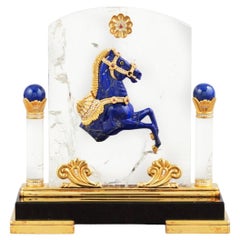
Mellerio Paris, a French Gold, Diamond, Silver-Gilt, Rock-Crystal, Lapis Horse
By Mellerio Paris
Located in Long Island City, NY
Mellerio Paris, A French Gold, Diamond, Silver-Gilt, Rock-Crystal, Obsidian & Lapis Horse An extremely rare and unique, one of a kind French gold, diamonds, Silver-gilt rock-crystal, obsidian and lapis lazuli jeweled sculpture "Bucéphale, Chevaux de légende", "Bucephalus, A Legendary Horse" by Mellerio, Paris, circa 1998. Sitting on black obsidian base, the solid rock crystal slab is finely applied with a lapis lazuli half-horse with harness mounted in 18k gold and brilliant cut diamonds, between two crystal and lapis lazuli columns adorned with gold and diamonds, insert with 7 ruby cabochons and 1 emerald cabochon, the obsidian base with a plaque engraved: CHEVAUX DE LEGENDE / MELLERIO DITS MELLER / PARIS / 5029 DIV Bucephalus (c355-326 BC) is among the most famous horses in history, and it was said that this he could not be tamed. The young Alexander the Great, of course, tamed him – and went on to ride his beloved equine companion for many years and into many battles. The piece is in excellent condition and comes with a custom made wood case made for transport. It's very elegant and has French hallmarks throughout. A truly magnificent piece. Measures 10" high x 9" wide x 4" deep Founded in France in 1613 by the descendants of Italian immigrants from the Vigezzo Valley in the north of Italy, Mellerio is one of the oldest jewellery houses in Europe. The family business soon attracted the attention of the Royal Court and Marie Antoinette herself reportedly purchased a precious bracelet featuring 7 cameos surrounded by rubies in 1780. Later on, in the 19th century, Mellerio became the official supplier of the French Royal family and the Court of Netherland. Mellerio creates many jewellery items, all set with rare gems such as peridots, amethysts, aquamarines, citrines and topaz, applying for a patent, the flexible stem, a very supple and light jewellery mechanism. Mellerio remains also well known for their spectacular series of Art Nouveau jewels, created at the beginning of the 20th century, as well as for the creation of trophies rewarding some of the greatest footfall and tennis players of history. In 1993, the jewellery house launched their first watch collection. Today, Mellerio has stores in Paris, Japan and Hong Kong. July 14, 1789: this date is known throughout the world as the beginning of the French Revolution. According to a ledger belonging to House of Mellerio, this was also the day that the jeweler sold a golden key to the Comte de Coutance for 10 livres. This ledger, as well as inventories dating as far back as 1768, are the jeweler’s oldest archives. These archives have continued to grow over the years, as the House, established on rue de la Paix in Paris, still lives on today, still in the hands of the same family from Craveggia, in the North of Italy. The tumultuous history of the Mellerio family in France probably goes as far back as the Italian wars of the Renaissance, but the first official document proving their commercial activity in Paris dates back to 1613. This document is the famous royal warrant awarded by Marie de Medici to a number of Italian families established along the rue des Lombards, including the Mellerios, allowing them to sell “small jewelery items”, therefore granting them a small exception to the traditional monopoly enjoyed by Parisian jewelers. At that time, powerful corporations regulated the operations and customs of Parisian business, but thanks to this exceptional warrant, the Mellerios managed to escape the confines of this framework. Today, this wax-sealed document is kept at the city hall of Craveggia. From 1613 to the Revolution, the Mellerios lived between France and Italy. The corporations tried many times to put an end to their trade privileges, but all in vain, as a dynasty of sovereigns renewed the warrant. Always marrying and often retiring in Craveggia, the Mellerios continued to maintain their jewelry business in Paris. At first, they did this without a shop. Wearing backpacks (wooden boxes divided into small compartments where jewels were kept), they would tour town fairs around Paris and royal castles. This is how Jean-Baptiste Mellerio (1765-1850) is said to have sold a bracelet set with rubies and Antique cameos to Marie-Antoinette, which still exists today. Many elements seem to prove the veracity of this anecdote. The queen was particularly fond of cameos, which cover the entire background of her famous jewelry cabinet, and ruby was her favorite stone after diamond. The famous bracelet, reacquired a few years ago by the House of Mellerio, is indeed an 18th century jewel, set with antique cameos representing the profiles of Roman emperors. Two branches of the family were operating in Paris during this time, under the reign of Louis XVI: that of Jean-François (1746-1828), the paternal ancestor of the current Mellerios, and that of Jean-Baptiste (1765-1850). The French Revolution forced them to return to Italy. However, both Jean-Baptiste and François Mellerio (1772-1843), who was the son of Jean-François, were eventually able to return to Paris after the founding of the Consulate. Jean-Baptiste opened a shop at the Iron Crown of rue Vivienne, and François opened his at the Palais des Tuileries, rue du Coq Saint-Honoré. His well-organized order books give an idea of his high-ranking clientele during the “Old Regime”, among which were the Comte and Comtesse Octave de Segur, the Marquise (later Duchess) de Tourzel, former governess of the royal children, and her daughter, the Comtesse de Bearn, the Craufurds -who organized the flight to Varennes, the Duc and Duchess de Gramont, the Comtesse de Boigne, and Madame de Souza, Talleyrand’s mistress. We also see the names of the imperial family: Empress Josephine, the Queen of Holland, Princess Elisa, Caroline and Pauline. At that time, the House of Mellerio specialized, among other things, in the trade of antique cameos, a newly fashionable genre of jewel that captured the imagination of all the princesses and noble women of the time. The years of the Restauration and July Monarchy were among the most glorious. The Bourbons were back on the throne, and the clientele of the House of Mellerio had regained its former wealth. Mellerio supplied Louis-Philippe, Duke of Orléans, as well as his mother, wife and sister, with sumptuous jewels, including a set of emeralds made piece by piece, while the Duke of Bourbon, last prince of the House of Condé, offered diamonds to his mistress, the scheming Baronne de Feucheres, and Monsieur de LaFayette also bought cameos for one of his granddaughters. For the first time, Mellerio ventured into the world of arts in 1815, when Carlotta Grisi, a famous dancer who created Giselle, as well as an actress named Rachel, bought jewels at the Mellerio store on rue de la Paix. 1848 marked a new turning point. France once again became a Republic. François Mellerio handed the company over to his son, Jean, and the latter decided to travel to Spain to build a new clientele. He later became one of the jewelers of the royal family, and met Eugénie de Montijo, who remained a faithful client when she became empress of the French people. The Imperial years were lavish. During the Second Empire, Paris was a pageant of crinoline dresses designed by Worth, while jewels by Mellerio, Worth’s neighbour on the rue de la Paix, adorned the noble women of the Tuileries court. The Empress bought pearls. Mathilde Bonaparte...
Category

21st Century and Contemporary French Figurines and Sculptures

Materials

Diamond, Lapis Lazuli, Rock Crystal, Gold, Silver
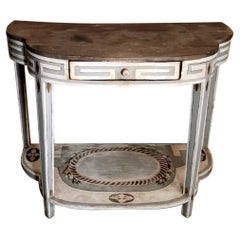
Louis XV Style French Wood Console Table with White Matte Lacquer Finish
Located in Prato, Tuscany
We kindly suggest you read the whole description, because with it we try to give you detailed technical and historical information to guarantee the authenticity of our objects. Pecul...
Category

Antique Mid-18th Century French Louis XV Console Tables

Materials

Wood

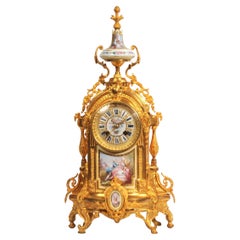
Antique French Ormolu and Sevres Porcelain Clock
By A.D. Mougin
Located in Belper, Derbyshire
A richly decorative French mantel clock, finely modelled in gilt bronze and mounted with exquisite Sèvres style porcelain with a cream ground. The central porcelain panel depicts an ...
Category

Antique 19th Century European Louis XVI Mantel Clocks

Materials

Ormolu

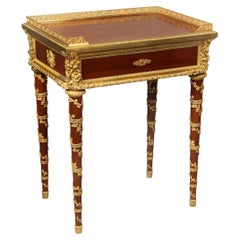
Excellent Late 19th Century Gilt Bronze Mounted Gueridon by Henry Dasson
By Henry Dasson
Located in Long Island City, NY
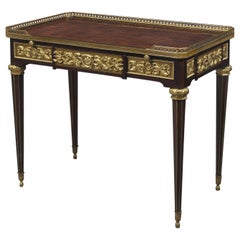
An Excellent Quality Late 19th Century Louis XVI Style Gilt Bronze Mounted Gueridon By Henry Dasson Henry Dasson The rectangular top with pierced three-quarter gallery, above a single frieze drawer, the sides each mounted with Minerva’s helmet, supported on floral vine bronze mounted tapering legs each headed by flower swags. Signed Henry Dasson 1881 to the bronze mount on the left side. After the very famous 18th century model by Jean-Henry Riesener. This table is an almost identical copy of Jean-Henri Riesener’s original supplied in 1780 for Marie-Antoinette’s cabinet intérieur at Versailles. In the 19th century’s leading ébénistes often reproduced this model, including François Linke...
Category

Antique Late 19th Century French Belle Époque Gueridon

Materials

Ormolu, Bronze

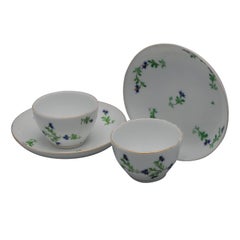
Paris porcelain - 2 cups and saucers, cornflowers decor Barbeaux , 18th century
By Imperial Vienna Porcelain
Located in DELFT, NL
Set of 2 cups and saucers with decoration of corn flower sprays and flower buds. The cornflower (barbeau in French) was eligibly Marie Antoinettes favorite flower, as it was the co...
Category

Antique Late 18th Century Austrian Louis XVI Porcelain

Materials

Porcelain

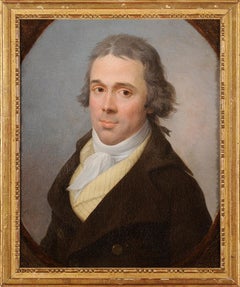
Men portrait
Located in BELEYMAS, FR
Jean François Marie Bellier (Paris 1745 – Paris 1836) Portrait of a Man Oil on oval canvas laid flat H. 45 cm; W. 55 cm Signed on the left Circa 1790 Jean François Marie Bellier occ...
Category

1790s French School Portrait Paintings

Materials

Canvas, Oil

Possible Portrait of Young Napoleon
Located in London, GB
Circle of Johann Heinrich Schmidt Possible Portrait of Young Napoleon 1749-1829 Pastel on parchment Image size: 23 1/2 x 19 inches Unsigned This portrait likely depicts a young Emp...
Category

Early 19th Century Portrait Paintings

Materials

Parchment Paper, Oil Pastel

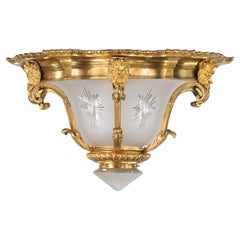
Early 20th Century Louis XVI Style Gilt Bronze Flush Mount with Etched Glass
Located in Chicago, IL
Louis XVI's designs are characterized by a combination of elegance and neoclassicism. Many items during this period feature ancient Greek motifs, gilt bronze, and sun ornaments. Thes...
Category

Early 20th Century French Louis XVI Flush Mount

Materials

Bronze

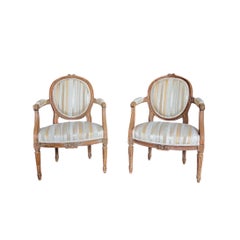
French pair of Louis XVI period medallion cabriolet armchairs - 18th - France
Located in Beuzevillette, FR
Magnificent pair of Louis XVI period cabriolet armchairs with medallion backs. Machined wood, carved with flowers and scrolls. Flushed legs. Very elegantly upholstered, the seats are...
Category

Antique 18th Century French Louis XVI Armchairs

Materials

Upholstery, Wood

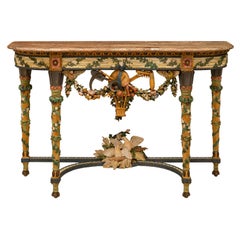
French 19th Century Louis XVI St. Patinated Wood and Marble Console
Located in West Palm Beach, FL
A stunning and extremely decorative French 19th century Louis XVI st. patinated wood and Campan Rubané marble console. The console is raised by elegant circular fluted tapered legs decorated with beautiful tied wrap around garlands and blooming flowers. The legs are connected by a concave stretcher with a wonderful wicker like design leading to charming richly carved love birds brooding their eggs in their nest at the center amidst wheat, foliage, and blooming flowers. Above each leg are fine floral block rosettes flanking the fluted straight frieze decorated with lovely wheat sprigs and a stunning central panier reserve with unique and most decorative ripe fruit and richly carved colorful blooming flowers, and gardening tools...
Category

Antique 19th Century French Louis XVI Console Tables

Materials

Marble

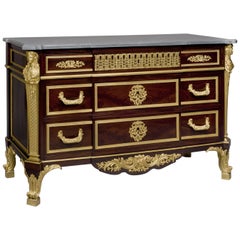
Louis XVI Style Commode after the Model by Jean-Henri Riesener, circa 1880
By Jean-Henri Riesener
Located in Brighton, West Sussex
A fine Louis XVI style gilt bronze-mounted mahogany commode, with a blue turquin marble top after the model by Jean-Henri Riesener. French, circa 1880. The gilt bronze mounts s...
Category

Antique Late 19th Century French Louis XVI Commodes and Chests of Drawers

Materials

Marble, Bronze

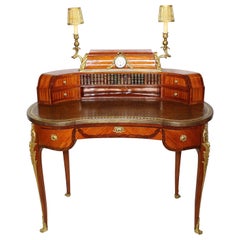
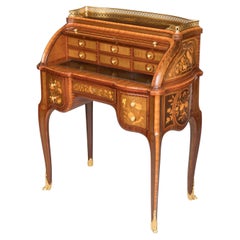
Fine French 19th Century Louis XV Style Tulipwood and Ormolu-Mounted Ladies Desk
By Maison Millet
Located in Los Angeles, CA
A very fine French 19th century tulipwood, mahogany and ormolu-mounted Bureau de Dame Lady's secretary desk, in the manner of Maison Millet. The s...
Category

Antique 19th Century French Louis XV Desks and Writing Tables

Materials

Bronze, Ormolu

19th Century Cylinder Bureau by François Linke in the Louis XV Style
By François Linke
Located in London, GB
A Petit Bureau à Cylindre in the Transitional Manner After the design by Jean-François Oeben By François Linke Index no. 1626 A rare small cylinder bureau, after the celebrated exa...
Category

Antique 19th Century French Louis XV Desks and Writing Tables

Materials

Ormolu

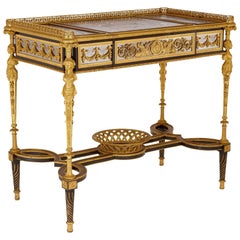
Antique Writing Table by Beurdeley After a Model by Adam Weisweiler
By Alfred Emmanuel Louis Beurdeley
Located in London, GB
Antique writing table by Beurdeley after a model by Adam Weisweiler French, c. 1880 Height 74cm, width 83cm, depth 46cm Crafted by the prestigious 19th century furniture makers Beu...
Category

Vintage 1980s French Louis XVI Desks and Writing Tables

Materials

Steel, Ormolu

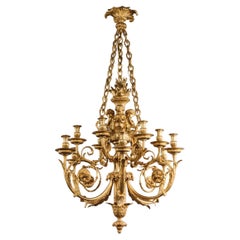
A Fine Louis XVI Style Gilt-Bronze Cherub Twelve-Light Chandelier
By Pierre Gouthiere
Located in Brighton, West Sussex
A Fine Louis XVI Style Gilt-Bronze Cherub Twelve-Light Chandelier, after the model by Pierre Gouthière for Marie Antoinette. The chandelier having elaborate acanthus scrolling arms ...
Category

Antique 19th Century French Louis XVI Chandeliers and Pendants

Materials

Bronze

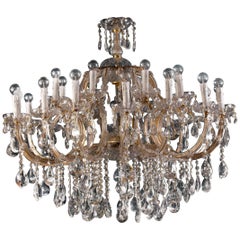
Superb Maria Theresa Crystal Chandelier
Located in Rome, IT
Magnificent "Maria Theresa" (or Maria Teresa) Empire style traditional crystal chandelier features 24 lights and framework with a golden iron, with glass encased arms and rosettes. ...
Category

20th Century Empire Chandeliers and Pendants

Materials

Crystal

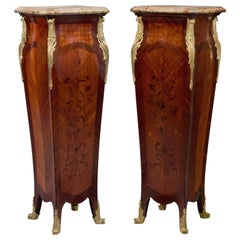
Pair Of Louis XV Style Marquetry Inlaid Pedestals, circa 1880
By Maison Millet
Located in Brighton, West Sussex
A very fine pair Of Louis XV style gilt bronze mounted marquetry inlaid pedestals, firmly attributed to Maison Millet. French, circa 1880....
Category

Antique Late 19th Century French Louis XV Pedestals and Columns

Materials

Bronze

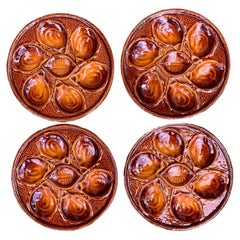
Set of Vintage French St Clements Oyster Plates
Located in New Orleans, LA
A set of four vintage 1950’s French St Clements oyster plates in the treacle glaze. These plates were produced in the 1950's in the famous St C...
Category

Vintage 1950s French Mid-Century Modern Tableware

Materials

Faience

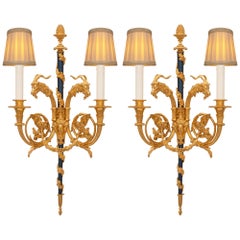
Pair of French 19th Century Louis XVI Style Figural Wall Lights after Thomire
By Pierre-Philippe Thomire
Located in Los Angeles, CA
A very fine pair of French 19th century Louis XVI style gilt bronze five-light figural wall lights (Sconces - Appliques) after the model by Pierre-Philippe Thomire (French, 1751–1843...
Category

Antique 19th Century French Louis XVI Wall Lights and Sconces

Materials

Bronze

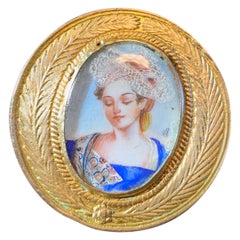
French Bronze Brooch Line Vautrin
By Line Vautrin
Located in Atlanta, GA
A cast bronze brooch by French Parisian Art Jeweler Line Vautrin (1913-1997) circa 1950s. The small lovely bronze pieces features a medallion insignia design with olive branch wreath...
Category

Vintage 1950s French Modern Collectible Jewelry

Materials

Bronze, Enamel

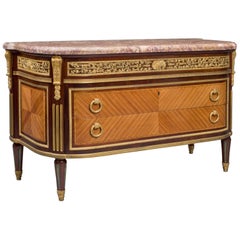
Louis XVI Style Commode after a Model by Jean-François Leleu, circa 1870
Located in Brighton, West Sussex
A Fine Louis XVI Style gilt bronze Mounted Commode after a Model by Jean-François Leleu. French, circa 1870. This important commode has a moulded rectangular Brocatelle Violette du Jura marble top above a frieze drawer with a pierced foliate cast panel, above two panelled long drawers quarter-veneered sans travers. The fluted angles of the commode are headed by scrolled acanthus cast clasps and it is raised on turned tapering legs with toupie feet. The commode is based on the celebrated 18th century model, by Jean-François Leleu (1729-1807), now conserved at the Petit Trianon at Versailles. It was placed there in 1867 following an exhibition organised at the request of Empress Eugénie in memory of Queen Marie-Antoinette. The commode was further exhibited in Paris in the retrospective part of the Exposition de l' Union centrale des arts décoratifs in 1882. Literature: Exposition de l' Union centrale des arts décoratifs, (Paris), 1882. De Champeau & Others. Les arts du bois, pub. Quantin, 1883; p. 80. P. Arizzoli-Clementel. Versailles Furniture...
Category

Antique Late 19th Century French Louis XV Commodes and Chests of Drawers

Materials

Marble, Bronze

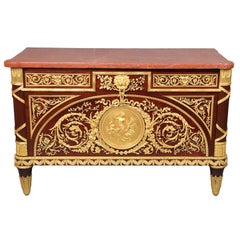
A Fantastic Quality Mid 19th Century Gilt Bronze Mounted Commode By Pretot
By Hippolyte-Edme Pretot
Located in Long Island City, NY
A Fantastic Quality Mid 19th Century Gilt Bronze Mounted Louis XVI Style Mahogany Commode By Pretot A marble top above a frieze applied with scrolling-vine mounts and fronted by tw...
Category

Antique Mid-19th Century French Belle Époque Commodes and Chests of Drawers

Materials

Marble, Bronze, Ormolu

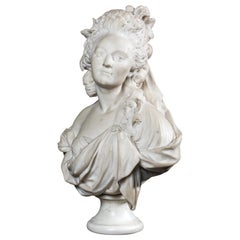
18th C. French Marble Bust of Dancer Marie-Madeleine Guimard, Antoinette Style
Located in Madrid, ES
This expressive 18th century marble portrait bust is of Marie-Madeleine Guimard (1743-1816), a successful dancer and one of the most famous courtesans of pre-Revolutionary France. The bust is unsigned, but identical to one in the collection of London's V&A museum carved...
Category

Antique Late 18th Century French Neoclassical Busts

Materials

Marble

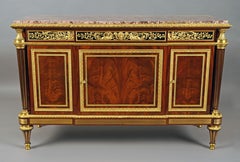
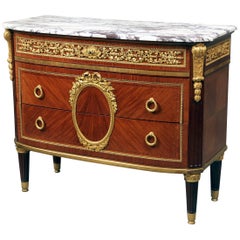
F. Schmit, Louis XVI style Commode, France, circa 1880
By Frédéric Schmit
Located in PARIS, FR
Beautiful Louis XVI style commode opening with three doors topped with drawers decorated with rich and fine ornamentation in chased and gilded bronze of female masks, ibexes and youn...
Category

Antique 1870s French Louis XVI Commodes and Chests of Drawers

Materials

Marble, Bronze

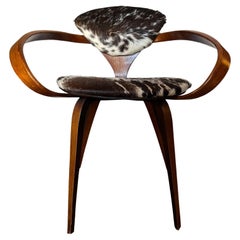
Vintage Cherner Chair with a unique cowhide cover
By Norman Cherner
Located in Paris, FR
Super rare Cherner chair: a 1958 Design Icon in a unique cowhide cover. Steam-bent walnut wood chair upholstered in cowhide. Design by Norman Cherner. Manufactured in 1958 by Plycraft, USA. If you are looking for an American design Icon, here is one. The Cherner Chair was featured on Norman Rockwell's cover for the Saturday Evening Post in June 1961. The base and seat are molded in walnut plywood. The armrest, unique in its rounded shape is composed of a single piece of walnut. This armchair combines lightness and elegance, it is a favorite piece for a unique decoration! This one, selected by Marie-Antoinette, is maybe the only vintage sample...
Category

Antique 1850s American Mid-Century Modern Chairs

Materials

Cowhide, Walnut

Special Late 19th Century Gilt Bronze Marble Top Side Table By Maison Millet
By Maison Millet
Located in Long Island City, NY
A Special Late 19th Century Louis XV Style Gilt Bronze Marble Top Side Table By Maison Millet Maison Millet The shaped breche violette marble top above the pierced bronze floral fr...
Category

Antique Late 19th Century French Belle Époque Gueridon

Materials

Marble, Bronze, Ormolu

French Bronze of Napoleon Marching in Waterloo After Marius-Jean-Antonin Mercié
By Marius Jean Antonin Mercié
Located in Los Angeles, CA
A Fine and Large French Early 20th Century Bronze of Napoleon Marching in Waterloo Cast after a model by Marius-Jean-Antonin Mercié (French, 1845-1916). The impressive bronze sculptu...
Category

Antique Early 1900s French Empire Figurative Sculptures

Materials

Bronze

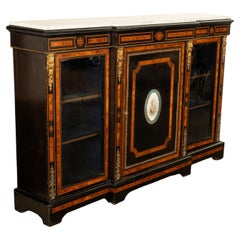
Antique French Napoleon III Ebony Ormolu Marble Sevres Porcelain Credenza 1860
Located in Portland, OR
A fine antique French Napoleon III burl inlaid with a marble top and ormolu mounted credenza/cabinet, inset with a Sevres porcelain portrait ...
Category

Antique 1860s French Napoleon III Buffets

Materials

Ormolu

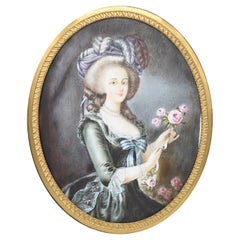
Miniature Painting European, Circa 1900
Located in West Palm Beach, FL
Miniature painting European. Circa 1900. Marie Antoinette Painted by Andre, Signed. After the original by Charles Le Brun (1619-1690) Measuring 3...
Category

20th Century Decorative Art

Materials

Paint

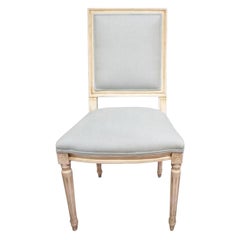
Louis XVI Style Painted Square Back Side or Dining Chair for custom order
Located in Oakville, ON
This Louis XVI style square back dining chair is one of our most popular, best seller dining chair for us. The frame is made in Italy of soli...
Category

2010s Italian Louis XVI Dining Room Chairs

Materials

Wood

Louis XVI Style Mahogany Gilt Bronze Centre Table by Paul Sormani, circa 1890
By Jean-Henri Riesener, Paul Sormani
Located in Brighton, West Sussex
A Louis XVI style mahogany gilt bronze centre table after The Model by Jean-Henri Riesener by Paul Sormani. French, circa 1890. Stamped 'Paul Sormani 10 rue Charlot à Paris'. ...
Category

Antique Late 19th Century French Louis XVI Center Tables

Materials

Bronze

Pair of French Tôle Two-Light Sconces with Ostrich Plume Motifs, circa 1890
Located in Atlanta, GA
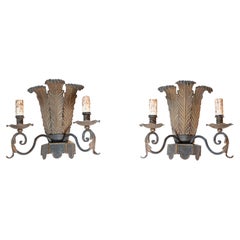
A pair of French Louis XVI style tôle two-light sconces with ostrich plume motifs from the late 19th century. Each of this pair of French sconces features an exquisite grouping of os...
Category

Antique Late 19th Century French Louis XVI Wall Lights and Sconces

Materials

Tôle

A Significantly Important and Rare 18th Century French Sleigh Form Crown Chair
Located in Hastings, GB
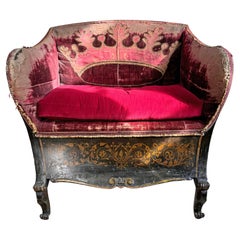
This outstanding piece of French Nobility history with its opulent hand painted lacquered decoration featuring classical figures and motifs, set upon a deep, dark olive green backgro...
Category

Antique Late 18th Century French Neoclassical Armchairs

Materials

Wood

A large scaled pair of French 19th century Louis XVI st. Ormolu sconces
Located in West Palm Beach, FL
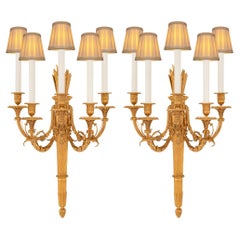
An impressive and large scaled pair of French 19th century Louis XVI st. Ormolu sconces. The sconces after a model by Pierre Gouthière display five scrolled arms showcasing reeded de...
Category

Antique 19th Century French Louis XVI Wall Lights and Sconces

Materials

Ormolu

Very Nice 19th Century Gilt Bronze Mounted Commode By Haentges Freres
By Haentges Freres
Located in Long Island City, NY
A Very Nice Late 19th Century Louis XVI Style Gilt Bronze Mounted Commode By Haentges Freres Haentges Freres A marble top above a bronze frieze, with one long drawer decorated with...
Category

Antique Late 19th Century French Belle Époque Commodes and Chests of Dra...

Materials

Marble, Bronze, Ormolu

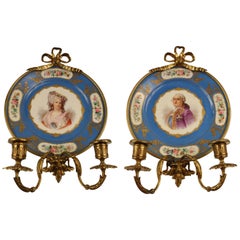
Pair of Antique Sevres Cabinet Plates Mounted as Wall Sconces
Located in Montreal, QC
A pair of antique two-light gilt bronze wall sconces each mounting a Sevres cabinet plate, one painted with Louis XVI , the other with Marie Anto...
Category

Antique Mid-19th Century French Louis XVI Ceramics

Materials

Bronze

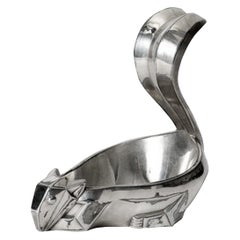
Large Art Deco Squirrel Drageoir by Gallia, Christofle
By Gallia
Located in Paris, FR
Large Art Deco squirrel drageoir was designed by Antoinette de Ribes (1892-1972) for Gallia in 1931 with beautiful stylized lines. This is the origin...
Category

Vintage 1930s French Art Deco Sheffield and Silverplate

Materials

Silver Plate

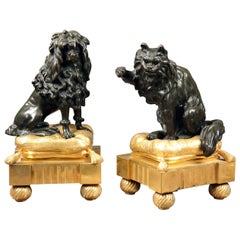
Cute Pair of Late 19th Century Gilt and Patina Bronze Chenets / Bookends
By Jacques Caffieri
Located in Long Island City, NY
A cute pair of late 19th century gilt and Patina bronze chenets / bookends Depicting a dog and cat perched on a pillow, sitting on a bronze base.  This...
Category

Antique Late 19th Century French Belle Époque Animal Sculptures

Materials

Bronze

"He extended toward King Louis the precious memorial"
By Howard Pyle
Located in Fort Washington, PA
Illustration for "The Man For the Hour: The Devoted and Heroic Patriotism of Colonel John Laurens" by James Barnes for McClure's Magazine, published December 1899. The full caption reads: "At the same time he extended toward King Louis...
Category

1890s Figurative Paintings

Materials

Oil, Panel

Elegant Pair of Japanese Style Dishes, France, Circa 1875
Located in PARIS, FR
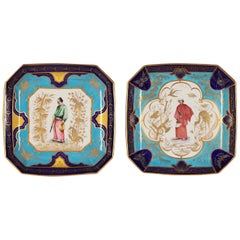
Pair of 18th century soft-paste porcelain dishes finely decorated in the 19th century with medallions representing Japanese theatre characters dressed in traditional costumes, beautiful gold-embossed ornament on a polychrome background. These dishes are to be linked with the production of the Sèvres Manufacture. The Manufacture de Sèvres, factory of soft-paste porcelain, was founded in 1738 at Vincennes by bankers and financiers hoping to discover the secret of making hard-paste porcelain, used in Meissen at the time. In 1753, King of France Louis XV became the main shareholder of the factory, transferring it to Sèvres, closer to Versailles and the castle of Bellevue, owned by la Marquise de Pompadour, very interested by Sèvres’ research and supportive of the works. In 1759, the King became the sole shareholder of the Manufacture, making it the property of the French Crown. From this day on, the Sèvres artworks were marked with the royal seal, two intertwined “L’s”, as well as a letter indicating the year of creation. The period between 1756 and 1779 represents the most prosperous years for the factory. To support Sèvres, Louis XV made sumptuous orders offered as diplomatic presents. The main artists at the time, such as painters Boucher and Bachelier or sculptors Falconet and Boizot, worked for the factory. Research on the making of hard-paste porcelain kept going and succeeded after 1769. From this year, Sèvres successfully produced both soft-paste and hard-paste porcelain. It is also during this period that the most beautiful and singular colors were invented: bleu lapis in 1752, bleu celeste in 1753, green in 1756, famous pink in 1757 and royal blue in 1763. The most significant pieces are ornamented with scenes inspired by engravings from famous painters (Boucher) and ornamentalists. They are also decorated with garlands, bunches of flowers, trophies, gildings… The fine quality of Sèvres’ production covers a large range of statuettes (Falconet’s threatening Love), full services (Rambouillet’s service is presented to Marie-Antoinette in 1788), as well as utilitarian or ornamental items. The role played by haberdashers in the production’s development is essential. They originated trends around Sèvres-designed products, such as Daguerre who decorated his most precious furniture with porcelain...
Category

Antique 1870s French Porcelain

Materials

Porcelain

Contemporary 34ct Diamond Platinum Scroll Bombé Bracelet, Circa 2000s
Located in New York, NY
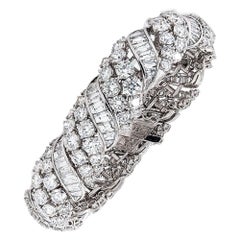
Like beautiful swells in the ocean, there is nothing quite so lovely as waves of diamonds, especially when they are encircling your wrist. This sparkling Contemporary Diamond Scroll Bombé Bracelet is crafted in platinum and features wide diagonal striped bands of round brilliant-cut diamonds alternating with narrow bands of baguette diamonds with an estimated weight of 34 carats...
Category

21st Century and Contemporary American More Bracelets

Materials

Diamond, Platinum

French Pair Queen Louis XV cabriolet armchairs green velvet upholstery 19th
Located in Beuzevillette, FR
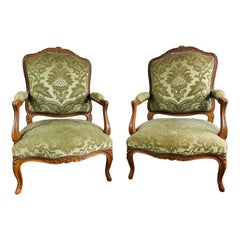
Charming pair of Louis 15 style cabriolet armchairs in beech wood, covered in almond green velvet fabric. Napoleon 3 Period. 2 Very beautiful flat-backed armchairs called “à la rein...
Category

Antique Mid-19th Century French Louis XV Armchairs

Materials

Upholstery, Wood

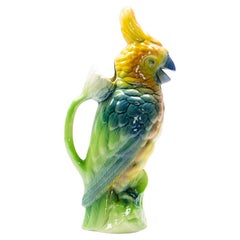
French Saint Clément Majolica Parrot Absinthe Pitcher Decanter
By Saint-Clément
Located in AMSTERDAM, NH
French majolica parrot absinthe or water pitcher by St. Clément. In good condition, the pitcher showcases a vibrant coloration and glaze, making it an excellent decorative piece for...
Category

Vintage 1920s French Ceramics

Materials

Ceramic, Majolica

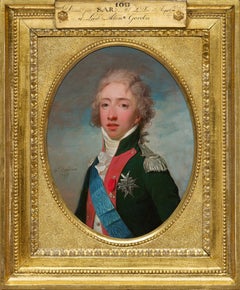
Two royal portraits (the Duc d Angoulême and the Duc de Berry) by H.P. Danloux
Located in PARIS, FR
These two royal portraits are a major historical testimony to the stay of the Comte d'Artois (the future Charles X) and his family in Edinburgh in 1796-1797. Given by the sitters to Lord Adam Gordon, the Governor of Edinburgh, and kept by family descent to this day, these two portraits provide us with a vivid and spontaneous image of the Duc d’Angoulême and his brother the Duc de Berry. Danloux, who had emigrated to London a few years before, demonstrate his full assimilation of the art of British portrait painters in the brilliant execution of these portraits. 1. Henri-Pierre Danloux, a portraitist in the revolutionary turmoil Born in Paris in 1753, Henri-Pierre Danloux was first a pupil of the painter Nicolas-Bernard Lépicié (1735 - 1784) and then, in 1773, of Joseph-Marie Vien (1716 - 1809), whom he followed to Rome when, at the end of 1775, Vien became Director of the Académie de France. In Rome he became friends with the painter Jacques-Louis David (1748 - 1825). Returning to France around 1782, he settled in Lyon for a few years before returning to Paris in 1785. One of his first portraits was commissioned by the Baroness d'Etigny, the widow of the former Intendant of the Provinces of Gascony, Bearn and Navarre Antoine Mégret d'Etigny (1719 – 1767). He then became close to his two sons, Mégret de Sérilly and Mégret d'Etigny, who in turn became his patrons. In 1787, this close relationship with the d'Etigny family was further strengthened by his marriage to Antoinette de Saint-Redan, a relative of Madame d'Etigny. After his marriage, he left for Rome and did not return to France until 1789. It was during the winter of 1790-1791 that he painted one of his masterpieces, the portrait of Baron de Besenval. Set in a twilight atmosphere, this portrait of an aristocrat who knows that his death is imminent symbolizes the disappearance of an erudite and refined society which would be swept away by the French Revolution. The Jacobin excesses led Danloux to emigrate to England in 1792; many members of his family-in-law who remained in France were guillotined on 10 May 1794. Danloux enjoyed great success as a portrait painter in England before returning to France in 1801. During his stay in England, Danloux was deeply under the influence of English portraitists: his colors became warmer (as shown by the portrait of the Duc d'Angoulême that we are presenting), and his execution broader. 2. Description of the two portraits and biographical details of the sitters The Duc d'Angoulême (1775-1844) was the eldest son of the Comte d'Artois, the younger brother of King Louis XVI (the future King Charles X), and his wife Marie-Thérèse of Savoie. He is shown here, in the freshness of his youth, wearing the uniform of colonel-general of the "Angoulême-Dragons" regiment. He is wearing the blue cordon of the Order of the Holy Spirit, which was awarded to him in 1787, and two decorations: the Cross of Saint-Louis and the Maltese Cross, as he was also Grand Prior of the Order of Malta. Born on 16 August 1775 in Versailles, Louis-Antoine d'Artois followed his parents into emigration on 16 July 1789. In 1792, he joined the émigrés’ army led by the Prince de Condé. After his stay in Edinburgh (which will be further discussed), he went to the court of the future King Louis XVIII, who was in exile at the time, and in 1799 married his first cousin Marie-Thérèse Charlotte of France, the daughter of Louis XVI and the sole survivor of the royal family. The couple had no descendants. He became Dauphin of France in 1824, upon the accession to the throne of his father but played only a minor political role, preferring his military position as Grand Admiral. Enlisted in Spain on the side of Ferdinand VII, he returned home crowned with glory after his victory at Trocadero in 1823. He reigned for a very short time at the abdication of Charles X in 1830, before relinquishing his rights in favor of his nephew Henri d'Artois, the Duc de Bordeaux. He then followed his father into exile and died on 3 June 1844 in Gorizia (now in Italy). His younger brother, the Duc de Berry, is shown in the uniform of the noble cavalry of the émigrés’ Army. He is wearing the blue cordon of the Order of the Holy Spirit, awarded to him in May 1789, and the Cross of Saint-Louis (partly hidden by his blue cordon). Born on 24 January 1778 in Versailles, Charles-Ferdinand d'Artois also followed his parents into emigration and joined the émigrés’ army in 1792. After his stay in Edinburgh, he remained in Great Britain, where he had an affair with Amy Brown...
Category

1790s Old Masters Portrait Paintings

Materials

Canvas, Oil, Wood Panel

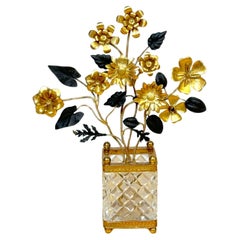
Baccarat Style French Crystal Gilt Patinated Bronze Floral Topiary Cachepot
By Baccarat
Located in West Palm Beach, FL
Baccarat Style French Crystal Gilt and Patinated Bronze Floral Topiary Cachepot, France, Circa 1960s  An exuberant Baccarat-style French crystal gilt and patinated bronze floral top...
Category

20th Century French Neoclassical Figurative Sculptures

Materials

Crystal, Bronze

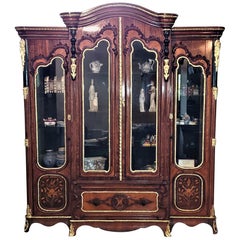
Large 19 Century French Rococo or Neoclassical Revival Style Vitrine
By David Roentgen
Located in Dallas, TX
Stunning 19th century French Empire, neoclassical/Rococo Revival style Marquetry vitrine or display cabinet, of large proportions!! A real statement piece! Made of a fabulous variety of veneers, including kingwood, satinwood, tulipwood, harewood and walnut with quality classical ormolu mounts. It has ebonized pillars in the Empire style, with walnut and exotic hardwood friezes in the Rococo style. Double glass doors to middle section and single glass doors on either side. The glass on the doors are framed in ormolu banding. Floral Marquetry panels on front and parquetry on the sides. The front central section is a pullout / pull-out drawers with gorgeous walnut frieze panel and original carved walnut knobs. Scrolling pelmet on the top in 3 sections banded in ormolu beading. Scrolling base with cabriolet feet and ormolu mounts on base. Various ormolu mounts, floral mounts, mounts of Baachus and mounts of neoclassical female figures. In 3 sections. with 2 side cabinets and large central section with 3 section pelmet, stunning piece!!! The quality ormolu mounts are marked with the letter “R” and what appears to be “FR 678”. We were originally of the belief that this piece might have been made at the very end of the 19th century, but having regard to the quality of workmanship throughout this piece we are of the opinion that it was most likely made in the third quarter of the 19th century, circa 1870 and by an obviously top quality Parisienne maker with a surname beginning with “R”. It is definitely in the style of David Roentgen who was known for his Rococo/neoclassical styles. David Roentgen, (born Aug. 11, 1743-died Feb. 12, 1807, Wiesbaden, Duchy of Nassau), cabinetmaker to Queen Marie-Antoinette of France; under his direction the family workshop at Neuwied (near Cologne), founded by his father, Abraham Roentgen, became perhaps the most-successful firm of furniture production in the 18th century. After succeeding his father as head of the Neuwied workshop in 1772, Roentgen strove to broaden their clientele, an ambition that brought him first to Hamburg and ultimately to Paris (1774), where in 1779 he was spectacularly successful in selling his finest furniture to King Louis XVI of France for £3,300 to £4,000, an unprecedented sum for the time. Appointed cabinetmaker to the queen, Roentgen was granted admission (1780) as maître-ébéniste (master cabinetmaker) to the trade corporation of Paris cabinetmakers, making it possible for him to keep in Paris a stock of the furniture manufactured at Neuwied. Thus he was able to compete with such great cabinetmakers as Jean-Henri Riesener and Adam Weisweiler, reputedly his former pupil at Neuwied. After his first visit to St. Petersburg, Empress Catherine II the Great bought huge quantities of his furniture; King Frederick William II of Prussia was also his client. When in 1795 the French Revolutionary armies threatened to cross the Rhine, Roentgen evacuated his establishment and moved his stock farther inland. Unfortunately, he lost everything in his Parisian salon and in his Neuwied workshop, both of which were sacked by Republican troops. He was crushed, despite his appointment as court furnisher to the king of Prussia. Although he never succeeded in starting production again, former apprentices of his whom he helped to establish in the German cities of Berlin (David Hacker...
Category

Antique Mid-19th Century French Rococo Revival Vitrines

Materials

Ormolu

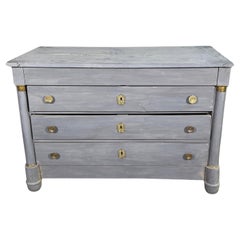
Late 19th Century Empire Style Chest with Ormolu Hardware and Mounts
Located in Scottsdale, AZ
Late 19th Century Empire Style Chest with Ormolu Hardware and Mounts Beautiful piece purchased in France. Painted in Marie Antoinette Grey. Age appropriate wear, see detailed phot...
Category

Antique 19th Century French Empire Commodes and Chests of Drawers

Materials

Wood

Pair of French 19th Century Louis XVI St. Sconces After a Model by Gouthière
Located in West Palm Beach, FL
A striking and very unique pair of French 19th century Louis XVI st. enameled bronze and ormolu sconces after a model by Pierre Gouthière. Each two arm sconce is centered by a beauti...
Category

Antique 19th Century French Louis XVI Wall Lights and Sconces

Materials

Bronze, Ormolu

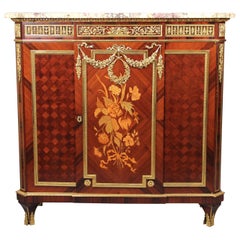
Late 19th Century Gilt Bronze Mounted Marquetry and Parquetry Cabinet by Millet
By Maison Millet
Located in Long Island City, NY
Late 19th Century Gilt Bronze Mounted Louis XVI Style Inlaid Marquetry and Parquetry Cabinet By Theodore Millet By Theodore Millet The large marble t...
Category

Antique Late 19th Century French Belle Époque Cabinets

Materials

Marble, Ormolu, Bronze

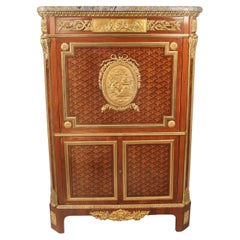
Special 19th Century Gilt Bronze Mounted Inlaid Parquetry Secretaire a Abattant
By Jean-Henri Riesener
Located in Long Island City, NY
A Special Late 19th Century Gilt Bronze Mounted Inlaid Parquetry Secretaire a Abattant The shaped marble top above a long center frieze drawer with a large central bronze plaque of putti at play, the beautiful parquetry drop-down door centered with an elliptical gilt bronze panel depicting ”A Sacrifice to Love”, a classically dressed woman presenting an infant to Cupid, who stands on a pedestal, the plaque has ribbon tied flowers, the inside centered with a mirror surrounded by drawers and pigeonholes, the fall-front itself provides a black leather writing surface, the bottom doors opening to two more drawers and a shelf, the sides decorated with similar parquetry designs. This piece is a copy of the 18th century Secretaire by Jean-Henri Riesener which is presently in the Wallace Collection...
Category

Antique Late 19th Century French Belle Époque Cabinets

Materials

Marble, Ormolu, Bronze

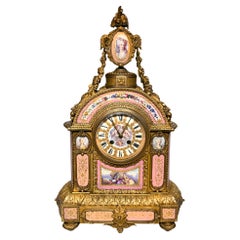
French, Sevres Style, Gilt Bronze, Porcelain, Mantle Clock by Vincent Cie
Located in New York, NY
An antique Napoleon III arched mantle clock, featuring pink porcelain panels with hand painted portraits of Marie Antoinette and courtship. A hinged door p...
Category

Antique Mid-19th Century French Napoleon III Mantel Clocks

Materials

Bronze, Enamel, Gold Leaf

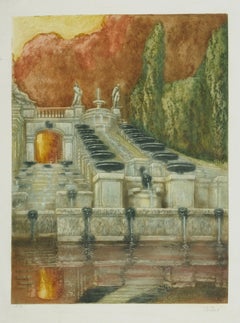
La Grande Cascade de Saint Cloud
By Alfredo Müller
Located in Fairlawn, OH
La Grande Cascade de Saint Cloud Color aquatint on watermarked Arches J Perrigot paper, 1905 Signed by the artist in pencil lower right. (see photo) Edition: 100. Numbered "39" in ...
Category

Early 1900s French School Prints and Multiples

Materials

Aquatint

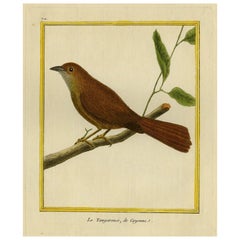
Original Hand-Colored Antique Bird Print of Tanager Bird, ca.1770
Located in Langweer, NL
Antique print titled 'La Tangaroux, de Cayenne.' This print shows a tanager bird. Originates from 'Histoire Naturelle des Oiseaux', by Comte de Buffon, published in Paris from 1770...
Category

Antique 1770s Prints

Materials

Paper

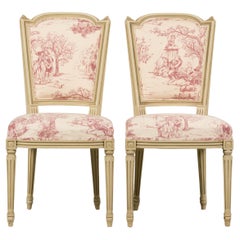
Antique French Louis XVI Style Painted Accent Side Chairs in Rose Toile - A Pair
Located in Astoria, NY
An exquisite pair of restored antique French accent side chairs in the Marie Antoinette/Louis XVI style, sourced from Provence, France. These chairs feature finely hand-carved shield...
Category

Early 20th Century French Louis XVI Side Chairs

Materials

Fabric, Paint, Maple, Cotton

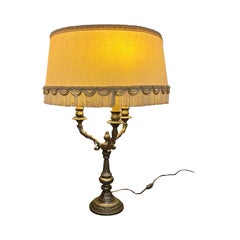
French Louis XVI style 3-arm gilt silver metal living room lamp - France
Located in Beuzevillette, FR
Magnificent Louis XVI style gilt silver metal lamp with three light arms decorated with a fluted shaft and pearl friezes. Large living room lamp with ...
Category

Mid-20th Century French Louis XVI Table Lamps

Materials

Metal