502 results for "marie antoinette"
to
77
239
226
250
107
95
88
57
57
50
41
34
31
24
21
20
12
10
9
9
7
7
6
6
6
6
4
4
4
4
3
3
3
2
2
2
2
2
1
1
1
1
1
1
1
12
11
10
8
7
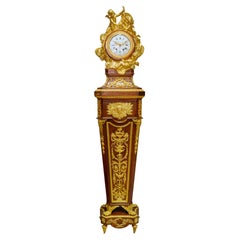
Superb 19th Century Grandfather Clock by Haentges Freres
By Haentges Freres
Located in Tarzana, CA
A superb quality 19th century French Louis XV Style Ormolu Mounted Mahogany and King-wood Parquetry "Re´gulateur de Parquet" Grandfather longcase Clock by Haentges Freres.
The drum...
Category
Antique Late 19th Century French Louis XVI Grandfather Clocks and Longca...
Materials
Ormolu

$88,500 Sale Price
25% Off
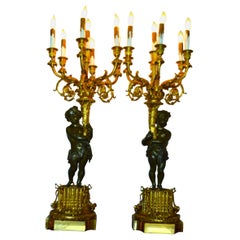
True Pair of electrified gilded bronze candelabras, 7 lights, male, female putti
Located in Oakville, ON
A very fine quality true pair of Louis XVI style candelabras in solid gilded bronze. This pair is highly decorative as well as functional since it has been electrified. The base is ...
Category
Antique Late 19th Century French Louis XVI Candelabras
Materials
Bronze
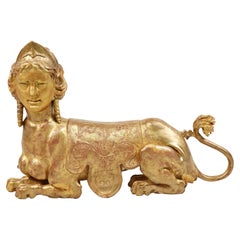
Early 19th Century English Regency Greek Revival Gilt Carving of a Sphinx
Located in Chicago, IL
From the 1700s through the early 1800s, European aristocrats developed a fascination with ancient Egyptian culture and design that culminated in a full Egyptian Revival. Prominent figures such as Marie Antoinette and Napoleon Bonaparte commissioned rooms decorated with Egyptian motifs. This cultural moment reflects a fascination with a sophisticated civilization of great artists and pharaohs. The Regency era possessed very little knowledge of the Great Pyramids or hieroglyphics, a quality that lent Egyptian art interpretation a compelling air of mystique.
This English Regency period gilt carving depicts a popular figure of borrowed Egyptian motif: the Sphinx. Recognized among educated circles as a symbol of brilliance in the ancient past, the Sphinx was well-known as a mythological creature who destroys those who failed to answer her riddle. Such a piece as this, excellent in detail and craftsmanship, may have once graced the mantle of a gentleman’s study or been exchanged as a gift between British scholars. The beautiful gold surface has been achieved by an artful combination of gilt and gesso; the art enthusiast will appreciate the intricate texture realized in the carving’s hair and tail as well as the delicate detailing of the saddle.
Borrowing from the Egyptians, the Greeks had their own interpretation of the Sphinx. Greek mythology chronicled the Sphinx as being the daughter of Orthous and Chimera or Laius and attributed the riddles, which she proposed, as having been taught to her by the Muses. Crowned with a Grecian diadem and having a refined expression, she evokes an ancient yet reserved intellect.
For the modern-day enthusiast of classical Greek art...
Category
Antique Early 19th Century English Regency Figurative Sculptures
Materials
Gold Leaf
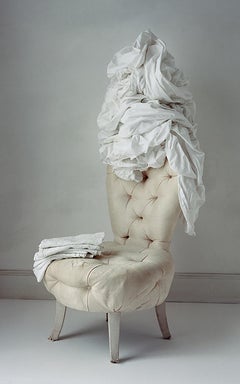
Chair, Napkins and Sheets (Contemporary Still Life of Upholstered Chair Sheets)
By David Halliday
Located in Hudson, NY
"Chair, Napkins and Sheets" by David Halliday, 2020,
archival pigment print, edition of 10
35 3/4" X 22 1/4" Image size
38.25 x 24.75 inch paper size
Contemporary Still Life Color...
Category
2010s Contemporary Still-life Photography
Materials
Archival Pigment
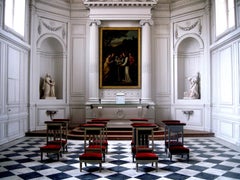
Chapel at Versailles
By Karyn Mannix
Located in East Hampton, NY
Marie Antoinette
Chapel at Versailles
MATTE PHOTO PAPER
Photograph
About the artist:
Karyn Mannix’s paintings have been exhibited in galleries throughout the United States and has...
Category
2010s Contemporary Color Photography
Materials
Photographic Paper
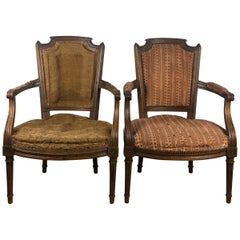
Parisian Pair of 18th Century Louis XVI Armchairs or Fauteuils, Stamped/Signed
Located in Miami, FL
Important French 18th Century Pair of Louis XVI Armchairs or Fauteuils, Stamped - Signed
This exceptional pair of Louis XVI period armchairs, dating to the late 18th century, bears ...
Category
Antique 18th Century French Louis XVI Armchairs
Materials
Beech, Fabric
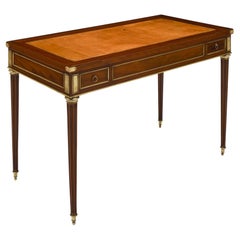
French Louis XVI "Trictrac" Table
Located in Austin, TX
An 18th century Louis XVI period French Mahogany Trictrac table with gilt brass trims throughout. This museum quality piece in the manner of Riesener (M...
Category
Antique 1790s French Louis XVI Game Tables
Materials
Brass
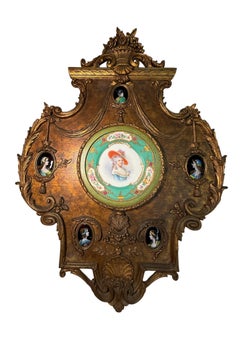
Sevres Porcelain Portrait Wood Wall Plaque
By Manufacture Nationale de Sèvres
Located in Guaynabo, PR
This a Sevres Porcelain Portrait Wood Wall Plaque. It depicts a hand carved large gilt wood plaque shaped as a quatrefoile shield. The center...
Category
Antique Late 19th Century French Rococo Decorative Art
Materials
Porcelain, Wood
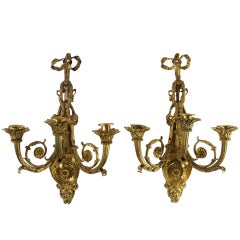
Rare Pair of Louis XVI Style Gilt Bronze Three-Light Sconces
Located in Kittery Point, ME
Each lyre-shaped backplate topped with ribbon-tied cresting and garlands ending with the mask of a satyr. See "Vergoldete Bronzen" (1986), Vol. I, p.242, Ill. 4.5.10 for a similar m...
Category
Antique 19th Century French Neoclassical Wall Lights and Sconces
Materials
Bronze
$18,000 Sale Price / set
40% Off
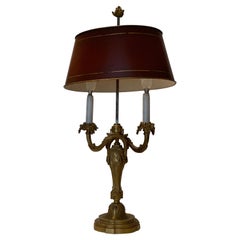
Magnificent lamps in gilt bronze louis XVI style
Located in Los Angeles, CA
Louis XVI style lamps two lights in bronze called bouyotte lamps with its lampshade in painted sheet metal ,bordeaux color. The lampshade can be adjusted to the desired height
the b...
Category
Antique 1890s French Louis XVI Table Lamps
Materials
Bronze
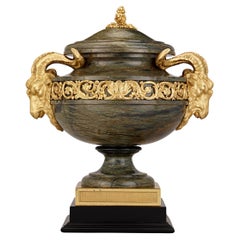
18th-Century Gilt Bronze
Egitto Serpentino Urn After Pierre Gouthière
Located in New Orleans, LA
This 18th-century gilt bronze & Egitto Serpentino urn is modeled after the opulent design of one of the last gilders of the Versailles Court, Pierre Gouthière. An identical urn is he...
Category
Antique 18th Century French Louis XVI Urns
Materials
Marble, Bronze, Ormolu
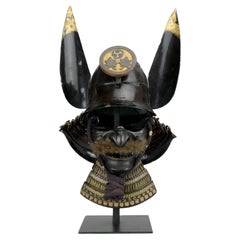
Samurai Helmet "Zunari Kabuto" - Early Edo (circa 1610)
Located in Paris, FR
Samurai Helmet "Zunari kabuto" with 3 black lacquered iron plates.
Japan, early EDO period, circa 1610.
Neck protector (shikoro), 5-strip hineno, laced brown, beige and green.
Central ornament (maedate) in gold and silver lacquered wood. Triple tomo with 2 maple leaves. 2 rounded horn-shaped side ornaments (wakidate) in black and gold lacquered wood.
Black-lacquered iron mask...
Category
Antique Early 17th Century Japanese Edo Antiquities
Materials
Iron
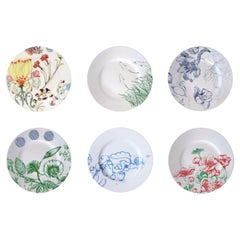
Mix
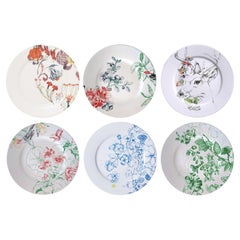
Match, Six Contemporary Porcelain Bread Plates with Multicolored Flowers
By Francesca Colombo
Located in MILAN, IT
If you are looking for an unique tableware in order to make your lunch special and chic every day, this "Mix and Match" bread porcelain set of six is the perfect solution. It is an e...
Category
2010s Italian Porcelain
Materials
Porcelain
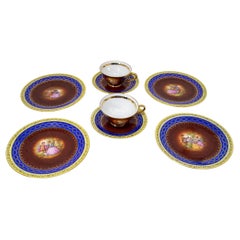
Fragonard Porcelain Hand Painted Matched Porcelain Cabinet Cup and Saucer Set
By (After) Jean-Honoré Fragonard, Limoges
Located in Moreno Valley, CA
After Fragonard Painting Signed French Style Porcelain Hand Painted Matched Porcelain Cabinet 2 Cups with Saucer and 4 small plates.
Manufactured by...
Category
Mid-20th Century German Louis XIV Porcelain
Materials
Porcelain
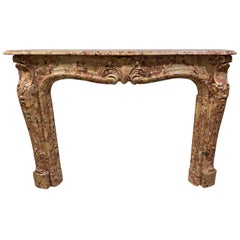
French Beige and Rouge Marble Fire Surround
Located in Manhasset, NY
French Louis XVI style Brèche de Sicile marble mantel surround with white veining, the serpentine shelf above a swept frieze with cental paterae...
Category
Antique 1890s French Louis XVI Fireplaces and Mantels
Materials
Marble
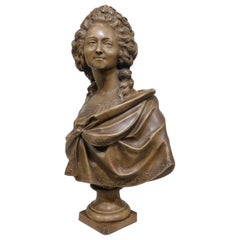
After Augustin Pajou, French, Large Terracotta Bust
By Augustin Pajou
Located in Hamilton, Ontario
Large 19th century terracotta ceramic figurative sculpture, beautifully hand crafted after French neoclassical sculptor Augistin Pajou. Possible to be Marie Antoinette born Maria Ant...
Category
Antique Late 19th Century French Neoclassical Figurative Sculptures
Materials
Terracotta
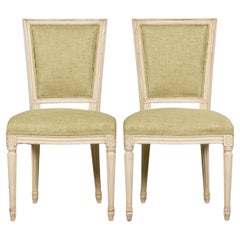
Pair of Antique French Louis XVI Style Painted Accent Side Chairs in Light Green
Located in Astoria, NY
An exquisite pair of restored antique French accent chairs in the Marie Antoinette–Louis XVI style, sourced from Provence. Each chair features a finely hand-carved shield-shaped back...
Category
Antique Late 19th Century French Louis XVI Side Chairs
Materials
Fabric, Paint, Maple, Wood
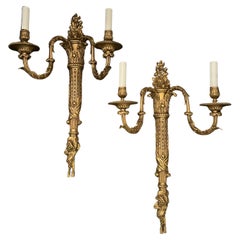
Wonderful Pair French Bronze Regency Sconces Signed Millet a Paris
Located in Roslyn, NY
A Wonderful Pair Of French Gilt Bronze Two-Light Regency Sconces Signed Millet a Paris, Completely Rewired With New Sockets.
Established by Théodore Millet in 1853, the Maison Mille...
Category
Antique 19th Century French Regency Wall Lights and Sconces
Materials
Bronze
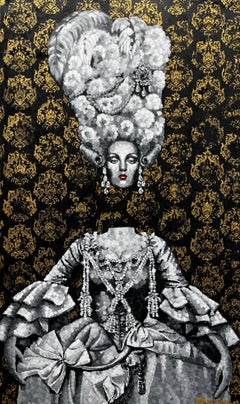
Icon
Located in West Hollywood, CA
A large-scale black, white and gold regency era-inspired pointillism figurative painting of Marie Antoinette by artist Mauricio Battifora
ABOUT TH...
Category
2010s Pointillist Portrait Paintings
Materials
Canvas, Acrylic
$6,400 Sale Price
36% Off
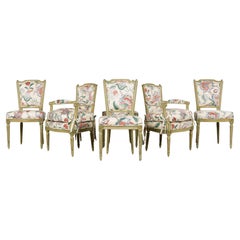
Antique French Louis XVI Painted Green Dining Chairs in Floral Fabric- Set of 6
Located in Astoria, NY
An exceptional set of six late 19th-century French dining chairs, meticulously restored and presented in the refined Marie Antoinette / Louis XVI style. Sourced directly from Paris, ...
Category
Antique Late 19th Century French Louis XVI Dining Room Chairs
Materials
Fabric, Paint, Oak, Cotton
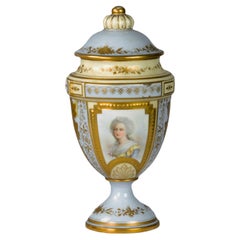
French Sèvres Amphore by Château des Tuileries, 19th Century
By Chateau des Tuileries
Located in Lisbon, PT
This Sevres vase from the 19th century features a delicate light blue porcelain body adorned with beautifully etched friezes and foliages.
The golden painting adds a touch of elega...
Category
Antique 19th Century French Napoleon III Vases
Materials
Porcelain
$3,103 Sale Price
31% Off
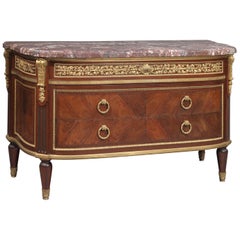
Louis XVI Style Commode after the Model by Leleu by François Linke, circa 1910
By François Linke
Located in Brighton, West Sussex
An important Louis XVI style gilt bronze-mounted commode, after the model by Jean-Francois Leleu by François Linke.
French, circa 1910.
Linke index number: 1127.
Linke title: 'Commode Louis XVI, Bois d'amarante et de rose.'
Signed ‘Linke’ to the right-hand side chute.
This distinguished commode is quarter veneered in mahogany with bois de violette banding and boxwood stringing. It is furnished with finely cast gilt-bronze mounts and surmounted by a brèche violette marble top.
It appears that Linke bought the rights to make this commode from the Vente Cueunières in 1902, although there is no trace of it being made by him until the summer of 1908 and there is no entry in the Blue Daybooks for this model. The green registres have two pages devoted to the making of the commodes, the first at a cost of 1,540 and 40 centimes, with eight more made in the intervening years, the last, a pair, in 1927 with the cost price escalating to 8,529 francs. The registre is not entirely clear, but it appears that Clément Linke, father and son, made the locks for this model. The cabinetmaking was exclusively by Guntren who took 496 hours per commode, paid 85 centimes in 1908 rising to 5 francs 75 cents for the last pair. Linke priced this commode at 3,000 French francs, noting in his book 'original est de Leleu est à Trianon.'
The original commode by Leleu, on loan from the Petit Trianon, is shown in a line engraving in the retrospective part of the Exposition de l' Union Centrale des Arts Décoratifs, Paris, 1882, De Champeau & Others, 'Les arts du bois,' pub. Quantin, 1883, p. 80. The commode entered the Petit Trianon in 1867 on the occasion of an earlier exhibition dedicated to the memory of Marie-Antoinette, organised under the patronage of the Empress Eugénie.
Jean-François Leleu
A pupil and later collaborator with Jean-François Oeben, Jean-François Leleu became maître on the latter’s death in 1763. His work can be divided into two concurrent but distinct styles: the first owing more to the legacy of Oeben, being of large, solid forms, more noble in style; the second, although retaining the clean, definite lines of the first, being an exercise in elegance and understatement. It is this second style for which Leleu is chiefly remembered and which the present commode, with its lightly bombé form and restrained frieze mounts, is a principal example.
Literature:
Payne, Christopher. François Linke, 1855-1946, The Belle Epoque of French Furniture, (woodbridge, UK), 2003; p. 502, for the black and white cliché of index number 1127
Meyer, Jonathan. Great Exhibitions, Antique Collectors club, (Woodbridge, UK), 2006; p. 298 - 300.
Pradère, Alexandre. French Furniture Makers; p. 340, fig. 398; and P.
Arizzoli-Clementel. Versailles Furniture...
Category
Early 20th Century French Louis XVI Commodes and Chests of Drawers
Materials
Bronze
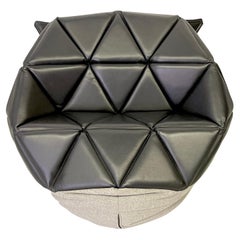
‘Marie’
Triangular Beans
Chair by Antoinette Bader for Freifrau
Located in West Palm Beach, FL
The ‘Marie’ (Triangular Beans) Chair by Antoinette Bader for FREIFRAU.
Germany, Circa 2012
Designed by Zurich- and Vienna-based Antoinette Bader
2012 award winning design- The chair was awarded the title “Interior Innovation Award – Winner
Antoinnete Bader updated the bean bag chair, The 'Marie' is a modern take on the beanbag chair. Its morphing structure allows for numerous sitting positions. The cover is made with interconnected firm padded triangles, and the inside is filled with polystyrene pellets. The triangular structure turns the chair into an aesthetically appealing piece, t
It's a very comfortable and versatile chair ‘Marie’ (Triangular Beans) was designed out of an ordinary beanbag by Antoinette Bader.
This is a rare opportunity to acquire an award winning designed sleek and modern sculptural occasional chair...
Category
21st Century and Contemporary German Modern Lounge Chairs
Materials
Leather, Wool
$2,920 Sale Price
20% Off
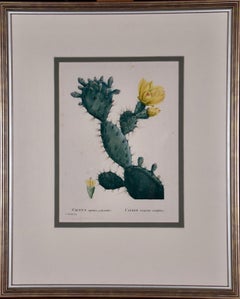
Flowering Prickly Pear Cactus: Framed 18th C. Hand-colored Engraving by Redoute
By Pierre-Joseph Redouté
Located in Alamo, CA
This is a hand-colored stipple engraving entitled "Cactus Opuntia Polyanthos, Cierge Raquette Multiflore" (Prickly Pear Cactus) by Pierre-Joseph Redouté, Plate 59 from his illustrated publication 'Plantarum Historia Succulentarum ou Histoire des Plantes Grasses', published in Paris in 1799. Redoute was a pioneer of the stipple engraving technique, which he used to create this image. It involves utilizing a series of small dots worked into a copper plate rather than the more common lines. These dots can be made smaller or thicker depending on the degree of opacity the artist intends for various areas of the print. When inked and applied to paper, this allows for a greater portion of the paper to be seen, which accentuates the appearance of luminosity of the subject the artist is creating. Different color inks are used in the printing process, a time consuming technique known as "a la poupee". The engraving is then finished with watercolor to further enhance the beauty and realism of the print subject.
This engraving of a flowering cactus is presented in a double mat; white outer mat and heather green inner mat.The mat measures 20" x 16" and the sheet measures 19.5" x 13.38". There are wide margins with a few short tears and chips along the the right and upper edges, which are all covered by the mat. There are small spots predominantly in the margins, but a few are present in the image area, but the print is otherwise in very good condition. There is another Redoute flowering cactus listed on 1stdibs, LU117326854582. The pair would make an attractive display grouping.
Pierre-Joseph Redouté (1759-1840), was a painter and botanist originally from Belgium, who pursued his extremely successful artistic career in France. He is well known for his watercolor paintings of roses, lilies and other flowers and their subsequent folio-sized, color stipple engravings. Some believe him to be the greatest botanical illustrator of all time. Redouté was a favorite of the French royal court at the time and of the post French...
Category
Late 18th Century Naturalistic Still-life Prints
Materials
Engraving
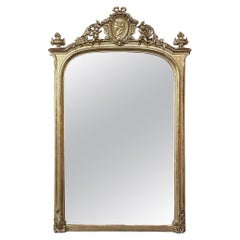
Grand 19th Century French Napoleon III Period Gilded Mirror
Located in Dallas, TX
Grand 19th Century French Napoleon III Period Gilded Mirror is a magnificent example of the craftsmanship and artistry of one of the golden ages in French design! The neoclassical d...
Category
Antique 1870s French Napoleon III Mantel Mirrors and Fireplace Mirrors
Materials
Mirror, Giltwood
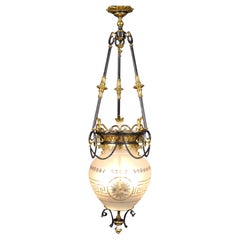
Lantern, attributed to Maison Millet, France, Circa 1890
By Maison Millet
Located in PARIS, FR
Beautiful lantern in double patina bronze and crystal. The central shaft is engraved with a Greek frieze centered on a star. The whole is suspended from a openwork crown decorated wi...
Category
Antique 1890s French Napoleon III Lanterns
Materials
Crystal, Bronze
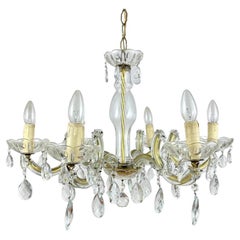
Maria Theresa Style Gilt Brass
Crystal Chandelier, 1960s
Located in Bastogne, BE
Vintage Maria Theresa style chandelier with six brass arms on wich faux candles installed.
Germany.
The framework is in golden bra...
Category
Vintage 1960s German Bohemian Chandeliers and Pendants
Materials
Crystal, Brass
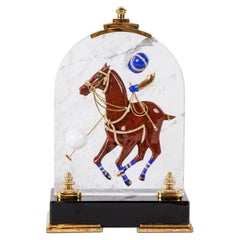
Mellerio Paris, French Gold, Diamonds, Silver, Lapis, and Obsidian Polo Player
By Mellerio dits Meller
Located in Long Island City, NY
Mellerio Paris, A French Gold, Diamonds, Silver-Gilt, Rock Crystal, Enamel, Emerald, Lapis Lazuli, Agate, Emerald, and Obsidian Polo Player, Carved Horse Sculpture, Jeweled Mounted Object.
An extremely rare and unique, one of a kind French Carved Horse Sculpture, Jeweled Mounted Object sculpture "CHEVAUX DE LEGENDE", "A Legendary Horse" by Mellerio, Paris, circa 1999.
Sitting on black obsidian base, the solid rock-crystal slab is finely applied with a carved obdisian hardstone horse and polo player, mounted in 18k gold, brilliant -cut diamonds, emaralds, enamel, lapis lazuli, and agate, .The obsidian base with a plaque engraved: CHEVAUX DE LEGENDE" / MELLERIO DITS MELLER PARIS / 5003 DIV
The piece is in excellent condition and comes with a custom made wood case made for transport. It's very elegant and has French hallmarks throughout. A truly magnificent piece.
Measures 12" high x 8" wide x 4" deep
Founded in France in 1613 by the descendants of Italian immigrants from the Vigezzo Valley in the north of Italy, Mellerio is one of the oldest jewellery houses in Europe. The family business soon attracted the attention of the Royal Court and Marie Antoinette herself reportedly purchased a precious bracelet featuring 7 cameos surrounded by rubies in 1780. Later on, in the 19th century, Mellerio became the official supplier of the French Royal family and the Court of Netherland.
Mellerio creates many jewellery items, all set with rare gems such as peridots, amethysts, aquamarines, citrines and topaz, applying for a patent, the flexible stem, a very supple and light jewellery mechanism. Mellerio remains also well known for their spectacular series of Art Nouveau jewels, created at the beginning of the 20th century, as well as for the creation of trophies rewarding some of the greatest footfall and tennis players of history. In 1993, the jewellery house launched their first watch collection.
Today, Mellerio has stores in Paris, Japan and Hong Kong.
July 14, 1789: this date is known throughout the world as the beginning of the French Revolution. According to a ledger belonging to House of Mellerio, this was also the day that the jeweler sold a golden key to the Comte de Coutance for 10 livres. This ledger, as well as inventories dating as far back as 1768, are the jeweler’s oldest archives. These archives have continued to grow over the years, as the House, established on rue de la Paix in Paris, still lives on today, still in the hands of the same family from Craveggia, in the North of Italy.
The tumultuous history of the Mellerio family in France probably goes as far back as the Italian wars of the Renaissance, but the first official document proving their commercial activity in Paris dates back to 1613. This document is the famous royal warrant awarded by Marie de Medici to a number of Italian families established along the rue des Lombards, including the Mellerios, allowing them to sell “small jewelery items”, therefore granting them a small exception to the traditional monopoly enjoyed by Parisian jewelers. At that time, powerful corporations regulated the operations and customs of Parisian business, but thanks to this exceptional warrant, the Mellerios managed to escape the confines of this framework. Today, this wax-sealed document is kept at the city hall of Craveggia.
From 1613 to the Revolution, the Mellerios lived between France and Italy. The corporations tried many times to put an end to their trade privileges, but all in vain, as a dynasty of sovereigns renewed the warrant. Always marrying and often retiring in Craveggia, the Mellerios continued to maintain their jewelry business in Paris. At first, they did this without a shop. Wearing backpacks (wooden boxes divided into small compartments where jewels were kept), they would tour town fairs around Paris and royal castles.
This is how Jean-Baptiste Mellerio (1765-1850) is said to have sold a bracelet set with rubies and Antique cameos to Marie-Antoinette, which still exists today. Many elements seem to prove the veracity of this anecdote. The queen was particularly fond of cameos, which cover the entire background of her famous jewelry cabinet, and ruby was her favorite stone after diamond. The famous bracelet, reacquired a few years ago by the House of Mellerio, is indeed an 18th century jewel, set with antique cameos representing the profiles of Roman emperors. Two branches of the family were operating in Paris during this time, under the reign of Louis XVI: that of Jean-François (1746-1828), the paternal ancestor of the current Mellerios, and that of Jean-Baptiste (1765-1850).
The French Revolution forced them to return to Italy. However, both Jean-Baptiste and François Mellerio (1772-1843), who was the son of Jean-François, were eventually able to return to Paris after the founding of the Consulate. Jean-Baptiste opened a shop at the Iron Crown of rue Vivienne, and François opened his at the Palais des Tuileries, rue du Coq Saint-Honoré. His well-organized order books give an idea of his high-ranking clientele during the “Old Regime”, among which were the Comte and Comtesse Octave de Segur, the Marquise (later Duchess) de Tourzel, former governess of the royal children, and her daughter, the Comtesse de Bearn, the Craufurds -who organized the flight to Varennes, the Duc and Duchess de Gramont, the Comtesse de Boigne, and Madame de Souza, Talleyrand’s mistress.
We also see the names of the imperial family: Empress Josephine, the Queen of Holland, Princess Elisa, Caroline and Pauline. At that time, the House of Mellerio specialized, among other things, in the trade of antique cameos, a newly fashionable genre of jewel that captured the imagination of all the princesses and noble women of the time.
The years of the Restauration and July Monarchy were among the most glorious. The Bourbons were back on the throne, and the clientele of the House of Mellerio had regained its former wealth. Mellerio supplied Louis-Philippe, Duke of Orléans, as well as his mother, wife and sister, with sumptuous jewels, including a set of emeralds made piece by piece, while the Duke of Bourbon, last prince of the House of Condé, offered diamonds to his mistress, the scheming Baronne de Feucheres, and Monsieur de LaFayette also bought cameos for one of his granddaughters. For the first time, Mellerio ventured into the world of arts in 1815, when Carlotta Grisi, a famous dancer who created Giselle, as well as an actress named Rachel, bought jewels at the Mellerio store on rue de la Paix.
1848 marked a new turning point. France once again became a Republic. François Mellerio handed the company over to his son, Jean, and the latter decided to travel to Spain to build a new clientele. He later became one of the jewelers of the royal family, and met Eugénie de Montijo, who remained a faithful client when she became empress of the French people. The Imperial years were lavish. During the Second Empire, Paris was a pageant of crinoline dresses designed by Worth, while jewels by Mellerio, Worth’s neighbour on the rue de la Paix, adorned the noble women of the Tuileries court.
The Empress bought pearls. Mathilde Bonaparte...
Category
20th Century French Art Deco Figurines and Sculptures
Materials
Agate, Diamond, Emerald, Rock Crystal, Gold, Silver
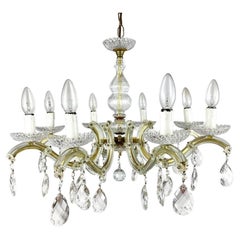
Maria Theresa Style Large Crystal Chandelier, 1970s
Located in Bastogne, BE
Circa 1970s Maria Theresa style chandelier with eight candle arms.
Germany.
The framework is in golden brass, surrounded by 100 % transparent crystal that capture and reflect t...
Category
Vintage 1970s German Mid-Century Modern Chandeliers and Pendants
Materials
Crystal, Brass
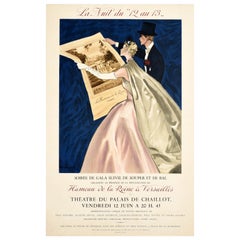
Original Vintage Poster Queens Hamlet Versailles Gala Evening Hameau de la Reine
Located in London, GB
Original vintage poster advertising a gala evening followed by dinner and a ball organised to benefit the restoration of the Queen's Hamlet at Versailles - La Nuit du 12 au 13 Soiree...
Category
Vintage 1950s French Art Deco Posters
Materials
Paper
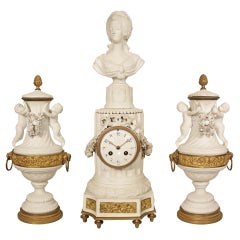
French 19th Century Louis XVI St. Biscuit De Sèvres Garniture Clock Set
Located in West Palm Beach, FL
An exquisite French 19th century Louis XVI st. Biscuit de Sèvres garniture clock set. The set has a pair of urns of prosperity with two cherubs on eac...
Category
Antique 19th Century French Louis XVI Mantel Clocks
Materials
Ormolu
Sèvres Amphore by Château des Tuileries, French, Blue Gold, 19th Century
By Chateau des Tuileries
Located in Lisbon, PT
This Sevres vase from the 19th century features a delicate light blue porcelain body adorned with etched friezes and foliages.
The golden painting adds a touch of elegance, while th...
Category
Antique 19th Century French Louis Philippe Vases
Materials
Porcelain
$3,507 Sale Price
20% Off
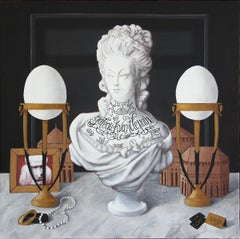
"M. A. Mark Still Life" Contemporary Realist Black and White Interior Painting
By Scott Woodard
Located in Houston, TX
Realist still life painting by contemporary Houston artist Scott Woodard. The work features a white bust of the iconic figure Marie Antoinette with a tattoo...
Category
2010s Contemporary Still-life Paintings
Materials
Acrylic
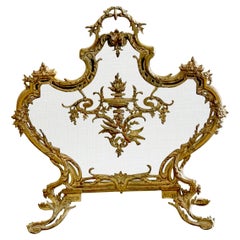
French Louis XVI Style Gilt Ormolu Blackened Mesh Classical Motifs Fire Screen
Located in West Palm Beach, FL
French Louis XVI Style Gilt Ormolu and Blackened Mesh Fire Screen with Classical Trophy Mounts
France, Late 19th to Early 20th Century
Overall: 31" H x 28" W x 8" D
Cartouche screen...
Category
Antique Late 19th Century French Louis XVI Fireplaces and Mantels
Materials
Metal, Steel, Ormolu
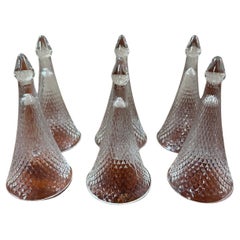
Early 20th century Set of 6 Henri Maire Champagne Glasses, 1900s
Located in LEGNY, FR
Set of 6 champagne glasses called "trinquettes" or "cul sec".
At their base, there is the stamp of "Henri Maire", famous French winemaker (born July 16, 1917 and died November 28, ...
Category
20th Century French Louis XIII Glass
Materials
Glass
Fine French Late 19th Century Gilded Ormolu Rococo Style Inkwell by Millet
By Aimé Millet
Located in Brighton, Sussex
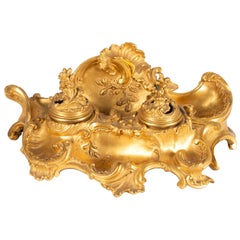
A fine quality late 19th century gilded ormolu inkwell Rococo influenced inkwell, having scrolling foliate decoration to the whole, two lidded inkwells, signed; Millet, Paris
Mais...
Category
Antique Late 19th Century French Rococo Inkwells
Materials
Ormolu
Louis XVI Style Commode À Vantaux by Alfred-Emmanuel-Louis Beurdeley, 1898
By Alfred Emmanuel Louis Beurdeley
Located in Brighton, West Sussex
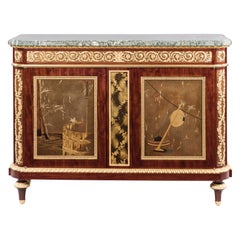
An exceptional Louis XVI style gilt-bronze and lacquer mounted mahogany commode À Vantaux by Alfred-Emmanuel-Louis Beurdeley.
Stamped to the carcass with a 'marque au feu' for ‘A BE...
Category
Antique Late 19th Century French Louis XVI Commodes and Chests of Drawers
Materials
Mahogany
Eminent Women, Illustration for McCall
s Magazine, May 1959
By Stanley Meltzoff
Located in Fort Washington, PA
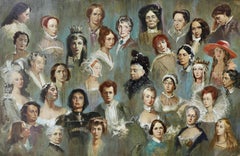
Illustration celebrating important women throughout history, published in McCall's magazine, May 1959.
This large canvas by Stanley Meltzoff presents a compelling tribute to influen...
Category
1950s Portrait Paintings
Materials
Oil, Board
Vintage French Boussac Versailles Fabric with Irish Linen Cushion Pillow Blue
Located in Belfast, Northern Ireland
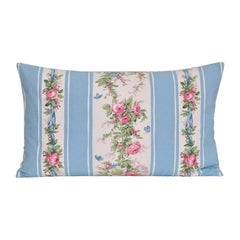
Vintage French Boussac Versailles fabric with Irish linen cushion pillow blue
Custom made luxury cushions created with French vintage ‘Petit Trianon' Boussac fabric...
Category
20th Century French Pillows and Throws
Materials
Textile
Mix
Match, Six Contemporary Porcelain Pasta Plates with Flowers and Birds
By Francesca Colombo
Located in MILAN, IT
If you are looking for an unique tableware in order to make your dinner special and chic every day, this "Mix and Match" pasta porcelain set is the perfect solution. It is an explosi...
Category
2010s Italian Porcelain
Materials
Porcelain
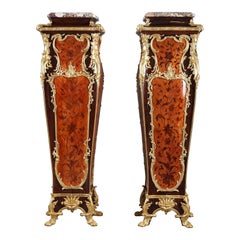
Pair of Marquetry Display Pedestals Attributed to Maison Millet, France, c. 1890
By Maison Millet
Located in PARIS, FR
Elegant pair of Louis XV inspired display pedestals attributed to Maison Millet. They are decorated on three sides with a beautiful marquetry of stylized flowers in “bois de bout”, i...
Category
Antique 1890s French Louis XV Pedestals and Columns
Materials
Breccia Marble, Bronze
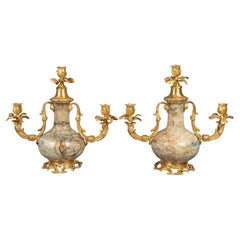
A 19th Century French Pair of Ormolu-Mounted Rare Fluorite Candelabras
By Maison Millet
Located in Saint-Ouen, FR
A French Napoléon III pair of three-lights candelabras
Ormolu-mounted Rare Fluorite also called Fluorspar Vases
The baluster shape body flanked by two arms and surmounted by a lid en...
Category
Antique 1870s French Louis XV Candelabras
Materials
Quartz, Ormolu
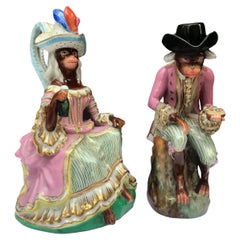
$11,807 Sale Price / set
22% Off
Anthropomorphic Monkeys Porcelain Jugs Pair by Jacob Petit 19th Century
By Jacob Petit
Located in Paris, FR
Pair of porcelain characters realized by Jacob Petit a famous French manufacturer located in Paris. The pair represents two anthropomorphic monkeys dressed in a fancy way reminding t...
Category
Antique Late 19th Century French Porcelain
Materials
Gold
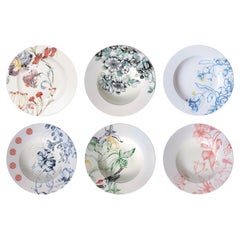
Mix
Match, Six Contemporary Porcelain Dinner Plates with Flowers and Animals
By Francesca Colombo
Located in MILAN, IT
If you are looking for an unique tableware in order to make your dinner special and chic every day, this "Mix and Match" dinner porcelain set is the perfect solution. It is an explos...
Category
2010s Italian Porcelain
Materials
Porcelain
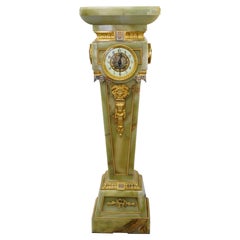
Napoleon III pedestal with clock
Located in Buenos Aires, Argentina
Napoleon III pedestal with clock
Onyx marble column and champleve enamel with golden bonce
The watch has very fine machinery and is stamped Vincenti y Cia 1855
The machinery works
Ci...
Category
Antique 1870s French Empire Pedestals
Materials
Marble, Bronze, Enamel
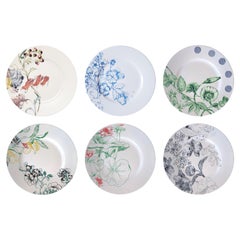
Mix
Match, Six Contemporary Porcelain Dessert Plates with Multicolored Flowers
By Francesca Colombo
Located in MILAN, IT
If you are looking for an unique tableware in order to make your lunch special and chic every day, this "Mix and Match" dessert porcelain set is the perfect solution. It is an explos...
Category
2010s Italian Porcelain
Materials
Porcelain
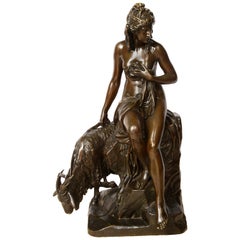
Large 19th Century Classical Bronze statue of Amalthea
Located in Brighton, Sussex
A very good quality large 19th century bronze statue of a semi nude female of Amalthea in Marie Antoinette’s dairy. The original is marble from 1787..
There were different traditions regarding Amaltheia.[3] Amaltheia is sometimes represented as the goat who nurtured the infant-god in a cave in Cretan Mount Aigaion ("Goat Mountain"),[4] sometimes as a goat-tending nymph[5] of uncertain parentage (the daughter of Oceanus,[6] Helios,[7] Haemonius,[8] or—according to Lactantius—Melisseus[9]).[10] The possession of multiple and uncertain mythological parents indicates wide worship of a deity in many cultures having varying local traditions. Other names, like Adrasteia, Ide, the nymph of Mount Ida...
Category
Antique 19th Century French Classical Greek Figurative Sculptures
Materials
Bronze
18th Century Louis XVI Neoclassical Marquetry Gilt Bronze Commode or Sauteuse
Located in Berlin, DE
18th century French large Louis XVI neoclassical breakfront marquetry gilt bronze commode or sauteuse, attributed ti Etienne Avril (1748-1791):...
Category
Antique 1770s French Louis XVI Commodes and Chests of Drawers
Materials
Marble, Bronze
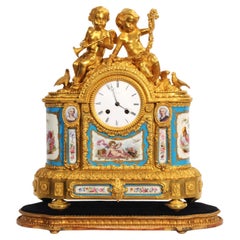
Fine Ormolu and Sevres Porcelain Clock by Achille Brocot
Delettrez
By Achille Brocot
Located in Belper, Derbyshire
A superb, large and early Ormolu clock, mounted with exquisite Sèvres style porcelain with a Bleu Celeste ground and fine overglaze gilt decoration. The richly chased foliate case is...
Category
Antique 19th Century French Louis XVI Mantel Clocks
Materials
Ormolu
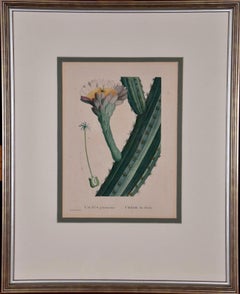
Flowering Cactus: A Framed 18th C. Hand-colored Engraving by Redoute
By Pierre-Joseph Redouté
Located in Alamo, CA
This framed hand-colored stipple engraving entitled "Cactus Peruvianus Cierge du Pérou" by Pierre-Joseph Redouté, Plate 58 from his illustrated publication 'Plantarum Historia Succulentarum ou Histoire des Plantes Grasses', published in Paris in 1799. It depicts a branching limb of a cactus with a beautiful flower. There is a separate detail of the anatomy of a seed with early growth. Redoute was a pioneer of the stipple engraving technique, which he used to create this image. It involves utilizing a series of small dots worked into a copper plate rather than the more common lines. These dots can be made smaller or thicker depending on the degree of opacity the artist intends for various areas of the print. When inked and applied to paper, this allows for a greater portion of the paper to be seen, which accentuates the appearance of luminosity of the subject the artist is creating. Different color inks are used in the printing process, a time consuming technique known as "a la poupee". The engraving is then finished with watercolor to further enhance the beauty and realism of the print subject.
This engraving of a flowering cactus is presented in silver-colored ribbed wood frame and a double mat; cream-colored outer mat and heather green inner mat. The frame measures 21.25" high by 17.25" wide by 1.13" deep. The sheet measures 19.88" high by 14" wide. There are wide margins with a few short tears and chips along the the left, right and upper edges, which are all covered by the mat. There are small spots predominantly in the margins, with a few present in the image area. The print is otherwise in very good condition. There is another Redoute flowering cactus listed on 1stdibs, LU117326853392, which is framed and matted identically to this one. The pair would make an attractive display grouping.
Pierre-Joseph Redouté (1759-1840), was a painter and botanist originally from Belgium, who pursued his extremely successful artistic career in France. He is well known for his watercolor paintings of roses, lilies and other flowers and their subsequent folio-sized, color stipple engravings. Some believe him to be the greatest botanical illustrator of all time. Redouté was a favorite of the French royal court at the time and of the post French...
Category
Late 18th Century Naturalistic Still-life Prints
Materials
Engraving
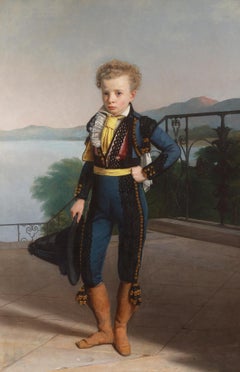
Portrait of Napoléon II
Located in New Orleans, LA
The son of the legendary Napoléon Bonaparte, Napoléon François Charles Joseph, takes a spirited stance in this remarkable oil painting attributed to the Austrian portraitist Johann Peter Krafft. Believed to have been exhibited at the Exposition Universelle of 1900 in Paris, this work stands as a testament to both Austrian artistry and the legacy of one of the most powerful men in history.
After Napoléon's exile to the island of Elba in 1814, his son was seen by many of his supporters as the last hope of France. The child was named the ruler of half of Europe, holding the titles of Napoléon II...
Category
Early 19th Century Academic Portrait Paintings
Materials
Oil, Canvas
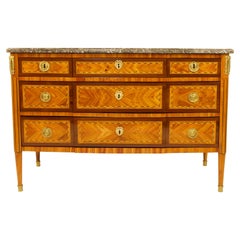
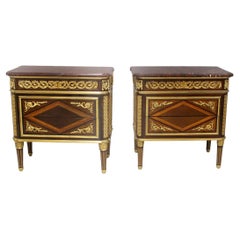
Exceptional Pair of 19th Century Gilt Bronze Mounted Commodes By Maison Millet
By Jean-François Leleu, Maison Millet
Located in Long Island City, NY
An Exceptional Matched Pair of Late 19th Century Gilt Bronze Mounted Louis XVI Style Parquetry Commodes/Night Stands By Maison Millet
Theodore Millet after Jean-Francois Leleu
The ...
Category
Antique Late 19th Century French Belle Époque Commodes and Chests of Dra...
Materials
Marble, Bronze, Ormolu
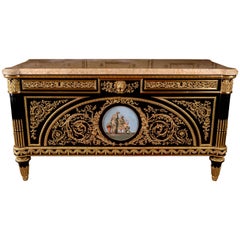
20th Century Louis XV Style Commode Joseph Stockel
By Joseph Stöckel
Located in Berlin, DE
Significant commode in the style of Louis XV. After Joseph Stockel and Guillaume Benneman.
Piano black polished veneer on solid oak and pine. Exception...
Category
20th Century Louis XV Commodes and Chests of Drawers
Materials
Bronze
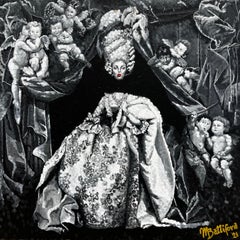
The Scene
Located in West Hollywood, CA
A black and white pointillism feminist figurative painting of Marie Antoinette by artist Maurizio Battifora on view at the "GO LOCO" exhibition at M...
Category
2010s Pointillist Figurative Paintings
Materials
Canvas, Acrylic
$3,840 Sale Price
36% Off
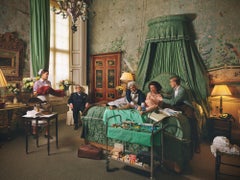
Royal Blood- Staged Photograph of Queen Elizabeth at Home Birth in Buckingham
By Natalie Lennard
Located in Gilroy, CA
"Royal Blood" is part of international artist, Natalie Lennard's series Birth Undisturbed.
"When the Queen’s parents suggested she move to a quieter room away from the crowds of we...
Category
2010s Contemporary Color Photography
Materials
Satin Paper, Digital
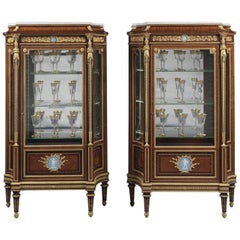
Pair of Louis XVI Style Vitrines with Wedgwood Plaques by Zwiener, circa 1880
By Joseph-Emmanuel Zwiener
Located in Brighton, West Sussex
An important pair of Louis XVI style gilt-bronze mounted vitrines with wedgwood Jasperware plaques, by Joseph-Emmanuel Zwiener.
French, circa 1880.
Stamped 'NZ', 'NZ.309' and 'ZJ' to the reverse of the bronze mounts.
Signed to the reverse of the lockplate 'Mon THEAU THIEFFINE Succ./SERRURIER PARIS'.
This rare pair of vitrines, each have a shaped Carrera marble top above a frieze centred by a round classical Jasperware plaque flanked by gilt-bronze putti figures and scrolling acanthus running pattern. Below is a gilt-bronze framed bevelled glass door above a panel centred by a finely modelled Jasperware plaque of a putto representing the seasons. The door is flanked to either side by gilt-bronze monnaie pattern and headed by a pair of exceptionally fine female canephor figures. The shaped sides have corresponding bevelled glass panels and the vitrine is raised on tapering fluted legs.
The distinctive canephor figures, finely cast as female caryatids with ringlets in their hair and supporting baskets of fruit upon their heads, is a distinctive and celebrated model unique to Zwiener. Many of Zwieners bronzes are executed in the Louis XV style, with flowers and scrolling acanthus leaves and an emphasis on asymmetry, typical of the work of his bronze sculptor Léon Messagé. The mounts employed on this rare pair of vitrines however sees Zwiener creating his own up-to-date reinterpretation of the Louis XVI style, drawing inspiration from established Louis XVI models such as those designed by Weisweiler for Marie-Antoinette's Dressing table. [See Mestdagh, p.305].
A second distinctive feature of the vitrines is the finely modelled Wedgwood Jasperware plaques incorporated in the frieze of each vitrine and beneath the doors. Wedgwood exhibited at nearly all of the Universal Exhibitions held in 19th century France, displaying amongst other pieces, plaques specifically intended to be mounted on to furniture. The first vitrine displays to the frieze a finely modelled plaque in the classical style, depicting a group of putti at play, one being pushed on a swing, while another plays a trumpet and a small attentive dog watches from below. Beneath the glass panelled door a larger Jasperware plaque is incorporated depicting a putto figure with a garland of flowers, emblematic of spring.
The second vitrine has a classical plaque...
Category
Antique Late 19th Century French Louis XVI Vitrines
Materials
Bronze
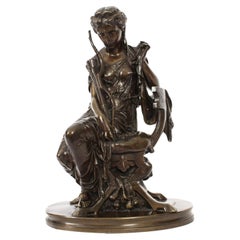
Antique Grand Tour Bronze Sculpture of Goddess Diana by Mercié 19th Century
Located in London, GB
An elegant French Grand Tour bronze figure of the Greek Goddess Diana by Marius-Jean-Antonin Mercié, French 1845 - 1916, dating from Circa 1880.
The seated and robed Goddess Diana is holding a bow and arrows with her head downcast and raised on a circular plinth.
Diana was originally considered to be a goddess of the wilderness and of the hunt, a central sport in both Roman and Greek culture. Early Roman inscriptions to Diana celebrated her primarily as a huntress and patron of hunters.
Add a beautiful classical element to your home with this delightful bronze.
Condition:
In excellent condition with no dings, dents or signs of repair. Please see photos for confirmation.
Dimensions in cm:
Height 41 x Width 29 x Depth 19
Dimensions in inches:
Height 1 foot, 4 inches x Width 11 inches x Depth 7 inches
Mercié entered the École des Beaux-Arts, Paris, and studied under Alexandre Falguière and François Jouffroy, and in 1868 gained the Grand Prix de Rome at the age of 23. His first great popular successes were the David and Gloria Victis, which was shown and received the Medal of Honour of the Paris Salon. The bronze was subsequently placed in the Square Montholon.
The bronze David...
Category
Antique Early 1800s French Grand Tour Figurative Sculptures
Materials
Bronze
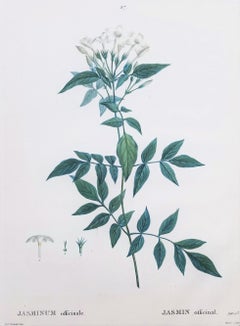
Jasminum officinale (Common jasmine) /// Pierre-Joseph Redouté Botanical Flower
By Pierre-Joseph Redouté
Located in Saint Augustine, FL
Artist: (after) Pierre-Joseph Redouté (French, 1759-1840)
Title: "Jasminum officinale (Common jasmine)" (No. 27 page 93)
Portfolio: Traité des Arbres et Arbustes que l'on Cultive en ...
Category
Early 1800s Old Masters Still-life Prints
Materials
Watercolor, Engraving
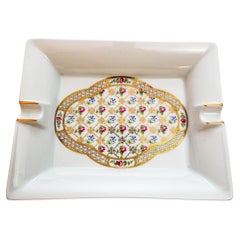
Limoges France Cigar Ashtray Porcelain Dish Catchall
By Limoges, Cristalleries De Sevres
Located in Moreno Valley, CA
Large Limoges porcelain ashtray in a rectangular shape featuring a beautiful gold trellis and roses design with gold trim, made in France. The hand painted decor is stunning and the ...
Category
Late 20th Century French Louis XIV Ashtrays
Materials
Porcelain
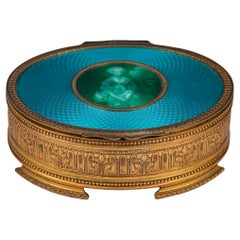
19th Century French Gilt Bronze and Guilloché Enamel Portrait Box
Located in Dublin, IE
A superbly crafted circular gilt bronze box of exceptional quality, featuring a rich turquoise-blue guilloché enamel top centered with an oval medallion bearing a finely hand-painted...
Category
Antique 19th Century French Louis XVI Snuff Boxes and Tobacco Boxes
Materials
Enamel, Ormolu