1,156 results for "motherwell"

to
368
951
175
846
411
373
309
252
222
200
164
34
33
20
17
14
1
1
1
222
181
47
44
44
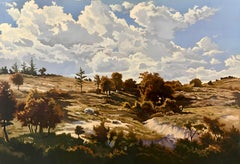
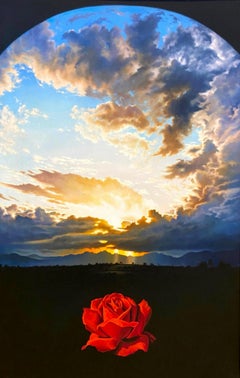
Pastoral Landscape, Ian Hornak - Painting
By Ian Hornak
Located in Fairfield, CT
Artist: Ian Hornak (1944-2002) Title: Pastoral Landscape Year: 1970 Medium: Acrylic on canvas Size: 50 x 72 inches Condition: Good Inscription: Unsigned, estate stamped, verso. Prove...
Category

1970s Photorealist Landscape Paintings

Materials

Canvas, Acrylic

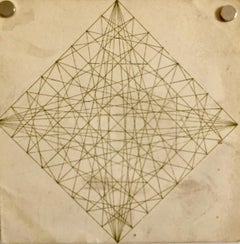
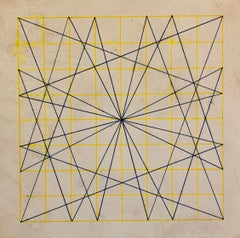
1967 Abstract Geometric Expressionist NYC MoMA Silkscreen Card, Stable Gallery
By Alvin Dickstein
Located in Surfside, FL
Al Dickstein New York school Abstract Geometric work. Came in with small collection of his work including signed letters and a signed card and some monogrammed pieces. Signed and inscribed by artist. Showed at New York's Stable Gallery...
Category

1960s Abstract Geometric Abstract Paintings

Materials

Paper, Ink

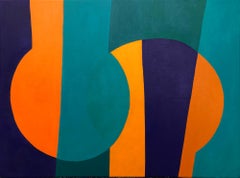
Give and Take (Geometric Abstraction, Minimalism, Josef Albers, Hard Edge)
By Susan Kiefer
Located in Kansas City, MO
Artist : Susan Kiefer Title : Give and Take Materials : oil on canvas Date : March 2020 Dimensions : 18" x 24" x 1.5" Description : Two overlapping circles bisected by straight and ...
Category

2010s Abstract Paintings

Materials

Canvas, Paint, Oil

Untitled Abstract Expressionist painting
By Desmond McLean
Located in Wilton Manors, FL
Desmond Mclean (1929-2015). Untitled, 1959 Mixed media on paper. Sheet measuring 14.75 x 20.25 inches. Unframed. Born: Ireland Studied: Heatherly School of Art, London; Amer...
Category

Mid-20th Century Abstract Expressionist Mixed Media

Materials

Paper, Charcoal, Gouache, Color Pencil
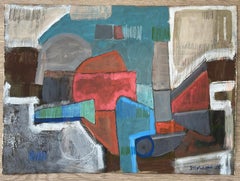
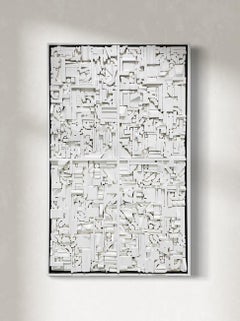
"White Construction, " 1960s Modern Abstract Wall Sculpture
By Stanley Bate
Located in Westport, CT
This Modern abstract piece by Stanley Bate is a wood panel sculpture that has been painted white. Three-dimensional that are reminiscent of architectural pieces are tightly stacked w...
Category

1960s Modern Abstract Sculptures

Materials

Oil, Wood

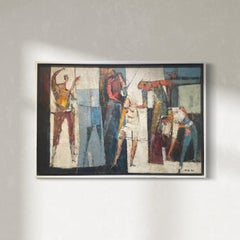
"Entr Acte, " 1960s Modern Abstract Painting
By Stanley Bate
Located in Westport, CT
This Modern abstract figurative painting by Stanley Bate features abstracted figures in motion, placed in front of a geometric background with white, maroon, and blue squares tiled n...
Category

1960s Modern Abstract Paintings

Materials

Oil, Canvas

Remind Me to Look Up
By Katherine Bello
Located in Kansas City, MO
Katherine Bello Title: Remind Me to Look Up Acrylic, Oil, Oil stick on canvas Year: 2021 Dimensions: 60"x48"x1.5" Signed by hand Canvas on stretcher fr...
Category

2010s Contemporary Abstract Paintings

Materials

Canvas, Oil, Oil Pastel, Acrylic

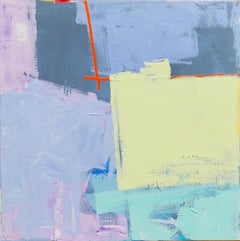
Summer Rain
By Katherine Bello
Located in Kansas City, MO
Katherine Bello Summer Rain Year: 2018 Acrylic, mixed media on canvas Size: 12 x 12 x 1.25 inches Signed, titled and dated by hand COA provided *Ready to h...
Category

2010s Abstract Paintings

Materials

Canvas, Paint, Mixed Media, Acrylic, Board
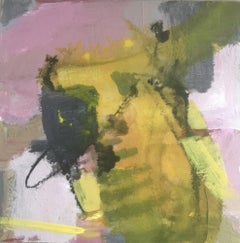
Untitled 1960s Abstract Geometric Expressionist New York Stable Gallery Drawing
By Alvin Dickstein
Located in Surfside, FL
Al Dickstein New York school Abstract Geometric work. Came in with small collection of his work including signed letters and a signeed card and some monogrammed pieces.. Signed with monogram and inscribed and signed verso. Showed at New York's Stable Gallery...
Category

1960s Abstract Geometric Abstract Paintings

Materials

Paper, Color Pencil

FACE, from Portfolio 9m Classic 1960s Op Art lithograph signed/n renowned artist
By Henry Pearson
Located in New York, NY
Henry Pearson FACE, from Portfolio 9, 1964 Color lithograph with deckled edges Signed, titled, and numbered 84/100 in graphite pencil on the front; with publishers' blind stamp 17 1/2 × 22 1/10 inches Publisher Irwin Hollander, with blindstamp Hand Signed and Numbered 84/100 with Irwin Hollander (printer) Blindstamp Unframed Henry Pearson's iconic Pop Art lithograph "Face" from the mid-Sixties is in the permanent Collection of the Museum of Modern Art as well as other public institutions. This Classic Sixties psychedelic designed Op Art lithograph was created as part of the legendary 'Portfolio 9' in 1967 - one of the most influential eras in 20th century art. It was housed in a gray cloth-colored box with maroon paper inner panels and a large maroon "9" designed by Richard Lindner on the cover. Portfolio 9 featured nine of the most important artists of the era, representative of the three major trends: Pop Art, Minimalism and Abstract Expressionism: Roy Lichtenstein, Saul Steinberg, Richard Lindner, Robert Motherwell, Henry Pearson, Louise Nevelson, Sam Francis, Willem de Kooning- and Ellsworth Kelly. The Introduction to the portfolio was written by Una E. Johnson, Curator of Prints Drawings, The Brooklyn Museum. Johnson wrote in 1967 for the colophon page: "The artists were selected to demonstrate the great diversity and character of lithography in the United States today... the dialogue of diverse forms and many faceted idioms that compose this graphic journal mirror the eloquence and delight the strengths and caprices of a period. Furthermore, they reflect in fine measure the creative achievements of artists attuned to their time." The lithograph offered here has superb provenance: it comes directly from 'Portfolio 9', numbered 84/100. This is the very first time since 1967 that this hand signed numbered print will be separated from the original portfolio presentation box. According to the description of this print in the catalogue raisonne, "Organized as a celebration of Irwin Hollander's collaboration with American artists working in the medium of lithography, the Portfolio 9 is a compendium of images by nine of Hollander's artist collaborators. Henry Pearson Biography: Henry Pearson was born in Kinston, North Carolina in 1914. He studied art at the University of North Carolina where he received his B. A. and later at Yale University where he received an M. F. A. Pearson spent over eleven years in the army during and after WWII. On one tour of duty in Japan he was assigned to interpret topographical maps due to his past training in Theatrical Set Design. He returned to Japan on another tour after the war in order to immerse himself more fully in the culture. Pearson returned to the United States in 1953 and enrolled at the Art Students League in New York where he studied with Reginald Marsh. The Op-Art Movement was beginning to gain popularity and Pearson...
Category

1960s Op Art Abstract Prints

Materials

Lithograph, Pencil

"Abandoned Village, " 1960s Modern Abstract Painting
By Stanley Bate
Located in Westport, CT
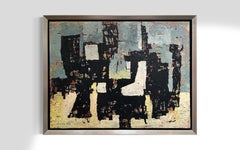
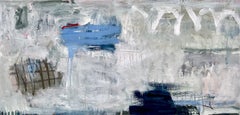
This Modern Abstract Expressionist painting by Stanley Bate is made with oil paint and and lacquer on board. It features light textured and a light blue-grey and yellow palette contrasted by the almost black focal point of the composition. The painting is 14.5" x 19" and measures 16.25" x 20.5" x 2" framed. Signed by the artist in the lower left-hand corner of the painting, it is framed in a floater frame with warm silver face and black sides and is ready to hang. Stanley Bate was born on March 26, 1903 in Nashville, Tennessee. The Bates were an established Tennessee family, in fact, Henry’s brother William Bate was the governor of Tennessee from 1883-1887 and a United States Senator from 1887-1905. Stanley studied art at the Watkins Institute in Nashville. In the 1920’s Bate moved to New York City to study at the Art Students League under Frederick Bridgman. He soon landed a job with Encyclopedia Britannica, and from 1927-1929 served as art editor. From 1929 until his death in 1972, Stanley was a self-employed artist. He taught art classes at both the Art Students League and the Albany Institute of History and Art and brought in extra income by making illustrations for magazines such as “Outdoor Life” and “Popular Science”. On January 27, 1934 Stanley married Emilie Rossel. Emilie had emigrated from Switzerland to New York in 1923. She found work as a governess to Alfred Vanderbilt and later as an executive secretary for Wall Street investment brokers Kahn, Loeb and Co. Emilie met Stanley in New York in the early 1930’s when she attended one of his art exhibitions with a friend. The couple, who had no children, lived on 34th Street in Manhattan. During this period, Bate was producing and exhibiting his art and joined several artists groups. Stanley and Emilie became part of the New York art scene, dining weekly at the Society of Illustrators Clubhouse. Stanley Bate’s time in New York was pivotal in the formation of his painting style. He lived in New York during the inception of one of the most important Modern Art movements, one that helped New York replace Paris as the center of avant-garde art. This movement, which was called the New York School of artists, was later known as Abstract Expressionism. It was comprised of a loosely associated group of vanguard artists working in New York City during the 1940s and 1950s. The New York School was not defined by a specific style, but instead reflected a fusion of European Modernism and American social relevancy that was depicted in many individual styles. Influences of Surrealism, Cubism, and Modernism can be found in their work, along with an interest in experimenting with non-traditional materials and methods. American art was in the forefront of international avant-garde for the first time. Stanley Bate was undoubtedly exposed to the varied styles and techniques that were emerging during the formative years of the New York School. Mark Rothko and Robert Motherwell were formulating their versions of color field paintings. Joseph Cornell was experimenting with assemblages, collage and the use of different types of textured paints. Jackson Pollock was adhering objects such as buttons and coins into his early works, while Louise Nevelson was using found objects. Helen Frankenthaler added sand to her early paintings. The New York School artists were undermining traditional fine art by using mixed media and non-traditional methods. Stanley Bate absorbed these varied influences and soon his early realistic landscapes and still-lifes were replaced with something entirely new. The influence of Cubism, notably the flat shallow space of the picture plane, is obvious in many of Bate’s paintings. Surrealism is evident in Bate’s use of subjects from myth, primitive art and antiquity, along with the Automatism-like line work in his more linear images. The unfettered experimentation of the New York School is everywhere in Stanley Bate’s work. We see nods to color field, collage, the mixing of textures into paint, mixed media, the inclusion of found objects and thick, luscious impasto. Bate was prolific and experimented in various media including oil, watercolor, lithography, silk screen, wood cut, drawing, collage, ceramics and sculpture. Bate is considered a true Modernist. His work is largely abstract, but sometimes figures and buildings are discernable. He frequently mixed paint, sand and glue together to achieve a textured surface, and then scraped and scratched through this layer to expose some of the underpainting below. His sculpture, which is often whimsical, also reflects the non-traditional methods of the New York School. Bate pioneered the use of enamel and copper in his work. The sculptures are not carved or modeled as was done in the past, but instead are built using mixed media and new materials. In addition to the New York School influence, many of Bate’s works exhibit a strong connection to the Spanish school, especially the work of Antonio Tapies and Modesto Cuixart. These artists were both part of an avant-garde group known as Art Informel, the Spanish equivalent of Abstract Expressionism. These artists likewise worked in mixed media and introduced objects and texture into their work. Many of Bate’s subjects and titles relate to Spanish locations and words. It is likely that Stanley spent time in Spain and found inspiration there. By the early 1940s, Stanley and Emilie had started spending weekends in a barn they purchased in Craryville, New York, a few hours north of Manhattan. The barn had no electricity or plumbing, but when the Bates eventually decided to leave New York and live full time in Craryville, they remodeled the barn, putting a gallery downstairs and a studio and living quarters upstairs. Although the Bates moved out of New York City, Stanley remained part of the New York art scene, exhibiting in New York and elsewhere throughout the 50s and 60s. During his lifetime he was represented by the New York galleries Knoedler and Company, Kennedy Galleries, Rose Fried Gallery and Key Gallery, along with Tyringham Gallery located in Tyringham, Massachusetts. Craryville was Stanley’s home until his death on August 21, 1972. Emilie died 1984...
Category

1960s Modern Abstract Paintings

Materials

Lacquer, Oil, Board

Greens On Top, Abstract Painting
By Joey Korom
Located in San Francisco, CA

Artist Comments
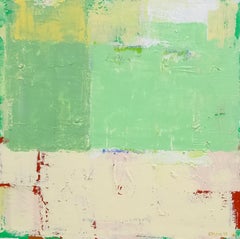
Artist Joey Korom paints a green abstract composition. He combines unconventional shapes to give the work multiple layers. "Subtle collisions suggest parts of...

Category

21st Century and Contemporary Abstract Abstract Paintings

Materials

Acrylic

Abstract Expressionist Symphony in Blue, Follower of Clyfford Still
Located in Cotignac, FR
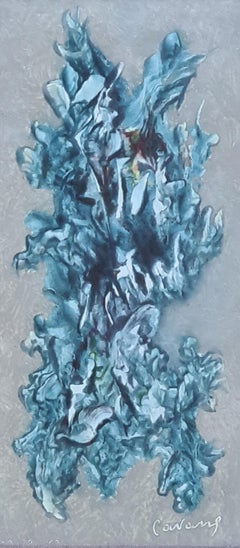
1960s Abstract Expressionist composition in blue. The painting is signed bottom right, 'Cowans' but as yet undeciphered. Presented in a fine gilt wood frame, with a silk fabric mount...
Category

Mid-20th Century Abstract Expressionist Abstract Paintings

Materials

Oil, Acrylic, Board, Gouache

Untitled (Guardian Angel, Gabriel)
By Ian Hornak
Located in Fairfield, CT
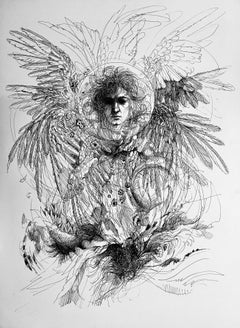
Artist: Ian Hornak (1944-2002) Title: Untitled (Guardian Angel, Gabriel) Year: 1973 Medium: Ink on heavy archival paper Size: 22 x 30 inches Condition: Good Provenance: Estate of Ian...
Category

1970s Surrealist Figurative Drawings and Watercolors

Materials

Ink

"Untitled #305 (Trees), " 1960s Modern Abstract Painting
By Stanley Bate
Located in Westport, CT
This Modern painting by Abstract Expressionist painter Stanley Bate depicts large trees in an abstracted landscape. The palette is bright and vibrant, with expressive strokes of pain...
Category

1960s Modern Abstract Paintings

Materials

Oil, Board

New York School Abstract Expressionist Drawing Watercolor Painting Carmen Cicero
By Carmen Cicero
Located in Surfside, FL
This is a stylized figurative abstract expressionist nude. This one is hand signed and dated. From the style we are estimating it to the 1970's They have abstract stylized erotic mal...
Category

1970s Abstract Expressionist Abstract Drawings and Watercolors

Materials

Ink, Watercolor

Arp, Composition, Arp: On My Way (after)
By Jean Arp
Located in Southampton, NY
Woodcut on wove paper. Inscription: Unsigned and unnumbered, as issued. Good Condition. Notes: From the folio, The Documents of Modern Art. Arp: On My Way, Poetry And Essays 1912 - 1...
Category

1940s Modern Abstract Prints

Materials

Woodcut

Max Ernst, Eve, the Only One Left to Us, from Natural History, 1972 (after)
By Max Ernst
Located in Southampton, NY
This exquisite collotype after Max Ernst (1891–1976), titled Eve la seule qui nous reste (Eve, the Only One Left to Us), from the album Max Ernst, Histoire Naturelle (Natural History...
Category

1970s Surrealist Landscape Prints

Materials

Lithograph

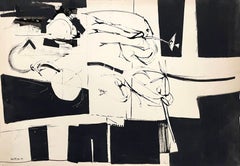
1959 Black White Mid-Century, Surrealist Abstraction by Artist Desmond Mclean
By Desmond McLean
Located in Chicago, IL
A 1959 black and white, Mid-Century, Surrealist watercolor on paper by artist Desmond McLean in a cerused black frame. Image size: 15 1/2" x 22 1/2". Framed size: 25" x 21". McL...
Category

1950s Surrealist Abstract Drawings and Watercolors

Materials

Watercolor

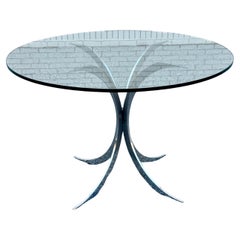
1970s Sphere Dining Table Base by Boris Tabacoff for Mobilier Modulaire Moderne
By Boris Tabacoff, Mobilier Modulair Moderne
Located in St. Louis, MO
Rare Space Age 1970s Sphere dining table base only by French Designer Boris Tabacoff (1927-1985) for Mobilier Modulair Moderne. Shown with 44" dia...
Category

Vintage 1970s French Mid-Century Modern Dining Room Tables

Materials

Steel, Chrome

Risky Business
By Katherine Bello
Located in Kansas City, MO
Katherine Bello Title: Risky Business Oil on canvas Year: 2021 Dimensions: 40"x30"x1.5" Signed by hand Canvas on stretcher frame - ready to hang COA ...
Category

2010s Abstract Expressionist Abstract Paintings

Materials

Canvas, Oil

Risky Business
Risky Business
$2,250 Sale Price
46% Off
"Georgia on My Mind, " 1960s Modern Abstract Painting
By Stanley Bate
Located in Westport, CT
This original Modern abstract piece by Abstract Expressionist Stanley Bate features a warm, earthy palette. In it, organic and rectangular shapes are layered with deep teal and creme...
Category

1960s Modern Abstract Paintings

Materials

Canvas, Oil

Siren s Song
By Katherine Bello
Located in Kansas City, MO
Katherine Bello Title: Siren's Song Medium: oil and charcoal on canvas Year: 2021 Size: 22" x 46" x 1.5" Signed, dated and inscribed by hand COA provided (issued by representing gallery) Katherine Bello's aim as an artist is to capture a sense of place, a moment of time, or a feeling - to evoke a sense of wonder. Bello loves paint and paint brushes; bold, gestural mark-making and the interplay of color. She is influenced by light and landscape, poetry, history and science. Formerly educated in Chemical Engineering and Interior Design, Bello is drawn to the process of creating Something out of Nothing. Abstract, sbstract art...
Category

2010s Surrealist Paintings

Materials

Canvas, Oil

"Exodus, " 1960s Modern Abstract Painting
By Stanley Bate
Located in Westport, CT
"Exodus" is a Modern abstract painting by Stanley Bate. Bate, who was greatly inspired by his peer, Mark Rothko and the Abstract Expressionist movement in general, creates an energet...
Category

1960s Modern Abstract Paintings

Materials

Canvas, Oil

"The Serpent" Modern Abstract Painting
By Stanley Bate
Located in Westport, CT
This Modern Abstract Expressionist painting by Stanley Bate is made with oil paint on board and features an earth-toned palette. The artist layers paint on the canvas, creating texture among softly blended muted green and umber colors in a highly abstract composition. The painting itself is 43.5" x 24" and measures 44" x 24.5" x 2" framed. It is signed by the artist in the lower right-hand corner of the painting and is framed in a very thin, off-white floater frame. It is ready to hang. Stanley Bate was born on March 26, 1903 in Nashville, Tennessee. The Bates were an established Tennessee family, in fact, Henry’s brother William Bate was the governor of Tennessee from 1883-1887 and a United States Senator from 1887-1905. Stanley studied art at the Watkins Institute in Nashville. In the 1920’s Bate moved to New York City to study at the Art Students League under Frederick Bridgman. He soon landed a job with Encyclopedia Britannica, and from 1927-1929 served as art editor. From 1929 until his death in 1972, Stanley was a self-employed artist. He taught art classes at both the Art Students League and the Albany Institute of History and Art and brought in extra income by making illustrations for magazines such as “Outdoor Life” and “Popular Science”. On January 27, 1934 Stanley married Emilie Rossel. Emilie had emigrated from Switzerland to New York in 1923. She found work as a governess to Alfred Vanderbilt and later as an executive secretary for Wall Street investment brokers Kahn, Loeb and Co. Emilie met Stanley in New York in the early 1930’s when she attended one of his art exhibitions with a friend. The couple, who had no children, lived on 34th Street in Manhattan. During this period, Bate was producing and exhibiting his art and joined several artists groups. Stanley and Emilie became part of the New York art scene, dining weekly at the Society of Illustrators Clubhouse. Stanley Bate’s time in New York was pivotal in the formation of his painting style. He lived in New York during the inception of one of the most important Modern Art movements, one that helped New York replace Paris as the center of avant-garde art. This movement, which was called the New York School...
Category

1960s Abstract Abstract Paintings

Materials

Oil, Board

"Stele, " 1960s Modern Abstract Painting
By Stanley Bate
Located in Westport, CT
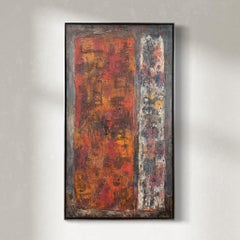
"Stele" by Modernist painter Stanley Bate is a bold painting with a dark grey and umber border and large, central rectangles, the left in a warm red and orange and the right in a lig...
Category

1960s Modern Abstract Paintings

Materials

Canvas, Oil

Castor Pollux Adrift on the Wine Dark Sea (Geometric Abstraction, Minimalism)
By Susan Kiefer
Located in Kansas City, MO
Artist : Susan Kiefer Title : Castor & Pollux Adrift on the Wine Dark Sea Materials : oil on canvas Date : March 2020 Dimensions : 40" x 30" x 1.5" Description : Hard-edged geometri...
Category

2010s Abstract Geometric Paintings

Materials

Canvas, Paint, Oil

Thus Spake Zarathustra (Geometric Abstraction, Minimalism, Josef Albers)
By Susan Kiefer
Located in Kansas City, MO
Artist : Susan Kiefer Title : Thus Spake Zarathustra Materials : oil on canvas Date : March 2020 Dimensions : 20" x 20" x 1.5 Description : Intersection of a circle and square in bl...
Category

2010s Abstract Geometric Paintings

Materials

Canvas, Paint, Oil

Renaissance Female Nude Figure Study, 1963, Ian Hornak — Drawing
By Ian Hornak
Located in Fairfield, CT
Artist: Ian Hornak (1944-2002) Title: Renaissance Female Nude Study Year: circa 1963 Medium: Original drawing on vélin paper Size: 23 x 18 inches Condition: Good Provenance: Estate o...
Category

1960s Renaissance Figurative Drawings and Watercolors

Materials

Charcoal

"Urbino, " 1960s Modern Abstract Painting
By Stanley Bate
Located in Westport, CT
This Modern Abstract Expressionist painting by Stanley Bate features a vibrant and unique palette. Made with oil paint on canvas, the painting is modeled after the famed painting by ...
Category

1960s Modern Abstract Paintings

Materials

Canvas, Oil

Max Ernst, System of Solar Currency, from Natural History, 1972 (after)
By Max Ernst
Located in Southampton, NY
This exquisite collotype after Max Ernst (1891–1976), titled Systeme de monnaie solaire (System of Solar Currency), from the album Max Ernst, Histoire Naturelle (Natural History), or...
Category

1970s Surrealist Landscape Prints

Materials

Lithograph

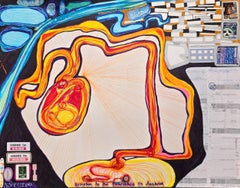
Biogram to the Pharmacy in Anaheim (Abstract, Bold, Figurativ, Collage, 40% OFF)
By Kory Twaddle
Located in Kansas City, MO
Kory Twaddle Biogram to the Pharmacy in Anaheim (Abstract, Bold, Figurativ, Collage) Mixed Media Collage on Heavy Paper Year: 2020 Size: 22 x 28.25 inches (55.88 x 71.75 cm) Signed, ...
Category

2010s Contemporary Abstract Drawings and Watercolors

Materials

Paper, Mixed Media

Eclipse
By Kory Twaddle
Located in Kansas City, MO
Artist : Kory Twaddle Title : Doorway Materials : Acrylic and sand medium on photographic advertisement board (cardboard) Date : 2018 Dimensions : 8 x 10 x...
Category

2010s Color-Field Drawings and Watercolor Paintings

Materials

Paint, Paper, Acrylic, Tempera, Watercolor, Graphite
Frank Shifreen The Other
By Frank Shifreen
Located in New York, NY
Frank Shifreen Study 2 2021 18 x 24 inches Acrylic on Canvas Signed, titled and dated on verso These new works start from polar opposite impulses which juxtapose the purity and bea...
Category

2010s Contemporary Abstract Paintings

Materials

Canvas, Acrylic

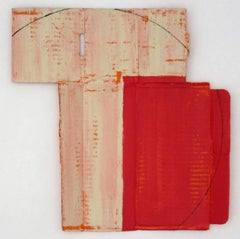
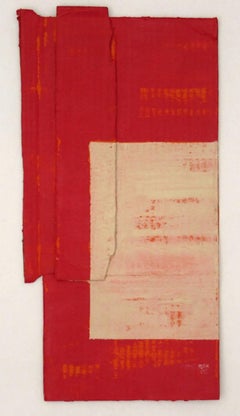
Diane Englander, Red and Buff on Orange 1, 2017, Mixed Media
By Diane Englander
Located in Darien, CT
A native New Yorker, Diane had an earlier career including 17 years as a management consultant to local nonprofits concerned with poverty or disenfranchisement; work in NYC governmen...
Category

2010s Arte Povera Mixed Media

Materials

Mixed Media, Acrylic, Cardboard

"Picos, " 1970s Modern Abstract Painting
By Stanley Bate
Located in Westport, CT
"Picos" is an abstract painting created in 1971 by Modernist artist, Stanley Bate. The piece features an earthy, muted palette, giving it a serene feeling with deep grey, muted brown...
Category

1970s Modern Abstract Paintings

Materials

Canvas, Oil

Blue Wins, Abstract Painting
By Joey Korom
Located in San Francisco, CA

Artist Comments
An abstract expressionist painting in vibrant swaths of blue and purple over a soft yellow ground. Artist Joey Korom says he envisioned a sort of competition ...

Category

21st Century and Contemporary Abstract Abstract Paintings

Materials

Acrylic

Song of Zephyrus, Variation II
By Ian Hornak
Located in Fairfield, CT
Artist: Ian Hornak (1944-2002) Title: Song of Zephyrus, Variation II Year: 1979 Medium: Acrylic on Canvas Size: 71 x 45 inches Inscription: Signed, dated, and titled by the artist. P...
Category

1970s Photorealist Landscape Paintings

Materials

Acrylic

Lightning and Fields, Abstract Painting
By Joey Korom
Located in San Francisco, CA

Artist Comments
"Summer skies are often in tumult, turning and writhing clouds cut with bolts of hot streaks," says artist Joey Korom. "This painting echoes these conditions ...

Category

21st Century and Contemporary Abstract Abstract Paintings

Materials

Acrylic

Diane Englander, Red and Buff on Orange 3, 2017, Mixed Media
By Diane Englander
Located in Darien, CT
A native New Yorker, Diane had an earlier career including 17 years as a management consultant to local nonprofits concerned with poverty or disenfranchisement; work in NYC governmen...
Category

2010s Arte Povera Mixed Media

Materials

Mixed Media, Acrylic, Cardboard

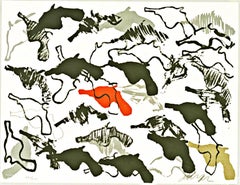
Boom Boom (Guns) mid century print, New York International portfolio S/N 1960s
By Arman
Located in New York, NY
Arman Boom Boom (unique variation from New York International Portfolio), 1965 Screenprint with pencil additions. Pencil signed and numbered 12/225 on the front Published by Chiron ...
Category

1960s Pop Art Abstract Prints

Materials

Screen

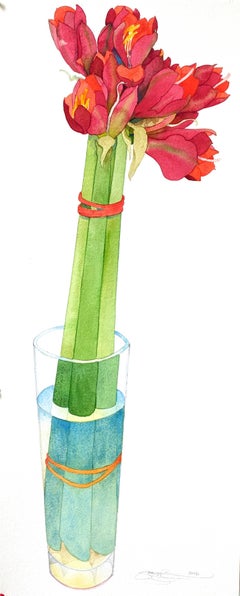
Amaryllis II / framed watercolor
By Gary Bukovnik
Located in Burlingame, CA
Amaryllis II original watercolor in vibrant red and green from Cleveland-born and educated Gary Bukovnik who has lived in San Francisco for over 40 years. Bukovnik’s art conveys a mo...
Category

21st Century and Contemporary Contemporary Still-life Drawings and Water...

Materials

Paper, Watercolor

"Untitled, " 1950s Modern Abstract Painting
By Stanley Bate
Located in Westport, CT
Thisoil painting on masonite board, "Untitled," by Modernist Stanley Bate was created circa 1950, part of his earlier body of work. The dark, heavy line work combined with bright col...
Category

1950s Modern Abstract Paintings

Materials

Oil, Board

Large Harry Bertschmann Swiss American Abstract Expressionist Outsider Painting
By Harry Bertschmann
Located in Surfside, FL
Harry Bertschmann (Swiss American, born 1931). Acrylic painting on paper. Artist signature to lower right. Provenance: Joy Moos Gallery (this was exhibited at the Outsider Art Fair) ...
Category

20th Century Abstract Expressionist Abstract Paintings

Materials

Paper, Acrylic

"Oracle, " 1970s Modern Abstract Painting
By Stanley Bate
Located in Westport, CT
This painting by Modernist painter Stanley Bate is almost monochromatic with dark brown, sandy tan and white geometric shapes. There is a single bright red pop of color at the almost...
Category

1970s Modern Abstract Paintings

Materials

Canvas, Oil

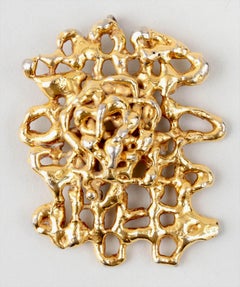
Vintage Abstract Expressionist Ibram Lassaw Modernist Bronze Sculpture Pendant
By Ibram Lassaw
Located in Surfside, FL
IBRAM LASSAW (Russian-American, 1913-2003), Sculptural pendant Gold plated bronze Signed verso Measurements: 2-7/8''h, 2-1/4''w. Ibram Lassaw was born in Alexandria, Egypt, of Russian Jewish émigré parents. After briefly living in Marseille, France, Naples, Italy Tunis, Malta, and Constantinople, Turkey his family settled in Brooklyn, New York, in 1921.His family settled in Brooklyn, New York. He became a US citizen in 1928. Ibram Lassaw, one of America's first abstract sculptors, was best known for his open-space welded sculptures of bronze, silver, copper and steel. Drawing from Surrealism, Constructivism, and Cubism, Lassaw pioneered an innovative welding technique that allowed him to create dynamic, intricate, and expressive works in three dimensions. As a result, he was a key force in shaping New York School sculpture.He first studied sculpture in 1926 at the Clay Club and later at the Beaux-Arts Institute of Design in New York. He made abstract paintings and drawings influenced by Kandinsky, Sophie Taeuber Arp, and other artists. He also attended the City College of New York. Lassaw’s encounter with avant-garde art in the International Exhibition of Modern Art (1926), organized by the Société Anonyme at the Brooklyn Museum, made a powerful impression on him. In the early 1930s he explored new materials and notions of open-space sculpture. The ideas of László Moholy-Nagy and Buckminster Fuller were important to him, and he knew the work of Julio González, Pablo Picasso, and the Russian Constructivists. After experimenting with plaster, rubber and wire, Lassaw began working with steel, which became a frequent medium for the artist, along with other metals. His work reflects the influence of Surrealist artists such as Alberto Giacometti and Joan Miro as well as American Modernist Alexander Calder.A pioneer of abstract sculpture in the United States, in 1936 Lassaw was a founding member of the organization American Abstract Artists. Between 1933 and 1942 he worked for various federal arts projects: the Public Works of Art Project, Civil Works Authority, and WPA, the Works Progress Administration Federal Art Project. In 1938 he produced his first welded work. He served with the U.S. Army, where he learned direct welding techniques. During the 1940s he experimented with cage constructions and with acrylic plastics, adding color to his sculptures by applying dye directly to their surfaces. In 1949 Lassaw was a founder of the Club, an informal discussion group of avant-garde artists that had developed from gatherings at his studio, on Eighth Street. During the mid-1930s, Lassaw worked briefly for the Public Works of Art Project cleaning sculptural monuments around New York City. He subsequently joined the WPA as a teacher and sculptor until he was drafted into the army in 1942. Lassaw's contribution to the advancement of sculptural abstraction went beyond mere formal innovation; his promotion of modernist styles during the 1930s did much to insure the growth of abstract art in the United States. He was one of the founding members of the American Abstract Artists group, and served as president of the American Abstract Artists organization from 1946 to 1949. In 1951, Samuel Kootz invited Lassaw to join his gallery in New York. He also had a summer gallery in Provincetown, MA. Lassaw had been summering in Provincetown since 1944, and in 1951 rented an apartment next door to the Kootz Gallery. Among the artists in the Kootz Gallery were Jean Arp, William Baziotes, Georges Braque, Jean Dubuffet, Herbert Ferber, Arshile Gorky, Adolph Gottlieb, David Hare, Hans Hofmann, Fernand Leger, Georges Mathieu, Joan Miró, Robert Motherwell, Pablo Picasso, Pierre Soulages, and Maurice de Vlaminck. Lassaw is a sculptor who was a part of the New York School of Abstract expressionism during the 1940s and 1950s. Jackson Pollock, Lee Krasner, James Brooks, Willem de Kooning, and several other artists like Lassaw spent summers on the Southern Shore of Long Island. Lassaw spent summers on Long Island from 1955 until he moved there permanently in 1963. SELECT EXHIBITIONS 1961 International Exhibition of Modern Jewelry 1890–1961, organized by the Worshipful Company of Goldsmiths in association with the Victoria and Albert Museum, London 1967 Exhibition of Jewelry by Painters and Sculptors, organized for circulation by MoMA 1973 Jewelry...
Category

Mid-20th Century Abstract Expressionist Abstract Sculptures

Materials

Gold, Bronze

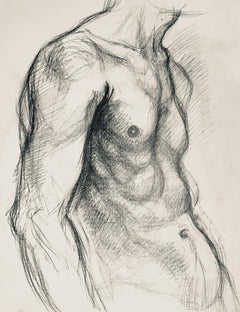
Renaissance Male Nude Figure Study, 1963, Ian Hornak — Drawing
By Ian Hornak
Located in Fairfield, CT
Artist: Ian Hornak (1944-2002) Title: Renaissance Male Nude Figure Study Year: circa 1963 Medium: Original drawing on vélin paper Size: 18 x 23 inches Condition: Good Provenance: Est...
Category

1960s Renaissance Figurative Drawings and Watercolors

Materials

Charcoal

"Martos, " 1960s Modern Abstract Painting
By Stanley Bate
Located in Westport, CT
"Martos" is an abstract oil painting on canvas by Stanley Bate featuring what appears to be a high horizon line of white and muted yellow. Beneath that line is a combination of textu...
Category

1960s Modern Abstract Paintings

Materials

Canvas, Oil

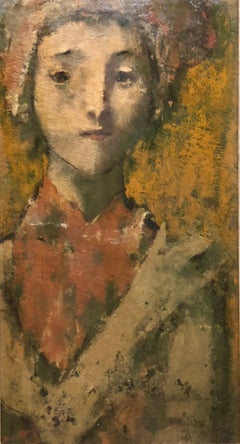
Modernist Encaustic Painting Portrait Boston Expressionist
By David Aronson
Located in Surfside, FL
Bears old label verso from Raydon Gallery in New York city. Aronson, David 1923- David Aronson, son of a rabbi, was born in Lithuania in 1923 and immigrated to America at the age of ...
Category

20th Century Expressionist Figurative Paintings

Materials

Encaustic

Double Personage
By Wifredo Lam
Located in Fairlawn, OH
Double Personage Color lithograph, 1975 (?) Unsigned (as issued) Edition: Large Edition Limited, (estimated to be approximately 2000) Published in: XXe Siecle, No. 52, Juin 1979 Published: G. di San Lazzaro Printer: Mourlot Imprimeur, Paris, France Reference: Lam-Tonneau-Ryckelynck L7513 Condition: Excellent, fresh colors Traces of glue residue along margin edge where it was bound in the book Image/sheet size: 12 1/4 x 9 1/4 inches Wilfredo Lam (1902-1982) Biography Wifredo Lam was born in Sagua la Grande, Cuba, on December 8, 1902. He was the eighth child born to Lam-Yam―born in Canton around 1820, an immigrant to the Americas in 1860―and to Ana Serafina Catilla―born in 1862 in Cuba of mixed African and Spanish ancestry. The luxuriant nature of Sagua la Grande had a strong impact on Lam from early childhood. One night in 1907, he was startled by the strange shadows cast on the wall of his bedroom of a bat in flight. He often recounted the incident as his first magnificent awakening to another dimension to existence. In 1916, Lam and part of his family settled in Havana. He was enrolled in the Escuela Profesional de Pintura y Escultura, Academia de San Alejandro, where he remained a student until 1923. This period, with exhibitions at the Salón de Bellas artes, was determinant in his choice to become a painter. In 1923, the municipality of Sagua la Grande awarded him a grant to study in Europe and by the autumn of that year, at the age of twenty-one, he left the country for Spain. His time in Spain―initially intended as a short stay on his way to Paris―lasted 14 years. In Madrid, he was exposed to the ideas and movements of modern art. He spent long hours at the Archeological Museum and the Prado. He studied the great masters of Spanish painting, Velázquez and Goya, but felt particularly drawn to the works of Bosch and Bruegel the Elder. In 1931, his first wife, Eva (Sébastiana Piriz) and their son Wilfredo Victor died of tuberculosis. The terrible suffering he endured led to numerous paintings of mother and child. Lam found solace in the company of his Spanish friends and made contact with several political organizations. In 1936, with the help of his friend Faustino Cordón, he joined the Republican forces in their fight against Franco. He designed anti-Fascist posters and took part in the struggle by working in a munitions factory. The violence of the struggle inspired his painting La Guerra Civil. In 1938, Lam left Spain for Paris. Shortly before leaving, he met Helena Holzer, who would become his wife in 1944. His meeting Picasso in his studio on the Rue des Grands Augustins proved decisive. Picasso introduced his new “cousin” to his painter, poet and art critic friends, Braque, Matisse, Miró, Léger, Eluard, Leiris, Tzara, Kahnweiler, Zervos. Lam also met Pierre Loeb, the owner of the Galerie Pierre in Paris, which hosted Lam’s first solo exhibition in 1939. Shortly before the Germans arrived, Lam left Paris for Bordeaux and then Marseille, where many of his friends, for the most part surrealists, had gathered around André Breton in the Villa Air Bel: Pierre Mabille, René Char, Max Ernst, Victor Brauner, Oscar Domínguez, André Masson, Benjamin Péret. In the Villa Air Bel, a meeting place for creativity and experimentation, Lam worked and produced, most notably, a series of ink drawings that set the tone for what would become his signature style of hybrid figures, a vocabulary he would develop more fully during his years in Cuba from 1941 to 1947. In January and February 1941, Lam illustrated Breton’s poem Fata Morgana which was censored by the Vichy government. On March 25, Lam and Helena Holzer embarked on the “Capitaine Paul Lemerle” headed for Martinique, in the company of some 300 other artists and intellectuals―André Breton and Claude Lévi-Strauss among them. Upon arrival, the passengers were interred at Trois Îles. It was during this forced passage in Martinique and before leaving for Cuba that Lam and Aimé Césaire met for the first time to become life-long friends. Newly settled in his native land after almost twenty years, Lam delved deeper into his artistic investigations, finding nourishment for his ideas in the surroundings of his childhood and youth. His sister Eloisa, whom he was closest to, explained to him in much detail the workings of Afro-Cuban rituals and he began attending ritual ceremonies with some of his friends. This contact with Afro-Cuban culture brought new impetus to his art. He painted over one hundred canvases, most notably La Jungla, making the year 1942 his most productive of this period. Over the next few years, a number of exhibitions followed in the United States, at the Institute of Modern Art of Boston, at the MoMA of New York, at the Galerie Pierre Matisse, where La Jungla was presented and created a scandal. In 1946, Lam and Helena travel to Haiti and attend voodoo ceremonies in the company of Pierre Mabille and André Breton. Talking about his experience in Haiti, Lam said, “It is often assumed that my work took its final form in Haiti, but my stay there, like the trips I made to Venezuela, Colombia or to the Brazilian Mato Grosso only broadened its scope. I could have been a good painter from the School of Paris, but I felt like a snail out of its shell. What really broadened my painting is the presence of African poetry.” Picasso_Lam_Vallauris_1954_vignette Wifredo Lam et Pablo Picasso, Vallauris, 1954 Lam then went on to New York where he renewed contact with Marcel Duchamp and made new acquaintances: Jeanne Reynal, James Johnson Sweeney, Arshile Gorky, John Cage, Roger Wilcox, Mercedes Matter, Ian Hugo, Jesse Fernández, John Cage, Sonia Sekula and Yves Tanguy. By the end of the 1940s, Lam divided his time between Europe, Havana and New York, where they stayed with Pierre and Teeny Matisse...
Category

1970s Surrealist Abstract Prints

Materials

Lithograph

Subjective Farm Landscape abstract oil painting by Ralph Rosenborg
By Ralph Rosenborg
Located in Hudson, NY
Subjective Farm Landscape 1940 Oil on canvas, 24" x 30" 37.5" x 31" x 2" framed - frame is original to this artwork Signed recto lower right: "rosenborg 40" & arrow box cypher. Signe...
Category

1940s Abstract Expressionist Abstract Paintings

Materials

Canvas, Oil

Gabriel’s Pavilion Variation II
By Ian Hornak
Located in Fairfield, CT
Artist: Ian Hornak (1944-2002) Title: Gabriel’s Pavilion Variation II Year: 1980 Medium: Pencil on Arches paper Size: 29 x 41 inches Condition: Good Provenance: Fischbach Gallery, Ne...
Category

1980s Photorealist Landscape Drawings and Watercolors

Materials

Pencil

"Year of the Dragon, " 1960s Modern Abstract Painting
By Stanley Bate
Located in Westport, CT
This Modern abstract painting Stanley Bate features an earthy and warm palette and textured paint application. The painting is signed by artist lower right and is framed in the origi...
Category

1960s Modern Abstract Paintings

Materials

Silver

(Abstract Tropical Landscape) Untitled, 2001, Ian Hornak — Drawing
By Ian Hornak
Located in Fairfield, CT
Artist: Ian Hornak (1944-2002) Title: (Abstract Tropical Landscape) Untitled Year: 2001 Medium: Ink on archival paper Size: 9 x 12 inches Condition: Good Provenance: Estate of Ian Ho...
Category

Early 2000s Photorealist Landscape Drawings and Watercolors

Materials

Ink, Archival Paper

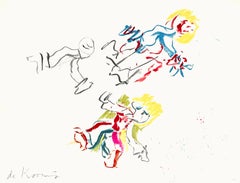
Composition for Lisa, Willem de Kooning
By Willem de Kooning
Located in Fairfield, CT
Artist: Willem de Kooning (1904-1997) Title: Composition for Lisa Year: 1984 Medium: Color silkscreen on wove paper Edition: 250, plus proofs Size: 17.75 x 23.25 inches Condition: Ex...
Category

1980s Abstract Expressionist Abstract Prints

Materials

Lithograph

"Mazarrón, " 1960s Modern Abstract Painting
By Stanley Bate
Located in Westport, CT
In this Modern abstract painting by Stanley Bate, a bold palette is married with imperfect shapes and large brush strokes. Sandy beige rectangles blend with yellow and deep blue, on ...
Category

1960s Modern Abstract Paintings

Materials

Canvas, Oil

"Helvetic Landscape, " 1960s Modern Abstract Painting
By Stanley Bate
Located in Westport, CT
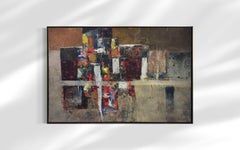
This abstract painting by Modernist artist Stanley Bate is an abstract oil painting on canvas featuring a bright red geometric shape at the center of the composition and deep grey, b...
Category

1960s Modern Abstract Paintings

Materials

Canvas, Oil

Dennis Oppenheim Large Abstract Conceptual Sculpture Drawing for Ace Gallery LA
Located in Surfside, FL
Dennis Oppenheim (1938 - 2011) Pencil and colored pencil drawing on paper, 'Memory Generator Receiver; Transmitter project for ACE Gallery Los Angeles' (possibly with watercolor pai...
Category

1970s Abstract Drawings and Watercolors

Materials

Paper, Pencil, Color Pencil

Childhood of Hephaestus, Variation V
By Ian Hornak
Located in Fairfield, CT
Artist: Ian Hornak (1944-2002) Title: Childhood of Hephaestus, Variation V Year: 1985 Medium: Acrylic on Canvas, with Artist Painted Frame Size: 47 x 59 in...
Category

1980s Photorealist Landscape Paintings

Materials

Acrylic

Historic invitation poster for 1970 ACE Gallery exhibition Minimalist light art
By Dan Flavin
Located in New York, NY
Dan Flavin Rare invitation poster for 1970 ACE Gallery exhibition, 1970 Letterpress and stencil on colored paper Not signed Frame included Floated in the original ACE gallery vintage wood frame. Measurements: Framed: 17.75" x 17.75" x 1.6 inches Poster: 16 inches x 16 inches Extremely uncommon letterpress and stencil poster designed by Dan Flavin on the occasion of his 1970 exhibition “Two Cornered Installations in Colored Fluorescent Light from Dan Flavin” at the legendary Ace Gallery in Los Angeles. The poster, like most exhibition invitations of that era (including those from the Leo Castelli gallery in New York) was undated, as these works were so much of the moment. This work was acquired directly from the collection of the ACE Gallery. Other than the present work, we've never seen another example of this collectors item anywhere in the world, on or off the market (If anyone is aware of others, we'd love to see!) More about the legendary ACE gallery, and the sale of some of its art collection from the bankruptcy estate, from where the present work was acquired: ACE Gallery founder Douglas Chrismas opened his own frame shop and gallery in Vancouver at the age of 17. His gallery became known as a venue where Vancouver artists could show alongside major New Yorkers, and get the feeling of belonging to a bigger scene. In the 60s and early 70s he brought artists such as Robert Rauschenberg, Carl Andre, Sol LeWitt, Bruce Nauman, and Donald Judd to Vancouver, Canada. The gallery expanded to Los Angeles in 1967 at the former Virginia Dwan Gallery space in Westwood, and then further expanded to New York in 1994. The galleries were noted for doing museum-level exhibitions by up and coming and internationally renowned artists. While in New York the gallery’s presence was amplified by doing exhibitions in conjunction with cultural institutions such as the Guggenheim Museum and the Cartier Foundation (Paris). Under Chrismas' directorship, ACE Gallery has had either offices or galleries in art centers outside of the United States, such as Mexico City, Paris, Berlin. and Beijing. In 1972, Chrismas mounted Robert Irwin’s installation Room Angle Light Volume at the first ACE/Venice, which opened at 72 Market Street in 1971. In 1977, ACE mounted exhibitions of work by Frank Stella and Robert Motherwell, along with Michael Heizer’s Displaced/Replaced Mass. Installed at ACE/Venice, the Heizer piece required that huge chunks be gouged out of the gallery floor to create recessed areas able to accommodate boulders. In April 2016, ACE Gallery emerged from a three-year bankruptcy proceeding under the leadership of Sam S. Leslie. In May 2016, founder Douglas Chrismas was terminated from all roles at the gallery. In July 2021, Douglas Chrismas was arrested by the FBI and charged with embezzlement. In May 2022, Douglas Chrismas was ordered to repay 14.2 million in ACE art sale profits, which were diverted to personal accounts. Chrismas is awaiting criminal trial in January, 2023. He faces up to 15 years in prison if convicted. Controversies In a 1983 lawsuit in Los Angeles federal court, Rauschenberg sought $500,000 from Chrismas' Flow ACE Gallery; the artist won a $140,000 judgment in the suit in 1984. Eventually the two reconciled their differences and in 1997 Robert Rauschenberg insisted that ACE Gallery New York (in conjunction with the Guggenheim Museum) host his Retrospective. In 1986, Chrismas pleaded no contest after Canadian real estate developer C. Frederick Stimpson alleged that he had improperly sold work belonging to the collector, among them pieces by Andy Warhol and Rauschenberg. Under the terms of the settlement, Chrismas agreed to pay Stimpson $650,000 over a period of five years. He continues to work with the Stimpson family in handling their art interests. In 1989, ACE Gallery wanted to borrow a work by Judd along with Carl Andre's 1968 Fall, both owned by Count Giuseppe Panza, for an exhibition devoted to minimal art called The Innovators Entering into the Sculpture. Rather than shipping the two large scale works from Italy, Panza authorized ACE Gallery to refabricate the pieces in Los Angeles. In Panza's collection archives, there is a series of signed certificates signed by Judd that granted Panza broad authority over the works by Judd in his collection. These certificates "authorized Panza and followers to reconstruct work for a variety of reasons," as long as instructions and documentation provided by Judd were followed and either he or his estate was notified. This even included the right to make "temporary exhibition copies, as long as the temporary copy was destroyed after the exhibition; and the right to recreate the work to save expense and difficulty in transportation as long as the original was then destroyed." Miwon Kwon, in her account of site specificity: "One Place After Another," presents the account of ACE Gallery recreating artworks by Donald Judd and Carl Andre without the artist's permission. Andre and Judd both publicly denounced these recreations as "a gross falsification" and a "forgery," in letters to Art in America, however, the fabrication of the pieces were permitted by Panza Collection in Italy, the owner of the works. Despite the confusion surrounding the Panza refabrications, both Carl Andre and Donald Judd maintained a professional relationship with Douglas Chrismas and ACE Gallery. Andre showcased works at ACE Gallery in 1997, 2002, 2007, 2011 and present day. In 2007, Carl Andre's show entitled "Zinc" was exhibited at ACE Gallery in Beverly Hills. Donald Judd paid a visit to The Innovators Entering into the Sculpture exhibition at ACE Gallery and agreed to keep his sculpture in the exhibition. After the exhibition was over, Chrismas planned to sell the metal used for the re-fabrication of Judd's work for scrap metal but Judd wanted to own the re-fabrication for himself. ACE Gallery then sold the re-fabrication of Donald Judd's work to Donald Judd. After having consigned more than $4 million worth of art to ACE Gallery to sell in 1997 and 1998, the sculptor Jannis Kounellis filed a lawsuit in Los Angeles Superior Court in 2006, accusing Chrismas of keeping most of the profits of artworks and refusing to return the pieces that did not sell. According to the lawsuit, the primary agreement between Kounellis and Chrismas was oral. Chrismas returned all of Kouenllis' artwork, and did a full accounting of the proceeds from Kounellis' work—minus the expense of exhibiting it. The matter was resolved between the two of them and ACE Gallery still sells and exhibits Kounellis' work today. By 2006, Chrismas had filed for Chapter 11 bankruptcy protection at least six times since 1982, barring most of his creditors from collecting the money immediately owed to them. Chrismas filed for Chapter 11 bankruptcy to protect the gallery's extensive real estate holdings from the problematic landlord. The landlord of the Wilshire Boulevard space, Wilshire Dunsmuir Company, claimed that ACE owed back rent and penalties however, the claim was disputed by Douglas Chrismas. In court papers, Chrismas Fine Art claimed that it would cure "the pre-petition" debt by Feb. 1, 2000, and was asking the court to protect its right to remain in the property. A declaration filed by Douglas Chrismas characterized this leasehold as the business' primary asset. -Courtesy Wikipedia About Dan Flavin Dan Flavin (1933–1996) was a pioneer of Minimal Art. He rose to fame in the 1960s with his work with industrially manufactured fluorescent tubes, inventing a new art form and securing his place in art history. The exhibition at the Kunstmuseum Basel focuses on his works that are dedicated to other artists or make reference to certain events. Back in 1963 Dan Flavin mounted a single, industrial fluorescent light tube at a 45-degree angle to the wall of his studio declaring it art; the act was radical, and it still is. Indeed, it was owing to this action that standard commercial products would be introduced into art: The nascent Minimal Art of the era emphasised seriality, reduction and matter-of-factness. Somewhat ironically, while the autodidact Flavin never himself sought membership to this movement in art, he would, and quite literally, go on to become one of its most illustrious exponents. Flavin began work with fluorescent light tubes from the early 1960s on; arranged in so-called ‘situations’, he would then further develop them into series and large-scale installations. The colours and dimensions of the materials he used were prescribed by industrial production. Flooded in light, viewers themselves become part of the works: The space, along with the objects within it, are set in relation to each other and thus become immersive experiences of art triggering sensual, almost spiritual experiences. Flavin liberated color from the two-dimensionality of painting. The prevalent perception of his light works has, to date, largely centred on their minimalist, industrial aspect, and thus on the inherent simplicity of their beauty. The exhibition at Kunstmuseum Basel, by contrast, places emphasis on looking at Flavin’s oeuvre in a less familiar setting: His pieces, although initially without clearly recognisable signature, frequently make reference in their titles to concrete events, such as wartime atrocities or police violence, or are dedicated to other artists—as in the work untitled (in memory of Urs Graf...
Category

1970s Minimalist Figurative Prints

Materials

Etching, Stencil