448 results for "marc jacobs"
to
171
261
114
382
103
80
62
41
17
13
10
9
8
5
4
3
3
1
1
272
94
33
15
9
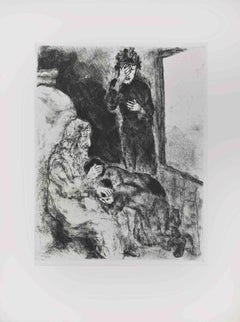
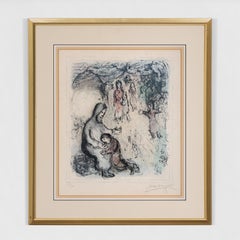
Jacob Blessing Joseph
s Children - Etching by Marc Chagall - 1956
By Marc Chagall
Located in Roma, IT
Etching on Montval wove paper, realized by Marc Chagall in 1931-39 and published by Tériade in 1956.
Belongs to the series "The Bible".
Edition of 275+30 out of commerce copies.
N...
Category
1950s Surrealist Figurative Prints
Materials
Etching
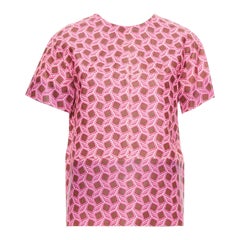
rare LOUIS VUITTON leather pink enlarged lattice lace print boxy top FR36 S
By Louis Vuitton
Located in Hong Kong, NT
rare LOUIS VUITTON genuine leather pink enlarged lattice lace print boxy top FR36 S
Reference: PYCN/A00142
Brand: Louis Vuitton
Designer: Marc Jacobs
Material: Leather
Color: Pink, B...
Category
21st Century and Contemporary French Blouses and Tops

$648 Sale Price
40% Off
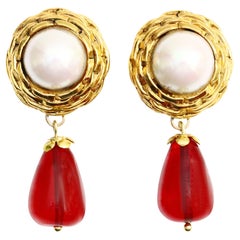
Maison Gripoix Vintage Faux Pearl and Red Dangling Earrings Circa 1980s
By Maison Gripoix
Located in New York, NY
Maison Gripoix Vintage Faux Pearl and Red Dangling Earrings. Wrapped in woven gold around the Pearl in the typical 1980s style of Chanel. Clip on. So classic, and you always look good no matter what you are wearing when you have these on. Clip on.
Very much the colors of Chanel.
Guy de Maupassant wrote a famous story about a necklace. The story is about a young, pretty, intelligent, well-educated but poorly endowed bride who has to marry a petty official; thus, suffering from the limitations of living a life with a husband that lacked any exquisite qualities. One day, to entertain his dejected spouse, her husband receives an invitation to a ball and gives his wife the 400 francs he had saved for a hunting rifle so that she can order an appropriate dress.
However, when the dress is ready, it becomes clear that it is lacking jewelry, and it would be impossible to attend the ball while looking so poor. The protagonist approaches her wealthy childhood friend, with whom she was raised at the monastery, and borrows a diamond necklace from her. The ball is a great success, and she is the centre of attention. However, when the woman returns home, she discovers that she has lost the necklace. To conceal her faux pas from her friend, she buys a new necklace identical to the one she lost. To pay it off, the woman gets into a huge debt, which, over the years, gradually drags her down the social ladder from the bourgeoisie to poverty. Ten years later, having lost her good looks, the woman encounters her friend on the Champs Elysees, who still looks young, beautiful, and rich. The protagonist reveals to her friend the entire story about the necklace, but her friend replies in amazement that the diamonds were fake and would “cost 500 francs at most.”
Maison Gripoix starts out with a dramatic story. In 1869 (or a year earlier, according to other sources), Paris master glassmaker Augustina Gripoix began creating replicas of pearls and crystals, casting glass into various shapes and colors and inserting them into the most sophisticated settings. She used the pâte de verre (glass paste) technique, whereby a traditional ceramic or gypsum form was filled with a multi-colour piece of glass and special gluing substances and then baked in a furnace, resulting in objects featuring fantastical hues. Only Augustina made her crystals by pouring the melted glass paste into the press moulds, skipping the furnace step, allowing her to achieve the purity of colour, transparency, and shine. She found a simple method to create beautiful jewelry, and thus, Marquises, Duchesses, and Princesses queued up. Madame Gripoix would then create replicas of their jewelry in case of robbery or loss or unusual pieces for their new wraps, neckpieces, or boas. The so-called ‘costume jewelry’ emerged to a large extent thanks to the work of Maison Gripoix.
Augustina Gripoix earned her fame in the 1890s when she began creating necklaces for Sarah Bernhardt to wear on stage and later designed costume jewelry for the first high fashion house of Charles Frederick Worth. Later, Paul Poiret, the leading couturier of 1910, contacted her, and she created sophisticated Oriental-style jewelry for him to match his famous Oriental costumes, based on the aesthetic of Diaghilev’s initial Russian seasons.
The value of costume jewelry was now being recognized in its own right and not just for imitation purposes. The taste of emancipated young girls, who were gaining more and more freedom and opportunities, was best met with bijouterie. So in the 1920s, when Augustina’s daughter Susan became the head of the House, Gripoix prospects became even more exciting. Girls with short-cropped hair in short dresses zoomed by in open-top cars wearing bijou rather than diamonds. Everyone ordered bijouterie from Madam Gripoix during this period, from Jeanne Lanvin to Jean Piguet...
Category
Vintage 1980s French Modern Dangle Earrings
Materials
Mixed Metal
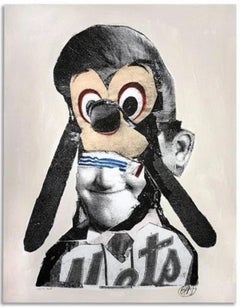
Bäst – Visconti Silkscreen
Hand-Painted Print Edition of 45 Signed, Number
By Bast
Located in Draper, UT
Visconti is a rare and highly sought-after mixed media print by the late Brooklyn-based street artist Bäst, presented here in mint condition. This limited edition work was released i...
Category
2010s Contemporary Portrait Prints
Materials
Screen
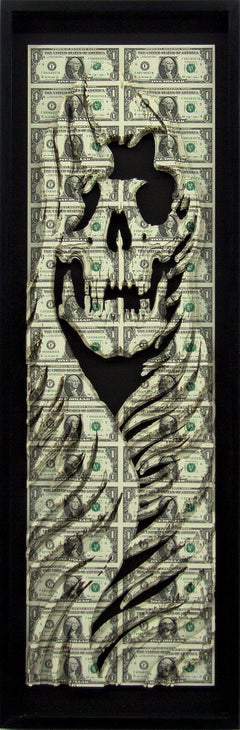
Narrow Reaper-Cut uncut US Dollar Sheets- Sculpture
By Scott Campbell
Located in Zug, CH
Scott Campbell is known throughout the world as being one of the most talented hands in the world of tattooing. He owns and operates the legendary Saved Tattoo in Williamsburg, Brooklyn, whose client list includes New York's art and design elite, fashion designers such as Marc Jacobs, and a long roster of celebrities including Heath Ledger...
Category
2010s Figurative Sculptures
Materials
Paper
$16,000 Sale Price
20% Off
"Jacob
s Ladder" Message Biblique (Peintures Bibliques Recentes, 1966-76)
By Marc Chagall
Located in Greenwich, CT
"Jacob's Ladder” from 1977 was a poster created to celebrate Chagall's retrospective of biblical paintings and artwork from the years 1966 – 1976 at the Musée National Message Bibliq...
Category
20th Century Modern Prints and Multiples
Materials
Paper, Lithograph

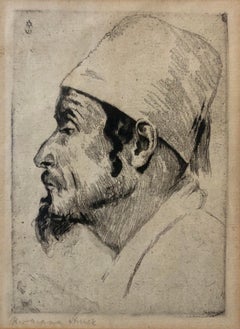
German Artist Impressionist Etching Judaica Jewish Sephardic Jewish Bezalel Era
By Hermann Struck
Located in Surfside, FL
Yemenite or Moroccan Sefardic rabbi portrait.
Framed 11 X 9 sight 6 X 4.5
Hermann Struck (6 March 1876 – 11 January 1944) was a German Jewish artist known for his etchings.
Hermann...
Category
Early 20th Century Impressionist Figurative Prints
Materials
Etching
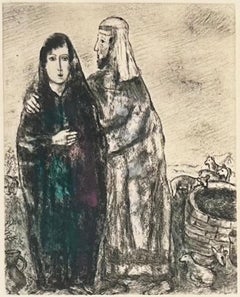
Meeting of Jacob and Rachel
By Marc Chagall
Located in Washington, DC
Artist: Marc Chagall
Medium: Color etching on Arches wove paper
Title: Meeting of Jacob and Rachel
Portfolio: Signed Bible Etchings with Watercolor
Year: 1958
Edition: 81/100
Signatu...
Category
1960s Figurative Prints
Materials
Etching
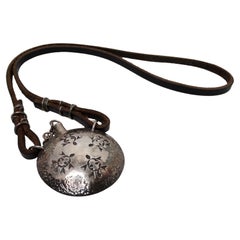
Vintage Leather Cord Sterling Silver Plated Turtle Medallion Pendant Necklace
Located in Scottsdale, AZ
Elevate your jewelry collection with this exquisite Vintage Leather Cord Sterling Silver Plated Turtle Medallion Pendant Necklace. This unique pendant features a double-sided design ...
Category
Late 20th Century Pendant Necklaces
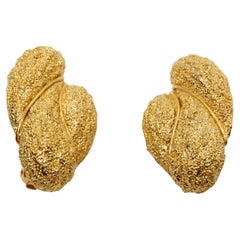
1980s Les Bernard Large 18k Gold Plated Textured Nugget Clip-On Earrings
By Les Bernard
Located in Scottsdale, AZ
These stunning 1980s Les Bernard large gold-plated textured nugget clip-on earrings are a perfect accessory that truly embodies the opulence of the era. Their unique design features ...
Category
Late 20th Century Clip-on Earrings
L
Echelle de Jacob, Peintures Bibliques Recentes 1966-1976
By Marc Chagall
Located in New York, NY
Artist: Marc Chagall
Medium: Lithographic Poster, 1977
Dimensions: 30 x 20.75 in, 76.2 x 52.7 cm
Category
1970s Prints and Multiples
Materials
Lithograph

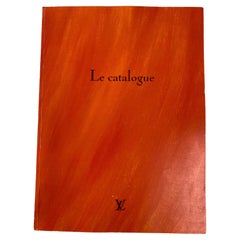
Louis Vuitton Le Catalogue Reference Book 1997
By Louis Vuitton
Located in Moreno Valley, CA
Louis Vuitton Le Catalogue Reference Book 1997. From the Louis Vuitton store in Rodeo Drive Beverly Hills in California.
Master suitcase mak...
Category
Late 20th Century French Fashion Books
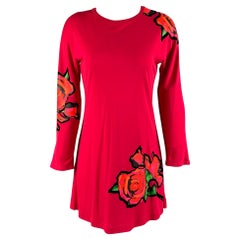
LOUIS VUITTON Size 4 Red Multi-Color Viscose Floral Long Sleeve Dress
By Louis Vuitton
Located in San Francisco, CA
LOUIS VUITTON by MARC JACOBS & STEPHEN SPROUCE long sleeve dress comes in a red multi-color viscose knit material featuring a floral graphic print details. Made in Italy.Very Good Pr...
Category
21st Century and Contemporary Day Dresses
$499 Sale Price
20% Off
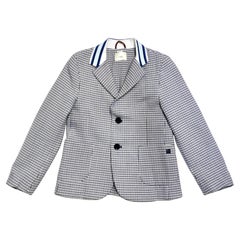
Fendi Kids Houndstooth Blue
Black Blazer
By Fendi
Located in Scottsdale, AZ
The Fendi Kids Houndstooth Blue & Black Blazer is a stylish addition to any young fashionista's wardrobe, seamlessly blending comfort with luxury. Crafted from a soft fabric, this bl...
Category
21st Century and Contemporary Children
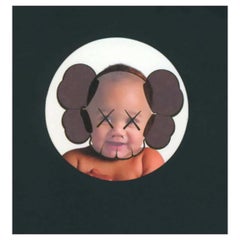
Original Fake 2006 (KAWS Japan announcement)
By KAWS
Located in NEW YORK, NY
KAWS Original Fake 2006:
A rare, much historic invitation published on the occasion of a KAWS Medicom Toy reception at KAWS' Original Fake Tokyo sho...
Category
21st Century and Contemporary Pop Art More Art
Materials
Offset, Paper, Lithograph
$340 Sale Price
31% Off
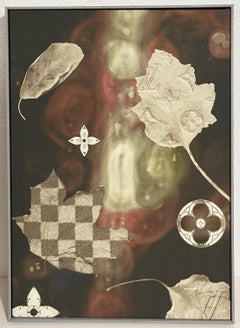
Mixed Media Unique Art Photo Louis Vuitton, Paris, Tim White Sobieski Photograph
Located in Surfside, FL
Tim White-Sobieski
Alpha LV#1, 2005
Unique photo screenprint on canvas
28 × 20 in 71.1 × 50.8 cm
Tim White Sobieski has been commissioned by LVMH multiple times, and in 2005, was invited to create an artwork for the new Louis Vuitton Flagship Store on Champs-Elysees in Paris alongside artists James Turrell and Olafur Eliasson. The project consisted of a 24-meter programmed fiber-optics video wall. Another colossal video wall was installed at the Petit Palais for the celebration of the launch. This was a unique cooperation of the three artists. In 2006, the Louis Vuitton Company invited Tim White-Sobieski back to participate in an exhibition entitled "Icons", an interpretation of the iconic logo-bags. Other artists included Marc Jacobs, Zaha Hadid, Ugo Rondinone, Sylvie Fleury, Shigeru Ban, Robert Wilson and Andrée Putman.
From the 2006 ‘Icones’ exhibition at Espace Louis Vuitton, Paris.
celebrating Marc Jacobs’ reinvention of their iconic pieces,
works by Andree Putman, LV invited the architects Zaha Hadid and Shigeru Ban, the video artist Tim White-Sobieski, the director-scenographer Robert Wilson, and the artists James Turrell, Shigeru Ban, Sylvie Fleury, Bruno Peinado, and Ugo Rondinone to riff on their fashion logos
Louis Vuitton's classic designs are an inextricable part of chic travel history. From trunks to leather bags to wine holders, their styles have traveled across time and fashion, becoming classics that never look old. With the genius of Marc Jacobs, these icons have entered new domains where art and fashion are directly linked.
Tim White is a video and installation artist based in New York and Berlin. He was educated as an architect and dedicated himself to visual art and filmmaking, exploring the fields of painting, sculpture, photography, video, video installations and light installations throughout his career. He began showing in New York in the early 1990s with his "Blue Paintings." Emphasis on the role of the subconscious in his paintings had affinities with visual abstractionism and literary existentialism.
He has consistently been at the technological forefront of video and light art, being called a "video maverick" and "an abstract "'painter of motion.'"
Tim White-Sobieski was born in 1961 and emigrated to the United States in 1993. He attended New York University and Parsons School of Design before embarking on a career in art.
Much of his work draws from literary work that has inspired the artist, and he has often featured icons of American literature in his installations. Writers such as Walt Whitman, John Steinbeck, John Updike, Kurt Vonnegut, J.D. Salinger, William Faulkner, and Robert Penn Warren all have a permanent presence in Tim White-Sobieski’s oeuvre.
Musically, White-Sobieski composes most of his own film and video soundtracks, but also incorporates the work of his contemporaries such as Brian Eno, David Byrne, Robert Fripp...
Category
Early 2000s Contemporary Mixed Media
Materials
Canvas, Mixed Media, Photogram, Screen
Jacob
s Blessing (La Bénédiction de Jacob)
By Marc Chagall
Located in Toronto, Ontario
Marc Chagall (1887–1985) was one of the most celebrated artists of the 20th century, renowned for his distinctive fusion of modernism, folklore, and Jewish cultural motifs.
Chagall’...
Category
1970s Surrealist Figurative Prints
Materials
Lithograph
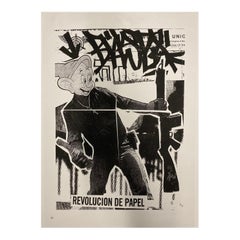
Bäst,
Revolucion De Papel
, 2003, Urban Art Print
By Bast
Located in London, GB
Bäst, 'Revolucion De Papel', 2003, Urban Art Print
Published by P.O.W. (Pictures on Walls), London, who also published works by Banksy during the same period.
Numbered in pencil w...
Category
Early 2000s American Contemporary Art
Materials
Paper
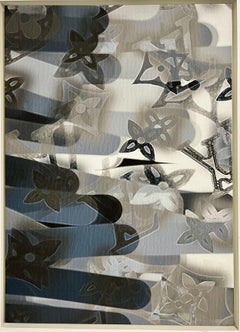
Mixed Media Unique Art Photo Louis Vuitton, Paris, Tim White Sobieski Photograph
Located in Surfside, FL
Tim White-Sobieski
Alpha LV#1, 2005
Unique photo print on canvas
28 × 20 in 71.1 × 50.8 cm
Tim White Sobieski has been commissioned by LVMH multiple times, and in 2005, was invited to create an artwork for the new Louis Vuitton Flagship Store on Champs-Elysees in Paris alongside artists James Turrell and Olafur Eliasson. The project consisted of a 24-meter programmed fiber-optics video wall. Another colossal video wall was installed at the Petit Palais for the celebration of the launch. This was a unique cooperation of the three artists. In 2006, the Louis Vuitton Company invited Tim White-Sobieski back to participate in an exhibition entitled "Icons", an interpretation of the iconic logo-bags. Other artists included Marc Jacobs, Zaha Hadid, Ugo Rondinone, Sylvie Fleury, Shigeru Ban, Robert Wilson and Andrée Putman.
From the 2006 ‘Icones’ exhibition at Espace Louis Vuitton, Paris.
celebrating Marc Jacobs’ reinvention of their iconic pieces,
works by Andree Putman, LV invited the architects Zaha Hadid and Shigeru Ban, the video artist Tim White-Sobieski, the director-scenographer Robert Wilson, and the artists James Turrell, Shigeru Ban, Sylvie Fleury, Bruno Peinado, and Ugo Rondinone to riff on their fashion logos
Louis Vuitton's classic designs are an inextricable part of chic travel history. From trunks to leather bags to wine holders, their styles have traveled across time and fashion, becoming classics that never look old. With the genius of Marc Jacobs, these icons have entered new domains where art and fashion are directly linked.
Tim White is a video and installation artist based in New York and Berlin. He was educated as an architect and dedicated himself to visual art and filmmaking, exploring the fields of painting, sculpture, photography, video, video installations and light installations throughout his career. He began showing in New York in the early 1990s with his "Blue Paintings." Emphasis on the role of the subconscious in his paintings had affinities with visual abstractionism and literary existentialism.
He has consistently been at the technological forefront of video and light art, being called a "video maverick" and "an abstract "'painter of motion.'"
Tim White-Sobieski was born in 1961 and emigrated to the United States in 1993. He attended New York University and Parsons School of Design before embarking on a career in art.
Much of his work draws from literary work that has inspired the artist, and he has often featured icons of American literature in his installations. Writers such as Walt Whitman, John Steinbeck, John Updike, Kurt Vonnegut, J.D. Salinger, William Faulkner, and Robert Penn Warren all have a permanent presence in Tim White-Sobieski’s oeuvre.
Musically, White-Sobieski composes most of his own film and video soundtracks, but also incorporates the work of his contemporaries such as Brian Eno, David Byrne, Robert Fripp...
Category
Early 2000s Contemporary Mixed Media
Materials
Canvas, Mixed Media, Photogram, Screen
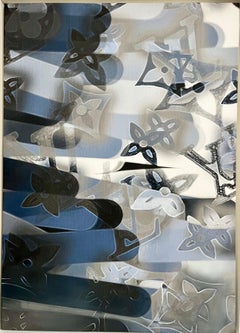
Large Mixed Media Unique Art Photo Louis Vuitton Tim White Sobieski Photograph
Located in Surfside, FL
Tim White-Sobieski
Alpha LV, 2005
Unique photo print on canvas
42 X 30 in
Tim White Sobieski has been commissioned by LVMH multiple times, and in 2005, was invited to create an artwork for the new Louis Vuitton Flagship Store on Champs-Elysees in Paris alongside artists James Turrell and Olafur Eliasson. The project consisted of a 24-meter programmed fiber-optics video wall. Another colossal video wall was installed at the Petit Palais for the celebration of the launch. This was a unique cooperation of the three artists. In 2006, the Louis Vuitton Company invited Tim White-Sobieski back to participate in an exhibition entitled "Icons", an interpretation of the iconic logo-bags. Other artists included Marc Jacobs, Zaha Hadid, Ugo Rondinone, Sylvie Fleury, Shigeru Ban, Robert Wilson and Andrée Putman.
From the 2006 ‘Icones’ exhibition at Espace Louis Vuitton, Paris.
celebrating Marc Jacobs’ reinvention of their iconic pieces,
works by Andree Putman, LV invited the architects Zaha Hadid and Shigeru Ban, the video artist Tim White-Sobieski, the director-scenographer Robert Wilson, and the artists James Turrell, Shigeru Ban, Sylvie Fleury, Bruno Peinado, and Ugo Rondinone to riff on their fashion logos
Louis Vuitton's classic designs are an inextricable part of chic travel history. From trunks to leather bags to wine holders, their styles have traveled across time and fashion, becoming classics that never look old. With the genius of Marc Jacobs, these icons have entered new domains where art and fashion are directly linked.
Tim White is a video and installation artist based in New York and Berlin. He was educated as an architect and dedicated himself to visual art and filmmaking, exploring the fields of painting, sculpture, photography, video, video installations and light installations throughout his career. He began showing in New York in the early 1990s with his "Blue Paintings." Emphasis on the role of the subconscious in his paintings had affinities with visual abstractionism and literary existentialism.
He has consistently been at the technological forefront of video and light art, being called a "video maverick" and "an abstract "'painter of motion.'"
Tim White-Sobieski was born in 1961 and emigrated to the United States in 1993. He attended New York University and Parsons School of Design before embarking on a career in art.
Much of his work draws from literary work that has inspired the artist, and he has often featured icons of American literature in his installations. Writers such as Walt Whitman, John Steinbeck, John Updike, Kurt Vonnegut, J.D. Salinger, William Faulkner, and Robert Penn Warren all have a permanent presence in Tim White-Sobieski’s oeuvre.
Musically, White-Sobieski composes most of his own film and video soundtracks, but also incorporates the work of his contemporaries such as Brian Eno, David Byrne, Robert Fripp...
Category
Early 2000s Contemporary Mixed Media
Materials
Canvas, Mixed Media, Photogram, Screen
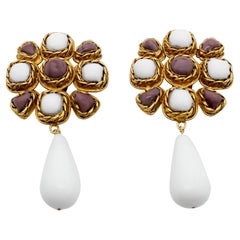
Maison Gripoix Vintage White and Purple Dangling Earrings Circa 1980s
By Maison Gripoix
Located in New York, NY
Maison Gripoix Vintage White and Light Purple Dangling Earrings. These will always be in style. The Chanel look has never left. It is classic and timeless, conveying a sense of class. It is an elevated look. No matter what you wear, these will look right. A Chanel suit or jeans and a white t-shirt with a blazer. You look stunning and done. These are all you need. Clip on. This look will always walk down the Chanel runway in one form or another.
I will send you Velcro dots to hold them on, and you can do cartwheels in these earrings. The models in Paris wear them, and you can quickly wear them for 20 hours. Please ask for them.
Guy de Maupassant wrote a famous story about a necklace. The story is about a young, pretty, intelligent, well-educated but poorly endowed bride who has to marry a petty official; thus, suffering from the limitations of living a life with a husband that lacked any exquisite qualities. One day, to entertain his dejected spouse, her husband receives an invitation to a ball and gives his wife the 400 francs he had saved for a hunting rifle so that she can order an appropriate dress.
However, when the dress is ready, it becomes clear that it is lacking jewelry, and it would be impossible to attend the ball while looking so poor. The protagonist approaches her wealthy childhood friend, with whom she was raised at the monastery, and borrows a diamond necklace from her. The ball is a great success, and she is the centre of attention. However, when the woman returns home, she discovers that she has lost the necklace. To conceal her faux pas from her friend, she buys a new necklace identical to the one she lost. To pay it off, the woman gets into a huge debt, which, over the years, gradually drags her down the social ladder from the bourgeoisie to poverty. Ten years later, having lost her good looks, the woman encounters her friend on the Champs Elysees, who still looks young, beautiful, and rich. The protagonist reveals to her friend the entire story about the necklace, but her friend replies in amazement that the diamonds were fake and would “cost 500 francs at most.”
Maison Gripoix starts out with a dramatic story. In 1869 (or a year earlier, according to other sources), Paris master glassmaker Augustina Gripoix began creating replicas of pearls and crystals, casting glass into various shapes and colors and inserting them into the most sophisticated settings. She used the pâte de verre (glass paste) technique, whereby a traditional ceramic or gypsum form was filled with a multi-colour piece of glass and special gluing substances and then baked in a furnace, resulting in objects featuring fantastical hues. Only Augustina made her crystals by pouring the melted glass paste into the press moulds, skipping the furnace step, allowing her to achieve the purity of colour, transparency, and shine. She found a simple method to create beautiful jewelry, and thus, Marquises, Duchesses, and Princesses queued up. Madame Gripoix would then create replicas of their own jewelry in case of robbery or loss, or unusual pieces for their new wraps, neckpieces, or boas. The so-called ‘costume jewelry’ emerged to a large extent thanks to the work of Maison Gripoix.
Augustina Gripoix earned her fame in the 1890s when she began creating necklaces for Sarah Bernhardt to wear on stage and later designed costume jewelry for the first high fashion house of Charles Frederick Worth. Later on, Paul Poiret, the leading couturier of 1910, contacted her, and she created sophisticated Oriental-style jewelry for him to match his famous Oriental costumes, based on the aesthetic of Diaghilev’s initial Russian seasons.
The value of costume jewelry was now being recognized in its own right and not just for imitation purposes. The taste of emancipated young girls, who were gaining more and more freedom and opportunities, was best met with bijouterie. So in the 1920s, when Augustina’s daughter Susan became the head of the House, Gripoix prospects became even more exciting. Girls with short-cropped hair in short dresses zoomed by in open-top cars wearing bijou rather than diamonds. Everyone ordered bijouterie from Madam Gripoix during this period, from Jeanne Lanvin to Jean Piguet; however, the best relationship Gripoix had was with Gabrielle Chanel.
It is well-known that Chanel, a fan of large jewelry with large stones, made bijouterie super fashionable. Chanel brought copies of Byzantine jewelry to Susanne Gripoix. She asked her to create the pieces in that same style, requesting, “Let everyone think that this jewelry is not new, but found somewhere on an excavation site nearby Rue Camborne.” She was so satisfied with the result of her order that she remained a faithful client of Gripoix for several decades. This was how the famous byzantine style of Chanel jewelry was brought to life, fancying golden Maltese crosses with large multicolor stones and matching bracelets, cabochons, and massive brooches, all of which have become a part of the Gripoix
Chanel liked to combine both natural and imitation stones in a single item; for example, she would pair natural and imitation pearls in a single necklace. Gripoix made them in such a way that it was impossible to distinguish between them. Susanne Gripoix created unique, irregularly shaped glass pearls for Chanel, imitating baroque pearls. They were enameled in her workshops with mother-of-pearl to obtain some of the soft shine characteristic of natural pearls
.
As the leading supplier to the couturier houses in Paris, Gripoix collaborated with many renowned designers, including Cristóbal Balenciaga, Pierre Balmain, and Christian Dior, as well as Yves Saint Laurent and, later, Christian Lacroix and Marc Jacobs. However, it was the cooperation with Chanel that was the most significant, both for Chanel and for Gripoix.
Today, Gripoix is no longer a family-owned company, but the House still crafts jewelry, although the style has undergone considerable changes over the last few years. The jewelry has become more straightforward, more graphical, and even minimalistic. In 2011, however, Gripoix and Catherine Baba...
Category
Vintage 1980s French Modern Dangle Earrings
Materials
Mixed Metal
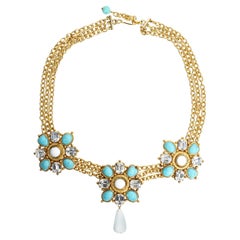
Vintage Maison Gripoix White, Crystal, Faux Turquoise Gold Necklace Circa 1990s
By Maison Gripoix
Located in New York, NY
Vintage Maison Gripoix White, Crystal, and Faux Turquoise on Gold Chain Necklace. 3 Different Emblems On a Gold Chain with a Dangling White Piece in the Middle. 22"-24" L. Dangling Middle is 3" L. Each Piece is 2" by 2"
Guy de Maupassant wrote a famous story about a necklace. The story is about a young, pretty, intelligent, well-educated, but poorly endowed bride who has to marry a petty official; thus, suffering from the limitations of living a life with a husband who lacks any exquisite qualities. One day, to entertain his dejected spouse, her husband receives an invitation to a ball and gives his wife the 400 francs he had saved for a hunting rifle so that she can order an appropriate dress.
However, when the dress is ready, it becomes clear that it is lacking jewelry, and it would be impossible to attend the ball while looking so poor. The protagonist approaches her wealthy childhood friend, with whom she was raised at the monastery, and borrows a diamond necklace from her. The ball is a great success, and she is the centre of attention. However, when the woman returns home, she discovers that she has lost the necklace. To conceal her faux pas from her friend, she buys a new necklace identical to the one she lost. To pay it off, the woman gets into a massive debt, which, over the years, gradually drags her down the social ladder from the bourgeoisie to poverty. Ten years later, having lost her good looks, the woman encounters her friend on the Champs Élysées, who still looks young, beautiful, and rich. The protagonist reveals to her friend the entire story about the necklace, but her friend replies in amazement that the diamonds were fake and would “cost 500 francs at most.”
Maison Gripoix starts with a dramatic story. In 1869 (or a year earlier, according to other sources), Paris master glassmaker Augustina Gripoix began creating replicas of pearls and crystals, casting glass into various shapes and colors and setting them in the most sophisticated settings. She used the pâte de verre (glass paste) technique, whereby a traditional ceramic or gypsum form was filled with a multi-colour piece of glass and special gluing substances and then baked in a furnace, resulting in objects featuring fantastical hues. Only Augustina made her crystals by pouring the melted glass paste into the press moulds, skipping the furnace step, allowing her to achieve the purity of colour, transparency, and shine. She found a simple method to make beautiful jewelry. Thus, Marquises, Duchesses, and Princesses queued up ... so Madame Gripoix would make them replicas of their own jewelry in case of robbery or loss, or some unusual jewelry pieces for their new wraps, neckpieces, or boas. The so-called ‘costume jewelry’ emerged to a large extent thanks to the work of Maison Gripoix.
Augustina Gripoix earned her fame in the 1890s when she began creating necklaces for Sarah Bernhardt to wear on stage and later designed costume jewelry for the first high-fashion house of Charles Frederick Worth. Later, Paul Poiret, the leading couturier of 1910, contacted her, and she created sophisticated Oriental-style jewelry to match his famous Oriental costumes, based on the aesthetic of Diaghilev’s initial Russian seasons.
The value of costume jewelry was now being recognized in its own right and not just for imitation purposes. The taste of emancipated young girls, who were gaining more and more freedom and opportunities, was best met with bijouterie. So in the 1920s, when Augustina’s daughter Susan became the head of the House, Gripoix prospects became even more exciting—girls with short-cropped hair in short dresses zoomed by in open-top cars wearing bijou rather than diamonds. Everyone ordered bijouterie from Madam Gripoix during this period, from Jeanne Lanvin to Jean Piguet...
Category
1990s French Modern Link Necklaces
Materials
Mixed Metal
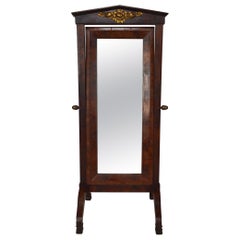
Empire Psyche Mirror in Mahogany, France, early 19th century
By P. Marcion
Located in VÉZELAY, FR
Psyche mirror in solid and veneered mahogany with antique triangular pediment and feet carved in the shape of animal claws/paws (sphinx, lion).
The bronze parts are on the theme of n...
Category
Antique Early 19th Century French Empire Floor Mirrors and Full-Length M...
Materials
Bronze
$1,723 Sale Price
20% Off
Vintage Gripoix Translucent Pate De Verre Earrings Circa 1980s
By Maison Gripoix
Located in New York, NY
Vintage Gripoix Translucent Earrings with Pieces Of Gold. Dangling Earrings With Pieces of Gold and Stones. Long Necklace/Sautoir on Site to Match. So Gorgeous! Clip On.
Guy de Maupassant wrote a famous story about a necklace. The story revolves around a young, attractive, and intelligent woman who struggles with the limitations of living with a husband who lacks exceptional qualities. One day, to entertain his dejected spouse, her husband receives an invitation to a ball and gives his wife the 400 francs he had saved for a hunting rifle so that she can order an appropriate dress.
However, when the dress is ready, it becomes clear that it is lacking jewelry, and it would be impossible to attend the ball while looking so poor. The protagonist approaches her wealthy childhood friend, with whom she was raised at the monastery, and borrows a diamond necklace from her. The ball is a great success, and she is the centre of attention. However, when the woman returns home, she discovers that she has lost the necklace. To conceal her faux pas from her friend, she buys a new necklace identical to the one she lost. To pay it off, the woman becomes mired in massive debt, which, over the years, gradually drags her down the social ladder from the bourgeoisie to poverty. Ten years later, having lost her good looks, the woman encounters her friend on the Champs-Élysées, who still looks young, beautiful, and rich. The protagonist reveals to her friend the entire story about the necklace, but her friend replies in amazement that the diamonds were fake and would “cost 500 francs at most.”
Maison Gripoix starts with a dramatic story. In 1869 (or a year earlier, according to other sources), Paris master glassmaker Augustina Gripoix began making replicas of pearls and crystals, casting glass into various shapes and colors and inserting them into the most sophisticated settings. She used the pâte de verre (glass paste) technique, whereby a traditional ceramic or gypsum form was filled with a multi-colour piece of glass and special gluing substances and then baked in a furnace, resulting in objects featuring fantastical hues. Only Augustina made her crystals by pouring the melted glass paste into the press moulds, skipping the furnace step, allowing her to achieve the purity of colour, transparency, and shine. She found a simple method to make beautiful jewelry and thus Marquises, Duchesses, and Princesses queued up ... so Madame Gripoix would make them replicas of their jewelry in case of robbery or loss, or some unusual jewelry pieces for their new wraps, neckpieces, or boas. The so-called ‘costume jewelry’ emerged to a large extent thanks to the work of Maison Gripoix.
Augustina Gripoix earned her fame in the 1890s when she began creating necklaces for Sarah Bernhardt to wear on stage and later designed costume jewelry for the first high-fashion house, founded by Charles Frederick Worth. Later, Paul Poiret, the leading couturier of 1910, contacted her, and she created sophisticated Oriental-style jewelry for him to match his famous Oriental costumes, based on the aesthetic of Diaghilev’s initial Russian seasons.
The value of costume jewelry was now being recognized in its own right and not just for imitation purposes. The taste of emancipated young girls, who were gaining more and more freedom and opportunities, was best met with bijouterie. So in the 1920s, when Augustina’s daughter Susan became the head of the House, Gripoix prospects became even more exciting. Girls with short-cropped hair in short dresses zoomed by in open-top cars wearing bijou rather than diamonds. Everyone ordered bijouterie from Madam Gripoix during this period, from Jeanne Lanvin to Jean Piguet...
Category
Vintage 1980s French Modern Dangle Earrings
Materials
Mixed Metal
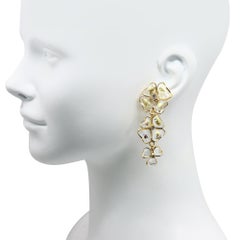
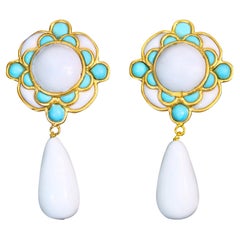
Vintage Maison Gripoix Faux Turquoise and White Dangling Earrings Circa 1980s
By Maison Gripoix
Located in New York, NY
Maison Gripoix Vintage Faux Turquoise and White Layered Dangling Earrings. There are three layers to this, all wrapped in an offset gold tone and then a long, dangling piece. These are so stunning and look good with many colors. Clip On. These are proper statement earrings in that they are so well-made. These can also be worn in the winter against dark colors.
Guy de Maupassant wrote a famous story about a necklace. The story is about a young, attractive, intelligent, well-educated, but under-endowed bride who must marry a petty official and thus suffers from the limitations of living with a husband who lacks refined qualities. One day, to entertain his dejected spouse, her husband receives an invitation to a ball and gives his wife the 400 francs he had saved for a hunting rifle so that she can order an appropriate dress.
However, when the dress is ready, it becomes clear that it is lacking jewelry, and it would be impossible to attend the ball while looking so poor. The protagonist approaches her wealthy childhood friend, with whom she was raised at the monastery, and borrows a diamond necklace from her. The ball is a great success; she is the center of attention. However, when the woman returns home, she discovers she has lost the necklace. To conceal her faux pas from her friend, she buys a new necklace identical to the one she lost. To pay it off, the woman gets into a huge debt, which, over the years, gradually drags her down the social ladder from the bourgeoisie to poverty. Ten years later, having lost her good looks, the woman encounters her friend on the Champs Elysees, who still looks young, beautiful, and rich. The protagonist reveals the entire story about the necklace to her friend, but her friend replies in amazement that the diamonds are fake and would “cost 500 francs at most.”
Maison Gripoix starts with a dramatic story. According to other sources, in 1869 (or a year earlier), Paris master glass-maker Augustina Gripoix began making replicas of pearls and crystals, casting glass into different shapes and colors and inserting them into the most sophisticated settings. She used the pâte de verre (glass paste) technique, whereby a traditional ceramic or gypsum form was filled with a multi-color piece of glass and special gluing substances and then baked in a furnace, resulting in objects featuring fantastical hues. Only Augustina made her crystals by pouring the melted glass paste into the press molds, skipping the furnace step, allowing her to achieve purity of color, transparency, and shine. She found a simple method to make beautiful jewelry, and thus Marquises, Duchesses, and Princesses qued up ... so Madame Gripoix would make them replicas of their jewelry in case of robbery or loss, or some unusual jewelry pieces for their new wraps, neckpieces, or boas. The so-called ‘costume jewelry’ emerged to a large extent thanks to the work of Maison Gripoix.
Augustina Gripoix earned her fame in the 1890s when she began creating necklaces for Sarah Bernhardt to wear on stage and later designed costume jewelry for Charles Frederick Worth's first high-fashion house. Later, Paul Poiret, the leading couturier of the 1910s, contacted her, and she created sophisticated, Oriental-style jewelry to match his famous Oriental costumes, based on the aesthetic of Diaghilev’s initial Russian seasons.
The value of costume jewelry was now being recognized in its own right and not just for imitation purposes. The taste of emancipated young girls, who were gaining more and more freedom and opportunities, was best met with bijouterie. So in 1920, when Augustina’s daughter Susan became the head of the House, Gripoix's prospects became even more exciting—girls with short-cropped hair in short dresses zoomed by in open-top cars wearing bijou rather than diamonds. Everyone ordered bijouterie from Madam Gripoix during this period, from Jeanne Lanvin to Jean Piguet...
Category
Vintage 1980s French Modern Dangle Earrings
Materials
Mixed Metal
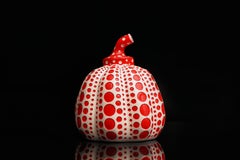
Pumpkin
White/Red Pumpkin Pop Art Resin Sculpture, 2016
By Yayoi Kusama
Located in New York, NY
The ’Pumpkin' sculpture is a polka-dotted painted lacquer resin collectible art object by the legendary contemporary Artist, Yayoi Kusama. Published by Benesse Holdings, Inc., Naosh...
Category
2010s Pop Art Abstract Sculptures
Materials
Resin, Epoxy Resin, Acrylic
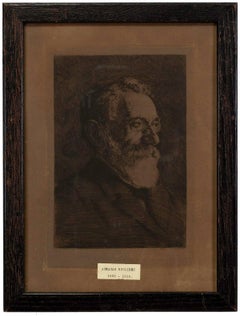
Portrait of Professor Rabbi Abraham Berliner
By Hermann Struck
Located in Surfside, FL
Genre: Judaica
Subject: People
Medium: Print
Surface: Paper
Dimensions w/Frame: 15" x 11"
Hermann Struck (6 March 1876 – 11 January 1944) was a German Jewish artist known for his etchings.
Hermann Struck (Chaim Aaron ben David...
Category
Early 20th Century Modern Figurative Prints
Materials
Etching
Takashi Murakami Marianna Boesky Gallery 2001 (announcement card)
By Takashi Murakami
Located in NEW YORK, NY
Takashi Murakami, Marianna Boesky Gallery, New York:
Rare early 2000s announcement card designed by Murakami and published by Marianne Boesky Gallery New York, 2001. Features a uniq...
Category
21st Century and Contemporary Pop Art More Art
Materials
Offset