651 results for ""constantin brancusi""
to
203
171
156
452
358
199
92
76
65
41
21
20
20
19
18
15
5
4
2
281
63
22
13
13
Socle No89 Nightstand, Wooden Contemporary Design by NONO
By Joel Escalona
Located in Ciudad de México, CDMX
Socle No89 Nightstand, Wooden Contemporary Design by NONO
Socle side table, auxiliary table, night stand
Socle is a small solid wood table designed by the NONO design team. Made o...
Category
2010s Mexican Mid-Century Modern Side Tables
Materials
Wood, Hardwood
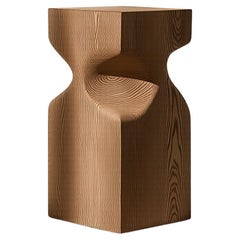
Socle No81 Stool, Solid Wood Minimal Furniture by NONO
By Joel Escalona
Located in Ciudad de México, CDMX
Socle No81 Stool, Solid Wood Minimal Furniture by NONO
Socle side table, auxiliary table, night stand
Socle is a small solid wood table designed by the NONO design team. Made of so...
Category
2010s Mexican Mid-Century Modern Side Tables
Materials
Wood, Hardwood
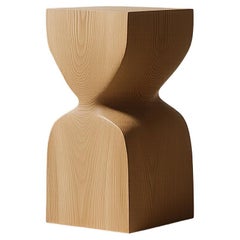
Wooden Stool Socle No84, Minimal Modern Design by Joel Escalona
By Joel Escalona
Located in Ciudad de México, CDMX
Wooden Stool Socle No84, Minimal Modern Design by Joel Escalona
Socle side table, auxiliary table, night stand
Socle is a small solid wood table designed by the NONO design team. M...
Category
2010s Mexican Mid-Century Modern Side Tables
Materials
Wood, Hardwood
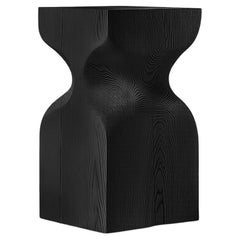
Wooden Side Table Socle No82, Modern Interior Design by Joel Escalona
By Joel Escalona
Located in Ciudad de México, CDMX
Wooden Side Table Socle No82, Modern Interior Design by Joel Escalona
Socle side table, auxiliary table, night stand
Socle is a small solid wood table designed by the NONO design ...
Category
2010s Mexican Mid-Century Modern Side Tables
Materials
Wood, Hardwood
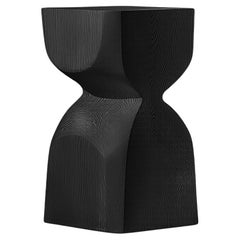
Wooden Stool Socle No78, Modern Interior Design by Joel Escalona
By Joel Escalona
Located in Ciudad de México, CDMX
Wooden Stool Socle No78, Modern Interior Design by Joel Escalona
Socle side table, auxiliary table, night stand
Socle is a small solid wood table designed by the NONO design team....
Category
2010s Mexican Mid-Century Modern Side Tables
Materials
Wood, Hardwood
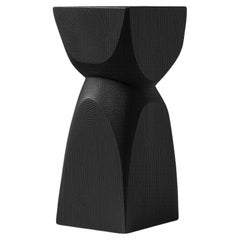
Modern Socle No74 Nightstand, Solid Wood by Joel Escalona
By Joel Escalona
Located in Ciudad de México, CDMX
Modern Socle No74 Nightstand, Solid Wood by Joel Escalona
Socle side table, auxiliary table, night stand
Socle is a small solid wood table designed by the NONO design team. Made o...
Category
2010s Mexican Mid-Century Modern Side Tables
Materials
Wood, Hardwood
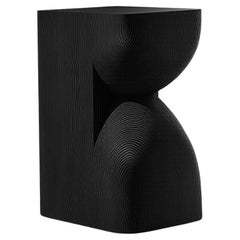
Socle No69 Stool, Solid Wood Contemporary Furniture by NONO
By Joel Escalona
Located in Ciudad de México, CDMX
Socle No69 Stool, Solid Wood Contemporary Furniture by NONO
Socle side table, auxiliary table, night stand
Socle is a small solid wood table designed by the NONO design team. Made...
Category
2010s Mexican Mid-Century Modern Side Tables
Materials
Wood, Hardwood
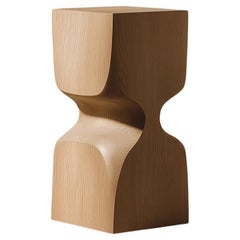
Socle No71 Nightstand, Solid Wood Modern Design by NONO
By Joel Escalona
Located in Ciudad de México, CDMX
Socle No71 Nightstand, Solid Wood Modern Design by NONO
Socle side table, auxiliary table, night stand
Socle is a small solid wood table designed by the NONO design team. Made of ...
Category
2010s Mexican Mid-Century Modern Side Tables
Materials
Wood, Hardwood
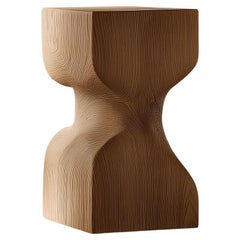
Socle No73 Side Table, Wooden Contemporary Design by NONO
By Joel Escalona
Located in Ciudad de México, CDMX
Socle No73 Side Table, Wooden Contemporary Design by NONO
Socle side table, auxiliary table, night stand
Socle is a small solid wood table designed by the NONO design team. Made o...
Category
2010s Mexican Mid-Century Modern Side Tables
Materials
Wood, Hardwood
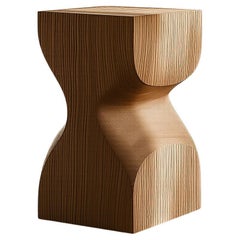
Wooden Stool Socle No72, Minimal Interior Furniture by Joel Escalona
By Joel Escalona
Located in Ciudad de México, CDMX
Wooden Stool Socle No72, Minimal Interior Furniture by Joel Escalona
Socle side table, auxiliary table, night stand
Socle is a small solid wood table designed by the NONO design te...
Category
2010s Mexican Mid-Century Modern Side Tables
Materials
Wood, Hardwood

$4,674 Sale Price / item
25% Off
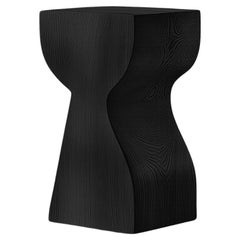
Socle No75 Stool, Wooden Contemporary Furniture by NONO
By Joel Escalona
Located in Ciudad de México, CDMX
Socle No75 Stool, Wooden Contemporary Furniture by NONO
Socle side table, auxiliary table, night stand
Socle is a small solid wood table designed by the NONO design team. Made of ...
Category
2010s Mexican Mid-Century Modern Side Tables
Materials
Wood, Hardwood
$4,674 Sale Price / item
25% Off
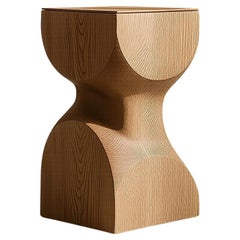
Socle No65 Nightstand, Modern Solid Wood Furniture by NONO
By Joel Escalona
Located in Ciudad de México, CDMX
Socle No65 Stool, Solid Wood Contemporary Furniture by NONO
Socle side table, auxiliary table, night stand
Socle is a small solid wood table designed by the NONO design team. Made ...
Category
2010s Mexican Mid-Century Modern Side Tables
Materials
Wood, Hardwood
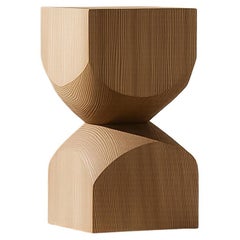
Modern Wooden Socle No68 Nightstand, Design by Joel Escalona
By Joel Escalona
Located in Ciudad de México, CDMX
Modern Wooden Socle No68 Nightstand, Design by Joel Escalona
Socle side table, auxiliary table, night stand
Socle is a small solid wood table designed by the NONO design team. Made...
Category
2010s Mexican Mid-Century Modern Side Tables
Materials
Wood, Hardwood
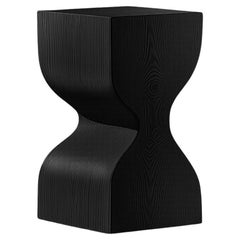
Contemporary Wooden Stool Socle No66, Designed by Joel Escalona
By Joel Escalona
Located in Ciudad de México, CDMX
Contemporary Wooden Stool Socle No66, Designed by Joel Escalona
Socle side table, auxiliary table, night stand
Socle is a small solid wood table designed by the NONO design team. ...
Category
2010s Mexican Mid-Century Modern Side Tables
Materials
Wood, Hardwood
$4,674 Sale Price / item
25% Off
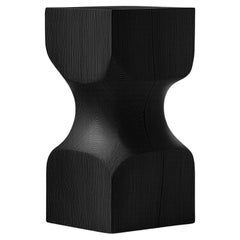
Socle No67 Side Table, Wooden Interior Design Piece by NONO
By Joel Escalona
Located in Ciudad de México, CDMX
Socle No67 Side Table, Wooden Interior Design Piece by NONO
Socle side table, auxiliary table, night stand
Socle is a small solid wood table designed by the NONO design team. Made...
Category
2010s Mexican Mid-Century Modern Side Tables
Materials
Wood, Hardwood
$4,674 Sale Price / item
25% Off
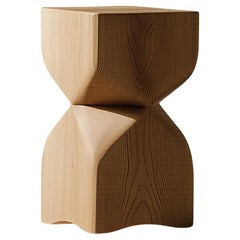
Wooden Stool Socle No63, Solid Wood Contemporary Piece by NONO
By Joel Escalona
Located in Ciudad de México, CDMX
Socle No63 Stool, Solid Wood Contemporary Furniture by NONO
Socle side table, auxiliary table, night stand
Socle is a small solid wood table designed by the NONO design team. Made ...
Category
2010s Mexican Mid-Century Modern Side Tables
Materials
Wood, Hardwood
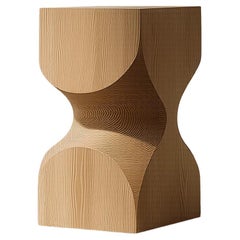
Contemporary Socle No58 Side Table, Design by Joel Escalona
By Joel Escalona
Located in Ciudad de México, CDMX
Socle No58 Stool, Solid Wood Contemporary Furniture by NONO
Socle side table, auxiliary table, night stand
Socle is a small solid wood table designed by the NONO design team. Made ...
Category
2010s Mexican Mid-Century Modern Side Tables
Materials
Wood, Hardwood
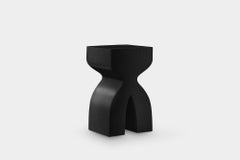
Socle No64 Side Table, Minimal Wooden Furniture by Joel Escalona
By Joel Escalona
Located in Ciudad de México, CDMX
Socle No64 Stool, Solid Wood Contemporary Furniture by NONO
Socle side table, auxiliary table, night stand
Socle is a small solid wood table designed by the NONO design team. Made ...
Category
2010s Mexican Mid-Century Modern Side Tables
Materials
Wood, Hardwood
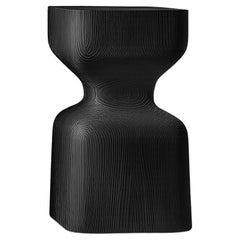
Socle No59 Nightstand, Wooden Interior Design Furniture by NONO
By Joel Escalona
Located in Ciudad de México, CDMX
Socle No59 Stool, Solid Wood Contemporary Furniture by NONO
Socle side table, auxiliary table, night stand
Socle is a small solid wood table designed by the NONO design team. Made ...
Category
2010s Mexican Mid-Century Modern Side Tables
Materials
Wood, Hardwood
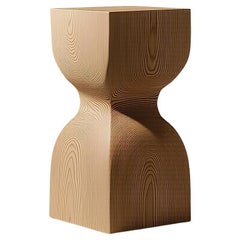
Wooden Stool Socle No60, Modern Solid Wood Furniture by Joel Escalona
By Joel Escalona
Located in Ciudad de México, CDMX
Socle No60 Stool, Solid Wood Contemporary Furniture by NONO
Socle side table, auxiliary table, night stand
Socle is a small solid wood table designed by the NONO design team. Made ...
Category
2010s Mexican Mid-Century Modern Side Tables
Materials
Wood, Hardwood
$4,674 Sale Price / item
25% Off
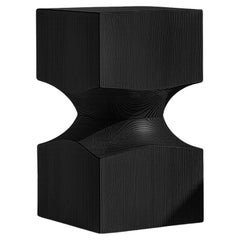
Socle No61 Side Table, Contemporary Wooden Furniture by NONO
By Joel Escalona
Located in Ciudad de México, CDMX
Socle No61 Stool, Solid Wood Contemporary Furniture by NONO
Socle side table, auxiliary table, night stand
Socle is a small solid wood table designed by the NONO design team. Made ...
Category
2010s Mexican Mid-Century Modern Side Tables
Materials
Wood, Hardwood
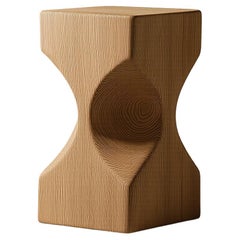
$4,674 Sale Price / item
25% Off
Contemporary Wooden Socle No52 Side Table, Joel Escalona Design
By Joel Escalona
Located in Ciudad de México, CDMX
Socle No52 Stool, Solid Wood Contemporary Furniture by NONO
Socle side table, auxiliary table, night stand
Socle is a small solid wood table designed by the NONO design team. Made ...
Category
2010s Mexican Mid-Century Modern Side Tables
Materials
Wood, Hardwood
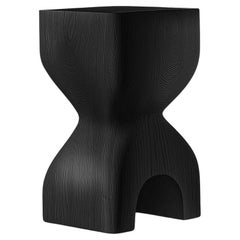
$4,674 Sale Price / item
25% Off
Socle Cocktail Tables, Celebrate Design with NONO No28
By Joel Escalona
Located in Ciudad de México, CDMX
Socle Cocktail Tables, Celebrate Design with NONO No28
——
Introducing the "Socle Dining Table Series" by NONO, a distinguished expansion of our beloved side table collection, envisi...
Category
2010s Mexican Modern Dining Room Tables
Materials
Hardwood

$9,947 Sale Price / item
25% Off
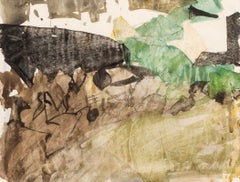
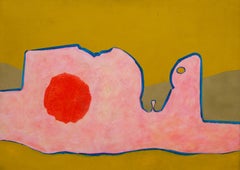
Coastal Scene, Gouache Painting by Peter Potworowski, 1950s circa
Located in Kingsclere, GB
Coastal Scene, Gouache Painting by Peter Potworowski, 1950s circa
Additional information:
Medium: Gouache
17 x 21.5 cm
6 3/4 x 8 1/2 in
Tadeusz Piotr (Peter) Potworowski was a Polish abstract and figurative painter who lived and exhibited in Paris, Poland, Sweden and England.
Potworowski was born in Warsaw in 1898. After serving in the First World War, Potworowski enrolled at the Warsaw University of Technology to study architecture, though his studies were halted by the Bolshevik campaign. After the end of the Polish-Soviet War in 1921, Potworowski returned to Warsaw and began to study art at the school of Konrad Krzyżanowski. By the following year, he had taken a place at the Academy of Fine Arts in Krakow, where he studied under Józef Pankiewicz. It was Pankiewicz who incorporated Potworowski into the Paris Commute, or Kapists, a group of Polish artists who travelled to the French capital in 1924.
During his seven years in Paris he became personally acquainted with Pablo Picasso, Pierre Bonnard, Jean Cocteau, Constantin Brancusi and attended for a short time Fernand Léger's studio. It was through this job that he met his first wife Magdalena Mańkowska, a student of anthropology in Paris. After marrying in France, and visiting Britain in 1928, the couple returned to Poland in 1930, where their first son John was born.
In 1931, Warsaw was the locale of the first Kapists exhibition, entitled New Generation, which took place at the Artist's Club, Hotel Polonia, and the Institute of Art Propaganda. Here, Potworowski received a prize for his painting Three Women in the Interior. The following year, he held his first solo exhibition at the Makowski Salon in Poznań. This success was sustained through 1937 when the artist received a silver medal at the International Exhibition of Art and Technology in Paris, as well as the award from the Minister of Foreign Affairs. After this strong development, Potworowski had a travelling solo exhibition arranged, held in 1938 at the Institute of Propaganda of Art in Warsaw and then in Lviv.
Following the invasion of Poland in 1939, Potworowski escaped to Sweden via Lithuania. It was from here that the artist, with his wife and two young children, made his way to Britain, arriving in 1943. After serving in Scotland, Potworowski settled in London, and in January 1946, an exhibition of 33 of his works was held at the Redfern Gallery. This was followed by regular exhibitions with the Redfern, Gimpel Fils (1948 onwards) and The London Group, to which he was elected a member in 1949. He was also the president of the Association of Polish Artists and published regularly in the monthly magazine "Nowa Polska".
Potworowski's teaching career included eight years as Professor of Painting at the Bath Academy of Art, Corsham (1949-57), where he had considerable European influence, specifically on abstraction, and was acknowledged by contemporaries including Peter Lanyon, Bryan Wynter...
Category
20th Century Abstract Paintings
Materials
Gouache
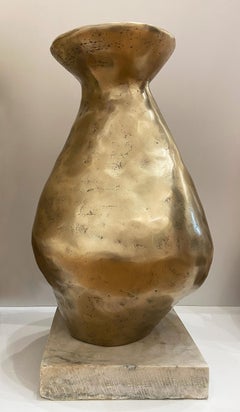
"Lucky Number" - abstract sculpture - Barbara Hepworth
By Susan Hable
Located in Atlanta, GA
Susan Hable is inspired by the work of David Hockney, Milton Avery, Henri Matisse, Alex Katz, Howard Hodgkins, Hilma af Klint, Georgia O'Keeffe, Barbara Hepworth and Constantin Brâncuși.
With humor and a bit of mischief, Susan Hable’s “Don't Pick The Flowers!” is a body of work that is at once a refuge and a playground. Inspired by her sumptuous garden just outside of her Athens studio, Susan flows from one medium to the next from painting to collage to sculpture. Susan sees her garden as a place for adventure and daydreaming, challenging her perceptions of what her Art can be. Even a weedy ground cover has caught Susan’s eye, an overlooked invasive is seen in a new light becoming a dreamlike fairytale path. Her work asks us to engage in life, go for a walk and play.
Susan Hable Smith is the artist and designer behind the boldly colored and hand drawn patterns of Hable Construction...
Category
2010s Abstract Abstract Sculptures
Materials
Marble, Bronze
"Cronus Dining" David Hare, Yellow
White Mythological Surrealist Composition
By David Hare
Located in New York, NY
David Hare
Cronus Dining, 1968
Graphite, acrylic, paper collage on board
44 x 34 inches
“Freedom is what we want,” David Hare boldly stated in 1965, but then he added the caveat, “and what we are most afraid of.” No one could accuse David Hare of possessing such fear. Blithely unconcerned with the critics’ judgments, Hare flitted through most of the major art developments of the mid-twentieth century in the United States. He changed mediums several times; just when his fame as a sculptor had reached its apogee about 1960, he switched over to painting. Yet he remained attached to surrealism long after it had fallen out of official favor. “I can’t change what I do in order to fit what would make me popular,” he said. “Not because of moral reasons, but just because I can’t do it; I’m not interested in it.”
Hare was born in New York City in 1917; his family was both wealthy and familiar with the world of modern art. Meredith (1870-1932), his father, was a prominent corporate attorney. His mother, Elizabeth Sage Goodwin (1878-1948) was an art collector, a financial backer of the 1913 Armory Show, and a friend of artists such as Constantin Brancusi, Walt Kuhn, and Marcel Duchamp.
In the 1920s, the entire family moved to Santa Fe, New Mexico and later to Colorado Springs, in the hope that the change in altitude and climate would help to heal Meredith’s tuberculosis. In Colorado Springs, Elizabeth founded the Fountain Valley School where David attended high school after his father died in 1932. In the western United States, Hare developed a fascination for kachina dolls and other aspects of Native American culture that would become a recurring source of inspiration in his career.
After high school, Hare briefly attended Bard College (1936-37) in Annandale-on-Hudson. At a loss as to what to do next, he parlayed his mother’s contacts into opening a commercial photography studio and began dabbling in color photography, still a rarity at the time [Kodachrome was introduced in 1935]. At age 22, Hare had his first solo exhibition at Walker Gallery in New York City; his 30 color photographs included one of President Franklin Roosevelt.
As a photographer, Hare experimented with an automatist technique called “heatage” (or “melted negatives”) in which he heated the negative in order to distort the image. Hare described them as “antagonisms of matter.” The final products were usually abstractions tending towards surrealism and similar to processes used by Man Ray, Raoul Ubac, and Wolfgang Paalen.
In 1940, Hare moved to Roxbury, CT, where he fraternized with neighboring artists such as Alexander Calder and Arshile Gorky, as well as Yves Tanguy who was married to Hare’s cousin Kay Sage, and the art dealer Julian Levy. The same year, Hare received a commission from the American Museum of Natural History to document the Pueblo Indians. He traveled to Santa Fe and, for several months, he took portrait photographs of members of the Hopi, Navajo, and Zuni tribes that were published in book form in 1941.
World War II turned Hare’s life upside down. He became a conduit in the exchange of artistic and intellectual ideas between U.S. artists and the surrealist émigrés fleeing Europe. In 1942, Hare befriended Andre Breton, the principal theorist of surrealism. When Breton wanted to publish a magazine to promote the movement in the United States, he could not serve as an editor because he was a foreign national. Instead, Breton selected Hare to edit the journal, entitled VVV [shorth for “Victory, Victory, Victory”], which ran for four issues (the second and third issues were printed as a single volume) from June 1942 to February 1944. Each edition of VVV focused on “poetry, plastic arts, anthropology, sociology, (and) psychology,” and was extensively illustrated by surrealist artists including Giorgio de Chirico, Roberto Matta, and Yves Tanguy; Max Ernst and Marcel Duchamp served as editorial advisors.
At the suggestion of Jacqueline Lamba...
Category
1960s Abstract Abstract Paintings
Materials
Paper, Acrylic, Graphite
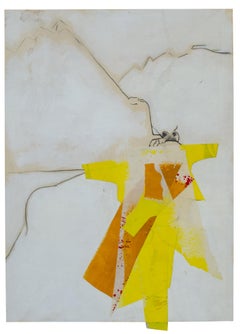
"Cronus View from the Cave" David Hare, Abstract Surrealist Composition
By David Hare
Located in New York, NY
David Hare
Cronus View from the Cave, 1971
Graphite, Ink wash, Paper Collage on Paper on Board
25 x 33 inches
“Freedom is what we want,” David Hare boldly stated in 1965, but then he added the caveat, “and what we are most afraid of.” No one could accuse David Hare of possessing such fear. Blithely unconcerned with the critics’ judgments, Hare flitted through most of the major art developments of the mid-twentieth century in the United States. He changed mediums several times; just when his fame as a sculptor had reached its apogee about 1960, he switched over to painting. Yet he remained attached to surrealism long after it had fallen out of official favor. “I can’t change what I do in order to fit what would make me popular,” he said. “Not because of moral reasons, but just because I can’t do it; I’m not interested in it.”
Hare was born in New York City in 1917; his family was both wealthy and familiar with the world of modern art. Meredith (1870-1932), his father, was a prominent corporate attorney. His mother, Elizabeth Sage Goodwin (1878-1948) was an art collector, a financial backer of the 1913 Armory Show, and a friend of artists such as Constantin Brancusi, Walt Kuhn, and Marcel Duchamp.
In the 1920s, the entire family moved to Santa Fe, New Mexico and later to Colorado Springs, in the hope that the change in altitude and climate would help to heal Meredith’s tuberculosis. In Colorado Springs, Elizabeth founded the Fountain Valley School where David attended high school after his father died in 1932. In the western United States, Hare developed a fascination for kachina dolls and other aspects of Native American culture that would become a recurring source of inspiration in his career.
After high school, Hare briefly attended Bard College (1936-37) in Annandale-on-Hudson. At a loss as to what to do next, he parlayed his mother’s contacts into opening a commercial photography studio and began dabbling in color photography, still a rarity at the time [Kodachrome was introduced in 1935]. At age 22, Hare had his first solo exhibition at Walker Gallery in New York City; his 30 color photographs included one of President Franklin Roosevelt.
As a photographer, Hare experimented with an automatist technique called “heatage” (or “melted negatives”) in which he heated the negative in order to distort the image. Hare described them as “antagonisms of matter.” The final products were usually abstractions tending towards surrealism and similar to processes used by Man Ray, Raoul Ubac, and Wolfgang Paalen.
In 1940, Hare moved to Roxbury, CT, where he fraternized with neighboring artists such as Alexander Calder and Arshile Gorky, as well as Yves Tanguy who was married to Hare’s cousin Kay Sage, and the art dealer Julian Levy. The same year, Hare received a commission from the American Museum of Natural History to document the Pueblo Indians. He traveled to Santa Fe and, for several months, he took portrait photographs of members of the Hopi, Navajo, and Zuni tribes that were published in book form in 1941.
World War II turned Hare’s life upside down. He became a conduit in the exchange of artistic and intellectual ideas between U.S. artists and the surrealist émigrés fleeing Europe. In 1942, Hare befriended Andre Breton, the principal theorist of surrealism. When Breton wanted to publish a magazine to promote the movement in the United States, he could not serve as an editor because he was a foreign national. Instead, Breton selected Hare to edit the journal, entitled VVV [shorth for “Victory, Victory, Victory”], which ran for four issues (the second and third issues were printed as a single volume) from June 1942 to February 1944. Each edition of VVV focused on “poetry, plastic arts, anthropology, sociology, (and) psychology,” and was extensively illustrated by surrealist artists including Giorgio de Chirico, Roberto Matta, and Yves Tanguy; Max Ernst and Marcel Duchamp served as editorial advisors.
At the suggestion of Jacqueline Lamba...
Category
1970s Abstract Abstract Paintings
Materials
Paper, Ink, Graphite
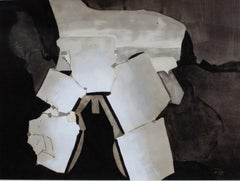
"Cronus Asleep in the Cave" David Hare, Surrealist Mythological Allegory
By David Hare
Located in New York, NY
David Hare
Cronus Asleep in the Cave, 1991
Acrylic on paper on board
26 X 34 1/4 inches
“Freedom is what we want,” David Hare boldly stated in 1965, but then he added the caveat, “and what we are most afraid of.” No one could accuse David Hare of possessing such fear. Blithely unconcerned with the critics’ judgments, Hare flitted through most of the major art developments of the mid-twentieth century in the United States. He changed mediums several times; just when his fame as a sculptor had reached its apogee about 1960, he switched over to painting. Yet he remained attached to surrealism long after it had fallen out of official favor. “I can’t change what I do in order to fit what would make me popular,” he said. “Not because of moral reasons, but just because I can’t do it; I’m not interested in it.”
Hare was born in New York City in 1917; his family was both wealthy and familiar with the world of modern art. Meredith (1870-1932), his father, was a prominent corporate attorney. His mother, Elizabeth Sage Goodwin (1878-1948) was an art collector, a financial backer of the 1913 Armory Show, and a friend of artists such as Constantin Brancusi, Walt Kuhn, and Marcel Duchamp.
In the 1920s, the entire family moved to Santa Fe, New Mexico and later to Colorado Springs, in the hope that the change in altitude and climate would help to heal Meredith’s tuberculosis. In Colorado Springs, Elizabeth founded the Fountain Valley School where David attended high school after his father died in 1932. In the western United States, Hare developed a fascination for kachina dolls and other aspects of Native American culture that would become a recurring source of inspiration in his career.
After high school, Hare briefly attended Bard College (1936-37) in Annandale-on-Hudson. At a loss as to what to do next, he parlayed his mother’s contacts into opening a commercial photography studio and began dabbling in color photography, still a rarity at the time [Kodachrome was introduced in 1935]. At age 22, Hare had his first solo exhibition at Walker Gallery in New York City; his 30 color photographs included one of President Franklin Roosevelt.
As a photographer, Hare experimented with an automatist technique called “heatage” (or “melted negatives”) in which he heated the negative in order to distort the image. Hare described them as “antagonisms of matter.” The final products were usually abstractions tending towards surrealism and similar to processes used by Man Ray, Raoul Ubac, and Wolfgang Paalen.
In 1940, Hare moved to Roxbury, CT, where he fraternized with neighboring artists such as Alexander Calder and Arshile Gorky, as well as Yves Tanguy who was married to Hare’s cousin Kay Sage, and the art dealer Julian Levy. The same year, Hare received a commission from the American Museum of Natural History to document the Pueblo Indians. He traveled to Santa Fe and, for several months, he took portrait photographs of members of the Hopi, Navajo, and Zuni tribes that were published in book form in 1941.
World War II turned Hare’s life upside down. He became a conduit in the exchange of artistic and intellectual ideas between U.S. artists and the surrealist émigrés fleeing Europe. In 1942, Hare befriended Andre Breton, the principal theorist of surrealism. When Breton wanted to publish a magazine to promote the movement in the United States, he could not serve as an editor because he was a foreign national. Instead, Breton selected Hare to edit the journal, entitled VVV [shorth for “Victory, Victory, Victory”], which ran for four issues (the second and third issues were printed as a single volume) from June 1942 to February 1944. Each edition of VVV focused on “poetry, plastic arts, anthropology, sociology, (and) psychology,” and was extensively illustrated by surrealist artists including Giorgio de Chirico, Roberto Matta, and Yves Tanguy; Max Ernst and Marcel Duchamp served as editorial advisors.
At the suggestion of Jacqueline Lamba...
Category
1990s Abstract Mixed Media
Materials
Paper, Acrylic, Board
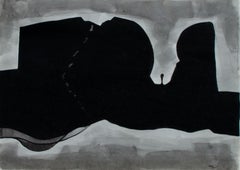
François Xavier Lalanne "The Goat"
By François-Xavier Lalanne
Located in Saint ouen, FR
François-Xavier Lalanne (1927-2008) La chèvre (the goat), 2004
Original print (etching on paper) hand signed in pencil by François Xavier Lalanne and untitled "La Chèvre" ("The Goat"...
Category
Early 2000s French Modern Prints
Materials
Paper
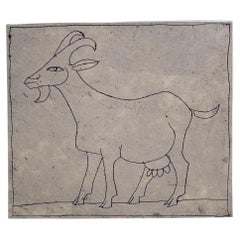
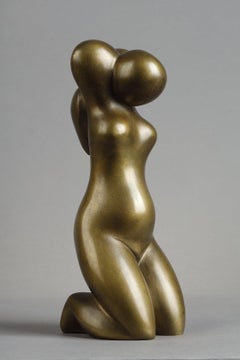
Nude kneeling
By Baltasar Lobo
Located in PARIS, FR
Nude kneeling
by Baltasar LOBO (1910-1993)
A bronze sculpture with an old gilded patina
Signed on the lower side " Lobo "
Cast by " Susse Fondeur Paris " (with the foundry mark)
Art...
Category
Mid-20th Century French School Nude Sculptures
Materials
Bronze
"Cronus Asleep in the Cave" David Hare, Mythological Surrealist Composition
By David Hare
Located in New York, NY
David Hare
Cronus Asleep in the Cave, 1971
Acrylic on board
27 1/2 x 38 1/4 inches
“Freedom is what we want,” David Hare boldly stated in 1965, but then he added the caveat, “and what we are most afraid of.” No one could accuse David Hare of possessing such fear. Blithely unconcerned with the critics’ judgments, Hare flitted through most of the major art developments of the mid-twentieth century in the United States. He changed mediums several times; just when his fame as a sculptor had reached its apogee about 1960, he switched over to painting. Yet he remained attached to surrealism long after it had fallen out of official favor. “I can’t change what I do in order to fit what would make me popular,” he said. “Not because of moral reasons, but just because I can’t do it; I’m not interested in it.”
Hare was born in New York City in 1917; his family was both wealthy and familiar with the world of modern art. Meredith (1870-1932), his father, was a prominent corporate attorney. His mother, Elizabeth Sage Goodwin (1878-1948) was an art collector, a financial backer of the 1913 Armory Show, and a friend of artists such as Constantin Brancusi, Walt Kuhn, and Marcel Duchamp.
In the 1920s, the entire family moved to Santa Fe, New Mexico and later to Colorado Springs, in the hope that the change in altitude and climate would help to heal Meredith’s tuberculosis. In Colorado Springs, Elizabeth founded the Fountain Valley School where David attended high school after his father died in 1932. In the western United States, Hare developed a fascination for kachina dolls and other aspects of Native American culture that would become a recurring source of inspiration in his career.
After high school, Hare briefly attended Bard College (1936-37) in Annandale-on-Hudson. At a loss as to what to do next, he parlayed his mother’s contacts into opening a commercial photography studio and began dabbling in color photography, still a rarity at the time [Kodachrome was introduced in 1935]. At age 22, Hare had his first solo exhibition at Walker Gallery in New York City; his 30 color photographs included one of President Franklin Roosevelt.
As a photographer, Hare experimented with an automatist technique called “heatage” (or “melted negatives”) in which he heated the negative in order to distort the image. Hare described them as “antagonisms of matter.” The final products were usually abstractions tending towards surrealism and similar to processes used by Man Ray, Raoul Ubac, and Wolfgang Paalen.
In 1940, Hare moved to Roxbury, CT, where he fraternized with neighboring artists such as Alexander Calder and Arshile Gorky, as well as Yves Tanguy who was married to Hare’s cousin Kay Sage, and the art dealer Julian Levy. The same year, Hare received a commission from the American Museum of Natural History to document the Pueblo Indians. He traveled to Santa Fe and, for several months, he took portrait photographs of members of the Hopi, Navajo, and Zuni tribes that were published in book form in 1941.
World War II turned Hare’s life upside down. He became a conduit in the exchange of artistic and intellectual ideas between U.S. artists and the surrealist émigrés fleeing Europe. In 1942, Hare befriended Andre Breton, the principal theorist of surrealism. When Breton wanted to publish a magazine to promote the movement in the United States, he could not serve as an editor because he was a foreign national. Instead, Breton selected Hare to edit the journal, entitled VVV [shorth for “Victory, Victory, Victory”], which ran for four issues (the second and third issues were printed as a single volume) from June 1942 to February 1944. Each edition of VVV focused on “poetry, plastic arts, anthropology, sociology, (and) psychology,” and was extensively illustrated by surrealist artists including Giorgio de Chirico, Roberto Matta, and Yves Tanguy; Max Ernst and Marcel Duchamp served as editorial advisors.
At the suggestion of Jacqueline Lamba...
Category
1970s Abstract Abstract Paintings
Materials
Acrylic
Sculpture-Base Unseen Force #67: Joel Escalona
s Oak Coffee Table, Unique Design
By Joel Escalona
Located in Ciudad de México, CDMX
Sculpture-Base Unseen Force #67: Joel Escalona's Oak Coffee Table, Unique Design
Sculptural coffee table made of solid wood with a natural water-based or carbonized finish. Due to ...
Category
2010s Mexican Brutalist Figurative Sculptures
Materials
Hardwood
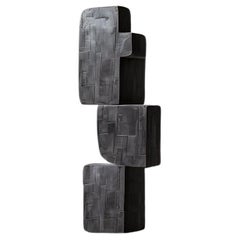
Unseen Force #61: Joel Escalona
s Solid Oak Table, Art-Inspired Design
By Joel Escalona
Located in Ciudad de México, CDMX
Unseen Force #61: Joel Escalona's Solid Oak Table, Art-Inspired Design
Sculptural coffee table made of solid wood with a natural water-based or carbonized finish. Due to the nature ...
Category
2010s Mexican Brutalist Coffee and Cocktail Tables
Materials
Hardwood
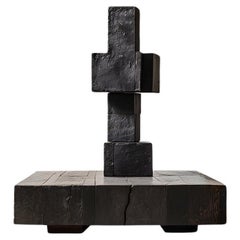
Unseen Force #55: Joel Escalona
s Table, Sculpture-Inspired Solid Wood
By Joel Escalona
Located in Ciudad de México, CDMX
Unseen Force #55: Joel Escalona's Table, Sculpture-Inspired Solid Wood
Sculptural coffee table made of solid wood with a natural water-based or carbonize...
Category
2010s Mexican Brutalist Coffee and Cocktail Tables
Materials
Hardwood
$7,596 Sale Price / item
30% Off
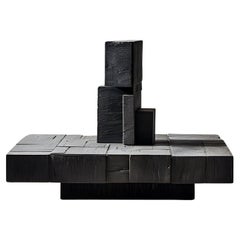
Unseen Force #52: Solid Oak Table, Joel Escalona
s Functional Art
By Joel Escalona
Located in Ciudad de México, CDMX
Unseen Force #52: Solid Oak Table, Joel Escalona's Functional Art
Sculptural coffee table made of solid wood with a natural water-based or carbonized finish. Due to the nature of the production process, each piece may vary in grain, texture, shape or even size.
The dimensions provided refer to the table only. The dimensions and shape of the sculpture may vary.
—
About the Concept.
Unseen Force Coffee Tables and Side Tables, design by Joel Escalona for NONO
When Tables Talk Art...
Category
2010s Mexican Brutalist Coffee and Cocktail Tables
Materials
Hardwood
$7,596 Sale Price / item
30% Off
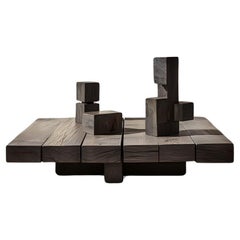
Oak Elegance Unseen Force #35 Joel Escalona
s Artistic Coffee Table
By Joel Escalona
Located in Ciudad de México, CDMX
Oak Elegance Unseen Force #35 Joel Escalona's Artistic Coffee Table
Sculptural coffee table made of solid wood with a natural water-based or carbonized finish. Due to the nature of ...
Category
2010s Mexican Brutalist Coffee and Cocktail Tables
Materials
Hardwood
Joel Escalona
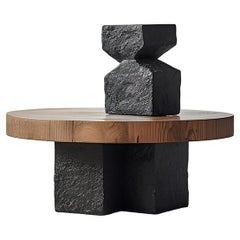
s Unseen Force #37 Artisan Oak Coffee Table, Decor Art
By Joel Escalona
Located in Ciudad de México, CDMX
Joel Escalona's Unseen Force #37 Artisan Oak Coffee Table, Decor Art
Sculptural coffee table made of solid wood with a natural water-based or carbonized f...
Category
2010s Mexican Brutalist Coffee and Cocktail Tables
Materials
Hardwood
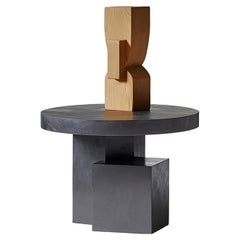
Unseen Force #36 Joel Escalona
s Sculpture-Style Solid Wood Table
By Joel Escalona
Located in Ciudad de México, CDMX
Unseen Force #36 Joel Escalona's Sculpture-Style Solid Wood Table
Sculptural coffee table made of solid wood with a natural water-based or carbonized fi...
Category
2010s Mexican Brutalist Coffee and Cocktail Tables
Materials
Hardwood
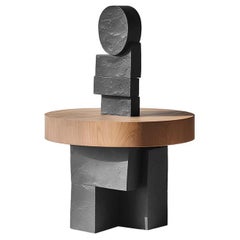
$9,776 Sale Price / item
25% Off
Joel Escalona
s Unseen Force #39 Coffee Table Art, Solid Wood Decor
By Joel Escalona
Located in Ciudad de México, CDMX
Joel Escalona's Unseen Force #39 Coffee Table Art, Solid Wood Decor
Sculptural coffee table made of solid wood with a natural water-based or carbonize...
Category
2010s Mexican Brutalist Coffee and Cocktail Tables
Materials
Hardwood
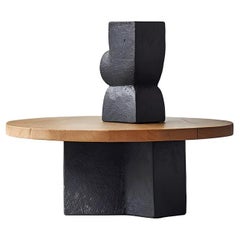
$9,776 Sale Price / item
25% Off
Solid Oak Artistry Unseen Force #29 Joel Escalona
s Coffee Table, Unique Design
By Joel Escalona
Located in Ciudad de México, CDMX
Solid Oak Artistry Unseen Force #29 Joel Escalona's Coffee Table, Unique Design
Sculptural coffee table made of solid wood with a natural water-based or carbonized finish. Due to th...
Category
2010s Mexican Brutalist Coffee and Cocktail Tables
Materials
Hardwood
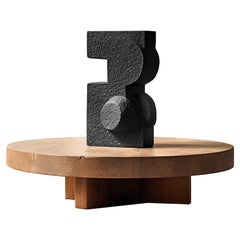
Sculptural Chic Unseen Force #16 Solid Wood Table by Joel Escalona, Art Decor
By Joel Escalona
Located in Ciudad de México, CDMX
Sculptural Chic Unseen Force #16 Solid Wood Table by Joel Escalona, Art Decor
Sculptural coffee table made of solid wood with a natural water-based or carbonized finish. Due to the...
Category
2010s Mexican Brutalist Coffee and Cocktail Tables
Materials
Hardwood
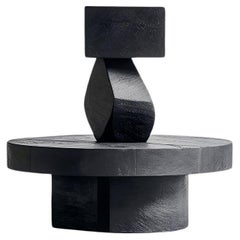
$9,094 Sale Price / item
25% Off
Gallery-Ready Unseen Force #13 Joel Escalona
s Solid Wood Coffee Table
By Joel Escalona
Located in Ciudad de México, CDMX
Gallery-Ready Unseen Force #13 Joel Escalona's Solid Wood Coffee Table
——
Sculptural coffee table made of solid wood with a natural water-based or carbonized finish. Due to the natu...
Category
2010s Mexican Brutalist Coffee and Cocktail Tables
Materials
Hardwood
$9,094 Sale Price / item
25% Off
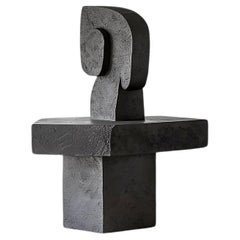
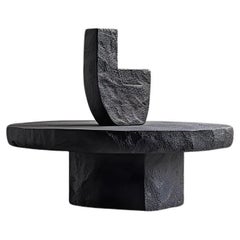
Unseen Force #11 Solid Wood Coffee Table by Joel Escalona, Decor Statement
By Joel Escalona
Located in Ciudad de México, CDMX
Unseen Force #11 Solid Wood Coffee Table by Joel Escalona, Decor Statement
——
Sculptural coffee table made of solid wood with a natural water-based or carbonized finish. Due to the n...
Category
2010s Mexican Brutalist Coffee and Cocktail Tables
Materials
Hardwood
$9,094 Sale Price / item
25% Off
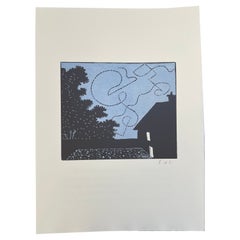
François-xavier Lalanne, The Bat, 2005
By François-Xavier Lalanne
Located in Saint ouen, FR
Techniques : vernis mou et pointe sèche sur papier, signé au crayon par François Xavier Lalanne, en parfait état.
Dimensions du papier : 38 x 28 cm (14,96 x 11 inches)
Dimensions...
Category
Early 2000s French Modern Prints
Materials
Paper
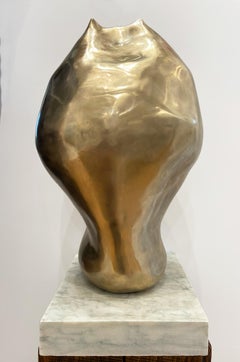
"Guardian" - abstract sculpture - Barbara Hepworth
By Susan Hable
Located in Atlanta, GA
Susan Hable is inspired by the work of David Hockney, Milton Avery, Henri Matisse, Alex Katz, Howard Hodgkins, Hilma af Klint, Georgia O'Keeffe, Barbara Hepworth and Constantin Brâncuși.
With humor and a bit of mischief, Susan Hable’s “Don't Pick The Flowers!” is a body of work that is at once a refuge and a playground. Inspired by her sumptuous garden just outside of her Athens studio, Susan flows from one medium to the next from painting to collage to sculpture. Susan sees her garden as a place for adventure and daydreaming, challenging her perceptions of what her Art can be. Even a weedy ground cover has caught Susan’s eye, an overlooked invasive is seen in a new light becoming a dreamlike fairytale path. Her work asks us to engage in life, go for a walk and play.
Susan Hable Smith is the artist and designer behind the boldly colored and hand drawn patterns of Hable Construction...
Category
2010s Abstract Abstract Sculptures
Materials
Marble, Bronze
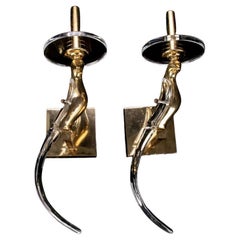
Pair Of Nulco Mid Century Brass And Crystal Bird Of Paradise Figural Wall Sconce
Located in Bridgeport, CT
Magnificent Brass and Glass with square back plates and rods to support the brass and glass long tailed birds. With singled faceted lights and large circular glass bobeches. Reminis...
Category
Mid-20th Century Mid-Century Modern Wall Lights and Sconces
Materials
Brass
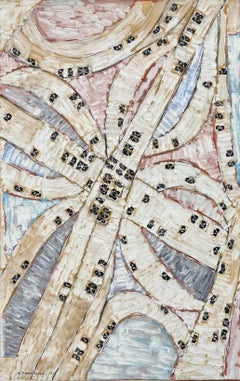
Los Angeles Free Ways III
By Natalia Dumitresco
Located in PARIS, FR
Natalia Dumitresco (or Dumitresco) was born in Bucarest in 1915 and passed away in Chars in 1997.
After having studied at the Beaux-Arts of Bucharest, Natalia Dumitresco married Ale...
Category
1970s Abstract Abstract Paintings
Materials
Canvas, Oil
"Cronus Asleep in the Cave" David Hare, Surrealist Mythological Composition
By David Hare
Located in New York, NY
David Hare
Cronus Asleep in the Cave, 1971
Acrylic, ink wash, graphite, paper collage on paper on board
26 x 35 inches
“Freedom is what we want,” David Hare boldly stated in 1965, b...
Category
1970s Abstract Abstract Paintings
Materials
Acrylic, Paper, Ink, Graphite
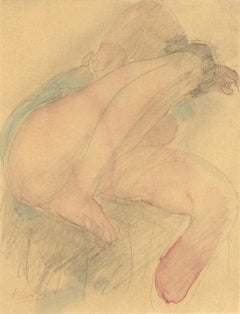
Francois Auguste Rene Rodin, Untitled, from The Varende, 1944 (after)
By Auguste Rodin
Located in Southampton, NY
This exquisite lithograph after Francois Auguste Rene Rodin (1840–1917), titled Sans titre (Untitled), from the folio La Varende, Rodin (La Varende, Rodin), originates from the 1944 ...
Category
1940s Modern Figurative Prints
Materials
Lithograph, Stencil
$716 Sale Price
20% Off
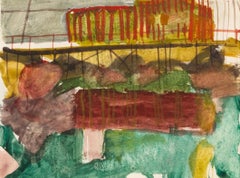
Cornish Beach, 1953/1954 - Colourful Landscape Watercolour Painting, Green + Red
By Peter Potworowski
Located in Kingsclere, GB
Peter Potworowski 1898-1962
Cornish Beach, 1953/1954, circa
watercolour
17 x 22.5 cm
6 3/4 x 8 7/8 in
unsigned
Tadeusz Piotr (Peter) Potworowski was a Polish abstract and figurative...
Category
20th Century Landscape Drawings and Watercolors
Materials
Watercolor
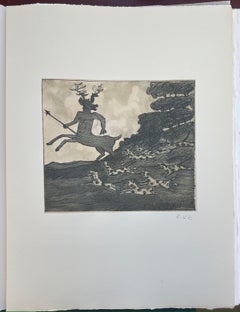
François-Xavier Lalanne (1927-2008) Actéon -2005
By François-Xavier Lalanne
Located in Saint Ouen, FR
François-Xavier Lalanne (1927-2008) Actéon, 2005
Techniques : aquatint and soft varnish on paper, hand signed in pencil by François Xavier Lalanne, in perfect condition
Dimensions ...
Category
Early 2000s Surrealist Figurative Prints
Materials
Paper
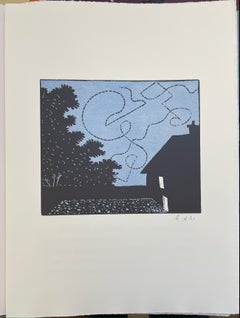
François-Xavier Lalanne (1927-2008) the bat - 2003
By François-Xavier Lalanne
Located in Saint Ouen, FR
Techniques : woodcut on paper, hand signed in pencil by François Xavier Lalanne, in perfect condition
Dimensions of the paper : 38 x 28 cm (14,96 x 11 inches)
Dimensions of the pri...
Category
Early 2000s Surrealist Figurative Prints
Materials
Paper
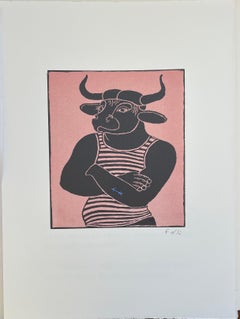
François-Xavier Lalanne (1927-2008) Minotaure -2005
By François-Xavier Lalanne
Located in Saint Ouen, FR
François-Xavier Lalanne (1927-2008) Minotaure, 2005
Techniques : aquatint and soft varnish on paper, hand signed in pencil by François Xavier Lalanne, in perfect condition
Dimensio...
Category
Early 2000s Surrealist Figurative Prints
Materials
Paper
$3,593 Sale Price
25% Off
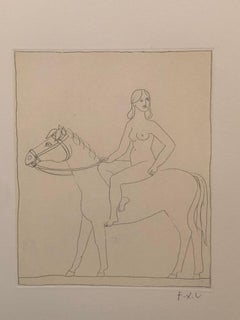
Francois-Xavier Lalanne (1927-2008) Woman and Horse, 2002
By François-Xavier Lalanne
Located in Saint Ouen, FR
Francois-Xavier Lalanne (1927-2008) Woman and Horse, 2002
Techniques : etching on paper
Hand signed in pencil by François Xavier Lalanne, in perfect condition
Dimensions of the pa...
Category
Early 2000s Surrealist Figurative Prints
Materials
Paper
$3,066 Sale Price
20% Off
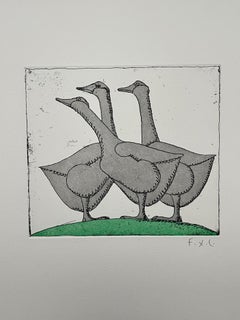
Francois-Xavier Lalanne (1927-2008) The Geese (in french : les oies), 2004
By François-Xavier Lalanne
Located in Saint Ouen, FR
Francois-Xavier Lalanne (1927-2008) The Geese (in french : les oies), 2004
This extremely rare print by François Xavier Lalanne depicts three geese. It is an edition of only 10 copi...
Category
Early 2000s Surrealist Animal Prints
Materials
Paper
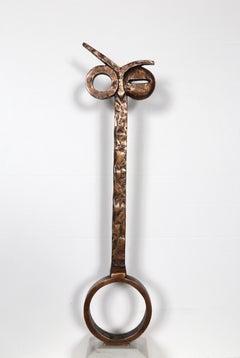
Winking Owl, Modern Bronze by Antonovici 1957
By Constantin Antonovici
Located in Long Island City, NY
An original bronze sculpture by Constantin Antonovici from his Owl Series. Referenced in "Constantin Antonovici: Sculptor of Owls", pg 43.
Antonovici was born in Neamt, Romania on February 18, 1911, and graduated from the Fine Arts Academy in Iasi, Romania, in 1939. In 1940, Antonovici studied in Zagreb with the famous Croatian sculptor Ivan Mestrovici, until his arrest by Italian fascists. Antonovici himself survived imprisonment in Germany for his refusal to fight on the side of the Nazis. After the war, he continued his studies in Vienna, under the tutelage of Professor Fritz Behn...
Category
1950s Modern Figurative Sculptures
Materials
Bronze
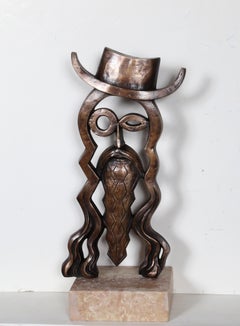
Hippie, Modern Bronze by Antonovici 1970
By Constantin Antonovici
Located in Long Island City, NY
Artist: Constantin Antonovici, Romanian (1911 - 2002)
Title: Hippie - Man
Medium: Bronze Sculpture, signature, date inscribed
Size: 23.5 x 11.5 x 1 in. (59.69 x 29.21 x 2.54 cm)
Marble Base: 3 x 10 x 8.5 inches
An original bronze sculpture by Constantin Antonovici from his Portrait Series. Referenced in "Constantin Antonovici: Sculptor of Owls", pg 69
Antonovici was born in Neamt, Romania on February 18, 1911, and graduated from the Fine Arts Academy in Iasi, Romania, in 1939. In 1940, Antonovici studied in Zagreb with the famous Croatian sculptor Ivan Mestrovici, until his arrest by Italian fascists. Antonovici himself survived imprisonment in Germany for his refusal to fight on the side of the Nazis. After the war, he continued his studies in Vienna, under the tutelage of Professor Fritz Behn...
Category
1970s Modern Figurative Sculptures
Materials
Bronze
Two Ducks, Modern Marble Sculpture by Antonovici
By Constantin Antonovici
Located in Long Island City, NY
An original carved marble sculpture by Constantin Antonovici from his "Bird and Animal Series". Referenced in "Constantin Antonovici: Sculptor of Owls", pg 83
Antonovici was born in...
Category
1970s Modern Figurative Sculptures
Materials
Marble
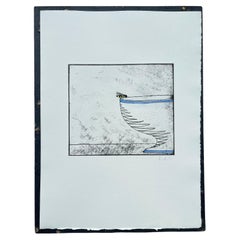
Francois-Xavier Lalanne - The bee, 2002
By François-Xavier Lalanne
Located in Saint ouen, FR
Francois-Xavier Lalanne (1927-2008) The bee, 2002
soft varnish and dry point hand signed in pencil by François Xavier Lalanne, in perfect condition
This print by François Xavier La...
Category
Early 2000s French Prints
Materials
Paper
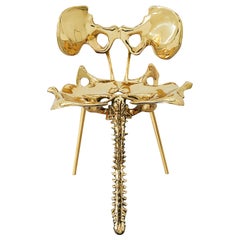
33 Step Tail Chair Polished Brass by Zhipeng Tan
By Zhipeng Tan
Located in Beverly Hills, CA
This visceral and sculptural chair is designed and made by renown artist Zhipeng Tan. Size and color is customizable upon request, lead time is 45-60 days. We ship internationally.
Since graduating with an industrial design degree from the China Academy of Art in Hangzhou, Zhipeng Tan has focused on the ancient technique of lost-wax casting. Through this foundry process, rich in heritage and tradition, Tan explores his interest in organic forms. Often inspired by his environmental surroundings, such as water and plants, he explores anthropomorphic themes, as well. Though trained as an industrial designer, he has become an accomplished self-taught sculptor, eagerly exploring the elastic and permeable boundaries between art and design and finding a harmonious fusion of sculpture and furniture, provocative objects of both beauty and utility.
Though from his early work, one may sense the influence of Joan Miró, Henry Moore and Constantin Brancusi, and in his more recent pieces there is a nod to the Post-Pop sensibilities of Jeff Koons and Takashi Murakami, the work of Zhipeng Tan is thoroughly original, an expression of his exuberance and imagination. In all of his work, one may see an exploration of our fundamental humanity and a desire to discover worlds within worlds. From the 33 Step...
Category
21st Century and Contemporary Chinese Chairs
Materials
Brass
$12,000 / item