650 results for ""constantin brancusi""
to
201
170
156
452
358
198
91
76
65
41
21
20
19
19
18
15
5
4
2
281
63
22
13
13
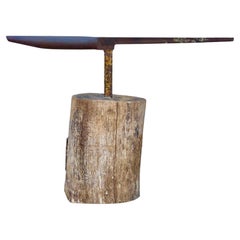
Beakhorn Stump Blacksmith Anvil
Located in Hanover, MA
SATURDAY SALE
The first thing I thought upon seeing this was Constantin Brancusi's bird sculptures and the questions about the nature of abstract art it asked.
This is an early 20t...
Category
Early 20th Century Folk Art Abstract Sculptures
Materials
Iron

$1,650 Sale Price
50% Off
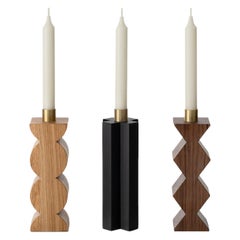
Constantin Set of Candleholders in wood and Brass Minimalist Design
By Agustina Bottoni
Located in Milan, Lombardy
Constantin is a simple but charming candleholder with a geometric shape. This set is composed of 3 elements in wood. Constantin I in natural oak with circles; Constantin II in oak stained black with a cross shape; Constantin III in natural walnut with rhombus. The cylinder in natural brass on the top is the place where to put a 18 mm candle.
The same set can also be made in marble with 3 different variety Carrara, Black Marquina, Carnic Rose. A perfect set for a present.
Constantin collection owes its name to its inspirer. It is in fact the modern art of Constantin Brancusi that has guided the designer’s hand to conceive candelabra, bookends, containers and centre pieces...
Category
2010s Italian Minimalist Candlesticks
Materials
Oak, Walnut
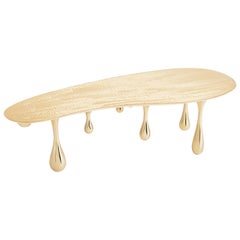
Melting Coffee Table/Cocktail Table
Bean Shape
Polished Brass by Zhipeng Tan
By Zhipeng Tan
Located in Beverly Hills, CA
Zhipeng Tan has focused on the ancient technique of lost-wax casting. Through this foundry process, rich in heritage and tradition, Tan explores his interest in organic forms. Often ...
Category
21st Century and Contemporary Chinese Coffee and Cocktail Tables
Materials
Brass
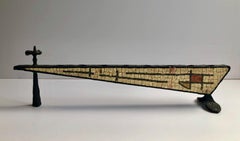
Brutalist Hand Forged Iron Mosaic Sculpture Menorah Israeli David Palombo
By David Palombo
Located in Surfside, FL
Hand Forged Iron Stone Mosaic Hanukah Menorah Candelabra
David Palombo was an Israeli sculptor and painter. He was born in Turkey to a traditional family and immigrated to the Land of Israel with his parents in 1923. They lived in the Nahalat Shiva neighborhood of Jerusalem. In 1940 he began his studies at Bezalel Academy of Arts and Design, and from 1942 was a student of sculptor Ze’ev Ben-Zvi. For a period of time, Palombo was an assistant at Ben-Zvi’s studio and also taught at Bezalel. During this period he was also a member of the “Histadrut HaNoar HaOved VeHaLomed” (The General Federation of Students and Young Workers in Israel). In the 1940s he took art lessons at night. In 1948 he went to Paris, where he visited the studio of the sculptor Constantin Brancusi whose work influenced him. Around 1958 he married the artist Shulamit Sirota. In 1960 he quit his job to devote himself to art. In 1964 he married for the second time to the artist Yona Palombo. The two of them went to live in an abandoned home on Mount Zion in Jerusalem. In 1966 he was killed when the motorcycle on which he was riding ran into a chain stretched across the street to prevent the desecration of Shabbat. His widow opened a museum in their home that was active until the year 2000.
Work by Palombo is included in the Judaic collection of the Jewish Museum (a well known Hanukkah menora). Palombo executed the impressive metal gates of the Tent of Remembrance at the Yad Vashem, the memorial to the martyrs of the holocaust, as well as the gates to the Knesset Building the United Nations Educational Scientific and Cultural Organization (Unesco award) awarded him a scholarship for study in Japan. He worked in marble, granite, bronze, iron and steel. as well as with glass mosaic tiles. Palombo’s early works, in the 1950s, were influenced by modernist sculptors such as Brancusi. These works were composed of abstract images from nature and were carved out of stone or wood. At the end of the 1950s he began making metal sculptors, using the technique of welding. His work took on a more abstract and expressive character.
Education
1940 Painting with Isidor Ascheim, New Bezalel School for Arts and Crafts, Jerusalem
1942 Sculpture with Zeev Ben Zvi, Jerusalem
1956 Mosaic, Ravenna, Italy
1958 Welding Course
Awards And Prizes
1966 UNESCO Award
Exhibitions:
Sculpture in Israel, 1948-1958 Mishkan Museum of Art, Kibbutz Ein Harod
Artists: Zvi Aldouby, Yitzhak Danziger, Arieh Merzer, Dov Feigin, Aaron Priver, David Palumbo, Menashe Kadishman, Kosso Eloul, Yehiel Shemi, Zahara Schatz.
The Spring Exhibition of Jerusalem Artists, Artists' House, Jerusalem
Artists: Palombo, David Bezalel Schatz, Mordechai Levanon, Fima, Ludwig Blum
12 Artists, The Bezalel National Museum, Jerusalem
Avraham Ofek, Aviva Uri, Avigdor Arikha, Yosl Bergner, Lea Nikel, Palombo, Ruth Zarfati...
Category
Mid-20th Century Arte Povera Abstract Sculptures
Materials
Stone, Iron
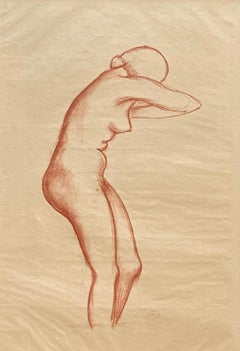
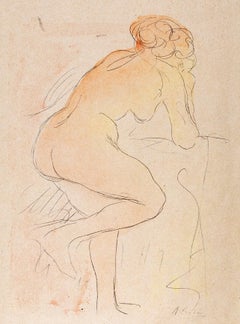
“Standing Female Nude”
By Aristide Maillol
Located in Southampton, NY
Beautiful, original lithograph on handmade paper by the well known French artist, Aristide Maillol. Artist monogram “M” lower right. Condition is good. Early 20th century on artist...
Category
Early 20th Century Modern Nude Prints
Materials
Lithograph, Handmade Paper
$1,000 Sale Price
20% Off
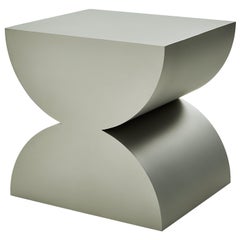
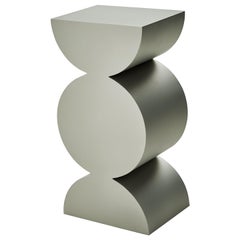
Studio Brancusi IISculptural Side Table Matte Steel Customizable
By Danjie Yan
Located in Beverly Hills, CA
This sculptural side table is from the Studio Brancusi Collection designed and made by China-based artist Danjie Yan. The works debutted at Sifang Art ...
Category
2010s Chinese Side Tables
Materials
Stainless Steel
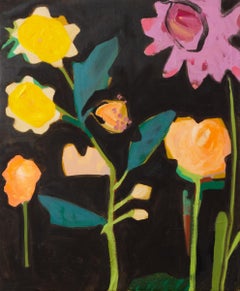
"Night Garden" colorful abstract painting, botanical, dark, flower, painterly
By Susan Hable
Located in Atlanta, GA
This painting is an abstract botanical painting featuring hues of blue, orange, green, and yellow on a black ground.
Susan Hable is inspired by the work of David Hockney, Milton Ave...
Category
2010s Abstract Abstract Paintings
Materials
Canvas, Oil
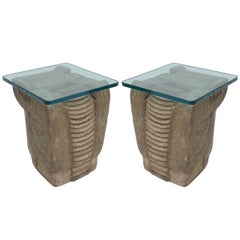
1970
s Formed Stone Tables
Located in West Palm Beach, FL
A nice pair of side tables drawing their inspiration from the work
of Constantin Brancusi.Glass top is 16' x 16"
Category
Vintage 1970s American Tables
Materials
Composition, Stone
$2,700 / set
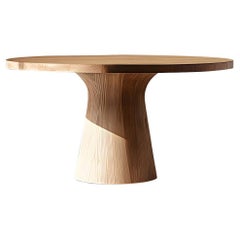
NONO
s Socle Series No03, Cocktail Tables Made of Solid Wood
By NONO
Located in Ciudad de México, CDMX
NONO's Socle Series No03, Cocktail Tables with a Wooden Twist
——
Introducing the "Socle Dining Table Series" by NONO, a distinguished expansion of our b...
Category
2010s Mexican Modern Dining Room Tables
Materials
Hardwood
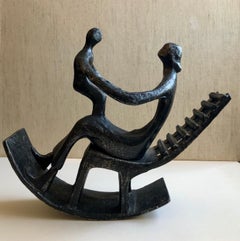
In the style of Henry Moore, Mother and Child in Rocking Chair
Located in Surfside, FL
This is a cast metal sculpture of a woman and child, mother and baby in a rocking chair. It has a patina on a white metal. Not sure if it is steel or aluminum. It is and older vintage piece and has wear to patina where it sits and rocks on table. It is not signed or numbered and there is no foundry mark. Hence it is being sold as being after or in the manner of Henry Moore.
Henry Spencer Moore (1898 – 1986)
Moore was born in Castleford, the son of a coal miner. He became well-known through his carved marble and larger-scale abstract cast bronze sculptures, and was instrumental in introducing a particular form of modernism to the United Kingdom later endowing the Henry Moore Foundation, which continues to support education and promotion of the arts.
After the Great War, Moore received an ex-serviceman's grant to continue his education and in 1919 he became a student at the Leeds School of Art (now Leeds College of Art), which set up a sculpture studio especially for him. At the college, he met Barbara Hepworth, a fellow student who would also become a well-known British sculptor, and began a friendship and gentle professional rivalry that lasted for many years. In Leeds, Moore also had access to the modernist works in the collection of Sir Michael Sadler, the University Vice-Chancellor, which had a pronounced effect on his development. In 1921, Moore won a scholarship to study at the Royal College of Art in London, along with Hepworth and other Yorkshire contemporaries. While in London, Moore extended his knowledge of primitive art and sculpture, studying the ethnographic collections at the Victoria and Albert Museum and the British Museum.
Moore's familiarity with primitivism and the influence of sculptors such as Constantin Brâncuși, Jacob Epstein, Henri Gaudier-Brzeska and Frank Dobson led him to the method of direct carving, in which imperfections in the material and marks left by tools became part of the finished sculpture. After Moore married, the couple moved to a studio in Hampstead at 11a Parkhill Road NW3, joining a small colony of avant-garde artists who were taking root there. Shortly afterward, Hepworth and her second husband Ben Nicholson moved into a studio around the corner from Moore, while Naum Gabo, Roland Penrose, Cecil Stephenson and the art critic Herbert Read also lived in the area (Read referred to the area as "a nest of gentle artists"). This led to a rapid cross-fertilization of ideas that Read would publicise, helping to raise Moore's public profile. The area was also a stopping-off point for many refugee artists, architects and designers from continental Europe en route to America—some of whom would later commission works from Moore.
In 1932, after six year's teaching at the Royal College, Moore took up a post as the Head of the Department of Sculpture at the Chelsea School of Art. Artistically, Moore, Hepworth and other members of The Seven and Five Society would develop steadily more abstract work, partly influenced by their frequent trips to Paris and their contact with leading progressive artists, notably Pablo Picasso, Georges Braque, Jean Arp and Alberto Giacometti. Moore flirted with Surrealism, joining Paul Nash's modern art movement "Unit One", in 1933. In 1934, Moore visited Spain; he visited the cave of Altamira (which he described as the "Royal Academy of Cave Painting"), Madrid, Toledo and Pamplona. Moore made his first visit to America when a retrospective exhibition of his work opened at the Museum of Modern Art in New York City.[28]
Before the war, Moore had been approached by educator Henry Morris, who was trying to reform education with his concept of the Village College. Morris had engaged Walter Gropius as the architect for his second village college at Impington near Cambridge, and he wanted Moore to design a major public sculpture for the site.
In the 1950s, Moore began to receive increasingly significant commissions. He exhibited Reclining Figure: Festival at the Festival of Britain in 1951, and in 1958 produced a large marble reclining figure for the UNESCO building in Paris. With many more public works of art, the scale of Moore's sculptures grew significantly and he started to employ an increasing number of assistants to work with him at Much Hadham, including Anthony Caro and Richard Wentworth.
Moore produced at least three significant examples of architectural sculpture during his career. In 1928, despite his own self-described "extreme reservations", he accepted his first public commission for West Wind for the London Underground Building at 55 Broadway in London, joining the company of Jacob Epstein and Eric Gill. At an introductory speech in New York City for an exhibition of one of the finest modernist sculptors, Alberto Giacometti, Sartre spoke of "The beginning and the end of history...
Category
1950s Modern Abstract Prints
Materials
Metal
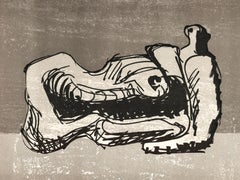
Henry Moore, Reclining Figure, from San Lazzaro et ses Amis, 1975
By Henry Moore
Located in Southampton, NY
This exquisite lithograph by Henry Moore (1898–1986), titled Reclining Figure, from the album San Lazzaro et ses Amis, Hommage au fondateur de la revue XXe siecle (San Lazzaro and His Friends, Tribute to the Founder of the Journal XXe Siecle), originates from the 1975 edition published by XXe siecle, Paris, and printed by Curwen Studio, London, October 1975. Reclining Figure embodies Moore’s lifelong fascination with the human form in repose—a theme that became central to his sculptural and graphic work. Through elegant contours and balanced abstraction, the composition captures the harmony between body, landscape, and spirit that defined Moore’s artistic vision.
Executed as a lithograph on velin d'Arches paper, this work measures 10.5 x 14 inches (26.67 x 35.56 cm). Unsigned and unnumbered as issued. The edition exemplifies the exceptional craftsmanship of the Curwen Studio in London, a distinguished atelier celebrated for its collaborations with the leading modern artists of the postwar period.
Artwork Details:
Artist: Henry Moore (1898–1986)
Title: Reclining Figure, from San Lazzaro et ses Amis, Hommage au fondateur de la revue XXe siecle, 1975
Medium: Lithograph on velin d'Arches paper
Dimensions: 10.5 x 14 inches (26.67 x 35.56 cm)
Inscription: Unsigned and unnumbered as issued
Date: 1975
Publisher: XXe siecle, Paris
Printer: Curwen Studio, London
Catalogue raisonne references: Moore, Henry, et al. Henry Moore, Catalogue of Graphic Work. Gerald Cramer, 1986, illustration 366.
Condition: Well preserved, consistent with age and medium
Provenance: From the album San Lazzaro et ses Amis, Hommage au fondateur de la revue XXe siecle, published by XXe siecle, Paris, October 1975
Notes:
Excerpted from the folio (translated from French), Finished printing in Paris in October 1975. This album has been printed on velin d'Arches in DLXXV numbered examples. The LXXV original examples include a series of VIII original lithographs, signed and numbered by the artists. In addition, LV examples were printed for artists, authors, friends and collaborators of XXe siecle. The typography is from l'Imprimerie Union in Paris; the lithographs of Max Bill, Marc Chagall, Hans Hartung, Braque, Fontana, Magnelli, Picasso, Magritte and Poliakoff were printed by Fernand Mourlot in Paris; those of Alexander Calder and Joan Miro by l'imprimerie Arte in Paris; that of Max Ernst by Pierre Chave in Vence; that of Zao Wou-Ki by ateliers Bellin in Paris; and that of Henry Moore by the Curwen Studio in London.
About the Publication:
San Lazzaro et ses Amis, Hommage au fondateur de la revue XXe siecle (San Lazzaro and His Friends, Tribute to the Founder of the Journal XXe Siecle), published in 1975 by XXe siecle, Paris, represents one of the most significant collaborative tributes in modern art publishing. Created in honor of Gualtieri di San Lazzaro, the visionary editor and founder of the journal XXe Siecle, the folio unites original lithographs by the greatest modern masters—Picasso, Chagall, Miro, Calder, Hartung, Moore, and others. Printed by premier ateliers such as Mourlot, Arte, Bellin, and Curwen, the portfolio celebrates the spirit of artistic collaboration and innovation that defined mid-20th-century modernism.
About the Artist:
Henry Moore (1898–1986) was a British sculptor, draftsman, and modernist pioneer whose monumental bronzes and organic abstractions revolutionized 20th-century sculpture and made him one of the most influential artists of his time. Renowned for his reclining figures, mother-and-child compositions, and pierced biomorphic forms inspired by nature, Moore transformed traditional carving into a universal language of rhythm, balance, and humanity. Born in Castleford, Yorkshire, he studied at the Leeds School of Art and the Royal College of Art in London, absorbing the influences of classical sculpture, African and Pre-Columbian art, and the radical innovations of the European avant-garde. Inspired by Pablo Picasso’s Cubist fragmentation of form, Joan Miro’s lyrical biomorphism, Wassily Kandinsky’s spiritual abstraction, and Constantin Brancusi’s purity of shape, Moore developed a style rooted in the harmony between mass and void, structure and space. During the interwar years, he became part of an international circle that included Alexander Calder, Alberto Giacometti, Salvador Dali, Marcel Duchamp, and Man Ray—artists who, like Moore, expanded art’s boundaries through abstraction, surrealism, and conceptual experimentation. Like Calder, Moore explored balance and movement; like Giacometti, he sought the spiritual essence of humanity; and like Dali and Duchamp, he challenged perception and redefined modern form. His sculptures, carved in stone or cast in bronze, evoke both ancient and modern sensibilities—forms that appear to breathe with natural vitality while engaging directly with their surrounding landscapes. Moore’s “Shelter Drawings” (1940–41), created during the London Blitz, revealed his deep empathy for the human condition, marking a pivotal moment in his exploration of resilience and vulnerability. By the mid-20th century, Moore’s monumental bronzes had become landmarks around the world, from the Lincoln Center in New York to the UNESCO headquarters in Paris, embodying timeless symbols of endurance, renewal, and unity. His synthesis of organic abstraction and humanism influenced generations of sculptors including Barbara Hepworth, Isamu Noguchi, Eduardo Paolozzi, Antony Gormley, Anish Kapoor, and Rachel Whiteread. Like Kandinsky and Miro, he believed abstraction could transcend culture and time, while like Duchamp and Man Ray, he embraced experimentation as a pathway to new truths. Moore’s works, housed in major collections including the Museum of Modern Art in New York, the Tate in London, the Guggenheim Museum, and the Art Institute of Chicago, continue to define the landscape of modern sculpture for their elegance, power, and emotional depth. Standing alongside Pablo Picasso, Alexander Calder, Alberto Giacometti, Salvador Dali, Joan Miro, Wassily Kandinsky, Marcel Duchamp, and Man Ray, Henry Moore remains a cornerstone of modern art—a sculptor whose vision united nature, form, and spirit into a universal language of beauty and meaning. His highest auction record was achieved by Reclining Figure: Festival (1951), which sold for $33.1 million USD at Christie’s, London, on June 30, 2016, reaffirming Henry Moore’s enduring legacy as one of the most visionary, influential, and collectible sculptors in the history of modern art.
Henry Moore Reclining Figure...
Category
1970s Surrealist Figurative Prints
Materials
Lithograph
$1,756 Sale Price
20% Off
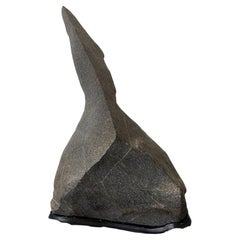
Abstract Scholar Rock Viewing Stone on Wood Stand
Located in Atlanta, GA
On offer is a highly abstract scholar rock on a fitted wood stand collected by an American collector in Palm Desert, CA. The dense rock in dark grey is likely granite and takes a natural sculptural form of a bird, which explains the note on the back from the previous collector "A Constantin Brancusi Bird". The rock is presented in the tradition of a Chinese scholar rock on a fitted carved wood stand, very sculptural and visually interesting from different angles. While Chinese scholar stones are appreciated all over the world, many collectors also look into their local stone sources that reflect the same spirit and philosophy of using the viewing stone...
Category
21st Century and Contemporary American Modern Scholar s Objects
Materials
Stone
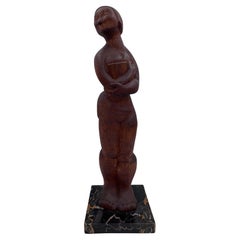
Modernist Nude Hand Carved Wood
Marble Sculpture Style of Ferdinand Parpan
By Ferdinand Parpan
Located in Red Lion, PA
A striking example of hand-carved modernist sculpture, this nude female figure in the style of Ferdinand Parpan captures the elegance and abstraction of the 1930s–40s post-Art Deco e...
Category
Vintage 1940s Modern Figurative Sculptures
Materials
Marble
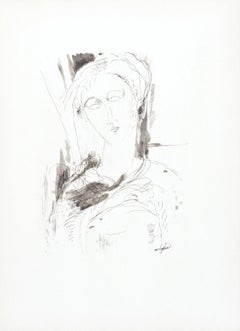
Amedeo Modigliani, Portrait, from Twelve Contemporaries, 1959 (after)
By Amedeo Modigliani
Located in Southampton, NY
This exquisite lithograph after Amedeo Modigliani (1884–1920), titled Portrait (Portrait), from the album Douze Contemporains (Twelve Contemporaries), originates from the 1959 editio...
Category
1950s Modern Abstract Prints
Materials
Lithograph, Stencil
$1,436 Sale Price
20% Off
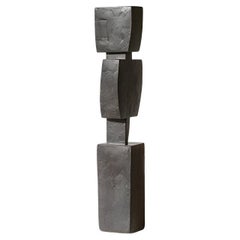
Biomorphic Carved Wood Sculpture in the style of Isamu Noguchi, Unseen Force 19
By Joel Escalona
Located in Ciudad de México, CDMX
Biomorphic Carved Wood Sculpture in the style of Isamu Noguchi, Unseen Force 19 by Joel Escalona
This monolithic sculpture, designed by the talented Artist Joel Escalona, is a tower...
Category
2010s Mexican Mid-Century Modern Abstract Sculptures
Materials
Hardwood
$11,672 Sale Price / item
20% Off
Studio Brancusi XI Sculptural Side Table Matte Steel Customizable
By Danjie Yan
Located in Beverly Hills, CA
This sculptural side table is from the Studio Brancusi Collection designed and made by China-based artist Danjie Yan. The works debutted at Sifang Art ...
Category
2010s Chinese Side Tables
Materials
Stainless Steel
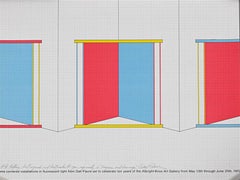
Rare Albright Knox museum poster (hand signed and inscribed to renowned curator)
By Dan Flavin
Located in New York, NY
Dan Flavin
Dan Flavin at Albright Knox Gallery (hand signed and inscribed to renowned curator)
Offset Lithograph. Hand signed and inscribed by Dan Flavin
18 × 22 inches
Provenance: Estate of artist and collector Rick Collar
Unframed
Uniquely inscribed and hand signed 1972 Dan Flavin exhibition poster from his Albright Knox exhibition. Dan Flavin hand signs and inscribes it to Paulus Hendrik Hefting, the curator of the Neue Nationalgalerie in Berlin. The inscription reads: "Best regards and best wishes to you especially in "diagrams and drawings". What Flavin is referring to is the important exhibition also in 1972, "Diagrams & Drawings" curated by Hefting, at the Rijksmuseum Kröller-Müller (Netherlands), which featured Carl Andre, Christo, Walter De Maria, Dan Flavin, Michael Heizer, Don Judd, Sol LeWitt, Robert Morris, Bruce Nauman, Claes Oldenburg, Richard Serra, Robert Smithson.
An extremely rare signed poster with a unique inscription to a major European curator referencing an historic Minimalist exhibition in the early 1970s.
We may not see the likes of something like this anytime soon!
Dan Flavin Biography
From 1963, when he conceived the diagonal of May 25, 1963 (to Constantin Brancusi), a single gold fluorescent lamp installed diagonally on the wall, until his death in 1996, Dan Flavin (1933-1996) produced a singularly consistent and prodigious body of work that utilized commercially available fluorescent lamps to create installations (or “situations,” as he preferred to call them) of light and color. Through these light constructions, Flavin was able to establish and redefine space.
Flavin’s first solo exhibitions were held at the Judson Gallery in 1961 and the Green Gallery in 1964, both in New York. His first European exhibition was in 1966 at Galerie Rudolf Zwirner in Cologne, Germany; and in 1969, the National Gallery of Canada, Ottawa, organized his first major museum retrospective. His work was included in a number of key early exhibitions of Minimal art in the 1960s, among them Black, White, and Gray (Wadsworth Atheneum Museum of Art, Hartford, Connecticut, 1964); Primary Structures (The Jewish Museum, New York, 1966); and Minimal Art (Gemeentemuseum, The Hague, 1968). Flavin’s work would continue to be presented internationally over the course of the pursuant decades at venues including the St. Louis Art Museum, Missouri (1973); Kunsthalle Basel (1975); Museum Boymans-van Beuningen, Rotterdam (1975); Stedelijk Museum, Amsterdam (1986); and the Solomon R. Guggenheim Museum, New York (1992), among others.
A major museum retrospective devoted to Flavin’s work was organized, in cooperation with the Estate of Dan Flavin, by the Dia Art Foundation in association with the National Gallery of Art, Washington, DC, where it was first on view in 2004. The exhibition traveled from 2005 to 2007 to the Modern Art Museum of Fort Worth, Texas; Museum of Contemporary Art, Chicago; Hayward Gallery, London; Musée d’Art Moderne de la Ville de Paris...
Category
1970s Abstract Geometric Abstract Prints
Materials
Pencil, Lithograph, Offset
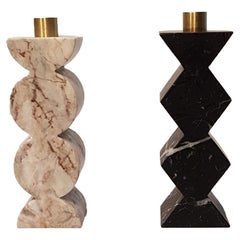
Constantin Ib and IIIb Candleholders in Black and White Marble and Brass
By Agustina Bottoni
Located in Milan, Lombardy
This is a unique set. A prototipe that will not be produced again.
Constantin is a simple but charming candleholder with a geometric shape with circles and rhombus. The body is in M...
Category
2010s Italian Minimalist Candlesticks
Materials
Marble
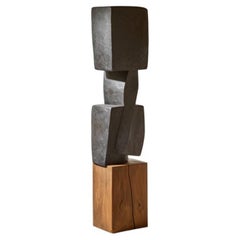
Biomorphic Carved Wood Sculpture in the style of Isamu Noguchi, Unseen Force 18
By Joel Escalona
Located in Ciudad de México, CDMX
Biomorphic Carved Wood Sculpture in the style of Isamu Noguchi, Unseen Force 18 by Joel Escalona
This monolithic sculpture, designed by the talented Artist Joel Escalona, is a towering example of beauty in craftsmanship. Hand and digital machine made; the standing sculpture stands...
Category
2010s Mexican Mid-Century Modern Abstract Sculptures
Materials
Hardwood
$11,672 Sale Price / item
20% Off
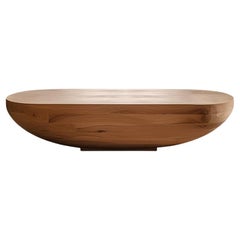
Wooden Coffee Table, Fishes Series 14 by Joel Escalona
By Joel Escalona
Located in Ciudad de México, CDMX
Fishes is a series of sculptural coffee tables inspired by the famous Fish (1930) sculpture of Rumanian artist Constantin Brancusi. Brancusi's work has been widely regarded as a masterpiece of modern art, and his Fish sculpture remain an iconic symbol of his artistic vision.
The Fishes Coffee Tables series is a tribute to Brancusi's mastery of creating a sense of tranquility and serenity. Each coffee table in this collection is meticulously shaped from natural finish or black-tinted oak wood or walnut.
The design process for the Fishes Coffee Tables collection was deeply stimulated by Brancusi's Fish sculpture, with each coffee table featuring soft and rounded forms that capture the fluidity and motion of aquatic life with simplicity and elegance. The sculptural forms of the Fishes Coffee Tables by NONO Furniture reflect this aesthetic, evoking a sense of quietness and stillness.
The natural beauty and rich texture of oak and walnut create a warm and inviting atmosphere that is both elegant and sophisticated, making the Fishes Coffee Tables collection a perfect addition to any home decor.
Each coffee table in the Fishes Series...
Category
2010s Mexican Mid-Century Modern Coffee and Cocktail Tables
Materials
Wood, Hardwood, Oak
$12,000 / item
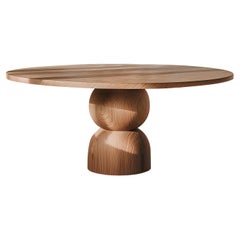
Dining by Design, Socle Solid Wood Tables, Crafted by Joel Escalona No44
By Joel Escalona
Located in Ciudad de México, CDMX
Dining by Design, Socle Solid Wood Tables, Crafted by Joel Escalona No44
——
Introducing the "Socle Dining Table Series" by NONO, a distinguished expansion of our beloved side tabl...
Category
2010s Mexican Modern Dining Room Tables
Materials
Hardwood
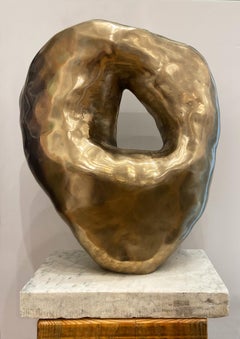
"Nimbus" - abstract sculpture - Barbara Hepworth
By Susan Hable
Located in Atlanta, GA
Susan Hable is inspired by the work of David Hockney, Milton Avery, Henri Matisse, Alex Katz, Howard Hodgkins, Hilma af Klint, Georgia O'Keeffe, Barbara Hepworth and Constantin Brâncuși.
With humor and a bit of mischief, Susan Hable’s “Don't Pick The Flowers!” is a body of work that is at once a refuge and a playground. Inspired by her sumptuous garden just outside of her Athens studio, Susan flows from one medium to the next from painting to collage to sculpture. Susan sees her garden as a place for adventure and daydreaming, challenging her perceptions of what her Art can be. Even a weedy ground cover has caught Susan’s eye, an overlooked invasive is seen in a new light becoming a dreamlike fairytale path. Her work asks us to engage in life, go for a walk and play.
Susan Hable Smith is the artist and designer behind the boldly colored and hand drawn patterns of Hable Construction...
Category
2010s Abstract Abstract Sculptures
Materials
Marble, Bronze
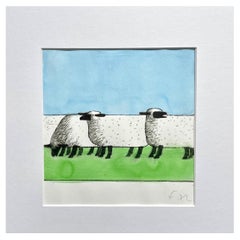
Francois-Xavier Lalanne , Sheeps, unique work
By François-Xavier Lalanne
Located in Saint ouen, FR
Francois-Xavier Lalanne (1927-2008), Sheeps, unique work
This unique work by François Xavier Lalanne is made of watercolor, with lines drawn with graphite and manière de crayon. De...
Category
Early 2000s French Modern Drawings
Materials
Paper
Biomorphic Carved Wood Sculpture in the style of Isamu Noguchi, Unseen Force 21
By Joel Escalona
Located in Ciudad de México, CDMX
Biomorphic Carved Wood Sculpture in the style of Isamu Noguchi, Unseen Force 21 by Joel Escalona
This monolithic sculpture, designed by the talented Artist Joel Escalona, is a tow...
Category
2010s Mexican Mid-Century Modern Abstract Sculptures
Materials
Hardwood
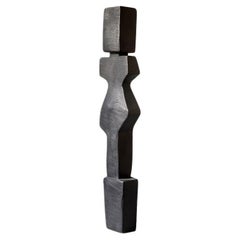
$11,672 Sale Price / item
20% Off
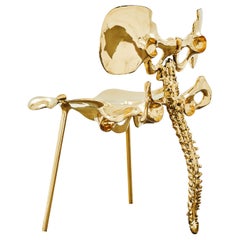
33 Step Chair Large Polished Brass Bone Chair by Zhipeng Tan
By Zhipeng Tan
Located in Beverly Hills, CA
This visceral and sculptural chair is designed and made by renown artist Zhipeng Tan. Size and color is customizable upon request, lead time is 45-60 days. We ship internationally.
Since graduating with an industrial design degree from the China Academy of Art in Hangzhou, Zhipeng Tan has focused on the ancient technique of lost-wax casting. Through this foundry process, rich in heritage and tradition, Tan explores his interest in organic forms. Often inspired by his environmental surroundings, such as water and plants, he explores anthropomorphic themes, as well. Though trained as an industrial designer, he has become an accomplished self-taught sculptor, eagerly exploring the elastic and permeable boundaries between art and design and finding a harmonious fusion of sculpture and furniture, provocative objects of both beauty and utility.
Though from his early work, one may sense the influence of Joan Miró, Henry Moore and Constantin Brancusi, and in his more recent pieces there is a nod to the Post-Pop sensibilities of Jeff Koons and Takashi Murakami, the work of Zhipeng Tan is thoroughly original, an expression of his exuberance and imagination. In all of his work, one may see an exploration of our fundamental humanity and a desire to discover worlds within worlds. From the 33 Step Chair...
Category
2010s Chinese Chairs
Materials
Brass
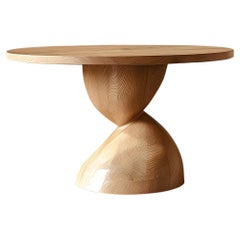
Dining Tables, Socle
s Solid Wood No18, Mealtime Masterpieces by NONO
By Joel Escalona
Located in Ciudad de México, CDMX
Dining Tables, Socle's Solid Wood No18, Mealtime Masterpieces by NONO
——
Introducing the "Socle Dining Table Series" by NONO, a distinguished expansion of our beloved side table co...
Category
2010s Mexican Modern Dining Room Tables
Materials
Hardwood
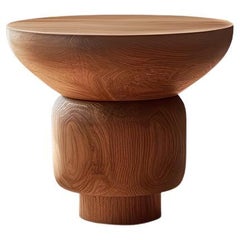
Side Table, Nightstand in Solid Wood, Auxiliary Table Socle 26 by Joel Escalona
By Joel Escalona
Located in Ciudad de México, CDMX
Socle side table, auxiliary table, night stand
Socle is a small solid wood table designed by the NONO design team. Made of solid wood, its elaborated construction serves as a suppor...
Category
2010s Mexican Mid-Century Modern End Tables
Materials
Wood, Hardwood, Oak
$4,720 Sale Price / item
20% Off
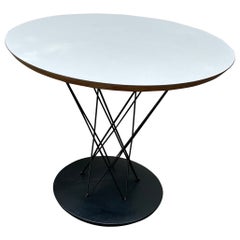
Mid Century Isamu Noguchi Cyclone Side Table Model 87 for Knoll International
By Isamu Noguchi
Located in Bedford Hills, NY
Midcentury Isamu Noguchi Cyclone side table, Model 87 circa 1970 for Knoll International. Original condition, professionally cleaned.
Isa...
Category
Vintage 1960s American Mid-Century Modern Side Tables
Materials
Metal
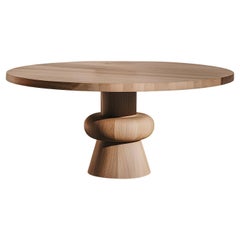
Socle
s Elegance, Solid Wood Dining Tables, Perfect for Gatherings No42
By Joel Escalona
Located in Ciudad de México, CDMX
Socle's Elegance, Solid Wood Dining Tables, Perfect for Gatherings No42
——
Introducing the "Socle Dining Table Series" by NONO, a distinguished expansion of our beloved side table...
Category
2010s Mexican Modern Dining Room Tables
Materials
Hardwood
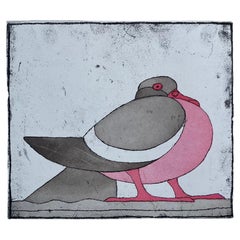
François Xavier Lalanne and untitled "Le Pigeon"
By François-Xavier Lalanne
Located in Saint ouen, FR
Original print (aquatint and soft varnish) hand signed in pencil by François Xavier Lalanne and untitled "Le Pigeon" ("The Pigeon"), in perfect condition
Th...
Category
Early 2000s French Modern Prints
Materials
Paper
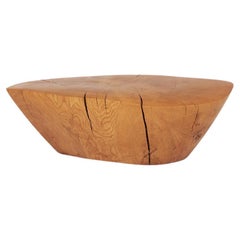
Der Stein by Kaspar Hamacher
By Kaspar Hamacher
Located in Antwerpen, BE
Der Stein by KASPAR HAMACHER, an organic shaped coffee table. Each piece is made from a solid piece of wood from naturally fallen trees.
Handmade in Belgium, Der Stein is made to or...
Category
21st Century and Contemporary Belgian Coffee and Cocktail Tables
Materials
Oak
$6,592 / item
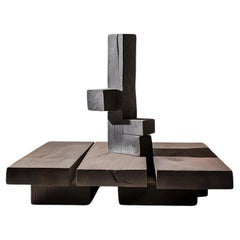
Sculptural Elegance Unseen Force #53: Joel Escalona
s Solid Wood Coffee Table
By Joel Escalona
Located in Ciudad de México, CDMX
Sculptural Elegance Unseen Force #53: Joel Escalona's Solid Wood Coffee Table
Sculptural coffee table made of solid wood with a natural water-based or carbonized finish. Due to the ...
Category
2010s Mexican Brutalist Coffee and Cocktail Tables
Materials
Hardwood
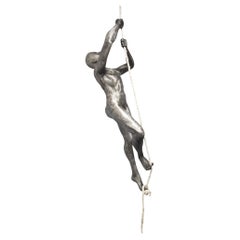
Large-Scale Rope Climbing Man by Phillips Collection, Installation
Located in North Palm Beach, FL
This large-scale sculpture is crafted from cast aluminum with a striking silver finish and a dark gray wash, giving it a beautifully aged appeal. The stippled surface enhances its un...
Category
Early 2000s Figurative Sculptures
Materials
Aluminum
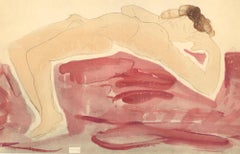
Francois Auguste Rene Rodin, Untitled, from The Varende, 1944 (after)
By Auguste Rodin
Located in Southampton, NY
This exquisite lithograph after Francois Auguste Rene Rodin (1840–1917), titled Sans titre (Untitled), from the folio La Varende, Rodin (La Varende, Rodin), originates from the 1944 ...
Category
1940s Modern Figurative Prints
Materials
Lithograph, Stencil
$716 Sale Price
20% Off
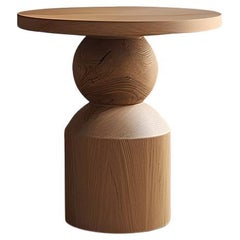
Side Table, Stool or Nightstand in Solid Wood Finish, Auxiliary Table Socle 31
By Joel Escalona
Located in Ciudad de México, CDMX
Socle side table, auxiliary table, night stand
Socle is a small solid wood table designed by the NONO design team. Made of solid wood, its elaborated construction serves as a suppor...
Category
2010s Mexican Mid-Century Modern End Tables
Materials
Wood, Hardwood
$4,720 Sale Price / item
20% Off
Original, signed, Amadeo Modigliani drawing of Mme Anka Zberowska in pencil
Located in Petworth, West Sussex
This is a very exciting and very rare signed drawing by Amadeo Modigliani of Mme Anka Zberowska. Madame Zberwoska was the daughter of a Polish aristocrat who, with her husband, arri...
Category
20th Century Post-Impressionist Portrait Drawings and Watercolors
Materials
Paper, Pencil
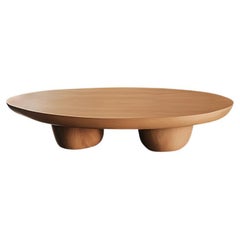
Wooden Oval Coffee Table, Fishes Series 16 by Joel Escalona
By Joel Escalona
Located in Ciudad de México, CDMX
Fishes is a series of sculptural coffee tables inspired by the famous Fish (1930) sculpture of Rumanian artist Constantin Brancusi. Brancusi's work has been widely regarded as a masterpiece of modern art, and his Fish sculpture remain an iconic symbol of his artistic vision.
The Fishes Coffee Tables series is a tribute to Brancusi's mastery of creating a sense of tranquility and serenity. Each coffee table in this collection is meticulously shaped from natural finish or black-tinted oak wood or walnut.
The design process for the Fishes Coffee Tables collection was deeply stimulated by Brancusi's Fish sculpture, with each coffee table featuring soft and rounded forms that capture the fluidity and motion of aquatic life with simplicity and elegance. The sculptural forms of the Fishes Coffee Tables by NONO Furniture reflect this aesthetic, evoking a sense of quietness and stillness.
The natural beauty and rich texture of oak and walnut create a warm and inviting atmosphere that is both elegant and sophisticated, making the Fishes Coffee Tables collection a perfect addition to any home decor.
Each coffee table in the Fishes Series...
Category
2010s Mexican Mid-Century Modern Coffee and Cocktail Tables
Materials
Wood, Hardwood, Oak
$9,600 Sale Price / item
20% Off
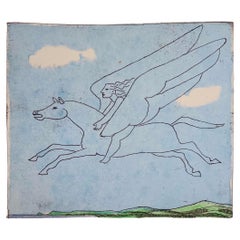
François-xavier Lalanne Pegasus, 2005
By François-Xavier Lalanne
Located in Saint ouen, FR
François-Xavier Lalanne (1927-2008) Pegasus, 2005
Techniques : etching and soft varnish heightened with coloured pencil , hand signed in pencil by François Xavier Lalanne, in perfe...
Category
Early 2000s French Prints
Materials
Paper
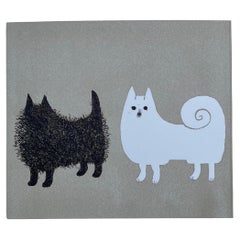
François-Xavier Lalanne - Les Spitz (dogs), 2004
By François-Xavier Lalanne
Located in Saint ouen, FR
François-Xavier Lalanne (1927-2008) Les Spitz (dogs), 2004
Original print (etching) hand signed in pencil by François Xavier Lalanne and untitled "Les Spitz" ("The Spitz"), in perfec...
Category
Early 2000s French Modern Prints
Materials
Paper
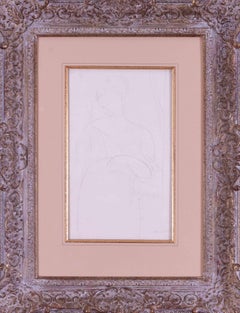
Francois Auguste Rene Rodin, Untitled, from Twelve Watercolors, 1920 (after)
By Auguste Rodin
Located in Southampton, NY
This exquisite lithograph after Francois Auguste Rene Rodin (1840–1917), titled Sans titre (Untitled), from the folio Douze aquarelles de Auguste Rodin (Twelve Watercolors by Auguste...
Category
1920s Modern Figurative Prints
Materials
Lithograph, Stencil
$1,756 Sale Price
20% Off
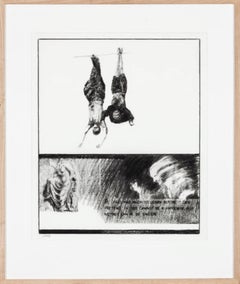
Investigations, signed, with Guggenheim Museum
Leo Castelli Exhibition Labels
By Robert Morris
Located in New York, NY
Robert Morris
Investigations (with Guggenheim Museum Labels), 1990
Graphite drawing on Mylar. Framed with the original Guggenheim Museum label (lent by Sonnabend),
Castelli Gal...
Category
1990s Minimalist Abstract Drawings and Watercolors
Materials
Mylar, Graphite
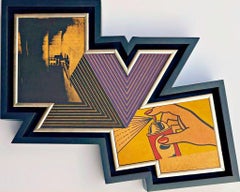
Richard Pettibone The Appropriation Warhol, Stella, Lichtenstein, Unique Signed
By Richard Pettibone
Located in New York, NY
Richard Pettibone
The Appropriation Print Andy Warhol, Frank Stella, Roy Lichtenstein, 1970
Silkscreen in colors on masonite board (unique variant on sculpted board)
Hand-signed by artist, Signed and dated on the front (see close up image)
Bespoke frame Included
This example of Pettibone's iconic Appropriation Print is silkscreened on masonite board rather than paper, giving it a different background hue, and enabling it work to be framed so uniquely.
The Appropriation print is one of the most coveted prints Pettibone ever created ; the regular edition is on a full sheet with white background; the present example was silkscreened on board, allowing it to be framed in 3-D. While we do not know how many examples of this graphic work Pettibone created, so far the present work is the only one example we have ever seen on the public market since 1970. (Other editions of The Appropriation Print have been printed on vellum, wove paper and pink and yellow paper.)
This 1970 homage to Andy Warhol, Frank Stella and Roy Lichtenstein exemplifies the type of artistic appropriation he was engaging in early on during the height of the Pop Art movement - long before more contemporary artists like Deborah Kass, Louise Lawler, etc. followed suit.
This silkscreen was in its original 1970 vintage period frame; a bespoke custom hand cut black wood outer frame was subsequently created especially to house the work, giving it a distinctive sculptural aesthetic.
Measurements:
Framed 14.5 inches vertical by 18 inches horizontal by 2 inches
Work
13 inches vertical by 16.5 inches horizontal
Richard Pettibone biography:
Richard Pettibone (American, b.1938) is one of the pioneering artists to use appropriation techniques. Pettibone was born in Los Angeles, and first worked with shadow boxes and assemblages, illustrating his interest in craft, construction, and working in miniature scales. In 1964, he created the first of his appropriated pieces, two tiny painted “replicas” of the iconic Campbell’s soup cans by Andy Warhol (American, 1928–1987). By 1965, he had created several “replicas” of paintings by American artists, such as Warhol, Roy Lichtenstein (1923–1997), Ed Ruscha (b.1937), and others, among them some of the biggest names in Pop Art. Pettibone chose to recreate the work of leading avant-garde artists whose careers were often centered on themes of replication themselves, further lending irony to his work. Pettibone also created both miniature and life-sized sculptural works, including an exact copy of Bicycle Wheel by Marcel Duchamp (French, 1887–1968), and in the 1980s, an entire series of sculptures of varying sizes replicating the most famous works of Constantin Brancusi (Romanian, 1876–1957). In more recent years, Pettibone has created paintings based on the covers of poetry books by Ezra Pound, as well as sculptures drawn from the grid compositions of Piet Mondrian (Dutch, 1872–1944). Pettibone straddles the lines of appropriation, Pop, and Conceptual Art, and has received critical attention for decades for the important questions his work raises about authorship, craftsmanship, and the original in art. His work has been exhibited at the Institute for Contemporary Art in Philadelphia, the Museum of Modern Art in New York, the Museum of Contemporary Art in Miami, and the Laguna Art Museum in Laguna Beach, CA. Pettibone is currently based in New York.
"I wished I had stuck with the idea of just painting the same
painting like the soup can and never painting another painting.
When someone wanted one, you would just do another one.
Does anybody do that now?"
Andy Warhol, 1981
Since the mid-1960s, Richard Pettibone has been making
hand-painted, small-scale copies of works by other artists — a
practice due to which he is best known as a precursor of appropriation art — and for a decade now, he has been revisiting subjects from across his career. In his latest exhibitions at
Castelli Gallery, Pettibone has been showing more of the “same”
paintings that had already been part of his 2005–6 museum retrospective,1
and also including “new” subject matter drawn from
his usual roster of European modernists and American postwar
artists. Art critic Kim Levin laid out some phases of the intricate spectrum from copies to repetitions in her review of the
Warhol-de Chirico showdown, a joint exhibition at the heyday
of appropriation art in the mid-1980s when Warhol’s appropriations of de Chirico’s work effectively revaluated “the grand
old auto-appropriator”.
Upon having counted well over a dozen
Disquieting Muses by de Chirico, Levin speculated: “Maybe he
kept doing them because no one got the point. Maybe he needed the money. Maybe he meant it when he said his technique
had improved, and traditional skills were what mattered.”
On
the other side, Warhol, in her eyes, was the “latter-day exemplar
of museless creativity”.
To Pettibone, traditional skills certainly
still matter, as he practices his contemporary version of museless creativity. He paints the same painting again and again,
no matter whether anybody shows an interest in it or not. His
work, of course, takes place well outside the historical framework of what Levin aptly referred to as the “modern/postmodern wrestling match”,
but neither was this exactly his match
to begin with.
Pettibone is one of appropriation art’s trailblazers, but his diverse
selection of sources removes from his work the critique of the
modernist myth of originality most commonly associated with
appropriation art in a narrow sense, as we see, for example, in
Sherrie Levine’s practice of re-photographing the work of Walker
Evans and Edward Weston. In particular, during his photorealist
phase of the 1970s, Pettibone’s sources ranged widely across
several art-historical periods. His appropriations of the 1980s
and 1990s spanned from Picasso etchings and Brancusi sculptures to Shaker furniture and even included Ezra Pound’s poetry.
Pettibone has professed outright admiration for his source artists, whose work he shrinks and tweaks to comic effect but, nevertheless, always treats with reverence and care. His response
to these artists is primarily on an aesthetic level, owing much
to the fact that his process relies on photographs. By the same
token, the aesthetic that attracts him is a graphic one that lends
itself to reproduction. Painstakingly copying other artists’ work by hand has been a way of making
it his own, yet each source is acknowledged in
his titles and, occasionally, in captions on white
margins that he leaves around the image as an
indication that the actual source is a photographic image. The enjoyment he receives in copying
is part of the motivation behind doing it, as is
the pleasure he receives from actually being with
the finished painting — a considerable private
dimension of his work. His copies are “handmade
readymades” that he meticulously paints in great quantities in his studio upstate in New York; the commitment
to manual labor and the time spent at material production has
become an increasingly important dimension of his recent work.
Pettibone operates at some remove from the contemporary art
scene, not only by staying put geographically, but also by refusing to recoup the simulated lack of originality through the
creation of a public persona.
In so doing, Pettibone takes a real
risk. He places himself in opposition to conceptualism, and he is
apprehensive of an understanding of art as the mere illustration
of an idea. His reading of Marcel Duchamp’s works as beautiful
is revealing about Pettibone’s priorities in this respect.
When
Pettibone, for aesthetic pleasure, paints Duchamp’s Poster for
the Third French Chess...
Category
1970s Pop Art Abstract Prints
Materials
Masonite, Pencil, Screen
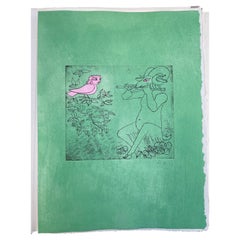
François-xavier Lalanne
1927-2008
, Ram and Bird, 2005
By François-Xavier Lalanne
Located in Saint ouen, FR
François-Xavier Lalanne (1927-2008) a ram and a bird, 2005.
Techniques : watercolored aquatint and soft varnish on paper, hand signed in pencil by François Xavier Lalanne, in perfec...
Category
Early 2000s French Modern Drawings
Materials
Paper
$2,876 Sale Price
20% Off
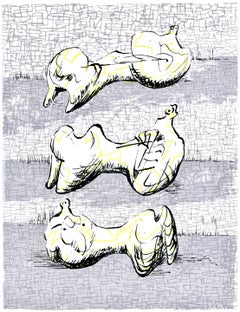
Henry Moore, Three Reclining Figures, from XXe siecle, 1972
By Henry Moore
Located in Southampton, NY
This exquisite lithograph by Henry Moore (1898–1986), titled Reclining Figure Interior Setting I, from the album XXe siecle, Numero special hors abonnement, Hommage a Henry Moore, or...
Category
1970s Modern Abstract Prints
Materials
Lithograph
$716 Sale Price
20% Off
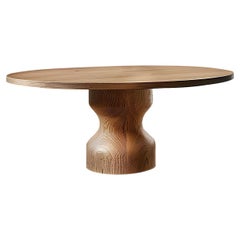
Dining Room Sets, Elegance No12 by Socle, Crafted by Joel Escalona
By Joel Escalona
Located in Ciudad de México, CDMX
Dining Room Sets, Elegance No12 by Socle, Crafted by Joel Escalona
——
Introducing the "Socle Dining Table Series" by NONO, a distinguished expansion of our beloved side table collec...
Category
2010s Mexican Modern Dining Room Tables
Materials
Hardwood
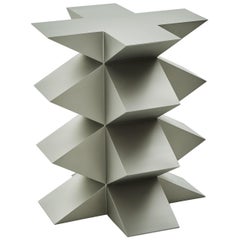
Studio Brancusi III Sculptural Side Table Matte Steel Customizable
By Danjie Yan
Located in Beverly Hills, CA
This sculptural side table is from the studio Brancusi Collection designed and made by China-based artist Danjie Yan. The works debutted at Sifang Art ...
Category
2010s Chinese Side Tables
Materials
Stainless Steel
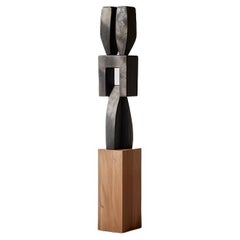
Biomorphic Carved Wood Sculpture in the style of Isamu Noguchi, Unseen Force 22
By Joel Escalona
Located in Ciudad de México, CDMX
Biomorphic Carved Wood Sculpture in the style of Isamu Noguchi, Unseen Force 22 by Joel Escalona
This monolithic sculpture, designed by the talented Artist Joel Escalona, is a towe...
Category
2010s Mexican Mid-Century Modern Abstract Sculptures
Materials
Hardwood
$11,672 Sale Price / item
20% Off
Totemic Head Sculpture Unsigned by Jencik, Melbourne, 1998
By Paul Jencik
Located in Melbourne, AU
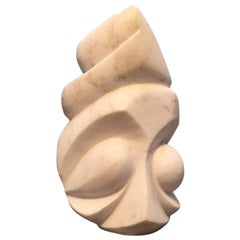
Another wonderful marble sculpture with an intriguing provenance. Unsigned. Part of a series by Paul Jencik, circa 1998-2001.
This ‘totemic head’ sculpture is carved from a single block of marble in a snowy white. It’s the remaining head from a much larger totemic sculpture, the base now lost. This figurative face can be interpreted in many ways. Jencik references human, animal and natural forms but never quite allows us to reach a conclusion about the origins of his creations.
Jencik was a welder, boat builder and metal worker with a strong creative instinct but without the opportunity or artistic training that would afford his work any recognition. He created a large series of marble and timber sculptures...
Category
1990s Australian Post-Modern Abstract Sculptures
Materials
Marble
$256 Sale Price
20% Off
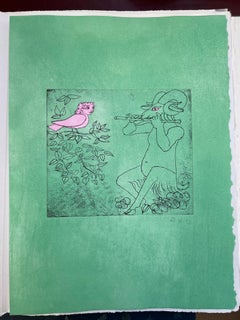
François-Xavier Lalanne (1927-2008) - A ram and a bird -2005
By François-Xavier Lalanne
Located in Saint Ouen, FR
François-Xavier Lalanne (1927-2008) A ram and a bird, 2005
Techniques : watercolored aquatint and soft varnish on paper, hand signed in pencil by François Xavier Lalanne, in perfect...
Category
Early 2000s Surrealist Figurative Prints
Materials
Paper
$2,876 Sale Price
20% Off
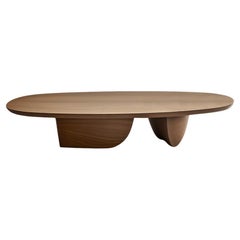
Solid Walnut Wood Coffee Table, Fishes Series 6 by Joel Escalona
By Joel Escalona
Located in Ciudad de México, CDMX
Fishes is a series of sculptural coffee tables inspired by the famous Fish (1930) sculpture of Rumanian artist Constantin Brancusi. Brancusi's work has been widely regarded as a masterpiece of modern art, and his Fish sculpture remain an iconic symbol of his artistic vision.
The Fishes Coffee Tables...
Category
2010s Mexican Mid-Century Modern Coffee and Cocktail Tables
Materials
Wood, Hardwood, Walnut
$8,311 Sale Price / item
20% Off
Side Table, Stool or Nightstand in Solid Wood Finish, Auxiliary Table Socle 35
By Joel Escalona
Located in Ciudad de México, CDMX
Socle side table, auxiliary table, night stand
Socle is a small solid wood table designed by the NONO design team. Made of solid wood, its elaborated construction serves as a suppor...
Category
2010s Mexican Mid-Century Modern End Tables
Materials
Wood, Hardwood
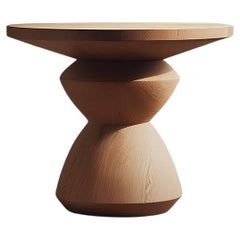
Elegance at Mealtime, Solid Wood Socle Dining Tables by Joel Escalona No31
By Joel Escalona
Located in Ciudad de México, CDMX
Elegance at Mealtime, Solid Wood Socle Dining Tables by Joel Escalona No31
——
Introducing the "Socle Dining Table Series" by NONO, a distinguished expansion of our beloved side tab...
Category
2010s Mexican Modern Dining Room Tables
Materials
Hardwood
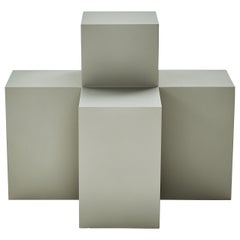
Studio Brancusi I Sculptural Side Table Matte Steel Customizable
By Danjie Yan
Located in Beverly Hills, CA
This sculptural side table is from the Studio Brancusi Collection designed and made by China-based artist Danjie Yan. The works debutted at Sifang Art ...
Category
2010s Chinese Side Tables
Materials
Stainless Steel
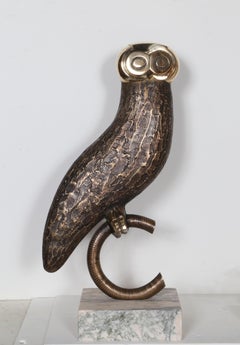
Owl on Perch, Modern Bronze by Antonovici 1949
By Constantin Antonovici
Located in Long Island City, NY
Antonovici was born in Neamt, Romania on February 18, 1911, and graduated from the Fine Arts Academy in Iasi, Romania, in 1939. In 1940, Antonovici studied in Zagreb with the famous ...
Category
1940s Modern Figurative Sculptures
Materials
Bronze
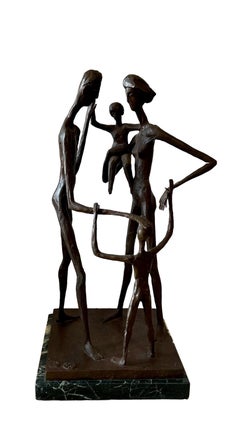
Large Modernist Bronze Abstract Figural Sculpture "Family" Wolfgang Behl
Located in Surfside, FL
This is a mid 20th century mod abstract large bronze sculpture by Wolfgang Behl (German/American, 1918-1994).
The sculptural group titled "The Family" features a mother and father with two children.
Numbered 20/20. Signed.
21" H x 10 1/4" x 10 1/4
Wolfgang (Johann Wolfgang) Behl (1918 - 1994) was active/lived in Connecticut, Illinois / Germany. Known for Sculpture and as an architectural carver.
A carver,designer, and teacher, Wolfgang Behl was born in Berlin, Germany where he studied at the Berlin Academy of Fine Arts. His teacher was otto Hitzberger, sculptor and architecture carver. I have seen some his work, particularly in carved wood compared to Constantin Brancusi although this one seems way more reminiscent of Alberto Giacometti. In 1939, Behl came to the United States and taught briefly in Pennsylvania at the Perkiomen School and in Rhode Island at the Rhode Island School of Design. There in 1943, he won the Joseph N. Eisendrath prize for sculpture. He also became a friend of Louis Mayer, sculptor from Milwaukee. In 1944, Behl took a job as Art Director at the Lake Forest Academy in Lake Forest, Illinois, and he also began a one-year teaching assignment at the Layton School of Art in Milwaukee.
The last years of his life until his death were in Hartford, Connecticut.
Source: Peter C. Merrill, "German-Immigrant Artists in Early Milwaukee"
Originally from Berlin, Germany, Mr. Behl immigrated to the United States in 1939 and became a citizen in 1947. He studied with Waldemar Raemisch at the Academy of Fine Arts in Berlin, and later at the Rhode Island School of Design.
He began teaching at the Hartford Art School in 1955, retiring in 1983 to devote his time to sculpting. Mr. Behl had exhibitions throughout the United States and Germany. Some of his solo exhibitions include the Arts Exclusive in Simsbury from 1976 to 1981, and the Bertha Schaefer Gallery in New York City from 1950 to 1973. He showed at the New Britain Museum of American Art, in New Britain, Connecticut in 1969. He also had several retrospectives, including one at the Greater Hartford Jewish Community Center in West Hartford until the end of this month. His works in bronze have a German Expressionist quality to them a pathos found in the works of Kathe Kollwitz and the Expressionist movement. He was known for his classically inspired, but often surrealist sculpture. Among his most-well known pieces are a series of sculptures done for the University of Connecticut Health Center. Several examples of Behl’s work are found on the campus of the University of Hartford. He was included in the show Monumentality in Modern Sculpture at the Contemporary Arts Museum Houston, Texas, 1957. Artists featured in the exhibition: Kenneth Armitage, Hans Arp, Ernst Barlach, Wolfgang Behl, Dorothy Dehner, Edgar Degas, José de Rivera, Max Ernst, Alberto Giacometti, Joseph Glasco, Julio González, Paul Granlund...
Category
20th Century Expressionist Figurative Sculptures
Materials
Marble, Bronze
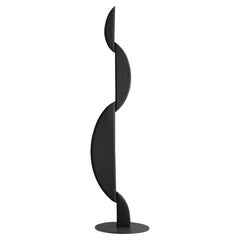
I - Primera Sculpture
By Joel Escalona
Located in Ciudad de México, MX
The I Primera Sculpture is part of Noviembre collection, which offers a compelling range of furniture, inviting exploration of form, function, and the serene lines that define each p...
Category
2010s Mexican Organic Modern Abstract Sculptures
Materials
Metal, Sheet Metal
$2,860 / item
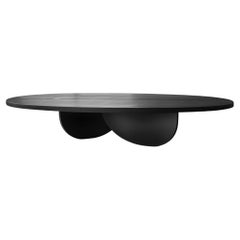
Solid Wood Black Tinted Coffee Table, Fishes Series 12 by Joel Escalona
By Joel Escalona
Located in Ciudad de México, CDMX
Fishes is a series of sculptural coffee tables inspired by the famous Fish (1930) sculpture of Rumanian artist Constantin Brancusi. Brancusi's work has been widely regarded as a mast...
Category
2010s Mexican Mid-Century Modern Coffee and Cocktail Tables
Materials
Wood, Hardwood, Oak
$6,560 Sale Price / item
20% Off
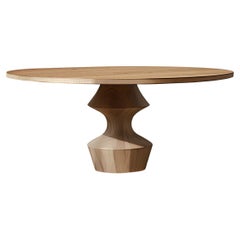
Socle Dessert Tables No11, Sweet Design in Solid Wood by NONO
By Joel Escalona
Located in Ciudad de México, CDMX
Socle Dessert Tables No11, Sweet Design in Solid Wood by NONO
——
Introducing the "Socle Dining Table Series" by NONO, a distinguished expansion of our beloved side table collection...
Category
2010s Mexican Modern Dining Room Tables
Materials
Hardwood
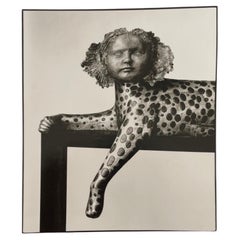
François-xavier Lalanne and Claude Lalanne, Sphinx
By François-Xavier Lalanne
Located in Saint ouen, FR
François-Xavier Lalanne (1927-2008) and Claude Lalanne (1925-1919), Sphinx, 2005
Techniques : gelatin silver print hand signed by François Xavier Lalanne, in perfect condition
Dime...
Category
Early 2000s European Prints
Materials
Paper
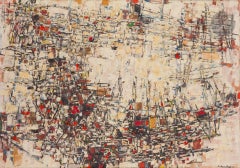
Composition
By Natalia Dumitresco
Located in PARIS, FR
Important work by the artist, were exhibited at Kunsthalle Recklinghausen, Radical Innovations, 2024-25.
Signed lower right.
Natalia Dumitresco (or Dumitrescu) was born in Buchare...
Category
1950s Abstract Abstract Paintings
Materials
Canvas, Oil