72 results for "gofun"
to
2
26
9
30
30
13
11
11
10
8
7
6
3
3
3
2
2
2
2
2
1
1
1
1
1
1
1
1
1
1
1
1
1
1
1
1
4
4
1
1
1
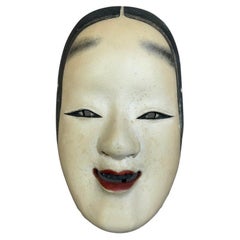
Japanese Waka-onna (増女) Noh Mask. Attributed to Takada Fuki (高田 冨季, 1935–2008)
Located in Fukuoka, JP
Waka-onna (増女) Noh Mask attributed to Takada Fuki (高田 冨季, 1935–2008)
Mask: Waka-onna (増女)
SKU: TBA11
Size: W: 13 cm, H: 21 cm
The Waka-onna mask is traditionally used to represent ...
Category
20th Century Japanese Showa Sculptures and Carvings
Materials
Wood

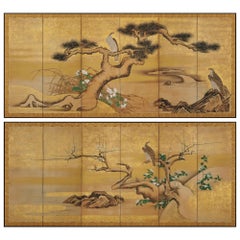
17th Century Japanese Screen Pair by Soga Nichokuan, Hawks on Pine
Plum Trees
Located in Kyoto, JP
Hawks on plum and pine
Soga Nichokuan (active circa 1625-1660)
Pair of six-fold screens.
Ink, mineral pigments, gofun, gold and speckled gold l...
Category
Antique 1640s Japanese Edo Paintings and Screens
Materials
Wood, Paper
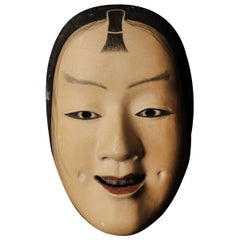
Japanese Kashikobito (賢人) Noh Mask. Attributed to Takada Fuki (高田 冨季, 1935–2008)
Located in Fukuoka, JP
Kashikobito (賢人) Noh Mask attributed to Takada Fuki (高田 冨季, 1935–2008)
SKU: TBA10
Size: W: 13.5 cm, H: 20.5 cm
This mask is used in Noh theater to represent a wise person or an int...
Category
20th Century Japanese Showa Sculptures and Carvings
Materials
Wood
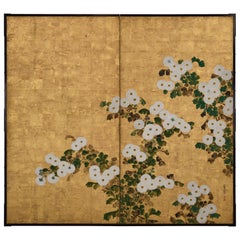
18th Century Japanese Rinpa Screen. White Chrysanthemums. School of Korin.
Located in Kyoto, JP
School of Ogata Korin
White Chrysanthemums
18th Century, Edo period.
A two-panel Japanese screen. Ink, color, gofun and gold leaf on paper.
Dimensions: H. 171 cm x W. 188 cm (67.5” x 74”)
On this two-panel Japanese screen we see blooming chrysanthemums, a flower which embodies the essence of autumn in Japan. Here the traditional floral theme has been simplified and stylized. The bright colors and asymmetrical composition against the delicate gold leaf create a luxurious and ornate work of art. Its background, a strikingly patinated grid of gold leaf, denies any sense of place or time and imbues everything with an ethereal glow. The leaves and stems of the plants are nothing more than pools of mottled color and ink without any outline whatsoever. These are typical Rinpa adaptations of traditional ink painting methods; tarashikomi, or diluted washes of color blended while very wet, and mokkotsu, or “bonelessness,” which creates forms without exterior outlines. The relief work of the rounded flower petals has been obtained by the moriage process (a mixture based on ground shells modeled on the surface of the paper).
On the lower right of the screen, the siganture “Hokyo Korin Jakumyo” and the “Hoshuku” seal can be read. Korin is Ogata Korin, famed for the Irises (Nezu Museum) and Red and White Plum Blossom (MOA Museum of Art) folding screens, both National Treasures. Korin worked in both Kyoto and Edo in the mid-Edo period. Korin was using the art name “Jakumyo” just after he received the Hokyo level, which was in 1701.
This particular screen was published in May of 1961 in the Japanese Sansai Fine Art Magazine*. An in depth article accompanies the photograph of the screen and and a photograph of the signature and seal. This article devotes much of its body to discussing the moriage technique, how it enlivens the chrysanthemum flowers and Korin’s specific skill in using the technique. The article goes on to discuss the most famous works of Korin, utilizing this technique, which were known at the time. Specifically a two-panel screen held in the Honolulu Museum which was discovered in the store-house of Takahashi Soan. A two-panel screen pair which the Nakano family own. A two-panel screen pair with chrysanthemums in moriage in fan designs owned by the Nomura family. Also a small folding screen featuring chrysanthemums held in the Yamato Bunkakan. The article goes on to say that this particular two-fold screen came from the Nijo family. Korin is known to have had a strong connection with the aristocratic Nijo family. The article explains that Korin received a lot of favors from the Nijo family and that this screen would have been gifted to them.
Since that time the Honolulu screen has been amended to ‘attributed to Ogata Korin’ and I do not know further details of the other 3 screens. Other Chrysanthemum screens...
Category
Antique 18th Century Japanese Edo Paintings and Screens
Materials
Gold Leaf
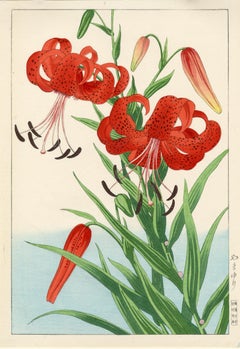
Tiger Lily
By Nishimura Hodo
Located in Fairlawn, OH
Tiger Lily
Color woodcut, 1939
Unsigned (as usual)
Publisher: Takemura Hideo
(active Yokohama 1926-1940)
Condition: Excellent
Image/sheet size: 15 3/8 x 10 7/8 inches
Provenance: Robert O. Muller Estate
Biography
Hodo Nishimura...
Category
1930s Modern Still-life Prints
Materials
Woodcut
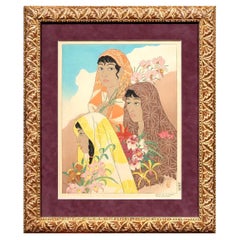
Framed Woodblock Print Retour de la Jungle Tondana Celebes by Paul Jacoulet
By Paul Jacoulet
Located in Atlanta, GA
A Japanese Woodblock print by Paul Jacoulet (French, 1896-1960) entitled Retour de la Jungle Tondana Celebes (Return from the jungles Tondana Celebes). Created in 1948, this print wa...
Category
Vintage 1940s Japanese Modern Prints
Materials
Wood, Paper
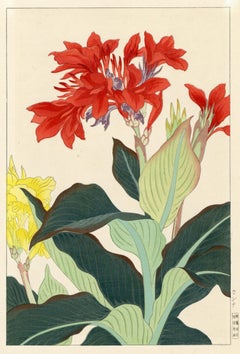
Canna Lily
By Nishimura Hodo
Located in Fairlawn, OH
Canna Lily
Color woodcut, 1939
Unsigned (as usual)
Publisher: Takemura Hideo
(active Yokohama 1926-1939)
Format: oban
Condition: Excellent
Image/Sheet size: 15 5/8 x 11 inches
Provenance: Robert O. Muller
There is little biographical data available about the Japanese printmaker Hodo Nishimura...
Category
1930s Modern Still-life Prints
Materials
Woodcut
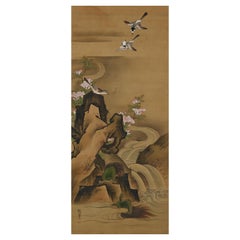
19th Century Japanese Silk Painting by Kano Chikanobu, Turtles
Azalea
Located in Kyoto, JP
Birds & flowers of the seasons
Pheasants & plum in snow
Unframed painting. Ink, pigment and gofun on silk
Kano Chikanobu 1819-1888
Signature...
Category
Antique Mid-19th Century Asian Edo Paintings and Screens
Materials
Silk
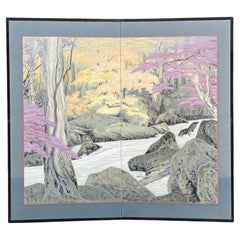
Two-panel folding screen, Nihonga, Hirai Baisen (1889–1969), early Shōwa era (19
Located in PARIS, FR
Two-panel folding screen, Nihonga, Hirai Baisen (1889–1969), early Shōwa era (1940s)
This two-panel screen is signed by Hirai Baisen (1889–1969), a major Nihonga painter who is only...
Category
20th Century Japanese Paintings and Screens
Materials
Paper
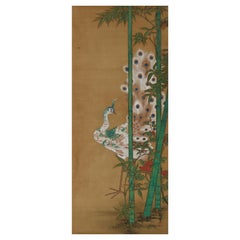
19th Century Japanese Silk Painting by Kano Chikanobu, Peacock
Bamboo
Located in Kyoto, JP
Birds & Flowers of the Seasons
Pheasants & Plum in Snow
Unframed painting. Ink, pigment and gofun on silk
Kano Chikanobu 1819-1888
Signature...
Category
Antique Mid-19th Century Asian Edo Paintings and Screens
Materials
Silk
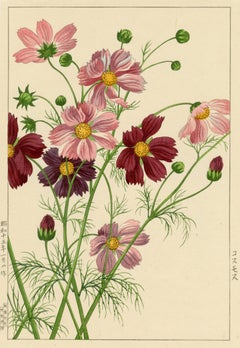
Cosmos
By Nishimura Hodo
Located in Fairlawn, OH
Cosmos
Color woodcut with gauffage (embossing), January 1940
Unsigned (as usual)
Publisher: Takemura Hideo
(active Yokohama 1926-1940)
Condition: excellent
Image size: 14 3/8 x 9 5/8 inches
Provenance: Robert O. Muller Estate
Biography
Hodo Nishimura...
Category
1940s Modern Still-life Prints
Materials
Woodcut
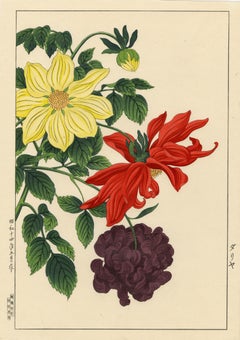
Dahlias
By Nishimura Hodo
Located in Fairlawn, OH
Dahlias
Color woodcut, 1939
Unsigned (as usual)
Format: oban
Publisher: Takemura Hideo
Stamp verso: "Made in Japan"
Provenance: Robert O. Muller
Biography
Hodo Nishimura...
Category
1930s Modern Still-life Prints
Materials
Woodcut