373 results for "leo castelli"

to
59
308
59
69
52
198
153
17
134
50
88
66
34
Overall Height
to
Overall Width
to
125
62
54
42
19
14
1
1
70
28
27
27
23
19
19
19
12
11
9
8
8
8
8
7
6
6
5
5
1
330
42
1
7
64
83
97
37
42
23
21
12
10
109
100
87
54
49
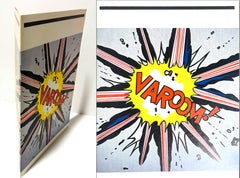
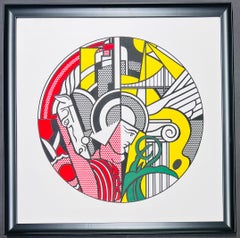
The Solomon R. Guggenheim Museum – hand-signed Screenprint on Rives paper – 1969
By Roy Lichtenstein
Located in Varese, IT
Screenprint on Rives paper, Edited in 1969 Limited Edition of 250 copies Signed and dated in pencil by artist in lower rith corner , numbered as 88/250 in lower left corner Paper siz...
Category

1960s Pop Art Prints and Multiples

Materials

Paper, Screen

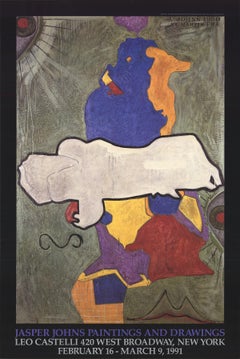
Jasper Johns-Green Angel-ORIGINAL POSTER
By Jasper Johns
Located in Brooklyn, NY
Sku: AW1633 Artist: Jasper Johns Title: Paintings and Drawings (Green Angel) Year: 1990 Signed: No Medium: Offset Lithograph Paper Size: 39 x 26 inches ( 99.06 x 66.04 cm ) Image Siz...
Category

20th Century Pop Art Prints and Multiples

Materials

Offset

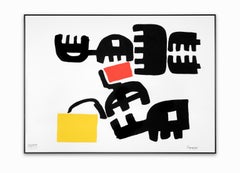
Giuseppe Capogrossi Iconic Comb Design "Superficie 324" Serigrafia
By Giuseppe Capogrossi
Located in Detroit, MI
"Superficie 324" is a 1988 screen print (serigraph) of a 1959 painting by Capogrossi. This is one of his famous "comb" or "fork" works that he perfected in the 1950s and continued to create for the remainder of his life. The blocks of primary red and yellow colors give a bright, joyful feel and contrast to the strong bold black that was Capogrossi's consistent color for the "combs". With no allegorical, psychological, or symbolic meanings, these structural elements could be assembled and connected in countless variations. Intricate and insistent, Capogrossi's signs determined the construction of the pictorial surface. This piece is identified along one side: Giuseppe Capogrossi By SIAE 1988 Silvio Zamorani Editor Via Saccarelli, 9 10144 Torino Italy Tel. (39)(11) 4730554 Progetto Grafico (Graphic Project): Studio Walter Benjamin. Serigrafia (Screen Print): BISI Torino. Capogrossi was born in Rome. After obtaining a degree in law in 1923–1924, he decided to study painting with Felice Carena at Accademia di Belle Arti di Roma. In 1927 Capogrossi embarked on a formative trip to Paris together with fellow artists and acquaintances Fausto Pirandello, Corrado Cagli and Emanuele Cavalli...
Category

1950s Abstract Expressionist Abstract Prints

Materials

Screen

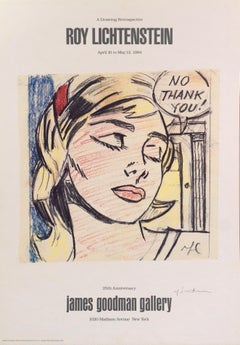
No Thank You! , Signed Pop Art Exhibition Poster, Guggenheim, Venice Biennale
By Roy Lichtenstein
Located in Santa Cruz, CA
Vintage, 1984, James Goodwin New York Gallery exhibition poster; signed, lower right, in pencil, 'R. Lichtenstein' for Roy Lichtenstein (American, 1923-1997) and accompanied by certi...
Category

1980s Pop Art Figurative Prints

Materials

Paper, Offset

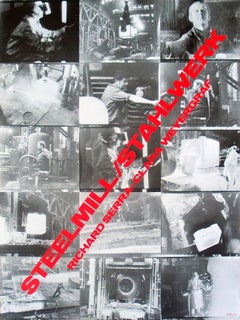
Richard Serra Steelmill at Castelli s - Poster
By Richard Serra
Located in Brooklyn, NY
First edition exhibition poster from Leo Castelli’s Gallery featuring the work of Richard Serra. Paper Size: 30.5 x 23 inches ( 77.47 x 58.42 cm ) Image Size: 30.5 x 23 inches ( 77....
Category

Late 20th Century Prints and Multiples

Materials

Offset

Roy Lichtenstein at CSU, exhibition catalogue
By Roy Lichtenstein
Located in New York, NY
Roy Lichtenstein at CSU, exhibition catalogue, 1982 Softback exhibition catalogue with 2 very cool vellum pages with the Benday dots Unsigned 11 × 8 1/2 in...
Category

1980s Pop Art More Art

Materials

Offset

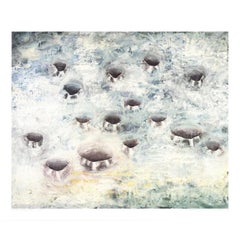
Miguel Barcelo Fifteen Holes (No Text) 1987- Vintage
By Miquel Barceló
Located in Brooklyn, NY
This first-edition exhibition poster was created for 15 Holes, a show by Spanish artist Miguel Barceló at Leo Castelli Gallery. Designed by Smatt Florence Inc. with photography by Do...
Category

1980s Abstract Prints and Multiples

Materials

Offset

Roy Lichtenstein Mirrors 1971 (Roy Lichtenstein Castelli gallery announcement)
By Roy Lichtenstein
Located in NEW YORK, NY
Roy Lichtenstein Mirror Paintings/Roy Lichtenstein Leo Castelli Gallery 1971: A highly collectible, original 1970s Roy Lichtenstein announceme...
Category

1970s Pop Art More Art

Materials

Offset

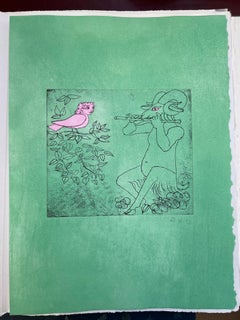
François-Xavier Lalanne (1927-2008) - A ram and a bird -2005
By François-Xavier Lalanne
Located in Saint Ouen, FR
François-Xavier Lalanne (1927-2008) A ram and a bird, 2005 Techniques : watercolored aquatint and soft varnish on paper, hand signed in pencil by François Xavier Lalanne, in perfect...
Category

Early 2000s Surrealist Figurative Prints

Materials

Paper

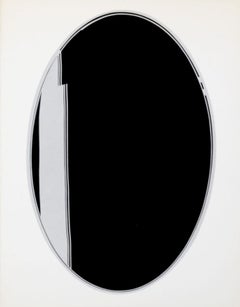
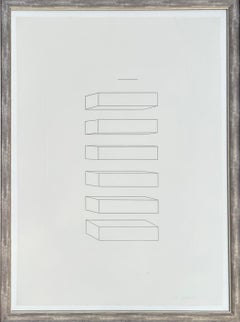
Sculptor Donald Judd #77, (Schellmann 82) signed/n Minimalist etching, Framed
By Donald Judd
Located in New York, NY
Donald Judd Untitled #82, 1974 from a portfolio of six works Etching on German etching paper with deckled edges Hand signed and numbered 7/35 by the artist on the front Catalogue Rai...
Category

1970s Minimalist Abstract Prints

Materials

Etching

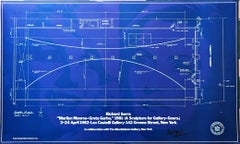
Rare Castelli print: Marilyn Monroe - Greta Garbo (Hand Signed by Richard Serra)
By Richard Serra
Located in New York, NY
Richard Serra Marilyn Monroe - Greta Garbo Poster (Hand Signed by Richard Serra), 1982 Offset Lithograph poster published by Leo Castelli Gallery Hand signed on lower front in black ...
Category

1980s Minimalist Abstract Prints

Materials

Lithograph, Offset

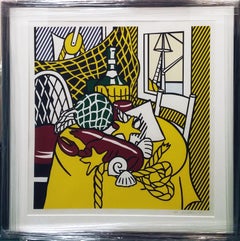
STILL LIFE WITH LOBSTER
By Roy Lichtenstein
Located in Aventura, FL
Hand signed, dated and numbered by the artist. From the Six Still Lifes Series. Lithograph and screenprint on rives BFK paper. Co-published by Multiples, Inc. and Castelli Graphics, ...
Category

1970s Pop Art Interior Prints

Materials

Paper, Lithograph, Screen

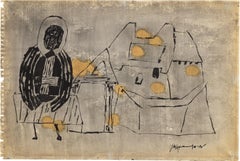
Early Roy Lichtenstein drawing (Roy Lichtenstein, St. Macarius Monastery) c.1951
By Roy Lichtenstein
Located in NEW YORK, NY
Roy Lichtenstein, ‘St. Macarius Before His Monastery,’ circa 1951: Included in the Roy Lichtenstein Foundation, Roy Lichtenstein: A Catalogue Raisonné - this unique, rare early sket...
Category

1950s Pop Art Drawings and Watercolor Paintings

Materials

India Ink, Watercolor

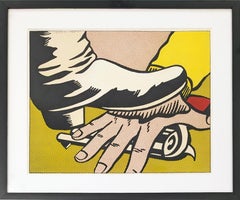
Foot and Hand, Corlett II. 4 (hand signed limited edition lithograph)
By Roy Lichtenstein
Located in Aventura, FL
Offset lithograph in colors on wove paper. Hand signed, dated and numbered by Roy Lichtenstein. Inscribed "HC." (there is also an edition of 300 signed and numbered copies plus an ...
Category

1970s Pop Art Portrait Prints

Materials

Paper, Lithograph

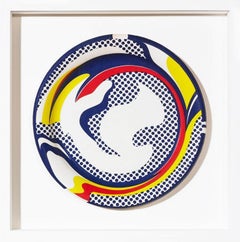
PLATE
By Roy Lichtenstein
Located in Aventura, FL
Screen print on waxed paper plate. Unsigned from an unknown edition. Published by Bert Stern, New York. Plate size 10 x 10 inches. Frame size approx 17 x 17 inches. Stamped "Ro...
Category

1970s Pop Art Mixed Media

Materials

Paper, Screen

PLATE
PLATE
$1,400 Sale Price
20% Off
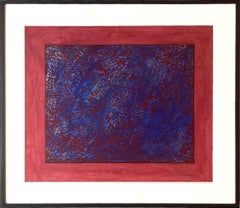
Corona II
By Paul Brach
Located in Kansas City, MO
Paul Brach Corona II Year: 1995 4 Color Lithograph Edition: 20 Paper: Rives BFK, White Paper Size: 29.75 x 29.5 inches Image Size: Same Signed and numbered by hand COA provided ----...
Category

2010s Modern Abstract Prints

Materials

Lithograph

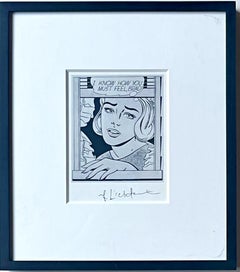
"I Know How You Made Me Feel, Brad!", VIP invite to MoMA show HAND SIGNED Framed
By Roy Lichtenstein
Located in New York, NY
Historically scarce -- hand signed museum invitations by Lichtenstein from MoMA, where the artist attended himself, rarely surface, especially when framed and preserved at this level...
Category

1980s Pop Art Figurative Prints

Materials

Lithograph, Offset

Untitled Stockholm print, from the Castelli Sonnabend Collection signed/numbered
By Jim Dine
Located in New York, NY
Jim Dine Untitled from the Castelli Sonnabend Collection, 1973 Screenprint on rag paper in original portfolio sleeve Hand signed and numbered 158/300 by Jim Dine on the front. Printe...
Category

1970s Pop Art Abstract Prints

Materials

Rag Paper, Screen, Pencil

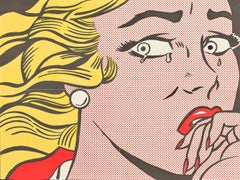
Roy Lichtenstein Crying Girl poster 1963 (Lichtenstein Leo Castelli gallery)
By Roy Lichtenstein
Located in NEW YORK, NY
Roy Lichtenstein Crying Girl Mailer: Folded poster/mailer published to promote the Roy Lichtenstein exhibit at Leo Castelli gallery, New York, ...
Category

1960s Pop Art Prints and Multiples

Materials

Lithograph, Offset

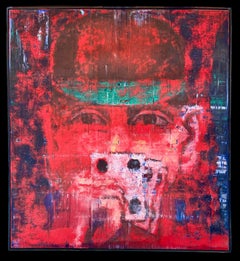
Large Modernist Oil Painting Card Poker Player Aaron Fink Pop Art Americana
By Aaron Fink
Located in Surfside, FL
Aaron Fink (American, b. 1955) Hand signed and dated 1986, verso. The large canvas size measures approx: 72" x 66". This painting is part of the artist's "Images of Gambling" serie...
Category

1980s Pop Art Figurative Paintings

Materials

Canvas, Oil

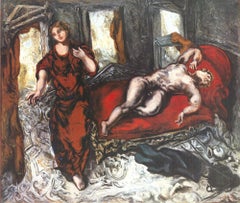
Gerard Garouste Scenes of a Room (No Text) 1983- Vintage
Located in Brooklyn, NY
Original first edition exhibition poster for Gerard Garouste’s show at Leo Castelli and Sperone Westwater Galleries, New York, held February 5–26, 1983. Printed in Italy, with photog...
Category

1980s Contemporary Prints and Multiples

Materials

Offset

Francois-Xavier Lalanne (1927-2008) Men (ephebes) 2 , 2002
By François-Xavier Lalanne
Located in Saint Ouen, FR
Francois-Xavier Lalanne (1927-2008) Men (ephebes), 2002 Techniques : etching on paper Hand signed in pencil by François Xavier Lalanne, in perfect condition Dimensions of the pape...
Category

Early 2000s Surrealist Figurative Prints

Materials

Paper

BEDROOM
By Roy Lichtenstein
Located in Aventura, FL
From Interior Series. Woodcut and screen print in colors on Museum Board. Hand signed, dated and numbered by Roy Lichtenstein. Published by Gemini G.E.L., Los Angeles.. Corlett 247...
Category

1990s Pop Art Portrait Prints

Materials

Board, Lithograph, Screen, Woodcut

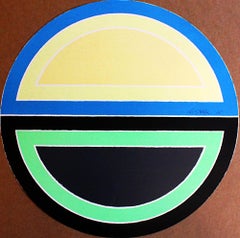
Frank Stella, Line Up, from Jasper s Dilemma, signed/n, geometric abstraction
By Frank Stella
Located in New York, NY
Frank Stella Line Up, from Jasper's Dilemma (Axsom 85), 1973 Lithograph in colors on J. Green mould-made paper Signed, dated and numbered 56/100 in pencil lower right front 16 × 22 i...
Category

1970s Abstract Geometric Abstract Prints

Materials

Lithograph

1967 Abstract Geometric Expressionist NYC MoMA Silkscreen Card, Stable Gallery
By Alvin Dickstein
Located in Surfside, FL
Al Dickstein New York school Abstract Geometric work. Came in with small collection of his work including signed letters and a signed card and some monogrammed pieces. Signed and inscribed by artist. Showed at New York's Stable Gallery...
Category

1960s Abstract Geometric Abstract Paintings

Materials

Paper, Ink

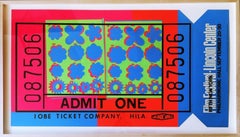
Deluxe Signed Edition of Film Festival Lincoln Center (Feldman Schellmann, II)
By Andy Warhol
Located in New York, NY
Andy Warhol Deluxe Signed Edition of Film Festival Lincoln Center (Feldman Schellmann, II.19), 1967 Silkscreen, die-cut on opaque acrylic Edition 2/200 (Signed and numbered on the back with engraving pen) Hand-signed by artist, As this work was done on acrylic, Warhol signed and numbered it by hand on verso with an engraving needle. Printed date with copyright Frame included: Elegantly framed in a museum quality wood frame with UV plexiglass. A die-cut window has been created in the back of the frame to reveal Warhol's incised signature and edition Publisher: Leo Castelli, New York Printer: Chiron Press, New York Catalogue Raisonne: Feldman Schellmann, II.19 This work is often hung and displayed both vertically and horizontally - see photos for inspiration This work is one of only 200 done on opaque acrylic rather than wove paper, signed and numbered on the opaque acrylic by Andy Warhol with an engraving pen. (Separately, there was an unsigned edition of 500 on wove paper). What distinguishes this rare, extremely desirable signed edition of 200, other than that it is signed and numbered by hand by Andy Warhol, is that the black graphic text FIFTH NEW YORK is placed directly over the text Film Festival of Lincoln Center; whereas in the edition of 500, the text black text FIFTH NEW YORK is placed on top of the white text. An innovative feature that appears in this special edition is a perforated line running across the surface of the print, at its triangular cut out sides, mimicking the tear line present in real commercial movie admissions tickets. Chiron Press commissioned by Lincoln Center, devised a special process expressly to imprint the edition with this perforation using a die cut stamp. This work is quintessential early Warhol, with characteristic bright neon colors, featuring text, along with the artist's very recognizable flower motif. The Lincoln Center ticket...
Category

1960s Pop Art Abstract Prints

Materials

Plastic, Mixed Media, Screen

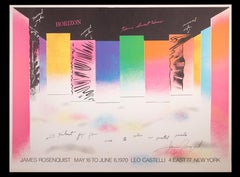
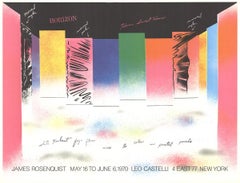
Horizon - Vintage Poster by James Rosenquist - 1970
By James Rosenquist
Located in Roma, IT
Horizon is a vintage poster realized in 1970 by James Rosenquist. Mixed colored offset and lithograph. Hand signed by the artist. The poster was realized in the occasion of the ar...
Category

1970s Abstract Abstract Prints

Materials

Lithograph, Offset

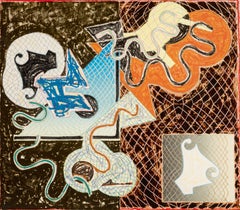
Frank Stella, Whitney Museum exhibited graphic work with Label, Signed/N, Framed
By Frank Stella
Located in New York, NY
Frank Stella (Whitney Museum Exhibited) Shards IVA (Axsom 151), 1982 Lithograph Silkscreen on Arches Cover Paper (Whitney Museum exhibition label verso of frame) 45 1/2 × 39 1/...
Category

1980s Abstract Expressionist Abstract Prints

Materials

Mixed Media, Lithograph, Screen

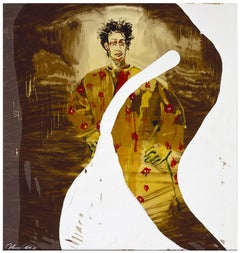
Julian Schnabel, Portraits, Nemo Librizzi
By Julian Schnabel
Located in New York, NY
Julian Schnabel NEMO LIBRIZZI 1998 25-color silkscreen with poured resin 38 x 36 inches (97 x 91 cm) Signed and numbered edition of 90 Suite of 3 Also available Born in Brooklyn,...
Category

1990s Contemporary Figurative Prints

Materials

Screen

1967 Castelli Gallery Exhibition Announcement, uniquely signed by Frank Stella
By Frank Stella
Located in New York, NY
Leo Castelli Gallery Exhibition Announcement for Frank Stella Paintings, November 25 – December 23, 1967. With a later complimentary autograph Uniquely signed in ink by Frank Stella ...
Category

1960s Abstract Abstract Prints

Materials

Screen

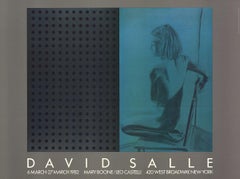
1982 After David Salle At Boone-Castelli Pop Art Vintage
By David Salle
Located in Brooklyn, NY
Exhibition Poster for Leo Castelli Mary Boone Gallery, March 6–27, 1982 First edition exhibition poster created for David Salle’s joint exhibition at Leo Castelli and Mary Boo...
Category

1980s Pop Art Prints and Multiples

Materials

Offset

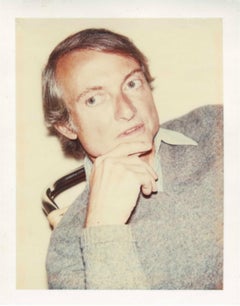
Unique portrait of Roy Lichtenstein, Authenticated by the Andy Warhol Foundation
By Andy Warhol
Located in New York, NY
Andy Warhol Portrait of Roy Lichtenstein, 1975 Polaroid dye-diffusion print Authenticated by the Andy Warhol Foundation for the Visual Arts, bears the Foundation stamp verso Frame included: Framed in white wood frame with UV plexiglass; with die-cut window in the back to show official Warhol Foundation authentication stamp and text Measurements: 9 9/16 x 8 9/16 x 9/16 inches (frame) 3 1/2 x 2 3/4 inches (window) 4.16 x 3.15 inches (Artwork) Authenticated and stamped by the Estate of Andy Warhol/Warhol Foundation for the Visual Arts An impressive piece of Pop Art history! A must-have for fans and collectors of both Andy Warhol and Roy Lichtenstein: This is a unique, authenticated color Polaroid taken by one Pop Art legend, Andy Warhol, of his most formidable contemporary and, in many respects, rival, Roy Lichtenstein. One of only a few portraits Andy Warhol took of Roy Lichtenstein, during one tense photo shoot. Both iconic artists, colleagues and, perhaps lesser known to the public, rivals, would be represented at the time by the renowned Leo Castelli Gallery. The truth is - they were really more rivals than friends. (the rivalry intensified when Warhol, who was working with Walt Disney, discovered that Lichtenstein painted Mickey Mouse before he did!!) Leo Castelli was committed to Roy Lichtenstein, and, it's easy to forget today, wasn't that interested in Warhol as he considered Lichtenstein the greater talent and he could relate better with Roy on a personal level. However, Ivan Karp, who worked at Castelli, was very interested in Warhol, as were some powerful European dealers, as well as many wealthy and influential American and European collectors. That was the start of Warhol's bypassing the traditional gallery model - so that dealers like Castelli could re-discover him after everybody else had. Warhol is known to have taken hundreds of self-portrait polaroid photographs - shoe boxes full - and he took many dozens of images of celebrities like Blondie and Farrah Fawcett. But only a small number of photographic portraits of fellow Pop Art legend Roy Lichtenstein -- each unique,- are known to have appeared on the market over the past half a century - all from the same photo session. This is one of them. There is another Polaroid - from this same (and only) sitting, in the permanent collection of the Getty Museum in California. There really weren't any other collaborations between these two titans, making the resulting portrait from this photo session extraordinary. It is fascinating to study Roy Lichtenstein's face and demeanor in this photograph, in the context of the great sense of competition, but perhaps even greater, albeit uneasy respect, these two larger than life Pop art titans had for each other: Like Leo Castelli, Roy Lichtenstein was Jewish of European descent; whereas Warhol was Catholic and quintessentially American, though also of European (Polish) descent. They were never going to be good friends, but this portrait, perhaps even arranged by Leo Castelli, represents an uneasy acknowledgement there would be room at the top for both of them. Floated, framed with die cut back revealing authentication details, and ready to hang. Measurements: 9 9/16 x 8 9/16 x 9/16 inches (frame) 3 1/2 x 2 3/4 inches (window) 4.16 x 3.15 inches (sheet) Authenticated by the Estate of Andy Warhol/The Andy Warhol Foundation for the Visual Arts. Estate Stamped: Stamped with the Andy Warhol Estate, Warhol Foundation for the Visual Arts stamp, numbered "B 512536P", with the Estate of Andy Warhol stamp and inscribed UP on the reverse. Bears the Warhol Foundation unique inventory number. Roy Lichtenstein Biography Roy Lichtenstein was one of the most influential and innovative artists of the second half of the twentieth century. He is preeminently identified with Pop Art, a movement he helped originate, and his first fully achieved paintings were based on imagery from comic strips and advertisements and rendered in a style mimicking the crude printing processes of newspaper reproduction. These paintings reinvigorated the American art scene and altered the history of modern art. Lichtenstein’s success was matched by his focus and energy, and after his initial triumph in the early 1960s, he went on to create an oeuvre of more than 5,000 paintings, prints, drawings, sculptures, murals and other objects celebrated for their wit and invention. Roy Fox Lichtenstein was born on October 27, 1923, in New York City, the first of two children born to Milton and Beatrice Werner Lichtenstein. Milton Lichtenstein (1893–1946) was a successful real estate broker, and Beatrice Lichtenstein (1896–1991), a homemaker, had trained as a pianist, and she exposed Roy and his sister Rénee to museums, concerts and other aspects of New York culture. Roy showed artistic and musical ability early on: he drew, painted and sculpted as a teenager, and spent many hours in the American Museum of Natural History and the Museum of Modern Art. He played piano and clarinet, and developed an enduring love of jazz, frequenting the nightspots in Midtown to hear it. Lichtenstein attended the Franklin School for Boys, a private junior high and high school, and was graduated in 1940. That summer he studied painting and drawing from the model at the Art Students League of New York with Reginald Marsh. In September he entered Ohio State University (OSU) in Columbus in the College of Education. His early artistic idols were Rembrandt, Daumier and Picasso, and he often said that Guernica (1937; Museo Reina Sofía, Madrid), then on long-term loan to the Museum of Modern Art, was his favorite painting. Even as an undergraduate, Lichtenstein objected to the notion that one set of lines (one person’s drawings) “was considered brilliant, and somebody’s else’s, that may have looked better to you, was considered nothing by almost everyone.”i Lichtenstein’s questioning of accepted canons of taste was encouraged by Hoyt L. Sherman, a teacher whom he maintained was the person who showed him how to see and whose perception-based approach to art shaped his own. In February 1943, Lichtenstein was drafted, and he was sent to Europe in 1945. As part of the infantry, he saw action in France, Belgium and Germany. He made sketches throughout his time in Europe and, after peace was declared there, he intended to study at the Sorbonne. Lichtenstein arrived in Paris in October 1945 and enrolled in classes in French language and civilization, but soon learned that his father was gravely ill. He returned to New York in January 1946, a few weeks before Milton Lichtenstein died. In the spring of that year, Lichtenstein went back to OSU to complete his BFA and in the fall he was invited to join the faculty as an instructor. In June 1949, he married Isabel Wilson Sarisky (1921–80), who worked in a cooperative art gallery in Cleveland where Lichtenstein had exhibited his work. While he was teaching, Lichtenstein worked on his master’s degree, which he received in 1949. During his second stint at OSU, Lichtenstein became closer to Sherman, and began teaching his method on how to organize and unify a composition. Lichtenstein remained appreciative of Sherman’s impact on him. He gave his first son the middle name of “Hoyt,” and in 1994 he donated funds to endow the Hoyt L. Sherman Studio Art Center at OSU. In the late 1940s and early 1950s, Lichtenstein began working in series and his iconography was drawn from printed images. His first sustained theme, intimate paintings and prints in the vein of Paul Klee that poked lyrical fun at medieval knights, castles and maidens, may well have been inspired by a book about the Bayeux Tapestry. Lichtenstein then took an ironic look at nineteenth-century American genre paintings he saw in history books, creating Cubist interpretations of cowboys and Indians spiked with a faux-primitive whimsy. As with his most celebrated Pop paintings of the 1960s, Lichtenstein gravitated toward what he would characterize as the “dumbest” or “worst” visual item he could find and then went on to alter or improve it. In the 1960s, commercial art was considered beneath contempt by the art world; in the early 1950s, with the rise of Abstract Expressionism, nineteenth-century American narrative and genre paintings were at the nadir of their reputation among critics and collectors. Paraphrasing, particularly the paraphrasing of despised images, became a paramount feature of Lichtenstein’s art. Well before finding his signature mode of expression in 1961, Lichtenstein called attention to the artifice of conventions and taste that permeated art and society. What others dismissed as trivial fascinated him as classic and idealized—in his words, “a purely American mythological subject matter.”ii Lichtenstein’s teaching contract at OSU was not renewed for the 1951–52 academic year, and in the autumn of 1951 he and Isabel moved to Cleveland. Isabel Lichtenstein became an interior decorator specializing in modern design, with a clientele drawn from wealthy Cleveland families. Whereas her career blossomed, Lichtenstein did not continue to teach at the university level. He had a series of part-time jobs, including industrial draftsman, furniture designer, window dresser and rendering mechanical dials for an electrical instrument company. In response to these experiences, he introduced quirkily rendered motors, valves and other mechanical elements into his paintings and prints. In 1954, the Lichtensteins’ first son, David, was born; two years later, their second child, Mitchell, followed. Despite the relative lack of interest in his work in Cleveland, Lichtenstein did place his work with New York dealers, which always mattered immensely to him. He had his first solo show at the Carlebach Gallery in New York in 1951, followed by representation with the John Heller Gallery from 1952 to 1957. To reclaim his academic career and get closer to New York, Lichtenstein accepted a position as an assistant professor at the State University of New York at Oswego, in the northern reaches of the state. He was hired to teach industrial design, beginning in September 1957. Oswego turned out to be more geographically and aesthetically isolated than Cleveland ever was, but the move was propitious, for both his art and his career. Lichtenstein broke away from representation to a fully abstract style, applying broad swaths of pigment to the canvas by dragging the paint across its surface with a rag wrapped around his arm. At the same time, Lichtenstein was embedding comic-book characters figures such as Mickey Mouse and Donald Duck in brushy, expressionistic backgrounds. None of the proto-cartoon paintings from this period survive, but several pencil and pastel studies from that time, which he kept, document his intentions. Finally, when he was in Oswego, Lichtenstein met Reginald Neal, the new head of the art department at Douglass College, the women’s college of Rutgers University, in New Brunswick, New Jersey. The school was strengthening and expanding its studio art program, and when Neal needed to add a faculty member to his department, Lichtenstein was invited to apply for the job. Lichtenstein was offered the position of assistant professor, and he began teaching at Douglass in September 1960. At Douglass, Lichtenstein was thrown into a maelstrom of artistic ferment. With New York museums and galleries an hour away, and colleagues Geoffrey Hendricks and Robert Watts at Douglass and Allan Kaprow and George Segal at Rutgers, the environment could not help but galvanize him. In June 1961, Lichtenstein returned to the idea he had fooled around with in Oswego, which was to combine cartoon characters from comic books with abstract backgrounds. But, as Lichtenstein said, “[I]t occurred to me to do it by mimicking the cartoon style without the paint texture, calligraphic line, modulation—all the things involved in expressionism.”iii Most famously, Lichtenstein appropriated the Benday dots, the minute mechanical patterning used in commercial engraving, to convey texture and gradations of color—a stylistic language synonymous with his subject matter. The dots became a trademark device forever identified with Lichtenstein and Pop Art. Lichtenstein may not have calibrated the depth of his breakthrough immediately but he did realize that the flat affect and deadpan presentation of the comic-strip panel blown up and reorganized in the Sherman-inflected way “was just so much more compelling”iv than the gestural abstraction he had been practicing. Among the first extant paintings in this new mode—based on comic strips and illustrations from advertisements—were Popeye and Look Mickey, which were swiftly followed by The Engagement Ring, Girl with Ball and Step-on Can with Leg. Kaprow recognized the energy and radicalism of these canvases and arranged for Lichtenstein to show them to Ivan Karp, director of the Leo Castelli Gallery. Castelli was New York’s leading dealer in contemporary art, and he had staged landmark exhibitions of Jasper Johns and Robert Rauschenberg in 1958 and Frank Stella in 1960. Karp was immediately attracted to Lichtenstein’s paintings, but Castelli was slower to make a decision, partly on account of the paintings’ plebeian roots in commercial art, but also because, unknown to Lichtenstein, two other artists had recently come to his attention—Andy Warhol and James Rosenquist—and Castelli was only ready for one of them. After some deliberation, Castelli chose to represent Lichtenstein, and the first exhibition of the comic-book paintings was held at the gallery from February 10 to March 3, 1962. The show sold out and made Lichtenstein notorious. By the time of Lichtenstein’s second solo exhibition at Castelli in September 1963, his work had been showcased in museums and galleries around the country. He was usually grouped with Johns, Rauschenberg, Warhol, Rosenquist, Segal, Jim Dine, Claes Oldenburg, Robert Indiana and Tom Wesselmann. Taken together, their work was viewed as a slap in the face to Abstract Expressionism and, indeed, the Pop artists shifted attention away from many members of the New York School. With the advent of critical and commercial success, Lichtenstein made significant changes in his life and continued to investigate new possibilities in his art. After separating from his wife, he moved from New Jersey to Manhattan in 1963; in 1964, he resigned from his teaching position at Douglass to concentrate exclusively on his work. The artist also ventured beyond comic book subjects, essaying paintings based on oils by Cézanne, Mondrian and Picasso, as well as still lifes and landscapes. Lichtenstein became a prolific printmaker and expanded into sculpture, which he had not attempted since the mid-1950s, and in both two- and three-dimensional pieces, he employed a host of industrial or “non-art” materials, and designed mass-produced editioned objects that were less expensive than traditional paintings and sculpture. Participating in one such project—the American Supermarket show in 1964 at the Paul Bianchini Gallery, for which he designed a shopping bag—Lichtenstein met Dorothy Herzka (b. 1939), a gallery employee, whom he married in 1968. The late 1960s also saw Lichtenstein’s first museum surveys: in 1967 the Pasadena Art Museum initiated a traveling retrospective, in 1968 the Stedelijk Musem in Amsterdam presented his first European retrospective, and in 1969 he had his first New York retrospective, at the Solomon R. Guggenheim Museum. Wanting to grow, Lichtenstein turned away from the comic book subjects that had brought him prominence. In the late 1960s his work became less narrative and more abstract, as he continued to meditate on the nature of the art enterprise itself. He began to explore and deconstruct the notion of brushstrokes—the building blocks of Western painting. Brushstrokes are conventionally conceived as vehicles of expression, but Lichtenstein made them into a subject. Modern artists have typically maintained that the subject of a painting is painting itself. Lichtenstein took this idea one imaginative step further: a compositional element could serve as the subject matter of a work and make that bromide ring true. The search for new forms and sources was even more emphatic after 1970, when Roy and Dorothy Lichtenstein bought property in Southampton, New York, and made it their primary residence. During the fertile decade of the 1970s, Lichtenstein probed an aspect of perception that had steadily preoccupied him: how easily the unreal is validated as the real because viewers have accepted so many visual conceptions that they don’t analyze what they see. In the Mirror series, he dealt with light and shadow upon glass, and in the Entablature series, he considered the same phenomena by abstracting such Beaux-Art architectural elements as cornices, dentils, capitals and columns. Similarly, Lichtenstein created pioneering painted bronze sculpture that subverted the medium’s conventional three-dimensionality and permanence. The bronze forms were as flat and thin as possible, more related to line than volume, and they portrayed the most fugitive sensations—curls of steam, rays of light and reflections on glass. The steam, the reflections and the shadow were signs for themselves that would immediately be recognized as such by any viewer. Another entire panoply of works produced during the 1970s were complex encounters with Cubism, Futurism, Purism, Surrealism and Expressionism. Lichtenstein expanded his palette beyond red, blue, yellow, black, white and green, and invented and combined forms. He was not merely isolating found images, but juxtaposing, overlapping, fragmenting and recomposing them. In the words of art historian Jack Cowart, Lichtenstein’s virtuosic compositions were “a rich dialogue of forms—all intuitively modified and released from their nominal sources.”v In the early 1980s, which coincided with re-establishing a studio in New York City, Lichtenstein was also at the apex of a busy mural career. In the 1960s and 1970s, he had completed four murals; between 1983 and 1990, he created five. He also completed major commissions for public sculptures in Miami Beach, Columbus, Minneapolis, Paris, Barcelona and Singapore. Lichtenstein created three major series in the 1990s, each emblematic of his ongoing interest in solving pictorial problems. The Interiors, mural-sized canvases inspired by a miniscule advertisement in an Italian telephone...
Category

1970s Pop Art Portrait Photography

Materials

Polaroid

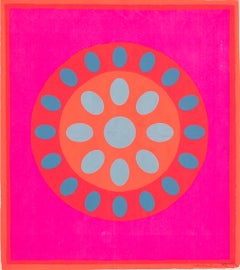
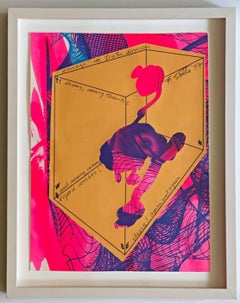
Pink Pop Art "In the Sun", 1960s
Located in Washington, DC
Psychedelic silkscreen work by Noche Crist (1909- 2004). Self printed by the artist. Wonderful work and one of only two remaining from her estate. Image is from her "In the Sun" ser...
Category

1960s Pop Art Abstract Prints

Materials

Paper

Frank Stella, unique paper collage signed and inscribed to museum curator Framed
By Frank Stella
Located in New York, NY
Frank Stella Homage, 1997, 1997 Mixed media with paper collage Signed, dated and inscribed " "Homage" to Dieter Honisch and many many good wishes, cheers again and again Many Many th...
Category

1990s Abstract Expressionist Abstract Drawings and Watercolors

Materials

Paper, Mixed Media

Untitled From: Gates to Times Square (20 screenprints 2 lithographs)
By Chryssa Vardea-Mavromichali
Located in Fairlawn, OH
Untitled From: Gates to Times Square (20 screenprints, two with additional lithography) Silkscreen, c. 1978 Signed in pencil (see photo) Edition 100 (90/100) (see photo) Publisher: P...
Category

1970s Abstract Abstract Prints

Materials

Screen

Sun on Six (Jasper Johns linocut, hand signed and numbered 4/26)
By Jasper Johns
Located in New York, NY
Jasper Johns Sun on Six, 2000 Color linoleum cut on Gampi Torinoko paper Pencil signed, dated and numbered 4/26 on the front Published by Z Press, Calais, Vermont Frame included: ele...
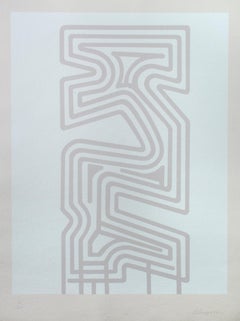
Category

Early 2000s Pop Art Abstract Prints

Materials

Rice Paper, Pencil, Linocut

Shipboard Girl-ORIGINAL Exhibition Poster
By Roy Lichtenstein
Located in Brooklyn, NY
Paper Size: 30.25 x 20 inches ( 76.835 x 50.8 cm ) Image Size: 22 x 16 inches ( 55.88 x 40.64 cm ) Framed: No Condition: B: Very Good Condition, with signs of handling or age Additi...
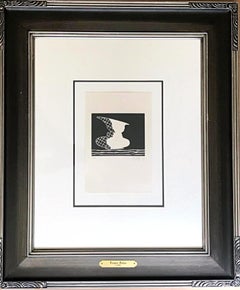
Category

20th Century Pop Art Prints and Multiples

Materials

Offset

CONRAD MARCA-RELLI Limited ed. Etching Aquatint American Modern, Contemporary
By Conrad Marca-Relli 1
Located in Madrid, Madrid
Conrad Marca Relli - Composition I Date of creation: 1977 Medium: Etching and aquatint on Gvarro paper Edition: 75 + AP + HC Size: 56 x 76 cm Condition: In very good conditions and n...
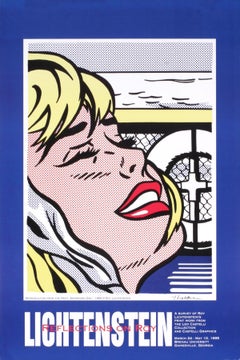
Category

1970s Modern Abstract Prints

Materials

Paper, Etching, Aquatint

Corona I
By Paul Brach
Located in Kansas City, MO
Paul Brach Corona I Year: 1995 4 Color Lithograph Edition: 20 Paper: Rives BFK, White Paper Size: 29.75 x 29.5 inches Image Size: Same Signed and numbered by hand COA provided -----...
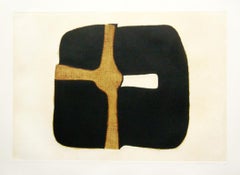
Category

1990s Abstract Abstract Prints

Materials

Lithograph

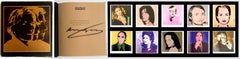
Portraits of the 1970s, Deluxe Monograph + Slipcase Hand Signed/N by Andy Warhol
By Andy Warhol
Located in New York, NY
Andy Warhol Portraits of the 1970s (Deluxe Limited Edition Monograph with Slipcase, Hand Signed and Numbered by Warhol), 1979 Hand Signed and Numbered Hardback Monograph with 120 Bound offset lithographs and text, held in original slipcase (boxed set). Boldly signed by Andy Warhol and numbered 7, from the edition of 200 on the colophon page. 9 1/2 × 8 1/2 × 2 inches Provenance The original (uptown) Whitney Museum An amazing and historic gift! As dazzling as the Warhol show was in 2019 at the new Whitney Museum -- only his show in the late 1970s at the old Whitney Museum, could offer this Deluxe limited edition collectors item - hand signed and numbered by Andy Warhol - because the latter was published during his lifetime. This rare 1979 First (and only) Edition hardback monograph is held in the original slipcase, and is hand signed by Andy Warhol and numbered 108 out of only 200 on the first front end page (see image). This collectors item features text, accompanied by 120 full page color offset lithograph bound, double sided plates on regular pages. (Total pages are: 145) It was published by the Whitney Museum in collaboration with Random House, in conjunction with the exhibition held at the Whitney Museum of American Art, November 20, 1979 to January 27, 1980. Text foreword is by Tom Armstrong, the Whitney's director. Total pages are: 145. The Warhol portraits included are: Giovanni Agnelli, Marella Agnelli, Corice Arman, Marian Block, Irving Blum, Truman Capote, Cristina Caramati, Leo Castelli, Carol Coleman, Norman Fisher, Kay Fortson, Tina Freeman, Diane Von Furstenberg, Henry Geldzahler, Halston, Brooke Hayward...
Category

1970s Pop Art Figurative Prints

Materials

Offset, Lithograph, Pencil, Board, Mixed Media, Ink, Paper

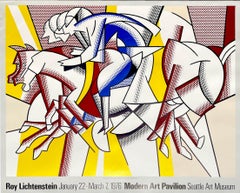
The Red Horsemen Modern Art Pavilion Lt Ed Seattle Art Museum print
By Roy Lichtenstein
Located in New York, NY
Roy Lichtenstein at Modern Art Pavilion, Seattle Art Museum Limited Edition poster, 1976 Offset lithograph Limited Edition of 1000 22 1/2 × 28 inches Unframed, unsigned Publisher Se...
Category

1970s Pop Art Abstract Prints

Materials

Offset

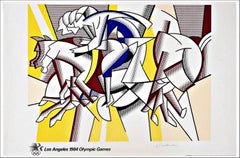
The Red Horsemen (Equestrians) limited edition signed Olympic lithograph w/COA
By Roy Lichtenstein
Located in New York, NY
Roy Lichtenstein The Red Horsemen, aka The Equestrians (with COA from the 1984 Olympic Committee), 1982 Limited Edition Lithograph and offset Lithograph on Parsons Diploma Parchment...
Category

1980s Pop Art Abstract Prints

Materials

Lithograph, Offset

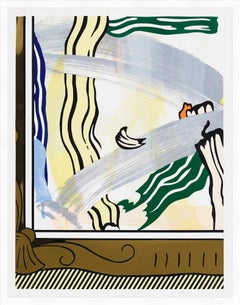
Painting in Gold Frame
By Roy Lichtenstein
Located in Aventura, FL
From the Paintings series. Woodcut, Lithograph, screen print and collage on Arches 88 paper. Hand signed, dated and numbered by Roy Lichtenst...
Category

1980s Pop Art Portrait Prints

Materials

Lithograph, Screen, Woodcut, Paper

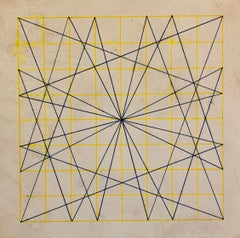
Untitled 1960s Abstract Geometric Expressionist New York Stable Gallery Drawing
By Alvin Dickstein
Located in Surfside, FL
Al Dickstein New York school Abstract Geometric work. Came in with small collection of his work including signed letters and a signeed card and some monogrammed pieces.. Signed with monogram and inscribed and signed verso. Showed at New York's Stable Gallery...
Category

1960s Abstract Geometric Abstract Paintings

Materials

Paper, Color Pencil

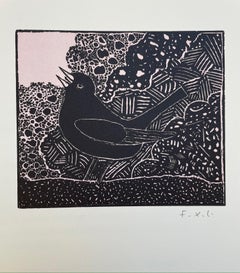
François-Xavier Lalanne (1927-2008) the blackbird -2003
By François-Xavier Lalanne
Located in Saint Ouen, FR
François-Xavier Lalanne (1927-2008) the blackbird, 2003 Techniques : woodcut on paper, hand signed in pencil by François Xavier Lalanne, in perfect condition Dimensions of the paper...
Category

Early 2000s Surrealist Figurative Prints

Materials

Paper

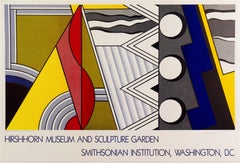
Abstract , Signed Pop Art Exhibition Poster, Guggenheim, Venice Biennale, Clef
By Roy Lichtenstein
Located in Santa Cruz, CA
Vintage, 1987, Smithsonian exhibition poster for the Hirshhorn Museum; signed, lower right, in pencil, 'R. Lichtenstein' for Roy Lichtenstein (American, 1923-1997) and accompanied by...
Category

1980s Pop Art Abstract Prints

Materials

Paper, Offset

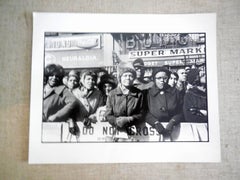
Malcolm X Funeral Signed Vintage Silver Gelatin print
By Fred McDarrah
Located in Surfside, FL
Malcolm X Funeral signed in ink Veteran Village Voice photographer Fred W. McDarrah Over a 50-year span, McDarrah documented the rise of the Beat Generation, the city’s postmodern ...
Category

1960s Black and White Photography

Materials

Silver Gelatin

1970 James Rosenquist Horizon Pop Art Multicolor, Pink USA Offset Lithograph
By James Rosenquist
Located in Brooklyn, NY
Paper Size: 21 x 27 inches ( 53.34 x 68.58 cm ) Image Size: 21 x 27 inches ( 53.34 x 68.58 cm ) Framed: No Condition: A: Mint Additional Details: First edition exhibition poste...
Category

1970s Prints and Multiples

Materials

Offset

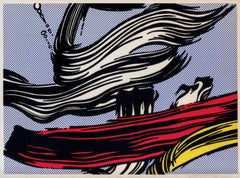
Brushstrokes
By Roy Lichtenstein
Located in New York, NY
Brushstrokes was created by Roy Lichtenstein in 1967 as a screenprint in colors on wove paper, and is hand-signed and numbered in pencil. Measuring 23 x 31 in. (58.4 x 78.7 cm), unf...
Category

20th Century Contemporary Prints and Multiples

Materials

Screen

LANDSCAPE 8
By Roy Lichtenstein
Located in Aventura, FL
Hand signed, numbered and dated on verso. Landscape 8, from Ten Landscapes (C. 58). Iridescent silver Mylar collage on opaque black Rowlux and gray moire Rowlux. The full sheet, moun...
Category

1960s Pop Art Figurative Prints

Materials

Mylar

Untitled (INV# NP5778) by Ken Price
By Ken Price
Located in Morton Grove, IL
Ken Price (1935-2012) screenprints in colors on Arches France paper 14 x 11” signed and dated in pencil stamped by Ken Price and Black Sparrow Graphic Arts edition of 170, # 45/170 ...
Category

1990s Contemporary Nude Prints

Materials

Screen

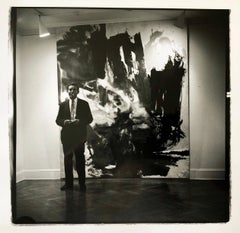
Vintage Print Silver Gelatin Signed Photograph Friedl Dzubas New York Artist
By Fred McDarrah
Located in Surfside, FL
This is a photo of Friedl Dzubas (Abstract Expressionist) at Castelli Gallery, signed in ink and with photographer stamp verso and hand written title.. Over a 50-year span, McDarra...
Category

1950s American Modern Black and White Photography

Materials

Black and White, Silver Gelatin

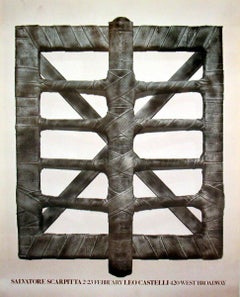
Salvatore Scarpitta At Castelli s 1980- Vintage Poster
Located in Brooklyn, NY
This original exhibition poster was created for Salvatore Scarpitta’s 1980 show at Leo Castelli Gallery. Known for his innovative use of materials, Scarpitta’s work often blurred the...
Category

1980s Prints and Multiples

Materials

Offset

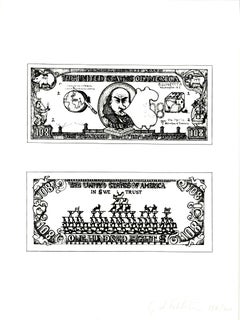
One Hundred and Eight Inflated Dollars, Sonnabend Castelli Collection Signed/N
By Oyvind Fahlstrom
Located in New York, NY
Öyvind Fahlström One Hundred and Eight Inflated Dollars, from the Collection of Ileana Sonnabend and the Estate of Nina Castelli, 1973 Lithograph on rag paper. Signed. Numbered. in o...
Category

1970s Pop Art Figurative Prints

Materials

Rag Paper, Lithograph

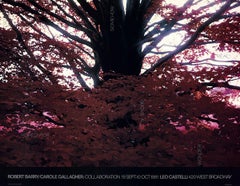
Robert Barry Hoped For... 1981- Vintage
By Robert Barry
Located in Brooklyn, NY
This exhibition poster was created for a show held at Leo Castelli Gallery from September 19 to October 10, 1981. Designed by Richard Haynes & Co., the poster captures the bold and m...
Category

1980s Contemporary Prints and Multiples

Materials

Offset

Near and Far Acuity, Signed Mid Century Modern Op Art painting, historic exhibit
By Richard Anuszkiewicz
Located in New York, NY
Richard Anuszkiewicz Near and Far Acuity, 1957 Gouache and watercolor painting on board Hand signed and dated 1957 by Richard Anuszkiewicz on the right front Frame included Anuszkie...
Category

Mid-20th Century Op Art Abstract Drawings and Watercolors

Materials

Mixed Media, Watercolor, Gouache

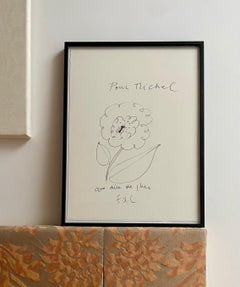
Lalanne, ink drawing
By François-Xavier Lalanne
Located in Saint Ouen, FR
François-Xavier Lalanne (1927-2008), original ink drawing, 2004 This unique work signed by François Xavier Lalanne is an original ink drawing depicting a bee on a beautiful flower. ...
Category

Early 2000s Surrealist Figurative Drawings and Watercolors

Materials

Paper

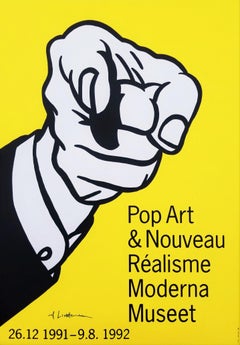
Pop Art Nouveau Réalisme Moderna Museet (Finger Pointing) Poster (Signed)
By Roy Lichtenstein
Located in Saint Augustine, FL
Artist: (after) Roy Lichtenstein (American, 1923-1997) Title: "Pop Art & Nouveau Réalisme Moderna Museet (Finger Pointing)" *Signed by Lichtenstein in black marker lower left Year: 1...
Category

1990s Pop Art Figurative Prints

Materials

Screen

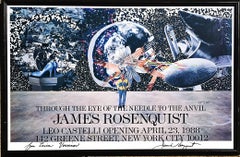
Through the Eyes of the Needle to the Anvil (Hand signed by James Rosenquist)
By James Rosenquist
Located in New York, NY
James Rosenquist Rosenquist at Leo Castelli (Hand Signed and inscribed by James Rosenquist), 1988 Offset Lithograph Poster (Hand Signed and Dedicated) Frame included: held in original vintage frame under plexiglass A collectors' item when hand signed by the artist as the present work Early historic Leo Castelli exhibition poster published on the occasion of the James Rosenquist exhibition "Through the Eye of the Needle...
Category

1980s Pop Art Abstract Prints

Materials

Permanent Marker, Lithograph, Offset

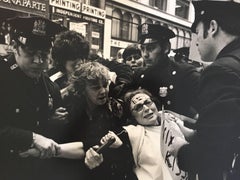
Feminist Protesting Vietnam War
By Fred McDarrah
Located in Surfside, FL
Feminist T. Grace Atkinson Being Arrested As She Demonstrates Against Richard Nixon's War in Vietnam October 23, 1972 Over a 50-year span, McDarrah documented the rise of the Beat ...
Category

20th Century American Modern Black and White Photography

Materials

Black and White, Silver Gelatin

Still Thinking About These?

All Recently Viewed