212 results for "kuniyoshi"

to
26
163
31
137
81
74
42
32
21
18
13
13
12
12
12
11
9
9
8
8
7
5
5
3
3
3
2
1
1
1
1
1
23
16
14
13
6
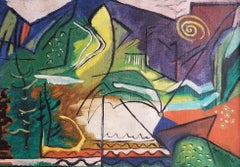
The Fern
By Agnes Hart
Located in Saratoga Springs, NY
Signed lower right Agnes Hart was born in Meridan, Connecticut. She studied at the Ringling School of Art in Sarasota, Florida; at Iowa State University with Josef Presser, Paul Burlin and Lucile...
Category

1940s Abstract Expressionist Abstract Paintings

Materials

Canvas, Oil

Page from "Spring View in Takanawa" Mid 18th Century Ukiyo-e Print
By Utagawa Kunisada (Toyokuni III)
Located in Soquel, CA
Page from "Spring View in Takanawa" Mid 18th Century Ukiyo-e Print Left page from the triptych print "Spring View in Takanawa" by Utagawa Kunisada (Toyokuni III) (Japanese b. 1786 d...
Category

1840s Edo Figurative Prints

Materials

Printer s Ink, Mulberry Paper, Woodcut
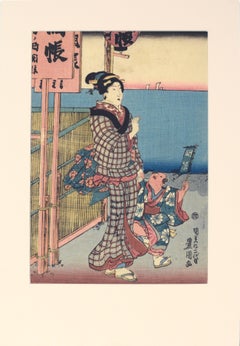
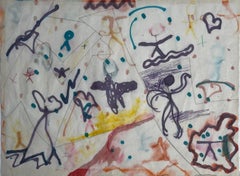
Untitled Abstract Expressionist watercolor, pencil signed, Japanese-American art
By Taro Yamamoto
Located in New York, NY
Taro Yamamoto Untitled Abstract Expressionist watercolor, ca. 1957 Watercolor wash, drips & splatter on rice paper Pencil signed on the front 12 × 16 inches Unframed Mid century mod...
Category

Mid-20th Century Abstract Expressionist Abstract Drawings and Watercolors

Materials

Watercolor, Rice Paper, Pencil

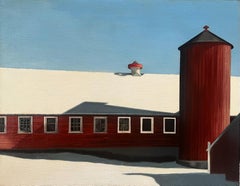
Snowy Barn #2
By Marina Stern
Located in Los Angeles, CA
Snowy Barn #2, 1971, oil on canvas, signed and dated verso, 18 x 23 inches Marina Stern was a multifaceted New York-based artist whose works ranged from Expressionism and Pop Art to the Neo Immaculate paintings and pastels for which she is best known. A native of Venice, Stern and her family fled in 1939 to escape Italy’s repressive racial laws. After living in England for several years, the family arrived in the United States in 1941. A bright and capable student, Stern graduated from New York’s Julia Richman High School at age 15 and soon enrolled in the Pratt Institute to pursue an interdisciplinary education in the arts. Despite majoring in advertising design, Stern favored her fine art courses. She graduated from Pratt in 1946 at age 18 and began working for advertising agencies. After a brief marriage which ended in divorce, Stern married her second husband, who encouraged the artist to study at the Art Students League of New York, under the renowned Japanese American modernist, Yasuo Kuniyoshi. In Fall 1953, Stern gave birth to her first child, Michael, as she continued to study at the Arts Students League. Later in the Spring of 1957, Stern gave birth to her daughter Nina, as she continued to balance motherhood with her fine art practice and commercial art and design work. Stern’s first significant exhibitions were in 1962 at the Waverly Gallery and the Osgood Gallery, both in New York, followed by inclusion of her work in the Bertha Schaefer Traveling Collage Show from 1963 to 1964. Stern made a splash in the avant-garde art world in 1964 when Time magazine reviewed a show at Amel Gallery which featured three of her audio-visual paintings. Time’s critic noted that Stern created the “cleverest noisemakers” in the exhibition. Time dubbed this work “Talkie Pop,” a label which Stern rejected. Following this recognition, Stern was selected for inclusion in The New American Realism at the Worcester Art Museum—a major showcase of leading artists, including Andy Warhol, Robert Indiana, Roy Lichtenstein, and Jasper Johns. After the Worcester exhibition, Stern began to shift away from her “talking” Pop paintings to mysterious, interior scenes with orange, blue or black walls with windows or doors rising above black and white floors, often depopulated, but sometimes with figures. One of these works, Seven Minus Twenty-One Equals Seven, entered the permanent collection of New York’s Museum of Modern Art in 1966. By 1969, Stern began to incorporate industrial images into these scenes, and in the early 1970s, Stern created her first Neo-Immaculate works of rural, and urban landscapes, which she described as her most satisfying work. Stern often depicted locations that she held close -- New York, New Jersey, Iowa (where her son attended college), Sharon, Connecticut (where her family spent weekends and vacations) and her native Venice, Italy. Stern’s success as a Neo Immaculate painter led to consistent New York gallery representation for over two decades, first with Lee Ault Co and James Yu Gallery, and then Forum Gallery, where she had six solo shows. In 1971, Stern completed a Neo-Immaculate mural commission for the Port Authority of New York, George Washington Bridge #1 and #2, followed by another commission from the NY Cityarts Public Art Program in 1976 for a mural on Mulberry Street. Stern also enjoyed solo exhibitions in Boston (Eleanor Rigelhaupt Gallery), Connecticut (Silo Gallery, the Hotchkiss School, J. Rosenthal Fine Arts Gallery, Tremaine Gallery, and Staib Gallery), Chicago (Michael Rosenfeld Gallery), and Santa Fe (Santa Fe East Gallery). Her work was included in group shows at over a dozen public institutions, including The National Academy of Design, The Staten Island Museum, Worcester Art Museum, the Oklahoma Art Center, and the Arkansas Art Center. The Southern Alleghenies Museum of Art hosted a retrospective of four decades of Stern’s work from January 19 to April 22, 2007, entitled Perception and the Cultural Environment: The Paintings of Marina...
Category

1970s American Modern Landscape Paintings

Materials

Oil, Canvas

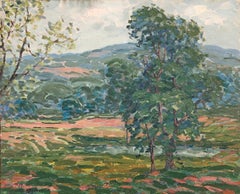
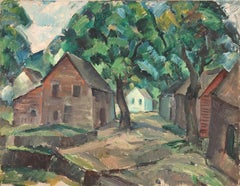
"Woodstock Landscape" Albert Heckman, Modernist, Bright Landscape
By Albert Heckman
Located in New York, NY
Albert Heckman Woodstock Landscape Oil on board 8 1/2 x 10 1/2 inches Albert Heckman was born in Meadville, Western Pennsylvania, 1893. He went to New York City to try his hand at ...
Category

1940s American Modern Figurative Paintings

Materials

Oil, Board

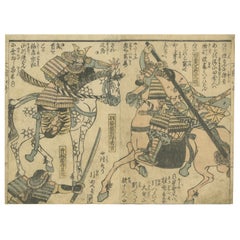
Samurai Warriors in Battle – Early Edo Woodblock, School of Katsukawa, c.1780
Located in Langweer, NL
Title: Samurai Battle Scene – School of Katsukawa, Precursor to Kuniyoshi’s Warrior Prints, c.1780 Description: This dramatic Japanese woodblock print from the late Edo period (circ...
Category

Antique 1780s Japanese Prints

Materials

Paper

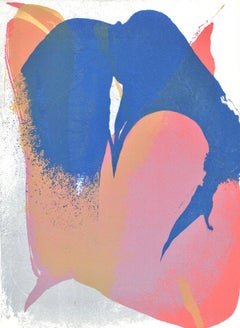
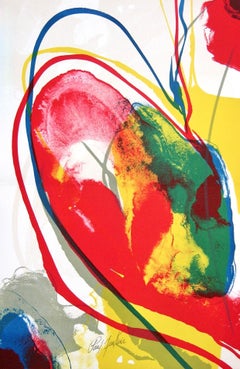
Paul Jenkins, Untitled, from Prints from the Mourlot Press, 1964
By Paul Jenkins
Located in Southampton, NY
This exquisite lithograph by Paul Jenkins (1923–2012), titled Sans titre (Untitled), from the album Prints from the Mourlot Press, exhibition sponsored by the French Embassy, circula...
Category

1960s Abstract Expressionist Abstract Prints

Materials

Lithograph

Hiroshi Honda Signed Japanese American Mid-Century Modern Abstract Oil Painting
Located in Studio City, CA
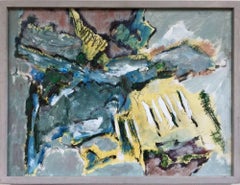
A beautiful and very engaging original oil on canvas painting my Japanese American artist Hiroshi Honda (1910-1970). The bold colors and abstract design are really quite striking. ...
Category

Mid-20th Century American Mid-Century Modern Paintings

Materials

Canvas, Wood, Paint

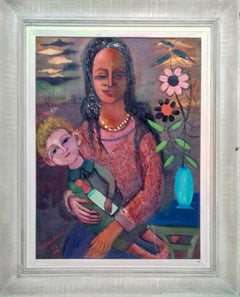
American WPA Jewish New York Modernist Madonna Mother and Child painting
By Nahum Tschacbasov
Located in Norwich, GB
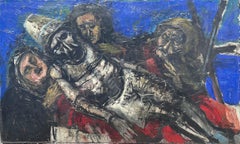
A magnificent oil on canvas by Russian American WPA artist Nahum Tschacbasov (1899-1984), dating from 1943. Depicting a Maternity scene - or possibly a m...
Category

1940s American Modern Figurative Paintings

Materials

Canvas, Oil

Lithograph Belgian American Surrealism WPA Modernist Karl Fortess Surrealist Art
Located in Surfside, FL
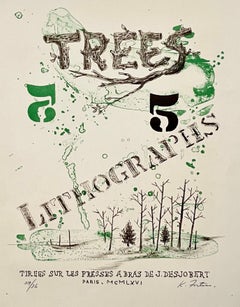
Karl Eugene Fortess (1907-1993) Original color lithographs on BFK Rives paper, 1966, Hand signed and numbered 29/36 in pencil, Sheet size 20.5 x 15 inches. Karl E. Fortess (1907-1993) was a painter, printmaker and teacher, of Boston, Massachusetts and Woodstock, N.Y. Fortess was born in Antwerp, Belgium on October 13, 1907, and became an American citizen in 1923. He studied at the Art Institute of Chicago, the Art Students League in New York, and the Woodstock School of Painting with Yasuo Kuniyoshi. In 1937 the Works Progress Administration sent him and several other artists to Alaska to document the towns, villages, and remote wilderness landscapes (Pemberton, “Alaska art museum collects WPA’s Depression works from the territory,” Columbia Daily Tribune, November 9, 2003). Trains, trucks, and industrial buildings were what Karl Fortess envisioned when the Public Works of Art Project suggested that he depict “the American Scene.” His work bears the influence of Surrealism, Russsian Constructivist art and Cubism. He was part of a circle of left leaning artists loosley involved with the WPA which included Sol Wilson, Isaac Soyer, Louis Lozowick, Abraham Harriton, Ben Shahn, William Gropper, Nahum Tschacbasov, Morris Shulman, Yasuo Kuniyoshi, Louis Slobodkin, Adolf Dehn, Le Corbusier and Louis Schanker. Karl Fortress taught at the Art Students League, Brooklyn Museum Art School, Louisiana State University, Fort Wright College, and Boston University School of Fine and Applied Arts. He was a member of the Artists Equity Association, Society of American Graphic Artists, American Association of University Professors, and the British Film Institute. He was awarded the Guggenheim Fellowship in 1946, was named an Associate of the National Academy of Design in 1960 and elected to full Academician in 1971. Fortess taught at many different schools, including Boston University School of Fine Art, where he also created an archive of interviews with more than two hundred and fifty contemporary American painters, sculptors, and graphic artists including many with with artists associated with the Woodstock, N.Y. art community. Among the interviewees are Kenneth Armitage, Will Barnet, Romare Bearden, George Biddle, James Brooks, Adolph Dehn, Jane Freilicher, Julian Levi, Alice Neel, Larry Rivers, Moses Soyer, Dorothy Varian...
Category

Mid-20th Century Surrealist Landscape Prints

Materials

Lithograph

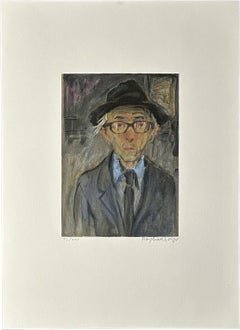
Self Portrait 1980 Signed Limited Edition Lithograph
By Raphael Soyer
Located in Rochester Hills, MI
Artist: Raphael Soyer Title: Self Portrait Year: 1980 Print : Lithograph on Arches Archival Paper 22'' x 16'' inches Edition: Signed in pencil and marked 52/250 Image size : 11...
Category

1980s Portrait Prints

Materials

Lithograph

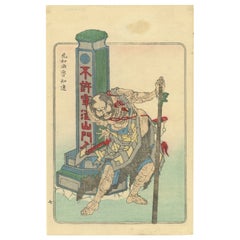
Japanese Edo Warrior Print – Temple Guardian with Halberd, c.1850
Located in Langweer, NL
Title: Japanese Edo Warrior Print – Temple Guardian with Halberd, c.1850 Description: This striking Japanese woodblock print from the late Edo period, circa 1850, depicts a fierce t...
Category

Antique Mid-19th Century Japanese Prints

Materials

Paper

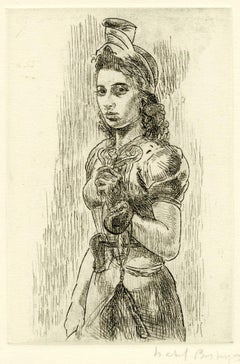
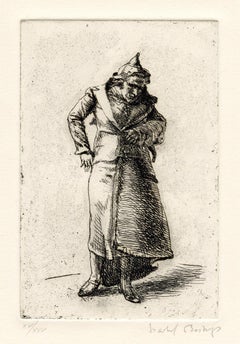
Fourteenth Street Oriental
By Isabel Bishop
Located in Middletown, NY
New York: Associated American Artists, 1950. Drypoint and aquatint on white wove paper, 5 7/8 x 3 15/16 inches (150 x 100 mm), full margins. Signed in pencil in the lower margin. Pri...
Category

Mid-20th Century American Realist Portrait Prints

Materials

Drypoint, Aquatint

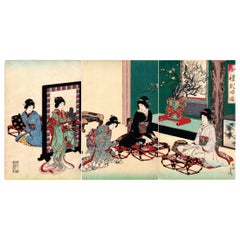
Original Japanese Triptych Color Woodblock Print by Toyohara Chikanobu
Located in Norton, MA
Original Japanese Triptych Color Woodblock Print by Toyohara Chikanobu - Title: New Year's Dishes: Etiquette of a Lady - Publisher: Takekawa Unosuk...
Category

Antique Late 19th Century Japanese Prints

Materials

Paper

Untitled Sketch Men with Oxen by Harold Stevenson, Pencil Drawing on Paper
Located in Oklahoma City, OK
This 45" x 31" work was drawn by Harold Stevenson in 1983 and is presented in a multi-matted black frame. The drawing depicts three standing figures, each adorned in classical-style ...
Category

1980s Minimalist Figurative Drawings and Watercolors

Materials

Paper, Pencil

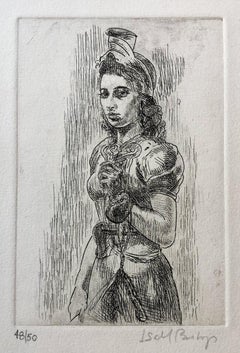
14th Street Oriental
By Isabel Bishop
Located in Middletown, NY
New York, Associated American Artists, 1950. Drypoint and aquatint on cream wove paper, 5 7/8 x 3 15/16 inches (150 x 100 mm), full margins. Signed and numbered 48/50 in pencil, lower margin. Printed by Stephen Sholinsky...
Category

Mid-20th Century American Modern Portrait Prints

Materials

Drypoint, Aquatint

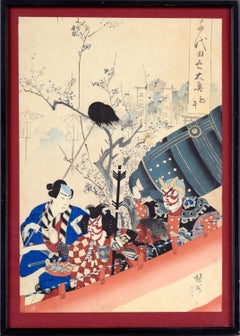
"First Horse Day, 1896" - Chiyoda Palace - Japanese Woodblock by Chikanobu Yoshu
By Toyohara Chikanobu
Located in Soquel, CA
"First Horse Day, 1896" - Chiyoda Palace - Japanese Woodblock by Chikanobu Yoshu Colorful and expressive court scne by Toyohara Chikanobu,"Yoshu" (Japanese, 1838-1912). This is the r...
Category

1890s French School Figurative Prints

Materials

Ink, Rice Paper, Woodcut

Putting on the Coat
By Isabel Bishop
Located in Middletown, NY
A bright and silvery impression with warm plate tone by a female icon of the Union Square group. New York: Associated American Artists, 1943. Etching on cream wove paper, 5 7/8 x 3 ...
Category

Mid-20th Century American Modern Portrait Prints

Materials

Etching

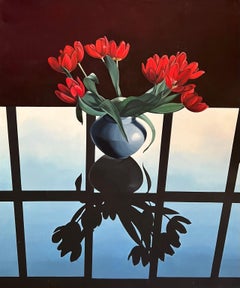
Red Tulips
By Marina Stern
Located in Los Angeles, CA
Red Tulips, 1987, oil on canvas, signed and dated verso, 40 x 34 inches, exhibited: Marina Stern Venice – New Works, Forum Gallery, New York, N.Y., from March 4 to April 1, 1989 (label verso) Marina Stern was a multifaceted New York-based artist whose works ranged from Expressionism and Pop Art to the Neo Immaculate paintings and pastels for which she is best known. A native of Venice, Stern and her family fled in 1939 to escape Italy’s repressive racial laws. After living in England for several years, the family arrived in the United States in 1941. A bright and capable student, Stern graduated from New York’s Julia Richman High School at age 15 and soon enrolled in the Pratt Institute to pursue an interdisciplinary education in the arts. Despite majoring in advertising design, Stern favored her fine art courses. She graduated from Pratt in 1946 at age 18 and began working for advertising agencies. After a brief marriage which ended in divorce, Stern married her second husband, who encouraged the artist to study at the Art Students League of New York, under the renowned Japanese American modernist, Yasuo Kuniyoshi. In Fall 1953, Stern gave birth to her first child, Michael, as she continued to study at the Arts Students League. Later in the Spring of 1957, Stern gave birth to her daughter Nina, as she continued to balance motherhood with her fine art practice and commercial art and design work. Stern’s first significant exhibitions were in 1962 at the Waverly Gallery and the Osgood Gallery, both in New York, followed by inclusion of her work in the Bertha Schaefer Traveling Collage Show from 1963 to 1964. Stern made a splash in the avant-garde art world in 1964 when Time magazine reviewed a show at Amel Gallery which featured three of her audio-visual paintings. Time’s critic noted that Stern created the “cleverest noisemakers” in the exhibition. Time dubbed this work “Talkie Pop,” a label which Stern rejected. Following this recognition, Stern was selected for inclusion in The New American Realism at the Worcester Art Museum—a major showcase of leading artists, including Andy Warhol, Robert Indiana, Roy Lichtenstein, and Jasper Johns. After the Worcester exhibition, Stern began to shift away from her “talking” Pop paintings to mysterious, interior scenes with orange, blue or black walls with windows or doors rising above black and white floors, often depopulated, but sometimes with figures. One of these works, Seven Minus Twenty-One Equals Seven, entered the permanent collection of New York’s Museum of Modern Art in 1966. By 1969, Stern began to incorporate industrial images into these scenes, and in the early 1970s, Stern created her first Neo-Immaculate works of rural, and urban landscapes, which she described as her most satisfying work. Stern often depicted locations that she held close -- New York, New Jersey, Iowa (where her son attended college), Sharon, Connecticut (where her family spent weekends and vacations) and her native Venice, Italy. Stern’s success as a Neo Immaculate painter led to consistent New York gallery representation for over two decades, first with Lee Ault Co and James Yu Gallery, and then Forum Gallery, where she had six solo shows. In 1971, Stern completed a Neo-Immaculate mural commission for the Port Authority of New York, George Washington Bridge #1 and #2, followed by another commission from the NY Cityarts Public Art Program in 1976 for a mural on Mulberry Street. Stern also enjoyed solo exhibitions in Boston (Eleanor Rigelhaupt Gallery), Connecticut (Silo Gallery, the Hotchkiss School, J. Rosenthal Fine Arts Gallery, Tremaine Gallery, and Staib Gallery), Chicago (Michael Rosenfeld Gallery), and Santa Fe (Santa Fe East Gallery). Her work was included in group shows at over a dozen public institutions, including The National Academy of Design, The Staten Island Museum, Worcester Art Museum, the Oklahoma Art Center, and the Arkansas Art Center. The Southern Alleghenies Museum of Art hosted a retrospective of four decades of Stern’s work from January 19 to April 22, 2007, entitled Perception and the Cultural Environment: The Paintings of Marina...
Category

1980s American Modern Still-life Paintings

Materials

Oil, Canvas

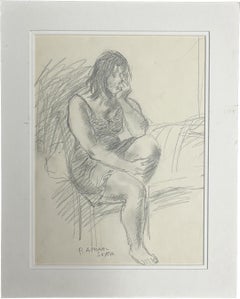
Woman Graphite Pencil Drawing 1979 Signed Unique
By Raphael Soyer
Located in Rochester Hills, MI
Artist : Raphael Soyer Title : Woman Year: 1979 Drawing in Pencil Signed in pencil Drawing Size 11½" x 16 Inches Matted Size : inches 16" x 20" inches Born in 1899, Raphael So...
Category

1970s American Realist Figurative Drawings and Watercolors

Materials

Graphite

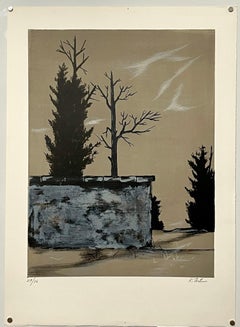
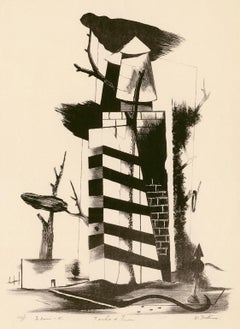
Tanks Trees — Mid-century American Surrealism
Located in Myrtle Beach, SC
Karl Eugene Fortess, 'Tanks & Trees', lithograph, c. 1940, edition 100. Signed, titled, and numbered '100/P' in pencil. Inscribed 'For Usui - K.' in the bottom left margin. A fine, richly-inked impression, on cream wove paper, with full margins (1 1/2 to 2 1/2 inches); a slight crease across the top right sheet corner, well away from the image; otherwise in excellent condition. Image size 13 1/8 x 10 inches; sheet size 17 3/8 x 13 3/16 inches. Matted to museum standards, unframed. Provenance: Estate of Francis Pratt. Francis and her husband Bumpei Usui...
Category

1940s Surrealist Figurative Prints

Materials

Lithograph

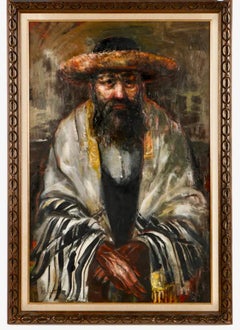
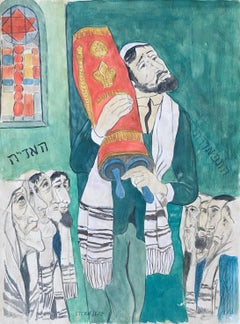
Large Judaica Oil Painting Rabbi Rediscovered NY Artist Simchat Torah
By Jonah Kinigstein
Located in Surfside, FL
"Simchat Torah" by Jonah Kinigstein Large Oil on Board Painting of Rabbi Frame: 46 X 32 Image: 39 X 25.5 Jonah Kinigstein (b. 1923) is an American Postwar & Contemporary painter. H...
Category

20th Century Expressionist Portrait Paintings

Materials

Oil, Board

California Coastal Diptych , Berkeley, Bay Area Woman Artist, Smithsonian, CCAC
Located in Santa Cruz, CA
Signed lower right, second panel, 'Isabelle Schrock' for Isabelle Schrock Barnett (American, 1903-1995) and painted circa 1975. Additionally s...
Category

1970s Impressionist Landscape Drawings and Watercolors

Materials

Varnish, Watercolor, Gouache, Board, Laid Paper
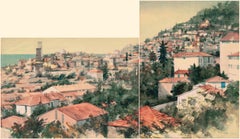
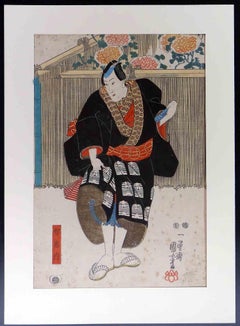
Theater Actor in Black Coat on Stage- Woodcut by Utagawa Kunisada - 19th Century
By Utagawa Kunisada III
Located in Roma, IT
This figuration of a theater actor in a black coat on stage is the work of the Japanese artist Utagawa Kuniyoshi /1798-1861). The brilliance of the colors, the graphic precision as ...
Category

19th Century Old Masters Figurative Prints

Materials

Woodcut

"Low Tide at Noon, Wellfleet, Massachusetts, " Ernest Fiene, WPA, Boat on Beach
By Ernest Fiene
Located in New York, NY
Ernest Fiene (1894 - 1965) Low Tide at Noon, Wellfleet, Massachusetts Oil on canvas 26 x 36 inches Signed lower right Ernest Fiene was born in Elberfeld, Germany in 1894. As a teenager, Fiene immigrated to the United States in 1912. He studied art at the National Academy of Design in New York City from 1914 to 1918, taking day classes with Thomas Maynard and evening classes with Leon Kroll. Fiene continued his studies at the Beaux-Arts Institute of Design in Paris from 1916 to 1918, adding classes in printmaking at the Art Students League in 1923. Fiene began his career as an artist in 1919 with his first exhibition of watercolors at the MacDowell Club arranged by his mentor Robert Henri. In 1923 the Whitney Studio Club mounted a large exhibition of his works. The following year he had an exhibition at the New Gallery in New York, which completely sold out all fifty-two works, including paintings, watercolors, drawings, and etchings. With the proceeds of sales from the New Gallery exhibition, Ernest Fiene and his younger brother Paul, a sculptor, built studios in Woodstock, New York in 1925. In the early Twenties Ernest Fiene painted mostly landscapes of Woodstock and both the Ramapo and Hudson River Valleys. He was the subject of the first monograph for the Younger Artists Series in 1922. Published in Woodstock, the series went on to include Alexander Brook, Peggy Bacon, and Yasuo Kuniyoshi. The book reproduced 1 illustration in color and another 27 reproductions in black and white. Around 1925 Fiene became fascinated with the intensity, excitement, and opportunities for color harmonies New York City offered as a subject. His paintings shifted to urban and industrial themes with architecture, industry, and transportation becoming his subjects. By 1926 Fiene had attracted the dealer Frank K.M. Rehn, who gave him a one-man exhibition that year, which travelled to the Boston Arts Club. C.W. Kraushaar Galleries gave Fiene a one-man exhibition of urban, landscape, portrait, and still life paintings in 1927. Julianna Force, the director of the Whitney Studio Club and first director of the Whitney Museum of American Art, included two of Fiene's paintings in a fall exhibition in 1928. The Whitney Studio Club showed Fiene's paintings in a two-man exhibition with Glenn O. Coleman that year and acquired three of Fiene's paintings. Also in 1928 Fiene became affiliated with Edith Halpert's Downtown Gallery where he had an exhibition of 20 lithographs in the spring. Fiene sold his house in Woodstock in 1928 to spend more of his time in New York City. With so many successful exhibitions, Fiene returned to Paris in 1928-29 where he rented Jules Pascin's studio and studied at the Académie de la Grande Chaumière. In France, Fiene painted both landscape and urban subjects developed from ideas influenced by Cubist geometry and the use of flat areas of broad color. Upon returning to New York in 1930, Fiene used this new approach to continue to paint New York skyscraper and waterfront subjects, as well as to begin a series of paintings on changing old New York based on the excavations for Radio City Music Hall and the construction of the Empire State Building. Frank K.M. Rehn Galleries exhibited this series, titled "Changing Old New York," in 1931. Fiene also has solo exhibitions at Rehn Galleries in 1930 and 1932. Fiene's oil paintings are exhibited at the Chicago Arts Club in 1930 as well. Fiene was included in the Museum of Modern Art's exhibition Painting and Sculpture by Living Americans in December of 1931. Visiting New York, Henri Matisse saw the exhibition and called Fiene's Razing Buildings, West 49th Street the finest painting he had seen in New York. Fiene had two mural studies from his Mechanical Progress series exhibited at the Museum of Modern Art's exhibition Murals by American Painters and Photographers in 1932. Fiene sent View from my Window which depicts Fiene working on a lithograph stone while looking out his window to the newly completed Empire State Building to the Carnegie International in 1931. In 1932 Fiene participated in the first Biennial of American Painting at the Whitney Museum and his prints were included in exhibitions at the Downtown Gallery and the Wehye Gallery. In the same year, Fiene was awarded a Guggenheim fellowship to further study mural painting in Florence, Italy. On his return from Italy in 1933 Fiene re-engaged himself in New York City life and won several public and private mural projects. Fiene resumed his active exhibition schedule, participating in two group exhibitions at the Whitney Museum and a one-man exhibition of recent paintings at the Downtown Gallery in January 1934. In 1933 he purchased a farm in Southbury, Connecticut, which added Connecticut scenes to his landscape subjects. This was also the year Fiene began to spend summers on Monhegan Island, Maine, where he painted seascapes, harbor scenes, and still lifes. Fiene's landscape paintings attracted numerous commissions as part of the American Scene movement. From 1935-36 Fiene took an extended sketching trip through the urban, industrial, and farming areas of Pennsylvania and West Virginia. Most of the twenty-four Pennsylvania urban and rural paintings from this trip were featured in an exhibition held at the First National Bank in Pittsburgh in October of 1937 by the Pittsburgh Commission for Industrial Expansion. Fiene said of these works that he formed rhythm, opportunity for space and color, and integrity in the Pennsylvania mill and furnace paintings. Fiene received the silver medal for one of the Pittsburgh paintings...
Category

Mid-20th Century American Realist Landscape Paintings

Materials

Canvas, Oil

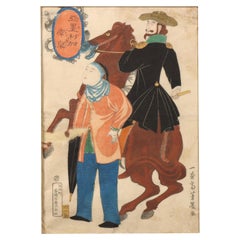
Antique Woodblock Print, People from Foreign Lands: American and Chinese, 1861
Located in Amsterdam, Noord Holland
Antique Edo Woodblock, People from Foreign Lands: American and Chinese, 1861 The work Year: Bunkyu 1st year Dimensions: Large Printing: Good Yoshiiku was a disciple of Kuniyoshi and...
Category

Antique 19th Century Edo Prints

Materials

Porcelain

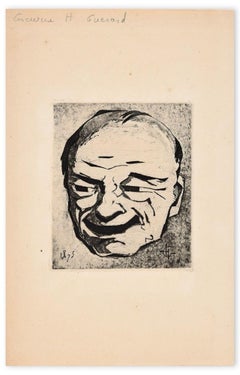
Japanese Mark - Original Etching bu H. C. Guérard - 1875
Located in Roma, IT
Image dimensions: 13.5 x 11.5 cm. Japanese Mask is a beautiful etching realized by the French painter, engraver, lithographer, and typographer Henri Charles Guérard...
Category

1870s Modern Figurative Prints

Materials

Etching

Spring
By Konrad Cramer
Located in New York, NY
Oil on masonite Signed and dated, l.r. This painting is offered by ClampArt, located in New York City. About the artist: Konrad Cramer grew up in Wurtzburg, Germany, and attended the Karlsruhe Academy. He was a member of Der Blaue Reiter...
Category

1940s Modern Abstract Paintings

Materials

Masonite, Oil

Minna Citron, Lambs Creel
By Minna Citron
Located in New York, NY
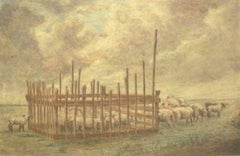
This serene subject, the Lambs' Creel relates to Minna Citron's mural project focusing on the Tennessee Valley Authority. It was such a new ...
Category

1940s American Realist Animal Paintings

Materials

Oil

Paul Jenkins, Composition for Eric, from Memories and Portraits of Artists, 1972
By Paul Jenkins
Located in Southampton, NY
This exquisite lithograph by Paul Jenkins (1923–2012), titled Composition pour Eric (Composition for Eric), originates from the 1972 edition published by Editions A. C. Mazo et Cie.,...
Category

1970s Abstract Expressionist Abstract Prints

Materials

Lithograph

Taro Yamamoto 1953 Provincetown Mixed Media Painting "Dover England"
By Taro Yamamoto
Located in New Windsor, NY
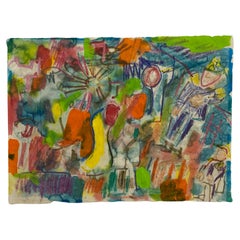
Signed Taro Yamamoto (1919-1994) abstract mixed media (water color and conte crayon or pastel) on paper. Circa 1953. A wonderful and wildly naive rendering entitled, Dover, England. ...
Category

Vintage 1950s American Mid-Century Modern Paintings

Materials

Paint, Paper

Haitian Scene #7 Signed Mid Century modern painting, Associated American Artists
By Adolf Dehn
Located in New York, NY
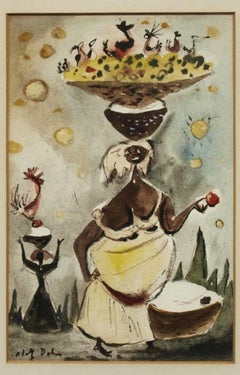
Adolf Arthur Dehn Haitian Scene #7, ca. 1951 Watercolor gouache, hand signed; framed with AAA Gallery label verso Signed on the front bearing the original label on the verso of Dehn'...
Category

Mid-20th Century Modern Figurative Paintings

Materials

Mixed Media, Watercolor, Gouache

Recling Female Nude, seen from the rear
By Emil Ganso
Located in Fairlawn, OH
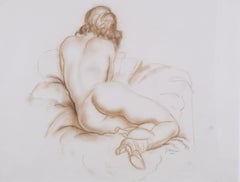
Recling Female Nude, seen from the rear Conte crayon on paper. c. 1936 Signed "Ganso" right (see photo) Illustrated: Esquire Magazine, "Emil Ganso, Handy Artist", July 1938, pages 58...
Category

1930s American Modern Nude Drawings and Watercolors

Materials

Crayon

Village by a Road
Located in San Francisco, CA
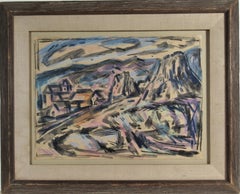
This artwork titled "Village by a Road" c 1940 is a watercolor on paper by noted artist Donald Jeffries Bear 1905-1952. It is signed in pencil at the lower right corner by the artist. The artwork size is 10.65 x 14.5 inches, framed size is 17 x 21 inches. Framed in original frame. The artwork is in good condition, paper is toned by time, the four extreme corners are slightly discolored by hanging tape. The frame is also in good condition with minor dents, the linen is slightly discolored by time. The item is over all in good condition. About the artist. Donald Jeffries Bear, the Santa Barbara Museum of Art's founding director from 1940 to 1952, was born on this day, February 5, 1905, in Terre Haute, Indiana. He previously served as the Director of the Denver Art Museum (1935-1940), regional advisor for the Federal Art Project (1935-38), and as principal of the World's Fair in New York (1938-39). While director of the SBMA, Bear served as president of the Western Association of Art Directors from 1943 to 1946. He was also an art critic and, last but not least, an artist. Bear was well travelled, spoke numerous foreign languages, and as a Renaissance man, he was a singular match for another local polymath, Wright S. Ludington. In addition to his duties as director, Bear was also the curator and was responsible for producing over 600 exhibitions during his tenure. The exhibitions were as remarkable for their quality as well as their quantity, including SBMA's inaugural exhibition, Painting Today and Yesterday in the United States (June 5―September 1, 1941), which featured pieces from George Bellows, Mary Cassatt, Robert Harnett, Childe Hassam, Robert Henri, Winslow Homer, Edward Hopper, Yasuo Kuniyoshi, Georgia O'Keefe, and numerous others. Perhaps most remarkably, the SBMA displayed two of the most influential paintings of the 20th century, Pablo Picasso’s Guernica (1937) and Marcel Duchamp’s revolutionary Nude Descending a Staircase, No. 2 (1912) as part of the “Free France” exhibition in 1942. He was also responsible for producing numerous solo artist exhibitions, many of which were the first of their careers, including: William Dole, Clarence Hinkle...
Category

Mid-20th Century Impressionist Landscape Drawings and Watercolors

Materials

Watercolor

1940 s Abstract Composition Jazz Lithograph Pencil Signed and Dated WPA Artist
By Konrad Cramer
Located in Surfside, FL
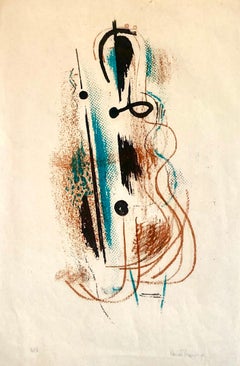
Konrad Cramer, 1888-1963 was a painter, photographer, printer, and illustrator. Based in the fertile Woodstock, New York, artistic community along with Yasuo Kuniyoshi and Russell Le...
Category

1940s Abstract Abstract Prints

Materials

Lithograph

Nihonbashi Bridge - Woodcut Print by Utagawa Yoshitora - 1875
By Utagawa Yoshitora
Located in Roma, IT
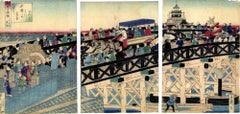
Scene on the Nihonbashi Bridge is an artwork realized in 1875 by Utagawa Yoshitora. Woodcut print triptych. Signed: Mosai ga. Publisher: Sawamuraya...
Category

1870s Modern Figurative Prints

Materials

Woodcut

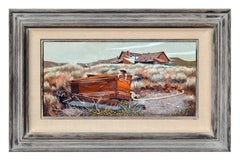
Vintage Pastoral Landscape -- "The Old Trunk, Bodie"
By Darwin Musselman
Located in Soquel, CA
Wonderful rustic landscape of ghost town Bodie, California titled, "The Old Trunk, Bodie" by Darwin Musselman (American, 1916-2010). Presented in a wooden frame. Egg tempera on Masonite, painted at his studio on Sequoia Drive in Fresno in 1972 (verified and authenticated by the son and estate, letter included). Signed "Darwin Musselman" lower right. Titled "The Old Trunk, Bodie" and signed "Darwin Musselman" on verso. Image size, 12"H x 24"W. Darwin B Musselman was born in Selma, California, in 1916 and began his art education at Fresno State College, from which he graduated in 1938. He then attended the Art Center School in Los Angeles, where he studied with the portrait artist, Stanley Reckless...
Category

1970s Realist Landscape Paintings

Materials

Masonite, Egg Tempera

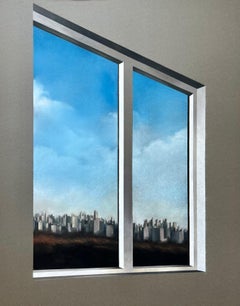
New York Window
By Marina Stern
Located in Los Angeles, CA
New York Window, 1986, mixed media on illustration board, signed and dated lower right, 31 x 20 inches (image), 36 ½ x 28 inches (sheet) Marina Stern was a multifaceted New York-based artist whose works ranged from Expressionism and Pop Art to the Neo Immaculate paintings and pastels for which she is best known. A native of Venice, Stern and her family fled in 1939 to escape Italy’s repressive racial laws. After living in England for several years, the family arrived in the United States in 1941. A bright and capable student, Stern graduated from New York’s Julia Richman High School at age 15 and soon enrolled in the Pratt Institute to pursue an interdisciplinary education in the arts. Despite majoring in advertising design, Stern favored her fine art courses. She graduated from Pratt in 1946 at age 18 and began working for advertising agencies. After a brief marriage which ended in divorce, Stern married her second husband, who encouraged the artist to study at the Art Students League of New York, under the renowned Japanese American modernist, Yasuo Kuniyoshi. In Fall 1953, Stern gave birth to her first child, Michael, as she continued to study at the Arts Students League. Later in the Spring of 1957, Stern gave birth to her daughter Nina, as she continued to balance motherhood with her fine art practice and commercial art and design work. Stern’s first significant exhibitions were in 1962 at the Waverly Gallery and the Osgood Gallery, both in New York, followed by inclusion of her work in the Bertha Schaefer Traveling Collage Show from 1963 to 1964. Stern made a splash in the avant-garde art world in 1964 when Time magazine reviewed a show at Amel Gallery which featured three of her audio-visual paintings. Time’s critic noted that Stern created the “cleverest noisemakers” in the exhibition. Time dubbed this work “Talkie Pop,” a label which Stern rejected. Following this recognition, Stern was selected for inclusion in The New American Realism at the Worcester Art Museum—a major showcase of leading artists, including Andy Warhol, Robert Indiana, Roy Lichtenstein, and Jasper Johns. After the Worcester exhibition, Stern began to shift away from her “talking” Pop paintings to mysterious, interior scenes with orange, blue or black walls with windows or doors rising above black and white floors, often depopulated, but sometimes with figures. One of these works, Seven Minus Twenty-One Equals Seven, entered the permanent collection of New York’s Museum of Modern Art in 1966. By 1969, Stern began to incorporate industrial images into these scenes, and in the early 1970s, Stern created her first Neo-Immaculate works of rural, and urban landscapes, which she described as her most satisfying work. Stern often depicted locations that she held close -- New York, New Jersey, Iowa (where her son attended college), Sharon, Connecticut (where her family spent weekends and vacations) and her native Venice, Italy. Stern’s success as a Neo Immaculate painter led to consistent New York gallery representation for over two decades, first with Lee Ault Co and James Yu Gallery, and then Forum Gallery, where she had six solo shows. In 1971, Stern completed a Neo-Immaculate mural commission for the Port Authority of New York, George Washington Bridge #1 and #2, followed by another commission from the NY Cityarts Public Art Program in 1976 for a mural on Mulberry Street. Stern also enjoyed solo exhibitions in Boston (Eleanor Rigelhaupt Gallery), Connecticut (Silo Gallery, the Hotchkiss School, J. Rosenthal Fine Arts Gallery, Tremaine Gallery, and Staib Gallery), Chicago (Michael Rosenfeld Gallery), and Santa Fe (Santa Fe East Gallery). Her work was included in group shows at over a dozen public institutions, including The National Academy of Design, The Staten Island Museum, Worcester Art Museum, the Oklahoma Art Center, and the Arkansas Art Center. The Southern Alleghenies Museum of Art hosted a retrospective of four decades of Stern’s work from January 19 to April 22, 2007, entitled Perception and the Cultural Environment: The Paintings of Marina...
Category

1980s American Modern More Art

Materials

Oil Pastel, Pastel, Illustration Board, ABS
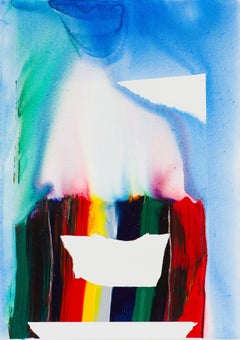
Phenomena Prism Mirror by Paul Jenkins - Abstract painting
By Paul Jenkins
Located in London, GB
*UK BUYERS WILL PAY AN ADDITIONAL 5% IMPORT DUTY ON TOP OF THE ABOVE PRICE Phenomena Prism Mirror by Paul Jenkins (1923-2012) Acrylic on canvas 147.3 x 1...
Category

1980s Abstract Expressionist Abstract Paintings

Materials

Canvas, Acrylic

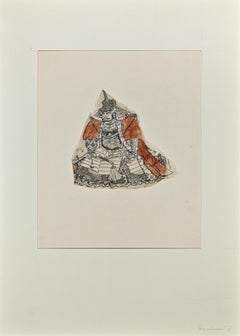
Warrior - Woodcut by Utagawa Toyokuni II - Late 19th Century
By Utagawa Toyokuni II
Located in Roma, IT
Man with the Dragon is a hand-colored Woodcut, realized by the great master of ukiyo-e print, Utagawa Toyokuni II (1769-1825) With vivid colors (on burnis...
Category

Late 19th Century Modern Figurative Prints

Materials

Woodcut

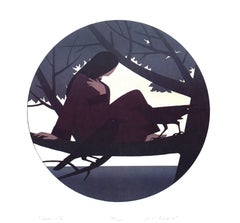
Circe 2
By Will Barnet
Located in San Francisco, CA
This artwork titled "Circe" 1979 is an original colors serigraph on Wove paper by noted American artist Will Barnet, 1911-2012. It is hand signed, titled and numbered 43/100 in pencil by the artist. The image size (circle) is 18 x 18 inches, sheet size is 23.25 x 24 inches. It is in excellent condition, has never been framed. About the artist: Born in 1911 in Beverly, Massachusetts, Barnet knew by the age of ten that he wanted to be an artist. As a student, he studied with Philip Leslie Hale at the School of the Museum of Fine Arts, Boston and viewed first-hand John Singer Sargent at work on the murals of the Boston Public Library. In 1930, Barnet studied at the Art Students League of New York, with Stuart Davis and Charles Locke, beginning his long association with the school. Here he concentrated on painting as well as printmaking, and, in 1936, he became the official printer for the Art Students League. There, he later instructed students in the graphic arts at the school and taught alongside the likes of Yasuo Kuniyoshi, Robert Beverly Hale and Richard Pousette-Dart. Barnet influenced a generation of artists, including James Rosenquist, Knox Martin, Emil Milan, Paul Jenkins, Ethel Fisher...
Category

Late 20th Century American Modern Figurative Prints

Materials

Screen

German Expressionist Drawing, Watercolor Painting Jules Pascin Cuba Scene 1910
By Jules Pascin
Located in Surfside, FL
Genre: German Expressionist Subject: Woman, Cuban Scene Medium: watercolor paint, ink or pencil Surface: Paper This is hand signed lower right. There is an inscription at bottom e...
Category

1910s Expressionist Figurative Drawings and Watercolors

Materials

Paper, Ink, Watercolor

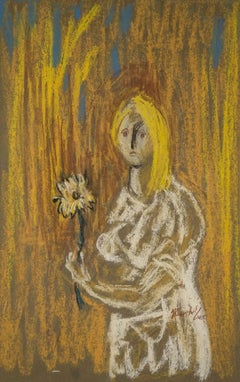
1945 Pastel Drawing Girl with Flower American Modernist
By Frank Kleinholz
Located in Surfside, FL
Born in Brooklyn, New York, Frank Kleinholz was a painter based in New York City whose work spanned several art movements including Expressionism and Social Realism. His early works ...
Category

1940s American Modern Figurative Drawings and Watercolors

Materials

Paper, Oil Pastel

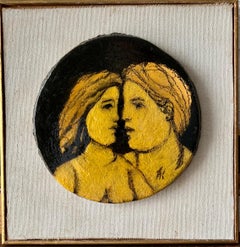
Glazed Ceramic Sculpture Plaque WPA Artist NYC Frank Kleinholz Couple of Lovers
By Frank Kleinholz
Located in Surfside, FL
Frank Kleinholz (Brooklyn, 1901 - 1987) Lovers Ceramic unique glazed miniature sculptural plaque with gold leaf or foil under the glaze. Initialled recto and hand signed verso with a self portrait drawing. Framed measures 8.75 X 8.75 inches, Plaque is 6 X 6 inches. c.1950's-1960's Born in Brooklyn, New York, Frank Kleinholz was a painter based in New York City whose work spanned several art movements including Expressionism and Social Realism. His work was strongly influenced by Max Beckmann, is a late survival of the social com­mentary expressionism of the WPA era; His early lithograph works were intensely personal and reflected the influence of the Depression and the World Wars, but his palette lightened as he increasingly focused on families and the bonds between adults and children. He was contemporary of William Gropper and Ben Shahn. As the son of a blind father and hard-working mother who supported the family with a delicatessen. From early childhood, he had to earn a living and sold newspapers and ran errands for local businesses. He graduated from Fordham Law School, and at age 23 was admitted to the bar. In the mid-1930s, while practicing insurance as well as law, he began oil painting and printmaking with teachers including Yasuo Kuniyoshi and Sol Wilson. He gained quick recognition and between 1941 and 1980 participated in numerous exhibitions including the National Academy of Design, the Brooklyn Museum and the Worcester Art Institute. Born in Brooklyn, New York, Kleinholz graduated Fordham Law School in 1923. In the 1930s, he began studying painting under Yasuo Kuniyoshi and Sol Wilson. He quickly rose to prominence with the inclusion of Abstract art in the Carnegie Institute exhibition of 1941. His painting Backstreet won a purchase prize by the Metropolitan Museum of Art. Chronology His strongest influences were American Social Realists Reginald Marsh and Philip Evergood, the German Expressionists George Grosz and Kathe Kollwitz, the Mexican muralists Diego Rivera, Jorge Orozco, and David Alfaro Siqueiros, and the early 20th century Paris Modernists. Described by Newsweek as a "Brooklyn-born Gauguin," Kleinholz focused on urban life in New York, Brooklyn and Coney Island, as well as intimate, social realist scenes of parents and children, watercolor paintings of flowers and birds, and sunbathers. His political works include anti war paintings...
Category

20th Century Expressionist Figurative Sculptures

Materials

Ceramic, Paint, Glaze

Etching with Hand Watercolor Painting Jules Pascin Pencil Signed
By Jules Pascin
Located in Surfside, FL
Genre: German Expressionist Subject: Figures Medium: etching, watercolor paint Surface: Paper This is hand signed lower right.. there does not seem to be an edition size although th...
Category

Early 20th Century Expressionist Figurative Drawings and Watercolors

Materials

Paper, Watercolor, Etching

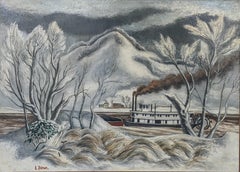
"Along the Kanahawa River, West Virginia, " Ernest Fiene, WPA Coal Steamboat
By Ernest Fiene
Located in New York, NY
Ernest Fiene Along the Kanahawa River, West Virginia, 1936 Signed lower right Oil on canvas 26 x 36 inches Fiene made a series of paintings, drawings and lithographs which are based on his travels through Pennsylvania and West Virginia during the winter of 1935-36. The industrial areas of Pennsylvania and West Virginia are represented in numerous oils, among which are some of his most well-known. Fiene wrote of the trip, "The increasing snow and atmospheric conditions [in the Kanawha River valley} enhanced this mountainous coal mining country with a majestic beauty." Winter on the River is Fiene's only American Artists Group print and there were only two lithographs produced from the West Virginia trip. The American Artists Group (AAG), under the direction of Carl Zigrosser, who was then working at New York's famed Weyhe Gallery, published ninety-three prints by over fifty artists in 1936 and 1937. Zigrosser's goal was to popularize contemporary American art through original prints offered at the low price of $2.75. The project was also a means to provide income for impoverished artists during the Depression. The prints were featured in many of the leading print exhibitions and publications of the period. The lithograph produced from this image is now in the collection of the Amon Carter Museum, Baltimore Museum of Art, Cleveland Museum of Art, Philadelphia Museum of Art, Pensacola Museum of Art, San Francisco Fine Arts Museum, Syracuse Museum, Yale University Art Museum. Ernest Fiene was born in Elberfeld, Germany in 1894. As a teenager, Fiene immigrated to the United States in 1912. He studied art at the National Academy of Design in New York City from 1914 to 1918, taking day classes with Thomas Maynard and evening classes with Leon Kroll. Fiene continued his studies at the Beaux-Arts Institute of Design in New York from 1916 to 1918, adding classes in printmaking at the Art Students League in 1923. Fiene began his career as an artist in 1919 with his first exhibition of watercolors at the MacDowell Club arranged by his mentor Robert Henri. In 1923 the Whitney Studio Club mounted a large exhibition of his works. The following year he had an exhibition at the New Gallery in New York, which completely sold out all fifty-two works, including paintings, watercolors, drawings, and etchings. With the proceeds of sales from the New Gallery exhibition, Ernest Fiene and his younger brother Paul, a sculptor, built studios in Woodstock, New York in 1925. In the early Twenties Ernest Fiene painted mostly landscapes of Woodstock and both the Ramapo and Hudson River Valleys. The first monograph from the Younger Artists Series was published on Fiene in 1922. Published in Woodstock, the series went on to include Alexander Brook, Peggy Bacon, and Yasuo Kuniyoshi. The book reproduced 1 illustration in color and another 27 reproductions in black and white. Around 1925 Fiene became fascinated with the intensity, excitement, and opportunities for color harmonies New York City offered as a subject. His paintings shifted to urban and industrial themes with architecture, industry, and transportation becoming his subjects. By 1926 Fiene had attracted the dealer Frank K.M. Rehn, who gave him a one-man exhibition that year, which travelled to the Boston Arts Club. C.W. Kraushaar Galleries gave Fiene a one-man exhibition of urban, landscape, portrait, and still life paintings in 1927. Julianna Force, the director of the Whitney Studio Club and first director of the Whitney Museum of American Art, included two of Fiene’s paintings in a fall exhibition in 1928. The Whitney Studio Club showed Fiene’s paintings in a two-man exhibition with Glenn O. Coleman that year and acquired three of Fiene’s paintings. Also in 1928 Fiene became affiliated with Edith Halpert’s Downtown Gallery where he had an exhibition of 20 lithographs in the spring. Fiene sold his house in Woodstock in 1928 to spend more of his time in New York City. With so many successful exhibitions, Fiene returned to Paris in 1928-29 where he rented Jules Pascin's studio and studied at the Académie de la Grande Chaumière. In France, Fiene painted both landscape and urban subjects developed from ideas influenced by Cubist geometry and the use of flat areas of broad color. Upon returning to New York in 1930, Fiene used this new approach to continue to paint New York skyscraper and waterfront subjects, as well as to begin a series of paintings on changing old New York based on the excavations for Radio City Music Hall and the construction of the Empire State Building. Frank K.M. Rehn Galleries exhibited this series, titled “Changing Old New York,” in 1931. Fiene also has solo exhibitions at Rehn Galleries in 1930 and 1932. Fiene’s oil paintings are exhibited at the Chicago Arts Club in 1930 as well. Fiene was included in the Museum of Modern Art’s exhibition Painting and Sculpture by Living Americans in December of 1931. Visiting New York, Henri Matisse saw the exhibition and called Fiene’s Razing Buildings, West 49th Street the finest painting he had seen in New York. Fiene had two mural studies from his Mechanical Progress series exhibited at the Museum of Modern Art’s exhibition Murals by American Painters and Photographers in 1932. Fiene sent View from my Window which depicts Fiene working on a lithograph stone while looking out his window to the newly completed Empire State Building to the Carnegie International in 1931. In 1932 Fiene participated in the first Biennial of American Painting at the Whitney Museum and his prints were included in exhibitions at the Downtown Gallery and the Wehye Gallery. In the same year, Fiene was awarded a Guggenheim fellowship to further study mural painting in Florence, Italy. On his return from Italy in 1933 Fiene re-engaged himself in New York City life and won several public and private mural projects. Fiene resumed his active exhibition schedule, participating in two group exhibitions at the Whitney Museum and a one-man exhibition of recent paintings at the Downtown Gallery in January 1934. In 1933 he purchased a farm in Southbury, Connecticut, which added Connecticut scenes to his landscape subjects. This was also the year Fiene began to spend summers on Monhegan Island, Maine, where he painted seascapes, harbor scenes, and still lifes. Fiene’s landscape paintings attracted numerous commissions as part of the American Scene movement. Through the fall and winter of 1935-36, Fiene took an extended sketching trip through the urban, industrial, and farming areas of Pennsylvania and West Virginia. Most of the twenty-four Pennsylvania urban and rural paintings from this trip were featured in an exhibition held at the First National Bank in Pittsburgh in October of 1937 by the Pittsburgh Commission for Industrial Expansion. Fiene said of these works that he formed rhythm, opportunity for space and color, and integrity in the Pennsylvania mill and furnace paintings. Fiene received the silver medal for one of the Pittsburgh paintings...
Category

1930s American Realist Landscape Paintings

Materials

Canvas, Oil

Peggy Bacon Pencil Signed Etching, 1929 - Congenial Scene
By Peggy Bacon
Located in Phoenix, AZ
Peggy Bacon original etching and drypoint created 1929. Pencil signed lower right. Titled “Congenial Scene.” Image measures 9"h x 11 7/8"w. In excellent condition. Matted and unframe...
Category

1920s Figurative Prints

Materials

Paper

Gouache Painting Jules Pascin Hand Signed Woman in Boudoir German Expressionism
By Jules Pascin
Located in Surfside, FL
Genre: German Expressionist Subject: Woman Medium: gouache paint Surface: Paper board This is hand signed lower right. Framed it measures 17.25 X 15.5, sheet 12 X 10 This came from ...
Category

Early 20th Century Expressionist Figurative Paintings

Materials

Paper, Gouache, Cardboard

Lithograph Belgian American Surrealism WPA Modernist Karl Fortess Surrealist Art
Located in Surfside, FL
Karl Eugene Fortess (1907-1993) Original color lithographs on BFK Rives paper, 1966, Hand signed and numbered 29/36 in pencil, Sheet size 20.5 x 15 inches. Karl E. Fortess (1907-1993) was a painter, printmaker and teacher, of Boston, Massachusetts and Woodstock, N.Y. Fortess was born in Antwerp, Belgium on October 13, 1907, and became an American citizen in 1923. He studied at the Art Institute of Chicago, the Art Students League in New York, and the Woodstock School of Painting with Yasuo Kuniyoshi. In 1937 the Works Progress Administration sent him and several other artists to Alaska to document the towns, villages, and remote wilderness landscapes (Pemberton, “Alaska art museum collects WPA’s Depression works from the territory,” Columbia Daily Tribune, November 9, 2003). Trains, trucks, and industrial buildings were what Karl Fortess envisioned when the Public Works of Art Project suggested that he depict “the American Scene.” His work bears the influence of Surrealism, Russsian Constructivist art and Cubism. He was part of a circle of left leaning artists loosley involved with the WPA which included Sol Wilson, Isaac Soyer, Louis Lozowick, Abraham Harriton, Ben Shahn, William Gropper, Nahum Tschacbasov, Morris Shulman, Yasuo Kuniyoshi, Louis Slobodkin, Adolf Dehn, Le Corbusier and Louis Schanker. Karl Fortress taught at the Art Students League, Brooklyn Museum Art School, Louisiana State University, Fort Wright College, and Boston University School of Fine and Applied Arts. He was a member of the Artists Equity Association, Society of American Graphic Artists, American Association of University Professors, and the British Film Institute. He was awarded the Guggenheim Fellowship in 1946, was named an Associate of the National Academy of Design in 1960 and elected to full Academician in 1971. Fortess taught at many different schools, including Boston University School of Fine Art, where he also created an archive of interviews with more than two hundred and fifty contemporary American painters, sculptors, and graphic artists including many with with artists associated with the Woodstock, N.Y. art community. Among the interviewees are Kenneth Armitage, Will Barnet, Romare Bearden, George Biddle, James Brooks, Adolph Dehn, Jane Freilicher, Julian Levi, Alice Neel, Larry Rivers, Moses Soyer, Dorothy Varian...
Category

Mid-20th Century Surrealist Landscape Prints

Materials

Lithograph

Untitled
By Fannie Hillsmith
Located in Fairlawn, OH
Untitled Collage and crayon drawing, 1967 Signed and dated lower center (see photo) Condition: Small imperfections from the creative process Small tear on the left sheet edge (repai...
Category

1960s Abstract Abstract Drawings and Watercolors

Materials

Crayon

Lithograph Belgian American Surrealism WPA Modernist Karl Fortess Surrealist Art
Located in Surfside, FL
Karl Eugene Fortess (1907-1993) Original color lithographs on BFK Rives paper, 1966, Hand signed and numbered 29/36 in pencil, Sheet size 20.5 x 15 inches. Karl E. Fortess (1907-1993) was a painter, printmaker and teacher, of Boston, Massachusetts and Woodstock, N.Y. Fortess was born in Antwerp, Belgium on October 13, 1907, and became an American citizen in 1923. He studied at the Art Institute of Chicago, the Art Students League in New York, and the Woodstock School of Painting with Yasuo Kuniyoshi. In 1937 the Works Progress Administration sent him and several other artists to Alaska to document the towns, villages, and remote wilderness landscapes (Pemberton, “Alaska art museum collects WPA’s Depression works from the territory,” Columbia Daily Tribune, November 9, 2003). Trains, trucks, and industrial buildings were what Karl Fortess envisioned when the Public Works of Art Project suggested that he depict “the American Scene.” His work bears the influence of Surrealism, Russsian Constructivist art and Cubism. He was part of a circle of left leaning artists loosley involved with the WPA which included Sol Wilson, Isaac Soyer, Louis Lozowick, Abraham Harriton, Ben Shahn, William Gropper, Nahum Tschacbasov, Morris Shulman, Yasuo Kuniyoshi, Louis Slobodkin, Adolf Dehn, Le Corbusier and Louis Schanker. Karl Fortress taught at the Art Students League, Brooklyn Museum Art School, Louisiana State University, Fort Wright College, and Boston University School of Fine and Applied Arts. He was a member of the Artists Equity Association, Society of American Graphic Artists, American Association of University Professors, and the British Film Institute. He was awarded the Guggenheim Fellowship in 1946, was named an Associate of the National Academy of Design in 1960 and elected to full Academician in 1971. Fortess taught at many different schools, including Boston University School of Fine Art, where he also created an archive of interviews with more than two hundred and fifty contemporary American painters, sculptors, and graphic artists including many with with artists associated with the Woodstock, N.Y. art community. Among the interviewees are Kenneth Armitage, Will Barnet, Romare Bearden, George Biddle, James Brooks, Adolph Dehn, Jane Freilicher, Julian Levi, Alice Neel, Larry Rivers, Moses Soyer, Dorothy Varian...
Category

Mid-20th Century Surrealist Landscape Prints

Materials

Lithograph

"Beach Landscape" Karl Fortess, WPA, American Landscape, Sand Dunes, Clouds
Located in New York, NY
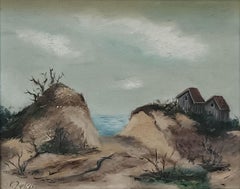
Karl Fortess Beach Landscape Signed lower left Oil on canvas 8 x 10 inches Karl Fortess was born in Belgium, moving United States and studying at the Art Institute of Chicago, the ...
Category

1930s American Realist Figurative Paintings

Materials

Canvas, Oil

Large Figurative Expressionist Oil Painting Rediscovered New York City Artist
By Jonah Kinigstein
Located in Surfside, FL
Jonah Kinigstein (b. 1923) is an American Postwar & Contemporary painter. He works in a figurative expressionist style. His works are featured in the Smithsonian American Art Museum,...
Category

20th Century Expressionist Portrait Paintings

Materials

Oil, Board

"Landscape Fragment II" Abstract 1960 Mid-Century Modern
By Boyer Gonzales Jr.
Located in San Antonio, TX
Boyer Gonzales Jr. (1909-1987) Austin Artist Image Size: 18 x 24 Frame Size: 19 x 25 Medium: Oil 1960 "Landscape Fragment II" Biography Boyer Gonzales Jr. (1909-1987) Boyer Gonzales Jr, a noted painter and teacher in Texas was born in Galveston, Texas and raised in family homes in both Galveston and Woodstock, New York. He attended Mercersburg Academy in Pennsylvania and in 1931 graduated with a degree in architecture from the University on Virginia. During the summers while at the university he studied with his father in Woodstock. After graduation he returned to Woodstock and studied under Henry Lee...
Category

1960s Abstract Abstract Paintings

Materials

Oil

Modernist Rabbi In Synagogue Judaica Watercolor Harry Sternberg
By Harry Sternberg
Located in Surfside, FL
Harry Sternberg, artist, teacher, and political activist was born in New York City's lower east side in 1904. He was the youngest of eight children born to his mother, a hungarian im...
Category

20th Century Modern Figurative Paintings

Materials

Ink, Watercolor

"Woodstock Landscape" Albert Heckman, WPA, Modernist, Farm, Barn, Rural Scene
By Albert Heckman
Located in New York, NY
Albert Heckman Woodstock Landscape Oil on board 12 x 16 inches Albert Heckman was born in Meadville, Western Pennsylvania, 1893. He went to New York City to try his hand at the art...
Category

1940s American Modern Figurative Paintings

Materials

Oil, Board

"Cumbres Pass, Colorado" Chuzo Tamotzu, 1956 Intense Color, Modernist Landscape
Located in New York, NY
Chuzo Tamotzu Cumbres Pass, Colorado, 1956 Signed and dated lower left; titled on artist label on the reverse Oil on Masonite 36 x 48 inches Tamotzu was born in Kagoshima Prefectur...
Category

1950s Modern Figurative Paintings

Materials

Masonite, Oil

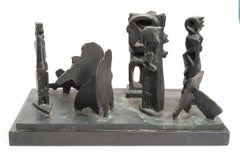
Brutalist Modern Abstract Bronze Sculpture Metropolis Manner of Louise Nevelson
By Abbott Pattison
Located in Surfside, FL
A very heavy, massive bronze sculpture by an important Chicago sculptor. Signed and marked "Firenze" with "Fuse Marinelli". METROPOLIS. Seven abstract shapes on black marble base. 1...
Category

20th Century Modern Abstract Sculptures

Materials

Marble, Bronze

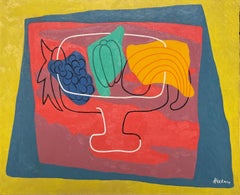
"Untitled" Albert Heckman, circa 1950 Modernist Colorful Still Life With Fruit
By Albert Heckman
Located in New York, NY
Albert Heckman Untitled, circa 1950 Signed lower right Oil on canvas 24 x 30 inches Albert Heckman was born in Meadville, Western Pennsylvania, 1893. He went to New York City to try his hand at the art world in 1915 after graduating from high school and landing a job at the Meadville Post Office. In 1917, at the age of 24, Heckman enrolled part-time in Teachers' College, Columbia University's Fine Arts Department to begin his formal art education. He worked as a freelance ceramic and textile designer and occasionally as a lecturer at the Metropolitan Museum of Art. In the early 1920s, at the age of almost 30, he graduated with a Bachelor of Arts degree from Columbia Teachers College. He was especially impacted by his instructor at Columbia, Arthur Wesley Dow. After graduating, he was hired by the Teachers' College as a Fine Arts instructor. He stayed with Columbia Teachers' College until 1929, when he left to attend the Leipzig Institute of Graphic Arts in Leipzig, Germany. Isami Doi (1903-1965), who was born in Hawaii, was arguably his most impressive student at Columbia. Doi is now regarded as one of the most prominent artists hailing from Hawaii. Heckman became an active member and officer of the Keramic Society and Design Guild of New York in the 1920s as part of his early commercial art career. The Society's mission was to share knowledge and showcase textile and ceramic design exhibits. In 1922, Heckman married Florence Hardman, a concert violinist. Mrs. Heckman's concert schedule during the 1920s kept Albert and Florence Heckman apart for a significant portion of the time, but they spent what little time they had together designing and building their Woodstock, New York, summer house and grounds. A small house and an acre of surrounding land on Overlook Mountain, just behind the village of Woodstock, were purchased by Albert and Florence Heckman at the time of their marriage. Their Woodstock home, with its connections, friendships, and memories, became a central part of their lives over the years, even though they had an apartment in New York City. Heckman's main artistic focus shifted to the house on Overlook Mountain and the nearby towns and villages, Kingston, Eddyville, and Glasco. After returning from the Leipzig Institute of Graphic Arts in 1930, Mr. Heckman joined Hunter College as an assistant professor of art. He worked there for almost thirty years, retiring in 1956. Throughout his tenure at Hunter, Mr. Heckman and his spouse spent the summers at their Woodstock residence and the winters in New York City. They were regular and well-known guests at the opera and art galleries in New York. Following his retirement in 1956, the Heckmans settled in Woodstock permanently, with occasional trips to Florida or Europe during the fall and winter. Mr. Heckman's close friends and artistic career were always connected to Woodstock or New York City. He joined the Woodstock art group early on and was greatly influenced by artists like Paul and Caroline Rohland, Emil Ganso, Yasuo Kuniyoshi, Andre Ruellan, and her husband, Jack...
Category

1950s Modern Interior Paintings

Materials

Canvas, Oil

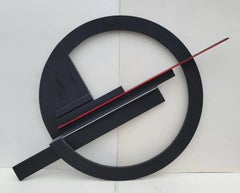
"Construction 1982" Abstract Wall Sculpture Contemporary Mid 20th Century Modern
By Seymour Fogel
Located in New York, NY
"Construction 1982" Abstract Wall Sculpture Contemporary Mid 20th Century Modern Painted wood assemblage, 36 x 45 x 4 inches overall. Note the label states 3 foot diameter referring to circular portion. Exhibited, Seymour Fogel Constructions Paintings and Drawing, 1984, typed on Graham Modern label verso Seymour Fogel was born in New York City on August 24, 1911. He studied at the Art Students League and at the National Academy of Design under George Bridgeman and Leon Kroll. When his formal studies were concluded in the early 1930s he served as an assistant to Diego Rivera who was then at work on his controversial Rockefeller Center mural. It was from Rivera that he learned the art of mural painting. Fogel was awarded several mural commissions during the 1930s by both the Works Progress Administration (WPA) and the Treasury Section of Fine Arts, among them his earliest murals at the Abraham Lincoln High School in Brooklyn, New York in 1936, a mural in the WPA Building at the 1939-1940 New York World's Fair, a highly controversial mural at the U.S. Post Office in Safford, Arizona (due to his focus on Apache culture) in 1941 and two murals in what was then the Social Security Building in Washington, D.C., also in 1941. Fogel's artistic circle at this time included Phillip Guston, Ben Shahn, Franz Kline, Rockwell Kent and Willem de Kooning. In 1946 Fogel accepted a teaching position at the University of Texas at Austin and became one of the founding artists of the Texas Modernist Movement. At this time he began to devote himself solely to abstract, non-representational art and executed what many consider to be the very first abstract mural in the State of Texas at the American National Bank in Austin in 1953. He pioneered the use of Ethyl Silicate as a mural medium. Other murals and public works of art done during this time (the late 1940s and 1950s) include the Baptist Student Center at the University of Texas (1949), the Petroleum Club in Houston (1951) and the First Christian Church, also in Houston (1956), whose innovative use of stained glass panels incorporated into the mural won Fogel a Silver Medal from the Architectural League of New York in 1958. Fogel relocated to the Connecticut-New York area in 1959. He continued the Abstract Expressionism he had begun exploring in Texas, and began experimenting with various texturing media for his paintings, the most enduring of which was sand. In 1966 he was awarded a mural at the U.S. Federal Building in Fort Worth, Texas. The work, entitled "The Challenge of Space", was a milestone in his artistic career and ushered in what has been termed the Transcendental/Atavistic period of his art, a style he pursued up to his death in 1984. Painted and raw wood sculpture...
Category

1980s Assemblage Abstract Sculptures

Materials

Wood

Still Thinking About These?

All Recently Viewed