317 results for "georgia o’keeffe"

to
50
292
25
88
33
128
115
63
108
91
31
53
34
Overall Height
to
Overall Width
to
91
81
72
9
6
5
3
2
1
53
31
29
25
24
19
17
16
14
13
10
10
9
7
5
5
5
4
4
3
5
129
183
5
2
5
19
5
4
6
9
20
19
46
31
27
10
9
156
125
111
75
73
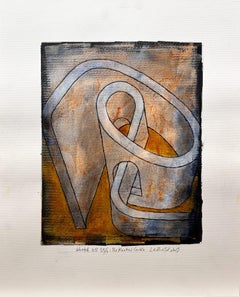
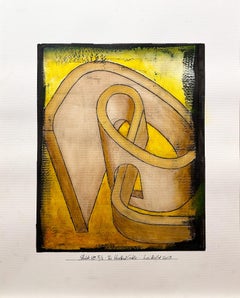
"Sketch No.35/6: The Knotted Castle" Abstract Representational Painting on Paper
By Wolfgang Leidhold
Located in New York, NY
This piece represents a part of the artist's "Kinetic Knots" series which symbolizes shapes of the knots that are not planned. It is like the “Dao” grabbing the artist and the power ...
Category

2010s Abstract Geometric Abstract Paintings

Materials

Paper, Ink, Oil, Acrylic, Watercolor

"Sketch No.35/1: The Knotted Castle" Abstract Representational Painting on Paper
By Wolfgang Leidhold
Located in New York, NY
This piece represents a part of the artist's "Kinetic Knots" series which symbolizes shapes of the knots that are not planned. It is like the “Dao” grabbing the artist and the power ...
Category

2010s Abstract Geometric Abstract Paintings

Materials

Paper, Ink, Oil, Acrylic, Watercolor

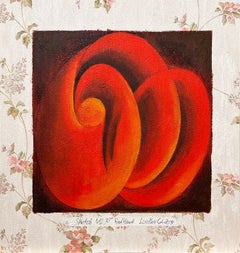
"Sketch No.37 Red Knot" Abstract Representational Painting Work on Wallpaper
By Wolfgang Leidhold
Located in New York, NY
This piece represents a part of the artist's "Kinetic Knots" series which symbolizes shapes of the knots that are not planned. It is like the “Dao” grabbing the artist and the power ...
Category

2010s Abstract Geometric Abstract Paintings

Materials

Oil, Acrylic, Laid Paper, Pen

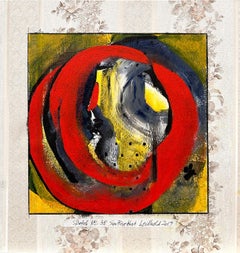
"Sketch No.38 Sun Set Knot" Abstract Representational Painting Work on Wallpaper
By Wolfgang Leidhold
Located in New York, NY
This piece represents a part of the artist's "Kinetic Knots" series which symbolizes shapes of the knots that are not planned. It is like the “Dao” grabbing the artist and the power ...
Category

2010s Abstract Geometric Abstract Paintings

Materials

Oil, Acrylic, Laid Paper, Pen

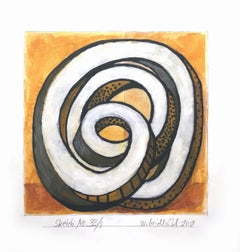
"Sketch No. 33/1" Abstract Representational Kinetic Knot Painting Work on Paper
By Wolfgang Leidhold
Located in New York, NY
This piece represents a part of the artist's "Kinetic Knots" series which symbolizes shapes of the knots that are not planned. It is like the “Dao” grabbing the artist and the power ...
Category

2010s Abstract Geometric Abstract Paintings

Materials

Ink, Acrylic, Watercolor, Pen, Paper, Pencil

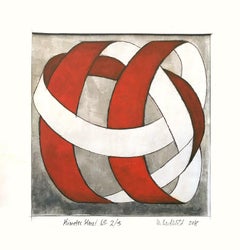
"Kinetic Knot No. 2/3" Abstract Representational Knot Painting Work on Paper
By Wolfgang Leidhold
Located in New York, NY
This piece represents a part of the artist's "Kinetic Knots" series which symbolizes shapes of the knots that are not planned. It is like the “Dao” grabbing the artist and the power ...
Category

2010s Abstract Geometric Abstract Paintings

Materials

Paper, Acrylic, Pen, Black and White

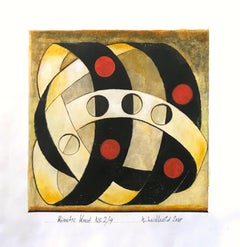
"Kinetic Knot No. 2/4" Abstract Representational Knot Painting Work on Paper
By Wolfgang Leidhold
Located in New York, NY
This piece represents a part of the artist's "Kinetic Knots" series which symbolizes shapes of the knots that are not planned. It is like the “Dao” grabbing the artist and the power ...
Category

2010s Abstract Geometric Abstract Paintings

Materials

Paper, Ink, Acrylic, Watercolor, Pen, Black and White

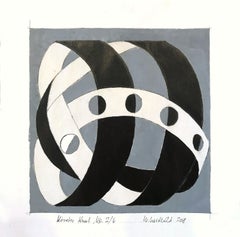
"Kinetic Knot No. 2/6" Abstract Representational Knot Painting Work on Paper
By Wolfgang Leidhold
Located in New York, NY
This piece represents a part of the artist's "Kinetic Knots" series which symbolizes shapes of the knots that are not planned. It is like the “Dao” grabbing the artist and the power ...
Category

2010s Abstract Geometric Abstract Paintings

Materials

Paper, Ink, Acrylic, Pen

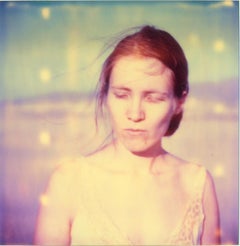
Time Traveller (Ensign Broderick record Shoot Blood Crush )
By Stefanie Schneider
Located in Morongo Valley, CA
Time Traveller (Ensign Broderick record Shoot 'Blood Crush') - Bombay Beach, CA - 2019 20x20cm, Edition of 10 plus 2 Artist Proofs. Archival C-Print, based on the Polaroid. Signat...
Category

Early 2000s Contemporary Color Photography

Materials

Archival Paper, Photographic Paper, C Print, Color, Polaroid

Untitled (Olancha) - Stranger than Paradise - analog C-Print based on a Polaroid
By Stefanie Schneider
Located in Morongo Valley, CA
Untitled (Olancha) - 2006 38x37cm. Edition of 5, plus 2 Artist Proofs. Analog C-Print, hand-printed by the artist, based on a Polaroid. Signature label and Certificate. Artist I...
Category

Early 2000s Contemporary Portrait Photography

Materials

Archival Paper, Photographic Paper, C Print, Color, Polaroid

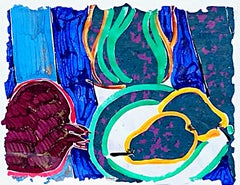
Pears (Holly Solomon Gallery Readers Digest Collection) Signed painting Framed
By Robert Kushner
Located in New York, NY
Robert Kushner Pears, 1985 Acrylic Collage on Paper; Framed with Holly Solomon Gallery Label Reader's Digest Art Collection Label Signed and titled by the artist on the f...
Category

1980s Abstract Still-life Paintings

Materials

Paper, Mixed Media, Acrylic

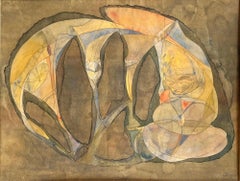
Pre-War Abstraction - Modernism - Tan Bronze Tope - Nonrepresentational
By Elsie Driggs
Located in Miami, FL
Pioneering female abstract artist Elsie Driggs paints stylized abstract organic forms in a warm palette of orange browns and tope. She merges abstraction with some figuration. A structured face composed of lines and tone emerges from an orange background. It's 1939, and even though Driggs is not well known, she is preceding many of the marquee names of abstraction by a decade. Although under the radar, this is a major work and is titled on the back stretcher is " Egyptian Gothic." It features the artist's inventiveness with her fine pencil lines incorporated in flat washes of color and collage elements. Signed lower right and inscribed on frame verso with title, artist and the date of 1939. Provenance, Christie's, Freemans. Framed under glass.. Elsie Driggs (1898 – July 12, 1992 in New York City) was an American painter known for her contributions to Precisionism, America's one indigenous modern-art movement before Abstract Expressionism, and for her later floral and figurative watercolors, pastels, and oils. She was the only female participant in the Precisionist movement, which in the 1920s and 1930s took a Cubist-inspired approach to painting the skyscrapers and factories that had come to define the new American landscape. Her works are in the collection of the Whitney Museum of American Art, the Houston Museum of the Fine Arts, the Fine Arts Museums of San Francisco, the James A. Michener Art Museum in Pennsylvania, and the Columbus Museum of Art, among others. She was married to the American abstract artist Lee Gatch. Career Born in Hartford, Connecticut, Driggs grew up in New Rochelle, a suburb of New York City, in a family that was supportive of her artistic interests. After a summer spent painting with her sister in New Mexico in her late teens, she felt she had found her life's calling. At twenty, she enrolled in classes at the Art Students League of New York, where she studied under George Luks and Maurice Sterne, both of whom were charismatic, inspirational figures in her early life. She also attended the evening criticism classes held at the home of painter John Sloan. Driggs spent fourteen months in Europe from late 1922 to early 1924, drawing and studying Italian art. There she met Leo Stein, first in Paris and later in Florence, who became an important intellectual influence, and who urged her to study Cézanne. He also introduced her to the works of Piero della Francesca, the Renaissance artist for whom she felt throughout her life the greatest admiration.[1] Driggs eventually settled in New York City, where she found representation with the progressive Charles Daniel Gallery.[2] (Advised that the old-fashioned and misogynistic Daniel would be unlikely to take on a woman artist, she signed the works she left for his consideration simply "Driggs" and waited to meet him in person until he had expressed his eagerness to include her in his gallery.)[3] In sympathy with those artists Daniel represented who were part of the burgeoning Precisionist movement, such as Charles Demuth, Charles Sheeler, George Ault, Niles Spencer, and Preston Dickinson, she too painted "the modern landscape of factories, bridges, and skyscrapers with geometric precision and almost abstract spareness."Impressionism and academic or Ashcan realism represented the past, in Driggs' view, and she intended to be resolutely modern. She was an attractive and engaging woman, but her demeanor belied a strong ambition and a clear sense of what it would take to make her mark in the New York art world. Driggs was part of the pre-eminent first group of Precisionist painters, including Demuth and Sheeler, who exhibited at the Daniel Gallery in the 1920s. Although a later group of Precisionist painters, including Louis Lozowick, Ralston Crawford and others, came on the American Art scene during the 1930s, Driggs felt that the style came to an end with the 1929 stock market crash.[5] In 1926 she painted her most famous work, Pittsburgh, a dark and brooding picture now in the permanent collection of the Whitney Museum of American Art, which depicts the gargantuan smokestacks of the Jones & Laughlin steel mills in Pittsburgh. Its focus is an overpowering mass of black and gray smokestacks, thick piping, and crisscrossing wires with only clouds of smoke to relieve the severity of the image, yet it was an image in which she found an ironic beauty. She called the picture "my El Greco" and expressed surprise that viewers in later years interpreted the painting as a work of social criticism. Like the other Precisionists (e.g., Demuth, Charles Sheeler, Louis Lozowick, Stefan Hirsch), she was concerned with applying modernist techniques to renderings of the new industrial and urban landscape, not in commenting on potential dangers the overly mechanized modern world of 1920s America might present. If anything, Precisionism, like Futurism, was a celebration of man-made energy and technology. One year later, she painted Blast Furnaces, in a similar vein. As noted above, Piero della Francesca's mural depicting "The Story of the True Cross" in Arezzo, with its tubular, static and frozen forms was the major influence on Driggs' "Pittsburgh" (it may have been the major influence for "Blast Furnaces" as well).[7] After Pittsburgh, Driggs' most acclaimed work was probably Queensborough Bridge...
Category

1930s Mixed Media

Materials

Paper, Watercolor, Pencil

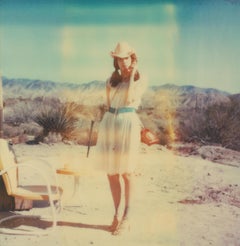
Memories of Love III (The Girl behind the White Picket Fence) - Polaroid, Color
By Stefanie Schneider
Located in Morongo Valley, CA
Memories of Love III (The Girl behind the White Picket Fence) - 2013 20x20cm, Edition of 10, plus 2 Artist Proofs. Archival C-Print, based on a Polaroid. Certificate and signatur...
Category

2010s Contemporary Figurative Paintings

Materials

Archival Paper, Photographic Paper, C Print, Color, Polaroid

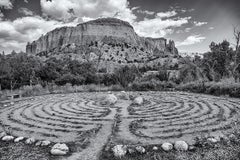
Labyrinth, Ghost Ranch, NM
By Gerard Giliberti
Located in East Hampton, NY
This meditative labyrinth is next to the Ghost Ranch retreat and education center located close to the village of Abiquiú in Rio Arriba County in north central New Mexico, United Sta...
Category

2010s Land Black and White Photography

Materials

Archival Pigment

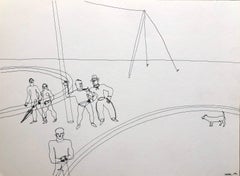
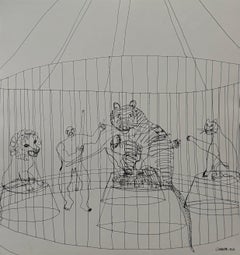
Alexander Calder Circus Reproduction Lithograph After a Drawing
By (after) Alexander Calder
Located in Surfside, FL
(after) Alexander Calder "Calder's Circus" offset lithograph on wove paper after drawings by the artist Published by Art in America and Perls gallery in 1964 (from drawings done in t...
Category

1930s American Modern Animal Prints

Materials

Lithograph

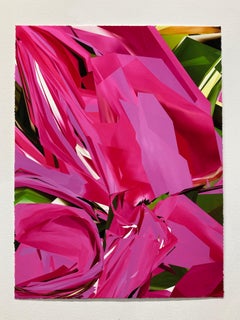
Flor, 2025, Curacao, Unique pigment print, digitally made by hand, pink flower
By Gary Cruz
Located in New York, NY
Flor, is part of the artist's "The Curacao Pictures" Series. This one-of-a- kind, archival pigment print is printed on Hahnemuhle Photo Rag bright paper with a deckled edge. Signed on the Verso. "This began with a tiny flower—something small enough to overlook. I wanted to enlarge it until it became vast and immersive. The title, Flor, means “flower” in Papiamento. I think of it as both a gesture toward Curaçao’s language and a meditation on attention. Like Georgia O’Keeffe’s flowers...
Category

2010s Abstract Abstract Photography

Materials

Archival Pigment

Harmony Watercolor Acrylic and Oil on Yupo Paper 26" x 40" Gray and Pink
Located in Houston, TX
Harmony Gray and Pink Watercolor, Acrylic and Oil on Yupo Paper 26″ x 40″ Look for free shipping at checkout Harmony connotes “Neutral and Balanced”; perhaps because it is a bl...
Category

2010s American Realist Still-life Paintings

Materials

Oil, Acrylic, Watercolor, Handmade Paper

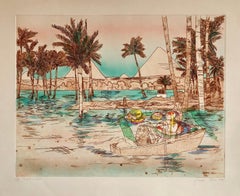
Mystic Cafe, Pyramids Signed Aquatint Etching California Woman Artist Susan Hall
By Susan Hall
Located in Surfside, FL
Hand signed and numbered Aquatint Etching Susan Hall lives and works in Point Reyes Station, California, a town in the heart of the Point Reyes National Seashore. This pristine wilderness area is dominated by a mosaic of bays and ocean, rolling grass lands and forests. It is inhabited by a diversity of wildlife, including over 450 species of birds, mountains lions, deer, bobcats, foxes, and elk. Ms. Hall who is a native of this area returned after spending twenty years in New York City. In her book, “Painting Point Reyes”, Hall says, “Point Reyes is the center of my painting life. Point Reyes has been my life and when I haven’t lived here, it has been an underground stream that spoke to me in dreams and visions.” While living and painting in New York City, Ms. Hall exhibited her work widely in museums and galleries. Among them are the Whitney Museum of Art; San Francisco Museum of Art; Nancy Hoffman Gallery, Trabia MacAfee Gallery, Phyllis Kind Gallery, Chicago; Ovsey Gallery, Los Angeles. In addition, her work has been featured in group exhibitions throughout the United States and abroad, including in 2020 Bud Shark's Ink: The California Crew at BMoCA, Boulder Museum of Contemporary Art Colorado USA representing the panoply of aesthetics, cultural backgrounds, viewpoints, and talent held within the bounty of art “made in California.” This remarkable grouping of artists, Brad Brown, Enrique Chagoya, Roy De Forest, Amy Ellingson, Susan Hall, Don Ed Hardy, Mildred Howard, Robert Hudson, Hung Liu, Kara Maria, Rex Ray, Alison Saar, Italo Scanga, and William T. Wiley. Women to the Fore, Hudson River Museum Yonkers 2021 A group of women artists working in oil painting and drawing, lithograph prints and photograph, collage and sculpture. Many icons of feminist art history. Judy Chicago, Judy Giera, Marisol, and Shanequa Benitez, Ann McCoy, Anna Walinska, Audrey Flack, Barbara Morgan, Berenice Abbott, Bessie Potter Vonnoh, Georgia O'Keeffe, Hannelore Baron, Harriet, Judy Chicago, Louise Nevelson, Marisol, Mary Frank, Nancy Graves, Susan Hall, Yvonne Thomas...
Category

1970s American Modern Abstract Prints

Materials

Etching, Aquatint

Honor Thy Father and Thy Mother (The Fifth Commandment) Lithograph Signed/N
By Robert Kushner
Located in New York, NY
Robert Kushner Honor Thy Father and Thy Mother (The Fifth Commandment), 1987 6 Color Lithograph on Dieu Donne handmade paper 24 × 18 inches Pencil signed and numbered 6/84 in graphite on the front Unframed with deckled edges This five color lithograph on Dieu Donne hand made paper with deckled edges is pencil signed, dated and numbered from the limited edition of 84. This 1980s Robert Kushner print was created as part of the 1987 portfolio "The Ten Commandments", in which ten top Jewish American artists were each invited to choose an Old Testament commandment to interpret in contemporary lithographic form. The "Chosen" artists were, in order of Commandment: Kenny Scharf, Joseph Nechvatal, Gretchen Bender, April Gornik, Robert Kushner, Nancy Spero, Vito Acconci, Jane Dickson, Judy Rifka and Richard Bosman. This is the first time the print will have been removed from the original portfolio case. (shown). Lisa Liebmann, who wrote the introduction to the collection, observed: "...The image has, for most of us, replaced the word..." With respect to the present work, she writes, "There is a sweet smell of nostalgia to Robert Kushner's view of the FIFTH COMMANDMENT, to honor one's parents. Kushner's subtly ornate use of colors suffuses his subject with a filagreed texture of warmth. In this gentle icon, the traditional duo - all those Ozzies and Harriets in our hearts and on the airwaves -are frames as if by a bubble bath of affection." ROBERT KUSHNER BIOGRAPHY Since participating in the early years of the Pattern and Decoration Movement in the 1970s, Robert Kushner has continued to address controversial issues involving decoration. Kushner draws from a unique range of influences, including Islamic and European textiles, Henri Matisse, Georgia O’Keeffe, Charles Demuth, Pierre Bonnard, Tawaraya Sotatsu, Ito Jakuchu, Qi Baishi, and Wu...
Category

1980s Contemporary Figurative Prints

Materials

Lithograph

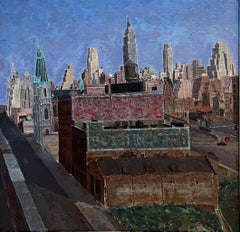
"Manhattan Looking East, " Herman Rose, WPA New York City View from Midtown
By Herman Rose
Located in New York, NY
Herman Rose (1909 - 2007) Manhattan Looking East (View from Midtown), 1952-54 Oil on canvas 26 x 28 inches Signed lower right Fairfield Porter wrote an essay in ArtNews on this exact painting in 1955. Please inquire for a copy of the article. Literature: Fairfield Porter, "Herman Rose Paints a Picture," ArtNews, April 1955 Volume 54, Number 2, illustrated. Herman Rose was best known for his depictions of cityscapes of New York City. Herman Rappaport was born in Brooklyn, New York. in 1909. Herman Rose was the professional pseudonym of Herman Rappaport. Originally trained as a draftsman and studied at the National Academy of Design from 1927 to 1929, he was later employed by the Works Progress Administration's Murals Division under Arshile Gorky from 1934 until 1939. In 1939, after experimenting with a variety of contemporary expressionistic styles, Rose decided to paint from life. Working mostly in East New York and East Canarsie in Brooklyn, and in Manhattan, Rose began to paint roof tops and street scenes. Rappaport began using the name Herman Rose when he held his first solo art exhibition in 1946 at the Charles Egan Gallery in New York City. Although he initially began as an Expressionistic painter, he became known for small, light-filled Impressionist paintings of still life, cityscapes and skies by the early 1950s. His paintings and images were often composed of very small dabs of paint and tiny, blurry "squares," which combined to create the image on canvas, his favorite medium. Often described as a "lyrical painter" Rose's work "interpreted traditional subjects: landscape, still life and the figure like the Post-Impressionists from whom he developed his own style, Rose built up forms from distinct touches of color that don't entirely blend in the viewer's eye. This gives his surfaces an active quality that flattens forms, one of the great lessons of modernism." Herman Rose's work received official recognition when Ms. Dorothy Miller of Museum of Modern Art (MoMA) included his work in an exhibition called, "15 Americans," alongside work by Clyfford Still, Mark Rothko and Jackson Pollock. New York Times art critic Hilton Kramer wrote of Rose's work in 1981, "{he} must surely be counted among the most beautiful works anyone has produced in this challenging medium for many years." The Art in America art critic Lawrence Campbell...
Category

1950s American Modern Landscape Paintings

Materials

Canvas, Oil

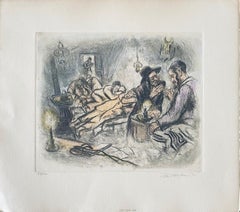
Judaica interior scene etching with hand coloring
By Ira Moskowitz
Located in Surfside, FL
Etching with extensive hand coloring (making it a unique original work of art) Ira Moskowitz (1912-2001), descendant of a long rabbinical line, was born in Galicia Poland and went w...
Category

20th Century Post-Impressionist Interior Prints

Materials

Etching

Night Light Signed Aquatint Etching California Modernist Woman Artist Susan Hall
By Susan Hall
Located in Surfside, FL
Susan Hall Hand signed and numbered Aquatint Etching This piece has a Memphis Milano sort of vibe to it. Susan Hall lives and works in Point Reyes Station, California, a town in the heart of the Point Reyes National Seashore. This pristine wilderness area is dominated by a mosaic of bays and ocean, rolling grass lands and forests. It is inhabited by a diversity of wildlife, including over 450 species of birds, mountains lions, deer, bobcats, foxes, and elk. Ms. Hall who is a native of this area returned after spending twenty years in New York City. In her book, “Painting Point Reyes”, Hall says, “Point Reyes is the center of my painting life. Point Reyes has been my life and when I haven’t lived here, it has been an underground stream that spoke to me in dreams and visions.” While living and painting in New York City, Ms. Hall exhibited her work widely in museums and galleries. Among them are the Whitney Museum of Art; San Francisco Museum of Art; Nancy Hoffman Gallery, Trabia MacAfee Gallery, Phyllis Kind Gallery, Chicago; Ovsey Gallery, Los Angeles. In addition, her work has been featured in group exhibitions throughout the United States and abroad, including in 2020 Bud Shark's Ink: The California Crew at BMoCA, Boulder Museum of Contemporary Art Colorado USA representing the panoply of aesthetics, cultural backgrounds, viewpoints, and talent held within the bounty of art “made in California.” This remarkable grouping of artists, Brad Brown, Enrique Chagoya, Roy De Forest, Amy Ellingson, Susan Hall, Don Ed Hardy, Mildred Howard, Robert Hudson, Hung Liu, Kara Maria, Rex Ray, Alison Saar, Italo Scanga, and William T. Wiley. Women to the Fore, Hudson River Museum Yonkers 2021 A group of women artists working in oil painting and drawing, lithograph prints and photograph, collage and sculpture. Many icons of feminist art history. Judy Chicago, Judy Giera, Marisol, and Shanequa Benitez, Ann McCoy, Anna Walinska, Audrey Flack, Barbara Morgan, Berenice Abbott, Bessie Potter Vonnoh, Georgia O'Keeffe, Hannelore Baron, Harriet, Judy Chicago, Louise Nevelson, Marisol, Mary Frank, Nancy Graves, Susan Hall, Yvonne Thomas...
Category

1970s American Modern Abstract Prints

Materials

Etching, Aquatint

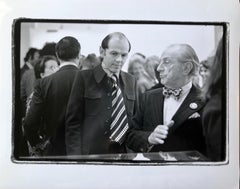
Vintage Print Silver Gelatin Signed Photograph Sidney Janis, Conrad Janis, NYC
By Fred McDarrah
Located in Surfside, FL
signed in ink and with photographer stamp verso and hand written title. Sidney Janis (July 8, 1896 – November 23, 1989) was a wealthy clothing manufacturer and art collector who ope...
Category

1960s American Modern Black and White Photography

Materials

Black and White, Silver Gelatin

Glow Oil on Yupo paper 7″ x 9 1/2″ 9 3/4″ x 12 1/8″ Frame Abstract Small
Located in Houston, TX
Glow by Texas artist Julie England is an Oil on Yupo paper. The size of Glow is 7″ x 9 1/2″” Image 9 3/4″ x 12 1/8″ Frame Art is floated in gallery frame with OP3 plexi glazing....
Category

2010s Abstract Impressionist Abstract Paintings

Materials

Oil, Handmade Paper

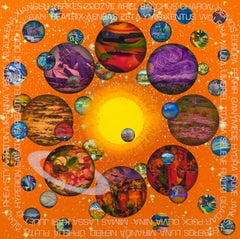
Brave New Worlds 6, 2024
By Brad Faine
Located in Greenwich, CT
Brave New Worlds 6 is one of a series of 20 unique color variations of this title. The digital pigment print with diamond dust on canvas is signed and titled on the verso, and framed...
Category

21st Century and Contemporary Pop Art Prints and Multiples

Materials

Canvas, Digital Pigment

Wendy s Garden Trellis Ink, Watercolor and Oil on Yupo Botanical Series 26 x 40
Located in Houston, TX
Wendy’s Garden with Trellis Ink, Watercolor and Oil on Yupo Paper 26″ x 40″ 2021 Texas artist Julie England Look for free shipping at checkout Annually the perennial cr...
Category

2010s American Realist Still-life Paintings

Materials

Paper, Mixed Media, Oil, Watercolor

Deborah Bigeleisen - Charisma, Painting 2024
By Deborah Bigeleisen
Located in Stamford, CT
"Having started my career by painting Rembrandt-like portraits of luminous white roses, I credit my discovery of fractals for transforming my artistic vision and changing the directi...
Category

21st Century and Contemporary Contemporary Abstract Paintings

Materials

Canvas, Paint, Acrylic

Deborah Bigeleisen - Untitled No. 30, diptych (horizontal view), Painting 2012
By Deborah Bigeleisen
Located in Stamford, CT
Collection: Multiple Perspectives Artist Statement Having started my career by painting Rembrandt-like portraits of luminous white roses, I credit my discovery of fractals for tran...
Category

21st Century and Contemporary Contemporary Landscape Paintings

Materials

Canvas, Paint, Oil

Cast Iron Garden Oil on Stretched Canvas 30" x 40" SMU Oaks and Plants
Located in Houston, TX
Cast Iron Garden Oil on Canvas 30″ x 40″ Look for free shipping at checkout Cast Iron Garden is a tribute to the Southern Methodist University campus, students and professors wher...
Category

2010s American Realist Landscape Paintings

Materials

Cotton Canvas, Oil

Deborah Bigeleisen - Colorado Splendor, Painting 2019
By Deborah Bigeleisen
Located in Stamford, CT
Having started my career by painting Rembrandt-like portraits of luminous white roses, I credit my discovery of fractals for transforming my artistic vision, and changing the directi...
Category

21st Century and Contemporary Contemporary Abstract Paintings

Materials

Paint, Acrylic

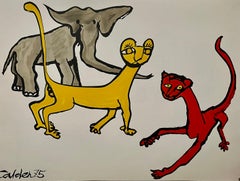
Elephant, Lions Bold Color Lithograph Alexander Calder Unfinished Revolution
By Alexander Calder
Located in Surfside, FL
1975 Color Lithograph by Alexander Calder from Our Unfinished Revolution portfolio One of 250 copies, with the printed signature and date on offset paper. This is not pencil signed ...
Category

1970s American Modern Abstract Prints

Materials

Lithograph

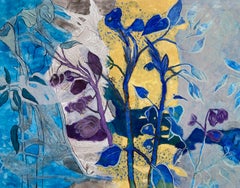
Summer Leaves Mixed Media on Yupo Paper 20″ x 26″ Image 28 1/2″ x 34 1/2″
Located in Houston, TX
Summer Leaves is Mixed Media on Yupo Paper 20″ x 26″ Image Framed it is 28 1/2″ x 34 1/2″.Art is floated in a white or neutral 1” depth gallery frame with plexi glazing. Look for free shipping at checkout. Grateful that Summer Leaves 1 painting was juried into the Salon des Refuses’ Exhibition. This is a national juried art competition that is on exhibit from September 2, 2023 – January 2, 2024. This contemporary art exhibit will be on display in the Ancient Sculpture Museum. The Earth’s diverse surface is fascinating. The vegetative environments invite viewers to visit a place. Local light and atmosphere affect the plant life that thrives, the colors we see and experience of mood and energy. These botanical paintings explore memory and landscape with complex spatial environments that hover between painterly realism and abstract passages. Throughout the long tradition of landscape painting, there exists a connection between the artist and the natural world. A painter can evoke this relationship through the use of color, value and line whether the painting is representational or abstracted. These elements combine and intertwine to create rhythms of perspective and dimension, illuminating this personal vision on canvas. Yupo paper is waterproof, and stands up to the rigors of the elements and demanding environments. Ultra-smooth and bright white, it's a paper alternative that stands out. Bio Julie...
Category

2010s American Realist Landscape Paintings

Materials

Mixed Media

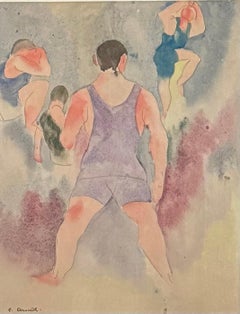
"Bathers" American Scene Social Realism 20th Century Modernism Ashcan Fauvism
By Charles Demuth
Located in New York, NY
"Bathers" American Scene Social Realism 20th Century Modernism Ashcan Fauvism Charles Demuth (1883-1935) "Bathers" 10 1/2 x 8 1/4 inches watercolor on paper, c. 1930 Signed lower le...
Category

1930s American Modern Figurative Drawings and Watercolors

Materials

Paper, Watercolor

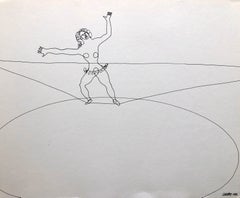
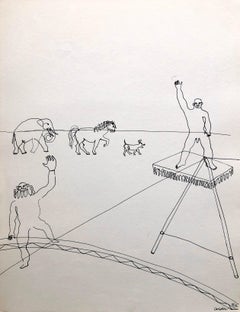
Alexander Calder Circus Reproduction Lithograph of a Drawing
By (after) Alexander Calder
Located in Surfside, FL
(after) Alexander Calder "Calder's Circus" offset lithograph on wove paper a reproduction lithograph after the drawings by the artist Published by Art in America and Perls gallery in 1964 (from drawings done in the 1930's) these range slightly in size but they are all about 13 X 17 inches (with minor variations in size as issued.) These have never been framed. The outer folio is not included just the one lithograph. James Sweeny from the introduction “The fame of Calder’s circus spread quickly between the years 1927 and 1930. All the Paris art world came to know it. It brought him his first great personal success. But what was more important, the circus also provided the first steps in Calder’s development as an original sculptor” Clive Gray wrote ”A visit to the studio of Alexander Calder led to the chance discovery of some hundred masterful circus drawings completed over thirty years ago. We publish, for the first time, a choice of sixteen from that group.” With signed introduction by Miro. These whimsical drawings, done in the style of wire sculpture, include acrobats, clowns, jugglers, trapeeze artists, an elephant, dog and lion. they are great. Alexander Calder is widely considered to be one of the most important American sculptors of the 20th century. He is best known for his colorful, whimsical abstract public sculptures and his innovative mobiles, kinetic sculptures powered by motors or air currents, which embraced chance in their aesthetic. Born into a family of accomplished artists, Calder's work first gained attention in Paris in the 1930s and was soon championed by the Museum of Modern Art in New York, resulting in a retrospective exhibition in 1943. Major retrospectives were also held at the Solomon R. Guggenheim Museum (1964) and the Museum of Contemporary Art, Chicago (1974). Calder’s work is in many permanent collections, most notably in the Whitney Museum of American Art, but also the Guggenheim Museum; the Museum of Modern Art; the National Gallery of Art, Washington, D.C.; and the Centre Georges Pompidou. He produced many large public works, including .125 (at JFK Airport, 1957), Pittsburgh (Carnegie International prize winner 1958, Pittsburgh International Airport) Spirale (UNESCO in Paris, 1958), Flamingo and Universe (both in Chicago, 1974), and Mountains and Clouds (Hart Senate Office Building, Washington, D.C., 1976). Although primarily known for his sculpture, Calder was a prodigious artist with a restless creative spirit, whose diverse practice included painting and printmaking, miniatures (such as his famous Cirque Calder), children’s book illustrations, theater set design, jewelry design, tapestry and rug works, and political posters. Calder was honored by the US Postal Service with a set of five 32-cent stamps in 1998, and received the Presidential Medal of Freedom, posthumously in 1977, after refusing to receive it from Gerald Ford one year earlier in protest of the Vietnam War. Calder moved to New York and enrolled at the Art Students League, studying briefly with Thomas Hart Benton, George Luks, Kenneth Hayes Miller, and John Sloan. While a student, he worked for the National Police Gazette where, in 1925, one of his assignments was sketching the Ringling Bros. and Barnum & Bailey Circus. Calder became fascinated with the action of the circus, a theme that would reappear in his later work. In 1926, Calder moved to Paris, enrolled in the Académie de la Grande Chaumière, and established a studio at 22 rue Daguerre in the Montparnasse Quarter. In June 1929, while traveling by boat from Paris to New York, Calder met his future wife, Louisa James (1905-1996), grandniece of author Henry James and philosopher William James. They married in 1931. While in Paris, Calder met and became friends with a number of avant-garde artists, including Fernand Léger, Jean Arp, and Marcel Duchamp. Cirque Calder (on view at the Whitney Museum of American Art at present) became popular with the Parisian avant-garde. He also invented wire sculpture, or "drawing in space," and in 1929 he had his first solo show of these sculptures in Paris at Galerie Billiet. Hi! (Two Acrobats) in the collection of the Honolulu Museum of Art is an early example of the artist's wire sculpture. The painter Jules Pascin, a friend of Calder's from the cafes of Montparnasse, wrote the preface to the catalog. A visit to Piet Mondrian's studio in 1930, where he was impressed by the environment-as-installation, "shocked" him into fully embracing abstract art, toward which he had already been tending. Dating from 1931, Calder’s sculptures of discrete movable parts powered by motors were christened “mobiles” by Marcel Duchamp, a French pun meaning both "motion" and "motive." At the same time, Calder was also experimenting with self-supporting, static, abstract sculptures, dubbed "stabiles" by Jean Arp in 1932 to differentiate them from mobiles. Public commissions increasingly came his way in the 1960s. Notable examples are .125 for JFK Airport in 1957, Spirale for UNESCO in Paris 1958 and Trois disques, commissioned for Expo 67 in Montreal, Quebec, Canada. Calder's largest sculpture at 25.7 meters high was El Sol Rojo, constructed outside the Aztec Stadium for the 1968 Summer Olympics "Cultural Olympiad" events in Mexico City. Many of his public works were commissioned by renowned architects; I.M. Pei commissioned his La Grande Voile (1966), a 25-ton, 40-foot high stabile for the Massachusetts Institute of Technology. Part of Calder's repertoire includes pivotal stage sets for more than a dozen theatrical productions, including Nucléa, Horizon, and most notably, Martha Graham’s Panorama (1935), a production of the Erik Satie symphonic drama Socrate (1936), and later, Works in Progress (1968). In addition to sculptures, Calder painted throughout his career, beginning in the early 1920s. He picked up his study of printmaking in 1925, and continued to produce illustrations for books and journals.As Calder’s professional reputation expanded in the late 1940s and 1950s, so did his production of prints. Masses of lithographs based on his gouache paintings hit the market, and deluxe editions of plays, poems, and short stories illustrated with fine art prints by Calder became available for sale. One of Calder's most celebrated and unconventional undertakings was a commission from Dallas-based Braniff International Airways to paint a full-size Douglas DC-8-62 four-engined jet as a "flying canvas." Calder created over 2,000 pieces of jewelry over the course of his career, many of them as gifts for friends and relatives. For his lifelong friend Joan Miró, he set a shard of a broken porcelain vessel in a brass ring. Peggy Guggenheim received enormous silver mobile earrings and later commissioned a hammered silver headboard...
Category

1930s American Modern Animal Prints

Materials

Lithograph

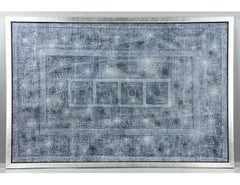
Large Abstract Latin American Painting Venezuelan Mercedez Elena Gonzalez
Located in Surfside, FL
Mercedes Elena González, (Venezuelan, 1952-), Neurohilados Large abstract with calligraphy Acrylic on canvas, Hand signed Dated 1999 verso Dimensions 54" h x 80 3/4" w (including ...
Category

1990s Abstract Abstract Paintings

Materials

Canvas, Acrylic

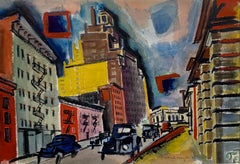
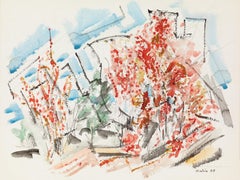
Christopher Street (abstract Greenwich Village cityscape)
By De Hirsch Margules
Located in Wilton Manors, FL
De Hirsh Margules (1899-1965). Christopher Street, 1939. Watercolor on Arches wove paper. Signed and dated in pencil by artist lower margin. Sheet measures 15.5 x 20 inches. Window in matting measures 15 x 19 inches. Framed measurement: 23 x 30 inched. Bears fragment of original label affixed on verso. Incredibly vibrant and saturated color with no fading or toning of sheet. Provenance: Babcock Galleries, NYC Exhibited: The American Federation of Arts Traveling Exhibition. From the facade of The Waverly at Christopher is depicted One Christopher Street, the 16-story Art Deco residential building erected in 1931. It is not a casual coincidence that the structure appears in this cityscape: 1 Christopher Street is the subject. The original intention of this project was to transform the neighborhood, bring a bit of affluence and make a bid to rival the Upper West Side. Margules, a sensitive aesthete, understood how a massive piece of architecture such as One changes a neighborhood. Sound, scale and focal points are forever altered. A pedestrian's sense of depth and distance becomes pronounced. All of these factors contribute to the intent behind this image. Tall buildings disrupt the human scale, change the skyline and carve up space. In this piece, negative space conforms to the man-made geometries. Clouds become gems fixed in settings. De Hirsh Margules (1899–1965) was a Romanian-American "abstract realist" painter who crossed paths with many major American artistic and intellectual figures of the first half of the 20th century. Elaine de Kooning said that he was "[w]idely recognized as one of the most gifted and erudite watercolorists in the country". The New York Times critic Howard Devree stated in 1938 that "Margules uses color in a breath-taking manner. A keen observer, he eliminates scrupulously without distortion of his material." Devree later called Margules "one of our most daring experimentalists in the medium" Margules was also a well-known participant in the bohemian culture of New York City's Greenwich Village, where he was widely known as the "Baron" of Greenwich Village.[1] The New York Times described him as "one of Greenwich Village's best-known personalities" and "one of the best known and most buoyant characters about Greenwich Village. Early Life De Hirsh Margules was born in 1899 in the Romanian city of Iași (also known as Iasse, Jassy, or Jasse). When Margules was 10 weeks old, his family immigrated to New York City. Both of his parents were active in the Yiddish theater, His father was Yekutiel "Edward" Margules, a "renowned Jewish actor-impresario and founder of the Yiddish stage." Margules' mother, Rosa, thirty-nine years younger than his father, was an actress in the Yiddish theater and later in vaudeville. Although Margules appeared as a child actor with the Adler Family[11] and Bertha Kalich, his sister, Annette Margules, somewhat dubiously continued in family theater and vaudeville tradition, creating the blackface role of the lightly-clad Tondelayo (a part later played on film Hedy Lamarr) in Earl Carroll's 1924 Broadway exoticist hit, White Cargo. Annette herself faced stereotyping as an exotic flower: writing about her publicist Charles Bouchert stated that "Romania produces a stormy, temperamental type of woman---a type admirably fitted to portray emotion." His brother Samuel became a noted magician who appeared under the name "Rami-Sami." Samuel later became a lawyer, representing magician Horace Goldin, among others. A family portrait including a young De Hirsh, a portrait of Rosa and Annette together, and individual photos of Rosa and Edward can be found on the Museum of the City of New York website. At around age 9 or 10, Margules took art classes with the Boys Club on East Tenth Street, and his first taste of exhibition was at a student art show presented by the club. By age 11, he had won a city-wide prize (a box camera) at a children's art show presented by the department store Wanamakers. As a young teenager, Margules was already displaying a characteristic kindness and loyalty. Upon hearing that two friends (one of them was author Alexander King), were in trouble for breaking a school microscope, the nearly broke Margules gave them five dollars to repair the microscope . Margules had to approach a wealthy man that Margules had once saved on the subway from a heart attack. Margules didn't reveal the source of the five dollars to King until twenty-five years later. In his late teens, Margules studied for a couple of months in Pittsburgh with Edwin Randby, a follower of Western painter Frederic Remington. Thereafter he pursued a two-year course of studies in architecture, design and decoration at the New York Evening School of Art and Design, while working as a clerk during the day at Stern's Department Store. He was encouraged in these artistic pursuits by his neighbor, the painter Benno Greenstein (who later went by the name of Benjamin Benno). Artistic career In 1922, Margules began work as a police reporter for the City News Association of New York .Margules then considered himself something of an expert on art, and the painter Myron Lechay is said to have responded to some unsolicited analysis of his work with the remark "Since you seem to know so much about it, why don't you paint yourself?" This led to study with Lechay and a flurry of painting. Margules' first show was in 1922 at Jane Heap's Little Review Gallery. Thereafter Margules began to participate in shows with a group including Stuart Davis, Jan Matulka, Buckminster Fuller (exhibiting depictions of his "Dymaxion house") in a gallery run by art-lover and restaurateur Romany Marie on the floor above her cafe. Jane Heap, left, with Mina Loy and Ezra Pound During the 1920s, Margules traveled outside of the country a number of times. In 1922, with the intent of reaching Bali, he took a job as a "'wiper on a tramp steamer where [he] played nursemaid to the engine." He reached Rotterdam before he turned back. He would return to Rotterdam shortly thereafter. In 1927, Margules took a lengthy leave of absence from his day job as a police reporter in order to travel to Paris, where he "set up a studio in Montmartre's Place du Tertre, on the top floor of an almost deserted hotel, a shabby establishment, lacking both heat and running water." He studied at the Louvre and traveled to paint landscapes in provincial France and North Africa. Margules also joined the "Noctambulist" movement and experimented with painting and showing his artwork in low light.Jonathan Cott wrote that: the painter De Hirsch Margulies sat on the quays of the Seine and painted pictures in the dark. In fact, the first exhibition of these paintings, which could be seen only in a darkened room, took place in [ Walter Lowenfels'] Paris apartment. Elaine de Kooning remarked that studying the works of the Noctambulists confirmed Margules' "direction toward the use of primary colors for perverse effects of heavy shadow." It was also in Paris that Margules initially conceived his idea of "Time Painting", where a painting is divided into sectors, each representing a different time of day, with color choices meant to evoke that time of day. In Paris, his social circle included Lowenfels, photographer Berenice Abbott, publisher Jane Heap, composer George Anthiel, sculptor Thelma Wood, painter André Favory, writer Norman Douglas, writer and editor George Davis, composer and writer Max Ewing, and writer Michael Fraenkel. Upon his return to New York in 1929, Margules attended an exhibition of John Marin's paintings. While at the exhibition, he "launched into an eloquent explanation of Marin to two nearby women", and was overheard by an impressed Alfred Stieglitz. The famous photographer and art promoter invited Margules to dine with his wife, the artist Georgia O'Keeffe, and his assistant, painter Emil Zoler. Stieglitz thereafter became a friend and mentor to Margules, becoming for him "what Socrates was to his friends." Alfred Stieglitz Stieglitz introduced Margules to John Marin, who quickly became the most important painterly influence upon Margules. Elaine de Kooning later noted that Margules was "indebted to Marin and through Marin to Cézanne for his initial conceptual approach - for his constructions of scenes with no negative elements, for skies that loom with the impact of mountains." Margules himself said that Marin was his "father and ... academy." The admiration was by no means unreciprocated: Marin said that Margules was "an art lover with abounding faith and sincerity, with much intelligence and quick seeing." Stieglitz also introduced Margules to many other artistic and intellectual figures in New York. With the encouragement of Alfred Stieglitz, Margules in 1936 opened a two-room gallery at 43 West 8th Street called "Another Place." Over the following two years there were fourteen solo exhibitions by Margules and others, and the gallery was well-respected by the press. It was in this gallery that the painter James Lechay, Myron's brother, exhibited his first painting. In 1936, Margules first saw recognition by major art museums when both the Museum of Modern Art and the Museum of Fine Arts, Boston purchased his works. In 1942, Margules gave up working as a police reporter, and apparently dedicated himself thereafter solely to an artistic vocation. "The Baron of Greenwich Village"[edit] Margules made his mark not only as an artist, but also as an outsized personality known throughout Greenwich Village and beyond. To local residents, Margules was known as the "Baron", after Baron Maurice de Hirsch, a prominent German Jewish philanthropist. Margules was easily recognizable by the beret he routinely wore over his long hair. Writer Charles Norman said that he "dressed with a flair for sloppiness." He was said to "know everybody" in Greenwich Village, to the extent that when the novelist and poet Maxwell Bodenheim was murdered, Margules was the first one the police sought to identify the body. Margules' letters show him interacting with art world figures such as Sacha Kolin, John Marin and Alfred Stieglitz, as well as with prominent figures outside the art world such as polymath Buckminster Fuller and writer Henry Miller. Most of his friends and acquaintances found Margules a generous and voluble man, given to broadly emotionally expressive gestures and acts of kindness and loyalty. In 1929, he exhibited an example of this loyalty and fellow-feeling when he appeared in court to fight what the wrongful commitment of his friend, writer and sculptor Alfred Dreyfuss, who appeared to have been a victim of an illicit attempt to block an inheritance. The Greenwich Village chronicler Charles Norman described the bone-crushing hugs that Margules would routinely bestow on his friends and acquaintances, and speaks of the "persuasive theatricality" that Margules seemed to have inherited from his actor parents. Norman also wrote about Margules' routine acts of kindness, taking in homeless artists, constantly feeding his friends and providing the salvatory loan where needed. Norman also notes that Margules was blessed with a loud and good voice, and was apt to sing an operatic air without provocation. The writer and television personality Alexander King said I think the outstanding characteristics of my friend's personality are affirmation, emphasis, and overemphasis. He chooses to express himself predominantly in superlatives and the gestures which accompany his utterances are sometimes dangerous to life and limb. Of the bystanders, I mean. King also spoke with affectionate amusement about Margules' pride in his cooking, speaking of how "if he should ever invite you to dinner, he may serve you a hamburger with onions, in his kitchen-living room, with such an air of gastronomic protocol, such mysterious hints and ogliing innuendoes, as if César Ritz and Brillat-Savarin had sneaked out, only a moment before, with his secret recipe in their pockets." Margules was such a memorable New York personality that comic book writer Alvin Schwartz imagined him at the Sixth Avenue Cafeteria in a risible yet poignant debate with Clark Kent about whether Superman had the ability to stop Hitler. Margules' entrenchment in the Greenwich Village milieu can be seen in a photograph from Fred McDarrah's "Beat Generation Album" of a January 13, 1961 writers' and poets' meeting to discuss "The Funeral of the Beat Generation", in Robert Cordier [fr]'s railroad flat at 85 Christopher Street. Among the people in the same photograph are Shel Silverstein...
Category

1930s American Modern Abstract Paintings

Materials

Watercolor, Rag Paper

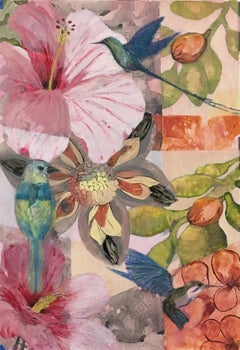
Hibiscus and Hummers Mixed Media on Yupo 40" x 26" Framed Botanical Series
Located in Houston, TX
Hibiscus & Hummers, Ink, Watercolor, Oil on Yupo 40″ x 26″ Image Framed Texas artist Julie England Look for free ship...
Category

2010s American Realist Still-life Paintings

Materials

Paper, Mixed Media

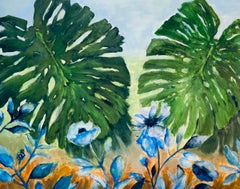
Cool Afternoon Oil Watercolor Yupo Paper 11″ x 14″ Image 16″ x 21 3/4″ Frame
Located in Houston, TX
Cool Afternoon by Texas artist Julie England is an Ink and Watercolor, Oil on Yupo paper. The size of Cool Afternoon is 11″ x 14″ Image 16″ x 21 3/4″...
Category

2010s American Realist Landscape Paintings

Materials

Oil, Watercolor

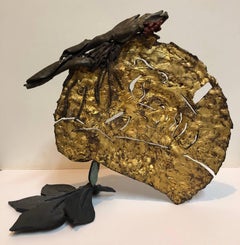
Polychrome Bronze Organic Sculpture Polich Tallix Art Foundry Sleeping Beauty
By Robert Kushner
Located in Surfside, FL
Robert Kushner, born in 1949, in California, lives in New York, and is a painter and sculptor. He gained attention in the early seventies as a performance artist, using food, fabric and nudity. Kushner was associated with the Pattern and Decoration movement and used fabric collage in large-scale, bold paintings of the figure. Since 1987 he has used flowers as the subject of his paintings, more recently adding a cornucopia of fruits and vegetables to his repertoire. Kushner's use of rich color harmonies and bold, fluid drawing, mark his belief in the importance of beauty in our lives. Kushner draws from a unique range of influences, including Islamic and European textiles, Henri Matisse, Georgia O'Keeffe, Charles Demuth, Pierre Bonnard, Tawaraya Sotatsu, Ito Jakuchu...
Category

1980s Contemporary Still-life Sculptures

Materials

Bronze

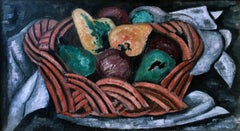
Basket with Fruit - Modernism
By Marsden Hartley
Located in Miami, FL
Bold outlines and strong weighty forms coalesce with a compositional delicacy that forms the hallmark of Hartley's work. The work has a long and distinguished provenance and exhibit...
Category

1920s American Modern Still-life Paintings

Materials

Canvas, Oil

Roses of Red Ink Watercolor Oil on Yupo 26″ x 40″ Image 31 1/4″ x 45 1/4″ Frame
Located in Houston, TX
Roses of Red Ink, Watercolor Oil on Yupo 26″ x 40″ Image 31 1/4″ x 45 1/4″ Frame 2023 Look for free shipping at checkout. Red Roses was inspired by the many occasions in our...
Category

2010s American Realist Landscape Paintings

Materials

Ink, Oil, Watercolor

End of Season Mixed Media on Yupo paper Image 37 x 24 Framed 46 x 32 .75
Located in Houston, TX
End of Season by Texas artist Julie England is mixed media on Yupo paper. The size of End of End of Season is 37″ x 24″ Image 46″ x 32 3/4″ Framed. Ar...
Category

2010s American Realist Mixed Media

Materials

Mixed Media

New York Improvisation
By Abraham Walkowitz
Located in Miami, FL
Abraham Walkowitz (1878–1965) New York Improvisation, 1910 Ink wash on paper Signed lower right 'A. Walkowitz 1910' Titled and dated on Zabriskie Gallery label enclosed in clear sle...
Category

Early 1900s Post-Impressionist Figurative Drawings and Watercolors

Materials

Ink

Veiled Series X , Abstract Expressionist Organic Drawing Watercolor Painting
By Dorothy Gillespie
Located in Surfside, FL
Dorothy Gillespie (June 29, 1920 – September 30, 2012) was an American artist and sculptor who became known for her large and colorful abstract metal sculptures. Gillespie became best known for the aluminum sculptures she started to produce at the end of the 1970s. She would paint sheets of the metal, cut them into strips and connect the strips together to resemble cascades or starbursts of bright colored ribbon. The New York Times once summarized her work as “topsy-turvy, merrymaking fantasy,” and in another review declared, “The artist’s exuberant sculptures of colorful aluminum strips have earned her an international reputation.Her works are featured at her alma mater (Radford University) in Virginia, where she later returned to teach, as well as in New York (where she was artist in residence for the feminist Women's Interart Center), Wilmington, North Carolina and Florida. She enrolled both at Radford University near her hometown, and the Maryland Institute College of Art in Baltimore, Maryland. The director of the Maryland Institute, Hans Schuler, helped foster her career in fine art. On June 5, 1943, aged 23, Gillespie moved to New York City. There she took a job at the B. Altman department store as assistant art director. She also joined the Art Students League where she was exposed to new ideas about techniques, materials, and marketing. She also created works at Atelier 17 printmaking studio, where Stanley William Hayter encouraged to experiment with her own ideas. She and her husband, Bernard Israel, opened a restaurant and night club in Greenwich Village to support their family. She returned to making art in 1957, and worked at art full-time after they sold the nightclub in the 1970. In 1977 Gillespie gave her first lecture series at the New School for Social Research, and she would give others there until 1982. She taught at her alma mater as a Visiting Artist (1981-1983) and gave Radford University some of her work to begin its permanent art collection. Gillespie then served as Woodrow Wilson visiting Fellow (1985-1994), visiting many small private colleges to give public lectures and teach young artists. She returned to Radnor University to teach as Distinguished Professor of Art (1997–99).[8] She also hosted a radio program, the Dorothy Gillespie Show on Radio Station WHBI in New York from 1967-1973. Gillespie began moving away from realism and into the abstraction that marked her career. Gillespie returned to New York City in 1963 to continue her career. She maintained a studio through the 70s and advocate worked towards feminist goals in the art industry, picketing the Whitney Museum, helping to organize the Women's Interart Center, curating exhibitions of women's art, and writing articles raising awareness of her cause. Gillespie numbered among her acquaintances such art-world luminaries as Jackson Pollock, Lee Krasner, Alice Neel, Louise Nevelson and Georgia O’Keeffe. “She had amazing stories that unfortunately are gone,” her son said. During the 1960s, she built multimedia art installations that made political statements, such as 1965’s “Made in the USA,” that used blinking colored lights, mirrors, shadow boxes, rotating figures and tape recordings to convey a chaotic look at American commercial fads. The floor was strewn with real dollar bills, which visitors assumed were fake. By the 1980s, Gillespie's work had come to be known internationally. She completed many commissions for sculptures in public places, including Lincoln Center, Rockefeller Center and Walt Disney World Epcot Center in Orlando, Florida. Her work is in many collections across the United States, including the Delaware Museum, the Solomon R. Guggenheim Museum, and the National Museum of Women in the Arts. Her sculptures can also be found in the Frankfurt Museum in Germany and the Tel Aviv Museum in Israel. Group Shows Conceived and Curated by Dorothy Gillespie Women's Interart Center, New York, NY 1974 included: Betty Parsons, Elsie Asher, Alice Baber, Minna Citron, Nancy Spero, Seena Donneson, Alice Neel, Natalie Edgar, Dorothy Gillespie, and Anita Steckel...
Category

Early 2000s Abstract Expressionist Abstract Drawings and Watercolors

Materials

Paper, Ink, Watercolor, Permanent Marker

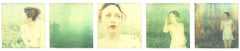
Alice (Stranger than Paradise), analog, 5 pieces
By Stefanie Schneider
Located in Morongo Valley, CA
Alice (Stranger than Paradise) - 2004 38x37cm each, installed with gaps 38x210cm, Edition of 2/7, 5 analog C-Prints, hand-printed by the artist on Fuji Crystal Archive Paper, base...
Category

Early 2000s Contemporary Color Photography

Materials

Archival Paper, Photographic Paper, C Print, Color, Polaroid

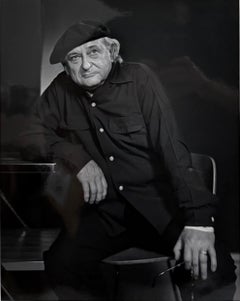
Sculptor Jacques Lipchitz Photograph Portrait Yousuf Karsh Photo Vintage Print
By Yousuf Karsh
Located in Surfside, FL
YOUSUF KARSH Vintage Photograph of Sculptor Jacques Lipchitz, Dimensions: sight 13 x 10-1/2 overall size is 16.5 X 14 inches mat This bears a studio stamp verso inscribed Copyright...
Category

20th Century Modern Black and White Photography

Materials

Photographic Paper

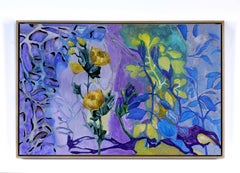
Yellow Poppies Ink Watercolor Oil on Yupo paper 26” x 40” Framed 31 ¼” x 45 ¼”
Located in Houston, TX
Yellow Poppies by Texas artist Julie England is an Ink and Watercolor, Oil on Yupo paper. The size of Yellow Poppies is Image 26” x 40” Framed 31 ¼” x 45 ¼” Yellow Poppies by Julie England is floated in a white 2” depth gallery frame with OP3 plexi glazing. Look for free shipping at checkout. Available for shipping on March 28. Yellow Poppies was inspired by the idea of abstract art meets botanical illustration. Whether a mass of color blur or the focal point of a bloom like a botanical illustration, each is recording its environment and time. A meditative connection to the wild land comes with observation and ecological awareness. I paint natural, organic imagery with a focus on mark-making and use of material transparencies. My work includes vegetative and topological forms and gestures using color as a vehicle to convey energy from nature. I create images of imaginary environments inviting viewers to visit. YELLOW POPPIES was included in the Natural Diversity Art...
Category

2010s American Realist Landscape Paintings

Materials

Mixed Media, Oil, Watercolor

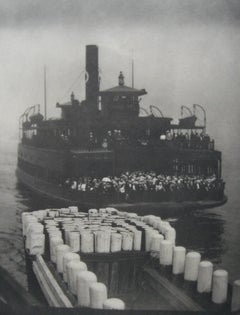
The Ferry Boat by Alfred Stieglitz, 1910, Photogravure, Photography
By Alfred Stieglitz
Located in Denton, TX
The Ferry Boat by Alfred Stieglitz is a photogravure on tissue. The photograph depicts a ferry boat on the water with a crowd of people on the lower level o...
Category

1910s Modern Black and White Photography

Materials

Photogravure

Maples in Autumn Foliage
By John Marin
Located in Bryn Mawr, PA
Maples in Autumn Foliage, 1949 Watercolor on paper 19 1/4 x 14 1/2 inches (48.9 x 36.8 cm) Framed dimensions: 21 5/8 x 26 1/2 inches Signed and dated lower right: Marin 49 Provenanc...
Category

1940s American Modern Landscape Drawings and Watercolors

Materials

Paper, Watercolor

Alexander Calder Circus Reproduction Lithograph After a Drawing
By (after) Alexander Calder
Located in Surfside, FL
(after) Alexander Calder "Calder's Circus" offset lithograph on wove paper after drawings by the artist Published by Art in America and Perls gallery in 1964 (from drawings done in the 1930's) these range slightly in size but they are all about 13 X 17 inches (with minor variations in size as issued.) These have never been framed. The outer folio is not included just the one lithograph. James Sweeny from the introduction “The fame of Calder’s circus spread quickly between the years 1927 and 1930. All the Paris art world came to know it. It brought him his first great personal success. But what was more important, the circus also provided the first steps in Calder’s development as an original sculptor” Clive Gray wrote ”A visit to the studio of Alexander Calder led to the chance discovery of some hundred masterful circus drawings completed over thirty years ago. We publish, for the first time, a choice of sixteen from that group.” With signed introduction by Miro. These whimsical drawings, done in the style of wire sculpture, include acrobats, clowns, jugglers, trapeeze artists, an elephant, dog and lion. they are great. Alexander Calder is widely considered to be one of the most important American sculptors of the 20th century. He is best known for his colorful, whimsical abstract public sculptures and his innovative mobiles, kinetic sculptures powered by motors or air currents, which embraced chance in their aesthetic. Born into a family of accomplished artists, Calder's work first gained attention in Paris in the 1930s and was soon championed by the Museum of Modern Art in New York, resulting in a retrospective exhibition in 1943. Major retrospectives were also held at the Solomon R. Guggenheim Museum (1964) and the Museum of Contemporary Art, Chicago (1974). Calder’s work is in many permanent collections, most notably in the Whitney Museum of American Art, but also the Guggenheim Museum; the Museum of Modern Art; the National Gallery of Art, Washington, D.C.; and the Centre Georges Pompidou. He produced many large public works, including .125 (at JFK Airport, 1957), Pittsburgh (Carnegie International prize winner 1958, Pittsburgh International Airport) Spirale (UNESCO in Paris, 1958), Flamingo and Universe (both in Chicago, 1974), and Mountains and Clouds (Hart Senate Office Building, Washington, D.C., 1976). Although primarily known for his sculpture, Calder was a prodigious artist with a restless creative spirit, whose diverse practice included painting and printmaking, miniatures (such as his famous Cirque Calder), children’s book illustrations, theater set design, jewelry design, tapestry and rug works, and political posters. Calder was honored by the US Postal Service with a set of five 32-cent stamps in 1998, and received the Presidential Medal of Freedom, posthumously in 1977, after refusing to receive it from Gerald Ford one year earlier in protest of the Vietnam War. Calder moved to New York and enrolled at the Art Students League, studying briefly with Thomas Hart Benton, George Luks, Kenneth Hayes Miller, and John Sloan. While a student, he worked for the National Police Gazette where, in 1925, one of his assignments was sketching the Ringling Bros. and Barnum & Bailey Circus. Calder became fascinated with the action of the circus, a theme that would reappear in his later work. In 1926, Calder moved to Paris, enrolled in the Académie de la Grande Chaumière, and established a studio at 22 rue Daguerre in the Montparnasse Quarter. In June 1929, while traveling by boat from Paris to New York, Calder met his future wife, Louisa James (1905-1996), grandniece of author Henry James and philosopher William James. They married in 1931. While in Paris, Calder met and became friends with a number of avant-garde artists, including Fernand Léger, Jean Arp, and Marcel Duchamp. Cirque Calder (on view at the Whitney Museum of American Art at present) became popular with the Parisian avant-garde. He also invented wire sculpture, or "drawing in space," and in 1929 he had his first solo show of these sculptures in Paris at Galerie Billiet. Hi! (Two Acrobats) in the collection of the Honolulu Museum of Art is an early example of the artist's wire sculpture. The painter Jules Pascin, a friend of Calder's from the cafes of Montparnasse, wrote the preface to the catalog. A visit to Piet Mondrian's studio in 1930, where he was impressed by the environment-as-installation, "shocked" him into fully embracing abstract art, toward which he had already been tending. Dating from 1931, Calder’s sculptures of discrete movable parts powered by motors were christened “mobiles” by Marcel Duchamp, a French pun meaning both "motion" and "motive." At the same time, Calder was also experimenting with self-supporting, static, abstract sculptures, dubbed "stabiles" by Jean Arp in 1932 to differentiate them from mobiles. Public commissions increasingly came his way in the 1960s. Notable examples are .125 for JFK Airport in 1957, Spirale for UNESCO in Paris 1958 and Trois disques, commissioned for Expo 67 in Montreal, Quebec, Canada. Calder's largest sculpture at 25.7 meters high was El Sol Rojo, constructed outside the Aztec Stadium for the 1968 Summer Olympics "Cultural Olympiad" events in Mexico City. Many of his public works were commissioned by renowned architects; I.M. Pei commissioned his La Grande Voile (1966), a 25-ton, 40-foot high stabile for the Massachusetts Institute of Technology. Part of Calder's repertoire includes pivotal stage sets for more than a dozen theatrical productions, including Nucléa, Horizon, and most notably, Martha Graham’s Panorama (1935), a production of the Erik Satie symphonic drama Socrate (1936), and later, Works in Progress (1968). In addition to sculptures, Calder painted throughout his career, beginning in the early 1920s. He picked up his study of printmaking in 1925, and continued to produce illustrations for books and journals.As Calder’s professional reputation expanded in the late 1940s and 1950s, so did his production of prints. Masses of lithographs based on his gouache paintings hit the market, and deluxe editions of plays, poems, and short stories illustrated with fine art prints by Calder became available for sale. One of Calder's most celebrated and unconventional undertakings was a commission from Dallas-based Braniff International Airways to paint a full-size Douglas DC-8-62 four-engined jet as a "flying canvas." Calder created over 2,000 pieces of jewelry over the course of his career, many of them as gifts for friends and relatives. For his lifelong friend Joan Miró, he set a shard of a broken porcelain vessel in a brass ring. Peggy Guggenheim received enormous silver mobile earrings and later commissioned a hammered silver headboard...
Category

1930s American Modern Animal Prints

Materials

Lithograph

Veiled Series XX , Abstract Expressionist Organic Drawing Watercolor Painting
By Dorothy Gillespie
Located in Surfside, FL
Dorothy Gillespie (June 29, 1920 – September 30, 2012) was an American artist and sculptor who became known for her large and colorful abstract metal sculptures. Gillespie became best known for the aluminum sculptures she started to produce at the end of the 1970s. She would paint sheets of the metal, cut them into strips and connect the strips together to resemble cascades or starbursts of bright colored ribbon. The New York Times once summarized her work as “topsy-turvy, merrymaking fantasy,” and in another review declared, “The artist’s exuberant sculptures of colorful aluminum strips have earned her an international reputation.Her works are featured at her alma mater (Radford University) in Virginia, where she later returned to teach, as well as in New York (where she was artist in residence for the feminist Women's Interart Center), Wilmington, North Carolina and Florida. She enrolled both at Radford University near her hometown, and the Maryland Institute College of Art in Baltimore, Maryland. The director of the Maryland Institute, Hans Schuler, helped foster her career in fine art. On June 5, 1943, aged 23, Gillespie moved to New York City. There she took a job at the B. Altman department store as assistant art director. She also joined the Art Students League where she was exposed to new ideas about techniques, materials, and marketing. She also created works at Atelier 17 printmaking studio, where Stanley William Hayter encouraged to experiment with her own ideas. She and her husband, Bernard Israel, opened a restaurant and night club in Greenwich Village to support their family. She returned to making art in 1957, and worked at art full-time after they sold the nightclub in the 1970. In 1977 Gillespie gave her first lecture series at the New School for Social Research, and she would give others there until 1982. She taught at her alma mater as a Visiting Artist (1981-1983) and gave Radford University some of her work to begin its permanent art collection. Gillespie then served as Woodrow Wilson visiting Fellow (1985-1994), visiting many small private colleges to give public lectures and teach young artists. She returned to Radnor University to teach as Distinguished Professor of Art (1997–99).[8] She also hosted a radio program, the Dorothy Gillespie Show on Radio Station WHBI in New York from 1967-1973. Gillespie began moving away from realism and into the abstraction that marked her career. Gillespie returned to New York City in 1963 to continue her career. She maintained a studio through the 70s and advocate worked towards feminist goals in the art industry, picketing the Whitney Museum, helping to organize the Women's Interart Center, curating exhibitions of women's art, and writing articles raising awareness of her cause. Gillespie numbered among her acquaintances such art-world luminaries as Jackson Pollock, Lee Krasner, Alice Neel, Louise Nevelson and Georgia O’Keeffe. “She had amazing stories that unfortunately are gone,” her son said. During the 1960s, she built multimedia art installations that made political statements, such as 1965’s “Made in the USA,” that used blinking colored lights, mirrors, shadow boxes, rotating figures and tape recordings to convey a chaotic look at American commercial fads. The floor was strewn with real dollar bills, which visitors assumed were fake. By the 1980s, Gillespie's work had come to be known internationally. She completed many commissions for sculptures in public places, including Lincoln Center, Rockefeller Center and Walt Disney World Epcot Center in Orlando, Florida. Her work is in many collections across the United States, including the Delaware Museum, the Solomon R. Guggenheim Museum, and the National Museum of Women in the Arts. Her sculptures can also be found in the Frankfurt Museum in Germany and the Tel Aviv Museum in Israel. Group Shows Conceived and Curated by Dorothy Gillespie Women's Interart Center, New York, NY 1974 included: Betty Parsons, Elsie Asher, Alice Baber, Minna Citron, Nancy Spero, Seena Donneson, Alice Neel, Natalie Edgar, Dorothy Gillespie, and Anita Steckel...
Category

Early 2000s Abstract Expressionist Abstract Drawings and Watercolors

Materials

Paper, Ink, Watercolor, Permanent Marker

Veiled Series L, Abstract Expressionist Organic Drawing Watercolor Painting
By Dorothy Gillespie
Located in Surfside, FL
Dorothy Gillespie (June 29, 1920 – September 30, 2012) was an American artist and sculptor who became known for her large and colorful abstract metal sculptures. Gillespie became best known for the aluminum sculptures she started to produce at the end of the 1970s. She would paint sheets of the metal, cut them into strips and connect the strips together to resemble cascades or starbursts of bright colored ribbon. The New York Times once summarized her work as “topsy-turvy, merrymaking fantasy,” and in another review declared, “The artist’s exuberant sculptures of colorful aluminum strips have earned her an international reputation.Her works are featured at her alma mater (Radford University) in Virginia, where she later returned to teach, as well as in New York (where she was artist in residence for the feminist Women's Interart Center), Wilmington, North Carolina and Florida. She enrolled both at Radford University near her hometown, and the Maryland Institute College of Art in Baltimore, Maryland. The director of the Maryland Institute, Hans Schuler, helped foster her career in fine art. On June 5, 1943, aged 23, Gillespie moved to New York City. There she took a job at the B. Altman department store as assistant art director. She also joined the Art Students League where she was exposed to new ideas about techniques, materials, and marketing. She also created works at Atelier 17 printmaking studio, where Stanley William Hayter encouraged to experiment with her own ideas. She and her husband, Bernard Israel, opened a restaurant and night club in Greenwich Village to support their family. She returned to making art in 1957, and worked at art full-time after they sold the nightclub in the 1970. In 1977 Gillespie gave her first lecture series at the New School for Social Research, and she would give others there until 1982. She taught at her alma mater as a Visiting Artist (1981-1983) and gave Radford University some of her work to begin its permanent art collection. Gillespie then served as Woodrow Wilson visiting Fellow (1985-1994), visiting many small private colleges to give public lectures and teach young artists. She returned to Radnor University to teach as Distinguished Professor of Art (1997–99).[8] She also hosted a radio program, the Dorothy Gillespie Show on Radio Station WHBI in New York from 1967-1973. Gillespie began moving away from realism and into the abstraction that marked her career. Gillespie returned to New York City in 1963 to continue her career. She maintained a studio through the 70s and advocate worked towards feminist goals in the art industry, picketing the Whitney Museum, helping to organize the Women's Interart Center, curating exhibitions of women's art, and writing articles raising awareness of her cause. Gillespie numbered among her acquaintances such art-world luminaries as Jackson Pollock, Lee Krasner, Alice Neel, Louise Nevelson and Georgia O’Keeffe. “She had amazing stories that unfortunately are gone,” her son said. During the 1960s, she built multimedia art installations that made political statements, such as 1965’s “Made in the USA,” that used blinking colored lights, mirrors, shadow boxes, rotating figures and tape recordings to convey a chaotic look at American commercial fads. The floor was strewn with real dollar bills, which visitors assumed were fake. By the 1980s, Gillespie's work had come to be known internationally. She completed many commissions for sculptures in public places, including Lincoln Center, Rockefeller Center and Walt Disney World Epcot Center in Orlando, Florida. Her work is in many collections across the United States, including the Delaware Museum, the Solomon R. Guggenheim Museum, and the National Museum of Women in the Arts. Her sculptures can also be found in the Frankfurt Museum in Germany and the Tel Aviv Museum in Israel. Group Shows Conceived and Curated by Dorothy Gillespie Women's Interart Center, New York, NY 1974 included: Betty Parsons, Elsie Asher, Alice Baber, Minna Citron, Nancy Spero, Seena Donneson, Alice Neel, Natalie Edgar, Dorothy Gillespie, and Anita Steckel...
Category

Early 2000s Abstract Expressionist Abstract Drawings and Watercolors

Materials

Paper, Ink, Watercolor, Permanent Marker

Veiled Series LX , Abstract Expressionist Organic Drawing Watercolor Painting
By Dorothy Gillespie
Located in Surfside, FL
Dorothy Gillespie (June 29, 1920 – September 30, 2012) was an American artist and sculptor who became known for her large and colorful abstract metal sculptures. Gillespie became best known for the aluminum sculptures she started to produce at the end of the 1970s. She would paint sheets of the metal, cut them into strips and connect the strips together to resemble cascades or starbursts of bright colored ribbon. The New York Times once summarized her work as “topsy-turvy, merrymaking fantasy,” and in another review declared, “The artist’s exuberant sculptures of colorful aluminum strips have earned her an international reputation.Her works are featured at her alma mater (Radford University) in Virginia, where she later returned to teach, as well as in New York (where she was artist in residence for the feminist Women's Interart Center), Wilmington, North Carolina and Florida. She enrolled both at Radford University near her hometown, and the Maryland Institute College of Art in Baltimore, Maryland. The director of the Maryland Institute, Hans Schuler, helped foster her career in fine art. On June 5, 1943, aged 23, Gillespie moved to New York City. There she took a job at the B. Altman department store as assistant art director. She also joined the Art Students League where she was exposed to new ideas about techniques, materials, and marketing. She also created works at Atelier 17 printmaking studio, where Stanley William Hayter encouraged to experiment with her own ideas. She and her husband, Bernard Israel, opened a restaurant and night club in Greenwich Village to support their family. She returned to making art in 1957, and worked at art full-time after they sold the nightclub in the 1970. In 1977 Gillespie gave her first lecture series at the New School for Social Research, and she would give others there until 1982. She taught at her alma mater as a Visiting Artist (1981-1983) and gave Radford University some of her work to begin its permanent art collection. Gillespie then served as Woodrow Wilson visiting Fellow (1985-1994), visiting many small private colleges to give public lectures and teach young artists. She returned to Radnor University to teach as Distinguished Professor of Art (1997–99).[8] She also hosted a radio program, the Dorothy Gillespie Show on Radio Station WHBI in New York from 1967-1973. Gillespie began moving away from realism and into the abstraction that marked her career. Gillespie returned to New York City in 1963 to continue her career. She maintained a studio through the 70s and advocate worked towards feminist goals in the art industry, picketing the Whitney Museum, helping to organize the Women's Interart Center, curating exhibitions of women's art, and writing articles raising awareness of her cause. Gillespie numbered among her acquaintances such art-world luminaries as Jackson Pollock, Lee Krasner, Alice Neel, Louise Nevelson and Georgia O’Keeffe. “She had amazing stories that unfortunately are gone,” her son said. During the 1960s, she built multimedia art installations that made political statements, such as 1965’s “Made in the USA,” that used blinking colored lights, mirrors, shadow boxes, rotating figures and tape recordings to convey a chaotic look at American commercial fads. The floor was strewn with real dollar bills, which visitors assumed were fake. By the 1980s, Gillespie's work had come to be known internationally. She completed many commissions for sculptures in public places, including Lincoln Center, Rockefeller Center and Walt Disney World Epcot Center in Orlando, Florida. Her work is in many collections across the United States, including the Delaware Museum, the Solomon R. Guggenheim Museum, and the National Museum of Women in the Arts. Her sculptures can also be found in the Frankfurt Museum in Germany and the Tel Aviv Museum in Israel. Group Shows Conceived and Curated by Dorothy Gillespie Women's Interart Center, New York, NY 1974 included: Betty Parsons, Elsie Asher, Alice Baber, Minna Citron, Nancy Spero, Seena Donneson, Alice Neel, Natalie Edgar, Dorothy Gillespie, and Anita Steckel...
Category

Early 2000s Abstract Expressionist Abstract Drawings and Watercolors

Materials

Paper, Ink, Watercolor, Permanent Marker

Sukkos, Judaica Fruit, Print Pattern Decoration Lithograph Robert Kushner Art
By Robert Kushner
Located in Surfside, FL
Robert Kushner, born in 1949, in California, lives in New York, and is a painter and sculptor. He gained attention in the early seventies as a performance artist, using food, fabric and nudity. Kushner was associated with the Pattern and Decoration movement and used fabric collage in large-scale, bold paintings of the figure. Since 1987 he has used flowers...
Category

1990s Contemporary Still-life Prints

Materials

Paper, Color

Alexander Calder Circus Reproduction Lithograph after a Drawing
By (after) Alexander Calder
Located in Surfside, FL
(after) Alexander Calder "Calder's Circus" offset lithograph on wove paper reproduction after drawings by the artist Published by Art in America and Perls gallery in 1964 (from drawi...
Category

1930s American Modern Animal Prints

Materials

Lithograph

American Vivid Abstract Expressionist Art Oil Painting Norman Carton, WPA Artist
By Norman Carton
Located in Surfside, FL
Norman Carton (1908 – 1980) was an American artist and educator known for abstract expressionist art. He was born in the Ukraine region of Imperial Russia and moved to the United States in 1922 where he spent most of his adult life. A classically trained portrait and landscape artist, Carton also worked as a drafter, newspaper illustrator, muralist, theater set designer, photographer, and fabric designer and spent most of his mature life as an art educator. Carton showed in and continues to be shown in many solo and group exhibitions. His work is included in numerous museums and private collections throughout the world. Norman Carton was born in the Dnieper Ukraine territory of the Russian Empire in 1908. Escaping the turbulence of civil war massacres, he settled in Philadelphia in 1922 after years of constant flight. While attending the Pennsylvania Museum School of Industrial Art, Carton worked as a newspaper artist for the Philadelphia Record from 1928 to 1930 in the company of other illustrator/artists who had founded the Ashcan School, the beginnings of modern American art. From 1930 to 1935, he studied at the Pennsylvania Academy of Fine Arts under Henry McCarter, who was a pupil of Toulouse-Lautrec, Puvis de Chavanne, and Thomas Eakins. Arthur Carles, especially with his sense of color, and the architect John Harbison also provided tutelage and inspiration. Following his time at the Pennsylvania Academy of Fine Arts, Carton studied at the Barnes Foundation from 1935 to 1936 where he was influenced by an intellectual climate led by visiting lecturers John Dewey and Bertrand Russell as well as daily access to Albert C. Barnes and his art collection. Carton was awarded the Cresson Traveling Scholarship in 1934 which allowed him to travel through Europe and study in Paris. There he expanded his artistic horizons with influences stemming from Henri Matisse, Pablo Picasso, Chaim Soutine, and Wassily Kandinsky. While at the Pennsylvania Academy of Fine Arts, Carton was also awarded the Toppan Prize for figure painting as well as the Thouron Composition Prize. He received numerous commissions as a portrait artist, social realist, sculptor, and theatrical stage designer as well as academic scholarships. During this time, Carton worked as a scenery designer at Sparks Scenic Studios, a drafter at the Philadelphia Enameling Works, and a fine art lithographer. From 1939 to 1942, the Works Progress Administration (WPA) Federal Art Project employed Carton as a muralist and easel artist. He collaborated with architect George Howe. The WPA commissioned Carton to paint major murals at the Helen Fleischer Vocational School for Girls in Philadelphia, the Officers’ Club at Camp Meade Army Base in Maryland, and in the city of Hidalgo, Mexico. Throughout the 1940s, Carton exhibited and won prizes for his semi-abstract Expressionist and Surrealist paintings. He socialized with and was inspired by Émile Gauguin and Fernand Leger. During World War II, Carton was a naval structural designer and draftsman at the Cramps Shipbuilding Corporation in Camden, New Jersey. Here, he created non-objective sculpture with metal. After the war, Carton co-founded a fabric design plant in Philadelphia. He produced hand-printed fabrics for interiors and fashion that were featured in Harper’s Bazaar, Vogue and Women’s Wear Daily. Original fabric designs were commissioned by notable clients including Lord & Taylor, Gimbels, and Nina Ricci. Some of these designs are at the Metropolitan Museum of Art. Carton traded his partnership in the fabric design company in 1949 to focus full-time on painting. Carton had his first solo exhibition in 1949 at the Philadelphia Art Alliance. This show was followed closely by solo exhibitions at the Laurel Gallery (New York City) and Dubin Gallery (Philadelphia). At this time, his exhibited work was Abstract impressionism. In addition to painting, he taught classes at the Philadelphia Museum of Art and was the Founder and first President of the Philadelphia chapter of Artist’s Equity Association. The Philadelphia Museum of Art and the organization of the National Museums of France commissioned Carton to travel to Europe, mainly France, in 1950 for a color photography study of continental masterpieces. He was granted access to study the restoration of the Mona Lisa and was one of the very few to be given permission to remove the painting from its frame. During his three year stay in Paris, he had solo exhibits at La Sorbonne and Gallery Rene Breteau and was in 15 group shows in Paris salons including Les Sur Independants, Salon d’Automne, and Realities Nouvelles. He also exhibited at the Musee d’Art Juif where he won the Prix d’Art. The Cercle Paul Valery twice sponsored Carton to present lectures at the Sorbonne. He conducted seminars at the Louvre for the Cercle Esthetique Internationale and taught classes in and directed stage and costume design for the Theatre de Recherche at the Paris Opera. Among his Paris artist colleagues were Chana Orloff, Earl Kerkam, Sam Francis, Claire Falkenstein, Lawrence...
Category

Mid-20th Century Abstract Expressionist Landscape Paintings

Materials

Canvas, Oil

American Vivid Abstract Expressionist Art Oil Painting Norman Carton, WPA Artist
By Norman Carton
Located in Surfside, FL
Norman Carton (1908 – 1980) was an American artist and educator known for abstract expressionist art. He was born in the Ukraine region of Imperial Russi...
Category

Mid-20th Century Abstract Expressionist Landscape Paintings

Materials

Canvas, Oil

Alexander Calder Circus Reproduction Lithograph After a Drawing
By (after) Alexander Calder
Located in Surfside, FL
(after) Alexander Calder "Calder's Circus" offset lithograph on wove paper after drawings by the artist Published by Art in America and Perls gallery in 1964 (from drawings done in t...
Category

1930s American Modern Animal Prints

Materials

Lithograph

American Abstract Expressionist Flowers Oil Painting Norman Carton WPA Artist
By Norman Carton
Located in Surfside, FL
Norman Carton (1908 – 1980) was an American artist and educator known for abstract expressionist art. He was born in the Ukraine region of Imperial Russia and moved to the United States in 1922 where he spent most of his adult life. A classically trained portrait and landscape artist, Carton also worked as a drafter, newspaper illustrator, muralist, theater set designer, photographer, and fabric designer and spent most of his mature life as an art educator. Carton showed in and continues to be shown in many solo and group exhibitions. His work is included in numerous museums and private collections throughout the world. Norman Carton was born in the Dnieper Ukraine territory of the Russian Empire in 1908. Escaping the turbulence of civil war massacres, he settled in Philadelphia in 1922 after years of constant flight. While attending the Pennsylvania Museum School of Industrial Art, Carton worked as a newspaper artist for the Philadelphia Record from 1928 to 1930 in the company of other illustrator/artists who had founded the Ashcan School, the beginnings of modern American art. From 1930 to 1935, he studied at the Pennsylvania Academy of Fine Arts under Henry McCarter, who was a pupil of Toulouse-Lautrec, Puvis de Chavanne, and Thomas Eakins. Arthur Carles, especially with his sense of color, and the architect John Harbison also provided tutelage and inspiration. Following his time at the Pennsylvania Academy of Fine Arts, Carton studied at the Barnes Foundation from 1935 to 1936 where he was influenced by an intellectual climate led by visiting lecturers John Dewey and Bertrand Russell as well as daily access to Albert C. Barnes and his art collection. Carton was awarded the Cresson Traveling Scholarship in 1934 which allowed him to travel through Europe and study in Paris. There he expanded his artistic horizons with influences stemming from Henri Matisse, Pablo Picasso, Chaim Soutine, and Wassily Kandinsky. While at the Pennsylvania Academy of Fine Arts, Carton was also awarded the Toppan Prize for figure painting as well as the Thouron Composition Prize. He received numerous commissions as a portrait artist, social realist, sculptor, and theatrical stage designer as well as academic scholarships. During this time, Carton worked as a scenery designer at Sparks Scenic Studios, a drafter at the Philadelphia Enameling Works, and a fine art lithographer. From 1939 to 1942, the Works Progress Administration (WPA) Federal Art Project employed Carton as a muralist and easel artist. He collaborated with architect George Howe. The WPA commissioned Carton to paint major murals at the Helen Fleischer Vocational School for Girls in Philadelphia, the Officers’ Club at Camp Meade Army Base in Maryland, and in the city of Hidalgo, Mexico. Throughout the 1940s, Carton exhibited and won prizes for his semi-abstract Expressionist and Surrealist paintings. He socialized with and was inspired by Émile Gauguin and Fernand Leger. During World War II, Carton was a naval structural designer and draftsman at the Cramps...
Category

Mid-20th Century Abstract Expressionist Still-life Paintings

Materials

Oil, Board

Irene Rice Pereira Modernist Gouache Drawing Painting Abstract Expressionist Art
By Irene Rice Pereira
Located in Surfside, FL
Irene Rice Pereira, Mixed Media on Paper (American, 1902-1971) Titled "The East Wind Carries the Seed" Hand signed l.r. "I. Rice Pereira". Paper: 14.1/8"h x 18.25"w Irene Rice Pe...
Category

Mid-20th Century Abstract Expressionist Abstract Paintings

Materials

Paper, Gouache

Still Thinking About These?

All Recently Viewed